by Alyssa Veneklase | Jun 19, 2024 | Infant Care and Breastfeeding, Labor and Delivery, Mental Health, Parenting and Child Development
Most books will tell you one “right way” but we don’t believe there is only one way. We know that even within the same family, parents may have to shift parenting styles based on each child’s personality. We know that not everyone plans to breastfeed, and we know that not everyone wants to be an attachment parent.
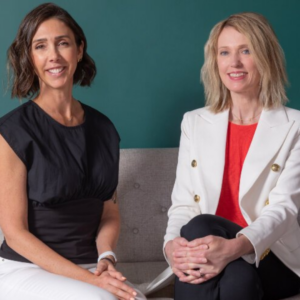
We met in a coffee shop in 2015 to talk about moms. Why weren’t they being supported after the birth of their baby? Why were women of color more likely to die during childbirth? Why wasn’t anyone talking about postpartum depression? We talked about our personal stories and the lack of resources available to us while pregnant. It was clear that we both had the same goal – to help families, especially mothers, thrive during pregnancy and early parenting.
In 2017 we were working together as co-owners of Gold Coast Doulas, West Michigan’s premier doula agency which had grown to include birth and postpartum doulas, lactation consultants, sleep consultants, and educators. When the pandemic hit, we had clients and students wondering what would happen. We thought a shutdown might last a few weeks but when it was clear it was going to be several months or more, we knew we had to think fast and completely shift the way we thought about our business.
Gold Coast Doulas immediately began to offer virtual birth and postpartum support and classes. We also began working on recording our classes for students to watch from home and offering live phone chats. The Tired as a Mother online series was created in place of in-home consults which were no longer happening. Informed Pregnancy+ now hosts the first in this series on pregnancy and newborn sleep which also offers additional sleep classes that cover through the toddler years.
We realized months in, our pregnant and newly postpartum clients were starved for community and that’s what drove us to create the Becoming a Mother online series. Eventually we wrote a book from that series called Supported: Your Guide to Birth and Baby (2024.) It’s an all-encompassing guide to pregnancy, birth, and early parenting. It’s the book we wished we had when pregnant!
We took a decade of working with clients and students, personal experiences, evidence-based resources and information, and client stories, and brought them all together into one easy-to-read guide. We believe there is no other book like it. It gives an overview of several options, so mothers and parents can make their own informed choices. Most books will tell you one “right way” but we don’t believe there is only one way. We know that even within the same family, parents may have to shift parenting styles based on each child’s personality. We know that not everyone plans to breastfeed, and we know that not everyone wants to be an attachment parent.
Mothers can read a book and end up feeling guilty or defeated before they even begin. With sleep books, for instance, parents might try one method and if it doesn’t work, they believe they’ve failed. Or if the method is too difficult, they may give up, again feeling like they’ve failed. When a book (or person or group) gives you only one solution, that can be very damaging. If that one way doesn’t work, what is a parent supposed to do?
There is no one-size-fits-all solution to parenting. We want you to understand what resources are available to you, what circumstances may arise, and what choices you may have to make. We want to give you the tools to make educated decisions and learn to trust your instincts.
Supported: Your Guide to Birth and Baby is the book we hope every new mother reads. We know it sure would have changed our pregnancy, birth, and postpartum journeys if we had this available to us when we needed it!
Kristin Revere and Alyssa Veneklase are the co-authors of Supported: Your Guide to Birth and Baby. Kristin is the owner of Gold Coast Doulas, a Certified Elite Birth and Postpartum Doula, a Newborn Care Specialist, and a Baby Registry Expert. Alyssa is a Certified Elite Postpartum Doula, Certified Sleep Consultant, and Newborn Care Specialist. They both teach The Becoming a Mother online series.
by Elliot Berlin | May 22, 2024 | Expectations, Health Conditions, Mental Health, Parenting and Child Development
When I tell people about my face blindness, I often get a three-pronged reaction. First, they think I’m either joking or lying. Once they realize I’m serious and not exaggerating, they start to wonder how this condition impacts my life.
Ten years ago I found out that I have something in common with Brad Pitt (besides the obvious) and Victoria—Crown Princess of Sweden. It’s a bit of a story.
Even after the revelation, experiences continue to surprise me. A few years back, I attended a particularly moving birth. My client, Sandra, was determined to fully experience the raw sensations of labor and embrace each moment without any desire to numb herself to the process. Upon my arrival at the hospital, she was in active labor, with intense waves surging through her body every three minutes. Sandra’s resilience and sheer determination in embracing each surge left me deeply inspired by the powerful essence of her spirit and the support from her husband was heartening, his presence a pillar of strength.
I don’t think Sandra needed anyone to help her but she wanted support. In addition to her husband and I, there was also an amazing labor and delivery nurse. The four of us were together in a darkened hospital room, illuminated only by flickering LED tea candles and the soft glow from electronic monitors. The playlist, consisting mostly of African drumming, provided natural rhythmic beats—a meditative backdrop to Sandra’s primal moans and earthy groans. For nearly three timeless hours, the scene remained beautifully unchanged, a testament to undisturbed labor, with Sandra receiving exactly what she wanted from our trio of support: love and affection from her husband, clear explanations and reassurance from the nurse, and hands-on support from me—including counter pressure, reflexology, head and jaw releases, and comforting touch massage. The whole experience was magical, and I was in awe of how incredible the nurse was. She was with us nearly the entire time, only stepping out briefly on a few occasions. She was doula-like and seemed to intuitively know just what to say to keep Sandra feeling safe, confident, and empowered. Many nurses are great but this one was above and beyond. I hoped to have an opportunity to meet her, get to know her background and work together again.
At a quiet moment when Sandra stepped into the restroom, I seized the opportunity to introduce myself to this exceptional nurse. Just as I was about to extend my hand, she greeted me with a warm smile and exclaimed, ‘Hi Elliot! How are Alyssa and the kids?’ Her immediate recognition caught me off guard. How could she know me so well, already when she was completely new to me? Such an awkward moment—and also the story of my life.
Since as early as I can remember, I’ve struggled with social awkwardness, particularly in groups. I generally felt out of place but could never pinpoint why. In high school, I realized that whenever I entered a room, it seemed as though I didn’t know anyone. Even when people approached and spoke to me with familiarity, I couldn’t remember their names—or so I thought. The truth was more profound: I couldn’t remember their faces. In fact, I am unable to recognize anyone’s face, not even those of my wife and kids, and sometimes, not even my own.
I was 39 when I stumbled upon a life-changing article in The New Yorker by Oliver Sacks, a renowned neurologist known for his deep dives into the quirkiest corners of human psychology. Reading his exploration of prosopagnosia, I had an epiphany: the social awkwardness I’d experienced wasn’t unique to me; it had a name and was shared by many others, including celebrities like Brad Pitt and Crown Princess Victoria.
Prosopagnosia means I struggle to recognize faces. I can see a face while I’m looking at it, but as soon as I close my eyes, the image vanishes completely. There’s no memory of what the face looks like. When I see it again, it’s as if it’s the first time every time—I have no idea to whom the face belongs. I’ve waved at strangers thinking they were my kids, and I’ve had trouble recognizing my own mother at the airport more times than I care to admit. These mix-ups, while often embarrassing, have eventually become a source of humor and a unique way to connect with people. I can tell my neighbors apart by the pets they walk and I can identify someone much better by their voice or their laugh than by their face.
Ever since I could talk, I’ve used humor to navigate social interactions, often trying to elicit a laugh when I first meet someone to help recognize them in future encounters. Imagine the scene: I’m in Trader Joe’s, and someone gives me an unexpected, enthusiastic hug. If I can crack a joke and prompt a laugh, I might just be able to place who is embracing me and why. This ongoing pursuit of finding the funny in everyday situations is precisely why I prefer shopping at Trader Joe’s—Whole Foods is just too serious.
My habit of constantly shooting off “dad jokes” (even before I became a dad) is a coping mechanism but it has also carved a path for me into the world of stand-up comedy. In the context of my area of expertise, comedy helps break the ice for new and expectant parents who often grapple with the challenges of the journey to and through parenthood. My live show, “Kid*ding: Comedy About Having Kids,” is as therapeutic for me as it is for the audience. It’s not just about sharing laughs; it’s about fostering a deeper empathy and connection with my audience. The stage allows me to engage, entertain, and offer comfort by addressing the universal hurdles of fertility, pregnancy, childbirth, postpartum, and parenting in a fun, light-hearted way.
When I tell people about my face blindness, I often get a three-pronged reaction. First, they think I’m either joking or lying. Once they realize I’m serious and not exaggerating, they start to wonder how this condition impacts my life. Besides the awkward social interactions, I often explain that it makes watching television and movies extremely difficult. House of Cards is a show I had a lot of trouble with. When a character left the screen and returned, it was like seeing them for the first time again. I’d ask, “Is that the doctor?” only to be told, “No, that’s the plumber!” This can be a challenge for my wife and others, as I constantly need help identifying characters. Luckily, I sometimes come across shows where each character has such distinct physical characteristics that it makes it a lot easier. Breaking Bad was great at this but because those shows are rare, watching TV generally feels like hard work and is not relaxing so I often skip it altogether – something you might not expect from someone so passionate about media.
Not everyone has the privilege of living and working in one of the media capitals of the world like I do but my unique position has meant that over the years, some of my writer friends have worked my condition into popular shows.
An episode of the legal drama Rizzoli & Isles features a murder witness with face blindness and as a fun tidbit, they even named the character Elliot as a tribute to me. This episode, titled “Face Value,” (Ssn 6, Ep 6) uses the condition as a great plot device and it helped raise awareness at the same time. Similarly, when my friend Jeff Astroff created the murder trial comedy Trial and Error starring John Lithgow, his knowledge (and curiosity) of my experiences inspired him to give the condition to one of the main characters. This character, played by Sherri Shepherd, added a unique and humorous twist to the show.
Prosopagnosia affects approximately 2% of the population (Source: Harvard Medical School) and ranges in severity. Some people only have difficulty vaguely recognizing somewhat familiar faces, while others struggle to recognize faces of close friends and family members. Many people with prosopagnosia don’t know why they struggle or that the condition exists—let alone that they have it. It has become a bit of a mission of mine to help people who have it better understand their lives and for those around us to become familiar with our challenges so they can help us cope
On the bright side, I believe this condition has also enhanced my other senses and my intuitive understanding of people’s emotions and physical states. As a chiropractor, especially a pregnancy-focused chiropractor, this heightened awareness helps me tune into subtle cues that might indicate discomfort or stress in my patients, aiding in my holistic mind-and-body approach to their care.
Parenting with prosopagnosia presents its own set of challenges and rewards. Recognizing my children primarily by their laughter, unique movements, expressions, conversation undertones, and body language has drawn me closer to them. This heightened sensitivity to non-visual cues has deepened my appreciation for their individual quirks and personalities, allowing me to connect with them on a profound level. I tune into the subtle nuances of their voices, their distinct reactions to situations, and their specific mannerisms, all of which paint a vivid picture of who they are beyond appearances. It’s a reminder that our connections run deeper than what we see on the surface.
Before I wrap up, I want to give a special shout out to our streaming platform Informed Pregnancy +, particularly our stand-up comedy special “You Did This To Me” featuring a very pregnant Kira Soltanovich. Kira gets real with the trials and tribulations of pregnancy, birthing, and raising kids. Also, check out our newly added documentary film “The Face of Birth.” This film offers a big-picture look at the importance of respecting and protecting a woman’s right to choose how, where, and with whom she gives birth. A must-see for anyone interested in empowering women in childbirth, it will encourage and inspire all who are on the journey towards parenthood. And yes, I shamelessly plug it because it has the word “face” in the title.
So, if I know you well and I walk right by you in public and completely ignore you, it’s not because I’m a jerk—it’s because of my face blindness. This condition can be challenging, but it also gives me unique strengths. The understanding, empathy, and connections it fosters reminds me to look beyond appearances and cherish the deeper essence of those around me. Every interaction is a chance to connect in meaningful ways, making my journey all the more rewarding.
Until next time.
Yours in Health,
Dr. B
Dr. Elliot Berlin, DC is an award-winning pregnancy-focused chiropractor and creator of Informed Pregnancy Media which includes his popular long-running The Informed Pregnancy Podcast in addition to a blog and a number of original shows featured on his streaming channel Informed Pregnancy+. Dr. Berlin’s goal is to use his passion for media and entertainment as a means of spreading information and awareness on topics that growing families need to make informed choices about fertility, pregnancy, childbirth, and parenting.

by Kimberly Isburg | Mar 6, 2024 | Health Conditions, Parenting and Child Development, Pregnancy
“As your pregnancy progresses, you will begin to feel your baby move more and more. What starts out as light flutters or “butterflies” in the second trimester will eventually become noticeable kicks, jabs, and rolls as you enter the third trimester of pregnancy. Around 24-28 weeks babies get into a noticeable pattern of movements. Kick counting is the practice of becoming familiar with your baby’s normal movement patterns.”
What is Count the Kicks?
Count the Kicks is a program that teaches expectant parents a simple and easy method to get to know their baby’s normal movement patterns in the third trimester of pregnancy. Count the Kicks has a FREE pregnancy app (available in 15+ languages) that makes it easy to count how long it takes your baby to move 10 times and to rate the strength of your baby’s movements.
How do I Count the Kicks?
Starting at 28 weeks (or 26 weeks if you’re high-risk or pregnant with multiples) you can download the free Count the Kicks app, print out a paper chart, or use the web counter from a desktop or laptop computer. Pick a time of day when your baby is normally active and then sit with your feet up or lie on your side.
Then, open your app and start counting, then tap the footprint on the app every time your baby moves (kicks, pokes, jabs, and rolls all count!). The only movements that don’t count are hiccups, because those are involuntary.
The app will time how long it takes your baby to reach 10 movements, and then ask you to rate the strength of your baby’s movements on a scale of 1 to 5. You can also take notes in the app after each session (like what you ate that day or questions you want to ask your provider). After a few days of tracking around the same time each day, you will begin to see an average length of time it takes your baby to get to 10 movements.
What is considered normal?
Every baby and every pregnancy are different. Research has moved away from the idea that you should expect a certain number of movements in a specific period of time. Instead, the key is getting to know what’s normal for YOUR baby.
So, your baby’s normal is the average amount of time it takes your baby to move 10 times each session. Remember to count your baby’s movements around the same time every day and pick a time when your baby is normally active (like after dinner, for example.)
Why should I Count the Kicks?
Babies are a lot like us! Research shows a change in a baby’s movements is sometimes the earliest or only sign there might be an issue with a pregnancy. Just like when you’re not feeling well, you may want to sit on the couch or lie in bed. So, if a baby is not feeling well or is in distress, their movement changes. This is why it’s important to monitor your baby’s movement every day in the third trimester and get yourself and your baby checked right away if you notice any changes.
What are the benefits of kick counting?
Counting your baby’s kicks, jabs, pokes, and rolls is a free, easy, and reliable way to check on your baby’s well-being in the third trimester. Additionally, most Count the Kicks app users (77%) report that using the app daily helped reduce their anxiety about the well-being of their baby.
Counting your baby’s movements is also a great way to bond with your baby and get to know their personality before they arrive. You can even invite your partner or your older children to help you count your baby’s movements! It can be a fun bonding experience for the entire family.
What should I do if I notice a change?
Don’t delay! Trust your instincts and go to the hospital right away if you notice a change in the strength of your baby’s movements or how long it takes your baby to get to 10 movements. Hospitals are open 24 hours a day, 7 days a week, and are ready to help.
Your baby’s movements matter!
If your provider doesn’t talk to you about kick-counting, it doesn’t mean it’s not important. It’s OK to bring up Count the Kicks with your provider and ask to show them your baby’s data in the app. You can even text or email your data directly from your app to your provider!
Also, remember to ask your provider how to contact them if you have concerns and ask when they recommend you go directly to the hospital.
Spread the word!
Count the Kicks is proven to improve birth outcomes for moms and babies. You can join us in helping more babies have a safe arrival by sharing Count the Kicks with every expectant parent you know. Congrats, and remember: Every kick (jab, poke, and roll) counts!
Kimberly Isburg is the Communications Manager for Healthy Birth Day, Inc., the 501(c)(3) nonprofit organization that created the Count the Kicks stillbirth prevention program. Kimberly used Count the Kicks to get to know her babies’ normal movement patterns during both of her pregnancies and is proud to be the mom of two healthy boys. She is a passionate advocate for maternal health causes and is honored to work for an organization that is dedicated to improving birth outcomes and saving the lives of moms and babies. Visit www.CountTheKicks.org to learn more.
by Needed (Sponsor) | Oct 25, 2023 | Fitness & Nutrition, Health Conditions, Parenting and Child Development, Pregnancy
We love fall for the cozy drinks and sweater weather, but we don’t love the thought of sickness that tends to spread this time of year. It can be tough to know what to do to support your immune health during this time, especially when you’re pregnant or breastfeeding, or have little ones at home. Here are 9 pregnancy safe tips to naturally support your immune health.
We love fall for the cozy drinks and sweater weather, but we don’t love the thought of sickness that tends to spread this time of year. It can be tough to know what to do to support your immune health during this time, especially when you’re pregnant or breastfeeding, or have little ones at home. Here are 9 pregnancy safe tips to naturally support your immune health.
1. Get Key Vitamins and Minerals
We already know how important it is to get your vitamins and minerals during pregnancy and through the years before and after baby. But it is especially important to make sure you’re getting enough of the key nutrients to support immune health. These include Vitamins A, C, and D, and Zinc.
How do you do it?
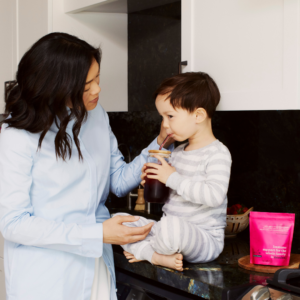
Prioritize fresh, whole foods that are rich in vitamins and minerals, like fruits and vegetables, nuts and seeds, pastured poultry and eggs, and grass fed meat. Since food alone often isn’t enough, be sure to supplement with a high quality multivitamin that contains optimal forms and dosages, like the Prenatal Multi and Women’s Multi from Needed.
2. Don’t Skip The Omegas
Healthy fats don’t often come to mind when you think about immune health, but the reality is that they are key to an optimally functioning immune system. Omega-3 fatty acids in particular are known to support the body’s immune response.
How do you do it?
Omega-3 fats are found abundantly in fatty fish like salmon and sardines. While they are found in certain nuts and seeds, like flax seed, hemp seeds, and walnuts, these plant sources contain the Omega-3 form of alpha linolenic acid (ALA). This form must be converted in the body to a more usable form, and that conversion is quite inefficient (less than 10%).
If eating fatty fish a few times a week isn’t realistic for you, consider a high quality Omega-3 supplement, like Needed’s Omega-3+. This algae-based vegan Omega-3 contains DHA, EPA, Choline, Lutein, and Zeaxanthin.
3. Consider Pregnancy Safe Herbs and Spices
Many herbs and spices have natural immune supportive properties. They can be found in a number of supplements, but tend to be highly concentrated and quite potent. This type of supplement generally isn’t well studied in pregnancy, but amounts used in cooking and baking are considered safe while also conferring a benefit to immune health.
How do you do it?
Cook with supportive herbs and spices like garlic, ginger, and turmeric. They add lots of flavor alongside their immune health benefits.
You can also take a pregnancy-safe supplement like Needed’s Immune Support. It contains highly concentrated Elderberry that is safe and effective for pregnant and breastfeeding mamas and their kids.
4. Support Your Gut
Immune health is closely tied to gut health. A healthy microbiome supports your immune system as 70% of your immune system resides in your gut.
How do you do it?
Incorporate fermented foods like yogurt, kombucha, and kimchi, and consider a supplement. A good probiotic supplement can help introduce strains into your system with specific benefits that aren’t found in foods. Needed’s Pre/Probiotic contains targeted strains to support gut health, and Needed’s Immune Support contains prebiotics and postbiotics for a comprehensive approach to gut and immune health.
5. Limit Sugar and Alcohol
Sugar and alcohol can both suppress the body’s immune response. Give your body the best chance to fight off illness by limiting the things that make it harder to do so.
How do you do it?
Alcohol tends to be easy to avoid in pregnancy and the perinatal years, but sugar can be a bit tougher, especially if you’re dealing with cravings. Aim to balance your blood sugar by balancing each meal and snack with protein, fat, and fiber. And when you crave something sweet, go for some vitamin C rich berries or good quality dark chocolate.
6. Get Adequate Sleep
Getting consistent sleep supports overall health and immune function. Research indicates that both short- and long-term sleep disruption or deprivation can negatively affect immune health.
How do you do it?
It can be tough for anyone to get sufficient sleep in today’s overscheduled world, but it is especially tough for busy parents. Set an alarm on your phone to remind you to start winding down and put away the screens. If you find yourself feeling wired but tired, try Needed’s Sleep + Relaxation Support. It’s made from science-backed, safe and effective nutrients and botanicals to promote optimal sleep quality and relaxation.
7. Manage Stress
We all face some amount of stress in our daily lives. But research shows that chronic stress can negatively impact the immune system. Stress raises cortisol levels, which can directly affect immune health.
How do you do it?
Meditation, gentle movement, and targeted adaptogens can help manage stress. A supplement like Needed’s Stress Support can also help. It contains a clinical-strength blend of 6 pure and potent adaptogenic and nervine botanicals traditionally used in Ayurveda, Chinese medicine, and herbalism to nourish and support the central nervous system and more.It is not recommended in pregnancy but is safe for preconception, breastfeeding, and beyond.
8. Wash Your Hands!
Your skin is a first line of defense to keep pathogens out of the body. Keeping your hands clean means keeping all of the bacteria and viruses that you pick up on your hands all day out of your body.
How do you do it?
Hand sanitizers don’t kill all types of bacteria and viruses (they aren’t effective against things like stomach viruses), so aim to actually wash your hands with soap and water. Make it a habit as soon as you come home from being outside, and always before eating or preparing food.
9. Get Moving
Research shows that moderate exercise can support your immune system by increasing the circulation of immune cells in your body.
How do you do it?
High intensity isn’t needed, a simple daily walk can be supportive.
Be Well
We hope this combination of diet and lifestyle factors helps to empower you with the information you need to support your immune system so that you can enjoy the season without all of the worry!
Needed is a nutrition company delivering optimal nourishment for women and their partners before, during, and after pregnancy. Needed is the #1 women’s health brand among nutritionally trained practitioners, and is backed by the recommendation of thousands of perinatal health experts. Their products and educational content are grounded in the latest clinical research and the in-practice experience of its practitioner collective. Needed delivers what you need to thrive, not just survive, along the perinatal journey and the parenting years beyond.
by Ria Safford | Oct 4, 2023 | Family and Relationships, Infant Care and Breastfeeding, Parenting and Child Development
“It can be overwhelming when you have a variety of sizes of clothing or toys for different developmental stages and are trying to set them up in your spaces. You only need visible and accessible items that you and your baby need currently.”
Becoming a parent is undoubtedly one of the biggest adjustments you will make in your life. Not only will the routines of your day to day change drastically, but the routines within your home and spaces will too. With a new baby comes stuff, a LOT, of stuff. It is good to have a plan in place before the baby’s arrival so you can eliminate the stress of “what do I do with all of this?!”
Here are five simple steps you can take to set up your home for new parent success!
RESET YOUR CURRENT INVENTORY
Your home and its contents become far less overwhelming when you know what you have. Set aside time to assess your items throughout the home to see if anything can be tossed, donated or stored away. This task also allows you to understand what you are missing that you need for this next chapter of life.
PREP, PREP, PREP
You will want to soak in all of the beautiful baby cuddles and bonding time you can after birth and there are simple things you can do to be more prepared on the home front.
-
-
- Wash and put away newborn clothes
- Create diaper caddies throughout the home
- Setup a feeding station with essentials like burp cloths, snacks, pump, reading material, etc.
- Create a feminine care station in the bathroom for postpartum needs
- Freeze make-ahead meals
- Lean on your village of people and don’t be afraid to ask for help with older kids, housekeeping, meals, etc.
- Game plan with your spouse/partner to be on same page when it comes to expectations, emotional support and division of labor
KEEP YOUR SPACES CURRENT
This is a very important tip. It can be overwhelming when you have a variety of sizes of clothing or toys for different developmental stages and are trying to set them up in your spaces. You only need visible and accessible items that you and your baby need currently. This allows your spaces to not become overpacked and unmanageable. The more you can see, the more you will use and the better you will maintain your space. Items for future use can be stored away.
SAFETY FIRST
While a lot of baby-proofing tasks can be put off for when your baby is running and climbing around, there are small things you should do even before the infant stage. Babies, even as infants, want to touch, taste and feel everything around them. You will want to assess what they could come in contact with and remove any potentially harmful items. This is a good time to swap out harsh cleaning products for natural ones.
NURSERY ORGANIZATION
The nursery is one of the only spaces that you anticipate what your routines will be and rather than organizing based off of the way you already use the room. This space will inevitably evolve as you settle into your new normal but we want it to be streamlined and routine-ready. In the middle of the night when there is a blowout diaper and a hungry baby, knowing what you need and where to find it is crucial.
-
-
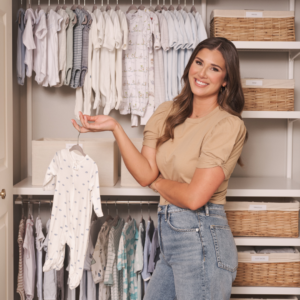
- File-fold onesies and clothing in drawers for easy visibility
- Designate top dresser drawer for all diaper changing needs
- Label the inside of drawers to hold you accountable when putting items away and to make for easier finding
- Add some baby hangers for items you will want hung
- Bin and label any clothing your baby needs to grow into
- Create a “too-small” bin for any clothing your child grows out of–when the bin is full, that is your cue to donate, store or give to a friend.
The little things really do add up and will bring a big sigh of relief once you have tackled these to-dos before your baby’s arrival. There is so much that will be out of your control during baby’s first years—take the reins on what you can control—your home.
Ría Safford is a Cuban-American mom of three. She is the founder and CEO of RíOrganize, a company offering full-service luxury organization and relocation to families across the United States. Ría has organized spaces for A-list clients and for everyday families who are desperate for more streamlined systems in their homes. Ria’s own organization journey began when she became a new mom and felt overwhelmed by all the mess accumulating in her house. She set out to calm the chaos and help families everywhere reduce stress and create routine-ready spaces that make managing life with little ones easier. Ría has partnered with iDesign to create a collection of organization products sold on Amazon. Ría has 322K+ fans following her on Instagram for organization inspiration and advice. She also just wrote her first book, The Organized Home for New Parents.

by Sarah Goldberg | Sep 20, 2023 | Family and Relationships, Health Conditions, Mental Health, Parenting and Child Development
“I was so happy with the way I was handling the new addition that my following depression blew me out of the water. My husband was away on a trip, and I got a new car. Sounds like a good thing, but somehow I found driving a new car with its new buttons and pockets in different places to be overwhelming. To be fair, it was also a nine-seater. I’ll let you sit with that.”
 I am a mother of eight. My youngest is 16 months old and my oldest is expecting my first grandchild at 22 years of age. I am extremely blessed. I am also a woman who has experienced multiple episodes of Postpartum Depression (PPD.)
I’m told I’m predisposed to anxiety, which resonates with me. As far as I know, I didn’t experience PPD with my first two births. For what it’s worth, all of them were normal, healthy births. After my third, a lot of things irritated me. A lot! I found my fists clenched all of the time and it took a bit before I realized that wasn’t normal. I wanted to enjoy my baby, husband and other kids but everything set me off. I got a psychiatrist referral from my doctor who promptly prescribed psychotropic meds. I started getting debilitating headaches and was concerned that they were a side effect of the meds. My kids were making a lot of noise when I reached out to the psychiatrist by phone and had my concerns dismissed. He surmised that if he had as many kids as me, and it was so noisy around him, he too would have a headache and hung up. Imagine what he’d say about the five more kids I have now!
Needless to say, I deleted his contact, and told my OB to take him off of his referral list. When a person is in a vulnerable state, she needs understanding and empathy; not cruelty and sarcasm.
Then came baby number five. I had a bit of a bumpy ride leading up to the birth because my parents had divorced a year earlier and my dad was getting remarried. It was a bit dysregulating, (read: one of the hardest experiences of my life emotionally). I mention this because at that time I may have already been in a high stress situation and standing at the edge of the cliff. Maybe, who knows? I had the best time with my baby for four weeks. I was present, my other kids were excited, and they were in camp during the day so I had some time alone with the baby. I even had my dad and stepmom over for the first time. The higher you are, the harder you fall.
I was so happy with the way I was handling the new addition that my following depression blew me out of the water. My husband was away on a trip, and I got a new car. Sounds like a good thing, but somehow I found driving a new car with its new buttons and pockets in different places to be overwhelming. To be fair, it was also a nine-seater. I’ll let you sit with that. When my husband called that evening, I told him I couldn’t breathe because that’s how I felt. I hadn’t realized at the time that I was having a panic attack. I actually think I only figured it out recently.

When he returned home, and I was clear that something was horribly wrong, I tried to find a psychiatrist that I could trust but they all had a minimum two week wait. At this point I was getting desperate. I asked to be hospitalized and was turned down because I wasn’t a danger to myself or anyone else. I did not feel like I could be left at home. All I knew is that I needed to be “fixed” ASAP.
My OB prescribed Xanax to tide me over until a psych appointment. I took one pill and slept for 17 hours straight. When I awoke, I couldn’t follow anything with my eyes. That’s when it all started to fall apart. I couldn’t sleep, even for a minute. You’d think having a one month old would’ve made me tired but I physically could not close my eyes. I couldn’t eat, never mind drink, and I’m usually a stress eater not a starver. My closet seemed too overwhelming for me to choose an outfit so I stayed in pajamas. I couldn’t go near the baby and then I couldn’t even leave my room. Everything seemed so frightening. I felt like the walls were going to cave in, literally. If I hadn’t experienced it myself, I wouldn’t believe it. Now I feel like it’s just a movie I once watched. I was afraid to do things I had been doing for decades because they all seemed overwhelming. The future seemed scary and bleak. Does this mean I can’t have any more kids? Will I ever be able to take care of the baby? Leave the house? Get dressed?? What will my other kids do? It was a dizzying spiral. And then, a friend of mine brought over her friend who had PPD with her first child.
I knew this woman. She had a full life, a normal life. She had a second child after her episode and it all went well. We spoke and she gave me hope, even if it was the tiniest bit. I had some old meds (I do not recommend trying this at home) so I took one. And the world was different. It was so different. I don’t think it’s common for people to turn around as quickly as I did, but I’m grateful. I felt like I could see a way out, and once things were a bit more stable, I was able to wait for my doctor appointment with more ease. I met my superstar psychiatrist, Dr. Jennifer Yashari. She focuses only on the woman’s cycle, so things like PPD, infertility, pregnancy, adoption, menopause etc. She wanted me to get more out of the medication so she made me a cocktail that I’ve been taking ever since.
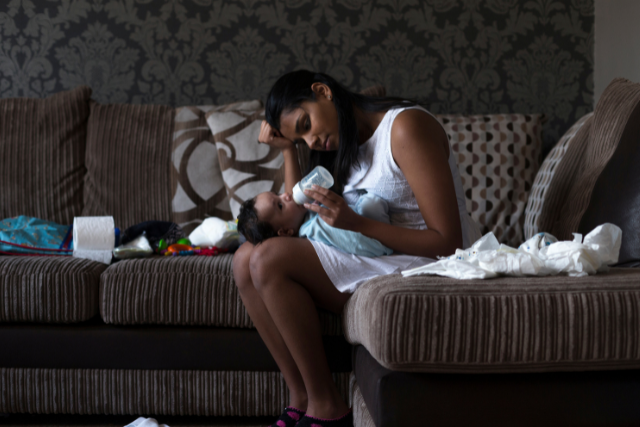
When the baby was 15 months old, I found myself with a surprise twin pregnancy, yes I know how that sounds. It scared the living daylights out of me. Dr. Yashari reminded me that this time was different. I had knowledge, I was prepared, I had her, my meds, and we were watching. I stayed on the meds throughout the pregnancy, as research has not concluded that it’s dangerous, but unstable mental health definitely is. As far as I know, one of the babies was a bit sleepy for a day and that was the extent of the effects my meds had on the pregnancy. When my life was at its most hectic, with three kids aged two and under, plus another four above them, I was at my most stable.
Eight years later, we went for one more, just for fun. It was the most amazing pregnancy and an awesome postpartum experience. Since then we have also married off a child, are expecting a grandchild and I have been open and honest about my challenges with my kids. My pregnant daughter finds comfort in knowing that I am looking out for her and will do everything to keep her safe. PPD should not be stigmatized; it’s not a guarantee, and it’s treatable. We need to educate our partners and family members to keep their eyes out for anything that seems unusual and have them bring it up in the most gentle of ways. If you or anyone you know is questioning their mental health after giving birth to a baby, reach out to a professional and get evaluated. You are not alone and you won’t be like this forever.
***
This post is written in memory of my superstar OB, Dr. Jay Goldberg. Like many of his patients, I considered him a cherished friend. His days were too few, his accomplishments many, and his loss devastating to those who knew him. He helped bring my lights into this world all the while emanating his own bright light and he is missed by many, every single day.
***
Resources for Postpartum Depression:
The Mayo Clinic – Postpartum Depression
Mental Health America – Postpartum Depression Test (New & Expecting Parents)
NIH, National Library of Medicine – Use of Prescribed Psychotropics during Pregnancy: A Systematic Review of Pregnancy, Neonatal, and Childhood Outcomes
Recurrence Rates and Risk Factors in Perinatal Mood Disorders
Sarah Goldberg is a licensed life coach in private practice. She is on sabbatical while she immerses herself in the joys of raising a toddler and a family of 10. She lives in Los Angeles, where she can be found at a different public playground every day!
She welcomes any questions or opinions on pregnancy, labor, or child raising and can be reached through sarahlgoldberg@gmail.com.