“And oh the places I pumped! From the bathroom stall at my dentist’s office, to my car, to the hotel balcony at our resort in Hawaii, to off camera during zoom calls, to my JetBlue middle seat between two very confused businessmen, I diligently never missed a session.”
I thought doing a live performance of a one-woman Judy Garland tribute show at 10am for the JCC of Toledo, Ohio would be the craziest thing I’d ever do over zoom, and then I showed a
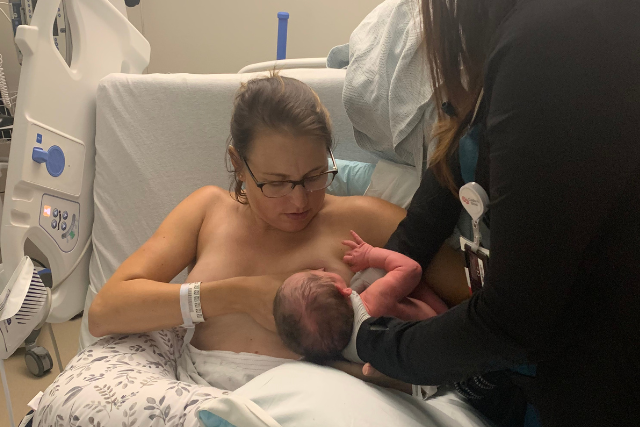
stranger my nipples.
I even dialed in from my computer AND phone so she could get a better look.
Add in an assortment of plastic flanges, a discussion about elastic nipples, some coconut oil, and set it to the steady pulse of a Spectra S2. Yep, definitely crazier than the muted jazz hands of the JCC.
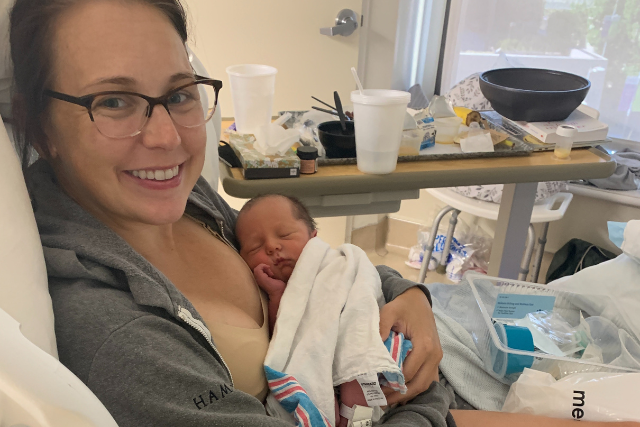
My son was born breech, via labor-induced c-section on August 3rd. The combination of his tightly tucked fists and arms, his posterior tongue and upper lip ties, his Leo love of drama, and slow arrival and undersupply of my milk, made breastfeeding “complicated.” After countless tears, lots of pain, many botched attempts with supplemental nursing systems, and hours of Three am googling, I discovered another way to breastfeed: exclusive pumping.
Possibility permeated by joining a Facebook group. Its members included thousands of women also choosing, for whatever reason, to exclusively pump, sharing tips and tricks that I scrolled/devoured while pumping at midnight, three, and six. I replaced panicking about my low supply with taking action in the form of eating Oreos (science-backed or placebo, they helped, okay?!?!), making oatmeal with brewer’s yeast, drinking gallons of electrolyte water, and taking supplements like sunflower lecithin and goat’s rue. I downloaded free sample pumping schedules, pump hack guides, recipes for lactation cookies, and finally understood why the wearable pumps didn’t work for me (#elasticnips).
Three weeks into parenting, I told my lactation consultant my plan to give up on triple feeds, throw out the nipple shields, and concentrate on exclusive pumping. I asked her to meet with me to do a flange fitting, and she stopped answering my texts. Our last exchange was her sending me a screenshot of coins to compare to my nipples- something I easily could’ve googled myself! Just when I was at my most vulnerable, her lack of empathy made me feel ashamed and embarrassed for not being able to figure out how to make latching work.
And then I met Barbara. Because I rented a hospital grade pump from The Pump Station, I was eligible for a free 30-minute consult with the staff lactation consultant. After my previous experience, I was hesitant, but at 8 weeks postpartum, I was sleeve deep in Oreos and still underproducing. Mid- chew I decided facing possible shame again was worth it to feel like I had explored everything, so I wiped the crumbs off my face and booked an appointment.
One bright morning, we met over zoom. I unhooked my pump bra, slid in a flange, and the rest is history. Turns out, I had been wearing too big of a flange which was contributing to my irritated areolas and decreased output! With Barbara’s guidance, I went from wearing a 24mm flange down to 21, 19, and finally landed at 17mm. Before giving birth, I had never heard of a flange, let alone the possibility of wearing the wrong size. Without Babs, I never would have known there was something within my control to make pumping more efficiently comfortable.
Barbara also helped me see that anything I gave my baby- breastmilk or formula or a mix of both- and however I gave it to him, for whatever amount of time, was a gift. Instead of dwelling on my inability to produce exactly as many ounces as he ate every day, I focused on what I could provide instead. And instead of fixating on being a “shitty mom” for not being able to breastfeed “the natural way,” she helped me see that continuing to tell myself THAT was shitty. Any way a parent feeds their baby is hard work worth championing.
My plan pre-pregnancy was to exclusively breastfeed until my son turned one. If you saw my previous post on planning and pregnancy, you can guess how that panned out. I spent the first 12-weeks post-delivery pumping 30-minutes per session, 8 times a day. Once I regulated, I spent the next 2 weeks pumping 7 times a day, just to make sure my supply didn’t drop. By mid-November, I finally dropped my MOTN (middle of the night pump) and enjoyed my first stretch of more than 4 hours of sleep since August. Whether it was a magic number of pumps or the uninterrupted sleep, I produced the most ounces at 6ppd (pumps per day).
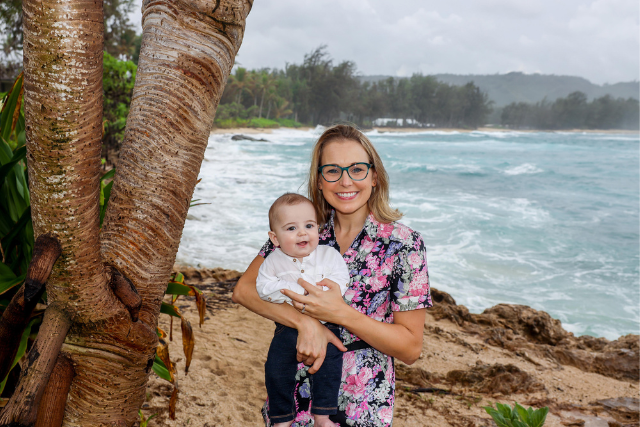
I began traveling again more frequently for work in December, so I tried dropping to 5 pumps per day and stayed there until I realized my supply was accidentally decreasing, so I went back up to 6 and stayed there for another 6 weeks. And oh the places I pumped! From the bathroom stall at my dentist’s office, to my car, to the hotel balcony at our resort in Hawaii, to off camera during zoom calls, to my JetBlue middle seat between two very confused businessmen, I diligently never missed a session.
By the beginning of February, I was tired, both physically and mentally, from the amount of logistical planning it took to prioritize the pump for three plus hours each day. We were almost out of cold season, so when my son turned 6-months old, I decided that it was time to wean from the pump. Having that full eighth of my day back would allow me to be the mom and the person I wanted to be with a little less caffeine fueling my system.
What I didn’t realize is that weaning takes time, especially if I wanted to continue avoiding clogs and mastitis. My plan (ha!) was to drop one pump session per week, but I hadn’t accounted for the physical adjustments I’d need to make as I dropped as well as the emotional ones. Like how I felt about gaining weight while pregnant, I had a hard time seeing a decrease in ounces. It was weird to celebrate smaller outputs.
As I dropped pumps, my hormone levels also fluctuated, so I was also more emotional than
usual. I mentioned feeling guilty about giving up breastfeeding to my best friend Bev, a mother
of two. She told me that I could quit feeling guilty about it as there’s always another thing to
feel guilty about in motherhood. For some reason, the Ukrainian in me took comfort in that,
and two months after I began weaning, I finally pumped my last pump as my son turned 8
months old.
The idea that there’s always something else to feel guilty about when it comes to motherhood
is equal parts laughable and painfully accurate. But reflecting on the lessons I’ve learned so far on my parenting journey, the most important have been about self-forgiveness. Acknowledging my humanness alongside my motherness, accepting that balancing my needs with my baby’s needs does not make me a selfish person, and embracing a never-ending change of plans.
Whether you’re breastfeeding and nursing exclusively, pumping, supplementing with formula, using donor milk, or feeding your baby only formula, you’re doing a great job. Can you see and hear my muted jazz hands from there?! Because they are as exuberant as those of the wonderful people of Toledo!
PS- If you get the chance to meet Barbara and show her your nipples over zoom, I promise you
Jenna Pastuszek (she/her)is a professional actor, singer, voice over artist, musical theatre educator, and voice teacher. Jenna has performed in theatres across America in a variety of mediums, including her acclaimed solo shows GET HAPPY! and ME,MYSELF & BARBRA. She is a voiceover artist, voicing household brands like Starbucks Cafe, Pepsi, Amazon, KIND Bar, Target, IKEA, Crest, Toyota and more. She is the Co-Founder of Innovative Voice Studio, where she trains Broadway performers and works with leaders across industries through Innovative Performance. Previous faculty positions include The University of the Arts, New York University, The American Academy of Dramatic Arts, The American Musical Theatre Academy, and Musical Theater College Auditions. Pastuszek received her Masters in Teaching in Elementary Education and a BA in History and minor in French from the University of Virginia and her Masters in Vocal Performance and Advanced Certificate of Vocal Pedagogy from NYU Steinhardt. She is an Estill Voice International Master Trainer and a graduate of Seth Godin’s altMBA. Learn more at www.jennap.com.
“ Instinctively, parents want to be in contact with their children—it’s why leaving your baby alone to cry can feel so painful. It is painful, for both parents and children. If you have been denying yourself and your baby that close attention, be assured that being in touch with your baby as much as possible is a healthy biological drive and, importantly, provides essential brain-building experiences.“
I am a neuroscientist, doula, and mother on a mission to improve mental health for the next generation. Poor mental health is a serious and worsening worldwide crisis (1). Much of the
focus for improving mental health has been to find treatments for individuals who are already
suffering. My career studying neuroscience and practicing as a doula has informed me that there is an additional and powerful way to improve mental health outcomes. The knowledge
I’ve gained has inspired me to communicate this transformative knowledge to parents, perinatal professionals, and the world. We can get to the root of the problem, and neuroscience has shown us the way.
To make a difference in alleviating mental health struggles, we need a revolutionary cultural
shift in awareness and intention to the time where mental health is formed. The latest
neuroscience research indicates that fundamental brain structures for lifelong mental health
are extensively built during infancy, from conception to three years old. Put simply, that means infancy is a special season of life to build a baby’s brain for lifelong mental health. The primary brain structures that underlie mental health are built by experiences in infancy beginning at conception and continuing to three years old. These brain areas include the amygdala, hypothalamus, hippocampus, prefrontal cortex, and the oxytocin system. They can each be shaped towards resilience and lifelong mental health. We know now that the best way to do this is by providing babies with highly nurturing experiences (2).
There are many ways we can intentionally provide highly nurturing experiences to babies.
Nurturing touch, in high amounts, is one of the most powerful ways we can support a baby’s
developing brain in building structures that support mental health. Instinctively, parents want to be in contact with their children—it’s why leaving your baby alone to cry can feel so painful. It is painful, for both parents and children. If you have been denying yourself and your baby that close attention, be assured that being in touch with your baby as much as possible is a healthy biological drive and, importantly, provides essential brain-building experiences.
Here are a few simple ways parents and caregivers can practice nurtured care in children up to
Three-years-old:
1) Practice skin-to-skin from 0-3 months.
Take your baby’s clothes off except for their diaper, then take off your shirt. Lay baby’s
body on your chest, with their nose facing up and their airway open, so you are skin to
skin. Then cover baby’s body with a blanket and relax and breathe. I recommend this practice in the first three months for all parents and caregivers for at least 60-90 minutes a day up to several hours a day. If someone comes over to meet your baby, get them a robe and set them up for skin to skin.
2) Offer lots of holding and loving touch.
You can hold your baby as much as you want and as much as your baby needs. Hug
them, kiss them, and cuddle them. Let them sleep on you (while you are awake,) wear
them in a carrier, touch them as you speak softly to them and look in their eyes. Lay
them on your belly as they do tummy time.
3) Provide contact or closeness during feeding.
When you are feeding your baby milk, by any means, hold your baby in your arms and
give them all of your attention and presence. You can make eye contact, hold your
baby’s hand and speak to them lovingly.
4) Give unconditional access to being held or touched.
Babies need a lot of holding and touch and they need you to respond to this need unconditionally. When babies need closeness they might reach up for you, cry or ask to be picked up. They flourish when we respond and provide what they need. Infancy is a special season of life that offers a unique opportunity to boost mental health for babies and for future generations. We are deeply in need of a Nurture Revolution, a profound increase of nurture in early life. Nurture for babies, nurture for parents, more connection, more intuition, and more joy. Babies need deep connected positive relationships in the first three years of their life, and beyond.
Doherty, T. S., Forster, A. & Roth, T. L. Global and gene-specific DNA methylation alterations in the adolescent amygdala and hippocampus in an animal model of caregiver maltreatment. Behav Brain Res 298, 55– 61 (2016).
Ciernia, A. V., et al. Experience-dependent neuroplasticity of the developing hypothalamus: Integrative epigenomic approaches. Epigenetics 13, 318– 330 (2018);
Singh-Taylor, A., et al. NRSF-dependent epigenetic mechanisms contribute to programming of stress-sensitive neurons by neonatal experience, promoting resilience. Mol Psychiatr 23, 648– 657 (2017)
Korosi, A., et al. Early-life experience reduces excitation to stress-responsive hypothalamic neurons and reprograms the expression of corticotropin-releasing hormone. J Neurosci 30, 703– 713 (2010).
Lester, B. M. et al. Epigenetic programming by maternal behavior in the human infant. Pediatrics 142, e20171890 (2018)
Zhang, T. Y., Labont., B., Wen, X. L., Turecki, G. & Meaney, M. J. Epigenetic mechanisms for the early environmental regulation of hippocampal glucocorticoid receptor gene expression in rodents and humans. Neuropsychopharmacol 38, 111– 123 (2012)
Weaver, I. C. G. et al. Epigenetic programming by maternal behavior. Nat Neurosci 7, 847– 854 (2004).
Blaze, J., Scheuing, L. & Roth, T. L. Differential methylation of genes in the medial prefrontal cortex of developing and adult rats following exposure to maltreatment or nurturing care during infancy. Dev Neurosci 35, 306– 316 (2013).
Perkeybile, A. M., et al. Early nurture epigenetically tunes the oxytocin receptor. Psychoneuroendocrinology 99, 128– 136 (2019)
Maud, C., Ryan, J., McIntosh, J. E. & Olsson, C. A. The role of oxytocin receptor gene (OXTR) DNA methylation (DNAm) in human social and emotional functioning: A systematic narrative review. BMC Psychiatry 18, 154 (2018).
Krol, K. M., Moulder, R. G., Lillard, T. S., Grossmann, T. & Connelly, J. J. Epigenetic dynamics in infancy and the impact of maternal engagement. Sci Adv 5, eaay0680 (2019)
Pena, C. J., Neugut, Y. D. & Champagne, F. A. Developmental timing of the effects of maternal care on gene expression and epigenetic regulation of hormone receptor levels in female rats. Endocrinology 154, 4340– 4351 (2013).
Greer Kirshenbaum, PhD is author of The Nurture Revolution, Neuroscientist and Doula
Elliot: Welcome to the Informed Pregnancy and Parenting Podcast. I’m your host, a pregnancy-focused chiropractor, Dr. Elliot Berlin.
You’ve tuned into the final sponsored episode of a 3-part series of extremely helpful information about feeding babies and toddlers with my friends from Square Baby. My guest today, a Square Baby co-founder, isn’t just a nutritionist and a businesswoman, but she’s also a mom. Today, she’s going to give us even more valuable information for moms, dads, and caretakers of children. Katie Thompson, welcome back to the podcast.
Katie: Thank you so much. Excited to be here.
Elliot: I could probably do six episodes.
Katie: I could probably talk forever so that would work out.
Elliot: Your encyclopedic wealth of information, let’s start here. Let’s pretend I’m a parent shopping for a food delivery plan for my young child, let’s say four to six months old. We’re going to go through the different ages, four to six months old. How do I decide what items are best for me? What kind of things should I look out for, for the four- to six-month age bracket?
Katie: Yeah. This is certainly a time of excitement for parents. Kind of high anxiety, taking on new milestones and new steps and comparing our baby to another baby. First and foremost, like pretty much everything you know, check with your pediatrician or your baby’s readiness for solids. Many babies are not ready until about six months. I know with my first kiddo, he gobbled food down, opened his mouth for every bite. It was like a super fun experience. Probably, around five and a half months or so in the second baby, Nolan, he turned his head and spit it out, and pretty much put me into tears every night for about two weeks. Just understanding that guidelines are guidelines, but listening to your baby and their cues, and your intuition, and your pediatrician are always really great things to stay grounded in.
Certainly, four to six months is an important time from a kind of flavor window perspective, thinking about new taste, thinking about allergen introduction. I’ll kind of dive into each of those things individually. But also, think about the fact that breastmilk formula should be the mainstay. If not, their exclusive diet until about six months. I know that breastfeeding is not easy or available or an option for every parent, but certainly, whether it’s breast milk or formula, that is the mainstay of their nutrition during this time. Any food is a bit more taste flavor of exploration, little bites. So, don’t put too much pressure on food at this stage being a big part of their nutrition. It’s more so kind of palate development.
Elliot: And also, great for Instagram.
Katie: Totally. Isn’t that what parenting is all about?
Elliot: I think so. Those avocado pictures and whatnot.
Katie: Right. My kids are 10 and 14 now. Facebook was just getting started when I had Jackson. I guess it had been around a couple of years. I realized it was going to stay and it was probably the way I was going to be able to show baby photos to my family, so I was definitely a photo dump person at that stage.
Anyway, I think the other critical component four to six months is that research has shown recently with some landmark studies on allergen introduction at this period of time is really best for early allergen introduction. It used to be when I had babies that we were told not to feed our baby allergen, like peanuts, tree nuts, eggs any dairy, anything like that until they’re at least one, and sometimes three years old, depending on the allergen. We were kind of made to feel as though if we did, they could go into an anaphylactic shock at any time. And it was very, very scary.
Recent research has actually shown that introducing allergens early in often so as early as four to six months and often, meaning several times per week, can actually help food allergies from developing. So, whether that’s in a powder format, right? You might not be ready to do purees at four to six months. Maybe you’re looking at adding little powdered peanut to your breastmilk or formula, that’s another option.
Elliot: Peanut butter milk.
Katie: Yeah. That sounds nice.
Elliot: Okay. But just to be clear. At four months, some babies are not ready to really have anything, but some babies are. It still wouldn’t be the mainstay of their nutrition, typically. But at six months, then is that what you’re saying, oftentimes, the shift starts to move? The needle starts to move towards eating solids?
Katie: Yeah. That’s a good kind of general milestone for baby starting to have more and more bites and small meals. But, generally, there are some key milestones that pediatricians and the AAP will tell you to look for when it comes to readiness. There’s a kind of golden rule of doubling their birth weights. But also, other just signs that you can see from your kitchen. Are they able to sit up and support their head? Whether in a Bumbo chair or something similar. It’s very kind of intuitive, right? Can they hold their head and neck up? Are they showing interest in food? Do they look at your food, reach for it? Do they open their mouth to a spoon?
And maybe, even more obvious, but an important cue is whether they’re able to really keep food in their mouth and swallow it. I mean, if they’re spitting it out, they can’t physically move the food, the puree, to the back of their throat and swallow it, they’re just not ready yet and that’s okay. Another sign might be that they’re bringing their toys, their fists, to their mouth.
Elliot: I feel like it wasn’t exactly the same for each of our four kids.
Katie: That’s right. That’s such a good reminder to just follow your gut, your instinct, the baby’s cues and to just sort of let it happen.
Elliot: Remember, one of them was like our dog as soon as we sat down at the table. Just that sitting, staring at you. Like, “How come you get to eat?” So, that was a clear cue, but it also wasn’t our first kid. I might have missed them on the first child.
Okay. So, those are great milestones. And then, when you are starting. I mean, we’re so conscious when we start to put food into our baby. What are the kind of things that we’re looking for in terms of the ideal selections?
Katie: Sure. At four to six months again, we’re thinking more about variety versus volume. We’re thinking about little taste. Maybe it’s little tablespoons here and there. But, in general, whether you want to start with single ingredients or combo meals, either is totally fine. One consideration about single ingredient that I really, really love is that, especially for veggies, it really isolates a flavor. If you only do combo meals, maybe your baby never really gets that true taste of broccoli. Maybe they’ve never really tasted something that kind of earthy, bitter, umami flavor. Because it’s always sort of mixed in with other ingredients. So, I think there is something that’s really great and important about offering some singular flavors.
At the same time, I’d love to debunk the myth that you need to introduce one food at a time and wait three to five days in between. But certainly, it’s just not the case for non-allergenic foods. Certainly, with allergenic food, it’s great. If you’re going to introduce peanut, don’t do it with a whole bunch of other allergens. Isolate it so you can see if there is a reaction. It’s easier to tell what the reaction might be from. But for non-allergenic foods, fruits and vegetables and grains meats, and things like that, it’s totally fine to start with little combo meals.
Elliot: Here, you’re saying single ingredients but also combo meals. So, you’re saying don’t mix it all together, give them an exposure to a flavor, and then separately an exposure to another flavor but it could be at the same meal.
Katie: Yeah. Exactly. Don’t think too much about hard and fast rules. If this is okay, and that’s okay, and this is good, and that is bad. But understanding that the combo meals, what that can be great for is a variety of foods, and nutrients, and flavors. It offers more of a palate development opportunity with all these varieties of flavors. However, the single-ingredient food can really isolate again that more veggie-forward flavor, which is just helpful in this period of time for palate development.
Elliot: Yeah. I think palate development is huge. Especially, once you’re exposed to some of the more addictive flavors, it’s hard to develop go back and develop you know the earthiness. I think we talked about earlier, but I just love people who could drink straight juice, greens that are pure greens. I’m struggling in putting an apple and cucumber and all these things because I grew up loving the sweets and the sugars. So, I think cool for babies setting the stage for them to have a long nutritious life by giving the palate to them, as you said.
And then, once we’re feeding them food, it’s a totally different experience, what do you do in terms of quantity?
Katie: In this four- to six-month stage — again, this is just understanding your baby’s readiness. Maybe it’s a few teaspoons. If your baby’s totally ready and they’re towards that kind of five- to six-month range, one to two meals a day is sort of the sweet spot. But again, listening to your baby’s cues, understanding that, where they are on that, the timeline of introducing solids, you might find that one baby gobbles down food quite readily, and the other one is taking a little bit more time to kind of take to this new idea of food. So, not huge, fast rules around this four- to six- month stage. This is again, just trying to get them used to the idea. You’re trying to introduce new flavors. You’re trying to get them ready for when food is the mainstay of their diet.
Elliot: It seems, to a degree, that you could even start palate development before the babies start eating solid foods with a lactating mom to be able to eat different flavors and foods, and pass them on through breastmilk.
Katie: That’s exactly right. So, thinking about what we’re eating when we’re breastfeeding is really important because those flavors do pass through. So, eat all the spicy food you want.
Elliot: Before we go to break, Katie, you mentioned a few times in passing, that we look at allergens differently today than we used to when we were having babies, when you were having babies. It used to be very scary and all these guidelines on to hold off on giving any of those foods that are known to be more allergic-type foods until the babies were older. But now, we do it differently. So, is there a particular time that’s a right and a sort of method for rolling out those higher allergy foods?
Katie: Absolutely. So, four to six months is that key window when they say introduce allergens early and often. That early as four to six months. Certainly, talk to your pediatrician, allergist. But in general, the recommendations are to offer them one at a time. You may want to opt to do it at home or even in a doctor’s office. So, probably, not a great thing to do on the go, and maybe you couldn’t respond to a reaction. But great to do in kind of those safer settings. If you’re going to do it as early as four months and they’re not ready to take on solids, you’re really just not even able to kind of swallow the purees, then putting allergen powders, such as “Ready. Set. Food.” allergen introduction powders into your breast milk or formula are a great way to go.
The importance about allergen introduction and the science behind it is that, with any research, becomes very specific recommendations. Thank goodness for those. So, they learned that there are specific doses, efficacious doses, that help to prevent food allergies from developing. So, when they say, “I have allergens often,” for example with peanuts. It’s 2 grams of peanut protein, three times a week. So, that can be kind of hard for a parent to figure out if you’re just dosing peanut butter into a smoothie or something like that. So, looking towards brands, like Square Baby, that are putting the research and the science into their meals and making sure that the doses are in fact developed towards those guidelines is really important.
Don’t put too much pressure on yourself. But at the same time, know that there is such thing as “underdosing,” and not giving the baby enough for it to really be efficacious, or overdoing it, and kind of giving them too much in the beginning and kind of affecting their ability to build up that tolerance. So, certainly speaking to an allergist about a specific regimen is good. But in general, a variety of foods early enough and bites to start increasing over time is some good general recommendations.
Elliot: Thank you for that. We’re going to take a quick break, and we’ll be right back with Katie Thompson of Square Baby.
[break]
Elliot: Welcome back to the Important Pregnancy Podcast. We’re talking to Katie Thompson from Square Baby.
Okay. Great information on the four- to six-month stage when we’re just starting to put solids into the baby’s mouths. Let’s jump up a little bit. Six to eight months. If I’m a parent of a six- to eight-month-old, what changes do I make to the selections of my food choices for my baby’s developmental level?
Katie: Remembering that that four to six period was really about little tastes, and maybe it’s a little puree on a fingertip or on a spoon, starting to have a few bites or maybe a small meal. Now, we’re looking six to eight months, we’re looking at about two meals per day working up to like a 4-ounce or a half-cup serving. So, certainly, food has gone from little bites, and little tastes, and little trials to a bit more of their nutrition throughout the day. What I look for at this stage, especially they are new tummies just developing, is easier to digest smoother purees with maybe some texture. But I would avoid going, for example, a cup of straight broccoli, or white beans, or something like that for a baby might send them into a gassy hysteria, which is not fun for parents.
Elliot: For nobody, yeah.
Katie: Right, I remember I had a very gassy baby, and I would do anything to make that stop. Including my own diet and everything. It’s very stressful when they get colicky and are crying. Anything that you can do to kind of ease them into solids from a kind of tolerance perspective is good. Not to say that you can’t give your baby a bite of white beans and broccoli amongst a balanced meal, but thinking about portion sizes when it comes to some of these gassier foods.
The other really important consideration are key nutrients at this period of time. So, six to eight months, six to nine months, is about when babies natural iron stores are depleting. I remember going to the pediatrician’s office and you’re doing your six-month visit, and they tell you, “Your baby’s low in iron and that’s completely normal. But we need to start fortifying with iron.” It’s just sort of a scary moment to hear that your baby’s deficient in anything. It’s just sort of overwhelming. But keeping a calm head about it and knowing that there’s plenty of foods, and iron-fortified cereals and things can really be helpful. So, pureed meats for iron and zinc. Make your vegetarian looking at lentils and green leafies or iron-fortified cereals again.
The other thing is that you have to think about with iron as that vitamin C along with the meal can help to absorb the iron. So, thinking about combinations like a beef with tomato, or lentils with bell pepper, or iron fortified cereal with strawberries. Each of these combinations is sort of the sweet spot for vitamin C and iron. It’s funny because when I first learned this during my master’s degree, I thought, “Maybe that’s why there’s always ketchup on your hamburger.” It’s evolutionary thing.
Elliot: Well, at least now, I can take solace on the fact that there is a nutritional benefit.
Katie: That’s right. We need this. Another key nutrient that I think is very seldom talked about, doesn’t get a lot of air time is choline.
Elliot: Yes, choline.
Katie: Right? Essential for brain development. We think about it, pregnant mothers, we don’t talk about it as much for infants. But eggs are a magical superfood when it comes to choline. One egg is 100% of babies daily needs. Just thinking about ways to get choline-rich foods, including eggs, is a great thing at this stage.
Elliot: How do you prepare them for babies?
Katie: I think I mean you can scramble the eggs and put it into a puree. If they are at the stage where they’re able to kind of pick up food, and they’re kind of doing a little bit more finger foods, it’s the perfect finger food if you do a hard-boiled egg. Obviously, very careful that there’s no shells. It’s very easy to pick up, and to kind of gum it, and swallow it. Whatever works best for your baby. Just make sure it’s obviously fully cooked.
Elliot: You always recommend the whole egg?
Katie: Yes. There’s a really important nutrients in the yolk and saturated fat. That’s very, very important for baby. And, of course, protein within the egg whites.
The other thing that’s really important when you’re shopping, especially in the baby food aisle, there are a lot of very fruit-heavy purees often found in pouches. It’s sort of something that’s happened with the baby food industry as the pouches came to market. As a food manufacturer, I can tell you this is done primarily to kind of bring down the pH of the food. It’s kind of a processing need, right? So, when we went from jars to pouches, we saw more of the kind of earth’s best turkey dinner, and more balanced meals, to a lot of berry applesauce-heavy pouches. So, not that fruit is bad, by any means. I think it’s important to give your baby the experience of tart fruit so that they can enjoy pineapples, and berries, and things like that. But just thinking about how much fruit is a part of your meals and a part of their daily diet because as you’re talking about palate development so, so key.
We have this incredible window, six to eight months especially, as a sweet spot where they are more eager than ever to accept new foods. If you think about when they turn to toddler stage, they have a bit more of an opinion, they have formed a bit more of their palate, and their likes and dislikes perhaps. It’s a bit more challenging. So, this is a key time to just introduce/ reintroduce, keep up with the exposure. Because even though if it takes you 10 times for your baby to like avocado, it’s worth it and they will get there.
Another key thing that’s kind of hard to find in many baby foods, but something to toot our own horn that Square Baby does very well, are premium proteins. It’s one of the pain points I felt when feeding my own kiddo. I think I told this story before. When I was feeding him and I felt as though it was so hard to find premium protein. And so, the only protein option that I could find was sort of an isolated protein to add to the purees, I was giving him were these little Beanie Weenies in a jar. It was just like the grossest. It’s like in hot dog juice. You must really want to give him protein, too. Let’s just do this. So, we love that we offer organic meats, egg, yogurt, sustainably cut salmon. A lot of different options that not only are proteins often, an allergen source, right? So, fish, milk through yogurt, eggs; but are offering key healthy fats, and vitamins, and minerals that are just so important during this stage.
Elliot: If I want to make my own foods, feed my baby my own foods, everything that you’re saying here sounds like things that I probably should have around the house for me, too. They’re just prepared differently for the baby. I was just wondering, it’s a lot of work. It’s a lot of work, number one. Any tips and ideas on how to get all this nutrition, healthy nutrition, in there without spending so much time on it? But then, also quantities. Whatever we need and like how much of each of these things?
Katie: Definitely. There’s certainly — some parents have the time and truly enjoy making their food and all power to them. My co-founder, Kendall, made every meal, did it all. She’s still a do-it-all person and someone I highly look up to.
My reality was very different. I had zero time for it. I remember that I made some of his purees in the beginning, mashed up the [unin 00:20:54] and the avocado, did some meals here and there on a weekend. But what I would find myself doing would get really excited and make this like adventurous meal, spend half my Sunday doing it. Whether it’s shopping, and the shopping, and the steaming, and pureeing, right? And then, you put it all in the ice cube tray. So, you have all these little portions, which is awesome. But you kind of invested all this time, you’ve got one meal. So, you don’t really give them the variety you’re hoping for. That was at least my experience.
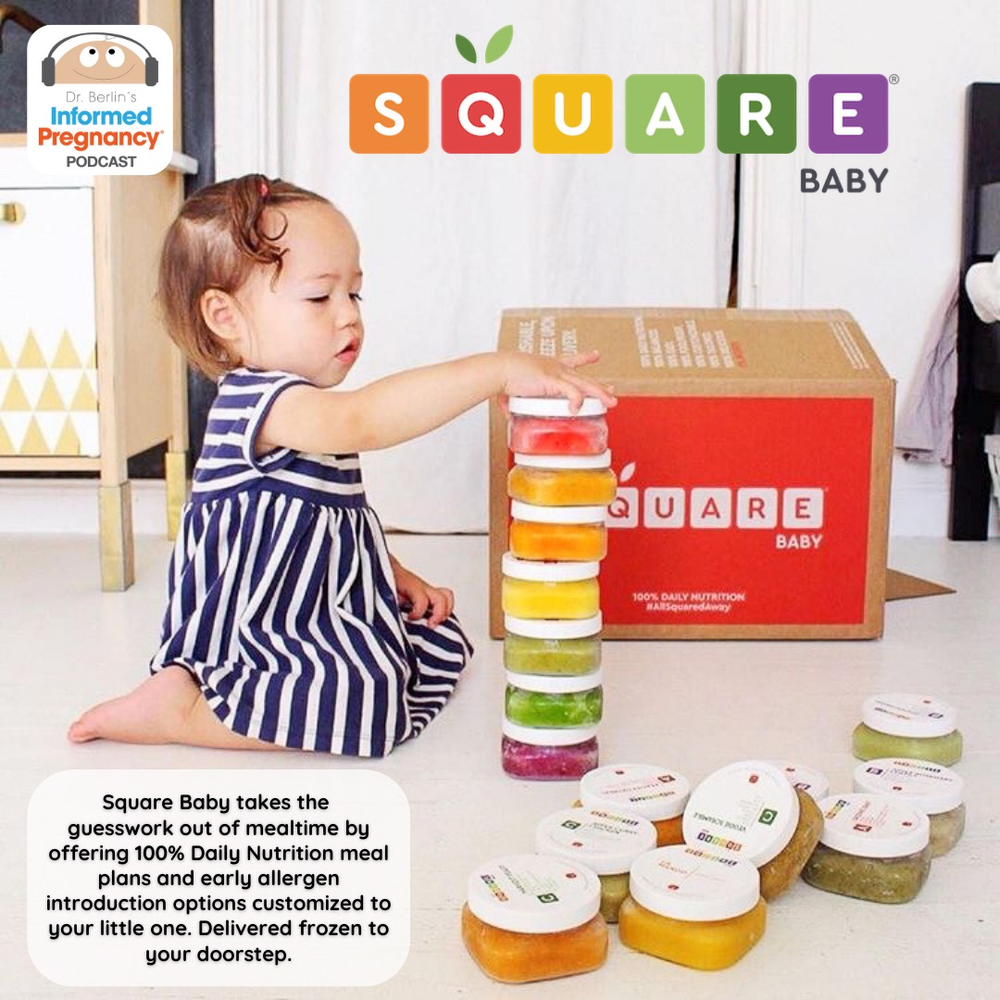
What we’ve really tried to solve with Square Baby is taking all the guesswork out of feeding parents to really solve every pain point that we felt. So, that parents don’t feel like they need to do all this research, and understand allergen dosage, and to make sure your baby’s got enough veggies and protein. But to offer this 100% daily nutrition meal plan that’s customized for your little one.
In general, when you’re thinking about making your own baby food — I mean essentially, you’re making smoothies, right? You want to make sure that you’re thinking about food safety, right? That you cook foods that need to be cooked. It can’t hurt to even steam things that maybe you, for yourself, might just dump into the blender. I found myself still steaming like blueberries really quickly and things like that. But certainly, proteins and other foods that need to be cooked, that’s very important step. And thinking about like the food pyramids; now, the MyPlate. Thinking about balancing their plate.
So, even if it’s all mixed up in a puree, if you think about what a balanced meal looks like, it’s half the plate’s fruits and veggies, a quarter of its whole grains, and the quarter bits, protein. So, thinking about that in a very general way can be helpful. Of course, I love to say more veggie-forward is great. It just helps with palate development. It’s very, very easy to get kids to like sweet foods, and to have fruits as snacks and things. And so, the more we can encourage that veggie acceptance is a really, really good thing.
Elliot: It’s great advice. I’m not sure that we talked about grains. Specifically, what kind of grains from six to eight months?
Katie: Yeah. We love to introduce ancient grains and things that are a bit harder. For Square Baby, we have a lot of barley, and millet, and quinoa, and other grains that are a bit harder to find, or are harder to make. Sometimes, might not be in your kind of rotation. And really kind of minimizing rice. There’s a lot of research and data on the arsenic and heavy metals inherently found in rice and in the soil. So, there’s no need to give rice if you don’t have to. There are plenty of other grains to give your kiddos. But really great for iron, for B vitamins, and other nutrients. So, great for fiber. Just help with digestion.
Elliot: Yeah. I mean, it’s Square Baby in addition to the know-how, the nutritional understanding that you bring into all of your meals is just doing it. Sourcing from the right places, the raw ingredients, understanding which foods for which stages, understanding food combinations, flavor exposure, palate development, allergy introduction, and then the amount of variety that I could offer my child when somebody else is doing is going to be much greater than the amount that I could do on my own.
For me, personally, I know for sure, I’m not the only one who struggles with work-life balance, the holy grail. I would much rather — even though it would be fun, I find it fun to make different food combinations and see how they react to them, I’d rather just spend that time with them and let somebody else do all of this if I’m able to. So, okay. But there was no Square Baby when I had kids.
Katie: That’s why I’m here now. There was no Square Baby for me either. It’s hard.
Elliot: But better late than never.
Katie: That’s right.
Elliot: Let’s take a little break. We’re going to go into the next category of eight to 12 months when we come back.
[break]
Elliot: Welcome back to the Informed Pregnancy Podcast. We’re talking to Katie Thompson, co-founder of Square Baby, about nutrition for the little ones who went from when they very first started eating, and now we’re all the way up to eight to 12 months. What happens at eight to 12 months?
Katie: At age 12 months, we’re looking now at three to five solid meals, test small meals per day. That could look like around a half a cup or 4-ounce meals per day. Again, listen to your baby’s cues. You will see some totally gobbled-down food, and others may be leaning more towards those three meals a day. So, listen to your baby’s cues. Understanding that really food is becoming a bit more of the mainstay of their diet and critical part of their nutrition.
So, thinking about, again, some of the common things we just talked about in six to eight months, but really focusing on keeping up that variety thinking about, eating the rainbow and various colors. That is an easy way of making sure that they’re getting critical nutrients, right? Because every color is associated with various phytonutrients and different vitamins and minerals. So, it’s nice to think about ways in which you can make sure you’re giving your kid the rainbow each day if you can.
Elliot: I found out that sprinkled-colored donuts don’t count.
Katie: I know. Skittles, no. Not so much either.
Elliot: Dang it.
Katie: Another thing that’s really important about this stage is babies are ready for more texture. What you don’t want is to hold on to super-thin, smooth purees in which they’re just taking down the equivalent of a yogurt or an applesauce texture all the time. You really want to challenge your kiddo to take on new textures and flavors you know as soon as they’re ready.
Elliot: What do you mean by, like examples of different textures?
Katie: Thinking about chunky meals, thicker meals. This might be a time where you’ve got whole pea inside the puree that they have to kind of chew up and swallow. So, baby food companies typically do a really good job of thinking about what foods are and kind of sizes are going to be appropriate for each stage of development so that you can minimize those choking hazards and make sure that you have the best chance of success.
But again, every baby’s so different. Some babies are got a fist full of a whole sweet potato, right? And doing the baby-led weaning, and they totally got it down, and they’re eating the food. And others kind of hang on to that puree stage a little bit longer. But, in general, you want to see your babies start to take on more chunky foods, maybe you’re starting to do table foods alongside your purees.
What I found in my experience was that, my baby sit really well with purees, which I love, once they kind of got over that first little two weeks for my younger baby. But with anything that you’re kind of introducing new, it’s nice to do something successful alongside. So, to kind of make sure they’re getting the nutrition they need, you don’t want everything to end up on the floor, or in their hair, or on your face as babies tend to play with food and throw it, which is also an important part of their journey. It’s important thing for them to play, to experience, to explore, and really kind of develop a good healthy relationship with food. It’s totally fine for food to end up on the floor. But when we’re thinking about nutrition, when we’re thinking about allergen introduction, we do need some of that to get into their bellies. So, thinking about doing a table food or something new that maybe they are either more likely to toss or not successfully get in their mouth, maybe they’re more likely to spit it out, it’s nice to do something successful alongside it. That’s sort of the texture recommendation.
Elliot: Get into your food. I feel like sometimes — my kids are older now. But when they were little and we’d give them a new texture, it took a minute to get used to it. I mean, they put it in and gum around a little bit. Sometimes, the experience of that bigger piece going down, would just feel weird to them. They’d make these [choking sound] kind of, you can’t see it. But you could probably imagine the face I’m making. It would just take a few times for them to try that before they got used to it and it became normal for them.
Katie: Yeah. I think it’s so key to remember that continuing to introduce, knowing that they turn their head once, twice for a week. It does not mean — I mean, unless they’re having an allergic reaction, right? Pause. But if it’s just that they’re not taking to it, don’t give up.
I remember being so frustrated that my son hated avocado. I was so excited to give him this healthy fat, and this beautiful green food that was so excited to give him. He was like, “No. I’m not having it.” And so, you keep going then before you know it, he’s getting the side of guacamole alongside you.
Elliot: True story. I rejected avocado till I was around 25 years old.
Katie: Me too.
Elliot: Oh, really?
Katie: I was a very picky eater.
Elliot: Oh, I wasn’t picky. I just didn’t like avocado and cilantro.
Katie: Oh, yeah, cilantro is definitely a “people love it or they hate it.” I love it. But do you like it now or no?
Elliot: I like it now.
Katie: See? Palate development is always a possibility.
Elliot: Never give up on your child. Okay.
You have a gazillion pieces of information, data points for parents who like to research, parents who like to know and understand the science the methodology. You’ve put a lot of that information on your website. What kind of things do you have up there?
Katie: Certainly, from a kind of ordering and customized nutrition perspective, we take the parent or caregiver through a quick little process to understand babies’ age, month, and year of birth, so that we know what kinds of foods to recommend to them. And then, we take in any potential dietary restrictions or preferences. So, if you’re vegan or vegetarian, or you’re looking for foods that are higher in iron. Our website will make it very easy to kind of filter through what you’re looking for. You can always adjust that. I think customization is incredibly important. We know one size does not fit all, and we certainly didn’t need to put a stake in the ground and say, “We’re only a vegan company.” “We’re only vegetarian,” or “We’re only paleo,” or “We’re only anything.” It’s knowing that balanced complete nutrition looks like a different diet to a lot of families, and we want to support that from an education perspective. Certainly, having information on allergen introduction, and palate development, and readiness for solids, and even the various steps of what to think about, just as we’ve talked about at each stage of development, I think is really important.
We also talk about heavy metals and how we can look for ways to reduce them, and what our commitments are at Square Baby. We just try to be as accessible as possible as two founders, Kendall and I have taken every customer service call, every email, every question. We even have a storefront for the first three years of our company. And so, we got to have all of these customer conversations, one-on-one, which I think was such an important piece for us. At the end of the day, we launched a company, now having you know kids that are between 10 and 15 years old. Clearly, we’re still very passionate about baby food and helping parents to this stage. So, whether it’s information on our website or just a way to talk to myself or another one of our dietitians, it’s our goal to be very, very helpful in this process and to never going to be prescriptive, like you’re a pediatrician or replace that. Certainly, we can help with guidelines and other advice based on our menu.
Elliot: It’s amazing that you make yourself so accessible. I mean, every time I talk to you, I just think about all the different things that you need to know and to learn. Even when you talk about packaging. “Oh, this is where we switched to this kind of packaging, and that kind of packaging.” All the nutritional information, the preparatory information of being able to ship, and all the different things involved in the logistics of shipping, and then to still be available for your families and your customers. It’s incredible. So, I look up to you.
Katie: Well, that is kind. Thank you. I think it’s just something we’re insanely passionate about. You don’t get into this and throw your life into a startup without an incredible amount of passion to create change and to be the resource and be the company we wish we would have had 14 years ago when we were feeding our babies.
Elliot: Because you have so much direct interaction with your clients, you get to see a lot and you get to kind of survey the field as to what people have and what they’re missing, what they know and what they don’t know. What are some of the things that you see the gaps in parent knowledge about feeding little ones?
Katie: It’s a great question. The first thing that comes to mind is I think that, because there’s so much information out there, because there are so many blogs, so much social media has many opinions. There’s a lot of mom shaming. There’s a lot of, “If you don’t do it this way, you’re doing it the wrong way.” “If you give your baby purees versus baby-led weaning, or vice versa, that there’s one way, that’s the right way,” which is just absolutely not the case.
So, whether it’s just understanding that every baby’s a little different and their readiness, their journey to solids, their preferences, all those things, they will hopefully, eventually, get to a very similar place if you do all the same things. But they might get there in a different way, and that’s okay. And knowing that whether doing solely baby-led weaning, even understanding that purees can be a great part of that. You think about what soup is, and smoothies are, and yogurts are, those can be very puree-like products, foods that are absolutely healthy and great to give to your baby. But you can use a puree as a dip, or a sauce, or on toast, or all different ways to give them the balanced nutrition, the allergy introduction that they need. So, I think just understanding that your intuition as a parent, as a caregiver, is really valuable. Listen to your pediatrician, understand resources that are valid and research-based. But then, the day also listen to yourself, and I think give yourself some grace. I think that’s really important.
Elliot: That’s really good advice. Thank you for all of this information. Thank you for everything that you do for helping us feed our little ones in the most successful way, in the most nutritious way, and give them a great start in life. Katie, where can we find you guys online?
Katie: So, squarebaby.com. We are just relaunching the company, excited to be going national with our direct-to-consumer fresh baby food. We’ll be shipping to all of the lower 48 states. Very excited to be going to our website. You can place a customized order. We make it really easy to pause, to skip, to change your meal assortment, and things like that. And, of course, we’re always available. You can email us at hello@squarebaby.com. It goes right to my inbox, with any questions. Honestly, we’re here and we’d love to offer as well for your audience, “Berlin20.” Discount code for 20% off for first orders.
Elliot: Oh, amazing! Twenty percent off your first order with the code: Berlin20. Remind us of the website.
Katie: squarebaby.com
Elliot: Easy. squarebaby.com. Promotion code: Berlin20. Get 20% off.
Katie, thank you very much again. I’m probably going to listen to these a couple of times. You gave us so much information. It’s hard to digest all at once. No pun intended, but it’s one of those things that I’ll go back and listen to and get new pearls and gems each time I listen. So, from the bottom of my heart, thank you.
Katie: Oh, thank you. That is so kind. I’m just so grateful for the opportunity to share and to hopefully be helpful and hope to feed lots of babies.
Elliot: Amazing. At home, thanks for listening to the Informed Pregnancy Podcast. If you like our program, share us with your friends. Leave us some feedback, and visit us online at informedpregnancy.com.
Elliot: Welcome to the Informed Pregnancy and Parenting Podcast. I’m your host, pregnancy-focused chiropractor, Dr. Elliot Berlin.
You’ve tuned in to Part 2 of our “Square Baby” sponsored episode series. In this episode, we’re going to delve deeper into the process behind the food selection, as well as the important things to know when feeding your baby and how Square Baby addresses them. My returning guest is one of the co-founders of Square Baby, Katie Thompson. Welcome back to the podcast.
Katie: Thanks so much for having me again.
Elliot: I learned so much last time. Today, we’re going to get even deeper. I’m looking forward to learning more. The kind of things that probably would have been helpful to know when I had little ones.
Katie: That’s right. That’s how we all feel. It’s all in retrospect, right?
Elliot: Dang it! All right. Let’s talk about the research. You put a lot of research and effort into figuring out what makes a square meal for babies. How did you go about doing it?
Katie: Yeah, that’s right. Initially, being a mom myself and cruising through the baby food aisles, what I found was there were so many misleadingly marketed foods. I felt like many of them were fruit-heavy. I wanted to create a solution for parents that took all the guesswork out of feeding their baby, and I knew that that started with sound research and recommendations. So, I dove quickly into everything the AAP, USDA, and even WIC was talking about related to nutrition.
And then, even specifically more recently, following the research on food allergies with some of the landmark studies, like the LEAP study, and that shows that introducing allergens early and often can actually help to prevent allergies. And then, of course, like any entrepreneur, you have every conversation with anyone who’s willing to talk to you from allergist, to pediatricians, to other brands even sharing insights on common problems that we’re trying to solve.
Elliot: Okay. I think it’s challenging. I wanted to write a coffee table book where you have an issue, a topic, a question in health. And then, you have on one side, all of the research that you can quote that is pro that idea and on the other side of the research report, that’s anti that idea. I think that because there’s so much out there, I mean just even as you mentioned AAP, which is American Academy of Pediatrics, and USDA, and WIC, and then the other studies that you know. I mean, how does the person who doesn’t have an extensive background in research even wade through the piles to kind of see what’s trustworthy and what’s junk?
Katie: Yeah. In my opinion, it shouldn’t be up to the everyday consumer to have to dive that deep into research. Like certainly reading some blogs, or newsletters from AAP, or something. But as a dietitian — I got my master’s in nutrition. We spent a lot of time, most of our time, going through research, picking holes in certain studies, presenting research, and it certainly wasn’t the most fun thing for me, personally. But it was such a great discipline to learn to kind of understand how to sift through the BS that’s out there. Especially now, where everyone’s a nutrition expert that has a blog, or an Instagram post, or anything. There’s just information everywhere and there is a lot of stuff that’s conflicting, which is very confusing and frustrating for parents. But certainly, science evolves and that’s okay. But learning to just trust and certain resources, like the AAP, that’s always such a sound place to go because there are layers of individuals and researchers that are approving every word on that website.
Elliot: Yeah. Everything’s super scrutinized and peer-reviewed.
Katie: That’s right.
Elliot: Well, what you’re saying is I maybe shouldn’t be getting most of my nutritional information from TikTok.
Katie: I’m sure there’s some really good stuff there. I mean, definitely some recipe ideas and some entertainment, which is important.
Elliot: Yes. Recipes and entertainment are what I go to TikTok for, but not my trusted medical references. Okay. Getting back to you. You have — and also Kendall, your partner, have research background as well.
Katie: Yes. Kendall’s far smarter than me. She has a master’s in biophysics and molecular genetics, which I find hard to even say. She remembers everything she’s ever read and learned. She’s like an amazing trap of knowledge. It’s the best partner to have.
Elliot: Yeah. And then, you also worked at Starbucks.
Katie: I did, yeah. So, that really taught me kind of going from a very clinical-focused, research-focused, master’s degree, and then thinking I would end up in the clinical field, I got my first job at Starbucks, which is supposed to be this like three-week role where I came in and crunched the numbers, and told them all the calories, and all the different beverage iterations, and all that.
And then, ended up taking on a more strategic role. A big part of my job there was to, of course understand the recent research, but more so market insights, trends, what customers are looking for. Really think take myself a little bit out of just looking at science, science, science, and think about the customer. I think honestly like that’s what kind of brought the two things together for me for “Square Baby.” It’s here’s, all the science and nutrition over here. And here’s this customer with all these pain points. How do I simplify it so that they don’t have to read all the research or figure out which brand they can trust, but to really simplify it for the parent?
Elliot: How did your own parenting experiences influence your research?
Katie: Yeah. Definitely. I always tell the story of going down that baby food aisle for the first time. You’re so excited your baby’s made it to this next milestone. You’ve got your baby in the cart. Everybody starts to cry, and scream, and right away, you’re like, “This isn’t what I dreamed of.” But really, as a kind of food industry dietitian, at that point who was really always thinking about, “How do we solve this moment?’ Even at Starbucks, right? I was like — this is kind of a funny story. We created the “Skinny Latte” because people would have “line ordering anxiety,” as kind of how we termed it. It was their place in line, and they kind of forgot how to say, “Oh, I need a non-fat, and a sugar-free, and a no whip.” It’s so silly, but that’s how the “Skinny Latte” was born. Was because we were just trying to make that moment simpler for that customer who wanted that thing. So, always just kind of thinking about how we can create a solution. So, thinking through all of my own pain points on the last episode I told you about how I wanted to get protein in my kid and I felt like I was stuck with giving him these little Beanie Weenies in a jar. I was like, “This is not okay.” So, clearly, we’re looking for more protein. I wanted things beyond just the kind of the peas, and carrots, and sweet potatoes, more adventurous foods and flavors.
And then, of course, that balanced nutrition was really missing for me. I started to see more and more pouches come on the market. So, my oldest kid who inspired this company is 13. When we were feeding him, pouches were a new thing. It was like, this very cool like, “Oh, my gosh. There’s a pouch with kale in it and quinoa. This is so exciting!” But I started to become more and more frustrated when I saw that I would flip over that pouch, and very often see that applesauce was the first ingredient almost every time. And the sugar was much higher than those brands that have been out there for decades. So, really taking all those pain points as a parent really kind of led us to, “How do we solve this for them?” And then, as the science, nutrition part of me want to make sure that we could substantiate any claims. That’s kind of where all that kind of research and all the data comes in is like if we say, “It’s balanced;” if we say, “It’s 100% daily nutrition;” how are you going to back that up if you’re sick in court trying to back up your claims. That’s important too.
Elliot: I mean, it’s so interesting because how you package something, it’s the same thing like a novice trying to read through research. I have some background research. It’s very challenging for me to figure out sometimes what’s truth versus fact. Same thing here with the labels. Sometimes, you just look at how something is packaged or labeled, and it kind of tricks you into thinking, “Wow! I’m healthy. I’m going to be so healthy and good for your kid.” And, “I’m more expensive, so I must be healthy.” And then, if you look a bit deeper, if you know what you’re looking for, you all of a sudden realize you have some healthy things in there but your junk.
Katie: Yeah. When I started at Starbucks, I actually sat on the Regulatory Affairs team. After kind of doing all the crunching numbers and telling them how many calories were in their Venti Frappuccino or whatever, I was in charge of all the nutrition facts panels, all the ingredients, and all the claims. So, I very quickly learned how to kind of read your way down an aisle and see where certain words have no meaning. Like, you can say “nutritious” and it has zero meaning. Anyone could say it on anything, right? “Healthy” is a very specific definition. So, you can kind of see through products to be marketed, how pictures on a product as long as it has some avocado. Well, they can have a giant avocado on the picture, and then it’s mostly applesauce with just a teaspoon of avocado. So, you start to sift through that.
But I think what’s the most challenging for — not just in the baby food category is that yes, nutrition facts panels and ingredient statements are regulated and should be trust. But what do we do with that number? How do we know what amount of sugar, or what amount of fat, or what we should be looking for in each product, right? Like, those benchmarks aren’t as clear to us when we’re going down the aisle.
Elliot: Sure. And then, they also change over time. Why don’t we take a little break. When we come back, we’ll talk about the first 1,000 days. And during that time period, what kind of things babies need and what kind of things would be less good for them. Let’s take a little break. We’ll be right back.
[break]
Elliot: Welcome back. We’re talking to Katie Thompson of “Square Baby.” Let’s talk nutrition, and specifically, the first 1,000 days. What kind of things do babies need in the first 1,000 days for healthy growth and development?
Katie: Yeah. so there’s key nutrients that probably most people have heard about or are hearing from their pediatrician. Like calcium, and iron, zinc, vitamin D, choline is one people hear about a little bit less.
Elliot: What’s choline?
Katie: It’s a mineral that’s commonly found in eggs actually. One egg provides 100% of a baby’s daily amount of choline. Choline is an essential nutrient for brain development. Something, honestly, it wasn’t even on my radar honestly when I was feeding my babies, whether it’s kind of newer research or just something that’s talked about a bit more. That’s certainly a reason why we have eggs on our menu.
Elliot: Calcium, iron, zinc, vitamin D, choline.
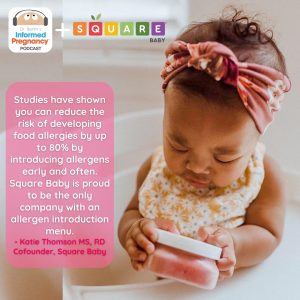
Katie: Yep. Omega-3s. Again, all the things that you’re probably hearing from your pediatrician. But I think just as important and maybe talked about a little bit less is, in the first 1,000 days, you have this critical period for food allergy prevention. This is newer research that’s come out from the LEAP Petite eat studies — all very cutely named, of course. But have really changed the recommendation from instead of “Do not give your kid a peanut until they are 3;” now, it is “Give your kids peanuts as early as four to six months, and several times a week.” Because you can actually help prevent food allergies, like peanut by up to 80% through early allergen introduction. So, I would say that’s such a critical thing in this early, early time. As well as many parents are rightfully very, very scared about anaphylaxis and other very, scary reactions to a food allergy. But before 12 months of age is actually the safest time to introduce allergens as their reactions are going to be smaller than if you were to delay that introduction.
Elliot: I mean, when someone gives peanuts let’s say for the first time to get under 12 months, do you hold your breath or do you have to have anything ready?
Katie: Definitely. Well, first of all, I always say with any kind of medical advice, “Talk to your pediatrician or allergist.” But, generally, they say try these things at home, or whether you’re at a doctor’s office or at the pediatrician so often that first year, it might be a good idea to do it literally when you’re there for a well check or for some other vaccination or something. Why not be there? But, yeah.
Elliot: I mean, it’s not a bad idea. Like you said, you pretty much live there.
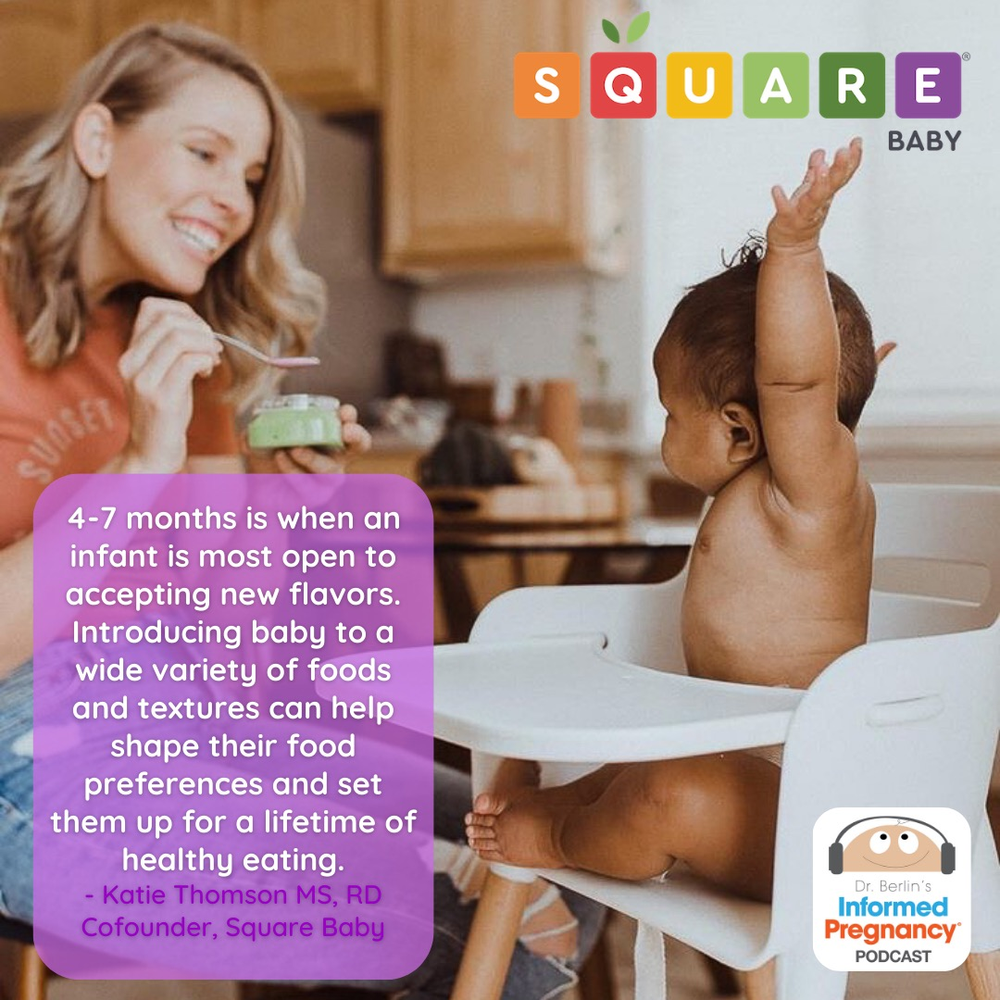
Katie: Yeah, totally. It’s true. The other thing I did want to note about this first 1,000 days and the importance of this window is palate development. What I mean by that is just really developing baby’s relationship with food, healthy eating habits, and making sure that in this kind of critical period, which they’ve actually shown that four to seven months, is a very critical window where an infant is most susceptible to liking new flavors. That these early days can really help shape their food preferences that, of course, then those healthy eating habits have a lasting impact over time of course.
Lastly, I would say motor development and overall development skills. Normally, I think we wouldn’t have had to talk about this a decade ago. But now, with pouches being so prevalent. Pouches are a great on the go. I’m in an airplane, I’m going to the park, whatever. I’ve been there. I’ve given my kid a pouch while driving, as like a kind of a pacifier. I totally understand the need for them. But from an every meal kind of perspective, the importance of food and feeding and finger foods for the oral and motor development skills are really important.
Elliot: As you’re talking about this, I’m not thinking about regrets. My kids are now older. They’re all like tween teenage kids. But I think that in terms of a healthy lifestyle, the sooner you get them outdoors, running around carrying a ball or whatever, the better off they’re going to be health-wise. What you’re saying here about food also rings true. Like, the sooner you get them eating, liking vegetables and things that have different tastes, rather than super picky kids. I mean, would you say that this has a chance of decreasing pickiness in the eaters?
Katie: Oh, a 100%. If you think about what we feed babies and their acceptance of like, “Here’s some straight green beans,” and “Here’s some straight broccoli,” and “Here’s some spinach in a jar,” and some of the more even kind of what we wouldn’t even want to touch because it looks so kind of muted, or unappetizing, or whatnot. They are much more susceptible to enjoying that new food. Because their taste buds have not grown to have a propensity or affinity for sweetness or craving salt. Like, all of our palettes have adjusted to the food we’ve been eating, right? So, some people can put a salt shaker like crazy on their meal because they have built up a tolerance to it. Whereas, infants are starting from scratch. They certainly have an affinity for sweetness from breast milk, but it’s not the same thing as trying to get a toddler, a strong-willed toddler, to try to eat something that they don’t think they like. Don’t want to eat, et cetera. So, this period of time and offering things often — and being adventurous, is really important.
I will also say when it comes to pickiness, it’s been interesting kind of having kids that have grown up and having so many families over and seeing so many eating situations or whatever. It’s very easy to kind of label your kid as a picky eater and have that be sort of the excuse or make that the easy reason why like, “Oh! My kid only eats plain pasta.” “Oh! My kid will not touch that.” It’s like it is a hard fight sometimes. It’s not the easy choice to say, “You know what? You’re going to try, in our house at least, you have to try one bite of each thing. If it’s not your favorite, cool. We’ll try again. We’re never going to make food a fight or a terrible time.” But this idea that your preferences can change, I think is important. But also letting a child know that if they start to win every food battle, that becomes a very slippery slope and that’s a hard thing to turn around when they get older.
Elliot: That’s really hard to turn around. I think also the same with the inactivity, the just sitting around. But in my office now, I see so many people for health and wellness care. You can tell immediately the ones who are turned on to healthier foods at an earlier age and the ones who are turned on to exercise at an earlier age. Someone who’s 30 like that, versus someone who’s 30 who’s been inactive and eats junk as the mainstay of their diet. It’s just two extremely different body types.
Katie: For sure.
Elliot: So, again, regrets in retrospect that I didn’t get into those things earlier. And also that — we did mediocre with the kids. My wife was really good that bring them healthy foods from an earlier age. But the picky ones, we didn’t push. I presume we didn’t push hard enough. You know, we’re that plain pasta family for one of our kids. For one of our kids.
Katie: There’s always time. I taught myself to like most vegetables in my 20s.
Elliot: Oh, it’s just time to catch up. She’s also vegetarian, but she doesn’t like vegetables. So, it’s kind of interesting. All right. We’re talking about the first 1,000 days and all these different reasons why it’s important to get kids on healthy food during that time.
Katie: Yeah.
Elliot: This is also the most critical time of development of all the different organ systems.
Katie: That’s right.
Elliot: The microbiome. Talk about that a little bit.
Katie: Yeah. Well, gosh, I feel like that’s something that when I got my master’s 15 years ago, or whatever it was, it was still a bit more of a mystery. I feel like I’ve learned so much more. Frankly, just chasing my own kind of health and nutrition, understanding my own body. But just how interconnected the microbiome is to the rest of the body when it comes to inflammation, or digestion, and growth, everything, mood. There’s so many things that are interconnected, which I know totally makes sense. But I feel like we’re learning a lot more about how early diet as well as, you know diet throughout your whole life. But, especially, early can really help strengthen and build that microbiome. So, all that good, healthy gut bacteria that will help you to digest your food and kind of get the most nutrients out of your body. Certainly, all the same foods that you know nutritionists and pediatricians have been telling you to eat with whole grains, and fruits, and vegetables, and lean proteins, and healthy fats. It’s all the same stuff that’s how important from an immune system, and brain and body development, but certainly, the microbiome benefits from a healthy diet.
Elliot: We’re just everyday learning so much more about it. It’s like we’re just scratching the surface and there’s already so much.
Katie: It’s a total puzzle.
Elliot: Yeah. It’s not just bacteria, it’s all the microorganisms and there’s gazillions of them. Okay. You have talked about how sometimes the baby food will have quinoa and something green in it. But then, it’s mostly applesauce. But, sometimes, those fruits are good for us.
Katie: Absolutely. That’s something that’s so important as I talk about balanced nutrition and I kind of tell the applesauce story because it’s something that I found to be so consistent across the category. It was like, “Oh, my God. Applesauce, applesauce.” Every single product I turn over, it said it was this four-food group meal, and it had this big picture of spinach on it. I would rather it just tell me that, “This is a fruity meal with a little bit of hidden veggies,” or something. At least, be transparent and honest to the customer. Because if they feel like they’ve made this really great decision, they’re giving their baby all the veggies they need. Then that’s where the rub is for me. But certainly, fruit is a huge part of a healthy diet from a nutrient perspective. Fiber, phytonutrients, and just enjoyment. It’s just obviously super delicious. Never would I say, “Cut fruit out of the diet,” but certainly looking at our square meals. All of our square meals are balanced with veggies, fruit, grains, and protein, healthy fats.
What’s amazing to me is we do have fruit in every meal. Though, sometimes, I’ll tell you the fruit is avocado so we get our super savory ones when avocado is the fruit. But you just don’t need that much sweetness. Babies don’t need an applesauce amount of sweetness. Applesauce is totally fine here and there. But if everything they eat and suck out of a pouch and consumed during the day is super sweet, it’s going to be real hard to get that earthiness, and bitterness, and savory food into them. Especially, if you’re going to switch from a baby food to table foods, and have them eat the things that the rest of the family is eating, you’re likely not eating fruity smoothies all day long and would like for them to continue to enjoy a variety of foods.
Elliot: You don’t know me very well. I didn’t realize, smoothies. You always think — this is the same exact thing for older kids and adults. You think smoothies are going to be healthy. You’re like, “Okay. I’ll have some of the strawberry, and banana, and apple.” And that’s not a healthy drink.
Katie: Well, here’s the deal. A lot of times, when you make a smoothie at home, I’ve noticed you can always throw — you know, spinach is like the magic ingredient. You can throw in like a stinking pound of spinach into a berry smoothie and no one knows the difference.
Elliot: They don’t taste it.
Katie: Yeah. Zucchini is another great one, squash. But there’s something to be said about like whether you’re hiding vegetables, right? Like, “Oh, we’re sneaking this in,” and that’s great. But also, teaching your baby to love veggie-forward, or just veggies, or veggie-forward meals, so we’re not hiding it.
But I’ve noticed my 10-year-old now, Nolan, who’s a total foodie. He really loves these smoothies. He’ll ask for them if we go out to a coffee shop or something. He’s like, “Can I get the smoothie?” Of course, his dietitian mom who definitely is focused on creating a healthy relationship with food, and nothing is shamed, and everything is a part of a healthy diet, but I’m trying to get him to understand. I go, “Well, look at the sugar grams on there.” He was like, “Ah!” He was like, “Fifty-five!” I was like, “That’s like a Coke and a half.” He’s like, “Ah! I get it.” I was like, “So, why don’t you have half the smoothie?” Because it was a very fruit-concentrated smoothie in a bottle. Very different from if we made one at home that probably had a bit more food groups. Anyway, that’s my whole dissertation.
Elliot: Now, my smoothie is a little bit of nut butter, unsweetened almond milk, no ice, some hemp seeds. Like you said, tons of spinach or power greens, and some protein powder.
Katie: [unin 22:46]
Elliot: Yeah. It’s amazing. I drink it more slowly. After I drink it, I’m not hungry at all for like three hours. It’s a game-changer. It’s totally different. Okay. Well, enough about me.
I want to find out because I keep hearing you talk about these “squarely balanced meals” from Square Baby. But I want to know more specifics about the meals and what’s in them. Let’s take a quick break. We’ll be right back.
[break]
Elliot: Welcome back. We are talking about Katie Thompson and Square Baby. I want to know about the food, Katie. Tell me about the food. What are some of your more popular products?
Katie: Yeah. When we launched, we had 20 different meals. I will say they sold pretty equally across the board, which is pretty exciting. I think people loved having the variety, and love to be able to fill up their freezer with a bunch of different meals, and have the whole rainbow. But, certainly, there’s some favorites. The “Apple Curry Chicken,” “Mango Coconut Chicken” have been some favorites amongst our families. I think partly because it’s really hard to find chicken in a fresh baby food company. You’ll see it in some of the jarred items. We have a really amazing chicken bone broth from local butchers, Roli Roti bone broth. Anyway. So, that’s bone broth. We’re really proud of those meals.
Elliot: How does it come?
Katie: They’re made fresh, and then immediately frozen right after making them. Then, they’re shipped to your doorstep frozen. Just like parents who you’re making their own baby food very often, will make a blender full and then put it in their freezer. We didn’t want parents to have that pressure of, “Oh, my gosh. This is going to go bad in four days,” or “I’m throwing away these nice meals because they had a short shelf life.” The meals come in a little container, and you just thaw them and serve them.
Elliot: Thaw and serve. But is it like baby food consistency?
Katie: Yeah, we have a range. I think it’s really important to not just have one texture. We have from the kind of first bites, which tend to be kind of on the thinner end, like a thin smoothie but really, really super smooth. And then, kind of ranging up to thicker and chunkier. So, that, again, even if babies having mostly purees, we think it’s important that they kind of graduate towards being ready for table food. As they grow and we have our more like 8-plus month meals, they’re getting more ready for chunky peas, and little bits of avocado, and sweet potato, and things like that, that really kind of get them ready for table foods.
Elliot: So, different textures for different ages?
Katie: Yeah. They’re all really spoonable. I think the last thing anyone really wants is a thin puree, right? You can always thin something out with breast milk or formula, that’s what we’re all used to doing at home. But just having something that kind of sits on the spoon nicely, but certainly, for each age and stage, there’s foods that most babies are more ready for and can tolerate different textures. Kind of a graduation process.
Elliot: Okay. Break down something for me. Like, “Apple Curry Chicken.” What’s in there?
Katie: Well, I love this one because, of course, it has apple, which has been my sticking point of the baby food industry. But I was like, “We’re going to put applesauce and baby food, and have it be super balanced.” So, the first ingredient is zucchini, and there’s green peas, there’s apple, quinoa, coconut milk, chicken bone broth, curry. I think I covered it all. Yep. It’s got kind of the healthy fats of coconut milk, gentle curry to help them start to enjoy different flavors. It’s not at all spicy or overwhelming, but just kind of a warm flavor and kind of mildly sweet.
Elliot: How do you come up with these — it’s one thing to come up with the balanced nutrition element of it, but how do you come up with these combinations and flavors?
Katie: Honestly, I’m definitely not a chef, but cooking enough for your family or just being interested in different recipes and combinations, you can think about like, “Oh gosh! That would make a really great baby food.” But certainly, like I started when I developed the whole square meal system, which is where all of our meals kind of ladder up to 100% daily nutrition. So, each of the meals is square and balanced with veggies, fruits, grains, and protein. And then, for example, an 8- to 12-month-old, any three of our meals is a 100% of their daily recommended veggies, grains, proteins, fruit, et cetera.
So, the whole recipe system is all math, right? For example, as we’ve been scaling up from our commercial kitchen into a larger kitchen facility, of course, these other RND people would be like, “You know what you should do is add a little bit more applesauce to this.” I’m like, “Nope! Can’t! I can’t do it. No, no, no.” That would be the easy solution, wouldn’t it? But we stick to that promise of 100% daily nutrition, which gave us parameters. But then, just thinking about flavors that taste good together. And then, honestly, we just made a whole bunch of blender baby foods and tasted them our ourselves.
Elliot: Do your kids have any favorites?
Katie: They do. I think I might have mentioned in the last episode that my 10-year-old loves the “Beet Berry.”
Elliot: “Beet Berry.”
Katie: What I loved about this was that I hated beets until I was 30. And now, they’re my favorite, one of my favorite foods. What I love, which is a great little anecdote for it, this “working” for Nolan, was that the first time we made strawberry shortcake, he asked to put beets on it. I happened to have fresh beets. I literally sliced them up on top of his strawberry shortcake.
Elliot: Oh, wow!
Katie: He was like, “Thank you.” Like this is exactly what this combination means. I was like, “Yes! Mom wins.” Because certainly, there are a thousand non-win moments as a mom, right? We were like, “Ah.” You know? But that was like a really great moment of that smoothie, like he would chug it as a smoothie, right? The “Beet Berry,” which has beet, strawberries, oats, and yogurt. Pretty simple, but each of the first ingredient. They’re not hidden in there. You definitely get the earthiness of it. But I loved that he didn’t shy away from that earthiness.
Elliot: Beet shortcake.
Katie: I know. And then, we use a lot of our purees as dips or sauces. I’ve literally served our avocado greens, which is like a guacamole at a Super Bowl party. I did add a little bit of jalapeno and some salt because we don’t salt our meals, but I thought that was pretty cool that nobody knew they were eating a big vat of baby food until.
Elliot: The reveal.
Katie: Yeah.
Elliot: Well, tell you what looks fantastic to me, “Hazelnut Pumpkin Pie.”
Katie: Yes. So, that’s my new favorite meal. We are so excited that’s a brand new meal, and it obviously includes hazelnut, which is a tree nut and an allergen. So, it’s great for earlier allergen introduction. Also, has a little bit of egg. But it just has these warm flavors of pie, and pumpkin forward, and super creamy and really delicious. Also, almond butter and banana is like you would probably have that as a smoothie.
Elliot: Yeah.
Katie: Really yummy.
Elliot: Count me in. Count me in for that one. Thanks. I want that “Hazelnut Pumpkin Pie” though first.
Katie: Got it.
Elliot: For Thanksgiving. Do you have a turkey meal?
Katie: We do. We have a “Turkey Tacos” meal. We actually started this collaboration with “One Potato” a couple of years ago, and because they’re top selling meal was their “Turkey Tacos.” I’m like, “Well, I can turn that into baby food.” And so, it has the turkey bone broth, and avocado, and bell peppers, corn, cumin, lime. Super yummy. Also, kind of like a really yummy guacamole.
Elliot: I feel like we have the easiest Thanksgiving dinner. You’ve salted?
Katie: Yeah. I’ll send you an assortment.
Elliot: Okay. Rainbow. My nutritionist always said I have like lots of different colors in your fruit palette. I found out the hard way she wasn’t talking about the colored sprinkles.
Katie: No. That’s right. I know. My kids will be like, “Look, Mom. I’m eating the rainbow.” And it’s like a handful of Skittles, right? Ha-ha, funny.
Elliot: Skittles!
Katie: No. I think that’s probably the easiest takeaway for any parent. None of us should have to look at every label and count, “Gosh. Has my kid got 100% of their iron today. Am I counting up the percent DVs on the back of the nutrition facts?” We don’t live like that. But what we can think about is, “What colors has my kid eaten today?” You’re not going to have a rainbow in every single meal. It’s great if you do. That’s amazing. But have they had enough green today, the purples and the reds?
The reason behind this is — obviously, it’s beautiful, but each color brings in a different phytonutrient, different cancer-fighting properties. And together, they really provide you with the nutrition you need. Even white vegetables, like white potatoes and cauliflower. Obviously, white and brown foods, like beans and whole grains, can be a part of that rainbow as well. But I think that’s a great takeaway for kind of one, balance your plate, try to get the food groups on there in some amount of balance, and try to get your kid as much of the rainbow as you can in a day.
Elliot: So, for me or for another parent who doesn’t have the background walking down the aisles, when we pick up a label, what are some of the things that we could look for to identify better foods for our kids?
Katie: I will say that the front of the pack can be a bit more deceiving, right? That’s where the pictures are, the product name. You can kind of name a product for the most part whatever you want to. And so, you’re not going to get a lot of information there. Where you’re going to get that information as ingredient statements, the nutrition facts panels, because those don’t lie. I don’t want to set any certain number and say, “Boy, if your baby has a meal that has over 8 grams of sugar, that’s terrible, and you’re a bad parent.” Because if you were to give them a meal of all mango or something, you really want them to try the mango, that’s just fine. As much as I kind of talk about the data and the science and this 100%, we’re doing that because what we wanted to do is try to take the guesswork out of it. But if you’re choosing other brands or you’re developing recipes or just feeding baby from what you have at home, all those things are totally fine. I think taking away some of that idea that needs to be so prescriptive and perfect is, for all things parenting, is a good idea. We don’t need to be perfect all the time.
But, in general, what I like to do is kind of see through the BS of potential marketing. So, if something is kind of touting green beans or whatever, and again, you see fruit as the first ingredient and it’s got over 9 or 10 grams of sugar, well that’s fine. You’re probably not giving them that many green beans. You’re probably giving them quite a bit of the first fruit ingredient. The other thing that kind of bothers me — this is my like personal rub, is that we have these avocado meals where avocado is the first ingredient. They’re like really lush and full of healthy fats and tons of avocado. And then, you’ll see these other products in the market. So, our meal has 6 grams of healthy fats from avocado. And then, you’ll look at some of the other ones, literally, “avocados” in the name and it has half of a gram of fat and like, “Oh, my gosh.”
Elliot: That’s avocado.
Katie: Right? And I get it. They’re doing that because they want the credit for avocado, but they don’t want to put the expensive ingredient in. It’s like a teaspoon of equivalent of avocado. Anyway, those are the kinds of things where you just sort of think through. Like, “Is this what I think I’m giving my baby?” and “Does this look balanced?” But it’s nice to have a balance between fiber, and protein, and some healthy fats, and more moderate on the sugar. If you can aim for 5 or 6 grams or less, that’s pretty great. But, again, if you want to give your kiddo an all-fruit and oatmeal meal, that’s fine. It’s all a part of the balance, right?
Elliot: Yeah. A lot of times, you see this exciting big words that say, “Allergen-free.” But as we’re learning, that may not be the best thing.
Elliot: Yeah. So, certainly, for infants, toddlers that have been diagnosed with a food allergy, that is incredibly important. One of my closest friends, my son’s best friend, has a severe food allergy. I obviously understand the absolute importance for allergen-free foods. But for an infant — again, unless your baby’s been diagnosed with an allergy, or you’ve been told by an allergist or pediatrician to avoid those foods, it really is important to look for those allergen introduction options. Of course, peanuts and tree nuts, but also milk, and eggs, and wheat, and fish, and shellfish. Yeah, I think I’ve got them all.
In general, this early period of their development is so key for helping to prevent food allergies, and it’s something that we just never knew before. So, we know that food allergies have increased 50% from 1997 to 2011. And while researchers don’t know the exact reasons behind this increase in food allergy, they do believe that it’s due to a lack of exposure. So, after decades of us parents being told, “Do not give your baby an allergen for the first year to three years of their life,” this means that babies have been growing up the last several years, decades, without this exposure which has led to an increased prevalence of food allergies.
Elliot: I love when a company takes a look at what there is and says, “We can do better.” And then, does a boatload of research and then comes up with creative ideas on how to make the improvements. And so, for Square Baby has addressed a whole bunch of things, including square balanced meals, veggies first. A lot of allergy information and early introduction, diversity of flavor and texture. The container, rather than the pouch, so that you can encourage babies to start spoon feeding and seeing and touching experiencing the food in other ways. And also, the fact that it’s freshly made and frozen, and delivered that way, so you optimize the nutrition that’s in there. Do you also have options for vegetarian or vegan?
Katie: Yeah. I’m so glad that you asked that. Yes, our square meal system has A, B, and C products. And we created them that way so that it made it very easy for difference, whether people are looking to avoid dairy, or opt to be vegan family, our B meals are all vegan. So, their protein comes from beans, and nuts, and seeds. Our A meals are vegetarians. So, they have yogurt as their protein. And then, our C meals have chicken bone broth or egg, fish, et cetera. So, animal protein. It’s really easy on our website to say, “Oh, my baby is dairy-free,” and vegetarian, or whatnot. We also have a bunch of different filters. Like, “I’m looking for extra iron, or herbs, and spices, or more adventurous textures.” You can kind of sift through and see which meals really fit for you, versus having to kind of go into every single meal details page, and read, and look at the picture. Because nobody got time for that, right? No. Just watch someone to tell you what to buy.
Elliot: So, thoughtful free to do all that. Make it so easy for us. All right, Katie, any final thoughts?
Katie: Yeah. It’s been interesting newer topics since I’ve had kids for sure is this “baby-led weaning,” and I get asked a lot about it. Certainly, we are a company that offers purees and a variety of textures. And so, we get asked a lot about, “What do you think about baby-led weaning?” What I’ve noticed, sadly, is there’s so much shaming around picking one path or the other, and/or parents feeling like there’s one right way to feed your baby. I think with all things parenting, there’s not one right way for anything, right? Whether it’s because this is just what works for you or because of your baby’s readiness, or whatever it is, I think it’s so important for us all to be more accepting and inclusive of what is right for each family. But I think that there is room for both. I see such a benefit, obviously, in the textures and why our purees have such a range of textures and not just an apple saucy texture but have a chunky guacamole or kind of more of a dip texture.
There’s a way to incorporate both of these “lifestyles,” right? So, you could use purees as a dip, or a sauce. Our “Apple Curry Chicken” is awesome over noodles or quinoa. If you think of the A-based meals, right? The yogurt-base, like “Peachy Oatmeal” or “Beet Berry,” they make great yogurt alternatives. Or what some of our parents will say, “Oh, I feed them as a froyo.” Like you just kind of think about the purees as something different. It’s not as though soft texture is not good for a baby’s development, but like how do we work these things. And you can also always add chunky food to a puree. You could add extra whole peas, or diced up sweet potatoes, or carrots, or meat, or whatever it is. But there’s a way in which both of these worlds can live together, the purees, the baby-led weaning. And most RDAs and pediatricians are going to recommend a mixture in a variety of foods, whether it’s whole, or finger foods, or purees. And that really what’s most important is to listen to your own baby’s readiness and cues. Some babies move on past purees super-fast. And some are hanging on to them, and you really need them and order to get the food into your little one.
I don’t know about you, but I’ve certainly had like a lot of peas thrown at my face, which is fun. There’s such an important part about learning to experience food and pick it up and hold it. But especially, as I think about allergy and reduction and the importance of getting some of these nutrients and foods in them, oftentimes for parents, purees can be an easier thing to actually get your kiddo to eat and swallow. And then, they can also — as they’re ready, like play with the finger foods and learn to eat them. But perhaps, it just can be a different road for every parent. I guess that’s what I’m trying to say.
Elliot: I wholeheartedly agree. It’s not only every family has their own way, but even each kid within a family.
Katie: So true.
Elliot: Sometimes has a completely different way than a different kid, and that’s okay, too.
Katie: Yeah.
Elliot: As always, your wealth of information and passion, and you can feel it in other conversations with you, how important this is to you. Not just a business, but a mission. And we’re in the receiving end of your passion. We appreciate it. We’re going to do another episode, Part 3 of 3. And so, there’s a lot more that we get to learn from you. Up until then, where can we find you online?
Katie: So, squarebaby.com, and on social media, @squarebabyfood.
Elliot: Amazing. I’m looking forward to seeing what you post up there and learning from you long after these episodes. Katie Thompson, thank you so much for joining us. And at home, thanks for listening to us. We look forward to seeing you on that Instagram as well, @doctorberlin, D-O-C- T-O-R-B-E-R-L-I-N.
Elliot: Welcome to the Informed Pregnancy and Parenting Podcast. I’m your host, pregnancy-focused chiropractor, Dr. Elliot Berlin. In today’s sponsored
Elliot: Welcome to the Informed Pregnancy and Parenting Podcast. I’m your host, pregnancy-focused chiropractor, Dr. Elliot Berlin.
In today’s sponsored episode, I’m excited to get to know two moms. One a nutritionist and registered dietitian, and the other, a certified genetic counselor. Who, together, decided to aim their considerable expertise and experience at the baby food industry and came up with “Square Baby,” a fully customizable baby food subscription service that puts scientific research at the center and addresses your baby’s every dietary need from palette development to allergy introduction and more. Katie Thomas and Kendall Glenn, welcome to the podcast.
Katie: Thank you so much for having us.
Kendall: Thank you. We’re excited to be here.
Elliot: I’m so excited. I just want to learn so much about early nutrition. And you guys, I mean, wow! What a resume! We’re all going to learn a lot today. You know it’s not easy to have a baby. It’s a lot of work to have a baby. But then, to have a baby food company must be also a lot of work. Let’s start at the beginning. Where are you guys from? Katie, where are you from?
Katie: I just landed in Bend, Oregon after moving around the country a bunch, but super excited to be here.
Elliot: How is Oregon?
Katie: We live what it feels like on the side of a mountain. My kids and we love it outdoors every day.
Elliot: That sounds amazing. Are there any houses on the block? I’m ready to get out of Los Angeles.
Kendall: Me first!
Katie: We’re going fast. I work with everyone in California moved out to Bend, Oregon.
Elliot: Uh-oh, save a spot. Kendall, you’re closer to me.
Kendall: Yeah. Well, I grew up in Southern California. Southern California gal that got transplanted inadvertently to San Francisco.
Elliot: Up north.
Kendall: Yeah.
Elliot: Do you like it up there?
Kendall: I do. It’s like a different state. Still wear my Dodger Blue, go into the game next week, but do love it up here, yeah. I hope I don’t offend anyone in San Francisco, but I got to stay true to my team.
Elliot: If you don’t offend anyone in San Francisco, you’ve done something wrong. You have to offend at least someone in San Francisco.
Kendall: That’s true.
Elliot: You guys have an extensive background. Where do we start? Katie, let’s start with you. What’s your background?
Katie: I got my undergrad and premed. And then, really started focusing on nutrition. Became registered dietitian. Actually, though, I thought I would spend my career in clinical work at my first job at Starbucks, developing their first health and wellness strategy.
Elliot: I don’t generally think of Starbucks for my health and wellness strategy. But I’ll tell you what. If they take my insurance —
Katie: It used to be a 1,000 calorie coffee cakes and trans fat everywhere, and no healthy options. Now, at least, there’s some egg whites, and salads, and sandwiches.
Elliot: True. When I do feel in a healthy mood, I go in there and there’s always a couple things to choose from.
Katie: Thank you.
Elliot: I mean, the fact that they’re on every corner, sometimes two on one corner, means that you can go pretty much anywhere and get a little healthy snack.
Katie: There you go.
Elliot: So, premed, and then nutrition, and then dietitian. What’s the difference between nutrition and dietitian?
Katie: Basically, anyone can call themselves a nutritionist. Whereas, becoming a dietitian you have to go through a didactic school program, an internship, and then take a test. So, it’s much more like accredited program.
Elliot: Okay. Well, now that I know that, I’m a nutritionist. I love that about me.
Katie: There you go.
Elliot: So, after Starbucks, where’d you head out after that?
Katie: I had my first baby in 2008.
Elliot: Congrats!
Katie: I know. Thank you. That’s a long way to congratulations. He’s now 13, and taller than me.
Elliot: I love that!
Katie: Basically, just started having this crazy fire in me to change the baby food industry after walking the aisles myself, looking for options for my son, and disappointed in what I found. Left Starbucks in 2010 when he was 18 months old because I just kind of couldn’t put this idea down.
Elliot: Okay. Interesting. Because whatever you fed him, he apparently is growing just fine.
Katie: There’s definitely some questionable choices there when I was, yeah. I have this funny story of when I was looking for protein for my son. I felt like all the pouches were really fruit-heavy, and misleadingly marketed. It was really hard to find protein. I feel like the only way I could get protein in him were these like little Beanie Weenies in a jar, like floating in like hot dog juice. It was a really memorable moment for me. Feeling like, “I guess this is how you give them protein.”
It was disgusting. But I was kind of too afraid to cook the meat. Like, “Would he be able to chew it and swallow it?” So, I felt like I needed the store-bought. Oh, God. I mean, it’s in a jar. It was a like breaking moment for me.
Elliot: Apparently, you just made me hungry. So, strange. What about Kim? What’s your background?
Kendall: I got my undergrad degree in biology. And then, I have a master’s in biophysics and molecular genetics. Which everyone’s like, “What do you do with that?
Elliot: What do you do with that?
Kendall: Yeah. I became a certified genetic counselor and spent most of my career in clinical practice in perinatal services, and did a lot of consulting for a big fertility practice here in San Francisco. And then, had the opportunity to start a private practice. Actually, the first full-service perinatal practice here in San Francisco, with five of the physicians I was working with. So, exciting! Sink or swim moment.
Elliot: Perinatal, really with the swimmers that sometimes sink. Truth.
Kendall: It’s true.
Elliot: Was it a fertility practice or a full like OB-GYN practice?
Kendall: Yeah. Full perinatal practice.
Elliot: Are you counseling with them before they get pregnant? That was my question. Or are you just showing them what’s on the screen?
Kendall: Both. I would see patients with family history of some sort of hereditary disease, and then also just counseling pregnant patients as well based on some sort of clinical prenatal finding, screening test results, amnio CVS result, all that kind of stuff.
Elliot: I mean, that’s sometimes a really difficult job, emotionally.
Kendall: Yeah. You know what? Working with couples and families and patients is a passion of mine in all ways. And so, I feel like, yes, being with those patients in very challenging times is hard, but it’s also incredibly rewarding to kind of help guide them through that. What I love is now kind of transitioning to nutrition.
Katie and I have the opportunity to talk to our customers in so many different ways. It’s interesting. It’s very different information. But it’s really, really rewarding to be able to work with our customers through their own nutrition challenges, or feelings of frustration around picky eating and things like that.
So, incredibly, and sort of oddly enough, there’s some real synergy with what I was doing and so passionate about in clinical care and kind of what we’re doing now with our customers.
Elliot: All right. Let’s talk about your feelings. You each have kids.
Kendall: We do. Apparently, they’re all very tall. Because mine are taller than me as well.
Elliot: Oh, really. But just for clinical study purposes, you did not feed them weenies in a jar?
Kendall: I did not feed them weenies in jar. I was the parent who labored over cooking everything and would cry if they didn’t like the recipe I had made. So, it was It was kind of brutal.
Elliot: Yeah. That’s a lot of pressure on everyone.
Kendall: A whole lot of pressure.
Elliot: I mean, I know you, Katie, you said you had your first baby while you were still working at Starbucks. And was your plan always to have kids, was something that you thought also would integrate well with work life?
Katie: Yeah. I grew up babysitting really from a very young age. Now that I look back at it, now that I have a 10-year-old, I think I was going on family vacations watching infants at a beach when I was 10. Crazy. But I always love, love, love children and caring for them. Actually have been with my husband since I was 19. So, kind of envisioned our family.
Elliot: Wow! How did you meet at 19?
Katie: In college. Actually, ski racing in high school, right before then. But we were best friends in college for a couple of years. Prank phone calling people, I should not tell the story. Going on runs together, skiing, whatever. And then, started dating and kind of knew that was it at 19. We waited until we were 26 to get married. We both went off to graduate school. He was across the country in Atlanta. I went up to Seattle. We spent two years long-distance. And then, I kind of had this ultimatum. Because he always wanted to have kids, but it was hard to feel like we were ready. You have enough money? You have enough time? You’re in the place in your career where you want to be. I said, “Okay. By 30, we’re going to try to get pregnant.” So, we met that goal. I had my first baby at 30.
Elliot: I like how you manifest, “That’s what we’re doing, do it.”
Kendall: They did it!
Katie: I was lucky that it worked out as I had thought as. Many things do not.
Elliot: How was birth for you?
Katie: Well, let’s see. Jackson, my first, was 23 hours of labor. The epidural wore off halfway through. But I didn’t know. I was like, “This feels pretty painful.” They’re like, “It wore off. Would you like us to do it again?” “Yes, I would.” “Okay, stop pushing.” “Neat!”
Elliot: I hope that’s not how it works during appendicitis sutures.
Kendall: Yeah.
Elliot: Hey, everybody.
Katie: Yes. Both of my kids were sunny side up-back labor, so they just took time. But both were very, very healthy and I would do it again in a heartbeat. I was one of those that, despite the crazy cackles and me not being I don’t know, I didn’t feel like the cutest pregnant gal, which is fine, but I absolutely loved the kind of the magic of being pregnant and watching your body go through and develop life. I just thought it was so special.
Elliot: So, you’re not exactly the same as Kendall. Because, Kendall, you used to think babies were not cool.
Kendall: Yeah. I’m going to admit it. And then, I’m probably going to offend somebody else. I’m sorry. Before I had my own kids — and again, I loved my patients, I loved the scans and seeing those kiddos on ultrasound. But I was not your friend who was going to come over and hold your baby. I didn’t hold babies. I wasn’t particularly excited about the old like sip-and-see, the party where people would pass around their baby, drink tea, and hold the baby. I don’t know. Maybe it was a thing where I felt like I was going to drop the baby. But once I had my first son, totally converted. Love babies, will hold babies, bring them all. Anyone needs some [little] baby, and I’ll do it.
Elliot: What changed?
Kendall: Oh, that’s a good question. I think just having the experience. I’m the youngest in my family and never had a younger sibling to take care of. Unlike Katie, never babysat. So, I just didn’t have a lot of experience around babies or younger kids. I think just having my own, and seeing kind of the development is so incredible in the first, even few months to two years, and it’s magical. I love it.
Elliot: [unin 11:45] because I was always afraid I would sit down on the baby. And then, they would come home. It would be so hard to explain.
Katie: I have to say that, knowing Kendall and anyone that knows her would never guess that she was the gal who didn’t like babies, gosh. And now, we’re giving you the label of the gal that didn’t like babies.
Kendall: I didn’t like the baby.
Katie: But she is the best mom in the world.
Kendall: Thank you.
Katie: Yes. I look up to her and the parent that she is.
Kendall: A natural.
Elliot: Kendall, how were your births?
Kendall: It’s interesting when you work in a hospital around people who are helping people deliver babies all day. I had a lot of support and I had heard so many different stories of how patients wanted labor to go, the birth plans, this and that, and saw it all go differently. So, my goal was healthy kiddos, and how they came, I was putting it out into the universe.
Elliot: So, open?
Kendall: Yeah. I didn’t have a plan. I just was like, “All right. Let’s see how this goes. And when we need to pivot, we’ll pivot.” And actually, I have to say all three were pretty typical. So, nothing too exciting to report.
Elliot: I didn’t even know there was a typical when it came to childbirth.
Kendall: I know. Well, that’s me. See?
Elliot: Yeah.
Kendall: The lady that doesn’t like the babies, and had — Although, I will say, I was a little bit in jeopardy of having one of my kids on the Bay Bridge. Once I got into labor, I was very efficient. My OB was like, “You need to drive her faster because she could be on the news.” Because we were living across the Bay Bridge anyway. We had to get in the city.
Elliot: Oh, wow.
Kendall: It all worked out.
Elliot: We have an episode of a patient who was trying to make it to the hospital with her second baby, and wasn’t going to make it. They’re just like pull over on a safe street, call 9-1-1. She gets out of the car, and she’s like so uncomfortable in the car. She gets out of the car, like almost spills out of the car into that little patch of grass between the sidewalk and the street, and has her baby right there.
Katie: Oh, my God.
Elliot: I was like, “Ugh, it’s too bad.” Because she had been considering. I said, “It’s too bad the sprinklers didn’t go off, or you could have had that water birth you were thinking about.”
All right. You said “pivot.” We’re going to pivot and learn how you guys came together to put the minds together and form this incredible company. But first, we’re going to take a quick break and we’ll be right back.
[break]
Elliot: Welcome back. We are talking to Katie Thompson and Kendall Glenn from “Square Baby.”
Okay. So, you tried your career path, you each had kids, and then somehow, you’ve got together and started this company. How did you meet?
Katie: So, I had just moved to our town in Orinda from Richmond, Virginia. My husband and I moved around a ton for his advertising career, kind of popped around the country. As soon as I moved to Orinda, I knew not a soul. Joined a mom’s group and this mom immediately reached out to me, and said, “Welcome to the community!” I said, “My son’s going to be starting kindergarten at the school.” She says, “Great! Here are the five moms you need to know.” And one of them was Kendall. I have to tell you, those are those moments in your life where someone reaches out who totally didn’t need to and makes a really thoughtful introduction. So, Megan, shout out to you.
We really got to know each other as kind of two busy moms. We didn’t really get together that much for like some other gatherings, but we really got to know each other from volunteering in our community, overhauling the lunch program at our elementary school. Just starting a nutrition program, and also fundraising for the local schools and children’s hospitals. In that capacity, I got to see how Kendall and I really work together and knowing what I really needed in a co-founder, where we really get along and have enough in common, but are different enough that we push each other.
Kendall showed up to this field day that we were running, and she had like 17 spreadsheets of how the people were organized and the run of show, and she had a bullhorn and a whistle, and everything was organized. I was like, “That’s my girl!” And so, I basically proposed to Kendall over text message and said, “If you have any interest in joining this crazy little idea, this kind of business plan I’ve been working on, let’s talk.” Thank God, she said yes.
Elliot: Wow! Over text?
Katie: Yep.
Kendall: I have to say, I have to interject. We went on like a 12-mile-run and discussed. Right, Kate? It was like we hammered it all out. Funny enough, I have a strong family history in the food industry. And so, there was a little part in the back of my mind thinking, “All right. This gal found out where some of my family works.” And the reason she’s asking is because I’ve got this other part of my family that is the food industry gurus. But she didn’t know! She actually wanted me for me, and I was just so excited that I couldn’t say no.
Elliot: Wow! When you went on your 12-mile-run, that’s when you worked out the details?
Kendall: We did. It was actually really good. I think one thing that makes this partnership so strong is that we’re both very honest with each other, and we understand our own strengths and our own opportunities for development, and we complement each other well. I do remember on that run, we talked a lot about operations versus marketing versus, how we work, how I work, how she works. So, it was a very, very efficient and effective run, I’ll say.
Elliot: Wow. Usually, five minutes into my run, you can’t hear anything over my heavy breathing. And talking is way out of the question. So, you guys are powerful. Okay. Why “square?” Where’s the concept of “square”?
Katie: Yeah. So, my kind of original experience walking down the baby food aisle was seeing that so many of the products were misleadingly marketed. They kind of made you feel like there was this balanced meal, and had quinoa in it, and kale. But every time I would flip over the pouch, I would notice that they were very, very fruit-heavy and high in sugar. I felt like it was really just a bunch of applesauce with a sprinkling of superfoods.
And so, everything that I believe in from a nutrition perspective is all about balance and moderation. I thought you know what we really need is three bounce meals a day, right? And so, “square” foods is all about square meals and balance nutrition. So, each of our meals have been designed to ladder up to 100% daily nutrition.
For example, any two of our meals for a six to eight-month-old, or any three for an age to 12-month-old, offers 100% of their daily veggies, fruits, grains, and protein, and you’ll never find a fruit-heavy meal. They’re actually all very veggie-forward, but cover 100% of their daily nutrition.
Elliot: Oh, that sounds like a lot of math.
Kendall: So, many scrunches.
Katie: Oh, you have no idea.
Elliot: How long did it take from the 12-mile-run until you actually had a launchable company?
Katie: That was about a year, honestly. I left Starbucks in 2010 with the idea. It took a couple of years really to kind of figure out how to solve this “was it.” Was it a product? Was it a cookbook? Was it a website? Was it an app? Then, was it fresh? Was it in a pouch? Was it in a jar? Anyway, I spent a lot of time kind of doing the research and starting to build a business plan. But when Kendall and I got together, that’s when we really kind of opened up all the books again and said, “Here’s the research that we’ve done to date.” We spent 12 months really re-looking at everything and kind of rebranding and tweaking the business plan. We raised the [funds and finally 19:40] around, and then launched within 12 months.
Elliot: Because you also have a little bit of a business background, right Katie? Is that helpful in terms of structuring a company and raising funds?
Katie: Yeah. I would say I minored in business in college. But I feel that so much of startup world in general, or maybe just anyone’s first jobs, is about being inquisitive, and eager to learn, and not being afraid to pick up the phone and make 100 phone calls and see where those 100 phone calls lead to. So, a lot of it is reaching out and seeking to learn on your own.
Elliot: There’s also another competitive skier on your team.
Katie: [unin 20:18]
Elliot: No. Kevin. I’ll introduce you. Yeah.
Katie: I heard he’s great. So, your husband, Kevin, is the chief creative officer.
Katie: That’s right. It’s an interesting dynamic. It’s been amazing, I will say. His background is in advertising. He’s worked for what feels like a thousand advertising agencies, which has moved us around the country but giving him a ton of experience. He’s also one of those self-starters who’s taught himself how to do photo shoots, and build videos. And even though he’s a writer, he’s really kind of learned a bunch from a design perspective. We really rely on him to push us outside of our comfort zone from a marketing perspective, and we’ve really enjoyed this time together. What’s fun is that, even though when I kind of dreamed up this idea 12 years ago or whatever, now having a 10 and 13-year-old get to watch their parents — and Kendall, work together, is a really beautiful thing. They get to do it alongside us. So, that’s been pretty awesome.
Elliot: Well. for you, Katie. But then also, for Kendall, a lot of people can’t work with their spouse. And then, you, Kendall, have to work with two spouses.
Kendall: Can I work with someone else’s spouse? [unin 21:37]
Elliot: Yes, exactly. Look, my wife and I work together. She’s a psychologist. So, we spend so much time together, it could create areas of stress. But in our case, it doesn’t matter. Because if we get into a little fight, she just takes an assistant to her office and does therapy with her. But in general, people have a hard time working with partners. Is that challenging?
Kendall: Yeah. Well, I’ll tell you from my perspective. I mean, I feel like Katie and Kevin have been, in their previous life, they were the old couple that have been married for like 70 years and still went to the mailbox together. I mean, they are hilarious. They’ll work a whole day, and then I’ll just call her for something. And they’re on their way to the grocery store together. I think to myself, “You two are incredible.” They’re awesome.
I will say, I give Kevin a whole lot of credit, because he is just phenomenal at his job and he also allows Katie and I to really collaborate and drive the ship. And so, it’s a really ideal dynamic. That could be extremely challenging with probably any other two people.
Elliot: Yeah. Again, my head goes into funny places. Dynamic working with your own husband on projects could be stressful, but then also being the sort of connector between the other two.
Katie: Yeah. I mean, there’s definitely moments where I’m like, “Can you talk to me in our like husband and wife voice, and not like in your work voice?” Because I’m a very sensitive soul, for better or for worse. It’s like my greatest strength and the thing that I work on all the time. It’s interesting because Kevin is very firm in his recommendations, and he’s headstrong, and he’s very proven in what he’s done, right? Sometimes, I’m like, “Well, this is what I’m thinking,” or “I prefer this way,” or “Can you back up and not make the whole commercial before we’ve talked about it first?” He will like, “Just let me do my thing.” I’m like, “Let’s talk about it.” Anyway, but really at the end of the day, if we walk away and have nothing except for — I hate the word “journey,” but the experience that we’ve had together, it will have been a win.
Elliot: Cool. I know that your foods are squarely balanced. Now, I understand that. I know that you guys are very health-oriented. But outside of that, what kind of attitudes and approaches do you think are healthy to have with kids and food? You know, from the beginning.
Katie: Yeah. I think especially having raised two kids that are older now and kind of seeing them through the cycles of eating, and relationship with food, and trying to kind of build a healthy — an adventurous eater who’s open to things beyond plain pasta and chicken nuggets. We really stress, obviously, balanced nutrition. Like a broken record, my poor kids. But we talk about, instead of — I grew up, many of us in the ’80s, ’90s, with fad diets and dieting parents, and a focus on no carbs or where there was shame associated with eating certain foods, it was very important to me. Even though I have two boys, and don’t have any girls, that they understand that food should be fun and should be enjoyed. But also fuels your body, so let’s think about balancing your plate and having sustained energy with protein, and fiber, and healthy fats. So, I try to kind of educate them. Especially with my 13-year-old, I’m like, “Oh, my God! You’re going to be on your own in college in like not very long. Are you ready to like go down the grocery aisle and know what to put in the basket?”
So, it’s more about balance and moderation always, but really trying to encourage them to enjoy food, to be adventurous, and to kind of think about fueling their bodies.
Elliot: What would you think, like at a younger age, is something adventurous?
Katie: Gosh. I always think about beets. This is kind of funny because I grew up actually very picky. I had a list of the foods that I told my parents that I would eat. Not the list wouldn’t. It was like canned corn, canned green beans. I think those are my vegetables, period. Plain pasta, didn’t like spaghetti sauce. Chicken nuggets, fish sticks. And so, I actually trained myself to like vegetables — this is embarrassing, by going to Subway in college and just starting, “Well, maybe this time, I’ll put a tomato on there, and “Oh, a bell pepper.” And kind of hiding it amongst the oil and vinegar.
Anyway, this really taught me that you can evolve the foods that you like, and really begin to like them even after being a toddler. But “Square Baby” really celebrates having a diverse offering of foods and textures and flavors, and not being afraid to offer bitter veggies and savory earthy flavors, like beets, and broccoli, and spinach, and never hiding them and drowning them out in fruit.
Elliot: It’s interesting. Definitely, my palette has learned to grow over time, but I started way behind you. Because you had canned corn and canned green beans, and I was on candy corn and green lollipops.
Katie: Mm, those are good too.
Elliot: They’re delish, but those were my veggies, period.
Kendall, what’s your approach? Your like health nutrition lifestyle pitch.
Kendall: Yeah. Well, I grew up with a mom who was fiercely protective of family dinner. My dad worked and traveled a lot. But no matter what happened, we all sat at the table together. She cooked one meal. And I have to say, she was ahead of her time. I mean, it was very balanced. Always protein, grain, and vegetables ever in it, and a side salad. It’s hilarious. Love her for this because I’ve sort of brought that to my family now as well.
Kind of to echo what Katie’s saying, as our kids have gotten older, building the foundation of adventurous eater, trying new things, variety of flavors and textures, now what I see with my kids and our family, we’re very active family. My kids live very active lifestyles. And so, it’s really important for me to help educate them on the “food is fuel” messaging. And really help them understand when they eat, how do they feel? When they eat, what they eat or how do they perform? And really understanding about how to fuel their bodies for the things they want to do, right? Whether that’s a sport, or concentrating through a long day of school. So, that’s really what I’m trying to instill in them now.
Elliot: It’s really cool to do that from a young age. Like, it took me a long time to sort of see if I do this, this is how my body feels or my mind feels.
Kendall: Right.
Elliot: Or if I eat better, I get this amount of sleep or anything like that. This kind of exercise. But I never really thought about integrating that with little kids. Sadly, my youngest is already 12. But I’m going to try. Now, that I know.
Kendall: No, go for it. They love it! It’s like a little experiment every day. They eat a donut, and then they don’t feel so great.
Elliot: Yeah, okay. Let’s take a little break. When we come back over to find out how you took all of this passion. And not just formulated an entity, but really formulated the product line as well. We’ll take a break and we’ll be right back.
[break]
Elliot: Welcome back. We are talking to Katie and Kendall from “Square Baby.”
Your backgrounds are really interesting and how you both got into the health fields and your passion for health, and just a healthy lifestyle, and then wanting to give that to kids. It’s cool to have all that passion and some knowledge. But coming out with a product line, especially food and especially for young ones, there’s a lot of work that goes into that. How did you go about creating healthy nutritious food for a kid?
Kendall: Yeah. So, it really started with just a ton of research. Nutrition research, diving into the USDA and AAP recommendations, understanding the key milestones for growth and development. Of course, did a competitive analysis to really understand the landscape of what other companies are offering and what they weren’t. But really, as parents, we already really kind of knew that landscape. But was really important, especially going from having our own babies over a decade ago to what is more relevant now, it was so important for us to really understand what our parents talking about now, what are their concerns, their needs.
For example, baby led weaning. There’s a huge topic that’s going on now and a conversation that wasn’t happening before. So, really understanding our customer so that we could deliver on what they’re looking for. So, that ended up coming to form with the square meal system that offered the 100% daily nutrition. We are the only company doing early allergen introduction, which is a huge gap in the market and based on more recent research. And offered different proteins, like chicken bone broth, and salmon, and eggs that you can’t find on the market and parents are desperately looking for.
Elliot: Early allergic introduction, meaning? It sounds like the opposite of what people would think, right?
Kendall: Yeah. So, when we were having our first babies, the AAP recommendations were you know, “Do not give your kid a peanut until 3.” And, “and eggs and milk until 1 or 2.” It was a huge fear. You felt like deathly afraid of giving your baby a peanut too early. And then, extensive research went into the LEAP study and several other landmark studies that really proved that you can actually reduce the prevalence of food allergies by up to 80% by offering allergens early and often. So, the LEAP study focused on peanut protein as early as four to six months, and 2 grams serving three times a week. So, there’s very quantifiable research that now shows — and has led to new recommendations supported by AAP and the USDA.
Most baby food companies have not caught up to that and are touting allergen-free. Whereas, we’re putting milk, and egg, and fish, and peanuts, and tree nuts into our baby foods as an option.
Elliot: I mean, I remember still, if one of my kids drops chocolate chip, I freak out about the dog. If that dog eats that chocolate chip, terrible things will happen.
Kendall: Oh, yeah.
Elliot: And that’s how people were when we were feeding our little kids. That’s what people are about everything we just mentioned, and nuts especially. So, even though the recommendations have changed, have they taken off if people become less fearful, more excited to try to introduce allergens early on and prevent actual allergies?
Kendall: Yeah. It’s been interesting when we launched our peanut pumpkin pie meal, we launched it in conjunction with a big parent sampling event here in San Francisco. We were kind of curious to get some of that feedback. We were pleasantly surprised that we felt like, instead of parents saying to us, “What? You’re offering this peanut product?” They were thanking us. Like, it’s so hard to find a product that incorporates some of these allergens into a meal offering. And so, I think that it’s been really interesting. I think the parents are looking for these options to the point I think there’s some kind of lag in the industry.
Elliot: You guys have started the [curve 32:41]. So, sometimes, it’s looking for people to see around the bend.
Kendall: Absolutely.
Elliot: Okay. So, you did the homework. You did a lot of research. And then, there’s so many things to think about. What the food is going to be, what the flavors are going to be like, what the nutritional content is going to be like, how are you going to package, how are you going to distribute it, how are you going to market it? It’s just building something from nothing takes so much effort. How did you guys get all that done after one 12-mile-run?
Katie: Yeah. It was all done after 12 miles. I’m going to clarify that right now.
I have to say, Katie had done a tremendous amount of work before we joined forces. I felt like in that year of preparation, prior to our launch, it was really about refining the math, the research. We did some updated research and focus groups that year, but so much was done. Any entrepreneur knows this and I’ve learned this absolutely, you just have to be scrappy. You pick up the phone every day, and you take every call. Someone wants to introduce you to this person, who wants to introduce you that person. And you always say yes to those calls because you learn so much from every discussion, every context. It’s unbelievable to me how many people in really high leadership positions, positions of great expertise, are willing to get on the phone with you for 30 minutes and sort of, to your point, outline your packaging plan, or options. You just have to be willing to kind of step out of your comfort zone and pick up the phone, reach out, learn. As Katie said earlier, learn, learn, learn every day.
Elliot: Did you start with a single product?
Katie: As anyone who knows us, knows we don’t do anything that’s easy. Starting with one single product would have been fantastic. We launched with 21.
Elliot: Wow!
Kendall: Yeah. That’s what we wanted to do. We’re a direct consumer company, right? So, if you are in a grocery store setting, maybe you have one, two, three skews that capture the eye of the mom/parent/caregiver walking by. But as a direct-to-consumer company, and really with our goal of solving meal time and taking baby from the first bite set four to six months, to kind of graduating them off into finger foods and things, we knew we needed to have the options. And that meant 20 different meals.
Elliot: Wow! It’s so intense. But I mean, who tested all the flavor?
Katie: My first baby, the beanie weenie baby. He’s going to love that. He’s going to love it now. The “beanie weeny baby.”
Kendall: It’s going to follow him to college.
Katie: Yes. I was working full-time with him and left Starbucks to kind of develop this idea. I mean, I made some food for him. But for the most part, I needed the convenience of store-bought for him. With Nolan, my second baby, I was focused solely on “Square Baby” and developing recipes. And so, he tried every single one of them, and some of them were mirrored off of the smoothies that I was making for myself. So, “Greeny Baby” was this green smoothie that. Because Nolan was a baby that just didn’t want to be put down, I felt like I was always holding like a blender and a baby. And so, my nutrition for the day ended up being like I would make a 40-ounce smoothie or something that I could just take down during the day.
Anyway, so “Greeny Baby” is after that green smoothie. And then, “Beet Berries” is still his current favorite. Kendall and I actually started out in a commercial kitchen for the first three years after we launched. And so, we would come home from a commercial kitchen. He’d be like, “Did you make Beet Berry today?” I’m like, “Got to sell those, buddy.” But he still chugs that one, and that I really love. Because I hated beets until I was 30. And I got him to have a love for beets as a 5-year-old.
Elliot: That’s cool. Yeah, my kids like golden beets.
Katie: Oh, yeah!
Kendall: We love golden beets. It’s delicious.
Elliot: Okay. So, you’re kind of testing them with the people around you. Especially, the little ones.
Katie: That’s right. I mean, by the time we launched the company, most of our friends and most people we knew did not have babies. So, we definitely had a few test customers that we were shipping to that really helped to kind of understand the shipping piece of it and what people, they’re ordering kind of habits and what they were reordering, and liking, and things like that. But for the most part, we’re our the taste testers and our family. And we didn’t do any large consumer testing groups, because that would have been like 30 grand. We’re like, “No way! These are delicious.”
Kendall: We don’t need 30 grand of focus group, we’re [unin 37:11] free slice of pizza.
Elliot: Okay. I have two questions for you to kind of round out this Volume 1, this first in a 3-part series. And these are both practical questions. One is when you’re trying to get your kids to try new things, and it could be super frustrating. Do you have any tips for like how to get over that frustrating hump without [irritating both ceilings 37:34]?
Kendall: Yeah. I think, personally, parents need to remember that it’s really important to try a food or a meal many times, and you might want to try it in a variety of ways, right? Just like adults. I mean, some people like a warm meal, some people like something cooler. So, thinking through temperatures, and different textures. Also realizing that, at different times a day, a baby might be more excited or feel more hungry, and that might be a better time. Versus right before nap when they’re tired and really ready to go down, or they’ve just been breastfed or given a bottle. That might not be the best time. But, just parent to parent. I think remembering to just stay calm, and that so often, a first try doesn’t mean that they’re not going to like it forever. But trying again, casually offering a lot of different things at many times, I think is the best way to go, for sure.
Elliot: I mean, I even had to do that with myself. Because at some point, I started incorporating juices into my routine. And I always gravitate towards the ones with a lot of apple and stuff inside them. But, actually, there was a really great one with the red beets and purple cabbage, and it was like fruit punch and tastes, literally, like fruit punch. But I was like so envious of the people who would just walk up and be like, “I’ll take that green with no apple, and tons of ginger in it.” I’m like, “Oh, my God. How are you going to get that down?” I would try. I would gag and choke, and I feel like I was drinking grass. But something that you said that [strike me with this 39:07] for me. If I put it in the freezer till it almost became like Slurpee texture, then I can get it down slowly.
Kendall: Yeah. I’m the same way. I’ve tried. I know Katie can chug like a good green juice, and I’m always envious. I have to have it super cold. Like, just like that. Almost ice cold and I get a half a glass. I can’t get the whole thing down. Half a glass, that’s what I can do. But it’s better than nothing.
Elliot: But still, slow. Great. I feel like I’m working it out there. I could develop the palette for it. Even though I’m like 500 years old now. My last question was for both of you. You’re both very energetic, smart, successful. What do you feel — because you know so much now about nutrition, especially for kids. What do you feel like you wish you had known at the beginning of your parenting career that you know now?
Katie: I look back on not just nutrition but so many of the things that were so stressful. And so, often, it was comparing yourself to other kids, or other families, or other milestones. And how quickly are they crawling or walking. And, “Oh, my gosh. Your baby likes avocados. Mine doesn’t. What am I doing wrong?” It’s so easy to create this really stressful time for yourself. But I think just, in general, know that if you kind of stay consistent, and give yourself some grace, and kind of chill out about everything, the stress can really deter them from I think reaching those milestones sometimes. Like, you can really ruin meal time and someone’s excitement for trying new things, if it’s like an arm wrestle every time. Of course, we’re all about being science-based and balanced nutrition. But, of course, room for indulgences, room to feel like you had a day where you messed it all up. Like, it’s all good. It’s all going to work out. This is a marathon, right? Not a moment.
Elliot: Yeah. Or 12 miles is like almost half a marathon.
Kendall: Yeah.
Katie: I’ve not run 12 miles since, just for the record.
Elliot: Really? That was the last time?
Katie: My knees are shot and my back hurts from making baby food.
Elliot: I do know a chiropractor.
Kendall, what about you? What do you know that you wish you had known earlier?
Kendall: Yeah. I mean, I would just echo what Katie said. When people tell you and I think when you’re in it, it’s hard to listen. But just remember that there’s a lot of time. I think, in terms of introducing food and thinking about nutrition for your babies, it’s just like us. Some days, you’re not as hungry. Some days, you don’t feel like soba noodles, or I don’t know, whatever, and that’s okay. That it doesn’t need to be stressful. And I think just like slowing it down, taking it easy, and knowing that with consistency and time, it’s all good. It’s going to change, and it definitely is a marathon, not a sprint.
Elliot: That’s really nice. It’s interesting. I went to her Facebook page, and she had a post like, “If you could talk to your younger self and tell your younger self two words, what would you say?” And pretty much, the gist of almost every post was “slow down, calm down, relax, chill out, it’s okay.” I put “nice hair.”
Katie: Brilliant! That’s the best one I heard.
Elliot: There it is. I’m learning so much for me, and there’s a ton more I really want to get into your whole company in private equine. We’re going to do that. We’re going to keep talking in another part. And then, another part after that. So, there’s a lot to chew on here. No pun intended, slightly. Slightly.
Katie: Just a little.
Elliot: Right now, who has access to “Square Baby”?
Katie: Oh, gosh. We have been a regional brand since we launched in 2018. Right now, we’re in the midst of scaling nationally. So, going from this commercial kitchen, up to a larger manufacturing kitchen facility. We have been a wait list for what feels like an eternity because it’s really hard for Kendall and I not to be in control of everything and to have to wait. But very soon, we are launching nationally, relaunching. We’ll be able to get to every doorstep in the lower 48 states.
Elliot: So, I got to move out of Alaska or Hawaii.
Katie: Yeah.
Elliot: But they have pretty good stuff in Alaska and Hawaii.
Katie: That’s right. We might make an exception for you anyway.
Elliot: Thank you. Something to go with my salmon up there.
Kendall: That’s right.
Elliot: Okay. Amazing. We can’t wait to continue the conversation. Before we go please, tell us where we’re going to find you online.
Katie: So, squarebaby.com, and on Instagram, @squarebabyfood.
Elliot: Okay. I’m going to go check out @squarebabyfood on Instagram right now. It’s great to meet you, and talk to you, and learn from you. We’re going to come back with another episode and learn some more. But until then, we will see you online. You can find us online at informedpregnancy.com.
“…moms may need to wean their babies or switch to formula before the surgery since both anesthesia and antibiotics can impact breast milk.”
After childbirth, many moms start wondering how they can enhance their physical appearance, allowing them to feel confident in their own skin or extend some of that pregnancy glow.
Women who have given birth can undoubtedly be good candidates for plastic surgery. Still, according to board-certified facial plastic surgeon Dr. Nima Shemirani of Eos Rejuvenation in Beverly Hills, it is essential to wait an appropriate amount of time, ensuring the body is ready for the rigors of surgery.
When To Schedule Your Procedure
All moms are different, and their post-pregnancy recoveries can progress at varied timelines. For most, Dr. Nima recommends waiting three months before having any type of aesthetic surgery.
After cesarean or vaginal birth, it is vital to wait before considering a plastic surgery procedure for several reasons. Most importantly, this time allows the body to regain strength following childbirth and reduce the risk of complications during recovery. Additionally, moms may need to wean their babies or switch to formula before the surgery since both anesthesia and antibiotics can impact breast milk. For these reasons, Dr. Nima recommends that moms wait at least three months before considering a plastic surgery procedure and recommends consulting with their doctor first to determine the best plan of action tailored to their specific case.
The Advantages of Waiting
While it is perfectly natural to feel eager or impatient about transforming your appearance, there are ultimately many advantages to waiting.
One of the main benefits of waiting a year or so before having surgery is that recovery from plastic surgery requires a fair amount of downtime, and most patients will need to rest and heal for a week or more. Peace and quiet may be hard to come by when you have a baby in the house, but not as challenging as juggling your recovery with newborn sleep cycles, breastfeeding, and the like.
But the main reason to delay surgery is for your general health and wellness. Giving birth to a baby is no small thing; it will weaken your body for several weeks or even months.
Talk to Your Doctor
Ultimately, the best way to evaluate your readiness for plastic surgery is to talk to your doctor. Your readiness depends on your unique recovery timeline, which only you and your medical provider can determine. If you’d like more information on plastic surgery after childbirth, contact Dr. Nima of Eos Rejuvenation today to learn how cosmetic procedures may benefit your post-baby transformation journey.
Dr. Nima Shemirani grew up in a family of artists and found himself drawn towards the field of medicine in college when he recognized that biology is an equalizer. “Underneath the microscope, we are all the same: we are merely human without color, race or religion.” This personal revelation spurred a deep passion, and Dr. Nima applied to and excelled at the prestigious Medical School of Wisconsin where he also completed his Otolaryngology (ENT) residency. Dr. Nima then secured a greatly-coveted fellowship with the globally-respected Glasgold Group in New Jersey, where he trained under some of most highly trained plastic surgeons in the world.
With a luxurious office and Medicare-certified (highest certification) surgery center in the heart of Beverly Hills, Dr. Nima offers individualized and artistic results for his patients, specializing in facial plastic surgery (i.e. rhinoplasty, facelifts, brow lifts, earlobe reduction, etc.), ENT (ear, nose and throat procedures) and non-surgical facial enhancements (i.e. lip augmentation, non-surgical rhinoplasty, injectables, etc.).
Beyond his impressive credentials, Dr. Nima has developed a compassionate sensitivity to his patients’ needs and fears. He takes the time to really listen to them and collaborates with each one to develop a highly personalized approach that directly addresses not just that patient’s particular issue but also takes into account the individual’s personality, sensitivities and concerns. He creates a warm atmosphere where his patients feel safe, secure and nurtured.