by Informed Pregnancy and Parenting Project | Mar 14, 2023 | Health Conditions, Labor and Delivery, Podcast Transcripts
Elliot: Welcome to the Informed Pregnancy and Parenting Podcast. I am your host, pregnancy-focused chiropractor, Dr. Elliot Berlin.
You’ve tuned into the after episode of about before and after birth story. My guest today is from northern Italy. She’s a muralist and sign painter. Her first pregnancy went well. But after the birth, she started to feel some awful tailbone pain. Turns out it was broken. She just had her second baby, and we’re going to see how the pregnancy and birth differed. Valentina Trentini, welcome back to the podcast.
Valentina: Thank you for having me.
Elliot: Congratulations!
Valentina: Thank you!
Elliot: All right. So, we talked a bit in the first episode about all sorts of things. How you met your husband, that you didn’t like him. But then, you met him again, and you did like him, and you had babies together. Your first pregnancy, and your birth and how afterwards. If I remember correctly, you said you injured your tailbone during a snowboarding competition first.
Valentina: Yes, when I was 18.
Elliot: When you’re 18. And then, after you gave birth, it felt similar but nobody believed you.
Valentina: Yes, correct. Absolutely. It was horrible.
Elliot: Eventually, eight months of recovery later, you finally started to feel like yourself again after seeing an Italian osteopath.
Valentina: Yeah, absolutely. After like three sessions with her, it went back in place and the pain went away. Thank goodness. Because it was almost eight months of pain.
Elliot: It was such a critical eight months trying to take care of your newborn.
Valentina: Yeah. The first eight months, it was really terrible. I wouldn’t go back in time again and do that all over again.
Elliot: And even though you’re one of the world’s nicest people, and we need more of you, the planet made it difficult for you to have your next baby.
Valentina: Yes. I lost three babies between my older daughter and my current daughter. It was not fun. I went through a lot of pain and a lot of anxiety. I was really discouraged, but everything turned out fine. Thank goodness. I was really lucky.
Elliot: I mean, if you were finally doing IVF, and then right before you went in for your injections, you found out you were pregnant.
Valentina: Right the day before.
Elliot: Yeah.
Valentina: The day before I found out I was pregnant. I took two different tests to make sure that I was really pregnant.
Elliot: In your case, I probably would have taken 20. In your fertility testing, did anything ever come up as a reason why too much [unin 02:58] pregnancy?
Valentina: Absolutely not. Both me and my husband were completely fine. Nothing happened. Nothing at all. We were completely normal. And we never had a single problem. Even the fertility doctor was like, “I have no idea why you’re having these recurring miscarriages. But it’s kind of let’s say normal at your age because you’re past 35. And it can be kind of normal.” Nothing came up.
Elliot: During your pregnancy, understandably, you had some anxiousness, some fears. Did you have those in your first pregnancy?
Valentina: No. My first pregnancy, I was super chill. I was never anxious. I never had a single doubt. Like even with that doctor at the beginning told me, “Oh, you’re pregnant,” and was four weeks pregnant what he told me when we found out. He was like, “Well, we need to wait until eight weeks, we’re going to talk. And in four weeks, if something happens, it’s kind of normal.” I was like, “What can happen? Nothing is going to happen.” In my mind, I was like, “Well, I’m pregnant. I want to have a baby and it’s going to be done.”
Elliot: It’s going to happen.
Valentina: Yeah.
Elliot: So, this anxiousness that started to kick in, was that related to what?
Valentina: Well, at the beginning, I was anxious that I was going to have a miscarriage early. In the middle of it, I was anxious that my baby would have had a brain damage. And toward the end, I was anxious that I would have had a stillbirth. I think that when my brain started to understand that everything was going well, my brain was finding something wrong. Because I think that the pain that I went through with the three miscarriages was too much for me that my brain was trying to like put me in a safe place and be like, “Okay. Something is going to happen. You need to be prepared if something is going to happen.”
Elliot: Expect the worst.
Valentina: Yeah.
Elliot: Literally. I guess during pregnancy would say expecting the worst.
Valentina: Yeah.
Elliot: How did you deal with that anxiousness during the pregnancy?
Valentina: I did a lot of therapy. I was seeing my therapist every week. I was doing with you, a lot of sessions. And I was doing acupuncture, and I was doing a lot of physical exercises because I was trying to release all the stress and all the anxiousness. But it never went away. It was always in the back of my mind and my head. I was dealing with it. Like, living with it. Living with the fear, that living with the anxiousness, living with all these horrible feelings that I was trying to be happy and enjoy the pregnancy. Now, looking back at my pregnancy, everything was perfect. I never had a single problem. But it was a very hard nine months. I felt like I was holding my breath for nine months. That’s what I was feeling.
Elliot: You’re also concerned about that tailbone.
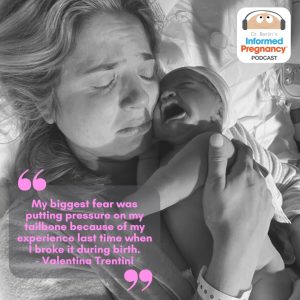
Valentina: Yeah. That was one of my biggest fear. At a certain point, I started to ask my doctor if I should have had a C-section instead of vaginal birth. Because I was like, “Maybe I have less chance of breaking my tailbone with a C-section.” My doctor is amazing. He was like, “Let me talk to a specialist that is a good friend of mine and ask him what you should do.” And even the specialist was like, “I will not do it if I were you.” My doctor was like, “I would not recommend that you have a C-section. Because yes, you’re going to recover in two months instead of eight.” But at the same time, it’s still like a major surgery. It’s still like something that your body is going to have to go through, and there can be complications, and you never know.
Elliot: And, of course, there’s a chance that your tailbone wouldn’t break.
Valentina: Yeah.
Elliot: All right. How was the very end of your pregnancy?
Valentina: The very end of my pregnancy was — I was still very anxious. But, actually, I started to feel a little bit more at peace. Because I was just counting the days. I was still thinking, “Oh, my God. I’m going to break my tailbone. I’m going to be in pain for so long.” But, at the same time, I was like, “Okay. We’re very close to giving birth. The baby’s still fine. She still kicks.” It was a mix of feelings. I was in a glass of emotions.
Elliot: When in the 40-week count there, and how did your labor start?
Valentina: The labor started when I was 39 weeks, 38 or 39? I think 39, yeah. Because I was six days early. I didn’t sleep that well the night before. My husband had a sore throat. He kept me up all night, and I was like, “Well, great. I cannot sleep.” Then I kind of like woke up at 7 a.m. I was like, “Something is like hurting.” I was like, “Oh, maybe it’s a contraction.” I started to time them, and I was like, “Oh, yeah. I’m having contractions.” I called my sister-in-law. She came from Oregon to help me and be in the room with me. I was like, “Okay. I think it’s time.” I told my husband and he was like, “Well, it’s 7 a.m. I need to go to work. Do I have a couple of hours?”
Elliot: Oh, wow!
Valentina: I was like, “No more. Not more than a couple of hours.” So, then, I called him at 9:30. I was like, “Why! They’re three minutes apart. I think it’s better if you come home right now.”
Elliot: Wow! Three minutes apart.
Valentina: Yeah. Let’s say, three to four minutes. Most of the time, there were three minutes apart.
Elliot: Also, what did they feel like?
Valentina: It was weird. Because with my first pregnancy, I was at home for seven hours and I just remember the worst part, the painful, painful part. This time, it was not bad. I was like, “Wow! This is actually not painful. So, I can do everything without an epidural. Like, this is easy.” I started to feel like contractions in my back, and I think that the adrenaline kicked in. I was just so happy. I wasn’t in that much pain.
Elliot: You were home with your sister-in-law?
Valentina: I was home with my sister-in-law, with my mother-in-law, with my niece and nephew, and my daughter.
Elliot: Oh, my goodness. It’s a big crowd of [unin 09:23].
Valentina: Everybody was around?
Elliot: Yes. And then, I was like, “Well, I looked at my daughter.” I was like, “Mimi, mommy is going away for two days. I’m coming back, and I’ll bring you a sister.” She was like, “Okay, mommy. I’m going to see you in two days.” I was like, “Okay.”
Elliot: She’s 4 years old?
Valentina: She’s 4.5, yes.
Elliot: Okay. So, she understands?
Valentina: Oh, yeah. She fully understands, big time.
Elliot: Well, let’s take a quick break. When we come back, we’ll find out what happens when you head to the hospital. We’ll be right back.
[break]
Elliot: Welcome back to the Informed Pregnancy Podcast. We’re talking to Valentina Trentini. She is in our story now in labor, a long journey to get there, and a lot of heartache and anxiousness going into it. But labor starts. Surrounded by a lot of family, except for your husband, who’s at work, and it’s not too intense. And you decide though to go to the hospital. Is that because the pattern changed?
Valentina: Because my doctor was like, “When you’re like less than five minutes apart, just come to the hospital. Just don’t stay home. We’re going to check. And then, if you need to go back home, we’re going to send you back home. If not, we’re just going to keep you here.” But the good thing is that I got there, I opened the door of the room where you check-in, and my doctor was there. It was the day that he was on call.
Elliot: Oh, wow. How nice.
Valentina: Yeah. I was the happiest person. It was amazing because a week before, he told me like, “Well, if you give birth on Friday or on Monday, that’s when I’m on call.” Actually, I went into labor on Friday. So, I got there. He checked on me. He was like, “Well, you’re 3 centimeters dilated. Usually, we keep you in the hospital at 4 to 5. But, I know you. I know you know your body. So, if you tell me that you prefer to stay here, I’m going to keep you here.” I was like, “I think that it’s changing really fast.” He was like, “Okay. Stay here.”
Elliot: Three centimeters. I mean, how was that news to you? Is that what you expected?
Valentina: No. I thought that I was more than that. But I was like, “Something is changing so fast.” The contractions are going so fast, and they’re more intense now that I was like, “Oh, I’m going to dilate faster than everyone thinks.” Actually, less than an hour later, I was at 5.5.
Elliot: [unin 11:55] quick.
Valentina: Yeah. I was screaming, and everyone got into the room. They were like, “Are you giving birth right now?” I was like, “No. Just in a lot of pain.”
Elliot: Okay. But your husband’s with you now?
Valentina: Yes. My husband was with me.
Elliot: Anybody else with you?
Valentina: I mean, his sister?
Elliot: Oh, your sister-in-law came also.
Valentina: Yes.
Elliot: Okay.
Valentina: The two of them.
Elliot: All right. When it got a lot more intense, do you remember where you felt it, and what about it was more intense?
Valentina: Actually, I was in the room, in the waiting room. I don’t know how you call it in English, but it’s like the room —
Elliot: Triage.
Valentina: Yeah. Triage, thank you. That one. When I was in the triage, the contraction started to get closer and closer together and very, very intense. But the thing is they had to put the monitor on my belly, and they had to monitor the baby for 20 minutes in a row. They didn’t tell me, so I kept moving because I was in a lot of pain.
Elliot: Restarting the count?
Valentina: Yes. So, every time, they were like, “No. We have to redo it. We have to redo it.” I was like, “No!” I was like, “Give me an epidural. I can’t deal with this anymore. I need an epidural right now.” And so, they put me in the room. And within an hour, they gave me an epidural. Thank goodness. I was in heaven. I was so happy. So, so happy.
Elliot: Did the first time you tell me the epidural slowed everything down for you?
Valentina: Yes. That’s what I think happened the first time. My doctor thinks that that was not the epidural. Because the epidural actually accelerated everything.
Elliot: Yeah. Speed things up.
Valentina: But I think that the first time the fact that my body was in shock. I was in so much pain, and my body just shut down. My body was like, “I can’t deal with this anymore. You need to relax. You need to rest for a little bit, and then we can continue to do this.” So, this time actually, the epidural, I was like 5.5, 6 when I got the epidural. And then, within like a couple of hours, I was already at 8. Everything was going perfectly.
Elliot: Fast-moving train.
Valentina: Yeah.
Elliot: Now, at this point, is there any of that anxiousness, or you feel calm? Is there any concern, talk about how to protect your tailbone for what’s coming next?
Valentina: At that point, I started to like see all the nurses coming in. All the nurses. The two nurses that I was assigned to, and the midwife, and my doctor. We all talked about, “Okay. Last time, I broke my tailbone. What can we do for this not to happen again?” The nurses were incredible. They were seriously amazing. They were all super understanding. They were like, “Okay. When it’s time to push, you’re going to push on your side, and you’re going to push on your hands and knees. We’re going to try to like not put any pressure on your tailbone.”
Elliot: Nice.
Valentina: That was my biggest fear, and I told them. They were seriously very understanding, and they were very sweet with me. To the point that I was talking to the nurse because she was asking me the questions, routine questions. She asked me, “Are you anxious, or any bad thoughts that you had during the pregnancy?” I was like, “Well, I’m scared that I’m going to have a stillbirth. But, you know, that’s me.” I try to put make a joke about it because I was kind of uncomfortable. Because every time that you tried to tell something like this to someone, they are very uncomfortable with you saying that.
Elliot: Sure.
Valentina: And she stopped. She walked around the bed because I was on my right side, and she was behind me. She looked at me in the eyes and she was like, “This is a different pregnancy. Nothing is going to happen to you. I’m here for you. Anything you need, you tell me. I’m here for you.”
It was the first time in almost two years that someone in the medical field really talked to me on a human level. And really made me feel comfortable. She was listening to me. She didn’t just say like, “Oh, yeah. You know, it’s fine. Everyone thinks that.” Or like she really thought that something was wrong, and she needed to tell me that she was there for me. It was amazing actually. And so, that really calmed me down. Then my doctor came in. It was like around 2 p.m. He was like, “Well, I don’t have any nurse right now to be with me, like to start to push, and I have two emergency C-section.”
Elliot: Oh, my goodness!
Valentina: Yeah. He was like, “Would you be comfortable to wait a little bit?” I was like, “I am on vacation. I have my epidural. I am not in pain. I have my bed. Don’t even worry about it. Do what you have to do, and come back when. If it’s time, I’m going to let you know.” And then, at 5 p.m., I was ready. And then, at 5:30, we started to push. I actually pushed on my side. And like last time, the pushing part was amazing. I felt empowered. I felt strong. I felt like, “Oh, my God! I can do this. This is really what I’m good at.”
Elliot: You’re a pusher.
Valentina: Yeah, I’m a pusher.
Elliot: Because of the epidural, how much could you feel or not feel?
Valentina: I felt everything.
Elliot: Did they deliberately turn it down?
Valentina: No. Because with Kaiser, they give you the remote so you can push the button and give yourself as much epidural as you want. But after a certain point, they tell you, “Okay. You’re almost there. You cannot push the button anymore. No more epidural because we need you to feel a little bit.”
Elliot: Yeah. You felt a lot.
Valentina: I felt a lot. Actually, when I was on my side, I was feeling more. So, she wanted me to go on my hands and knees because the baby wasn’t turned in an ideal position. The nurse, actually, she was amazing because she asked my husband and his sister to be on both sides. And then, you have this blanket and to wrap this blanket on my belly.
Elliot: A rebozo.
Valentina: Yes. She was like, “I saw this midwife doing it to another patient. Let’s see if this works with you.” They rub my belly for like, I would say five minutes. Something like that. And the baby turned. She was like, “Great. The baby just turned. You can be on your back, and then we can push her out.”
Elliot: Oh, wait a second. Did you feel the baby turn?
Valentina: I don’t remember that.
Elliot: Okay.
Valentina: I was like so in the moment that I don’t know if I felt a baby turn.
Elliot: Two more questions. One is because you said you could feel a lot with the epidural kind of wearing off. What sensations did you feel?
Valentina: Pain. Pain on my right side. Because she was pushing on my right side.
Elliot: Oh, like in your right hip?
Valentina: Yeah. The right hip, back, and a little bit in the front was where I was feeling it the most.
Elliot: That’s interesting. Because in pregnancy, you kind of had some discomfort there.
Valentina: Yeah, that’s true.
Elliot: Okay. So, then, the baby rotated into a better position. Do you still feel the pain at that point? And also, is it only with a contraction or you feel it all the time?
Valentina: I was feeling it all the time. But I knew that she was so close to coming out that it wasn’t a problem. And then, actually, when I was on my back, I thought that the nurse was giving me a perineal massage. I almost told her, “No massage. I don’t want that massage.” And I saw her that she wasn’t even close to me. I was like, “Oh, that’s the baby’s head.”
Elliot: The baby gave you a perineal massage.
Valentina: Yeah. The best part was that my sister-in-law told me, “Oh, I see some eyes. Oh, I see a chin. Oh, I see some shoulders.” And when she was telling me that, I was feeling everything. I was feeling the shoulders coming out. I was feeling everything coming out. It was like, with my daughter, I wasn’t feeling that, with my first daughter. That was incredible. I was like, “This is amazing!” It was seriously the most amazing feeling in the world.
Elliot: Wow, that’s great! A lot of people talk about burning during that time. Did you not feel burning?
Valentina: No. I felt a lot of pressure because her head was halfway out, and they kept her there for what felt an eternity. But, for sure, it was a few seconds. But, when she was coming out, I wasn’t feeling pain or burning sensation, nothing. I was just feeling her coming out.
Elliot: Literally, her body parts coming through you into the world.
Valentina: Yeah. And then, when they put her on me, I just asked everyone if she’s breathing, is she alive. “Is she breathing? Is she alive?” That’s what I was asking everyone.
Elliot: I mean, emotionally, how did that feel? When they put her on your chest and you were there, and she was healthy.
Valentina: I felt like a giant rock that was not on my shoulders anymore. I felt light. I felt this relieved. I felt that I could breathe. I remember that I was breathing, like deeply breathing. I was like, “Okay, she’s here. It’s done. It wasn’t that bad.” My head did everything. I was just relieved. I was seriously relieved and happy that I could breathe.
Elliot: All right. Let’s take one more break. When we come back, I have a few more questions about what happens next in the moment and after you get home. We’ll be right back.
[break]
Elliot: Welcome back to the Informed Pregnancy Podcast. We’re talking to Valentina Trentini.
Okay. A long, long road to get to that beautiful finish line. It sounds like a really gorgeous finish line for you. And also, sounds like the weight that had been sitting on you for nine months, on your shoulders, released as soon as the weight’s sitting on your pelvis is also released. You talked about how during pregnancy, the game plan was to sort of be on your side or all fours. But it sounds like when you actually push the baby out, you were on your back.
Valentina: Yeah.
Elliot: Was there a conscious change in choice?
Valentina: No. At that point, I was in the hands of the nurse and the doctor. I was just trusting them. Because they won my trust, and I was like very comfortable with them. The nurse was like, “Don’t worry. Even if you push, the last push is like on your back, everything is going to be fine. Nothing is going to happen to your tailbone. I promise you, we’re going to do everything we can for you not to be in pain anymore.” So, I just trusted them.
I think that I was feeling that everything was right. Because I could feel more than with my first daughter. I think that my body knew what was going on, and I knew what I was doing. That’s why I was like, “Okay. You want me on my back, I’m just going to be on my back.”
Elliot: Nice. How is your placenta delivery?
Valentina: It was fine. Even with my first daughter, it came out right after. They didn’t have to do anything. I didn’t even get any stitch. No stitching. Nothing.
Elliot: No tearing?
Valentina: Nothing. It was clean, perfect.
Elliot: Were you worried about what would happen on the epidural totally wore off?
Valentina: Yes, absolutely. When I started to feel way more. When I started to feel my legs again, I was like, “Oh, my God. Is everything fine? Am I in pain? No, I’m not in pain.” So, that’s great. Actually, they wanted to give me Motrin, the painkiller, for the pain. I didn’t even take it. I was not in pain. I was happy that I was not in pain. Very happy.
Elliot: Okay. So, no tailbone injury.
Valentina: Nope. Thank goodness, nope.
Elliot: All that worry.
Valentina: For no reason.
Elliot: And like you said, I think it was your nervous system trying to protect you.
Valentina: Yeah. I think that your mind is so powerful. I was in so much pain during the miscarriages. Three miscarriages in a year, it’s a lot for anyone.
Elliot: Yeah. I mean, one is scary.
Valentina: Yeah. The problem is that not being able to talk to anyone, and not being able to have a lot of support. Yeah. I had my therapist, and I had you, and my acupuncturist. But, other than that, none of my friends had to go through that. None of them. So, it can feel lonely. That’s why I think that my mind was like, “Okay. Let’s have a plan for the second pregnancy. Let’s find something that for sure it’s going to be wrong. Believe that it’s going to be wrong. So, then, if it’s going to be wrong, you’re going to be protected.”
Even if something goes wrong, it’s not that because you’re prepared it’s going to be less painful. Actually, it’s even worse. I was telling myself during my miscarriages, “See, I told you. You should have prepared yourself for like the worst. So, then when the worst was coming, you could have been prepared and not be in pain.” But then, you’re in so much pain anyway, and it’s really bad.
Elliot: Well, I’m sorry that you had all that pain and suffering, emotionally and physically. I can only imagine how much more you are excited to hug your little baby and to hear those cries, 24/7, whenever they happen. Just squeeze a little harder. How is postpartum and the house, having a toddler and a newborn at the same time?
Valentina: Well, it’s very hard. I think that she’d never prepare for this. I’m very lucky because my daughter, she’s 4.5 and she understands everything that is going on. Actually, she’s not really jealous about her sister. Actually, she’s super happy. She wants to cuddle her, and kiss her, and be with her all the time. But still, she’s still a toddler and she still wants my attention. And a newborn requires a lot of attention.
So, I have help. I’m really lucky that I have help. With my first daughter, I didn’t have anyone. I was home alone with her, and it was very, very hard. I promised myself that if I would have another daughter, another child, I would ask for help, which is the most important thing right now for me. Yeah, it’s great. It’s actually everything I wanted. It’s very tiring. It’s very hard. But I’m very happy. She’s here. Then, everything went well, and the pain is gone. That’s what I’m happy for.
Elliot: So, happy to hear that. What are you doing for your self-care now in the postpartum phase?
Valentina: I take long walks, which is what I really needed the most. I work in my studio, which is very relaxing. That’s my space. That’s my time. Nobody comes in my studio. I paint and I relax. For me now, that this is working and it’s the most important thing for me right now. I’m going to go back to therapy, for sure. Because I really need it. Because I think that the trauma is still there. I really need to deal with it, even if I’m feeling good.
Elliot: Sure.
Valentina: Yeah, painting is what makes me feel happy and relaxes me. So, that’s what I’m doing right now.
Elliot: I’m going to get paid for it.
Valentina: Yeah. Not bad.
Elliot: Are you still back to hanging off at bridges, and ropes, and things painting giant murals and banners?
Valentina: Well, now, no. Not yet. But now, I’m going to paint a couple of vintage cars. A couple of Porsche. I’m going to — what do I have again? I have another, some coffee shops, and some gold signs that I have to paint, which is very awesome. I love painting that stuff.
Elliot: I guess, my last question for you is does your family feel complete now, or do you see yourself expanding again in the future?
Valentina: That’s a good question. I’ve always wanted to have three kids, with my husband. When I met my husband, I was like, “I’m sure I want three kids with him.” I think that now, my family feels complete. I don’t know if I want to go through pregnancy again. Because it took a big toll on my mental health. For now, I’m fine. For now, I have two beautiful daughters and I couldn’t be happier. I don’t know. Maybe in six months, I’m going to tell you, “Well, I want to have another kid.” But I don’t think so. I think that holding my breath for nine months was enough for me.
Elliot: Yeah.
Valentina: To say, “No, I don’t want to go through that again.” Never say never, but that’s what I feel right now. I don’t think that that’s my path.
Elliot: Yeah. I mean, it’s good that you feel associated, but that also that you have an open mind. So, nothing’s final.
Valentina: Yeah. Nothing is written in stone. But I told my husband, “If you want another kid, maybe we’ll get a dog.” Maybe the dog is going to complete the family. I don’t know. We’ll figure it out. But I think that for now, we’re fine. We’re happy. It’s a happy ending. It was a very horrible story that has a happy ending, and I’m very lucky and very grateful that I can say that.
Elliot: I’m so happy for you. You’re the nicest person and very passionate. Every time I talk to you, I get hungry for pasta and pizza.
Valentina: Me, too, actually.
Elliot: Valentina, thanks so much for joining me and for sharing your story. Tell us again where we can find you online.
Valentina: You can find me @brushettasigns on Instagram, and brushettasigns.com. If you want to see my signs, and my murals, and my art, you can go there and I share everything. Every week, there is a different project.
Elliot: I can’t wait to go take a peek. I’ll see you there. At home, thanks for listening to our podcast. If you want more content like this, I would go to informedpregnancy.com.
by Informed Pregnancy and Parenting Project | Feb 7, 2023 | Health Conditions, Podcast Transcripts, Pregnancy
Elliot: Welcome to the Informed Pregnancy and Parenting Podcast. I’m your host, pregnancy-focused chiropractor, Dr. Elliot Berlin.
My guest today is a multi-platinum singer-songwriter and a mother. Since the beginning of her career in 2010, she has released three pop albums, two lullaby albums, and toured the world many times. Her most popular songs are “Jar of Hearts,” “A Thousand Years,” and “Human,” which have billions of streams and diamond platinum and gold awards. In 2017, she settled down and got married to Paul Costabile. And in 2018, they welcomed their first baby, a daughter named Carmella. In 2020, they had a daughter named Rosie, who was born silent. She is currently nine months pregnant with another daughter and due next week. Christina Perri, welcome to the podcast.
Christina: Hello.
Elliot: Well, a million things to talk about. I’m going to jump right in. Where are you from originally?
Christina: Born and raised in Philadelphia, Pennsylvania.
Elliot: What was that like?
Christina: You know, it was really sweet, actually. I had a really nice childhood as far as — I don’t know, it was just that generation of like we didn’t know. We didn’t have money, you know. We were just kids running around in the neighborhood, coming home when the street lights came on. Like, we are so millennial. Like, my brother and I, and we just sort of have this memory of having a good time and getting into trouble what we thought was trouble but really wasn’t that bad. My dad’s from Italy, so we have a massive family. He has eight siblings. I have 50 cousins.
Elliot: Are they here?
Christina: They’re here, yeah. I have a hundred family members in Italy, and 25 in Brazil.
Elliot: Wow!
Christina: So three siblings stayed in Italy and kept their family there. And then, the other six siblings came to America. So yeah, my family’s huge. So all I knew was, you know, family dinners, homemade wine, running around, and growing up in a barbershop. Like so, so cliché. Almost like a caricature. Like, you know, all the Italian men speaking Italian, and me sweeping hair off the floor. It kind of was nice. I can turn it and emotionally look at things that weren’t great and I have for 28 years in therapy, but that’s my brain and my perspective of it. But sort of zoomed out, it was nice. I love Philly. I still go back all the time. And funny enough, I should say Philly loves me, which is kind of hard to do.
Elliot: What do you mean “it’s hard to do”?
Christina: Oh, Philly fans, in general, are like…
Elliot: Oh, they’re tough.
Christina: And they won’t even care me saying that. Like, they literally will just reject someone so fast like Santa Claus at a parade. They’ll throw snowballs at him. And, you know, we’re known for that in Philly. So I feel like when I became sort of popular, my music became popular, I would play shows in Philly and they’re the first shows to sell out. I’m grateful for the town they play my music, they support me. I’ve been sponsored by Wawa at one point.
Elliot: They birthed you.
Christina: Yeah. And I also speak highly of them, I think that helps, you know. I support the Eagles and the Phillies, and you know all those things I’m supposed to do and so yeah.
Elliot: From the heart, though. Can I ask you a question, when did you get your first tattoo?
Christina: Oh my gosh! I was 15. The truth is my big brother got one first. So I blame every single one of my tattoos on him. Because I feel like I wouldn’t maybe have gone down this road if he didn’t make it look so cool, as my big brother. He’s two years older than me, and he got a tattoo on his 15th birthday. And so, naturally, the day I turned 15, I thought it was like my birthright.
And then, I remember it was on the back of my neck. It’s like an Egyptian Ankh. I’m not sure why. I’m not into anything Egyptian other than that, I guess. And it was very emo at the time. I was 15, I had fallen in love for the first time. I had written my first song. And I thought I felt alive for the first time in my life. Like, wow! I’m still that dramatic by the way. And I got it and I hid it from my family, I want to say for like, a good month. And then, I have to share my story now that I’m a mom. I think this is kind of brilliant. Even though maybe I wouldn’t tell my daughter Carmella to do this. But I told my mom when we were in church. My family’s Catholic.
And so, on a Sunday, I’m wearing a turtleneck in August. My mom’s like “What is your deal? I know you’re weird, in general. Why are you wearing a turtleneck?” And I was, “Oh my gosh! This is my opportunity to tell her.” And then, by the time we get out of church, she’s just going to like be less upset. She has to pray about it, you know, or whatever. And it worked! I really think my punishment was less because I told her I was like, “I have to tell you something.” And I leaned over and I whispered it to her. And by the time we got out of mass, I was only punished for like three months maybe instead of like —
Elliot: Oh, wow!
Christina: Yeah. I thought that was quite brilliant.
Elliot: She wouldn’t be incredibly surprised since your brother had already gone down that path.
Christina: Yeah. I don’t know. She was like — well, because she didn’t take either one of us. My aunt pretended to be our mom. And so, she was super bummed. And she was sort of just like, “Just please don’t get your hands or your neck or your face.” And I was like, “Okay.” And so, I have a “16” on my hands and my neck, but just not my face.
Elliot: Not your face. So, one out of three ain’t bad.
Christina: Yeah. I thought that was pretty good.
Elliot: First of all is people get addicted to them. Are you still craving the next one?
Christina: You know what? No, because I learned how unhealthy they are. Well, because I got obsessed with my health in the past five years and I learned that they’re like metal. I’m all of a sudden thinking like — and I don’t mean now, they make them without metal in the ink. But I don’t know about in like the late ’90s. And I wonder if it was just a season of my life where you know I needed them and loved them. And right now like I can’t. I’ll probably get something for my upcoming daughter because I have one for Carmella and I have one for Rosie. But I’m not planning like big pieces where I’m just going to be covered. I feel like I’m waning.
Elliot: Waning down? Do you have one or two that are most meaningful to you?
Christina: Yes. I probably have a couple that I really, really love. This is how I look at it like, “Would I get it again?” Because so many I would not get again. Like it’s a cheeseburger. It’s just unnecessary. And if you ask tattoo people this, they’ll say if they’re tattooed, like me, like refrigerator or magnets is what we sort of call my style. Like portraits and beautiful symmetry. Most people would like not get the same thing again. But the way I look at it is if I would, then obviously that means something to me. So I have a Disney Castle here, that interestingly enough, brings me a lot of joy every time I see it. So I’d probably get that again. I also have a giant Millennium Falcon on my leg.
Elliot: That was one of the coolest ones I’ve ever seen.
Christina: Thank you. I have my daughter Rosie here on my heart. My husband has it, too. I’d get that again, obviously. Yeah, it’s interesting. They all tell a story. Like even the cheeseburger, I guess. But there’s something about it. I used to say, you know, I express myself in three ways: as a writer, a singer, and I get tattoos. It’s just part of my creative expression. And I also like have a belief about our bodies being so finite. And how, “This is just the one I’m in,” you know, for right now. And I could just decorate it.
Elliot: Yeah. I don’t have any. But I think if I had a burger on my arm, I would probably be even less healthy than I am now.
Christina: Maybe. Although, I think your son would probably like my cheeseburger.
Elliot: My son would like it, yeah. Don’t give him any ideas. But I would just look at it and be like, “Okay, we’re going to get burgers now.”
Christina: Well, to be fair, I did go on a burger mission. Like finding the greatest burger in the world. And that is the tattoo in honor of that sort of like quest I went on. And, interestingly enough, the second-best burger in the whole world in my opinion is in Berlin in Germany.
Elliot: Look at that!
Christina: I know.
Elliot: We’re so connected.
Christina: I know. So I do love cheeseburgers. As much as I made fun of that one immediately, like I do really like cheeseburgers.
Elliot: So, yeah. I started this episode by saying, “There’s so much to cover, let’s jump in!” And then, I diverted and spend a whole map of your body art. Okay, music. How did you get into music?
Christina: Oh, my gosh. Well, this one, I’ll try to keep on the shorter side, because I do think obviously the journey of motherhood is maybe more, well I think it’s cooler. But I have a pretty fantastic story, I’m not going to lie. And, you know, people that do know my music sometimes know my story also because it’s so special. But I’ll give it a brief summary.
Definitely, saying my whole life did musical theater and things like that, but was very, very shy. Like, never planned performances or brought my guitar to parties and said, “Hey, look at me!” And sang songs for all my friends. Like, people would beg me to do that actually, some of my closest friends. I just thought when I started writing music, I was about 15, I said I had fallen in love and I’d been studying The Beatles for two years before I actually picked up the guitar and wrote music or sat at the piano. I taught myself both of those instruments.
Elliot: Wow!
Christina: Not very good though. In the music world, we call it songwriter-guitar and songwriter-piano.
Elliot: Yeah, but that’s like come on anyway. It’s a different kind of talent than whatever, pianist.
Christina: Well, what I do like about it is that it was so imperative that I was expressive through music that I found the chords. Do you know what I mean? My brother one time came, he’s a very talented guitar player and classically trained and played with Les Paul. I mean, he’s like a virtuoso from the age of like 7. And so, I also think I didn’t show anyone because I was not him. Do you know what I mean? He’s the star of our family and sweetest human on earth. But anyway, one time, he came home from touring the world because he had a record deal by 16. And I was, “Hey, look what I can do!” And I showed him me playing the guitar. And I was like, “What chord is this?” And he was like, “That’s a B minor.” And I was like, “Ah!” I didn’t know. I truly put my fingers in places until they sounded good like it was kind of cute.
Elliot: That’s incredible.
Christina: Thank you. But I started building a catalog at 15. I said it didn’t perform, I just was like expressing myself almost like a diary. I joke about being dramatic and emo, but I was depressed. Like, even as a kid, I remember my mom being like, “I don’t know why you’re so sad.” Like, I was like, “I don’t know either.” I think I just had depression and anxiety. I was in therapy by 8 because my parents were just like so not sure why I was the way I was. And music really saved me, I’m not going to lie. It was like my form of expression. It was obviously like I wrote love songs because I love The Beatles. But I really think it got me through really emotional hard experiences from 15 to 23, before anyone really heard my music. It was like really just for me and, truthfully, really helpful.
And so, long story long, I went to LA on my 21st birthday, only because my big brother asked me to. Definitely, wouldn’t have — again, Mr. Influencer in my life, with the tattoos and the music. So he said, “Hey, Chris. Can you come to LA?” And I was like, “Sure.” And so, I moved to LA with nothing, just a guitar. I had maybe like 300 bucks. It was just so like out of a movie. He went on tour, I stayed at his apartment for like three months. He said, “Get a job. Get yourself an apartment. You have three months to do that.” I did that. The whole while I’m here, I’m thinking, “Oh, I want to be a songwriter.” You know, at this point, I had realized I had written songs I thought were really good, but I didn’t want to perform them. And so, in this town, I thought like, “Oh, I heard there was a job where you could write songs for other people.” And so, I was a waitress by day, three different waitressing jobs just to pay my rent. And then, I would write songs at night time. Like that was sort of it.
And then, I had this best friend, her name’s Keltie. She’s like my fairy godmother in the story or in the Disney movie. Her and I would be like standing looking over Capital Records, and a shooting star goes by. And she said, “You know, Christina. You need a manager. Someone who believes in you and knows people.” She’s like, “I don’t know anybody.” She was a dancer, like a New York City Rockette. She was like, “I don’t know anyone in the music world. But, I’ll manage you, but I don’t know anyone.” And I was like, “Okay.” And I was so not into being the performer, but she was my only fan, and she thought I should be. I just kind of listened to her and she posted a video of me singing on her YouTube. And now, this is in 2010, when YouTube was not really a thing. It was certainly not like viral, you know what I mean? It wasn’t like — there was Myspace and then YouTube. But no one watched my videos but Keltie. The truth is I had no views.
But, by chance, she tweeted a YouTube video of me singing a song and her dancing, like contemporary dancing, you know. Really like emotional. She was just as emo as me. And I guess, the right person, this kid, an intern in North Carolina saw the video happened to follow Keltie, sent it to his friend Tom. His friend Tom was looking for a new artist to sign, went through my YouTube, and like saw covers. Because I did post covers on YouTube but for fun. Because it wasn’t like a business. It was not an influencer, you know what I mean? Like, that didn’t really exist.
And he reached out to me and said, “Hey, I’m a manager. I manage this guy named Jason Mraz,” who happened to be my favorite artist of all time. And I was like screaming! I mean, Keltie and I both were literally like two little girls screaming. She took a picture of me reading the email. I should have that picture somewhere of me like crying, reading this email. Like, “Oh my gosh! Like, this is it !” Like, it felt like my big break. But I also thought like, not for me. I thought this was my, you know, for me to have a manager and then write songs for other people. I was really not expecting to be like the artist. But I thought this was my way in, like my door.
And then, cut to same best friend, Keltie sends this song. I made a demo. So Tom started managing me, but like unofficially. I made some demos, sent one to Keltie. Said, “Hey, this is [unin 14:44] “Jar of Hearts.” Like, I’m so excited. I’ve never heard myself sing like with myself. I’d never recorded four-part harmony. I was like, “How cool is this!” But like, this is the demo. I’m going to shop around to other artists, you know. And she just like immediately emailed it to the choreographer on the dance show “So You Think You Can Dance,” which is funny because, originally, Keltie’s like, “I don’t know anybody.” But she knew the one person in the world I needed to know for my journey.
And so, she gave this song to Stacey Tookie, who happened to be very successful at the time on this show and said like, “Hey, maybe one day you can play this song on your show.” And Stacey said, “How about Wednesday? You know, 8 p.m., June 30th, 2010.” They played a minute and a half of “Jar of Hearts,” and went all the way to the top of the charts on iTunes. Flew to New York City the next day, quit my job as a waitress.
Elliot: Three times.
Christina: Played it on CBS “Morning Show,” “So You Think You Dance,” I performed it, and then Jay Leno. In three days, I performed it on TV three times. And like, you know, as they say in show business, “The rest is history.” I mean, literally, that was it. And I have to tell you though in all honesty, until I wrote “A Thousand Years,” which then came a year later, I really didn’t think it was me still. I thought like this was a fluke, you know the imposter syndrome that people get. I was like, “They’re going to find out I’m not really a performer.”
But there’s something charming about being so nervous and shy, and I would just talk about it. All of a sudden, I realized my superpower was like, “I don’t know what I’m doing!” I was like trying to get out, back out slowly from the spotlight, and everyone instead loved me more. And I was like, the whole time, it’s in my head. I mean, I would say, “It’s not me, it’s my music! I’m glad it’s doing what it’s doing, that’s really cool.” I never felt like I was the star of the movie.
And then, I wrote “A Thousand Years,” and I finally remember having a moment like, “Okay, I think it’s supposed to be me.” At this point, I can’t fight the universe or the forces that are choosing me to be this vessel, right? Because like that song just like blew up in a way that’s so much bigger than me became, you know, everyone’s love song, or grief song, or like whatever. And I’m so, so grateful for it and I let go at that point. I was like, “Okay, this is what I’m supposed to do.” And then, here I am!
Elliot: You know what? I have two things to say. First of all, what do you call —
Christina: [unin 17:10] of breath, too. You know, I’m very pregnant.
Elliot: Yeah, I’ll give you a little space here. What do you call a fake noodle?
Christina: Foodle?
Elliot: Oh, that’s not bad. Impasta.
Christina: Oh, it’s very Italian.
Elliot: Yeah. You were with your imposter syndrome.
Christina: That’s exactly how I felt. I felt like a fake, fake noodle. I still do, I’m not going to lie. I haven’t mastered it in any way.
Elliot: But one day, you’ll see, you’re the real deal.
Christina: Thank you.
Elliot: I think we should take a little break. And then, talk about your second career. Third, I guess. There was waitress, and now, pop star. And then, motherhood. Wow! That can be, a mother. We’ll be right back with Christina Perri.
[break]
Elliot: Welcome back to the Informed Pregnancy Podcast. We are talking to Christina Perri. Okay. So your career accidentally explodes. And then, you settle down and get married. How did you meet your hubby.
Christina: So, it was very cute and quite nauseating. We met actually at the end of the first day of my second album promo. And I remember it very specifically because it was like a 14-hour press day. I had the “Today Show” at 4 a.m. And then, I walked into iHeart Radio at some point in the evening. Like, it was my last thing of the day, which I think is important or worth noting because I was very, what they would say, like punch drunk. Like, I was just silly. At that point, I was like delirious really.
And so, I was myself entirely, which I will say most of the time I am. But, sometimes, I’m a little bit more professional, or a little bit more like structured with what I’m saying or doing. And at this point, I was just like so silly. You can see, we have the whole thing on video. I walk into this green screen room, and there’s this like handsome Italian man in a suit. And I’m already just nervous and silly, and I’m talking about barfing. I’m just like it is like a sitcom or something. If I look back now, I’m like, “How did I say that?” I feel like this is our first date. But, apparently, it was charming. And so, he says that he fell in love with me that day. He actually has an email he wrote to his mom as proof that says, “Hey, Mom. I just interviewed the girl I’m going to marry.”
Elliot: Wow!
Christina: So, that’s very cute. I was a little slower. I will say I’ve asked my manager, “Hey, did I like show any signs or mention anything about like, you know, just trying to match his romance?” with Paul. And my manager, Tom, was like, “Oh, I’m sorry. You don’t remember fake fainting into the car when we were leaving.” And I was like, “Oh, that sounds like me.” I was like okay, I think I’ve made some sort of like notion that I had, you know, fallen for him. Because the truth is we didn’t go on a date for two years.
So, that was day one of my promo cycle, and you know the music world is going to be very intense. Well, I think pre-pandemic, and also pre-family. At this time, I’m single. I have no kids. I’m on a plane every day. And so, yeah, for two whole years, we became friends. I mean, it’s actually kind of cute. I followed him on Facebook, like my secret personal Facebook. And he, was like, “She loves me.” These were like [unin] times apparently. But, I hate to tell — we laugh about it still. But like, you know Facebook suggests people. You know what I mean? Like it suggests like, “Hey, do you know this guy?” And I was like, “Oh, yeah! The guy from my iHeart.” Like Paul’s reading into it that like I’m pining over him and whatever. Maybe I was.
Maybe I just like didn’t totally realize until he asked me out like 11 times. And like, the 11th time, I was finally like, “Okay. You know, I’m in New York finally –” Because the truth is we just were never really in the same place. And when he would be in LA, I would be somewhere else. So I promised him, “Hey, when I come to New York next, I will go out with you.” And I’m a promise keeper, that’s the thing. That’s what got me, my accountability because I remember thinking like, “Oh, crap! I told this guy like I would hang out with him,” you know what I mean? Like, I felt the need to keep my promise. We’ve been together ever since. That was January 20th of 2016. So, that was our first date. Went to Broadway Show.
Elliot: What’d you see?
Christina: “School of Rock.”
Elliot: Oh, cool.
Christina: It’s very cute. Well, Atlantic Records gave me tickets to “Hamilton” if I would go to “School of Rock” and tweet about it. And I was like, “Absolutely!” I saw the original cast of “Hamilton,” but I didn’t bring Paul, unfortunately. I brought Paul to the other show. Makes sense. I didn’t know him yet. I was like, “I don’t know if I can bring you to ‘Hamilton.’ It’s the hottest ticket in town!”
Elliot: And that’s fun! You didn’t make that promise.
Christina: Right. So anyway, we felt really in love. And Paul always jokes around and says, “I was ready to have a baby the day we met.” Like, I brought it up on our first date. And I could have, I might have. I was already 29. You know, Italian. Huge Italian family. He’s Italian. He’s got a huge Italian family. I was like, “This is it! This is my guy.” I was like, “Let’s go!” Like, “What are we waiting for?” I was like CEOing our relationship a little too much, you know. But I was just ready. I wanted so, so badly to be a mom. Even my OB-GYN would be like — I would go for checkups and I would just like cry. Should be like, “Your uterus looks perfect,” and I would just cry.
I’m like, “What’s happening? Am I [unin 22:38]. She’s like, “If you’re ready,” you know. My baby [unin 22:41] was like just clicked on. And luckily, Paul’s was kind of, too. I mean, he’s my age and he’s like super dad, and I knew he would be, you know. You just like kind of see your partner in a way like, you know. Especially when you’re that age, I think you’re kind of looking for that. So like, I just was so excited to start a family and so. Well, I think we should get married first, but we didn’t. We just got pregnant.
Elliot: But did you have a wedding now since then?
Christina: No. We got married at City Hall in New York City. We did get married, but one month before she came. I was this many pregnant, and at City Hall with like our two best friends. And we had a big thing with our families. But it was funny because it’s the opposite of what you would imagine as like a big Italian kind of like wedding. But I was just, I don’t know. Our families were so Catholic, they just needed us to be married. Do you know what I mean?
Elliot: Oh, before the baby came?
Christina: Yeah. We kind of got a little pressured into it.
Elliot: [Try out of the box? 23:36]
Christina: Yeah. I’m happy with it.
Elliot: I mean, I was all geared up to ask you if they played “A Thousand Years” at your wedding. If I was on the courtroom staff, so.
Christina: You know what? It’s not too late. We joke around about maybe having a wedding like, you know, at 10 years or something, like with our kids and like doing a whole thing. And then, I guess I bet you at that point, I would consider it. Maybe I’d have like my friends play. It’d be really funny.
Elliot: You can karaoke it.
Christina: Oh, that would be even better.
Elliot: Okay, I want to get into that pregnancy and birth. But what keep swirling through my head is how you struggled with anxiety and depression as a young adult through. It sounds like your tweens, and your teens, and your early womanhood. And how music, I guess, was a very powerful tool for you in conquering that. Taking charge of your mind and being in control of that, rather than letting it control you.
And as a human, I think we all have some anxiousness and depression, some sadness, sometimes more than others, and sometimes better control than the others. But also, as a dad, as a parent, watching my teens. I have like, basically, four teenagers now. And the things that they struggle with sometimes. The anxiousness, fear about different things, sadness, and to know that it’s possible, you know, to watch you and see, “Hey, it’s possible to find yourself get control and not have those things ruin your life.” It’s kind of nice. It feels warm inside. It’s reassuring, I don’t know. Just to look at you as an example and say, “Look, this can be done,” is comforting to me.
Christina: Well, thank you. I want to say one point on that, and I love that you paused here and added that in because it plays such a huge role in the next five years of my life. So, if we’re like shooting through my life in its entirety. It’s so worth mentioning that I started therapy day. So like, I do want to just add in the tools that allowed me to get well.
Elliot: Sure.
Christina: So if I started therapy from 8. I did stick with it until I was about 17. And then, I have to say that I got really into drugs and alcohol, which I’m not proud of. But I also will say that, in some ways, it just helped me exist and get to the place where I got sober. Like, a lot of people who get sober will say like, “I’m actually quite grateful that I had had something that helped me get to the next level.” Like, I was so sad. Like, music was so helpful and the best.
And then, college in that time was really difficult. But, at least, I felt so I’m grateful that I didn’t overdo it but at the same time I’m mostly grateful that I got out of it. But I will say I can’t lie and not say there was like a scary couple years from 17 to 23 where I was a bit messy, and I’m sure my parents didn’t sleep very good. Do you know what I mean?
Elliot: Yeah.
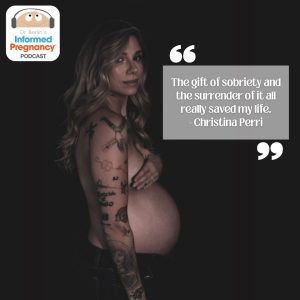
Christina: That’s the truth. But I did have music and my family, and I had therapy. Like, I still went but I was a little bit lost. And then, the gift of sobriety, which I have to call it that because it really does feel like — like, I know so many people that want so badly to be sober and can’t get sober or can’t stay sober. So, I would like to think that the surrender of it all, and like choosing to get sober at 23 for me, really did save my life too, and was just the next thing I needed. So in that journey, and I kept going to therapy. But getting sober for me, was a huge, huge thing. Because then, I was present for my career. So my career actually happened after I got sober, which was my true self. My true essence. My true — right, like when people are cleared of substances, that’s just like their most genuine soul, I think. And so, like it’s interesting that that’s when my dreams started coming true.
That’s when I started touring the whole world. Now, I struggled with depression and anxiety on tour, and nervousness and bad relationships, and you know all those things. But like, I really, really also did a lot of work. I did the 12 steps. I had a sponsor. I had sponsees, which I think is also worth noting because I think that’s like full-circle sobriety. I was really spiritual, I did a lot of praying and meditating. And then, gosh, I had no clue what it was preparing me for.
As soon as I became a mom, the transformation that occurred, like chemically, emotionally, spiritually, mentally, physically, like it was so fundamentally shifting. I’m so grateful for everything I had been through and everything that I didn’t even realize I was sort of like prepping for. But I did want to just mention, yes, thank you for noticing. It’s been a mental health journey and a health journey, the whole time. And I did always really, really care about mental health and like putting that first. And I’m really grateful for that. I am, in a way, an example of like putting in the work and being okay.
Elliot: Yeah. You know, sometimes, sleepless dad of teenage kids, it’s just helpful to just sometimes take a deep breath, and relax, and see that sometimes it’s part of the process. And you be supportive and helpful as much as you can and let the process work its way through. But, you know, I’m comforted by looking at you and seeing that if someone puts in the work and someone wants it enough, then they can come through the other side and have benefited from that whole journey. And then, their parents can sleep a little better.
Christina: Oh, my gosh. Well, I’ll call you when Carmella is a teenager.
Elliot: Thanks. I’ll give it right back to you. Okay. And the other thing that made that so clear in my head was just how when you met Mr. Right. You were just ready to jump into motherhood, which is sometimes when if you haven’t really resolved those issues. It’s scary to jump into that role, but you did it.
Christina: Thank you. Well, I will say just very specifically, I did trauma work. I did EMDR, trauma work, six months before I went on my first date with Paul. And I will tell you, if I had not done that, I don’t know if we’d be here. Because I had a break from touring, so I was on tour. I did 19 tours in a row and was on tour for six years straight. And like that alone, was like a little bit traumatizing, but wonderful. And then, when I got home, I was single. Just to be really honest. And I finally focused on me.
And then, I was like, “Wow! I have a lot of trauma just from being a woman in the world.” And going through things as a teenager, and touring when I wasn’t sober, there were so many things I had to go through and work through. And I actually did that. And I remembered telling my therapist like, “Hey! I feel worse. Like I’m mad at the man at 7-Eleven and I don’t even know him,” you know. And she was like, “Trust the process. Trust the process.” And then, boom! I literally went on my first date with Paul, and I was like, “Oh, my gosh! I’m ready for you.” But I have to point out, I really like almost prepped for that and didn’t know it, you know?
Elliot: Yeah, hard.
Christina: Yeah. Yeah, yeah. But I was never I think ready in any other relationship I ever had. So it is cool that by the time I met like the right person, I really felt like, you know.
Elliot: In the right place.
Christina: Yeah.
Elliot: Very cool. So you guys did have a baby kind of right away?
Christina: Yeah, within a year. So we dated a year. And then, I was pregnant by the spring of 2017. And at this point, I had moved to New York City for him by the way. I was living in LA for about 10 years. And then, he was like my New Yorker guy. And I thought, “Oh, I’ll just move to New York. I’m so in love.” Like, it was just like, “I’ve always wanted to live in New York City.” I don’t know why I’m putting on like some college [inaudible 31:35]. I felt like I just was like in the clouds, you know what I mean? Like, “Oh, let me just leave the place I’ve lived for 10 years, and with all my friends and like my favorite people.” Because I find it interesting that like, I circle back. And now, we live in LA again.
But at the time, I was just so in love and I was just like, you know, took the whole year off. Like, I didn’t tour. I was just like in “La La Land,” literally, but not LA. And so, moved to New York City just to be in love, just to live out this like movie and ended up getting pregnant, moving in to a high-rise in New York City. I felt like Rapunzel at the top of a tower. So nauseous. My pregnancy was like — I’d never been pregnant before. What’s funny too, is like it was definitely not planned. So when I got pregnant, I didn’t know I was pregnant, right, for the first couple weeks. And I remember well, Paul tells the story that one day I woke up and I ordered a cake for breakfast. Like, on Postmates, I ordered a Lady M cake from the upper east side or whatever. And I ate the whole cake. And he was like, “Are you all right?” And I was like, “Yeah, I think. I needed this cake.” Like, days later, we found out I was pregnant.
Elliot: But I’m going to have to pee on a stick because I might be pregnant. If that’s the — yeah.
Christina: Honestly, it was so funny.
Elliot: Listen, you said it wasn’t planned. But were you trying to not get pregnant and it failed? Or are you just not most careful?
Christina: I’m not the most careful. And, honestly, like since then, I’ve been the same way with all my other pregnancies. Like, I think I count wrong. I don’t think I’m very good at like figuring out when I’m ovulating. And I truly mean it was an accident. Like, I certainly wouldn’t have tricked Paul into having a baby. But I guess, we were just not being careful. We weren’t trying, but we were trying, but we weren’t trying. That’s what some people say.
Elliot: There was no goalie.
Christina: Yeah, no. We didn’t have that. And then, we were just so in love. I mean, I honestly think it was like I can’t recall when it may have even happened. I don’t know if it happened. And we were so excited and happy. Even his family was happy for us, the very Catholic family that he’s from. And then, you know, that point the “When are you getting married?” questions would come up every day. But I remember it being a time of curiosity, nothing about pregnancy scared me. I had no physical complications. I had a great doctor. I would go all my appointments, everything was normal. I was super sick. Like I said, I felt like Rapunzel in my tower. I would just watch Disney movies all day and nauseous, and eating crackers, and crying. You know, that’s how emotional and dramatic I am. So that felt kind of normal.
I don’t know, it was just like a really kind of nice memory. Truthfully, I didn’t know how good I had it, if I’m being honest. Because of my next three pregnancies, I thought they were all like this. You know what I mean? Like, I didn’t have any experience before. So, I just kind of rode through it, and we got married in December of 2017, on the day we met, in the same green screen room. It was very cute.
And then, we had Carmella on January 17th of 2018. Really great birth experience also, I have to say. Like, it was in a hospital, Lennox Hill Hospital. I didn’t regret any of the things that happened. I didn’t have a traumatic experience. I know so many women have traumatic birth experiences. My water didn’t break, but I labored at home. I knew I went into labor, and I was able to be at home until like four centimeters. And then, went to the hospital. I had an epidural. I slept a little bit, woke up at 10 centimeters. Pushed her out, and she’s perfect!
Elliot: Pretty textbook.
Christina: Right? I only say that and not in a humble breath, sort of way. But in a comparison to then what came next, like you know what I mean? Like it was so —
Elliot: But did you have any vision, or plan, or idea of how you wanted the birth to go? Or just go with the flow?
Christina: I was actually pretty specific. Because I read all the blogs. At this point, I was on all the apps. I definitely was very first-time mom where like I did so much research, and I would even protect myself emotionally and say, “I’m going to stay in the trimester I’m in. I’m not going to read ahead.” And like, I didn’t make a birth plan because everyone I know said don’t. They said like have an idea of what like you maybe want or don’t want, but then you have to just like be open. Paul was even really great. I didn’t have a doula. I had Paul. He literally brought salami and mozzarella in my placenta cooler.
Elliot: Oh, my God!
Christina: And was eating it with my OB-GYN in the hospital room, while I’m like bouncing and laboring on the ball. They’re eating salami and mozzarella. And I’m like, I didn’t hate him. Especially, the journey of like loving and hating your partner through this whole thing is like so intense. I mean, I hated him like two days later. But even that moment was cute. Do you know what I mean? Maybe I’m just romanticizing it a bit. As remembering it almost five years ago. We’re also again comparing it to what the next pregnancies were like, and it just seems like I would take that one any day. You know what I mean?
Elliot: Yeah. Well, we’re going to get into your next pregnancies. And I’m curious what postpartum was like for you from that first birth.
Christina: That was much harder. That one I sort of hit the ground because real life stepped in a little bit. Where it was flu season in New York City, and Paul’s whole family got it one by one, instead of all at the same time. So all of a sudden, our plan of having mother-in-law and Paul’s three sisters helping us, was out the window. Everyone was sick. And my dad had open heart surgery, emergency open heart surgery a week before I had Carmella. So my mom couldn’t come to be with us.
Elliot: Oh, wow!
Christina: I will say like everything was like perfect maybe until then, until we got home. And then, Paul and I had to sort of figure it out on our own. Which, for a couple reasons, I look back now a little bit nostalgically because I can’t believe we made it through that. I almost wonder if we’re still married. Because we worked so hard on us not breaking up after that. Do you know what I mean? Like, it was so hard when it was just the two of us in New York, in the winter. Everyone was sick and we had no idea what we were doing. You know what I mean? Then he annoyed me. Every single thing he did and every sound he made, and you know, like in every way he held the baby, and he did everything wrong. He knocked off her belly button too soon. I cried for four days. You know what I mean? Like, that was more like realistic.
But I also say I wrote a song about postpartum depression called “Mothers,” which I’m really proud of. Because I even had the conscious thought, “This is insane.” Like, how I feel right now. And because I’m so sober, I think sometimes, I have the ability to like know something is like chemical. Because there’s nothing else in my system. So when I would get waves of postpartum, which by the way, the language of that really helped me. Because, at first, I thought postpartum depression was something you just get, and then you have it, and that’s who you are. You know what I mean? We’re kind of taught to be very scared of that. All the books and things I read always said like have a code word or a safe word, and it’s a little bit scary how we talk about it.
And then, all of a sudden, I decided to put my own filter on it. And was like, “Okay. What if they’re more like waves? What if I imagine they’re just chemical right through my body regulating, they’re my hormones regulating?” Like, at one point, my hair all fell out here and here at four months. And that’s when I had a real dip. And I was like, “Well, that makes sense. I’m having physical symptoms.” I started to like do what I do, which is make a formula and understand it. That’s kind of how my brain works I need to like understand. So once I sort of allowed the feelings to come, allowed the waves to come, talked through all of them, worked with my therapist, my sponsor, also got a doula, like a postpartum doula.
I hired this woman, Marta. She’s a polish woman in New York City whom I will love absolutely forever. And she would come over and make me soup. And she would wake up with Carmella in the middle of the night and feed her. I would pump. Because I was also like so terrified of supplementing with formula, which I now have a whole other opinion on. But, you know, 31 years old, reading all these crunchy mom things. They were all saying, “Don’t do that.” So I was trying so hard to pump exclusively or breastfeed her exclusively. And that just made me not sleep for 13 weeks. The whole thing was just sort of challenging, totally challenging. I will not say in any capacity that that was smooth. But we did make it through it.
I mean, honestly, Paul and I learned together. We had to learn to get through it as a team. We also then started asking for help. I would ask for help way sooner now. I would never go 13 weeks without sleeping and not ask for help. But, sort of how you have to learn. And that was that! I feel like the first year of Carmella’s life was challenging, but also, oh, my gosh! She was the best baby. She was just the best. She still is the best kid, but she was so good. And I only say that because I know my mother-in-law who has five was like, “She’s so good.” Like, you don’t know [unin 40:54] you are. “She’s so good,” you know.
And so, I think that really helped. And I think about and me and Paul, we began our bond that would become the most important thing. So I almost look at it like maybe it was all meant to be that it was just the three of us. Because we ended up going through so many hard things just the three of us. And so, like it’s interesting now to look back at it and have fumbled through that so ungracefully, truthfully. It was quite messy.
And then, I was able to again write songs about it because that’s how I heal. I was able to write songs that help other mothers heal, which is a new version of my life. I think that song — I get the most people write to me about that song, like the most moms. Because it’s just like how wild is this fourth trimester. It was insane. But something we all go through. The beauty of it. So, yeah, we made it through. And then, we made the worst choice of our whole lives, which was to move to New Jersey.
Elliot: Oh, all right. So you’re going to have Philadelphia fans, but I don’t know about New Jersey.
Christina: I know. I don’t want to talk trash about New Jersey. But for what comes next, the choice to move to Montclair, which is where we moved, to this 200-year-old house. I feel like now that it’s been four years, I have to forgive myself, Paul, our families who love the house, our realtor, the town itself. I always said, “I’ll never go back to Montclair.” If you paid me, I have to forgive it. I have to because I don’t want to carry it. But like I had no idea what we were walking into.
Elliot: Let’s get into that in just a moment. As we go into this next commercial break, I am thinking a few things. One is, you mentioned EMDR, which is a very powerful trauma processing tool. And it stands for Eye Movement Desensitization and Reprocessing. And it’s one of the forms — my wife is a perinatal psychologist. So she does a lot of work before and after having a baby. For individuals and for couples, and EMDR for processing trauma. Another one called Somatic Experiencing, SE. Also very powerful. There are some great tools available, post-trauma, any kind of trauma. Sometimes, trauma that has to be reprocessed before becoming a mom. And then, sometimes, afterwards. And then, you mentioned postpartum struggles with mental health, which is extremely common. And so, Alyssa and I did a podcast together. It’s the only one where it’s just the two of us.
Her name is Dr. Alyssa Berlin, and the episode is called “Preparing for Healthy Postpartum Transition.” And it’s a powerful episode to listen to for people who have not yet had the first baby. Or every time you add another one, things change also. And so, it’s a good refresher there. And of course, she has a program called “The Afterbirth Plan.” Just because of the experience that you went through and how common it is. And how she was seeing people fall into the same exact pitfalls over and over and over again. And she can only work with so many people directly face to face, so she made it into an online program that people can do from anywhere at any time and it’s called theafterbirthplan.com. On that note, with your permission, we’ll go into this break with a few bars from your song, “Mothers.” And we’ll be right back.
[“Mothers” playing]
“To the mothers who aren’t sleeping
that are having trouble feeding
too afraid to say they’re not okay, no not at all.
To the mothers who feel empty
that I’m sure they’re even ready
to be alone and responsible for somebody so small
To the mothers who are lost
hold underneath the waves
who need to cry for help
but we’re drowning in the shame
To the mothers who are falling
and don’t even make a sound
who don’t know that they’re broken
until they hit the ground
this one’s for you.
I’ve been there too.
I’ve been there too.”
Elliot: Welcome back to the Informed Pregnancy Podcast. We’re talking to Christina Perri. Okay. Well, Montclair. Let’s just start there. What made you choose to move there, and what happened when you got there?
Christina: Okay. So, I would like to make a tiny disclaimer and just say this is just my experience and my opinion. I’m not a doctor. And a lot of the things that happen in the next couple years of my story are up for interpretation, I have to say. Because a lot of it I can’t prove. But I just wanted to say that because everybody has a different experience for sure, and I want to respect that. So, okay.
When I moved to Montclair with Paul and Carmella, we were very excited to have I want to say just sort of like a life for Carmella that Paul and I had we lived in the suburbs right outside of a city. He lived right outside New York, and I lived right outside Philadelphia. And we just imagined, you know, having a big house for our big Italian family to come and visit, which they did, constantly. We had a pool. I mean, it was like such a cute town. I mean, I look back now and some of my friends in LA were like, “Are you done pretending that you’re like a totally normal person?”
Because I was on tour for so long that I wanted the exact opposite. I wanted to like go grocery shopping, and I wanted to just like enjoy my family and feel like I wasn’t constantly being a performer. Honestly, I was not sure I was going to go back to performing after I became a mom. I was like so obsessed with being a mom. And then, I made a lullaby album for Carmella, which by the way, was like one of the best things I ever did. I’m so glad I did that. And I remember my record label being like, “Wait, what? You’re making music for babies now?” They were not super into it. And now, I know they are because like they’re streaming numbers, and whatever. But it was so authentic. It was like, “No, I’m a mom now.” It changed me from the inside. I absolutely love being a mom. And like I want to record the songs I actually sing for Carmella.
And so, you know, life was looking pretty good at that point where I was making music for her. And then, I was also writing new songs based on just like the new version of me, and I was proud of the new songs I was writing, which would then be my third album. But this was four and a half years ago now. So it started like a long time ago. And everyone knows it took me like a long time to put out my third album, which I have just put out.
Elliot: Congratulations.
Christina: Thank you.
Elliot: Some of the songs were birthed at this time. Like, it really was like a pleasant time in our lives, which you know in the movie of my life would really fool the audience because that is how we felt. We just felt like you know we had arrived, you know. There’s also some weird cultural thing in America that’s like you get married, you have the baby, you buy a house, and life is good. And that’s like the goal. And then, what’s interesting is like —
Elliot: But was there a white picket fence?
Christina: No. A stone fence. It was a beautiful house, honestly. But maybe that was the missing —
Elliot: I think, obviously, if we look back.
Christina: But, anyway. So, you know, I only say that because I want to also debunk that that’s like a necessary road to take. Because, in my mind, it was the opposite of my reality, which was on tour. And what’s funny is people would probably want the life I had before that life, you know. People think being famous is really cool. People think you know touring the world is glamorous and amazing, you know. But really, it’s like 4 a.m. and you’re like crying in a bathtub. Yeah, this is life, right? It’s all perspective, but it’s all everyone thinks the other side, or the other thing, or if I would just get to this, I’ll be happy. If I just get this, I’ll be complete. And like, I’m just setting it up here to say we really had all the things checked off the list and lived near our parents. I mean, all of it. And slowly and invisibly, I was becoming very, very sick.
Well, the truth is, I don’t know if you can tell from this podcast or just for me, in general, but like I don’t miss many things. I’m like so observant. I’m so obsessed with my health. I’ve been sober at this point, seven years. And I’m like, all of a sudden, I’m having just like odd symptoms, like colds and flus like that. But like, all of a sudden, I go to my OB-GYN, and like I need thyroid medication. Because my thyroid numbers are weird. And I’m like, “Okay.”
Elliot: Well, is that something that you went in because you felt a change or just on a regular checkup?
Christina: Yep, I’m going to be really honest in the fact that none of the medical issues that started to occur set me off with red flags. None of them. And that, I regret deeply. Because I wish I noticed. But the truth is, even someone like me, who is like really, really aware can absolutely not notice. And so, I want to cut to November of 2019. So that’s a year we’re living in Montclair, but I’m traveling. I’m doing Nashville, songwriting sessions, and Paul’s working in New York City, and Carmella’s thriving, and we have a nanny who travels with us. And now, I’m working on my third album, and life is good. I’m just writing songs in LA, in New York, Nashville. LA, New York, Nashville. Never really consistently in our house for too long. But that was our hub, right? So the New Jersey’s now our hub.
So we go to LA for one of our many trips in 2019, and I have what I think is food poisoning. But it turns out I am pregnant. And so, I find out like two weeks before Thanksgiving, we’re in LA, and we are over the moon. Because, actually, we wanted that, right? We really wanted. Carmella was a year and a half, and it’s kind of all I wanted. Like, it was always the plan. It was definitely just like we were trying, but we weren’t like obsessively trying. But we were just like so ready. And it was funny because I kept saying to people jokingly, “Oh, whatever comes next, I’ll do. Whether it’s a baby or an album.” Like, I just really wanted another baby.
So I get pregnant, we go home, we tell our families on Thanksgiving. And, you know, there’s this image that I always imagine. Like, if I write a book, like putting it in the first page. Because we went to Disney World for the week between Christmas and New Year’s. Me, Paul, Carmella, and Paul’s little sister, Mary, who at the time was like 17. Like, really little sister, but wonderful Zia to Carmella. And we’re in Disney and it’s New Year’s Eve, and we’re looking at the fireworks and someone took a photo of us from behind. And it’s like Paul with his arm around me, me holding Carmella, and there’s a baby in my belly, and we’re watching the fireworks, and it’s 2019 going into 2020. And we are thinking, “This is going to be the best year ever.”
Elliot: Oh, my God!
Christina: [unin 52:25] should start.
Elliot: Okay, right. Are you visibly pregnant at that point or do you just know you’re pregnant?
Christina: No. I’m about nine weeks.
Elliot: Okay. So, very early in the pregnancy.
Christina: Yeah. Early pregnancy. We only told our families we haven’t announced it yet publicly.
Elliot: Christina, just on that point, we have a lot more to talk about. And I feel like that image going to 2020 is where we should stop this episode.
Christina: Oh, okay. I love that.
Elliot: And start part two of your before birth story because there is a lot going on.
Christina: That’s amazing. Okay, that’s a great build-up and a great place to stop. Because it is the beginning of the next chapter of my life.
Elliot: Okay. Well, just to end this episode, let me thank you for joining us. I only met you not that long ago, and I feel like I know you forever. We’re both intense introverts, and I love that about you.
Christina: Farming introverts, I must say. You wouldn’t know maybe that we are.
Elliot: You wouldn’t know. You wouldn’t know. And I do, I feel like I know you for a long time and what you’re about to talk about is pretty intense and courageous. And I know you’re doing it to help other people. I know you’re already helping other people. And it’s going to go a lot farther. So before we go there let me just ask you this question, where can we find you online?
Christina: Wow! All the places. christinaperri.com. Actually, if you go to my Instagram, there’s a little link now they make a thing where like you don’t need websites anymore. It’s like one of those link tree things where people think I’m up to or have updated in the last year is like on this little page. So it’s kind of like the link in my bio. Feels like the new website. And so, from Instagram, you can find me everywhere.
Elliot: Okay. And is it just @christinaperri? Very creative.
Christina: Yeah. I’m glad they had it available. Sometimes, they don’t, you know.
Elliot: No. Then, we’ve christinaperri.286B.
Christina: Or underscore, you know.
Elliot: Yes. Or, like us Dr. Berlin, but it’s D-O-C-T-O-R-B-E-R-L-I-N. Okay, let’s go to a new episode. And also, we’re going to do other interesting stuff together. So, that will likewise, if you just go to @doctorberlin on Instagram, you’ll be able to click on my link tree and see all the stuff that’s not as important as your stuff, but still kind of cool. All right, we’ll be back.