
April 11, 2024 · 30 minutes · Episode 402
About this episode
Psychologist, program director of The Motherhood Space, mom to 2, and creator of Motherhood Feels Dr. Jill Garrett joins the podcast to discuss her work and perinatal mental health.

Connect with Dr. Jill online: @motherhoodfeels and Motherhood Feels
Key quotes
“That's right. Yeah. I was really interested in creating the online course because it has more of a proactive spin to things. So it's called before baby bootcamp. And so ideally one would be expecting and then saying, well, gosh, I have my, you know, baby registry list squared away. I've created my nursery of my dreams, but now let me make sure I'm focusing on my own emotional and mental health. And so the before baby bootcamp is designed to do just that.”
“And so to answer your question, I think I didn't have enough real world knowledge about all of this. And I guess I was just underprepared. I probably didn't have enough people I had asked questions of about their own experiences. It was just all new and different.”
“And so I think I didn't know that you have choice and control and more than you realize.”
“And you're oftentimes blinded by the fact that there are resources. So I think I was kind of choosing unhealthier strategies to cope, like pulling for control in places that I don't have control. So I like really focused on how much am I going to pump when I'm breast pumping? Or how can I make sure the sleep environment is the safest it can be?”
“No, actually, I didn't. I went back to work at about six months postpartum, and a colleague of mine and I who also had young babies at the time approached our leadership at the hospital and said, there's no maternal mental health support here. And so they were receptive to creating a maternal mental health service line within our behavioral health department. And so that was that piece. And that's been something that has been growing.”
Related episodes
- Ep. 403 BellydanceBirth® with Maha al Musa
- Ep. 405 Birth Stories with Valia Skiani
- Ep. 399 All About VBACs with Meagan Heaton
- Ep. 408 Michelle Christensen: After Birth
Transcript
AI-generated transcript with speaker labels — may contain errors, especially names and medical terms. Dr. Elliot Berlin, DC appears in blue; Dr. Jill Garrett in orange.
Download PDF of the Transcript
Dr. Elliot Berlin, DC [0:12] For the Informed Pregnancy and Parenting podcast, I'm your host, pregnancy-focused chiropractor Dr. Elliot Erwin. My guest today is a psychologist. She's the program director of the motherhood space, creator of Motherhood Feels, an author, a mom tattoo. We're going to talk about everything. Dr. Jill Garrett, welcome to the podcast.
Dr. Jill Garrett [0:54] Hi, Elliot. Thanks for having me.
Dr. Elliot Berlin, DC [0:56] It's such a joy, honor, and pleasure. We only met not too long ago, virtually, you're doing a tremendous amount of things and I'm starting to feel bad about myself. But let's start at the beginning where we are today. So what do you do?
Dr. Jill Garrett [1:10] So I, as you mentioned, am a psychologist. I specialize in perinatal mental health, so just the pregnancy and postpartum period. So I've been really fortunate in that I work in a hospital system where I founded the maternal mental health service line with a colleague of mine. And I did that about 10 years ago or so when I had my first daughter. And then now I have created this three tiered program for the hospital system, where we have a frontline provider training, where we go out and teach people about perinatal mood and anxiety disorders and the resources that are there for them. I created a video series for the hospital system, which is the second tier. And then the third tier is a
[1:58] perinatal specific intensive outpatient program that has a wellness spin to it. And I think it's the first of its kind in the United States. So that's the hospital piece that I work on in the perinatal field. And then I created what you mentioned, which was the motherhood feels platform where I have a podcast and you have been gracious to be on the podcast of mine called hindsight is 2020. And then I have some rhyming storybooks for moms and dads with healthy mental health messaging. And then I have an online course
Dr. Elliot Berlin, DC [2:31] called before baby bootcamp. Okay. So that's a lot. You're working both on the professional side and directly with noon expecting moms and you're therefore available locally where you started your program, your hospital system program and virtually to anyone anywhere.
Dr. Jill Garrett [2:50] That's right. Yeah. I was really interested in creating the online course because it has more of a proactive spin to things. So it's called before baby bootcamp. And so ideally one would be expecting and then saying, well, gosh, I have my, you know, baby registry list squared away. I've created my nursery of my dreams, but now let me make sure I'm focusing on my own emotional and mental health. And so the before baby bootcamp is designed to do just that.
Dr. Elliot Berlin, DC [3:20] So you're obviously knee deep, not only in psychology, but mommy mental health. How did you evolve in that way? What was the original draw to psychology? And was it always with a
Dr. Jill Garrett [3:30] lens of motherhood? That's a good question. I started in psychology because I just like people and I like engaging with people. And then over time, after doing a lot of different areas of psychology, I shifted gears when I had my first daughter and moved into the perinatal realm. So this wasn't a lifelong ambition, but instead it grew out of my own experience as a person who was pregnant and postpartum and noticed there wasn't much that I saw that was out there in terms of supporting moms and dads and families. So that's what the
Dr. Elliot Berlin, DC [4:13] impetus was for this specialization. When you were younger, are you the one that everybody came to talk to with their junk to feel better? Because I will tell you this, I was on your podcast. You said I was gracious to join. You were gracious to host. And I've done 400 podcasts where I am the host. I've done dozens, maybe more podcasts where I'm the guest. And through my life, I've been to, you know, several different therapists. I'll say you are just a great combination of listener, which I think is by itself hard to do for a lot of people to just listen, but then also like processing what's being said and turning it back into driving the conversation on a meaningful direction. It just seems like
[4:55] not something that everyone can learn in schooling, just like an inborn talent, a characteristic. And I just wonder as a kid, if even the people around you gravitated towards you to talk to you and share their junk. Well, first of all, that's a very nice
Dr. Jill Garrett [5:12] compliment. I thank you for that. And then I do think people would say that I have been a question asker for most of my life. And so I have definitely found myself to be known as the Barbara Walters or somebody who's just going to ask you a lot of questions, but I also really do just like people. And so I'm fortunate that I've had a lot of fun friends over the time who put up with my question asking basically. Yeah. Okay. That's
Dr. Elliot Berlin, DC [5:43] amazing. I think I like people, but I also hate people. So I guess I got to tap into the like people part of me more often than the other part. Pure curiosity. I got to tell you pure curiosity. I feel it. I feel it coming across. You want to know. And that's why I think your podcast, hindsight is 2020 is going to be a great ride because you're so curious and you ask the questions that we're thinking about. Yeah. That's usually what I'm doing when I'm
Dr. Jill Garrett [6:08] listening to somebody else talk. I'm like, but what about this? Yeah. And it's also a gift to be able to ask them in a way that's disarming because some of the things are sensitive,
Dr. Elliot Berlin, DC [6:18] you know? Sure. All right. I want to take a quick break and then find out because your trajectory was mental health and then all of a sudden took a sharp turn towards maternal mental health. And in just 10 years, you've created a tremendous amount of resources, both for professionals and individuals in this space. Must have been a pretty interesting experience when you became a mom. Let's find out about it when we get back. Welcome back. We're talking to mommy, but also Dr. Jill Garrett. Okay. So we were talking about how you got to where you are today. And you said things pivoted around the time you had your first child. What was your experience like with pregnancy, birth, and most importantly,
Dr. Jill Garrett [8:35] postpartum? Yeah. So I had recently moved out of New York City to where I currently live in Florida and just gotten married and found out I was pregnant, which was great. That was the goal. We were excited to start a family, but I think just this shock of pregnancy was really different than I anticipated. You know, I kind of probably had this idyllic version of pregnancy. And I don't think it always is just that for one, you know, I mentioned I was new to where I was living. I didn't have a huge in-person and social network. I certainly didn't have anybody who was also pregnant that I was friends with. And that made it for a bit of a lonely experience initially. What brought you to Florida in the first place? Well,
[9:27] I actually moved out of Manhattan to come to Jacksonville, Florida to do a one-year trauma psychology postdoc at a hospital here. And then I met my husband and then we started a family and the rest is history. Your husband's also a psychologist. He is. He is. How did you meet? This is a good story, Elliot. He and I met at a happy hour that was informally known as Drinks with Shrinks. That's how we met. So our poor children have two very social, emotionally minded parents. But to go back to the pregnancy, I mean, I just think it was harder than I thought it would be a little lonely. We got some news during the pregnancy that in one of our ultrasounds or some of the early blood work,
[10:20] they said that our daughter had some soft marker for a chromosomal abnormality. And they said, I'm sure it's fine. Don't Google it. And so I immediately Googled it. Of course. And so that was very anxiety provoking for me. And that was probably the start of feeling a bit more out of control in this journey. And then, yeah, to go into the actual baby delivering, I then made it to the actual due date I worked all the way through. And then on the exact due date, the baby arrives. And I started having back labor. And I'd done all the classes, right? This is what to expect. And I was expecting all these other things. I was excited. Like, oh, maybe my water will break. That'll be cool. That didn't happen. But instead,
[11:11] what turns out to be back labor happened. I had no idea about this. So I'm literally Googling back labor as it's happening, trying to understand what's going on for me. And ultimately, I went into the hospital, thought I was going to have this baby vaginally. That did not happen. And after being too long, after my waters had broken, they pushed for an emergency section and had my daughter, which was quite lovely. But that wasn't also the way I anticipated that to go.
Dr. Elliot Berlin, DC [11:43] I have a few questions. First of all, did that marker turn out to be anything?
Dr. Jill Garrett [11:48] No. And in fact, it did not. But tolerating the uncertainty of that for a number of weeks was very anxiety provoking.
Dr. Elliot Berlin, DC [12:00] Especially with little support around you. And then I know you said you did classes. Do you feel like you didn't know enough or weren't well enough listened to or supported? Or did you feel like this was just the lot I needed to have the cesarean birth?
Dr. Jill Garrett [12:17] I felt like when I would ask questions, and this could have just been the system I was in, but I, as I've already mentioned, am quite curious. It's a great way to have a sense of control to be able to ask questions and get reassurance. And I would ask questions. And I remember my OBs would just kind of probably be kind of annoyed by it. In fact, I overlooked the chart. It was a paper chart at the time. And they walked out of the office there. And I peeked into the chart and said, ask lots of questions. And so I'm sitting there thinking, OK, well, yeah, I have a lot of questions about this. And so to answer your question, I think I didn't have enough real world knowledge
[13:03] about all of this. And I guess I was just underprepared. I probably didn't have enough people I had asked questions of about their own experiences. It was just all new and different.
Dr. Elliot Berlin, DC [13:15] Did you have support with you at the hospital? Who came to your house?
Dr. Jill Garrett [13:20] Yeah. So I have mentioned this on my podcast. I wish I had had a doula or some other birth worker with me. I had my husband. And our family is quite supportive. They came down. But you just kind of don't know what you're doing if you haven't done it before. And so we were just kind of following the lead of what everybody told us to do. And I'm a rule follower. So if they say, now you do this, I do that. And so that played out to in the postpartum period with some breastfeeding challenges, they said, do this. And I didn't probably really want to do that, but I did it anyway. And so I think I didn't know that you have choice and control and more than you realize.
Dr. Elliot Berlin, DC [14:05] On period though, your story is like extremely common in terms of the things that you're saying right now, which was the impetus to start and inform pregnancy and try as hard as possible to get information out as early as possible before you have to make those decisions. And I'm sorry, we didn't find our way to you before you had your first baby. I wonder just physically, you know, taking the emotional piece out, the cesarean, the process of going through it. I know you can't separate them entirely, but the process of physically undergoing cesarean and then the recovery and your post cesarean body versus your pre cesarean body, did they ever sort of come back to each other?
Dr. Jill Garrett [14:45] Yeah. So I think one of the things that was really scary for me with my second daughter, I had a cesarean as well as a planned one. And this is slightly TMI, but it's a reality of what happened. I was not able to go to the bathroom to urinate on my own after the C-section because of some problem. And so I had to get catheterized several times in the hospital and then come home with a bag attached to me. And I am a very active person who likes to do things. And I'm thinking, oh my goodness, I'm not going to be able to ever get back to my regular self. And it's already a time when you're more overwhelmed as a new parent. And fortunately, things have now settled.
[15:38] I can go to the bathroom on my own, everybody, but it was very anxiety producing. And, you know, I think the C-section was the culprit for that. That was after your first or after
Dr. Elliot Berlin, DC [15:50] your second? That was after my second. Oh, okay. Cause I was like, and then you did it again. Exactly. That was my choice. Yeah. So that's the thing. Like it seems like you were young and active and those are the people that seem to feel the biggest difference in sort of the change of homeostasis. I once had an OB-GYN tell me that for her doing a cesarean, somebody was like going camping for the first time with a brand new tent. And you take it out of the little carry case and set it up and you have a great camping trip. And then you go back to put it in the carry case and you can kind of stuff it all in there, but it's not exactly as it was when you got it from the factory. And for some people that don't really seem to notice
[16:31] that, you know, maybe a little numbness or weird sensations around the spark, but outside of that, they don't really notice a big difference. Active people, athletic people are the ones who, to me, rip right back. It's just not how it was.
Dr. Jill Garrett [16:44] Yeah. I definitely am a person who is hypersensitive and hyper aware of my body. And so I was certainly aware of changes. I will say that I am back to a hundred percent, but it was certainly a challenging experience to have C-sections.
Dr. Elliot Berlin, DC [17:00] All right. Now I would love to pivot over to postpartum, I guess, back to your first birth and the experience that you had there that kind of led you into exploring maternal mental
Dr. Jill Garrett [17:11] health. Yeah. So in the postpartum period with my oldest daughter, I mentioned that the C-section was unplanned, then some breastfeeding challenges. And so those are all just kind of common stressors I think people run into. And then I had kind of an extra added stressor in that I had a brother who died of SIDS, sudden infant death syndrome. And so I was really worried about something horrible like that happening for both of my kids, frankly. And so the anxiety level was high around that. So all of those things really just prompted again, this interest for me as a person and as really a professional too.
Dr. Elliot Berlin, DC [18:01] That's so devastating. I'm really sorry. Is this a younger brother?
Dr. Jill Garrett [18:06] So this was a brother who was born before I was. I was the subsequent pregnancy after he died. And so I never met this brother, but he was certainly and continues to be a presence in our family. And it's certainly something that was high on the anxiety meter. And every time we would get to another milestone in terms of age, I knew your risk is reducing. And so I would kind of be able to breathe a bit better and just kind of feel a little bit more calm and knowing, okay, your risk is going down. You're nearing X mark in the postpartum
Dr. Elliot Berlin, DC [18:48] period. The feelings that you had, the emotional feelings that you had, the anxiety and the worry
Dr. Jill Garrett [18:55] and anything else, did they surprise you? I kind of thought I would be an anxious parent anyway, heading into things. So that wasn't totally surprising. But I think coupled with not being able to sleep as well, that really amped things up. And so it was harder than I thought. I mean, two psychologists in the postpartum phase, and you're kind of overtaken
Dr. Elliot Berlin, DC [19:23] by the anxiousness, sleeplessness. But I would think at least you have a better sense of what resources are available to you to just try to mitigate those things. Yeah. And I had more
Dr. Jill Garrett [19:38] awareness, but I have more now, to be honest with you. And when you're in it, you're in it. And you're oftentimes blinded by the fact that there are resources. So I think I was kind of choosing unhealthier strategies to cope, like pulling for control in places that I don't have control. So I like really focused on how much am I going to pump when I'm breast pumping? Or how can I make sure the sleep environment is the safest it can be? So really just kind of probably being extra controlling, which is not fun for anybody in the household. But it certainly made me feel a little bit better. But yeah, I think now, first of all, I think part of my goal is to just make the conversation and this topic be
[20:24] normalized. And then the second is to share, okay, if you are struggling with X, Y, and Z, here are tons of resources now, or here are a lot of good things that you can do to feel
Dr. Elliot Berlin, DC [20:35] better. And that's fantastic. You know, when you felt kicked and down, that you put yourself up, dusted yourself off and said, let's not let this happen to other people, to other people, helping hand. I want to take another break and then find out how you ultimately pulled yourself out and then learn a little bit more about the programs that you started.

Dr. Elliot Berlin, DC [21:06] Welcome back, we're talking to Dr. Jill Garrett. Okay, so in your postpartum outside of being controlling, which was maybe a little therapeutic for you and not for the people around you, were there other tools that you grabbed onto ultimately to help get through
Dr. Jill Garrett [21:19] the intensity of postpartum? Well, I think the other tool that I used was learning and really honing in on how to manage these challenges. So that was the period of time where I started reading books about perinatal mental health. And that's when I really started taking in all of this information. And then that was ultimately the impetus for the
Dr. Elliot Berlin, DC [21:49] specialization in this field. And did you start on both fronts at the same time, the motherhood space for professionals, and then the motherhood fields for individuals?
Dr. Jill Garrett [22:03] No, actually, I didn't. I went back to work at about six months postpartum, and a colleague of mine and I who also had young babies at the time approached our leadership at the hospital and said, there's no maternal mental health support here. And so they were receptive to creating a maternal mental health service line within our behavioral health department. And so that was that piece. And that's been something that has been growing. And then the last two years, I created this other program, this perinatal day program, and the other things I mentioned within the hospital. And then the motherhood fields piece has just been something that I created in the past year, just kind of putting a few other
[22:42] resources out there for moms and dads and families. Okay, so let's talk about that
Dr. Elliot Berlin, DC [22:47] because that's accessible to anyone anywhere. Motherhood fields, if you have podcasts, you have your online course, and you have these storybooks. What kind of guests do you have on a podcast? What can somebody expect to learn or experience by listening to
Dr. Jill Garrett [23:02] hindsight? Yeah, so I have both moms and dads who are just walking through their experience as parents and what they wish they had known with some hindsight about becoming a parent. And the first episode, you can hear my husband interview me in a closet in our house. But over the course of the 30 plus episodes that we've done thus far, you can hear people with kind of interesting jobs like yourself and people who have interesting stories and all of the kind of differences that can occur in pregnancy and postpartum. And so I find it to be one for me kind of entertaining and then also educational. So I think that's one piece that I wish I had had just some more stories like this to listen to ahead of becoming a mom.
Dr. Elliot Berlin, DC [23:57] You know, I do a stand-up comedy show about having kids. We call it Kidding Comedy about having kids. And one of the reasons I think it's so popular is I always get a different lineup of professional stand-up comics who have kids and they do their material about pregnancy, childbirth, postpartum, feeding, infants, toddlers, tweens, teens, all of it. And the audience feedback we get all the time is like, whoa, I didn't know that was like a universal struggle. I thought we were just struggling with that. And when you can break the ice with a little comedy, you can go back and A, you sort of laugh about what your pain point, but also B, realize that it's universal. Like it happens to many, many people. It's not
[24:39] just you. And I think there's just something therapeutic about that alone. So hearing other stories from moms, from dads that just share their experiences. And I love that last piece, which is like the focus of the podcast. What did you wish you had known that you only learned by going through it? That's the pearls of wisdom that we can all kind of grab onto and benefit from before it's too late for ourselves. Okay. So that's the podcast. Then the storybooks,
Dr. Jill Garrett [25:08] the rhyming storybooks. Two so far? Two so far. Yeah. So these were kind of created out of the idea that when I work with patients individually, I'll oftentimes be talking about a concept and there might be a textbook or some book that I would say, oh, you know, this would be a good thing for you to read. And then I started thinking, they're not going to read this. They are in the throes of parenthood. They don't have any time to read this book you're suggesting, but I do want them to understand this concept. And so then I started realizing I have all these books for my own children that have healthy mental health strategies and my kids are consuming it. And I'm actually finding them to be helpful for me to understand
[25:48] too. So I was like, let's just make it this kind of kids book and let's make it rhyming. And let's just make it quick and brief, but have these healthy mental health messaging pieces. And then safe sleep message is in there as well. And maybe people can actually consume that. So that was the impetus. And there is a motherhood feels M is for mom and then a fatherhood feels D is for dad. And those are really things that I think could be really cool supplements to like discharge paperwork in hospitals or birth workers could give as their doula gift or it would be a great baby shower or new baby gift. So that was the idea behind it. Oh, it sounds amazing. And I think
Dr. Elliot Berlin, DC [26:31] over here in Beverly Hills, we need one called and it's for nanny. That's good. Thank you very much. Okay. So moving on to the course, I know your mission, everything you're saying could sort of be a 20 with my wife who is also a perinatal psychologist and also did a workshop for before the baby comes. We generally find it hard to get people to take time to do workshops before the baby comes because everything's great before the baby comes and hard to deal with the problem that you don't have yet. And then once the baby comes, you're in the zone and that there's just no time. So it's an important thing to sort of plant the seed like, Hey, it's important to make time for
[27:14] these things. So hers is called the afterbirth plan. And yours is called before baby boot camp, a lot of alliteration. Yeah. At the very least, what's the approach there and what's
Dr. Jill Garrett [27:27] the format? Yeah. So the approach is to give people actual useful and evidence based strategies for coping in a, again, digestible format. So there are videos that are short, like 30 seconds to a minute and a half. And then there's a workbook that supplements it so that you can print that out or have it on your desktop or whatever, and just quickly run through it and have it all there. And if you don't want to watch the videos, the workbook is there as well. So you can just print it out and have it on your bedside table. And the idea is that you have all these hacks that you can utilize and prepare to have a proactive strategy to cope
Dr. Elliot Berlin, DC [28:10] with the perinatal period, period. That sounds like an incredible resource. So something that you would explore before the baby comes, but it sounds like that you can go back to when you're in the heat of the moment postpartum. Exactly. And what I'm hoping to do
Dr. Jill Garrett [28:26] is I have considered how we have so many parents in the workforce and you're taking leave and you're preparing your FMLA documents and things like that. I think it would be really great to have corporations gift this to their moms and dads prior to their leave so that they have healthy employees and employees who can return to work. So that's another avenue I'm considering exploring. It sounds like you're just getting started
Dr. Elliot Berlin, DC [28:55] and you've already done so much. If you could, before we sign off, give me a couple of, I don't know, tidbit takeaways for somebody who's about to have their first baby or getting close to having their first baby. A couple of pearls of wisdom that have sort of grown over your years of personal and professional experience. When you think to start, if it's
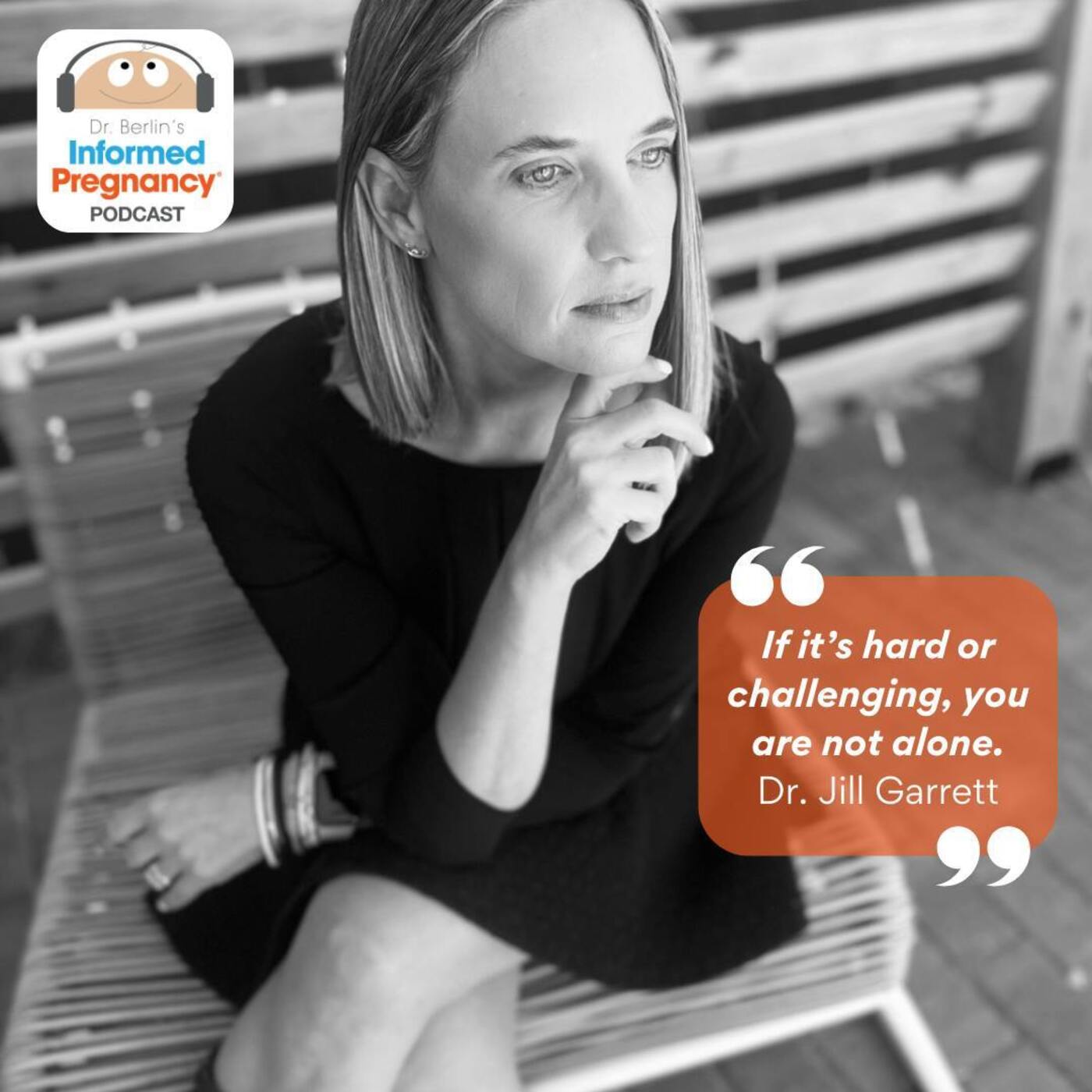
Dr. Jill Garrett [29:19] hard or challenging, you are not alone. And it is certain that there are options, resources and support for you. So utilize them and figure out how you can create a way to take care of yourself. You're going to take care of your baby. You just are. Parents are really good at doing that and they're less good at taking care of themselves. So create a plan on how you can take care of yourself to help yourself move through a period that's just
Dr. Elliot Berlin, DC [29:50] challenging. Brilliant. One of the things I see postpartum is that moms, for some reason, almost feel guilt around taking care of themselves, allocating time and resources for themselves as if they're depriving the baby. And I think quite the opposite, I think if you're not healthy, strong and cared for, it's going to be hard for you to do a great
Dr. Jill Garrett [30:12] job taking care of your little one. Yeah, for sure. And I tell people who have that same guilt around self care, I'll say you want your baby and or child to have these healthy coping strategies. You're going to want that. So if you're modeling it, they're seeing this, they're going to take this away for themselves in a year or five years. So do it for them.
Dr. Elliot Berlin, DC [30:34] Hmm. Powerful. Thank you. Thank you for all the work that you're doing and thank you for coming here to share with us on the podcast. Dr. Garrett, where can we find you online?
Dr. Jill Garrett [30:44] So the website that I have is motherhoodfeels.com. I am on Instagram at motherhoodfeels and on some other social platforms that I haven't really had enough time to actually do much on. So check out the website. It's probably your best bet.
Dr. Elliot Berlin, DC [31:02] Amazing. Thank you again for joining me at home. Thanks for listening to the informed pregnancy podcast. For more pregnancy and parenting information, visit us online at informedpregnancy.com.
Want more pregnancy + parenting? Start your FREE TRIAL of Informed Pregnancy+ and get access to all our curated pregnancy and parenting content — original series, iconic birth films like The Business of Being Born, prenatal workouts and more.
