
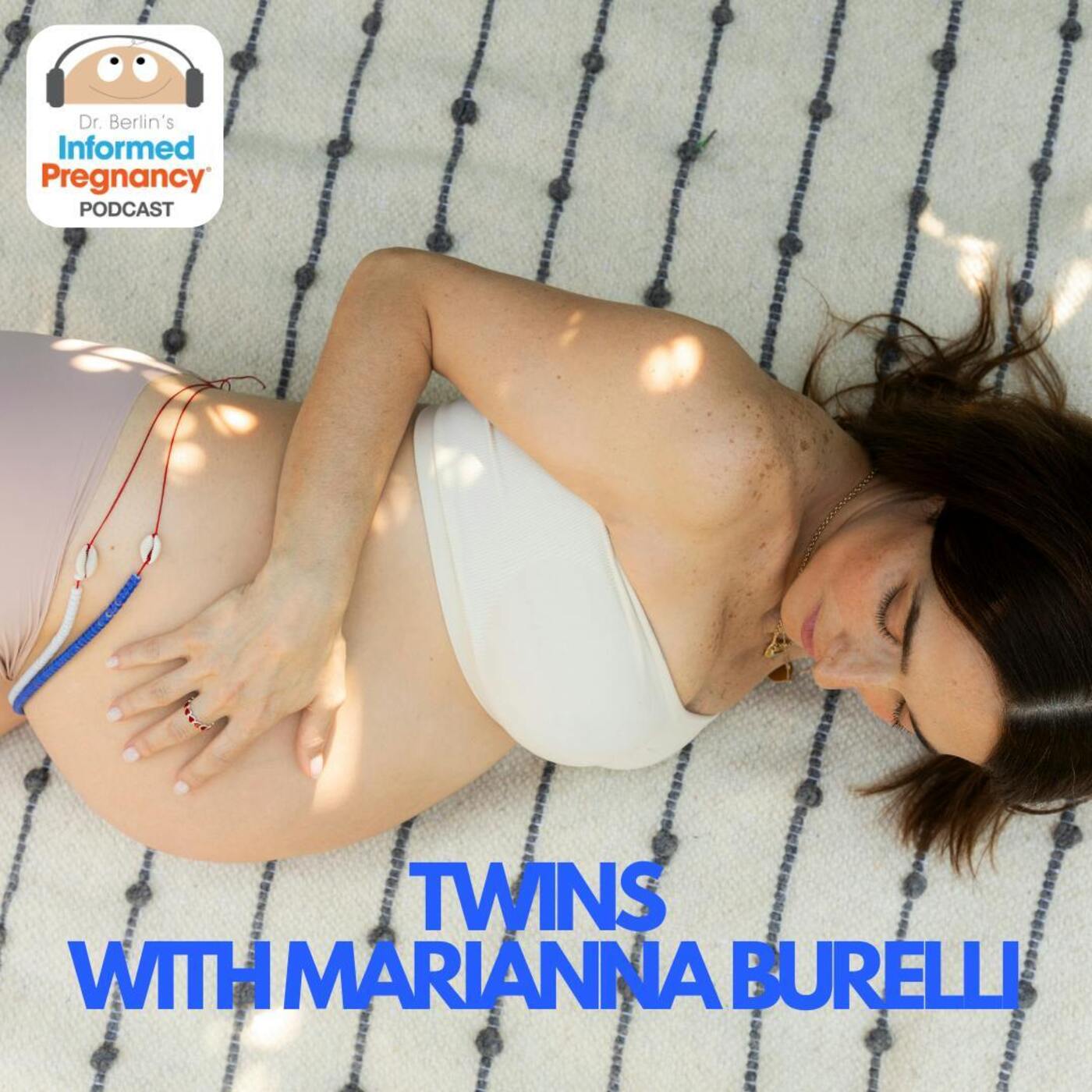
January 9, 2025 · 51 minutes · Episode 441
About this episode
Marianna Burelli is a Mexico City based actress, producer, and entrepreneur. She first joined us in episode 143 to discuss her first birth and how her baby moved out of the breech position. She returns to the podcast to share about the path of ups and downs leading up to her most recent pregnancy and birth.

Connect with the guest:
@mariannaburelli
@amainatural
amainatural.shop
amainatural.mx
Key quotes
“took the teas and I meditated like religiously twice a day. And in those meditations, I visualized myself being pregnant, having another baby, being fertile, being healthy.”
“I had to work harder with my mind not to go there, right? And trust the process and trust that what I was going through right now was a different story, you know? Well, for me, it was easy to kind of, you know, go back to that sense of, oh my God, what if. So, I had to kind of hold the horses and be, no, this is a different time. This is a different situation. This is a different story, you know? So, it's a great mind-spirit exercise to keep yourself away from the fears and allowing this new chapter to take place as a new chapter. But yeah, I have to confess that I had to really make an effort.”
“And Rio comes out really quickly, like so quickly. So imagine the first baby is born and I'm like, oh my God, my baby Rio. I give them a welcome. I hold him, you know, I do it skin to skin. And my husband cuts him the little cord after however long. And I'm in this middle of this romance with Rio and my doula is like, we need to, we need to, we need to get on Mateo. I'm like, oh, wow. Yeah. I have another child.”
“Also, you know what? It really helps when you know that it's not going to last so long. When you know that this hell time that I'm going through right now, the little hell tunnel, it's not going to be that long. I already know that it's not going to be that long because I've already passed it with Sienna. So knowing that, having that in the back of my head really”
“It's really great. It's doing really, really well. I think this is the future. I think we need to really take care of the planet because if we keep on doing things at this rate, I do not want to think of the future we're going to have to face or our children will have to face. So that's my gift. I have twin boys, but my gift is no bottles.”
Related episodes
- Ep. 435 Jackie Amézquita: After Birth
- Ep. 426 Mia Rigden: After Birth
- Ep. 443 Jessica Zadeh: After Birth
- Ep. 442 Jessica Zadeh: Before Birth
Transcript
AI-generated transcript with speaker labels — may contain errors, especially names and medical terms. Dr. Elliot Berlin, DC appears in blue; Marianna Burelli in orange.
Download PDF of the Transcript
Dr. Elliot Berlin, DC [0:36] Welcome to the Informed Pregnancy and Parenting Podcast. I'm your host, pregnancy-focused carb writer, Dr. Elliott Berman. My guest today is an actress, producer, and entrepreneur based in Mexico City. She was with us on the podcast all the way back in episode number 143, to tell us about her first pregnancy and birth, as well as her then brand new eco-friendly personal care company, Amai Natural. Today, she's back to fill us in on some incredible updates. A lot has happened since we spoke to her last. Mariana Borelli, welcome back to the podcast.
Marianna Burelli [1:10] Thank you so much. Such a great pleasure to be here. The last time I spoke to you, I think was probably, I don't know, months before the pandemic broke out.
Dr. Elliot Berlin, DC [1:21] You're right. We were oblivious then. We had no idea what was about to happen. We were just partying within two feet, or even one feet, of other people. We could see each other's faces, not that it matters for me. I was probably spitting on your hands or something, right? I don't remember that, but you could have been, and I wouldn't have been freaked out. No, on your microphone, for sure. On the microphone, yeah. Now we have the masks. Yeah, I mean, then we had, after that, everything went crazy. And then I lost touch with everybody, including you. And then I turn around, and after all the dust settles, you have this incredible story that you've lived, and I didn't know anything about it.
[2:02] So I'm here to learn and hear and share at the same time. I'm glad you're back.
Marianna Burelli [2:07] Yeah, thank you. So excited to be back to my favorite place.
Dr. Elliot Berlin, DC [2:13] So your first birth was also kind of interesting. Just as a recap, you had a breech baby that we were able to make some space for, and moved into a head-down position. But then you wanted to have an unmedicated birth, but at the hospital. Correct. And you did it. That's right. And I did it. It was really beautiful. And it was beautiful. And it's like, you know, that episode, that first one, 143, is pretty popular because there's not that many stories that we have on here. Usually you either have the home birth that's all natural and willy and unmedicated, or you have the hospital birth that's a bit more sterile and medicated. But yours was the in-between. Yeah. Mine was the hybrid. The hybrid. So before we get up to the most
Marianna Burelli [2:59] recent events, how was your past four years? Oh my God, it's been beautiful. We moved back to Mexico a year ago and yeah, lots happened. Work here. I first came because I was doing a TV show and I thought that I was going to stay for six months. And then those six months became a year and now a year and a half. So were you producing acting both? I was acting in this TV show and I'm right now producing a movie that hopefully will get to set the beginning of next year or end of this year, depending on funding. But yeah. And I just started another show that will be seen on Netflix at some point next year. So yeah, it's been busy and I had twins. Okay. There we go. Spoiler alert. Mama had twins.
Dr. Elliot Berlin, DC [3:50] Now that's fine. I mean, that's what we're here for. These twins. So I want to get into
Marianna Burelli [3:55] that journey a little bit. At that time, were you looking to get pregnant? Yeah. I started getting kind of like attempting to get pregnant in 2022. At the end of 2022, I found out that I was pregnant at the same time as my father passed, which was kind of an intense period of time in my life. You found out both at the same time? Well, pretty much. I flew to Spain once I found out that my father had passed. He had been sick for a few months and we kind of knew this was going to happen at some point soon. And that day always arrives. And although you think that you're kind of ready for it, you're never ready for it. So we flew to Spain and while I was there for my father's cremation
[4:42] and, you know, all of this, I had a pregnancy test done and I found out that I was pregnant. Wow. In Spain. Yeah. Very intense. So that was kind of the happy news in the middle of something, you know, a very difficult situation and a big goodbye. And then very soon we found out that the baby had a malformation in her heart and doctors told us that the rate of survival of embryos with that were kind of very slim to none. So basically the baby was incompatible with life. How many weeks when you figured that out? I figured that out when I was after the structural, which was 12 weeks. You know, I had a medical abortion on week 13. It was really, really, really tough,
[5:30] much tougher than I ever expected. Thank you. So that was that. And then after a few months, that was in December, 2022. And after a few months, around April, we were like, okay, we're ready to start again. So we did. And up until then, every time we tried to get pregnant, we got pregnant. And this time didn't work that way. You know, we tried to get pregnant and we used hormone trackers, didn't work. We did the whole, you know, calendar, when was my period, you know, all of that. I found it incredibly, I don't want to say boring, but you know, it's hard to kind of like get to business on a day, you know, specifically on, you know, I'll be waiting,
[6:16] let's do it right now. It's kind of not so great. Where are you? Come home. Yeah, come home. We need to get to business. So that didn't work for us at all. And I was kind of worried that I wasn't getting pregnant and months were passing. So we went to a top fertility doctor here in Mexico and he asked me to do some blood work before the consultation. So I did. And when I saw him, he basically had really bad news for me. He said, look, your hormone levels are on the floor and you barely have any eggs left. You have endometriosis. He also broke that news to me, which had never been diagnosed with ever before. Yeah. So suddenly I was facing a whole
[7:04] new scenario. And because of my low account, I wasn't even a candidate for IVF. Now that I wanted to do IVF, but that's what he actually said to me. And I was shocked, Dr. Berlin. I was shocked. I was like, what, what's going on? Like my life, how I knew it totally changed. What age are you at that point? I just turned 40. Okay. Yeah. I'm 41.
Dr. Elliot Berlin, DC [7:29] Oh, well, obviously somehow you got pregnant. Okay. Keep going.
Marianna Burelli [7:32] Yeah, somehow I got pregnant. Yeah. So I was just about to turn 40 then. He kept talking about my age and how when women turn 40, you know, things got a lot harder and that I should have gotten my eggs frozen and, you know, all of those things. And so I walked out of his office feeling devastated and got into the elevator and my husband said, do you believe him? And I said, well, if I believe him, then that means that I have zero chance. He also said there's a chance for you to choose like an egg from an egg donor. So you can start thinking about that because I don't think you'll be able to have your babies from your eggs. However, Roberto's sperm is on point. He emphasized that, you know,
[8:21] and that was great. I was like, oh, this is getting better by the minute. Yeah. Sometimes doctors really, they don't have common sense. Anyway, he didn't. So I walked out thinking, okay, I'm not going to go down this route, not going to check on an egg donor. I'm not going to do any of this. And I said to my husband, are you happy having one child? And he said, I'm absolutely happy having only one child. I was like, great. That's all I needed to know because I'm not going to go down this route of fertility and doing all these things that these guys, you know, presenting to me, but I'm going to do my own stuff. And he said, perfect. I'm going to do something much more, you know, alternative.
[9:08] And so I started to do some meditations and I started training for a marathon and shaman from village in Namibia, who is a friend of my friend. I saw a picture of me and I asked my friend to ask him what he thought. And he said, look, I think she's perfectly fine. I think she seems really stressed out. And he sent some herbs, like some herbal teas that I should take. So I took the teas and I meditated like religiously twice a day. And in those meditations, I visualized myself being pregnant, having another baby, being fertile, being healthy. My ovaries having eggs, et cetera. Right. At that time, are you still tracking your ovulation? No, no, no, I totally dropped all that. I relaxed. I was like, I'm not going to do
[9:58] this anymore. I'm going to have sex whenever I feel like it, whenever he feels like it, as business were before. Because you know what I think happens? Women's brains start getting really like obsessed with the idea of getting pregnant. So you have once a month, the opportunity to get pregnant and you really go for it. And you're really obsessed about it. And I think that that state of mind wasn't doing me any favors, you know, was actually, you know, it's a form of fight or flight. So your system is so jacked up that it's counterproductive. Absolutely. You're in a state where I don't think anything can happen, but run, like protect yourself from danger because you're in that, like what you said.
[10:44] So I dropped everything and I was just taking these teas and I was meditating and visualizing and enjoying the fact that I was actually meditating every day, twice a day. And it almost became more about the pleasure of meditation rather than trying to become pregnant. It kind of shifted. And I said, okay, by the 1st of December, I'm not pregnant. I'm going to start training for a marathon. We were all going to do a marathon in Rome. Have you done before? No, never. But I've always run, but this time I was like, okay, I'm going to run marathon. And my three brothers, my husband and I said, okay, let's do it. And there came December 1st and I wasn't pregnant. So I was like,
[11:29] okay, I want to have the best watch, the best gear. So I really got myself ready for this marathon. And I started training like crazy. You really have to run. If you want to run a marathon, you really have to train hard. And we went on that Christmas, we went to Puglia with my family-in-law and Roberta and I were running like half marathon, like on the 25th of December, feeling really fit and healthy. And then we went to Berlin with my family. And then there we ran maybe like 12 miles, like 20 kilometers at 10 o'clock at night, so cold in January Berlin, running, feeling amazing. Anyway, so I get back to Mexico City on the 9th of January. And after a very long run, like I ran for maybe two and a half hours as part
[12:24] of my training, I felt really sick. I was like, oh, I feel like a real athlete. I feel very tired, very sick. I must have run too much and kept feeling kind of weird. I was like, I'm going to entertain myself with this. Did a pregnancy test, came out positive. I was like, no, come on. Wow. This is a joke. I've been running like crazy. I don't even remember having sex that much. This is kind of weird. So I did another one, positive. So I called Roberta and I'm like, baby, I think you have to come down here. And he got really excited. We went to the gynecologist and in fact, the doctor goes, well, congratulations, you're pregnant. And his face was kind of suspicious and I could see two dots on the screen. And I said, okay,
[13:19] so if that's a baby, what's the other little white thing? And he was like, well, you know, it seems like you're having twins, but don't get too excited. Don't get too excited because, you know, they have a, how do you call it? The Vanishing Twin Syndrome. It's a thing, which means that one of the babies gets absorbed by the other really early on. So it could happen. So don't get excited. And I knew, I was like, these guys are not going anywhere. These two guys are staying. And yeah, so the pregnancy-
Dr. Elliot Berlin, DC [13:52] Wow. I mean, how did that feel finding out you're having twins? Is this back in Mexico also?
Marianna Burelli [13:58] This is back in Mexico. Yeah. With a new gynecologist, I didn't even have a gynecologist here. So it was a new guy who was incredible, a young guy. So when he said twins, I was like, what? Imagine I came like three months ago, I'd just been told that I had endometriosis, that I wasn't able to have babies, that I was too old to bear a child and that I had no eggs. So I was like, okay, wait a minute. I have two eggs now.
Dr. Elliot Berlin, DC [14:27] Yeah. And they're fertilized and they're growing.
Marianna Burelli [14:30] So I turn around and I look at my husband and he's fully crying, like weeping. And I'm like, what are you crying about? Yeah. I found it harder to kind of digest. And I said to the doctor, well, I just want to let you know that I'm training for a marathon. And he was like, no, you were. I was like, no, no, no, I am. He's like, no, Mariana, you cannot run a marathon. I mean, you're pregnant with twins. So yeah. So I run another marathon, which was a totally different marathon. It's a whole different story.
Dr. Elliot Berlin, DC [15:04] Let's take a little break there and then find out how your pregnancy was and what you had in mind for birth. We'll be right back.

Dr. Elliot Berlin, DC [15:22] Welcome back. We're talking to Mariana Borelli. Oh, wow. So I was just trying to go through all the emotions in my mind for a second. Your father passing, finding out that you are pregnant, finding out that the baby has a medical defect, not compatible with life, having to have a medical abortion, and then finding out that your fertility window is closed, told to you seemingly with a sense of definitiveness, you're not going to have babies, becoming satisfied, making your peace with having one and moving on to marathon training around the globe. And then finding out that not only you're pregnant, but you're having twins. So, you know, my mind goes in both directions. Twins, like, when do you start
[16:07] thinking about what this is going to be like in terms of a pregnancy and birth and raising two babies at the same time? And also, are you concerned that, I mean, you said you felt like these two are not going anywhere, but having had that other issue in the previous pregnancy,
Marianna Burelli [16:21] do you have any concerns about medical issues? Sure. I mean, I was very much aware that I had to work harder with my mind not to go there, right? And trust the process and trust that what I was going through right now was a different story, you know? Well, for me, it was easy to kind of, you know, go back to that sense of, oh my God, what if. So, I had to kind of hold the horses and be, no, this is a different time. This is a different situation. This is a different story, you know? So, it's a great mind-spirit exercise to keep yourself away from the fears and allowing this new chapter to take place as a new chapter. But yeah, I have to confess that I had to really make an effort.
[17:16] On the flip side, when did you start thinking about what this might look like in terms of carrying twins, delivering twins, raising twins? Elliot, I actually had no idea until I actually gave birth to two boys. Like, you can try to imagine it, but it's so unusual to have two newborns. I mean, it's so different. It's so much work, so much work. And it's so beautiful at the same time. I wouldn't want it any other way, but it is so much work that even if I try to entertain the thought of me imagining, I would fail constantly. What were the different trimesters like, the different phases of the pregnancy and especially compared to having one? Well, first trimester was pretty much the same as Sienna. I felt kind of sick, but I never
[18:04] actually threw up, never. It was just like, you know, a sense of, oh, I don't want to eat anything. So, that was the same thing. And also, I walked into this pregnancy being very fit. I was running for a marathon. So, I had abs. Can you imagine? I had abs. For the first time in my life, I had abs. And then they were about to go with a huge, massive belly. I had really strong legs. Yeah, the contrast. Life laughing at me. I had really strong legs, so I was good. So, first trimester was kind of pretty much the same. Second trimester, I was getting really worried because I was getting really big, really quick. And I was like, I still have 10 weeks to go. Like, this is scary. My belly was pretty huge. And I had
[18:51] already started feeling, you know, the pressure in your pubic bone. The thing that I felt with Sienna when I was 39 weeks, I started feeling when I was 25. I was like, I'm so screwed. Like, how am I going to even live the rest of this pregnancy? So, I started visualizing 37 weeks. I was like, come on, we can do it. 37 weeks. And yeah, the last trimester was intense because I wasn't able to sleep. What about two babies moving around inside you? Crazy. It's science fiction right in your belly. So weird because also you start getting to know their personalities. One of them, their names are Rio and Mateo. And Rio was a kicker. He was like… Mateo moved very kind of seldomly, but when he did, he turned. Like, he was
[19:46] determined. He wasn't going to do like little kicks or punches. When he moved, he turned, so it was really intense. And they would kick each other. At night, if I lay on one side, on the left side, I felt like I was squeezing and like stepping on Rio on, you know, it was hard. Like, the third trimester was not easy. Also, I started dilating before, you know, in week 36 or 35 and a half, which meant that I felt like their legs were sticking out. Like, things were coming out. Did you know their names? Had you already selected their names before they were born? I had an idea. You know how when you go to the gynecologist and you have twins, they refer to them as baby A and baby B.
[20:35] It's kind of impersonal. So Roberto and I were like, okay, we're going to call them water and earth. Bear with me. That's beautiful. It's beautiful. Ah, because in Spanish, A, agua. So we were like, okay, agua and the other one, earth. So water and earth. So the one that was head down was water and the one that was kind of upper here, and it was breach. Oh, yeah. One on one. Yeah. Like in that exact position. It is a space saving position
Dr. Elliot Berlin, DC [21:09] for twins. Like if you only have a cramped space, it's kind of a sensible fit, a sensible way to
Marianna Burelli [21:14] hang out in there. Could you always feel like the different parts knowing which one was water and which one was earth? I think so. I mean, I would never know if I was right or not, but I would think so. Water was head down from the very beginning. Like after week 20, he never moved. Like his head was down. And actually, when he was born, his little head looked like a little alien head. Yeah, like a cone head. And Mateo, he was breach and his head was totally different shape. He was like a flat head. And I said to the chiropractor, why was his head that shape? And she said, well, basically because he was carrying all the organs on his head. Yeah. On his head. Yeah. All of my organs were actually on top of his head.
[22:02] So their heads looked very different. But anyway, so are they identical? No, they're fraternal. They're di di. Oh, nice. Okay. Totally separate everything. Yeah. They're dike. Each one has its own placenta and each one has its own amniotic sac. And his own. Yeah. And the amniotic sac. Yeah. So it was a very safe pregnancy. Like every time I went to the doctor, my amniotic fluid was good. The guys both were growing at a very similar rate. Their position were good. I didn't know what were the complications that could happen because seriously, Dr. Brittain, I tried to find out information when I found out that I was pregnant. And there was so much info about how complicated it was a twin pregnancy
[22:49] and how all the things that could go wrong. But I was like, I'm not going to go down this route because I was already working really hard with my mind not to play any games on me. And I felt really well. So I was like, okay, I'm going to go with this feeling. And I know what it is to have like a really beautiful pregnancy.
Dr. Elliot Berlin, DC [23:07] Yeah. Your first birth, you wanted it to be in a hospital, but all natural. And you had a really beautiful experience. Now, anybody listening right now who might have twins, I would say probably half of them are going to be told that they can't even have a vaginal birth, let alone a natural birth. And the rest will be under a lot of, okay, maybe if X-Wings happens, we'll give it a shot. You know, it's not widely available in the obstetric community in the United States. You can find it. It's just more often than not, you're going to have to look for it and push for it. Did you have a plan in mind for how you wanted
Marianna Burelli [23:40] to deliver the twins? Yeah. I mean, I wanted a vaginal birth, two vaginal births. And that was the first conversation I had with this guy who I didn't know the gynecologist after he told me that there were going to be twins and that I wasn't going to run a marathon. I was like, okay, can you deliver? Are you willing to do vaginal births? And he said, absolutely. And I was like, okay, we can be friends.
Dr. Elliot Berlin, DC [24:04] That's awesome. Okay. Now what about the fact that one was head up and one was head down?
Marianna Burelli [24:09] Was that a concern for either of you? No. Well, no, I was like, if you tell me that you can deliver a bridge babies, I can do it. He said, look, normally doctors would prefer both babies to be head down. But as long as the first one is head down, everything else, you know, I can go with. And I said, deal. So I talked to our baby water and I was like, you better stay down head down all the way. And he did. So yeah. So my doctor was pretty open. I mean, pretty chilled. He said, as long as the difference of weight isn't that big, most doctors prefer the big baby to be the first one to come out. But he was okay. In fact, my big baby was the second one. Oh, how different?
[24:59] 200 grams less than half a pound different. So it wasn't a huge difference. And he kept the same every time that we do like a scan. There wasn't any signal that one of them was growing faster than the other. They were pretty leveled up. Like they were pretty similar. And. Well, that's great. Yeah. And he never used the word dangerous. 40 was never mentioned. Your age. Yeah. Age was never mentioned. Everything is going really well.
Dr. Elliot Berlin, DC [25:28] Do keep doing whatever you're doing. It's kind of interesting. We have an episode of our podcast called pregnancy over 35 with Dr. Emiliano Triviera and he's an OBGYN and an MFM. And he basically says, every person has a clinical health profile and on it, there are a bunch of data points. One of them is your age and it's the one that you can't change. It is what it is. But when you look at all the other data points, the more and more you have data points that are in the healthy or super healthy zone, the less the other points matter. So you're strong, you're fit, you're healthy, you're training for a marathon, you don't have diabetes, you don't have hypertension. So the age kind of just fades
[26:07] away, especially after you get out of the first trimester. So yeah, you're a strong, healthy person who's pregnant with twins. And I love your doctor. I want your doctor to move to Los Angeles. So to be sure, your doctor was okay as long as baby A is head down and not substantially smaller than baby B. That's right. Ideally baby B is also head down, but if not, you still give it a try. Going into labor, was that the position still?
Marianna Burelli [26:32] That was the position still. And it was really funny because we talked about everything before birth. I had so many questions. He had the time and the patience. And you know, he was so accessible and he really was interested in me having all my questions answered. I always say what good is a doctor with no patients? Yeah. Well, there's so many of them out there. It's crazy, right? So I asked him, I said, okay, so what if baby A comes out, what happens to baby B who is breech? And he said, okay, well, there's several scenarios. There's one, which means that he doesn't turn and he kind of stays with his butt down. And I will have to because he is bigger than baby A.
[27:17] The second one is bigger than baby A, heavier. I would have to do a maneuver that I stick my hand inside and I help the baby turn around. A gynecologist and OB-GYN outside will be helping me doing that. Like with your belly from the outside, helping me from the outside, not to allow the baby to come all the way up here, but like helping me keep the baby down. I think it's called the Leopold maneuver, right? Yeah. But essentially they would try to turn the baby head down or they would head down. No, no, no. He was going to try to turn the baby head down, like sticking his hand inside me and then turning the baby head down and the baby was stealing his
[28:02] sack and then put the baby in the right place so I could push him out. Or there was another possibility where once the baby A came out, baby B would sort of like turn, you know, gravity naturally. And there was a final possibility, which was the one that we didn't want to happen, that the baby would get stuck. Like, yeah, you know, in that scenario, there would have, you know, be the possibility of doing a C-section, an emergency C-section to get baby B out. And that's why so many women do not want to try vaginal birth when there's twins because there is, yeah, one in one. I've had two patients over the years that had one
Dr. Elliot Berlin, DC [28:44] in one. Oh, really? One of them actually, I should have her on the podcast. She's talked about coming on. She says even if she had known it would have been one in one, she still would have done it that way. Oh, really? Yeah. She was grateful to have the vaginal birth with the first one. Yeah. I guess not. Absolutely. Most people, when you say one in one, they're like, okay, I'll just do this or that, not both. Yeah. We're going to take a quick break. When we come back, we'll find out how your birth experience with these twins went. We'll be right back. Welcome back. We're talking to Mariana Borelli. Okay. So you're at the end of a twin pregnancy, uncomfortable, but ready. And baby A is head down. Baby B is breech and baby B is a
Marianna Burelli [29:37] little bit bigger than baby A. How does the labor start? Well, I was already five centimeters dilated. Wow. And for about three days. That's got to be weird walking around. So weird. Literally. It looked like I was open. I mean, that's how I walk. You can imagine. It's not great. Not very elegant. It really felt like I was kind of being split in half slowly but surely. Wow. I was so scared of going back home, Dr. Berlin. The last night I stayed, it was a Monday. I went to the gynecologist. I was like, okay, come on, tell me that we're ready. And he was like, no, you're five centimeters dilated, but because the uterus is so extended, but not because the labor has started yet. And I was like, oh my goodness. I mean, if you want,
[30:27] we can kind of start it, but the babies are perfect. And hold on a little longer. I was like, sure, I'm going to hold on because, you know, I'm all into non-medicated, you know, not little intervention, as little as possible. Two questions. Where are you in the week count here? How many weeks are you? 36.5. Okay. So almost on target there for the twins. And then also, I remember last time you had a doula and midwives, right? Yeah. In the hospital. Did you have a doula this time? I had an incredible doula. I mean, yeah, I would have had Kata again, but I mean, we are in different countries. Yeah. I remember you gave her the nickname Kata. Oh, so sweet. Yeah. I had an incredible doula and I was kept talking to her all the
[31:12] time. And I said to the doctor on Monday, I was like, doctor, if I go home, is there a chance that my baby, once the contractions start, my baby's born in the car? I mean, because I'm terrified. I don't want to have a car birth. I really don't want to have that. It kind of makes a better episode of the podcast. I'm so sorry, Dr. Berg. It's okay. It's all about you. Yeah. So I said, I don't know what to do. I don't want to go home because my house from the hospital was kind of like a good, solid 25 minutes. And I was already five centimeters dilated. I was like, this can happen in two seconds. And he said, look, there is a hotel right across from the hospital. Many women do that. They spend
[31:54] the last night there and then when they're so close. So I was like, that's what we're doing because my bag was with me. Everything was with me. So I stayed with my husband and a hotel across from the hospital. Oh, interesting. Were you doing things to try to get labor started? Oh yeah. My doula was like, guys, we need to create some oxytocin. So watch stuff, watch really great stuff, laugh, comedy, get romantic, buy some chocolate, you know, do that. Is romance a thing? 37 weeks with twins? Absolutely not. I mean, you know, we said nice things to each other and kind of kissed, but you know, like neck down, you can't really do much. Yeah. You're just a big balloon and five
[32:48] centimeters open, sort of dilated, very weird. Don't recommend it. And yeah, eventually that night I started labor. It was the right move to stay at the hotel, to stay at the hotel and at six in the morning, lots of chocolate. I mean, yeah, not good for the birth part, but loads of chocolate and spicy food. It was such a great night. And it was also the last night that we were just three of us. Right. So it was a really romantic, sentimental last night for both of us before we met each other as parents of three. That's really special. It was really beautiful. We wrote letters to each other. It was really, really special. We knew that the next day our lives were just about to change.
[33:39] For a long time. Yeah. Yeah. For a long time. Well, how did your labor progress? You know, different to what I thought, it was very slow at the beginning. I was actually embarrassed. I was like, doctor, sorry. I mean, stayed in the hotel across from the hospital. And then my labor went in like really slowly. I was like, Oh God, what's this? When is this going to kick in? Started like from six to 12. It was like I had contractions, but they were really soft, really mild. I was like, come on. I wanted to get weird. Come on. Wait, six to 12. Were you talking about six in the morning till noon or when you went to the hospital? You're at the hospital now. I was at the hospital like at seven and I had like really
[34:27] mild contractions and the doctor checked me and he was like, well, you know, it hasn't really started yet. Like I know you want it, but I'm then at 12 something happened. Like things started getting, you know, weird, like as we like them. And I started getting really strong contractions. However, because my water didn't break until right before birth, they never felt really intense, you know, with Sienna, my labor started because my water broke. So it was really intense for six hours with them. It was like, Oh, I felt really good. Like the waves were coming in and out, but it wasn't as intense. Was your plan to go unmedicated with the twins? Yeah. I mean, one of the things that a doctor had to do was to open up the, how do you call it
[35:20] for the epidural place it, place it, because if there was a point where they need to cut that needed to be there already. So like an easy access of the epidural. And I agreed, of course, because that was kind of one of the conditions for me to be able to have a vaginal work seems fair. Okay. So the labor is picking up and it's not as intense. You know, the word for me that I like to use is productive, but they could be productive, even if they don't feel so strong. Yeah, absolutely. It was kind of progressing, but not as fast as two sets of monitors. No one for each baby or one for each baby. I had like a belt and I had like two monitors, one in each. I had two belts, but they were kind of
[36:10] putting them on and off because the babies, both of their heart rates were really good. Like no worries whatsoever. And at some point the whole thing started at 12 midday and then at six o'clock doctor comes, checks me and my doula is we're doing all these magical things. I'm sitting on the Mayan chair, you know, I'm, I'm trying to connect with, you know, this other place where babies are before they're born. And my husband has been such an incredible help, like he already knows. And suddenly the doctor comes in and I'm like, why don't you pop this? Why don't you help me accelerate this? And why don't you pop this bag? And he turns around and he says to me, you're a goddess. I'm not going to do
[36:55] anything. You're doing great. I'm going to have a coffee. So off he goes. And my doula says to me, do you want to have a deadline? And I turned around and I said to her, like, I'm not going to put myself any deadline. So I'm in this sort of place where you don't have any filter. And I kind of walk forward. And that point, when I walk forward, I feel that my water breaks. And that like five seconds after the doctor told me, you're a goddess, you're doing fine. I'm not going to accelerate anything. It's going to happen when it needs to happen. And yeah, it happened. And the moment my water broke, that was it. I was like, I need to push, I need to push, I need to push, I need to push. It was such an intense
[37:38] feeling and need urge to just push. So they took me to the operation room because that's part of the deal too. That's part of the deal too, which I hated. But also I kind of managed to get music into the operation room, like speakers and lights down dim lights. So I've never seen that in the hour, but they're not doing surgery. They're just
Dr. Elliot Berlin, DC [38:04] catching a baby. Just in case you need to turn up the lights and act quickly.
Marianna Burelli [38:09] Exactly. They're just in there because yeah, because the second baby, what he said to me is that normally the first one comes out really easily. And sometimes the second one gets complicated, gets stuck or whatever, and then they have to act quickly. But I said to him, in the meantime, well, things are good. Can we dim the lights and can we put some music? And then my doula recommended something that I recommend to everyone. And I really kind of got it that I didn't do that for Sienna to choose a song for each baby. So Rio had his own song when he was born and Mateo, we changed the song when he was born. So each one of them have their own soundtrack of their birth. I never heard that before, but that's such a
[38:54] great idea. It's so beautiful. I have the video. So you see them being born with their music in the background. So yeah. So at that point, the doctor who already knows me by now says, okay, Mariana, here is your, he puts a, an eye mask on top. He's like, we're going to take it to the operation room and the corridors have these horrible white lights. So I don't want you to come out of this beautiful zone. So he puts his eye mask on top of my eyes, kind of like it rolls me down the corridor. And really quickly we get to the operation room, which is really kind of dark and the music is playing seriously. So beautiful. And Rio comes out really quickly, like so quickly. So imagine the first baby is born and I'm like,
[39:39] oh my God, my baby Rio. I give them a welcome. I hold him, you know, I do it skin to skin. And my husband cuts him the little cord after however long. And I'm in this middle of this romance with Rio and my doula is like, we need to, we need to, we need to get on Mateo. I'm like, oh, wow. Yeah. I have another child. That moment of, okay. So by that point, the lights were a little brighter and Elias was also, he's like you, not Elliot, but Elias says to me, okay, Mariana, we're going to do what I told you that we're going to do. Mateo didn't turn, so we're going to do a maneuver. And I'm in this sort of like, I'm drunk with oxytocin and all these happy hormones. So I go like,
[40:30] sure, go ahead. Like, I mean, so he stick his hand in and I feel all this movement going on. And at some point suddenly like in my right pelvis, I feel something like a really intense piercing pain. So I'm like, and the guy goes, sorry, that's Mateo's head. He got stuck there. So we need to pull up your leg. So he pushes my leg all the way up here. I feel the popping out of Mateo's head. The most painful part of the whole birth was that moment. And after minutes, yeah, I would say minutes, Mateo is in the right track, head down and ready to come out. So suddenly he goes like, okay, we can change the music. Mateo's coming out, change the track, Mariana push. And 28 minutes later, Mateo was born, head first.
[41:26] And they were both really well. They were breathing really well when they came out. They looked good. Everything was good. Wow. That was really special and very unique.
Dr. Elliot Berlin, DC [41:37] Again, I think most people here would have a hard time finding a practitioner to support that kind of birth. I'm really glad you're able to have it and to share with us. I have a few more questions for you. Let me just tell you one thing. I said to
Marianna Burelli [41:50] the doctor, because after the babies were born, I got taken to my room and the babies with me and everything was really beautiful. And everybody would come into my room and say like, congratulations. Oh my God, I heard about your birth and about Dr. Charula's maneuver. You guys both rock. And they kept talking about what the doctor had done and what I had done, like as if it was something really unique. And I mean, I felt pretty damn good for how things worked out. But I said to the doctor suddenly, I was like, okay, tell me how many times have you done this? Because it seems like a big thing. It goes like between 30 and 40 in my whole career. I was like, oh, wow, that's not that many. And I said,
[42:35] did you learn this in medical school? And he replies, no, I learned it from the midwives in the indigenous women in a state called Chiapas in Mexico from the indigenous midwives. And I
Dr. Elliot Berlin, DC [42:49] was like, I love you more. That's amazing. They don't do any trainings here, which is probably why these things are not so available here. Wow. That's extra incredible. We don't have so much time left, but I want to find out like now raising twins. What is that like? What is it like to everything? I mean, having one kind of knocks your normal cycle off. What
Marianna Burelli [43:12] does having two do? It knocks it twice. Yeah, it's complicated. Honestly, it is complicated. I'm not going to romanticize it. It's beautiful. But breastfeeding at the beginning was complicated, especially because before your milk comes down, you're feeding two babies with colostrum with drops. So what happened was that my boys dehydrated on the first day because they didn't get enough. So I had to help them with a little bit of formula for the first week. Also, the soccer sort of position of like breastfeeding two at the same time was very helpful. It took a minute to get used to because you're basically holding them like that side to side. And, you know, like they're learning to like, they're getting used to your nipples. So
[44:01] yeah, it's tricky and you don't have another hand. You only have two. So it gets complicated. But it's funny how you get used to everything. That's one thing about humans that it's fascinating in women. That is absolutely fascinating. Moms in particular. Also, you know what? It really helps when you know that it's not going to last so long. When you know that this hell time that I'm going through right now, the little hell tunnel, it's not going to be that long. I already know that it's not going to be that long because I've already passed it with Sienna. So knowing that, having that in the back of my head really helped my psyche because with Sienna, I was like, my life is over. And then you realize that it's
[44:45] not. It's just beginning. And Sienna has been queen of the palace for a while. Having two new ones in there must be a big adjustment for her. Yeah, it was. It was big. She said to me, because she wanted a sibling, a sister to be more precise, but you know, voice game. And she said to me like, mama, I wanted it so badly that they sent us two. I was like, there you go, my baby. And then she said one night she was like, I wanted this, but I didn't know that it was going to be, you know, this way. I didn't know that I wasn't going to have time with you. And she said to me, you know how I feel? I feel behind. I'm getting a lot of that sort of stuff. Fortunately, she's very mature and I'm able
[45:28] to talk to her and, you know, tell her that she's not behind it. We're all holding hands together and the boys need a lot of our attention, but sooner than later, they're going to be part of the pack and we're going to be able to, you know, do everything together
Dr. Elliot Berlin, DC [45:42] in a different way. Yeah. She'll love it in a different way. Once they're interacting with her better. Okay. So now they're three months old. Yeah. It's also a pivotal point. Are you exclusively breastfeeding them now that you stopped that formula after the first week? Yeah. Wow. I'm like in awe of you again. Okay. So I'm curious how the next year unfolds for you, but I'm really happy for you that you were able to, especially after all the kind of struggle and bad news pendulum had swung in one direction that it swung at, you know, equal but opposite in the giving direction and the joy direction. You deserve it. And it's just really heartwarming to hear your story and to talk
[46:26] to you again. Before we go, I want to talk about My Natural, which was the company you started right before the pandemic. Tell me about the products and how the company is going.
Marianna Burelli [46:37] Yeah, that's my other baby. The fourth. The fourth. Yeah. Amai keeps growing. It's a company that we basically sell products that have to do with like shampoos, conditioners and makeup removers, body creams, soaps that use zero plastic. So the whole idea of having Amai was to creating products that work, that work well on your hair and on your skin and that don't have any bottle behind. So as in today, we've saved the planet about 1,260,000 something plastic bottles. Oh, wow. How do you do it? We make them all solid. They're like triangles and the ingredients are slightly different. When you buy a bottle of shampoo, you buy 80% water and 20% whatever ingredients.
[47:34] We sell you the shampoo without the water. You put the water in your shower and we sell you the ingredients, the actual ingredients that wash your hair or the actual ingredients that condition your hair. And the cream is great because the body cream, that it's a triangle as well. And the moment you have contact with your skin and the heat that you produce makes the cream melt. Oh, that sounds really cool. It's really great. It's doing really, really well. I think this is the future. I think we need to really take care of the planet because if we keep on doing things at this rate, I do not want to think of the future we're going to have to face or our children will
[48:14] have to face. So that's my gift. I have twin boys, but my gift is no bottles. I love it. Even for them, no bottles because you're exclusive. That's amazing, Mariana.
Dr. Elliot Berlin, DC [48:29] So tell me where we can find Amai online and then in general, where can we find you online?
Marianna Burelli [48:36] Amai, you can find it. We sell it in the States now online and in certain stores. It's amainatural, amainatural.shop.
Dr. Elliot Berlin, DC [48:47] I like how you translated for us natural to natural.
Marianna Burelli [48:51] Yeah. Just making sure, you know. amainatural.shop, A-M-A-I. A-M-A-I, natural.shop. And you can find us in all of the stores of this amazing shop called Re-Grocery. It's a store that sells everything in bulk, like with no plastic, zero waste. And you can find it in LA. They have one in Ventura Boulevard. They have another one in Venice. They have another one in Highland Park. So you can find us in all of their stores and yeah, and online soon to be in Amazon, I believe. And in Mexico, you can find us everywhere. So we're doing really well. And I think this is the future. The good thing about Amai is that not only is vegan, cruelty-free, plastic-free,
[49:42] zero waste. The little triangles are wrapped with rice paper that is actually edible, you know, if you really want to eat it. So the beautiful thing is that you finish using your bar and there's nothing left behind.
Dr. Elliot Berlin, DC [49:57] I'm going to get some.
Marianna Burelli [49:59] Get some.
Dr. Elliot Berlin, DC [49:59] I sure will.
Marianna Burelli [50:00] I'll send you some, Dr. Berlin.
Dr. Elliot Berlin, DC [50:02] I would be happy to buy some in sports. All right. What about you and all these projects that are coming up? How can we find you online?
Marianna Burelli [50:10] You can find me on Instagram, Mariana Burelli. I don't have TikTok.
Dr. Elliot Berlin, DC [50:14] I don't have TikTok either. No, I just couldn't make that. I just use the little mints, TikTok. Instagram works fine. I will check you out over there as well.
Marianna Burelli [50:26] Yeah.
Dr. Elliot Berlin, DC [50:27] Mariana, thank you again for coming back. Congratulations on all the success and new joy in your life. I hope it only continues.
Marianna Burelli [50:34] Thank you so much, Dr. Berlin, for having me again here. I can't wait to visit you in LA when I get back.
Dr. Elliot Berlin, DC [50:42] Yes. Tell me when you're here and I'll carve out a half a day for you. Amazing. At home, thanks for listening to the Informed Pregnancy podcast. For more pregnancy and parenting information just like this, visit us online at InformedPregnancy.com.
Want more pregnancy + parenting? Start your FREE TRIAL of Informed Pregnancy+ and get access to all our curated pregnancy and parenting content — original series, iconic birth films like The Business of Being Born, prenatal workouts and more.
