by Hannah Gill | Mar 1, 2023 | Cesarean and VBAC, Labor and Delivery
“Ten minutes and a few contractions passed and Julie asked if I would feel comfortable moving to the squat bar. In my head, I thought she was crazy. There was no way I could support my body in a squat but with help from Scott, Julie, and our nurse, I repositioned and it was the best decision I made.”
My second birth experience was as different from my first as night is from day, both physically and mentally. I spent over a year preparing, I hired a doula, and I healed from the trauma of my first birth. Therapy helped tremendously in working through my postpartum depression, postpartum anxiety, and birth trauma. Simply having my experience and feelings validated lifted weight from my chest. Fear releasing and hypnosis practice also helped me prepare my mind. I knew it would be necessary to forgive myself and be at peace with my cesarean before I could fully surrender to birth again.
I woke up at 40+2 weeks with heavy bleeding. After talking to my husband, doula, and OB, I decided to head to triage for monitoring. Upon arrival, I was 3cm dilated and having irregular, unnoticeable contractions. My OB wanted to see if the bleeding was caused by a placental abruption or an intense bloody show. Luckily baby and I were both in stable condition and the bleeding eventually stopped. We had planned to return home because I wanted to labor there as long as possible but I had already dilated another centimeter and my contractions started to become more regular, so we stayed.
Dr. Alyssa Berlin’s The AfterBirth Plan course is now streaming!
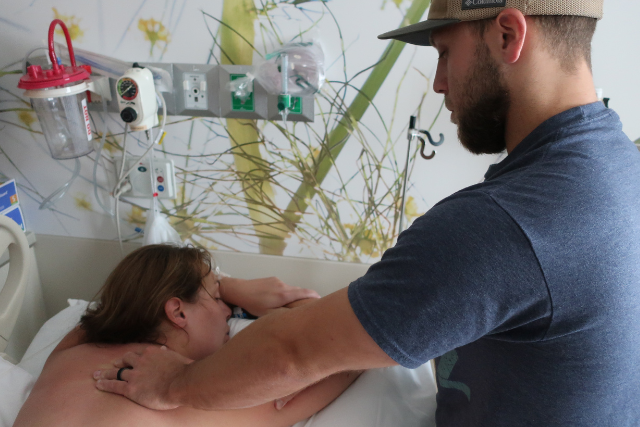
Once admitted, I got my first round of IV antibiotics since I was positive for Group B Strep. My contractions quickly grew in intensity and frequency and my water broke as I dilated to 5cm. While I was still in the right mindset, I sent a quick text to my doula, telling her to head to the hospital. At this point, I felt that I had to go to the bathroom. Laboring on the toilet felt like the most natural position to be in and after 45 minutes it was clear that I was transitioning. I began shaking and sweating as Scott massaged my shoulders and used a wet washcloth to cool me down. Out of breath, I told him I wanted an epidural but he knew how badly I wanted to stay unmedicated and encouraged me to wait for Julie to arrive for support.
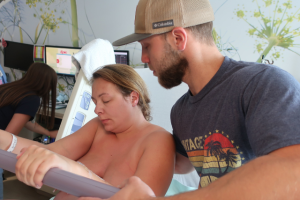
When Julie finally walked into the bathroom I immediately told her I needed an epidural but thankfully, she suggested a position change instead. I moved to the shower and hung around Scott’s neck as Julie sprayed warm water onto my back. I felt the need to bear down as my body instinctively pushed. Julie suggested I go to the bed and get on my hands and knees. Still pushing, I positioned myself on hands and knees, holding onto the incline of the bed. It was a relief to be able to rest my head between contractions. Ten minutes and a few contractions passed and Julie asked if I would feel comfortable moving to the squat bar. In my head, I thought she was crazy. There was no way I could support my body in a squat but with help from Scott, Julie, and our nurse, I repositioned and it was the best decision I made.
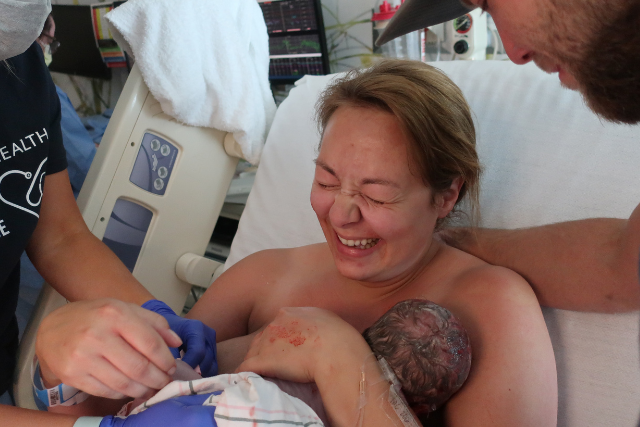
In five intense minutes, our daughter was born, just under five hours from the first contraction I
felt. She came down and through the birth canal so quickly, there was no time for head molding so her head was perfectly round. Every bit of pressure and discomfort I felt disappeared as I pulled her to my chest with tears of pure bliss streaming down my face. I had done it. I had the unmedicated VBAC I so badly wanted and it was the most rewarding and beautiful thing I have ever done.
After the pregnancy and birth experience I had and the relationship I developed with my doula Julie, I knew I had to become a doula too. Through training I was able to experience birth from a completely different perspective, one that opened my eyes to how unique each person’s experience is. So now, not only can I help educate women on their options in pregnancy, birth, and postpartum, but I can also help support them as a doula during labor.
Many people may be shocked to hear that I am thankful for the way both of my births unfolded. Although extremely difficult, my first birth brought me my son and a learning experience about taking charge of my health choices. My second birth brought me my daughter and helped me find the strength and power I have as a woman and a mother. Both experiences together lit a fire for a passion inside of me that I never knew existed.
Follow Dr. Berlin for updates on pods, blogs, streaming and more!
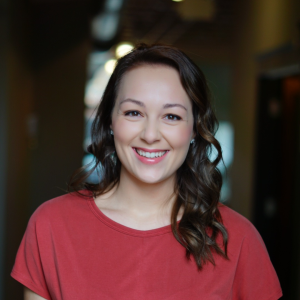
Hannah Gill is a VBAC mom of two, birth and postpartum doula, birth educator, and owner of Ebb and Flow Birth Co. She has a passion for helping support women through cesarean and VBAC births and throughout the postpartum period. She believes women deserve to be respected and supported in their pregnancy, birth, and parenting choices. You can find out more about Hannah and her services at ebbandflowbirthco.com and over on Instagram@ebbandflowbirthco.
by Kate Eales | Nov 1, 2022 | Cesarean and VBAC, Labor and Delivery
**This is a repost of a classic Informed Pregnancy article.
“During those final days, though, Dr. Schneider asked me one question that gave me pause: Why did I want a VBAC so much? Even after all I’d done to try for a successful VBAC, it was a difficult question to answer. For me, having a VBAC certainly didn’t matter more than having a healthy child.”
My VBAC journey began, as many do, with an unwanted cesarean.
It wasn’t that the labor and delivery of my first child were terribly traumatic. But for five hours after my son’s birth – time I had hoped to spend bonding with my new baby – I was alone in a recovery room, my sense of failure growing by the minute. All of the messages of empowerment that I’d received before labor now haunted me instead: Women are built for natural childbirth. Your body knows what to do. You and your baby will work together to make it happen. What did it mean about me as a woman, and as a mother, that I hadn’t done it? I worried that I’d never be able to breastfeed, that my baby and I would never bond, that I had failed him in his first moments of life.
These worries faded as we met, and bonded, and breastfed without trouble, but the seeds of doubt about my birth experience had been sown deep. Was it my fault for getting an epidural at 4cm? Had I not been moving enough in labor? Had the clock really run out, or was my midwife (who’d been at the hospital for four straight days with deliveries) just exhausted?
During my second pregnancy, I resolved to do as much as I could to avoid feeling so much self-judgment and doubt after the baby’s arrival. I ruled out a home birth, just as I had the first time, but I knew that the first change to make was also the most important: I needed a new care provider whose opinion and experience I trusted completely. I was thrilled when I found Dr. Jessica Schneider, partly because I knew she was supportive of VBAC, and partly because our communication was so open and easy. I remember coming home from one of our first appointments and saying to my husband, “I’m going for a vaginal birth, but whatever happens, I know I’m in good hands. If she says I need a cesarean, I’ll trust her.”
Check out more from The Informed Pregnancy and Parenting Project!
As my pregnancy progressed, I did everything that I felt comfortable doing to increase my odds of VBAC success. I found a wonderful doula, took hypnobirthing and VBAC prep classes, and started regular acupuncture and chiropractic visits. At every ultrasound, I was told that my daughter was measuring big, but my doctor assured me that we could still try for a VBAC. As I sailed past weeks 37, 38, and 39, I took steps at home to avoid an induction, which I knew counter-indicated VBAC success. Herbal teas, nipple stimulation, scrubbing the floor, sex… I tried them all. I remained hopeful for a long time, but as I passed 40 weeks with no sign that labor was near, I realized I was starting to panic. My first baby had been late, and big, and arrived via cesarean, and here I was, past my due date again, with another big baby… I shared my mounting anxieties with Dr. Schneider and she assured me that yes, we could still try. The decision to go for a VBAC was going to stay in my hands.
During those final days, though, Dr. Schneider asked me one question that gave me pause: Why did I want a VBAC so much? Even after all I’d done to try for a successful VBAC, it was a difficult question to answer. For me, having a VBAC certainly didn’t matter more than having a healthy child. Sitting inside that exam room, it was incredibly hard to say out loud that I worried I would feel like less of a woman if I never had a vaginal birth. Hearing myself say it, I knew it was absurd – but once I said it, I cried, and that emotional release felt better than anything else I’d done in the preceding few weeks. After that cathartic moment of letting go, I decided to schedule my induction, and I stopped scrubbing the floor at home. Labor would start before my induction, or it wouldn’t. I spent those last few days relaxing.
At the end of my 42nd week, I went in for my induction. I had a mental list of targets for my labor and delivery, and to my joy, everything starting humming along as I’d hoped. After an initial small dose of Pitocin, I labored naturally for hours, and this experience was completely different from my first. At 8cm, I asked for a walking epidural, after which I was able to keep moving: squatting, doing yoga, resting, and then moving again, doing everything I could to make my baby come down.
As it turned out, my baby was not coming down. About 24 hours after my induction began, my dilation had stalled and the baby had been stuck at zero station for several hours. Dr. Schneider came in and gently said, “I think it’s time to talk about a c-section.”
And there we were. I won’t deny that I was disappointed. But once my husband and I were alone, discussing our options, we both came back to what I’d said before about trusting Dr. Schneider. She was leaving the door open for me to wait if I wanted to, but she didn’t advise it, or think it would help. What would I be fighting for if I said no, and for how long?
My mantra for labor (and the name of at least three tracks on my music playlist!) was “Let Go.” It felt clear to me now that the best way for me to bring my daughter into the world was to let go of my vision for how it would happen.
That is how my VBAC journey came to end with a repeat cesarean. But this time, after my (healthy, 10-pound!) daughter was born, my doctor made sure we weren’t separated at all. I held her and nursed her in recovery, and in the days that followed, our bonding and my recovery went beautifully.
Before we said yes to the second cesarean, my husband and I talked about how having another cesarean would mean leaving certain questions unanswered forever. Would our daughter have come down if I’d kept on squatting and walking for a few more hours? Maybe. Might I have had a VBAC if I’d had a home birth? Perhaps. Was there anything I could have done differently to end with the VBAC I’d hoped for? It’s possible. But in leaving these “what if” scenarios unanswered, I feel peace knowing there’s another question that will remain unanswered: what if I will never know how lucky I am that cesareans exist? No matter the answers, I feel okay with not knowing.
One thing I do know is that in no way am I less of a woman, or less of a mother, because I birthed my son and daughter via cesarean. And while I believe that “healthy baby, healthy mother” comes first, I know that they are not the only things that matter. It turns out that it mattered to feel that my birth “experience,” not just the statistical outcome, were important to my care team, and it mattered that I felt good about myself when all was said and done. I do feel good about myself. My second cesarean turned out to be a second chance, and I have no regrets about my choice to let go.
Follow Dr. Berlin on Instagram for news on blogs, podcasts, and more!
 Kate Eales was born in Minneapolis, Minnesota, USA. She is a prenatal yoga teacher and feature film editor.
