
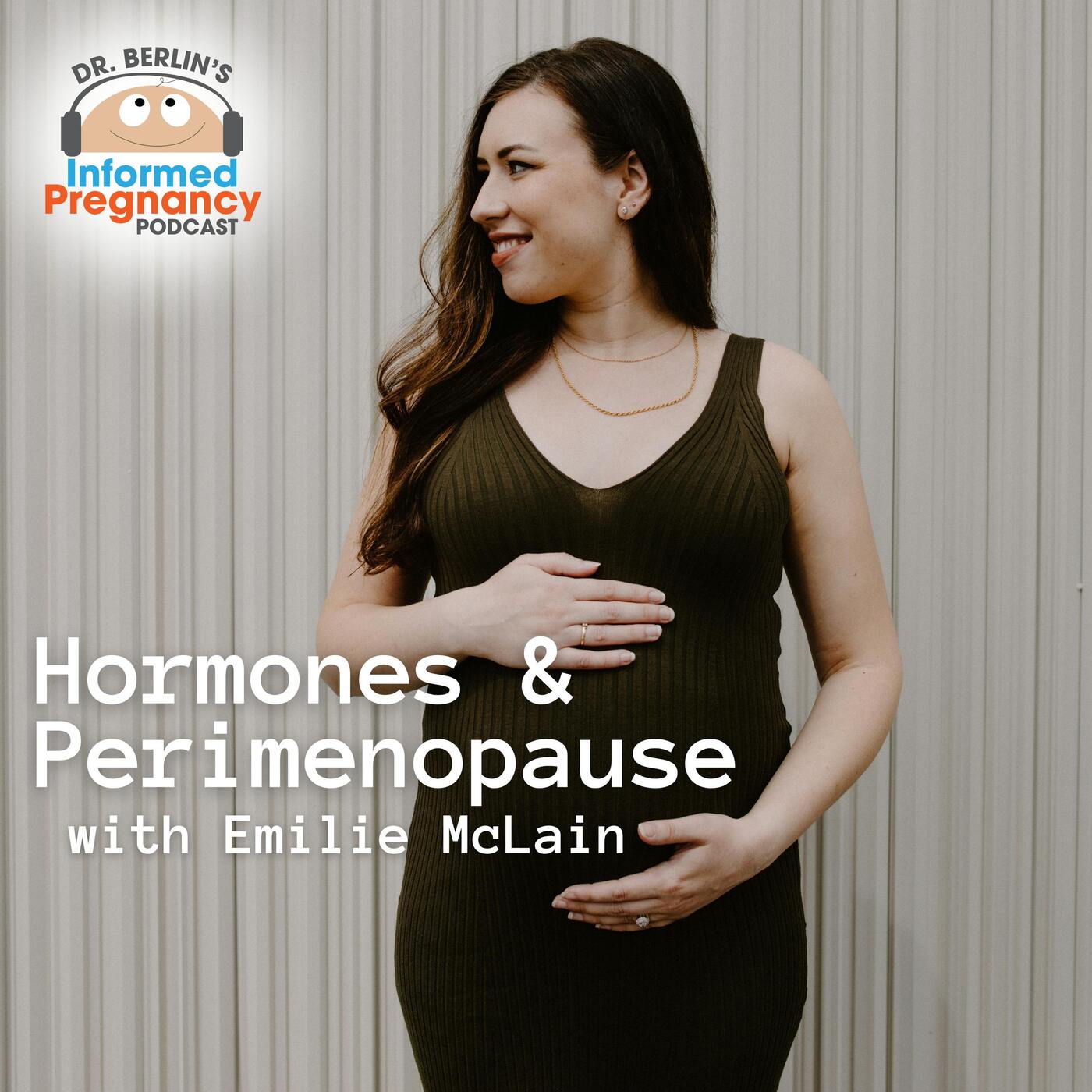
October 23, 2025 · 47 minutes · Episode 482
About this episode
Nurse practitioner Emilie McLain joins the podcast to discuss her path to practicing midlife gynecology including how to understand and navigate the hormone shifts of perimenopause and beyond.
Connect with the guest:
The Top 34 Symptoms of Menopause
Informed Pregnancy Media and Mahmee present an all new podcast! One Way or a Mother is a new narrative podcast from Dr. Elliot Berlin, DC. Each season is an intimate story of one woman, one pregnancy, and all of the preparations, emotions, and personal history leading up to the birth. Episodes feature the expectant mother along with her family, doctors, and birth work team.
Start listening to Episode 1: I Should Have Died featuring Arianna Lasry
Keep up with Dr. Berlin and Informed Pregnancy Media online!
Learn more about your ad choices. Visit megaphone.fm/adchoices
See Privacy Policy at https://art19.com/privacy and California Privacy Notice at https://art19.com/privacy#do-not-sell-my-info.
Key quotes
“it was hard to stop myself from going down that rabbit hole”
“I felt so bad for, you know, not realizing how painful this could truly be.”
“this was sort of my way of, I guess, taking back my birth experience”
“my baby's sleeping just fine. And yet I cannot fall asleep and it's 3 a.m.”
“they can trust their bodies and they can trust their gut”
Related episodes
- Ep. 470 Carlson Young: After Birth
- Ep. 469 Carlson Young: Before Birth
- Ep. 500 The Unexpected with Dr. Elliot Berlin Part 2
- Ep. 480 Twins with Lauren Gaba Flanagan
Transcript
AI-generated transcript with speaker labels — may contain errors, especially names and medical terms. Dr. Elliot Berlin, DC appears in blue; Emilie McLain in orange.
Dr. Elliot Berlin, DC [0:00] My guest today is a nurse practitioner with a doctorate in nursing practice whose work has spanned both ends of the reproductive spectrum from labor and delivery to menopause care. After years of supporting women through childbirth in a hospital setting, she transitioned into midlife gynecology where she now helps patients understand and navigate the hormone shifts of perimenopause and beyond. She'll share what everyone needs to know about postpartum and early menopause, as well as her own birth experiences, which she approached with a blend of professional knowledge and some natural anxiety. I'm pregnancy-focused chiropractor, Dr. Elliott Berlin, and you're listening to the Informed Pregnancy Podcast.
[0:54] Emily McClain, welcome to the podcast. Hi, Dr. Berlin. Thank you so much for having me. My pleasure. I was telling you just earlier, my wife and I got into this field through our infertility journey, and we really had a passion for helping people who were on that journey. And after they started to get pregnant, our practice kind of shifted into pregnancy. And then after that birth and postpartum, and now as that population is aging, we're getting into perimenopause and menopause, and I don't know much about it. So I'm really honored and thrilled that you're here to educate us all. I'm happy to be here. Tell me about the beginning. Where are you from originally, and what kind of work do you do?
Emilie McLain [1:37] Yeah, so I am from the suburbs of Chicago. I relocated to central Illinois for school, worked as a labor and delivery nurse in that community, and I have since transplanted myself back into the suburbs, where I now work as a women's health nurse practitioner in the gynecology space with a special focus in menopause. What led you into birth work originally? So I entered nursing school, and I knew I wanted to be a nurse practitioner, and so that was kind of my driving goal. We had a pediatric nurse practitioner growing up, and me and my family really loved her. And so that was what piqued my interest in nursing school. And then as I was in clinicals, being in the birth space was, I mean, as you know,
[2:29] it's invigorating. It's amazing. It's just incredible to be a part of that. And so I really wanted to focus on that once I graduated nursing school. However, it was at least hard to get a job in labor and delivery as a new grad. So I started in MedSurg first, just on a regular medical surgical unit, which was really useful anyways, because I got to hone in on some basic nursing skills before I was thrown into the world of labor and delivery and postpartum. And then, yeah, my love for women's health just grew and expanded from there. So I knew I wanted to focus on women's health once I started NP school, and that's what I do now. I would say to me, anyway, it's invigorating and draining at the same time.
Dr. Elliot Berlin, DC [3:19] Yeah, that's possible. That is a good way to put it. Yes. Like being thirsty and having to pay. I mean, you finally got into labor and delivery and also postpartum care units.
Emilie McLain [3:34] What was it like when you got there? It's a lot to take in at first, which is why I was really grateful that, like I said, I had those basic nursing schools going into it. There's so much to learn. And as excited you are to be there and just in awe of everything going around, there was a lot to learn. Absolutely. And as many good experiences there are with birth, being in a hospital setting, you see more medically complex cases. And so that can be a really scary thing to be a part of, especially as a nurse who's just kind of learning the ropes. For example, preeclampsia, eclampsia, cesarean sections, fetal intolerance to labor, hemorrhages. That's when you realize that there are lots of things that
[4:27] are life and death about labor and delivery for both the mom and the baby. So it was sort of a shock to get started in it. Did you not see those kind of things during your clinicals? Not really. I don't think in nursing and clinicals, you're not spending a ton of time in those deliveries. And so yes, you do see deliveries, but you don't see a huge range of them. And so a lot of my exposure was honestly when I was on orientation as a labor and delivery nurse. And then even as a labor and delivery nurse, when you have experience, you're always seeing new things and learning from new experiences. And so that's just kind of how the medical field is in general, that you're always learning and expanding your
[5:14] horizons. And so yeah, it's a lot to take in, but I also felt such a passion for wanting to help these moms get the experience that they want, but also have the education to where they can make these informed decisions. And so the more I kind of was in that space, the more research and education I was doing for myself so that I could be a better
Dr. Elliot Berlin, DC [5:41] nurse for my patients. I mean, that's pretty cool. I think nurses in hospitals are the jam. They make everything tick and do all the work, you know, the line share of the work in general, and especially in labor and delivery. And there is so much responsibility. I always have mad respect for the nurses. And also when I had COVID and I was in the ICU, the nurses were just insanely supportive and helpful more than anybody else. So I have a great appreciation for you and all of your colleagues. But at this point, you didn't have
Emilie McLain [6:16] any kids yet, right? I did not know. And so I think that I wouldn't say it was hard to relate to my patients, but it is different when you haven't gone through something personally. But as you get that experience, you definitely form your own ideals and the care that you want to give your patients. You definitely develop that as you go, even if you haven't personally been through it before. I mean, you become a nurse because you care deeply for other people and you want to help them through their healthcare goals. And so the basics of that, you know, are the same whether or not you've experienced it personally. But as someone who might go through it down the road when you're going through those
[7:00] experiences, especially the scarier ones, getting pregnant, it didn't affect you right away. How did it have more of an effect on you? Yeah. So when I initially got pregnant, I really felt good about the whole thing. I felt like I, you know, had all this education. I knew what I wanted in my birth. I knew I wanted a low intervention, you know, delivery experience. And I really felt like I had the tools to accomplish that. And so I felt really good about being pregnant initially. And I really had a pretty uncomplicated pregnancy. I felt really good throughout the whole thing. I was active, I was exercising. But then I turned 38 weeks and my blood pressure started creeping up.
[7:52] And so that was very scary for me. Very, very, very scary for me because seeing how this has played out in the hospital for previous patients of mine, it was hard to stop myself from going down that rabbit hole and thinking, okay, now I'm going to be induced and it's my first pregnancy. And so I have a higher risk of failure to progress and then end up in a C-section and then have a NICU admission and then have difficulty breastfeeding. The whole cascade. Yes, exactly. That cascade of interventions. And not that it always plays out like that, but now suddenly I'm sitting in that chair and that is all I can think of. And so my anxiety was truly through the roof, truly through the roof. So I ended up
[8:45] being induced, which was not- Because of the high blood pressure? Yes, because of my high blood pressure. Where's there other labs along with it that were concerning? So I had my first high blood pressure reading at an appointment and both me and the midwife were kind of like, oh, I just took four flights of stairs. Like, of course my blood pressure is going to be elevated. Let me check my blood pressure at home for the next couple of days. And so I was doing that. It was normal at home. But then when I went back a couple of days later for my appointment, it was elevated again. So then we decided to do some labs and I had protein in my urine, which is one of the most common signs of
[9:26] pre-eclampsia. So that earned me an induction. So I sent to labor and delivery, started the induction process. I was, I'm not even sure if I was one centimeter dilated yet. So again, that just added to my fear of how this whole thing was going to go. So I ended up getting two doses of Cytotec, which actually put me into a pretty regular contraction pattern. Did the Foley balloon, incredibly painful. Did you just do it on yourself or did you let? No, the midwife did it for me. Thank goodness.
Dr. Elliot Berlin, DC [10:01] But that's also, that's got to be something that once you've experienced you,
Emilie McLain [10:05] you have a much different perspective on doing it to other people. Yeah, I was kind of shocked. I felt so bad for, you know, not realizing how painful this could truly be. I mean, some people do fine with it. Other people are in a lot of pain with it. And I was one of those people that I was like, holy cow, this is super, super painful.
Dr. Elliot Berlin, DC [10:28] In my doula work. I noticed that for some people that you could, you might have to tell them that you're doing it because otherwise now it's just like a cervical exam for them. And for other people, the tissue seems to be so incredibly painful and sensitive that very, very tough people are screaming.
Emilie McLain [10:45] I'll never do this again. Yeah. So that was basically my experience. It was so painful. And of course, I was not tolerating the pain very well. And I remember them, they kept telling me I could get the epidural and I was like, I'm not getting the epidural yet. I need to be active during my labor. Like, I know how important this is. So anyways, the Foley balloon ended up coming out. It was still ambulatory the whole time. That was something really great. I think about my midwifery lead induction was they didn't hook me up to oral IV fluids. They let me drink water. They encouraged me to eat. They let me walk around the unit. And those were all things that were very, very important to me.
[11:30] So after the Foley came out, I did get the epidural. They broke my water. Two hours later, my son was born. So it happened very, very fast after that.
Dr. Elliot Berlin, DC [11:44] I know it was a while back, but congratulations.
Emilie McLain [11:47] Thank you. Thank you. Thank you. It was a beautiful story. It was a really, really, really positive induction. It still was hard to sort of wrap my mind around it because I was still grieving the process of not going into natural labor, which I think is very fair. But my experience itself was so positive. I had such wonderful nurses. I had great midwifery care. I had a beautiful delivery. So it went about as good as it could be. And then my blood pressure was fine.
Dr. Elliot Berlin, DC [12:19] So is it in? Yeah, I don't know if you know,
Emilie McLain [12:22] there's a test called the encompass test, but one of our sponsors, that predicts with incredible accuracy, who's going to get preeclampsia. Yeah, yes, I have heard of that. And I was actually listening to that episode. I think it was shortly after I delivered my second son. And I was thinking, I wonder if that would have been a good thing or a bad thing for me to know. If I was going to get preeclampsia again, because that really weighed on me a lot when I was thinking about getting pregnant the second time was now, even though I did have a great delivery, but I just felt like the stakes are higher now the second time, right? I already have a baby at home. I don't want to have to have a C-section and be recovering
[13:12] for that while I'm caring for a toddler. And knowing that I had preeclampsia the first time, my chances of getting it, you know, are pretty good. I mean, not good, but, you know, greater than the average. Yeah. So then I'm kind of thinking, oh, gosh, what if I end up delivering earlier, you know, next time, even earlier? So even though I had a good experience, I was already starting to go down that rabbit hole before I even got pregnant for the second time. And so that is when I decided I really need to work on this before I get pregnant and go see a therapist. And so that's what I did.
Dr. Elliot Berlin, DC [13:51] Oh, I want to hear all about that and see how it impacted your second pregnancy experience after a quick break. We'll be right back.

Dr. Elliot Berlin, DC [14:11] Okay. Welcome back. We are, I mean, this is a packed episode. We're going to have labor and delivery from the perspective of a labor and delivery nurse who did it twice. And then also talk about postpartum and the midlife hormone changes with Emily McClain. Okay. So the anxiety of your first labor and delivery, even though it went well, made you think I should see a therapist before I do this again. How did that go?
Emilie McLain [14:39] It went really, really well. I mean, I started a couple months before we were planning to get pregnant. And so I established with a therapist whose focus is pregnancy, delivery, postpartum depression. Like that's really her focus. And so we just kind of talked through how that experience went. And for me, it wasn't even necessarily my experience, right? I didn't have a bad experience, but I did have something scary that could have been a different outcome. And it just brought me back to those other experiences that I had been a part of. So it's sort of like, you know, PTSD by proxy, essentially. And so I was talking through things with my therapist and I think a great
[15:31] lesson that we really drove home every single session was I can be an advocate for myself and I know how to say what I want and say what my goals are and understand what's happening to me. And I have a great support system around me. And she taught me good grounding techniques too, because I realized kind of being in that office was a bit of a trigger for me brought me back to that last appointment that I had that I was sent right to the hospital. And so focusing on things that would make me feel grounded in the moment, reminding myself that I had no reason to think that I was unsafe or my baby was unsafe and really just staying in the moment, which is easier said than done.
[16:18] For all of us.
Dr. Elliot Berlin, DC [16:19] Yes. Yes. Yes. So you still went ahead and did it again.
Emilie McLain [16:26] I did do it again. Yes. I got pregnant very quickly and so didn't really have time to be like, Oh, maybe I'm not ready yet. You know, ready or not here we come. Yeah, exactly. Exactly. So got pregnant quickly. I had spotting, which I had actually had the first trimester of my first pregnancy as well. And so that was, you know, scary, but I felt like I was able to sort of rationalize that. And again, just trusting my body, like my body knows things that I don't know. If this is a good pregnancy, I can trust that my body knows that. And so I actually did okay with that sort of anxiety, but as we got closer to the due date, I felt my anxiety building a little bit more.
[17:15] And so I still kept up with my therapy appointments and my midwives knew that I did have anxiety about all of this and I was tracking my blood pressure at home. And I just had a really good support system too, with my husband who is constantly checking in on me and seeing how I was doing with everything. And so because of my previous induction, I was talking to my midwife at one of my later appointments, I think it was about 37 weeks for my second pregnancy. And she offered scheduling an induction because she knew I was really anxious about getting preeclampsia again. And so she had actually suggested scheduling an induction around my due date to hopefully prevent me from getting
[18:06] preeclampsia again, if I went later on in the pregnancy. And so never in a million years would I think that I would be okay with doing another induction. Choosing induction, right? Yes, but here I was thinking, huh, okay, well that does make sense. If I can do something to prevent, I mean, really there's not a whole lot you can do to prevent preeclampsia, besides staying active, eating well, taking a baby aspirin, that was something that maternal fetal medicine had recommended to me. But besides that, it really was sort of out of my hands. And so we decided to schedule an induction and she promised a very slow induction and that's exactly what I got. It was as low of an intervention induction as you could get. So
[18:58] I went in a day after my due date. So I was 40 and one, my blood pressures had been normal the whole time. And I was already three centimeters. They had did a membrane sweep on me in the office a couple of days prior that did start contractions, but then didn't end up going anywhere. So I still ended up being induced with pitocin. So they turned it up very, very, very slowly. I was ambulatory the whole time, changing positions on my ball. I started to get uncomfortable and asked for the epidural. And after my epidural was placed, they broke my water. And this time it was only an hour until delivery. So ended up being a really, really fast delivery. And I was just so grateful that it all worked out. And even though it was
[19:52] an induction, you know, this was sort of my way of, I guess, taking back my birth experience, because I didn't feel so threatened by an induction for preeclampsia anymore, if I already knew that I was planning on an induction. And so being able to kind of process that before my actual delivery, I think really helped me stay in the moment. And I was able to enjoy the process, honestly. I love that. Yeah. I love that. What would you say?
Dr. Elliot Berlin, DC [20:24] Because I sort of heard undertones of you feeling like you had to make sure that you had your autonomy and that your voice could be heard while you're in labor. And I've had OB-GYNs on the podcast who say that during their pregnancy or during their birth, there are certain things that they wanted that they just couldn't either find a way to say or couldn't find a way for themselves to be heard and for those wishes to be carried out. And so, I mean, for someone who's been through it from both sides, the personal and the professional, is there a tip? Because a lot of people listening right now are pregnant, and they have visions on what they want their birth to be like. Is there any kind of tip or
[21:07] thought or advice on how to either find the voice or make sure that the voice is heard
Emilie McLain [21:13] and respected? Yeah. I think being aware of how a typical birth in the setting that you're planning to give birth in, how those policies typically go and what a birth and delivery typically look like, because then I think you can have more of an idea of what to expect and then advocate for yourself on things that maybe would be a little bit different so that you're not in the spot in the moment because you're really overwhelmed when you're going through that experience, when you are the patient, that a lot of times, it's easier just to say, okay, okay, go along with things, even though that's not really what you feel. I think being prepared and knowing what to expect before you get to that
[22:04] situation helps a lot. Then you can think about what kind of conversation you want to have about these things. Another thing I think that's really helpful is having those conversations with your birth team. For me, it was having that conversation with the midwife at my prenatal appointments saying, even if I go through with an injection, I really want it to be slow pace. I want to be able to move around. I want to be able to eat. I want those things, and that's important to me so that, again, everyone can be on the same page before you actually get to that event and emotions are heightened. What was your postpartum experience like each time? The first time, it was really hard. It was really hard, I'm not going to lie.
[22:55] I knew what to expect as far as how newborns act and the needs that they have and the frequent feedings. I was very educated on how to help other moms breastfeed. When it was me, I really struggled with it. My baby didn't have a good latch and it went on for far too long where I was in so much pain. I kept seeing different lactation consultants that all told me that it was normal. That is not a good feeling when you have this goal that you want to accomplish and know in your gut that things are not right and you can't find people to help you meet those goals. That's a terrible feeling. Plus, you're sleep deprived and emotional because you're postpartum and all of the things. Postpartum was really tough from a feeding
[23:51] perspective, but also just an identity shift and everything about your life changes. Now, all of a sudden, you have to really plan out exactly what 20 minutes you can use to brush your teeth and take a shower. That's a really big change from when you don't have any kids. Right. Massive change. How did you get the breastfeeding worked out? I ended up finding a lactation consultant in my area who did home visits and I didn't end up seeing her until my son was I think about six weeks and I just knew this was not right. It was not getting better. I was in so much pain all the time and pumping was not helping and so she came to our house and confirmed that he had a tongue tie, which is why his
[24:46] latch was so shallow, which is why I was in so much pain, which is why he was so spitty because he was taking in too much air with all these feeds and so we got that released. It's a little startling. Other lactation consultants missed that. Yeah, I think at the time it wasn't as well known and I still think that it's not a large part of the lactation education that you get and so now I think that there is more awareness about it because with my second son, about 36 hours after he was born, I started having those same feelings of that nipple pain and I was like, oh, but see, I know that this is not normal. I know that it doesn't have to hurt and some of
[25:36] that is just of course getting used to things, but I said that to the in-hospital lactation consultants that I had concerns with this baby having a tongue tie too and they were way more open regarding the tie than they were with my first son. So I think that there's just more awareness and more education surrounding it and so we ended up getting that corrected really quickly with my second son, which honestly made a world of difference with our feeding experience and postpartum and everything. Well, 36 hours is a lot better than six weeks. Yeah, exactly. So you had a better postpartum transition the second time? Definitely, definitely. Yeah, I think the first is always harder because there's a massive
[26:21] learning curve too and the whole sleep deprivation is really foreign to you the first time or the second time. It's like, well, we kind of already figured out how to get through this and how to manage and so that's less of a shock. Plus we're just more confident as parents and so you have your toolbox of things that you know you can try, even if it didn't work for our first son. Well, this is something that we remember looking up, so we'll try it for the second. And you know, you're just more confident, you have more education, you have more experience. There's just less moving pieces, it seems like, the second time when you're already in parenthood. You moved away from labor delivery and postpartum to sort of
[27:06] midlife gynecology. What led to that transition? I sort of fell into it. There was a job opening very close to my house and the focus was menopause. So I had dabbled a little bit into menopause with a previous position. But with this one, I had so much guidance from a really wonderful provider who is a menopause expert. And so she was really inspiring to learn from, but also just work with these women who have been brushed off from doctor to doctor to doctor about all these symptoms that they're having. And your heart goes out to them and you want to help them. And there are lots of things that you can do to help their quality of life. And so I know it seems weird to switch from one side of
[28:00] women's health to another, but it really is so intertwined that your hormones affect everything about your life, every aspect of your life. So it was actually a really
Dr. Elliot Berlin, DC [28:12] natural transition. I sometimes think it's not that big of a gap from going through, especially as women are having babies older, going through postpartum to all of a sudden going through the onset of menopause, the beginnings of menopause. And also it's the same hormones that play. So do you see similarities in sometimes those postpartum
Emilie McLain [28:34] hormone swings that then come again later? Absolutely. Absolutely. A lot of the symptoms can present very similarly. So for example, night sweats, hot flashes. I mean, I think every mom I've known, we all experience waking up in the middle of the night just covered in sweat. That's the menopausal symptom. Absolutely. The brain fog, fatigue. I mean, some of this is due to lack of sleep and caring for a newborn, but also the lack of sleep too. Sometimes when you even have a moment to sleep, it's really hard to sleep. And that's something that I actually experienced this second time around. And I was like, Oh yeah, this is a menopause symptom for sure. Like my baby's sleeping just fine. And yet I cannot fall asleep and it's 3 a.m.
[29:24] And now I'm going to be up all night. So sleep trouble, decreased libido, urinary symptoms, like urgency, frequency, feeling like a UTI sort of, that kind of goes along with vaginal dryness. That's really common in breastfeeding women especially is that they have this drop of estrogen and they now have all these vaginal and bladder symptoms. And so that is a very common symptom that menopausal women experience as well. So many systems of the body are estrogen
Dr. Elliot Berlin, DC [29:59] dependent. And so I think you're sometimes not aware of how widespread the symptoms can be and how many different systems it affects. And I imagine oftentimes those symptoms, nobody's really putting it together. The individual is not putting together. Sometimes when you have a symptom, you see a specialist and the specialist is zoned in on just that symptom, not looking at the bigger picture. And I am sure that the more information somebody has, just like pregnancy, birth and postpartum, as an individual, the more information somebody has, the better their care is going to be managed because they're going to be an active part of the care team. I want to take another break and when I come back, learn everything we can
[30:46] about what to look for, what the different signs and symptoms are, the scope of the effects that it can have on the body and things that we can do to be proactive in terms of taking care of oneself. We'll be right back. Welcome back. We're about to drop some knowledge bombs with Emily McLean, all about perimenopause, menopause. Okay. When should someone start to look out for symptoms and what are some of the things they might start to see that would set off like a boom, here's a light. I'm starting to enter this chapter.
Emilie McLain [31:30] Yeah. So menopause, we'll start with some definitions. So menopause is the moment in time when you go one full year since your last period. So that would be menopause and the average age for menopause for women in the US is between 51 and 52 years old. We use the term perimenopause to explain the hormonal shifts that happen leading up to menopause and then menopause happens. That's that point in time and then post-menopause is everything that happens after that. And so a woman then is considered to be post-menopausal for the rest of her life. We usually use the term menopausal interchangeably, but that is once they go one full year since their last period, then they're a menopausal or post-menopausal for
[32:20] the rest of their life. So perimenopause on average lasts about four to five years before women stop having a period, but for some women it can last seven to 10 years even. And so it is a very wide range of ages, which also makes it sort of tricky to diagnose and treat and can lead to, like you explained before, kind of going to different specialists to kind of try to pinpoint treating one symptom at a time rather than looking at the whole thing. So the first thing that usually happens in perimenopause is your cycles start to change just a little bit. And so you're not ovulating regularly. And so your periods will start to vary first by a couple of days, then maybe five days, then a week,
[33:10] then over a week. And then they can kind of become really erratic. Your flow could also change. So they could get lighter and lighter. Sometimes they get heavier. Sometimes they get heavy, then light, then heavy, then light. And all of that has to do with the fact that your menstrual cycle is no longer following that nice curve of hormones and that nice peak for ovulation and then progesterone being made by the corpus luteum after ovulation. And so there's just less of a coordination between these different phases of the menstrual cycle when you enter perimenopause. And so you still have enough estrogen where you're having a cycle, but you start to have these really big dips in your estrogen and also just
[33:58] kind of these erratic points of highs and lows, a roller coaster essentially, where that is leading to a lot of those same symptoms that I just described that you can have
Dr. Elliot Berlin, DC [34:10] in postpartum. Yeah, I see people that come into the office in a couple of different ways. Sometimes I think it affects bone density. And so they'll all of a sudden be losing bone density, but also really more the nerves. I'll see all these peripheral nerve symptoms like tingling or burning or numbness, sometimes like restless leg type symptoms, sometimes muscle cramping. And if you don't have your eye out for hormones playing a role here, you just start to treat it on a very muscular skeletal level. Oh, there must be a pinch of the nerve. And my job as a massage person is to release the soft tissues and take pressure off the nerve. My job as a carpark to release restricted joints, take pressure off the nerve.
[34:58] But I think in general, I kind of have a rule that I'll treat something four times. And if it doesn't make any change, I'm not going to keep barking up that tree without investigating further. That might be doing lab testing, that might be doing imaging. But as I mentioned at the onset of the episode, as my population of my patients is getting older and older in their 40s and close to 50s, they're starting to see these types of symptoms. And I'm realizing that oftentimes it's the changes in estrogen. Yeah. I mean, estrogen really
Emilie McLain [35:32] affects every aspect of our bodies. And to be honest, the research is ongoing. The more and more we research estrogen's role, the more we're finding out more about all of these symptoms. And I have seen that tingling or itchy skin, that sort of thing, all over joint pain. The bone density is a very real concern for women who are entering menopause. We know that the first two years, actually, after your last period is when you lose the most of your bone density. And so to try to be proactive, to prevent that from happening is crucial for setting women up for quality of life beyond 50 years old.
Dr. Elliot Berlin, DC [36:21] There's a million things going through my mind. First of all, I know for a fact, because these are my patients, that not unlike you in your breastfeeding journey, when you felt like something was totally wrong, but people were telling you, no, it's totally normal. I know people are starting to feel these menopausal symptoms and talking to providers about it and being dismissed sometimes. No, no, no. You had a baby and things like that. So on that level, it's sort of like when someone has a gut feeling like that, what do you recommend that they do in terms of trying to figure it out and get
Emilie McLain [36:58] some answers? The Menopause Society is a wonderful resource for really everyone to know about. So it used to be called the North American Menopause Society. And they're the ones that kind of come up with all of these position statements and education for the general public, but also providers. And they have a great resource list that you can actually look up your zip code and find a practitioner who is menopause certified. And so to be menopause certified, you actually have to take a test, you have to continue with continuing education to show that you're keeping up to date with the menopause guidelines. And so I think if you really have that gut feeling or you're trying
[37:46] to be proactive about your health, you just want to learn more, you want to establish a relationship with someone who can help you in this next phase of life, that is a wonderful place to start where you know you're going to be getting the most up-to-date evidence-based
Dr. Elliot Berlin, DC [38:00] care. Okay. Well, that's a great resource. And then there are screenings people can do. When
Emilie McLain [38:06] do you suggest that they do them and what are the screenings? Yeah. So as far as screening for menopause itself, unfortunately, there's not really an easy task that you can do. Your hormones fluctuate so much throughout perimenopause that it's really hard to capture what's going on in a single moment. And so as far as screening for menopause, usually we're just kind of looking at symptoms going on, what your periods look like, how old you are, and we'll have to kind of put the pieces together to figure out exactly what's going on because it can be hard to tease out what symptoms are exactly menopause and hormone related and what symptoms may just be the stress of life
[38:51] and your dog's sleeping with you and so you can't get sleep. You know, like there are other factors at play here. So as far as additional screening, screening for heart disease, metabolic disease, bone density, those things are all very important to do. So for screening for heart disease, something that I always like to look at is if a woman has a history of preeclampsia, we know that that increases their risk for heart attack, for stroke, for high blood pressure later in their life. So those women in particular need to be really conscientious about their heart health as they're entering menopause. So screenings that I would consider for them would be a lipid panel. There's advanced lipid panels that you
[39:40] could get drawn to see if you have genetic risk factors for having a cardiovascular event. You can consider doing a coronary calcium score which looks for plaque buildup on your arteries and also then just screening for thyroid disorder, diabetes, just metabolic disorder in general. The other thing I like to think about too talking about pregnancy disorders is gestational diabetes increases your risk for developing type 2 diabetes later in life. So for those women, we should really be screening them early for insulin resistance. We can do that by getting fasting insulin, fasting glucose levels, a hemoglobin A1c looks at their average blood sugar over the past three months. And then having that information can help us come up with a plan
[40:30] on how to be proactive about their life, the future. So tips that I like to give all my patients is following a Mediterranean diet can really help to decrease the risk for heart disease, for metabolic disease, getting 10,000 steps a day, doing heavy lifting, making sure you're getting enough protein in your diet, making sure you're getting enough fiber in your diet. Those things are just kind of general tokens I like to give to everyone. But as far as those screenings, those are readily available. You should be doing them about yearly as you approach menopause, as you're in menopause. And then the last thing, like I mentioned before, is that bone density screening. So I really like to do that about
[41:16] two years after someone's last period, because then we have an opportunity to sort of catch that osteoporosis from forming before we get to osteoporosis.
Dr. Elliot Berlin, DC [41:27] What do you say as you approach menopause? Is that going to be different from person to
Emilie McLain [41:31] person, or is there an age where it's like, I've reached this age, I should do these screenings? There's not necessarily a hard and fast rule as far as age. I think it really depends on the person. Someone who is 42, who is skipping her periods, who has a family history of heart disease, we probably want to be looking at her heart health sooner rather than later. And so I think it really depends on your personal history or family history. And so that's a great conversation to have with a menopause specialist, someone who understands that risk a little bit
Dr. Elliot Berlin, DC [42:09] more. I think you talked about lifestyle changes, which is super important for maintaining health, especially during this period of life. But also, as the symptoms start to come on, what kind of therapeutic tools are available to help out?
Emilie McLain [42:23] So as far as therapeutic tools, we have a couple of different options. We can use non-hormonal treatment options or just lifestyle changes too, depending on exactly how that person presents, what their history is, what their goals are too. But most commonly, I do utilize hormone therapy for a vast majority of my patients, because that allows us to get to the root cause of their symptoms and it helps them feel more like themselves. Plus it gives them bone protection and it just helps to give them quality of life so that they can be more proactive, have the energy to be more proactive and follow those healthy lifestyle recommendations.
Dr. Elliot Berlin, DC [43:10] I think also, especially during the time, people have little kids and you've got to be energetic just to keep up with them. And especially if you're splitting your time between that and a career, it's a time when you want to feel good and you
Emilie McLain [43:25] need the energy. Yeah. And some women are also even dealing with now grandkids. I mean, it's such a wide range of life events that happen when you're midlife. You might have little kids yourself. Your kids might have kids now. You might be taking care of your aging parents. And so there's so much going on in that period of your life that we really can't have your body giving out on you too.
Dr. Elliot Berlin, DC [43:53] There's the health and then there's everything, all the practical consequences of that. Emily, I really am learning a lot from you today and I really appreciate you coming and sharing both your personal stories and your professional journey and some tips from all the different stages of pregnancy, birth, postpartum and now menopause. Is there anything on your mind that I didn't ask that you think would be important that we share before we wind
Emilie McLain [44:18] down? I think in my personal and professional experience, I really want women to know that they can trust their bodies and they can trust their gut. And if they feel that something is wrong, that something's off, that there are people that can help them achieve their goals and help them improve their quality of life. And so I think, unfortunately, you do kind of have to do a little bit of your own research to find those people to keep in your circle, but they are out there and we really do want to be able to live out the rest of your years
Dr. Elliot Berlin, DC [45:00] in good health. Very well said. Thank you.
Emilie McLain [45:04] And thank you again for sharing. Where can we find you online? You can find me on my personal LinkedIn, Emily McLean, or on my professional website, mymenopauseRx.com. What kind of things can we find there? On mymenopauseRx.com, you have the ability to book appointments with myself or my colleagues. We also have lots of resources regarding perimenopause education, menopause education symptoms, just things to experience, things to expect. We also have sort of a social media type platform too that you can ask your questions and we give generalized medical advice or medical tips for women who are experiencing these changes. Amazing. We'll check it out and
Dr. Elliot Berlin, DC [45:57] you know, if there are things we'll add that to our show notes, but if there are the things that you'd like us to add, we'll add those as well. Thank you again for the incredible work that you're doing and for joining me today. And at home, thanks for listening to the Informed Pregnancy podcast. For more pregnancy parenting and now perimenopause and menopause information just like this, visit us online at informedpregnancy.com.
Want more pregnancy + parenting? Start your FREE TRIAL of Informed Pregnancy+ and get access to all our curated pregnancy and parenting content — original series, iconic birth films like The Business of Being Born, prenatal workouts and more.

0 Comments