by Eryn Shaffer Davidson | Mar 2, 2025 | Cesarean and VBAC, Labor and Delivery, Pregnancy
“Birth doulas are often described as providing educational, emotional and physical support during labor, birth and postpartum. I would also add advocacy into that mix, frequently partnered with training in trauma-informed care and anti-racism…”
What is a doula? Interestingly enough, this question can be difficult to answer directly, and for many reasons. Some would say a doula is an advocate, while others would sum up a doula’s role as “witness.” Some might describe doulas as comforting, soft, and supportive, while others might hire a doula because they want a fierce, bulldog defender or tough-loving coach.
There is also the word’s problematic origin—“doulē” which is Greek for “female servant” or “female slave”—and the fact that some people might want to take a step away from this etymology. In fact, “doulas” as we know them in the modern western world have been called many things: In ancient Greece, “maiai” (meaning “great” or “mother”) would attend births, taking on both the role of a doula and a midwife. Supporters or guides of birth might be called “birth attendants” or “wise women” in places like South America or Africa. Some doulas in North America prefer to call themselves “birth coaches” or “birth keepers.” There are many times I see my work as a doula as “companioning,” a term I borrowed from Dr. Alan D. Wolfelt’s keynote at an Association of Death Education and Counseling conference in Chicago.
And yet another element spicing up the answer to this question is the definition of a doula as a “guide through transition.” These days, we see doulas helping people through many different transitions: In addition to birth and postpartum doulas, there are death doulas, adoption doulas, abortion and loss doulas, divorce doulas, and the list goes on. As a person passionate about cycle education and empowering women to have healthier and happier periods, I’ve considered also taking on the title of “period doula.”
But I was asked to write for Dr. Berlin’s blog, which gives me the hunch that many of you are here to learn more about birth doulas and what exactly we do. Birth doulas are often described as providing educational, emotional and physical support during labor, birth and postpartum. I would also add advocacy into that mix, frequently partnered with training in trauma-informed care and anti-racism (critical elements of our work, considering over 50% of women will experience sexual violence involving physical contact in their lifetimes and BIPOC birthing people are 2-4 times more likely to die in childbirth compared to their white counterparts.)
Often we meet with parents early in their pregnancy journey (sometimes even before) and help them navigate the ins and outs of prenatal care and birth plans or preferences. As their due window approaches, we equip them with comfort measure tips, self advocacy tools, and the risks, benefits, pros and cons of any option they may consider. We are there as family-centered support, a listening and affirming ear, and a comforting, warm touch. We protect and preserve the “labor bubble” by keeping the lights dim, encouraging privacy, and mediating where needed.
Many of us are also nerds. I’ve heard it said that “OBs are surgery and high risk experts, midwives are physiological birth experts, and doulas are labor experts.” We’ve got tools in our pockets for an asynclitic baby, a sunny side up baby, a baby stuck too high in the pelvis, a stalled labor, and the oh so dreaded back labor. But don’t rush to put us in the “crunchy only” box just yet, because we’ve got other cards up our sleeves—Doulas can assist with productive epidural positions and acupressure, or help clients advocate for a family-centered cesarean birth, too.
All this said, doulaship is not a regulated profession. There are certified doulas and doulas who choose not to certify. There are doulas who choose to only attend hospital births and doulas who specialize more in physiological or out of hospital birth. There are doulas who will pray for you and doulas who will push you, and doulas who will do both! This is why it’s important to think about why you want a doula and how you see one supporting you.
Meet with 3-4 doulas and ask them prepared questions. It is important to find a doula who feels like the right fit for you—not just the one who knows the right maneuvers, but the one whose presence alone makes you feel how you want to feel as you bring your baby into the world.
And while we’re discussing what you might want in a doula, it might be important to point out a few things that doulas do not do: We do not do anything medical like take vitals or perform cervical exams. We do not replace midwives. We do not replace your partner. We cannot promise a perfect birth or a birth exactly how you planned it. And lastly but actually very importantly, we cannot have your baby for you. Instead, we strive to equip you to birth positively and confidently.
Midwife Ashley Booth Young once said “Although the popularly desired outcome is ‘healthy mother, healthy baby’, I think there is room in that equation for happy, non-traumatized, empowered and elated mother and baby.” And I think that encapsulates the united goal of doulas beautifully.
Need some questions to ask potential doulas? Here are a few to help get you started:
1. What got you into birth work and why do you do what you do?
2. Do you work with a back-up in case you can’t attend my birth, and can I meet them ahead of time?
3. I’m particularly nervous about ____ happening. Can you walk me through how you would support us if it were to happen?
4. What do your services include?
5. How would you describe your practice in one (or three) words?
About the author: Eryn Shaffer Davidson is a doula based in Waco, Texas. She is certified through Carriage House Birth and is also training to become a childbirth educator with Evidence Based Birth. Beyond birth work, she is passionate about empowering women through the entirety of their reproductive journeys, and could go on for too long about how periods shouldn’t hurt and how contraceptive options extend far beyond the pill.
An avid Informed Pregnancy Podcast listener, she is driven by the desire to see women fear birth less, and instead experience joy, support and clarity in their bodies and their choices. She dreams of a world where the evidence-practice gap is a little smaller, and collaboration between home birth and hospital providers is the norm. When she’s not at a birth, you can find her working with production company Stork Films, reading the latest Evidence Based Birth article, detoxing in a hot yoga class, or watching Grey’s Anatomy (seasons 1-8 only.)
www.eryndavidsondoula.com
All photos courtesy of Eryn Shaffer Davidson
by Caroline | Jul 17, 2024 | Fitness & Nutrition, Labor and Delivery, Pregnancy
Yoga creates not just flexibility in your body, but also flexibility and openness in your mind and heart. On the mat, you’ll practice being present and curious, rather than judgemental of yourself. You’ll learn to simply notice (for example your breath and sensations in your body) rather than labeling them as good or bad.
There are many ways that prenatal yoga can help you physically prepare for birth [Check out my blog post on that here,] including creating long and supple muscles, getting in touch with your pelvic floor, learning breathing techniques, positions for labor and optimizing baby’s position, however, that’s only half the story. We all know that our mind can be our most powerful ally or our worst enemy. Just like athletes use visualization to keep their motivation up and imagine themselves completing the event, you too need to train your mind in preparation for your big event – and prenatal yoga is one of the best ways of doing this.
As a prenatal yoga teacher and doula with over 12 years of experience supporting thousands of pregnant women, I have seen firsthand the many benefits of prenatal yoga. In this blog post I will focus on five of the mental benefits for birth.
1. Learn tools to stay calm and relaxed
Why is this important? A relaxed mind = a relaxed body, and a relaxed body will open with contractions, instead of fighting against them. If you’re feeling calm your hormones will flow as they’re supposed to – oxytocin to create effective contractions, and endorphins to provide natural pain relief.
How does yoga help with this? Not only will you learn breathing techniques, but you’ll also practice a variety of other tools and techniques, such as visualization, meditation and rotation of consciousness to relax your body. What’s more, you’ll learn to bring your awareness inward instead of being distracted by external happenings. You’ll be able to go deep within and stay calm no matter what’s happening around you, using the power of your mind to work with your contractions.
2. Positive mindset
Why is this important? There’s no doubt that giving birth will be one of the most challenging events in your life. You can choose to approach birth from a place of fear OR you can choose to approach it from a place of empowerment and positivity.
How does yoga help with this? Some of the core yogic principles are highly transferable to the situation of labor and birth. For example, the idea that all things are temporary and labor won’t last forever is key. You can practice this in prenatal yoga with what I like to call a “staying-in” pose. This is a pose that feels physically uncomfortable to hold, allowing you to practice a breathing technique to help you stay as calm and relaxed as possible for 60-90 seconds.
Another example of this type of mindset is choosing to see pain from contractions as productive rather than suffering that has to be endured – this radically changes your perception of, and reaction to, the situation. Your teacher might introduce you to affirmations which can be really useful to keep your mind focused on positive thoughts during labor and birth.
3. Build your connection with your baby
Why is this important? We tend to think that “the woman is in labor” or “the woman is giving birth” but the reality is that it’s a team effort with both mum and baby working together. Babies intuitively know how to be born, so if you have that strong connection with your baby, you can work together as a team.
How does yoga help with this? Sometimes it’s hard to know how to begin the process of connecting with your baby, but all prenatal yoga classes involve some form of guided connection during breathing and relaxation time. This might be through touch, sound/vibration, words or images in your mind.
4. Get on the same page as your partner
Why is this important? Talking about teamwork, and having you and your partner on the same page is when the real magic happens. A strong support person can coach you through breathing when things get overwhelming, remind you about different positions to try, give words of encouragement, acts of service, or they can advocate on your behalf to shield you from any discussions that might otherwise create tension.
How does yoga help with this? Attending prenatal yoga classes by yourself is great, but it’s even better to get your partner involved. For example, you may want to check out a couples birth preparation workshop where you and your partner can have some fun with partner yoga while exploring the theme of “support” on a physical level, before learning and practicing breathing techniques and positions for labor together. This also gives you the opportunity to discuss what a good support person looks like to you, based on your own love language.
5. Prepare to go with the flow
Why is this important? Birth is unpredictable and things can happen during labor which means your plans get thrown out the window. Situations are sometimes beyond our control and it’s important to keep an open mind. As long as you feel supported, listened to, and respected, you can still have a positive experience even if labor isn’t quite what you’d anticipated.
Quick disclaimer here – there’s a difference between going with the flow and burying your head in the sand. While it’s important to be flexible, if you’re not educated you might end up going with someone else’s flow (your health care provider’s) which may or may not be in line with your ideal experience.
How does yoga help with this? Yoga creates not just flexibility in your body, but also flexibility and openness in your mind and heart. On the mat, you’ll practice being present and curious, rather than judgemental of yourself. You’ll learn to simply notice (for example your breath and sensations in your body) rather than labeling them as good or bad. The yogic principles of “Ahimsa” (non-judgement, kindness and compassion to yourself and others) and “Aparigraha” (non-attachment) are super relevant here.
While these skills can take a lifetime to master, the other crucial element when it comes to preparing for birth is education, education, education! A prenatal yoga class will likely give you insights into birth and perspectives that are outside of the mainstream, which will complement your more traditional hospital birthing classes.
*Stills from Mother Nurture Yoga on Informed Pregnancy+
Caroline Bagga is a mum of three, prenatal yoga teacher, doula, and founder of Mother Nurture Yoga. Based in Sydney, Australia, Mother Nurture Yoga offers prenatal yoga classes, retreats, couples birth preparation workshops, doula support and teacher trainings. If you’re in the US, you can access a five-day free trial of the On Demand membership, which offers hundreds of recorded pregnancy yoga classes.
by Caroline | Jul 10, 2024 | Fitness & Nutrition, Labor and Delivery, Pregnancy
Pregnancy and birth places your pelvic floor muscles under enormous strain. Prior to pregnancy you’ve probably not given much thought to your pelvis or pelvic floor, then suddenly, you’re expected to know how to move your pelvis during labor, how to activate your pelvic floor muscles, relax them, and use them to push your baby out! Not only that, but a strong pelvic floor is the starting point for your postpartum healing.
Due to the strain it puts on your body, giving birth is often compared to running a marathon but many women still under prepare. They mistakenly think their body should just “know what to do” and to a degree, it does. But you wouldn’t run a marathon without spending months preparing for it – running daily, stretching your muscles, eating healthy food, ensuring you have the right support crew, and working on your mindset so you can keep running even when you feel like giving up. So why not do the same for birth?
When it comes to pregnancy, staying active is important and you may have read that prenatal yoga is the best all-round form of exercise. But what you may not have realized, is that pregnancy yoga is also the best way of preparing for birth – both mentally and physically.
As a prenatal yoga teacher and doula with over 12 years of experience supporting thousands of pregnant women, I have seen firsthand the many benefits of prenatal yoga. In this blog post I will focus on five of the physical benefits for birth.
1. Create long and supple muscles
Why is this important? Long muscles and a full range of motion make room for your baby so they can get into a better position for a quicker, easier descent through the birth canal (see number 3.) Supple muscles allow your pelvis to open during contractions better than stiff muscles can.
How does yoga help with this? Prenatal yoga involves both stretching and strengthening. Strength-work is important to prevent aches and pains, because you’ll be carrying extra weight during pregnancy. Maintaining your core strength as much as possible during pregnancy will create a “belt and braces” support for your baby, reducing the strain on your back.
In addition, well-toned muscles stretch better to make room for baby to get into the optimal position.
2. Strengthen your pelvic floor muscles
Why is this important? Pregnancy and birth places your pelvic floor muscles under enormous strain. Prior to pregnancy you’ve probably not given much thought to your pelvis or pelvic floor, then suddenly, you’re expected to know how to move your pelvis during labor, how to activate your pelvic floor muscles, relax them, and use them to push your baby out! Not only that, but a strong pelvic floor is the starting point for your postpartum healing.
How does yoga help with this? Unlike a normal yoga class, understanding how to activate and relax your pelvic floor muscles is an important part of all prenatal yoga practices. You’ll start to move your pelvis in different ways and particular poses help you to become familiar with your pelvic floor so you can learn how to activate these muscles correctly – and importantly learn how to relax them for giving birth.
3. Baby’s position
Why is this important? Getting your baby into the right position to facilitate an easier birth is known as “Optimal Fetal Positioning” (OFP.) Babies rotate through the pelvis to emerge from the womb, so the position they’re in affects the relative ease of that rotation and descent. Put simply, you’re more likely to have a shorter, easier labor if your baby is engaged in the right position – which is anterior, with baby’s spine facing outwards.
How does yoga help with this? Firstly, if you attend yoga classes, you’ll start to create better posture habits by learning how to stand in the anatomically correct position. Your own posture is important in OFP. Secondly, many prenatal yoga poses involve leaning forward instead of backwards. This is because the heaviest parts of your baby are their head and spine, so we allow gravity to help us by allowing those heavy parts to fall into the ‘hammock’ that we create when leaning forwards, thus turning their spine to face outwards.
4. Practice breathing techniques
Why is this important? Breathing is probably the number one tool that women use to cope with contractions during labor.
How does yoga help with this? In prenatal yoga you’ll learn and practice a variety of breathing techniques so you can be sure to find one that resonates with you. The practice part is crucial – if you practice your chosen technique regularly, it will become familiar, comfortable and comforting for you to use during labor.
5. Learn labor and birth positions
Why is this important? When we watch women give birth on TV, we generally see them lying on their back in bed but this is NOT how your body is designed to give birth. Being active, moving your pelvis and allowing gravity to help baby descend is much more effective.
How does yoga help with this? In prenatal yoga, you’ll learn and practice different labor and birthing positions (many of them are actually yoga poses!) But importantly, you’ll get to know your body and cultivate a deep trust in it, so you can move intuitively in ways that help baby’s descent during each part of your labor.
*Stills from Mother Nurture Yoga on Informed Pregnancy+
Caroline Bagga is a mum of three, prenatal yoga teacher, doula, and founder of Mother Nurture Yoga. Based in Sydney, Australia, Mother Nurture Yoga offers prenatal yoga classes, retreats, couples birth preparation workshops, doula support and teacher trainings. If you’re in the US, you can access a five-day free trial of the On Demand membership, which offers hundreds of recorded pregnancy yoga classes.
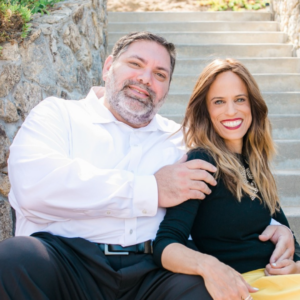
by Dr. Elliot Berlin | Apr 17, 2024 | Expectations, Family and Relationships, Fertility, Pregnancy
When labor began, I felt that nesting urge surge through me like an electric current. “Honey, I’ll be right back,” I said, “Just need to grab some wood for shelves at Home Depot!” My amazing wife brought me back to reality by grabbing my arm and giving me a look that could stop a freight train. I wasn’t going anywhere.
Dad. It’s a small word packed with so much power and possibility, yet for me, for much of my life, it held a tinge of bittersweet mystery.
My own father passed away suddenly, far too young. He was 48 and I was 19. His absence left a profound void, and though I was blessed with a determined, loving, rock of a mom who filled both parental roles with unwavering strength, that figure of a father wasn’t there during my coming of age.
I could feel his presence strongest when I was missing him the most: holidays, family milestones, moments when his guidance and wisdom were most deeply craved. Yet, there was always a flicker of his spirit, a warmth I could sense during those difficult times.
The road to fatherhood wasn’t exactly smooth sailing. Alyssa and I faced years of infertility struggles, including the gut-wrenching experience of difficulty conceiving followed by early miscarriages. The emotional toll was heavy, and a thick protective wall seemed to build up inside me. I distanced myself from fatherhood emotionally, a way to shield myself from the potential for more pain.
But then, something shifted. As we finally had a pregnancy that passed the second trimester – a milestone that felt almost impossible at times – that wall started to crack. But it wasn’t until a seemingly ordinary trip to the grocery store that it truly crumbled. Standing in the dairy aisle, grabbing some eggs, I noticed the expiration date – after our estimated due date! The reality hit me with a jolt: these eggs might be breakfast that we eat as parents. In that moment, the impending arrival of fatherhood became startlingly real for the very first time.
Then came the most profound experience of my life—the birth of our son. With his arrival came the most intense mix of emotions: boundless joy, a rush of fear, waves of grief, and an overwhelming sense of relief. My spirit roared.
Nesting Gone Wild
We lived in a cozy 900-square-foot apartment in Los Angeles. With the impending arrival, I was determined to optimize the space for our growing family. By that I mostly mean moving things around and building some shelves. I say “building” loosely as my complete tool chest consisted of duct tape and WD-40, and I’m not sure that I even knew how to use them correctly.
Not that it mattered, because our son decided to make his grand entrance two weeks early. When labor began, I felt that nesting urge surge through me like an electric current. “Honey, I’ll be right back,” I said, “Just need to grab some wood for shelves at Home Depot!” My amazing wife brought me back to reality by grabbing my arm and giving me a look that could stop a freight train. I wasn’t going anywhere.
Labor Pains
The labor was long – a 42-hour marathon where Alyssa showed the resilience and determination of an Olympic gold medalist. Platinum really. All this, completely unmedicated, except for 400mg of Advil which I popped every four hours for my pounding headache. In between my feeble attempts at support, I was utterly blown away by my wife’s fortitude, and at the same time felt immense gratitude for our doula’s incredible support, guiding and building up Alyssa in ways I never could have imagined. The entire experience was transformative. I learned so much about Alyssa, about birth, and about myself.
Resources
Some dads feel fatherhood connections and instincts early and clearly. I didn’t. I felt distant during pregnancy and even after our son arrived it took time for me to feel like a dad. During the first year I benefited a lot from reading Armin Brott’s “The New Father: A Dad’s Guide to the First Year.” In retrospect, his other book “The Expectant Father: the Ultimate Guide for Dads-to-be” might have been more helpful at that point.
If my experience resonates, the documentary “Prenatal Memory” might be incredibly meaningful to you as well. The film, by Japanese researcher Dr. Akira Ikegawa, explores the idea that a baby’s experiences in the womb can shape their development and even leave lasting memories. It highlights the power of stimuli like the mother’s voice, music, and emotions in creating an early bond and influencing a child’s life. Understanding this unique connection can inspire expectant parents to engage with their unborn baby more consciously, through talking, singing, and fostering a calm, nurturing environment – all of which has the potential to create a positive impact on both the baby and the parents themselves. For further exploration of the concept of prenatal memory, check out my podcast interview with Dr. Akira Ikegawa (episode 352) or our companion blog post (number 81.)
Conversation: The journey of fatherhood is full of surprises. What was your “AHA!” moment? Share this post and tag a friend who might be going through this journey, or share your own story on social media using #InformedPregnancy.
Yours in health, Dr. B
Dr. Elliot Berlin, DC is an award-winning pregnancy-focused chiropractor and creator of Informed Pregnancy Media which includes his popular long-running The Informed Pregnancy Podcast in addition to a blog and a number of original shows featured on his streaming channel Informed Pregnancy+. Dr. Berlin’s goal is to use his passion for media and entertainment as a means of spreading information and awareness on topics that growing families need to make informed choices about fertility, pregnancy, childbirth, and parenting.

by Kimberly Isburg | Mar 6, 2024 | Health Conditions, Parenting and Child Development, Pregnancy
“As your pregnancy progresses, you will begin to feel your baby move more and more. What starts out as light flutters or “butterflies” in the second trimester will eventually become noticeable kicks, jabs, and rolls as you enter the third trimester of pregnancy. Around 24-28 weeks babies get into a noticeable pattern of movements. Kick counting is the practice of becoming familiar with your baby’s normal movement patterns.”
What is Count the Kicks?
Count the Kicks is a program that teaches expectant parents a simple and easy method to get to know their baby’s normal movement patterns in the third trimester of pregnancy. Count the Kicks has a FREE pregnancy app (available in 15+ languages) that makes it easy to count how long it takes your baby to move 10 times and to rate the strength of your baby’s movements.
How do I Count the Kicks?
Starting at 28 weeks (or 26 weeks if you’re high-risk or pregnant with multiples) you can download the free Count the Kicks app, print out a paper chart, or use the web counter from a desktop or laptop computer. Pick a time of day when your baby is normally active and then sit with your feet up or lie on your side.
Then, open your app and start counting, then tap the footprint on the app every time your baby moves (kicks, pokes, jabs, and rolls all count!). The only movements that don’t count are hiccups, because those are involuntary.
The app will time how long it takes your baby to reach 10 movements, and then ask you to rate the strength of your baby’s movements on a scale of 1 to 5. You can also take notes in the app after each session (like what you ate that day or questions you want to ask your provider). After a few days of tracking around the same time each day, you will begin to see an average length of time it takes your baby to get to 10 movements.
What is considered normal?
Every baby and every pregnancy are different. Research has moved away from the idea that you should expect a certain number of movements in a specific period of time. Instead, the key is getting to know what’s normal for YOUR baby.
So, your baby’s normal is the average amount of time it takes your baby to move 10 times each session. Remember to count your baby’s movements around the same time every day and pick a time when your baby is normally active (like after dinner, for example.)
Why should I Count the Kicks?
Babies are a lot like us! Research shows a change in a baby’s movements is sometimes the earliest or only sign there might be an issue with a pregnancy. Just like when you’re not feeling well, you may want to sit on the couch or lie in bed. So, if a baby is not feeling well or is in distress, their movement changes. This is why it’s important to monitor your baby’s movement every day in the third trimester and get yourself and your baby checked right away if you notice any changes.
What are the benefits of kick counting?
Counting your baby’s kicks, jabs, pokes, and rolls is a free, easy, and reliable way to check on your baby’s well-being in the third trimester. Additionally, most Count the Kicks app users (77%) report that using the app daily helped reduce their anxiety about the well-being of their baby.
Counting your baby’s movements is also a great way to bond with your baby and get to know their personality before they arrive. You can even invite your partner or your older children to help you count your baby’s movements! It can be a fun bonding experience for the entire family.
What should I do if I notice a change?
Don’t delay! Trust your instincts and go to the hospital right away if you notice a change in the strength of your baby’s movements or how long it takes your baby to get to 10 movements. Hospitals are open 24 hours a day, 7 days a week, and are ready to help.
Your baby’s movements matter!
If your provider doesn’t talk to you about kick-counting, it doesn’t mean it’s not important. It’s OK to bring up Count the Kicks with your provider and ask to show them your baby’s data in the app. You can even text or email your data directly from your app to your provider!
Also, remember to ask your provider how to contact them if you have concerns and ask when they recommend you go directly to the hospital.
Spread the word!
Count the Kicks is proven to improve birth outcomes for moms and babies. You can join us in helping more babies have a safe arrival by sharing Count the Kicks with every expectant parent you know. Congrats, and remember: Every kick (jab, poke, and roll) counts!
Kimberly Isburg is the Communications Manager for Healthy Birth Day, Inc., the 501(c)(3) nonprofit organization that created the Count the Kicks stillbirth prevention program. Kimberly used Count the Kicks to get to know her babies’ normal movement patterns during both of her pregnancies and is proud to be the mom of two healthy boys. She is a passionate advocate for maternal health causes and is honored to work for an organization that is dedicated to improving birth outcomes and saving the lives of moms and babies. Visit www.CountTheKicks.org to learn more.

by Olivia T. | Nov 22, 2023 | Family and Relationships, Fitness & Nutrition, Mental Health, Pregnancy
“These poses offer physical and emotional benefits for expectant partners while cultivating closeness with their significant other. A wise yoga teacher once told me “it’s yoga practice, not yoga perfect” and I encourage you to welcome the unexpected and the awkward as you dive into unfamiliar territory.”
Pregnancy by default puts the birthing partner at the center of the action. Not only is their physical body changing and their entire being evolving, but they bear the brunt of the physical “work” it takes to grow a human and bring that human earth side. This can often create a disconnect between partners for the simple reason that one of them is experiencing something that the other is not. That disconnect isn’t necessarily good or bad, but it may bring a feeling of distance or misunderstanding.One amazing way to support and nurture connection with your partner during this unique time is through partner yoga. Partner yoga helps foster a deeper connection between you and your loved one and can contribute to a boost in mood for both of you. It involves physical contact, support, and vulnerability. Learning to trust your partner to support you in various poses can translate into improved trust and communication in other areas of your relationship. Partner yoga also allows couples to explore physical intimacy in a unique and healthy way. The practice involves holding, balancing, and stretching with your partner.
Discuss your intentions, comfort levels, and any physical limitations with your partner before starting. During the practice, maintain an open line of communication through verbal cues and non-verbal cues like eye contact and touch. These poses are relatively simple and can help you build trust and familiarity.
Once your doctor or health professional has cleared you for this kind of movement, I invite you to roll out your mat and try something new with your partner!
Suitable Space for Partner Yoga Checklist:
- Quiet, spacious area without distractions
- Solid, flat floor should be beneath your yoga mat
- Blankets, yoga blocks, pillows, candles, incense, or anything else that can make things more comfy and inviting
- Relaxing, non-instrumental music
- Temperature adjusted to your liking, slightly warm is ideal
- Comfy, loose fitting clothing
- Honestly, no one needs anything special to do yoga. A mat, props, straps, and bolsters are just nice to have!
Get Going
- Take a comfortable seat on the floor or mat.
- Next, Sit up as straight as you can, allowing the spine to extend vertically.
- Then, Facing each other, begin inhaling and exhaling in unison.
- Finally, take ten deep breaths, holding at the top and bottom of the breath for 4-5 seconds.
Partner Yoga: Cat/Cow Stretch
- First, Sit on the floor facing your partner, cross-legged.
- Next, Let your hands rest palm down on your knees.
- Then, As both of you inhale together, lift your chest toward the sky, arch your back slightly, and arch back as far as your comfort level allows.
- On the exhale, draw your chin to your chest and your belly button to your spine, allowing the back to round.
- Continue this synchronized movement for 7-8 slow breath cycles.
Partner Yoga: Wide Legged Twist Together
- Sit facing your partner and stretch your legs out straight and into a straddle position.
- It may feel more comfortable to bring your legs closer together in the straddle position and put your legs over your partners, bringing you closer together.)
- Clasp opposite hands, and make eye contact with your partner. Ensure that you’re sitting straight up.
- While holding hands, one partner twists left, the other twists right. Then move back to center, facing each other, still holding hands.
- Flow back and forth in a gentle, washing machine-like motion, or hold the twist on each side for 3-5 breath cycles on each side.
Partner Yoga: Back to Back Chair Pose
- This one’s more of a challenge!
- Stand up with your partner and have your backs touching.
- Start to slowly walk your feet forward and bend the knees slowly as you press your backs against each other for support.
- Walk your feet out far enough so that your thighs are parallel to the floor and your knees are behind or just over your ankles. Do not allow the knee to go past your ankles (when viewing from the top.)
- Then, Press against your partner’s back and also press down into the ground with your feet.
- Raise your arms above your head in true Chair Pose or keep the elbows bent with hands in a prayer position.
- Finally, do this for 3-5 slow, deep breaths, and then slowly stand up. Repeat 1-2 times.
Partner Yoga: Double Tree Pose
- Stand next to your partner facing the same way with 1-2 feet between you.
- Raise your inside arms straight up and touch palms or grab hands for more stability.
- Bend at the knee on your outside leg and bring the bottom of your foot and touch your calf or inner thigh. (above or below the knee). But do not put your foot directly on the knee.
- With your outside arms, bring the hands in front of you and place your palm on your partner’s palm, creating a prayer position.
- To help balance, each partner should find a spot on the floor a few feet in front of them and focus on that. (This spot is also known as a drishti in Sanksrit.)
- Cycle through 3-5 breath cycles, then swap places with your partner and repeat the pose to even it out.
Legs Up with Support
- First, lie on your back with your legs extended upward.
- Next, rest your calves or feet in your partner’s hands as they stand up facing the back of your quads.
- Then, your partner can place their hands gently on your calves, ankles, or feet to provide support (and maybe give you a little foot rub!)
- Finally, stay in this position for 5-10 minutes, focusing on deep, calming breaths.
Heart-to-Heart Meditation
- First, Sit cross-legged facing each other, maintaining eye contact.
- Then, start a timer for anywhere from 2-10 minutes so you don’t have to wonder about how much time has passed.
- Next, Place your left hand on your partner’s left side where the heart is. Then have your partner do the same to you.
- Place your right hand over your partner’s left hand, and have them do the same.
- Relax, close your eyes, take full, deep breaths, and sync your breathing with each other, inviting your sole focus to be your partner’s breath and heart beat.
I hope these 6 exercises inspire you to grow your connection with your partner. Additionally, these partner yoga poses offer physical and emotional benefits for expectant partners while cultivating closeness with their significant other. A wise yoga teacher once told me “it’s yoga practice, not yoga perfect” and I encourage you to welcome the unexpected and the awkward as you dive into unfamiliar territory. Embrace this opportunity to bond, focus on each other, and prepare for the life changing journey of parenthood together. Namaste.
Olivia is a former competitive gymnast, certified yoga teacher, and content specialist living in Los Angeles. She found yoga in her late twenties and credits the practice as the single most impactful influence in her lifelong journey navigating major depressive disorder. She enjoys introducing yoga to others, fostering animals, and going thrifting. Also, naps.