by Libby Levine | Sep 28, 2022 | Health Conditions, Pregnancy
“In the past, women with MS were told that they should avoid pregnancy, mostly because of an increased risk of relapse in the postpartum period and lack of effective and safe treatments for peripartum use. But with the use of careful monitoring and/or highly effective medications, having a baby, and even breastfeeding that baby, can be safe even if you have MS.”
What is MS?
 Multiple Sclerosis (MS) is a chronic autoimmune condition that affects the central nervous system. It can cause symptoms of fatigue, numbness, weakness, visual disturbances, and bladder and bowel problems (to name a few). Most people with untreated MS experience “relapses” where new symptoms develop, worsen for a few weeks, and then partially or completely resolve. MS is most commonly diagnosed in individuals of child bearing potential and as such, one of the most common questions on patients’ minds is often, “Can I still have kids?” The answer is yes. There are some risks. However, with careful monitoring and open communication between provider and patient, most of these risks are greatly diminished. We have come very far in learning how to safely manage pregnancies in patients with MS. Yet we often forget about the extra support that new and expecting birthing parents with MS need.
Having MS Today
Many patients with MS are surprised to discover they can still have the family they have always wanted. They often tell me the only person they know with MS, for example, is their older relative who was very disabled and therefore didn’t have kids. Or they immediately assume they will be in a wheelchair in 5 years. However, having MS in 2022 is not the grim picture it once was. We’ve gone from three modestly effective treatments in the 1990’s to over 20 different therapies today, including some that are highly effective at reducing the risk of MS relapse and others that have shown to slow disease progression. If caught early enough, many MS patients walk around today with very little or absolutely no hint of disability.
In the past, women with MS were told that they should avoid pregnancy, mostly because of an increased risk of relapse in the postpartum period and lack of effective and safe treatments for peripartum use. But with the use of careful monitoring and/or highly effective medications, having a baby, and even breastfeeding that baby, can be safe even if you have MS. Of note, given the increased risk of relapse after pregnancy, it stands to reason that many women are diagnosed with MS soon after delivery.
Check out this popular Informed Pregnancy Blog post by Dr. Elliot Berlin to learn about D-MER!
Formulating a Peripartum Plan
After a postpartum relapse, new moms with MS often come to me with questions about breastfeeding. Then they ask me if they can have another child. They wonder: Which drugs can be used while breastfeeding? Which drugs take longer to work? Which drugs are safe for me? Which will I tolerate best? What happens if I relapse when I’m pregnant or breastfeeding?
When the time comes to plan the next pregnancy, they are forced to revisit the trauma of their MS diagnosis. They wonder: Will I have another relapse after delivery? Can I have an epidural? Which drugs to treat MS are safe to use in pregnancy? Which drugs can increase risk of rebound relapse when discontinued? These women and their families are understandably flooded with questions and filled with uncertainty. I do my best to quell their anxieties and help them formulate a solid and safe peripartum plan.
The key to a safe pregnancy when you have MS is open communication between the patient and the provider. Specifically, there needs to be plenty of discussion between the patient and the provider about the patient’s tolerance for risk of relapse and risk to the pregnancy. Additionally, the provider will need to provide education to the patient about data available around pregnancy, breastfeeding, MS medications, and MS.
More and more patients are learning that having MS does not mean they cannot have a family. This is wonderful. However as this population of parents with MS has grown, it has become apparent that providing education and formulating a peripartum plan to reduce risks of relapse and dangers to the pregnancy is not enough. We need to do more to support new and expecting parents with MS
.
What else can MS providers do to help?
As a woman who recently had a baby, I can attest to the challenges of trying to conceive, being pregnant, and then caring for a newborn (and toddler at the same time!) without having to manage a chronic illness (I don’t have MS). For example, mood changes such as anxiety and depression can be heightened in the peripartum stages. During and after pregnancy many women experience issues with body image, sexual function, pelvic floor and bladder function, keeping up with health maintenance, and fatigue.
These challenges are all heightened in people with MS. Consider a patient with MS who already struggles with these issues at baseline. Maybe she already suffers from frequent urinary tract infections due to neurogenic bladder. Or perhaps she is concerned her occasional hand incoordination, exacerbated by fatigue, will limit her ability to breastfeed. Will her balance also worsen like it did when she first relapsed if she is exhausted from feeding the baby every 3 hours? Will she fall while she is carrying the infant?
With questions like these running through her mind, it is clear that she needs support. She will need emotional support and access to various physical therapies. She may need to have more help lined up at home for when the baby comes. For this reason, our social worker and I have initiated a series of informational and supportive “Zoom Meet-Ups” for expecting and postpartum MS parents with the help of the Nightingale Award. We will cover the issues that many face around pregnancy (fatigue, bladder issue, self-care, mood issues, diet, etc) but will be providing information about how these issues affect people with MS. We also hope to create a safe space to discuss these issues. There is an obvious gap in support for women with MS who are considering pregnancy. It is our hope that we can begin to bridge that gap with Meet-Ups such as these .
Follow Dr. Berlin to stay up to date on The Informed Pregnancy Project!

Libby Levine is a nurse practitioner who has worked at Columbia University’s Irving Medical Center’s Multiple Sclerosis Center since 2015. She earned her bachelor’s in nursing from New York University and her Master’s in nursing from Columbia University. She is an MS Certified Nurse and is board certified as an Adult Gerontology Primary Care Nurse Practitioner. She is also the recipient of the 2022 Nightingale Award offered with the support of EMD Serono through the International Organization of Multiple Sclerosis Nurses (IOMSN).

by Dr. Linda Dahl | Aug 24, 2022 | Health Conditions, Infant Care and Breastfeeding
“I must admit, after I gave birth, the last thing I thought I would have to worry about was feeding my baby. I had always planned to breastfeed. My mother nursed me for two years and bragged about how fat my siblings and I got from her supply. As expected, my baby latched right away, but it hurt. I was told by the labor and
delivery nurses that pain was normal, even though it was surprisingly similar to my delivery pain. The pain continued, and by the end of the first week, my nipples were bleeding, and my baby was hungry all the time.”
A Pregnant Surgeon
I discovered I was pregnant at the end of my Ear, Nose, and Throat residency. I have to admit, the timing wasn’t ideal. I was working 125 hours a week, with much of that time spent doing surgeries in the operating room. My specialty is small and mostly male, and back then, maternity leave was nonexistent. Even so, there is never a good time to have a baby when you’re a female surgeon. I was determined to make it work.
My pregnancy was uneventful, except for the weight gain. Free to eat with abandon
I packed on fifty pounds. Between wearing extra large scrubs that hid my girth and clogs
with ample space for swollen feet, I barely noticed. When colleagues told me I was all belly
I believed them.

What I did notice was that as the pregnancy progressed, I became filled with joy. The hormones raging through my body gave me a sense of peace and hope. I calmly dealt with angry attendings. Belligerent patients got my full attention. It was as if the four previous years of sleep deprivation and anxiety were wiped away by all the estrogen. And then I went into labor.
I should back it up a bit here. The day before I gave birth, I was working at a hospital 20 miles from my apartment in the Bronx. Two weeks overdue, I waddled into the operating room to the horror of my attending.
“I am an ear surgeon,” he had said. “I don’t know how to deliver a baby.”
Lucky for him, I was able to work the entire day, drive the twenty miles home, go out for a spicy Italian dinner–this will be important later in the story–and go to bed. Around 11pm, I thought I had to go to the bathroom. That was my first contraction. After about an hour of steady, lower back contractions, I asked my husband to take me to the hospital. When we got there, the first question the triage nurse asked me was if I took Lamaze classes.
“I’ve run ultramarathons,” I answered. “I can take pain.” Or so I thought.
Once she brought me in to the triage area and strapped on the tocometer, my contractions accelerated to once a minute. I barely had time to breathe through one contraction before the next wave hit. An hour later, upset I couldn’t sit still for a good heart rate reading, the nurses prepared to send me home. I was a first time mom-to-be and barely dilated. As I stood up to change back into my clothes, my water broke.
Labor Pains
What followed was a blur. I was wheeled into another room and given an IV. OB/Gyn residents rushed into the room and told me to start pushing. With each push, my baby’s heart rate dropped precipitously. They tried using a vacuum. They brought in more residents. Then a doctor I’d never met wheeled in a cart full of metal objects. “Finally!” I said, assuming he was the anesthesiologist bringing me an epidural. “I’m Dr. B,” he said. “I don’t usually cover your doctor, but the residents asked me to give them a hand.”
He pulled out the biggest pair of metal spatulas I’ve ever seen. I had no idea how they could possibly be used to give an epidural.
“This is gonna hurt worse than anything you’ve ever felt before,” he said, very seriously. “Now, I want you to close your mouth and push.” I don’t remember the pain. I remember seeing the color red. And burping up spicy red sauce from the night before. After what felt like hours (but was probably 15 minutes), my daughter was born.
The time from first contraction to delivery took less than three hours. Suddenly, I was a mom.
Tune in to Dr. Linda Dahl’s interview on the Informed Pregnancy Podcast here: https://bit.ly/3JXZHkX
Nursing Problems
I must admit, after I gave birth, the last thing I thought I would have to worry about was feeding my baby. I had always planned to breastfeed. My mother nursed me for two years and bragged about how fat my siblings and I got from her supply. As expected, my baby latched right away, but it hurt. I was told by the labor and delivery nurses that pain was normal, even though it was surprisingly similar to my delivery pain. The pain continued, and by the end of the first week, my nipples were bleeding, and my baby was hungry all the time. I nursed every hour for an hour, but she still needed more.

At our two week pediatrician visit, I was told she had lost a little weight. When I complained about how painful breastfeeding was, the pediatrician assured me that, just like the early weight loss, the pain was normal. My OB/Gyn brushed off any discussion of breastfeeding. As she explained, her job ended once the baby came out. After four weeks, I visited a breastfeeding class. Unlike the other babies, mine fell asleep on the breast after only a few minutes. The other babies were also fatter, and their moms didn’t have scabbed nipples. When I weighed my daughter after her feed, she had only taken in a fraction of an ounce, unlike the 2-3 ounces taken in by the other babies. The worried lactation consultant took me aside and encouraged me to see a private consultant.
The private consultant wasn’t much help either. After spending a small fortune, I left with no answers. She was unable to get my daughter to latch on any better than I could, and as it turned out, there was no sense in trying. After only four weeks, my supply had dwindled. Not even the hospital-grade pump I rented helped. For the next four months, even though I attached myself to it religiously, my supply stayed low at only two ounces for the whole day. Then, my supply dried up. I had to call it quits, blaming myself for failing at something that was supposed to be easy.
For more information on preparing yourself and your partner
for the postpartum period, visit: informedpregnancy.teachable.com
An Important Issue
I wish I could say my story is only my story, but, unfortunately, it is the story of countless women. Even though 83% of U.S. moms try to breastfeed, only a dismal 40% are able to do it exclusively for three months (even less for six months). Those who manage to breastfeed often struggle through pain, infections, and hungry babies. It was my failure paired with the lack of medically accurate advice that led me to dedicate a large part of my current medical practice to breastfeeding. Over the last nineteen years I’ve developed a paradigm to assess breastfeeding moms and babies and offer them treatment options.
Breastfeeding is just like everything else in the human body, but it isn’t treated that way. It may be natural, but nature is imperfect. Medicine is supposed to heal that imperfection, but in the case of breastfeeding, these issues have been largely ignored. I look forward to changing that, and you should (demand it) too.

Dr. Linda Dahl is an Ear, Nose, and Throat doctor and breastfeeding specialist who has treated over 23,000 mom/baby dyads over nearly 20 years in practice in NYC. She has developed a new paradigm in the assessment, diagnosis, and treatment of breastfeeding challenges and recently published her second book on breastfeeding called Better Breastfeeding: A Doctor’s Guide to Nursing Without Pain and Frustration. For more information, visit www.drlindadahl.com.
by Dr. Elliot Berlin | Aug 10, 2022 | Health Conditions, Infant Care and Breastfeeding
“D-MER (Dysphoric Milk Ejection Reflex), she told me, is a specific condition that is often confused for postpartum depression but is distinct in a number of ways. Its defining characteristic is that the intense and often overwhelming negative feelings are confined to a short period directly corresponding to a new mothers breast milk “let down” or milk release.”
Always Learning
A few years ago I clicked on a random Facebook post about a cognitive condition called Prosopagnosia, also known as face blindness. Until that point I had no idea that I was seeing the world in a very different way than most people, and that there was a specific condition describing my experience to a T. At once the first 40 years of my life made so much more sense.
Now, twenty-ish years into my family focused Chiropractic career, I’ve seen most of the challenges that pregnancy, childbirth and postpartum present for people but a recent patient experience opened my eyes to how many conditions exist but have yet to make it into the public sphere of knowledge. And not for lack of people experiencing them.
During a session, one of my clients mentioned feeling depressed when she breastfed her new baby and I wondered if she was suffering from Postpartum Depression, however the distinctive characteristic of her experience was that, although it was extreme in nature, the only time she felt it was when she breastfed her baby. Luckily, my wife, Dr. Alyssa Berlin, PsyD has been working with perinatal clients for about 20 years and she had answers.

What is D-MER?
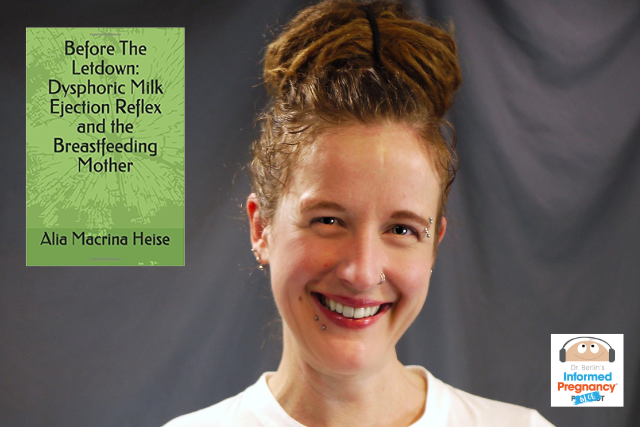
D-MER (Dysphoric Milk Ejection Reflex), she told me, is a specific condition that is often confused for postpartum depression but is distinct in a number of ways. Its defining characteristic is that the intense and often overwhelming negative feelings are confined to a short period directly corresponding to a new mothers breast milk “let down” or milk release. I had a long consultation with Dr. Google to learn more about the specific details of D-MER. In my searches, I came across Alia Macrina Heise, a D-MER expert both as a sufferer and an educator, writer and advocate. The work she has done in compiling data, looking for answers and spreading information about this condition is the leading source of information available today.
We had an extremely informative discussion on my podcast, Informed Pregnancy, and you can listen to that here: https://bit.ly/3zCOelS
Postpartum depression is characterized by classic signs of depression such as depressed mood, severe mood swings, excessive crying, intense irritability and anger as well as difficulty bonding with a new baby, fear that you’re not a good mother, and other related symptoms. Postpartum depression often starts within the first few weeks after giving birth and, like classic depression, is felt all or most of the time over a long period.
D-MER is distinct from postpartum depression because although it shares symptoms – sufferers often describe feeling sadness, dread, anxiety, anger – these feelings are specifically triggered by milk let down and start about 30-90 seconds prior to milk release when a mother’s breast releases milk during feeding, pumping or spontaneous milk ejection reflex (MER.) These feelings usually last no more than two minutes, returning with each individual letdown. The rest of the time, when the nursing mother is not having letdown, she feels fine with no reported symptoms of depression.
Also unlike postpartum depression, D-MER is not yet considered a formal diagnosis because there have yet to be formal studies with consistent results. There is however, a wealth of anecdotal evidence much of it collected and synthesized by Alia Macrina Heise and presented in her book “Before the Letdown: Dysphoric Milk Ejection Reflex and the Breastfeeding Mother.”

Addressing the Cause
So what causes D-MER? We actually don’t know yet. One suspect is hormones. During a milk release sufferers experience an abnormal drop in Dopamine (the hormone responsible for feelings of pleasure and reward among other things,) a rise in Prolactin (a hormone responsible for milk production,) and a spike in Oxytocin (the hormone responsible for helping milk release as well as complex social and emotional related chemical reactions.) All three of these actions happening together when a breastfeeding mother’s milk lets down is thought by some to cause the intense temporary feelings of dysphoria known as D-MER.
Whatever the cause, it is a real problem affecting people all over the world and I feel privileged to be able to shed some light and spread some information on such an important subject so sufferers know they’re not alone. When I found out about Prosopagnosia, I was glad to have a name to help me define and explain my experience and that is what I want for those who experience D-MER.
If you or someone you know is experiencing symptoms of D-MER, you can find more information and resources at www.d-mer.org

Dr. Berlin is an award winning prenatal chiropractor, childbirth educator, and labor support doula as well as the host of the Informed Pregnancy Podcast where each week, parents, birth professionals, and parenting experts weigh in on a full range of topics surrounding the perinatal period. Dr. Berlin runs a successful perinatal wellness group in Los Angeles, CA with his wife Dr. Alyssa Berlin with whom he shares four kids, two guinea pigs, and one dangerously smart Aussiedoodle.