Sleep for New Parents and New Babies
** This is a repost of a classic Informed Pregnancy article.
“Learning how to sleep is similar to teaching a child how to ride a bicycle. It’s new and challenging, for both child and parent. As a parent, you know there’s always a risk of a spill or a scraped knee – but still, you take a deep breath, make sure your child’s helmet is firmly in place, and keep pushing forward.”

With a newborn in the house, sleep becomes a precious luxury. Even a short nap feels incredible, and it’s hard to believe you ever managed to stay awake until 3am in college. With a dull headache and an overwhelming desire for anything that might offer a quick “pick-me-up,” it’s no wonder so many new parents guzzle coffee and lunge for stale donuts (carbs!) in the office break room. Yes, your joy in welcoming a new baby outweighs the pains of exhaustion, but when can you expect some relief? How do you get your baby to sleep soundly when every ‘sleep expert,’ from the authors of the ever-growing number of sleep training books to your mother-in-law, gives you contradictory advice?
As a sleep coach for new parents and new babies, I can reassure you that you are not alone; most parents I work with share the same questions and anxieties about sleep. Here are the five questions I hear most often:
When is the right time to sleep train?
Some babies can sleep through the night from a very young age, but most babies are ready for sleep training when they’re around four or five months old. By this time, they’re usually taking in most of their food during the day, making night-time weaning much easier. Your baby’s fine and gross motor skills have also usually developed enough to assist them with self-soothing.
How long will I need to keep feeding my baby at night?
Assuming you have a healthy baby who was born at term (after your 37th week of pregnancy), you can begin feeding your baby more during the day as early as six weeks after birth. As you gradually get towards the recommended 24 ounces of milk or formula during the day, night feeds can slowly be weaned out. If you’re breastfeeding, you can estimate how much milk your baby is taking in each day by pumping one morning feed and one evening feed, and using the average to estimate your milk supply. You can also use a scale to measure how many ounces your baby is eating at the breast.
Why does my baby keep waking up at night?
If your baby no longer needs night feeds and doesn’t have any medical conditions like acid reflux, teething or a virus, it’s likely she has not yet fully developed her self-soothing skills. It’s normal for all of us – babies and adults – to wake in between sleep cycles. But unlike a new baby, most adults have developed the skills to self-soothe. We roll over on our side, fluff our pillow, kick off our blanket or put another one on. Helping your child learn to self-soothe will help them (and you!) to get back to sleep quickly after waking during the night, and mastering self-soothing will also help your child to feel more confident and independent as she grows.
Stay informed with Dr. Berlin on Instagram!
If I co-sleep, will my baby have a harder time sleeping through the night?
I’ve worked with many parents who co-sleep. Some of them share a family bed for several years, while others plan to co-sleep with their new baby for a few months. Where your baby sleeps is secondary to learning to self-soothe, without interventions such as nursing or being picked up and rocked back to sleep. As your child grows older, where they sleep becomes more important; all children benefit from the security and routine of knowing where they belong when it’s time for bed. But teaching your child to self-soothe is far more vital to getting a better night’s sleep, and can be learned in bed with you.
Is it bad to let my baby cry?
This question always comes up as I work with parents. I believe the answer depends on whether your baby has had all her needs met before being put down to sleep. Learning how to sleep is similar to teaching a child how to ride a bicycle. It’s new and challenging, for both child and parent. As a parent, you know there’s always a risk of a spill or a scraped knee – but still, you take a deep breath, make sure your child’s helmet is firmly in place, and keep pushing forward. You run alongside your child until you feel ready to take the leap and let go as she finds her balance, and it feels amazing to see your child’s joy at riding a bike ‘all on her own.’
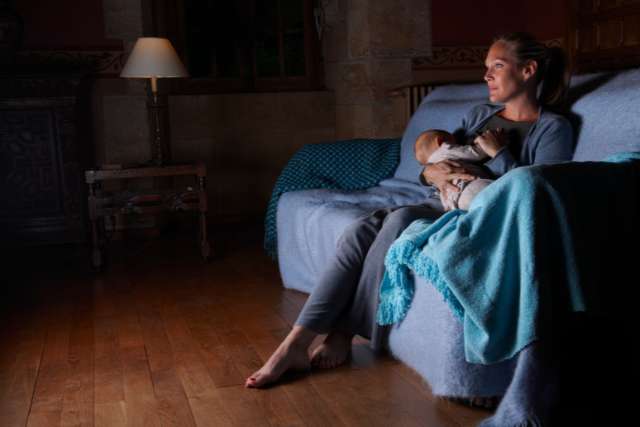
All children need to know that their parents or caregivers are there with them, and they are not alone in a new learning process – whether they’re learning to ride a bike or learning how to sleep. I suggest staying with your baby as she learns to sleep, being present and quietly supportive as she learns to self-soothe. When your baby is crying, it’s not easy to resist the urge to intervene – to keep your hands on the bike. But as long as you are there with her, I’d advise you not to hold her back from her personal achievements by interfering with something she’s capable of doing herself. For me, the ultimate answer is no, it’s not ‘bad’ to let your baby cry and fuss during the learning process, but I prefer for babies not to be alone as they struggle to learn and eventually master the skills they need to self-soothe.
I realize I’m yet another of the sleep ‘experts’ I mentioned earlier, and it’s simply not possible to give you personalized advice and work through trial-and-error to find what works for your family and your baby in one short article. Having a sleep coach who is well-educated in child development is key to successfully getting a new family back to sleep. The exhausting days and nights with a sleepless newborn will be over before you know it, but the healthy emotional development you promote will benefit your child throughout her entire life.
Check out this post on asthma and pregnancy by Dr. Nate Fox, MD!
 Shannon Hemandez is a birth coach, postpartum doula and owner of Dream Team Doulas and has served thousands of families in Los Angeles and Orange County over the past 15 years. In 2008 Shannon started sleep coaching after researching infant sleep and child development. Shannon is known as LA’s baby whisperer and she enjoys being the mother of four children that have inspired her in her work to strengthen families. For inquiries write to shannon@dreamteamdoulas.com.