
by Lara Catone | Sep 27, 2022 | Fitness & Nutrition, Health Conditions
**This is a repost of a classic Informed Pregnancy Project article.
“The squat is the queen of pelvic floor exercises, so you can ditch all of the kegels and start squatting each day!”
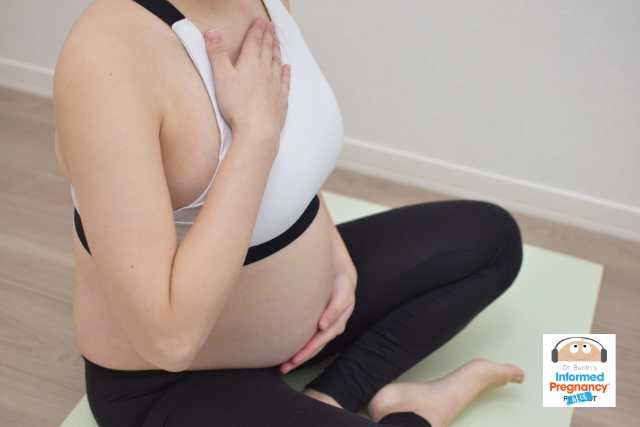
As a yoga teacher and doula, I have discovered that healing the core postpartum does not require hundreds of kegels and crunches. In my experience, the body does much better when slowly building on a solid foundation. This begins with relearning your body after the changes of pregnancy and childbirth.
Your core consists of your diaphragm, the muscles of the abdomen and low back, and the pelvic floor (the hammock of muscles at the base of your pelvis that stretch from your pubic bone to your tailbone).
Here are step by step instructions on how to feel these muscles and begin to bring them on board in all of your daily movements.
- Breath Awareness – The first step in regaining integrity in the core postpartum is to simply reconnect to it with your breath. These are the very first exercises you can begin right after having your baby. There are two types of breathing to practice.
Pelvic Breathing – Gently inhale into the bowl of your pelvis. Notice the bones of the pelvis and the muscles in between. See if you can feel a slight expansion as you inhale and a relaxation on the exhale. There is no need to add any squeezing or tightening, just sense the muscles.
Belly Breathing – Gently inhale into the low belly. As you breathe in, let the belly soften and expand. As you exhale, allow the belly to relax back to its resting state. Note: Many people are used to sucking their bellies in when they inhale and pushing them out when they exhale. It may take a bit of practice to learn to reverse this way of breathing. You can think of softly blowing air into your belly, like blowing up a balloon on the inhale and the air leaving on the exhale.
- Find Transversus Abdominis – Your transversus abdominis (TA) is your own inner belly band. It is the deepest abdominal muscle and wraps from the low back around to the front of your midsection. It is a large muscle that runs the length from your low ribs to your hip bones. The TA supports all of your abdominal organs and your posture.
Need more Informed Pregnancy? Click to check out this related podcast episode!
Sit up tall with your back against a wall or straight back chair for support. Inhale into your belly as you exhale. Imagine an inner corset wrapping from back to front, and hug these muscles toward your midline as you draw your belly back toward your spine. This is different from the habit of sucking your belly in that many women are used to. Instead, the belly button draws back, and the ribs and hip bones move toward the center. It’s a hugging in rather than a sucking in.
- Posture – Now that you’ve found your TA, you can use it to support you as you move around in the world, and you will strengthen your core simultaneously. Engage your TA about 25-30% of the time while sitting, feeding your baby, and walking. While lifting things or standing up from sitting, engage your TA as much as 60-70%. Build up to using your TA more and more over time, and continue to breathe into your belly and side waist. Avoid the pitfall of over stiffening and not breathing.
- Walk – Walking is one of the best exercises for toning your pelvic floor, and when you bring your TA on board, you’ll also be building abdominal strength. You will also be getting some cardio and enjoying fresh air. A good pair of sneakers with arch support will make all the difference. Walk around barefoot as much as possible when you are at home and around your yard.
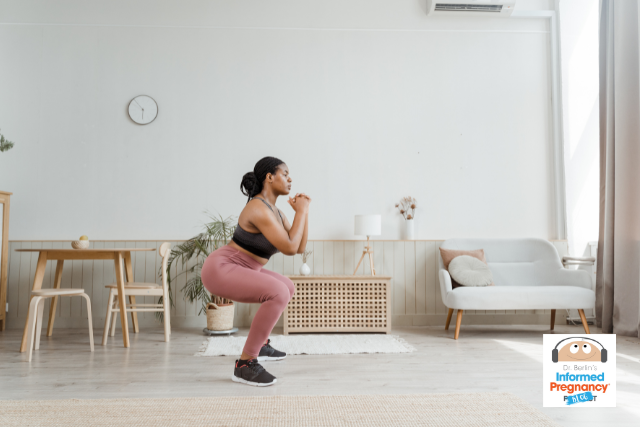
- Squat – The squat is the queen of pelvic floor exercises, so you can ditch all of the kegels and start squatting each day! Here’s a way to come into a squat that is easy on the knees. Stand with your feet a little bit wider than hip distance, and allow your toes to turn out about 45 degrees. Engage your TA, bend your knees enough to keep the spine straight as you fold from the hinge at your waist and bring your hands to the floor. Then bend your knees completely, dropping your butt toward the floor. This will take you into a full, low squat. Be sure that the toes and knees are pointing in the same direction. If your heels do not touch the floor, fold up a yoga mat or blanket and place it underneath them.
Postpartum recovery is a gentle and patient process. Be sure to balance any exercise with lots of rest, water, and a variety of healthy foods. Time is one of your best partners in restoring your core. Instead of focusing on what your body used to be, celebrate the subtle changes toward strength and health that happen over time.

Lara Catone is helping to establish the field of sexual wellness as a yoga teacher and somatic sexologist with a specialty in women’s health. She has attended nearly 50 women in birth as a birth doula and midwife assistant. In 2011, she began development of the Restore Your Core Program that includes nonsurgical approaches to diastasis recti (abdominal separation) and pelvic pain and dysfunction.
Lara trains fitness, birth, and medical professionals in her progressive approach to core health. She has a thriving private practice in Venice, CA and teaches workshops and retreats worldwide. Lara recently expanded her global community through the launch of an online studio with live webcam classes. Her mission is to empower radiant health and pleasure. Visit www.laracatone.com for musings and educational media as well as videos of transversus abdominis (TA) and pelvic floor exercises.

by Natalie Pulvino | Jul 28, 2022 | Fitness & Nutrition, Pregnancy
“Yoga is beneficial at every age and stage of life, but can be especially grounding during seasons of change. The practice helps us slow down, listen to our bodies, shift our gaze inwards, and take good care. It generates compassion and connection and can support the release of stuck energy and emotions.”
Big Changes
The process of growing and birthing new life into this world can be transformational and deeply meaningful for many folks. The months spent preparing for a baby’s arrival are often filled with celebration, family, glowing skin, new products, tiny clothes, and special moments. But while all this is wonderful and tempting to focus on, the reality is that becoming pregnant is a major medical change for a woman, one which involves significant physical, social, mental and emotional transformations. And such changes in one’s body, environment, and lifestyle can be the source of stress, anxiety, and the provocation of new or existing mental health conditions.
Unfortunately, one in five women experience increased stress, anxiety, depression, bipolar disorder, or other mental health conditions during the perinatal period, and 75% of women experiencing symptoms go untreated (Maternal Mental Health Leadership Alliance). It’s important to note that 40% of Black mothers experience mental health conditions and are twice as likely as white mothers to suffer (MMHLA). Adverse mental wellbeing not only impacts maternal health, but can significantly affect fetal health. Increased anxiety, stress, and depression are linked to neurodevelopmental delays, low birth weight, and even premature birth (Corrigan, L., Moran, P., McGrath, N.). This is why comprehensive and preventive care is extremely important. Expecting mothers need tools, resources, and support to navigate their changing bodies and mental landscape.
Yoga Can Help
Although I am not certified in prenatal yoga specifically, my years of teaching experience and research have taught me that yoga is a fantastic tool for both physical and mental prenatal support and is safe to do, or try for the first time, during pregnancy. Yoga is beneficial at every age and stage of life, but can be especially grounding during seasons of change. The practice helps us slow down, listen to our bodies, shift our gaze inwards, and take good care. It generates compassion and connection and can support the release of stuck energy and emotions. The physical and mental practice incorporates breathing techniques, somatic movements, and body awareness to generate equilibrium. Many experience the “yoga high” after completing a session, and interestingly, there is science to explain this.
Check out this related episode of The Informed Pregnancy Podcast: https://bit.ly/3Su4w9z
Mind-body exercises like yoga can significantly reduce cortisol levels and quiet one’s mind, leaving them more connected to themselves, their body (and baby), and the present moment. Consistent practice reportedly results in improved stress levels, sleep, quality of life, and autonomic nervous system functioning, all of which can help relieve physical pain, emotional turmoil, and support a shorter, less painful labor or birth experience. This can increase the likelihood of a healthy baby and a healthy mom (Corrigan, L., Moran, P., McGrath, N.).

Mental and Emotional Benefits
Many expecting mothers come to me for yoga hoping to prepare their bodies for labor; they’re experiencing tight hips, shoulders, low back pain, general fatigue and discomfort, and want to feel they’ve done all they can do to prepare for childbirth. But what I typically notice during my sessions is that while women are benefiting physically from yoga, they’re experiencing the mental and emotional shifts just as much. Planning for a baby can be overwhelming, and beyond that, hormones are fluctuating at an all time high. Expecting moms may feel unusually tender, emotional, and uncentered. Having time to get quiet, slow down, tune in, and connect can offer women an essential reprieve from the list of to do’s and what if’s running through their minds. Our physical health is closely connected to our mental health; building mental resilience through a practice like yoga can help sustain you during physically challenging moments.
In order to ensure this connection happens, I like to start prenatal yoga sessions with a short meditation. A few minutes to consciously arrive in the practice can help one land in their body. From there, I typically guide clients through a brief breathing exercise. Box-breathing, where you inhale, hold, and exhale for the same amount of time (I usually cue 4 seconds), regulates the autonomic nervous system, creating a sense of calm (healthline). Once connected to their breath, I begin incorporating small movements before getting into the heart of the practice.
Starting pregnancy yoga
For women who have developed a consistent practice prior to becoming pregnant, it’s safe to continue (under doctor’s guidelines) a mostly regular practice, with a few exceptions. But if you’re trying yoga for the first time while pregnant, take it slow and easy. Yin Yoga or a slow-flow style class will give you all the benefits I’ve described above, without putting too much stress on your body. It’s also important to be aware of how you’re feeling each day you step onto your mat – if you’re slightly dehydrated you may become light headed with a lot of movement, so it’s best to stick to seated postures. You’ll likely find a range of do’s and don’ts when it comes to prenatal yoga. In general, avoid twists in the first trimester and anything that compresses or strains your lower abdomen throughout pregnancy. Take time to find an instructor that you trust and vibe with, and always check in with your body to honor your needs for that day.
Remember, a yoga instructor is just that – a yoga instructor. You know your body best and may even have heightened intuition while pregnant. Give yourself trust and grace, and always check with your healthcare provider before trying new exercise.
For more help with preparing for baby before baby comes, check out The AfterBirth Plan by Dr. Alyssa Berlin, an online course you can take at your own pace: https://informedpregnancy.teachable.com

Natalie is a certified vinyasa yoga instructor and integrative nutrition health coach living in Los Angeles, CA. Interested in bridging the current medical system with the holistic health world, Natalie is pursuing a Master’s in Public Health where she will focus her studies in community health, mental health, and maternal and reproductive health.
Alongside her love of yoga and mindfulness, she enjoys running, swimming, reading on the beach, and cooking meals with friends and family. Learn more about her work by visiting her website: nataliepulvino.com.
Citations:
Corrigan, L., Moran, P., McGrath, N. et al. The characteristics and effectiveness of pregnancy yoga interventions: a systematic review and meta-analysis. BMC Pregnancy Childbirth 22, 250 (2022).
https://doi.org/10.1186/s12884-022-04474-9
https://www.healthline.com/health/box-breathing#benefits
https://www.mmhla.org/factsheets/