
by Dr. Nate Fox | Oct 5, 2022 | Health Conditions, Labor and Delivery, Pregnancy
“It is very important not to stop any necessary asthma medications due to a possible pregnancy without speaking to your doctor because an asthma attack in early pregnancy due to stopping medications can also be very dangerous to you, and your baby.”

Asthma is a common medical condition. As such, many women have asthma during pregnancy. Pregnancy may affect asthma and asthma may affect the outcomes of pregnancy. The following is meant to be an overview of asthma during pregnancy.
The Effects of Pregnancy on Asthma
The effects of pregnancy on asthma vary among women. Approximately one-third of women with asthma improve during pregnancy, one-third worsen, and one-third stay the same. Interestingly, pregnant women aren’t likely to experience asthma exacerbations, or shortness of breath, coughing, and wheezing, during labor. Additionally, the changes in physiology during pregnancy do not significantly alter spirometry (testing of lung function) values in asthmatic patients, so spirometry remains an excellent technique to detect and manage pregnant women with asthma.
Asthma has been shown to increase the risk of fetal growth restriction, preterm birth and perinatal mortality. However, this is most likely related to the quality of asthma control, and if well-controlled, women with asthma tend to have similar pregnancy to those without asthma. Thus, the key is having the asthma well-controlled!
Click here to listen to Dr. Nate Fox on The Informed Pregnancy Podcast!
Management of Asthma during Pregnancy
Asthma is managed similarly in pregnant and non-pregnant patients, and is primarily based on the severity of the asthma. For women with mild asthma (rare exacerbations and symptoms), usually an inhaled bronchodilator (relaxes and opens the lungs) like albuterol are used as needed. For those who need this “rescue inhaler” more than a few times a week, usually an inhaled glucocorticoid (steroid) is recommended daily or twice daily. For those with even more severe symptoms, additional inhalers and even oral medications are used to keep symptoms under control.
Safety of Asthma Medications in Pregnancy
The inhaled bronchodilators and the inhaled steroids are considered safe in pregnancy in all trimesters, so they are used liberally for pregnant women with asthma. For this reason, if someone has asthma and only requires inhaled medications, they can typically continue the same medications in pregnancy. The oral medications tend to be considered safe as well, but someone who requires oral medications should check with their asthma doctor or OBGYN, ideally prior to getting pregnant. It is very important not to stop any necessary asthma medications due to a possible pregnancy without speaking to your doctor because an asthma attack in early pregnancy due to stopping medications can also be very dangerous to you, and your baby.

Conclusion
Although asthma is a very common condition found in pregnancy, there are many ways to treat symptoms, so it usually will have a minimal impact on the health of your pregnancy. The key is to have tight control during pregnancy, minimizing any chances of an asthma exacerbation.
What’s up doc? Click here to find documentaries about childbirth!
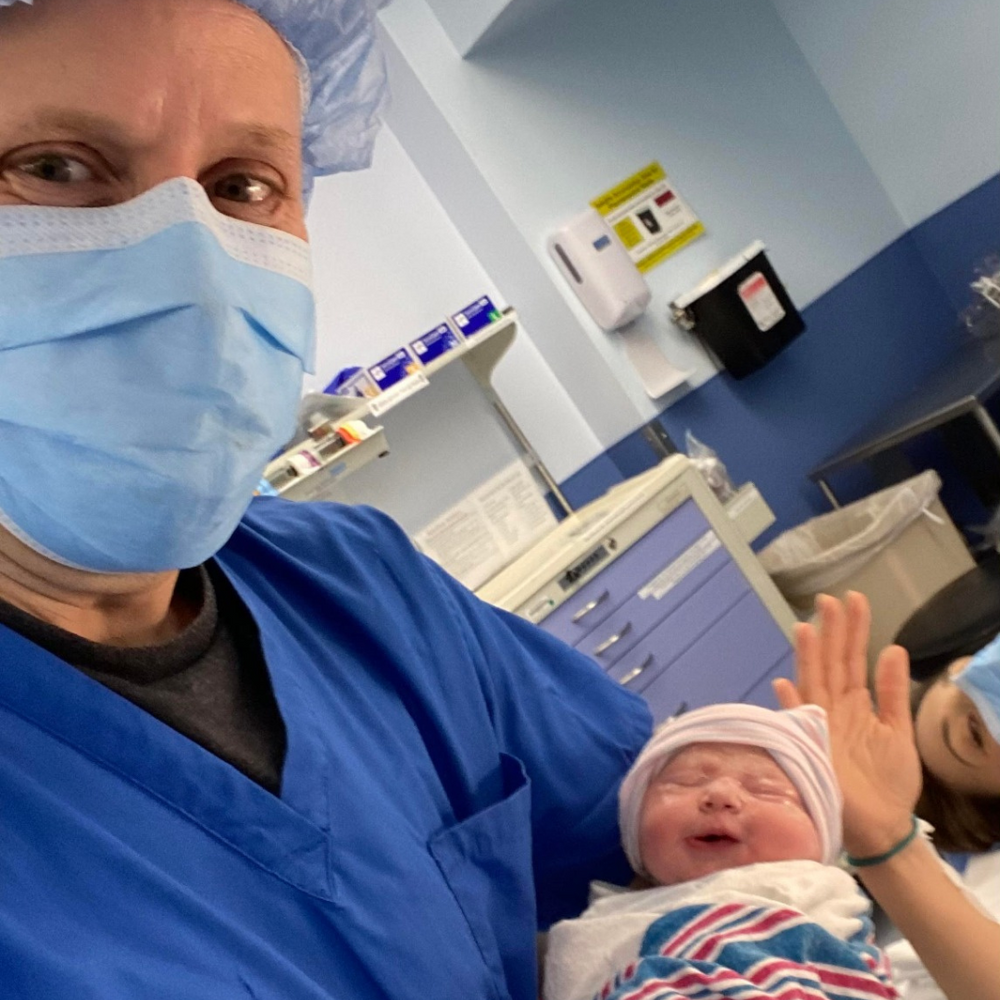 Dr. Nathan S. Fox is a board certified Obstetrician/Gynecologist with the subspecialty certification in Maternal Fetal Medicine. Dr. Fox completed medical school and residency in Obstetrics and Gynecology at Mount Sinai School of Medicine and his fellowship in Maternal Fetal Medicine at Weill Cornell Medical College. To learn more check out www.mfmnyc.com and www.healthfulwoman.com

by Libby Levine | Sep 28, 2022 | Health Conditions, Pregnancy
“In the past, women with MS were told that they should avoid pregnancy, mostly because of an increased risk of relapse in the postpartum period and lack of effective and safe treatments for peripartum use. But with the use of careful monitoring and/or highly effective medications, having a baby, and even breastfeeding that baby, can be safe even if you have MS.”
What is MS?
 Multiple Sclerosis (MS) is a chronic autoimmune condition that affects the central nervous system. It can cause symptoms of fatigue, numbness, weakness, visual disturbances, and bladder and bowel problems (to name a few). Most people with untreated MS experience “relapses” where new symptoms develop, worsen for a few weeks, and then partially or completely resolve. MS is most commonly diagnosed in individuals of child bearing potential and as such, one of the most common questions on patients’ minds is often, “Can I still have kids?” The answer is yes. There are some risks. However, with careful monitoring and open communication between provider and patient, most of these risks are greatly diminished. We have come very far in learning how to safely manage pregnancies in patients with MS. Yet we often forget about the extra support that new and expecting birthing parents with MS need.
Having MS Today
Many patients with MS are surprised to discover they can still have the family they have always wanted. They often tell me the only person they know with MS, for example, is their older relative who was very disabled and therefore didn’t have kids. Or they immediately assume they will be in a wheelchair in 5 years. However, having MS in 2022 is not the grim picture it once was. We’ve gone from three modestly effective treatments in the 1990’s to over 20 different therapies today, including some that are highly effective at reducing the risk of MS relapse and others that have shown to slow disease progression. If caught early enough, many MS patients walk around today with very little or absolutely no hint of disability.
In the past, women with MS were told that they should avoid pregnancy, mostly because of an increased risk of relapse in the postpartum period and lack of effective and safe treatments for peripartum use. But with the use of careful monitoring and/or highly effective medications, having a baby, and even breastfeeding that baby, can be safe even if you have MS. Of note, given the increased risk of relapse after pregnancy, it stands to reason that many women are diagnosed with MS soon after delivery.
Check out this popular Informed Pregnancy Blog post by Dr. Elliot Berlin to learn about D-MER!
Formulating a Peripartum Plan
After a postpartum relapse, new moms with MS often come to me with questions about breastfeeding. Then they ask me if they can have another child. They wonder: Which drugs can be used while breastfeeding? Which drugs take longer to work? Which drugs are safe for me? Which will I tolerate best? What happens if I relapse when I’m pregnant or breastfeeding?
When the time comes to plan the next pregnancy, they are forced to revisit the trauma of their MS diagnosis. They wonder: Will I have another relapse after delivery? Can I have an epidural? Which drugs to treat MS are safe to use in pregnancy? Which drugs can increase risk of rebound relapse when discontinued? These women and their families are understandably flooded with questions and filled with uncertainty. I do my best to quell their anxieties and help them formulate a solid and safe peripartum plan.
The key to a safe pregnancy when you have MS is open communication between the patient and the provider. Specifically, there needs to be plenty of discussion between the patient and the provider about the patient’s tolerance for risk of relapse and risk to the pregnancy. Additionally, the provider will need to provide education to the patient about data available around pregnancy, breastfeeding, MS medications, and MS.
More and more patients are learning that having MS does not mean they cannot have a family. This is wonderful. However as this population of parents with MS has grown, it has become apparent that providing education and formulating a peripartum plan to reduce risks of relapse and dangers to the pregnancy is not enough. We need to do more to support new and expecting parents with MS
.
What else can MS providers do to help?
As a woman who recently had a baby, I can attest to the challenges of trying to conceive, being pregnant, and then caring for a newborn (and toddler at the same time!) without having to manage a chronic illness (I don’t have MS). For example, mood changes such as anxiety and depression can be heightened in the peripartum stages. During and after pregnancy many women experience issues with body image, sexual function, pelvic floor and bladder function, keeping up with health maintenance, and fatigue.
These challenges are all heightened in people with MS. Consider a patient with MS who already struggles with these issues at baseline. Maybe she already suffers from frequent urinary tract infections due to neurogenic bladder. Or perhaps she is concerned her occasional hand incoordination, exacerbated by fatigue, will limit her ability to breastfeed. Will her balance also worsen like it did when she first relapsed if she is exhausted from feeding the baby every 3 hours? Will she fall while she is carrying the infant?
With questions like these running through her mind, it is clear that she needs support. She will need emotional support and access to various physical therapies. She may need to have more help lined up at home for when the baby comes. For this reason, our social worker and I have initiated a series of informational and supportive “Zoom Meet-Ups” for expecting and postpartum MS parents with the help of the Nightingale Award. We will cover the issues that many face around pregnancy (fatigue, bladder issue, self-care, mood issues, diet, etc) but will be providing information about how these issues affect people with MS. We also hope to create a safe space to discuss these issues. There is an obvious gap in support for women with MS who are considering pregnancy. It is our hope that we can begin to bridge that gap with Meet-Ups such as these .
Follow Dr. Berlin to stay up to date on The Informed Pregnancy Project!

Libby Levine is a nurse practitioner who has worked at Columbia University’s Irving Medical Center’s Multiple Sclerosis Center since 2015. She earned her bachelor’s in nursing from New York University and her Master’s in nursing from Columbia University. She is an MS Certified Nurse and is board certified as an Adult Gerontology Primary Care Nurse Practitioner. She is also the recipient of the 2022 Nightingale Award offered with the support of EMD Serono through the International Organization of Multiple Sclerosis Nurses (IOMSN).
