
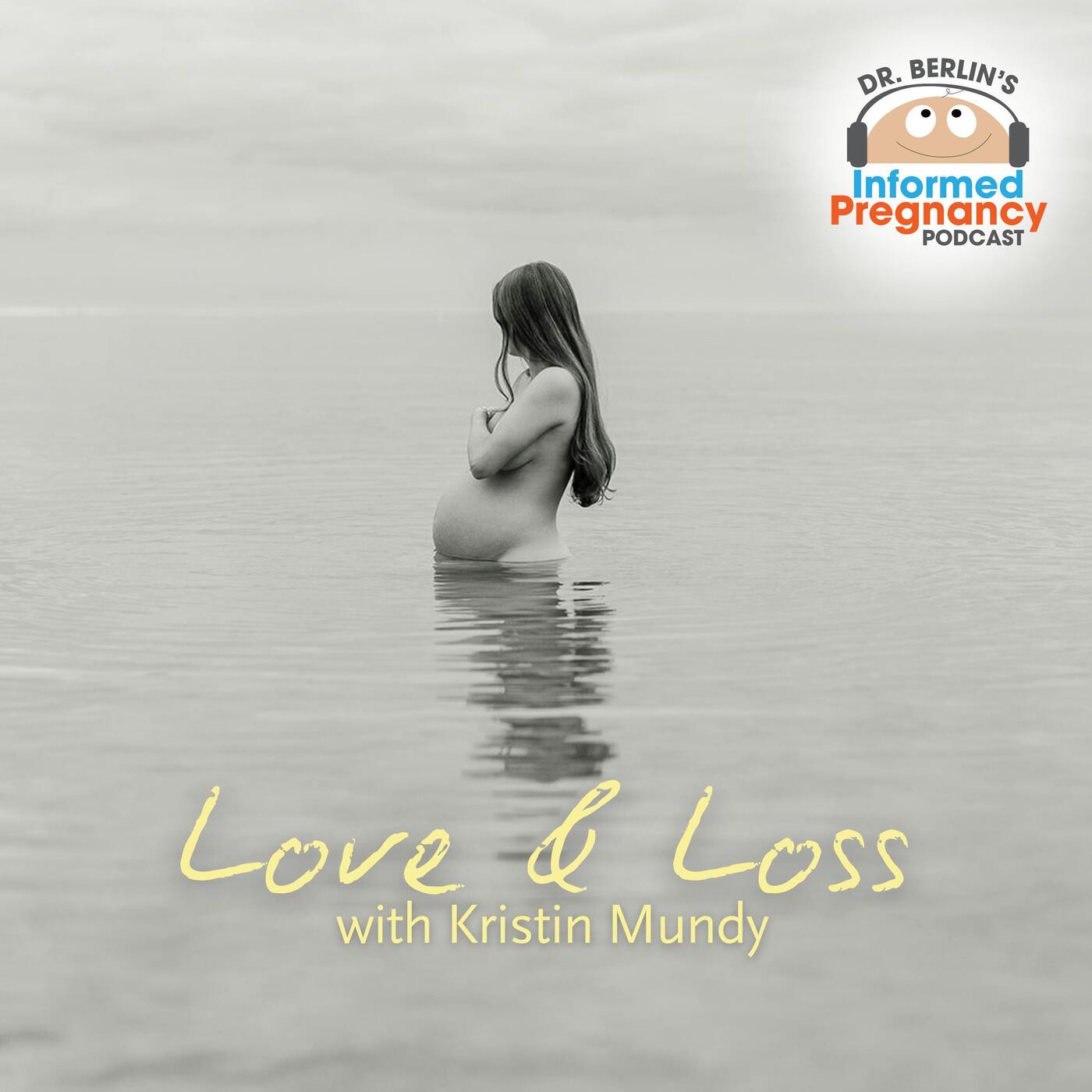
November 26, 2025 · 54 minutes · Episode 487
About this episode
Kristin Mundy is a doula and childbirth specialist with a focus on birth after loss. She’s the host of the Rainbow Connection, a podcast for mothers who have experienced. This episode discusses topics that may be uncomfortable for some listeners, including pregnancy loss, miscarriage, stillbirth, infant loss. Please listen with care.
Connect with the guest:
Informed Pregnancy Media and Mahmee present an all new podcast! One Way or a Mother is a new narrative podcast from Dr. Elliot Berlin, DC. Each season is an intimate story of one woman, one pregnancy, and all of the preparations, emotions, and personal history leading up to the birth. Episodes feature the expectant mother along with her family, doctors, and birth work team.
Start listening to Episode 1: I Should Have Died featuring Arianna Lasry
Keep up with Dr. Berlin and Informed Pregnancy Media online!
Learn more about your ad choices. Visit megaphone.fm/adchoices
See Privacy Policy at https://art19.com/privacy and California Privacy Notice at https://art19.com/privacy#do-not-sell-my-info.
Key quotes
“and I think it's because it was never held. It was never witnessed.”
“I didn't trust myself. And that will be the biggest regret of my life forever.”
“I just want this baby here alive”
“you're really walking in the fire hoping not to get burned this time”
“I feel like lightning should not strike one person even once”
Related episodes
- Ep. 470 Carlson Young: After Birth
- Ep. 500 The Unexpected with Dr. Elliot Berlin Part 2
- Ep. 483 Empowering Education in Childbirth with Sarah Lavonne
- Ep. 480 Twins with Lauren Gaba Flanagan
Transcript
AI-generated transcript with speaker labels — may contain errors, especially names and medical terms. Dr. Elliot Berlin, DC appears in blue; Kristin Mundy in orange.
Dr. Elliot Berlin, DC [0:00] My guest today is a doula and childbirth specialist with a focus on birth after loss. She's the host of The Rainbow Connection, a podcast for mothers who have experienced loss. This episode includes discussion of pregnancy loss, including miscarriage, stillbirth, and infant loss. We share openly and with sensitivity, but if it feels overwhelming, please take care and revisit this important conversation when you're ready. I'm pregnancy-focused chiropractor Dr. Elliot Berlin, and you're listening to the Informed Pregnancy Podcast. Kristen Mundy, welcome to the podcast. Thank you so much for having me. I'm honored to host you. It's a topic we don't talk about very often, and I'm uncomfortable because I feel like I should
[0:55] have certain sensitivities, and I don't know if I will, but I'm hoping the universe gives them to me, and if not, you'll put me in my place. I'll do that. You've been through a million different things. You have just an incredible warm energy. I only just met you, and I'm like, how? I want to know everything, and you're also a professional in this space, and I could just tell you're one of those people that has been through some really challenging things, some of the most challenging things perhaps life has to offer, and you took that and decided to help other people have better experiences and support other people, and maybe even advocate to help people avoid the kinds of things that you've been
[1:33] through. Without being cryptic, I'll jump right in. Let's start at the beginning. Where
Kristin Mundy [1:37] are you from originally? Originally, I'm from Niagara Falls.
Dr. Elliot Berlin, DC [1:41] Everyone knows Niagara Falls. Right, because of the Maid of the Mist.
Kristin Mundy [1:45] Yeah, exactly. Always fun doing the Maid of the Mist. Who doesn't like a poncho? Yeah, I grew up there. I now reside just outside of Toronto. Everyone knows Toronto too. Go Blue Jays.
Dr. Elliot Berlin, DC [1:57] Go Dodgers. We were just talking about how we're arch enemies. Yes, but we still like each other.
Kristin Mundy [2:05] Yeah, so now I'm in just outside Toronto. I live here with my husband, who I've been married to for six years, and our two-year-old daughter, and we have a nice little life out here.
Dr. Elliot Berlin, DC [2:16] Career-wise, what did you think you were going to do when you were starting to think
Kristin Mundy [2:19] about it? Oh boy, that's a good question. I actually come from education. I used to be a special needs teacher, and my role to dual-hood, I guess, that's where it came from. If you were to ask me this question when I was a little kid, I would have said I really want to be a mom. That was my career aspirations. That's cool. Yeah, I have four brothers, so I grew up with a big family. Which one are you? I'm right in the middle. Oh, the middle child. And I very much took on that mother role at a young age, and was obsessed with babies, and helped my mom all the time, and started babysitting really young. So my role into a doula actually makes a lot of sense,
[2:59] because doula means, literally, mother's helper. But I came from an education background, and when I first heard what a doula was, people talk about having a light bulb moment, and that was my light bulb moment. When I heard about it, I said, that's exactly what I meant to do. How did you hear about it? You didn't have kids. I didn't have kids at this time, no. Which is actually really unusual for most doulas, because usually when we become a doula, it's from our own birth experience, or, you know, becoming a mother, right? And for me, it came from a really just deep desire to support women in the most transformative time of their life. I was nannying also at this point on the side, so it kind of made sense.
[3:45] And I found out about a doula by talking to another nanny who was telling me that she was doing this new thing, and I was like, oh, like, I need to do that. It was a no-brainer. How long ago was that? So that was eight years ago, so I've been a doula now for eight years, which seems kind of crazy. It kind of feels like just yesterday and forever ago, all at the same time. But yeah, I would say I'm a well-seasoned doula now.
Dr. Elliot Berlin, DC [4:08] In the doula training, is it what you thought it would be?
Kristin Mundy [4:13] It was what I thought it would be, and I was so excited to be a doula. I wanted all of that. I knew that I wanted to be a mother one day. That was still a really deep desire for me. And I already knew I had a gift with people. I had a gift with education. It kind of combines all my worlds, and that's why it really just made perfect sense. And I kind of ate up the doula world. I submerged myself deep. I learned everything and everything. And I know for a lot of doulas, it's really hard to get that initial start, but I was like 120% all in. And I went to full-time doula work just a few months after I enrolled, because I was just so in love with this career.
Dr. Elliot Berlin, DC [5:03] Was your first doula birth the first live human birth you had been to?
Kristin Mundy [5:09] It was. Yes, it was.
Dr. Elliot Berlin, DC [5:11] What was that like?
Kristin Mundy [5:12] It was crazy. It was a VBAC water birth at a home birth center.
Dr. Elliot Berlin, DC [5:18] Okay, that is crazy. I mean, not the most ordinary first birth experience.
Kristin Mundy [5:22] Yeah, we really jumped in there, and I had to learn so much. And I was really lucky because I had obviously amazing mentors, and I also was very honest. I never acted like I knew everything. I very much was eager, though, to learn everything. So my response at the very beginning was, you know, I don't have the answer to that, but I'm going to find out. It's one of my favorite things to say.
Dr. Elliot Berlin, DC [5:47] Everything's figureoutable, right? I've been to places in life where I'll get a question and feel like I should have an answer. And the desire is to sort of come up with an answer. But I think the much better answer is a good question. I'm not sure. Let me research that and get back to you, which, by the way, is how this podcast even started 15-plus years ago. I come from a very medical background. And I found myself in this birth world in Los Angeles where people are a bit more holistic, at least a good number, and they're asking all these questions about things that I don't know anything about. I'm like, I don't know. Let me get back to you.
[6:24] And then you just get the same question again. And again, I'm like, why don't I record that so anybody can listen to it at any time?
Kristin Mundy [6:30] Well, yeah, and just the whole notion of being a doula is not giving your clients just whatever they want to hear or some overarching statement that just makes them happy. It's really about meeting them at a level that they need and with honesty, right? So it made sense.
Dr. Elliot Berlin, DC [6:47] What kind of emotions went through you at that water V-back?
Kristin Mundy [6:51] Oh, my gosh. It was the coolest moment of my life. It was honestly not D-plus. It is up there, though. It was funny because, and this is how I knew that this is also what I really wanted to do, is I wasn't tired. I was completely energized. I wasn't scared. I was completely calm. I've lived a lot of life before I became a doula, so I think I can handle situations that others would possibly freak out very calmly. And that's how I was affirmed that, yeah, this is the right choice because that was amazing, and I did so amazing, and I just saw how it really impacted her and her experience and his experience, too, our partners, and that's what it was all about, right?
Dr. Elliot Berlin, DC [7:39] So I've interviewed a few people on the podcast who were in birth work before they had their first baby, notably in my mind, Carson Meyer and Haley Oaks. Carson became a doula. Haley was a doula and then became a midwife. And all of you, you're definitely included in this, have this energy of like, I was definitely on this planet before and I was a very popular birth worker. You just seem to have the wisdom and the confidence and the comfort with it all just built into you, hardwired from birth. Did being a part of that experience make you even more want to be a mom or?
Kristin Mundy [8:18] Oh, yeah, even when I started being a doula, so before I became a doula, I actually was pregnant at one point. It would have been four years before I became a doula and I sadly miscarried that pregnancy, but I always knew I wanted to be a mom, but my first pregnancy, that really ignited this heartache and just deep desire to become a mother on earth one day. And when I became a doula, that didn't go away. I wasn't pining after it because I just had a deep belief that it was coming in its perfect time, but it definitely, the whole time, yeah, I couldn't wait.
Dr. Elliot Berlin, DC [8:59] That pregnancy was before you met your husband.
Kristin Mundy [9:02] It was. It was sort of one of those oops. It was an oops. It started off as an oops and then it was a very welcomed and wanted pregnancy for sure to the point where I got a new job, I got a new apartment, and I told my whole family.
Dr. Elliot Berlin, DC [9:20] Oh, wow.
Kristin Mundy [9:22] Yeah, it was definitely.
Dr. Elliot Berlin, DC [9:22] How far along were you with?
Kristin Mundy [9:24] I miscarried at 11 weeks. It was a miscarriage, so I didn't know the baby actually had passed a couple of weeks before that. Back then, it's so funny looking back. It's not funny, but it's interesting looking back at that first loss and how differently I view that now, being 13 years older and what I would have done differently or how it was so pushed aside until I became more of an adult, I would say. But yeah, that was a really pivotal change for me was that miscarriage.
Dr. Elliot Berlin, DC [10:00] How did you find it, meaning it was a miscarriage until it wasn't?
Kristin Mundy [10:05] So what ended up happening, I had a horrible first trimester, I'll say that. I was sick as a dog and one day I just woke up and I felt like the lights were turned on and I was like, oh, wow, I feel so much better. People told me that maybe around 11 weeks, I might start to feel better, 12 weeks, I might start to feel better. So here I was thinking that that's what was going on and then I went grocery shopping one day and I felt it. I felt myself started to bleed and I called my mother and I said, I'm bleeding and she knew I was pregnant. She picked me up and we went to the hospital and that's when I found out I had lost the baby.
Dr. Elliot Berlin, DC [10:50] How old were you?
Kristin Mundy [10:51] So I was 24 then and I feel like I was a baby back then but I said I grew up in Niagara Falls, right? If anyone knows Niagara, it is actually quite a small town and the large majority of my friends had already been mothers for years and years and years. So for me to be pregnant to welcome a baby at that age didn't seem that crazy.
Dr. Elliot Berlin, DC [11:14] Typical.
Kristin Mundy [11:15] Yeah.
Dr. Elliot Berlin, DC [11:15] Yeah. You said now, flash forward, looking back, you would have handled things differently. So how does that mean? What did you do and what would you have done differently?
Kristin Mundy [11:25] So after that first loss, I think because I didn't have a partner and I wasn't married and there's all these things that you're supposed to do before you welcome a baby, I felt the people in my life might have been a little bit relieved. They were sad for me but also kind of relieved. Like for me, it was traumatizing. I was heartbroken and I didn't know how to move on from that and I think it's because it was never held. It was never witnessed. I never processed it with anyone. I also had a DNC for that miscarriage and I made that decision out of fear, not out of what was best for me and my body and for what I ultimately wanted.
Dr. Elliot Berlin, DC [12:18] Just saying you had the option to let it pass naturally or to have a medical sort of dusting and cleaning. Yeah. You had the DNC?
Kristin Mundy [12:26] I had the DNC, yeah.
Dr. Elliot Berlin, DC [12:28] So looking back, you might have chose to…
Kristin Mundy [12:30] I think I most definitely would have. I wasn't given full consent on what I was choosing. I didn't know that there's an increase of scar tissue. Now, knowing what I know, having had miscarried again, the process of letting my body do what it needed to do was actually like people will say, it was so traumatizing to me. But for me, it was really helped with that processing. It gave me time to kind of understand what was going on. It allowed me to create rituals afterwards. Whereas the DNC, I was just put out. I didn't have a support person. I woke up and it was over. And it was like that pregnancy for me just felt like it didn't happen. So it never really was properly dealt with.
[13:19] And if I could go back and be my own doula, it would have just been so different.
Dr. Elliot Berlin, DC [13:25] I'm really sorry you had that experience. Unfortunately, it wasn't the last of similar type experiences, but I'm already learning from you. And so is everybody listening. And so I appreciate that you share because it's important for other people to hear and to learn and for all of us to talk about it because then we'll be able to support somebody who inevitably is going to go through it in our lives.
Kristin Mundy [13:48] Yeah, I think like this is one of the reasons why I became a doula, to be honest. It's like, I don't feel like I was given full and complete informed consent of what my choices were and what that would look like and how it affects future pregnancies and my mental health and so many things.
Dr. Elliot Berlin, DC [14:03] And it's a lot to think about. And I think that probably for most people when they end up in those shoes, they don't really have anything to base their decisions off of.
Kristin Mundy [14:12] Totally. And if you don't have anyone that's well-versed in being trauma-informed or in-laws, it makes sense that the people in your life wouldn't know how to support you, right?
Dr. Elliot Berlin, DC [14:23] Absolutely. Your own personal journey had quite a few more twists and so did your professional journey. Let's take a little break when we come back. I'll continue to learn from you. We'll be right back.

Dr. Elliot Berlin, DC [14:46] Welcome back. We're talking to Kristen Mundy. And okay, so you have at age 24 an unexpected pregnancy that you grow to love and then not really the most informed process of ending the pregnancy, you know, things that now in retrospect you would have done differently, things that you learned over time. You did, though, then find your husband.
Kristin Mundy [15:11] I did.
Dr. Elliot Berlin, DC [15:12] And then I know there's a burning desire inside you to become a mom. So is that something you pursued quickly?
Kristin Mundy [15:20] So I will backtrack just a little bit. I do say I would do things differently with that first loss, but I also have grown appreciation that I did the best I could with the choices I had. And it did make me who I am today. So I have lots of grace for what happened then. Yeah, I would do things differently, but I don't have regrets, if that makes sense.
Dr. Elliot Berlin, DC [15:39] That does make a lot of sense.
Kristin Mundy [15:41] Yeah, so I did meet my husband. And it's funny because that first miscarriage, it really did catapult my life in other ways. So after I had that, like I went through this huge medical ordeal and it was triggered from that pregnancy. So that pregnancy sent me into a huge flare, never have happened to me before. And that was about six months later. And all of a sudden I was paralyzed from my belly button down. Yeah, I get the story. It gets crazy. Sometimes when I say it, I'm like, did that really happen? And I found out that I had lupus and my lupus had caused something called transverse myelitis. It was a huge shift in my life because I had been diagnosed with this new disease.
[16:32] Went through chemotherapy. I really was like fighting for my life. And I did fight and I won.
Dr. Elliot Berlin, DC [16:39] Congratulations.
Kristin Mundy [16:40] Yeah, I know it seems like, you know, such a blur and kind of crazy. But after that, it really, you know, put things in perspective in my life of what I want because I just went through these two huge traumas back to back. And I wanted to meet an amazing man. I wanted to get a good career.
Dr. Elliot Berlin, DC [16:58] Like a Blue Jays fan?
Kristin Mundy [16:59] Yeah. And, you know, what did I do when I got better? I signed up for online dating. I enrolled in the school, met my husband, the first month that I signed up for online dating. And on our second date, I remember saying, you know, I really want to have children. Like, where are you at with that? And we joke about it because we were very different. He was a 25 year old, you know, male. And I had just gone through this huge pivotal life moment and I was ready to start a life. And he was like, I don't even know if I want kids. And I'm like, what? No. Yeah.
Dr. Elliot Berlin, DC [17:36] Yeah. By the way, for you, I'm surprised you waited till the second date.
Kristin Mundy [17:39] Yeah, honestly. But I fell in love and I knew that he was an amazing man. He would be an amazing father. I knew we wanted the same things with life and we just needed some time. And I was right. So it worked out.
Dr. Elliot Berlin, DC [17:53] It worked out.
Kristin Mundy [17:54] Yeah.
Dr. Elliot Berlin, DC [17:55] How did you resolve the sort of different timelines you had in mind?
Kristin Mundy [18:01] I'm a very patient woman. I will say that. I'm a very, very patient woman. And some people will say I'm a little too patient. But we also lived a lot of life at this time and we had a lot of adventures and everything just needed to go on its own timing. And that's when I became a doula, was a couple of years after that we met and a couple of years after that, that's when he proposed and he sealed the deal. So it all kind of worked out the way that it needed to.
Dr. Elliot Berlin, DC [18:30] Nice. Okay. And then how soon after that do you start trying for the baby?
Kristin Mundy [18:35] Yeah. So a year after we got married, we started trying.
Dr. Elliot Berlin, DC [18:40] Everybody was on board?
Kristin Mundy [18:42] Everyone was on board. And I wouldn't have gotten married with him if he wasn't on board. This was always kind of the plan at this point. But we started trying. And I always had in the back of my mind just wondering like, oh, I had that miscarriage before. I wonder how things are going to be and what's going to happen. And you hear a lot that it's not uncommon to have a miscarriage. And I really thought that I kind of paid my dues already. So when we went into our pregnancy, I was elated because we got pregnant and people are going to kill me when they hear this, but we got pregnant right away. And we were thrilled. Yeah. We were thrilled and everything was looking great
[19:25] and it was perfect. We just had bought our first home all in the same month. We found out we're pregnant. We bought our first home. And it was a really exciting time in our lives.
Dr. Elliot Berlin, DC [19:36] How did you feel in that first trimester?
Kristin Mundy [19:39] Horrible. I do not have good first trimesters.
Dr. Elliot Berlin, DC [19:42] Repeat scenario.
Kristin Mundy [19:42] Yeah. Very, very sick. So one thing that made this pregnancy different is I had a subchorionic hematoma. Tons of bleeding and pretty horrific bleeding. I feel with women when they have a hematoma, sometimes they don't bleed at all. And then there's those ones that it's like a water faucet is turned on and that's kind of where I fell into things. And obviously it is scary. No pregnant woman ever wants to see blood. Never, never want to see blood. And the first time I had a bleeding episode, I thought for sure that we had lost the baby and to our surprise, we didn't. And then I had another one and it was the same thing. And then on our third one,
[20:28] that's when we found out that it was just too much. It was too much for the baby and that I was going to miscarry. So yeah.
Dr. Elliot Berlin, DC [20:36] How far into the pregnancy are we talking?
Kristin Mundy [20:39] So that pregnancy, I was 10 weeks. And with my first experience of having the DNC, I knew that I obviously I didn't want to do that this time. So I ended up choosing, and this is another helpful information for people, but I ended up choosing to let my body do it on its own. And I waited a really long time, a really long time, weeks, weeks and weeks went by. I think, yeah, three weeks went by, nothing was happening. And then I finally was like, okay, I need to intervene here because my mental health is not doing well at all. Like it was pretty excruciating.
Dr. Elliot Berlin, DC [21:15] Yeah. Was medical advice to not wait?
Kristin Mundy [21:20] So we thought because I was bleeding already that like things were going to happen. And then time just continued to go on. No one thought that it would go on that long. And then I just like mentally couldn't handle that anymore. And I knew we needed to intervene. So I asked my doctor for mesopristol just to help support things along and-
Dr. Elliot Berlin, DC [21:44] To basically put you into contractions?
Kristin Mundy [21:47] Yeah. And another tibet, helpful tibet here, is, you know, even when I was given this option, like I was a doula at this point, you know, I knew birth, I knew how to support birth. I knew how to make informed decisions, at least I thought. But I didn't really live in the realm of loss at this point or pregnancy loss. Some of my clients had went through miscarriages, but I never was there early enough to like hold their hand and help them through it. So when my doctor prescribed mesopristol, you know, I was told like you can take Tylenol. It's just going to be some period cramping. It's going to be over within like four hours. And, you know, when I took the mesopristol,
[22:29] I went into full-blown labor at home. And I remember that catching me really off guard, my husband really off guard because he was not expecting to be my support person. We both just thought this was going to be an easy thing. And it wasn't. It was definitely labor. And it worked. I labored in the tub for hours. I knew how to support myself in this sense because I knew birth. I knew the things to do. And I delivered a little tiny baby into my hands. And for some people that might feel horrifying. And in a way it is because no one wants to ever do that. But it gave me a lot of closure. It helped my body and my mind kind of catch up to what was happening.
[23:15] It allowed me to say goodbye and to do something to honor our baby. We buried it in the yard at our first house. So it was really special. And it also allowed my husband to be a part of it because it wasn't just me losing this baby. He was losing this baby too. So it felt really healing. It was in a sense it was surprising and shocking in that sense. But at the same time I felt it really to be really healing.
Dr. Elliot Berlin, DC [23:41] The second miscarriage in the first trimester, but towards the end, is that already raising a flag for you?
Kristin Mundy [23:50] It was, especially because I was diagnosed with lupus. And it's interesting because after I did lose the second pregnancy, obviously at this point we were like, okay, I've had two miscarriages. There's a lot of excuses in terms of like, oh, but they're so far apart. And, you know, these things happen. I got a lot of those. But we had to do a lot of digging and like, I was tested for all the things. Everything came back normal. I was tested for every blood clotting disorder. My uterus was checked. Everything looked to be fine. So my husband and I just chalked it up as these things happen. And unfortunately it's happened twice. So, yeah.
Dr. Elliot Berlin, DC [24:31] You said you buried the baby at your first home. Does that mean you didn't do any testing on the genetic?
Kristin Mundy [24:37] We didn't. No, and that wasn't something that was offered to me at all. You know, going back knowing what I know now, I know it would have made a difference, but maybe it would have helped me feel like at least I turned that stone over. Because ultimately what we found out was, you know, I was the problem and we could get to that. It wasn't my babies that were the problem.
Dr. Elliot Berlin, DC [24:58] How old were you at this point?
Kristin Mundy [25:01] I would have been 30 years old, yeah.
Dr. Elliot Berlin, DC [25:03] So six years in between.
Kristin Mundy [25:05] Yeah, seven years actually. So I would have been 31, 31, yeah.
Dr. Elliot Berlin, DC [25:09] Is the recommendation just try again?
Kristin Mundy [25:11] Yep, try again. They said wait a cycle, try again. So I should say before we started trying, we did testing before then. So I did all the blood cloning factors even before my second pregnancy and everything came back normal. Everything was normal. So we felt pretty confident that it was just bad luck. And then when we decided to get pregnant again, we just put me on progesterone this time and thought maybe like that was going to be the solution.
Dr. Elliot Berlin, DC [25:36] Were you going to get pregnant quickly again?
Kristin Mundy [25:39] Yes, very quickly. I never struggled getting pregnant. I struggled staying pregnant. That was the problem.
Dr. Elliot Berlin, DC [25:46] Through this whole time, you're attending births?
Kristin Mundy [25:49] Attending births, yeah. And postpartum support.
Dr. Elliot Berlin, DC [25:52] I kind of feel like for me that would be salt in an open wound.
Kristin Mundy [25:56] Honestly, it never was. For me, and maybe this is something to talk about with my therapist, but for me, I find so much healing for myself by helping others.
Dr. Elliot Berlin, DC [26:08] I do too, but in that particular world.
Kristin Mundy [26:10] I know. It's very bizarre.
Dr. Elliot Berlin, DC [26:13] No, I mean, you're clearly a better person than I am.
Kristin Mundy [26:17] Definitely not. But I will say it is the same world, but I also just found so much joy and fulfillment from it. So it honestly was that's where the healing aspect goes. I had already been in a world where everyone was pregnant around me and everyone had family. So I had 10 years experience at this point of being, wanting to be a mother and it not happening. So it was just doing what I've always been doing, wanting to be a mother and kind of being on the sidelines of that. So it wasn't anything new, and it actually gave me an outlet to feel hopeful and have hope, yeah.
Dr. Elliot Berlin, DC [26:56] How did pregnancy number three unfold?
Kristin Mundy [27:00] So pregnancy number three, I mean, everything that I'd already gone through was so transformative, but pregnancy number three was where, you know, my world got absolutely wrought upside down. We got pregnant. We were super happy. Everything looked great, normal, as you can say. But again, I had another hematoma. And this time we were very, very cautious because we're like, okay, bleeding is an issue for me, obviously. So we're going to err on the side of caution here and put you on bed rest. Now, obviously, as a doula, that's very hard to be on bed rest. So I had to completely shut my business down pretty much like overnight, find the backups for all the clients that I had.
[27:47] And I was in bed until 16 weeks. My doctor told me, if you're bleeding, you're in bed. And that's kind of what we did. And who knows if that was the right choice, but that's what we did.
Dr. Elliot Berlin, DC [27:59] Yeah. Well, I mean, 16 weeks is a lot further.
Kristin Mundy [28:03] It's a long time.
Dr. Elliot Berlin, DC [28:04] Yeah.
Kristin Mundy [28:04] So I was willing to do anything and everything. And every week that passed was, you know, being in bed for 16 weeks sounds horrible, but I was so happy that I made it into the second trimester. And I passed the times where I lost my pregnancies previously. So I was overjoyed. I was totally fine, you know, parking in bed.
Dr. Elliot Berlin, DC [28:23] I mean, it sounds like you would have stayed in bed for 40 weeks if they told you that's what.
Kristin Mundy [28:26] Oh, yeah. I would have danced on my head, given my left leg. I would have done anything, right? So I was totally fine with it. And I also was very sick once again. So it kind of was like, well, I feel like crap anyways.
Dr. Elliot Berlin, DC [28:38] Was it beyond the first trimester?
Kristin Mundy [28:42] Yes, I was sick the whole time. Probably up until I was about 20 weeks pregnant, I was pretty sick. And part of me was like, do I have hyperemesis? But I didn't because I wasn't puking. It was just like all day feeling really lousy. But the bleeding eventually stopped, and the lousiness feeling eventually faded. And it was the happiest time of my life. I had never been that happy before. I've never felt so beautiful. I never felt so excited, so in love with my husband. The anxiety was there, but it lessened so much. Every week that passed, it lessened. I really felt like we were going to be bringing this baby home. It was a really, really beautiful time of life.
Dr. Elliot Berlin, DC [29:24] What happened after that?
Kristin Mundy [29:26] So I made it past 24 weeks, and that was a really big milestone because that's when people say, like, if you were to deliver, your baby has a chance of living, right? Yeah, so every week that we passed 24 weeks, I was like, wow, this baby is coming home. I never once in my entire life ever contemplated that I would lose my baby at this point if anything, I was like, maybe I would go into early labor, I'd have to have emergency c-section, I'd have to have a NICU baby, whatever it was, those other traumas that we experience. But one morning I woke up and it was actually the day of my baby shower. So it was my first baby shower, which was obviously a humongous day for me.
[30:09] I had waited so long to have a baby shower for myself after attending dozens and dozens of baby showers for years. And that morning I woke up and I noticed that I was, like, I was putting on my clothes because I was getting dressed up and I noticed that they were a little tight and I experienced some swelling. And I weighed myself and I gained about five pounds really, really rapidly and I'm not a big person, so five pounds is pretty significant. And I paged my midwife or I emailed my midwife and she just said, you know, page the office if you have a concern. I didn't feel like it was page-worthy, so I just waited to hear back from her and I did.
[30:45] And she just said, you know, it's the summer, you just had a baby shower, ate lots of salty foods, we'll keep an eye on it, but some swelling is pretty normal. And that's what I chalked it up as. And then, you know, the days passed and two days later I was still like pretty swollen, like not significantly, just enough where I even, as a dual I knew, like swelling is normal and pregnant. But at that point I had felt like my baby might have slowed down a little bit. And I paged my midwife, told her that those concerns, told her I was feeling lousy still, told her I still experienced some swelling. And she just gave me the whole, you know, you're 30 weeks pregnant,
[31:24] your baby's getting big, babies run out of room, as long as they meet 10 kicks in two hours, you're good. I really think that, you know, this is just your anxiety. You know, you've had two losses before, it's normal for you to be worried. And I was just like, okay, okay. Like I was, you know, I've never been this pregnant before. I was still a first time mom needing support and I really leaned into trusting my midwives. And I didn't know much about stillbirth, which I feel I have guilt around because I am a doula. And I think in that moment I needed my own doula to say, hey, if you feel like something's wrong, like let's get you the care that you're needing, right?
[32:11] Yeah, a few more days passed and still the same thing and paged them again. They gave me the same thing. No one encouraged me to get checked out. And that whole week I just felt like I was nuts. I was like, wow, I'm really struggling. Like I'm going to have a really long pregnancy if I'm struggling this much already. And then I woke up on Friday and I had a headache and I was like, okay, so symptoms just progressively got worse throughout the week. And then Saturday morning came and I remember laying in bed with my husband just saying, at what point is it anxiety or what point is this your intuition? At what point do I need to say to my midwives,
[32:50] I just need you to check me out. I feel like something's wrong. Why not just check me out? And I paged them again and I got the same thing. It was like, it's Saturday, don't go to the hospital, don't waste your Saturday, take some Tylenol.
Dr. Elliot Berlin, DC [33:06] It's like the opposite. They're encouraging you not to.
Kristin Mundy [33:09] Yeah. Honestly, I look back and it makes me feel really sad. This was still COVID time and in our area in Toronto, and I'm sure this is everywhere, but our midwives were like worked to the bone. And I look back and I just think, you know, they were exhausted, they were overworked. And I always felt looking back as well that they kind of treated me, sometimes they treated me like a doula that knew what she was talking about and it took my concerns at face value and other times they treated me like a first time mom and pushed my concerns away. And it usually was dependent on what their agenda was. And at this point, they treated me like a first time mom
[33:50] saying, oh, this is just your anxiety. And I'm like, well, I'm a doula and I know like that these are concerning and like, why aren't you taking that into consideration? But I hung up that phone with my midwife and I was pissed at this point.
Dr. Elliot Berlin, DC [34:03] Could you have gone even though they're like, oh, you know, don't waste your time?
Kristin Mundy [34:07] I could have gone. Yeah, I could have gone. But at the same time, after the whole week that I was told like, you're just anxious, I was like, wow, am I struggling that much? I'm really struggling with anxiety and I could have made a call any time to be like, I'm just gonna go in, but I didn't trust myself. And that will be the biggest regret of my life forever. But when I did hang up the phone, I did end up going in and I went against what my midwife had suggested. And at this point, you know, I had convinced myself so much that I was just in my head that I didn't even ask my husband to come with me. And I drove myself to the hospital. I, you know, let them know I was coming
[34:48] and let them know it was reduced fetal movement and they laid me on the bed and that's when my whole life changed when they told me that my daughter didn't have a heartbeat. And I was completely alone and of course, my life just flashed before me in that moment and I was devastated and crying and screaming and my nurse looked at me and told me I needed to be quiet because I was scaring the other mothers. I had to get her to call my husband, give him the news over the phone and he was at the hospital within five minutes.
Dr. Elliot Berlin, DC [35:24] Yeah.
Kristin Mundy [35:25] And we had no idea what had happened because she looked perfect. We didn't know she was a girl yet but there's nothing in my pregnancy that was of such concern. We had different things happening like the hematoma and at one point I had a placental lake and everything was a non-issue according to my MFM. I was at an MFM at this point so I dual care with the midwife and MFM and no one thought that anything was of concern. So to find out that she had passed was just like, what? Especially after I'd worked so hard to get that far and that's where my life completely changed. My life, like my relationships, my work, everything. That was a very pivotal moment for me.
Dr. Elliot Berlin, DC [36:11] Um, let's take a break. I mean, that's powerful. It's still setting in for me. Just the whole thing. I'm trying to take in all the elements how you got that far, how you got past so much, how you had the instinct, how you advocated for yourself to a degree but then were shut down. The idea that you're a birth professional and part of your brain knows something is wrong. But even for you it's hard to advocate for yourself that it's your baby shower day. And it's so intense. I know that part of that pivot is what led to what you do now. And I really want to learn more about how you figured out what was going on and what it is that was going on and how maybe we can help other people
[36:56] should they have something like that. And also the work that you're doing to support others. And I know you have a baby, so. There's a lot left. You ended up getting there. We'll be right back. Welcome back. We're talking to Kristin Mundy. And I can see why that changed your life forever. I mean, I think just hearing about it, honestly, it's going to change my life forever. I'm going to have an impact here. And I want to continue learning from you and I want to learn things that are going to help me help other people. So what is next for you?
Kristin Mundy [37:39] Yeah. So after that, we did investigations and I did ultimately find out that I do have a blood cloning disorder, the same blood cloning disorder that I was tested for before I even tried to get pregnant. I have antiphospholipid syndrome. Yeah. And that's why my daughter had passed. And when I talk about her being pivotal, of course, it's going to be pivotal when you lose your child. But as my, you know, dualist self who I am, you know, the second I found out that she had passed, I was online researching, trying to learn as much as I can to prepare myself to birth her. And I was exposed to this whole new world that I had no idea about before. And that was the lost world.
[38:24] And even before I birthed her, I had pivoted and started supporting women in the DMs before, like even when she was, you know, to be frank, dead inside me still. And because I found this world where women were preparing to get birth to their baby, but because their baby wasn't here anymore in the physical sense, they weren't given, you know, birth support. They weren't given full informed consent. They weren't given the love and care that they deserved. And they also didn't know how to advocate for it. So here I was being a birth worker. And now officially I was already a lost mom, but now a still birth mom, letting women know like, these are the questions you want to ask
[39:13] and these are options that you have and make sure you ask for this. And that's when I was like shown there's this amazingly huge need of mothers who are preparing to say goodbye or just got devastating news. And, you know, with my history with my first two losses, I had a lot of experience in this realm of different experiences too. And I knew that I could do a lot of good in this world, this loss world, in terms of how to advocate for yourself in loss, how to grieve. And that's when my business really pivoted to supporting lost moms. And then after that, if you can believe it, my husband and I were not done. And I think there's two feelings that people have after they lose a child.
[39:57] And it's either I need to get pregnant right away or I need to take some time to heal. And I was in the camp of desperately needing a baby in my arms, but I did take some time to grieve, let my body heal, get some support, make sure that I had more answers and better care set up for my next pregnancy. And we tried again, and we were successful again. This time took a little bit longer. And very early on in that pregnancy, even with my daughter, when we lost her, her name is Vianna. When we lost Vianna, my doctors told me this is just lightning hitting. This is a lightning strike. We know what the problem is now. We know how to treat it. So your success for a healthy pregnancy
[40:49] after this is it'll go up at least 75%. I was like, wow, 75%, okay. We should be good. We're doing something different this time. So I was put on blood thinners, which I should have been on.
Dr. Elliot Berlin, DC [41:01] Yeah, just because we mentioned APS. It's an autoimmune disorder. And your body sort of creates antibodies that make your blood clot. And it can create little clots in the placenta and prevent the baby from getting good blood flow. So I guess the two questions are, why didn't it show up the first time you tested for it? And then once you know you have it, how do you treat it?
Kristin Mundy [41:26] Yeah, so I actually tested for it three times before I was pregnant. And every time that we tested was negative because you're actually supposed to test more than once. You're supposed to test once and then repeat it again in 12 weeks. So why it didn't show up in the test previously is because, and this is news to me, but it can wax and wane. So you can be negative and then get pregnant and it trigger this to flare up in your body. And that's what happened to me. And you don't test for it during pregnancy because you won't get accurate results is what I was told. So that kind of makes you feel, it's a little unnerving, right? It's a little unnerving that this can just happen.
[42:05] But if I was given out of care when I first noticed some changes, we could have done an NST, maybe saw that baby was not doing so well and I would have delivered early. And then how you treat it is, you should be on blood thinner. So there's two different ways of treating it actually. One is blood thinner. So low molecular heparin, it's called, or lovinox, what people like to, yeah. So you inject yourself it like. Yeah, you inject it in your belly. Some people it's once, some people it's twice a day. For me, it was once a day. At least daily. Every day, yeah, for your pregnancy and six weeks postpartum. And then some other people are also prescribed an immunosuppressant,
[42:42] usually hydroxychloroquine. And what that does is just keep your immune system at bay so it doesn't create anything or your body doesn't attack itself. So I was put on both of those for my next pregnancy and that felt really safe for me because I was like, okay, we're doing something different. But my doctor gave us the news that we got struck by lightning again and my child that I was carrying had a severe heart abnormality called ectopia cordis and was not going to be compatible with life.
Dr. Elliot Berlin, DC [43:17] How much in one person?
Kristin Mundy [43:19] Yeah, that was.
Dr. Elliot Berlin, DC [43:20] Two people.
Kristin Mundy [43:22] Yeah, and that was a shock for us just because it had nothing to do with what-
Dr. Elliot Berlin, DC [43:26] Total fluke.
Kristin Mundy [43:27] Yeah, it really was lightning striking. And I lost my son at 17 weeks and we went through the same process of delivering him and naming him. It was very like compounded trauma. I hadn't obviously even processed my daughter's death and here we were processing another baby and all the while I was still working, which is crazy. And yeah, that's what happened with my son. And if you would believe it, that was not enough to scare me away because I knew when I got quiet and I listened to that little voice, there really was a baby waiting for me. It was just really testing me to get to that. So we ended up trying again and we conceived my daughter and spoiler alert,
[44:16] she did make it here alive and she's two years old today.
Dr. Elliot Berlin, DC [44:20] Congratulations.
Kristin Mundy [44:21] Thank you. She's the best thing in this world. I always say in this world because she's not the best kid ever because there were other kids that existed before her, but she's the best kid in this world.
Dr. Elliot Berlin, DC [44:33] May I ask what your birth was like?
Kristin Mundy [44:36] So I actually had a planned caesarian because she was breech.
Dr. Elliot Berlin, DC [44:40] Oh, you're kidding. Canada is the one that started that whole we can't deliver breech babies badly anymore.
Kristin Mundy [44:46] Honestly, that is a story in itself because I did everything under the sun to make sure this baby was not breeched to the point where I just thought to myself maybe there's a reason why she is and I'm just gonna trust that there's something I need to learn through this because it actually delivered my daughter Vienna unmedicated vaginally and it was obviously a very different birth but it was the best experience of my life and I really did want that with her but I was very open to just whatever got my baby here safely.
Dr. Elliot Berlin, DC [45:17] But even vaginal caesarian just having a baby move through your body into the world alive.
Kristin Mundy [45:25] So as a doula this is where things really shifted as well. This was my second huge shift because as a doula we really want a lot of doulas anyways want advocate for this certain type of birth that's the most physiological the most supported and supporting your natural you're born to birth all these things and these are all things that I believe in and are well and good and then everything changed when I was like I just want this baby here alive like that really is what I want and this is where when I say things pivoted you know being pregnant after loss being pregnant after experiencing still birth was the second hardest thing I've ever done in my life.
[46:07] There's not a lot of traumas that you experience that you willingly expose yourself to again do you know what I mean? And that's what pregnancy after loss is you're really walking in the fire hoping not to get burned this time and in the birth world most of the support that is available I'm very well and aware of how to support a pregnancy that's what I do that's what I've been doing at this point for you know six seven years and that part I knew but when I went looking for support in my pregnancy after loss there really was not much like it was really slim pickings like everything out there is really geared towards this like hopeful joyous beautiful pregnancy
[46:55] and my pregnancy did not feel like that in moments it did but it also had this other element of trauma and fear and yeah I wanted a beautiful birth but I wanted an alive baby more than that and that really tested me as a doula and expose a different world again that it's not just about supporting a physiological process it's also supporting about you know these deep rooted fears and support and like a special kind of compassionate care and language like being trauma informed that the majority of care out there isn't not even obese not even midwives and it really is a different kind of care caring for someone that's pregnant after loss because unless you've experienced it yourself
[47:43] it's really almost impossible to understand so my pregnancy was really lonely it was really isolating I didn't want to go to the prenatal classes or you know the prenatal yoga or you know I didn't want to be in those worlds because I was just surrounded by women who were having a joyous pregnancy a blissful pregnancy and I wanted them to have that I didn't want to be the person that came in that was the nightmare horror story I really wanted them to have that experience and I also was grieving my innocence of pregnancy that it would never be the same and when I was pregnant with my daughter I told myself like wow if I'm experiencing this there are millions of women
[48:31] who are also experiencing this complete isolation when this should be the most joyous time of your life and I always promise myself like if I get through this pregnancy and I hold an alive baby at the end of this I'm going to do whatever I can to kind of bring both those worlds together my doula world and my loss world and make sure that these women don't have to go through their pregnancy after loss feeling this way
Dr. Elliot Berlin, DC [48:55] so you have a platform
Kristin Mundy [48:57] I do have a platform
Dr. Elliot Berlin, DC [48:58] you can't be there personally
Kristin Mundy [48:59] for everybody who's pregnant after loss no I cannot
Dr. Elliot Berlin, DC [49:03] but virtually you can offer them support tell me about your platform
Kristin Mundy [49:08] so I have a variety of different options and I really do try to support women you know from right from loss to you know navigating next steps or trying to conceive into pregnancy after loss and a variety of different things so I do have an online community it's free I give a lot of you know support on Instagram we love Instagram it's such a beautiful accessible tool that I can provide support for absolutely free but I also have you know a trying to conceive after loss community online and I also have an offer called The Haven which is my pregnancy after loss program and that one specifically because we are focusing a lot on pregnancy after loss
[49:52] that one is kind of combining everything that I felt I needed in my pregnancy after loss in one place so it has you know the doula support when you need it from a doula that understands loss not just a doula off the street they're wonderful but like I said unless you've been trained in bereavement or experienced loss it's just something that is really hard to support someone with it has birth education that is geared towards pregnancy after loss so rather than it being you know just a cookie cutter birth education it really talks about how to find safety throughout your pregnancy and your delivery it teaches you how to navigate you know the grief and the hope
[50:36] and it's just a little bit more comprehensive for a lost mom it also has a beautiful community so that community that you feel like you're losing in your pregnancy after loss you're just in the wrong spot in the wrong neighborhood yeah that community exists and that's what I wanted to really provide them because you know there's so much to pregnancy about sharing it it's not just about sharing the fear of the pregnancy after loss but it's about like commiserating and having a normal experience and feeling like you can have that while also having all these other things going on and we also have you know learning workshops every week so that's a good time
[51:12] you know duals usually give prenatal education and that's when we are able to do that and connect as a group so it's a really beautiful hub just kind of everything all in one and mesh in one place and any woman that all over the world if they need it and are looking for this kind of care this extra support in their pregnancy after loss it exists and it's here for you when you need it yeah and I also obviously have my podcast so one big thing that for me when I was pregnant with my daughter is I used to live listening to birth stories I mean I listen to your podcast all the time you know I listen to every yeah yeah every podcast every birth story
[51:51] but what in like Christina Perry's was one birth story where I was like oh my god like I see myself here yeah you can relate but coming across those stories was so difficult and that was something that made me feel more isolated whereas like my first pregnancy I listened to birth stories every day so I made the Rainbow Connection podcast as a way for women who have just lost or they are pregnant again to be able to go to a place that you know they can hear stories that look and sound like them where they can find validation and community and hope that's something that I'm definitely really really proud of
Dr. Elliot Berlin, DC [52:32] I am so sorry for all of the loss that you experienced
Kristin Mundy [52:37] thank you
Dr. Elliot Berlin, DC [52:37] and I feel like lightning should not strike one person even once and more than once and again you have such a strength to you and the ability to take that and do what you're doing to help other people and to create that community and to create the resources that weren't there for you it's really special and powerful I was hoping to learn from you and I am but I'm going to go visit all of your resources and soak up everything I can so I can be a better supporter of others we're going to include all your resources on our show notes but tell us where we can find you online
Kristin Mundy [53:13] so I hang out most on Instagram and you can find me at the.dulalife my podcast is at The Rainbow Connection and then my website is thedulalife.ca so Instagram is where I hang out most any three of those platforms you can definitely find me in
Dr. Elliot Berlin, DC [53:31] Kristen thank you again thank you for sharing and thank you for building community at home thanks for listening to the informed pregnancy podcast and for more pregnancy and parenting information just like this visit us online at informedpregnancy.com
Want more pregnancy + parenting? Start your FREE TRIAL of Informed Pregnancy+ and get access to all our curated pregnancy and parenting content — original series, iconic birth films like The Business of Being Born, prenatal workouts and more.

0 Comments