
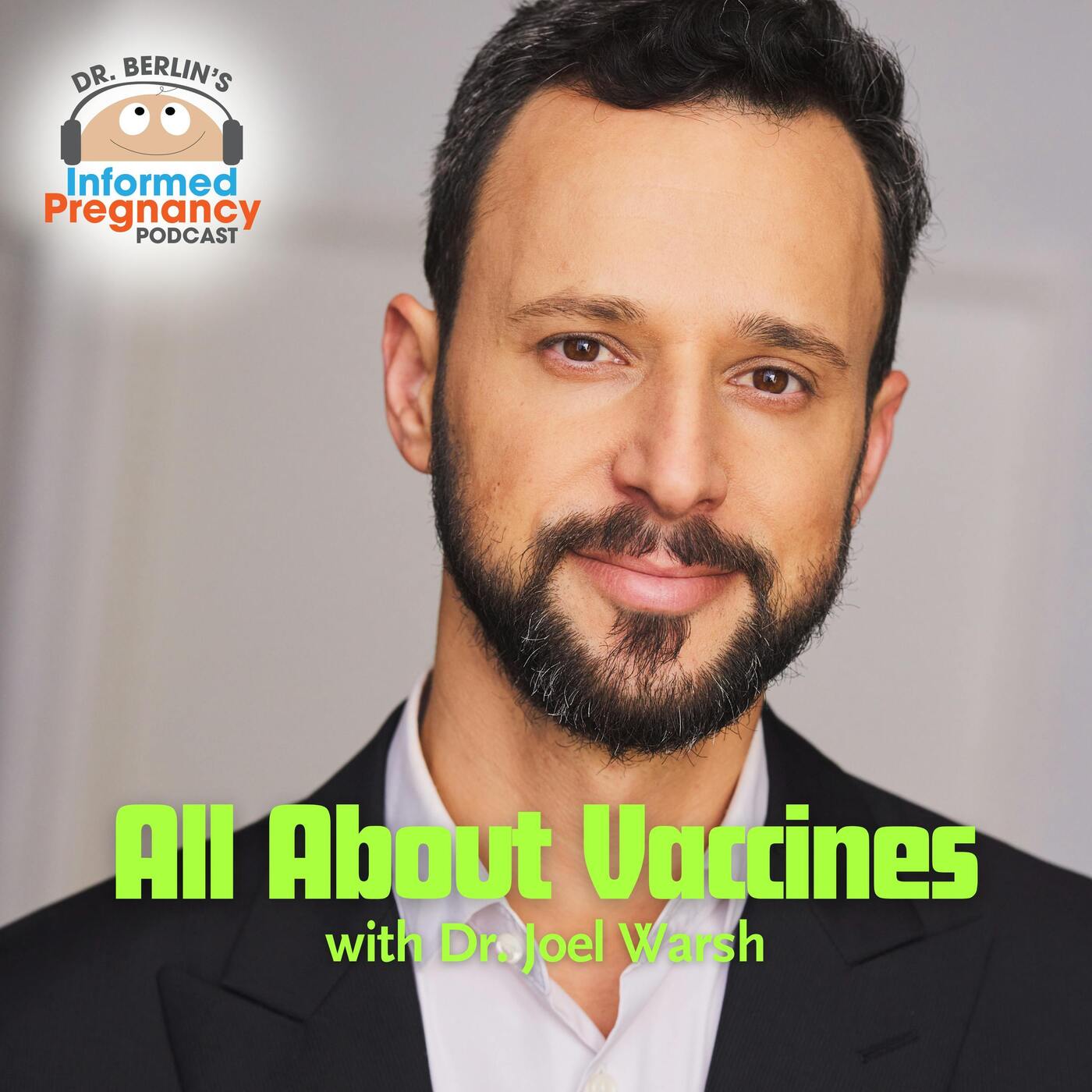
December 4, 2025 · 42 minutes · Episode 488
About this episode
Dr. Joel Warsh is a Los Angeles based integrative pediatrician, speaker, and advocate for balanced discussions around children’s health and vaccination. Combining conventional and holistic approaches, he recently authored a forthcoming book exploring nuanced, evidence based conversations about this complex topic.
Connect with the guest:
Grow with us on IP+! Informed Pregnancy Media presents two all new intimate short-form video series following Garrett and HeHe’s real-time pregnancy journeys as they prepare for an empowered birth and postpartum experience. Each episode features weekly updates with personal photos and videos to help bring these raw stories to life, a visually dynamic guide through each mother’s emotional and physical experiences.
Keep up with Dr. Berlin and Informed Pregnancy Media online!
Learn more about your ad choices. Visit megaphone.fm/adchoices
See Privacy Policy at https://art19.com/privacy and California Privacy Notice at https://art19.com/privacy#do-not-sell-my-info.
Key quotes
“I think my role is to educate, not to force.”
“People get mad at me from both sides. Some people say I'm too anti-vax. Some people say I'm too pro-vax.”
“Do you want the risk from nature or do you want the risk from the vaccine? Everything has a risk”
“It shouldn't be censored. You don't have to agree with me. You can totally disagree with me. That's totally fine. If I say something wrong, I'm happy to be proven wrong.”
“I don't care if kids get a thousand vaccines or zero. I want them to be healthy as possible”
Related episodes
- Ep. 493 In Conversation with Esther Friedman Schwartz
- Ep. 514 Before Baby #4 with Kara Sutton
- Ep. 500 The Unexpected with Dr. Elliot Berlin Part 1
- Ep. 508 Oral Health During Pregnancy with Dr. Bernard Baseri
Transcript
AI-generated transcript with speaker labels — may contain errors, especially names and medical terms. Dr. Elliot Berlin, DC appears in blue; Dr. Joel Warsh in orange.
Dr. Elliot Berlin, DC [0:00] My guest today is a Los Angeles-based integrative pediatrician, speaker, and advocate for balanced discussions around children's health and vaccination. That's right, vaccination. Originally from Toronto, he combines conventional and holistic approaches in his practice and recently authored a forthcoming book exploring nuanced, evidence-based conversations about the complex and often contentious topic, childhood vaccines. I'm pregnancy-focused chiropractor Dr. Elliott Berman, and you're listening to the Informed Pregnancy Podcast. Dr. Joel Warsh, welcome to the podcast.
Dr. Joel Warsh [0:47] Thank you for having me back on. It's good to chat with you again. I think the last time we spoke, I was in your office. Well, my wife was in your office. I was there too. Oh, yes. And you were flipping our baby or helping flip the baby. And you did.
Dr. Elliot Berlin, DC [0:58] Yeah. One day later.
Dr. Joel Warsh [1:00] Yeah.
Dr. Elliot Berlin, DC [1:01] Look, it was great that the baby turned and came out the easy way.
Dr. Joel Warsh [1:03] Yeah. I will give you all the credit. Whether it was fluke or what, I don't know. But it's the next day. So I'll give all the credit to you.
Dr. Elliot Berlin, DC [1:08] Thank you. I'll take whatever I can get these days. I want to talk about everything. I really want, for everybody who's listening, I think vaccines is one of those polarizing issues that people sometimes have a strong opinion about, even if they don't have very much information to base that opinion on. There's like a team, a camp, and you just do whatever your team or camp does, whether you understand it or not, even whether you agree with it or not. This is an avenue for a real evidence-based conversation. It's not political. It's a chance to take a breath, relax and listen and try to get some information that you can actually make decisions about for yourself and for your family.
[1:47] And maybe even if you get into a conversation, speak smartly about it. So before we get into that, let's understand a little bit more about you. From Toronto originally, eh?
Dr. Joel Warsh [1:56] I am, eh? Lots of hockey and baseball in my past. Mostly hockey.
Dr. Elliot Berlin, DC [2:01] Oh, you played?
Dr. Joel Warsh [2:02] I did play and I coached, yeah. Back in the day.
Dr. Elliot Berlin, DC [2:04] Oh, wow. Okay. I can't skate. I always, when you're from Canada, you know, you're like, you have to, they won.
Dr. Joel Warsh [2:10] Yeah.
Dr. Elliot Berlin, DC [2:11] I'm from New York. I eat bagels.
Dr. Joel Warsh [2:13] You have no choice. I eat bagels too, but not, not as good.
Dr. Elliot Berlin, DC [2:15] Yeah. And so when did you come to Los Angeles?
Dr. Joel Warsh [2:18] So I moved to the States for medical school to Philadelphia and then to Los Angeles, probably about 13 years ago for residency at Children's Hospital Los Angeles.
Dr. Elliot Berlin, DC [2:27] Welcome.
Dr. Joel Warsh [2:28] I haven't moved since. I loved it here.
Dr. Elliot Berlin, DC [2:30] You like it here. Okay. And what was your pathway to pediatrics?
Dr. Joel Warsh [2:35] I always love working with kids. You know, I think it started with me coaching in sports and coaching my brothers hockey and baseball. And then I worked in summer camps and I just always love working with kids and I love science in school. And so when I decided to go to medical school, it was always to become a pediatrician. I always thought that it was more fun working with kids and kids actually listen and they got better and you can get ahead of problems. So that was really my path into pediatrics. But I wouldn't say I was very holistic minded, you know, per se as a child. I had a pretty normal upbringing. I really think things changed for me when I met my wife here.
[3:09] I met her during residency. She was very holistic minded. And of course, anybody who's here in LA that knows Children's Hospital is not very integrative at all. You know, probably one of the best Western programs that there is top five, but not very holistic at all. And so the really the only things you learn about integrative anything are kind of woo woo and out there and cracking backs and that's all you kind of hear at that time. And for me, it was really interesting to get outside of that a little bit and start to see how much better I felt eating her food and really being open to some other perspectives. And so I started learning some integrative medicine.
[3:39] And as soon as I started to take some courses and learn, it's like, wow, there's nothing woo woo about this. It's so interesting. It's so useful. Why aren't we learning this? Why aren't we learning about nutrition? Why aren't we learning about exercise? Why aren't we thinking about root cause? And I just loved it and kept learning and have opened a practice here in LA and continued to do that and try to balance Western medicine with alternative medicine. I'm not against Western medicine and all will do medications if we need them, but I just try to minimize using them as much as possible. That was kind of my journey into integrative medicine. But with vaccines, again, during residency and training, you really don't
[4:13] get a ton of education on vaccines. I mean, we obviously learn about the horrible diseases and we learn about how much better they are now and how many fewer cases we have and how great the vaccines were and how they work and what your schedule is and just kind of go do it. And that's really all that I thought about vaccines at the time. Very quickly, when you get into the integrative space, you realize how many questions parents have about vaccines and how many more concerns there are. And so I really quickly had to start getting my own education and learning and reading. And that really led me on this journey of trying to understand the vaccine landscape a little bit more over the last few years.
[4:49] There's certainly been a lot of censorship around the topic, and that was really frustrating for me. I think for a lot of people, certainly during the pandemic, there was a lot of censoring. And for me, that really pushed me over the edge. They look, I think we need to talk about this. I think we need to have discussions. People ask me all the time questions and everything out there so polarizing. And it's just a medical product. Why can't we talk about it? Why can't we have discussions? Why can't there be a book that's balanced and not just saying that vaccines are the best thing ever or the worst thing ever, like going through what the evidence is and discussing it.
[5:18] So that's what led me to write a book. And obviously, it's controversial.
Dr. Elliot Berlin, DC [5:22] So, I mean, I'm going to have a million questions for you and I'm going to try to put myself in the shoes of, let's say, an audience member who's listening, who is pregnant or recently had a child and really has all these questions, you know, somebody who's thinking about what they do before they do it wants to know what are the pros, what are the cons and, you know, what are the odds of X, Y, or Z happening if I do the vaccine, if I don't do the vaccine. And there's so many that you have all those questions for each of them or you just go with the flow. And I think a lot of people are happy to go with the flow, which is great. And I think a lot of people also want to know, want to do, you know, a
[5:58] risk benefit analysis and have more data and understand what you're putting in your child's body and why. Before I get to that, even just your approach, like the integrative approach to healthcare, being able to have the pharmaceuticals and the other interventions, medical interventions, if you need them. But sort of that being a plan B and trying to work with nutrition, exercise, all the things that you mentioned that help the body naturally. To the doctor inside to diagnose and heal itself is such a refreshing approach. You must get the question all the time. Could you be my doctor too, from parents?
Dr. Joel Warsh [6:33] I mean, we get a lot of requests. I think integrative medicine is certainly growing and the integrated medicine is absolutely growing just because there's such a chronic disease epidemic, and we're seeing like 50% of kids with a chronic disease, 75% of adults, and there aren't a lot of answers to some of those questions in mainstream medicines. Yeah, I think more people are interested and we don't have to do any advertising. People are always calling it and wanting to come in. And that's, I think, true of a lot of integrative practitioners, which is great. I think that's a good, good moment. And the one thing I didn't get to say is I'm not against vaccines.
[7:02] We do vaccines in our office. I just believe in informed consent and I don't believe in forcing people to do things. We have people in our office that do the regular schedule. Some people do a slower schedule. Some people don't do it. And we just have discussions around vaccines. And that's what I think my role is. I think my role is to educate, not to force. And that's the way that I do things in the office, in the book. When I talk on podcasts, I don't tell anybody what to do. I just want to discuss and provide information. And then people can make the decisions that they feel are best for them.
Dr. Elliot Berlin, DC [7:29] So, I mean, my understanding is that's how a doctor is supposed to be. All kinds of doctors are supposed to be. The problem is in the polarized world that we live in, there's only seemingly two choices for everything. It's either, you know, black or white. And if you're not a hundred percent in one camp, then you must be anti that camp, even if you're 97% in that camp. So I think it just becomes a really polarizing topic and it's hard to have discussions around it and get information around it.
Dr. Joel Warsh [7:59] People get mad at me from both sides. Some people say I'm too anti-vax. Some people say I'm too pro-vax. Whatever side your bias is towards, I get, you know, anger from both sides because I try to be more balanced and that just pisses off everybody. Yeah.
Dr. Elliot Berlin, DC [8:12] Cause if you're, again, in a polarized world, if you're not a hundred percent with me, you must be against me and you're not a hundred percent with either side. You're just a balanced conversation. So let's take a little break. When we come back, we're going to jump hardcore into these questions. Don't go anywhere.

Dr. Elliot Berlin, DC [8:39] Welcome back. We're talking to Dr. Joel Warsh, my new doctor. Oh, well, if I can only be a kid again. Okay. Let's jump into these vaccines. I'm going to just start with, because you are getting the questions all day, every day. And it's what sort of stimulated you to write a book about it. What are some of the top questions, top three or so questions that you get about vaccines?
Dr. Joel Warsh [9:00] One question I get most often, it would be just, what should I do? You know, I get the question all the time, like, what should I do? What should I give my kid? Tell me what to do. I think that's number one. Number two right now really is the concerns around vaccines and autism. And three would be just general safety and chronic disease. So concerns about getting a vaccine and how safe they are and whether they should be worried about eczema, allergies, autoimmune conditions, cancer, anything that could potentially be related to vaccines. And should they be worried that there are a lot more vaccines than when they were younger, combinations of vaccines?
[9:35] Like what is the risk profile for our vaccine schedule today?
Dr. Elliot Berlin, DC [9:39] And what should I do as a loaded question, but maybe we can start with the autism question that seems like, you know, there was some study that indicated maybe there is a link between a vaccine and autism. Then it seemed like that study was debunked and thrown out. And there wasn't a link. And now in the new data that's coming up, maybe there's more research that needs to be done about a link. Where do we stand?
Dr. Joel Warsh [10:05] Yeah, it's a very turbulent topic, certainly turbulent at the moment. I mean, this is kind of the apex of controversy of the vaccine world. From my research, I would say this is to me, the most shocking really area of vaccine research in that I was always taught that the link has been debunked and the science is settled and there's just absolutely so much research around vaccines and autism. And the reality is that we have studied MMR and we've studied thimerosal, the mercury component, but really that's the majority of what's been studied. There hasn't been a ton of research on the other vaccines as it relates to autism and certainly no research on vaccinated versus unvaccinated
[10:43] children and vaccinated and the cumulative sense of all the vaccines that we have on the schedule. So to me, the answer is, I still think we don't know. And that is in line with the changes that we've seen in the CDC, but also it's very controversial. There absolutely are some studies. There have been studies that the Danish did. There's some studies on MMR, but mostly those studies are still MMR versus no MMR in the setting of getting the rest of your vaccines. And I believe the real question that parents have is if my child is unvaccinated, they have a lower chance of getting autism. And I don't think that we have that research yet. I would love to see that done.
[11:17] I would love to see vaccinated versus unvaccinated trials moving forward. I think that would be very helpful for parents and really helpful for science to look into those answers and dive deep. But we have not done that yet.
Dr. Elliot Berlin, DC [11:28] Yeah, I mean, both sides of that question, if my child is vaccinated, do they have a higher chance of getting autism and vice versa? And then, of course, even that wouldn't really be satisfactory. It'd be more like, OK, what are the increased odds and are there ways to mitigate them? And is it particular vaccines or is it all the vaccines or is it the combination of vaccines? And it sounds like we just don't have that data, like some of the research hasn't even started yet.
Dr. Joel Warsh [11:53] Yeah, I really don't think it has. I really think there's been a push to say it's been debunked and settled. And when you look at the research, I have a master's in epidemiology. The research is really not there. You have to study vaccinated versus unvaccinated kids. You have to follow kids forward to have any sort of definitive answer. You can certainly use epidemiologic research, but even that we haven't looked at the big databases that we have and looked at vaccinated versus unvaccinated kids like it just doesn't exist in the literature. So I think that's something that needs to be done. And it's something that seems to be so controversial because people,
[12:23] again, they're just on their tribes and they hear, oh, no, we know that. We know that vaccines don't cause autism and maybe they don't. I'm not saying that they do. I've never once said that they do. But I wouldn't sit here and say that we've studied this and it's totally been debunked. But I've also taken care of kids with autism that never had a vaccine. So there's no question that autism is multifactorial, that genetics are involved, that many things are involved. And there's no way in my mind that it's just vaccines. But I think given the steep rise that we've seen in autism over the last few decades, going from about one in 10,000 now to one in 31.
[12:54] And in California, it's one in 12.5 boys. And absolutely, we're better at diagnosis. Absolutely. We're noticing it more. Absolutely. There are many other factors that are playing into the fact that it's rising. But it's not just that we're better at diagnosing it. There's no way there's one in 12.5 adult males in California with autism. So it's both things. We're better at diagnosing it, but it's also happening more and it's more severe. And I believe that we owe it to our kids to research everything, including vaccines. And ultimately, they may have nothing to do with it, but we shouldn't rule it out, especially when thousands of parents swear by the fact that their kid went in one way one day
[13:28] and then the next day things changed after getting a vaccine. I think that's a plausible mechanism, which we should look into and see what the reality of all those stories are and whether that bears out in the data.
Dr. Elliot Berlin, DC [13:40] In my mind, if you're going to look at this, not emotionally, but just logically, and you want to know every time I put a drug in my kid's body, I want to know what are the pros and cons of this? What happens if they don't do it? Are there other alternatives, things like that? And so with vaccines, it's no real exception. I want to know those things, too. And there are so many vaccines today. If I was doing a risk benefit analysis on each one, I would have to look at the kid in particular. Not every kid is the same. For example, some diseases that we're preventing are more of an issue for boys and some are more of an issue for girls. So there's an automatic difference.
[14:19] Some of them might have to do with whether a baby's being breastfed or not. Some of them might have to do with the sanitary environments that they're exposed to or the geographic locations that they live in and what they might be exposed to there. Some of them have to do with how new or old the vaccines are. Some have a record that goes on for a long time and some are newer and don't have quite the same record. It seems like so much work and so much data that it's no wonder to me that the main question you get is like, should I just do this or should I not do this? But if a parent wants to be more discerning, where do they start?
Dr. Joel Warsh [14:58] Yeah, I think it's a very difficult question. It has been for a while because everything is so polarizing. So for so long, my answer was always, well, I think you do need to become educated. I think you need to read some sources and I think you need to read multiple sources. I think it's really important that people start with, I think it's really arrogant if I was like, oh, Dr. Joel knows better than the CDC, right? I think you need to go and you need to learn that. You need to read very mainstream things like something from Paul Offit. And I think those are good books. That gives you a good landscape of the vaccines and the diseases. But if you want to know more,
[15:28] if you want to learn about the concerns that people have, then you have to go look at some other resources as well to kind of get the other perspective. So you can start to see what those questions are and what the concerns are. And then you can start to formulate your own opinion of where you want to go. So that's the way that I formulated my book, Between a Shot and a Hard Place, but I think you need to read more than one thing. And so that to me is where you go. That the more popular books that are not just like a Paul Offit book would be something like Turtles All the Way Down that really looks at the history of how vaccines were studied. Dissolving Illusions is a really popular book
[15:57] that goes in the history of vaccines. And then Aaron Seary is a lawyer and he has a new book out, Vaccines Amen, about kind of the lawsuits and the legal aspects of vaccines and understanding from that perspective. So there's a good few resources that you can get that are not just the CDC, but I do think you need that too. And I think you need to understand the diseases and how common they are and what your risk is. If you choose not to vaccinate or choose to do anything outside of the normal schedule, it's really important to understand what those risks are.
Dr. Elliot Berlin, DC [16:27] Yeah, it's just very confusing. I think another question that comes up a lot is, what would you say are the most important vaccines for me to do if I was picking and choosing?
Dr. Joel Warsh [16:39] To me, the way that I go through this with parents is if a parent wants to do something outside of the regular schedule and ultimately they decide they wanna do some sort of slow schedule or alternate schedule, which a lot of families do, then it really comes down to weighing the risks versus the benefits for each disease. So the way that most families break it down and the way that I usually break it down is by thinking through the diseases and thinking what's around, what you can actually catch, what could kill you because serious disease versus what's less likely. So that's how usually we would break it down. So in the newborn period, vitamin K,
[17:12] if parents are gonna do one thing, that's usually the thing that they do because there is a real risk of bleeding. It's not a huge risk, like one in 10,000, but if you have a brain bleed, then that's pretty severe. And we know that-
Dr. Elliot Berlin, DC [17:22] Let's break that down a little bit for anybody who doesn't know what we're talking about. That's not a vaccine. That's just after birth, there's a chance that you don't have enough clotting capability. So if there's a ruptured blood vessel in the brain, then that can have serious consequences. But if we give a little injection to the child of vitamin K, then we can prevent that. Is that what we're talking about?
Dr. Joel Warsh [17:46] That's correct. So that's an immunization. I think it's clumped in with vaccines, but technically, yes, it's not a vaccine. And that is often the first big choice that parents have to make around vaccines. Hepatitis B is also offered at birth, but a lot of parents do choose to decline that and do that later just because the risk is very low for hepatitis B and we can come back and talk about that more after. But yeah, for vitamin K, there's a risk of bleeding because we have low vitamin K when you're born and there's a small risk. So people do tend to choose to do that if they're going to do one thing because the risk is low and it's a vitamin in general.
[18:17] It's the main ingredient in it. But then-
Dr. Elliot Berlin, DC [18:19] Do you offer drops?
Dr. Joel Warsh [18:21] So we have that. A lot of people do drops. So there's an oral vitamin K as well. For the vaccine, the shot, it works extremely well. Your risk is basically zero. With oral, as long as the pregnancy is normal, there's no major issues. There's no risk of some sort of condition or medication that would decrease your risk of clotting. Generally oral works very well. Many countries around the world use oral. It's about as effective for a normal, healthy pregnancy as the shot. So that's something that certainly is a reasonable option if you're going to choose not to do the vaccine. But the only thing in America that's offered in standard is the vaccine
[18:56] or the immunization for vitamin K.
Dr. Elliot Berlin, DC [18:56] Do people prefer the oral because there's no needle
Dr. Joel Warsh [18:59] because it's less concentrated or more natural? I think both. I mean, any injection, there's certainly other ingredients in there. There's more pain. So I think some people would rather just do oral. It's a little bit lower dose, a little bit more of a natural route, just eating something versus injecting it.
Dr. Elliot Berlin, DC [19:16] Okay. And then hepatitis B, that's always an interesting choice because of the ways that you naturally get hepatitis B activities that newborns are not usually engaged in. So I think sometimes critics of the vaccine program look at that and be like, you see, this is a crazy program. Babies are not having sloppy sex or IV, dirty needles and IV drug needles and things like that. And for advocates, sometimes pediatricians and other advocates of the full vaccine schedule, rigidly, then that kind of puts them in a spot that looks awkward, like you're just pushing these without thinking it through.
Dr. Joel Warsh [19:55] Yeah, I couldn't agree more. Of all the vaccines and the regular schedule, the newborn hepatitis B vaccine would be the most turned down or disregarded vaccine for parents. I think there's a lot of questions around that vaccine and even now there's a lot of discussion around it and potentially the schedule is going to change because the risk is just so low to a newborn healthy baby that has a mom that's tested negative that doesn't have hepatitis B. So if you go back in history, originally the hepatitis B vaccine was given to individuals are high risk. So IV drug users, prostitutes, sex workers, things like that. So that's what it was originally,
[20:32] but there was still hepatitis B in the community. There were people still getting it. There were still tens of thousands of cases every year. And so they decided at some point, well, we're just going to give it to every newborn. So that way we're going to prevent every case of hepatitis B and it has worked. I mean, we have decreased hepatitis B rates dramatically, but still the question remains that just every newborn who's healthy, whose mom doesn't have hepatitis B, do they really need that shot on day one because the risk is probably one in a million, one in several million that they would contract hepatitis B if that mom is negative. So there's always a possibility the test could be wrong.
[21:07] Maybe they get hepatitis B somehow after they did the test. Maybe somebody comes over who doesn't know they have hepatitis B and bleeds on your baby, but realistically the risk of that is infinitely low, almost zero. So I think there's a reasonable argument to be made that that's something that could be potentially pushed back if you choose that you don't want that risk from a vaccine. Every vaccine has risks, everything has risks. And so to me, if you are giving a one-day old baby a vaccine, it should have very serious benefits. And I think for most babies who are healthy, there's basically no benefit. It's certainly in those first couple of months.
[21:43] So I think that's something that needs to be continued to be discussed because it's nuanced and it doesn't make you anti-vaccine to say, well, I don't want to give my baby something that is no benefit with all risks. I think that's not an unreasonable discussion to have. And that's why I think a lot of parents turn it down.
Dr. Elliot Berlin, DC [21:57] But I think for a vaccine, I guess the most general questions is, is this safe and is this effective? And so when you say that there's risk, every vaccine has risks, doesn't mean that they're risky. It just means that there's some risk involved. And I think risk benefit analysis is something that's very personal. So one person might hear that one in 10,000 babies could develop some reaction to this vaccine. Probably most people will be like, okay, I'm willing to take that risk for whatever benefit there is. How effective is this thing? And what would happen to my child if they got the disease we're trying to prevent? Other people would hear one in 10,000
[22:30] and say, I'm not taking that risk. It's a very personal thing. So to say that there is risk doesn't mean that you think it's a bad idea. It just means realistically, every drug has some risk involved. So I guess overall, I mean, it would be great to go through every vaccine and be like, what are the risks involved in this one? If I give the vaccine, what are the risks involved if my child gets the disease we're trying to prevent them from getting, if I don't give the vaccine, how effective is it? So if I give the vaccine, how likely are they gonna be to not get that disease because I gave them the vaccine? Or ineffective is it? Like if I give them that vaccine,
[23:08] I'm taking the risk, but they still have a giant risk of getting that disease anyway. Our platform doesn't allow us to go into every vaccine like that.
Dr. Joel Warsh [23:17] And I wanna learn more about this. I can do it in general if you want. Do you want me to do like in general?
Dr. Elliot Berlin, DC [23:20] Yeah, so I was gonna say, I wanna learn more about the structure of your book and the kind of information that people can get from reading it. But generally speaking, what would you say about safety and effectiveness?
Dr. Joel Warsh [23:30] Yeah, and just to say from the books, that's literally what I do for the first half of the book is kind of going through that. And then the second half is really going through those big questions and what the evidence is. Because obviously in a platform like this, I mean, we could spend three hours, but to go through each thing is probably boring and not very useful for everybody. But in general, so the vaccines that you'd have in the first year, what we know is we have a good idea of the diseases. We have a good idea of how many people get each one of those diseases. We have a good idea how serious each one of these diseases are if you get it.
[23:58] And we have a pretty good idea, I think, of the short-term complications and risks for each vaccine. What I think we don't have a great handle on is the long-term risks from vaccines because most studies are pretty short and generally don't follow kids for a long time. And so that's the big piece of the puzzle that I think we're missing. And that's why I think frustrates a lot of parents. When they're trying to make these risk-benefit calculations, like we talked about with autism, there is some epidemiology out there, but not a ton, because most research is done before the vaccine hits the market. And so those studies are a couple months, maybe a year, maybe two years, if you're really lucky,
[24:31] but not really long-term studies following kids forward. And that to me is really the big piece of the puzzle that we're missing to make a risk-benefit calculation. But you do have to make a decision today. So you have to make a decision based on what we know. And what we do know from the diseases are there's lots of whooping cough out there. I mean, as the diseases go, it's not a ton, but there are still thousands of cases every year. And especially for a newborn, if they were to get whooping cough, then there's a very good risk that they would go to the hospital. About 50% of kids go to the hospital if they get whooping cough in the first few months.
[25:01] If you're older, whooping cough is not fun, but generally not dangerous. It could be, but usually it's just a bad cough, but it's mostly dangerous for the little kids. Homophilus influenza can be very dangerous, but it's extremely rare now. So really, really low risk, but used to be a much bigger concern 20 years ago. Pneumococcus is much more rare than it used to be, but still certainly there are thousands of cases every year, and one of the highest concerns for pneumonia. So that is something you could get and could be severe. Rotavirus, generally I would say if people are weighing pros and cons, one of the ones that people choose to do less.
[25:37] In America, we have IV fluids that can cause bad diarrhea. So it's bigger concern in third world countries than it is in America. I mean, you certainly can get it, but generally just bad diarrhea, not super severe putting you in the hospital. What else? So polio, obviously nobody wants polio, but there hasn't been polio in America in a very long time.
Dr. Elliot Berlin, DC [25:54] So like 40 years. 1980s.
Dr. Joel Warsh [25:57] Yeah, so a very long time. So realistically you have almost no risk of getting polio. So that is one of the vaccines that sometimes people decide to push back. Obviously that would change if we got a lot of cases of polio, that'd be different, but as of right now, the risk is super low. Diphtheria and tetanus, which is part of the whooping cough shot, is extremely low risk for a newborn. Almost nobody's had diphtheria. Babies don't really get tetanus.
Dr. Elliot Berlin, DC [26:16] By the way, just to point out what you're saying is here in the United States, but that could change a lot depending on which parts of the world you might travel to.
Dr. Joel Warsh [26:23] Correct, if you're traveling somewhere else, that's where that risk calculation is different for you. Like we don't give everybody a yellow fever vaccine here, but if you're traveling somewhere with yellow fever or malaria, you have to weigh those risks for you. So that's the way that parents, I feel like, have to weigh these pros and cons, is what is your risk? What's the risk of death? What's the risk of serious disease? And you have to decide what you prefer. Do you want the risk from nature or do you want the risk from the vaccine? Everything has a risk and you have to balance that for yourself inside what you're most comfortable with. And just like you said,
[26:52] everyone's gonna weigh those things differently and ultimately come down in a different location on what they're gonna do. And I don't think we should be judgmental of people who weigh things differently. I think we should be open to having these discussions so that way we can make these decisions in the most educated way possible.
Dr. Elliot Berlin, DC [27:08] Thank you so much. That's really helpful and really valuable information. I think part of the reason it gets so polarized is because of this idea that if you don't vaccinate your kid against something, you're putting my kid at risk. And I wanna take a little break, but when we come back, I wanna get into a little bit more about the politics of vaccines, the debates about vaccines, personal immunity versus herd immunity, and more recently, government regulation. We'll be right back. Welcome back. I don't know about you, but we're learning a lot from Dr. Joel Warsh and we'll give the information, a lot of resources that you gave, we'll put in the show notes,
[27:58] including where we can find you and your brand new book, very helpful brand new book about vaccines. Before we get to that, I promised we were gonna talk a little bit more about why there's so much polarization in the conversation about vaccines. And I think that there are some people who benefit from the polarization and not like to make these cases and arguments more polar than they should be, more polarizing than they should be. But also there is this idea that if you don't vaccinate your kid, even if I don't judge you as a parent, you could do whatever you want with your kid. But if you don't vaccinate your kid, you're putting my kid at risk.
[28:35] Tell me more about that.
Dr. Joel Warsh [28:37] So that's called the social contract in most of the vaccine circles. And it is a real and important concept and something that unfortunately becomes very polarized, but it's absolutely nuanced and deserves discussion. First of all, many of the vaccines don't protect anybody else. And I think most people don't realize that. Many of the vaccines are not designed to create herd immunity or to protect other people. They're designed to protect you. So things like polio vaccine. So the old polio vaccine did prevent it from spreading. The new polio vaccine only protects you. Whooping cough, you can still have transmission even if you get that vaccine.
[29:11] And I think people understand that concept now a little better after COVID, because originally we were told, oh, it stops transmission. It's gonna prevent other people from getting it. But the reality of most respiratory viruses are if you do get a vaccine, oftentimes it does help you and it does decrease your risk of serious disease, but it doesn't necessarily stop you from being exposed to it. It doesn't necessarily prevent you from being able to spread it to somebody else. It doesn't actually do anything for herd immunity because you can still get it. You just don't get sick. So I think that's important to understand when it comes to a lot of these vaccines,
[29:44] because it's really for you protection. But there are some vaccines, like measles would be the prime example, where if you are vaccinated, you really have a very difficult, if not impossible, to spread measles. It's really hard to do, because after you're exposed, there's a long time before you're gonna be able to pass it on to somebody else. And if you're vaccinated, it never gets to that point. So there is something to be said for herd immunity and protecting other people. The nuance comes in when you have to have the discussion around personal autonomy and what you should be forced to do versus protecting other people. I hope that everybody wants to protect other people
[30:16] and nobody wants to make anybody sick. I certainly don't want anyone to get measles and die or get sick. But at the same time, vaccines have risks. So each parent is going to have to make decisions on what risk they're comfortable with. And now as we have more and more vaccines, it's not unreasonable to have discussions around what should expectations be? What should parents be forced or required to do? How many vaccines is too many? Should we force people to get 100 vaccines, 200 vaccines, 20 vaccines, 30 vaccines? Where is the line? And if you feel like your child is higher risk from having a reaction from a vaccine, maybe they've had a reaction in the past,
[30:53] and then you're like, well, this kid has to get the measles vaccine. Well, maybe they're the kid that's really high risk to having a reaction. And so yes, you wanna protect other kids from getting measles, but who's protecting that kid from having a reaction from the vaccine? So it's an absolutely nuanced conversation. I don't think it's extraordinarily simple. And yes, we wanna protect other people, but there's also a right to autonomy and a choice of what you put in your body. So I think that's where the nuance comes in because it's not so cut and dry.
Dr. Elliot Berlin, DC [31:18] Yeah, so there's two major points there. Number one, some vaccines don't even help with herd immunity. So you don't have to judge your neighbor on those vaccines because that's between them and their own kids. And that's more of a personal choice. The question becomes more of an issue when a vaccine does offer herd immunity, which means if X number of people get that vaccine, then that disease, that virus is not gonna be able to spread through the population. There are just simply not enough hosts to be able to spread it. And so if a certain number of people don't vaccinate, that could make the whole herd more susceptible to that disease. And even then, I think what you're saying, Dr. Warsh,
[31:57] is that there's a discussion to be had about how responsible am I to take risks for my child in order to protect the herd. And I don't think it's a simple conversation. I think it's one of those challenging conversations, but it is something that tends to be pretty polarizing. And again, when advocates and agitators add fuel to the fire, it becomes polarizing in a way that it really destroys sometimes families even and communities and neighborhoods. Now, the government here in California has weighed in in a huge way, seemingly fueled by the medical community. And in California now, you can't send your kid to schools and sometimes camps and even little preschools,
[32:39] unless you're pretty much fully vaccinated or on board with the vaccine program. What are your thoughts on that?
Dr. Joel Warsh [32:47] Yeah, I mean, personally, I'm not a fan of forcing people to do anything. I don't feel like you should be required to vaccinate to go to school. We have a lot of rules against discrimination and medical discrimination, choosing to exclude somebody based on their vaccine status is something that's been allowed and is something that is, it's not that common in America, but certainly there are several states that do it. Most of the states do have exemptions. You do have personal choice. You can either get a religious exemption or a personal belief exemption, but several states like California do require it. And the theory is, well, if we require it for school,
[33:22] then more people are gonna get vaccinated. So we're protecting the herd and it's for public health. But alternatively, you're essentially keeping certain kids out of school because their family has chosen for whatever reason not to get a vaccine. So I don't think that that's right. I think they're more of an argument to be made if a lot of people don't wanna vaccinate. Most other states, they don't have these rules and there aren't huge outbreaks of everything going on. The kids that are unvaccinated, it's like 3%. So it's not a huge amount. There's about one to 2% of kids totally unvaccinated. So I think for the small percentage of individuals
[33:52] that don't wanna get any vaccines or wanna get fewer vaccines or go slower, I think there's certainly an argument to be made that we can let people have their personal choice. And if there are major outbreaks or other issues at that time, we can deal with it then, but everything has its risks and its benefits. And of course, the requirements do increase the number of kids that are vaccinated because people are essentially forced to, they can homeschool. But you are forcing kids who are unvaccinated to congregate basically, because you're forcing them to be in homeschools and pods together, which also has its own downside as well. So I think again, it's not cut and dry,
[34:25] but at least for me personally, I'm not a fan of forcing people to do things. I think the trend is certainly moving in the direction away from that again. And I don't know that that's gonna continue 10 years from now. I think that in every other way, we have religious freedom and religion kind of pops everything else. And so it is a little odd to me that in this state or in certain states, you wouldn't be able to have your religious freedom for this one topic. So I wonder if that's gonna move the other direction now, but we'll see.
Dr. Elliot Berlin, DC [34:51] Yeah, one wonders. And to me, it just seems like a bit of a government overage, even if you believe that vaccines are safe and effective and a great thing to do for kids. It seems like depriving a kid of education because they don't have a vaccine is not a great idea. And even if you're a huge advocate for herd immunity, you just mentioned that a bunch of the vaccines that are required for a child to go to school don't even offer herd immunity. So it seems like to me, like an overreaching program and you sort of have to wonder what motivation there is behind it. Getting kids vaccinated is the motivation, but why exactly?
Dr. Joel Warsh [35:26] Yeah, I agree. I think there are different opinions and different motivations, but ultimately, at least for California where we are, the ones that are required don't make sense. Like they're just not logical. If you're gonna pick and choose certain ones to require, some of the ones that I would think would be more important are not even the ones required and some of the ones that are less important are, and they don't necessarily prevent herd immunity. So I think that there's certainly some politics behind it and who knows what the discussions were five, 10 years ago when they were coming to these decisions, but I think there's gonna be some changes.
[35:58] I mean, there already have been lots of lawsuits and there are gonna be more. So I think in the next year or two, things may change, but it's hard to know, hard to know.
Dr. Elliot Berlin, DC [36:05] What do you think lesson-wise we learned
Dr. Joel Warsh [36:07] from the COVID vaccine program? I think a lot of people learned that we can't necessarily trust all the public health messaging. I think that we understood what kind of role pharma plays in messaging and influencing everything from politics to schools to doctors to journals. And that has trickled down to a much greater distrust in institutions and doctors and public health in general. And that's not a great thing, but that is what happened. And so we're seeing that now absolutely trickle into the rest of medicine and the rest of vaccine science and the rest of just vaccines in general, where the hesitancy rates are the highest they've ever been.
[36:46] The questions are the highest they've ever been and probably led to things like Secretary Kennedy being secretary of HHS, because I think there's such a pushback to censorship and forcing people to do things that they didn't wanna do, but you're seeing kind of the other side of that kind of going to the other extreme. So I think we've seen a real polarizing shift because of this push to force people to do something.
Dr. Elliot Berlin, DC [37:08] We have other episodes on vaccines with Dr. Sears, with Dr. Jay Gordon, and definitely up until recently they were banned from several platforms. And it's kind of like this one. I'm not coming across as like, you should do all the vaccines or you should not do any vaccines. It's just a conversation about pros and cons, risks and benefits. And they just got censored because again, if you're not 100% in, then you're anti. And I think the climate has changed a little bit on that, at least in the online platforms. And there's still a lot of heated, passionate debate about things. And people will definitely get some colorful comments on this episode.
Dr. Joel Warsh [37:50] Oh yeah, and can I say like, I'm not against vaccines in any way. And I mean, the reason why I wrote the book in the first place, it wasn't to convince anyone to do a vaccine. It wasn't to convince anyone not to do a vaccine. It's so that we can have these discussions because we should be able to have this. It shouldn't be censored. You don't have to agree with me. You can totally disagree with me. That's totally fine. If I say something wrong, I'm happy to be proven wrong. Send me why you think it's wrong and I'll change what I'm saying. We need to be able to discuss this because parents have these questions and they're scared and they're concerned
[38:19] and they're hearing things on social media. And it was just censored for so long. Thankfully that's not happening anymore. I've been on so many podcasts now and it's been wonderful that people have been so open and nice and I have not gotten a lot of hate and I thought I would when I wrote the book, but having these discussions has been, I think really helpful to a lot of parents to hear that they're not alone and it's okay to have questions and it doesn't make you anti-vaccine because you have concerns that you have to give your kids 30 vaccines. I think you need to be okay with understanding where things are, understand there are some risks and then finding practitioners that you can talk to
[38:54] so you can voice those concerns that you have and have discussions. The more that we can do this, I think the more that we can move forward and ultimately the more that we can have real nuanced discussions, then the medical community can understand where the concerns are and then hopefully they can go and get that research that the people want to have done and that is gonna ultimately either convince people that the vaccines are safe and they won't be concerned about getting vaccines or we're gonna find issues and no doctor wants to give a kid a product that creates an issue, like gives them asthma. We would say, okay, why is this vaccine increasing your risk for asthma
[39:29] or why are kids that are vaccinated increasing your risk for asthma? Let's look into that. Let's figure out, let's change the ingredients. Let's change something. Like we wanna protect kids from disease but we also wanna minimize risk and chronic conditions and anything that might be related to a product that we're giving and there's nothing anti-vaccine. That is science. Like I'm not trying to not give kids vaccines. I don't care if kids get a thousand vaccines or zero. I want them to be healthy as possible and if we can't have conversations around risk versus benefits, then that's not science and that's all that I want.
Dr. Elliot Berlin, DC [39:57] It's a really important conversation and I'm grateful for you that you'd saw the need. You did a lot of research and you've compiled together your findings into the book, Between a Shot and a Hard Place, which is now available at all major booksellers and isn't gonna be banned from those platforms and I appreciate you coming on here and sharing some of this important data with me and with our audience. Doc, where can we find you online?
Dr. Joel Warsh [40:26] Thank you again for having me on and thank you for being open to discussing it. The main places would be Instagram or X at Dr. Joel Gator or you can find the book, Between a Shot and a Hard Place, Amazon or anywhere books are or on Substack, also Between a Shot and a Hard Place and that's been great. I mean, it's really interesting to see. It's grown to one of the biggest substacks certainly in health and people are really excited about talking about vaccines and health and having nuanced conversations and that's been really, really awesome to see that grow so quickly. I did not expect it.
Dr. Elliot Berlin, DC [40:58] People are thirsty for information and I think when you get more towards the middle away from the polarized ends, there's more level headed conversation going on and you've given us the resources to be able to do that. Thank you again and at home, thanks for listening to the Informed Pregnancy podcast for more pregnancy and parenting information just like this. Visit us online at InformedPregnancy.com.
Want more pregnancy + parenting? Start your FREE TRIAL of Informed Pregnancy+ and get access to all our curated pregnancy and parenting content — original series, iconic birth films like The Business of Being Born, prenatal workouts and more.

0 Comments