
October 16, 2025 · 39 minutes · Episode 481
About this episode
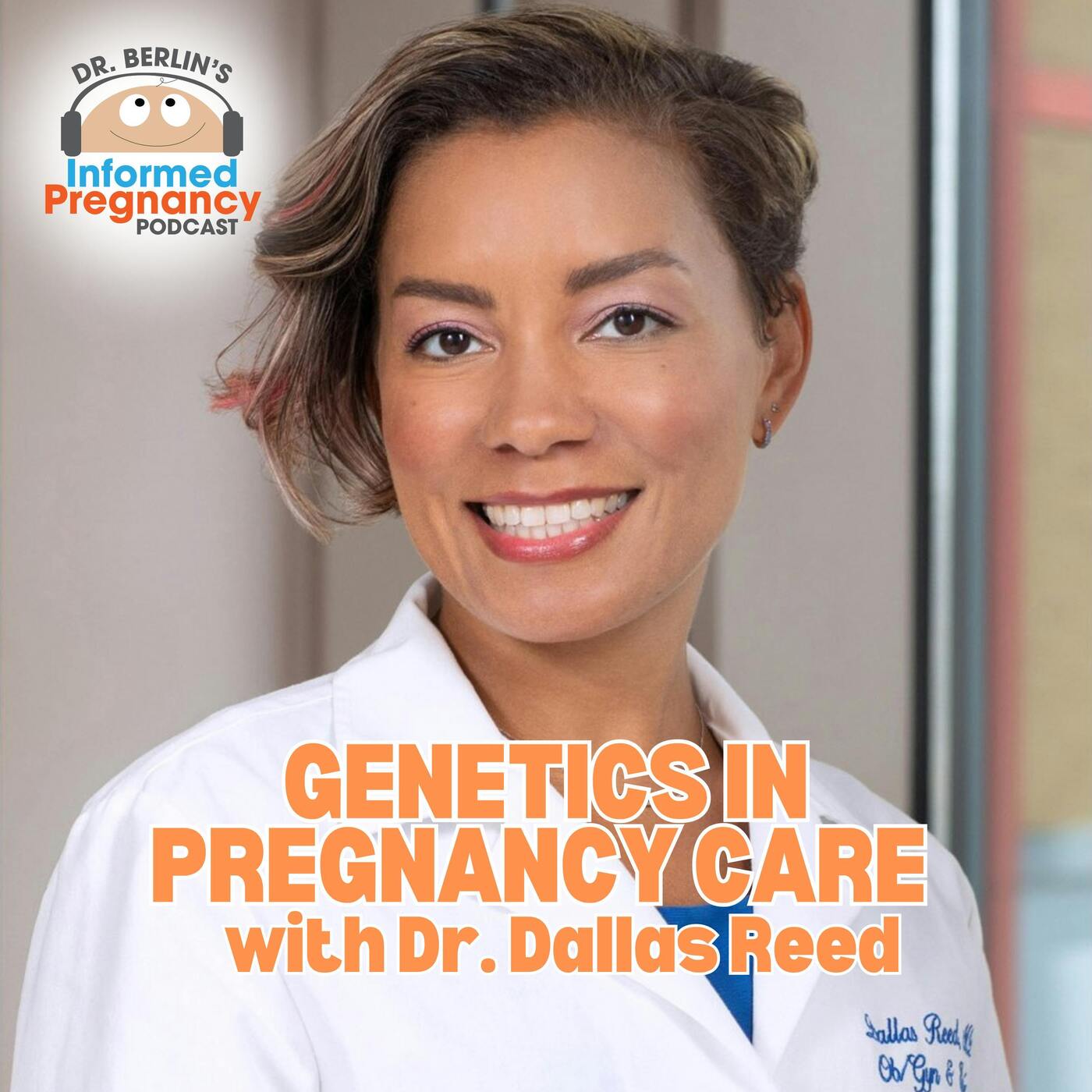
Double board certified OBGYN and medical geneticist Dr. Dallas Reed joins the podcast to discuss a deeply personal family experience, how she’s bridging obstetrics, pediatrics, and genetics, and what every parent to be should know.
Connect with the guest:
Informed Pregnancy Media and Mahmee present an all new podcast! One Way or a Mother is a new narrative podcast from Dr. Elliot Berlin, DC. Each season is an intimate story of one woman, one pregnancy, and all of the preparations, emotions, and personal history leading up to the birth. Episodes feature the expectant mother along with her family, doctors, and birth work team.
Start listening to Episode 1: I Should Have Died featuring Arianna Lasry
Keep up with Dr. Berlin and Informed Pregnancy Media online!
Learn more about your ad choices. Visit megaphone.fm/adchoices
See Privacy Policy at https://art19.com/privacy and California Privacy Notice at https://art19.com/privacy#do-not-sell-my-info.
Key quotes
“I really wanted to be what our family probably needed at that time”
“no one at my hospital has ever gotten to do that, and I've been able to do that for the last nine years”
“carriers don't have any symptoms at all of the condition”
“having an answer is actually very therapeutic, I think, for families”
“it's not my job to say what I would do. It's my job to figure out what they think the best choice is for them”
Related episodes
- Ep. 470 Carlson Young: After Birth
- Ep. 500 The Unexpected with Dr. Elliot Berlin Part 2
- Ep. 469 Carlson Young: Before Birth
- Ep. 480 Twins with Lauren Gaba Flanagan
Transcript
AI-generated transcript with speaker labels — may contain errors, especially names and medical terms. Dr. Elliot Berlin, DC appears in blue; Dr. Dallas Reed in orange.
Dr. Elliot Berlin, DC [0:00] This episode is made possible in part by support from our guest, helping us to bring you quality content that is both entertaining and informative. My guest today is a double board certified OBGYN and medical geneticist at a leading academic hospital in Boston. Inspired by a deeply personal family experience, she now bridges obstetrics, pediatrics, and genetics to support families navigating complex diagnoses. From teaching medical students to comforting patients, she brings heart and science to every interaction. And today, she's here to share how genetic insights are transforming pregnancy care and what every parent-to-be should know. I'm pregnancy-focused chiropractor, Dr. Elliott Brevin, and you're listening to the Informed Pregnancy Podcast.
[0:48] Dr. Dallas Reed, welcome to the podcast.
Dr. Dallas Reed [1:04] Thank you for having me.
Dr. Elliot Berlin, DC [1:06] My pleasure, especially with little kids at home. Thank you for making time for us. And I'm really excited to sort of pick your brain and dive deep into all the things that you are an expert at. And some of them that we've not really ever talked about on the podcast before. Well, let's get started at the beginning. You were born and upstate and raised in Texas. Is your name, Dallas, inspired by that at all?
Dr. Dallas Reed [1:29] It is not just a weird coincidence that we ended up moving to Plano, Texas, which is the biggest suburb of Dallas, Texas, when I was like four. So I did all of my elementary and high schooling in Plano, and I think it was a very formative part of my personality being named Dallas and growing up in Texas. So it's followed me everywhere I go.
Dr. Elliot Berlin, DC [1:50] Well, you've gone to a lot of places, and you've come a lot since high school. You have two specialties, and you're certified in a unique combination of specialties. What led you into a path of medicine?
Dr. Dallas Reed [2:03] So it's a great question. I always thought that the reason that I got into this field was because of a personal experience. As you alluded to earlier, my mom had a baby with a genetic condition when I was in first grade. It was very unexpected. There was no clues to it during her pregnancy, and she had an essentially emergency C-section. Afterwards, it was obvious that something was different about my brother, and we weren't really sure what it was for a little while. He ended up getting diagnosed with a genetic condition a little bit into his life, and he lived for two months in the NICU and then at home with us for two months before he passed away,
[2:45] which was an expected outcome with what his diagnosis was. Actually, we expected him to pass away sooner than he did, so that was really a blessing. That very clearly put me on the path to become an OB-GYN geneticist, but actually when I was moving from my fellowship to Boston where I live now, my mom sent me a whole bunch of stuff because she moved houses. In there was something from preschool where your teacher asks you, what do you want to be when you grow up? I told her I wanted to be a doctor, and I was four. I didn't really know that I knew that early. Again, my brother was born when I was in first grade, so that was well after being four.
[3:25] I don't know where that desire to be a doctor came from. I think kids say that a lot. How many actually end up becoming a doctor, I don't know. I didn't have any doctors in my family. I still don't have any doctors in my family. I think just being a first born, motivated child with this life experience really led me to where I am now.
Dr. Elliot Berlin, DC [3:44] I guess you probably had seen doctors, though. Maybe someone left a mark on you.
Dr. Dallas Reed [3:49] Maybe.
Dr. Elliot Berlin, DC [3:50] I mean, that's a really challenging situation for anyone in your family, but first grade is a very hard time to go through that kind of experience, that kind of really trauma, and to watch your parents go through it must have been challenging.
Dr. Dallas Reed [4:07] I think being that young is a good thing, actually, because you only know as much as you know. You know that this is your brother. You know that he has some special needs. We got to meet other families that had children with his diagnosis or similar diagnoses, so I remember going to people's houses and meeting up with other kids whose siblings had a special need. I think it's a really important time in your neurodevelopmental development, really, because I actually really remember after he was born in elementary school, there were some kids in our school that had special needs that were in sort of like a subseparate classroom, and you can volunteer to kind of go to that classroom for part of the day and interact with those children,
[4:50] and I was like one of the people that did that, and I think that people who have people in their family that have special needs, you know, they learn to be a little bit more accepting, a little bit more compassionate, a little bit more open to difference, which being a doctor is super important, as you can imagine, but facing a person in the world is probably a good thing to have. It was, of course, hard. I think, you know, we knew that he wasn't going to live a long, normal life, and so that wasn't like hidden from us as kids. We knew that that was true, and we went to school one day and he was alive, and we came home and he had passed away, and that was just the reality of it,
[5:29] but I don't feel any like negative feelings about it or anything. I think my parents did a really good job in normalizing what was happening as much as they could, and this was in the early 90s, so there was like no Google, there was no internet. It was a very different time to find support and find information, which I think is also what kind of sparked me to do this job that I'm doing, because families who are in that situation, they really just need information. They need experts to know what it is that they're dealing with and how to connect them with the other resources, and so I really wanted to kind of be what our family probably needed at that time,
[6:06] and I feel very honored to be able to do this type of work.
Dr. Elliot Berlin, DC [6:10] Did you pursue OB-GYN first or medical genetics or both at the same time?
Dr. Dallas Reed [6:15] So the training pathway, you essentially have to do OB-GYN before genetics for the most part, but I really came into medical school thinking I wanted to do the combination and really figuring out how to do that combination was part of what I was figuring out at the beginning of medical school, but just the way the training is set up, you typically do OB-GYN before genetics.
Dr. Elliot Berlin, DC [6:38] And does that add a significant amount to the time of school training?
Dr. Dallas Reed [6:43] I mean, when you're thinking about medicine and a career to medicine, what's another year or two? But, you know, medical school is usually about four years. OB-GYN residency is four years, and then genetics fellowship was two years.
Dr. Elliot Berlin, DC [6:58] And the things that you learned in genetics, because, I mean, I really don't know too many people who are certified in it, and I just wonder, the things that you learned there, as a practicing OB-GYN, just everyone must come up with cases, and how do they handle them? Do they always refer them out, or how do they handle them without that training?
Dr. Dallas Reed [7:22] Yeah, so that's a great question. Typically, OB-GYN practices are, you know, one thing about OB-GYN is that to do the work that we do, you have to be affiliated with a hospital, because to do deliveries, you know, most OB-GYNs are doing deliveries in a hospital setting. To do gynecologic surgery, that is obviously in a hospital setting. And so you're usually affiliated with a hospital that has some other sort of specialists attached to it. So most OB-GYNs will have a high-risk of obstetricians. Sometimes it's also called a perinatologist or a maternal fetal medicine specialist, that they refer a lot of their high-risk patients to, or patients who have fetuses with birth anomalies
[8:06] or differences seen on ultrasound. And oftentimes, maternal fetal medicine specialists have prenatal genetic counselors, who are masters-trained individuals who also learn about genetics. They're not physicians, but they learn about genetics and how to talk to people about genetic testing and genetic conditions. They're very skilled in sort of the counseling aspects of those conversations, so helping people understand their values and how to apply that to the situation that they're in and how to sort of anticipate how they may feel about this result over that result or what they would do with the information. And so usually, an OB-GYN has at least a genetic counselor
[8:46] or a maternal fetal medicine specialist that is accessible to them. And then, you know, certainly tertiary care centers will have a geneticist, even if they're not in obstetrics, that they can refer patients to or have consultation with. I think it's very unique to have the OB-GYN and the genetics piece. And the work that I do, you know, every geneticist kind of does something a little bit differently, but in the hospital that I work at, I am literally the only person who ever has had the ability to sort of talk to a family before they get pregnant in a preconception setting, potentially take care of them during their pregnancy or counsel them during their pregnancy about something genetically related.
[9:28] I might be able to deliver their baby. I may see their baby in the NICU from a genetic perspective, and then I may follow their baby afterwards in the outpatient setting if there's a concern about a genetic condition. So no one at my hospital has ever gotten to do that, and I've been able to do that for the last nine years, which is like a very special thing. And we've certainly had geneticists at our hospital before, but they don't also deliver babies kind of the other way around. So it provides us like very nice continuity that I think patients really appreciate.
Dr. Elliot Berlin, DC [9:58] The continuity of care. I mean, it must be special for you to be able to do that, but incredibly special for them to have that continuity. It's really hard to find, you know, everybody's a specialist. And so I oftentimes end up in a situation, both in my own family and I see my patients, where there's a lot of hands in the pie, and they're not always talking to each other and communicating. Well, so in your case, it's just you talking to you.
Dr. Dallas Reed [10:23] Exactly. Or my genetic counselors. Like we're all a team, and so it's nice to be like knowing what's going on, like before, during, and after. And then the nice thing about my job is maybe I'll see a couple in a family for their one child that has a genetic condition, but then it's family building. So they have another baby and there may be, you know, nothing different at all about that pregnancy, but they want to still see me just for the obstetrics care part. So I get to continue to like be involved with that family. I like my repeat customers. So when somebody comes back to me the next time when they're pregnant, it's just nice. You get to really know people.
Dr. Elliot Berlin, DC [11:00] That's very cool. I want to take a break. When we come back, I want to get more into the details of genetics and what role you play and what our listeners might think about when they're planning to have a baby or during a pregnancy when genetic issues come up. We'll take a quick break and we'll be right back.

Dr. Elliot Berlin, DC [11:29] Welcome back. We are talking to Dr. Dallas Reed, OB-GYN and medical genetics specialist. So someone's thinking about having a baby. What information would you like them to know?
Dr. Dallas Reed [11:42] Great question. So in pregnancy, there are a couple of genetic tests that we offer patients to help give them more information about their pregnancy. And hopefully at the end of the day, help reassure them that things are going well. So one of the tests actually can be offered prior to pregnancy. And it's what I really strongly recommend people do the testing, although it can be done early in pregnancy too. And that testing is called carrier screening. So there are some genetic conditions in which we need both parents to be what we call carriers of the condition in order for there to be a chance that their fetus could have the condition. And so there's some genetic testing available that allows us to test one
[12:26] or both partners. It doesn't have to be at the same time. You can do one at a time if you need to, to look for some of these recessive conditions to see if, usually it's the female partner seeing us in OB-GYN, see if they are a carrier. If they are, then we want their partner to get testing to see if the partner is also a carrier for the same genetic condition. And if both are carriers, there's a 25% chance each pregnancy that that pregnancy could have the genetic condition. And so many people that are looking for as much information as possible would want to know this. These are rare conditions. They're also conditions that don't typically run in your family.
[13:06] And so sometimes I talk to patients about this carrier screening and they say, I'm fine. There's nobody in my family that has anything like that. And what I say to them is like, exactly. You wouldn't know it because if anybody in your family is a carrier, carriers don't have any symptoms at all of the condition. Two carriers have to come together to have a baby in order for that condition to make itself known in a family. And so what we expect is that you don't have any family history of that condition. And so therefore you wouldn't know. Some of the conditions can be quite significant. They can be life limiting. They can cause intellectual disability or birth differences or
[13:42] multiple medical problems. And so sometimes it's something that people would want to know beforehand. Again, ideally before pregnancy, but many times we don't have planned pregnancies often in our country. And so oftentimes we're offering this testing early in pregnancy, which is also an option. It just gives you less options as far as what to do with the information for that particular pregnancy.
Dr. Elliot Berlin, DC [14:03] Okay. So it's called a carrier screening to tell if you are a carrier, to tell if your partner is a carrier. Once you're pregnant, what point can it be done?
Dr. Dallas Reed [14:12] It's typically if it wasn't already done prenatally, I should say it actually only has to happen once. We don't need to continue to look at the same conditions year after year after year or pregnancy after pregnancy, because it's looking at your DNA. And so we're just looking at your status. If it wasn't done prior to pregnancy, then typically it's offered at the very first appointment. And the idea is to do it as early as possible because if both parts of the couple are carriers for the same conditions, we want to be able to give you as much information about that condition as possible so that you have as many choices available to you as possible and you can sort of get things lined up,
[14:50] however they need to be lined up in order to go forward. So as early as possible in the pregnancy is typically when it's offered.
Dr. Elliot Berlin, DC [14:57] How many conditions are we talking about that you can test for?
Dr. Dallas Reed [15:01] Great question. There are some guidelines as to how many conditions should be tested. And things have changed over time with carrier screening. We sort of started initially when genetic testing was very expensive and hard to do with just a few conditions. And those conditions were really based on the ancestry of the patient. So there were certain conditions that were very common in Ashkenazi Jewish individuals or African-American individuals or Asian individuals. But over time, especially in the United States, we've recognized that some people don't know their ethnic background or ancestral background. Stories that families pass down are not always accurate about that kind
[15:42] of information. And actually that's not the most equitable way to approach carrier screening. And so depends on the guidelines you look at. The American College of OB-GYN really recommends that people are only screened for really three conditions. The American College of Medical Genetics recommends essentially everybody gets screened for about 115 conditions. And there are other options available that are bigger than that. I think the biggest one available is about 780-something conditions. It kind of depends on the laboratory that you're using. And each laboratory has multiple options. How you pick between 700 and 300, you know, I think really hard for the average person to just decide between them.
[16:28] And oftentimes practices will kind of have the standard one that they offer. But you have to think 700 conditions and there's 20,000 genes. So there's thousands and thousands of genetic conditions that we know about. And the testing is only looking at three or 115 or 700, depending on what you get done.
Dr. Elliot Berlin, DC [16:48] Was it done ancestrally because it was cost prohibitive to do all the tests for all the people? And if so, has that changed?
Dr. Dallas Reed [16:58] Yes. So it has changed over time. Once the human genome was sequenced 25 years ago, that was $3 billion it took to sequence the human genome. And over time that price has come down, come down, come down, come down. And so what happened is that not only is the now we know sort of what the sequence of the DNA is, but also the technology has changed. And so before it was very cumbersome to do a lot of genes at one time or a lot of conditions at one time. Now it's very easy to do that. And therefore it has become less expensive. So we wouldn't do this in a carrier screening setting, but to sequence somebody's whole genome, which is like all of their 20,000 genes can be done as rapidly as
[17:47] three days in very urgent cases, and can be done as inexpensively as a couple thousand dollars.
Dr. Elliot Berlin, DC [17:55] That's pretty incredible. It is. It's totally changing. And I imagine technology is only improving, and those numbers will get even more astonishing. So you're a geneticist, but I mean, most people just go to an OBGYN and they do some genetic testing, but it doesn't sound like it's this caliber.
Dr. Dallas Reed [18:14] Offering carrier screening. What size of carrier screening is, I think, really inhibited by the fact that the American College of OBGYN only have guidelines for three conditions, and they have yet to come out with guidelines for more. So OBGYNs tend to follow the American College of OBGYN guidelines, whereas genetic people like genetic counselors and geneticists tend to, you know, look to other genetic societies also for guidance. I should mention that the other genetic test that should be offered to every pregnancy, if only offered in pregnancy, should be offered every pregnancy. It's called non-invasive prenatal testing.
Dr. Elliot Berlin, DC [18:58] Oh, NIPT.
Dr. Dallas Reed [19:00] NIPT, yes. So you're familiar. So that's a blood test that happens as early, depending on the laboratory, as early as eight weeks of pregnancy, although most labs do it at nine or 10. And it's looking for markers for Down syndrome, Trisomy 13, Trisomy 18, and it can also look at the sex chromosomes, which can tell you if there are two or less than two or more than two. It also is now, you know, growing and growing and growing in the number of things that we can do from NIPT, but those are sort of the standard ones that are offered to pregnant people.
Dr. Elliot Berlin, DC [19:37] What if we're later in the pregnancy and we haven't done carrier screening? We don't have that much data. So what does a couple do in that situation? Yeah. I mean, let's say they're listening to this podcast right now and they're 24 weeks pregnant.
Dr. Dallas Reed [19:53] Yeah. So they may have been offered and may have had the testing done. At that very first OB-GYN appointment, someone who's 24 weeks will know they get, you know, so many tubes of blood, they're testing many, many things, and there's lots of things to talk about at that appointment. So I find that sometimes it's discussed, but patients don't really remember because there's so many things that are being talked about. It's a long appointment, and also if it comes back normal, there's oftentimes not a lot of conversation about it. So one question I would say is, confirm that you didn't have that testing. And then I think the second question is, you know,
[20:29] is that information important to me right now, now that I'm 24 weeks in pregnancy, or is it something that I'm going to, you know, keep in the back of my mind and talk to my doctor about, you know, to be done after I deliver or before my next pregnancy, if it really wasn't done? NITT is, I think, more standardly offered across the board, and that can really be done after, you know, eight or nine or 10 weeks at any point in the pregnancy. But again, I think this is where sometimes genetic counselors can be really helpful because the test is important, but it's also about what are you going to do with that information? And as you get farther along in the pregnancy,
[21:06] I think that conversation becomes even more relevant. Like, what if it did show something? What would we do with that information? You know, how would you want to proceed?
Dr. Elliot Berlin, DC [21:14] Those are the questions that are racing across my mind at lightning speed. As you talk about doing all this testing, you know, what do you do with the information that you get? Yeah. Let's take a little break, and when we come back, we'll talk about that practical application. Don't go anywhere. Welcome back. I am learning a lot with Dr. Dallas Reid, and I'm sure you are too. And I have a lot of questions, and I bet you do too. So I'm going to hopefully ask the questions that are on your mind at home. Okay, so you do all this testing ahead of time. Let's say you do a carrier test, and you're testing for hundreds of things. First of all, that sounds a little scary,
[22:00] like that there are hundreds of things that my partner and I could both be carriers for, and then our kids each have a 25% chance of actually developing. But also, what do you do when you have that information? I'm already with my partner, and now we both turn out to be carriers for these genetic conditions. What do you do with that information?
Dr. Dallas Reed [22:19] Yeah, I think that's a very common concern that patients have, and I first try to reassure them that this is one way for you to get information that you really wouldn't know otherwise. And also, it's the most likely scenario is that it will come back normal or that it will come back as you being a carrier for one thing, but your partner not being a carrier for that thing. So that's the most likely outcome, so keep that in mind. Sometimes as you get into the bigger panels, people come back as carriers for multiple things, but still, as long as the partner is not a carrier, you know, we have very low concern that the baby will have any of those conditions,
[22:55] and so for a lot of people, this is very reassuring. But in the case that you do both come back as a carrier for the same condition, one of the reasons that there's a big benefit in doing this prior to pregnancy is because it gives you the most options. So one thing we know is that sometimes people who are carriers of the same condition choose to build their family using in-vitro fertilization and genetic testing of embryos. So if we know that there's a genetic condition that runs in the family, we can create embryos and test them genetically and determine, you know, which ones have the genetic conditions and which ones do not have the genetic conditions,
[23:34] freeze those embryos, and then use them for pregnancies as you build your family. So that is one of the huge benefits of doing it prior to pregnancy. You also can make other choices, like, for example, you could do donor gametes, like donor egg or donor sperm, and use IVF. You could decide that you are going to do adoption instead of having biological children. You could decide to not have any children, you know, depending on the results. But for people that are either going forward with a pregnancy knowing this information, you can also test early in pregnancy to see if the fetus has the condition or not. For a lot of people, what they really are wanting
[24:13] is to know what to be prepared for. So, you know, what kind of specialist will this baby need to see? What kind of support are we going to need around us? What kind of hospital do I need to deliver at to make sure that my baby has the best start as they can have? Are there therapies available? I mean, we're talking about changes that are happening in genetics. Gene therapies and therapies for rare genetic conditions are becoming more and more prevalent. And so there are many genetic conditions that are tested for, even in the three conditions that we talked about, are kind of the ACOP standard, even ones that are done on newborn screening, which is a blood test that all newborn babies get
[24:52] that looks at genetic conditions. There are now treatments and cures available. And so, you know, I try to reassure patients that this information doesn't have to be doom and gloom. You know, first of all, we're trying to reassure you that things are all okay, but if it turns out that you both are carriers, let's talk about all of it. Let's talk about what all of the options are. Let's talk about what all of the treatments are. Let's talk about all of it so that, again, you and your partner can, like, discover what your values are and what matters to you. And I will say there are some things on these carrier screening panels that are life-limiting,
[25:25] but there are other things that are not, like hearing loss genes, for example. We know that half of hearing loss can be genetic, and, you know, that may be something that a couple is like, that's totally fine. I have no concerns about that. I don't think I need to do IVF. I don't think I need to do anything special. You know, we'll just test the baby's hearing when they're born, and we'll discover if they have hearing loss or not. And, you know, they sort of go on with their life. So, you know, we don't want it to be scary. It can be very serious, of course, but we want it to be more, like, empowering so people have information and can be proactive with that information
[26:01] versus just being so scared that they just don't want to know.
Dr. Elliot Berlin, DC [26:05] Yeah, the technology on all fronts is developing rapidly, so, you know, someone with hearing loss today already is so much more accessible to them than someone who had hearing loss 15 or 20 years ago, and what will happen in another 15 or 20 years, one can only imagine. When you talk about gene therapy, that's curious. Are you actually talking about changing the genetics? How does that work?
Dr. Dallas Reed [26:30] Sure. So, it really depends on the condition, but there are more and more conditions in which there are therapies directed at the very specific genetic change that is present in that individual, and doing something to modify how those proteins in the body work in order to minimize some of the symptoms. So, for example, spinal muscular atrophy, SMA is the acronym for it, is a very common genetic condition that is screened for in carrier screening, the three recommended by ACOG, as well as in newborn screening in many states, maybe all states, but definitely in my state. And there is… SMA is a condition where we have to make sure that an individual has two copies of the SMA gene.
[27:16] If they have no copies of the gene, then that's when they have SMA. And there is a gene therapy that essentially tricks the body into using another gene to create almost a similar protein that the SMA gene creates, and so the muscles can work similarly to how they would work if the SMA gene was working properly. So, it's very specific to the genetic condition and the type of genetic change that's present, but it's basically like tricking the body into using the genes in a different way or trying to find a protein that works similarly and kind of boosts the effectiveness of that particular protein.
Dr. Elliot Berlin, DC [27:59] Very cool. Very, very incredible. I just remember when I read about three parent IVF to overcome mitochondrial disease and the idea that we can take an egg from a person who has mitochondrial disease, who has disease mitochondria, and an egg from a person who doesn't, who has healthy mitochondria, from a person from the intended father, and take out the disease mitochondria from the intended mother's egg and then replace it with the healthy mitochondria from the donor egg and then put them together and make a healthy baby out of that. It was just like science fiction, but it's real.
Dr. Dallas Reed [28:42] It is crazy. That doesn't use CRISPR technology, but you might have heard of CRISPR technology, which is a technology that, you know, helps with this sort of gene editing. And really, that's kind of what helps to spur a lot of these, you know, types of therapies. But there are definitely some genetic eye conditions that can cause blindness, for example, where there are gene therapies where you get one injection one time in your life and it cures you of that vision issue. I mean, it's so cool. That's where we're going, and it's really exciting to be in the field where we're, you know, I talk to medical students and they're sort of like, well, why would you want to be a geneticist?
[29:19] It's like you're just giving people bad news all the time. And I say, well, number one, especially if you're dealing with a child or not a fetus, a child or an adult that has been in the world and is experiencing the world, that family already knows that their family member has something. And it actually is helpful to give a name to it and really put some parameters around what it is and what it isn't. And so having an answer is actually very therapeutic, I think, for families. But also, there's so much changing. Like, we're actually learning a lot and we're actually able to treat a lot, and it's very cutting edge. And so genetics is a very young field in medicine.
[29:54] Like, some of the pioneers of genetics are still alive. Like, they're at the conferences, the things, the conditions named after them or the technologies that were discovered. These people are still like walking around, you know, the world, which is, you know, I think so cool. So there's just so much more that we're going to be able to do, and that is exciting.
Dr. Elliot Berlin, DC [30:15] Yeah, my wife is a psychologist, and I remember going to conferences with her when she was in graduate school, and you would literally see the people who came up with these groundbreaking techniques, and they're right there, not just in the textbook. A couple more questions. One is, you know, I think several people, especially if you find a genetic condition mid-pregnancy, I think different people will probably take that information and do different things with it. As someone who counsels them, how are you able to take into account different backgrounds and the different choices people would make? I think sometimes just as a human, you want to see someone make a specific choice,
[30:58] but they have a different set of what's important to them or ethical considerations may be different. How do you balance that?
Dr. Dallas Reed [31:07] Yeah, I would say it's one of the things that I really treasured about doing the genetics training because I trained alongside genetic counseling students, and that is really a tenant of genetic counseling, and I think it is in medicine as physicians as well, but we're not as good at it, and we're much more directive with our counseling sometimes, but the idea of genetic counseling is really this non-directed counseling. It's helping people identify their values and what matters to them and, you know, giving them a set of information, essentially, and kind of talking through with them, like, how do you feel about this? Like, what would you say if this was the case,
[31:46] or how would you react to that, or how would you handle that? And so, you know, of course I have patients that have a fetus with a condition, and I should say that sometimes we have a lot of information about what these conditions are on the carrier screening ones, for example, but let's say we see an ultrasound and a fetus has a heart defect and a brain difference. You know, there's other genetic testing that we can offer in pregnancy to help figure that out, and we may come back with a result that isn't exactly clear about what that's going to look like for the future of that child. And so, definitely there are situations where couples are asking me, what would you do, right?
[32:23] And that, it's not my job to say what I would do. It's my job to figure out what they think the best choice is for them, and so I actually find that very liberating. I mean, I don't need to make the decision for them. I just need to make sure that they have the information and they understand the information and their questions are answered and that I anticipate what their questions may be, and then we can kind of talk through, like, well, how does this sound? I do think that sometimes people come into these consultations with fearing the worst, and once we actually give them the information that's out there in the literature or what I know from my own experience
[33:00] in taking care of people with these conditions, there's varying reactions to that information, but a lot of times people feel really relieved to just have really accurate information and be able to feel like they can make a decision about what to do next.
Dr. Elliot Berlin, DC [33:14] And we're just talking about prenatal screenings right now, but the field of genetics is exploding in a lot of different ways with many different applications, with oncology screenings, even the way mental health drugs are prescribed based on how you absorb them and process them. You know, the same drug could have a totally different effect on you than it has on somebody else, and so we're able to sort of fine-tune some of the therapeutics. You work with Myriad Genetics. Tell me about that company.
Dr. Dallas Reed [33:45] Yeah, so Myriad Genetics is a great company. They are a genetic testing company that, in the Women's Health Division, focus on carrier screening. The testing that they have is called foresight carrier screening. They also do an IPT. That test is called Prequel, and they are the only lab that allows you to do Prequel at eight weeks of gestation. That's the earliest of any tests that's available. There's also other things you can do besides the Down syndrome, trisomy 13 and trisomy 18 testing. You can also look at deletions of parts of the DNA and other things. And then they also, you talked about the way, you know, the genetics, how it's applicable across different disciplines.
[34:28] They also do hereditary cancer genetic testing, which I know this is not often on the mind of prospective parents, but we also know that if there is a strong family history of cancer, that there could be a genetic component to that. And even if you yourself have not had cancer, you could be at risk of developing a cancer if there's a genetic cause in the family. So Myriad's product is called MyRisk, and I would also, you know, suggest that people consider talking to their doctor about cancer genetic testing if they have a strong family history, because very similar to the choices about like IVF and reproductive decision-making, if you knew that you were a carrier
[35:09] of a cancer genetic condition, there are similar options available to you to do like IVF, for example, so that that doesn't continue to be passed down in the family and you've sort of, you know, lifted that weight of a possible, you know, adult onset cancer genetic diagnosis for your child. So yeah.
Dr. Elliot Berlin, DC [35:27] I think in some ways scary to have this conversation, but also I think the take-home message is that knowledge is power. The more you know, the more you can do about it.
Dr. Dallas Reed [35:38] I agree with that. I would say the other thing that I'm always reminded of in genetics, which I think is very different than other parts of medicine, is that genetics is very much about you as an individual, like your potential children, but your other family members too, right? And so if you're a carrier for a genetic condition, your sibling could also be a carrier. And if they're a carrier, we want their partner to be screened also. If you are at risk of a hereditary cancer condition, your partner could be, I mean, not your partner, but your sibling could be as well, or your parent could be as well. So genetics is very much a family-oriented specialty
[36:14] where we're constantly thinking about family members. And it goes the other way, like we need you to get information from your family members. Is there autism that runs in the family? Is there brain loss that runs in the family? Is there cancer that runs in the family? That can help us as your OB-GYN team or your genetics team in guiding you to the right place for what kind of screening you should be offered and what kinds of information we could give you prior to pregnancy or early in pregnancy.
Dr. Elliot Berlin, DC [36:41] I came into this episode hoping I would learn a lot, and I did. You definitely, as you often do, you delivered.
Dr. Dallas Reed [36:49] Thank you.
Dr. Elliot Berlin, DC [36:51] As we're winding down, is there anything on your mind that I didn't ask about that you think would be important for us to know?
Dr. Dallas Reed [36:58] I think one resource that I want to make your audience aware of is Myriad Genetics put a website together called NoMoreSooner.com. No is spelled K-N-O-W. MoreSooner.com. And it talks about the foresight carrier screening and the prequel and IPT testing, and just what kind of information you can get from that. It also has some stories of real patients and what information they gleaned from that and how they use that to feel empowered. And I think that's really the take-home point I want people to know, like you mentioned before. This information should be empowering. And your OB-GYN, even if they're not a geneticist like me, they have people around them to help them help you
[37:46] through these kinds of conversations. So your doctor is always a good resource. This website, NoMoreSooner, is a great resource. And you can always go to MyriadGenetics.com, too, if you have questions about what they offer. But know that these are not things we've never seen before. Even your OB-GYN has seen these kinds of things before, and they're here to support you.
Dr. Elliot Berlin, DC [38:08] Dr. Dallas Reed, thank you so much for joining me and for sharing so much valuable information and for the incredible work that you're doing. And at home, thanks for listening to the Informed Pregnancy Podcast. For more pregnancy and parenting information just like this, visit us online at informedpregnancy.com.
Want more pregnancy + parenting? Start your FREE TRIAL of Informed Pregnancy+ and get access to all our curated pregnancy and parenting content — original series, iconic birth films like The Business of Being Born, prenatal workouts and more.

0 Comments