
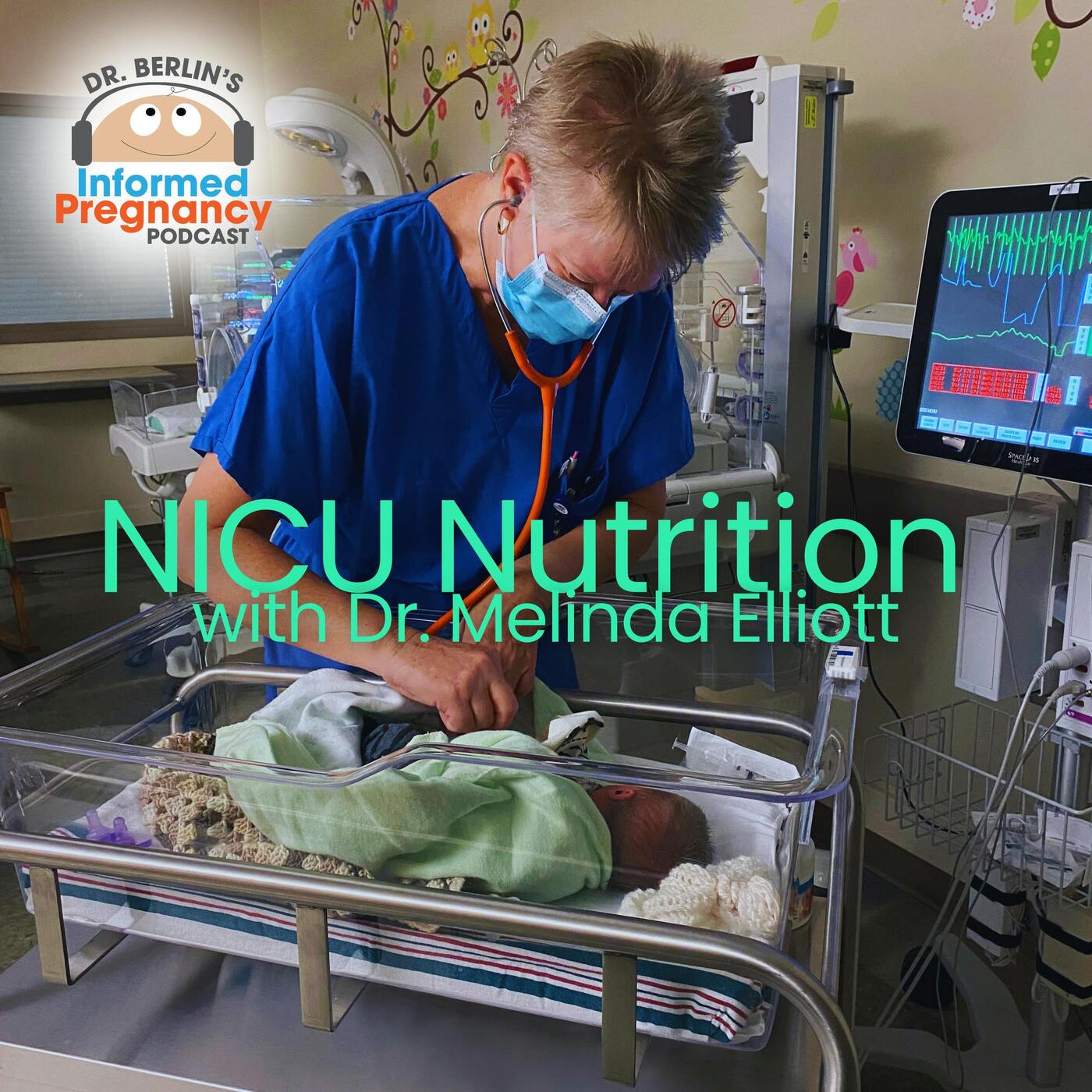
October 2, 2025 · 35 minutes · Episode 479
About this episode
Neonatologist and Chief Medical Officer of Prolacta Bioscience Dr. Melinda Elliott discusses nutritional care in the NICU, the high stakes decisions parents have to face, the differences between potential outcomes for fragile babies, and her own personal high risk pregnancy experiences.
Prolacta Bioscience is a privately held life sciences company that has touched the lives of more than 100,000 premature infants globally and is dedicated to advancing the science of human milk.
Connect with the guest:
Informed Pregnancy Media and Mahmee present an all new podcast! One Way or a Mother is a new narrative podcast from Dr. Elliot Berlin, DC. Each season is an intimate story of one woman, one pregnancy, and all of the preparations, emotions, and personal history leading up to the birth. Episodes feature the expectant mother along with her family, doctors, and birth work team.
Start listening to Episode 1: I Should Have Died featuring Arianna Lasry
Keep up with Dr. Berlin and Informed Pregnancy Media online!
Learn more about your ad choices. Visit megaphone.fm/adchoices
See Privacy Policy at https://art19.com/privacy and California Privacy Notice at https://art19.com/privacy#do-not-sell-my-info.
Key quotes
“I walked into a big NICU, my fourth year of med school, and felt at home”
“You don't have just one patient, the baby. You have the patient, the baby, the family, the extended family”
“Human milk for human babies”
“This little boy changed my life. I could not save his”
“If you don't understand the answer, ask again, ask someone else”
Related episodes
- Ep. 470 Carlson Young: After Birth
- Ep. 500 The Unexpected with Dr. Elliot Berlin Part 2
- Ep. 483 Empowering Education in Childbirth with Sarah Lavonne
- Ep. 480 Twins with Lauren Gaba Flanagan
Transcript
AI-generated transcript with speaker labels — may contain errors, especially names and medical terms. Dr. Elliot Berlin, DC appears in blue; Dr. Melinda Elliott in orange.
Dr. Elliot Berlin, DC [0:00] This episode is made possible in part by support from our guest, helping us to bring you quality content that is both entertaining and informative. Nobody ever plans to spend time in the NICU, but when you do, every detail of your baby's care becomes high-stakes decisions. The choices you face there can shape your child's future in ways most parents never imagine. This episode will address one of the most important elements of NICU care that every patient should know about – nutrition. What fragile babies are fed can make the difference between devastating complications and thriving outcomes. My guest today is a neonatologist and chief medical officer at Prolacta Bioscience,
[0:41] with decades of experience in NICUs across the country. She's also walked her own path through high-risk pregnancies, giving her a unique perspective on the fears and resilience that families face. From the patient who changed everything to the science behind human milk-based nutrition, we'll explore her story, her work, and the breathtaking, transforming outcomes for premature infants. I'm pregnancy-focused chiropractor Dr. Elliott Berlin, and you're listening to the Informed Pregnancy Podcast. Dr. Melinda Elliott, welcome to the podcast.
Dr. Melinda Elliott [1:28] Thanks so much, Dr. Berlin. I'm very happy to be here.
Dr. Elliot Berlin, DC [1:31] I'm so happy to have you here, and it's kind of weird. I don't know why a lot of chiropractors go by doctor first names, so Dr. Ron, Dr. Katie, and so both of us often
Dr. Melinda Elliott [1:42] probably get called Dr. Elliott. That's funny, yes, but you're missing a T.
Dr. Elliot Berlin, DC [1:46] I know. I know. Leave off the last T for something. All right. I want to learn from you. NICU is not something anybody wants to talk about unless you're there, and then it's probably all you want to talk about. But it happens. Sometimes babies end up in the NICU, and I think that doing a little research and learning a little bit about NICU could make the journey a lot better for people who end up having to spend time there. So with all your experience and expertise in NICU, I'm looking forward to learning from you, especially about nutrition. But let's start at the beginning with your roots. Where did you grow up, and what first sparked your interest in pediatrics and eventually in neonatology?
Dr. Melinda Elliott [2:29] I love that question, mostly just because I'm from West Virginia, and we West Virginians are looked down upon by maybe 49 other states. I'm not sure. But I have yet to meet a West Virginian who wasn't proud to be from West Virginia. And I was lucky to grow up there. I had a best friend, as many of us do when we're kids, and she's still one of my best friends. And we told everyone from about the time we were three years old that I was going to grow up and be a baby doctor, and she was going to grow up and be a baby nurse. And we actually did those things. We did not do them together, but we did do them. Just retired this year as a pediatric nurse. I have not yet retired as a neonatologist. But I thought
[3:20] I was just going to be a pediatrician. And I shouldn't say just because pediatricians are very important. But when I was in med school, you do various rotations your last year of med school. And I walked into a big NICU, my fourth year of med school, and felt at home. And I was just like, here it is. This is it. This is where I belong. I had an amazing experience in that NICU and went into residency with that plan. I knew that I wanted to do neonatology because it's a special place. I love it. I love the babies, the families. I love everything about it. And so yeah, for me, it was always going to be children. And then I was able to focus pretty early in my career. I feel lucky to just know I was
Dr. Elliot Berlin, DC [4:06] home. It's such a stressful and challenging time for people to have somebody who's so passionate about it, especially after doing it for so long, because you see a lot of doctors get burnt out and whatever they're doing. You just seem even more passionate about it
Dr. Melinda Elliott [4:22] after having done it for a long time. I am. I look at it as a chance to make a difference. You know, every patient I've ever had has their entire life ahead of them. And when we're talking about their lives, we're talking about decades, and I think what the median survival now for girls is in the 80 years and for men, it's getting close to 80. And that's a long time to make a difference.
Dr. Elliot Berlin, DC [4:47] I also wonder at the time that you got excited about neonatology, did you have any kids yet?
Dr. Melinda Elliott [4:55] No, I did not. I mean, to me, I wonder if it would be scary studying all those things before you have your own first pregnancy. I think it's scarier to be pregnant once you've learned all those things. You know, I have not at all afraid to tell people about myself. And I went on bed rest at 24 weeks with my daughter when preterm labor. And at the time I went on bed rest, I was scared to death because I knew a lot that could happen. And when she was born, 24 weeks wasn't even viable babies weren't being resuscitated. So at the time I went on bed rest, all I could think of was not today, just not today. And, you know, now we are resuscitating 24-weekers regularly as we should,
[5:42] because we do so much better now.
Dr. Elliot Berlin, DC [5:44] I mean, out of all the fields of medicine, which many of them are making leaps and bounds in advancement, I think neonatology is probably in many ways the leader of the pack. We did an episode, our episode 244 with Dr. Seth Langston about neonatal cooling. And we got a lot of feedback about how incredible that technology is. And who even sits around thinking, I wonder if we do this, what kind of impact that'll have?
Dr. Melinda Elliott [6:11] I've always wondered about those people that they come up with, you know, what if we did this? But I remember even like you said, I've been doing neonatology for many years now. And I remember very clearly when I started and what we had as tools in our toolbox at the time just don't even match at all to what I have available today. Like I have so many more things to do to help babies than I did back when I started my career.
Dr. Elliot Berlin, DC [6:40] It's really cool. I was talking to an OB yesterday who's probably at the end of his career. He said this year he's retiring. I think it's the eighth year in a row that he said he's retiring and he does ultrasound all the time. So more ultrasounds than any other doctor I can think of as an OB. And one day I asked him about it and he's like, well, I got to make up for lost time. We didn't have this for the first half of my career.
Dr. Melinda Elliott [7:05] I understand that. I remember very early on the types of ultrasounds I had at my disposal and they were very different from what we have now. And yeah, and you know, I think, and I know we're going to talk about this in a little bit, but the same thing goes for nutrition for these babies. Like we weren't even saving these babies, like I said, when I started. And now we do regularly and they do well. And we need to give them everything we can
Dr. Elliot Berlin, DC [7:33] to allow them to succeed. I sort of think before you like proceed in forward that to me, I mean, I'm done having kids, but that to me is sort of like a deep breath of fresh air, knowing that should my baby end up in the NICU, that there is so much advancement and there's so much that can be done and that they can get really great care and have really great outcomes. In terms of your personal story, it sounds like everything turned
Dr. Melinda Elliott [8:00] out okay. Yes, I was on bed rest for quite a long time. That's the good news. And yes, my daughter's fine. She's married and all grown and you know, and then I went on bed rest the second time at 30 weeks with my son, but he too ended up full term. I got quite lucky. My daughter literally was born on the day I turned 37 weeks. So she escaped being a preemie
Dr. Elliot Berlin, DC [8:22] by a day. By hours. Did that experience, I mean, it sounds like you were towards the end of your training or the beginning of your career at that time. Did that experience shape at all? Like I can imagine that you can relate to parents going through scary times just before and after having a baby better than let's say I could.
Dr. Melinda Elliott [8:42] Yeah, I can certainly relate to the fear. I can't relate and I'll never pretend to be able to relate to what it's actually like to have a baby in the NICU. I try my best. You know, I try to put myself in the parent's place because I think as a healthcare provider, whether you're the doctor, the nurse, the therapist or whatever, you have to do that. Like these parents are going through what is likely the most stressful time of their lives and you have to be there to support them. You don't have just one patient, the baby. You have the patient, the baby, the family, the extended family, like whoever's there. They are all sort of your patients and you have to remember that.
Dr. Elliot Berlin, DC [9:21] Yeah. I mean, just your energy even comes through here on Zoom and I think the people that get to be around you during those times are just so lucky. Let's take a little break. When we come back, we'll talk more about nutrition and advancements in neonatal nutrition and how they can improve outcomes. We'll be right back.

Dr. Elliot Berlin, DC [9:43] Welcome back. We're talking to neonatologist Dr. Melinda Elliott. All right. So we keep talking about nutrition. Babies come really early. They need a lot of nutrition. What are generally the options for them?
Dr. Melinda Elliott [10:07] So I think the first thing to understand is not all premature babies are the same, right? And prematurity is a big problem here in the US. About 10% of babies are born prematurely and that's a lot of kids. However, only about 10% of them are the babies that I serve with my company that I work for. We're talking about babies born three or more months early, kids who weigh less than three pounds at birth. And those children, all babies, full term, premature, very premature. The absolute best thing to feed them is their mother's milk. If mom can provide milk, first and foremost, that is without a doubt the best thing. Full term babies, mom's milk is perfect. It's enough. It's all they need.
[10:55] Healthy full term babies, mom's milk, done. Premature babies often need more than mom's milk. They need extra calories, extra protein, extra minerals in order for them to grow and develop appropriately. And it's even more critical for those born three months or more early. So the way to provide more protein, minerals, all that to babies is to add fortifier to mother's milk. Now, there are two kinds of fortifiers available. One is made from cow milk, one is made from human milk. And for the very small babies, again, less than three pounds at birth, human milk actually saves lives. We know that if you use a human milk based fortifier rather than a cow milk based fortifier, that the risk of problems like
[11:46] necrotizing enterocolitis in the premature baby are much reduced. It's never totally eliminated. We do not know everything about neck or necrotizing enterocolitis, but we do know that you can dramatically reduce the incidence of neck by using only human milk in the first critical weeks, which then sets that baby up for success long term. You already said so much and I have so many questions. Okay. So is prematurity defined as before 37 weeks? That's correct. So there's degrees of prematurity. There's prematurity less than 37 weeks. There's very premature and that's less than 32 weeks. And then there's extremely premature, which is less than 29 or 28 weeks.
[12:34] So it's the extremely premature babies that are the highest risk to have trouble. What is the current week of viability? That's an excellent question. Generally, I would say babies born at 24 weeks, most people agree we should try very hard to
Dr. Elliot Berlin, DC [12:55] save those children. It used to be a much higher, when I started my career,
Dr. Melinda Elliott [12:59] 28 weeks was the limit. Right. The goalpost is moving. Yeah, the goalpost has moved quite a bit. So 24 weeks is close to the limit, but, and this is a really big, but they're being successful. We are being successful saving babies at 23 weeks or even 22 weeks. Not all of them. And they are at risk for problems. The younger you are, the higher the risk. So that ideally is a conversation the neonatologist can have with the family before the child is born.
Dr. Elliot Berlin, DC [13:32] Okay. Then you mentioned fortifier, which sounds to me like the protein powder I add to my
Dr. Melinda Elliott [13:37] smoothie. Yeah, it's not all that different.
Dr. Elliot Berlin, DC [13:41] My smoothie has a lot of good nutrition in it, but sometimes- So it's more than protein, right? Yeah.
Dr. Melinda Elliott [13:46] It's a liquid, first of all, that we use only liquids in the NICU. That is something that is required by the joint commission of hospital accreditation. And that's for infectious issues, not because there's anything wrong with the powder. So there are liquid fortifiers, two or so made from cow milk, one made from human milk. They contain protein. First and foremost, that's one thing they need. These little babies need much more protein than a full-term baby would need, but they also need a large amount of calories more than just mom's milk or even donor human milk alone can provide. And then there's minerals, calcium and phosphorus to build strong bones.
[14:27] They need like three and four times what is in plain human milk in order to build strong bones. Mom, you can't feed a baby a volume of mother's milk that's going to hit the numbers they need. Right. So you mix it in with the
Dr. Elliot Berlin, DC [14:41] mother's milk or you just supplement it? Yep.
Dr. Melinda Elliott [14:43] You add it to the mother's milk or you add mother's milk to the fortifier, depending on which one you're using. And there's different ratios and ways to add it to give the proper
Dr. Elliot Berlin, DC [14:52] amount of nutrition based on how the baby's growing. Okay. Then you mentioned NAC, N-E-C, Necrotizing Anerocolitis. If I break that down in my head, necrotizing is tissue death. Anerocolitis is gastrointestinal inflammation. And so babies who are born very premature are at risk for, it sounds like some pretty gnarly gut issue.
Dr. Melinda Elliott [15:19] Yes. It's actually, it's a horrific disease. We don't know who will get NAC and who will not. What we do know is the smaller the baby, the higher the risk. The earlier they're born, the higher the risk. The use of cow milk products, the higher the risk. And that human milk is protective. So we know all those things. And so what it, for instance, in my unit, the reason I even got into this is that we brought these products into my unit and we saw a dramatic reduction. In fact, we saw a 90% reduction in NAC in my unit. It was incredible, the difference. And it was incredible. Yeah. It's actually why I work for Prolacta Bioscience now is that I saw firsthand how important it is to feed the right thing at
[16:10] the right time. And parents are told, oh, their baby's getting HMF or human milk fortifier. That's actually just the name of the fortifier. And up until Prolacta came around, the human milk fortifiers were all made from cow milk. Now there's two kinds. There's one made from cow milk and one made from human milk. And parents need to kind of be prepared for that when they have a very premature baby that, you know, the baby's going to do better
Dr. Elliot Berlin, DC [16:37] if you get the human milk based one. Is that the same like if mom can't produce milk or doesn't want to, is that the same that the babies will do better with donor human milk and then cow formula? Absolutely. A hundred percent for the very
Dr. Melinda Elliott [16:52] small babies. Bigger babies will do okay with cow milk based formula. And you know, the other thing is it's hard to have a baby in the NICU and moms struggle. Remember that baby's not nursing, not able to go to breast and nurse. So mom has to pump. It's critical that mom gets support in pumping. We need to help that mom all we can, but not every mom can produce enough milk for her baby. And that's where donor human milk comes in. And you know, we use donor milk as a supplement to mom. If mom doesn't have any or doesn't have enough, we use donor milk to supplement that. And then we still have to fortify either way.
Dr. Elliot Berlin, DC [17:31] Got it. Now I know how to get the milk from cows. How do you get a supply of human milk?
Dr. Melinda Elliott [17:38] Amazing women doing the work. They donate it and they work hard because you need to have high quality milk. If you're feeding a baby that weighs one pound, the risks are huge. And so, you know, our donors, the donors that send to prolacta, they go undergo extensive screening. They undergo extensive testing. Their milk is tested extensively because we cannot allow anything in that milk that could harm a baby. And so it's really important. And those women work hard. Now all of them are over producers, something I personally am not familiar with, but a lot of women out there are over producers. They're amazing and they're feeding their own babies and then they have extra. They're filling up their freezers and potentially
[18:28] their spouses are saying, what's with the milk? And so a great place for all that extra milk to go is to a human milk bank and where it can be used for just these very premature babies
Dr. Elliot Berlin, DC [18:40] who are sick whose moms can't make enough. I mean, I know that there are amazing women who listen to this podcast that might be thinking, wait a second, I produce a lot of milk. Maybe I can donate. How would they get involved? Well, there's two places really to
Dr. Melinda Elliott [18:55] donate your milk on the prolacta website, which is www.prolacta.com. There's all donor page and you can go there and look into what it takes to be a donor. And there's also the Human Milk Banking Association of North America or Himbana. They also take milk. So if you've got a lot of milk and your baby is fully fed and everything is fine and you need to clean out the freezer, those are two places to look. Your milk will be used. You know, you have to pass all the screening, but it's a great thing for people to do.
Dr. Elliot Berlin, DC [19:28] I had a friend who was also a patient, but she had triplets. And unfortunately, after she gave birth to the triplets, she ended up very, very sick and could not feed her babies. And she just had this incredible wish for them to have human milk. And we kind of put out the word in the local community. And once a week, I'd kind of drive around with a cooler on my front seat, picking up bags of milk from incredible women who were donating. Sometimes not an oversupply, just pumping for these babies and giving away what seemed to be, you know, liquid platinum to them. Well, at Prolacta, we will not take milk from a
Dr. Melinda Elliott [20:10] baby. So the mom has to have an oversupply. We have to actually have certification from her baby's doctor that the baby is fully breastfed if less than six months old or still breastfeeding if more than six months old. We can't take it out of the mouth of that baby. But our women, our moms are all, they're amazing. Like they're all, you know, super women. They really are. Like, yeah, just to say they were, they're just incredibly generous and wanted these babies to have the best. I will say for a baby in the NICU and I laud, you are helping your friend with the triplets. That's a tough story. But for a baby in the NICU, you do not want to bring
[20:49] in milk that hasn't been tested and pasteurized. Yeah. I'm just going to throw that in because
Dr. Elliot Berlin, DC [20:55] I just want to make sure people know. Completely different scenario. But the heart, the heart and soul is likely the same. So before we go to break, if somebody is, you know, finds himself in a NICU situation, you're saying there's cow-based and there's human-based
Dr. Melinda Elliott [21:11] fortifiers. Do all NICUs have both? No, but all NICUs could have both. You don't need to have a contract with prolacta to give a baby human milk-based fortifiers from prolacta. Over 50% of the NICUs in the U.S. use prolacta fortifiers, but that means not quite 50% don't. And so I think that moms and dads and families need to understand that if you do have a tiny preemie, try to put my voice in the back of your brain. And when you walk into that NICU, once you feel like you can ask the question, ask what your baby's going to be fed. You know, tell me, doctor or nurse or dietitian, tell me what you plan on feeding the baby. Can I give my milk? I want to give my milk.
[21:58] And if I don't have enough milk, I want my baby to receive human milk. And I only want my baby to receive exclusive human milk. I want human milk-based fortifiers. They can ask for it. You don't need a contract. And parents don't pay. It's part of the hospital bill.
Dr. Elliot Berlin, DC [22:12] That's really helpful information. Let's take a little break. And when we come back, we'll wind down and get even more information for NICU parents. We'll be right back. Welcome back. We're talking to Dr. Melinda Elliott, neonatologist, extensive career, and a lot of passion. And in our last segment, we talked a lot about nutrition and especially for very early preemies, how the difference might be for human milk fortifiers versus cow milk fortifiers. And I know you're super passionate about it. And I know that you shared with me with us that there was a patient who kind of ignited
Dr. Melinda Elliott [23:03] your passion. Can you share that story? Yeah, this is a tough story, but I will never forget this little boy. So this now has been 15 years ago, probably. And I had a patient, a little boy, who was born at 28 weeks. So he was 12 weeks early. He weighed just about two pounds, maybe a little more, not much more. And he was doing great. He was doing great. He needed no breathing help. He was fine. He was on his mother's milk. He was getting that milk fortified, like we mentioned, with a cow milk based fortifier, because that's what I had about 15 years ago. And I went home from the NICU one night. He was doing great. In fact, he was in, we had two sections to our NICU. We had the front area that was the acutely ill
[23:56] babies. And we had the back area where the babies were stable and doing well and where they were cared for. But they were basically back there just growing and getting big enough to go home. And he was about three weeks old at this point. And I went home. I came back the next morning. And overnight, he had developed necrotizing enterocolitis, that disease we talked about, where his intestines got very inflamed, and he was horrifically ill. He had gone from not needing any breathing support to being on a breathing machine, on a ventilator. He had low blood pressure. His belly was just very distended and swollen, and he was clearly very, very ill. And his bowel had what we called
[24:42] perforated. He had air in his belly that was outside of his intestine, which unfortunately happens sometimes in babies with neck. And when that happens, they usually have to go to the operating room for surgery, which he did. Sometimes children do not survive that surgery because they are so sick, but this little guy did survive. He lost a large amount of his small intestine, a very large amount of his small intestine. So we spent the next few weeks nursing him back to health from the surgery and he recovered from the surgery. But he had what we call short gut syndrome. In other words, his intestines were now too short for him to absorb food. Yeah. And so we had to nourish him by vein. We could feed him small
[25:32] amounts of his mother's milk, but he couldn't tolerate anymore because he didn't have enough intestine. So our whole goal now at that point was to help him grow and develop and get big enough to eventually perhaps have a small bowel transplant. And we were working on that. He was growing, he was developing and he was smiling. He was laughing. He was cooing. He was eight months old, still in our nursery. And he, unfortunately got another infection and liver failure and died at eight and a half months of age. It was horrible. It was absolutely horrible. And all I could think of was there's got to be a better way. You know, there's got to be something I can do. And I just happened to be attending a conference
[26:26] and I walked past this booth that said human milk based fortifiers. And it was the proactive bioscience booth. And all I could think of was, well, that makes sense. So much sense. Human milk for human babies. So I went back to my hospital and I talked with my colleagues, my nurse manager, our blood bank person, because in Maryland, where I am from, human milk is a tissue. It's regulated like blood. And we got together and we brought in this exclusive human milk diet to our nursery. And we did it very thoughtfully as a team. We followed our outcomes. I mentioned earlier, the difference in the babies was seen within about three weeks. We used to worry when we fortified. We stopped worrying. The babies
[27:14] had no problem. And long story short, we gathered our data and we wrote a paper. We saw our necrotizing and our colitis rate drop 90%. We also saw other things get better, like the lung disease of prematurity and the eye disease of prematurity. It all got better. And babies went home earlier. And we saw that we actually saved money because they went home earlier and did better. I mean, for me, it was just this incredible epiphany about this is so much better for babies. And Prolacta found me after we published our paper. And that's how I ended up working for them is that, you know, I just had this opportunity and I took it. This little boy changed my life. I could not save
[27:57] his. And for that, I am forever unhappy. But he changed my life. And I'd like to think he changed the lives of many babies because he started us on a path to really get more and more babies that chance to have this product. Sure. Sounds like he has helped
Dr. Elliot Berlin, DC [28:14] many babies. I'm so sorry for that loss. And I don't know how any of you neonatologists do what you do. It's such an emotional roller coaster. And, you know, you have to walk into every patient with your a game. You know, you do. But they deserve it, right? Yeah. But you're human, too. And so, you know, but we win. And by win, I mean,
Dr. Melinda Elliott [28:38] we send these little babies home with their families way more often than not. Like, you know, yeah, sometimes we don't win, but every baby deserves a chance. Every family deserves a chance. And it's why I work and do what I do. I love it. Is there any data on long term outcomes, long term improvements after using human fortifier? That is a great question. I mean, first of all, there's a ton of data on the short term outcomes. There's over 30 published papers. There have been a few randomized trials. We know that babies have less necrotizing enterocolitis, less lung disease, less eye disease. Those are the short term outcomes. But there was recently just this year
[29:19] published a paper on outcomes at age three. It was from the Kaiser Permanente Group in California, which I know you're familiar with a very big health care group. And one of the neonatologists there looked at the Kaiser database in Southern California and wrote a paper looking at three year outcomes for motor disability, things like cerebral palsy and other things like that. And what they found is that in babies who received the human milk based fortifiers from prolacta, they had better three year outcomes and less motor disability than in children who did not receive the exclusive human milk diet from prolacta. And that even included the fact that the kids who didn't get the human milk based
[30:04] fortifiers, that those the ones that got cow milk based fortifiers, they were actually a little more mature and a little bigger and they still didn't do as well. So yeah. It leaves me wondering why anyone still uses cow milk fortifiers. Well, you know, there's a lot of controversy. There's never been a perfect study. One of the things people will say is that they don't see enough data. I respectfully disagree with them. I think more than 30 published papers and both RCTs and cohort trials. There's plenty of data out there that shows it's better. There is a price tag associated with these human milk based products. It costs a lot of money to make them and keep the
[30:45] quality very high. Having said that, when we looked at my hospital, we saved money because the kids did better and they went home earlier. So for my hospital, it was a very easy decision to keep going. Right. I mean, that sometimes happens with a premium product. You pay more upfront and save in the long run. Exactly. And that's exactly it. You know, in US with our healthcare system, as you know, the way it works with insurance and all that, it's harder for the hospitals to see paying upfront, reaping it in the end because of the way things are billed and paid. But, you know, when you really dig in, there was another study published out of USC at LA County hospital. They saw the same thing,
Dr. Elliot Berlin, DC [31:26] better outcomes and they saved money. So again, anybody listening who is struggling with a NICU stay or finds themselves in the NICU. We said in that second segment, even if your hospital doesn't offer human fortifier, you can always ask for it. It sounds like any hospital can get it. Yeah, any hospital in the country can get it.
Dr. Melinda Elliott [31:49] There's no contract required. You know, it's hard as a parent. There's so many things happening in the NICU and you have a very tiny sick baby, but I always encourage parents to ask questions. If you don't understand the answer, ask again, ask someone else. Like it's your baby. There's nothing more important. And I think you really should advocate for your baby. And you have every right to do that. You will not make enemies. You will not make people mad. Sometimes it does make people take a step back when a parent comes in and said, I really want this for my baby. But most times the doctor and the nurses will talk with you and find out more information. And, you know, you come in and you say, this is why I don't
[32:29] want to take any chances. Most of the time you'll be able to get what you need for your baby.
Dr. Elliot Berlin, DC [32:34] Is there a source of information? Because, you know, if there's cost involved, I imagine some parents will get pushback from the hospital. Is there sources of information we can bring or arm ourselves with to sort of push back against the pushback?
Dr. Melinda Elliott [32:52] Yes, there are. So on the same ProLacta website, www.prolacta.com, there's a page for parents. And on that page is all the scientific data. They can take that to their baby's doctors. We also have an entire team of health economists who are more than happy to help the hospital understand if they can bill separately for these products, help them look at their own data and see where they might be able to make some impact by using the products and really help that hospital understand that they can potentially save money. So we have teams that are dedicated to do that. All we need is the parents asking and the clinicians and hospitals willing to talk.
Dr. Elliot Berlin, DC [33:34] Thank you so much for your passion and for the work that you do and for sharing your
Dr. Melinda Elliott [33:40] expertise with us today. I learned a lot and I know our audience did too. Dr. Elliot, where can we find you online? So I am mostly found through ProLacta.com. I am on social media, but probably not enough professionally, but I am always available. I can be emailed. If you send an email to meded at ProLacta.com, you will get me. It's one of my favorite ads, meded at ProLacta.com. You're probably not on social
Dr. Elliot Berlin, DC [34:13] media because you're out saving the world. I'm a little bit on social media, but I am not really not what parents might want to see. You might see pictures of my kids. Not the med ed stuff. Thank you again. And at home, thanks for listening to our podcast. For more pregnancy and parenting information just like this, visit us online at informedpregnancy.com.
Want more pregnancy + parenting? Start your FREE TRIAL of Informed Pregnancy+ and get access to all our curated pregnancy and parenting content — original series, iconic birth films like The Business of Being Born, prenatal workouts and more.

0 Comments