
September 4, 2025 · 43 minutes · Episode 475
About this episode
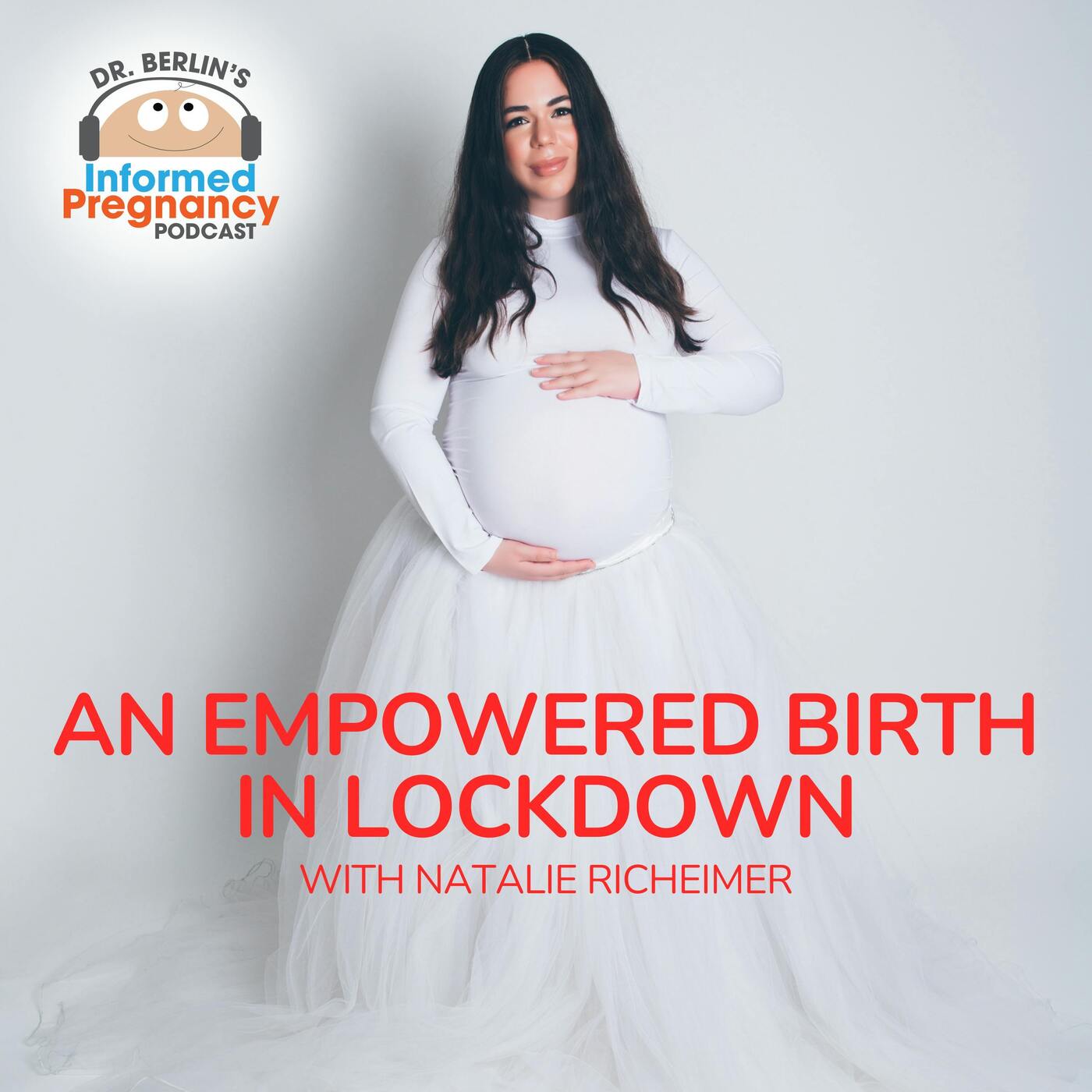
Former science teacher turned genetic counselor Natalie Richeimer joins the podcast to discuss her journey through IVF and a VBAC after a traumatic first birth. She set her sights on a more informed, empowered birth for her second child, seeking autonomy and healing as a Covid lockdown birth was imminent.
Connect with the guest:
@lotsofbracha
Informed Pregnancy Media and Mahmee present an all new podcast! One Way or a Mother is a new narrative podcast from Dr. Elliot Berlin, DC. Each season is an intimate story of one woman, one pregnancy, and all of the preparations, emotions, and personal history leading up to the birth. Episodes feature the expectant mother along with her family, doctors, and birth work team.
Start listening to Episode 1: I Should Have Died featuring Arianna Lasry
Keep up with Dr. Berlin and Informed Pregnancy Media online!
Learn more about your ad choices. Visit megaphone.fm/adchoices
See Privacy Policy at https://art19.com/privacy and California Privacy Notice at https://art19.com/privacy#do-not-sell-my-info.
Key quotes
“Leaving a hospital without a baby is probably one of the most horrible things that somebody can go through.”
“It was like the most empowering healing thing that I've ever done.”
“I'm a new person. I am reborn.”
“I would say staunchly an advocate for autonomy, making sure that they feel empowered to make choices.”
“Don't be scared to say no because it's your body and you're the only one that walks home with it at the end of this experience.”
Related episodes
- Ep. 470 Carlson Young: After Birth
- Ep. 469 Carlson Young: Before Birth
- Ep. 500 The Unexpected with Dr. Elliot Berlin Part 2
- Ep. 480 Twins with Lauren Gaba Flanagan
Transcript
AI-generated transcript with speaker labels — may contain errors, especially names and medical terms. Dr. Elliot Berlin, DC appears in blue; Natalie Richeimer in orange.
Dr. Elliot Berlin, DC [0:00] My guest today is a former high school science teacher, turned genetic counselor, a three-time IVF warrior, and a passionate advocate for informed, empowered birth, especially when it comes to vaginal birth after cesarean, or VBAC. After a traumatic first birth that ended in an emergency cesarean and a NICU stay, she set her sights on something radically different the second time around, a birth defined by autonomy, trust, and healing. But what does that even look like? How do you plan for it? And was she able to pull it off? Especially as the world went into lockdown for the COVID-19 pandemic. I'm pregnancy-focused chiropractor, Dr. Elliott Berlin, and you're listening to the Informed Pregnancy Podcast.
[0:46] Natalie Richheimer, welcome to the podcast.
Natalie Richeimer [1:02] Thank you so much for having me, Dr. Berlin.
Dr. Elliot Berlin, DC [1:05] My pleasure. I'm excited to hear your story. It's quite a journey. Let's start at the beginning. Where are you from originally, and how did you get into the line of work that you do?
Natalie Richeimer [1:15] So, I am originally from Toronto, Canada, and when people ask me why I moved to L.A., I married an L.A. boy, and L.A. boys, they can't survive anywhere outside of Los Angeles.
Dr. Elliot Berlin, DC [1:31] That is true.
Natalie Richeimer [1:33] We moved out here, and it's a very long story on how I became a genetic counselor, but I'm very passionate about education. I thought for my whole life I would have been an M.D., a doctor, and then part of my grand plan of getting into medical school was to do teaching for a few years, very passionate about education. Salad to teaching, women in STEM loved it, but it always kind of felt like there was a journey that was missing for me, medicine-wise, and really just couldn't really figure out what that was, and an M.D. just didn't feel like the right thing for me. And we can talk a little bit more about it later, but essentially when I went through I.D.S.,
[2:16] I found out very young that I had infertility and that I would be able only to have children through I.D.S. I had a lot of genetic counselors really along the way, and it kind of clicked like an a-ha click for me, and that like, oh, this is what I'm supposed to do. I'm supposed to be a medicine, I'm supposed to be a genetic counselor, and it was really only when I got pregnant with my second child that I had felt like, okay, I'm going to be a mom of two if I don't go back to grad school at this point. I'm six years into teaching at this point, never going to do it, so I applied to a graduate school. I did my interview, nine months pregnant, I would say I was probably the most memorable person
[2:53] at the interview, and have really loved it ever since, and it really came from a passion for advocacy and for medicine.
Dr. Elliot Berlin, DC [3:02] So when you said you met genetic counselors during your fertility journey, meaning you met them professionally, like they were counseling?
Natalie Richeimer [3:09] As a patient, yeah.
Dr. Elliot Berlin, DC [3:11] And it had a big impact on you?
Natalie Richeimer [3:12] Yeah.
Dr. Elliot Berlin, DC [3:13] All right, let's talk about that first birth. So you overcame your fertility hurdles, got pregnant. How was the pregnancy and what was your plan for birth?
Natalie Richeimer [3:21] So, you know, looking back, I've been doing a lot of like looking back, retrospective, I was at the time, you know, I thought I was super old having my first baby at 25. I was like joking with my OB at the time. I'm like, I'm an old mom, very young, very, very young. A lot of people in my circle of friends and family have had kids really young, so 25, but like so old to me was not. But, you know, looking back, a lot of my confidence in myself as a person was taken away from me through IVF and through fertility. And it's a big theme that I thought about. You know, I couldn't get pregnant on my own. And the only way I was going to get pregnant was with serious amounts
[4:02] of intervention, and I needed to blindly trust the doctors and do whatever they said to get and stay pregnant. And so that was kind of the mentality or mindset that I went in with that birth pregnancy. And I would, you know, being Canadian, we are great people, but we don't necessarily all question medical authority. And so whatever the doctor said to me was fine. You know, I had heard on the grapevine of all your friends and mother's friends and mother-in-law's friends who have had babies that I didn't want to have a C-section, like I knew that. I didn't really understand why, you know, but everyone was like, don't have a C-section. But no one tells you like how to have a successful vaginal birth.
[4:40] So I just figured like it'll happen for me. I hired a doula because that's apparently what you do. You hire yourself a doula. You want to have a vaginal birth. And interestingly enough, my own mother had five kids and one of five. All of her babies were induced and all of them, she didn't do pain medication. She had her babies 80s and 90s. It was very out of vogue. So I knew that I shouldn't do pain.
Dr. Elliot Berlin, DC [5:02] Yeah, exactly.
Natalie Richeimer [5:03] I knew I shouldn't do pain medication. That's what I knew. I was like, no pain meds, vaginal birth. Cool. Hire a doula. I had no idea what that meant. And the doula at the time did not prepare me. So, you know, I go into this birth pregnancy with a lot of trepidation. I had had a very early loss prior to this pregnancy. So there, you know, with IVF, especially if you've had loss before, you don't really breathe until you have a baby in your arms. You're always waiting for the other shoe to drop. And that was that pregnancy for me. And there were things that have popped up in the pregnancy. I had polyhedromyose, which means a lot of extra fluid.
[5:39] For those who don't know, you know, a little high risk. And there were other things that they were watching for that had made me, I would say, like, low, high risk. So I was being extra careful monitored. And when I had gotten to 39 weeks, they were very, very clear that I was not allowed to go further than that. They had felt the MFM and the OB that we were really, you know, playing with fire and that I should be induced to 39 weeks. No idea what that meant. I knew my mom was induced and had successful first. So I was like, oh, that's what the doctor told me to do. And I have this doula and it's going to go great. And it was induced from zero, which meant I went in and I did cervical
[6:17] and I went in and I did a Foley balloon. And no one tells you that a Foley balloon is like literally for me, at least one of the most painful things in the world. So I had made it about four centimeters, so much pain. I was like, you know what? Okay, fine. Let's do this walking epidural. Did the walking epidural, had felt great, even felt like, okay, like let's dial it down. It's even a little heavy for me. And really to the credit of my OB, like I had a very slow, but progressing labor and baby was descending and things were going slowly, but they were going really well. And I had gotten to the place where I was pushing in my labor. I was at 10 centimeters.
[6:55] I was pushing and baby was showing some D cells. So the heart rate was decreasing. And was really showing that he wasn't tolerating labor so well, but it was fine. I was pushing. And then at a certain point in labor, again, things happen very, very quickly. And he was very far down. Like he, from what I was told, again, like it's hard to know everything after a fact, he flatlines, meaning his heart completely gave out. Yeah, it was like my husband, still I'm pushing. I have the whole like called code. So I had like a thousand people around me. I'm pushing. I don't know what's happening. This is something I remember. And it will stick with me for the rest of my life.
[7:37] My husband is the most calm, positive person. I am like a very anxious and not always positive person for myself. And I just remember him looking at me, like with the saddest look of like, this is really not good. So I was like in the movies, seen wheeled away to the OR, like there was no conversation. It was like, we need to do the C-section now. My OB who is a really soft spoken woman. I just remember her yelling like anesthesia needs to be here. Now we need to switch the bag now or we're putting under. They got in, like it was running and chaos. And it was so fast. My husband wasn't able to scrub in. So I was by myself like too graphic and gory,
[8:19] but like I was throwing up on myself. I had no idea what was happening. My OB told me later, she cut out the baby in 60 seconds flat and this whole time, which seemed like hours, but really it was like minutes. I just like, I didn't know if my baby was alive. I didn't know what was going to happen. I had no idea. I just knew I was feeling in a lot of pain and throwing up on myself. And then I heard my son crying, which was the most relieving sound in the world. And then my husband was finally allowed in, he scrubbed in, he went with the baby. And also they went to NICU together and I went to the PACU. By myself again, I remember there were like the nurse and the anesthesiologist were
[9:01] sitting like charting. And I thought I was literally dying. And I remember hearing them say like, she's in so much pain, her heart rate's really slowing down. We can't give her any more, but her blood pressure is really high. Like she might stroke out.
Dr. Elliot Berlin, DC [9:15] Remember they're talking like about you while you were there.
Natalie Richeimer [9:18] Right there. While you're right there. I remember like, I like my husband on the phone and I was like, babe, I'm dying. He's like, you're not dying. You're fine. I'll see you in a minute. Cause you know, you gotta be the positive person. It was just like a horrible, horrible thing. And again, like just for context, for people who are listening, the baby was so far down. I just remember hearing like, he's really far down and you need to push him back up. Yeah, it was bad. And I ended up getting vaginal stitches and C-section stitches. So I said, stitches in two places.
Dr. Elliot Berlin, DC [9:48] Oh my goodness. You got the, I don't know, Mother's Day special.
Natalie Richeimer [9:52] Well, you know, gotta keep it real. But that was the story of my first birth and the healing.
Dr. Elliot Berlin, DC [9:59] And then the baby went to NICU?
Natalie Richeimer [10:01] The baby went to NICU, what was always supposed to be two hours, which turned out to be eight days. And we joked as a family, like when they let him go, we literally ran to the parking lot because we're like, they're going to find a reason to keep him. Run, run.
Dr. Elliot Berlin, DC [10:16] Two questions before we take a break. And then I want to find out after the break more about what your postpartum was like. Did they figure out why the baby was flatlining? And also why did the baby need to stay in the NICU for so long?
Natalie Richeimer [10:29] That's a good question. So the baby was flatlining because he wasn't tolerating labor. That's what I was told at the time. You know, like we look back and everything is 2020, but like, you know, being induced from zero, it can be stressful on anybody. And he's a person and you know, I have my thoughts and feelings, but that's what I was told. And he was totally fine. The baby was sent to NICU initially. If anyone's ever had an emergency C-section, you know, the NICU team is sent there and they do preliminary tests. And one of them was to look for acid in the blood, which can be a sign of a metabolic disorder. And she scored slightly high, like it was slightly high,
[11:07] and they wanted to observe him for an hour. That was what we were told. And like, when my husband was admitted, the nurse was like, you're going to be with your wife really soon. Like, this is just very standard, very routine. If anyone has been a NICU parent or has had a child in the NICU, once you're in the NICU, you're hooked up to all sorts of monitors and machines. And what had happened was like this, he was hooked up to what's called a heart thermometer or a heart monitor. And the rule in NICU is every time there's an incident, so meaning your heart skipped a beat or it goes a little fast, which is normal for any of us. If you put any of us on a heart monitor,
[11:45] we would skip a beat. The clock sets back 24 hours.
Dr. Elliot Berlin, DC [11:49] Oh my gosh. How do you work it out?
Natalie Richeimer [11:51] You have to have a lucky 24 hours. So that is the short and long story. They had some concerns about his heart, which ended up he was totally fine, and everything was great, but they had really scared us with him there. And so, you know, we got to enjoy the NICU, which again is both the most facial and horrible place.
Dr. Elliot Berlin, DC [12:15] Let's take a little break. When we come back, we'll find out what postpartum was like for you in your mind, body, and spirit.

Dr. Elliot Berlin, DC [12:22] Welcome back. We're talking to Natalie Richheimer. So, you know, you had a vision for the birth. You had a doula, and it didn't go according to plan. Baby was not tolerating labor, the induced labor well at all, and then it turned into what sounds like a true emergency cesarean, and then just over a week in the NICU. That means I assume that you went home without your baby, and I think that postpartum is a challenging transition for most people, even when birth goes great, even when it's not a surgical recovery, even when you get to take the baby with you. What was those early days of postpartum like for you?
Natalie Richeimer [13:13] I mean, just like, honestly horrible. Like, leaving a hospital without a baby is probably one of the most horrible things that somebody can go through. And, you know, not knowing if your baby's going to be okay is very scary. And then to come home, and you've had your first baby, and to just be going back and forth to a hospital to visit said baby while you're supposed to be recovering was horrible. I will say for me, you know, and we'll talk about this in the post of this journey, I don't like paid medication. I don't like the way I feel on it. I don't like getting my teeth, you know, numbed at the dentist. And I was on some very heavy painkillers,
[13:55] and I just say this to my husband now. I don't remember the first eight weeks after I had the baby. But I know they happened. I have pictures, and I have very big memories, but I don't remember my son. I just remember being in incredible amounts of pain. And then on top of that,
Dr. Elliot Berlin, DC [14:13] Surgical pain or?
Natalie Richeimer [14:15] Surgical pain. And then also the pain comes with like breastfeeding for the first time without your baby there and having to navigate a pump and medications. And yeah, and I was in like vaginal pain as well because I had had stitches there.
Dr. Elliot Berlin, DC [14:29] You had stitches there too. And with all that, it's sort of like, normally the recommendations go rest, but you're running back and forth between home and hospital. I can't really even imagine how intense that must have been. And apparently you blocked a lot of it out.
Natalie Richeimer [14:46] I mean, I distinctly remember telling one of the doctors, because again, I was highly medicated at the time. Like, I know what you're saying. I know they're saying words, but I don't understand the word. Like, they're not going into like, can you, my husband, can you explain what she's, I don't understand what she's saying. So yeah, I mean, I don't know if I blocked it out. I don't know if the pain medication just altered my reality so much that I couldn't like process, but it was really horrible.
Dr. Elliot Berlin, DC [15:12] Down the road, you decided to have another baby. Is that a new IVF or you plug one from the freezer?
Natalie Richeimer [15:20] And from the same batch as my first batch, which was very lucky of us, and decided, you know, after the trauma of my first birth, I really was very clear with my husband that he's very big believer in siblings. He's like, our son's going to be a weirdo if he doesn't have a sibling. We need to have a sibling. I'm like, I don't know. And I said to him, listen, I want to have another baby, but my deal with you is like this. If this is another C-section, I will never have more children. Like, this will be my last, and I want you to understand and respect that. He's like, I totally respect that.
Dr. Elliot Berlin, DC [15:52] Can I just get into your mind for a second? I mean, your C-section was overly traumatic compared to, let's say, an average C-section, right? So was the surgery itself, or was it the very traumatic nature of your particular situation? What about it was one more C-section and I'm done?
Natalie Richeimer [16:11] I mean, it was very horrible, to be honest. It was a 38-hour labor that ended in a C-section, which was physically exhausting. I had stitches in two places. The recovery was not great. And the trauma of stealing, and I hope this is not too graphic. You can cut it out if it is, but feeling someone slice open your abdomen and not being prepared for that and never feeling like that in the world, you know, it was horrible.
Dr. Elliot Berlin, DC [16:36] Again, I only wonder about this. Not my expertise at all. If any of that was extra traumatic because of the time crunch, right? Baby's flatlining. She had the baby out in 60 seconds. No time to like feel around, make sure you're totally numb, you know.
Natalie Richeimer [16:50] For sure. And that's definitely it. And like, that was always explained to me. Like, you just had a really bad C-section. Like, you know, not all C-sections are like that. And I've heard that. But again, my experience around that was so horrible. My experience also in the hospital, like I didn't talk about that much, but I had felt like both the nurses were like nasty with that particular birth, like during that induction. And induction's a hard process, and they were nasty. The staff was nasty. It was just all around horrible and really like just the thought of it. Like, I was like, if it has to happen, it has to happen. I accept that, but I don't ever want to do that again.
Dr. Elliot Berlin, DC [17:25] Interesting. Okay, so I'm not questioning like why. I'm just curious about what the thought process was. And I'm not judging it. I'm just asking why. And also you sometimes see people have that type of first experience, and they run the other way. They're like, I want to have another baby, but I'm not trying vaginal birth again. I'm just going to go for the much more controlled, you know, elective, scheduled cesarean. So you went the other way. But I mean, how do you prevent this from happening again? What was the plan on round two?
Natalie Richeimer [17:55] So, you know, I had a great conversation with my provider about VVAC. She herself has had VVAC, so she was very supportive. And really what she had said from the beginning was, you know, this was a clear situation where it wasn't a you issue, it was a baby issue, right? Like you had a C-section because we were saving your son's life, not because there's something anatomically, you know, blocking you from having a vaginal birth. Controversial, I know, but that was what she had said. You're an excellent candidate for a VVAC. You progressed. You got to 10 plus three, pushing, all that.
Dr. Elliot Berlin, DC [18:27] That is true. That's something to keep in mind. You were very close to just pushing your baby out. So that's one piece. So it sounds like you're saying your doctor was saying this is not expected to be a recurring event.
Natalie Richeimer [18:37] You know, barring lightning striking twice, you are a really good candidate for VVAC. You can also elect for a cesarean. Again, like the pain medication, the recovery was horrible. Like I didn't want that. And it's interesting. I had one of my best friends growing up. She has an older sister who lives in New Jersey. And she has, I believe, seven or eight kids. And her first three births were a C-section. And she was able to VVAC with the last five, four or five.
Dr. Elliot Berlin, DC [19:07] Next level.
Natalie Richeimer [19:09] And she became a VVAC doula, specifically specialized in VVACs. And I had called her on the phone when I had gotten pregnant with my second child. And her name is Penina. Shout out to Penina, if you're listening. And I said, Penina, like, I can't do a C-section again. And it was the first person who validated to me. And she was like, Natalie, I understand exactly what you feel like. I told my husband after the third cesarean, I'm not having any more kids unless I can do it vaginally. Cause I was so horrible. And she really gave me the education and the empowerment to get to a place where I understood what I needed to do to have a VVAC. And I don't think that was ever like,
[19:49] when we talk about my first birth reflecting, I was like, oh, I really want a vaginal birth. Like, okay, but how do you do that? What is that going to look like? Are you going to prepare yourself? She had given me a lot of tools. She wasn't in LA. I mean, the first thing was just being very honest with me about what VVAC looks like in this country. And that everyone is a VVAC doctor in theory, but let's see if your doctor is really a VVAC doctor. Like you need to make sure and scope out if she's legitimately going to give you a decent chance. By asking people who have birth with them or by asking specific questions. Asking specific questions for her related to induction
[20:26] and related to, you know, just other things as well, like pain management and et cetera. And the other thing she was very frank with me about, and I think it was very helpful, was saying like, listen, girl, the cars are stacked against you when you want a VVAC, because there is this underlying fear, whether it's, you know, justified or not is a different conversation of uterine rupture. And the hospital is scared of liability and we are going up against that. And you need to come at this with no pain medication. That is going to be your best shot. If that was a big thing, she said, and you need to go into labor naturally. That's the second best.
Dr. Elliot Berlin, DC [21:06] I mean, you were planning to do unmedicated
Natalie Richeimer [21:07] the first time anyway. I was planning and it's interesting. Like, how did I feel about that? I wasn't happy at the beginning because I was like, what do you mean? Like, I'm going to be honest with you. She was like, anything you take intervention-wide stacks cars against you. So you can have a VVAC with pain medication. It just makes it less likely. You can have a VVAC with an induction. It just makes it less likely. If you want your best shot, you need to go into labor naturally and you need to do it without pain meds. And I think I was nervous, but I was also like very empowered hearing that she had done it. And also just like, she was like,
[21:45] like, you can do that. Your body can handle this.
Dr. Elliot Berlin, DC [21:48] Was your doctor on board with that plan?
Natalie Richeimer [21:50] Complicated question. Anyone who's had a VVAC knows that there's a good, she's an amazing person, but there's a good deal of negotiating you have to do with VVACs. So she's very on board with no pain medication. What she had wanted me to do precautionary was to put a port in my back for epidural that people know if they put that port in, they've got to test it and test to see if it's working, which means you're going to get some pain meds. So she was not a fan of the plan of no ports and she was not a fan of the plan of waiting longer than necessary, waiting after 39 weeks. I think she would have wanted an induction and that did come to be. And with that particular pregnancy,
[22:32] we had a lot of negotiating and I felt like I was calling my VVAC doula in New Jersey and she was like coaching me, like, here's what you say, okay? Here's what you say. Kick the can down the road. She's not serious. And then like her being like, you know, this is what I think. So I felt like I was caught in between a custody battle.
Dr. Elliot Berlin, DC [22:48] So quasi on board with your plan for VVAC,
Natalie Richeimer [22:52] how did it unfold? It unfolded like this. I was so, so excited about a VVAC and then I got hit at about 12 weeks. From the beginning of the pregnancy, I was having little bleeds and at about 12, 13 weeks in that first trimester scan, I had a complete placenta previa. It was completely complete or partial, but it was placenta previa. And it was like automatically conversation shut down. Like you can't have a VVAC. You are not going to have one. You're going to have a C-section. Like except that it's going to be 37 weeks. And I was really upset, but I was like, okay, it's fine. This will be my last baby. It's going to be a plant. And my husband was like,
[23:31] it's going to be so much better. It's going to be planned. And then the baby did something interesting. My second child. So he's an interesting guy. The placenta moved at about 20 weeks, totally in a great spot. So now we were like, yay, we're eligible. But then we had other problems. So the placenta started to peel in little abrasion.
Dr. Elliot Berlin, DC [23:53] How far into the pregnancy?
Natalie Richeimer [23:55] So I was having bleeds throughout, but the bigger bleeds started, I would say like 20 something and above weeks. So yeah, it was really scary. I remember the first time it happened, distinctly remember I was in the kitchen cooking soup and I was like, I just pee my pants. And then I go to the bathroom and I'm like soaked in blood, run to the ER. And you know, that became the first of quite a few hospitalizations for many placental abruption. So again, it was like, you're not going to have a V-back. There's going to be a complete abruption. That's what's going to happen. And we're going to C-section you.
Dr. Elliot Berlin, DC [24:31] I should probably throw in, we used a few terms, uterine rupture. They mentioned earlier. So the idea here is that after a cesarean birth, your uterus has a scar on it. And aside from everything else, it gets cut open. The uterus gets cut open, baby comes out and then the uterus is repaired. But that repair spot is not exactly how it was. And there's tissue that's different than it was where the scar is. And the concern is that during the throes of labor, while pressure builds up inside the uterus during contractions, maybe that scar will separate, either thinly separate or literally pop or uterine rupture, which could be a significant medical complication.
[25:09] Then you said placenta previa, which is where the placenta for your second pregnancy was sitting down at the bottom of your uterus over your cervix. And pretty much everyone agrees that if the placenta stays there covering your cervix, then it's probably a better idea to have a cesarean birth than to try to birth through the placenta rupture or the placenta while the baby is still inside you. And then now placental abruption is where some or all of the placenta pulls off the wall of the uterus where it's nestled in doing its job interfacing between you and the baby. And so you had a partial, it sounds like, placental abruption that caused some bleeding,
[25:50] which is how you knew about it. And then you had several more during your third trimester.
Natalie Richeimer [25:55] Yeah. And the bleeds progressively got worse. So like the idea was, we live in California, right? We were waiting for the big one. And they had said to me, so they said to me, the resident had said to me, he's like, they're getting worse. What's going to happen is one is going to get really, really bad. Like the placenta will completely detach and you'll have 10 minutes to get here before you and the baby both bleed out, which is scary with LA traffic. I can joke now, but it wasn't so simple at the time. And you know what? God is good. And he was wrong. And I got to about 35 weeks and then this crazy thing happened called COVID. And the world shut down.
Dr. Elliot Berlin, DC [26:36] I remember that.
Natalie Richeimer [26:38] The world shut down and things have really stabilized. And I got the green light from my MSM and my OB to try for a VBAC at like 35 weeks, which was crazy.
Dr. Elliot Berlin, DC [26:51] Did COVID make it crazier somehow?
Natalie Richeimer [26:54] Did COVID make it crazier? I mean, yes and no. Yes, in the sense that I was terrified to go to the hospital. I had never been a gal for a home birth, but I was like, you know what? I want a home birth. And my MFM was like, no way in hell. He was like, you're going to the hospital. I was like, but no. So that was the kind of the stress and the craziness that we had. It also made it interesting. And it was a real blessing in disguise that could only have one person with me in the room. Like it could be my husband or like a birthing support person, like a doula, but I had to choose. You know, everyone told me at least, if you want to have a vaginal birth,
[27:33] you have to have a doula. Can't do it without that. And I was like, yeah, this is between my husband and a doula, especially with what happened last time. I choose my husband every time. So I was like, you're my birthing support person or watching YouTube videos. Well, my VBAC doula was in New Jersey and that was a whole other thing. I couldn't fly her out. I said I would fly you all expenses paid, a nice hotel, you know, and she couldn't fly at that point. So like I said, I wasn't hiring someone here and I would only have had him anyways, like if it came between my husband or anyone else, always my husband.
Dr. Elliot Berlin, DC [28:05] Okay, one more question before we take a break. You said both the OB and the maternal fetal medical specialist signed off on the VBAC. Were there parameters around that sign off? Like it has to be by X amount of time or things like that?
Natalie Richeimer [28:19] Yes. So the MSM signed off, things you don't remember. Like I just don't remember him towards the end of the practice. Once he signed off, he'd let it go by and my OB wasn't putting parameters, but because this placenta had really given us like a lot of health, I would say like almost day one, she was very concerned that it was showing signs of calcification. So she did not want to go past 3090 and that was part of our grand negotiation.
Dr. Elliot Berlin, DC [28:50] So if you go into labor spontaneously by around 39 weeks, then VBAC, but if you go longer, then is it induction or is it automatic cessation?
Natalie Richeimer [29:02] No, induction. She was very willing to try, but she was like, you need to be induced. Like I'm not comfortable. I don't think she wanted even me to go past 38 weeks at the time, but like I'm Jewish and I celebrate a holiday called Passover. And I was like, I can't do it over Passover. It's too crazy for me, my in-laws, blah, blah, blah. So I was like, no, no, no. Like we've got to wait until after Passover. So I think like we kept kind of kicking the can down the road at 38 weeks. We wanted you to anyway. That's what she kept saying to me. She's like, if it was real serious, she'd make you go down. She'll give you more time. It's not real serious,
[29:41] which was like, again, it's very empowering for me because like I said, I have very blind trust in doctors and hearing a different perspective and giving you the words to question and then understand was very helpful to me.
Dr. Elliot Berlin, DC [29:57] All right. Let's take a commercial break. When we come back, we'll find out how things went. Welcome back. We're talking to Natalie Richheimer after a traumatic first birth, Caesarean, the real emergency C-section. She went into her second birth hoping really hard for a vaginal birth after Caesarean, so much so resigned to the fact that if it was another C-section, it was going to be her last baby. And a lot of little things came up. Placenta previa could have ruled her out, but then the placenta moved. Partial placental abruptions were a problem, but then they eased up and COVID moved in. But nonetheless, her doctor and MFM pretty much signed off on a V-back
[30:47] as long as the baby were to come by 39 weeks. Natalie, how did it go down?
Natalie Richeimer [30:52] So there we were at 38 weeks, and we were in, I felt like a lawyer, prime negotiations. And we got to a point, it was prior to the first, the last part of the holiday. And she was like, listen, she was like, I am not letting you leave here until we schedule this induction. And I was like, fine, fine. Let's schedule it for Friday. The holiday's over. On Thursday night, I can drop my kid off at my in-laws because I have another child at this point. Look, let's schedule for them. And she was like, fine, deal. But like, you are, you know, that's no more. Like we can't do this anymore. That I think would have been like right around the 40 week mark
[31:32] and called the V-back doula. And she was like, you have three days to get into labor on your own. Do everything on my list. Like everything. You know, she was very talkative. She was like, if it comes to it, right? Like if you're induced, you're not going to be induced to zero this time. We're going to do other things. And you're going to make it so that your body is, you know, ready to roll. Starting 36 weeks, I was doing all the things she had told me to prep my body for labor. So again, very different than my first time around. And important to mention that at that appointment, my doctor was like, I can do a membrane sweep also. It was like two centimeters.
[32:07] And I was like, you know what? Membrane sweep, cool. Like if you're going to induce me anyways, and this will give me a chance, let's do it. And I, you know, left her office on Tuesday and went into labor. Now it's really on Wednesday. So all that good stuff kind of paid off. My labor was, I would say, not difficult. Like just, you know, just regular. I was at home and my first labor was 38 hours. So I was like, I have so much time and I hate the hospital. I am only going, I remember times to my husband, I'm only going to go to the hospital if I see blood or water. Like if my water breaks or if there's bleeding, that's when we'll go, but otherwise we're staying home.
[32:47] And it was the pandemic. And I just remember we were like eating dinner. He was eating dinner. I'm like, I couldn't sit. I was like, did you want to eat? I was like, go away. I can't, I can't talk to you. And I'm like, there's no way, like I'm in active labor because I'm like, I've only been doing this for like three and a half hours. Like, no, there's no way. And he called, he's like, let me call the doctor. Calls her. She's like, the way she's sounding and the timing of the contractions, you need to leave now or you're going to deliver the baby. So we were like, oh, if you don't, let's go to the hospital. This is April, 2020. This is like height of the pandemic.
[33:24] We get to the hospital. At the time, the policy was like, the partner had to wait in the parking lot until they were being like admitted, like not triage, which was the thing. So we get there. And I just remember I was like, I was like, oh, I was like, I can like talk and I'm being triaged. And they're like, what's your religious preference? I was like, I don't know, but I feel like I have baby. Like, and they're like, oh, honey, this is a VBAC. You're going to be here for at least 12, took 24 hours. Like it's going to be long. And I'm like, I don't know. And then finally someone comes in to check me and they're like, oh, she's seven and a half.
[33:59] We need to admit her now.
Dr. Elliot Berlin, DC [34:01] Well, that must've been a good piece of news.
Natalie Richeimer [34:04] It is and it isn't. It is and it isn't. Cause I was like, what? I was seven and a half. She was like, you're going to have a baby like now. And I was like, oh, I need drugs. I'm like, I can't do this. And she's like, it's too late for drugs. Like you're having this baby. You're moving quickly. My husband's in the parking lot because the security guard had changed security guards. Didn't see him enter with a pregnant lady. Thought he was like trying to storm the building. And then the nurse had to literally go down there and was like, you need to let him in. His wife was about to have a baby. He came in. He was there during, you know, the pushing and the lost parts.
[34:35] Like from when I was admitted to when I had my son was 45 minutes. So it was really fast, really fast. And I had me a beautiful baby boy, nice healthy weight, which was crazy. His placenta, but clearly his placenta was doing what it needed to do. And even with the craziest of circumstances had the most really magical birth.
Dr. Elliot Berlin, DC [34:57] And unmedicated at that. So Vibhaktula got her her way. What was the moment like when the baby came through you being so present?
Natalie Richeimer [35:08] It's funny. I don't know if I use the word present because anyone who's birth naturally, it's like very out of body, but it was like the most empowering healing thing that I've ever done. Having had so much anger and distrust towards my body for so many years, seeing what my body could do for me and seeing how my body, you know, even in the hardest of circumstances without placenta and all the other jazz, delivered me, literally delivered me a beautiful healthy little boy. It was like the best thing in the world. And like not feeling cloudy with paid medication and being able to hold him and being able to walk after where I was just like, this is awesome.
[35:48] So like where have I been all my life? Like I'm a new person. I am reborn. It was all the things.
Dr. Elliot Berlin, DC [35:56] So many things that you went through. I'm just thinking about with the surprise fertility journey and early miscarriage and pregnancy that, you know, you felt old maybe because you were at it for a few years already. And in your circles, people do start having babies pretty young. And then that really traumatic birth experience and really the courage to get pregnant and do it again and all the little hiccups along the way. Even though you said it quickly when you're like, yeah, and then the baby came out and I was like filled with all sorts of feels. So I can't imagine what it was like for you. Congratulations Mazel Tov. Exciting that you did it again
[36:37] and had another V back. So does that mean that the shop remains open?
Natalie Richeimer [36:44] I'm like very eight weeks postpartum. I don't think about having another baby too. So now, like I said, my husband said to me, he's like, you didn't have enough to see section. That means, you know, if the rule is, I was like, yeah, I know, but not now.
Dr. Elliot Berlin, DC [37:00] How did these experiences change your work?
Natalie Richeimer [37:04] Listen, I think it's changed the way we've talked you and I together about how I see it in medicine a lot from a patient perspective, the feeling of loss of control and the loss of autonomy. It's something that I experienced, you know, even with me being a tenacious, really loud mouth aggressive person for a V back, even I experienced that when I went, you know, for this last baby for pretty much all three boys. So when I look at patients, I think like I am, I would say staunchly an advocate for autonomy, making sure that they feel empowered to make choices. I am not being directive in my care and really giving them good information, not just saying, do this,
[37:44] but explaining why this is something I'm recommending and respecting their choice to decline and not demonizing people for choices that maybe I don't understand, but work for them.
Dr. Elliot Berlin, DC [37:56] Do you think those would have been harder for you, elements harder for you in terms of patient care had you not had these personal experiences?
Natalie Richeimer [38:04] This is such a good question. Like, I don't know. Like, I don't know. I think the experiences I've had have shaped me into a really, what I think is a really good provider, and I don't think I would be the same. I think my view of obstetrics is also very different. You know, my area of specialty in genetic counseling is reproductive, so I see people who are pregnant are trying to get pregnant. A lot of empathy for people who are going through fertility processes because I've been there. I also have a lot of empathy for people who are going through a pregnancy that isn't going the way they planned because that was, I would say, three out of three of my pregnancies
[38:41] didn't all go the way I planned and just holding space for that. I don't know if I could be the same person without having gone through what I went through.
Dr. Elliot Berlin, DC [38:49] With everything you've gone through, and, you know, I get somewhat of your insight from personal experience and professional experience, like, is there a takeaway piece of advice you would give to people on the pregnancy journey?
Natalie Richeimer [39:04] Yeah, I mean, two pieces. The first is for all my VBAC mommies or attempting to be VBAC mommies because we are a special group, we are a special unicorn group of people. People tear people down a lot who are trying, again, this has been my experience. Hopefully everyone has had different experiences than me, but people tear them down a lot and you face a lot of adversity to just be given the chance. That's the problem. Stay strong, find people who empower you, like people who've done it successfully, and listen to those people. Surround yourself with positive energy and know that you can do it and you should be given a shot like everyone else.
[39:42] To those who are just on their own pregnancy journey, you know, it's similar to with the VBAC community. Really knowing what you want, especially if it's your first pregnancy, and really figuring out how am I going to get there? So I want an unmedicated birth. What does that mean? How do I prepare myself? I think one of the biggest problems with my first birth was that I had wanted these, you know, lofty things like a vaginal birth and unmedicated, and I was not given the tools by my doula, by my OB, but really anyone on how to achieve that. And, you know, it's like breastfeeding. People are like, it should come naturally and it's hard for some people.
[40:20] And, you know, I took a class at Cedars. I did all the things. I checked things off on the list, but, like, I didn't have any pain management techniques. I didn't have any idea what labor looked like. And so, like, educate yourself and empower yourself and, like, also don't be scared to say no because it's your body and you're the only one that walks home with it at the end of this experience. No one else.
Dr. Elliot Berlin, DC [40:40] Did you end up listening to One Way or Mother?
Natalie Richeimer [40:42] I listened to part of it. I'm not all the way through yet.
Dr. Elliot Berlin, DC [40:46] I don't want to ruin anything. Don't sweat it. That's our sister podcast. Season one is, in fact, a VBAC story. All right. Natalie, thank you so much for sharing your powerful and deeply personal journey. It's a journey from trauma to transformation. And your story's a reminder that birth isn't just a medical event. It's a pivotal moment of identity, of trust, and of growth. And each one was like that for you in different ways. I really appreciate you sharing. Where can we find you online?
Natalie Richeimer [41:22] You can find me online at lots of brotha. It'll be posted in the show notes, but that's my Instagram handle. And feel free to follow me. The account is private, but, you know, accept you if you, you know, want to follow, typically. So, yeah, feel free to connect if you're a VBAC person as well.
Dr. Elliot Berlin, DC [41:40] Thanks so much. And at home, thanks for listening. If this episode resonated with you, please share it. Leave us a five-star review in the app and explore more empowering content at informpregnancy.com and on our streaming platform, Inform Pregnancy Plus and our other podcast that we just mentioned, One Way or Mother, you can find all of it from informpregnancy.com.
Want more pregnancy + parenting? Start your FREE TRIAL of Informed Pregnancy+ and get access to all our curated pregnancy and parenting content — original series, iconic birth films like The Business of Being Born, prenatal workouts and more.

0 Comments