
September 11, 2025 · 42 minutes · Episode 476
About this episode
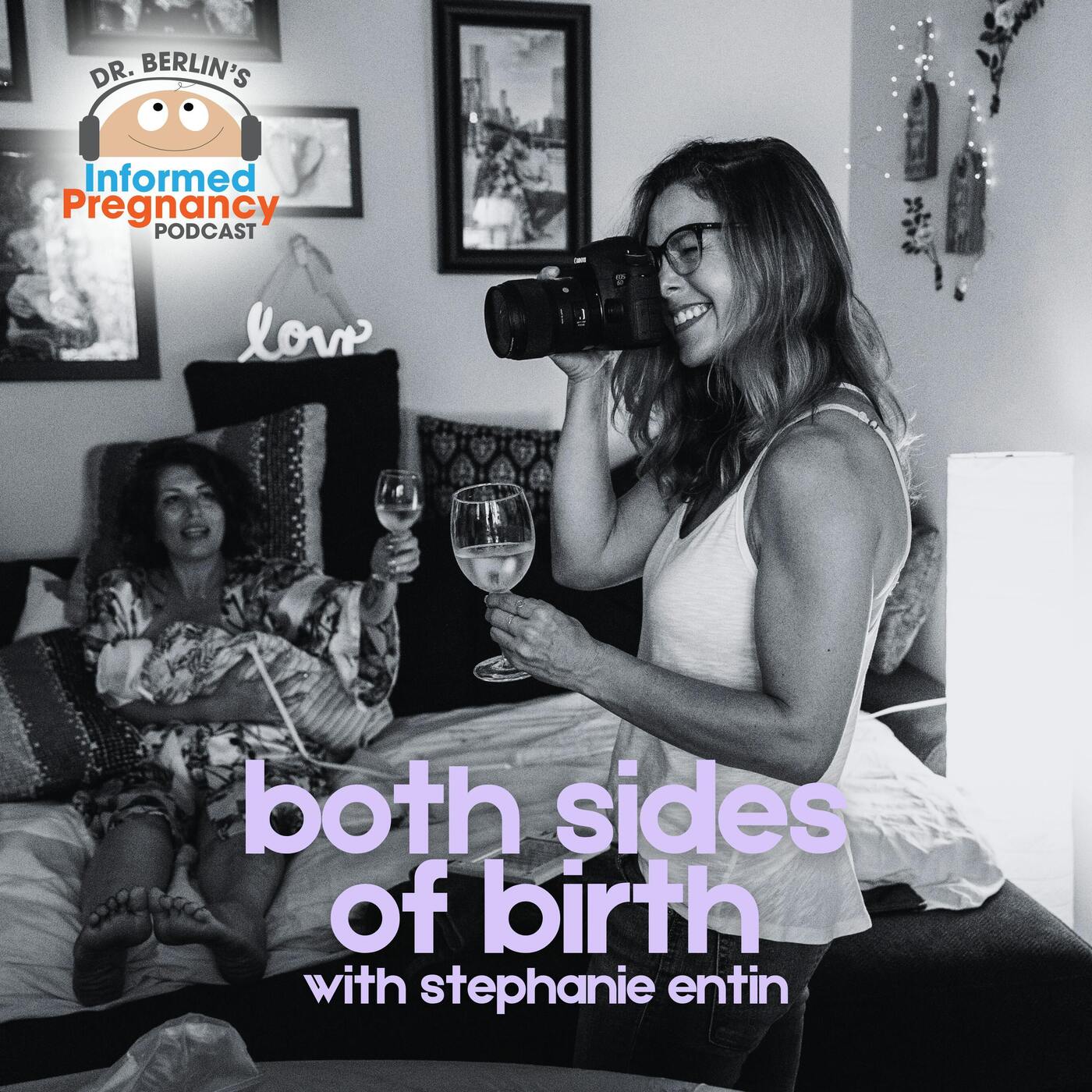
Oklahoma City native Stephanie Entin has spent over 20 years in the birth space. She joins the podcast to discuss her work as a doula, dietician, prenatal yoga and meditation teacher, and birth photographer as well as two of her own very different births.
Connect with the guest:
Informed Pregnancy Media and Mahmee present an all new podcast! One Way or a Mother is a new narrative podcast from Dr. Elliot Berlin, DC. Each season is an intimate story of one woman, one pregnancy, and all of the preparations, emotions, and personal history leading up to the birth. Episodes feature the expectant mother along with her family, doctors, and birth work team.
Start listening to Episode 1: I Should Have Died featuring Arianna Lasry
Keep up with Dr. Berlin and Informed Pregnancy Media online!
Learn more about your ad choices. Visit megaphone.fm/adchoices
See Privacy Policy at https://art19.com/privacy and California Privacy Notice at https://art19.com/privacy#do-not-sell-my-info.
Key quotes
“It was four days and I ended up only getting to seven centimeters.”
“My next birth is going to be how I want it to be and it's going to be beautiful and it's going to be amazing.”
“And it was just the most perfect, beautiful moment.”
“I say birth photography is some of the best photography training you can ever get.”
“I said, I want to have a VBAC and he said, you're going to rock a VBAC. Let's do this.”
Related episodes
- Ep. 470 Carlson Young: After Birth
- Ep. 469 Carlson Young: Before Birth
- Ep. 500 The Unexpected with Dr. Elliot Berlin Part 2
- Ep. 466 A Before & After Birth Story with Aimee Carrero: Part Two
Transcript
AI-generated transcript with speaker labels — may contain errors, especially names and medical terms. Dr. Elliot Berlin, DC appears in blue; Stephanie Entin in orange.
Dr. Elliot Berlin, DC [0:00] She's been in the birth space for over 20 years as a doula, a dietitian, a prenatal yoga and meditation teacher, but it was her own births that transformed her the most. One lasted four exhausting days in the hospital, and the other unfolded gently at home. Through it all she held the camera and the space for countless others as a doula tug, capturing raw, powerful images of labor, birth, and the moments in between. I'm Pregnancy Focus Chiropractor, Dr. Elliott Berlin, and you're listening to the Informed Pregnancy Podcast. Stephanie Enton, welcome to the podcast.
Stephanie Entin [0:52] Thank you, Elliott. So good to see you.
Dr. Elliot Berlin, DC [0:55] It's great to see you again. It's been a long time, and I don't even know if I remembered that you had so many credits to your work, like so many interesting different things. One yummier than the next. So I want to jump into each one of them. But before we do that, let's start at the beginning. Where are you from originally?
Stephanie Entin [1:16] I am originally from Oklahoma, Oklahoma City. Yeah.
Dr. Elliot Berlin, DC [1:22] What was growing in Oklahoma like?
Stephanie Entin [1:24] It was simple, much more simple than Los Angeles. I do. I do. I miss the nature. I spent a large part of my childhood in nature. My grandpa had a farm with cattle and we rode horses. And my other grandmother had a garden. My other grandmother had peacocks and pigs and chickens. So I spent a lot of time in nature and growing up around animals. And I do miss that going to the lake in Los Angeles.
Dr. Elliot Berlin, DC [1:53] They have pigs and chickens at Ralph's. Well, that's that's after you can't cuddle them. You can't cuddle them. I mean, it would be weird. Yeah. I guess that's the contrast I'm trying to point out is we don't get to play with them and become friends.
Stephanie Entin [2:11] I know there's like a disconnect. So it was a beautiful way to grow up. And you just had to find things to do rather than always having, you know, a lot of things around you. So, yeah.
Dr. Elliot Berlin, DC [2:26] Yeah, it would be nice to have things to draw the kids outside, you know. My kids, anyway, it's so hard to pull them away from the electronics. They just want to be indoors.
Stephanie Entin [2:34] Yeah, I know. And of course, I grew up when before that became a thing, too. So it was kind of a double. Yeah. So I feel like now more than ever, we just need things to draw them outside and be one with nature. I know. My kids often say, Mom, I wish I could grow up like you did.
Dr. Elliot Berlin, DC [2:52] Yeah, I wish I could grow up like you did. Well, yeah, we didn't have the phones either. My kids are still like shocked that we would leave the house and not have a direct line of communication with the parents. I'm like, yeah, that's just how you would find a pay phone. I'm like, you see that thing. Yeah. And when you made a plan, you showed up. You didn't have a phone to text and say, oh, I'm sorry, I can't make it.
Stephanie Entin [3:14] Right. I'm not going to be there. You just you got to go.
Dr. Elliot Berlin, DC [3:17] OK, what brought you to Los Angeles?
Stephanie Entin [3:19] Well, after I completed my master's program in nutrition and had my first job as a dietitian, I had been doing modeling and acting on the side and in Oklahoma. Yeah, actually, I was doing acting. I actually got my SAG card in Oklahoma or became SAG eligible. I was kind of naive about the whole thing. I really didn't know much about the union and SAG and all of that. So someone encouraged me to move here. They just said, you know, you should just go for it. You should just try it out. You have a good look. I had my degree and I had that finished. So I thought, you know what? Why not? And my dad was living in Montecito. So I called him up and I said, hey, dad,
[4:02] can I come live with you for a little while? He's like, what? Are you crazy? I said, no, no, I'm just going to try this thing out. So I came out here to do acting and I got a commercial agent and started doing commercials straight away. And I didn't realize that I was SAG eligible. And they said, you have to go to SAG and pay your dues before you can show up on set. I said, oh, OK, perfect. Let's do this.
Dr. Elliot Berlin, DC [4:27] And there was no chat GPT to ask. It's funny that you say that. I literally today just right here on my desk have my first ever SAG royalty check.
Stephanie Entin [4:39] No way.
Dr. Elliot Berlin, DC [4:40] Yeah.
Stephanie Entin [4:41] Oh, wow. That's your first one?
Dr. Elliot Berlin, DC [4:44] First one ever.
Stephanie Entin [4:45] What is it from?
Dr. Elliot Berlin, DC [4:46] It's from The Curse. It's a Showtime series that Emma Stone invited me to do a small role in this weird dark comedy. And so I did it. It was a couple of years ago. And then all of a sudden.
Stephanie Entin [4:59] Oh, that's amazing. I'm going to have to rent that tonight.
Dr. Elliot Berlin, DC [5:01] Oh, yeah. It's streaming on Showtime or it's a series, though. It's like a 10 episode series. Anyway, back to you, my SAG sister. So you were really interested career wise in nutrition. And then on the side, you were doing some acting and modeling.
Stephanie Entin [5:18] Yes.
Dr. Elliot Berlin, DC [5:19] It looks like the health sciences took the lead.
Stephanie Entin [5:24] Yes. So I went back to work and did some consulting as I was doing acting and modeling. I would leave during the day to go to auditions and go back to my job. So I was doing both for a long time. And then when I had kids, I went back and did it full time. I've done a lot of different things with my nutrition degree. So it's always been there and it's always been a part of me. But I've also had this creative side of me that I love and do.
Dr. Elliot Berlin, DC [5:55] Oh, the right brain and the left brain. When did yoga and meditation come into the mix?
Stephanie Entin [6:02] That's an amazing question because I was going to say my whole journey to birth and my birth work came because of yoga. I just had an interest in yoga in Oklahoma, but there were no yoga studios anywhere to be found. You could not find a yoga class. So I went to Target and I bought a VHS and I started doing yoga in my living room and just fell in love with it. And so when I moved to Los Angeles, I just started practicing at all different studios. And a few years go by, I decided that I wanted to become a teacher. And I was studying at the Golden Bridge Yoga and they had a women's class. So I was doing the Wednesday women's class and Gurmukh, the teacher, she said to me,
[6:49] or she was telling everybody, there's a prenatal yoga teacher training. And I thought, that's it. I was supposed to do something that day and it fell through. So I was there and I thought, well, that's the reason I'm here because I'm supposed to hear this message and that's the kind of teacher that I want to become. That's so Kundalini.
Dr. Elliot Berlin, DC [7:09] It is, isn't it?
Stephanie Entin [7:11] Yeah, I remember Gurmukh. So Kundalini. It's such a strange word, isn't it? And then you're like, what is Kundalini? I thought it was a pasta.
Dr. Elliot Berlin, DC [7:20] It sounds like.
Stephanie Entin [7:21] Yeah, I'll get the Kundalini with me. I think it should be. I think we should create a Kundalini pasta. What do you think?
Dr. Elliot Berlin, DC [7:28] Yes.
Stephanie Entin [7:29] Yeah, so I decided to become a prenatal yoga teacher and I thought, oh, how beautiful to work with pregnant women. And I had even done a thesis in college about pregnant women. For some reason, I just was drawn to it. I made up a study comparing vegan mothers to non-vegan mothers to see what the difference would be in the baby's birth weight. So that interest in pregnancy and motherhood has always been there. So I started teaching at a mother's haven in Encino. I have no idea if it's still there. And one of my students came up to me and she said, will you be my doula? And I said, I'm not a doula. And she said, please be my doula. You helped calm me down and I really want you to be there at my birth.
[8:16] So that's how I became a doula.
Dr. Elliot Berlin, DC [8:18] It makes so much sense. You do have a very calming energy.
Stephanie Entin [8:22] Oh, thanks.
Dr. Elliot Berlin, DC [8:23] I feel like you wouldn't have to do very much. I'm sure you do a ton, but I'm sure you wouldn't even have to do very much. So it's just being around you is calming.
Stephanie Entin [8:32] Oh, thanks. That's a lot about what a doula is, you know, like the presence. Just being there, being a calm presence for people.
Dr. Elliot Berlin, DC [8:41] And especially as someone who teaches meditation also, you have an understanding of the autonomic nervous system and how to take the reins of it and decide whether you want to be in a fight or flight, adrenaline kind of mode of operation, or if you want to shift the balance over to the other side and being more of an oxytocin mode.
Stephanie Entin [9:03] Yeah, you're so right.
Dr. Elliot Berlin, DC [9:04] You have so many different skills within meditation, within yoga, and then just natural calming presence. I could see why someone would say, I don't care if you have doula experience, I need you.
Stephanie Entin [9:17] Yeah, yeah. So I credit her to this day for helping me be a doula.
Dr. Elliot Berlin, DC [9:23] And that was all before you had your first?
Stephanie Entin [9:25] Yeah, this was before I had children.
Dr. Elliot Berlin, DC [9:27] Wow. What about photography? Because that's in the resume as well.
Stephanie Entin [9:31] Yep. Well, I started photography in high school. I was on the yearbook staff. I was the sports editor. I shot with a film camera. We had a dark room in our journalism room. So I learned to shoot and develop my own film, typeset, everything, send it off to the printer. So that's how I became interested in it. And then I had my own camera. I traveled to Europe when I was 13, took film pictures there, and just my love for it just spawned around that time. And I looked at National Geographic magazines growing up and I just love the documentary style of photography. And I've always been drawn to that. And I got my first camera when my first daughter was born.
[10:15] And I had a good friend and a neighbor who was a photographer and he taught me how to use my camera. So I just started shooting then. And then I always thought to myself, oh, I'd love to do this professionally. But then I thought, oh, how would I ever do that? And then my experience in front of the camera as an actor and a model, I had that knowledge too. Sort of like I had a really good idea of, I don't know, just set up and lighting and just a general understanding of directing people. And so I think just with all of that has sort of helped me when I did start my photography.
Dr. Elliot Berlin, DC [10:51] And then you at some point blended it all together and became a Dulatog, which is a very interesting blend. And all the qualities about you that we talked about before kind of come into play here. Because I've been to birth where you have a birth photographer and it's just so amazing how they're getting everything on camera, but also they're like a fly in the wall. Like you almost don't even notice that they're there. And that's an incredible skill, like a real interesting combination. And I want to talk about all that because I think just that alone is interesting, but that together with the Dulatog, Dulatog who's also the photographer is an even more unique blend.
[11:32] But before we talk about all of that Dulatog stuff, including your award-winning photography, I want to learn more about your experience having babies. Before we can do that, we need to take a quick break. We'll be right back. My guest Stephanie Anton is so many things, a Dulat nutritionist, dietitian, and a yoga teacher, a meditation instructor, a photographer, an actress, a model, and a mommy. So that's where we want to focus our energy now. You had two very interesting births as I gave away in the introduction. I'd love to kind of get a sense of what you had in mind for the first birth and how it went down.
Stephanie Entin [12:27] Well, I had already become a doula. I was a doula for about a year and a half when I became pregnant. And I have to say that before I did my prenatal yoga teacher training, birth was very, very scary to me. My grandmother said, I don't want you to have children. I'm scared. She had a breech birth, by the way, and she gave birth to my mother breech, but she was knocked out in the process. It was very traumatic for her. And then my mother went through a horrible situation where she was by herself, and the nurse slapped her and told her to be quiet and things like that. So all I heard-
Dr. Elliot Berlin, DC [13:07] Did she give birth to you?
Stephanie Entin [13:08] Yeah.
Dr. Elliot Berlin, DC [13:10] Oh, so that was your warm welcome.
Stephanie Entin [13:13] Yeah. So I had this idea in my head that birth was just this scary, horrible thing. And so when I took my yoga training, they showed us videos and midwives came and talked to us and Dr. Crane was there and talked to us. And my introduction into the birth world began. And I watched these beautiful films and I remember looking at the screen and I said, that's how I want to have a baby. Because I didn't know it was possible.
Dr. Elliot Berlin, DC [13:42] You had only one reality and it wasn't this one.
Stephanie Entin [13:44] Yeah, I had no idea. So then I saw what could be possible. So I thought, okay, well, when I got pregnant, my husband, his father was an OB-GYN. And so this is something that very commonly comes up in some of my clients where one family is medical, the other one's a natural birth and there's conflict. So here I was the doula, granola doula who wanted a natural birth. And so I chose a midwife and I was planning a birthing center birth. And a lot of it is controversial. A lot of it is, I probably don't want to share too much about it, but I will say this. I just think there were two opposing things going on, what I wanted and what they thought was best.
[14:34] And in the end, that won over, and I was very encouraged to be induced. And all of those fear things came up. You're going to have a big baby, you're 35. I was 35 when I was pregnant with her. So just all of those things. You really need to have this baby. So there was a lot of pressure. I continued to see my midwife throughout the process and she gave me a lot of encouragement, but yet I was still so pressured and so pulled by the other side. So I ended up being induced. And not at a birthing center.
Dr. Elliot Berlin, DC [15:13] No, not at a birth. You can't be induced at a birthing center, unfortunately. Yeah, your midwife plan for out of hospital birth
Stephanie Entin [15:21] was not the one that prevailed. It's not the one that prevailed. Yeah, they said there was something in my daughter's heart that had to be monitored, like a narrowing in her aorta, and that I needed to be in a hospital with a NICU and all these things. So my plan changed and it was really hard. The night before I went in, I just cried and I took a bath and I was just grieving the birth that I really, really, really wanted. And it was really hard for me. So I began the process and just did the best I could. I had my doula and I did hypnobirthing. Alicia Tambury was my doula. And then I also had Octavia, too. I had two doulas because the birth was so long.
[16:07] I did everything I could to try to go into labor before. I did the acupressure. I did everything you can imagine under the sun, but it just didn't work. So I think it's just a matter of your body's just not ready when it's being forced to do something that's just not natural. And I think that was the case with my induction. I've been with a lot of clients who have beautiful inductions, actually. And I've been with some that are very, very difficult. So mine ended up being the very, very difficult kind. And very long. Very long. Yeah, it was four days and I ended up only getting to seven centimeters. I labored on Pitocin without an epidural for about 40 something hours.
[16:51] And then I finally had to give in. I tried everything, you know, but the doctor ultimately thought I should have a cesarean. The good thing is because my father-in-law was an OBGYN at Tarzana at the time. He was in there. My husband was in there. My mother was in there. My sister was in there.
Dr. Elliot Berlin, DC [17:09] Oh, you got to bring a lot of people.
Stephanie Entin [17:11] We had a party in the O.R., which is not something that people get to do. So my sister was in there. And my daughter. Eventually.
Dr. Elliot Berlin, DC [17:20] Your daughter was in there.
Stephanie Entin [17:21] Yeah. And my sister documented it. So I did have some birth photography. She was in film school at the time.
Dr. Elliot Berlin, DC [17:28] Oh, that's really nice too. I mean, you don't normally get to have people and don't normally get to have pictures.
Stephanie Entin [17:34] I know. I know. So she documented it and she was born December 22, 2006.
Dr. Elliot Berlin, DC [17:43] No, you didn't want to have any of that. So how did you feel afterwards, mentally, emotionally, physically?
Stephanie Entin [17:52] Emotionally and physically, it was horrible. Just the coming off of all the medication. And I just remember how sick I was and sore I was and I couldn't walk. And luckily, the breastfeeding went really well and I was able to breastfeed for a really long time. But it was a grieving process. Emotionally, it was really hard because I felt like I was forced into something, you know, that I didn't really want. Something so personal, so intimate, so physical. Yeah, it took a lot of processing. Yeah, it took a lot of processing and even to decide to have a second child. And the thing that was most beneficial was I wrote my story. I wrote down my birth story and I was doing this communication leadership training course
[18:38] and I sat in a room with my whole team and I sat in the middle and I shared my birth story with everybody and I just cried. And I cried because what I was creating in that moment was my next birth. I was like, my next birth is going to be how I want it to be and it's going to be beautiful and it's going to be amazing. So I did that as part of the process to really clear the way for the next one.

Dr. Elliot Berlin, DC [19:06] Sounds very therapeutic. We're just doing an episode of the podcast earlier this week about, you know, the therapeutic value of processing your birth experience, especially if it didn't go according to how you had hoped and even sharing that story with other people, that therapeutic value for you as the one who's sharing it. Okay, well, thankfully you came to the idea that you would have another one and you had a vision on how that would go and it sounds like also more of a grounding in not being so vulnerable to be pushed off of your path that you wanted to be on. So how did that turn out for you?
Stephanie Entin [19:44] It turned out perfect. It was perfect. It was beautiful. It was healing.
Dr. Elliot Berlin, DC [19:49] Oh my gosh, perfect. I got chills. Yeah, I feel the energy coming for you. Like how therapeutic that was. Okay, sorry, I didn't mean to interrupt.
Stephanie Entin [19:58] No, not at all. It's good. I love sharing it because I do share it a lot with my clients, you know, especially VBAC clients. So yeah, because I had a doctor who helped me with my home birth and it was in San Diego and we lived near the ocean at the time. And I just, in my heart and in my mind, I just knew, I just didn't let anything deter me. Of course, the fears would come up, but that's part of the processing. I worked with Ana Virual. She worked with me on the phone. We did some sessions.
Dr. Elliot Berlin, DC [20:30] You have all the powerhouses.
Stephanie Entin [20:33] That's the lucky thing about being connected in the birth world. Yeah, she stayed at my house and I hosted her. She did a workshop in San Diego.
Dr. Elliot Berlin, DC [20:40] Oh, wow.
Stephanie Entin [20:40] So anyway, I did a lot of work to get to that point. And so I felt so prepared, you know, I was also prepared because I had had a four-day process the first time. I was also prepared for it to be really long, you know, in my mind. So I had a doula who had had a cesareans who had a home birth so that she would understand the process. Linda Goldsmith. She's amazing. She's down in San Diego. Yeah, so I was 40 weeks and five days when I went into labor. I had an acupuncture treatment the day before. And then I woke up at 530 in the morning. My water broke on June 2nd.
Dr. Elliot Berlin, DC [21:23] Oh, spontaneously by itself.
Stephanie Entin [21:26] Spontaneously by itself. I woke up and I thought I'd pee the bed. So no, that's not pee. So I just kind of like sat there. I called my doctor, called my doula and just kind of sat there and nothing happened. And I had a little bit of coffee and the sun came up. And it started a couple of hours later. And then I started feeling it. And then we filled up the birth tub in my bedroom. And then my daughter was in there swimming around too. My older daughter was very cute. And then my doula showed up. My doctor showed up. And then we all went for a walk on the cliff right by the ocean. And I was laboring on the ocean, hanging on my doula. My daughter was taking pictures.
[22:08] It was so cute with the camera. And my dog was there too. And then I felt that really strong urge to get back to the pool. I could tell it was transition. Whatever transition was supposed to be like, I think that that was the moment. Because intuitively I thought, oh my gosh, I need to get to where I'm going to have this baby. And so I slowly but surely made it back up the hill, up the stairs to the second floor and got in the birth tub. And the whole process was seven and a half hours.
Dr. Elliot Berlin, DC [22:41] Wow. And picture what it felt like for you to have your baby emerge the way you had wanted, the way you had pictured.
Stephanie Entin [22:50] Yeah, I was somewhere else. When you're in that moment and you're doing it that way, you sort of leave your body. You have this experience where you're just not in your body. And I think it's designed that way. I just remember, yeah, she was born into my arms. The doctor was behind me. I was leaning over. I was just listening to him guide me, but I was also within too. And I could hear the music playing. I could hear people's voices. And then I just remember he said, reach through and catch her. And I brought her up to me. And I just remember seeing her little red hair. She had red hair and she just looked at me and she was so quiet. And it was just the most perfect, beautiful moment.
Dr. Elliot Berlin, DC [23:34] Wow. I know it was a long time ago, but congratulations.
Stephanie Entin [23:38] Thanks.
Dr. Elliot Berlin, DC [23:39] 15 years ago.
Stephanie Entin [23:41] I know.
Dr. Elliot Berlin, DC [23:42] I can't believe it. The way you tell it, it sounds like it happened last week and I'm just really happy for you.
Stephanie Entin [23:48] Oh, thanks.
Dr. Elliot Berlin, DC [23:49] I imagine your own experiences sort of influenced your work, your continued work as a do-land, as a birth photographer. I want to take one more break and we come back, really focus on your experience in the birthing room, attending birth for other people. We'll be right back. Okay. We are back with Stephanie Enton. Stephanie, I think you were sharing your two birth stories. I know each one could probably be a double episode if we got into any more of the detail. They're both interesting and intricate stories, but you really summed them up beautifully. And somehow, even with just the bullet points, I felt the energy and feel the inspiration and the contrast between them
[24:43] and the determination that you had.
Stephanie Entin [24:46] Thank you. Thank you.
Dr. Elliot Berlin, DC [24:48] It's inspiring. So as we went into break, I wonder how that further enhanced your work as a doula and as a photographer. I want to also say congratulations to you for being awarded the best birth image by the International Association of Professional Birth Photographers. It's a nice accolade. But yeah, those two jobs, on one hand, it's one person in the room doing two different things, but you know, like two birds, I guess. But on the other hand, they're very different jobs, sometimes competing with each other. Like how do you give support in a key moment when you're also don't want to miss a shot that is important to your client. So tell me everything.
Stephanie Entin [25:29] Tell you everything. You want to know how I started. Do you want to know how I do it?
Dr. Elliot Berlin, DC [25:34] Yeah, I want to know like the unique intricacies of being a doula, well, of being a birth photographer. Like how do you get those incredible shots and at the same time not have somebody feel observed?
Stephanie Entin [25:48] Yeah, I think first of all, you know, someone seeking a birth photographer, it's something that they want. It's something that they feel is valuable and something to invest in. So most of my clients, you know, they're ready for it. They're down for it. They're comfortable with it. And we meet beforehand and get to know each other and I explain the process and that it's very documentary. It's never posed. I never asked them to pose or anything like that. So a lot of times, I mean, I am a fly on the wall. I try to be, some people hire me just as a birth photographer. Some people hire me just as a doula. But most of the time, most people hire me to do both
[26:30] because I can do both. So obviously you said, you know, it's different roles. When I'm just the birth photographer, I say just. But when I'm only the birth photographer, it is a different role. I don't have to be so involved and I don't quite have to be there as early either. And in the setting, too, makes it different as well. Documenting in a hospital birth versus documenting at home, you're dealing with rules and staff and lighting. The lighting in hospitals can be very challenging and can be very yucky sometimes. Not so dreamy. Not so dreamy. If you get a room with a natural window with a natural light coming in and it's like the perfect time of day
[27:15] when they're having the baby, primo. But those awful hospital lights, you know, you have to contend with that. So it's, I say to a lot of people, I say birth photography is some of the best photography training you can ever get because you just jump in. You only have one take, you know, for a lot of it. So how I do both at the same time is, you know, I always make my doula is priority, being the support, being the advocate. Really, it's an organic process that unfolds because every birth is so unique and different. So with the storytelling aspect, everybody's birth is so different. The way I document it, whatever is in the photos and the couple, their dynamic,
[27:59] the family dynamic, what time of day it is, what time of year it is, you know, there's just so many things that come into play. And so I really try to just go in. I do have set photos in mind that I want to capture, you know, in a birth, the ones that people really like, you know, but you can't really go in with an exact, you know, it's like, oh, I would love to have the perfect shot of the baby coming out every single time. But sometimes they come out, you know, looking this way. Sometimes they come out looking this way. And then if you're in a hospital, they'll tell you, oh, you have to stand on that side of the bed when really I wanted to stand on that side of the bed.
[28:40] And so there's so many factors that come into play and I really have to just be on my toes, ready to just deal with so many different situations and personalities. It can be quite high pressure, you know, especially in the birth moment. I'm thinking as it's unfolding, okay, whatever position the mother is in, you know, is she on her hands and knees? And then I'm trying to position myself around the staff and, you know, everything. So to answer your question about being a doula, yes, a lot of the times I am physically needed through the process. I do massaging and back rubbing and holding, but a lot of times the partner is doing that as well. And so those are opportunities I can step back,
[29:25] take some photos. I'm not constantly taking photos all the time.
Dr. Elliot Berlin, DC [29:29] So what happens in very low light? Do you end up using a flash because it seems that that could also be a little-
Stephanie Entin [29:36] Well, for me personally, my photography style, I don't love flash. I don't really use flash a lot. There are some photographers, that's their thing. But I only pull that out when I absolutely have to. So what I do, if it's in a home birth, what I'll do is if it's super dark, I'll bring in a lamp from another room or, you know, I'll try to position a light in a way that I can get some source of light because you have to have some source. And then I have a really good camera, you know, that you can bump up the ISO and lower the aperture and adjust your camera in a way that lets more light in. So you have to have a really good camera for low light situations.
[30:16] And then there's a lot of things you can do in the editing too. So you just learn that over time. A lot of times I shoot underexposed and then I can fix it in post. But you kind of have to know how to shoot it to begin with.
Dr. Elliot Berlin, DC [30:28] Yeah. It's like you're saying, far from a studio where you can control all the different components. It's almost the exact opposite.
Stephanie Entin [30:36] Yeah. Yeah. So I like to try to bring some source of light. Sometimes I'll mess with the blinds to bring in the natural light. And sometimes the OBs are amazing. They'll say to me, like, how do you want the light? Do you want the spotlight? Sometimes I have some of them are just so great to me about the lighting. So when I'm a doula too, and I'm taking pictures at the same time, a lot of it is verbal. I will also just take moments where I'm holding someone's leg as I have my camera strapped across my shoulder. It kind of just really depends on what's needed because a lot of times the midwives are there supporting, the partners supporting, the nurses are supporting.
[31:18] And so they know that I'm there to take the photos too and that's important. So they realize that I can't be this physical support at the same time. So really, honestly, there's a lot of other support that allows me to jump in and take photos, but I'm still there talking with the mother, looking out for everything, to make sure that everything is followed in their birth plan. It's really a juggle. It is, it is. Sometimes I have to take a deep breath before I go into these situations. It's a lot, especially the really long ones. Last week I was doing doula and video and photo and I was there for 26 hours straight.
Dr. Elliot Berlin, DC [32:01] Wow. I wonder, being in the birth room you see a lot and I'm sure sometimes it's magical and sometimes it's really stressful and disheartening. Your two very different experiences in birth, personal experiences in birth, do they affect your work in terms of guiding other people or supporting other people while they're having their babies?
Stephanie Entin [32:27] Absolutely, absolutely. I feel like it's a very positive thing. My challenging first birth and everything I went through that definitely allows me to have a lot of empathy and understanding for people who do find themselves in a situation where they have to be induced or the opposite where they're being told that they should be induced and then I can then really counsel them and help advocate for them not to be if it's not really necessary. So that I've physically gone through both experiences myself, I definitely feel like I bring that to my clients and I feel like over the years I've definitely become more outspoken and more confident as a doula
[33:12] to really speak up and be an advocate and really sound the alarm when I feel like something doesn't sound right and give them all the proper questions to ask and really dig deep with their providers when they see them to make sure they're making the right decisions.
Dr. Elliot Berlin, DC [33:30] Yeah, given all your experience personal and working with other people, do you have, is there like a piece of advice that you would give general or specific to someone in terms of both birth planning, just advice for them to keep in mind as they get close to and think about and kind of execute the kind of birth they want to have and then also separately for birth photography, anything specific to think about when hiring a birth photographer?
Stephanie Entin [34:02] Well, I think it's important to talk to your partner about what each of you wants as far as the birth plan. One person may feel completely opposite from the other and so I feel like the birthing mom and the partner to be on the same page and to feel like you both want the same thing is really important. The second thing is having a provider and the place that's really on board with the kind of birth that you want to have because I feel like if you have a doctor who's completely against the kind of birth that you want, there's just no, you know. Well, it's a very uphill battle. There's only so much a doula can do, you know. I think having a doula there
[34:49] makes all the difference in the world. But there's only so much if you are going against, you know, the grain.
Dr. Elliot Berlin, DC [34:56] I think those are two very, very solid pieces of advice to, you know, look at the choices you'll be making together with your partner and find ways that you can both be on the same page and also to pick a provider who's on that page too is really good advice. It just makes things a lot more comfortable and even if you do, like, you can't control birth entirely. So what do you do for some reason need to be induced or have other interventions, including cesarean? If you truly feel supported by your partner and your provider, then it's going to have a different impact.
Stephanie Entin [35:31] Oh, it makes all the difference in the world. I know, I experienced both sides the first time and the second time. Yeah, the second time I just felt so loved. I felt so, like, no question. The first time I met my doctor, I said, I want to have a VBAC and he said, you're going to rock a VBAC. Let's do this.
Dr. Elliot Berlin, DC [35:52] And then what about on the photography side?
Stephanie Entin [35:54] Photography side? I would just say, you know, I think when people are seeking it out, they look at photographers' portfolios, you know, and then I think people are drawn to a certain style of photography, I think. I think it's really important just as picking a doula that you feel comfortable with the birth photographer because, you know, they're part of the birth team and they're going to be there in this intimate moment with you and you want it to be someone that you trust. And, you know, I just think if you like their work and their style, you know, that's an important element.
Dr. Elliot Berlin, DC [36:27] So it's just like a dual element here to look at the portfolio and see if those kind of images are the kind you're looking for that resonate with you, but then also that the chemistry of the actual photographer works well because, like you said, it's having somebody in the room who is not a good energy for you can be quite detrimental to the whole experience.
Stephanie Entin [36:48] Yeah, I mean, that's the benefit. You know, I'm a professional birth photographer and I think there are some people out there nowadays that say, you know, well, I know there are doulas that take photos for some people and that's great, but if someone really wants the full thing documented and they want really good images, you know, professionally taken, you definitely need to pick someone who's a professional birth photographer. And there's not that many doula togs, really. It's a very specialized thing. And when I choose people to back me up, you know, there's like a list of people that I go to. A small list of doula togs. Yeah, and I want someone who's experienced like me
Dr. Elliot Berlin, DC [37:29] and, you know, so. What was the award-winning photo?
Stephanie Entin [37:33] It is a photo from a birth that I documented in December last year. And I was also the doula and I also did video. It was a home birth and she ended up birthing the baby in the water and it was daylight. It was in the morning. So I had this beautiful natural light coming in the window and sometimes just everything comes together. And it was just this moment where she was sitting in the tub and her husband was sitting behind her and he had his arms around her and she had her arms around the baby and she was looking down at the baby half in the water, half out, and you could see the cord. And I wasn't shooting it thinking, oh my gosh, I have to enter this.
[38:19] That image just ended up just the colors and everything just ended up, you know, being really, really nice. Now, the fact that it won, I was completely shocked because it's a very difficult competition and there are some really beautiful images that get entered into this competition. And I've been entering it since 2014. That's the year I started birth photography. And, you know, I've never placed that high. I've had a couple of honorable mentions, but I was literally shocked and they did the award ceremony in LA this year and I actually got to go. And when they told me that I won, I was just, wow, you know, to be picked like that. It was a really special honor.
Dr. Elliot Berlin, DC [39:02] Wow, congratulations again.
Stephanie Entin [39:04] Thank you.
Dr. Elliot Berlin, DC [39:05] Stephanie, I really appreciate that you joined me on this podcast
Stephanie Entin [39:11] Thanks Elliot.
Dr. Elliot Berlin, DC [39:12] You're a really unique mix of talents and then also just raw, pure, wonderful energy. And I appreciate you sharing your stories and your work with me and with our audience. Tell us, where can we find you and see your work online?
Stephanie Entin [39:30] Well, I appreciate you too. You can find me on Instagram at little plum photo. That's little and then plum like the fruit. And then my website is little plum photo.com.
Dr. Elliot Berlin, DC [39:45] Okay. What's little plum?
Stephanie Entin [39:47] That's my name. I came up with when I started.
Dr. Elliot Berlin, DC [39:50] What does it represent? Where did it come from?
Stephanie Entin [39:52] I decided to use a name instead of my name when I started my business. In the Asian culture, the plum is a fortuitous fruit. And I don't know the word little, you know, I'm photographing little babies, little feet. Plum is sort of like, you know, a fruit. It gets ripe, you know, pregnancy get ripe.
Dr. Elliot Berlin, DC [40:13] I see the imagery. I see the imagery and the fortuitousness just adds to it. So little plum photo.com.
Stephanie Entin [40:21] Yes.
Dr. Elliot Berlin, DC [40:22] Yeah. Amazing. Thank you again. I'm going to go check out some of those pictures and I want to see that award-winning photo. Is it up there?
Stephanie Entin [40:30] It is on my homepage. It's also on my Instagram as well. But also I just wanted to mention too, I just wanted you to know that event that you had at your house in 2014. Networking? When I decided to start my company, I said, I need to get out there and network. I had heard about you, but I hadn't met you yet. And you were having this event and I said, I have to go. And pretty much a lot of people, so many people were there. It was at your house that I met Dr. Fishbein. And then I ended up photographing my first birth at one of his home births.
Dr. Elliot Berlin, DC [41:02] Oh, wow. I did not realize that.
Stephanie Entin [41:04] And it was because of you. So I just wanted you to know that.
Dr. Elliot Berlin, DC [41:07] Well, I'm glad we did it. It was the hobnob for childbirth professionals. We did a whole bunch of them, just to bring the community together. And finding out actually years later now, a lot of interesting things that started at those hobnobs. So I didn't know that. And I'm glad we did it.
Stephanie Entin [41:24] Yeah, thank you. I'm glad you did it too.
Dr. Elliot Berlin, DC [41:27] So thanks again for sharing with us. And at home, thanks for listening to the Informed Pregnancy Podcast. For more pregnancy and parenting information, just like this, visit us online at informedpregnancy.com.
Want more pregnancy + parenting? Start your FREE TRIAL of Informed Pregnancy+ and get access to all our curated pregnancy and parenting content — original series, iconic birth films like The Business of Being Born, prenatal workouts and more.

0 Comments