
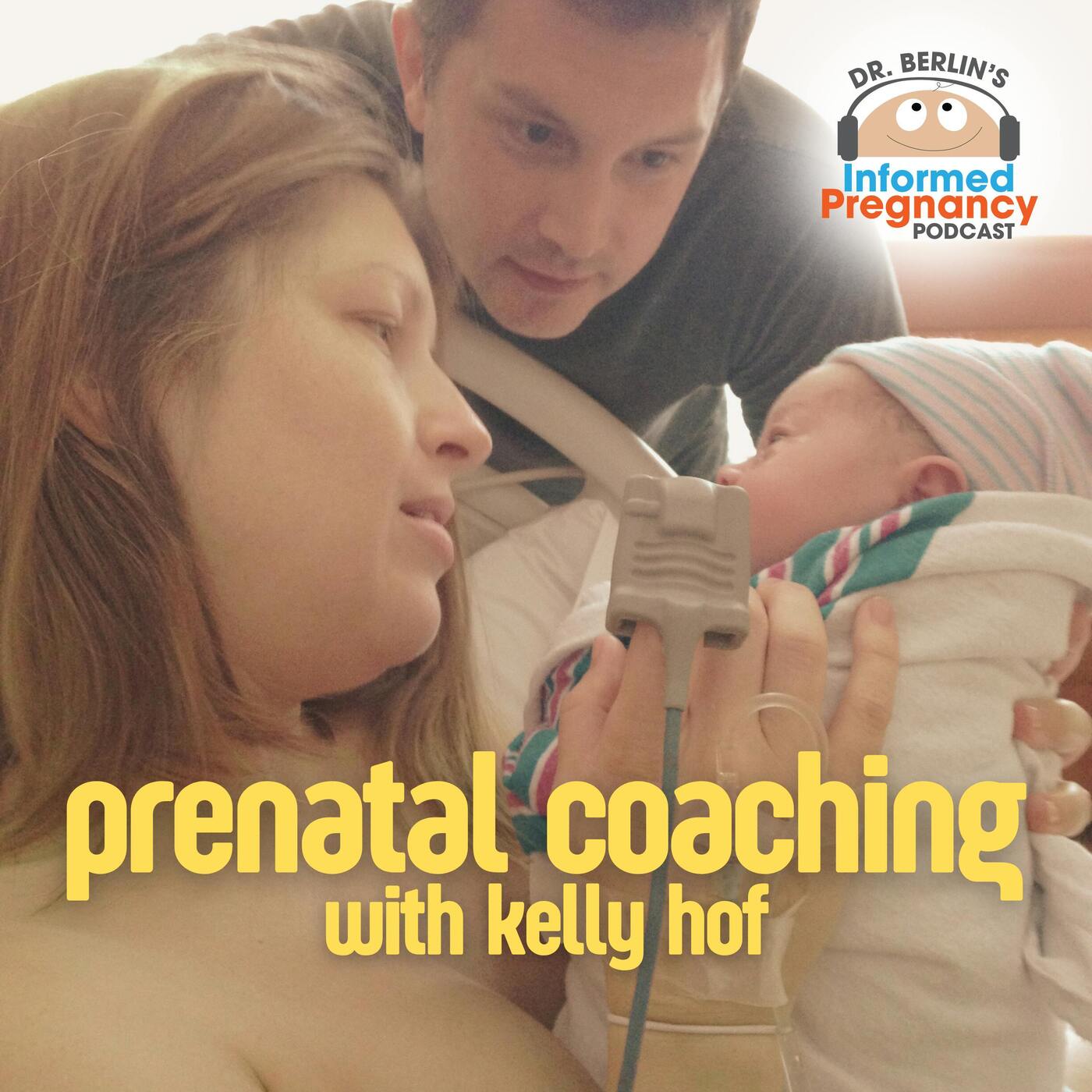
August 28, 2025 · 37 minutes · Episode 474
About this episode
Influenced by experiences with both traumatic and empowering births, labor and delivery nurse and prenatal coach Kelly Hof joins the podcast to discuss her medical journey both personally and professionally, including information and guidance on prenatal coaching.
Connect with the guest:
Informed Pregnancy Media and Mahmee present an all new podcast! One Way or a Mother is a new narrative podcast from Dr. Elliot Berlin, DC. Each season is an intimate story of one woman, one pregnancy, and all of the preparations, emotions, and personal history leading up to the birth. Episodes feature the expectant mother along with her family, doctors, and birth work team.
Start listening to Episode 1: I Should Have Died featuring Arianna Lasry
Keep up with Dr. Berlin and Informed Pregnancy Media online!
Learn more about your ad choices. Visit megaphone.fm/adchoices
See Privacy Policy at https://art19.com/privacy and California Privacy Notice at https://art19.com/privacy#do-not-sell-my-info.
Key quotes
“I ugly cried because I had a baby that was live and kicking that I could hold on to.”
“Well, I felt informed and I felt supported and I felt in control.”
“It's not even really standing up for yourself. It's just standing in your power.”
“What I see in the end is moms that don't know what just happened to them. And that's what causes trauma in my opinion.”
“Moms feel like they're gonna show up for themselves as the best version of themselves and be confident and calm in the birth space.”
Related episodes
- Ep. 470 Carlson Young: After Birth
- Ep. 500 The Unexpected with Dr. Elliot Berlin Part 2
- Ep. 469 Carlson Young: Before Birth
- Ep. 466 A Before & After Birth Story with Aimee Carrero: Part Two
Transcript
AI-generated transcript with speaker labels — may contain errors, especially names and medical terms. Dr. Elliot Berlin, DC appears in blue; Kelly Hof in orange.
Dr. Elliot Berlin, DC [1:00] My guest today is a labor and delivery nurse, prenatal coach, and podcast host whose professional path was shaped by firsthand experience of both traumatic and empowering births. After an early career stint in the Dominican Republic and an intense medical journey of her own, she turned her insights into a mission to help parents build agency and reduce trauma during childbirth. I'm pregnancy-focused chiropractor Dr. Elliot Berlin, and you're listening to the Informed Pregnancy Podcast. Kelly Hoff, welcome to the podcast.
Kelly Hof [1:47] Hi, so good to see you again.
Dr. Elliot Berlin, DC [1:50] It's great to see you, and I have so much to learn from you, and there's a lot to pack into this little episode. Yeah. I mean, I think you do incredible work, and you have incredible perspective, both as a professional and someone who has been through the system more than once. And I want to learn from you. So let's just go a little background. Where are you from and what do you do?
Kelly Hof [2:12] Well, I'm from Kansas. Not there anymore.
Dr. Elliot Berlin, DC [2:16] Not there anymore.
Kelly Hof [2:19] Yeah, so I grew up in a medical family and naturally ended up in a medical environment, and I am currently a labor and delivery nurse. I also work in maternal fetal medicine. I've been in all aspects of obstetrics, but currently doing labor and delivery in maternal fetal medicine. And my passion is prenatal coaching.
Dr. Elliot Berlin, DC [2:39] Okay, so how did you get into nursing? What was the path?
Kelly Hof [2:45] Well, I was either gonna be a doctor or a nurse. My dad's a doctor, my mom's a nurse, and my brother's a nurse, incidentally. So I started medical school, as one does.
Dr. Elliot Berlin, DC [2:57] Yeah, that's true, who hasn't?
Kelly Hof [3:00] And through a series of health issues, I decided that the universe was telling me not to continue in medical school, and ultimately took some time off to heal and get my life together, and decided nursing was a better path for me because ultimately I would have more work-life balance and be able to pursue other passions, including be with my family. So I'm not sad that I went into nursing.
Dr. Elliot Berlin, DC [3:28] Did you finish school before you started your family?
Kelly Hof [3:32] Yes, I did. It was like boom, boom, boom. So I finished, I graduated, took my boards, my brother got married, then I got married, then I got my license, and then we moved to New York City, and then I tried to find a job in an apartment. And all that happened between May and October.
Dr. Elliot Berlin, DC [3:50] And then at some point a baby.
Kelly Hof [3:52] Oh yeah, and then I had a baby. Yeah, that was a year later, almost a year later.
Dr. Elliot Berlin, DC [3:57] Okay, so let me ask you this about nursing school. Are you exposed in school to all sorts of different fields of medicine?
Kelly Hof [4:04] Well, kind of. The nursing school that I went to, they really were very hands-on. However, I had a lot of experience from before. So I started in the Dominican Republic doing family planning. I worked as an interpreter as well. So I was involved in like surgeries and medical groups that came to the Dominican Republic from the United States. So I got to see a whole lot of things, like orthopedic surgeries, all sorts of surgeries. Sometimes they let me scrub in, so all sorts of things. Came back and started being a medical interpreter, saw every aspect of medicine, then went to medical school and nursing school. So by the time I got there, I'd seen a lot.
Dr. Elliot Berlin, DC [4:43] Ah, got you. And so when you were looking for a job where you're looking for a particular field of nursing, or you just take what they give you?
Kelly Hof [4:50] You take what they give you, but I wanted something in either pediatrics or in obstetrics. And what I got was Mother Baby, so it was the postpartum unit in New York.
Dr. Elliot Berlin, DC [5:01] Oh, okay. So that's where you're working when you…
Kelly Hof [5:04] Had my first.
Dr. Elliot Berlin, DC [5:05] During your first pregnancy?
Kelly Hof [5:06] Yeah.
Dr. Elliot Berlin, DC [5:07] Okay, so you're already working in the hospital setting in baby making.
Kelly Hof [5:13] Mm-hmm.
Dr. Elliot Berlin, DC [5:15] Essentially. How was your pregnancy, your first pregnancy?
Kelly Hof [5:18] Hard. I was working nights, so…
Dr. Elliot Berlin, DC [5:22] Oh, wow.
Kelly Hof [5:23] Yeah. I waddled into the hospital.
Dr. Elliot Berlin, DC [5:25] Yeah. Oh.
Kelly Hof [5:27] Yeah, it was rough. I felt supported because I knew what the aftermath looked like. So I took care of moms that had been in vaginal and cesarean births, and I took care of their babies, and I kind of felt like I knew it all. And I had people pulling for me during the pregnancy, helping me through it. My OB worked with me, so he would be on labor and delivery and come down in the morning and be like, how you feeling? And I'd be running to the bathroom to puke.
Dr. Elliot Berlin, DC [5:54] So… Oh. Wait, did you have nausea throughout the pregnancy?
Kelly Hof [5:58] So much. Both pregnancies. I didn't just have nausea. I threw up both pregnancies the whole time.
Dr. Elliot Berlin, DC [6:03] Oh, so like hyperemesis.
Kelly Hof [6:05] Kind of. It was like once a day, but just felt like crap the whole day. So I guess you could call it a hyperemesis. No one ever said that. They gave me Zofran and I sucked it up, but… Yeah, it probably was.
Dr. Elliot Berlin, DC [6:15] Sounds hyperemesis-y to me.
Kelly Hof [6:17] Looking back on it, yes, I fully agree with that.
Dr. Elliot Berlin, DC [6:21] Yeah, I mean, it's a fine line.
Kelly Hof [6:23] It really is.
Dr. Elliot Berlin, DC [6:24] Did you have a plan for how you wanted your birth to go?
Kelly Hof [6:28] Well, I took a Bradley course because I thought that my husband was going to be like all hands-on and helping and stuff. Turns out he's a little squeamish, so…
Dr. Elliot Berlin, DC [6:37] Ah, okay.
Kelly Hof [6:38] Got a doula.
Dr. Elliot Berlin, DC [6:39] Okay.
Kelly Hof [6:41] As recommended by the Bradley course. And I could have done more preparation, but I kind of felt like I knew it all because of the field I was working in. So…
Dr. Elliot Berlin, DC [6:52] It's your office.
Kelly Hof [6:53] I mean, it felt like it, but I really wasn't working that closely with the people that ended up being in the room with me in my delivery, and things got a little crazy. I also didn't really appreciate the role that dehydration might take in the birth experience.
Dr. Elliot Berlin, DC [7:11] Eww. Okay. One might expect you would struggle a little with dehydration throwing up every day.
Kelly Hof [7:18] That and being a nurse, yeah, and like not having time to drink that much on your 12-hour shifts. And I delivered in summer in New York. And in New York, you don't have like central air unless you're a millionaire, so… H-A-W-T, what?
Dr. Elliot Berlin, DC [7:35] It was.
Kelly Hof [7:38] So…
Dr. Elliot Berlin, DC [7:39] How did it go down?
Kelly Hof [7:40] Well, fun story. My daughter is very, very into theater and singing, and it's very fitting that I started having those different contractions on the night that I went to go see my friend play Roxy Hart in Chicago on Broadway. And as the curtain went up, the contractions got weird.
Dr. Elliot Berlin, DC [8:02] Oh, wow. I thought you were like, as the curtain went up, the water came down.
Kelly Hof [8:07] That's what I was afraid of. I was there with my parents. They came to watch me at 39 weeks and wait till I popped. So I was like, we're gonna have to do some things because I don't want to be stared at for an entire week. And we went to this show and I was like, guys, I'm gonna need to sit on the aisle seat because I'm just kind of feeling like I might need to roam to the bathroom. But really what I wanted was to angle my knees away from the guy's head in front of me in case there was an accident.
Dr. Elliot Berlin, DC [8:37] You're so thoughtful.
Kelly Hof [8:38] I know. I'm always thinking ahead. And it was intense, but it was like contraction. And then my daughter moved so much in between. It was almost like she was dancing with the music. It was such a surreal experience. And the contractions went on like every 10 minutes overnight through the next day. And then they got weirder the next night around the same time. So I took my dog to the dog park with my dad because it's New York, right? You have to take your dog to the dog park to take them to the bathroom. And the dog park is like the happening place in the evening. And a friend of mine who had delivered her baby about six months before saw me. She's like, it's getting close.
[9:23] And I was like, yeah. And she also saw that I was acting weird. And like every once in a while stopping to breathe, she's like, oh, are you having like early? I was like, yeah, it's probably just prodromal. And then a dog came and peed on me. Like straight up, beelined to me, lifted his leg on my skirt.
Dr. Elliot Berlin, DC [9:43] He did not put his knees to the side of the chair in case.
Kelly Hof [9:45] No, he did not. It was very intentional. It was after he had like circled me for a little bit. And she said, oh, you're really in labor. That dog knows what's going on. And I was like, okay, okay, yeah.
Dr. Elliot Berlin, DC [9:58] Is that some sort of remedy?
Kelly Hof [10:00] I guess, cause she had her dog with her. And she said that her dog was very like overprotective during her labor. And she was like, this dog is marking its territory right now and is claiming you. And I was like, oh, okay. She's like, yeah, go hydrate, get everything ready. You know, like get your mind ready, texture doula. And I did. And it was a hard walk home. I'm not kidding. It was, yeah, I was in labor.
Dr. Elliot Berlin, DC [10:29] That is quite the prelude. First Broadway. Broadway then dog peed. Peed on by the dog. One can only wonder what happens next.
Kelly Hof [10:38] Yeah.
Dr. Elliot Berlin, DC [10:39] A little break and when we come back, we'll get the rest of your birth story. Welcome back. Welcome to Kelly Hopp. Okay, so you go to the theater and then you get peed on. What could possibly go wrong? How did the birth unfold from there?
Kelly Hof [11:04] Well, it got more intense, obviously. And my doula came to the house and we ended up in the shower with the water basically aimed right on my belly. And we managed, and I have no idea what happened as far as time, but we managed until in the wee hours of the night. And my neighbor next door drove us to the hospital, which was a very intense four block ride.
Dr. Elliot Berlin, DC [11:28] Okay, a couple of questions. When you say we ended up in the shower, how many of us were in the shower?
Kelly Hof [11:33] I was the only one in the actual shower.
Dr. Elliot Berlin, DC [11:34] Okay, they were just freaking in. Cause sometimes your husband's in there, some of the doulas bring a speedo.
Kelly Hof [11:39] My husband was off freaking out. My cat and my dog were watching me and the doula was in there supporting me.
Dr. Elliot Berlin, DC [11:44] Gosh, why did the neighbor drive you?
Kelly Hof [11:47] Because she had a car with a handicap plate on it. So she parked right in front of the building and she was so thrilled to have this job. She was like, ready.
Dr. Elliot Berlin, DC [11:56] Four blocks, how long does that take?
Kelly Hof [11:58] I mean, like five minutes. She drove me to the door, but this was like a really important thing for her. She was really excited.
Dr. Elliot Berlin, DC [12:04] I'm glad you could help.
Kelly Hof [12:06] I was so happy because it was like
Dr. Elliot Berlin, DC [12:08] three o'clock in the morning, I think. That's why five minutes.
Kelly Hof [12:12] Right.
Dr. Elliot Berlin, DC [12:12] And then, so you get to the hospital and are you as far along as you thought?
Kelly Hof [12:17] Well, I found out about an hour later, I was six centimeters, but there was no room in the end when we got there. I was in the waiting room for a very long time, didn't even get triaged, and I ended up in the PACU next to a mom who had just had a C-section, trying to labor naturally on a stretcher.
Dr. Elliot Berlin, DC [12:33] Oh my goodness, because that's the only space they had?
Kelly Hof [12:36] Mm-hmm. And I worked there.
Dr. Elliot Berlin, DC [12:37] PACU, oh right, your office, literally.
Kelly Hof [12:40] Yes.
Dr. Elliot Berlin, DC [12:41] Post-anesthesia care unit, PACU.
Kelly Hof [12:43] Right, yeah.
Dr. Elliot Berlin, DC [12:44] I mean, just because that's where there's a bed. These are people coming out of surgery and you're trying to have a natural birth. Wow, okay, so how does that go?
Kelly Hof [12:52] Well, it didn't go well. I was dehydrated and I did not have an IV and I didn't realize that the dehydration was leading to tachycystally. So I was contracting very, very close together and not getting enough breaks in between. And then ultimately I asked for an epidural and I don't recall ever getting an IV before the epidural, I recall getting it afterwards when I passed out. I may have the wrong memory, but that's how I remember it going down and I really thought it was weird at the time. I was like, why am I getting stuck in the arm for an IV now after I've gotten the epidural and I'm passing out? My blood pressure went down. I remember before I passed out,
[13:32] I looked at the machine and it said 80 over 40. And I also heard my daughter's heart rate dropping and a whole bunch of people came running in the room. I blacked out a little. When I woke up, one of the residents that I knew and worked with was touching my belly and he said she's in tetany, not tachycystally. So by then they had recorded a very long contraction which I overheard them saying something along the lines of 10 minutes. So at the same time that I was passing out, I was having a tetanic contraction and they gave me tributylene to stop my labor and get me caught up with hydration and blood pressure and all that stuff.
Dr. Elliot Berlin, DC [14:14] Okay, so we took a medicated time out.
Kelly Hof [14:16] Correct.
Dr. Elliot Berlin, DC [14:17] You kind of put everything on pause. You're talking about the difference just for English speakers, the difference between having a lot of contractions very, very close together versus tetany which is just one big contraction that never stops happening. And so we made that stop medically and had a chance to hydrate you, give you a little bit to rest. And then it has not a very long half-life so over time that medicine wears off and then the uterus gets back to its job hopefully on a better rhythm. Did you have a better rhythm?
Kelly Hof [14:52] No.
Dr. Elliot Berlin, DC [14:53] Oh, great.
Kelly Hof [14:54] We're snot.
Dr. Elliot Berlin, DC [14:55] I said hopefully.
Kelly Hof [14:57] What ultimately ended up happening was not only did I not have a great rhythm but we didn't know it but my daughter's cord was wrapped around her neck and she had a two-vessel cord. So all of those things, the tachycystally, the contractions that were too close together, not giving enough space for the oxygen to go back into the uterus and into the placenta into my daughter, that one long contraction and also the cord around her neck were making it really hard for her to get oxygen. So they offered me a C-section and at the time that they offered it, her heart rate strip looked good. And I asked if we could try something else before we went for the C-section.
[15:39] So they started me on low-dose pitocin and got me finally into a good rhythm. What ultimately happened was benign neglect. So they said, we have another delivery that we're gonna step into. And when we come back, we'll see where you're at. And it took a lot longer than they thought. And when they got back, I was ready to push.
Dr. Elliot Berlin, DC [15:59] So- Oh, okay. There you have it. Yeah. I guess we should explain also the two-vessel umbilical cord. Usually there are three, one and two arteries and sometimes you just have one artery. And so it could maybe impact the amount of circulation that the baby gets. So we had all these things that were potentially making it a little harder for the baby to get everything they needed for the rigor of labor. But thankfully somebody had a long labor and you guys had time to work it out and ready to push.
Kelly Hof [16:32] Yeah.
Dr. Elliot Berlin, DC [16:32] Did the pushing go okay at least?
Kelly Hof [16:34] Oh, I pushed for 20 minutes and-
Dr. Elliot Berlin, DC [16:36] Oh, very quick.
Kelly Hof [16:37] It popped out.
Dr. Elliot Berlin, DC [16:38] Good things come to people who wait.
Kelly Hof [16:40] Right. Her heart rate was going down while I was pushing. It was nerve wracking. The doctor said to me, I'm going to make room for the baby. And we know it. I thought it was the fun stretching that one might do to help the baby come out.
Dr. Elliot Berlin, DC [16:56] Stretching with the scissors?
Kelly Hof [16:58] There was scissors involved, yes. And I didn't find out until later.
Dr. Elliot Berlin, DC [17:01] So you didn't realize what was gonna happen? You didn't realize that's what they meant?
Kelly Hof [17:05] No.
Dr. Elliot Berlin, DC [17:06] Oh, so not a very clear informed consent.
Kelly Hof [17:09] No. I'm sorry. Yeah, and it took me a while to kind of reconcile what happened. I was shocked when I went up to, like fast forward to postpartum and they told me I'd had an episiotomy and I didn't realize it. But the steps, and we can talk about this as we progress to the next labor, because it's part of how I kind of healed for my next labor. But learning what happened helped me understand it and come to terms with why it happened. But she was born floppy and blue.
Dr. Elliot Berlin, DC [17:38] Oh, no.
Kelly Hof [17:39] No. She asked me to reach down and pull her out. I didn't feel like I could maneuver that far. So I declined and then she handed me my baby. And when she handed me my baby, I felt like I couldn't hold on to her because she didn't have any muscle tone and her head was flopping towards me and it terrified me. So we had the NICU team there because she had the two vessel cord and her heart rate had been going down. And I simply sent her to the NICU team and it took her what felt like forever to cry. But they gave her nine, nine Apgar's. So my understanding is that she probably cried within that first minute or at least according to their time. And then everything was pretty much fine
[18:24] after that physically. They don't make it easy on you.
Dr. Elliot Berlin, DC [18:28] They don't. What was the recovery like?
Kelly Hof [18:31] Harder than I thought it would be. I had pain for about nine months after that. Now a resident sewed me up. So I'm not sure if that had anything to do with it. When my doctor looked at me at the six week postpartum visit, he said that there was still some granulation tissue internally that was left there. So essentially the area that they had sewn up hadn't fully healed. And they told me that I had a second degree laceration internally and then the episiotomy. So I'm not sure. That doesn't completely make sense to me, but that was what was in my chart. So I can only imagine that it was that internal tear that was hard to sew up and that was hard to heal.
[19:13] And he said that I may need some silver nitrate treatment at some point, but we ended up not needing it. And then I almost got to the point where I went to pelvic floor physical therapy for that pain. And then it just miraculously went away in like nine months.
Dr. Elliot Berlin, DC [19:27] Yeah. Lucky.
Kelly Hof [19:29] Yeah.
Dr. Elliot Berlin, DC [19:30] All right. So then you had another baby. How long had you been?
Kelly Hof [19:33] So my daughter was three and a half when my son was born. And I had by then gone back and obtained my medical records. I'd also become a labor and delivery nurse. So completely fresh perspective. And I had a team that knew about my previous birth and was ready for my do-over. That was everybody's goal was to give me my do-over. I got to choose the date. I had an induction because I wanted to be able to make sure my daughter had childcare and that my husband was gonna have time off. And I wanted to deliver on a Friday so that my FMLA would kick in on a Monday because nurses, they don't seem to quite understand how nurses' schedules work. So I was like, let's just make it easy.
[20:15] And after learning the rationale behind the episiotomy and talking to my doctor about what it might look like for the next birth, I was confident that the team I'd chosen for my OB-GYNs, so it's a four-woman group, that they would be able to repair whatever damage occurred and potentially try to fix whatever scar was still there. So if you could have an induction as similar to the natural vaginal birth as possible, like I did, it was like almost mirror image once we got that labor started. I ultimately got the epidural about the same time, around eight centimeters. I passed out.
Dr. Elliot Berlin, DC [20:58] What are you doing?
Kelly Hof [21:00] My friends came running in with the turbutylene. It was the whole thing. But I had been hydrated up to that point and I was on pitocin before that, but it felt like deja vu. And my son's heart rate kept going down, especially after the epidural. But what was happening was I was just dilating really fast. So I went from eight centimeters to nine centimeters to 10 centimeters, and then the heart rate went down for a couple of minutes and then came back up.
Dr. Elliot Berlin, DC [21:30] Three vessels?
Kelly Hof [21:30] No, but he definitely had the cord around his neck. So.
Dr. Elliot Berlin, DC [21:34] Wait, so he had all three vessels?
Kelly Hof [21:36] He had all three, yeah.
Dr. Elliot Berlin, DC [21:38] Okay, but he also had cord.
Kelly Hof [21:39] Yeah. So I was so numb from the epidural when I started pushing, that I felt like I couldn't really feel what was going on and I felt really out of control. And the NICU team was there because his heart rate was doing all that funky stuff. And so I asked if they could do a vacuum because I was just like, I'm done. I've been trying for 45 minutes and I didn't feel like I was doing anything, even though they said that I was making progress, was tapped out. And so she said, sure, she put the vacuum on. She said, you know, this means that I'm gonna have to cut an episiotomy. At that time, my son is six years old and it was the practice in that hospital
[22:19] with that particular practice to cut an episiotomy for vacuums. Not everybody's doing that anymore, but at that time, that was the norm. So I was like, fine, do it. I trust you to sew me up. And she put the vacuum on very lightly, very easily and slowly guided his head out after the episiotomy and like he came out screaming. It was perfect. I ugly cried because I had a baby that was live and kicking that I could hold on to. And yeah, it was bad. Like I could not control it to the point where my husband was like, are you okay? Like, I'm just so happy. And my nurses that I picked, I got to pick my nurses. They were like, she's just happy that her baby's crying
[23:02] and I was like, what she said. So it was perfect. It was beautiful. I felt so supported and the recovery was fine. I hardly had any pain.
Dr. Elliot Berlin, DC [23:14] Okay, so that's two similar births experiences, but there are differences. Like how would you describe the differences from your experience?
Kelly Hof [23:24] Well, I felt informed and I felt supported and I felt in control. I felt like I knew what was going on the whole time and I could make good decisions based on what was going on. Whether or not there are the decisions that I wanted to make previously, like I would have preferred to not have a vacuum and an episiotomy, but I asked for it because I felt out of control and I knew that that would bring me back into control and I was willing to sacrifice a small part of my body to make sure that my baby came out without the trauma that I'd experienced in the previous birth, like the emotional trauma.
Dr. Elliot Berlin, DC [23:56] Yeah. Well, those stories are pretty powerful and you always say mom can do anything, it's true. And what you guys do never ceases really to amaze me like just how powerful and strong and durable you are in your ability to do the things necessary to make us and deliver us and bring us into this world and then raise us. And your stories are just more examples of that. I would love to take a break when we come back. I'm really curious how those experiences have impacted your work that you do as a labor and delivery nurse and also the work that you do in coaching and your cool podcast, The Birth Journeys podcast. We'll be right back.

Dr. Elliot Berlin, DC [24:52] Welcome back. We're talking to excellent human, Kelly Hopp. Okay, so you made the two kids and you brought them in different ways and you're a labor and delivery nurse. So you've had the experiences and you know, people come in wanting all sorts of different things. Sometimes it goes how they want. Oftentimes it doesn't go how they want. How did your experiences kind of influence the work that you do, both in terms of labor and delivery nurse at the hospital and the coaching work that you do?
Kelly Hof [25:20] Well, the first thing that I noticed was between the two births with similar kind of outcomes, I felt understanding what was happening to my body and feeling like I was an active participant versus somebody that was getting told what needed to happen was what made my second birth experience so much more positive than my first birth experience. And I wondered if there was a way that I could help moms have that information ahead of time. But then I started learning as I started going down the little rabbit holes that it wasn't just about information. It was about having the confidence in the ability to communicate and the ability to kind of find your happy place
[26:05] while you're in the labor space and be able to be in tune with your body and be able to kind of do that labor bubble thing where you block out all of the potential negativity, distractions, anything that could be going on. And I started searching for ways that I could bring that to moms before birth because it's too hard to do it when they're in the hospitals. And I found that a lot of the moms that had come in with a doula tended to look to the doula for advice. And I wondered if we helped moms get to a place where the doula was just there to kind of support and not necessarily help them drive the car, you know, like where they were able to have the questions and be able to engage briefly
[26:58] in conversation if necessary or communicate their desires, if that would be a better outcome. And for the moms where I've been able to actually have coaching sessions with them, where we talked about how we wanna feel in the birth space, how we wanna communicate in the birth space, what it would look like to take something where it didn't exactly go as planned, but be able to pivot without having that be a negative experience and still feel like you're in the driver's seat and also maintain your calm, how that would have such a more positive outcome than relying on either your birth team or like meaning your midwife, OB-GYN, nurse, or doula to kind of be your voice.
[27:46] And I've seen a lot of the spectrum. I see moms that come in very confident and they're rattled when they hear something that needs to happen that they didn't want or they suddenly feel like they don't understand what's going on. And I've seen moms that come in and they have the verbiage, they have the words to communicate either because, you know, that's their profession is communicating and deescalating and, you know, having those skills. And I wondered if maybe we could just go to the point where I taught that. So I teach the words that we use in the hospital and I teach the words that we use as nurses to try to deescalate situations and I help moms get to kind of the heart
[28:28] of what they're trying to say instead of feeling like they're objecting to something. So if somebody says, you know, I think in order to get this birth on track, we might need to start a little bit of Pitocin. We talk through how to make that not, first of all, not triggering. And then second of all, be able to use the language to gain information and share your feelings without feeling like you're going against the recommendations of the doctor or midwife. If that makes sense.
Dr. Elliot Berlin, DC [28:59] Makes a huge difference.
Kelly Hof [29:01] I think, yeah. I think the way that we speak to each other makes a big difference. And it's hard when you're in that space and you feel you're so vulnerable. First of all, when you're in labor and delivery, it's not the time to start to learn how to stand up for yourself. And it's not even really standing up for yourself. It's just standing in your power. And I feel like there's this shift that has to happen when we're in that kind of vulnerable situation where you don't want to feel triggered. You want to feel empowered. And it's really, really hard to feel that way if you haven't done the prep work. And I've seen moms that instead of doing the prep work
[29:40] rely on their birth team. And what I see in the end is moms that don't know what just happened to them. And that's what causes trauma in my opinion.
Dr. Elliot Berlin, DC [29:47] So you also have a podcast.
Kelly Hof [29:51] Yeah.
Dr. Elliot Berlin, DC [29:52] And you also work with moms privately. Tell me about the platforms.
Kelly Hof [30:00] So the podcast, the Birth Journeys podcast, I started to really gain an understanding of other people's birth experiences. So I was coming from a medical perspective and I was just really curious what it was like for a doula to give birth or what it was like for someone to give birth at home or in a birth center. And I really felt like I couldn't truly help moms without understanding all the different perspectives. Because from the hospital, I see moms come in and we have recommendations and some of them want some of the things we recommend and some of them don't. And from the medical perspective, it just seems strange that you wouldn't want what we have to offer.
[30:42] So I started getting curious and I started interviewing moms and the first two years of the podcast was essentially just me interviewing moms about their birth stories to normalize all different types of birth so that I could understand it so that my listeners could understand it. And I was hoping that other labor nurses would chime in or listen in and understand it. And many of my colleagues did actually and they've had an eye-opening experience along with me learning how people feel going into birth and why they make the choices that they make and how they might've been helped in preparation for birth.
Dr. Elliot Berlin, DC [31:17] Yeah, what you said really is interesting and I've talked about it on the podcast before. I will, in my earlier days for sure, like somebody would come in and have exactly what I treat and I was like, oh yeah, I have this remedy for you and it's great at treating that. And they're like, yeah, I don't want that. Right, then why are you here? I don't know, I think you do want that. That's what you came in here for, like this is what I do all day, every day and it's gonna help you. And it's a constant lesson that my job is to sort of explain what I know and what we can do and how I think it'll help them. And at the end of the day, respect whatever decision they make regarding the care.
[32:03] They might say, I want that, great, we do it. And they might say, I don't want that and it's nothing personal against me. It's just for all the reasons that are part of their decision. They've weighed the options and they've chosen to not do it. Sometimes they'll do eight out of 10 things but not the two that I think are gonna be most helpful. And it's just my job to present and help them make an informed choice and then support whatever choice it is that they make even if it's not the choice that makes sense to me or that I would do. And that's one of the things I think I just see like as a doula, I would see in labor and delivery is sometimes practitioners in the hospital,
[32:43] doctors, nurses who are just doing what they think is the absolute best thing to do, the best quality of care, the same thing they would do for their own family and nothing nefarious, nothing dark-hearted. It's just like, I wanna help you. I wanna give you the best possible care and really just being perplexed and confused and not understanding why somebody wouldn't want that. And so when you said that, it definitely triggered my own personal experiences and I could see how valuable that could be to any of us, any practitioner, especially in the birth space but in general, and then also especially in the hospital setting where you are just trying to do what you
[33:22] are trying to do what your experience tells you is the best thing to do. And sometimes you have to take a step back and not do it or shift gears. And having a platform like yours, a podcast like yours could really help people understand why what goes into the thinking and the decision-making of somebody who's not going down the path that you are recommending.
Kelly Hof [33:45] Yeah, well part of it's funny and I had a guest that I have interviewed a couple times point out the change that has how I've evolved as a person from the beginning of the podcast to now. And she pointed out how a lot of what I was trying to do was help people understand why they might be offered things in the hospital. But what's happened is I've switched to help people understand why people make the choices that they make and how autonomy and agency is so important and that our job as nurses, doctors, people offering interventions in the hospital isn't necessarily to just shove the intervention in their face. It's to understand the reasoning
[34:29] behind why they may not choose that intervention and respect someone's agency and autonomy but also kindly communicate if they really believe that they're making the wrong choice and work together to get to the outcome that everybody wants. That's really hard to do in such a stressful environment.
Dr. Elliot Berlin, DC [34:50] Yeah, there's a lot of pressure from various sides. I wouldn't envy your job.
Kelly Hof [34:57] Don't either.
Dr. Elliot Berlin, DC [34:58] Yeah, it's a tough job. I mean, I'm so grateful to nurses. I always have been, even when I worked in emergency rooms and ambulances as a medic, but after COVID, it almost killed me and the nurses saved me. And after all the work I do in labor and delivery, I mean, the nurses are the heroes of the day to me, but it's still a job I don't, it's such a pressure. And it's really heroic what you do. I wanna just, as we're winding down, find out more about your coaching.
Kelly Hof [35:32] Well, you can go to kellyhoff.com and you can click on my coaching program, which there's various places on that main website that you can click on it. And the packages that I offer will be outlined. Usually I, so I have two packages, you can do it. You can do three sessions an hour each, or you can do six sessions an hour each. And it just kind of depends on where you are in the birth process and what your past experience is. If you're a second time mom, you may just need the three sessions and we just kind of talk about what happened last time, what you would like to see happen, how you wanna feel and communicate in the birth space. And it's very, very tailored to whatever somebody needs.
[36:11] So I wouldn't just do a blanket statement of saying, this is what everybody needs. I usually do like a call where we kind of determine what would be the best option, but usually between three and six sessions is sufficient to get to the point where moms feel like they're gonna show up for themselves as the best version of themselves and be confident and calm in the birth space.
Dr. Elliot Berlin, DC [36:34] Thank you, Kelly. Thank you for coming on. Thank you for sharing your personal birth stories and your expertise. I learned a lot from you.
Kelly Hof [36:44] Thank you, I learned a lot from you.
Dr. Elliot Berlin, DC [36:46] I can relate to you in certain ways and you've made me think I'll be up all night. One more time, where do we find you online?
Kelly Hof [36:53] It's kellyhoff.com. It's K-E-L-L-Y-H-O-F as in Frank, just the one F.com. Just one F.
Dr. Elliot Berlin, DC [37:01] Leave off the last F for famous.
Kelly Hof [37:04] We are very simplified in this family. Three letters.
Dr. Elliot Berlin, DC [37:08] kellyhoff.com. Thank you again and at home. Thanks for listening to the Informed Pregnancy podcast. For more pregnancy and parenting information just like this, visit us online at informedpregnancy.com.
Want more pregnancy + parenting? Start your FREE TRIAL of Informed Pregnancy+ and get access to all our curated pregnancy and parenting content — original series, iconic birth films like The Business of Being Born, prenatal workouts and more.

0 Comments