
August 21, 2025 · 49 minutes · Episode 473
About this episode
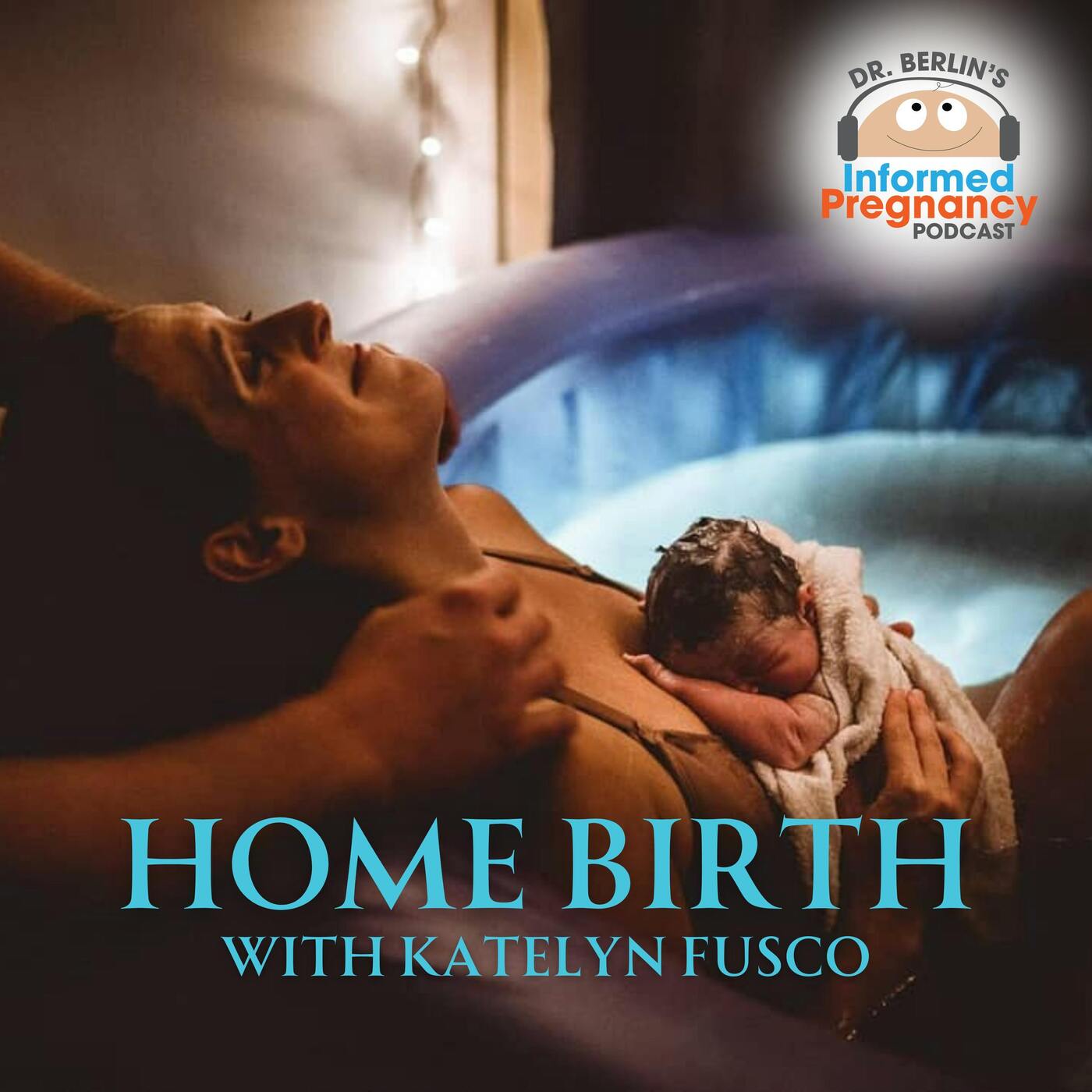
Podcast host, birth educator, and midwife trained mother Katelyn Fusco returns to the podcast to discuss all things home birth, including her own third experience.
Connect with the guest:
Happy Home Birth Academy on IP+
Informed Pregnancy Media and Mahmee present an all new podcast! One Way or a Mother is a new narrative podcast from Dr. Elliot Berlin, DC. Each season is an intimate story of one woman, one pregnancy, and all of the preparations, emotions, and personal history leading up to the birth. Episodes feature the expectant mother along with her family, doctors, and birth work team.
Start listening to Episode 1: I Should Have Died featuring Arianna Lasry
Keep up with Dr. Berlin and Informed Pregnancy Media online!
Learn more about your ad choices. Visit megaphone.fm/adchoices
See Privacy Policy at https://art19.com/privacy and California Privacy Notice at https://art19.com/privacy#do-not-sell-my-info.
Key quotes
“I wouldn't trade any of my births for anything.”
“What I've learned about birth stories is that they do hold so much gold if we're willing to go back and really look through them.”
“You can be upset and in pain about it forever. And another choice is to grieve it and feel those feelings and also take the lessons and go on to do something beautiful.”
“There is no birth that is without risk, whether you are in the hospital, whether you are at home.”
“The idea is not home birth. The idea is safe birth.”
Related episodes
- Ep. 470 Carlson Young: After Birth
- Ep. 500 The Unexpected with Dr. Elliot Berlin Part 2
- Ep. 467 A Before & After Birth Story with Aimee Carrero: Part Three
- Ep. 458 In Conversation with Julie Sawaya
Transcript
AI-generated transcript with speaker labels — may contain errors, especially names and medical terms. Dr. Elliot Berlin, DC appears in blue; Katelyn Fusco in orange.
Dr. Elliot Berlin, DC [0:00] Welcome to the Informed Pregnancy Podcast. I'm your host, Pregnancy-Focused Chiropractor Dr. Elliott Berlin. My guest today is back for her second visit, and so much has unfolded since she last joined us. She's a birth educator, midwife-trained mama, and the powerful voice behind the Happy Home Birth Podcast. We're catching up with her on her third home birth experience, diving into birth processing and storytelling, and clearing the air on some of the biggest misconceptions about home birth. I'm Pregnancy-Focused Chiropractor Dr. Elliott Berlin, and this is the Informed Pregnancy Podcast. Caitlin Fusco, welcome back to the podcast.
Katelyn Fusco [0:50] Dr. Berlin, what an honoring intro there. Thank you so much for having me.
Dr. Elliot Berlin, DC [0:56] Well, my pleasure. Last time I spoke to you, almost a couple of years ago now, you were eminently due with your third baby, and you had two very different birth experiences prior to that. If you could do like a one to two minute recap on the two births that had happened previously, then we'll jump in and find out how number three went.
Katelyn Fusco [1:16] Beautiful. Sounds great. So it's interesting because, you know, I've had three home births, but they are so vastly different. And with my first birth experience, you know, I was working as a student midwife at the time. So kind of receiving care and providing care all at once. And that was just such an interesting buzzing time that birth was very long. And I did a lot of manipulating. I tried to get labor started, even though I knew, you know, I knew that's not what you do. But that's definitely what I did. And yeah, it led to a very long, very intense labor. But once I did actually give birth, once my daughter kind of decided to hop on down into my pelvis,
[2:01] she was out within 10 minutes. So that was a pretty shocking experience.
Dr. Elliot Berlin, DC [2:06] Wow.
Katelyn Fusco [2:06] Yeah, it was pretty wild. And so it did make me wonder, well, what is that second birth going to be like? You know, she kind of had cleared the way. And once she got into the pelvis, it was fast. And lo and behold, that second birthing experience was very precipitous, I think two and a half hours from start of true active labor to finish. And what was so special about it was that in the time between that first and second birth, I had spent a lot of time learning how to be in the moment, how to be present. And I felt like that would really help me if I did have a short labor to be present and in the moment. I'd interviewed enough people between then and now to know that sometimes those precipitous births
[2:50] can feel like a train just has come through. And for me, I wanted to be able to experience every single moment. So that is how that unfolded. And it was a beautiful experience. And I felt like I was truly able to soak it in just a really peaceful, lovely birth.
Dr. Elliot Berlin, DC [3:06] Does that put pressure on the third one?
Katelyn Fusco [3:08] Oh, that's such a great question. No, I can honestly say I really especially it was four years between my second birth and my third birth. And I feel like four years of growth and maturing in motherhood and learning that things do not always unfold the way that you want them to or expect them to served me well because I wasn't holding on too tightly to one specific outcome.
Dr. Elliot Berlin, DC [3:35] Okay, that makes sense. And it's sort of mind flexible of you.
Katelyn Fusco [3:40] Well, well, thank you.
Dr. Elliot Berlin, DC [3:43] So, yeah, last time we spoke to I think you were probably just about two weeks out from giving birth. How did round three go?
Katelyn Fusco [3:49] Oh, man, it truly was a beautiful experience. I'm so grateful for all three of my births and the way that they have been exactly what I needed even without knowing that was exactly what I needed in this birth experience. You know, I know that we went into my pregnancy some with our last conversation, but there was a big question mark as to how I wanted to go into that birth. You know, I had a care provider, a midwife who is fabulous and she's highly trained. She's a nurse midwife. And also she just trusts birth and she trusts women's bodies. She's that beautiful balance of I trust birth and if something goes differently than expected, I can take care of it.
[4:34] And I just love that in a care provider. How special is that?
Dr. Elliot Berlin, DC [4:38] Very grounding.
Katelyn Fusco [4:39] Yes. And so for the first, you know, number of weeks of my pregnancy up until I don't think I reached out to her until I was 20 weeks pregnant, I was trying to decide am I going to have a midwife? There was this feeling kind of in my gut of what would it be like if it were just myself and my husband and my family. But then we got around that time and I thought, you know what, I really love this person too and I would love to have eyes on me and I would love the female bonding of that experience of having a midwife and a care provider who, like I said, trusts the body. And so I went to see her. We talked and she kind of knew that there was a question of, you know,
[5:15] when would I call her? Of course, I was planning on calling her at some point, but would I call her when I was at the beginning of labor? Would it be right when I'm starting to push? Would it be immediately postpartum to ask her to come over? And she was comfortable. If that's the decision I wanted to make, then she was supportive of that. And so what ended up happening was the morning that I went into labor, I noticed that around 10 o'clock I was kind of having some contractions that were different. Now I had prodromal labor with this baby. This was the first time that I'd ever experienced that and God bless. You know, isn't it so interesting how each new experience gives you
[5:54] just this new layer of compassion towards others? Because I had not experienced that before and wow, what a mind-bending experience.
Dr. Elliot Berlin, DC [6:04] I wonder if we can explain what that is for the audience.
Katelyn Fusco [6:07] Absolutely. So what would happen was every night I would go to sleep or I would try to go to sleep and then these contractions would start and they would feel like true labor contractions and they would have rhythm and they wouldn't stop for quite a while and it wasn't that they were, you know, five minutes apart every single time, but it was just enough to keep me awake for a good bit of the night. And I think that's what's so exhausting about it is, you know, we're anticipating this exciting thing going into labor and we're not sleeping because these contractions keep coming and then they'll kind of fizzle out in the morning where then I'm jumping into motherhood of having two children
[6:50] that are here and need my attention and all of the other things that are going on while waiting for, you know, the true labor to start, which also gives you the question of when is it true labor? Am I going to know when it's true labor at this point because this feels like true labor.
Dr. Elliot Berlin, DC [7:06] And this is on your third. It's not like your first time around the block. I would say that prodromal labor sometimes looks to me like the car is in neutral and you're stepping on the gas and you hear all the revving, but you're not going anywhere. And then eventually it like clunks into drive and then boom, it takes off.
Katelyn Fusco [7:23] Yep.
Dr. Elliot Berlin, DC [7:23] So yeah, it could be very depleting.
Katelyn Fusco [7:27] It sure can. So that's what I had been experiencing. But I will say this day when the contractions were going on at 10 a.m. I thought, okay, I think this is the day, you know, something kind of clicked into gear. The pattern is different. One, because it is during the day, it's not in the evening and through the night. This is during the day. These aren't as close together right now, but there is a different feeling to them. And a lot of times I do feel like the prodromal labor, you know, sometimes we can feel like it's not doing anything. It's such a waste of time. And that is not the case. You know, there is something going on and that prodromal labor is getting the baby into the right position.
[8:04] It's getting our uterus toned and ready. So being able to let go and trust, all right, something's happening, even if it's not labor all the way, can help that situation. But this day, labor contractions kind of started. And I remember calling my mom and asking her to come over just to help me get things cleaned up, you know, one final clean before the baby arrives. So she came over. She helped me clean my house. She was on her hands and knees mopping my floors. Thank you Kit so much for that. And then it got to be about, I think it was around 430 and my mom was like, Hey, do you want me to take the kids over to my house for now? I'll feed them dinner and then I'll bring them back home tonight
[8:44] and put them to bed, you know. And I said, OK, I guess so. But you're 30 minutes away. So she lives 30 minutes away. I really did want my kids to be present for the birth. I was like, you're 30 minutes away. And I just feel like this might go really fast once it actually starts. And she was like, I will come as soon as you call. I will be there. Don't worry about it. I'll come as soon as you call. So I said, OK, 430, my kids are, you know, wheeling out of the driveway and headed off 30 minutes down the road. And as soon as everyone left and my husband was home, as soon as everyone left, the contractions really started.
Dr. Elliot Berlin, DC [9:24] As often happens.
Katelyn Fusco [9:25] Yeah, exactly. It was like they're gone. Here we go. I can focus inward at this point. And so I did. I went into my room and it's interesting in my previous birth the previous precipitous quick birth. I wanted to be upright the whole time. So standing, I was holding my arms around my husband's neck and kind of squatting down, but very upright. With this birth, I noticed that I wanted to lie down on my side. And so I did that and laid there for, I mean, really it couldn't have been that long because the whole experience was very short. But it seemed like I was laying there for quite some time. And I remember laying on my side and having this very,
[10:06] very intense contraction and thinking, wow, that was very powerful. And yet somehow in my mind, I still felt like we had a lot of time left. You know, why? I don't know why, but that is where I was. You know, this just started. We've got time. So another really cool thing was that my husband and I had both been trained in craniosacral fascial therapy just a couple of months prior. Yeah, the Gillespie approach. And so he was actually able to do some CFT on me throughout the labor, which really was just such a beautiful experience. I was laying on the bed and he was, you know, at my occiput and doing these fascial releases. And then a contraction would come
[10:48] and I would just put my hands on his hands and have him stop. And I would just lay there and have this contraction. It's just so interesting to have gone from, you know, so vertical in the previous birth to so horizontal in this birth. And that went on for a little bit. And then finally it clicked. You know what? I think I'm in active labor. I think this is active labor. So I went ahead and sent my midwife a text just letting her know, hey, just so you know, I think that active labor has actually started. I will keep you updated. I'll let you know if I need anything and what I want. So she thumbs up the message. And as soon as I get the little thumbs up message back,
[11:28] I start feeling so nauseous. I mean, just so nauseous. And then it hits me. Oh, I think I've miscalculated. Oh, no. I think I'm about to start. And then I threw up and then I felt a very strong urge to push.
Dr. Elliot Berlin, DC [11:49] Oh, wow.
Katelyn Fusco [11:50] So my midwife was 45 minutes away. There was no way she was making it even if I had told her in that moment, please come on right now. But we didn't even think to do it. My husband, he had just filled up the birth pool. So I hopped into the birth pool and he was kind of asking me like, what do you want me to do? Do you want me to call her? What do you need from me? And I was just like, no, we're doing this. Everything's fine. Everything feels good. And it was just this deep intuitive sense of this is how it is supposed to be this time. This is how I want this. This feels so right. And it feels so, so powerful. This is the experience. So right after I had sent my midwife that text
[12:31] and then felt that nauseous feeling, my husband had called my parents and let them know, bring the girls back right now. Please bring them on. And spoiler alert, they did not make it by a long shot.
Dr. Elliot Berlin, DC [12:43] Oh, there goes all my questions about having your kids at the birth.
Katelyn Fusco [12:46] Yeah, sorry about that.
Dr. Elliot Berlin, DC [12:47] Just X those out.
Katelyn Fusco [12:49] So they're called. They're supposed to be on their way. Of course, there was holdups all around. So I'm in the birth pool and I just remember feeling like, oh man, I'm at the pinnacle. I am right here and it's all about to happen. And there's nothing that can be done about it. You know, I can't get off of the ride at this point. Here it is. Here we go. And feeling so calm in that and good about that. So my husband had set up a GoPro, you know, just kind of situated it so we could have the birth recorded. And that's always so fun to look back at. I remember leaning over the birth pool, which is really how I did that with my first birth as well.
[13:29] Just kind of leaning over and he's holding my hands. And I remember just the intensity that came on as my body began to push. I've had the fetal ejection reflex very strongly with all three births, especially the first and third. Just such a strong fetal ejection reflex. And I remember looking at my husband and I wasn't vocalizing very much, but I remember these tears that just started streaming down my face, just at the intensity of all of it. It just was such a strong, powerful, intense moment. And then our baby came out and he was born in call. And it was so neat. It was just such a neat thing. And so I pulled him up out of the water. I pulled the amniotic sack off of him
[14:19] and just held him to my chest and he was pretty quiet. I don't know what his Apgar score would have been, but he was not just like screaming and he wasn't all over the place immediately. It took him a minute to come around. And I do think that part of that was that he was still in the amniotic sack. There was all of this fluid around him and then there was fluid inside. And so I did feel very instinctively to just put my mouth over his mouth and nose and kind of suck everything out that was there, which was very unforgettable taste.
Dr. Elliot Berlin, DC [14:50] Oh, probably texture.
Katelyn Fusco [14:54] Yeah, it had to go there though. And then he very quickly started to pink up and was moving around and would give out a little cry here and there. And it was just truly, I wouldn't trade any of my births for anything. And something about just myself and my husband there was just so beautiful. So we did reach out and let my midwife know, hey, the baby's here. She was like, what? I just talked to you. Like, what? Then she asked, do you want me now? Do you want me to come a little bit later? And we opted for having her come the next morning. This was at 7.30 at night.
Dr. Elliot Berlin, DC [15:30] Oh, wow, so you had the first night?
Katelyn Fusco [15:33] Yeah, yep.
Dr. Elliot Berlin, DC [15:34] Well, you guys. Just the two of them.
Katelyn Fusco [15:35] But now with your other kids around. The kids, they did come back. So I'll get there. And I will say another really cool thing that happened was my placenta came out very quickly, very easily. There was minimal bleeding. It was just such a lovely experience with no complications. And I know that that is not how labor unfolds every single time. I'm fully aware of that. So I feel so grateful and so blessed to have had that experience and for it to have gone so beautifully. And then my daughters did get there a good hour after, I think, 30 minutes to an hour, probably closer to an hour. They came in and they saw their baby brother and they were so excited.
[16:15] And it really was just so beautiful. I thought I wanted them there, and I did. But having them come in soon after and get to meet him while we were still in the height of that oxytocin rush, they got to see their little brother. And that was a beautiful experience as well.
Dr. Elliot Berlin, DC [16:31] I'm so happy for you. And it's interesting that you had the sort of thought early on before you even hired the midwife. Like, do I even want a midwife there? Almost put out that intention that maybe you don't. In the end, you didn't.
Katelyn Fusco [16:46] And you know what's so beautiful about that provider is I did get a little unsure towards the end. And it wasn't like an intuition unsure. It was like a, I don't know, should I? Is this right? Is this wrong? Is there something wrong about doing this? And it was her who reminded me, really, I think it was at 39, my 39-week appointment. She was like, Caitlin, you do remember when you came to me that you were kind of not sure if you were going to have me come, right? And I was like, yeah. And she was like, OK. Just wanted to make sure that you, you know, just want to remind you that you are, I trust you. I trust your decision making. And I'm very grateful to her for that reminder.
[17:28] And it almost gave me, which I don't need permission, but it did give me the permission to be like, OK, yeah, that is what I wanted. And I do feel, I feel called to this in a way. And what's really neat, and I think that's really a great reminder for others, is it doesn't always feel that way. For example, I would like to have another child at some point, and I already know I want her there for that one. I want a midwife at my next birth. I love that experience. So it really was just a deep, intuitive sense and knowing that for this birth, for whatever reason, that was an experience that my husband and I wanted and perhaps needed to have.
Dr. Elliot Berlin, DC [18:07] I really appreciate you sharing that story. It's powerful and beautiful. And also brings me to the idea of sharing your birth story, thinking about your birth that you've had, processing the birth that you've had, and telling it over, and if there's value in that. And also, since it was a home birth, and in your case, a home birth unattended by a child birth professional other than yourself, that I think brings up for a lot of people thoughts and concerns about birthing at home. And there's probably some really powerful misconceptions that people have about home birth that are either based on just fears or stories that they've heard but haven't really thought it through
[18:53] or asked the questions that would help them have a better view of the real pros and cons, risks and benefits inherent in that choice. So I'd love to take a little break. When we come back, I would love to get into those two topics with you. One about processing your birth and sharing the story. And misconceptions about home birth will be right back.

Dr. Elliot Berlin, DC [19:23] Welcome back, we're talking about Caitlin Fusco who now has three children. And it sounds like maybe down the road, there could be more. I love that you thought about your birth and seemingly processed it and shared it with us. And I know that you do birth work with other people and that you share stories on happy home birth. Tell me about your thoughts on that after birth. I think a lot of people just don't consciously think about it, they process it however they do on an unconscious level and leave it there. But what do you think about the idea of going back and processing your birth and sharing it with other people?
Katelyn Fusco [20:00] Well, I think that birth is just so meaty. There's so much to it. It's almost like a parable. There's the surface level of what happened. This happened, and then this happened, and then this happened. And then as you go, you see there are all of these deeper themes and these experiences that relate to these other parts of your life and that turn out to be these catalysts for change or for building you up. So what I've learned about birth stories is that they do hold so much gold if we're willing to go back and really look through them. And for me, I like to process things quickly. I like to write down what happened quickly so that I don't forget all the details.
[20:46] Because gosh, it does get so fuzzy if we don't just kind of write it down or speak it out relatively soon. Some of the details from my first birth, I went back and just read what I had written down. I was like, I completely forgot that that happened. That's an interesting story.
Dr. Elliot Berlin, DC [21:02] Wow, that was really fascinating. You know, I do that also. Like, when we tell stories on this podcast, sometimes right after the birth, just recorded too, that are within a week of having the baby, I have people come back and listen to it and be like, whoa, I don't remember any of that. And so that's a great point you forget. I don't know if it's by designer because you get busy, but you forget.
Katelyn Fusco [21:24] Yep, and there is something really special about that. I kind of think about the podcast episodes, especially with my second and third because they were very, very quickly after their births. My husband and I would record the episode and it's kind of like, for the future, you can go back and hear what it was like when you were born. And you know, we were just a couple of days in and this was the story of your birth. So it was just so full with emotion and with detail. So yeah, that really is beautiful. But even if that's not the case, so let's say that you're listening and you gave birth five years ago, you don't have all of the details, but you're kind of curious about this idea of,
[22:01] okay, well, you know, why is my story important? What is inside of my story that can help me in the future? You can still do this with what you remember. And you also, if you take the time to sit down and write it out, I bet you will remember a lot more than you think and you will most certainly remember the parts that are important for whatever type of transformation is there waiting for you. So my thoughts on birth and storytelling are that it is a means for growth for us. Like I said, you're looking back and then also being able to take an experience that perhaps did not go the way that you expected. Perhaps it was just downright seemingly awful.
[22:43] You know, it's just totally different from what you wanted it to be and thinking about how you feel in that moment. It makes sense that you feel really upset about that. It makes sense that this hurts. But when we are able to look at our story with that ability to kind of pull our perspective back and look at the experience and kind of ask ourselves, well, what did I learn from this? How has this changed me for the good? And we start asking these questions with a positive lens. Wow, you know, you really can take even the most upsetting experiences and turn them into something that changes you as a mother, as a human, for the better, forever.
Dr. Elliot Berlin, DC [23:27] Do you think there's benefit in that for the child as well?
Katelyn Fusco [23:31] There has to be. I mean, you know, to know, well, really just becoming the most integrated, to integrate all of this experience as a mother and, you know, as a family, because, you know, of course dads are going through this. Like the partner is there. They're experiencing things as well. But to take a story and to integrate it and to find this wholeness and peace with it, it's a very lovely way to be able to parent as this child grows up. And one thing that I've noticed, and maybe you've noticed this as well, Dr. Berlin, with the birth stories that you've heard and shared is I've interviewed people who, whether they just had their birth very recently
[24:12] or whether it's years down the line, when they share their story, it becomes clear that there's still a lot of pain and a lack of processing that has happened. And perhaps the podcast itself becomes this opportunity for them to actually process their story. And sometimes that can be really fascinating and beautiful. And other times I've noticed like, wow, there's still a lot of trauma here.
Dr. Elliot Berlin, DC [24:41] Absolutely. Yes.
Katelyn Fusco [24:43] But isn't it interesting how someone else could have a story that, you know, when you look at what happened, it's like, well, that's actually way harder. Like that's a really hard situation that you went through. But there's this level of internalizing and processing and integrating that's happened where that story that, you know, on paper, if you just look at the events, it sounds pretty rough. When they tell it, it's beautiful and it's inspiring and it's empowering. And so then moms hear the story of something going differently and it's like, oh, wow, but it wasn't all that bad for them. Yes, there were bad parts. There were really hard parts,
[25:19] but look at who this person is now. And so I think that there is so much beauty in storytelling as a therapeutic means to work as a therapy, but also to take the time to tell the story and then look at what you said and look at how these events unfolded, pull back and then think, okay, are there other ways to think about this? And what are the lessons that are here that I can take on? And I don't have to sit in the pain of this forever. You know, that's a choice that you can make. You can be upset and in pain about it forever. And another choice is to grieve it and feel those feelings and also take the lessons and go on to do something beautiful.
[26:01] And I think about, you know, how many people have become doulas, the most wonderful doulas or midwives or birth workers after having their own experience that did not go the way that they expected.
Dr. Elliot Berlin, DC [26:13] Absolutely. You just said something really powerful too, which is that if you don't process it, you could end up sitting with that inside your kind of emotional reservoir for life, occupying a lot of space and kind of keeping you sometimes really in a fight or flight mode because of the unresolved trauma that you hold onto. I find that sometimes people don't want to process because it makes them feel sad. And there's either a self-imposed guilt or a sometimes intended or unintended guilt from people around them by feeling that if I'm sad, then I'm not grateful for especially a healthy baby or a healthy me. And I think it's really important to stress
[27:04] that two things can be true at the same time. You are quite grateful and happy for having a baby, having a healthy baby and being healthy yourself. And at the same time, be sad or grieving an experience that you didn't have or an experience that you had that you didn't want. And when people say, oh, just be happy because you have a healthy baby, that's sometimes while in tension, they want you to be happy, but also be aware and be okay with the fact that you can be doing both at the same time.
Katelyn Fusco [27:36] Yeah, well, and it's kind of like this idea of we'll just bypass everything. You really cannot get to the place of deep happiness and understanding without actually looking at what has happened, really looking at the experience, seeing it for what it was and grieving any parts that need to be grieved, even if you had a beautiful home birth. You know, you could have a beautiful home birth and then there were still some things that occurred that you think, oh, I didn't really like that. I didn't expect that or that actually really scared me. Okay, let's look at those things and let's see them for what they are. We can't just bypass it.
Dr. Elliot Berlin, DC [28:12] I've come from your own story, kind of interesting that you already know for your next birth. Should there be another one that you would like the midwife to be there that has to do somewhat related to processing the experience you had?
Katelyn Fusco [28:25] I do think that another huge aspect of that is just intuition and really being able to lean into whatever I'm hearing, whatever I'm feeling. I'm going to trust that. I'm not going to just, well, I had a free birth and so now I have to only have free births and free birth is the only way to go. I don't feel that way at all. And in fact, I would be completely comfortable with if something is different or awry, changing my plans and going to the hospital if need be. I think the flexibility of feeling your intuition, pairing that with knowledge and education provides, at least for me, it provides me with making decisions from a place of peace, whatever those decisions need to be.
Dr. Elliot Berlin, DC [29:14] Totally. Well, you've really definitely laid out the benefits and possible importance of processing your own birth experience either on your own or with help, and also some of the joy and benefits of sharing that with other people. I appreciate that. And it's what we both do. It's what you do on Happy Home Birth and it's what we do here on Informed Pregnancy. And people really seem to enjoy, among our most popular episodes are the stories where somebody just shares their personal experience and how it went from them and what they learned from the experience. What they can glean from it for themselves and then also share with other people. So again, thank you for sharing your story
[29:54] and thank you for the platform in which you share many other stories and help people process their experiences. Now, speaking of free birth and home birth, we have a whole episode of free birth and now we have your story on free birth as well. And we do get a lot of questions. I will say one thing. One film that people seem to really like who consider free birth or home birth in general is These Are My Hours. And that is, I didn't think it would be, one of the most popular films on Informed Pregnancy Plus. A lot of people watch the business of being born in some old classic, but I think less people were aware of These Are My Hours and it's a great film.
[30:32] It's just a really pure raw look at birth at home. In her case, she does have a birth team there, but they are not right around her by design. They're in case she needs anything or wants anything. And she kind of narrates what it's like in the different phases of the experience of childbirth the way it was undisturbed many years ago for humans and the way it still is for most animals. So with that said, I know there are a lot of questions people have about home birth and sometimes concerns or fears about home birth that are sometimes rooted in things factual and sometimes not. So when we come back and I pick your brain about some of the misconceptions about home birth,
[31:12] we'll be right back. Welcome back, we're talking about three-time home birth mama and happy home birth host, Caitlin Fusco. Let's talk about home birth. I know that I come from a very medical background. I was planning to be a medical doctor. I was an EMT working in ambulances and emergency rooms. And then at some point I took a little turn away from drugs and surgery as a primary form of healthcare and got involved in chiropractic and massage. But when I first got into the birth world, which was sort of an accident by coming through the fertility world where my wife and I had our own personal struggle, you know, people would say things like home birth.
[31:59] I'm like, what? That's crazy at home, you know? And then I'm like, who would even be there? Oh, a midwife, that sounds like witchcraft. So I also assumed it was only for the very, very, very tiny number of, you know, vegan, Prius driving hippies, tree huggers, you know, those kind of people. And then when I got into this field and I see a whole bunch of people come through that are not that, some are, some aren't, but, you know, lawyers and doctors even doing home birth, it really kind of blew my mind. So I thought, okay, there's more to learn here. And you do, the knee-jerk reaction from people when they hear about somebody doing a home birth
[32:39] does seem to be like very strongly critical, like, oh my goodness, that's so irresponsible. Tell me about home birth, why it's safe, what are some of the pros and cons, and what are the misconceptions that people have?
Katelyn Fusco [32:53] Well, I think, gosh, one of the biggest concerns is, you know, when it comes to safety is birth is so dangerous. If you do that at home and something goes wrong, everybody just dies immediately. And there's a really, if we think about the media and what we see portrayed as birth from the media, from TV shows, movies, it does seem scary. That does seem like a really scary thing to try to do at home. If we think about the way that birth unfolds in the hospital, you know, a lot of times there are a lot of cascades of interventions. There's so many interventions that then you might think, well, that's good that you're in the hospital because you had to have all of these things.
[33:36] And if you hadn't had all of these things, well then, you know, your baby could have been hurt or you could have been hurt. It could have been a terrible situation. So all of that is coming from this conception that that is the way that birth always unfolds and that's the way that it has to unfold. The bigger question is, okay, well, but what if we didn't have all of the people around? What if we didn't have all of these interventions going on? How would birth unfold if it were generally untouched? How would birth unfold if it were undisturbed, like in These Are My Hours? Would it be just so, so scary every single time? And what's very clear and what makes sense anyway,
[34:22] just for the fact that, you know, we are a highly populated group of mammals. You know, we've survived for a long, long time. Birth seems to work pretty well, especially when we're not just, you know, moving things around and doing things just because that's what we've been trained to do. So the first thing that, you know, you have to question is, you know, is it really super duper dangerous? And the answer to that, if we're looking at, you know, research is that no, no. When you are birthing undisturbed and without all of these interventions, birth is not generally super dangerous. It's not like it's way, way riskier than giving birth in the hospital.
[35:09] And there is research to show that. There is research to show that low risk, which is like 90% of moms, low risk pregnancies are safe at home. So first we have to just wrap our minds around that. And then you have to ask questions like, okay, well, who's there? So, okay, a midwife. Well, what is a midwife? What kind of care provider is this? Are they just some witch? Or, you know, is there some level of training? And of course there is a variation of what type of care provider you can select. You know, is this a certified nurse midwife? Is this a certified professional midwife? Are they a licensed midwife? You know, this or that. But if we're working with somebody
[35:53] who has experience in birth and who knows what the body is doing physiologically on its own, wow, well then they will know when something is awry. And that is what I think is just such a special difference between the home birth and midwifery model of care compared to maybe more typical obstetrics is when you are in the obstetric mindset it's looking at all the things going wrong. It's just constantly expecting things are gonna go wrong and so we're gonna do this intervention and that intervention because things are gonna go wrong. Whereas with midwifery it's we believe that things are going to go right and we are expecting for things to go right.
[36:35] And we are watching for if there are signs that something is wrong or something is going in a way that's unexpected so that at that time we can address it. There's also a big difference in the prenatal care in terms of how we are preparing for the birthing experience itself. You know, when it comes to obstetrics a lot of times you're not really getting a lot of childbirth education beforehand besides like, hey, this is, you know what an epidural is and this is how it'll work and don't shake your baby. And then, you know, you gotta watch the video, you know. And then with midwifery or, you know, with this home birth care there's a lot more focus on preparation.
[37:22] And that can be physical preparation, nutritional preparation, mental and emotional preparation. What are the things that you're worried about? What are you scared about? What things do we need to be dealing with and clearing now so that when you enter this laboring experience you are entering it in this unfettered state, this safe, calm state. So those are big differences, you know when we're going into the hospital all these bright lights, all of these people that's very likely a fight or flight scenario. When you are in your own home with the lights dim with your spouse, with this person that you've come to know over the last 10 months who cares for you and perhaps a doula, you know
[38:07] all of the comforts of your own home it's a very different feeling than what you would expect in the more traditional model. And then the question of, okay well what are the things that could go wrong? What do you see happening? And what happens when those things go wrong? Like I said, there's a lot of preemptive care with home birth so midwives are, you know they're checking your baby's heart tones. They're checking your blood pressure. They're checking your temperature. They're checking things and monitoring things that are all clues that are telling a story of what's happening inside. So let's say that we do get a number of high blood pressure readings back to back.
[38:45] Okay, that's something that we want to check out or you know, fetal heart tones. If the heart tones are dipping and deceling, okay these are the times that we can talk and say hey look, this is what's going on. This would be a good time for us to transport to the hospital where you know, there's more in depth stuff that you may need. And so the vast majority of transports from the home to the hospital are non-emergent. They're usually, everybody's getting in their own car and you know, putzing on over and these things are caught before there is some big rough thing that's occurring because there are typically signs and symptoms. There are warning flags.
[39:31] The other thing is that you know, sometimes there can be more bleeding than expected postpartum. That's one of the big things that people worry about. Like you know, what about a postpartum hemorrhage? And the thing that's important to know is there are ways to number one, prevent that with diet and with homeopathics and not necessarily completely prevent it but to offset that. But number two, many midwives carry medications for hemorrhage. So there are these things in place that are very protective for the mother and baby. Another question is, you know, what if something's wrong with the baby? And most midwives, certified midwives, are trained in neonatal resuscitation.
[40:11] So if baby needs help, when you know, first arriving needs help breathing, they're able to help support that.
Dr. Elliot Berlin, DC [40:17] I remember when I went to my first birth as a birth worker, a home birth, my first home birth and the midwife team was coming in. So it's also not just usually one person, it's at least two. They brought in all this equipment and it looked like an episode of MASH, maybe I'm dating myself, that all these different duffel bags full of medical equipment and they seemed quite prepared to handle a lot. And that was their just in case equipment.
Katelyn Fusco [40:45] Yep, and that does give us this understanding of it. It is important to consider who it is that is your care provider and to ask questions about their, you know, how do you treat this? How do you treat that? What's your policy regarding this? You know, to know how it is that they function and operate and are you comfortable with that? I think that one thing that's important to recognize is that birth is not without risk. There is no birth that is without risk, whether you are in the hospital, whether you are at home, whether you are in the creek in Montana, like there are inherent risks with birth. So the question is what risks are you comfortable with
[41:23] and making a decision based off of that?
Dr. Elliot Berlin, DC [41:26] I also really like something that you said, which is something that I noticed. When you're at a home birth, you're generally with a midwife that you've spent a lot of time with. They know the whole you. They know you as an organism, not just like what's in your pee and stuff like that. And I'm not knocking, or at least not entirely knocking the medical system. I think there's a lot that needs work. The system's a bit broken. None of the systems are perfect, but that system is set up to spend a few minutes with you getting some vital pieces of data points and moving on to the next patient. Whereas the midwife system is set up to really get to know the organism.
[42:07] How are you mentally? How are you physically? How is your relationship? How are you emotionally? How is your nutrition? And because they have such a feeling for you as an organism, and because they're present when you're in labor for a large part of your labor, just being in your presence, being in your energy, seeing you, seeing your skin tones, hearing how you're talking, they oftentimes are able to realize something is not the same much, much earlier than you can from a monitoring station down the hall from where someone who you have never met before is laboring while you're monitoring two or three people. Again, I don't mean to entirely knock the system.
[42:46] I'm just saying when you think about safety for someone who's low risk and healthy and in labor, and those are the two scenarios. I've just seen things be picked up sooner at home. And the idea is not home birth. The idea is safe birth. And midwives are not going to sit around waiting for that pink flag to see if it's going to turn into a red flag or turn into a white flag. Then you transport to have the medical safety net at the hospital. And I think that sometimes that actually makes it more safe even though you're not at the hospital. And then the other thing is I tell people all the time, you got to give birth where you feel safe. That's my observation as a male doula
[43:26] who never has to squeeze much out of my pelvis. But as an outsider, I'm just looking in, you could see the difference between giving birth in fight or flight or giving birth under the direction of oxytocin or under the direction of adrenaline. And sometimes you're just at home having a great rhythm and an otherwise great birth and things are progressing nicely and she's riding those waves beautifully. And then all of a sudden you get to the hospital and something changes. Now it's intolerable. Now I can't handle it. Now labor starts to stall and you're not making progress or the cervix starts to swell or things like that. That's all of a sudden a shift
[44:04] from oxytocin to adrenaline which is in large part because of the setting. So if you don't live far from a hospital and you're laboring and you've got lots of oxytocin and it's driving labor in a very beautiful and productive way that's wonderful. And then all of a sudden you get to the hospital and it slows everything down and makes things much more challenging. What is the benefit of doing that? Maybe there is one and you'll choose to do that benefit for that downside or maybe there isn't one. And one other observation I had is when I lived in Nebraska for the year it was clear to me that those little hospitals and towns like Lincoln, Nebraska
[44:39] which is a big town compared to that part of the country but even smaller towns let's say a little further away where they only have 200 births a year, 300 births a year that's less than one a day. They don't have a surgeon and an anesthesiologist sitting by waiting around to go into an emergency C-section. So it could take 25, 35 minutes to get a team together just to get a surgical birth going on there. If you live five minutes from a major hospital that does have a team ready at all times then if you would need to transport even something more urgent than a typical transport you could very realistically be in surgery faster from your home birth
[45:20] than somebody let's say in a small town in Nebraska. And you don't see people have a knee-jerk reaction like you're having the baby in Nebraska. Is that safe? What if there's an emergency? And so why do we have it with home birth near a large hospital that always has teams on standby and not with a smaller hospital that rarely has teams on standby? So I think the conversation is helpful for someone who's not all that exposed to the idea of home birth. I think that if you really have a very black and white picture in your mind that this is safe and this is dangerous period you need to look further. But at the end of the day people need to explore the options
[46:02] and give birth where they feel safe.
Katelyn Fusco [46:05] Absolutely. I mean, it really is. It's so beautiful to be able to at least know what the options are to hear the information and then ask yourself, okay, well, you know, where is the right place for me? If you're going to be scared the whole time that you are giving birth at home don't give birth at home. Don't do that. You know, if you are going to feel safer feel more comfortable in the hospital setting well, guess what? That is where you're going to be safer. So really being able to know yourself know what risk feels like the best risk for you. Go for it.
Dr. Elliot Berlin, DC [46:42] Caitlin, I appreciate you in so many different ways even in just this one episode of our podcast sharing your powerful birth story thinking through with us the idea of processing your birth and maybe considering sharing your birth and now this conversation on home birth it's like three episodes in one. You're an amazing guest and I appreciate you and I'm inspired by you and I know our audience will be too. Where can we find you online?
Katelyn Fusco [47:07] Oh gosh, the podcast Happy Home Birth that's our main platform. You can find that on any of those podcasting apps we're on Instagram at happy home birth podcast and we do have childbirth education specifically for home birth mothers. So that's happy home birth Academy and the home birth collective. You can find that all within the podcast and all at my happy home birth.com.
Dr. Elliot Berlin, DC [47:29] Awesome. And one thing that we talked about is these are my hours which does stream on informed pregnancy plus but also we have a powerful episode of it on episode 103 of the informed pregnancy podcast with the filmmakers and also it's a rare dual episode that we did jointly with the crew from Dr. Stu's podcast. So we have Dr. Stu and Bliss, midwife Bliss and the crew from these are my hours. If this conversation has sparked any interest in home birth or free birth I would recommend checking out both that episode 103 and the film. These are my hours at home. Thanks for listening to the informed pregnancy podcast. If you'd like more pregnancy and parenting information just like this
[48:12] will visit us online at informedpregnancy.com
Want more pregnancy + parenting? Start your FREE TRIAL of Informed Pregnancy+ and get access to all our curated pregnancy and parenting content — original series, iconic birth films like The Business of Being Born, prenatal workouts and more.

0 Comments