
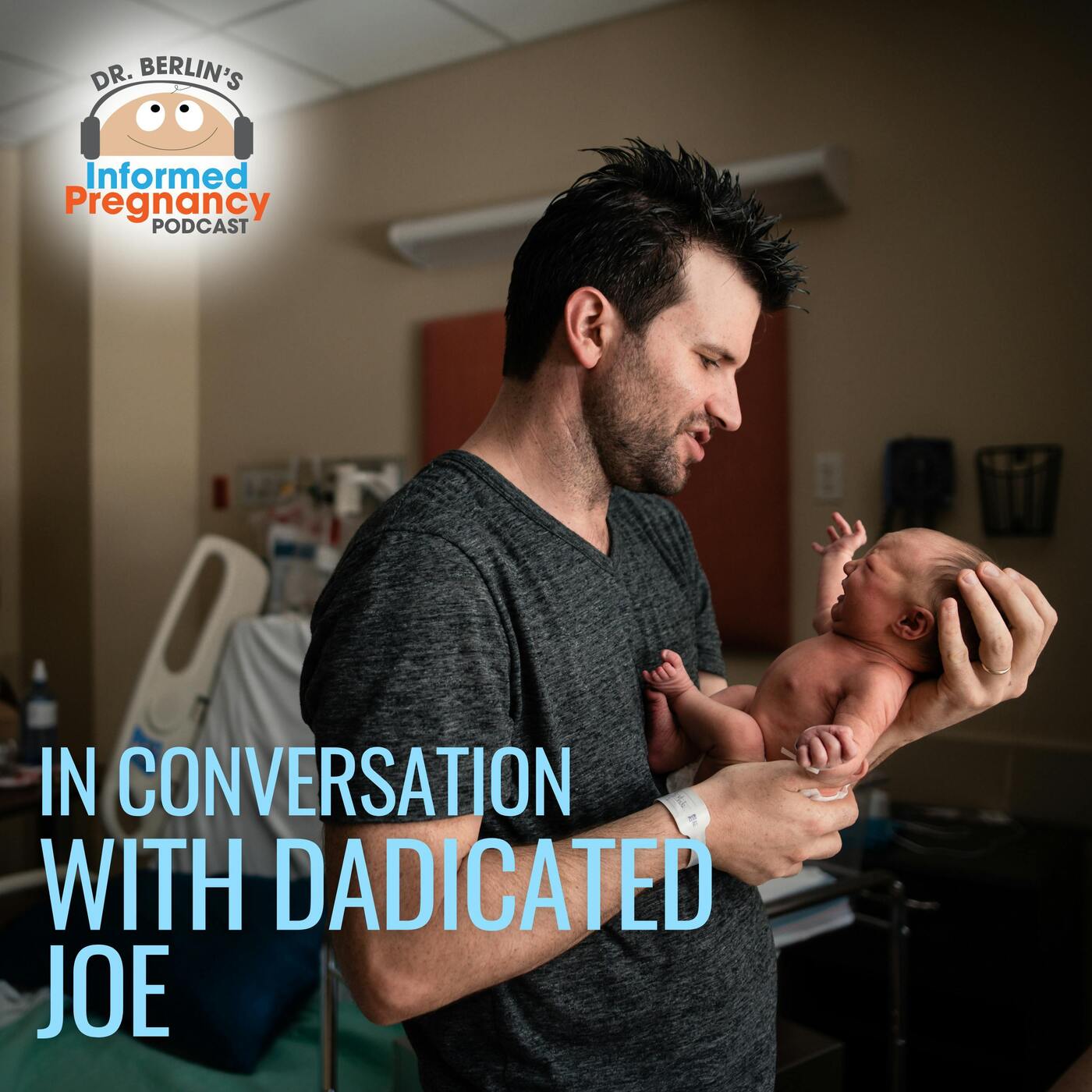
June 5, 2025 · 53 minutes · Episode 462
About this episode
Neurodiverse dad and entrepeneur Joe Carr joins the podcast to discuss everything from food quality to redefining masculinity through the lens of parenthood. His personal experience with fertility challenges and a surprise cesarean came all while launching his company Serenity Kids, but what he learned after becoming a father changed him the most.
Connect with Joe:
Informed Pregnancy Media and Mahmee present an all new podcast! One Way or a Mother is a new narrative podcast from Dr. Elliot Berlin, DC. Each season is an intimate story of one woman, one pregnancy, and all of the preparations, emotions, and personal history leading up to the birth. Episodes feature the expectant mother along with her family, doctors, and birth work team.
Start listening to Episode 1: I Should Have Died featuring Arianna Lasry
Keep up with Dr. Berlin and Informed Pregnancy Media online!
Learn more about your ad choices. Visit megaphone.fm/adchoices
See Privacy Policy at https://art19.com/privacy and California Privacy Notice at https://art19.com/privacy#do-not-sell-my-info.
Key quotes
“So it really helped me understand that I'm actually exceptional in some certain ways that I hadn't really been looking at, but I also have these challenges that are related to that.”
“I think I underestimated how scary that all was saying it all right now. I realize how intense that was for us, but in the moment it was like, you know, it's what we got to do.”
“And I just like kind of hit a bottom where I was just like kind of depressed. And I guess there's the sort of postpartum mood disorders that some men experience. And I feel like it was the edge of that.”
“It's about decision every day. Being a dad is about the daily decision to be the best dad I can be, to give it my all, even if I mess it up, even if I don't know what I'm doing, even if I'm exhausted. I am forever a dad and I'm dedicated to that or I'm dedicated.”
“And that's really where fair play was powerful because it just created the system for us of I can really see the work she's doing and she can really know that the work I'm doing is how she wants it done.”
Related episodes
- Ep. 470 Carlson Young: After Birth
- Ep. 480 Twins with Lauren Gaba Flanagan
- Ep. 469 Carlson Young: Before Birth
- Ep. 500 The Unexpected with Dr. Elliot Berlin Part 2
Transcript
AI-generated transcript with speaker labels — may contain errors, especially names and medical terms. Dr. Elliot Berlin, DC appears in blue; Dadicated Joe in orange.
Dr. Elliot Berlin, DC [0:30] My guest today is the co-founder of Serenity Kids Baby Food and the creator of Dedicated Joe, a platform that blends ancestral wisdom with modern fatherhood. He's a neurodiverse dad, a passionate activist, and a big voice for real food, respectful parenting and redefining masculinity through the lens of parenthood. His path to parenting was anything but ordinary, from fertility challenges to a surprise cesarean birth, all while launching a company and surviving those sleepless newborn nights. But it's what he discovered after becoming a father that changed everything. I'm pregnancy-focused chiropractor, Dr. Elliot Berlin, and you're listening to
[1:12] the Informed Pregnancy Podcast. Joe Carr, welcome to the podcast.
Dadicated Joe [1:30] Thanks. So great to be here. I have so much to learn from you.
Dr. Elliot Berlin, DC [1:34] Let's start at the beginning. Where are you from originally?
Dadicated Joe [1:36] I'm from Kansas City, Missouri.
Dr. Elliot Berlin, DC [1:38] Missouri?
Dadicated Joe [1:39] Yes.
Dr. Elliot Berlin, DC [1:40] Oh, is it Missouri?
Dadicated Joe [1:41] Missouri in the Kansas City area. My mom's family would say Missouri. They're from South, so it depends where you are.
Dr. Elliot Berlin, DC [1:47] Ah, okay. So more than one option. All right. And I talked in the intro a little bit about your baby food company, but overall, what is it that you do?
Dadicated Joe [1:56] Ooh, big question. Well, these days I call myself a professional dad. So being a father and what that means is kind of my most important identity. I've started this platform to help educate other dads. Even in the baby food company that I help run with my wife, I still see it as kind of a fatherly energy of being the masculine leader of that organization. Okay. So all things masculine dad.
Dr. Elliot Berlin, DC [2:23] Yes. Okay. Let's break it down. So you have the company, you have the child, and you have the platform.
Dadicated Joe [2:31] That's right. And I have a wife as well. So I'm also a husband.
Dr. Elliot Berlin, DC [2:34] And you have the wife.
Dadicated Joe [2:35] Yes.
Dr. Elliot Berlin, DC [2:36] The child. And you have the family.
Dadicated Joe [2:38] Yes.
Dr. Elliot Berlin, DC [2:39] But you're not your wife's dad.
Dadicated Joe [2:40] Right.
Dr. Elliot Berlin, DC [2:41] That would just be weird. I have to.
Dadicated Joe [2:43] Even in Missouri. Yes. That's right.
Dr. Elliot Berlin, DC [2:46] And she's not my mom. That's probably harder to remember. I'll get it straight. Okay. So which one do you want to start with?
Dadicated Joe [2:51] Ah, that's a good question. You know, let's start with being a dad because that was my earliest desire. I can remember was to have kids like when I was five, I drew pictures of my future kids.
Dr. Elliot Berlin, DC [3:03] Wow.
Dadicated Joe [3:05] I do. I have a younger sister.
Dr. Elliot Berlin, DC [3:07] So you were sort of like an older sibling. Is that sort of where the urge to nurture came from?
Dadicated Joe [3:14] Good question. I was not very nurturing to my sister, so I don't suspect that's what it was. I think it was something deep and innate in me that was just like, I'm a kid and I love kids and I want to have kids and I just can't imagine not having kids in my life forever. And wanted to have my own kids and it was always drawn to kids. I was babysitting when I was in middle school and I ran a youth theater program when I was in high school and, you know, I've just always been drawn to kids. This inner child in me, I guess, is very active.
Dr. Elliot Berlin, DC [3:44] And how did you meet your wife?
Dadicated Joe [3:47] My wife and I met through a personal growth organization. I was working for it and she came in as a paleo food speaker. We brought her in to talk about diet and nutrition and fell in love with the paleo diet and her at the same time.
Dr. Elliot Berlin, DC [4:00] Nice. Two for one.
Dadicated Joe [4:02] And she, you know, really opened my eyes to that and began this health journey. And as soon as we got serious, you know, I started talking about kids. I actually think I talked about kids on the first date, which was a bad habit I had, but it was that. That's how I wanted kids was like, are you going to my kids are like, we're this is done. So I mean, suppressed from age five.
Dr. Elliot Berlin, DC [4:21] Yes, exactly. So were you not that into nutrition before that?
Dadicated Joe [4:27] Uh, not really. I was into personal growth. You know, I'm autistic, as you said, I'm a nerd averse. So as I wasn't diagnosed autistic as a kid, so I had a lot of challenges, a lot of social challenges, was in trouble a lot. Nobody knew what to do with me. And in middle school, this semi-popular girl who I was annoying one day turned to me and said, I'm going to teach you how to be cool. I was like, I will do whatever you say. I am so ready to be cool. Like, please tell me what to do. And it worked. They told me what to do. And I became cool. And I've been pretty cool ever since. But most importantly, I learned that I could take feedback that I could become better.
[5:01] I wasn't stuck being a certain way. So at age 12, I stepped forth on a personal growth journey and very into personal growth. I played around with diet within that a little bit, but mostly it was like emotional stuff and relationship stuff and masculinity and things like that. So she really brought the nutrition thing, like really front and center for me as like a piece that I hadn't really like, mostly just cause I didn't know what to follow. Like there was so many, so much I had tried stuff. I tried veganism and I'd tried like the candida cleanse. It was like zero carbs. And I'd tried some different stuff and kind of knew it worked for me. But her analysis of paleo and this ancestral approach to what is
[5:37] the natural human diet, what is the least inflammation? What are the most nutrient dense foods? Like that really resonate like, oh, that's so simple. I got it. That's me. Like I need to keep my system as clear and clean and optimized as possible. So what's better than meat and veggies?
Dr. Elliot Berlin, DC [5:52] Well, let's talk about neurodiversity for a minute because I think autism is a big word and it's also a very big spectrum. A lot of things kind of got shoved into the same spectrum. And I think that when parents sort of hear it or when someone hears that they maybe are on that spectrum, it's a little terrifying right at first. And it'd be nice to talk to you. You're, you have all these successful things going on and to see you could have a great life and be on the spectrum. So when did you find out that you, I found out I was 22.
Dadicated Joe [6:22] I was a junior in college when I found out and I'd been having just so many relationship issues. You know, I was able to figure out a certain dating game in high school that didn't work in college and was like, you know, the opposite of your standard college guy. Like could not like get, you know, get girls and get relationships and could not figure out like what was wrong. So I sought out a therapist, like a men's therapist. And he figured out that he called it Asperger's at the time, which was, which was kind of a high functioning form of autism. And, uh, it was actually very liberating for me to learn about it because I was like, Oh, all these challenges I'm having around
[7:01] communication and boundaries and subtleties are the flip side of all these things I love about myself that are like, I'm so intense and I'm so creative and I think outside the box and I can defy convention and you know, like not care what anybody thinks. And so like those things are all things I really liked about myself. And these things that there were challenges were like the natural flip side of that. So it really helped me understand that I'm actually exceptional in some certain ways that I hadn't really been looking at, but I also have these challenges that are related to that.
Dr. Elliot Berlin, DC [7:31] That makes so much sense.
Dadicated Joe [7:32] Yeah. And then I knew exactly what to do, what to work on. I'm like, okay, now I just need to learn how to interpret subtleties and I need to learn how to communicate better and learn how to control my impulses and things like that.
Dr. Elliot Berlin, DC [7:42] And how would you rate success in doing those things?
Dadicated Joe [7:47] Well, it's ongoing. It's never finished, but highly successful. I mean, I think my life speaks for itself on what I've been able to accomplish with my amazing family and my community of friends and the success in business and money and creativity. And I just had this birthday dinner where my 12 closest friends like all appreciated me. And they all said some version of we love how big you are, how much you bring, you know, like how you're your full self all the time and you never hold back. And that was so touching for me. Cause as a kid, that was what everybody hated. I was too much. I was too loud. I was too intense. I was more than they could take.
[8:24] And so it really helped me see that both I've surrounded myself with people who liked that about me, who want that intensity, but also I've learned to channel it in a way that is modulated to the point that people aren't completely blown away and pushed away by it.
Dr. Elliot Berlin, DC [8:39] Yeah, I had seen a book about like rules, secret rules. It was meant for Asperger's in particular, but you know, before they switched it over and called it like level one.
Dadicated Joe [8:49] Yeah. All autism. Yeah. And I, and I agree with that. I think what is, it always was autism. It just is, like you said, a spectrum. It's a very broad distinction of what could be autism. Right.
Dr. Elliot Berlin, DC [8:59] And so that book was just sort of going into when you're neurotypical, your brain works one way. When you're neurodiverse, it works a different way. And if you want to be neurodiverse and operate a neurotypical world of people around you are going to be neurotypical, you just have to understand more about how they're taking you and then how you're taking them, how the interactions are happening and things you may not be aware of that they're receiving, that they may or may not want to receive things like that. And like, once you understand it, like once somebody kind of goes through and points out all the different factors involved, then I think there's a framework for being able to say, okay, this is how
[9:36] I'm being received and then you could decide how you want to be received and proceed accordingly. So very cool. Thank you for sharing that. And congrats on all the hard work and all the pay off.
Dadicated Joe [9:48] Thank you. Yeah. It's ongoing.
Dr. Elliot Berlin, DC [9:50] All right. So this company, tell me about the company.
Dadicated Joe [9:54] You know, I've always been entrepreneurial. So I've always like, tried to start stuff. When everybody was selling lemonade, I was selling homemade flags because everybody else was selling lemonade. I'm selling flag people stopping. They'd say, I want some lemonade. I'm like, Nope, I've got these flags and they'd be like, what? But like, I was like, you know, I thought that was cool to sell flags. So that was my first business. Tried a lot of different businesses, mostly youth and kid related. I started a youth program for kids. That was really awesome, but was a very tough business model. I tried to start a different school. It was all very tough.
[10:24] And so when I met my wife and we got really into the paleo diet and we started planning to have a baby, her first thought was food. You know, she was a really sick kid. She'd overcome a lot of health challenges through diet changes, especially from childhood, all the junk food of the eighties and nineties that we ate. So she was like, our kid's going to eat so good. Like, let's go find the baby foods. Let's find the paleo baby foods. And there was nothing. There was just no paleo baby food. Not only was it not paleo, it was all junk. It was all highly processed fruit. So very sugary, some grains, a little bit of veggies, but nothing that we were eating like meat and fat.
[10:59] And she did a bunch of research and she was the self-taught nutrition expert. So she researched all her paleo bloggers, as well as everything like the USDA's guide for infant nutrition, which is a real page turner. You read everything. She just bought, she called it her summer of nerddom in 2016. She just dove into all this research on babies. And it turns out there was actually quite a bit of consensus on what babies need that breast milk is nature's perfect baby food and that baby foods following breast milk are essentially similar to breast milk. They're blends of fat and carbs and protein with animal products being a central food group because breast milk is an animal product.
[11:40] I like to call it a free range animal product. So we thought, okay, what if we were to make baby foods based like that? What if we were to like take this baseline of breast milk and make baby foods that mimicked that as closely as possible using the most nutritious ingredients, you know, well-sourced meats, organic vegetables, really good fats. And so we went to the kitchen. We didn't have a baby yet, but we were determined to make this change. I was entrepreneurial anyway. She had been doing this paleo food coaching business that had gone nowhere. Also very tough business model. And we just had this calling to make this. So it was going to be small.
[12:11] We thought, oh, we'll make like a paleo baby food company. We'll sell it on Amazon. You know, we'll make $10,000 a month and it'll be our cute little entrepreneurial project. And then it just got way out of hand. Everybody. We pitched this to people in the food industry, people in the paleo community, all the parents. We knew they all were like, this is so needed. This is huge. This is going to change baby food. You know, baby food has been waiting for this upgrade. You know, we were started talking to retailers, like everybody was dying for this product. They were like, we've been waiting for this like meat, veggie baby food to take over. And so we decided to go big with it and got a lot of advisors and a team and
[12:49] made the first recipes in our kitchen, tested them on all the babies. We could find all our friends, babies, and our friends. Friends were like driving homemade baby food around to parents. We'd never met saying here, try this and fill out this little survey about whether the baby liked it or not getting the baby to fill out the survey was real. So we had to learn how to do that. Like, did they open their mouth again after the first bite? Did they spit it out? You know, would they hold the pouch or did they throw the pouch? Like that was our consumer testing right there. But we landed on a couple of recipes that people seem to really like. And we were able to find a factory and get packaging and eventually
[13:21] raised a first round of fundraising and learned everything as we went. We'd never done anything like this and just surrounded ourselves with experts. And eventually, you know, it took two years to get the product out. It was a very tough product to make, but eventually we got it. And in the process got pregnant. Actually, we're trying to get pregnant. We'd hoped to launch the products and then have the baby. So we kept like starting and stopping on the pregnancy as the products kept getting delayed. But then finally we're like, we can't keep waiting. We've just got to get pregnant. So we were full steam on that took about six months when she realized that we needed to be married.
[13:55] We'd sort of skipped that step. We're like, we're starting a company and we're trying to make a baby. Like we don't have time for a wedding, but she's like, we need to be married. So I'm like, I'm planning a wedding. So we had, I planned a wedding in the midst of all this. We had the wedding, really amazing autistic wedding, like very different than you'd ever imagine. Amazing dream wedding. That could be a whole probably whole other podcast on how crazy of a wedding I had and how I involved all my friends, how I did on the cheap. We got pregnant on the honeymoon. So right away, like the pregnancy worked or the wedding work to cause the pregnancy.
Dr. Elliot Berlin, DC [14:25] Oh, I see. You were trying to get pregnant. You were struggling to get pregnant. You got married, got pregnant. You know what?
Dadicated Joe [14:31] I think we need to be married. And she's the one who had been resisting that I wanted to be married anyway, but she was like, I'd already been married and she's like, it didn't go so well and I don't really need that. And I was like, okay, I'm not attached to that. But, but if you want to be, I'm down. So let's do it. So I planned the wedding and it worked. We had, we got the baby and then we kept trying to launch the product, trying to launch the products and they kept not working and not working and then they launched the same day the baby was born.
Dr. Elliot Berlin, DC [14:54] I believe that's time for a break and we'll be right back. Holy cow.

Dr. Elliot Berlin, DC [15:10] Welcome back. We're talking to dedicated Joe, Joe Carr. Okay. So, holy cow.
Dadicated Joe [15:17] Yes.
Dr. Elliot Berlin, DC [15:18] Not getting pregnant, get married, get pregnant, struggling to get the product launched and you have a baby and a baby food product launch on the same day, same day. All right. Well, let's build up to that in terms of once you were already pregnant. Did you have thoughts and plans for the pregnancy and the birth?
Dadicated Joe [15:37] Yes. I've always wanted a home birth since I knew about home birth. I've wanted a home birth. So I advocated for that. I knew it was her decision. So we explored all three options. You know, we looked at a hospital. We looked at a birthing center and then we looked at home. We talked to a midwife who'd been a midwife for like 40 years. She delivered some of our friends' kids and also she delivered some of our friends. That's how long this woman had been a midwife. So she was amazing. She was like Yoda, this woman. So she really trusted her and she said, wherever you feel safest is where you should do it. You should just decide where you feel safest and that's where
[16:13] you should have the baby. And my wife's a homebody. She loves being home. And she's like, there's no place that's safer than my home. Like, that's where I feel safest. So, so that was, we planned and we bought all the towels and you know, they were going to bring the tub and we had a spot and we had like, you know, the whole plan. And then Della being the stubborn kid that she is, but she's still that way, refused to get into position. She was Frank breach and would not turn. Like we did all the turning things you could do standing on your head in the swimming pool and you're doing wu wu magic and all the things to turn the baby wouldn't work.
[16:47] So two weeks before the due date, she went in for the, I think it's ECV where they physically try to physically force the, to turn, which is painful as all hell. You can imagine literally squeezing into her body and trying to turn the baby. So painful didn't work, still wouldn't turn. And she would end up going into labor the next day, which it is known to sometimes trigger labor. So yeah, we were 37 weeks. So we were a little bit early. It wasn't terribly early, but like earlier in the, we thought it might've been 38 weeks actually. So I think our due date was like a little generous cause we had a midwife and you know, it was like, we're thinking 40, 41.
[17:28] So it wasn't terribly early, but we had no hospital care set up because we had been planning a home birth. And so we had visited the hospital the week before and we'd filled the paperwork. So we knew which hospital we were going to go to, but we didn't have a care team. We had interviewed at a hospital doula that day, our midwife was like, okay, you're going to be in a hospital. You don't need me. You need just this. I recommend this doula. She's great with hospital births. So we met her on that Saturday afternoon and then she went into labor that night and I called the doula was like, uh, you're hired and we're in labor.
Dr. Elliot Berlin, DC [17:59] I love multitasking phone calls.
Dadicated Joe [18:02] Yes. Right. Like, okay. Well, go to about, go back to bed and tell me when contractions or whatever, this much apart. And then we'll, we'll meet you at the hospital. So about 3 a.m. We show up at this ER, we'd filled out paperwork, but they hadn't even processed it yet. So they didn't have any idea who we are.
Dr. Elliot Berlin, DC [18:18] Oh, you're in Texas.
Dadicated Joe [18:20] Yes. We're in Texas. We'd picked the most birth friendly hospital in the city. Like we knew that they respected birth plans and they would do skin to skin and you know, there's some stuff that we knew about them. So we were at the right hospital, but they were still like, we don't know who you are. And this is scary to have a woman in labor. We've never met.
Dr. Elliot Berlin, DC [18:36] I'm not sure if you wanted it or sought it out, but was there an option for delivering breach?
Dadicated Joe [18:41] We sought it out very thoroughly and nobody would do it. There was a midwife in Dallas and a midwife in San Antonio we found, but we would have to literally relocate to do it. Our midwife said she'd done it a few times, but she just doesn't do it anymore because you usually have to resuscitate the baby and it's just a terrifying thing for a midwife to have to resuscitate is what she said. So we couldn't get anybody to do it.
Dr. Elliot Berlin, DC [19:04] I mean, I've been to a lot of breach birth. I haven't seen the need for resuscitation be higher or lower, but it could be statistically.
Dadicated Joe [19:11] My wife would have done it. She was prepared to do it because she just did not want to have a C-section. She hates hospitals. She hates her, you know, it's just like if she believed it, we, she could do it.
Dr. Elliot Berlin, DC [19:20] And we didn't have a confident option without relocating, which is always hard to see. That's right.
Dadicated Joe [19:27] So we ended up with a C-section in the middle of the night, a hospital we've never, nobody knows us at. And I'm, you know, I've got a two page birth plan that I'm like, Hey, we've never met you. And here I am with my two page birth plan and here's all the things we want. And we've got most of them. It went pretty well in the scheme of things.
Dr. Elliot Berlin, DC [19:43] I mean, for each of you, how is that? Cause it's a very quick shift. I mean, normally, even if the baby doesn't turn during the external version, you still have a week or two weeks until birth. And what was it like on your mind and spirit?
Dadicated Joe [19:57] Yeah, it was surprising and scary. And you know, the whole thing is scary anyway, but yeah, being early was scary, you know, we were doing this product launch, which was also terrifying. We'd been building up for two years to that. And so I was running that plus we're in a hospital. We both hate hospitals, um, surgery and we didn't know anybody. We have this doula that we just met and like, yeah, it was, it was pretty, it was pretty scary. I think I underestimated how scary that all was saying it all right now. I realize how intense that was for us, but in the moment it was like, you know, it's what we got to do. And I had a lot of faith that it was all going to be okay.
[20:33] And it was moment sounds like survival. There was definitely a lot of survival. There was definitely a lot of bowel movements I had. I had enormous, I was like constantly, uh, emptying my system during that whole several hours of in the hospital, waiting for the baby to come. Um, I got in a pretty big fight with an anesthesiologist who refused to let our doula or photographer in the operating room, even though that was like a standard procedure that this was not COVID, right? There was no reason that they shouldn't have been allowed in there, but he would just refuse to budge on that. And like, I was pretty angry about that. So this is really the only thing I didn't get was like, I had to be
[21:10] doula and photographer and dad and business owner. Well, yeah, I was in that moment. I didn't care about the products. I was just dad, but I was getting footage that I knew was going to be used on our Instagram.
Dr. Elliot Berlin, DC [21:21] So I guess so in the back of your mind.
Dadicated Joe [21:25] Yeah.
Dr. Elliot Berlin, DC [21:26] So despite being so serious and everything went well.
Dadicated Joe [21:29] Yeah, it was fine. You know, they got her skin to skin within three minutes, which they think was fast. I thought it was slow in my mind. I was like, I thought it was like out into her body, but you know, I touched her that whole time while they were doing all the little things that they do because she was Frank preach. She had this hip dysplasia, her legs were like up backwards. So that was kind of freaky, but I didn't know any better. No, I didn't have a newborn. So look, she seemed fine to me, but the doctors said a lot of stuff about the hip dysplasia and possibly need to wear braces. They did all the stuff to scare us that she's going to have to wear
[22:00] leg braces and stuff. None of that happened. She was fine. And we got out of the hospital pretty quick. I think we're out in less than two days, like a day or two hours. Yeah. If I was me, it would be like, let's go right now. And they're like, Nope, you can't leave till I think it was what you peeing or new breastfeeding. So there's two things she had to do. I think she had to poop and she had a breastfeed. So we like rushed both of those things. We got them to happen. She did have some latches because she was early. So she was just a little small. So there were some latch challenges that never, we never fully got better. Like we struggled with latching the whole time.
Dr. Elliot Berlin, DC [22:32] Was postpartum there earlier and middle part of postpartum for each of you.
Dadicated Joe [22:38] Yeah, it was, you know, the products launched. So that's stressful. We had a team in place because we knew that they were going to launch around the time of the birth. We didn't know it'd be the same day, but we knew it was going to be within the same month or so. So, you know, it was a lot of relying on the team, which was really good for us to get used to that because we've never been able to run it all by ourselves. She had a, you know, a rough recovery. She was older, she was 41, you know, so that means she just means it's more challenging for her. She had some health issues anyway. She ended up with some pretty significant postpartum anxiety.
[23:08] We didn't know what that was. She was like not sleeping and was like scared of everything. And we'd heard of postpartum depression, but we didn't know about that. And so one night she like Googled postpartum anxiety just to see if it was a thing and like learned all about this thing that turns out to be like a total thing. And that really helped her because she's been dealing with anxiety her whole life. So she knew exactly how to deal with anxiety. And it really left us passionate about learning more about postpartum mood disorders and how to notice and prevent them in women. So she struggled with that. Of course, I watching that happen, running the business, being a new dad,
[23:42] all the work I'd read first 40 days. So we had a pretty solid postpartum birth plan in place, but I think we hadn't discovered your guys's afterbirth plan at the time, though. Now that's what I wish I had. And we give that to everybody. We know who's pregnant, but we did that for 40 days, which is a fairly good resource. We did also hire a postpartum doula, which I thought sounded like a ridiculous waste of money at the time. Man, was she great. Like that was helpful. I'm like, Hey, 50 bucks an hour for her to cook and do dishes. Like what? But like, no, she was like a lot more than that.
Dr. Elliot Berlin, DC [24:14] Yeah. I mean, we always had a hard time when the contract was up. I'm like, uh, maybe you could do more.
Dadicated Joe [24:21] Yup. That's right. Eventually we learned about nightcare. So we actually hired a night nanny for a period of time. The latching was super hard. So we did end up getting donated breast milk within the first couple of weeks. Our midwife was like, can you get somebody to the east side? There's this back alley. You knock on the door three times and they come out and they'll give you breast milk. And like, my sister-in-law, like went to this like back alley and got like donated breast milk, like a back alley drug deal, but that like, let her get a night's sleep. It was like, this will get you an uninterrupted night of sleep or two. And that she was just a wreck from the lack of sleep, both from the
[24:54] surgery recovery and the anxiety and the baby waking up all the time.
Dr. Elliot Berlin, DC [24:58] I'm picturing that scene.
Dadicated Joe [25:00] Yeah.
Dr. Elliot Berlin, DC [25:00] TV show.
Dadicated Joe [25:01] Yup. Donated breast milk is a big thing. And we ended up using quite a bit of it later, you know, as she continued to have latch issues, serenities, supply would go down and then we really didn't want to use formula preemptively because there's all this stuff about the risks of formula. And so we ended up getting six different moms, breast milk over the course of our postpartum time and like all the, my, you know, we found this person had a bunch in their freezer that was two years old and we're like, we'll take it. We don't care.
Dr. Elliot Berlin, DC [25:29] That's a lot of after dark back alley activity.
Dadicated Joe [25:31] Yes. Right. And we put out the call to our network on the Instagram, like anybody who has breast milk. So we're going to get mailed frozen freezer pack, mailed breast milk ties from other parts of the country. And that got us through to six months when we could start, you know, feeding her our baby food and we didn't end up using some formula, but that led us to be passionate about creating our own formula, which now we have the best formula on the market because of that experience.
Dr. Elliot Berlin, DC [25:54] Easier now that there's companies that powder the breast milk.
Dadicated Joe [25:58] Oh yeah, I guess so. I haven't learned that much about that, but yeah, powdered breast milk is a cool new development.
Dr. Elliot Berlin, DC [26:04] New things all the time. So you talked about how postpartum was for serenity and the struggles that she had. How was it for you? I mean, you're juggling a lot.
Dadicated Joe [26:12] It was so much, you know, I really wanted to be the best dad, the best partner. Like I was just committed to like, I wrote an article called the how to be a rock star pregnant father. And I always talked about how we are pregnant. And I know some people don't like that phrase because of course a man can never really be pregnant, but I wanted to embody this idea that I am as in this as she is like everything I can do with my energy, with my work, with my time, with my body, I am in for it. Right? Like anything that doesn't require her body, I will do. So that was sort of my mantra was like, I'm in charge of everything that doesn't require her body, which is quite a bit of stuff.
[26:50] You know, it was a lot of work. And I had through the first 40 days plan made a schedule of help. So I had people coming over almost every day to do tasks here and there. So that was great for about the first like month, month, month and a half, like we got through that. And it was also novel and I can push through anything for a while. But it was about the two month period, I think, where I crashed, where I just was burning the candle both ends and wasn't getting asleep and was running the company and the help had sort of expired. Like the newness of the baby wore off and now everything is mine. But I all the work is still here. And I just like kind of hit a bottom where I was just like kind of depressed.
[27:29] And I guess there's the sort of postpartum mood disorders that some men experience. And I feel like it was the edge of that. And, you know, I reached out and asked for help. It was like, I'm having a pretty hard time. And one of the biggest things that helped was a parenting group. We found a group called Partners in Parenting that paired people with other parents of the same age kid, like around the same due date.
Dr. Elliot Berlin, DC [27:49] Oh, that's part helpful.
Dadicated Joe [27:50] And it was really cool. Like, yeah, so we started meeting with these other parents that had kids the same age. And it was like socialization for the babies. And it was facilitated. So there was like a different like class each time. A leader would like do like a little piece on like sort of recovery. And just like being around other people, going through it and hearing the skills and hearing the tools was really helpful. Just admitting I needed help that I couldn't do it all on my own was big for me to just reach out to friends and family. My mom started coming and staying with us a little more. Right. Like she was willing to come more. And I didn't want to bother her.
[28:24] But I was like, if you want to come like we could use it. Like, I really need help. We didn't have any local family. So that was tough. Her sister lived locally and she helped as much as she could. But she was young and didn't have a kid. And very busy. And so lived in a different part of town. So she couldn't be there that much. And so like, you know, really reaching out for help and starting to really get organized. I think we paid for a little more help. Like we I think joined a meal service and got a cleaner. And, you know, so a combination of paid help and the parents group that really helped me through it. But I think how hard that was and how close to the edge
[28:55] it was to real burnout is what kind of inspired wanting to start Dedicated Joe and really help dads prepare for this, because it is not for the faint of heart.
Dr. Elliot Berlin, DC [29:04] You are great at setting up the brakes. Let's take one and we'll be right back. Welcome back. We're talking to Joe Carr. All right. So a little bit of a struggle with fertility. Big struggle on the birth plan. Some struggles postpartum. Yep. Not out of the ordinary, though. Those are kind of I mean, all those things are fairly commonplace. But postpartum is rocky terrain. And I think that it doesn't have to be bad. But, you know, rocky terrain in the right vehicle can feel pretty fun. Like if you're off roading. But if you were just playing the drive, your regular sedan, it's going to be a tough ride.
Dadicated Joe [29:55] Yep. Yep. Exactly.
Dr. Elliot Berlin, DC [29:58] So you mentioned Dedicated Joe. When did you come up with Dedicated Joe and what's the platform?
Dadicated Joe [30:04] Yeah, you know, it's something that's been in me for a long time. I had this vision, you know, that I wanted to start schools or change the way kids are treated. You know, having had such a rough childhood, I felt really called to change the world for kids to create a more inclusive, safe, respectful world for children. I just want to when you say rough childhood, is it the undiagnosed autism? Yes. Yes. Yes. Undiagnosed autism led to a lot. I was I was bullied. I was punished all the time. My parents had no idea what to do with me. I was just too much. My feelings were too big. My ideas were too big. And I was always taking over spaces. I was taking over classrooms.
[30:43] The kids would be playing it. I'd come in the game and just be like, let's do this instead. And everybody be like, come on, dude, we're trying to play this game. So like it was like I didn't know how to modulate that. I ended up on stage. My mom discovered the theater for me. So performing arts were my kind of autistic passion. I got really good at music and dance and theater and speaking and writing and creating. And so the stage was the place my big energy could shine. That was what saved me.
Dr. Elliot Berlin, DC [31:09] Yeah, I mean, that's pretty rough start. I would imagine that would shape how you want to be as a dad.
Dadicated Joe [31:15] Yes, it started as wanting to shape how I was as an educator and as a mentor because not having my own kids, I wanted to help other people's kids. So I was really involved in youth work and education and had this vision to start schools. And so when the opportunity to start the baby food company came, it was kind of like this perfect match of my wife's health challenges and her passion for changing the way people eat. And my challenges of being a kid and wanting to change the way people treat and raise kids. And so the food thing was always a little more her thing. But I was convinced to do the baby food company because I believed it would be a launchpad for me to reach parents
[31:52] to help them change the way maybe they treat kids. Then I had a kid and was like, oh, I don't need to like teach parents how to treat their kids better. I actually need to help parents have the tools they need to help themselves, which will then help the kid, right? That basically what I had this aha moment that the best way to parent the way that we're going to create children that are well developed and have space and are respected and can have their feelings and can have their ideas valued was if parents were able to do that to themselves, if they weren't able to express their own feelings, they're able to admit to their own mistakes if they were willing to
[32:30] have their own creative vision. And it was actually easier to parent in this freedom focused way than it is in this control, manipulative focused way that I was parented and that I saw a lot of parents being taught or they think they have to control their kids. They need to manipulate their kids into doing the thing versus like that's the kind of behavior that really harmed me. That's actually really hard to do because it's impossible you can't control a kid versus like if you can teach your kid how to be responsible on their own and have a lot of freedom, it's actually easier in the long run. And so that was what I was really passionate about.
[33:02] Like, how can we help parents make their lives easier and treat their kids better and have better outcomes? But then there's also it's actually better for themselves in their own growth.
Dr. Elliot Berlin, DC [33:13] I know you have the podcast.
Dadicated Joe [33:15] Yeah. So I wanted to read this platform. I tried to use Serenity Kids as this platform. And my marketing people were always like irritated, like, you know, we're trying to sell baby food here. Like, we're not a parent education platform. Right. And I'm like, well, why can't we be an education platform that sells baby food? They just they didn't have the resources. Like, we just didn't have the funding that takes a whole team, as you know, to do a platform like that is like a big project. And they're like, we can barely, you know, market our products with the resources we have. So as soon as the company got to a certain size where, you know, we did this really awesome series B fundraise last year,
[33:46] we brought on this minority owner partner that brought a lot of resources and a lot of expertise. And that was like the moment when it was like ready for me to kind of step back a little bit. I was never really meant to be the head of a corporation. Right. It doesn't fit with my personality. And I was already starting to make messes because I was bored. So they're like, you need to get out of here. Because it basically was too easy at this point. It was like too stable. I love the startup hustle phase. Now we're like building a stable, profitable company that's growing more slowly and more sustainably. And that's my wife's jam all day long. Like, she loves that stage.
[34:21] She hated the startup stage. But now she's like, fine, like, OK, now I can run a corporation. Like, that's more her personality. I was afraid. So now I'm like, OK, I'm the disruptor. So she brings me in when we need to like disrupt things. It's like, oh, they're missing this. Come and point that out to them. Or this needs to move faster. Come and hustle them. We need a creative solution to this. So I come in more ad hoc now. And the marketing folks were like, yeah, let's give you a little bit of money to start your own platform. It will help, but it'll get you out of our hair. And so they dedicated some resources to help me get launched because that's the hardest thing is starting it.
[34:54] And we did some consumer research to find, you know, what was missing in the dad content. And what a good name would be. And it came out that there were really no dads talking about postpartum. There's not that many dad podcasters anyway, but none of them were focusing really on like that first moment of becoming a dad from like, I know I'm pregnant or my wife's pregnant to I have a baby in my arms to that first year where you're really still am I a son? Am I a father? Am I a son? Am I a father? You know, am I a husband? Is my wife my mom or is she my partner? How do I be a real part? You know, like, how do I do with this baby? And like, how do what is my role?
[35:29] And who am I? And how do I make money? But also be a dad, like all that stuff. And there's a lot of content missing for that. And turns out that's also the time when people are choosing to buy baby food. So it was a good combination of reaching our customer. So we found this idea of a new dad's guide to the upending and transformational experience of fatherhood. We tried a bunch of names and dedicated Joe was a available from a URL and Instagram handle perspective. And also like landed with me really well around like it's about commitment. It's about decision every day. Being a dad is about the daily decision to be the best dad I can be, to give it my all, even if I mess it up,
[36:08] even if I don't know what I'm doing, even if I'm exhausted. I am forever a dad and I'm dedicated to that or I'm dedicated.
Dr. Elliot Berlin, DC [36:16] I love it. And what is the format of the podcast?
Dadicated Joe [36:21] So right now I focus on dads, powerful men who are also dads, though I did just have my wife on to critique my parenting. So the Mother's Day episode was her saying all the things I did well and didn't do so well in real time. So that's a fun one. But otherwise, it's dads talking to their dads, just dads who were intentional parents. And I focus a lot on why they decide to be a dad and what pregnancy was like, what their role was, what postpartum was like. You were on there. So you're actually a subject matter expert more than most of them. Mostly they're just they're going to be a dad because they figured it out and they're good at life. Like they're successful entrepreneurs or communicators or, you know,
[36:57] podcasters themselves. And so I have the podcast we do every other week. We do a guest. And then on the off weeks, I do a solo episode talking about like a 15 minute kind of a lesson on aspects of the postpartum experience. This week, I'm doing one on postpartum anxiety and depression for maternal mental awareness month. And, you know, I've got ones coming up on like how to keep your relationship alive and things like that are solo episodes. And then there's YouTube and Instagram, Facebook, Pinterest content that is a short form, snippets from the interviews, one to three minute videos from me, product recommendations, dad hacks.
Dr. Elliot Berlin, DC [37:37] I love the hacks.
Dadicated Joe [37:38] Who doesn't love good hacks, right? A little tips and tricks to make your life easier, man. Like anything that makes your life easier is like golden. Like do it.
Dr. Elliot Berlin, DC [37:46] I mean, you're not ready in the postpartum phase anymore. How old is your daughter now? She's six. OK. So six years old. What are some of the, I guess, biggest things you either learned or surprises, things you weren't expecting in a couple of years of, you know, getting through toddlerhood, really?
Dadicated Joe [38:02] Well, I just never could imagine how much work it is.
Dr. Elliot Berlin, DC [38:07] Well, so when you were five years old,
Dadicated Joe [38:08] you didn't think about how much work it would be. I had no idea. My mom made it look so easy. And like my wife did such a disproportionate amount of the work that I just didn't notice. I thought of myself as a fairly equal partner. And we had a chore list and I had these tours and she had these tours. And I believe that I was equal to her. And she tells the story of the podcast where Adele was about one. And she went away on a work trip and came back. And the house was like just a complete disaster. And she's like, oh, my God, what happened? I was like, I don't know what happened. I just don't know where all this mess came from. Like, where did this go?
[38:43] How does this get addressed? And she's like, I clean up every night. I clean all this stuff up. I'm like, you do? Yes, I'm constantly picking up stuff like I'm like, no idea. And so that eventually led us to the fair play model of household management, which was really revolutionary. And it's just, you know, you get that fair play deck of cards. All the household tasks are divided into these 100 cards and you see how much work there is. I mean, it is like multiple full time jobs worth of work to run a household. And women do just such a disproportion of it that men just have no idea. My mom did, you know, just worked her butt off all the time doing this work.
[39:18] And it still wasn't done. The house was still a mess. And, you know, my dad worked full time and ran a company and was very busy. But like he got to come home and rest, you know, like he would come home and fall asleep on the couch and eat the dinner my mom made for him. And like, that's what I was taught. You know, and like I didn't I knew I didn't want to be like that. Like I knew that was a problem, but I just had no idea how much work there is and how systematically would have to be organized. And that's really where fair play was powerful because it just created the system for us of I can really see the work she's doing and she can really know that the work I'm doing
[39:50] is how she wants it done. She doesn't have to worry about it. I know that I'm playing my full role and she doesn't have to nag me. And like if we need to help each other, we know what we're asking for.
Dr. Elliot Berlin, DC [40:00] You know, it's a great help and makes the sort of the teamwork a lot more rewarding.
Dadicated Joe [40:06] You know, yes, yes.
Dr. Elliot Berlin, DC [40:08] OK, have you guys thought about another trial?
Dadicated Joe [40:10] Man, I want so many kids like I drew those first two at five. But like I feel like I could be a dad of like five or six kids. Like, I feel like I could be one of those dads that has just an army of children. Despite all the work that I just talked about, I still want to do it. My wife could not do that. She barely wanted one. I convinced her on the one had a rough relationship with her sisters growing up and has a great relationship with her sisters now. And so she has this idea of like, I would love our daughter to have a sibling. She does rather not have a raised that sibling, but she likes the idea of having a sibling. So I've got her that far.
[40:48] She's 47 now. So there's really natural birth is out of the question, you know, just from like it just be so hard, not that it's impossible. It just it was so hard at 41. Her body is just not going to do that. So we've talked a lot about adoption or surrogate. I'm still working on that. She just took over all my job in the business. So she's very focused on that. So she's not ready today. But I believe we will have another scene. It's in me to have another baby. Yes. And like the timeline is unknown. It's not today. It's not never. My wife isn't there yet, but she's not never. She's not saying I'm not saying this is never. I'm just saying I can't see it happening today.
[41:27] So like, you know, it's ongoing thing. And, you know, if it's meant to be, it will happen, you know. And I do envision creating like an intentional community of sorts that other families with children are in. So maybe other people's kids could be kind of in my field and a lot more regularity.
Dr. Elliot Berlin, DC [41:43] So it sounds like you either need to renew your vows or start a new company.
Dadicated Joe [41:47] Yeah, I guess so. And then the baby will come. Oh, good idea. I'll have another wedding. Good idea. I'm going to do that. Surprise her with a 10 year. Then we'll get pregnant on the honeymoon.
Dr. Elliot Berlin, DC [41:57] I like just in the thick of it. I'm learning a lot from you. I really appreciate you and everything that you're doing, especially for fatherhood, which is really for familyhood. As we're winding down, is there anything I didn't ask you that you wanted to share?
Dadicated Joe [42:10] Man, right back at you too on the value. I mean, hearing you and Alyssa on the Skinny Confidential podcast was like a worldview shift around what happens to a woman after she gives birth and the changes in the brain and who she becomes set the tone for how we like market our baby food. Because it's like, I learned that day, like we cannot have any fear anywhere, like no fear ever in our marketing. Like I went back and was like, anything that could scare a mom, take it out. And we're not trying to scare moms, but there's a lot of, you know, nasty baby food. So it's easy to accidentally scare her around heavy metals and sugar and like take it all out.
[42:44] Like moms are scared enough. So like, that was a big thing I learned from you guys and those that postpartum course that I give to everyone and even starting this platform was like, there's so few people talking about postpartum at all. It was like, you guys are like one of the only ones doing it. So I was like, there's you guys and that's about it. It was like the first 40 days book and there's informed pregnancy plus and the afterbirth plan. I'm not sure there's anyone else.
Dr. Elliot Berlin, DC [43:06] Well, it sure is nice to have company now.
Dadicated Joe [43:09] Now we're here together. So, you know, like given the baby food thing, I think it's nice to talk about nutrition and what babies need, you know, how to nourish a baby. It's something a dad can do, right? We can make food, we can shop, we can create recipes. It's not something moms should have to do exclusively and the better we understand it is great.
Dr. Elliot Berlin, DC [43:28] So I'd love to just like talk a little bit about kind of the basics of your kind of ideal transition to solids and baby food.
Dadicated Joe [43:34] Yeah, I would love someone more about that.
Dr. Elliot Berlin, DC [43:37] Fire away.
Dadicated Joe [43:38] So biggest question people ask first is when do I start solids? So six months is roughly the time you wanna start thinking about it. Some pediatricians will say four. I think that's a little early, especially if they're breastfed. There are some risks with starting too early. There are no risks with starting late that anybody's determined. So don't rush it. So six months, you could start thinking about it, but our daughter didn't eat anything till eight months, which of course we made this baby food company just for her. This is how it was. This is my stubborn daughter, right? This is how she is. She wasn't gonna turn. She wasn't gonna eat baby food till she was ready.
[44:11] So don't rush it. There are signs that they're ready. Like they need to be able to sit up on their own. That means they can swallow, right? So being able to sit up on their own is key. They'll start to show a lot of interest in food. They'll watch you eat. They'll reach for your food. They'll really kind of show a lot of interest in it. So those are sort of your six months plus.
Dr. Elliot Berlin, DC [44:29] I'm 100% sure my 15 year old is ready because he's always reaching for my food.
Dadicated Joe [44:36] There you go. Well, he should eat our pouches. You can give him our baby food pouches.
Dr. Elliot Berlin, DC [44:39] It all comes in pouches, huh?
Dadicated Joe [44:41] Yes. We have pouch purees and we have puffs, these little cheerio things.
Dr. Elliot Berlin, DC [44:45] Paleo puffs?
Dadicated Joe [44:46] Paleo puffs. They're made from cassava and vegetables and chickpea and really, really healthy olive oil. Really great puffs. And then we have a formula that's the most similar breast milk of anything ever created. So there's the product. So once you turn there ready, again, start slow, have fun with it. I'm not a big early allergen introduction advocate. Some people will say like, start with one food and make sure they're not allergic to it. The science is really like, if you have a history of a lot of allergies, maybe do that with the top allergens, but like it's so rare that a kid's allergic to beef or broccoli, you know, this is like, you don't need to eat.
Dr. Elliot Berlin, DC [45:22] I know a lot of kids who think they're allergic to broccoli.
Dadicated Joe [45:25] Oh yeah, right. But like, you know, don't obsess about it. It's one of those fear things like, we need to try every food individually before we start mixing foods. It's like, it's so much work. Like, don't bother with that. Just start feeding the foods. And the key foods are our animal products and vegetables, especially animal products. So meat, which you can pre-chew yourself. It's called pre-mastication. It's how we did it for thousands of years. You don't have to spit it in their mouth, though I really liked doing that. I thought that was fun.
Dr. Elliot Berlin, DC [45:47] Like the birds?
Dadicated Joe [45:49] Yes, just like the birds. A daughter loved it. She thought it was the funnest thing to like eat food from my mouth. But like, you know, otherwise you can blend it in a blender or use our pure pre-blended meats, which is nice for you. You don't have to make it, but you can puree it. Bone broth is amazing. They can just drink the bone broth. You can put bone broth in a bottle. They can drink that. Egg whites, sorry, egg yolk. Just like cooked egg yolk is like really great. First food is very soft. They can eat it. They love peas. You can mash up carrots. Those are some easy stuff to do in addition to purees like ours. But our purees are, you can model after our purees.
[46:21] You know, they're meat and veggie blends. So it's just meats and veggies mixed together. You can't go wrong. They need a lot of fat. Babies need 30 grams of fat a day. Breast milk is mostly fat. The brain is being built by fat. Spinal cord is doubles in the first year of life and that requires a lot of fat. So olive oil, coconut oil, any kind of meat fat, butter. You know, this fattiest meat you can get. So if you're gonna make your own, like get really fatty cuts of like, you know, really fatty ground beef or like really fatty pork or chicken thigh, like if that saturated fat's really key. Grains are really not necessary and they're a little hard to digest.
[46:58] Babies can digest meat right away. They can digest vegetables okay. Grains are harder to digest and just a low nutrition food. So this whole like start with fortified rice cereal thing is a total myth. Like don't listen to anybody who tells you that.
Dr. Elliot Berlin, DC [47:12] Whoops.
Dadicated Joe [47:13] Yeah, I mean, a lot of people are told that. It's unfortunate. A lot of pediatricians are shifting from that. Like that is changing very rapidly. Pediatricians are shifting away from the fortified rice cereal, both because of the heavy metal risk of the rice, but also it's just not optimal nutrition. It's just clear that real foods are better. At about one year old, they can start trying with grains if you want, rice, noodles, so forth. You can start them earlier. Just don't make them like the basis of the diet because they're just low nutrition. It's hard to get food in babies. Every bite you get in there really matters. So that's where nutrient density,
[47:44] we call every bite counts is one of our trademark phrase. So if every bite counts, meats, veggies, fats, right? Like that's the key thing. Of course, continue breast milk or if you're in formula, continue formula. Like you can continue on that for, you know, as long as you want, a year or two years and supplementing with food. But just focus on meat and veggies. It's great for a baby. It's great for postpartum mom. It's great for you as a dad. Like it's just, you can't go wrong with meat and veggies and grains and sugars being the things that are less useful and possibly inflammatory, especially sugars. You don't want to give sugars to a baby.
[48:17] Fruit, whole fruits, okay. The processed fruit pouches, you know, most people use them. They're very sugary and low nutrition. So I wouldn't use a lot of them. We didn't use any of them, so you don't need them. It's better if you're going to do any kind of sweet, but no desserts. Like anything that counts as a dessert, just accept that until they're, you know, one and a half, two years old. Like just avoid the sugar. They will learn to love sugar. You have plenty of time to try to convince them not to eat dessert. So just once that's done. Yeah. I'll say that part again. Yeah, you have lots of time for them to eat desserts. You're going to spend a lot of time as a parent
[48:50] trying to get them to not eat dessert. So just take advantage of this time for their two and they can actually ask for stuff. So just avoid that. Just don't give it to them at all.
Dr. Elliot Berlin, DC [48:58] My mother's still trying to get me to not eat dessert.
Dadicated Joe [49:01] I know, right? So just skip the desserts. I know it's tempting because it's like you want to share and it's yummy. Try a little bit of ice cream or here have some little bite of cake. And it's just like, just don't do it. Like it's not needed. And their palate is developing in that first year of life. So six months to 18 months is the formation of the palate. So the more savory foods you give them in that time, the healthier they are later, the more sugary foods they get, the more likely they are to prefer sugar. So a lot of people don't realize that you're introducing as many flavors in that six month to 18 month window is key. Our pouches include all kinds of herbs and spices
[49:35] and we have a curry and a chimichurri. And if you want to make it easy to introduce savory flavors, our pouches work really well for that. But just make sure that you give them a lot of different sour and savory and umami flavors. And they can have sweet too. They can have some fruit, but you don't need to teach them to like fruit and sugar. Like they're gonna naturally want sugar. So we do need to teach them to love that taste of meat. And that worked with Delis. Her favorite food is olives. She loves green olives. She still drinks a lot of bone broth. She loves bone broth. She loves bone broth soups. She's a really big pea fan. She loves peas.
[50:09] She loves steak. She loves salmon, right? These are foods that she's, of course she'll eat as much sugar as we let her. So it's not like she's not also into sugar, but like she will eat those savory foods. And I think a lot of that's because we introduced those early.
Dr. Elliot Berlin, DC [50:23] I love how much passion you have when you talk about this.
Dadicated Joe [50:26] Man, I had no idea how much what we do in that first year matters for their whole life. It's like, you know, you're just in survival mode. It's hard to know who to trust. There's so much disinformation. So I just really want to break it down for people. It's not super complicated. It's very important. And you know, it's hard to know who to listen to. So I'll shout from the rooftops, like keep it simple, meat and veggies, good fats, no sugar.
Dr. Elliot Berlin, DC [50:53] You're good. I'm a durian and I'm mommy. Well, you've successfully gotten me hungry.
Dadicated Joe [50:58] Yeah, right. Yeah, go eat some pouches. We got a grass fed bison.
Dr. Elliot Berlin, DC [51:01] I know, I saw bison, turkey, beef.
Dadicated Joe [51:03] Yeah, we got a chicken curry, you know, pouch. So yeah, we got like wild caught salmon teriyaki.
Dr. Elliot Berlin, DC [51:11] They look great.
Dadicated Joe [51:12] Really great pouches. The parents love them too. The puffs are awesome. They look really great. Eat formula. Our formula is the best on the market. So, you know, check out our formula, mycernitykids.com for those. Dadicated Joe for the dad content.
Dr. Elliot Berlin, DC [51:25] Well, you just answered my last question. Where can we find you online?
Dadicated Joe [51:28] I knew we were going there. Yep, yep. Yeah, add Dadicated Joe on all social platforms, on YouTube especially, subscribe on YouTube. Definitely helps me out. And then, dedicatedjoe.com. Basically, Dadicated Joe on all podcast platforms as well for the podcast.
Dr. Elliot Berlin, DC [51:43] Amazing. It's gonna be hard not to find you.
Dadicated Joe [51:45] Yeah, mycernitykids for the baby food. We're sold in stores nationwide. Basically, every grocery store carries us now. 20,000 stores nationwide. So, you can bring this everywhere.
Dr. Elliot Berlin, DC [51:54] Wow, that's amazing. Congratulations.
Dadicated Joe [51:55] Thank you. Yeah, we're on Amazon. All our products on Amazon. Search, Cernity Kids Baby Food on Amazon or on our website. Our subscription service is the lowest cost. So, you can subscribe on our website, mycernitykids.com. You can use Dadicated 15 to get 15 off your first order.
Dr. Elliot Berlin, DC [52:12] Who doesn't like that? You're right.
Dadicated Joe [52:13] Yeah, come check it out. Great food.
Dr. Elliot Berlin, DC [52:15] Thank you, Joe.
Dadicated Joe [52:16] Yeah, thank you.
Dr. Elliot Berlin, DC [52:17] Thank you so much. Sharing your story with vulnerability, passion, purpose. Your journey is so powerful and it's a reminder that fatherhood can be a really profound source of strength and healing and transformation.
Dadicated Joe [52:32] Thank you. It means a lot coming from you. You talk about professional dad. That is like your business card right there.
Dr. Elliot Berlin, DC [52:38] Thank you so much. Yeah. And to everyone listening at home, if you found this episode meaningful, share it with a friend. Leave us a five-star review and explore more at informedpregnancy.com, including our companion podcast, One Way or a Mother, and streaming content for new and expectant parents on Informed Pregnancy Plus. You can find it all at informedpregnancy.com.
Want more pregnancy + parenting? Start your FREE TRIAL of Informed Pregnancy+ and get access to all our curated pregnancy and parenting content — original series, iconic birth films like The Business of Being Born, prenatal workouts and more.

0 Comments