
May 22, 2025 · 38 minutes · Episode 460
About this episode
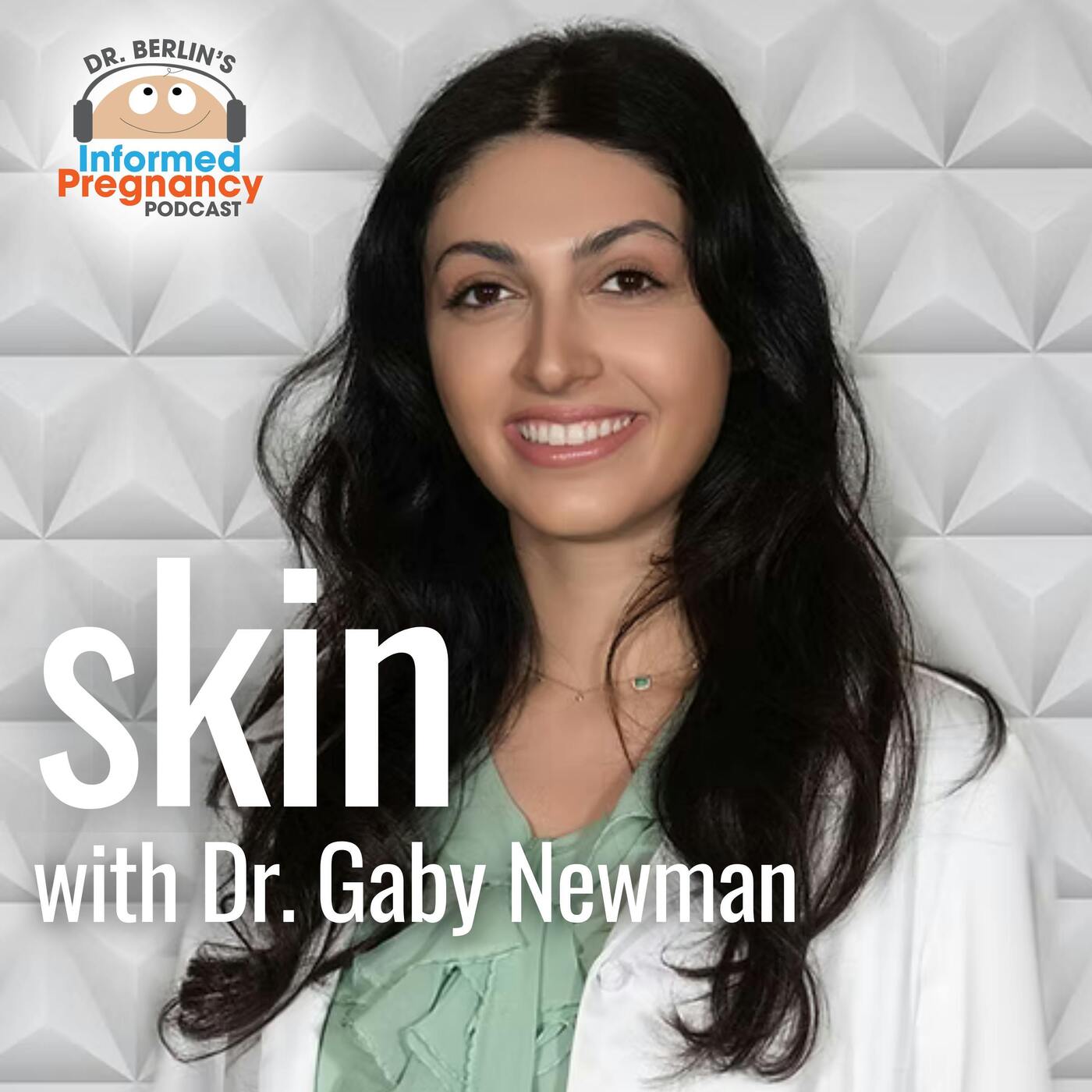
Beverly Hills based cosmetic dermatologist Dr. Gaby Newman is a specialist in anti aging medicine and dermatological surgery. She just had her first baby and joins the podcast to talk all things skin during pregnancy and postpartum.
Connect with the guest:
newmandermatology.com
@dermatologymafia on Tiktok
Newman Dermatology on Facebook
Informed Pregnancy Media and Mahmee present an all new podcast! One Way or a Mother is a new narrative podcast from Dr. Elliot Berlin, DC.
Each season is an intimate story of one woman, one pregnancy, and all of the preparations, emotions, and personal history leading up to the birth. Episodes feature the expectant mother along with her family, doctors, and birth work team.
Start listening to Episode 1: I Should Have Died featuring Arianna Lasry
Keep up with Dr. Berlin and Informed Pregnancy Media online!
Learn more about your ad choices. Visit megaphone.fm/adchoices
See Privacy Policy at https://art19.com/privacy and California Privacy Notice at https://art19.com/privacy#do-not-sell-my-info.
Key quotes
“So when you're pregnant, you know, the really the most important thing is sun protection because melasma is significantly worsened by sunlight. So wearing broad-rimmed hats, daily sun protection, extremely important. I can't stress that enough for melasma.”
“No magic. Unfortunately, no, you just have to kind of embrace it and accept it as that's like a very natural, healthy thing that happens when you're pregnant.”
“Listen, just a gentle cleanser, a moisturizer, and then you want to top it off with SPF. If you do that every single day, you will notice dramatic changes in your skin.”
“Now, all of a sudden, immediately after childbirth, boom, your levels of estrogen drop dramatically. Right. And they return to your non-pregnant levels. And what this does is it immediately changes from the growth phase to the shedding phase, kind of even skips the middle phase. Right. So now your hair is all in the same phase and it's just shedding dramatically.”
“You know, a lot happens while you're sleeping. So you need to allow yourself to have that time. So really try to rely on some other people to help you so that you can get that rest. It helps a lot with stress.”
Related episodes
- Ep. 470 Carlson Young: After Birth
- Ep. 480 Twins with Lauren Gaba Flanagan
- Ep. 469 Carlson Young: Before Birth
- Ep. 500 The Unexpected with Dr. Elliot Berlin Part 2
Transcript
AI-generated transcript with speaker labels — may contain errors, especially names and medical terms. Dr. Elliot Berlin, DC appears in blue; Dr. Gaby Newman in orange.
Dr. Elliot Berlin, DC [0:00] My guest today is a Beverly Hills-based cosmetic dermatologist who combines cutting-edge cosmetic and medical dermatology with a passion for holistic wellness. She's a specialist in anti-aging medicine, dermatological surgery, and regenerative treatments like PRP therapy. She is one of the physicians at Newman Dermatology, which is a father and two-daughter practice and she recently welcomed her first baby, giving her first-hand insight into the skin changes that come with pregnancy and postpartum. Stay tuned! Great tips ahead. I'm pregnancy-focused chiropractor Dr. Elliott Berlin and you're listening to the Informed Pregnancy Podcast. Dr. Gabby Newman, welcome to the podcast.
Dr. Gaby Newman [0:55] Thanks so much for having me.
Dr. Elliot Berlin, DC [0:57] My pleasure. Tremendous honor to work with you while you were pregnant and to meet you. You have incredible energy that goes much deeper than skin and it was a fun ride. What was your pregnancy like?
Dr. Gaby Newman [1:08] It was an amazing journey. I was so excited to be pregnant and I guess my body knew that because I didn't go into labor until I got induced at 42 weeks, so I was pregnant for a long time.
Dr. Elliot Berlin, DC [1:26] During your pregnancy, did you notice things about skin that you maybe couldn't have known the same way without experiencing it?
Dr. Gaby Newman [1:32] Absolutely. There is nothing like going through it yourself and to day by day notice all the changes that are happening to your body physically and I feel like a lot of the skin changes that happen can almost occur before you see some of those physical changes where you actually really expand and your belly grows. I actually feel like skin-wise, I started to see a lot of changes very early on.
Dr. Elliot Berlin, DC [1:55] Okay, so some of the things that become fairly obvious are like molasma, like back acne, stretch marks. What's happening to the skin when you're pregnant?
Dr. Gaby Newman [2:08] Great question and just before we dive in, I just want to make a note that even though I am a licensed physician, everything discussed today is just for general informational and educational purposes only. It's not medical advice. So if you have any questions, just reach out to your medical provider, okay? But I will say when you're pregnant, a lot of people hear you're glowing, right? It's like a common thing that a lot of people hear and so like what's going on hormonally that is causing those skin changes? So number one, you have an increased blood circulation. So all of a sudden, your blood circulation increases 50% more from its previous capacity.
[2:48] So that contributes a lot to looking more like plump and having rosier cheeks.
Dr. Elliot Berlin, DC [2:54] Maybe I'm pregnant. I feel plump and rosy.
Dr. Gaby Newman [2:58] A lot of people really want that, Dr. Verlin, so yeah, it doesn't happen for everyone, you know? The second thing is that you're having those really elevated levels of both progesterone and estrogen. Those are the major female sex hormones and those things can improve the skin's elasticity, the moisture, and they also can significantly increase the oil production so it can make you look more dewy and glowing. So those are like some of the general things that are happening that can contribute to that glowing skin.
Dr. Elliot Berlin, DC [3:31] Do you know that Moses said that to a pregnant woman? Well, of course these things don't happen for every pregnant woman, but these happen for the lucky ones. Okay. But Moses says to a pregnant woman, you're glowing. And of course I'm referring to the Showtime TV series, The Curse, in which the male doula named Moses looks at his client and says, you're glowing, and very few people know this, but I played Moses. And so every time you say, you're glowing, the glow in the skin, I'm like, I saw it and it wasn't even a real pregnancy. Okay, so some people could have these really like good, beneficial skin changes in the pregnancy, but then some people don't.
Dr. Gaby Newman [4:13] Absolutely. So some people, they're really anticipating what their skin is going to look like during pregnancy and they're very pleasantly surprised because their skin actually requires a lot less day-to-day maintenance and they just have better skin integrity overall. But for some women, those elevated levels of estrogen and podestrone can have some negative skin effects that are unwanted. So one of those that you already mentioned was, you know, the acne, and that's going to be caused by the increased oil production from the high levels of estrogen. Also, the melasma is probably the most common one and, you know, it does actually go away usually over time, but that one's caused by the elevated hormone levels as
[4:55] well that stimulate more melanin, which is the color that gives the dark mask of pregnancy. And not only is that hormone responsible for melasma on the face, but you can get darkening in various areas. And if you've ever been pregnant, you already know the nipples can darken. You can get the dark line that goes from the belly button all the way down to the pubic bone. So there's a lot of things that will darken and those should usually lighten after the months after pregnancy.
Dr. Elliot Berlin, DC [5:25] Yeah, the line is so interesting because it's so prominent. It's not like one of those pregnancy tests. Is that a line or is that not? It's like, wow, look at that racing stripe.
Dr. Gaby Newman [5:35] Yeah, I mean, most people get I would say 90 percent of women get it, but it's not necessary.
Dr. Elliot Berlin, DC [5:41] Yeah, I know. It seems like there must be some purpose to it that maybe we lost the meaning behind it, but it's just so prominent and so many people get it. And then there's that racing stripe on the belly. But the melasma, you mean, could be also on the face or other parts of the body?
Dr. Gaby Newman [5:57] The melasma is usually going to be on the face, but the increased melanin production, so that darkening of the skin can occur pretty much anywhere on the body. You can get it in various locations.
Dr. Elliot Berlin, DC [6:10] The melasma can be patchy. So is there anything to do about that? Like how it looks?
Dr. Gaby Newman [6:16] So while you're pregnant, the treatment is going to be very different for when you're not pregnant and or not breastfeeding. So when you're pregnant, you know, the really the most important thing is sun protection because melasma is significantly worsened by sunlight. So wearing broad-rimmed hats, daily sun protection, extremely important. I can't stress that enough for melasma. And then, you know, while you're pregnant, there's more limited options for melasma. There's some medications that are deemed safe. I would say probably, and I'll talk a little bit more about medications later in terms of just understanding how we categorize them as safe or not safe,
[7:00] because I feel like you can't just tell a pregnant woman something is safe or not safe. That's just a really, really broad generalization. There's always a caveat or some sort of discussion that needs to be had. But in general, there's a medication called azelic acid. It's like a substitute for retin-A, tretinoin, those really popular exfoliators, which are a hundred percent not safe to use during pregnancy. But you can use something called azelic acid, which is another exfoliator, which is deemed generally very safe to use during pregnancy and breastfeeding. And it should help lighten those spots over time.
Dr. Elliot Berlin, DC [7:36] What about the acne?
Dr. Gaby Newman [7:38] The acne is another one that there are some treatment options that you can do. I'd say things like salicylic acid is not a great medication, especially in high doses. You definitely can't be on Accutane or retinoids or anything like that. But there are some things like vitamin C, niacinamide. Again, azelic acid is also really good for acne. You can use generally things like lactic acid, which would be like a cleanser, another exfoliator. And then there are some in-office treatments that you could do that are safe. They're known as like blue light or red light therapy. I have them at my office and even children can do them. They're very, very safe.
[8:22] It's essentially like a powerful LED light that stimulates a healing response in the body. Photobiobondylation.
Dr. Elliot Berlin, DC [8:29] Similar, yeah. The healing response to the right wavelengths of red light, blue light, violet, infrared, near infrared. It's not just the face though, like I see, because I do massage all day, like acne all over the back and maybe other parts.
Dr. Gaby Newman [8:47] Totally. So whenever you have acne on a large surface area, like all over the back, I would opt in for either a treatment like a red light, because that gets over at a large surface or to also combine that with something like a lactic acid that I mentioned or a benzoyl peroxide. Those are generally deemed safe and they're basically something that you can apply in the shower and wash off. So they're very easy to apply and they can be used sparingly during pregnancy and lactation.
Dr. Elliot Berlin, DC [9:17] Let's talk about stretch marks.
Dr. Gaby Newman [9:20] Yeah, that's a good one. That one's a tough one. I'm not going to lie.
Dr. Elliot Berlin, DC [9:24] I mean, first of all, it seems like some people get them even early on and some people don't get them at all. Is there something that predisposes you and is there something you can do to mitigate it?
Dr. Gaby Newman [9:34] Yeah. So I would say that there is a genetic component to getting those stretch marks. And you can get them, unfortunately, in more places than just the one area where the fetus is growing. You can get them kind of in the hips area. You can get them on the breasts. You can get them in a lot of places. Usually they appear like reddish white, and unfortunately they usually don't completely go away. So yeah, it usually doesn't go away. They definitely improve in the postpartum time, but they don't fully, fully go away in most people. What you can do to prevent them is to have a healthy amount of weight gain during your pregnancy. That's something that, you know,
[10:16] your doctor will tell you what you should expect to try to gain. But, you know, when you have excessive weight gain, that's just going to exacerbate the amount of pressure on those parts of your body. So that'll make the stretch marks worse. Aside from that. No magic. Unfortunately, no, you just have to kind of embrace it and accept it as that's like a very natural, healthy thing that happens when you're pregnant.
Dr. Elliot Berlin, DC [10:41] Okay. Let's talk about the veins. Some people, the veins seem strained during pregnancy and start to show their strain.
Dr. Gaby Newman [10:51] Yeah. So like those veins, those also have a genetic component. A lot of people will never have a spider vein or a varicose vein before pregnancy. And then as soon as they have pregnancy, they'll just notice many, many occurring at once. Part of that is actually hormonal because of those elevated estrogen and progesterone levels, they cause the walls of the veins to relax. And so the valves can no longer prevent the blood from backflowing. And so now you have a pooling of blood. Yes, exactly. So you have that. And then the buildup is what causes the engorgement of the veins and the appearance of spider veins or varicose veins.
Dr. Elliot Berlin, DC [11:31] That does not sound pleasant or pretty.
Dr. Gaby Newman [11:34] No, it's not. And, you know, that added with the actual weight from the uterus and from the, you know, the extra weight gain puts a lot of pressure and that exacerbates it as well, because like we talked about your blood volume increases by 50%. So there's just so much more going on that your body has to be able to deal with. The good news with the spider veins is there's a lot more things you can do to prevent from getting them or from exacerbating the ones that you might already have. So things like that would be elevating your legs above the level of the heart, being, you know, active, walking, you know, many times throughout the day. What else? Compression stockings.
Dr. Elliot Berlin, DC [12:16] A lot of compression sort of depends on the season. Some people don't mind them when they're winter babies and then in the hot days of summer, they seem a lot less comfortable. I would say they're worth it though, in any season, because again, a lot of people do not like having those spider veins. Would you just recommend it for anybody proactively or just if you start to notice the signs? I mean,
Dr. Gaby Newman [12:42] I think that the measures to prevent them are beneficial for any woman in pregnancy. Like most women have some level of swelling in their legs or benefit from being active. So I would say to do those measures, and maybe to hold off on the compression stockings, unless you actually see some signs of spider veins coming in.
Dr. Elliot Berlin, DC [13:01] Sounds good. Well, that's a nutshell of pregnancy. At least there was some good at the beginning, the glowing, and then there's a bunch of other things that are not as comfortable, but I appreciate all the tips you gave us and perhaps either how to mitigate or treat them. Let's take a little break and we come back.

Dr. Elliot Berlin, DC [13:19] We'll talk postpartum. Welcome back. We're talking to Dr. Gabby Newman. All right. So, uh, your own postpartum, did you get the glowy plumpness or did you get some of the other junk?
Dr. Gaby Newman [13:41] I don't want everyone to hate me. You know what? My skin did look better, I think during pregnancy.
Dr. Elliot Berlin, DC [13:49] I only met you during pregnancy and I was like, is this because this is your specialty or where you just win the genetic lottery? You have incredible skin.
Dr. Gaby Newman [13:59] Thank you. I honestly think it's a combination of everything you talked about. I don't think that anyone has just a hundred percent like winning the genetic lottery. I'm obviously obsessed with skin and I spend a lot of time talking to people about skin. What I really like to recommend to people, especially mothers who are extremely busy and don't have time for like a 15 step routine and they just want something that's going to be effective and relatively safe. You know, even if they do get pregnant again, won't be a problem is I really love to do laser treatments. These are not extremely harsh ablative treatments where you were burning the top layer of the skin.
[14:39] These are lasers that penetrate beyond the top two layers of your skin and actually go deeper into where the collagen and elastin are and they build that healthy skin and they also help remove any imperfections like redness, acne, discoloration. So I find doing those every like three months or so is just perfect with a very simple skincare routine. If you want to talk about like simple skincare, I'm happy to do that too.
Dr. Elliot Berlin, DC [15:05] I do want to talk about it, but for the laser, do you feel it?
Dr. Gaby Newman [15:09] Yeah, you certainly feel it, but it's extremely comfortable. We have patients that are teenagers that do it and they feel totally fine.
Dr. Elliot Berlin, DC [15:18] Nice. I definitely want to talk about it for a regular routine. I even have this Shark Tank product in my mind, some sort of mask that you put on your face that does the whole 15 steps for you. You know, you just sit back, relax, and then, I don't know. Is that a real thing? Should we make that? Why not? I mean, I want to do the skin routine, but the steps, like just standing there over the sink, those steps, I don't know, they bother me. But my daughter, who's a teenager, she's like, dad, you gotta do the skin. Come on. Here, five things to do every night.
Dr. Gaby Newman [15:50] I agree. Like, I feel like you do have to be consistent, but I know my patients, I know the ones that are willing to do the one or two products and that's all they want and the ones that already do 15 things and they're looking for more. I don't think that that's necessary. I think that if you do a few things regularly, you can dramatically improve your skin. So that would be having a gentle cleanser that you really like. That would be the first step. You can do that in morning and at nighttime. Moisturize right after. The best time to moisturize is right after a shower. That's when your skin is like, well your pores are open and whatever you apply to your skin will
[16:28] penetrate even better. Of course, I have my recommendations for moisturizers, but I think any moisturizer is better than no moisturizer.
Dr. Elliot Berlin, DC [16:36] I mean, would you spill the tea on a gentle cleanser that you like and a moisturizer that you like?
Dr. Gaby Newman [16:42] To be honest, our office has products, so I do tend to use a lot of our own products because I find them really gentle and effective. But, you know, if you're going to buy something more like mainstream, I would buy something that's non-fragrance, that's, you know, made for acne prone skin, like all of those things you want to read on the label.
Dr. Elliot Berlin, DC [17:01] Most confused, am I oily or am I dry? I don't know. Do you get oily skin? I get oily, but sometimes I feel dry.
Dr. Gaby Newman [17:10] Yeah, well, that's normal. I would say to opt for the products that you feel like you're more so that on most days.
Dr. Elliot Berlin, DC [17:17] Oh, on most days. Yeah. Is it possible that it changes with season?
Dr. Gaby Newman [17:21] Certainly, yeah.
Dr. Elliot Berlin, DC [17:23] I think that's what's happening. Oh, I'm confused. All right.
Dr. Gaby Newman [17:28] Listen, just a gentle cleanser, a moisturizer, and then you want to top it off with SPF. If you do that every single day, you will notice dramatic changes in your skin.
Dr. Elliot Berlin, DC [17:38] That's great. OK. I could do three things in daytime. You mean right after the shower?
Dr. Gaby Newman [17:44] Preferably to do it twice a day. But my preference, if you're going to do it once, would be right after a shower in the morning.
Dr. Elliot Berlin, DC [17:51] I think I'm going to have to give up one of the flossings if I do it twice a day.
Dr. Gaby Newman [17:55] Yeah, I guess something's got to give.
Dr. Elliot Berlin, DC [17:57] Yeah. Postpartum, I'll tell you what the number one thing people come into my office freaked out about when it comes to that system. Hair, skin and nails is hair. Right. They feel like they're losing their hair. Right. What is this about?
Dr. Gaby Newman [18:12] Yeah, I think it's one of the most terrifying aspects of postpartum because physically, I would say, because it's just so dramatic and it happens all at once. It's like you have this beautiful, lush hair. You have this increased estrogen and podestrum during pregnancy. And what that does is it keeps your hair in the growth phase. Right. Because we have three phases of hair. We have the growth phase. Then we have a phase where it's not growth. It's not falling out. It's just staying as is. And then it ends with the falling out phase. Right. So during your pregnancy, it's pretty much staying in the growth phase. And that's why you see that fuller, thicker hair.
[18:54] Now, all of a sudden, immediately after childbirth, boom, your levels of estrogen drop dramatically. Right. And they return to your non-pregnant levels. And what this does is it immediately changes from the growth phase to the shedding phase, kind of even skips the middle phase. Right. So now your hair is all in the same phase and it's just shedding dramatically. And it becomes really noticeable because for maybe nine months or so, you weren't having any shedding or very little shedding at all. So part of it is just the fact that it's all happening at once, which makes it so dramatic. And usually that starts two to three months postpartum. The levels of estrogen are going down, down, down, down, down.
[19:35] And it peaks four months after delivery. It doesn't really matter that much if you're lactating or not.
Dr. Elliot Berlin, DC [19:41] Oh, interesting. OK. First of all, I hate to always bring it back to me, but I think I've been in the shedding phase since I turned 39.
Dr. Gaby Newman [19:48] It's not always about you, Dr. Verlin.
Dr. Elliot Berlin, DC [19:51] I know, but I don't think I've peaked yet. I'm still shedding a lot. So is it just like don't get nervous that's going to change? Or is it something to do about it?
Dr. Gaby Newman [20:00] Part of it is, again, kind of like with the stretch marks, it's just accepting that this is the natural progression of what happens. And it's a very healthy thing to happen. It doesn't mean that you're losing a ton of hair that you previously had. It was just that you didn't go through the normal hair cycle as we normally go through when we're not pregnant. Also, when you're pregnant, you have much lower levels of testosterone. As you were saying, you're familiar with high levels of testosterone can cause some of that hair loss. But during pregnancy, we have low levels of testosterone, which also contributes to lower hair loss. So low testosterone, high estrogen, and then it kind of switches back.
[20:41] Yes. OK. Wait, to top all of that off, all the hormonal changes, I want to remind you that when you're postpartum, you have an intense amount of stress, physical strain, all these things that you're going through. You have a new baby that's crying throughout the night. I mean, those things are going to cause some, you know, some stress and some hair loss. And that's still something that, you know, partly is cortisol related. The high levels of cortisol, if they go kind of like unchecked and you have a high level of stress, can contribute to even more hair loss.
Dr. Elliot Berlin, DC [21:15] That's a great point. And I think in the third segment, I'd love to talk more about lifestyle suggestions for hair and skin, both collectively. And also, all transitions are stressful. In every study and poll, transitions just come up as the most stressful times during life. Anything like getting married, getting divorced, getting a new job, moving locations, having a baby. Someone's born, someone dies. These are all very stressful times for us. And even if it's a wonderful thing, celebrated, joyous, welcome, and happy, it could still be stressful. Stress isn't always bad. It just is sometimes. And so that has an effect on us as an organism, all the different body parts, including skin and hair.
[21:55] But it sounds like for the most part, for that postpartum hair loss, hang in there. It's going to stop happening for most people. Once the hormones balance out, in the meantime, just get some extra strong drain unclogger. You won't be here in the shower. Also in postpartum, there's the question of when to get back to the skin things that people were doing before pregnancy. Those things that you said that are like 100% not okay during pregnancy. Some of the skin treatments or Botox or fillers. When after the baby comes, and also this may be different for people who are lactating or not lactating. When can people jump back into their pre-pregnancy skin routines?
Dr. Gaby Newman [22:38] Yeah, I mean, I definitely think that that question is on a case-by-case basis. But in general, Botox is probably the number one thing that people want to do immediately because they didn't do it for a minimum nine months. And people that get their Botox, they want their fix. So, Botox is not known to pass through into breast milk in any significant amounts. So there's no specific warnings against using Botox while breastfeeding. The FDA categorizes Botox as a category C medication during pregnancy. Meaning, it hasn't been well studied, but there aren't a lot of known detrimental effects to the fetus, okay? So most medical professionals do feel safe
[23:28] giving Botox a few weeks postpartum. They just want you to kind of heal a little bit from the physical stress a little bit. But in general, most people feel comfortable doing it a couple weeks after, even if you are breastfeeding.
Dr. Elliot Berlin, DC [23:42] Are there things that you recommend for recovery to soft tissue after a vaginal birth and or a cesarean birth?
Dr. Gaby Newman [23:51] And things that I would recommend like in my office?
Dr. Elliot Berlin, DC [23:56] Yeah, I mean, like, you know, either way there tends to be some trauma. Again, like stress, I don't want to use it as an overly negative word, but, you know, the tissue does become traumatized sometimes from a vaginal birth and certainly from a cesarean birth through surgery. Are there recovery things to do that are specific to helping the skin and layers under the skin heal?
Dr. Gaby Newman [24:18] Yeah, so one thing you can do is, I mean, and this is of course a preference, but if you do choose to breastfeed or if you're able to, that does help the uterus contract. So that allows your body to kind of get back to where it was a little bit faster and that's a general statement. Another thing I did this, I recommend everyone does this is get kind of like a waist trainer or something like some sort of compression over your abdomen. Pretty much like right after you have the baby, you can start using that or once you get the okay from the OB, I used it as soon as I got home. And I pretty much used it all the time because you have a little bit of skin laxity
[24:56] and we want all that skin to kind of go back to where it was before. So we want to apply some pressure to allow it to do that. So that's something that's super easy and I would recommend for everyone to do. And then as soon as you get the green light to start exercising, I mean, it's great. Like I think six weeks postpartum in most cases, you get the green light if it's a vaginal delivery, a little bit longer, I think for C-section, but those are great. At the very least, maybe you can walk a little bit, but you know, and then the hydration. Drink, drink a lot of water. You're probably gonna be so thirsty anyways, so you don't even need anyone to tell you,
[25:32] but just drink a ton of water. That helps a lot with restoring a lot of the nutrients that you lost.
Dr. Elliot Berlin, DC [25:37] And my patients who do wear some kind of belly binding or compression, generally love it. They're really happy that they did it with very few exceptions. And then exercise, yeah, it seems to be on a case-by-case basis. So interesting that there's a couple of doctors in town who check, they do that postpartum check at three weeks and not everybody's ready yet, but some people get the green light earlier than other people. And I noticed that, like you said, sometimes people who love their Botox fix can't wait to get the next Botox fix, but I see that also with people with exercise, like really wanna get going and moving sooner than six weeks.
Dr. Gaby Newman [26:16] Yeah, that's exactly how I felt.
Dr. Elliot Berlin, DC [26:18] Back to me, my son's almost 21 years old and I still don't feel the urge to get back into my workouts, but I'm pushing myself once in a while. I aim for two or three times a year. Anyway.
Dr. Gaby Newman [26:28] It's just a crazy feeling to finally feel like you're getting back to just being, cause you get to have this experience of being you plus one and then you get to just be you again with the one outside of your body and it feels great to just try to get your body moving again. I don't really know how to describe it.
Dr. Elliot Berlin, DC [26:45] I mean, you're describing it well. I can feel it without feeling it. Also, are there things for post-surgery to do for the skin itself, to heal the skin?
Dr. Gaby Newman [26:56] Okay, yes. So after your postpartum, with the skin laxity or maybe a C-section scar, stuff like that, there are a lot of very safe options that you can do even if you choose to breastfeed. We have an amazing laser called V-beam. It's great for any scarring. You can pretty much do that within a couple of weeks of delivering. Basically the scar has to fully heal and there has to be no open wounds or anything like that. The faster you start using it, the more effective it'll be and it's completely painless, no downtime. I highly recommend that for any scar, but especially C-section scar because it just looks so good after.
Dr. Elliot Berlin, DC [27:35] That's good to know.
Dr. Gaby Newman [27:36] Yeah, and then in terms of maybe some abdominal wall tightening, there are some things available out there. I think what would probably be the most effective is what's called M-Sculpt. It's basically a non-invasive body contouring. You put this probe on your abdomen and it essentially causes hundreds of mini contractions. It's like doing a ton of ab curls, but without doing the work.
Dr. Elliot Berlin, DC [28:02] Now you're talking my language.
Dr. Gaby Newman [28:03] Yeah, there we go. It takes about 20 to 30 minutes and you do it like maybe four or five times. And it helps a lot with also with the uterus, getting the uterus to contract, the abs to start contracting. It's a muscle that you haven't used really very much in nine months or so. So then it really kind of jump starts that reminding your body that muscle is there, let's keep using it and it's very effective for body contouring. So those are two really good treatments.
Dr. Elliot Berlin, DC [28:30] Is that something you do in the office?
Dr. Gaby Newman [28:32] Yeah, we do them both in the office.
Dr. Elliot Berlin, DC [28:33] Oh, cool. All right, let's take a little break. When we come back, we'll talk about lifestyle as it pertains to skin, hair and body during and after pregnancy. We'll be right back with Dr. Gabby Newman. Welcome back. I have learned a lot today with cosmetic dermatologist, Dr. Gabby Newman, and also so charming to speak to. I hope you have another baby soon because I miss hanging out with you.
Dr. Gaby Newman [29:10] Thank you. I hope sometime soon, whenever the time is right.
Dr. Elliot Berlin, DC [29:13] Whenever the time is right, I'll be ready. All right, we talked a lot about skin changes, hair changes that take place during and after pregnancy and we started to tap into the fact that some of these things don't necessarily require advanced medical treatment and they can be super helpful for a variety of things but also there are things you can do with lifestyle changes. Let's talk a little bit about things that we can do in our lifestyle or diet and other things that can help improve the health of our skin and hair.
Dr. Gaby Newman [29:45] Yeah, I mean, there's definitely a lot of things you can do from home and you might already be doing them but I would say to eat a balanced diet rich in a lot of vitamins and minerals, things like iron, zinc, B vitamins and I know you probably hear that all the time no matter if you're postpartum or not but it's especially important postpartum because you have a lot of nutritional deficiencies going through labor and being pregnant, you're sharing your nutrients with another person and then all of a sudden you're like supposed to have all these nutrients again, you have to replenish them. So eating things high in omega-3s so that'd be like fish would be really healthy,
[30:21] eating things high in antioxidants like vegetables and all those colorful fruit would be super good for your skin.
Dr. Elliot Berlin, DC [30:28] Because my nutritionist said to make sure you get a lot of color in the diet and then she was mad when I told her it was skittles and the donuts with the multicolor sprinkles.
Dr. Gaby Newman [30:40] I don't think that's what she meant.
Dr. Elliot Berlin, DC [30:41] Apparently not. She should have specified. I tried. Yeah, she also told me to drink a lot and that didn't go well either. She has to be more explicit. With me. So a variety of natural colorful fruits and vegetables because each color really literally represents different nutrients.
Dr. Gaby Newman [31:02] Exactly. So that's why they say like when you prepare a meal like are you seeing different colors there? If you're seeing only brown, that's bad. You're seeing only like a light brown, dark brown. That's all carbs. So you wanna see some color.
Dr. Elliot Berlin, DC [31:19] That could be a good palette for your living room.
Dr. Gaby Newman [31:22] Not so much for your body. No, not for your digestive tract. And then with hair, it's also super important to avoid tight hairstyles. So like really pulling on the hair is gonna cause trauma. Using a lot of heat styling or harsh chemical treatments, those things I would avoid them because you're already going through a major change. You don't really wanna add in all those other harsh treatments. Continue taking your prenatal vitamins. You need them just as much postpartum. Also, if you're breastfeeding, super important. I love Nutriful is pretty popular. I really love their postpartum hair supplement because it has a ton of biotin, which is great for strong, healthy hair.
[32:05] And you can use it while breastfeeding. And collagen powder, I use that even now. I started postpartum when I started having hair loss. I think that it's great. So I would recommend that as well for healthy hair and skin.
Dr. Elliot Berlin, DC [32:17] Yeah, I started adding collagen once a day. And I don't know if it's doing anything great for me or not, but I think my hair loss has slowed down.
Dr. Gaby Newman [32:27] What type of collagen are you using?
Dr. Elliot Berlin, DC [32:28] Yeah, I use the Marine. It's hard to find bovine ones that are kosher certified. I know. So I take all the supplements I can from Needed. They started as a pregnancy and postpartum brand.
Dr. Gaby Newman [32:41] That's right.
Dr. Elliot Berlin, DC [32:42] But their quality and sourcing and bioavailability of their supplements are so thoughtfully crafted. And I love taking their supplements, but they don't have a Marine collagen. So that's the one thing I take outside. But I started taking it, and now it's been a couple of years already. But I really think it's slowed down hair growth.
Dr. Gaby Newman [33:01] I mean, it could be other things. Yeah, it probably has a really big component. I noticed an improvement myself with the collagen. Oh, I thought you were saying in my hair.
Dr. Elliot Berlin, DC [33:09] I haven't known you for years.
Dr. Gaby Newman [33:12] No, yeah.
Dr. Elliot Berlin, DC [33:13] But you have good hair.
Dr. Gaby Newman [33:15] Thank you.
Dr. Elliot Berlin, DC [33:15] I mean, it was going, going, going. My yarmulke was getting bigger every year. Cover that little spot in the middle. People are like, oh, you're getting more religious. I'm like, yeah, sort of. All right. You talked about eating well, supplementing, and you talked a lot about hydration being important for hair and for skin. And then stress, so. Stress, yes. What do you do for stress? What's your outlet?
Dr. Gaby Newman [33:42] I mean, I always think the best thing you can do for stress aside from having like a good support system, which I think is really important, but have, you know, as much as you can get rest. You know, it shouldn't be, of course you're postpartum and you have a baby, and you're going to have interrupted sleep, but it's extremely important for you to rest in order to replenish a lot of the nutrients. You know, a lot happens while you're sleeping. So you need to allow yourself to have that time. So really try to rely on some other people to help you so that you can get that rest. It helps a lot with stress. I think exercise is like a two for one. So not only are you, you know, getting all of that,
[34:24] like those endorphins that help with stress from exercising, it also is great for your health physically. So I think that that's great. You can go to yoga or meditate. There's apps now that are available to help you manage your stress. You can listen to something before you go to sleep that kind of puts you in a deep state of relaxation. So anything that helps you as an individual with stress, I would just recommend it.
Dr. Elliot Berlin, DC [34:51] Maybe as a two for, we put on our streaming platform Informed Pregnancy Plus, we have a yoga Nidra series on sleep, different ways to ease into a deeper sleep. And my favorite one is a track on there called Falling Back Asleep, when I wake up in the middle of the night for one reason or another. And then I'm just tossing and turning. I no longer do that because I listen to Falling Back Asleep and I fall back into a deep sleep.
Dr. Gaby Newman [35:16] Wow, and that's available on your podcast?
Dr. Elliot Berlin, DC [35:18] That's on Informed Pregnancy Plus, our streaming platform. So it's mostly video content and these do have a video element to it, but I really just recommend listening to them because it's mindful and it helps you relax and unwind before you fall asleep and then go into a nicer, deeper, more nurturing slumber.
Dr. Gaby Newman [35:37] That sounds great.
Dr. Elliot Berlin, DC [35:39] We also have yoga on there. We also have pre and postnatal workouts on there and belly dance on there. I don't do it, but.
Dr. Gaby Newman [35:47] You showed me that. Yeah, belly dance for birth. You showed me that because I had initially come to see you because my baby was breech and I was asking you, what can I do to flip this baby? And you were like, belly dance. And we're always joking around, so I thought you were kidding.
Dr. Elliot Berlin, DC [36:04] No, I was serious.
Dr. Gaby Newman [36:07] You were serious.
Dr. Elliot Berlin, DC [36:08] Oh yeah, and then you did get that baby to flip with a little elbow grease and then baby still didn't want to come out of you.
Dr. Gaby Newman [36:15] She didn't, but I'm so grateful I was able to have at least like a vaginal delivery, which is what I wanted in my mind.
Dr. Elliot Berlin, DC [36:21] Yeah, you worked for it. Well, Dr. Gabby Newman, cosmetic dermatologist. I have learned a lot here today. Everyone listening has learned a lot here today. I appreciate you. You're so easy to talk to and you deliver information in a way that's easy to digest. So thank you for joining me today. Where can we find you online?
Dr. Gaby Newman [36:42] Yeah, thanks so much for having me. And I really hope that some of the information that I talked about is helpful to at least somebody. And if you wanna meet me in person or find out more about the services that we provide, we have a website. It's www.newmendermatology.com. That's spelled N-E-W-M-A-N. And then we also have an Instagram Newman Dermatology. So look us up, follow us. I would love to help anybody in their pregnancy or postpartum.
Dr. Elliot Berlin, DC [37:12] It's also really sweet that it's your dad and your sister.
Dr. Gaby Newman [37:16] It's really sweet. You know, I bring Aurora to work with me sometimes.
Dr. Elliot Berlin, DC [37:20] Aw, that's amazing.
Dr. Gaby Newman [37:22] Yeah, with my parents, that's cute.
Dr. Elliot Berlin, DC [37:24] So sweet that it's a family practice like that and that you still like each other.
Dr. Gaby Newman [37:28] We do, yeah.
Dr. Elliot Berlin, DC [37:30] I could tell. I mean, you could really see it. Many people, I would say, working with family can get very dicey. It's very sweet that you work so well together. Doc, thanks again for joining me in at home. Thanks for listening to the Informed Pregnancy podcast. For more pregnancy and parenting information just like this, visit us online at informedpregnancy.com.
Want more pregnancy + parenting? Start your FREE TRIAL of Informed Pregnancy+ and get access to all our curated pregnancy and parenting content — original series, iconic birth films like The Business of Being Born, prenatal workouts and more.

0 Comments