
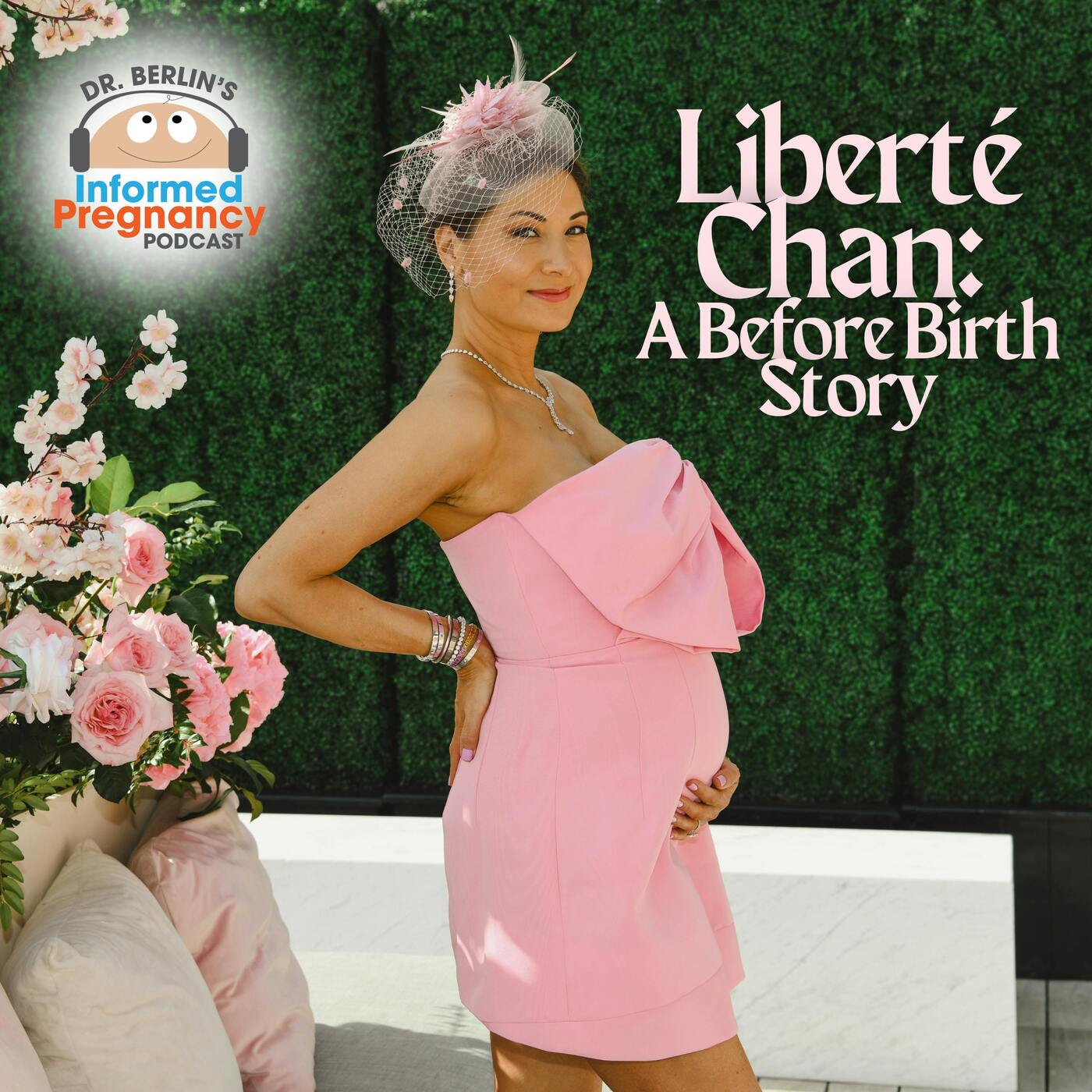
April 24, 2025 · 46 minutes · Episode 456
About this episode
Liberté Chan is a former meteorologist and television reporter who’s preparing for the arrival of her first child via IVF. Now as a digital creator with a focus on fashion, travel, and wellness, she reflects on her work and her hopes and dreams for her new baby.
Connect with the guest:
@libertechan
Key quotes
“It was almost like being hit by a truck again and again and again.”
“And I was like, Oh my gosh, I want to be a mom. Like I'm never going to have that.”
“I think when you get this like shift, like this maternal instinct, it just kicked into high gear.”
“And then he was like, I want you to have my child. And I was like, Oh my God. Like it was the best night ever. It was so magical.”
“It actually does help with my perspective. Thank you for sharing that.”
Related episodes
- Ep. 457 Liberté Chan: After Birth
- Ep. 455 In Conversation with Jaime Lipsky Garcia
- Ep. 452 Obstetric Care: Behind the Curtain with Dr. Melissa Drake, MD
- Ep. 470 Carlson Young: After Birth
Transcript
AI-generated transcript with speaker labels — may contain errors, especially names and medical terms. Dr. Elliot Berlin, DC appears in blue; Liberté Chan in orange.
Dr. Elliot Berlin, DC [0:00] Today's guest is no stranger to the spotlight. As a dynamic on-air reporter, meteorologist, and influential digital creator, she's captivated audiences with her passion for fashion, wellness, and travel. But today, she's here to share an even more personal journey, her experience of becoming pregnant for the first time through IVF, and the hopes and dreams she holds as she prepares to welcome her baby. I'm pregnancy-focused chiropractor Dr. Elliott Berlin, and you're listening to the Informed Pregnancy Podcast. Liberty Chan, welcome to the podcast.
Liberté Chan [0:47] Thank you so much for having me.
Dr. Elliot Berlin, DC [0:49] I'm excited to have you. First of all, how often do you get to talk to a real-life meteorologist?
Liberté Chan [0:55] Well, I just had a lunch with some girlfriends and two of the three were meteorologists.
Dr. Elliot Berlin, DC [0:59] Oh my goodness.
Liberté Chan [1:00] If you're in that world, I guess it's more often than not.
Dr. Elliot Berlin, DC [1:05] I guess for you, it's not a rare occurrence, but for me, it is. I want to jump right in because there's a lot to talk about here. I think it's an interesting career, just meteorology news in general now, like lifestyle, blogging, and not just blogging, but everything-ing, online-ing, and also this pregnancy, uh, going out and having a kid for the first time on your IVF journey and your plans for birth and parenting. Let's start at the beginning. Where are you from originally?
Liberté Chan [1:30] I am a Cedars baby, and that's where I'm having my baby girl.
Dr. Elliot Berlin, DC [1:34] History repeats itself. Yes, um, born and raised in LA. So I am a native. And how was growing up in LA for you?
Liberté Chan [1:43] I loved it. I mean, it's home. It's all I knew and I really enjoyed it. I was kind of in that private school circuit. So I did the center. I did UES. I did Marlboro. I, you know, so I kind of did that private school circuit.
Dr. Elliot Berlin, DC [1:58] You're wickedly fit. I mean, it's just true. Like I see a gazillion people. I see all sorts of professional athletes. You're just extremely fit. Well, and I'm just curious, like at what point did you get into fitness and taking care of yourself and what kinds of things have you done over the years?
Liberté Chan [2:16] Hmm. That's an interesting question. Um, I was a very active child. I discovered figure skating at the age of five. I hopped on the ice because I have two older brothers and they were at the ice rink and they were playing hockey. And my mom said, Oh, you should go try figure skating. So we threw on some skates. And within I'd say five minutes, I was skating around by myself.
Dr. Elliot Berlin, DC [2:41] Oh, wow. Okay. Cause I threw in some skates and what it took five years and I still hold onto the wall, cringing for dear life.
Liberté Chan [2:47] I kind of just fell in love with it. I don't know that at a very young age. And then that turned into a competitive figure skating career. So I hopped on the ice at five and I competed until I was about 15 years old. It was pretty intense. Does the Southern California has, at least when I was a child, it had a pretty fierce and competitive scene. Of course, you know, I was like Michelle Kwan era. So I would skate with her and I just spent so much time on the ice. So I think going back to your question, it was just in me to be an active person. And even though I quit competing at 15 in college, I picked it up and I picked up some extra credits just by teaching a PE class.
[3:32] And then I took on private lessons in college to make some money. And then just training or skating, just training on ice. No, on ice. Oh yeah. Okay. Skating. Yeah, yeah, yeah. Skating. I thought you meant, did I compete like train while I was in college? No, but I taught figure skating to little kids. And then I also just picked up some college credits by teaching a PE class. I mean, skating is very physical on that level.
Dr. Elliot Berlin, DC [3:57] So are there more workouts involved than skating or skating itself, the workout?
Liberté Chan [4:03] I mean, as a competitive figure skater, you have to cross train and you do ballet, you know, you lift weights, you do other stuff. So I learned early on that when I move my body, I feel my best. So that kind of just translated into after I left the skating world, after, you know, college, I continued, I'd went to the gym. I picked up strength training. I like a good cardio class. I'm a big soul cycle girl and yoga, yoga.
Dr. Elliot Berlin, DC [4:34] For each of those things. I have a thing like, it's not soul cycle, soul food, and it's not yoga. It's yogurt frozen, mostly with a lot of toppings. We're so different. I think I should have taken your path though. It's a better path. I'm like, is competitive figure skating, is that totally individual or is there a team element to it?
Liberté Chan [4:52] It was individual. And then I did do some pair skating as well. So I went pretty far as a teenager. I went to nationals. I was nationally ranked at like 13, 14, and then I kind of just lost interest in it, but I think it just laid the groundwork for being an active person. And I don't feel good unless I wake up in the morning and I do something physically active and move my body. So now it's like yoga, it's cardio and it's strength training. That's kind of my three loves.
Dr. Elliot Berlin, DC [5:23] Nice. It also puts you in the spotlight at a pretty young age, right? Cause if it's individual skating, all eyes on you, was that hard to get used to?
Liberté Chan [5:33] You know, I was never a big talker, but I could perform in front of an audience without speaking. I could express myself without speaking much better than I have a fear of public speaking, which is weird because I am on the news. Quite public. Oh yeah, I'm on air. But you put me in a room with 10 people and I will not stand up and talk to them. It's weird.
Dr. Elliot Berlin, DC [5:59] So how did you make that leap?
Liberté Chan [6:02] Um, I knew early on in high school that I wanted to be in news because I would watch all the beautiful news girls here in LA, I'd watch the weather girls, I'd watch the journalists, the anchors, the reporters out in the field. And in my head, I'm like looking at these women and I'm like, first off, they're super smart. I love that. They're super confident and they just know everything. Like, you know, so much little did I know that took all day to create a story or reading a teleprompter. I just thought that they knew everything. So it just piqued my interest. Exactly. Exactly. So that's what piqued my interest. But being, I was a very shy child, you know, I could perform
[6:46] in front of people without speaking, but I had to get over that fear of talking on my camera.
Dr. Elliot Berlin, DC [6:52] Was there a particular method you used to get over that shyness?
Liberté Chan [6:56] I just knew that I wanted the job of a reporter journalist so bad. And I thought to myself at like, you know, 20 years old, I said, if I don't do this now, I'm going to regret it my whole life. So let me figure out how to get over this fear. So for me getting over fear, I have to educate myself. So I went back to school, but I graduated with a degree in print journalism. And then I thought, okay, if I want to get into broadcaster, I have to get a broadcast journalism degree. So I went back to school and I enrolled in some broadcast journalism classes. I ended up getting an internship at KTLA and I was so scared to talk on camera, but there was a class.
[7:37] It was called how to read a teleprompter, something like that. And so I thought, okay, I need to push myself and get into this class. So I got into the class and we did this like training at KTLA with an anchor who worked there at the time. And she kind of just took me under her wing and became a mentor. And she worked with me and she said, you know, I started out in the business. I was very shy, just like you, you can get over this. And so she really gave me a lot of confidence and she taught me how to speak to a camera.
Dr. Elliot Berlin, DC [8:09] Oh, that's really nice.
Liberté Chan [8:10] Yeah.
Dr. Elliot Berlin, DC [8:10] And then did you launch like from there into? Oh, Angeles market.
Liberté Chan [8:16] No, no, no. It was a long road. It was a long road with a lot of ups and downs. I have a few interests. Well, I have many interests, but at the time I was 21, I had graduated college and I was doing these other classes during UCLA and I thought, okay, I need to educate myself, but I'm also really into health and fitness. So I want to be a health reporter. So I thought I'm going to go to graduate school. So I got into USC's school of public health because I thought, well, if I want to talk about health, I don't just want to talk about it and read about it and research, I actually want a degree. I want to have a master's degree in public health.
[8:55] I thought it would give me credibility. I thought it would give me confidence. So I went back to school at USC and I got my graduate degree. And at the time I interned at KTLA. I became a news writer at KTLA because writing is the backbone of news. And I thought, okay, in two years, when I graduate with this degree, I will become a health reporter, you know, little did I know that, you know, you start off in a small market. They don't really have a job for health reporters. Yeah. You just call a doctor, you know, like you call an expert and you can just be a general assignment reporter and still report on health and fitness related stuff, but in a small market, you don't really have the luxury
[9:37] of having those people, those specific journalists who go out there. So I became a general assignment reporter in a small market. I sent out, gosh, like 50 tapes, reels, whatever videos. I don't even know what you call it anymore. Like a montage of you speaking on camera, trying to be a reporter and you send it to all these small markets. It was the original reel.
Dr. Elliot Berlin, DC [10:04] Yeah, exactly.
Liberté Chan [10:05] Before these digital reels, it was literally a VHS tape that you sent out. Well, I sent out a DVD.
Dr. Elliot Berlin, DC [10:11] DVDs, okay. One step later.
Liberté Chan [10:13] Okay. I sent out a bunch of DVDs and I got like no calls and I kept following up. And I'm kind of like, I don't give up. Like I'm kind of annoying. I'm like that person, which is good if you're a reporter journalist, cause you need to be like that. So I kept calling all these news stations. I sent it all across the country and I thought, well, I kind of just want to stay in California. I kind of want to be in California. I want to work my way back to LA. That was the dream. I just thought it would be really cool to work in a town that you grew up with and have your parents watch, you know, so I went up and one of my first interviews was in Santa Barbara and they passed on me and then I
[10:52] said, okay, well, let me see if I can go a little bit farther. So I went to a new station in Santa Maria and they actually hired me. And somehow, some way I got on air there. And I think it's like market, maybe 121, you know, New York's number one, LA is number two. It's a small market, but that's how you typically make your way back to a larger market. So I thought, okay, I'm going to put in my time and learn how to report. And so I became a general assignment reporter and I thought I was going to be fired every single day after work. I would go home. I would cry because every single time I would be on air, I would literally start shaking. I was so nervous.
[11:39] I had to take anti-anxiety medication because I would start sweating. My palms would get sweaty. My heart, like it was terrible, but somehow I didn't get fired. And then I jumped to Palm Springs as a morning anchor and I was eventually demoted after a year.
Dr. Elliot Berlin, DC [11:57] Oh, but the anchor has a nice chair.
Liberté Chan [12:00] Yes. Yes. And then it was put out in the field and I had to edit and report and do all sorts of things. And I thought to myself, is this for me? I'm making, gosh, like maybe 15, $18 an hour, like out in the desert. It was 110 degrees. I was carrying my own equipment. I'm like, I don't know if this is for me. Maybe I'll go back to LA and try to quote unquote, make it. So I left Palm Springs and I came back to LA. I still had some connections at KTLA and I reached out to a producer who had helped me in the very beginning of my career and she said, oh, well, why don't you just come in and be a web producer? So I went back to KTLA as a web producer.
[12:42] It was a demotion, obviously, because I wanted to be on air, but they wouldn't put me on there because it was still green and I think Palm Springs is actually a smaller market than Santa Maria. It's like market 150 or 60, but it's a feeder market, meaning a lot of people who work in Palm Springs will make a big jump to LA. So I thought, okay, well, if other people can do it, I can do it too. Let me just get my foot in the door and at KTLA as a web producer, it was around the holidays. I had been there for about two months, just, you know, producing on the web, writing stories for other reporters and posting their reports. And I just never gave up on that dream of becoming a reporter here in LA.
[13:26] So I made friends kind of with the news director and I would go in there pretty much every day. And I'm like, did anyone call in sick? If they did, I'm available. And he's like, you know, he's thinking, okay, this is like very odd, like usually I hear from an agent, I don't hear from some web producer, but I kept going in there and I was kind of a nudge. And then one day it was around the holidays and someone, I think, called in sick and I went in there and he goes, okay, I'm going to give you a shot, Tamale story, because in LA, you know, it goes hand in hand with Christmas, so he's like, you're on a Tamale story, let's see what you can do. I went out there, I messed up.
[14:09] I was crying after the live shot because I thought, oh my gosh, I really effed up my chances of ever getting another chance, but somehow some way they gave me another shot and they kept giving me just a little chance, you know, it was like maybe one day a week and then nothing for three weeks and then another day a week. And I slowly, I think got better.
Dr. Elliot Berlin, DC [14:32] You Lose your way in.
Liberté Chan [14:34] I did, I did in a very unconventional way.
Dr. Elliot Berlin, DC [14:37] Well, I mean, that sounds like you in a lot of different ways. So that's a really interesting story. And it's sort of a little behind the scenes because we just turn on the TV and see people and I'll never really think about how they got there, but they do seem good at what they're doing in these big markets. I guess there's a lot that goes into that. Like anything else, you start someplace and have to work at it till you get great at it. You're taking on a new adventure, motherhood. And I want to talk about your road to getting pregnant and the pregnancy and your plans for birth. And also I lost one parent when I was young, you lost both.
Liberté Chan [15:14] Yeah.
Dr. Elliot Berlin, DC [15:14] And I want to kind of get a little bit more information about that. And I wonder how it affects you now that you're about to become a mom. Let's take a break. And we'll be right back.

Dr. Elliot Berlin, DC [15:35] Welcome back. We're talking to Liberty Chan and you're going to become a mom. You lost your parents in your thirties. What happened and what was that like for you?
Liberté Chan [15:44] It was almost like being hit by a truck again and again and again. There were like four years where I lost my stepdad who became my dad. And then I lost my dog who I'm a huge dog lover and I had her for 13 years. And that was heartbreaking. And then I lost two best friends and then my mom got pancreatic cancer all within four years. So from 2017 to 2020, it was rough. So maybe I mean three, four years. So my dad was such a bright light in my life and he taught me so much. And I am the product of who he was for sure. I just catch myself doing things, saying things because he was such a strong influence in my life. Now I met him when I was 14. My biological dad, I have no contact with.
[16:37] I pretty much grew up with my mom taking care of everything. She put three kids through private school, basically like a single parent income, which is pretty bad ass if you think about it. Like, that's amazing. And so she was a great role model in that she had the work ethic of. I mean, it was incredible, which I think translates into my own work ethic. Maybe she worked too hard and maybe I worked too hard as well, but she would never stop. But anyways, she met my dad, Tom. He became my stepdad and I just call him my dad because, you know, he just, he was the wrong. Yeah. He stepped into the role of being a dad. So he was incredible. He was from a small town in Ohio, self-made created, you know, a lot
[17:28] of wealth just by being kind of a bad ass. And so together, I think it was a really good thing for me to see because they were both pretty much the hardest working people I've ever met. Even until the day they died. Yes. So I was very, very close with both of them. And my dad came down with ALS. He was diagnosed with ALS. Yeah. In 2015, at that time, I was a meteorologist on KTLA. He was so proud. Like my parents were so proud. They would watch. They would tell me what they thought, you know, was always like, it was lovely having them in my life. And then he got this horrible disease and watching him just become so frail. I mean, he was over six feet and then he just became such a frail
[18:13] person and you know, eventually it just robs you of everything and you're kind of a hostage in your own body. Like, you know, you can't even put on your pants at the end. You are wheelchair bound. It's a horrible disease. It's horrible. It's horrible. So that really cut me to the core when he passed in 2017. And then my dog died the following year, two best friends died. And then the following year after that, my mom was diagnosed with pancreatic cancer, which pretty much one of the worst cancers that you can get, it's, it's pretty much a death sentence. I mean, I know that I think at the time it was like 8% survival rate, but within a year after her diagnosis, she passed as well.
[18:59] And at the time I had just met my now husband, I was actually on a trip. My mom, she's pretty much a badass and she, in between chemo treatments, she was planning trips around the world and she's like, let's go to this formula one race because my family was very much into formula one. My dad was a huge formula one race fan. So we went to a lot of races. And so, you know, kind of her last hurrah, her last year on earth, she planned her trips, you know, to Monaco to see the race, to Singapore to see the race. And I actually met my husband on a plane after the Monaco race with my mom and my brother was there on a plane. And I sat next to Louise, my now husband, who's the father of my child.
[19:49] And it was on a trip back from Paris to LA, but she, I think I was talking about how a hard worker she was. So at the end of her life, before she was diagnosed with pancreatic cancer a year prior to that, she wanted to get a graduate degree in design. She was an interior designer and builder and she's like, I'm going back to school. She's in her late sixties at the time. Her husband had just passed my dad and she's like, I want to, you know, do some more higher education. So she graduated from UCLA back in the day and she thought, okay, I'm going to go to USC and get this master's degree in design and technology. So her second year, she was diagnosed with pancreatic cancer.
[20:30] And she's like, well, I'm going to finish. And so in between chemo treatments, she would do her homework. And she's like, I got to get my projects done before I go into chemo because I'm going to be too sick and I'm going to be on, you know, I'm going to be in bed. And that's the last thing I'm going to do. So she did. And posthumously she was awarded her graduate degree.
Dr. Elliot Berlin, DC [20:49] Wow. That's really incredible. Impressive and inspiring. And also kind of helps me understand you a little bit more than the tree from which you fell this hardworking apple. Well, now you're on the journey to becoming a mom yourself. Do your parents come up?
Liberté Chan [21:06] Oh my gosh. Every day I think about them every day and I pray to them every night. You know, I know they've met my baby girl. I mean, I hope I was like, they've connected with her. I don't know, you know, everyone believes different things, but I really do believe that they're going to be protecting her and they're here for the ride and once she's, you know, here on planet earth, I think they'll look out for her.
Dr. Elliot Berlin, DC [21:32] Almost honestly almost feel them right now, even though we're not even in the same room, I could literally almost feel them here with us on the podcast right now.
Liberté Chan [21:41] Oh, you're going to make me cry.
Dr. Elliot Berlin, DC [21:43] Oh, sorry. It's just a very strong energy. Liberty, you did IVF to get thus far along. What was that process like for you?
Liberté Chan [21:55] You know, it wasn't bad as my parents were very hard workers and I'm a very hard worker as well. And I never really wanted, like, I was never super focused on becoming a mom and having a family. I was super focused on career, but tomorrow talk about tomorrow. I was on air at key TLA early thirties and my mom was like, you don't really have like a guy that you're married to that you really love. Like, you know, you might change your mind in a few years. You might want to have a kid. I know you're really into your career and that's all you care about. I mean, you leave, you know, family trips early. You come back from, you know, I think I would, every time
[22:41] we would have a family trip, I would always leave early to come back and work on air because I was like, I don't want to be off air. You know, I have a job, I have a career. And so she was like, you might want to freeze your eggs. And she's like, you might decide in the future that you want kids. And I was like, okay. So I went through one round of IVF at the time and I froze my eggs and I am a very fertile person. Apparently, yeah, I was just born that way. And so we did one round and I got, I think 24 eggs and I was like, wow, I could have a football team.
Dr. Elliot Berlin, DC [23:13] Wow. And that was just egg harvesting. You weren't making embryos. You're just taking them in the freezer.
Liberté Chan [23:19] Exactly. So they were all nice and then I didn't really think about it. Like at one time I was like, do I sell my eggs? Like I can make money. Like, I mean, nowadays eggs are so expensive, right? And then I could make other people's dream come true. I never did.
Dr. Elliot Berlin, DC [23:34] Okay. So you kept them in the freezer.
Liberté Chan [23:35] Yeah, I kept them all on ice and then I met my husband. Yeah. I met him in 2019 eggs are still on ice right before the pandemic. Yes. Right before the pandemic, right before my mom actually died.
Dr. Elliot Berlin, DC [23:50] So he met your mom.
Liberté Chan [23:52] He did. We were on the plane from Paris to LA and she's like, you're talking to that guy an awful lot. He's like, you never talk to people on planes. And I was like, I know, but. I know, but he's nice in any event. He did not want kids. So I went on, it was date number two and I didn't really call it a date because he wasn't really like the guy that I thought I would be into. It was just like a friend. I just really liked talking to this person from the airplane. Yeah. It was like a dude from the airplane and you know, there's an age gap between us and he's older and he has three grown children. And I was like, yeah, not looking for that. Like I was in my late thirties.
[24:35] He was in his early fifties. And I'm like, I'm not looking for a guy who's in his fifties with three grown kids, like that's just not what I'm looking for, but he was so nice and so kind and I'm like, I just like talking to him, you know, I'd like being around him, I like how he makes me feel. And so we went out on like, I'll call him meetups. I mean, to him, it was a date to me. It was just the meetup. Cause I was like, well, maybe he has some friends, you know, who whatever. So it was this meetup at the Waldorf Astoria that we had two dates there. Our first and second meetup or date, whatever you want to call it. And I was sitting there and I was like, Oh, do you want kids?
[25:16] And he's like, Oh no, Oh no, no, no, I'm done. I have three, they're all in their twenties. I'm good. And I was like, Oh, at that point it's like, does the conversation stop? And I thought to myself, well, I'm not really looking for like, I don't want to be with this guy. At that point I didn't. And I was like, okay, but do I leave now? I, it was just a weird like halt in the conversation, but he's so good at getting out of those like sticky situations that somehow we just navigated out of that conversation. And I knew where he stood and he knew where I stood. I said, Oh, maybe I want one. And then that was it. And then we had a great time after that.
[25:57] Okay. And then, you know, we fell in love and he still didn't want kids. And then we got married and he still didn't want kids. And I was like, okay, I can do this. Like I'll just live my life. I'll have my career. He has three kids, you know, so it's like a family. I don't need to be a mom. I was telling myself this. And then I kid you not, we got married in October and by December we were in Paris celebrating the new year. And I look over, we were having like a beautiful dinner and I look over and I see two young kids, probably both under the age of five, a little girl and a little boy. They were dressed to the nines. They looked adorable. And I just started crying at the table.
[26:44] I just started bawling and he looks over and he's like, what is going on? And I was like, Oh my gosh, I want to be a mom. Like I'm never going to have that. I'm never going to be able to dress like a little girl or a little boy in like a cute suit or dress. Like how can I go through life without being a mom? Like this is a big deal to me. And he's trying to get me to stop crying because you know, we have like three more courses. And so he said, okay, let's not talk about this tonight. Let's table this. I'm not saying no, I'm saying let's talk about it in the morning. And so I was like, okay, okay. And the morning came and he's like, this is a big topic.
[27:21] I don't think we're going to get to a decision today. And I thought, okay, he's like, again, it's not off the table, but I don't know if I can really jump on board and say yes right now. And then it was like two years of me just thinking from the morning to night, something happens to a woman. I think when you get this like shift, like this maternal instinct, it just kicked into high gear. And I'm like, this is my only chance. Like, do I want to not be with my husband who I love? And he's my soulmate. Do I want to go off and have a kid by myself? Like I didn't know what to do. So yeah, we were stuck, you know, I mean, spoiler alert,
Dr. Elliot Berlin, DC [28:01] you got the bump going on, but how did you resolve it?
Liberté Chan [28:05] Um, through many, many conversations, therapy. It took him about, I'd say a year to jump on board. It was baby steps. It was at first, okay, I understand that you want to have a kid. I don't think I can do that right now. And then eventually like the conversation turned into, you know, it would be selfish of me to not give you a child and to make matters even more complicated, he had a vasectomy back in 2006.
Dr. Elliot Berlin, DC [28:38] Oh, wow.
Liberté Chan [28:39] Well, it was not in the cards to reverse the vasectomy, but you can extract sperm. I've learned and you can create embryos that way. So he's like, okay. So basically he came up with the idea of, okay, let's create these embryos and let's see how many we get and then we'll make a decision. And I'm either going to give you a child or why don't we donate these embryos and instead of one child, you know, how many embryos you could get five, you could get eight, you know, these viable embryos. We didn't know how many we would get and we can donate them to people who do want to raise these children. And then at least you'll know that there are children out there
[29:24] that are half you half me. And I thought, okay, okay, I can do that. Like at least, you know, I've done stories on children that are, you know, not living with their biological parents, they're either adopted or whatnot, and they reach out to the biological parents eventually, you know, after they're 18, they're curious. And I thought, okay, if we do this, I'm going to write a long letter to all of these children. And I was just holding onto hope that, you know, if he wouldn't jump on board with allowing me to have his child, at least we would have these children out there and eventually they would come meet us. This long letter that I could share with them about why we didn't raise
[30:04] them.
Dr. Elliot Berlin, DC [30:06] Yeah, what a journey with a journey as two individuals and as a couple.
Liberté Chan [30:12] Yeah, yeah. And then eventually he came to the table one day and he said, okay, I can't do this. I can't raise a child in my fifties and I don't want to do this, but we can donate the embryos. And at that point we had created five viable embryos, three girls, two boys. And I thought, okay, okay, I'm heartbroken, but at least they're going to be out there. And I know that they're going to contact us at one point. So I signed the paperwork. And then for like two weeks, he wouldn't sign the paperwork. And I'm like, what is going on? Like you said, I can't have your baby and now you're not signing the paperwork. So I still have no children out there who are mine.
[30:52] And then we went on a trip to Argentina and he came across this older guy in his seventies and he had an 11 year old son and he thought, okay, if he can do it, I can do it. Gone with their own challenge accepted. After seeing that example, we went back to the hotel room and he's like, I got to tell you something. And then he was like, I want you to have my child. And I was like, Oh my God. Like it was the best night ever. It was so magical. And then we waited a little bit long, like maybe six months after the decision. And then we implanted the first embryo and we both wanted a girl. So we implanted the first girl. And then it didn't work and it broke my heart.
[31:41] Like, it was weird. The HCG was going up, but it wasn't going up enough. So it was like, I was pregnant, but I wasn't pregnant, but like something was there. So I had to get this shot and I don't remember what it was called. But then after the shot, you know, I had to clear it from my body. So that was, I think we tried March of 2024, and then I had to wait until July of 2024 to have the second implantation.
Dr. Elliot Berlin, DC [32:07] After everything you'd already been through. That's tough. Wait.
Liberté Chan [32:10] And then here we are now.
Dr. Elliot Berlin, DC [32:11] And then here we are now.
Liberté Chan [32:12] And I'm 30, what? 37 weeks.
Dr. Elliot Berlin, DC [32:16] Okay. Almost ready to pop. There's a TV magic again. Put it in this oven, bra and you take it out all cooked and ready to eat. Okay. Let's take another little break and when we come back, we'll find out what you have in mind for your birth. We'll be right back. Welcome back to Mama Liberté, 37 weeks pregnant. So this baby's coming soon. First of all, I keep meaning to say, cause you talk about sort of being an older mom for baby number one and your husband being an older dad and the age gap between you. I opened the podcast by saying you're incredibly fit and your husband is also incredibly fit. I don't think anybody would guess your age is not even close by
[33:10] meeting you and both of you have incredible energy and strength and warmth, so it's a really beautiful combination. But outside of what it says on the medical record, you're both super youthful and so it's like the baby's going to have energetic parents.
Liberté Chan [33:28] Moving a lot. She's very active.
Dr. Elliot Berlin, DC [33:30] So I just described the two sets of genes that went into making this kid make sense to me. All right. So a baby's coming, you know, in the next couple of weeks or so. What's your vision?
Liberté Chan [33:41] Oh gosh. Well, I definitely have to come see you every week until the baby comes because I do get a few aches and pains now every so often, and you definitely help you have literally magic hands, but thank you. You know, I digress.
Dr. Elliot Berlin, DC [33:59] What's the plan? Like what's the birth plan? Is that your vision? Like what's your preferences?
Liberté Chan [34:05] Well, the plan is to have a vaginal birth, push her out very quickly.
Dr. Elliot Berlin, DC [34:11] Okay. What's plan B?
Liberté Chan [34:13] Well, if I need to have a C-section, I'll have a C-section. I'm going to try to hold off from the epidural as long as possible. I want to labor a little bit, you know, at home, I want to labor at the hospital, but whatever's the safest for me and the baby, and I'm not going to be a hero. Like if I need the epidural, if I can't get through the pain, then I'm open to it. I want to create like a safe space in the hospital room. I think I talked to you about this. I want to create like a birth board. I want to have like, you know, just some inspirational words and my parents are both not going to be there. So I'm going to have pictures of them. You know, I've created a playlist and I'm hoping that all of that happens.
Dr. Elliot Berlin, DC [34:55] What kind of stuff is on your playlist?
Liberté Chan [34:58] Oh, you know, like some cheesy songs, inspirational songs to get me through it. A lot of yoga. I mean, as you know, I'm a huge Yogi. I've been practicing since I was 21 years old. I still practice. I still do inversions.
Dr. Elliot Berlin, DC [35:14] Now at 37 weeks.
Liberté Chan [35:15] Yeah.
Dr. Elliot Berlin, DC [35:16] Yeah.
Liberté Chan [35:16] Yeah.
Dr. Elliot Berlin, DC [35:17] We're going to have to post that picture with this episode.
Liberté Chan [35:20] Yeah. I still do handstands, headstands, and you know, I don't think it's for everyone. It's what my body's used to doing.
Dr. Elliot Berlin, DC [35:27] So it feels for me because my body is not used to doing anything like that, but it makes sense for you.
Liberté Chan [35:34] Yeah. Yeah. Yeah. So, I mean, that's the plan. And then hopefully I can breastfeed without too much trouble. I'm all about hiring who I need to hire to help, you know, lactation nurses. I have a night nurse lined up. I have a postpartum doula. I've taken classes. One of my former yoga teachers and who's also a doula. I don't know if you're ever prepared. Like, I don't think you can be prepared. I think it just happens and something that your body is designed to do.
Dr. Elliot Berlin, DC [36:03] It does. Yes. Well, that's the paradox because in one way you were born prepared. Right. And then another way you feel totally unprepared, but I think we're sort of getting to the difference between innate intelligence and educated intelligence. Innately, you're born with all the instructions, you know, how to fertilize an egg and grow it into a human being, how to deliver the finished product, how to make the perfect food for that finished product. You don't have to think about, like, if I asked you, go, do you know how to make milk? You will have no, probably in your educated mind idea, what are the processes that go involved into eating whatever you eat, probably green
[36:39] leafy vegetables and turning that into breast milk, but your body knows how to do it. Birth is the same way and you know, pregnancy is the same way. So you are totally prepared and completely unprepared at the same time.
Liberté Chan [36:51] Exactly. Exactly. And that's how I feel. And I think one of my biggest fears is I don't want to poop on the table, like I really don't. I know that that's so, so common. And I think the majority of women do that. And I just had lunch with three women who work in news and they're all moms. And I was like, how do I have a vaginal birth and push, but like not poop on the table? My friend says to me, she's like, okay. She's like, I've had two. Here's what you do. You push, like you're peeing, not like you're pooping. And I was like, okay.
Dr. Elliot Berlin, DC [37:25] Who pushes pee?
Liberté Chan [37:28] I don't know.
Dr. Elliot Berlin, DC [37:28] Push pee, pee just flows. It's like plumbing.
Liberté Chan [37:31] I know. I know. So any advice?
Dr. Elliot Berlin, DC [37:33] Yeah, I do have some advice. Well, a few things, number one, I've been to a lot of birth. So I will say that the concern that you have is not terribly uncommon. If people hear that there's poop involved in labor and nobody wants to poop with an audience, you know, and some people are really excited about the birth and that's the thing that just like they can't sleep at night wondering what it's going to be like, and hopefully I won't poop and how can I avoid it? But I'll tell you a bunch of things. Number one, especially if you are unmedicated, right? If you are, I don't really believe in unmedicated birth, I think either we give you meds or you make your own.
[38:11] And the ones you make are pretty cool compared to the ones we can give you. If you're a hysochite and your own oxytocin and endorphins and enkephalins, you may not even know, and you certainly won't care. You'll just be in a different, beautiful planet. And that's just honestly, people just don't even realize. And they just don't care. They're in a different space. That's number one. Number two, generally, when I am aware of poop at a birth, it is not, I don't know what you're picturing. It is not logs of poo after, you know, having overeaten, you know, and finally getting the big gratifying release is slivers of poop that come out.
Liberté Chan [38:50] Okay.
Dr. Elliot Berlin, DC [38:50] And nobody in the room with you, none of the professionals that are working there haven't seen it literally thousands of times expecting it, prepared for it in the hospital. You're generally, if you're in the bed in the hospital, you're generally on like a whole bunch of disposable check sheets. And if any poo emerges, they wrap it up so quickly and throw it out. You sometimes are not even sure if it happened or not. That is just the truth. Now, the other thing is it makes sense to me that the baby, whoever created this human body makes the baby kind of push back a little bit.
Liberté Chan [39:28] Yeah.
Dr. Elliot Berlin, DC [39:28] Towards your rectum and feels like you have to poop. And then the baby pushes from there forward and comes out more through the front, right? And I think that there's purpose in that, which is that by getting some of the fecal matter that's in the rectum to come through with the baby, the baby gets exposed to all of your bacteria and needs to be exposed to all of your bacteria to start harvesting, cultivating, growing their own healthy bacterial flora. And, um, it's that exposure that gives them the advantage to be able to do that, that they need good bacteria to be able to digest, they need good bacteria to be able to fight off infection. So a whole bunch of things that are going to be beneficial to them to
[40:11] start growing and harvesting that positive bacterial environment, microbiome.
Liberté Chan [40:16] So in the event that my child is exposed to my poop, it's actually beneficial to her.
Dr. Elliot Berlin, DC [40:21] It's a good thing. And I think that's why the system is the baby goes to the back, passes by the rectum and comes out. I think it's supposed to happen. And maybe, I don't know, maybe just maybe knowing that that is not only a natural part of the process, but why it's a natural part of the process, that there's a benefit there. You might even be like change of paradigm and be like, Oh my gosh, was there poop? Hopefully there was poop.
Liberté Chan [40:47] It actually does help with my perspective. Thank you for sharing that. And whoever's listening and fearing the same thing. It's a nice shift in mindset. Thank you. Thank you.
Dr. Elliot Berlin, DC [40:58] My pleasure. I mean, to recap, if you're on Medicaid, you may not even know what happened either way, everybody around is totally prepared for it, not grossed out by it and we'll have it clean in so quickly that again, you may not know what happened or question whether it happened. And then number three is it's not giant logs of poop. It's sliver. And finally, it's beneficial to the baby. It's poop with a purpose.
Liberté Chan [41:22] Who were the purpose?
Dr. Elliot Berlin, DC [41:23] I like that.
Liberté Chan [41:24] This is my new merch.
Dr. Elliot Berlin, DC [41:25] I'm like a little onesie.
Liberté Chan [41:27] Yes. My new merch, poop with a purpose, informed pregnancy, tune in today.
Dr. Elliot Berlin, DC [41:33] Well, you've shared a lot.
Liberté Chan [41:35] I did.
Dr. Elliot Berlin, DC [41:36] And all very interesting and fascinating. Again, never met a meteorologist in person. I even took broadcast journalism classes in college. Yes. There's things about me you don't know. I mean, you are a very multifaceted person. I was a speech and drama major. So there was some journalism and broadcast journalism. I took a class with the person who was an anchor on New York nightly news. Yeah. And she talked in class just like she talked on TV, you know, after the break, we'll come back with homework. You know, I'm like, does anybody have a remote control? But it was an interesting class. Still never met a meteorologist. And we didn't even talk about meteorology, but no, it's okay.
[42:22] I am inspired in multiple fronts, uh, figure skating at five and being an introvert and just getting out there in front of everybody and pushing hard and competing and winning, no doubt. And then also pushing your way into a career that you fell in love with because you wanted to be in that league, you wanted to be in that world with really smart and powerful women who are also fashion forward. You know, we're going to see frumpy weather girls like they're well dressed and then just like, you know, pushing your way in there, powering through a really difficult sort of childhood in terms of not having your dad in your life and then having a dad as a teenager, which is hard.
[43:06] It's hard for teenagers for someone to step into that role and for you to be accepting and not only were you, but he became dad and then losing him and losing your mom and quick succession, losing your dog, which, you know, is hard in general, but during all the other tumultuous things going on, you know, that's a comfort creature for you. And so even harder pushing past all those things and somehow convincing your husband to have a baby with you is all a very, very inspiring story. I appreciate you coming and sharing, and I hope that you have the greatest birth with, you know, slivers of poo and everything you want it to be. I'm on board with your plan that it's, you know, fast and smooth, but the
[43:49] first one just realistically generally isn't fast, but you have endurance. You're used to pushing yourself and cross training in all sorts of different ways. You have the strength for sure. And you have the endurance. So I think you're up for the challenge, whatever it turns into. And you're also open-minded, which is super helpful because you're not rigidly set on one way or another. So I think you're poised for a great birth. I wish you had a better chiropractor, but outside of that, I was fishing for a plug.
Liberté Chan [44:17] You have helped me so much and you're helping me and I'll see you next week.
Dr. Elliot Berlin, DC [44:22] I'm honored. I can't wait. Okay. So we are going to come back after the baby comes and share the birth story. Until then, where can we find you online?
Liberté Chan [44:30] I'm at Liberté Chan.
Dr. Elliot Berlin, DC [44:33] Liberté Chan. And you have all sorts of cool stuff that you post on there. Digital creator is what I was thinking of when I said blogger.
Liberté Chan [44:40] Yeah.
Dr. Elliot Berlin, DC [44:40] Digital creator. Yeah.
Liberté Chan [44:41] Fashion, travel, lifestyle, health.
Dr. Elliot Berlin, DC [44:46] You finally became a health reporter.
Liberté Chan [44:48] Exactly.
Dr. Elliot Berlin, DC [44:49] Exactly. Very cool stuff. And you're on air as well.
Liberté Chan [44:53] Oh, look at us.
Dr. Elliot Berlin, DC [44:55] It all comes full circle.
Liberté Chan [44:56] It's all coming together.
Dr. Elliot Berlin, DC [44:58] We're multifaceted.
Liberté Chan [45:00] I appreciate the universe we're putting in my life. I'm a better person for knowing you. Thank you so much for letting me share.
Dr. Elliot Berlin, DC [45:07] My pleasure. Thank you again for joining me in at home. Thanks for listening to the informed pregnancy podcast for more pregnancy and parenting information, just like this, visit us online at informedpregnancy.com.
Want more pregnancy + parenting? Start your FREE TRIAL of Informed Pregnancy+ and get access to all our curated pregnancy and parenting content — original series, iconic birth films like The Business of Being Born, prenatal workouts and more.

0 Comments