
September 3, 2024 · 36 minutes · Episode 422
About this episode
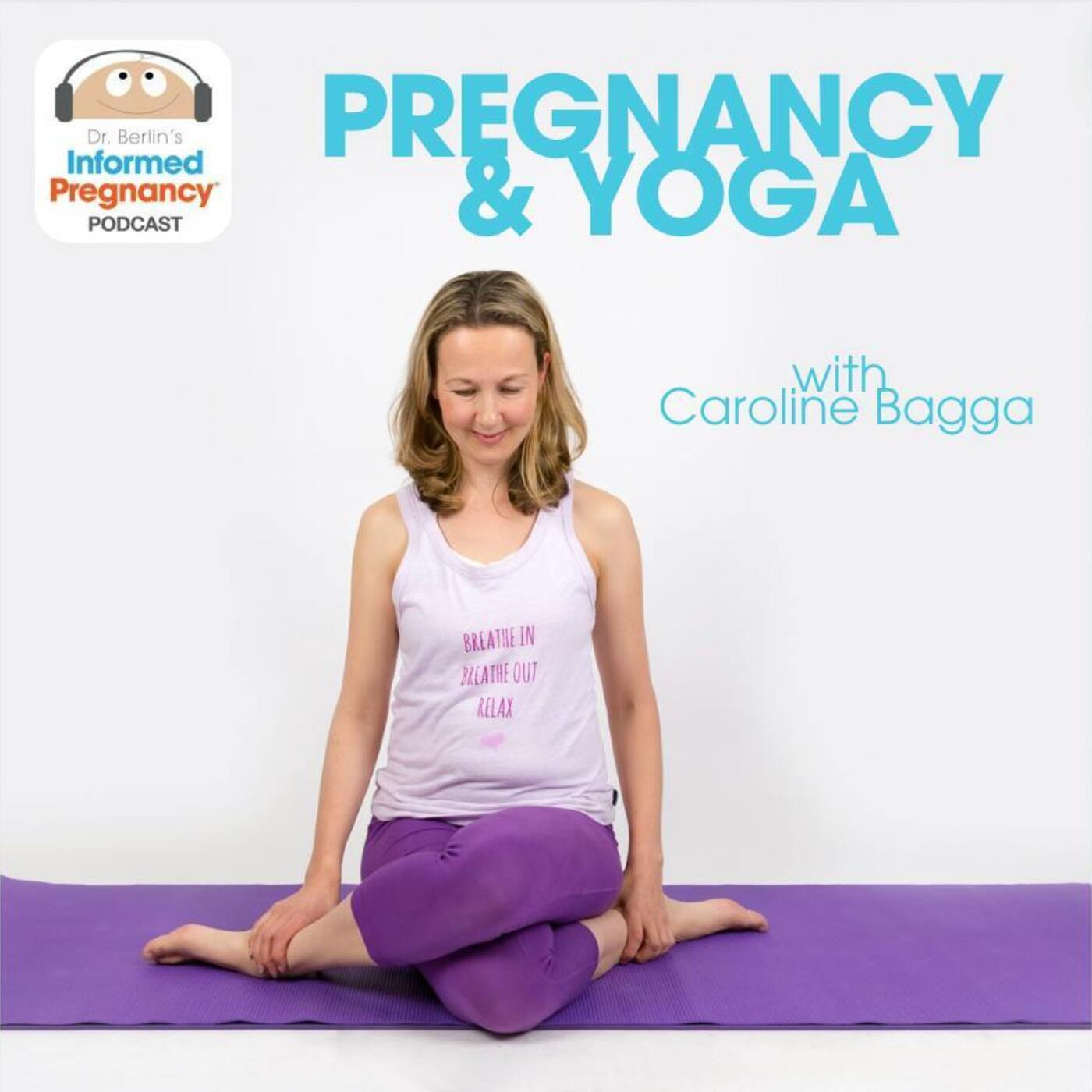
Pregnancy and birth coach Caroline Bagga, founder of Mother Nurture Yoga in Sydney, Australia, joins the podcast to talk about her own experience with motherhood and all things pregnancy and yoga, including how the practice holds a multitude of benefits for moms at every perinatal stage.
Connect with Caroline:
Read Caroline’s essays on the IP Blog:
How to Physically Prepare for Birth with Prenatal Yoga
How to Mentally Prepare for Birth with Prenatal Yoga
Key quotes
“So the way that you feel about the way you were treated and listened to, that's the number one factor. And continuity of support is really important. And I didn't have”
“It was, people find it hard to believe, but when I think back, when I reflect back on it, I think it was actually fun. It was a fun experience.”
“I often jokingly say to people that pregnancy yoga is the only kind of yoga you're allowed to get worse at, the more often you come.”
“So yeah, motion is lotion for the body. We're designed to move.”
“It's really wonderful that the women come and learn that stuff, but the real magic happens when they're both on the same page.”
Related episodes
- Ep. 414 Aly Michalka: After Birth
- Ep. 446 Perinatal Exercise with Sarah Zahab
- Ep. 424 Leedia Riman: After Birth
- Ep. 415 From Addiction to Motherhood
Transcript
AI-generated transcript with speaker labels — may contain errors, especially names and medical terms. Dr. Elliot Berlin, DC appears in blue; Caroline Bagga in orange.
Dr. Elliot Berlin, DC [0:12] Welcome to the Informed Pregnancy and Parenting Podcast. I'm your host, pregnancy-focused chiropractor Dr. Elliot Berlin. My guest today is a pregnancy and birth coach and founder of Mother Nurture Yoga in Sydney, Australia, as well as a mom to three. We'll talk about her personal trio of birth experiences as well as insights on yoga for pregnancy and labor preparation, Carolyn Bugga. Welcome to the podcast.
Caroline Bagga [0:59] Thank you. It's great to be here.
Dr. Elliot Berlin, DC [1:02] It's so great to talk to you. I'm a fan of your work. We currently have some of your class and it's amazing that you could be in Sydney, Australia and people all around the world can access your magical, passion-filled pregnancy yoga work. Let's start at the beginning and find out how you got to where you are today. Where are you from originally?
Caroline Bagga [1:21] Yeah, so originally I'm from England.
Dr. Elliot Berlin, DC [1:25] I've heard of it.
Caroline Bagga [1:26] Yeah, that small little island. Yeah, I came to Australia about 20 years ago now.
Dr. Elliot Berlin, DC [1:33] Now, when you move from England to Australia, does it seem like people have a weird accent?
Caroline Bagga [1:38] When I talk to my sister on the phone, she definitely has a different accent to me.
Dr. Elliot Berlin, DC [1:42] Yeah, I mean, I think Americans, we just lump everything that's not us into one, but they seem clearly different to me, especially when you say H.
Caroline Bagga [1:52] Yes, yeah, it's H.
Dr. Elliot Berlin, DC [1:54] Yeah, we're on the same page there. Okay, so you're in Australia and I gave a little introduction, but tell me about the work that you do.
Caroline Bagga [2:01] Yeah, so we specialize in prenatal and postnatal yoga. So we help women to stay healthy and active throughout pregnancy and to take those tools with them into labor and birth. So the breathing techniques, positions for labor, the ability to stay calm and relaxed, and then we also help them with their postpartum recovery. So starting with pelvic floor and just rebuilding that core, getting back into exercise in a safe way.
Dr. Elliot Berlin, DC [2:32] Wow, that sounds magical. Okay, so you do it through not just yoga.
Caroline Bagga [2:38] Yeah, so a big part of what we do is that childbirth education, obviously breathing, positions for labor, like that is very much interrelated with yoga. If people ask me, when should I stop doing yoga? How long should I keep doing it too? And I said, do it in labor. What we're teaching you is they're the positions that you want to take during labor and birth. How did you get started with yoga? I went to the library. I was an avid reader. I think I was maybe eight years old. I picked up a book about yoga, started playing around with some of the postures, the positions, but what really hooked me, I was at the end of this book, there was a script for a yoga
[3:17] nidra, which is a really deep guided, we call it yogic sleep. I can think of it as a meditation or a relaxation where you rotate your consciousness through different parts of your body. And I memorized this script and I ran it through in my head and I felt like my body was lifting up off the floor. I had this really incredible out of body experience. Yeah, that was my first kind of foray into yoga.
Dr. Elliot Berlin, DC [3:44] Was that still already as a kid?
Caroline Bagga [3:46] Yeah. Yeah. I was about eight years old and it was just from reading a book. It was really quite, it makes obviously a big impact on me. And then when I moved to London, they were offering yoga classes at the office that I was working. So I started getting into it there. When I moved to Sydney, I did teacher training. The rest is history.
Dr. Elliot Berlin, DC [4:05] Okay. So in England, you said the office you were working, working, not doing yoga, you were doing something else.
Caroline Bagga [4:09] No, my background is corporate marketing.
Dr. Elliot Berlin, DC [4:12] Oh, quite different. Yeah. Okay. And then eventually you left corporate marketing.
Caroline Bagga [4:19] Yeah. So after I had my first baby, I realized it was quite incompatible with the lifestyle that I wanted to have and how I wanted to raise my child. I wanted to be there for her. And my job was quite demanding, a lot of hours. I didn't see how I could go back and balance the two. So I left and that was when I turned to yoga as a more of a
Dr. Elliot Berlin, DC [4:41] full-time gig. Did you have your baby in England or in Australia? No, in Sydney. Okay. But you did a yoga training, a teacher training before that? Yes. Okay. Did you do corporate work when you first got to Australia as well?
Caroline Bagga [4:55] Yeah. Yeah. So my first baby is 12. So yeah, I did it for, I guess, eight years. Yeah.
Dr. Elliot Berlin, DC [5:03] Oh, okay. And then you had the baby. And so the yoga is more recent.
Caroline Bagga [5:07] It's always been a big part of my life in terms of my own personal practice. I've always been quite dedicated to my personal practice. But yeah, I've been running Mother Nurture Yoga for 11 years now. Oh, yeah. And before that, just kind of teaching on the side as just a fun side gig.
Dr. Elliot Berlin, DC [5:26] And do you have a particular approach to childbirth education?
Caroline Bagga [5:29] Well, I guess through my experience with giving birth the first time and being pregnant, I had a really positive pregnancy experience. And I credit that to yoga, but not such a positive birth experience. And it was really that that was the trigger for me specializing in prenatal and postnatal.
Dr. Elliot Berlin, DC [5:48] Ah, okay. Well, then let's jump into your trio of birth stories, starting with how did you meet your partner?
Caroline Bagga [5:55] We met in Sydney. He's from India originally. We just met through a work function.
Dr. Elliot Berlin, DC [6:01] Ah, the old-fashioned way.
Caroline Bagga [6:03] Yeah.
Dr. Elliot Berlin, DC [6:04] Not online. Wait, were you working together?
Caroline Bagga [6:07] No, it was just a work function.
Dr. Elliot Berlin, DC [6:10] Okay. So it just happened to be in a work function. And when you partnered up, was having children a conversation?
Caroline Bagga [6:16] Yeah, it was something that we both wanted. It happened very quickly.
Dr. Elliot Berlin, DC [6:19] There's a blessing right there.
Caroline Bagga [6:21] Yeah, we were very lucky. We had our first baby exactly a year after our wedding.
Dr. Elliot Berlin, DC [6:26] Oh, wow. And then is he a yoga guy too?
Caroline Bagga [6:31] I mean, he will do some yoga, but no, he's not into it in the same way as I have.
Dr. Elliot Berlin, DC [6:34] It's not a regular practice for him?
Caroline Bagga [6:36] No.
Dr. Elliot Berlin, DC [6:36] Okay. So you got pregnant quickly and you said you had a great pregnancy.
Caroline Bagga [6:41] Yeah. Yeah. So obviously I was still working at the time. Didn't have that concept of working from home or flexible work practices at that time. So commuting in, so still working long hours. So from that perspective, I probably wasn't as active as I would have liked to have been, but it was a positive pregnancy. No big dramas, nothing to write home about. It all went well.
Dr. Elliot Berlin, DC [7:08] Had you done your own childbirth or pregnancy classes, preparation classes? Was there a source of information that you were turning to?
Caroline Bagga [7:17] I did do some in hindsight, which is a wonderful thing. I didn't do the right preparation, knowing what I know now. No, not at all. Like I did the hospital classes. I did obviously my yoga practice, but I wasn't prepared. I did not understand the system that I was walking into. I did not understand how your body works throughout labor and birth. So no, not at all as prepared as I would have liked to have been. And I think my experience would have been really different had I prepared differently.
Dr. Elliot Berlin, DC [7:49] It sounds like you are spending the bulk of your time now trying to help other people not have that same surprise, like the retrospective realization that maybe I should have done more homework. But that said, going into your first birth, did you have a vision of what you wanted it to look like or what you intended? Yeah, 100%. So yeah, I wanted to have that
Caroline Bagga [8:13] natural labor, vaginal birth. I wanted to have that kind of beautiful experience. And I implicitly trusted in my body. I thought I was a big runner. I was quite active in that way. I considered myself capable physically, and I trusted in my body. And I felt that I knew what to do. Everything would unfold. I think the way I had failed to prepare was understanding the system and the conditions that one needs in order for birth to proceed
Dr. Elliot Berlin, DC [8:45] optimally. Quite interesting. So I was just talking recently with the filmmakers from The Face of Birth, an Australian film documentary about birth. And I've been realizing more and more as I go international with these interviews that what I would have thought was just like a problem here in the US is actually more of a global issue. Let's take a little break because it sounds like the birth didn't go exactly as you planned. Let's take a little break and find out how that labor and birth went. We'll be

Dr. Elliot Berlin, DC [9:14] right back. Welcome back. We're talking to Carolyn Baca, and we're Mother Nurture Yoga Centers. And where we are in the interview is you had your healthy fit running yoga since adolescence and ready for this great, natural, empowering, present vaginal birth. How did your labor start? Yeah, so it didn't. That was the problem. So right out of the gate, you're not out of the gate.
Caroline Bagga [9:53] Yeah, exactly. Exactly. So I was asked to go in to be induced. I did not want to go in to be induced. So kind of dragged it out as long as I possibly could.
Dr. Elliot Berlin, DC [10:04] And may I just ask, induced, were there other indicators for induction?
Caroline Bagga [10:08] No, perfectly healthy pregnancy. No. So I went in a few times, got the monitoring done. Everything's fine. Pushed it to the 10 day mark. And that's where they start saying, no, you have to come in now. 10 day, meaning 41 weeks and three days? Exactly. Yeah.
Dr. Elliot Berlin, DC [10:26] All right. So begrudgingly you go in for induction.
Caroline Bagga [10:30] Very begrudgingly. I went in, did not want to be there, did not want to be doing that. They made me stay overnight. I did not want to stay overnight. It was my wedding anniversary. I wanted to go home. Oh, right. The one year mark. You weren't kidding. Yeah.
Dr. Elliot Berlin, DC [10:46] You mean you went in for monitoring and then they kept you?
Caroline Bagga [10:50] No, no, no. I went in for the induction. At that point, I wasn't aware it was an option to say no. And would I have been brave enough at that time to say no? Possibly not. I hear it. So what method of induction? So that was Sintosanin. Yeah. That our version of Pitocin? Yeah. Yeah. Exactly right. So I had that hit me like a wall and, you know, it started vomiting. Like it was very full on experience. It went on for a long time till eventually it was clear that there was no progress being made. I was even told at one stage, oh, you're going backwards in dilation. Oh, no. Which isn't really even, you know, the most encouraging thing that you want to hear. So it
[11:33] was very devastating. It seems like the exact opposite of encouraging. Your cervix was swelling. Yeah. Yeah. That's right. Yeah. Did you already have pain meds? Yes. Yeah. So here's the yoga teacher who wanted to have this natural, beautiful experience taking every pain medication under the sun. The epidural didn't work. That was recited three times. Oh, wow. So you could feel everything. Yeah. And it was a posterior labor too, which I was told later on. So there was no break between contractions. It was a back labor. It was not a great experience. And eventually, you know, husband starts panicking. Everyone's looking at the monitor. Classic. Nobody's even
[12:16] looking at the woman who's in birth, who's in labor. And everyone decides, okay, we need to have a C-section. So that's what we go and do. Because you're not progressing? Not progressing. A baby's going into distress. Oh, some desolation and things. It's
Dr. Elliot Berlin, DC [12:32] interesting. You said when I took my doula training with my wife, when we became instructor, Anna Paul Markell put up these pictures from labor and delivery rooms in the hospital. And they're just so clearly show what you just said. Like five people in the room, all looking at the monitor. Nobody looking at the mom. It can't be a great feeling as the one who's supposed to be the center of what's going on there. Okay. So these cells lack of progress. You have a cesarean birth. Have you done any?
Caroline Bagga [12:59] No, none at all. In fact, even, you know, when they talked about that in the birth education, I kind of walked it off and went, well, that's not going to be me. I'm not doing that. So that wasn't even on the table as far as I was concerned. So. And then here we are and you're on the table. Yes.
Dr. Elliot Berlin, DC [13:15] Do you regret not having done preparation for the possibility of a cesarean birth?
Caroline Bagga [13:21] I regret not organizing the right support. I feel like if I had had a doula in the room,
Dr. Elliot Berlin, DC [13:28] things would have been quite different. So I don't want to put words in your mouth, but it sounds to me like you had a cesarean that maybe starting with an induction that you feel like you didn't eat and didn't want. Yes. And then slipped down the cascade of interventions and ended up in a C-section that you didn't eat and didn't want. Classic cascade of
Caroline Bagga [13:45] intervention. Yeah. Yeah. I think we would have picked up earlier that this was a posterior labor. We would have gotten into different positions. We would have tried different things and maybe we would have seen a bit more progress. I had three shifts of midwives come through whom were wonderful. One of whom was really not encouraging. And when you're in labor for that long, then you are going to have those changes of midwives and you're not going to have that continuity of support. And we know that continuity of support is the number one factor in having a satisfactory birth experience, whether that is a C-section or a natural vaginal birth. So the way that you feel about the way you were treated and listened to,
[14:27] that's the number one factor. And continuity of support is really important. And I didn't have that. And my husband did the best he could, but he's a fish out of water too. He's not been there or experienced that before. And I think it's really difficult for partners to watch their
Dr. Elliot Berlin, DC [14:42] loved one in what appears to be pain. Yeah. I think here in the US anyway, they used to not even let partners, husbands in the room during the birth. And then somehow it shifted overnight to like, okay, you are allowed in the room and you're the coach. Yeah. It's tough for them. It's really hard. Yeah. They need that support too. Gaffigan the comedian said, which means the guy standing there terrified with no idea what to do. So interesting. Could you just elaborate a little bit on the system there in Australia? Cause you said three waves of midwives, which here traditionally would not be who's managing
Caroline Bagga [15:19] an induction. Yeah. So there are different models of care depending on the hospital that you go to. And so the system of care in the hospital that I was at was a public hospital. So it was midwife led, but it wasn't a group practice care model of care. So it was just whoever was on ship at that time. Got it. So they're just managing the care and then obviously once go for the cesarean, that's position. Yeah. Correct. How was the recovery? Recovery was breastfeeding established quickly. Obviously I wouldn't have been prepared for major surgery. So I was kind of expecting to be going home. So I did stay in hospital for about five days. So I suppose it being major surgery recovery was slower than I would have liked,
[16:03] but yeah, I was back to walking and doing yoga again after about six to eight weeks,
Dr. Elliot Berlin, DC [16:10] something like that. You know, it's a little concerned, but it sounds like you did well. I just see in practice this trend where people who are more fit, who do take better care of their bodies, they're active, they do cardio, they do yoga, that after having abdominal surgery, they notice the difference more between before and after. Definitely notice
Caroline Bagga [16:31] the difference. Oh yeah. My practice was quite different. I mean, you have to build up a lot more slowly. I remember getting back on my mat and trying to do my sun salutes and just going, no, no, no, no, no, that's not right. So you've got to listen to your body and do what's appropriate for your body. So don't get me wrong. It was not like straight back to the normal practice, but that's part of yoga. You learn to be in tune with your body and do what's right for you. How about emotionally? Emotionally, it was difficult. I did go back into the hospital. I had a debrief session, so credit to them. They were really good with that. That helped me to understand a little bit
[17:10] more about how things had unfolded, because I think your memories are not always a hundred percent accurate. That's a fair understatement. Yeah. So that was really good to have that debrief session. And then further down the track, I started attending VBAC support groups, which was really good. Like I said, if I hadn't had this experience, it wouldn't have set me on the path to where I am now and understanding and digging a little bit deeper into beyond the surface education. So VBAC support groups, vaginal birth after cesarean support groups were really good for me and looking forward. And I also watched the business of being born, which just had me
[17:50] in floods and floods of tears. Yes. A lot of people should be sponsored by Kleenex. Right. But it helped me to understand a lot more and to process my own experience.
Dr. Elliot Berlin, DC [18:02] It was really good. Business of being born also streaming out in foreign pregnancy plus. And I don't know if you've seen, but I produced a movie on VBAC called Trial of Labor, which is all about black and VBAC, trial of labor after cesarean and vaginal birth after cesarean. And, you know, interesting feedback on that film is women sometimes tell me that their partners only fully understand how they felt emotionally about their cesarean birth and their desire for VBAC after watching
Caroline Bagga [18:29] other women talk about it in the film. Yes. My husband watched me crying hysterically at this movie and he said to me, I don't understand. It's not like you went to Auschwitz or something. It's not like you had this traumatic experience. And then I made him sit down and watch it and then he got it. Somehow watching other people strikes you differently than watching your own partner. Okay. How is access to VBAC where you are? Most public hospitals support that. Obviously it's a more cost effective solution for them. So, you know, apart from being the right thing to do. So they are quite supportive of that. Different obstetricians have different
[19:07] viewpoints. So always encourage women to check out their cesarean rates before choosing an obstetrician. And if they're getting the wrong signals from them, it's not too late to change. That's like the number one piece of advice. Have providers on the same page as you. Okay. So how soon after did you set out for a second? Yep. So she was born two and a half years later. Okay. Was it another quick conception? Yeah. When we decided to start trying, I mean, we consciously wanted to leave a bit of a gap to make that VBAC attempt more successful. So yeah, we were again blessed quite quickly. Okay. And then pregnancy also? Also great. Yeah. All three pregnancies were fantastic.
[19:51] At that point I was teaching prenatal yoga. So it was very much all in alignment with the space I was in. I'm all about the alignment. Yeah. And then what did you do to prepare for this one differently? And what was your plan going in? So this one, I did things really differently. I engaged a private midwife so that I could have a home birth. So I decided to step outside of the system. That's not the cost effective route. No, no. Actually that was part of the planning period as well to get the correct health insurance and organize all of that and serve out the 12 month waiting period. So there was
Dr. Elliot Berlin, DC [20:32] a fair bit of planning that went into that. Okay. And then what's the setting? I mean, obviously you went through the pros and the cons of repeat cesarean versus vaginal birth after cesarean. And if you're going to do a VBAC, VBAC in the system or VBAC at home. So what drove your decision for VBAC at home? I just felt that was the place
Caroline Bagga [20:53] where I was comfortable, the place where my body would be able to do what it wanted to do, what it needed to do. And I felt really confident in my midwife. She was really supportive. And she also hooked me up with an obstetrician who also supported what I was doing and was on call ready at the hospital should there be a need to transfer. So I'm lucky.
Dr. Elliot Berlin, DC [21:17] That's really amazing to have that full continuity. That's what you were missing
Caroline Bagga [21:22] before. Exactly. Exactly. Were you planning to have anybody else at the birth? Yes. So I also engaged a doula. So I had kind of a really great ecosystem of support that I felt really confident in. My husband was there. So he was present at the birth, but he wasn't being thrown into that main role of supporter, because I had my midwife who teams with another midwife. So there were two midwives, the doula. And we also plan to keep our first daughter home for as long as she was comfortable with her. So she actually was there the whole time. Oh, amazing. Did you do anything to prep her? She was two and a half. She was a bit young to be prepped. We talked about it. We prepped her more for the third one,
[22:06] which she played a much bigger part in. Okay. So how did this labor start? The second? Yeah. So this labor started spontaneously. How many weeks? Oh, I think that was maybe four or five days past the due date. I'd also been doing acupuncture and been seeing a chiropractor throughout the pregnancy. So I did everything that I could do to prepare my body naturally. And I think that really helps, like having those constant chiropractic appointments, adjustment of the pelvis, making sure everything's in alignment, that uterus is ready with the acupuncture. You must've been delighted when you started feeling some surging. Very happy. Very, very happy. And
[22:50] it's a really different experience to spontaneous labor compared with an induction. It builds up gradually. It's much more manageable. Was it back labor? Nope. No. Maybe it was in the right position. See friends go to your car during the third pregnancy. Yeah. I had no concept of optimal fetal positioning in the first pregnancies. I think I'd spent the last three or four weeks just, you know, lying on the recliner. Whereas this one I'd been very careful of my posture, my positioning, making sure the baby was in the right position.
Dr. Elliot Berlin, DC [23:25] So how did this labor progress from the beginning until you were ready?
Caroline Bagga [23:30] Yeah, this one progressed great. The most interesting thing with this one was noting that when I called the midwife to come over, she came and then labor really slowed down. So that's that clear link there between that undisturbed labor and everything flowing in the way it's supposed to be. And she said, no, it happens all the time. It's like you get stage fright. So she said, wait till the sun goes down, the labor all hot up. And she was a hundred percent right. That's exactly what happened. Once the melatonin kicked in, the oxytocin flowed, everything just went really beautifully.
Dr. Elliot Berlin, DC [24:08] Were you giving birth on land or in water?
Caroline Bagga [24:11] In a birth pool. Yeah. Yeah. And it was so warm and comforting and just beautiful. The twinkly lights, everything.
Dr. Elliot Berlin, DC [24:21] Did you push long?
Caroline Bagga [24:22] Um, I forget exactly how long, but it was all just so manageable. It was all just a beautiful, really healing experience.
Dr. Elliot Berlin, DC [24:34] I'm trying to imagine the feeling, the emotion, you know, when the baby came through and the contrast between A and B. And then you had a third baby.
Caroline Bagga [24:44] Yes.
Dr. Elliot Berlin, DC [24:46] What's the gap between two and three?
Caroline Bagga [24:48] So two years.
Dr. Elliot Berlin, DC [24:49] Okay. So two years. And then did you plan for a repeat of your second experience?
Caroline Bagga [24:55] This one was rather less planned.
Dr. Elliot Berlin, DC [24:58] So getting pregnant or giving birth?
Caroline Bagga [25:02] Yeah. The getting pregnant part was not exactly planned, but welcome nonetheless. And we just went for a repeat experience of birth number two. This time I thought, nah, I don't need the doula. Went with the same midwife, same carrying of midwives. Didn't bother with the obstetrician this time. I felt really confident in my body. I felt like I've got this.
Dr. Elliot Berlin, DC [25:26] Was it a similar experience?
Caroline Bagga [25:28] In a way, it was better because it wasn't about needing to have that experience. It was about embracing the experience as its own unique experience. And the children were a lot more involved. A four and a half year old now. Yeah. Yeah. So they were really involved. They were there laboring with me, making the noises. We'd prep them with these are the noises that mommy's going to make. And we've got this little video. It's absolutely gorgeous of them practicing making the noises. Cute. It's so cute. So yeah, they were fully on board with what was going to happen. So it was much more of a family affair. It was, people find it hard to believe, but when I think back,
[26:15] when I reflect back on it, I think it was actually fun. It was a fun experience. It was a lot quicker this time and I was almost wishing, you know, I wish this would last longer so I could save this experience because I knew it was going to be my last one. We had a birth photographer present and she was amazing. She was really unobtrusive, but captured some incredible shots, which are just amazing memories.
Dr. Elliot Berlin, DC [26:41] That's really special. I'm so happy for you. And what a trajectory. Yeah. What a trajectory and what a beautiful way to end that chapter. Yeah. Speaking of ending chapters, let's take another break. And when we come back, I want to find out your thoughts with your experience, all your experience, personal and professional, on ways people can prepare for a great birth experience. I will say when we made Trial of Labor, the subtitle for that was How to Have Your Second Birth Experience the First Time Around. And I know that you have a lot of tips in that genre too. We'll get them in just a moment. We'll be right back. Welcome back. We are talking to the Now I Am Very Inspired by Carolyn Baga.
[27:34] Okay. So you have this practice that we talked about, Mother Nurture Yoga, and it's childbirth education. It's yoga with a focus on pregnancy, on postpartum. You know, I find a lot of people listen to the podcast looking for information, oftentimes having their first baby, oftentimes trying to have a second experience that's different than their first experience. What are some basic tips that you can offer to somebody who's trying to navigate the options?
Caroline Bagga [28:01] Yeah, it's tough. It's really tough. Take your time. Find those support groups. Find those people who are not aligned or have a particular vested interest in you taking a particular path. For me, that was the VBAC support groups. I got so many useful tips from those groups. Talk to people who've had similar experiences and had a different outcome the second time.
Dr. Elliot Berlin, DC [28:29] Let's talk about yoga specifically for those of us who didn't pick up a book when we were eight years old. What I see sometimes with my patients and clients, and sometimes even with their partners, like this isn't a great time in life to get into yoga if they never have, but also a little intimidating because they never have. Someone who's never done yoga, where do you start in pregnancy?
Caroline Bagga [28:54] That's a really great question. Really great question. And I would say that maybe 90% of our clients are brand new to yoga. They're complete beginners or maybe they've dabbled a little bit, but we recognize that it can feel a little intimidating walking in the doors. So we do our best to make it as comfortable and experienced for them as we can, preparing them with what to bring, what to expect when they get there. Some clients even like to check us out online and maybe just watch a class. We do offer a free trial of our on-demand studio, so they might just check us out on there and just gradually warm up to the idea. But what I say is that everybody is different.
[29:38] Everyone in the class is at a different stage of their pregnancy. They have different levels of experience. They have different levels of flexibility. I don't care how flexible you are. We have options for you. We have props that will make it easier. I often jokingly say to people that pregnancy yoga is the only kind of yoga you're allowed to get worse at, the more often you come.
Dr. Elliot Berlin, DC [30:01] Say that one more time.
Caroline Bagga [30:05] Pregnancy yoga is the only kind of yoga you're allowed to get worse at, the more you come. As you progress through the pregnancy, it becomes harder. You get bigger, it becomes harder to get into poses, and that's completely fine.
Dr. Elliot Berlin, DC [30:20] Is there a preferred time to start?
Caroline Bagga [30:23] Nowadays, the advice is that you want to be exercising throughout the whole of your pregnancy. That includes the first trimester. In the past, there used to be a little bit of a stigma around, oh, you don't want to exercise before 12 weeks. But now the latest research is pointing to it's actually worse to not exercise, to do nothing during your first trimester than if you do gentle, moderate intensity exercise. So we're not talking about lifting weights and going out running in your first trimester, but definitely keep the body moving. So yeah, motion is lotion for the body. We're designed to move.
Dr. Elliot Berlin, DC [31:03] Are there different things that you focus on in the different stages, different trimesters or months?
Caroline Bagga [31:09] First trimester is much more restorative yoga. Second trimester, you tend to have a lot more energy. You can get back to more strength-based practice. Third trimester, again, much more of a nurturing practice and preparation. Your mind turns towards labor and birth a lot more in the third trimester. So the focus would be a lot more on breathing, pelvic floor work, and getting in touch with the pelvis and the pelvic floor, learning how to relax those muscles just as much as how to strengthen them. It is a different focus, but we don't split out our classes. So you'll come to a class, there'll be women in first, second and third trimesters. So we have to build all of that into one class,
[31:54] which our teachers are pretty skilled at doing.
Dr. Elliot Berlin, DC [31:57] How about post?
Caroline Bagga [31:58] Post is really different. Prenatal, you're focusing on everything's opening and expanding. Post, you're focusing on bringing everything back together again. So we start with teaching correct pelvic floor work. Then we move to activating the transverse abdominis muscles, and then really rebuilding the core, making sure that you're breathing diaphragmatically and just building that safe exercise back in once we understand where are we at with abdominal muscle separation? What's safe to do? So it's not a great idea to jump back into exercise without assessing where you're at with all of those various components of the core.
Dr. Elliot Berlin, DC [32:38] All right, so you have yoga studios in Australia, but not everybody's there with you. How can people benefit from your work without being there?
Caroline Bagga [32:48] We have an on-demand studio. So you can jump onto our website and check out our virtual classes. So they're live with me, or you can look at the recorded classes. So we have a membership where you can just pay a monthly fee and access. There would be over 300 videos in that on-demand studio now. So for just a small monthly fee, you have a plethora of resources at your disposal.
Dr. Elliot Berlin, DC [33:16] Are they specific to different stages?
Caroline Bagga [33:19] Yeah, there's different classes. So if you're having pelvic girdle pain, for instance, you can check out classes that have been modified so that the practice can be safer. You can still keep moving in a way that's safe for you. If you want to open up through your heart, there's classes designed for that. So whatever you're looking for, there's something in there.
Dr. Elliot Berlin, DC [33:40] Sounds wonderful. Where online can we find them?
Caroline Bagga [33:44] So that's MotherNurtureYoga. So it's Nurture, N-U-R-T-U-R-E, not nature. We get that a lot. MotherNurtureYoga.com.au
Dr. Elliot Berlin, DC [33:57] And are you also on social?
Caroline Bagga [33:59] Yes, we're on Instagram and Facebook. Instagram wiped out our account. So we would love some more likes with our new one. Yeah, they shut us down. Not sure why, maybe too many truths.
Dr. Elliot Berlin, DC [34:11] Oh, oh, I see.
Caroline Bagga [34:13] So we had to restart. So yeah, we could do with some more followers on Instagram now with our new account.
Dr. Elliot Berlin, DC [34:19] What's the new account?
Caroline Bagga [34:20] So it's MotherNurture.Yoga.
Dr. Elliot Berlin, DC [34:22] Okay, MotherNurture.Yoga on Instagram and MotherNurtureYoga.com.au Yeah, that's amazing. Carolyn, thank you so much for the incredible work that you do. Thank you for coming on and sharing your personal stories. I really appreciate it. And do you have anything for partners on there?
Caroline Bagga [34:43] We do a couples birth preparation workshop. So we have the lovely partners come in. I really love running these workshops. It's a three-hour afternoon where we do a blend of yoga, some chatting and we teach them how to do massage and acupressure points and how to coach the partner through breathing. So at least they're on the same page. It's really wonderful that the women come and learn that stuff, but the real magic happens when they're both on the same page.
Dr. Elliot Berlin, DC [35:12] And then we don't stand there like feeling totally useless and traumatized. Amazing. I'm going to go check that out. I'm going to follow you on Instagram.
Caroline Bagga [35:19] Thank you. Thanks for having me.
Dr. Elliot Berlin, DC [35:22] Honored. And hopefully we'll have you back again. At home, thanks for listening to Informed Pregnancy. If you would like more parenting and pregnancy information, visit us online at InformedPregnancy.com.
Want more pregnancy + parenting? Start your FREE TRIAL of Informed Pregnancy+ and get access to all our curated pregnancy and parenting content — original series, iconic birth films like The Business of Being Born, prenatal workouts and more.

0 Comments