
by Jenna Pastuszek | Nov 16, 2022 | Fertility, Health Conditions, Pregnancy
“This isn’t part of my plan. I’m supposed to be pregnant by now!” Stubbornly, (did I mention I’m Ukrainian?) I refused to accept that I had a medical issue that I couldn’t plan to resolve on my own, so I spent the next nine months decanting smelly herbs, working with acupuncturists, and balancing my qi.”
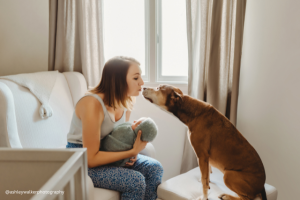
Ever heard the saying “the best-laid plans of pregnancy can be found in hospital dumpsters”?
Well, now you know where to look for them.
Every single plan I had, from conception to birth to breastfeeding, was trashed. And as I sit here writing this postpartum, I wouldn’t have it any other way.
Prior to parenthood, I lived my life by the motto: Failing to plan, is planning to fail. At the start of 2020, I decreed that this would officially be “my year”. It would be the year that ten long years of hustle, sweat, and $400/week theater jobs turned into making my Broadway debut. I’d sign my contract, and then, I’d give myself permission to have a baby.
But no one can properly plan for a global pandemic. So after spending six months locked down in a dilapidated 1-bedroom garden level apartment in Brooklyn, my husband and I packed up our dog, our cat, and as many possessions as we could shove into our 2010 Chevy Traverse and drove across America. With a change of scenery, I planned to save my small business (a voice studio) and pivot from manifesting my Broadway debut to accepting that, for the moment, Broadway was dead.
As we hit the Great Plains, I finally had enough space to hear what my body was trying to tell me. Deep down, I knew I wanted to be a mom- I just planned on being more successful before justifying taking a break. But on a hike in Arches National Park, I heard it: a little voice whispering, “It’s time.” Set to the tune of a ticking biological clock and a giant cloudless sky, I released any hesitations I held about “perfect timing” and tossed my NuvaRing in the trash.
Check out Jenna’s other hilarious blog post here!
I planned on getting pregnant easily, like they made it seem in middle school health class. Wrong. After tossing that ring in September 2020, my period never returned. My plan to get pregnant didn’t transpire for another fourteen months.
After we arrived in LA, I met with an OBGYN who tried a few things to revive Aunt Flo – a 10-day dose of progesterone, a two-week supplement of estrogen, a daily thyroid medication – none of which spared me from her diagnosing my situation as “too problematic for regular care”. She suggested I see a fertility specialist. My mouth dropped. “This isn’t part of my plan. I’m supposed to be pregnant by now!” Stubbornly, (did I mention I’m Ukrainian?) I refused to accept that I had a medical issue that I couldn’t plan to resolve on my own, so I spent the next nine months decanting smelly herbs, working with acupuncturists, and balancing my qi.
Fourteen months later my pulses were slippery, I had given up coffee, built a yoga practice, started meditating, and still no period. I asked my acupuncturist if I should give up. Perhaps I wasn’t strong enough to get pregnant evolutionarily, and my lineage was supposed to die out. He laughed before suggesting that the universe granted me the choice: the choice to accept further medical help or not.
Plans and choices.
Hm.
This guy was good.
I could plan to make a choice.
Exactly one year after I heard the little voice on our cross-country trek, I went to the fertility specialist emboldened with the choice. I was diagnosed with hypothalamic amenorrhea. The gist: I had a ton of eggs, but my brain and ovaries weren’t speaking. So, first I needed to take a medication to help my ovary follicles grow. Once they got big enough, I’d give myself a shot to trigger release an egg, and we’d have “timed intercourse” for 3 days in a row (a big win for my husband). I felt positive about planning a September conception. Giving birth in May would give me enough time to return to work for many summer theater seasons.
My follicles grew, grew, grew, and…wilted. The attempt was deemed unsuccessful. Yet another plan had failed, and I felt discouraged.
We chose to do another round in November. Having a baby in August would thwart my potential summer plans, but I also knew waiting was pushing me further into geriatric pregnancy. Damn biological clock! This time, we added hormone injections and a low dose of progesterone. My follicles grew, and grew, and grew, and we got the go ahead to trigger three nights of marital bliss. These three nights also happened to be the same nights I was making my LA debut workshopping a new musical at Hollywood’s Bourbon Room. I’m not sure if it was the song and dance or the timed intercourse, but my plan finally worked! Two weeks later, I was in New York when the blood test revealed I was pregnant. Facetiming my husband from Times Square, I said, “Ben. I’m on Broadway, and we’re having a baby.”

Getting pregnant was one of the best choices I had ever planned to make, and it was really the only plan that didn’t drastically change throughout my pregnancy. My plan for an unmedicated birth with a lengthy active labor at home turned into a c-section. My plans to flip my breech baby using inversions, moxibustion, and swimming laps straight up failed. My plan to breastfeed was thwarted with a tongue and lip tie. My plan to exclusively pump has been challenged by an undersupply issue.
The moral of my birth story is that attempting to plan and control it has left me with the choice: Do I approach parenting as a decision that I fully control, or is it a relationship between two people (me and my baby)? I can create extensive plans, and ultimately, he will choose how to participate. In a way, by presenting him with the choice, he will help me to create the plan.
So now that Broadway’s open again, I’m still planning to make my debut. Except now, whenever it happens, my son will be there, cheering me on from the front row. On that, he has no choice.
Stay Informed and entertained – Follow Dr. Berlin on Instagram!
 Jenna Pastuszek (she/her)is a professional actor, singer, voice over artist, musical theatre educator, and voice teacher. Jenna has performed in theatres across America in a variety of mediums, including her acclaimed solo shows GET HAPPY! and ME,MYSELF & BARBRA. She is a voiceover artist, voicing household brands like Starbucks Cafe, Pepsi, Amazon, KIND Bar, Target, IKEA, Crest, Toyota and more. She is the Co-Founder of Innovative Voice Studio, where she trains Broadway performers and works with leaders across industries through Innovative Performance. Previous faculty positions include The University of the Arts, New York University, The American Academy of Dramatic Arts, The American Musical Theatre Academy, and Musical Theater College Auditions. Pastuszek received her Masters in Teaching in Elementary Education and a BA in History and minor in French from the University of Virginia and her Masters in Vocal Performance and Advanced Certificate of Vocal Pedagogy from NYU Steinhardt. She is an Estill Voice International Master Trainer and a graduate of Seth Godin’s altMBA. Learn more at www.jennap.com.
by Kate Eales | Nov 1, 2022 | Cesarean and VBAC, Labor and Delivery
**This is a repost of a classic Informed Pregnancy article.
“During those final days, though, Dr. Schneider asked me one question that gave me pause: Why did I want a VBAC so much? Even after all I’d done to try for a successful VBAC, it was a difficult question to answer. For me, having a VBAC certainly didn’t matter more than having a healthy child.”
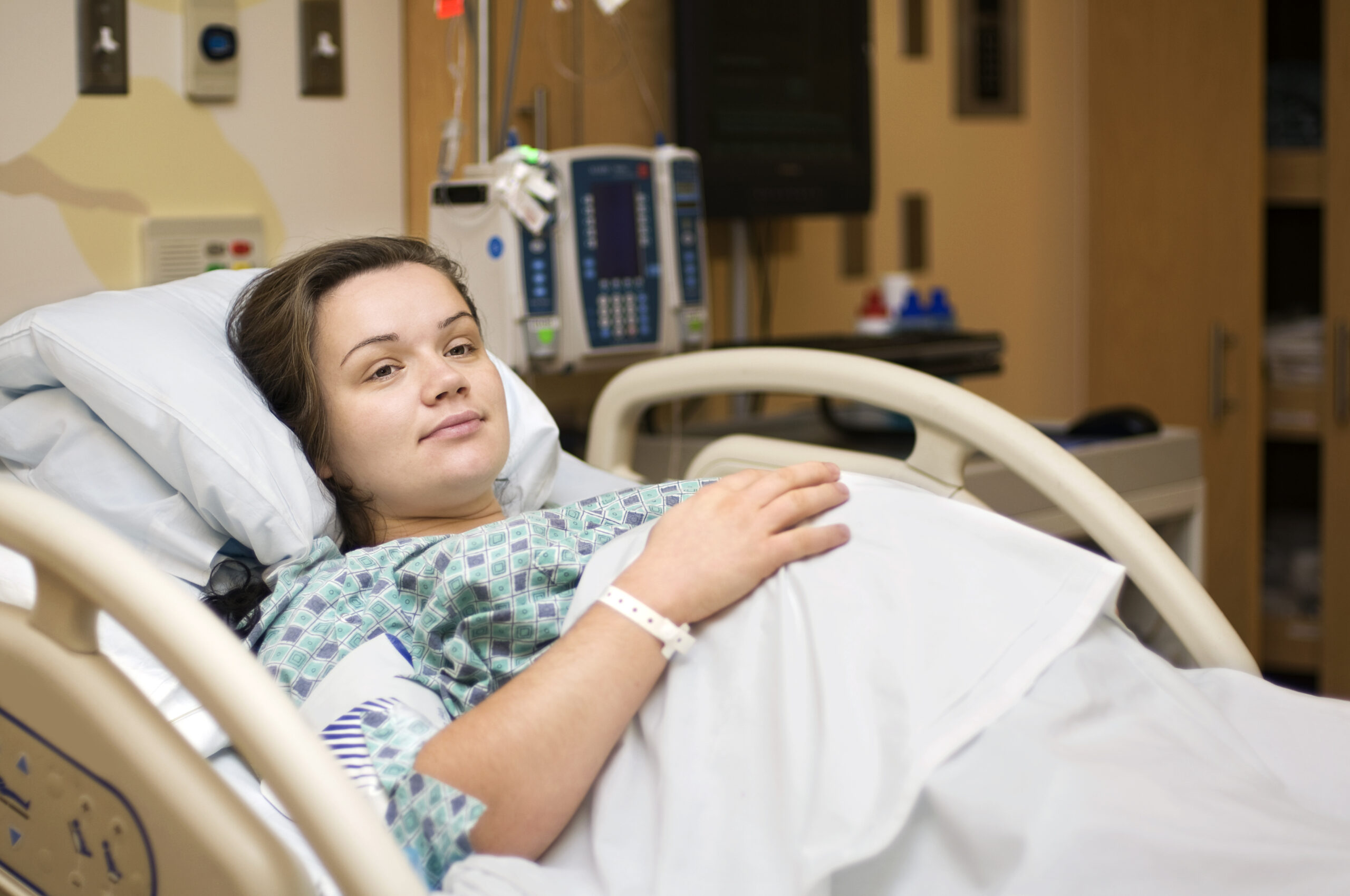
My VBAC journey began, as many do, with an unwanted cesarean.
It wasn’t that the labor and delivery of my first child were terribly traumatic. But for five hours after my son’s birth – time I had hoped to spend bonding with my new baby – I was alone in a recovery room, my sense of failure growing by the minute. All of the messages of empowerment that I’d received before labor now haunted me instead: Women are built for natural childbirth. Your body knows what to do. You and your baby will work together to make it happen. What did it mean about me as a woman, and as a mother, that I hadn’t done it? I worried that I’d never be able to breastfeed, that my baby and I would never bond, that I had failed him in his first moments of life.
These worries faded as we met, and bonded, and breastfed without trouble, but the seeds of doubt about my birth experience had been sown deep. Was it my fault for getting an epidural at 4cm? Had I not been moving enough in labor? Had the clock really run out, or was my midwife (who’d been at the hospital for four straight days with deliveries) just exhausted?
During my second pregnancy, I resolved to do as much as I could to avoid feeling so much self-judgment and doubt after the baby’s arrival. I ruled out a home birth, just as I had the first time, but I knew that the first change to make was also the most important: I needed a new care provider whose opinion and experience I trusted completely. I was thrilled when I found Dr. Jessica Schneider, partly because I knew she was supportive of VBAC, and partly because our communication was so open and easy. I remember coming home from one of our first appointments and saying to my husband, “I’m going for a vaginal birth, but whatever happens, I know I’m in good hands. If she says I need a cesarean, I’ll trust her.”
Check out more from The Informed Pregnancy and Parenting Project!
As my pregnancy progressed, I did everything that I felt comfortable doing to increase my odds of VBAC success. I found a wonderful doula, took hypnobirthing and VBAC prep classes, and started regular acupuncture and chiropractic visits. At every ultrasound, I was told that my daughter was measuring big, but my doctor assured me that we could still try for a VBAC. As I sailed past weeks 37, 38, and 39, I took steps at home to avoid an induction, which I knew counter-indicated VBAC success. Herbal teas, nipple stimulation, scrubbing the floor, sex… I tried them all. I remained hopeful for a long time, but as I passed 40 weeks with no sign that labor was near, I realized I was starting to panic. My first baby had been late, and big, and arrived via cesarean, and here I was, past my due date again, with another big baby… I shared my mounting anxieties with Dr. Schneider and she assured me that yes, we could still try. The decision to go for a VBAC was going to stay in my hands.
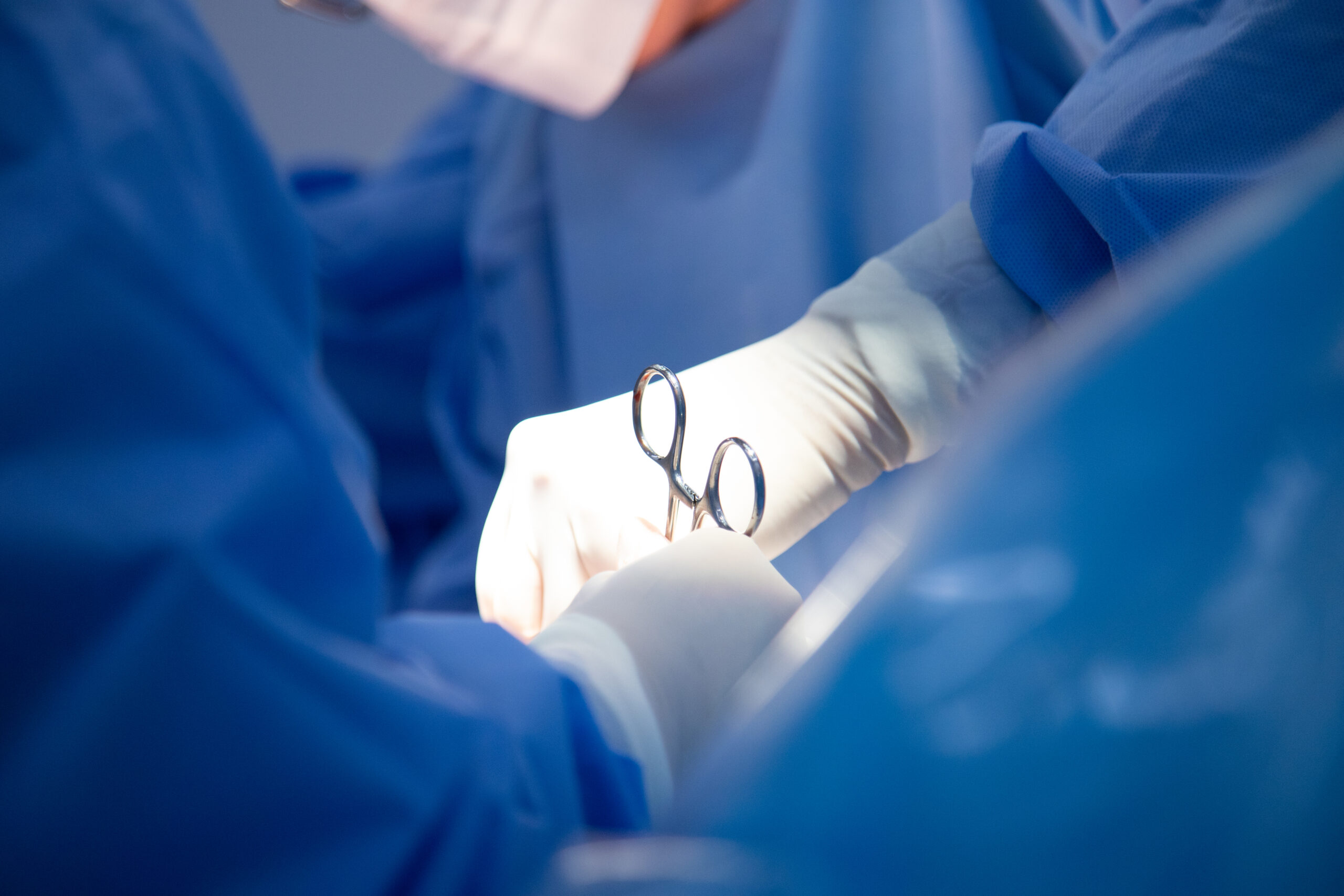
During those final days, though, Dr. Schneider asked me one question that gave me pause: Why did I want a VBAC so much? Even after all I’d done to try for a successful VBAC, it was a difficult question to answer. For me, having a VBAC certainly didn’t matter more than having a healthy child. Sitting inside that exam room, it was incredibly hard to say out loud that I worried I would feel like less of a woman if I never had a vaginal birth. Hearing myself say it, I knew it was absurd – but once I said it, I cried, and that emotional release felt better than anything else I’d done in the preceding few weeks. After that cathartic moment of letting go, I decided to schedule my induction, and I stopped scrubbing the floor at home. Labor would start before my induction, or it wouldn’t. I spent those last few days relaxing.
At the end of my 42nd week, I went in for my induction. I had a mental list of targets for my labor and delivery, and to my joy, everything starting humming along as I’d hoped. After an initial small dose of Pitocin, I labored naturally for hours, and this experience was completely different from my first. At 8cm, I asked for a walking epidural, after which I was able to keep moving: squatting, doing yoga, resting, and then moving again, doing everything I could to make my baby come down.
As it turned out, my baby was not coming down. About 24 hours after my induction began, my dilation had stalled and the baby had been stuck at zero station for several hours. Dr. Schneider came in and gently said, “I think it’s time to talk about a c-section.”
And there we were. I won’t deny that I was disappointed. But once my husband and I were alone, discussing our options, we both came back to what I’d said before about trusting Dr. Schneider. She was leaving the door open for me to wait if I wanted to, but she didn’t advise it, or think it would help. What would I be fighting for if I said no, and for how long?
My mantra for labor (and the name of at least three tracks on my music playlist!) was “Let Go.” It felt clear to me now that the best way for me to bring my daughter into the world was to let go of my vision for how it would happen.
That is how my VBAC journey came to end with a repeat cesarean. But this time, after my (healthy, 10-pound!) daughter was born, my doctor made sure we weren’t separated at all. I held her and nursed her in recovery, and in the days that followed, our bonding and my recovery went beautifully.
Before we said yes to the second cesarean, my husband and I talked about how having another cesarean would mean leaving certain questions unanswered forever. Would our daughter have come down if I’d kept on squatting and walking for a few more hours? Maybe. Might I have had a VBAC if I’d had a home birth? Perhaps. Was there anything I could have done differently to end with the VBAC I’d hoped for? It’s possible. But in leaving these “what if” scenarios unanswered, I feel peace knowing there’s another question that will remain unanswered: what if I will never know how lucky I am that cesareans exist? No matter the answers, I feel okay with not knowing.
One thing I do know is that in no way am I less of a woman, or less of a mother, because I birthed my son and daughter via cesarean. And while I believe that “healthy baby, healthy mother” comes first, I know that they are not the only things that matter. It turns out that it mattered to feel that my birth “experience,” not just the statistical outcome, were important to my care team, and it mattered that I felt good about myself when all was said and done. I do feel good about myself. My second cesarean turned out to be a second chance, and I have no regrets about my choice to let go.
Follow Dr. Berlin on Instagram for news on blogs, podcasts, and more!
 Kate Eales was born in Minneapolis, Minnesota, USA. She is a prenatal yoga teacher and feature film editor.
