
by Nina Phelan | Mar 8, 2023 | Mental Health, Pregnancy
” Birth (any type of birth whether it is a c section, epidural, non medicated or induction) requires focus, concentration and a sense of calm in order to trust the journey ~ meditation is the perfect preparation.”

Looking to create a more mindful, empowering experience throughout your pregnancy? Meditation could be your ticket to calming those nerves, balancing your hormones and preparing for labor.
Sounds too good to be true? Well, the yogis have known the benefits of mediation for
centuries and now we have the science to back it up.
Studies have shown that pregnant women who meditate or have a mindfulness practice
tend to be more in touch with their bodies during pregnancy, labor and the postpartum time. They have an increased connection with their growing babies and have lower rates of postpartum depression. Also, fear of labor decreased significantly.
In fact, researchers from Wake Forest University (Zeiden et al) found that, after only four days of meditation training, subjects could handle pain 27% better than the control group. Pain relief in birth – sign me up!
Birth (any type of birth whether it is a c section, epidural, non medicated or induction) requires focus, concentration and a sense of calm in order to trust the journey ~ meditation is the perfect preparation.
Benefits of Meditation:
*prepare mentally for childbirth – relaxed mind, relaxed body = easier birth
*lowers blood pressure
*improves sleep
*develops resilience
*increases body awareness
*relieves stress and anxiety
*boosts immunity
*better sleep
*helps with nausea
*allows you to tap into your intuition
*bonding with your baby
*helps with breastfeeding and life as a new parent
Where to begin?
Let’s start with the basics – what is meditation?
According to the Cleveland Clinic: Meditation is a practice that involves focusing or clearing your mind using a combination of mental and physical techniques.
I had a teacher describe meditation as a ‘shower for the brain’ – you clean your body daily, why not your mind? When we do so, we are washing away the chatter and opening to our intuitive muscles.
That sounds great, but can anyone do it? The simple answer is YES!
Meditation is a practice. Learning to meditate is like learning any other skill. Think of it like exercising a muscle that you’ve never really worked out before. It takes consistent practice to get comfortable.
The beauty of meditation is that it isn’t one size fits all. It isn’t necessarily about sitting still and ‘trying’ to quiet the mind.’ And you don’t need 20-30minutes to meditate; three minutes of meditation can shift and balance the gray matter in your brain (which is responsible for emotions and decision making). One minute of focused deep breathing will relax your nervous system. Small practices can create profound results!
Ways to Meditate:
*Breathing Meditation: feeling the breath moving in and out of you.
Suggestion: Place one hand on your heart, and one hand on baby’s home.
Imagine or feel your breath moving from your heart space down into baby’s home. You can even imagine a color connecting your heart with your baby. Sending your baby love and also receiving your baby’s love. Set a timer for 1-5 minutes
*Mantra meditation: This kind of meditation involves repeating and focusing on a specific phrase or sound which anchors into your subconscious.
Suggestion: Repeating Affirmations.
I am strong. My body knows what to do and my baby knows what to do.
*Mudra Meditation: hand gestures that act as energetic circuits to seal in and open
up different neural pathways.
Suggestion: Gyan Mudra.
This symbolizes the union of the Self with the Universe. During pregnancy, you are the Universe for your baby. This mudra allows you to connect with your baby on an emotional and deep level. Sit in a comfortable position, spine straight, thumb to index finger and breathe deeply.
*Body scan: Helps connect you to your growing body and baby and allows your to
recognize where you hold tension in the body (we want to be loose and limp in labor!)
Suggestion: Releasing and relaxing every muscle in your body all the way down to your toes.
As you breathe down, relaxing your eyes, your cheeks, your shoulders. Relaxing your
belly (say hi to baby!) relaxing your hips, knees, ankles and toes.

There are infinite ways to meditate:
*Music – listening to chants or binaural beats can shift the brain waves into a space
*Mandala meditation- allows the thinking mind to focus and quiet the chatter
*Meditate with your partner
*Take a walk in nature, breathing and being present with the outside world
*Begin a gratitude practice
*Daily Journaling is a form of a meditative practice
*Use a meditation app like Expectful, Headspace or Insight Timer
*YouTube videos are an amazing resource
*Take a Hypnobirthing class or other Mindfulness Class for birth
Tips:
Make a date with yourself- schedule it into your daily calendar. Be creative! Remember, you can meditate anywhere – in the doctor’s office, standing in line at the grocery store, in a (parked) car, in the bath or right before you fall asleep at night. It doesn’t require any special equipment or training – just you.
Find a meditation practice that you enjoy. Have fun and savor the benefits that
meditation can bring to your pregnancy and birth!
References:
https://eocinstitute.org/meditation/meditation-benefits-for-pregnancy/
https://bmcpregnancychildbirth.biomedcentral.com/articles/10.1186/s12884-017-1319-3/
https://www.ncbi.nlm.nih.gov/pmc/articles/PMC4160533/
https://greatergood.berkeley.edu/article/item/four_reasons_to_practice_mindfulness_during_pregnancy.’
https://truptwellness.com/pregnancy/4-best-mudras-to-beat-stress-in-pregnancy/10 tips for A mindful birth. Headspace. (n.d.). Retrieved March 11, 2022, from https://
www.headspace.com/articles/10-tips-for-a-mindful-birth

mindfulness coach, Hypnobirthing Instructor
and birth doula . She is passionate about
helping people through the continuum of the
childbearing years. She creates a safe haven
where birthing people are given the space to
reconnect to the beauty and soul-fullness of
their pregnancy journey.
You can find her at www.thesoulfulbirth.com

by Jessica Diggs | Jan 11, 2023 | Labor and Delivery, Pregnancy
“Understanding that pregnancy is not just a physical transition but one that affects every aspect of your life, a midwife creates time to dive into how the pregnancy is going. You are seated in a comfy chair and genuinely asked “how are you coping with this pregnancy?” A midwife plans to spend 30 to 60 minutes providing childbirth education, checking in on your whole pregnancy experience and answering any questions you may have.”

Depicting what a midwife is and does is quite difficult. The answer is a combination of who they are and how they care for their patients/clients. The role and responsibilities listed in their job description does not encompass their day-to-day tasks nor the true essence of their care. Midwives practice the midwifery model of care; offering equitable care, an ethical lens, and a trauma-informed approach to healthcare. The heart of a midwife centers their deep respect for the intricacies of pregnancy, birth, postpartum and all reproductive events.
Simply put, a midwife is a skilled clinical provider who specializes in low-risk reproductive events like pregnancy and physiological birth. Yet, midwifery care is so much more than supporting a pregnancy or attending a homebirth. Choosing to become a midwife is beyond understanding the risks of childbirth. A midwife is someone who trusts the body, can identify abnormalities and acknowledges how all areas of life affect reproductive health. Thus, they incorporate nutrition, movement, stress-management, bodywork, and trauma-informed care alongside their clinical competency of reproductive health.
Midwives are present in all settings of maternal care. From administrative roles, global initiatives, homebirth and abortion clinics. They can bring the essence of midwifery care to any situation. Although they do not perform surgeries or specialize in high-risk reproductive health, midwives do collaborate with obstetricians and MFMs (maternal fetal specialists) all the time to ensure continuity of care in all circumstances.
Enjoying this post? Check out this classic Informed Pregnancy Podcast episode featuring Jessica Diggs!
The basic components of the clinical side of midwifery care may not be new to many. However, unless you have experienced the compassion and attentiveness that is woven into the art of being a midwife, it is hard to envision how different “care” truly is with a midwife.
To capture this, let’s paint the picture of a typical prenatal appointment in a midwifery practice. Understanding that pregnancy is not just a physical transition but one that affects every aspect of your life, a midwife creates time to dive into how the pregnancy is going. You are seated in a comfy chair and genuinely asked “how are you coping with this pregnancy?” A midwife plans to spend 30 to 60 minutes providing childbirth education, checking in on your whole pregnancy experience and answering any questions you may have. Time is then spent holding space for the answer and offering practical solutions. There are many new bodily sensations that may be concerning or just uncomfortable, so midwives share local resources for bodywork through their trusted community.
As rapport is built, you may ask more questions at each appointment. The midwife may even have a talking point relevant to your gestation period or share information about an upcoming prenatal test or procedure. Offering you and your support person(s) time to think about your preferences and ask more questions until you can make an informed decision.

In the remaining time, the clinical magic happens. Your blood pressure and pulse is taken, your baby’s position and heart rate is assessed, and any applicable lab work may be collected.
By comparison, for a typical OB visit, you may spend 30-60 minutes waiting to be seen only to experience 5-7 minutes of facetime with your actual provider. A lot of factors play into this truth, in defense of my OB friends, but we can all agree that the obstetrical system can be improved.
In my humble opinion, midwifery care is the gold standard for maternal care. It is care that centers compassion, trust, and an informed experience. You can choose a midwife for any birth setting or work with an OBGYN who truly embodies a midwifery spirit.
Don’t miss out! Follow Dr. Berlin for all the latest Informed Pregnancy!

Jessica is a Licensed Midwife working in a solo practice in Los Angeles. She’s been a doula and reproductive health educator since 2012. The training, her mentors, and ultimately, her first birth as a doula honed her interest in reproductive justice and empowering education. Jessica supports people and families through well-person care, home birth services, and conception support. When she’s not talking about birth and bodies, she loves hosting dinner parties, eating, and devouring a good book.
by Parijat Deshpande | Dec 28, 2022 | Health Conditions, Pregnancy
“The difference between pregnancy and any other time of life is that you are in a body that is constantly changing. That means that the context of your risks, as well as the level of risk and what the potential treatment plan could be, is always changing. Staying up to date with what your providers think is critical.”

Although we are fortunate to have a plethora of resources for many aspects of pregnancy, when it comes to high-risk pregnancy, the conversation often stalls and the resources dwindle. Even our statistics are lacking, making it easy to ignore the reality of high-risk pregnancy in the United States both publicly and privately.
The clearest measurement of high-risk pregnancy that we have is from UCSF identifying 8% of all pregnancies as high-risk ones, a number which is expected to be much higher when we factor in additional indicators of risk such as age and history of chronic illness. Yet, even just 8% should be enough to cause concern. Although the majority of pregnant people go on to have low-risk pregnancies with no complications, we have to be prepared for how to support the 8%+ that don’t. All pregnant people should have access to resources to know how to support their own pregnancies should they find themselves living through a high-risk one.
What Is High-Risk Pregnancy?
High-risk pregnancy is a broad term that encompasses any pregnancy at risk of developing maternal and/or fetal complications. Diagnosing a pregnancy as high-risk doesn’t guarantee complications or even necessarily mean that there will be adverse outcomes; it simply identifies that the pregnant person is at risk of developing certain complications during pregnancy and therefore warrants added monitoring depending on the specific circumstances. Just like the broader umbrella of pregnancy experiences, high-risk pregnancies can also look vastly different from one person to the next.
Who Is at Risk?
The range of people who are at risk of high-risk pregnancy is wide and often includes anyone who is underweight, overweight, or a teenager. In the United States, it’s also qualified as anybody who is pregnant over the age of 35. Other indicators of risk include:
- Alcohol or substance use
- Smoking during pregnancy
- Carrying multiples
- History of hypertension, diabetes, epilepsy, thyroid disease, asthma, cardiovascular disease, blood disorders, and cancer
- Previous experience of pregnancy complications, preterm delivery, stillbirth, or recurrent pregnancy loss
Follow Dr. Elliot Berlin for all the latest Informed Pregnancy news and content!
Can I Mitigate My Risk?
Mitigating risk is possible and it starts with surrounding yourself with the best possible care team who can identify how your risk might impact your overall health and your pregnancy health.
If you think you are going to be high risk for any reason, set up a relationship with a maternal-fetal medicine specialist before you’re pregnant or as soon as you know you’re pregnant. You may never need their services but it’s important to be established as a patient before you need those services. This will help you make appointments sooner in case you end up needing their care during your pregnancy.
Second, it’s important to be on top of your care plan so you always know what your medical team is recommending and why. This includes understanding what options or alternative solutions they’re encouraging and which ones they’re discouraging you from and why. During this time, you want to know exactly what your provider is thinking and why they’re thinking it. Leave nothing unsaid so you can make genuinely informed decisions for your pregnancy.
At every step of the pregnancy, ask what else you can do to lower your risk. This can be before you’ve developed a complication and certainly after you’ve developed one. Sometimes you will hear there’s nothing you can do. If this happens, make sure your team is a complete team—that you have specialists who are looking at your health from a variety of different angles to make sure that all your bases are being covered. For example, if you are at risk of or have hypertensive disorders during pregnancy or prior to pregnancy, you want to have a really solid cardiovascular specialist on your team. If you have a thyroid disorder, then you want to make sure you have an endocrinologist on your team whose sole focus is managing your thyroid condition during pregnancy. Rounding out your team also includes having an integrative health strategist who can look at your health from a trauma-informed and neurobiological perspective which is often missed in traditional medical care. This will ensure that you have a whole health perspective on your care plan and reduce the risk of preventable errors.

Although it can sound overwhelming, you want to make sure that, at every stage of the process, you understand the impact of your risk, what it means for your pregnancy to be at risk for various complications, how those complications might impact your health and the baby’s health, and what the potential treatment plan is. The difference between pregnancy and any other time of life is that you are in a body that is constantly changing. That means that the context of your risks, as well as the level of risk and what the potential treatment plan could be, is always changing. Staying up to date with what your providers think is critical.
A high-risk pregnancy is a category that simply means you will likely need extra monitoring for some portion of your pregnancy. It does not at all imply that something will go wrong. The more involved you are in your care plan, the earlier you prepare for your future pregnancy, and the more you care for your body from all angles in preconception and during pregnancy, the more you’re equipped to support your body through a healthy high-risk pregnancy.
Check out another Informed Pregnancy post by Dr. Nate Fox, MD!

Parijat Deshpande is an author, speaker and the CEO of a global, boutique company dedicated to reducing pregnancy complications and ending preterm birth. On a mission to end the high-risk pregnancy crisis, she has served and supported hundreds of women through her programs, one-on-one work and bestselling book, Pregnancy Brain: A Mind-Body Approach to Stress Management During a High-Risk Pregnancy.

by Dr. Michelle Tsai | Dec 14, 2022 | Labor and Delivery, Pregnancy
” If your cervix is dilated, your physician may offer you a membrane sweep, which is basically a bit of a massage of the baby’s head. This is not harmful to you or your baby. The membrane sweep feels like a longer cervical check; this can be uncomfortable but should not be painful. This can cause your body to release your own hormones to lead towards labor naturally.”
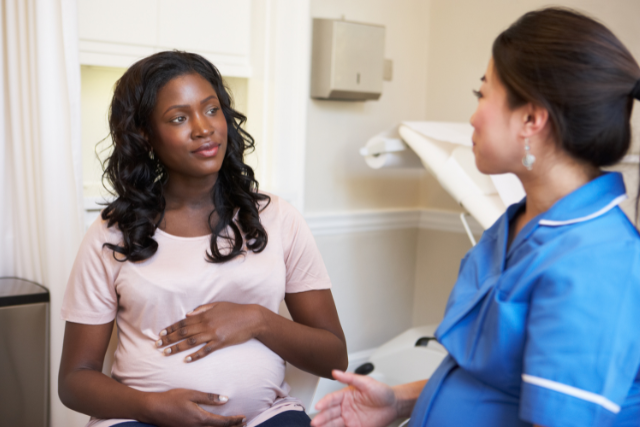
Congratulations on your pregnancy! Once you are past 37 weeks, baby is considered full term, and your doctor may offer you a pelvic exam at an OB visit. There is no strict recommendation on when (and if) cervical exams are done at the end of pregnancy – I personally do not routinely perform cervical or pelvic exams unless there is a good reason (exams can be uncomfortable, especially during this time in pregnancy!). If you are having any signs of early or prodromal labor (what I like to call “pre-prelabor” – your body is releasing hormones called prostaglandins to make change towards the big day), your doctor may check your cervix. And, of course, if you are having signs of labor (tightening/cramping of your abdomen every 5-10 minutes for one hour or leakage of fluid like your water bag broke), your physician may check your cervix to see if you are indeed in labor. Labor is defined as contractions that start opening up the cervix; you may be contracting painfully without your cervix opening just yet. This is called prodromal labor.
A cervical check has several parts to it. Dilation, or how open your cervix is, is the one that many patients think is the most important, however the other parts of the exam are just as important. We evaluate the cervix also for effacement (how “thinned out” it is) and baby’s station (where the baby’s head is in relation to mom’s pelvis), as well as position (where the cervix is in relation to the front and back of your body) and consistency (how much the cervix has softened). Even if your cervix has not yet dilated, if it has softened and thinned out, this can be a sign of labor.
Are you exSTREAMly interested in pregnancy and labor? Check out Dr. Berlin’s new streaming channel!

The cervical exam generally can be uncomfortable but should not be painful. It can feel like a bit of cold pressure. After the exam you may have some cramping and even some small spotting (generally a bit of pink/red on wiping with toilet paper), this is normal and expected with any cervical exam especially later in pregnancy. You should not have any heavy vaginal bleeding – if you have bleeding filling up a pad or pantiliner, please kindly contact your physician.
If your cervix is dilated, your physician may offer you a membrane sweep, which is basically a bit of a massage of the baby’s head. This is not harmful to you or your baby. The membrane sweep feels like a longer cervical check; this can be uncomfortable but should not be painful. This can cause your body to release your own hormones to lead towards labor naturally. If you are nearing your due date and not having any signs of labor, this can be a very natural way to help your body along, without medications for induction of labor. This is an especially helpful tool especially if you are trying for a trial of labor after cesarean section, as if you go into labor on your own, it can increase the rate of success of a vaginal delivery. Of course, every patient’s situation can be quite different, and it is always a good idea to discuss with your physician what is best for your individual situation. Best of luck and congratulations on your new addition to the family!
Follow Dr. Berlin and The Informed Pregnancy Project for all the latest news and updates!

Dr. Michelle Tsai grew up in LA’s San Gabriel Valley and received her bachelor’s degree at the University of California – Berkeley. She taught English in Asia for a year prior to attending medical school at Virginia Commonwealth University. She completed her residency training at the University of Hawaii in Honolulu and moved to the San Francisco Bay Area to open her own private practice.
Dr. Tsai is currently an assistant professor of OB/GYN at UCLA. She is the director of the UCLA Marina Del Rey OB/GYN office which is opening in 2023. She divides her time seeing patients in the office, performing gynecologic surgeries, delivering babies, teaching medical students and residents, and serving as an independent contractor in the community for the underserved. When she is not working, she enjoys spending time with her husband and miniature schnauzer Sadie, as well as traveling, exercising, and trying out new restaurants in her community. They welcomed their first child in October 2020.
