Understanding Stretch Marks

Understanding Stretch Marks

**This is a repost of a classic Informed Pregnancy Project article.

“Treating new stretch marks usually leads to better results than treating older stretch marks, but preventing them from occurring in the first place is obviously even better.”
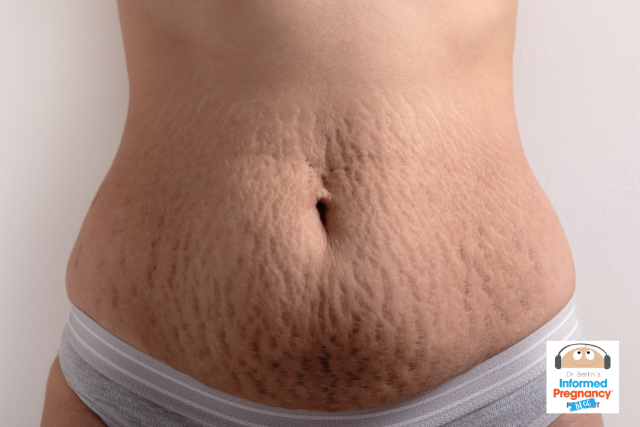
One of the most common changes in a woman’s body during pregnancy is the emergence of stretch marks, clinically known as striae. If you are feeling self conscious about your stretch marks, it might help you to know that as many as 90% of women develop at least some stretch marks during pregnancy. These tiny tears in the skin usually appear on the tummy, breasts, hips and thighs, and result from the skin failing to ‘keep up’ with the rapid growth of your body during pregnancy. Surprisingly, you can even develop stretch marks after your baby is born, possibly as a result of the rapid downsizing of your belly immediately after giving birth. The good news? Your stretch marks will probably be one of the first signs of pregnancy to diminish after your baby is born. The bad news? They may never disappear altogether.

The severity and longevity of stretch marks are determined by a combination of factors that are mostly out of your control, including your genetic code and fluctuations in the levels of the hormones estrogen and relaxin during your pregnancy. Treating new stretch marks usually leads to better results than treating older stretch marks, but preventing them from occurring in the first place is obviously even better. Well hydrated and moisturized skin is thought to be key in preventing the breakdown of collagen — the supportive elastic tissue beneath the skin — which causes the depressed ridges that characterize stretch marks.

Listen to a popular episode of The Informed Pregnancy Podcast here!

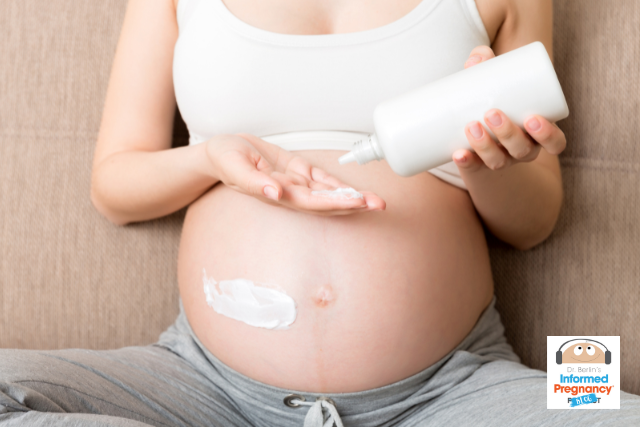
Stretched skin also tends to be itchy. The best defense against both itching and striae is to gently massage the skin and keep it well-hydrated at all times. Massaging your growing body parts with a probiotic-rich moisturizer that soothes and softens stressed skin and contains a full spectrum of vitamins and minerals to nourish and foster skin repair can help prevent dryness and act as a natural mood booster. With massage and great products, you can soothe your skin and your mood at the same time!

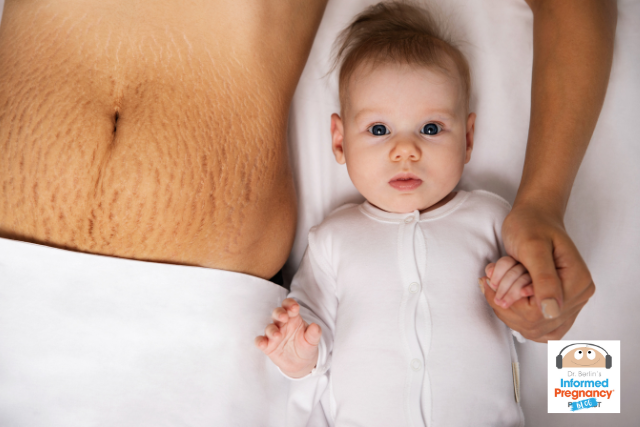
An added benefit of using moisturizers chocked-full of probiotics on your growing belly is that you can transfer this healthy microflora (‘good’ bacteria) to your baby by maximizing early skin-to-skin contact. Your baby can start to benefit from the healthy colonization of beneficial microflora on your skin within moments of birth, playing an important role in helping to optimize your newborn’s immune system. Stretch marks usually diminish 6-12 months after childbirth. The pigmentation fades and the marks usually become lighter than the surrounding skin. The right skincare products can potentially help minimize stretch marks and reduce healing time.
Choose a natural moisturizing serum that is designed with nutrient-rich fruit oils to help increase skin’s elasticity, lock in moisture and help increase collagen production, all of which could help minimize the discoloration and appearance of stretch marks over time. The most important thing to remember about stretch marks is that you should never feel embarrassed or ashamed by them – they’re just a small reminder of the amazing feat your body performed in growing and nurturing a new life. Focus on the connection between yourself and your baby, and love the skin you’re in!

Follow @doctorberlin on Instagram to stay up to date on new blog posts and podcast episodes!

Kim Walls is an internationally recognized skincare expert focused on optimizing health through skincare. Leading child health advocacy groups and national media rely on Kim’s clinical expertise to help parents navigate the often confusing world of natural skincare. You can read more about her here.
 

Pregnancy and Skincare

Pregnancy and Skincare

“Some ingredients are not safe during pregnancy like retinol. You want to keep your routine really simple and sweet, and not use a lot of products with active ingredients because we never really know how our skin is going to react while pregnant.”

Changes to skin during pregnancy

Hormones can change your skin during pregnancy. There is one hormone that we release when we are pregnant to help loosen up the ligaments and joints called elastin. When there is a lot of elastin in the body, I find that the skin elasticity in the face tends to feel more loose and it stretches and people get a little bit of that pregnancy bloating in their face. So, that’s you know, one of the biggest things that changes when we get pregnant. The other thing is the fact that with sun exposure we become super likely to have pigmentation issues. A huge percentage of women will get the pregnancy melasma, which luckily goes away a lot of time after pregnancy, but there’s still a chance that it can give residual effects post pregnancy.

Hormonal acne can come up along the jawline while pregnant and I often tell people to keep their pregnancy skincare routine really simple. A lot of exfoliation to help cleanse the skin I think is great. I often will recommend the Obaji product line or the Kora Organics turmeric scrub for use one to two times a week which will help reduce the chance of having any blemishes. I also suggest a cleanser by IS clinical which is really clean, easy to use and helps remove any dirt and residual things that are left on the skin that can exacerbate hormonal acne. Then you can use a bit of CBD oil, which I used throughout my pregnancy. I feel like it is safe and the one I used has rose, arnica, and bromelain, all things that help bring down inflammation which is something that is super common while you’re pregnant.

Some ingredients are not safe during pregnancy like retinol. You want to keep your routine really simple and sweet, and not use a lot of products with active ingredients because we never really know how our skin is going to react while pregnant.

Check out Nousha Salimi on The Informed Pregnancy Podcast!

What can you do about it?

I love the brand Bao Laboratory to hydrate stretch marks which helps prevent them from getting worse. You can also get a CO2 laser treatment to help take down the pigmentation issues from the stretch mark but only after you have had the baby. Usually you want to wait a year after breastfeeding to use a laser because they are actually super effective.

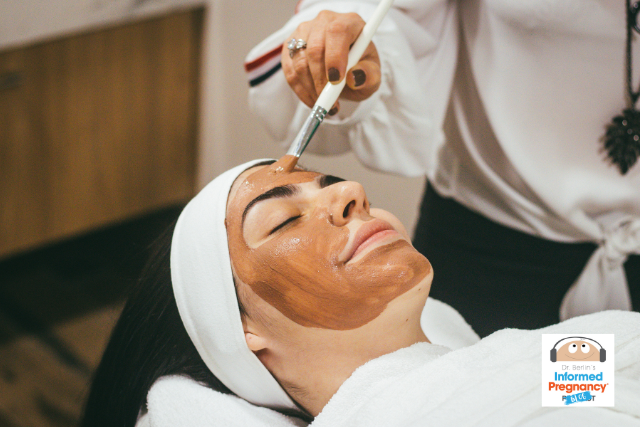
Deep peels are not appropriate during pregnancy because we don’t know if there’s an issue with the blood barrier that would potentially cross into the placenta, and because the skin is more hormonally sensitive so you can have issues like hyperpigmentation and brown spots that come up. Getting a facial while pregnant is totally safe. Many places customize facials specifically to be pregnancy safe. Microneedling is also safe while pregnant just to give a nice little glow, exfoliate, and shrink the pores. You can also safely get a really light microneedling session, with a customized formula using Aquagold and I recommend hyaluronic acid because a lot of times when we are pregnant or breastfeeding we are dehydrated and the skin shows it. So, I like to replace that with hyaluronic acid.

Follow Dr. Berlin on Instagram to stay up to date on The Informed Pregnancy Project!

Nurse Nousha Salimi has been New York’s secret skincare weapon for well over a decade. Having collaborated with some of the most elite faces of the fashion, finance, society and art communities, she has become a master in her craft whilst working alongside top New York facial plastic surgeons.

Today, she sees patients at her Los Angeles office alongside world renowned plastic surgeons Dr. John C. Lake and Dr. Paymon J. Danielpour. To connect with Nousha check out www.rejuvenatewithnousha.com