
November 11, 2021 · 45 minutes · Episode 255
About this episode
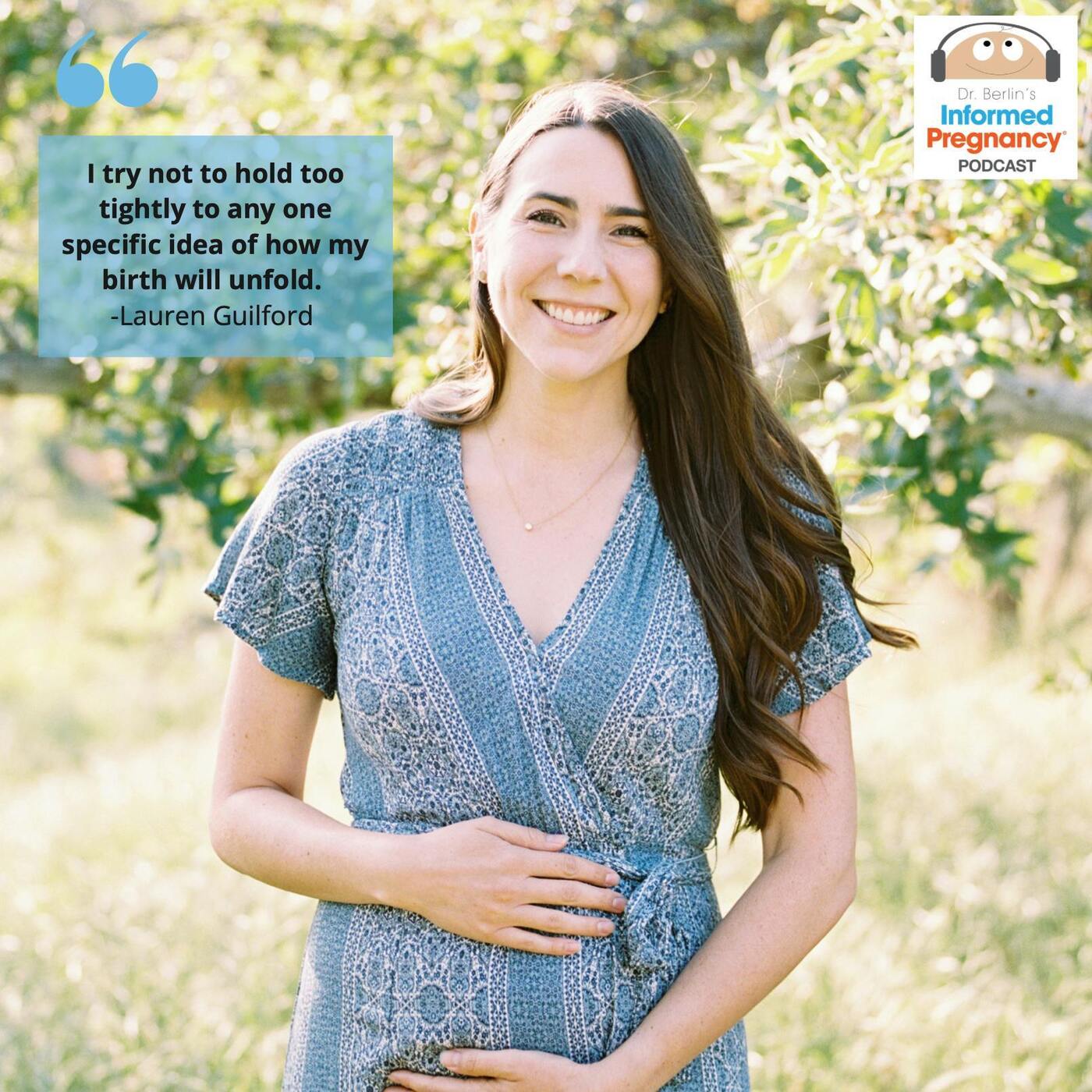
Los Angeles birth photographer and labor doula Lauren Guilford has witnessed and documented a lot of labor and delivery journeys in various settings. Lauren has taken all of that experience into consideration while crafting plans for her own first (imminent!) birth.

Learn more about your ad choices. Visit megaphone.fm/adchoices
See Privacy Policy at https://art19.com/privacy and California Privacy Notice at https://art19.com/privacy#do-not-sell-my-info.
Key quotes
“always tell all my clients that I'm as present, or as hidden as they need me to be.”
“now even more so I'm like, I don't want to leave my house. I don't want to have to be at labor and drive somewhere. Like I just want to be at home.”
“I'm just like really being open to it and flexible because I don't know what this baby of mine is going to need and it's going to be as much as it's going to be my journey, it's going to be their journey too. And I am just going to show up for it, right?”
“And as far as the pain, you know, it's going to be intense. It's going to be intense. And that portion of this, you know, famous last words doesn't worry me as much. I feel I am as equipped as I can be”
“looking to my clients who I've helped support along the way and, you know, being able to help support them and witness them do really hard things and get through it and knowing that I will too.”
Related episodes
- Ep. 256 Lauren Guilford – After Birth
- Ep. 23 Doula Dude!
- Ep. 523 Chiropractic Care for Mothers & Babies with Dr. Estefania Magallanes
- Ep. 98 Catalina Clark – After
Transcript
AI-generated transcript with speaker labels — may contain errors, especially names and medical terms. Dr. Elliot Berlin, DC appears in blue; Lauren Guilford in orange.
Download PDF of the Transcript
Dr. Elliot Berlin, DC [1:13] Welcome to the informed pregnancy and parenting podcast. I'm your host dr Elliot Berlin my guest today is a California native who has been attending birth for over a decade She started as a birth photographer and videographer then added doula to her resume now She is 40 weeks pregnant. Yes I said 40 weeks pregnant expecting her first baby any day or should we say any minute? Let's learn more about birth photography and videography and find out her pregnancy experience and plans for the imminent birth Lauren Guilford, welcome to the podcast. Thank you. Thank you So I've been lucky to know you week I just met in the birth world and I was fascinated from day one meaning like did it start with you
[2:19] Were interested in birth and learn to take pictures there were you're interested in photography and applied it to birth How did it all begin?
Lauren Guilford [2:25] Yeah, great question So I went to school for photography could have never guessed I would make a living off of photographing births I probably thought at the time I was gonna be like a starving artist doing some type of gallery, you know type work and At the same time was always a very birthy person. They come from kind of a big family I became an aunt at a young age just based off of the age gap between my eldest sibling and I and How many of you are there I'm the youngest of five Oh, well, I have two stepsisters. So I'm kind of one of seven the baby, but you're not lazy
Dr. Elliot Berlin, DC [3:04] Isn't the baby supposed to be lazy? I'm the baby
Lauren Guilford [3:08] My mom would probably say that I'm a little lazy But I'm also an Aries aren't Aries supposed to be like go-getters and you know Lots of goals and ambition and all that. I don't know. You don't seem lazy to me These days I feel kind of lazy toting around a watermelon sized belly Yes, so I think it really like where it started to shift for me was or even realizing that birth photography was a thing Was back in 2009. I remember specifically reading like a birth story online and seeing really really beautiful images And you know being able to see that. Oh, these are professionally done and thought wow, that's incredible It's like a thing and turns out it was and I remember like stocking that person's website
[3:55] I don't even know if they're still a birth sharper. They were based out of Texas and Thinking this is incredible like I would totally love to do this and Not long after that one of my sisters as well as one of my stepsisters were pregnant And so I kind of use them as guinea pigs and loved it and thought this is incredible Like how could I not be at birth although at the time still had no idea how to Make a living off of it I guess because it just seems such a foreign concept is still such a new thing and those early days and years I remember if I ever told someone else a birth photographer They often looked at me and said oh birds and I would you know
[4:31] Oh, no birth and I would like kind of use my hands Yes, and they would kind of look at me with these like deer and highlight like oh Okay, and I would kind of try and like, you know, like it's not what you think, you know It's you know, I don't know. I'm trying to justify it in any way Obviously that's really evolved over the years because now it's such a common thing that People just know when I say like what it is and what I do and I go that's incredible and you know often have other questions. But yeah, so it was kind of my like, my little entry into really being present at birth.
Dr. Elliot Berlin, DC [5:07] How old were you at that time?
Lauren Guilford [5:09] I was 20.
Dr. Elliot Berlin, DC [5:11] 20. So it's kind of young, you know, and also you don't have younger siblings. So yeah, it's a pretty foreign until you went to those two births, right? Your sister and step sister. Were you nervous in there?
Lauren Guilford [5:26] Um, well, so that's the funny thing is so both of those births, I so for my sisters, she was delivering at a birth center. And, you know, this is before I knew even what I was doing. I missed the birth. I couldn't find the birth center. It was middle of the night. And I remember they were keeping what they're having a surprise. And I remember I finally found it because I was confused because you know, it looks like a house and it was pitch blackout. And so I was afraid to walk into, you know, someone's house. Well, you know, birth centers often, you know, it's gonna look like somebody's house. Yeah. And when I walked in, I was like kind of quietly walking in
[6:02] and I heard a baby's cry and I was like, oh, and I remember that feeling. It was like, no. And then I walked in and I was like, well, what is it? And they're like, oh, it's a boy. You know, it's, it's really sweet. Um, and for my stepsister, I did what I would call, uh, is more of like fresh 48 sessions. So she had a hospital delivery. It's like went and took pictures like actor. My niece was born, but not long after that, like a friend of a friend was having a baby. And so that was like my first official official guinea pig. And it was, you know, I'm trying to remember how I felt going into it. Probably nervous. Cause I probably was like wanting to stay like out of the nurses and doctors way kind
[6:39] of a thing, but I loved it and it was great. And actually what's really funny is I think it was yesterday, my time hop showed me a picture of me holding that baby. And, um, so it was cause he was born in October and I was laughing. I showed it to my husband. So I was like, Oh my gosh, look at me. I'm, I'm a baby holding a baby. So it was kind of funny and cute to be like, Oh, and that's so wild. But I then, you know, all these years later, about to have my first baby, but yeah, no, I loved it. And I thought it was incredible. And it was kind of from there that I think even more so through myself into like understanding birth.
Dr. Elliot Berlin, DC [7:13] And what would you say is the benefit of having a professional birth photographer and or videographer?
Lauren Guilford [7:23] So, I mean, I think, you know, for somebody who hasn't, I haven't given birth yet, obviously, but other people who like haven't given birth a good way to kind of, or I should say good comparison is almost similar to like a wedding day, right? Like so much is happening. You're so preoccupied and in the moment and the day comes and goes and it's done before you know it. And looking back, you of course, you know, have little memories along the way, but then you have these like incredible images to remind you right of your grandmother that was there or your aunt, your uncle or you know, speeches and you know, when you guys first saw each other, all that kind of stuff is really
[7:56] sweet moments. And in a lot of ways, that's also applicable to birth, even more. So you're just like all encompassed in birth, being like the birthing person, but for partners too, because it's, you know, a lot and can be overwhelming and exciting and all the things. So being able to really one allow partners to be super present is really nice because then they don't have to worry about like, where's my phone or where's that GoPro so I could take a video of when the baby's born and or being worried about messing it up if they like miss something, but they get to, you know, really be able to focus on, you know, their beloved and help support them and just be
[8:32] in the moment. And then the birthing, you know, parent is able to like, have all of that, like all these moments that they probably didn't even realize that happened, you know, like having their partner like be teary eyed or love on them and you know, rub their back in a certain way and then see these images immediately be like, oh, gosh, yeah, that's right. Like I remember now sitting in that dark bathroom, you know, resting like on the toilet while you were rubbing my back and us just breathing through things I didn't even realize that like Lauren was in there taking pictures or something.
Dr. Elliot Berlin, DC [9:03] Well, that's one of the questions I had in mind, like at the wedding, you know, there's a lot going on. Yeah, a lot of people in there. Everybody's dressed up fancy at a birth, usually not that many people and not dressed up as fancy. So does the analogy carry all the way through meaning are people's comfortable having an extra person in the room and being sort of on camera? From their perspective, how do they get comfortable with that? And from your perspective, how do you sort of be that fly on them while without them feeling observed?
Lauren Guilford [9:33] Yeah, great question. So when I am at a birth, you know, and even in like years past, and if I'm not the Dulux, of course, I'm also the doula, it's kind of like a whole other ballgame. But if I am there just to document, I always tell all my clients that I'm as present, or as hidden as they need me to be. And part of that really is, you know, initially, my like, responses for anybody giving birth that like wants photos is to really find someone that they not only love their work because of course like that's important but find something they really connect with and someone that they feel that they can trust in that space because of course birth is thankfully so different than a wedding and a ton of people are often not there watching
[10:15] you birth that could really slow things down but it'd be weird to have your like grandpa or your minister there yeah they're just all you know there you know what i'm sure there's somebody that has like us to each their own yeah so you know really being able to meet with someone of course that's a little bit tricky now with like pandemic times and whatnot but being able to like you know have conversations with people ahead of time and make sure you really like connect with them and so like you can trust them and trust that they will be that positive and like loving energy in that space so that you can kind of you know let your guard down birth is so primal and intimate and there's so much happening and you know in the birth world
[10:55] we like kind of joke around about when you're thinking of who you want at your birth you're like if you can't poop in front of them like don't invite them to your birth and so nobody can come to my birth yeah but you know it's so important to be like super comfortable and i think part of that so is finding someone that you you know do connect really well with that you feel like you can trust but then also knowing kind of what your comfort levels are you know not everybody wants crowning images or something there's a lot of people that are like oh no i definitely don't want pictures of me like nude while i'm birthing you know so maybe they plan for that you know or maybe they're like i want all you know photograph away but
[11:29] like maybe don't do these moments you know and so having those conversations with whoever they're working with i think is also super vital to that like relationships that they're in the moment they feel like they can already have like they already have some of those like boundaries or maybe no boundaries if they're like shoot everything that's fine or you know and then just have that yeah trust and connection kind of already built ahead of time yeah and then as far as approaching it you know i think the longer i do it the more it's hard to put words to because being in that birth space you just like read it right just that energy so you know being able to like walk into a room and you know for instance if a
[12:07] couple's laboring in the bathroom and maybe they're laboring in the shower and i might you kind of quietly be in the doorway and get a couple images of them connecting and being supportive and then i might walk away right and to give them that space and so a lot of it too is being able to read the space whatever that may be and as it's ever evolving and adapting as labor is you know like unfolding and without ever having to ask them like do you want me to give you some space right now because like no birthing parent like wants to be like in the middle of labor being like oh yeah yeah yeah can you walk away for 10 minutes or something so kind of trying to stay a couple steps ahead as well so that you
[12:47] put on their present documenting but also respecting and honoring what's happening and giving them that like privacy and those sacred moments as a photographer have you snapped up anything really crazy or interesting i mean i'm sure because i've been to now a lot of births and a lot of variations so there's probably been you know like surprises caught on camera and you know or being at a birth and being like oh that's a bum not a head you know or wow that is a surprise and you know things like that so i think when i came out they said that's a bum not a head and they're like oh no no that's his face that's
Dr. Elliot Berlin, DC [13:25] okay like it's just all there yeah it's a soul smush but although i was breech i was a breech baby oh and did were you bump first or foot laying or i was foot laying okay back in the day when they delivered foot laying breech babies so i that's fine we'll just catch them this way how long into your attending birth career as a photographer did you become a
Lauren Guilford [13:46] doula and what sparked that so let's see i officially became a dual at the beginning of 2014 so a few years in and along the way i found that at a lot of births i was at for whatever reason those first like three years or so just about all the births i was at i'm trying to remember but yeah all of them i believe minus maybe one or two were hospital births and the majority of them first-time parents and so i often found myself you know because again and that you know as i was chatting about giving people you know space and reading the room you know i'm not constantly taking pictures every second of every moment during a birth and i found myself often stepping in to help support couples not always hands-on
[14:32] although sometimes because there were some parents that i like had that kind of a relationship with that i felt like i could just you know help them relax if they were getting worked up or stressed out but really where i found myself stepping in as if like nurses would come in and quickly rattle something off and leaving the room and seeing parents being like wait what like what do they even say what's going on or what are they gonna do to me and you know i guess arty doula voice that was there would chime in like you know oh this is what that means like you don't have to do that if you don't want to like this is your other option, or you could do that, you know, whatever, and
[15:02] just kind of being that like friend that was off to the side, just letting them know kind of what was going on. And during that time, I learned like what a doula even was, because I don't think I had any concept of what a doula was, when I first started photographing births. And I'm just the type in general, too, that's just like a forever learner, I always love to like, read new books and do courses and whatever it might be. So I thought, oh, I'm gonna do like doula training, but like, just for myself, like, that would be cool, so that I like, you know, understand even more, but just for myself, and quickly realized like, oh, yeah, no, okay, yeah, this is something that like I should be doing and
[15:40] that I really want to do. Well, that was like, so neat and amazing to like, realize, I then like had an identity crisis, because I didn't know how to be both. And I was like, well, but you know, those first few births that I was a doula, I remember I like brought my camera anyways, and I was like, I can't not take pictures, like, they can't not have these pictures. And so thankfully, quickly realized, especially since I'd had my background of attending births, you know, photographing and all of that, that I was able to kind of merge the two and granted, not every person giving birth wants birth photos. So you know, there's definitely been births
[16:15] along the way where, you know, I was just, you know, doula support, not taking photos or video. But yeah, I was kind of in my own way able to like, have the best both worlds, I got to then support couples and also document it along the way, which is really neat.
Dr. Elliot Berlin, DC [16:30] It's a really close relationship. And in that setting, it's easier to see how somebody who's in labor will feel super comfortable, you know, having you there. And I guess when you could be two for one, that also gives somebody the opportunity to have one less person in the room and still have both roles fulfilled. Alright, we're gonna take a break. When we come back, we're gonna start getting personal with Lauren Guilford. We'll be Welcome back to the informed pregnancy podcast. We're talking to birth doula and photographer and videographer Lauren Guilford. Now you're pregnant. Before we get into your pregnancy, where did you meet your partner?
Lauren Guilford [19:32] We met online, like many millennials these days. And we were doing basically kind of long distance LA. So at the time I was living over on the east side in South Pasadena and he was over on the west side and he was relatively new to LA. So he didn't realize what a time commitment that was. And everybody around him, all of his friends and coworkers were like, you're crazy. You can't date. somebody on the other side of LA. But he was like, why not? Like it's only, you know, like a 30 minute drive before realizing, you know, rush hour traffic exists.
Dr. Elliot Berlin, DC [20:08] So, um, you can only do it on Sundays.
Lauren Guilford [20:11] Yeah, basically. So we met, uh, about four years ago and, you know, within that first, I don't know, I guess it wasn't that rapidly fast, but probably I think like 10 months into it, we were living together. He convinced me to come on over to the West side. Yeah.
Dr. Elliot Berlin, DC [20:25] I mean, did you already feel like this is the one?
Lauren Guilford [20:30] Totally. And he would say, absolutely. So our first date, we got coffee and we had tried to like plan a first date a few times, and my life was like crazy busy at the time, I just was busy working again, that forever learner. I was also taking yoga teacher training. So like, I had like no free time between my birth clients and my postpartum clients, and then I was somehow also fitting in like a 200 hour yoga teacher training. And we, you know, a chat kind of here and there and kept trying to like set like a date to get together and, you know, a birth would happen or something. And we finally were able to connect and get together. And it was like after a prenatal, I was like on the West side for a client
[21:12] and I was like, Oh, I'm in your area. Let's get coffee. And he left that first date, texting his best friend saying, I just met the woman I'm going to marry.
Dr. Elliot Berlin, DC [21:22] Oh, wow.
Lauren Guilford [21:23] I teased him forever about this. Cause I didn't find out about this until, I don't know, probably later that year. And I was like, no way you didn't say that. Like that's adorable, but like, you can feel that way now, but like, I don't believe you kind of a thing. So there was this whole, you know, big old thing and his best friend was like, when I asked her about it was like, dang it, like you weren't supposed to know that I was going to use it one day in my wedding speech for you guys, which she still ended up using it, but I was like, Oh, that's fine. You can still use it one day.
Dr. Elliot Berlin, DC [21:51] Did you talk about kids right away?
Lauren Guilford [21:56] Actually, so yeah, we kind of did. And he loves to tease me that I talked about needing to be with a partner who would be okay with home birth, like from the start and which I don't think I didn't do that from the start, but I'm sure early on and probably talked about it because, you know, you would talk about work and birth and at the time he was working for a company that like does kind of focus on kids. So it was kind of like his world of sorts as well. So we kind of did from that, but then also we talked about some like serious stuff, like kind of half-heartedly. So he's Jewish, you know, raised Jewish and wants to raise his kids Jewish and I was raised Christian.
[22:33] And so like, we kind of had some like, you know, tiptoed nicely around some like big conversations early on. So in that sense, yeah, we did talk about kids, but not like timeline. I think we talked about the like amount of kids cause he loves to tease me that I would have like a million if I could. And I'm like, no, I wouldn't. That's too many. Um, and he's good with, you know, just, he's kind of the type that's like, let's take one at a time and see how we do, which is smart. So yeah, so we definitely had like little conversations here and there. So we both were on the same page, like definitely wanted to have kids, but there was never any timeline or anything attached to it.
Dr. Elliot Berlin, DC [23:07] And did that change at some point? You're like, now we're going to start trying.
Lauren Guilford [23:11] Yeah. So it actually changed when we got married, I should say before we got married, but the year we were supposed to get married because we got engaged a couple of years ago and we were supposed to get married and then, you know, a pandemic happened. And so a lot of things got like thrown up in the air and rescheduled. And, you know, there was this idea that things would have to like keep getting rescheduled. And I really didn't want that to happen. Cause I really wanted to like, kind of move on to that next phase of creating our own family that wasn't just our fur babies, because we have a house full of animals. And yeah, so that kind of really is where things I think shifted where
[23:45] we started having conversations around. Okay. So like, when do we think we might be ready for that? And, you know, in the back of my mind, a part of it is, you know, I'm still young, I'm healthy. Thankfully, like I have all that on my side, but I do have PCOS. So it was always on the back of my mind and, you know, a little fear of mine that one day when I would try to conceive, but it would take potentially a long time or would take a while. And then I would have to follow the path of like, you know, needing some additional like fertility support. So I didn't want to like wait too long and then feel like I like was like, oh, well, you know, if I arrived to a point I needed to do any additional
[24:23] fertility treatments that I liked, didn't want to feel like I wasted time. And he was always ever the optimist. It was like, you're gonna get pregnant the first time we try. Like it's going to be totally fine. I'm nothing to worry about. And I'd always laugh at him. Like, I love the positivity. Yeah. I'm like, that's fantastic. But that's just not really how this works is I used to always like say
Dr. Elliot Berlin, DC [24:45] that, um, because PCOS is probably cystic ovarian syndrome and sometimes it can be harder to get pregnant with it. Who is right?
Lauren Guilford [24:53] He was right. First time, first time. So what's even funnier is when we knew we were going to, you know, we were like, oh, okay, like, you know, we'll start trying in the new year. And I, again, just, I don't know, being a doula, I guess, was like, oh, I'm going to get all my ducks in a row. So I was doing all the usual stuff I do just to generally help support like my fertility and my PCOS. And I like went and did blood work just to get like, you know, current, like, where are my hormones at and all that. And everything was like looking good. And then all of a sudden I had a long, which this would happen about like once a year or so for me, my cycles were always all over the place, but about once a year I'd have a cycle that would be
[25:33] like crazy long, like sometimes like 75 days or upwards of 90 days. So I would like go through two to three months where I just didn't ovulate. So it's like, right. And we were like getting ready for things and that happens. And I was like, not ovulating, not ovulating. I'm like, huh, okay. And that brought that fear of like, well, here we go. Like this is what I was, you know, I was kind of worried about, but like, you know, it'll be okay and all that. And, you know, the new year rolled around. And so on cycle day 57, I ovulated and we conceived.
Dr. Elliot Berlin, DC [26:03] Oh, wow. It's like kinds of 57 varieties. There's gotta be something to the number 57.
Lauren Guilford [26:12] Were you shocked when you found out? Totally shocked to the point where, so I had been, let's see, the day before I found out I was at a birth and it was a beautiful lovely birth, but I was there for quite a while. I was there for probably like a full day, like almost like 24 hours. And I remember having this like weird sensation in my stomach. I can't even remember how to describe it. At first, I thought it was like heartburn and I was like, oh, I'm just like having heartburn weird because I haven't been eating like, you know, I've just been snacking and whatever, but it was different. It was just this like kind of a, I don't know. I still don't know
[26:45] how to describe it or what it even was, but for whatever reason, the next morning when I woke up, it was the weekend. It was a Saturday and I had this, you know, big bag of like chippy tests from like ovulation, you know, test kits. And I thought like, there's no way I was pregnant. I'd like promised myself, I wouldn't be the type to like test until a misperiod because I'm like, oh, that's silly. Why would I test until a misperiod? And I was certain I wasn't pregnant. I was like, oh, just taking those cheapies to like, you know, rule out because it's just this weird feeling I've never felt before. And I took it and I was sitting there and I like wasn't even paying attention to it because that's
[27:20] how convinced I was that it was going to be negative. And I looked over and all of a sudden there's this like very clear second line and I started hysterically laughing. And then the laughter turned into tears. And then I was like, oh my God, I'm pregnant. And my husband was like asleep in bed still. And I have a video. I wonder if he knows this. I have a video of me in the bathroom with the test. And then I walk out and I pan to him sleeping in our beds, like a total creeper, and then showing the test and then, you know, ending the video. And then I didn't tell him for like four days. I didn't tell him. Why? Well, I think at first I still was kind of like, wait, but am I really,
[27:59] am I really pregnant? And I had worked that day. I think I had like a postpartum visit for my clients. And so I think I was out of the house before he woke up anyways. And then I kind of got in my head of like, oh, I should tell him in some fun way or cute way, or at least like record it. Cause like being a photographer and a videographer, I'm like, I should like have that saved. So anyway, so I found this funny card on Amazon and ordered it and I was like, great. Like it will come like tomorrow probably. And I'll like tell him tomorrow, but then it didn't arrive for like a couple of days. So I was kind of just like waiting for this card to come. And meanwhile, like each morning would take another
[28:36] one of those test because you know, there again, I was like, well, I'm pregnant. I'm not going to use the rest of this box. So yeah, I had this little like secret for a few days there when I did tell him he laughed. And when I showed him, he's like, wait, you know, you're pregnant. And I was like, yeah. And he's like, I told you, you would get pregnant right away. Like those are what it was like. I told you so. And I was just like, you're right. And listen, I'm happy to say that you're right. Now you're 40 weeks into the
Dr. Elliot Berlin, DC [29:02] pregnancy. If you could give a label to each trimester and how you felt, what would your
Lauren Guilford [29:07] label be for like trimester number one? Oh, that's a good one. I'll be enough and this surprised me. I guess I'd almost like title it anxious. Like I had a lot more anxiety than I thought I would, which I guess makes sense because being a doula, like I just, from all that I know, I think I was just very tentative about everything. And in general, I can be, it depends. I'm usually anxious around like very silly things that I can't control like traffic. But I would say that I wouldn't necessarily describe myself as someone who struggles a ton with anxiety, but definitely have anxiety that will pop up during seasons of my life that are like, you know,
Dr. Elliot Berlin, DC [29:50] kind of crazier than others. The first trimester was your anxiety about being pregnant about now. This means we're going to have a kid about the first trimester. of will the pregnancy thrive?
Lauren Guilford [30:03] Yeah. So it was mostly just about like, will this pregnancy thrive and will this continue? And I would say like, even in the little bit of anxiety I had, it was interesting. It was much more of, I just felt like I was being like really realistic. Like I wasn't quite, you know, going down the path of like wanting to tell everybody and being like jumping for joy. I was super, super excited. But in my mind, I would kind of just forget I was pregnant. And then if I realized it like, well, I hope I'm pregnant. Like I hope I'm still pregnant. And there was no reason, nothing was happening that would like lead me to believe that anything was going wrong or anything like that.
[30:34] And obviously things weren't right because now you're 40 weeks.
Dr. Elliot Berlin, DC [30:37] It wasn't really right.
Lauren Guilford [30:37] Yeah.
Dr. Elliot Berlin, DC [30:38] How would you label trimester number two?
Lauren Guilford [30:40] Definitely the honeymoon, quite literally because during our second trimester, we took our postponed honeymoon, but it was, yeah, wonderful. I felt really good. Had a ton of energy and was super active. And I should say I felt actually pretty great in my first trimester as well. Thankfully I never really got morning sickness. I definitely felt off. My stomach would feel like a little weird during certain times of the day, but not really quite to the point of nausea. And I was working at 10. So I'm so thankful that I felt as good as I did because I had to show up for all of my clients and you know, couldn't really have time to be running to the bathroom to throw up.
[31:18] And so yes, second trimester was just that honeymoon phase really, really lovely. I did have a crazy eye condition.
Dr. Elliot Berlin, DC [31:27] Eye?
Lauren Guilford [31:28] Yes, a weird eye condition that I'm convinced was probably related to being pregnant. We never figured out like what it was, but the week before we left for our trip and we were like leaving the country and I like had this like weird like redness in my eye and I thought like, oh, I must've like scratched my eye. So like went to the doctor's and like, oh no, like it looks okay, but you know, here's some antibiotic eye drops that might be pink eye, might just be like some bacteria. So I took those and you know, we went on our trip and it progressively kind of got worse. I do try to stay pretty positive in my day to day life. So I'd like, it's fine.
[32:02] You were still like doing all the things that we planned to do. And I would just kind of like close my eye here and there when it hurt too much. And we tried to like avoid triggers and it got bad enough and we were in Morocco. So we're in another country that like my husband then found a doctor locally to have me go see. And that doctor was super sweet and did this whole work with a man. It's like, oh, it's fine. But it just seems a little inflamed. So he told me to do like these other things, you know, emailed home to check in with my midwives. And they're like, yeah, yeah, that's fine. And you know, so we just kind of continued on. Even once we got back from our trip,
[32:35] it was still there and I was so confused. And so I saw another doctor here in LA and nobody had answers for me. And it was just kind of this like weird thing that continued on and it was not debilitating in a sense that I had to stop like working, but it was debilitating in regard to like focusing on things. So it was, it would be hard for me to look at screens. So like computer screens or like my phone. So it was really hard to edit. Or like texting.
Dr. Elliot Berlin, DC [33:01] I mean, if they don't know what it is.
Lauren Guilford [33:03] Yeah, they had, they gave me other, like the third doctor I saw that was back here in LA, put me on like a steroid drop.
Dr. Elliot Berlin, DC [33:11] A steroid eye drop.
Lauren Guilford [33:11] Yeah, which I didn't really feel like super comfortable taking, but I did because it was getting bad enough. I was like, okay, like this needs to go away. And at the same time, I was also seeing my acupuncturist about it. And so she was kind of doing some stuff to focus on it. And then I got to a point where I was just kind of like over everything. I was like, all right, I'm not putting anything else in my eye. Like I just, I'm gonna leave it alone. And then about a couple of weeks later, it just all of a sudden, I woke up one morning and it was less red. And I was like, huh. And I didn't say anything, my husband. So I was afraid to jinx it. And then like the next morning,
[33:39] it looked a little bit better. And then I was like, look at my eye. I was so excited.
Dr. Elliot Berlin, DC [33:43] Wait, you didn't order a funky card from Amazon to tell him, hey, my eye is all better.
Lauren Guilford [33:47] I know, I should have. So yeah, so thankfully it eventually cleared up and it was just like this mystery. So for like two months, when I was feeling the best body-wise outside of my eye, I then had this weird eye thing. And so it was a little bit of a bummer because it hurt. Like it was definitely like pretty uncomfortable.
Dr. Elliot Berlin, DC [34:04] Eye things are scary.
Lauren Guilford [34:06] Yeah, especially like giving-
Dr. Elliot Berlin, DC [34:08] A photographer?
Lauren Guilford [34:09] Yeah, being a photographer. I'm like, oh, and it was my right eye, my dominant eye. I'm like, oh my gosh, this is so bizarre. Like what is happening?
Dr. Elliot Berlin, DC [34:15] How has your third trimester been?
Lauren Guilford [34:17] It's been really good, I would say. I mean, definitely aches and pains have set in. And what I find is kind of funny is it's almost as if like my body just like knew like the second bat-like page turned over and it was like third trimester. It was like, oh, and now we have some extra aches.
Dr. Elliot Berlin, DC [34:34] Oh, really? Wait till you turn 40.
Lauren Guilford [34:36] Yeah, okay. It's like on the birthday. Yeah, I'm 31 now. Everything starts going fine. But yeah, so I started getting extra aches and pains and my hips and some of the achy hips were already there, but like even more so. And, you know, started to not sleep as great. I'm sure part of that's, you know, waking up to the bathroom more often, but mostly just like tossing and turning or waking up for an hour in the middle of the night. and being like, Oh, this is fun. And then as time has continued, like kind of each of those feelings has now I most nights wake up for like an hour or something and have to like convince myself to fall back asleep. Oh, you could just listen to a podcast.
[35:17] Yeah. And now I can just listen to a podcast, you know, and it's that joke, right? That we tell everyone like, Oh, your body's just getting you ready for a newborn, which like nobody wants to hear that when they're pregnant, even if it's true, you know, like, of course, pretty soon here, I'm going to be awake all through the night with a baby.
Dr. Elliot Berlin, DC [35:31] You get through a lot of podcasts. Yeah, totally. So many podcasts. Well, between now and the baby, which could just be, I mean, you're due this week, there is going to be a birth and we're going to take a break. When we come back, we'll find out what you have in store for your birth. We'll be right back.

Dr. Elliot Berlin, DC [36:00] Welcome back to the informed pregnancy podcast. Don't worry, Lauren's still pregnant for the moment, but she's going to have a baby. So you've been to lots of different births. You've been to home births, hospital births, birthing center births. I wouldn't be surprised if you were at a birth outside in a strawberry field somewhere, but you really, as a photographer and as a doula and videographer, you've seen so much starting from a very young age, 20 years old. When you take all that in, how do you use that to formulate your birth plan or how does all that experience affect how you formulate your birth plan?
Lauren Guilford [36:35] Yeah, I would say pretty early on, it was clear to me how wildly different hospital births and home births or freestanding birth center births are and how they unfold and even outside the birth itself, you know, like how people are treated in their care. And so, and it definitely over time as I more and more was present at, you know, home births or birth center births, I got to experience like really see kind of firsthand, like for my clients, how lovely midwifery care was and is, you know, and being able to just understand like, ah, just like so nice to be able to like feel so supported and seen and heard and loved on versus like a quick 10 minute OB visit, which, you know,
[37:20] to each their own if somebody wants that, that's totally fine. And, you know, some people need that, right? There's many things that come up in pregnancies. And so I kind of always knew probably, you know, pretty early on in my birth worker journey that if possible, right, if everything was like going well and smooth, that I would love to be able to have a home birth. And I think at one point at some time in there, I probably thought like, oh, like I probably would have said like home birth or birth center kind of a thing. And then over time, again, birth centers are lovely, but I now even more so I'm like, I don't want to leave my house. I don't want to have to be
[37:55] at labor and drive somewhere. Like I just want to be at home. And so definitely, you know, when we knew that even before we planned, you know, to try and get pregnant and before conceiving this little baby, you know, both my husband, I knew like that would, as long as things were looking healthy and straightforward in my pregnancy, that that would mean birthing at home. I know that you made it a requirement
Dr. Elliot Berlin, DC [38:17] before you would accept your online date as your husband, but was he truly on board
Lauren Guilford [38:22] with it from the beginning? Comfortable? Yeah. So I've asked him, we've talked a lot about this because even throughout this journey, I've always wanted to make sure that even though, you know, at all of our like midwife appointments, you know, when we cover things, you know, my midwives know that I know what we're talking about, you know, so we'll always kind of like look over to Jeff and be like, do you know about that? Like, do you have questions about that? Like, they're always really sweet with him. So similarly, I'm always feeling space for making sure like, how are you feeling about everything? And do you have fears or concerns? And that even started, you know, again, prior to this pregnancy.
[38:53] And, you know, he totally is like, really, really on board, especially now being pregnant. My midwives will check in on him too, like, how are you feeling? You feel okay? You know, they're incredible. So like, they're super sweet. And he, in his words, is he feels, you know, super solid about it and trust the process and mostly because he just feels like he has the utmost confidence in me and my ability. And then also in our team and knows that they're going to be there to make sure that I'm safe and baby safe. And if things start to take a turn that they're going to be the ones to make sure that, you know, we continue to be safe and make some other decisions. Who's on your team, not necessarily
Dr. Elliot Berlin, DC [39:34] their names, but their roles, like who's coming to your birth? Yeah. So I have my
Lauren Guilford [39:39] midwives, which I'm totally happy to do shout outs because I love my whole birth team. But I have my midwives or the LA midwife collective in LA. And then my doula bestie, Rebecca Corsi will be there at my birth. Also because she's also a birth photographer and videographer and I can't not have that at my birth. So she will be there. And then of course, Jack. And right now I think that that's it.
Dr. Elliot Berlin, DC [40:03] Eventually the baby.
Lauren Guilford [40:05] Eventually the baby, thankfully. Thankfully the baby will be joining the party. And yeah, I wanted to keep it, you know, smaller. And that's one of the things also I love about home birth is just that being able to just be so comfortable in your home and just be able to have that like intimate space, whether that's like in your bedroom or wherever, and being able to move around freely. And I was always that weirdo growing up at sports. I didn't want people to come to my games because I would get nervous if I knew people are watching me. So that's just like, you know, crossing over into birth.
Dr. Elliot Berlin, DC [40:36] I know that when we homeschooled our kids, people always had the same question. What about the socialization? And I was like, yeah, I'd rather than be with a whole bunch of homeschoolers who are like kind to each other and not have to go through the bully victim relationship in middle school. Like it worked out great. But at home birth, they always ask two questions. What if something comes up just at home with no doctors and no equipment? And then the second question is what about the pain?
Lauren Guilford [41:03] So valid questions. And for a lot of people, I'm sure, especially the pain one, they're like, what are you going to do? How are you going to get through that? You know, the midwives do definitely come with the equipment to step in and, you know, quite a few scenarios, right, to keep both Baby and I safe. But even aside from that, like they're crazy qualified and trained to know what to look for. So if it seems like anything is fishy, you know, before it even gets to a point of being a problem, you know, like I know and I trust them that they will talk about transfer and, you know, bring that up and explain what's going on and help us get on over to the hospital
[41:42] to then utilize whatever we need to. So, yes, we definitely have talked like a fair amount of, you know, transferring. I've also even just like worked that on my own of like trying not to hold too tightly to any one specific idea of my birth, whether that's, you know, because of a transfer or even just like how it's going to unfold, right? Because I've seen so many births and so many variations and there's some that are super ideal that I've been a part of, right? And then maybe others and I'm like, oh, that'd be a little tough, but I'm holding it all, right? I'm just like really being open to it and flexible because I don't know what this baby of mine is going to need
[42:16] and it's going to be as much as it's going to be my journey, it's going to be their journey too. And I am just going to show up for it, right? And then however it unfolds is how it's going to unfold and my team is going to be there to help continue to support me and keep us safe and help us in any moments where some tough decisions need to be made if that does come up. And as far as the pain, you know, it's going to be intense. It's going to be intense. And that portion of this, you know, famous last words doesn't worry me as much. I feel I am as equipped as I can be and that I ultimately do really trust my body's ability to birth this baby and I know that I could do hard things.
[42:58] And I think one of the biggest blessings of doing this work for so long is not only are people giving birth, like, you know, I don't even know what the statistic is, like how many hundreds of thousands of babies are born in a day. But, you know, aside even from that of being like surrounded by people all over the world giving birth at the same time is even just like looking to my clients who I've helped support along the way and, you know, being able to help support them and witness them do really hard things and get through it and knowing that I will too. And, you know, utilizing all the things and breath work and, you know, physical touch and water.
[43:35] I'm such a water person. So, you know, my bathtub, the shower, movement, kind of all of those things. And as well, you know, having my doula to lean on, which Jeff is super happy we're having a doula and jokes that the doula is there for him, not for me.
Dr. Elliot Berlin, DC [43:48] You guys did a class to get ready for birth, even though you've been to so many births. What class did you do? Why did you pick that one? How was it?
Lauren Guilford [43:58] So we did this last weekend. Thankfully, the baby stayed in long enough for us to make it to it. We did Britta Bushnell's transformed by birth, which is here in L.A. Yeah, she also has a book. It's incredible. I've read her book as well. She's phenomenal. She's phenomenal. I always knew that I would want something different for childbirth education. I knew we would take something because, you know, as much as I could sit down and teach my husband, you know, the stages of labor and the science look out for and options and all of those things, I knew that probably wouldn't, you know, like be the best idea because, you know, I wanted it for him. I felt like it could probably be better for him to learn,
[44:36] like from somebody else, not just from like his doula wife. And then aside from that, I knew that even though this is like everything I do, my life, you know, revolves around birth that, you know, I'm still a first time mom and there's still things for me to learn and understand. And even more so than that, more than just like the birth process, I know so much of what's going on in birth is such like a deeply emotional journey and both in birth and postpartum especially. So anyways, Brita's class focuses quite a bit on that, totally covers a lot of the usual stuff with birth and talking about hormones and what's happening and coping techniques
[45:14] and all of that. But also really helps for anybody taking the class that is there with a partner really helps the two of them kind of connect and kind of coming together in that kind emotional setting as well of like, we're about to embark on this beautiful, wild journey together and things are going to change and evolve and showing up for one another. So yeah, so it was really sweet. I'm a crier by nature, so there's a fair amount of tears shed through the weekend.
Dr. Elliot Berlin, DC [45:40] I hear everybody, even the non-criers are like, yeah, we went through two boxes of Kleenex at Brita's class.
Lauren Guilford [45:45] Yeah, definitely, especially the last day.
Dr. Elliot Berlin, DC [45:49] Truthfully, we have four kids and we're sort of beyond that chapter. Kids are teenagers now, but I still sort of want to take Brita's class with my wife.
Lauren Guilford [45:56] It's incredible.
Dr. Elliot Berlin, DC [45:57] Just to go through it.
Lauren Guilford [45:59] Crazy bonding and amazing.
Dr. Elliot Berlin, DC [46:02] All right. Well, it's very exciting. You're literally sitting on a birth ball right now bouncing around and this baby's coming soon for sure in the next couple of weeks. So I wish you a tremendous amount of luck and you just look like you're going to have a great time. People probably have a hard time picturing that, but I think you've really prepared hard. And truthfully, for someone who's seen so many births and been to so many of those different scenarios and how they progress and how they end, I love that you're most relaxed in the home setting, you know, and for some people creates more fear seeing those things and other people creates more confidence and you
[46:41] seem to be in category B. So we look forward to talking to you soon. Thanks for teaching us all about birth photography. Where can we find you online?
Lauren Guilford [46:50] So I'm on, I mean all the things, I guess, but with my, you know, tired pregnancy brain, I'm not always the best about staying consistently in any one place, but I'm on Instagram. I have a couple of accounts. Both are public. I have my birth account that I share more of my work, which is at Lauren Guilford births and my more personal account, which I also kind of share work on is just L Guilford, but both are public, not private. And that's mostly where I am. If I'm online these days.
Dr. Elliot Berlin, DC [47:21] Wonderful. I'm going to go visit it because you probably have some really cool posts. Lauren, thanks for joining us. We look forward to seeing you very soon. I'd love to get the story while it's still fresh in your mind in the next week or so at home. Thanks for listening to the informed pregnancy podcast. If you'd like to connect with us, we're on Instagram too. It's Dr. Berlin D O C T O R B E R L I N.
Want more pregnancy + parenting? Start your FREE TRIAL of Informed Pregnancy+ and get access to all our curated pregnancy and parenting content — original series, iconic birth films like The Business of Being Born, prenatal workouts and more.
