
Ep. 419 In Conversation with Trainer Natalie
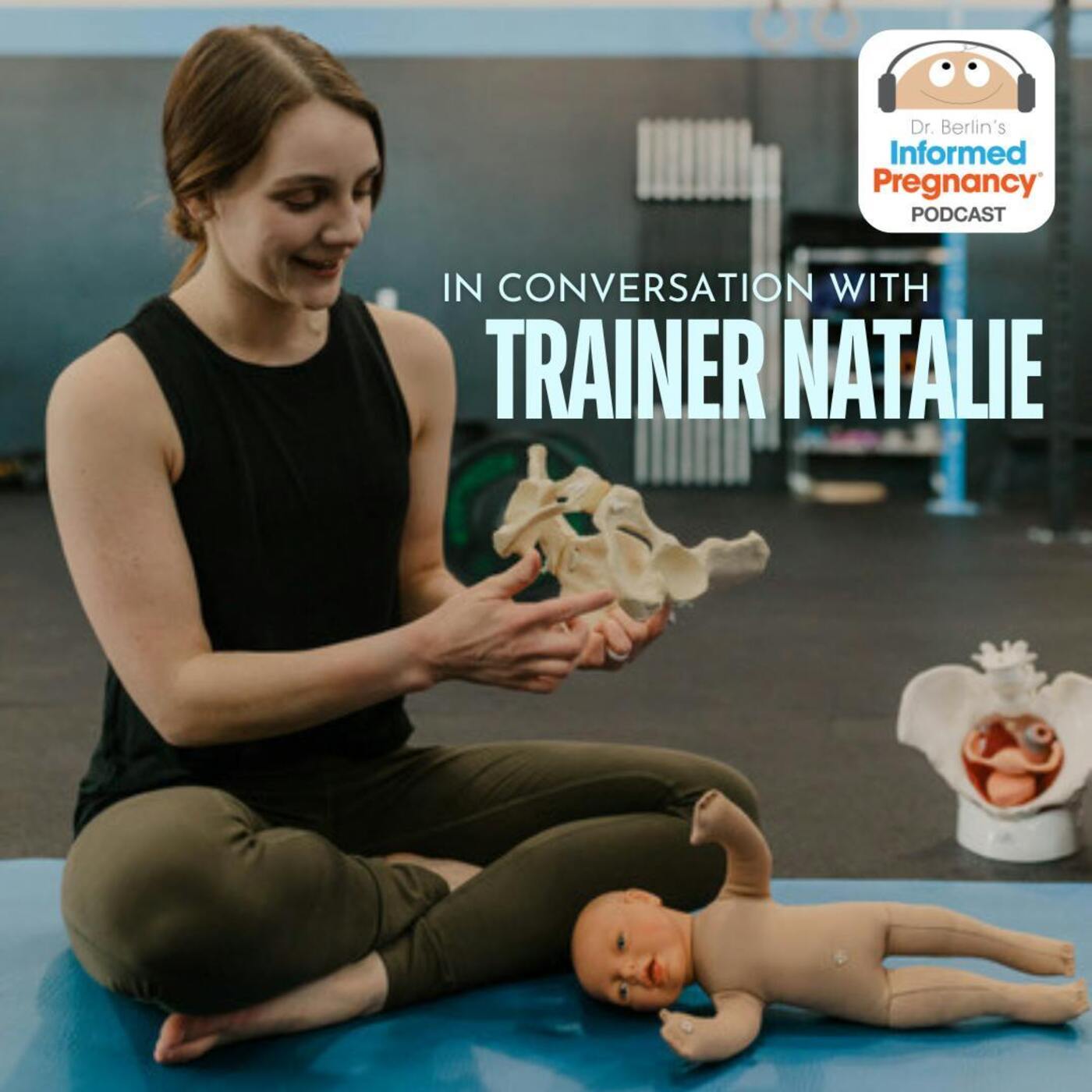
August 8, 2024 · 37 minutes · Episode 419
About this episode
Alaskan native Natalie Headdings, also known as Trainer Natalie, is a doula, pre and postnatal exercise specialist, and natural movement educator. She joins the podcast to talk about her path to birth work and her experiences and career thus far.
Connect with Natalie online: @trainernatalieh, trainernatalie.com, The Resource Doula Podcast
Trainer Natalie’s Mindful Movement and The Core Connection: From Anatomy to Action
course is available now on IP+!
Key quotes
“So we have the highest rate of out of hospital birth in the nation, which is outstanding.”
“So for like a little cue to think about, I really like think about pick up a blueberry with your vagina as you're exhaling.”
“And I really like telling people the five five five rule. Have you heard that one before? So essentially the first five days post-birth, you stay in bed.”
“It should not be a universal six weeks green light.”
“I would like to echo what I hear every mom and every guest I've ever had on my podcast say is you are the expert on your own body, so trust it and trust your instincts because you're going to make the right decision, no matter what that decision is, you're going to make the right decision for you, for your baby, for your family.”
Related episodes
- Ep. 414 Aly Michalka: After Birth
- Ep. 446 Perinatal Exercise with Sarah Zahab
- Ep. 411 Welcome to Fatherhood with David Arrell
- Ep. 424 Leedia Riman: After Birth
Transcript
AI-generated transcript with speaker labels — may contain errors, especially names and medical terms. Dr. Elliot Berlin, DC appears in blue; Trainer Natalie in orange.
Dr. Elliot Berlin, DC [0:12] Welcome to the Informed Pregnancy and Parenting Podcast. I'm your host, pregnancy-focused chiropractor Dr. Elliott Berlin. My guest today is a doula, pre and postnatal exercise specialist, natural movement educator, and the host of the Resource Doula Podcast, Natalie Heddings, also known as Trainer Natalie. Welcome to the podcast.
Trainer Natalie [0:56] Thank you, Dr. Berlin, so much for having me. I really appreciate it.
Dr. Elliot Berlin, DC [1:01] Such an honor, and I'm excited because you do interesting things that most people don't do, and I want to know all about that. And you're in Alaska, which is just interesting in general, so I want to know about that. And also, if I could start with this, you're not a mom yet.
Trainer Natalie [1:15] Correct, I'm not.
Dr. Elliot Berlin, DC [1:16] That's always so interesting to me when you get knee-deep in birth work and you haven't had kids yet. So I got to pick your brain on everything, but let's start at the beginning. Where are you from originally?
Trainer Natalie [1:27] I'm originally from Anchorage, Alaska.
Dr. Elliot Berlin, DC [1:29] What's it like growing up in Anchorage, Alaska?
Trainer Natalie [1:32] Oh, it's a fun time. It's a fun time. I think I learned a lot about Alaska.
Dr. Elliot Berlin, DC [1:39] Fishing?
Trainer Natalie [1:40] Well, not necessarily fishing. I learned a lot about what it's like to grow up in Alaska when I went elsewhere, and we call it outside or the lower 48 when you live in Alaska. So I realized that not everybody deals with darkness like nine months out of the year and very short days. Not everybody just goes outside no matter the weather, and not everybody just goes into the mountains on a pretty regular basis. So it's a privileged thing to grow up in Alaska. It's an interesting thing because we're so far removed from a lot of the common resources and stores and things that the lower 48 does have.
Dr. Elliot Berlin, DC [2:19] Do you not realize until you travel that you don't have those things?
Trainer Natalie [2:23] Yeah, yeah. And I started traveling when I was pretty little, like a young kid. We went on lots of airplane trips because you can't drive to another state from here.
Dr. Elliot Berlin, DC [2:32] Well, a lot of times you can't drive to another city from there.
Trainer Natalie [2:36] This is true. This is true. Got to go through Canada if you want to get down to Seattle. So what about fishing? I actually didn't grow up doing a ton of fishing. My life was more mountain biking and hiking. And there's four of us kids in my family.
Dr. Elliot Berlin, DC [2:55] Which one are you?
Trainer Natalie [2:56] I'm number two. So I share the middle child with my sister.
Dr. Elliot Berlin, DC [2:59] You're the first middle child.
Trainer Natalie [3:01] Exactly.
Dr. Elliot Berlin, DC [3:03] Wait, is your older sibling a brother or sister?
Trainer Natalie [3:06] Brother.
Dr. Elliot Berlin, DC [3:07] OK, so you already have two kids, sort of.
Trainer Natalie [3:10] Kind of. Yeah, yeah, I would say so.
Dr. Elliot Berlin, DC [3:13] Yeah, I mean, that's kind of what happens, right? Yeah, not too much fishing is interesting. I grew up in New York City and I do most of my hunting and fishing at the supermarket. And I realized that when just a few weeks ago we did a summer trip, our family, we went on a pontoon boat and went fishing for the very first time.
Trainer Natalie [3:32] Wow. Congratulations.
Dr. Elliot Berlin, DC [3:34] And very quickly, my son caught a trout. Someone gave us a secret and where to go and how deep he caught a trout. And when he reeled it in and he saw it come above the surface, he got freaked out and he ran and dropped his fishing rod. We saved it and then we pulled it out. But once we had it out, we had no idea what to do with it. We went to that like catch and release, but we couldn't get the hook out of his mouth. It was like a disaster. I'm like, oh, you know, I have a lot of strength for people who hunt and gather for real. Like, you know, we sucked at it. OK, so that's what Alaska reminds me of. OK, and now you're not in Anchorage anymore.
Trainer Natalie [4:11] Right. Yeah, I moved about an hour north, so I didn't go too far, but I live in Palmer, Alaska now. So we call it the Matsu Valley and it's a farming community. So back in whatever year they colonized Alaska, they brought up a bunch of farmers from the Midwest. And that's how Palmer got started. So our claim to fame is vegetables that are ginormous. Our state fair every year, they have huge, huge cabbages and pumpkins, like two thousand pound pumpkin. Wow. So our growing season, although it's short, we have like almost twenty four seven daylight. And so that's how things get so big.
Dr. Elliot Berlin, DC [4:48] Oh, I was wondering, like with the nine months of darkness, how do you grow anything? Then you have several months of just like almost no darkness.
Trainer Natalie [4:57] Yep. And we have glacial silt from the rivers that are really close to Palmer. And so we have great growing soil as well.
Dr. Elliot Berlin, DC [5:06] But can you see Russia from your window? Not. OK, let's talk about like in a nutshell, we're going to get deep into all the pieces, but in a nutshell, what do you do? What kind of work do you do?
Trainer Natalie [5:19] So I help people move better and I help them feel more confident in their bodies. That's the nutshell version. I guide people into more natural movement. And typically I see pregnant and postpartum people coming to find me. And typically it's when they're having an issue like, oh, when I sneeze, I pee my pants just a little bit. And that's annoying. And I don't want to do that. Or they've heard that they just need to come see me and they're not really sure why, but they come see me and they're like, oh, that's why. So I do a lot of postural work with people, breath work with people. I get them ready for delivery. So we do a lot of exercise prep for labor and then recovery prep as well.
[6:06] And then postpartum, we do a lot of just pelvic floor and core work to help them feel the best and move the best and recover really well postbaby.
Dr. Elliot Berlin, DC [6:16] So I've been around the block a bunch now. I'm getting older and I have never seen a school offer specialty in what you just described.
Trainer Natalie [6:28] Me neither.
Dr. Elliot Berlin, DC [6:29] I know there's a whole bunch of programs and certifications you can do, but it sounds very unique compared to anything I've been exposed to. I mean, I'm here in Los Angeles. We have a huge birth community with everything under the sun. Nothing exactly like that. So how did that begin and how did that progress into what it is today?
Trainer Natalie [6:48] That's a great question. It's a loaded question. If I tell you, I started back when I was five and I knew for a fact that I wanted to work with moms for some reason it was a calling. And I was like, this is what I want to do. And I originally thought that it was going to be through nursing and doing labor and delivery, being a liver and delivery nurse or a NICU nurse. And so I actually started nursing school. I got one semester in, I was in clinicals and realized all of these people are expecting me to fix their problem with meds or some other modality that is not them putting any effort into helping themselves or taking responsibility for their health, which was so kind of frustrating
[7:34] because I had already started and I was like, Oh, great. Now I have to go to a different direction, but it was really eye opening because it helped me see that I wanted to work with people who were interested in taking responsibility for their health. And nursing is great. I respect nurses and I love them. And I would have done fine if I continued, but I took another path. So I changed my degree program to kinesiology, exercise science, and then pursued that at the time I was already doing doula work.
Dr. Elliot Berlin, DC [8:04] Well, okay. So then again, well, now you're not five anymore.
Trainer Natalie [8:08] Exactly.
Dr. Elliot Berlin, DC [8:09] Yeah. Fast forward. But I mean, you must be very young when you started to do doula work. And again, most of the dual is not all, but most of those, I know have a kid first and like, this is a calling. What happened to you?
Trainer Natalie [8:24] Great question. I think I was fascinated with pregnancy and anatomy was my favorite subject in school, which is now evident by me carrying around my pelvis models all the time. But I also walk into a building with my spine and people are like, interesting.
Dr. Elliot Berlin, DC [8:43] Okay. Does your spine have a name?
Trainer Natalie [8:45] Oh, no, I never named my spine.
Dr. Elliot Berlin, DC [8:47] You got a name. Your pelvis has a name.
Trainer Natalie [8:49] Yeah. Her name is Polly.
Dr. Elliot Berlin, DC [8:51] Polly pelvis.
Trainer Natalie [8:53] Yeah. I also have a Penelope. She's got all her organs, so there's a couple versions. Yeah. Yeah.
Dr. Elliot Berlin, DC [8:58] I wonder if Polly ever gets jealous of Penelope.
Trainer Natalie [9:02] She might, but she does have flexible joints and Penelope does not. So, yeah, yeah, they each are special.
Dr. Elliot Berlin, DC [9:09] I love that. We each have to focus on our strengths.
Trainer Natalie [9:13] Yes.
Dr. Elliot Berlin, DC [9:15] I learned that from Polly and Penelope. Okay. I'm going to think of a name for my spine.
Trainer Natalie [9:20] Yeah, do it. So I knew that I wanted to work with moms, right? And I was fascinated with pregnancy and knew I wanted to do something for that mother had transitioned for my job. And I had this friend of mine, her name is Erin. She was a doula for probably 20 plus years. Her daughter is my age and she would start telling me these birth stories. And I don't really know how this happened, but I would just be so absorbed in those birth stories. And she's like, I think you should take a doula course. I think you should do that. And so I was like, well, okay, sure. Like not having any expectations going into it. And then I took it. I was like, oh, this is what I meant to do.
[10:00] And so I started doula work when I was about 18 years old, which is just, yeah, it's crazy to me looking back that people trusted me enough to invite me into that birth space, not having a child myself and being an 18 year old.
Dr. Elliot Berlin, DC [10:14] But Natalie, cause I know a few people that I can think of right now. Some of them have gone on to become the greatest providers in doula care and childbirth education midwifery. And some of the ones who I know who also started as teenagers are right when they are around the time they turned 20. And you could tell that you've lived a previous life where you were an extremely busy midwife. It exudes from like your soul, your passion for this kind of work. And to sort of realize that five years old, that you're going to do something with moms. It's like, okay, you already knew you had a preview and you give me that vibe, just like some of those other people like Haley Oaks.
[10:59] I don't know if you know her, but she's incredible midwife and Carson Meyer, who's a fantastic doula and childbirth educator, some of the greats and also they started very, very young and you could see it's not your first time.
Trainer Natalie [11:13] Yeah, I'll have to go look them up. I don't know those people, so I'm excited.
Dr. Elliot Berlin, DC [11:17] Okay. So 18 years old, you become a doula and people trust you because they see past your 18 year oldness and into your soul where you're this passionate birth provider. Okay. Let's take a break. When I come back, I got to find out what the first birth was like for you. We'll be right back.

Dr. Elliot Berlin, DC [11:47] Welcome back. We are talking to Natalie headings and okay. So 18 years old, you do the doula training. What's it like as an 18 year old to go to somebody's birth?
Trainer Natalie [11:57] It was an amazing experience. Like the couples that hired me in my first few months of work just allowed me into that space. They asked me questions and I was able to use the knowledge that I had learned in my training, but also go and do research. And so it was like that first client experience that I had where I was able to say, I don't know, let me find the answer and go and do research and come back to them. And I think that was really empowering as a provider because I hadn't had that experience really before. And so it empowered me to say, I don't know, which I think it's a really valuable thing for anybody working in the health world to be able to
[12:38] say that, and I look for that in my own providers, you know, when I'm searching, but yeah, it was transformative. I would say I learned a lot. I learned what it was like to hold space for people. What I found interesting looking back, like, you know, years down the road now is my doula training. Didn't really give me any tools to actually advocate for my clients. And they kind of told us not to. They kind of told us never speak for your client, like don't toe that line, which is kind of unfortunate because there are situations oftentimes in birth settings where it would have been beneficial if I had those skills, like those healthy confrontation skills where I would have been, felt empowered
[13:21] to say something to that healthcare provider, but yeah, I would say doula work was great. I loved it. I would go to births, be up all night and then come home, take a shower really quick and then go to my college class and do a presentation.
Dr. Elliot Berlin, DC [13:34] Kinesiology.
Trainer Natalie [13:36] Exactly.
Dr. Elliot Berlin, DC [13:36] Had you seen a birth before the first birth you were at as a doula?
Trainer Natalie [13:41] Yeah, actually. So I saw both my younger siblings be born, which I think also lent me to crave that and learn about that and feel like that's very much normal, so I'm really thankful to my mom and my parents for allowing me in that space as well.
Dr. Elliot Berlin, DC [13:57] Were they born at home?
Trainer Natalie [13:58] We were all born in the hospital. My older brother, my mom had an OB with him, and then she switched to nurse midwife in the hospital with me and had the same provider for the other two as well.
Dr. Elliot Berlin, DC [14:08] How old were you when the other two were born?
Trainer Natalie [14:11] I was four and six for both of them. Yeah. And I remember them pretty well.
Dr. Elliot Berlin, DC [14:15] So it's pretty cool. When I go to a birth and there's a here, it's usually home birth, but if there's going to be older siblings there, I used to get really nervous about it. I'm like, wow, this is not a good idea. It's like, oh, they're just like either interested or fascinated or couldn't care less, but not scared. They don't think it's like weird and creepy. Like you think they're going to think it is, and oftentimes quite calming for the mom, you know, to just have the other child there. I think when you're in mommy mode, it's hard to be afraid you're fearless here. Okay. So already a doula, then like at age four and then, and then doing actual doula work and studying kinesiology.
Trainer Natalie [14:57] And at the time I was also a Pilates instructor. So I was doing a lot of different things. That's kind of a theme in my life. And I was able to sit in and assist a class that was on post baby abs and pelvic floor taught by a physical therapist in town. And so I put two and two together because some of my doula clients were telling me they had urinary incontinence, they felt pressure in their pelvis, they felt like, you know, symptoms of prolapse or things like that. And then at the same time I was learning, Oh, like preventative exercise is a thing and we can hopefully prevent some of those issues, if not minimize them. Like things like diastasis, right?
[15:33] You can't prevent, but you can minimize by how you stand, how you move, how you train your core and especially postpartum as well. So I put that together and I was probably searching things like fitness and doula work on the internet, just trying to figure out if anybody else was doing what I wanted to do. And then I came across a woman named Kim Vapni. She calls herself the vagina coach now, and I became a student of hers. And long story short, I became certified and now I'm a master trainer for her teaching other trainers to do what I do as well. So it's come full circle and that's kind of where I got to where I am today.
Dr. Elliot Berlin, DC [16:11] Okay. So you have this incredible tool belt with all sorts of understandings of the body and modalities for diagnostic purposes, therapeutic purposes, educational purposes, and you apply it, it sounds like to all the things on the journey to becoming a parent. Pre-birth, pre-pregnancy, maybe even pregnancy, pre-birth, labor, delivery, postpartum parenting. That's really cool. And that's why it's like, okay, what course does somebody take to become that? What certification is that? It's not, it's the Natalie certification. I love that. I should brand that. So I want to get into a little bit more of the specifics because, you know, a good kinesiologist who really understands structure and function,
[17:02] and you said anatomy is your favorite thing, but who really understands structure and function, especially musculoskeletal structure and function, where muscles originate, where they insert what happens when you block one end and activate the other end or vice versa. And to understand how all those pieces come together as an organism, to me, it's sort of sometimes like chasing a shortened electrical harness, you know, having to narrow down where that is really coming from and then how to rehabilitate it. It's extremely valuable. I don't think there's a lot of great people who rise to the top who are amazing at that. And I want everybody to come see you.
[17:40] I want to come see you. I want my whole family to come see you.
Trainer Natalie [17:43] Come to Alaska, come visit.
Dr. Elliot Berlin, DC [17:45] But I'm not pregnant.
Trainer Natalie [17:46] I work with all people, not only pregnant people.
Dr. Elliot Berlin, DC [17:49] Yeah. Well, then I will come to Alaska. I love a giant zucchini or whatever.
Trainer Natalie [17:56] Come in the summer.
Dr. Elliot Berlin, DC [17:57] Yeah. I'll stop off one of the crew stops.
Trainer Natalie [18:01] Perfect.
Dr. Elliot Berlin, DC [18:02] Okay. So what I really want to do in segment three is get some practical, juicy, nitty gritty, like what can people do either on their own and, or with you in person or virtually. But before we get there, birth in Alaska has to be an interesting situation. I mean, I haven't spent too much time in Alaska, mostly port cities, but even the way you described it growing up, there's not a lot of the abundance of modern resources that you might have in the lower 48, as they say. How was birth there in your area?
Trainer Natalie [18:35] Actually, it's amazing. We have a really tight knit group of birth professionals. So we have the highest rate of out of hospital birth in the nation, which is outstanding.
Dr. Elliot Berlin, DC [18:46] Wow.
Trainer Natalie [18:47] It kind of makes sense though. Yeah. I think part of it is due to how rural people are potentially. And part of it has to do with how independent people move to Alaska or live in Alaska and we do things on our own and we don't like to outsource, which is just kind of the Alaskan way. We like to DIY everything, including birth. So there's a lot of birth centers and a lot of home birth here.
Dr. Elliot Berlin, DC [19:12] Oh, so a lot of midwives then.
Trainer Natalie [19:13] Yes. Yep. A lot of midwives specifically kind of in the Anchorage area and the Matsu Valley where I am, which is, you know, just a little north of the Anchorage, but out in the villages where they're off the road system. There's not a lot of midwives, which is something that the local midwives are working on, which would be great if, you know, you're listening and you want to be a midwife in Alaska, come on up. But what happens with the rural villages is there's only like a small primary care clinic where they're not equipped for birth and these women are being flown into Anchorage, the hub where the main hospitals are. Maybe at like 36 weeks to kind of just hang out in a housing hotel
[19:59] situation until they have their baby, which is problematic in a lot of different ways because they're usually leaving behind their partner who has to work or take care of other children at home. So they don't have their support system and they're just sitting and waiting for their baby to come, which is stressful and they're birthing away from their communities. And so that part is challenging. Like the access to direct entry or licensed midwives in those areas is not good currently. And so that's one of the challenges. I mean, we do have the highest out of hospital birth rate in the nation, but that only accounts for kind of the bigger cities and the
[20:39] areas where more of the population is.
Dr. Elliot Berlin, DC [20:41] I don't even remember which city I was in in Alaska. And they were just like, Oh, you can't really drive anywhere. And we don't have a hospital. Like, I don't know. It looked like a log cabin. And you know, I was definitely in Ketchikan for a bit.
Trainer Natalie [20:56] Yeah.
Dr. Elliot Berlin, DC [20:56] And they were just like, yeah, we have a medic, maybe I think they said, and I was like, maybe I shouldn't eat this hamburger. Anyway, it sounds pretty interesting. I always wonder here, like when there's a blizzard and someone goes into labor, you know, are they going to snowmobile it over there or either way? Like mom's going to snowmobile to the hospital. Is the midwife going to snowmobile to the home birth or the birth center? It's just a whole different set of factors to consider.
Trainer Natalie [21:25] Yeah. There's limitations for sure. From where we're standing, if more midwives can come in, then that will discontinue our good rates of independent birth, I guess I should say.
Dr. Elliot Berlin, DC [21:37] Have you had the urge to become a midwife?
Trainer Natalie [21:40] Yeah. Oh yeah. Many times. The thing that keeps me back, I think is sleep mostly, and I love what I do. And I really enjoy helping people before and after and having that long term relationship with people and being able to guide them through movement. And I know a lot of great midwives, so I just refer to them.
Dr. Elliot Berlin, DC [22:03] Would you have given me a better segue to the third segment?
Trainer Natalie [22:05] I don't think so.
Dr. Elliot Berlin, DC [22:07] When we come back, we're going to get into your love of what you do and find some practical tips and advice for listeners. We'll be right back. Welcome back. We're talking to a very fascinating trainer, Natalie headings. Okay. So let's talk, you know, so much about the body, about movement, about kinesiology, about strength and flexibility. If you could tell me like for each trimester, let's say there were four of them, like one thing that maybe is a practical tip that somebody can do to help themselves during that time period or something to think about that people don't generally think about that maybe that they can use to get information and prepare for the next step or in retrospect, let's
[23:05] say the fourth trimester, an important recovery step fire away.
Trainer Natalie [23:10] Okay. So trimester one, generally people are exhausted. They find out they're pregnant and they kind of freak out and they're not sure, especially if it's their first one, right? And they're not quite sure where to go, what to do, what kind of exercises can I do, how can I move all of the things? So what I would encourage people to do in first trimester is get your mindset bright first. If you're on the couch, cause you're nauseous, you're exhausted, take some time to work on your brain. And that's really the power that you'll need for the rest of pregnancy and postpartum, right? If you can get your mindset right first, awesome. Also, if you have the capacity, learn how to diaphragmatically breathe.
[23:52] So a lot of us breathe paradoxically as we inhale our chest goes up and our belly goes in, and as we exhale, our chest goes down, our belly puffs out and that's a paradoxical breath. It's not physiologically optimal. So what we should be doing instead is as you breathe in, your lungs fill with air, your rib cage expands out to the side. I say like, think about 360 degrees around your rib cage expanding. Like you're trying to get a bigger bra size if you wear a bra, right? And your belly, your belly expands and your pelvic floor. Let's go and lengthen. So those muscles that you sit on between your sit bones, between your tailbone and your pubic joint, all of those muscles need to
[24:39] expand and open on your inhale. And then as you exhale, naturally your belly should kind of fall and come back together. Your rib cage should come down like a closing umbrella and your pelvic floor should naturally lift up. Oftentimes people are doing the exact opposite with their pelvic floor. So for like a little cue to think about, I really like think about pick up a blueberry with your vagina as you're exhaling. So you're lifting up and in with the pelvic floor, or you could think about if you don't have a vagina, you can think about stopping the flow of urine or holding in a fart. That's another way to do it. Pulling up and in. Yeah.
Dr. Elliot Berlin, DC [25:20] I could do this with my kids.
Trainer Natalie [25:22] Yeah, exactly. You should, they should know about pelvic floor long before they're teenagers, right?
Dr. Elliot Berlin, DC [25:28] They don't love fruit, but farts.
Trainer Natalie [25:30] Perfect. Perfect. Teach them while they're young. So then trimester two, generally people are feeling a lot more energy, right? And so I would prioritize strength training. If I told you to do anything, it would be changed to minimal footwear, which we didn't even talk about feet yet. That's my whole other branch of my company and my passion is footwear and feet, so switch to minimal footwear, get your feet strong.
Dr. Elliot Berlin, DC [25:54] So you're saying we're less supportive.
Trainer Natalie [25:57] Correct.
Dr. Elliot Berlin, DC [25:58] Yeah. This is going to be another episode.
Trainer Natalie [26:01] Yeah, it can be.
Dr. Elliot Berlin, DC [26:02] I mean, yeah, it's going to have to be.
Trainer Natalie [26:04] Okay. So the less support we have on our feet, the stronger our feet become. The more support we put them in, the more stable and stiff shoes we wear, the weaker our feet get. And our feet are foundation below our pelvic floor. The pelvic floor is the next foundation. So take your shoes off. Number one, there might be truth to saying, you know, barefoot in the kitchen while pregnant. Yeah. So switch to minimal footwear and start strength training as much as you can and the whole like, don't lift over 25 pounds, kind of old news. Of course, check with your provider and everything, but oftentimes people's toddlers weigh more than that and then they're picking
[26:42] them up, putting them over their shoulders, right? Taking them out, doing different things. So pick up things. Yes. Yeah. Deadlifting, squatting, overhead pressing, and some kind of rotation movement, those are like my go-to. So those are the best movements that you can do to prep for labor delivery and postpartum and parenting movements, right? Carrying a kid under one arm and a bag of groceries with the other, like you need to be able to balance.
Dr. Elliot Berlin, DC [27:09] That's a farmer carry right there. That's an uneven farmer carry.
Trainer Natalie [27:12] So that's a great way to train for a parent to giant pumpkin. Yeah, exactly. And then trimester three is more about preparing, right? You're kind of focusing in, you're probably nesting a little bit. And so focusing more on labor prep positions. So things that you would do that mimic labor positions, if you're going to be on your all fours, you should probably do some exercises on your all fours to make sure you're comfortable and strong in that position, right? If you're on your side, if you want to push a sideline, maybe potentially, depending on how you feel, you might want to do some sideline leg lifts so that your hip is strong for that position.
[27:52] You don't know how long you're going to hold that position. If you want to move in labor, if you want to squat in labor, which I recommend start squatting now. And so I heard Kylie say this on the podcast in the previous episode, like we birth, how we live. And if you are moving well and moving naturally in your life, you're going to move well and birth naturally through that movement. So motion is lotion is another thing that I oftentimes say to my clients, the more movement, the better for labor, especially, right? And so if you can get used to those movements in your pregnancy or even before that would be ideal, then you're going to be ready.
[28:29] Your body's like, Oh yeah, I got this. I know how to move well. So, and then fourth trimester, yes, trimester four is all about recovery. And I really like telling people the five five five rule. Have you heard that one before? So essentially the first five days post-birth, you stay in bed. And so you're resting. You're horizontal. Our pelvic floor has had a ton of pressure downward on it for the entire pregnancy, like 40 plus weeks, right? If you had a vaginal birth, you pushed a baby out of your vagina, your pelvic floor is tired and there's muscle tension or imbalances, right? And that need to be restored. If you had a cesarean, even more so you need to rest.
[29:16] And so the first five days you're in bed, the next five days you're on the bed. So maybe you like venture to the couch for your big adventure of the day. You get up and do some more, like only taking care of yourself and your baby. You're not doing any serving of other people cooking things, ideally if you can avoid it. And then the next five days is near the bed. So you're still resting the majority of the time, but you are going and doing other things. This is hard if you already have another child or other children, right? But the thing that I would encourage every single person to do is set up your support prior to that fourth trimester so that you can get that rest.
[29:57] And then there's a protocol essentially, basically the first week postpartum, you can start doing that diaphragmatic breathing.
Dr. Elliot Berlin, DC [30:06] Yeah.
Trainer Natalie [30:06] You can get your abs to connect with your pelvic floor, to connect with your brain and start rebuilding that core system. Then you start to add things like a bridge. You can add a leg lift again. Then you can start adding squats. And then I always, always, always recommend seeing a pelvic floor physical therapist, if at all possible, because they can do an internal exam. If you know, someone is consenting to that, if hoping for that to see what's going on with those muscles, how they're moving and how they're responding to load and force and pressure and gravity. So that six week I'm going on my, one of my soap boxes here, that six week point where we tell people like, you're good to exercise.
[30:45] You're good to have sex. You're good to do whatever you want postpartum. Like your physical therapist should actually be the one giving you the green light for those things, because they're actually figuring out what your muscles are doing, not just that superficial tissue healing. And it may not be six weeks.
Dr. Elliot Berlin, DC [31:01] Correct. It might be a lot later than that. It might be earlier than that.
Trainer Natalie [31:05] Exactly.
Dr. Elliot Berlin, DC [31:06] Six weeks is so arbitrary.
Trainer Natalie [31:08] Yeah. It's interesting how much other issues in the body come with a specific protocol week by week. Like if you have a knee injury, for example, if you have an ACL repair, you have a written out confirmed by research protocol that you follow based on whatever exercises you do. You give birth to a nine pound baby through your vagina. And it's like, cool. You're good to go.
Dr. Elliot Berlin, DC [31:33] Yeah. Right.
Trainer Natalie [31:34] Or it depends. Like if you had a longer pushing time, if you had any tearing, if you had a cesarean, those recommendations should adjust to you. It should not be a universal six weeks green light.
Dr. Elliot Berlin, DC [31:46] So absolutely same page here. Awesome. That's super helpful. Thank you so much. And later we're going to just tell everybody where they can find you. Cause obviously there's that scratching the surface of the amount of information that you have and practical tools and tips that you have that can help somebody have a better experience all the way through. But before we get to where we find you online and wind down, I want to talk about your amazing podcast. How did you get into podcasting? How long have you been doing it? And why did you call it the resource doula podcast?
Trainer Natalie [32:23] All great questions that I don't necessarily have a perfect answer to, but it was kind of a happy accident how I started. I have a lot of connections with people locally, other professionals who would refer to me and I would refer to them. And I was having these conversations like you and I are having, like, what do we do about this? What do we do about, you know, someone who's going into labor and they don't have the tools. And I talked to them about their specific specialty. And I was like, everybody else needs to hear these conversations. And so I just started recording them. Like I wouldn't even make a podcast. I thought it was going to be like to my email list.
[33:00] And I was like, you know what, let's just do a podcast. And so that's how it got started. And I consider myself people's personal resource dealer. And so I called it the resource doula because I deal resources. That's what I do. I do love them with resources. And I tend to talk to people who are in this space of pregnancy, postpartum parenting, all of the things that relate to that health space. And I think it's been February of 2022 when I published my first one. So not that long. Yeah.
Dr. Elliot Berlin, DC [33:34] But you know, you were gracious enough to have me as a guest on your podcast. And I love your interview style. Like you ask really good questions that sort of bring out helpful answers to the listener. And I feel like you have a great way of thinking like a listener and asking the questions that they want to know the answers to. So it's the resource to the podcast. And do you have a couple of favorite episodes? Like if somebody was going to hit your library, what's a good starting point?
Trainer Natalie [34:05] Hmm. There's a couple of mini episodes that are more recent that are short. So if the listener is like, oh, I need like a 10 minute episode. Those are great. I go into my favorite resources for preconception, pregnancy, postpartum in each episode, and then you mentioned Dr. Stu in our interview. I had him on the podcast not too long ago. And then if people are more curious about foot health, I interviewed a podiatrist out of Australia. His name is Andy Bryant. So that one is called the truth about feet. So that's a really good one as well, but there's a ton of amazing interviews.
Dr. Elliot Berlin, DC [34:42] Okay. I'm going to have to listen to that one. Cause I'm very curious about what you were saying, which is, you know, I think to some degree counter to a conventional wisdom, and I'm sure there's a tremendous amount behind it. And I don't like to be behind the times. So I didn't listen to that, but I'm also after I listened to that and do a little research, have you back and do some foot talk.
Trainer Natalie [35:05] That would be great. I would love that.
Dr. Elliot Berlin, DC [35:07] Any closing thoughts?
Trainer Natalie [35:10] Hmm. I would like to echo what I hear every mom and every guest I've ever had on my podcast say is you are the expert on your own body, so trust it and trust your instincts because you're going to make the right decision, no matter what that decision is, you're going to make the right decision for you, for your baby, for your family. And there's a mama instinct for a reason. So give it a chance and trust it.
Dr. Elliot Berlin, DC [35:34] Powerful and true. Thank you. All right. Natalie headings, Dula Natalie, aside from the resource Dula podcast. Where can we find you online?
Trainer Natalie [35:46] I go by trainer Natalie on social media. So Instagram, TikTok, Facebook, you can find me trainer Natalie. You can also go to trainernatalie.com and find all of my links, current classes that I have, and you can reach out to me as well. Really try to respond to all of the messages that I get. And you can find the resource Dula podcast on social media as well. I'm also on YouTube. I'm trying YouTube out. So if you prefer to watch podcasts, then you can find me just at resource Dula podcast.
Dr. Elliot Berlin, DC [36:18] So amazing. Thank you. Thank you for joining me. Thank you for sharing your wisdom and entertaining my curiosities about life in Alaska.
Trainer Natalie [36:26] Of course. Thank you so much for having me.
Dr. Elliot Berlin, DC [36:29] My pleasure. And at home, thanks for listening to informed pregnancy podcasts for more pregnancy and parenting information. Visit us online at informedpregnancy.com
Want more pregnancy + parenting? Start your FREE TRIAL of Informed Pregnancy+ and get access to all our curated pregnancy and parenting content — original series, iconic birth films like The Business of Being Born, prenatal workouts and more.