
June 13, 2024 · 35 minutes · Episode 411
About this episode
David Arrell, an executive coach, author, and parent joins the podcast to discuss his work as creator of Welcome to Fatherhood, a special program within his executive coaching business, designed just for new dads.

Connect with David online: @welcometofatherhood.wtf, Baby Talk Podcast, and welcometofatherhood.com
David’s Welcome to Fatherhood online program is available to stream now exclusively on Informed Pregnancy Plus!
Key quotes
“Exactly. I would say if the 10th version is going to be great, let's fail nine times fast and learn and adapt and iterate and bring that next version of ourselves or of our strategy or of our process to bear in the real world and see how it goes.”
“Like I remember I didn't get her a mother's day card during when she was pregnant during mother's day. Lesson learned guys, if your partner is expected, get her a mother's day card. And then she got me a father's day card. And I'm like, uh, I'm not a dad yet.”
“favorite people in the world, all doulas. I strongly recommend any guy out there on the fence, dude, hire a doula. I mean that in the most direct and clear way I can possibly say it. And she was there.”
“freaking out. And my doula came in with a hand on my shoulder. Like the angel that she was like, David, you pay attention to Jen. I will let you know if you need to do anything else. And at that moment, like I felt all that stress come out of my system. And I looked at my wife at Jen. I was like, hey, babe, I'm right here.”
“Number one, you are on very different journeys. She is a mom now and you are not.”
Related episodes
- Ep. 412 A Birth Story with Joanna Bavero
- Ep. 414 Aly Michalka: After Birth
- Ep. 409 The Face of Birth with Kate and Gavin
- Ep. 435 Jackie Amézquita: After Birth
Transcript
AI-generated transcript with speaker labels — may contain errors, especially names and medical terms. Dr. Elliot Berlin, DC appears in blue; David Arrell in orange.
Download PDF of the Transcript
Dr. Elliot Berlin, DC [0:36] Welcome to the Informed Pregnancy and Parenting Podcast. I'm your host, pregnancy-focused chiropractor Dr. Elliott Berlin. My guest today is an executive coach, author, partner, parent, and creator of Welcome to Fatherhood, a special niche within his executive coaching business, especially for new dads. David Arell, welcome to the podcast.
David Arrell [0:59] Thanks, Dr. Berlin. Looking forward to being here with you today and sharing some of our conversation with you and your illustrious audience.
Dr. Elliot Berlin, DC [1:06] Thank you. I'm fascinated by the whole business idea, lifestyle of coaching, and I want to learn all about it in general and especially for dads, but let's start at the beginning. Where are you from originally?
David Arrell [1:18] Long, long time ago, I was born in Chicago. I grew up mostly in Louisville, Kentucky area, but I say I came of age and I'm from Philadelphia, as that's where I spent a big chunk of my early adulthood where I gained a lot of good experience and all the ways of trying to figure out how to live a life of meaning, purpose, and intentionality. So that's my formative years. We're mostly in Philadelphia. I grew up in Philadelphia. I would have gained a lot of weight from all the great food.
Dr. Elliot Berlin, DC [1:49] That happens too. Okay. How did you get into executive coaching and really what does it even mean?
David Arrell [1:56] So I think the shortest answer to that question is executive coaching really comes down to helping high performing people, such as executives, take their both personal and professional performance, depending on how you want to measure that, and take it up to that next level. It's sort of what Carol DeWette calls the growth mindset embodied. So for people who are doing good, how do we get to great? For people doing great, how do we get to being awesome? And one of the things I like most about that is that every situation, every client is a unique person that has their unique aspirations, their unique ideals, goals, challenges, and helping them find their way through it in ways that work best for them
[2:39] is really what I enjoy most about it. So I have a lot of tools in my toolbox, but it always comes down to the client's willingness to dig in and put in the work, much like parenting and fatherhood.
Dr. Elliot Berlin, DC [2:51] Ah, Carol DeWette. So she's a psychologist, right? Is there a school of executive coaching?
David Arrell [2:58] There's a lot of different certifications. You could pursue trainings, workshops, modules. And then, frankly, in my experience, a lot of it comes down to experiential knowledge. I feel that I have some great certifications that help me frame questions or frame approaches in specific ways. But honestly, my background is as an entrepreneur, as a parent, as a partner, and being a bit stubborn, I learned a lot of things the hard way, such as banging my head into a wall four or five times before I realized there was either a door or a window and then finding that way to get through. So it really draws upon my background in entrepreneurship, leadership training and development, and then my experience trying
[3:41] to be the best dad and the best partner I can be. And failing a lot, learning and failing,
Dr. Elliot Berlin, DC [3:45] they go hand in hand. Is failing, I mean, maybe the opposite order, failing and learning from our
David Arrell [3:51] fails, sort of how we climb the ladder of success. Exactly. I would say if the 10th version is going to be great, let's fail nine times fast and learn and adapt and iterate and bring that next version of ourselves or of our strategy or of our process to bear in the real world and see how it goes. So this iterate, learn, iterate again. And again, this applies perfectly to parenthood because babies and pregnancy every day is a new chapter. So there's a lot of opportunities to realize that what worked quote unquote yesterday may not work as well today, just like in business as in life.
Dr. Elliot Berlin, DC [4:27] Yeah, I just feel like as soon as I understood the infant stage, they were toddlers and then
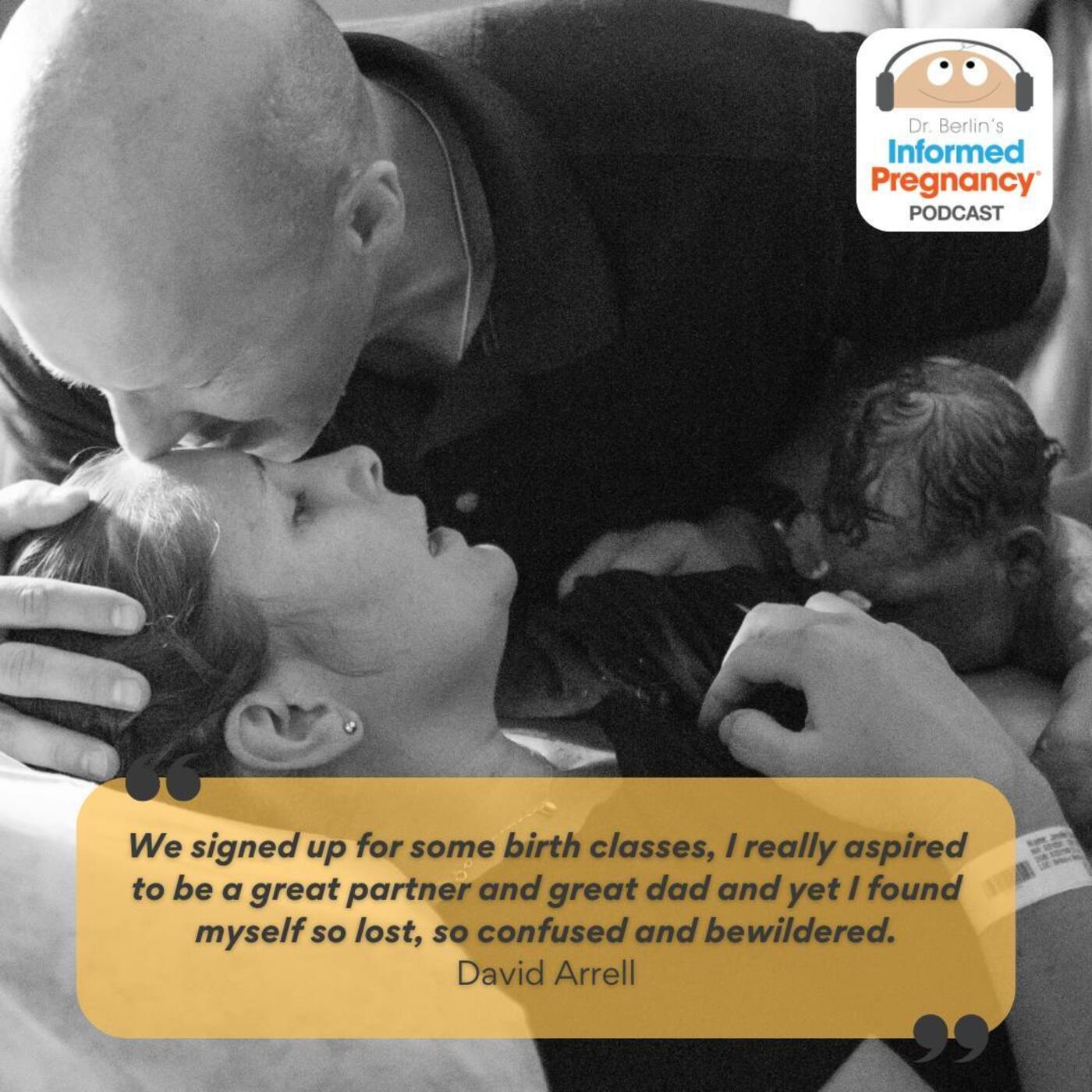
David Arrell [4:31] it kept going like that. Okay, cool. So your role to parenthood, your pathway to parenthood, what was that like for you? At the time I thought I was set up for success. I had sold a business. My wife and I were very intentional about heading into parenthood. We were trying to start a family. She was embarking on a second chapter in her professional career. The plan was for me to stay home and be the stay at home dad. And we got pregnant kind of right away. So my pseudo retirement from stepping out of the C-suite into the nursery was a very short time there. And we were all on board. We signed up for some birth classes. I really aspired to be a great partner and great dad. And yet I found myself
[5:17] so lost, so confused and bewildered. And obviously, you know, my wife is an amazing person, but her journey into pregnancy towards childbirth was also an unknown for her. So we're kind of both, you know, grasping in the dark of like, what do we do and trying to really engage the learning opportunities we had as well as staying connected to what I call sometimes a cultural conveyor belt of you just sign up for your OBGYN and you go to the appointments and you do all the things as prescribed. So it was a delicate dance of us, you know, sort of following the tide, but also trying to figure out how to swim on our own. So I'll pause there because there's
Dr. Elliot Berlin, DC [5:54] a lot of wrinkles and deviations that occur. Yeah. I mean, if I could go back to you,
David Arrell [6:02] young David, thinking about fatherhood, was your vision stay at home dadlike? You know, this is a funny question that my friends to this day are still bewildered because young David had zero intentions of entering into fatherhood and worked assiduously to avoid what at the time appeared to be a trap. So just as a young person, my vision of fatherhood was a different chapter. I wasn't ready for, I liked going out to eat dinner at nine o'clock and I liked sleeping in and I liked being, you know, footloose and fancy free as did many people in my age group, especially, you know, in Philadelphia in the early two thousands, it was happened in town with a
[6:49] lot going on and friends that had babies, you know, soon enough, they disappear from the social scene. And then, you know, a few years later, they left the city entirely. And I was like, well, I'm not ready for that. I like this particular chapter of my life and I'm not ready for it to come crashing to a halt. But slightly less young David in a relationship that I felt really engaged in and excited about and invested in, that was a radical change. I was very ready to start a family with my now wife and she'll tell a funny story at times where she was coming home from somewhere and had decided that on that drive home that she was ready to have kids with me. And she came home and she was like, David, I want to tell you
[7:28] something. I'm like, oh, okay, sure. She's like, I decided I want to have kids with you. And I was like, uh, okay, great. She was like, not really the reaction I was looking for. And I was like, what? And she was like, I don't know. I just thought that would be more impactful. I was like, oh, babe, I've known. I wanted to have kids with you forever. Now I'm, I'm excited to hear that. I'm slightly more emotionally intelligent than I was then, but still I'm about a two on a scale of zero to 10 of emotional intelligence. So I kind of missed the seriousness or sincerity of where she was coming from. But my honest appraisal was like, okay, good. That's two of
[8:01] us. This is awesome. So that big shift from young David to more contemporary David there.
Dr. Elliot Berlin, DC [8:07] Sweet. But it just sounds like that David was very hands-on from the beginning, either that conversation or soon before that in terms of taking on the role of father and partner and caretaker. Yeah. I've often looked at my life,
David Arrell [8:22] especially in hindsight, as a series of chapters and there's been, you know, threads of continuity, but also very different. And this was a chapter of my life that I was entering into and I was very excited about it. I mentioned, I wanted to be a really good partner. I was all in on the relationship and I wanted to be all in on partnership and parenthood. Little did I know what that meant at the time that we got on our pregnancy journey. And as I often joke about, I was like, okay, what do I do? You know, I'm used to action and, you know, with my business, you have a business plan, you have strategy, you have KPIs, you're executing initiatives, et cetera. So I was like,
[8:57] okay, operation, expectant dad, what do I do? Like, oh, just, you know, just be helpful and supportive. I'm like, well, yeah, that's why I'm standing here asking what to do. Like you didn't answer my question. Oh, you know, just be helpful and supportive. You know, your partner's pregnancy is a journey and like, okay, is there somebody else I can talk to? Like you haven't really told me anything yet.
Dr. Elliot Berlin, DC [9:22] Yeah. It doesn't boil down to spreadsheets the same way as business minds. I think that
David Arrell [9:27] probably happens to a lot of people, dads in particular, maybe more so. How did you remedy that? What did you do to prepare? So thankfully we have two children. So I was able to do things so much better the second time around. But with our first, and I often share the story like when my wife saw our positive pregnancy test, she went into mom mode. Like we celebrated and she started getting rid of like different cleaning products and was like checking which cheeses we could keep, whatever. I didn't see it this clearly as I do now. And I'm sure there's more clarity to come as I have more experience. But I was like, great, I'm going to be a dad much later than now. And so in my mind, fatherhood was still
[10:11] well beyond the horizon about seven months over the horizon. And so that disconnect of the journey I was on, which is going to become a father and the journey she was on, which is I'm a mom. Now I am taking care of our baby. Now those two different journeys, I didn't realize, obviously I knew I wasn't pregnant. So it wasn't completely obtuse, but the extent of the difference of our journeys was something I did not appreciate at all during the first pregnancy. I was very like, oh, okay, I'll be a dad later. And she's like, I'm a mom now. Like I remember I didn't get her a mother's day card during when she was pregnant during mother's day. Lesson learned guys, if your partner is expected, get her a mother's day
[10:53] card. And then she got me a father's day card. And I'm like, uh, I'm not a dad yet. You wouldn't get me a Christmas card at Thanksgiving, would you? Again, I failed spectacularly and often. And those are one of many incidences where I did not appreciate what my role was as a supportive partner when it came to understanding I was actually fathering then, even if I didn't understand it, which was that gap was challenging.
Dr. Elliot Berlin, DC [11:16] That's a great point. And honestly, with my first kid, we have four and with my first kid, I felt the exact same way that you just described during pregnancy, early and middle pregnancy. I actually have a blog of my own personal blog that sort of mixes my life observations with what I do professionally. And it's called expectations. And in I think the second installment of expectations called scrambled expectations, because it wasn't until this is pre Instacart and all that stuff, I was in the supermarket with my shopping list and I was buying eggs and milk and checking the dates. And I realized, oh my goodness, these expire after the due date. Like this could be breakfast
[11:59] once he's here. And it just blew my mind. I'm like, stuff just got real. Right. And of course my wife had been real for much, much longer. And then like two minutes later, I'm holding a baby. I'm like, what do I do with it? What do I do with it? Okay, let's take a little break. When we come back, we'll find out how your less prepared experience with having a kid went and then how your better prepared experience

Dr. Elliot Berlin, DC [13:58] Welcome back. We're talking to David Arell, executive coach and creator of Welcome to Fatherhood. All right, let's talk about your first kid. So you don't know anything, apparently, and you don't feel like a dad, and you're expecting a child. Do you guys, as a couple, do you as an individual do things to get ready for the birth? Any kind of research or planning? Or, you know, if you're used to having business plans, is there a birth plan, that kind of thing?
David Arrell [14:23] So, yeah, we took a great birth class together, the Bradley birth class, like, you know, husband focused birth class. So that was the point, because my wife knew she was like, this guy doesn't know what's going on. So we said, do you want to take a birth class? I'm like, yeah, I mean, I don't know what I would possibly need to know about giving birth, but sure, I'm down for it. Again, not really understanding. There was a lot of great comfort measures and bonding time together and kind of being in that pregnancy space together. And it was spread out, I think 12 sessions every two weeks forever. And we got a chance to make some great relationships with other
[14:57] couples that are in the same, you know, part of the journey as we are, all of our due dates were within like six or eight weeks together. So that was great. And then there was this different birth class offered through her employer that we took together and met some other couples. And it was a little bit more medically focused, which was also great. And yet, in spite of all that, I still was operating the sense of like, well, I'm not having a baby. So I mean, what am I going to learn in birth class besides like how to massage your back? Again, bad mindset or unwise mindset. And then when it came to birth plan, it was sort of the same thing. Like, I don't know these things. Like we definitely wanted to go as kind of
[15:34] like natural as possible. And so we were going for like the no meds, low intervention approach. And we were both very clear about that. That was our preference. But at the same time, I'm like, well, I don't know how strongly I'm supposed to advocate for you not getting pain meds if you're in a lot of pain. So I was very happy to be the co-pilot and whatever you want, I'm down for. And that was kind of the extent of my preparation. I did read a little bit, you know, like most first time expected dads. I noticed a pile of books on my nightstand that I didn't buy that showed up for me. So I had some great, you know, dad type books, but a lot of them were a little bit too much of like
[16:14] the boobs and beer jokes. Like I did not want to get a medical degree in birth. And some of the books were like three inches thick. I'm like, I don't need to know when the eyelashes are growing. Great. Cool. Awesome. That's that's got zero practical value to me. And some of the other ones. So again, I felt like I was doing as best I could, but I didn't feel like I was given good guidance that was going to really bring forth my better, best ways of connecting with my partner and supporting her and being prepared for the actual childbirth. So it was a combination of, you know, our culture was, I didn't feel super supportive for dads like me who really want to do a good job, but then also I wasn't
[16:52] showing up. I felt with hindsight with would have been a better mindset, which I felt I could have cultivated if I got a little bit more direct, clear, Hey, David, do this or David, don't do this. So this is, I do better with
Dr. Elliot Berlin, DC [17:04] specifics. I'm generalizing, but I find like men like to have solutions for problems. And sometimes there is no solution or they're just not looking for, you know, a fix, but just support. And then also there was this whole era in the United States, especially where husbands weren't allowed into the birthing room. And it almost seems like overnight it was like, okay, you're allowed in and you're the coach. Right. And catch the baby and cut the cord. Yeah, exactly. And Jim Gaffigan, he has a, I'm loosely quoting him saying, yeah, I was the birth coach, which basically means standing there, terrified, not having a clue what I could do. And I think that's how a lot
[17:43] of people end up feeling. I think that's how a lot of dads end up feeling in particular. So going into that first birth, who was going to be there? Who was the birth team? Thankfully, we had an OB that was one
David Arrell [17:55] of my wife's co-workers. She's a pediatric nurse practitioner in her office. She's in the air force. There was a medical group. So she had an OB that she was friends with and was known for having a very natural birth supportive approach. And so he was there. We had a doula, one of my favorite people in the world, all doulas. I strongly recommend any guy out there on the fence, dude, hire a doula. I mean that in the most direct and clear way I can possibly say it. And she was there. I wanted two doulas, one for my wife and one for me.
Dr. Elliot Berlin, DC [18:28] See, that's smart right there. That's the four kid learning right there, right? Yeah. Well, they have all this cool stuff, the kids have that papazon swing and all these different cool toys that they get to play with. But the one thing that they really get is, well, it's going to sound weird, but the nanny, and I just mean it like this, like someone to be like, oh, you're hungry. Let me make you a sandwich. You know what? You look tired. Why don't you take a nap? That just sounds like the life. That would be my dream. If I can have one thing my kid has, that would be it. Okay. So the doula though, yeah, agreed. Invaluable to me.
David Arrell [19:02] I can share more about her later. So we had many people there that were our team, were the preferred OB-GYN and our doula. And then me wrongly imagining my job was to like protect the room. And so, you know, we read some of these, you know, expectant parents, they kind of seem to be a magnet for like terrible stories. I was all keyed up about like, I need to watch this. I need to watch that. As it turns out, that's not at all my job. My job is to be 100% attentive to my partner and present with her and a calm, grounding influence is what I learned. And then was able to show up that way the second time. But that was the our birth. And then there's a
[19:41] variety of nurses that were coming and going. And that birth was really scary for all of us. So apparently my son, his skull was lined up, not fully correct with the runway, with the cervix, asyncletic. And so she was pushing. My wife was pushing and our baby wasn't progressing. And then her cervix started swelling. So we had to like not push. And so our OB-GYN is trying to like, you know, get them lined up correctly. And the whole time, like my wife is in a state, you know, she's giving birth, she's not fully present. We had the low intervention. So she did have like a lot of stuff on her. But she was starting to hyperventilate. So trying to put an oxygen mask on her. And
[20:25] she was like fighting it off. And she couldn't hear what anybody was saying. So she kept looking at me like, what do I need to do? I can't do this. I can't do this. It's too hard. And she'd been pushing for a while. And then finally, like the baby was progressing. But then I could see my OB-GYN who was like super calm the whole time. But now he's like, very attentive. And he's sweating. And they firing up like a warmer in the corner and the room started getting really busy. And I'm like, bleep. Like I am stressing. I don't know what's going on or who I'm supposed to pay attention to. Like clearly there's energy building and there's concern building. And my wife's freaking out. And I'm like
[21:00] freaking out. And my doula came in with a hand on my shoulder. Like the angel that she was like, David, you pay attention to Jen. I will let you know if you need to do anything else. And at that moment, like I felt all that stress come out of my system. And I looked at my wife at Jen. I was like, hey, babe, I'm right here. We're good. And then she relaxed a little bit. And within a few minutes, our son was born. But when he was born, he had kind of like passed out from like being squeezed in the canal. So they put him right on her chest, but he was kind of gray and a little bit limp. And Kevin, our OB-GYN is like, we need to cut the cord. I'll give you a minute. He needs to
[21:37] start moving in a minute. And like all the birth team is around that. Again, they got the warmer fired up. The NICU people are all coming in and like we're freaking out. Like, oh, no, she's like, oh, baby, baby, baby. And she's like rubbing his back. And then like he starts to turn pink and he kind of starts waking up. And then everybody like relaxed. But for that, like, I don't know, five, 15 minutes of when everything just was getting really intense to where he came out and came around and came to and everybody relaxed. I think I burned 8 million calories in that short period of time. It was very, very tense and very stressful. Even just you were telling it made my heart
Dr. Elliot Berlin, DC [22:12] rate go up. I know, man. I'm stressing out and he's way past that point now.
David Arrell [22:17] Wow. That is scary. At this point, everybody came out. Okay. Everybody came out. Okay. Everything was fine. You know, he got pink and squirmed and cuddled and smiled and everything was good. They turned off the warmer. They all chilled out. We had our nice golden hour. My wife will tease me because after everything settled down, I'm skin to skin with them. I got my baby on my chest and I'm holding him and she's laying there. I'm like, I kind of sense things are cool. Ardulla has like left the room, giving us some space. I'm like, babe, I know you just had a baby, but can I sit down? My legs are killing me. I'm really tired. This has been hard on me.
[22:54] Yeah, exactly. I was like, I've been working hard over here. So I lay down and she got a great picture. Ardulla got a great picture of like me like half asleep with my son naked on my naked chest and just like really feeling into the reality of fatherhood. Like at that point, I became a father. Like I remember after he was born just bursting into tears of like joy and just emotional appreciation. I told my wife, I'm like, wow, you are my hero. You did all of this and no meds and here we are. Now we're a family. We're all here together. And she's like, I've been a mother this whole time, you know, but she was like, we were all having, we really were able
[23:28] to bask in that moment once the tension subsided and we were all like fully present and connected in that new family space of all three being together for the first time.
Dr. Elliot Berlin, DC [23:40] Such a beautiful story. Although the tense moments in there, I definitely so many times I've been in that position where someone came over to me and said, just focus on your partner. And also I was a doula for many years. And so, you know, you could see sometimes after a tense moment like that at a birth, sometimes a mom is just a hundred percent fine and dad is traumatized and, you know, it's going to comfort him and help him realize that everything is now okay. So sometimes you get a redo. Thankfully, yes. And I assume that's the only reason you had another child to try again.
David Arrell [24:21] Well, you know, the second pregnancy, so I've been taking notes all along of like, what are the things I wish people told me to like save me the multiple head banging on the wall? Just tell me where the window is because I'm not just trying to, you know, do things the wrong way here. So I've been taking various notes which led to Welcome to Fatherhood of like recommendations for myself or my buddies who were going to have a pregnancy behind me. And so the second pregnancy came around. I'm like, okay, I am ready. And if you ask my wife, I'm sure there's several places per trimester that I did not show up as I wanted to be. But I spent a lot less time struggling to figure
[24:59] out how to support my partner. We had been through this journey together before. So I had better appreciation of her sensitivity of smells and better appreciation for her energy levels. As I would often joke to myself, my wife is not a zebra. She can't just have a baby and pop up and run and join the crowd. You know, human pregnancy is much different in a lot of ways and the rest of memalia, especially postnatal that last fourth trimester outside the body, the human skull and human pelvis evolutionary battle has met a truce where you get three months of continued development outside the body. So that fourth trimester particular, I was much more we had a dual.
[25:40] We actually had two duals the second time around. And my dream one for you and one for your wife. Yeah. Well, they were both for her. But one was more doing photography slash but the other one was a trusted friend who was a doula also who had taught us we had taken a hypno birthing course and she became our doula also. So I felt that we had an awesome team and we had our same OBGYN. Kevin was there again. Amazing. And I fully settled into my role is to be partner. And the birth mantra I was sharing with myself was be attentive, be calm, and if necessary, be competent. You know, you mentioned earlier us guys try to get in this fixing mode or doing mode and
[26:28] hence the mantra is be be attentive, be calm, and then be competent, whether it's holding a leg, wiping a brow, getting some water, staring lovingly into my partner's eyes, you know, just being present. But I found I had to be attentive and calm first in order to allow whatever I was going to do happen with more competence than otherwise. So I thought I was so much more connected and present with her and our daughter, our son was like seven pounds, 12. Our daughter was nine, 11 pounds, 11 ounces. And that birth went much easier than our son, mainly because both of us were settled in, you know.
Dr. Elliot Berlin, DC [27:07] Yeah, true. Also not being a syncletic and also being the second birth. Wow. I'm glad it went better.
David Arrell [27:15] No flashing lights, no warmers firing up. I mean, my wife is sweating plenty, but the rest of us were maintaining that cool, calm vibe and just everything just went, you know, so much smoother.
Dr. Elliot Berlin, DC [27:26] So it sounds like a more peaceful way to get started in life. Okay, let's take another break because when I come back, I want to find out more about the work that you're doing and the life lessons that you're learning and how you're using them to help others. By the way, it's the whole purpose of telling birth stories on informed pregnancy so we can learn from things that you wish people had told you earlier. We're trying to do that. We'll be right back. Welcome back. We're talking to father of two, David Arell. So you put together two things. One is your executive coaching mind and two is all the things you've learned from going through the different stages
[28:13] of pregnancy, childbirth, postpartum parenting, and then rinse and repeat. And now you're trying to help others. Tell me about Welcome to Fatherhood. What does it offer? How does it access?
David Arrell [28:25] Sure. So Welcome to Fatherhood, the acronym there's WTF, which some people take to mean other things, which I feel is an adequate acronym for many moments of the expectant to new father journey. What I've put together is a series of what I call dad tips, which are specific pointers. Like I mentioned previously, dude, hire a doula. That's dad tip number seven. DHD, D-H-A-D, D-Hab. And then there's some big ideas, which really I'm more of a thinking kind of person. So the big ideas are ways to think about things differently, such as I mentioned, I did not appreciate the extent of the different journeys. My pregnant wife was on compared to the one I was
[29:12] on as an expectant father. So that is big idea. Number one, you are on very different journeys. She is a mom now and you are not. And so appreciate this journey and build bridges across the journey rather than trying to be on the same journey with her. And all of these things, what I wanted to do is I wanted to be very clearly connected to the sincerity slash seriousness of aspiring expectant dads, like where I was, like I really want to do a good job. I was showing a very earnest, but I didn't want to get too far into only that side. So I tried to bring a lot of humor, a lot of not sarcasm, but like, you know, I share many of my mistakes with them.
[29:53] Like, don't pull the Dave here. Don't do this. Don't ask your wife to wake you up. If she's certain, these are the real contractions. I did that. I did that during the first pregnancy. I did not do that on the second night of the first pregnancy, nor on the second pregnancy at all. So I should do not do that,
Dr. Elliot Berlin, DC [30:13] but either not do that or get a much more comfortable food time.
David Arrell [30:17] Exactly. There's a lot of places that are not comfortable that you can talk yourself into, but you cannot talk yourself out of, as it turns out in the fatherhood journey. So yeah, I put that stuff together. I beta tested it with our second pregnancy in the sense of I just referring to my notes to remind myself what to do and not to do. I started offering some in-person workshops around the material. COVID happened. And so we were moving into from one state to another. So I put it together in book form and that's the Welcome to Fathered book led to the book. I did the audio myself. So as I mentioned, coming into a full adulthood in Philadelphia,
[30:55] there's a little salt and pepper in the language. So the audio book is explicit. The WTF gets fully articulated. Where's the food? At times it does, but there's a little bit more energy in that question. And just recently, I finally finished getting the video course version put together because just a lot of guys like me just aren't going to read a lot of those books on your nightstand that find their way there from your partner or well-meaning friends. Who has time to read seven books and then like figure out which ones are worth paying attention to? So now there's the video series available, a bunch of six or eight minute videos kind of going through
[31:30] each of these dad tips and big ideas one at a time to be kind of taken at an easier pace. So it's offered in the sense it's put together with like you're busy, you really want to do a good job. You want some clarity, some directness. So it's kind of organized by trimester. There's a whole breakdown of childbirth, of what does it mean to be attentive during early labor versus the transition versus the actual delivery of baby and then delivery of the placenta. Being attentive looks different at different phases as does being calm, as does being competent. So it's really sort of a cookbook. There's a bunch of recipes in the sense of ideas. Try them out.
[32:06] If they work, great. If they don't, that's great. Some people would probably disagree with everything I say. A few small percentage would agree with everything I say. And the vast majority would find some things like, oh, this was really great. And the other one's like, ah, it didn't really land for me.
Dr. Elliot Berlin, DC [32:20] So that's all. That's true. Everything. And, you know, there's not one approach, one size fits all. But it just sounds like very earnest, hard learned lessons that you're sharing with others. And I think there is a little bit of a void. There are some resources available for dads to be, but not enough. You know, it's two part how to support your partner and also how to support your child. And I hope that means that there's another book coming for the first year or something like that.
David Arrell [32:49] Yeah, it's funny you mentioned that because so much of what I was focused on initially was getting ready for baby. And I sort of missed the plot and that the first and earliest work I could have been doing, which I learned to do and which I promote is better connecting with your partner on her journey. You're still you. I really want to encourage the guys out there to stay true to their deeper, what I call their sacred individuality and root down in that. And then from a more coherent and aware relationship with themselves and their aspirations for what do they want and how do they want to connect with their partner, support her? How do they want to grow into fatherhood
[33:24] that from the offerings of support and connection and engagement coming from that deep grounded authenticity are just so much more tangible and relevant than the, well, yes, dear, what is it you want? Sure, I'll go do the thing. Like those guys, they're maybe trying their best according to the cultural expectation, but I really want the guys to feel that their unique individual personality and their own or aspirations for fatherhood are being frontburnered and that's what we're starting and that's what we're investing in so that they can shine forth their most authentic self, their most engaged, connected and aspirational sense of who they want to be
[34:04] as partners and as parents.
Dr. Elliot Berlin, DC [34:06] Well, I wish you were around 20 years ago doing this kind of work when I had my first I did read a book, but it was too late for the first and so much like you, I had to keep practicing till I got it right and I think maybe by the fourth I had a clue and then along the way I became a doula so I really learned a lot more.
David Arrell [34:26] That's awesome.
Dr. Elliot Berlin, DC [34:27] Yeah, and I'm also, you know, when I'm working, sometimes I work with dads and I do especially the type of dad to be who's intellectually curious and also just wants to be a great partner. There's so much that with a little good information that can go a very long way. So I'm grateful for you for the work that you're doing and grateful to you for joining us on the podcast and sharing your personal stories and a little taste of what's available. Where can we find you online?
David Arrell [34:56] Thanks for having me on the show, of course, and for all the listeners out there, you can find me at www.welcometofatherhood.com. You can go to Amazon, you can find my book, paperback or audible version there. I also have an ebook and PDF versions on my website and the video course of Welcome to Fatherhood is exclusively available on the website there at www.welcometofatherhood.com.
Dr. Elliot Berlin, DC [35:20] Amazing. David Arrell, thank you very much for joining me and at home. Thanks for listening to the Informed Pregnancy podcast. For more pregnancy and parenting information, visit us online at www.informedpregnancy.com.
Want more pregnancy + parenting? Start your FREE TRIAL of Informed Pregnancy+ and get access to all our curated pregnancy and parenting content — original series, iconic birth films like The Business of Being Born, prenatal workouts and more.
