Ep. 423 Leedia Riman: Before Birth
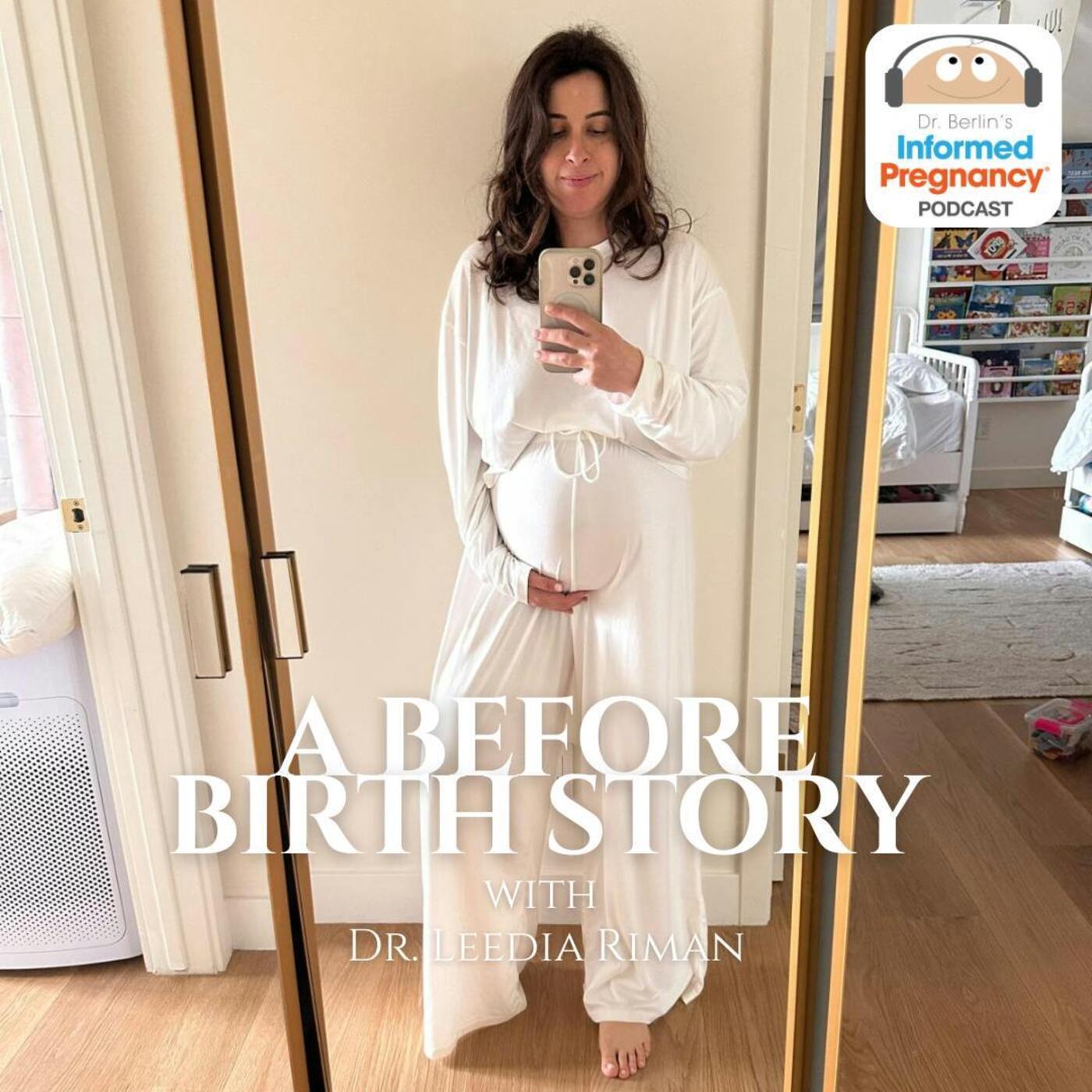
September 5, 2024 · 45 minutes · Episode 423
About this episode
Dr. Leedia Riman, a native of Lebanon and a holistic dentist practicing in Beverly Hills, joins the podcast to talk about her upbringing experiencing the Lebanese Civil War and the Gulf War, a traumatic first birth, postpartum depression, and her plans for her upcoming third child.
Connect with the guest: @drleedia and rdentalgroup.com
Key quotes
“For sure. I think when you go through all that, you have to be happy. Because when you go through near death experiences, like when you're alive, God, it feels good to be alive and not dead.”
“I look back and I'm like, of course it was normal. I had zero preparation. I had zero support. I had zero proper meal.”
“We're not meant to do this alone. We're not meant to birth alone. We're not meant to raise our kids alone. Village, village, village.”
“You have to choose to be happy. It is a choice.”
“He's like our little angel. He brought his brother and then left me.”
Related episodes
- Ep. 424 Leedia Riman: After Birth
- Ep. 414 Aly Michalka: After Birth
- Ep. 442 Jessica Zadeh: Before Birth
- Ep. 426 Mia Rigden: After Birth
Transcript
AI-generated transcript with speaker labels — may contain errors, especially names and medical terms. Dr. Elliot Berlin, DC appears in blue; Leedia Riman in orange.
Dr. Elliot Berlin, DC [0:12] Welcome to the Informed Pregnancy and Parenting Podcast. I'm your host, Pregnancy Focus Chiropractor Dr. Elliott Berlin. My guest today hails from the Shuf Mountains of Lebanon, a land of ancient cedar trees and rich history. She's experienced the Lebanese Civil War and the Gulf War, making her journey to us as a holistic dentist in Beverly Hills all the more remarkable. But today, we're here to delve into her most personal stories of birth and motherhood. From traumatic first experiences with hyperemesis, gravidarum, and postpartum depression to her awakening during her second birth, and her plans for an empowered upcoming birth, Dr. Lydia Ryman, welcome to the podcast.
Leedia Riman [1:15] Thank you, Dr. Berlin. Happy to be here.
Dr. Elliot Berlin, DC [1:17] I say this all the time, there's so much to pack into a short period of time. You are by far the greatest example. I want to know everything about your upbringing. You're such a happy, upbeat, amazing energy person to be around, but you've been through some very, very difficult, traumatic things. And that's even before you had your first pregnancy. Let's delve a little bit into your upbringing before we get into modern day. Where are you from? What was it like growing up?
Leedia Riman [1:42] For sure. I think when you go through all that, you have to be happy. Because when you go through near death experiences, like when you're alive, God, it feels good to be alive and not dead. And I guess not facing death. And not facing death. So I'm originally from Lebanon, the mountains of Lebanon. Shuf. If anybody knows the Lebanese flag, it has a cedar tree. And I think Solomon actually built his aqueducts from the Shuf from the cedar trees in my village many, many years ago. I'm no historian, but my dad tells me these stories. I remember it like it was yesterday. But yeah, I was born in L.A. at the USC Medical Center, and my parents moved back to Saudi at the time.
[2:23] And I was with my grandparents until the age of about six. And I'd be going back and forth to Saudi, but they were establishing themselves and the kids were too much. So they left us with our grandparents.
Dr. Elliot Berlin, DC [2:33] Oh, wow. So you're in Lebanon with your grandparents and your parents are in Saudi Arabia establishing themselves.
Leedia Riman [2:40] Yes. Roger that. OK, so I was in Lebanon with my grandparents. And my first memory was with my older brother and my grandmother and my aunt. There was a piece of a missile that lands into our kitchen, and it almost hit my brother and my grandma was holding me. I was two and a half. Every time I tell the story, I see it right in front of me. My grandma's screaming. She has the responsibility of my brother and I in Lebanon. And there are missiles falling into our home. So they were making corned beef sandwiches because we could only eat canned foods at the time. That's all we had access for really during the war with a lot of lemon. I'm Lebanese. We eat a lot of lemon.
[3:21] So that was my first memory. And then a few years after, it's almost like you're Lebanese. But this is an internal war, right? This is a civil war.
Dr. Elliot Berlin, DC [3:30] Yeah, this is an internal civil war. Yes. Yeah.
Leedia Riman [3:33] OK. And the civilians are just caught in the crossfire.
Dr. Elliot Berlin, DC [3:36] Yeah, it's very shameful. It's horrible. I mean, it must be so scary. How old were you?
Leedia Riman [3:41] Two and a half. And that's my first memory.
Dr. Elliot Berlin, DC [3:44] I remember that you can still remember. Yeah, yeah, yeah.
Leedia Riman [3:48] All I remember, I think, is the corned beef.
Dr. Elliot Berlin, DC [3:51] I'll talk back to you. Did you have corned beef when you were younger?
Leedia Riman [3:55] I mean, I have corned beef every day. Yeah. You still have corned beef. That's my thing, yeah. Every time I see corned beef, I remember war. So I don't like to look at it. But a few years later, another incident. My grandfather was very active with one. It's within the same community. But the Democrats and the Republicans, it's two parties. He was very active with one party. The ruler of that party visited our home. The other party found out. And I was dancing in our garage. And eight men come into the garage with huge guns. And they wanted to kill my grandfather. In the process, they were stepping all over me. And then my cousin picked me up from that whole ordeal
[4:45] and then took me to my aunt's house. And I remember waiting at my aunt's house on the balcony and just waiting for all these men to leave. And I was so sore. My body hurt. I was five years old. And all these men were just stepping all over me. No broken bones. I was fine. God was with me. I had a lot of anger on me.
Dr. Elliot Berlin, DC [5:05] How was your grandpa?
Leedia Riman [5:06] There were a few shots. One person was hurt. But my grandpa survived.
Dr. Elliot Berlin, DC [5:11] Wow.
Leedia Riman [5:12] This was five years old. Yeah. And then we went to Saudi Arabia. I finally stabilized in Saudi. And it was towards the end of the Gulf War in the early 90s.
Dr. Elliot Berlin, DC [5:23] How old were you then?
Leedia Riman [5:24] I was seven-ish. And then I remember my dad coming home. We had just moved to we grew up on an American compound out there. It was wonderful. I loved it. It was great. This was the most traumatic experience out there. But my dad walks in with five gas masks for all of us because it was during Operation Desert Storm. And my pregnancy brain is on a crack, you guys. So we're not remembering everything. Oh yeah. I didn't even say that in the intro, but you're like about to pop
Dr. Elliot Berlin, DC [5:52] with your third kid.
Leedia Riman [5:53] I'm 39 weeks pregnant right now. And I'm feeling like little contractions, but they're not contractions.
Dr. Elliot Berlin, DC [5:58] That's how I feel.
Leedia Riman [6:01] So then we literally had to put our gas masks on to evacuate Riyadh. And we had to drive seven hours to catch the last plane out of Saudi in Jeddah to go back to Lebanon. And my dad stayed because he was working for an American hospital at the time. And they needed all the employees to stay. So yeah, that's like, in a nutshell, there's a lot more details, but I just wanted to-
Dr. Elliot Berlin, DC [6:24] Yeah, like I said, this could be a three-part docu-series and not even scratch the surface. But thank you for sharing that. It also just makes me so much more appreciate. You know, I grew up and my parents were home. I mean, they were working with their home and nobody trampled over me. And I wasn't in a war zone. And you know, all the things that, you know, I get mad when someone cuts me up in traffic. And I'm just like, yeah, maybe I have it pretty okay, you know? Yeah. And I'm also mad that they ruined corned beef for you.
Leedia Riman [6:54] They ruined it.
Dr. Elliot Berlin, DC [6:55] Did you ever have zwan?
Leedia Riman [6:57] No, what is that?
Dr. Elliot Berlin, DC [6:58] Okay, it's also canned meat meal, very processed meat.
Leedia Riman [7:03] They also ruined that for me.
Dr. Elliot Berlin, DC [7:04] Oh, you know what? They ruined zwan and canned corned beef. But the way I make corned beef, I might win you back. Okay. It's not canned. It's freshly prepared and steamed and, oh, and my wife's cookbook, I'll get you some.
Leedia Riman [7:16] Okay. We'll see.
Dr. Elliot Berlin, DC [7:17] Maybe we'll, yeah, we'll do some corned beef therapy.
Leedia Riman [7:21] It's healing. If I love corned beef, it's like healing. You know, I look back and it's like, I'm just so grateful I survived and my brother survived. And a lot of people ask me like, why are you so close with your brothers? I'm very close with both of my brothers, my older brother I work with every single day. And I'm like, we've literally been through war together. Like it's when you see that and touch that, like stupid stuff that people fight over don't really get to us.
Dr. Elliot Berlin, DC [7:46] Yeah. And I think that's what I'm feeling. You know, gosh, I'm glad you made it as well. And now you're in Los Angeles.
Leedia Riman [7:52] I'm here. I'm in Beverly Hills.
Dr. Elliot Berlin, DC [7:53] Beverly Hills. How did that come about?
Leedia Riman [7:56] So before my dad went to Saudi, he got his green card here. So he went to Cal Poly Pomona. He came to the States for I think 50 to a hundred dollars and he went to school, worked really hard.
Dr. Elliot Berlin, DC [8:08] He came with $55?
Leedia Riman [8:10] Yeah, to the States. That's not even a pickle today.
Dr. Elliot Berlin, DC [8:13] Tell me about it. It's not even like a water.
Leedia Riman [8:16] Yeah, box of noodles.
Dr. Elliot Berlin, DC [8:18] Clean water.
Leedia Riman [8:19] Now you're asking for a lot. I know, right? But yeah, he came, he did his degree and then he worked for a wonderful company. I think it was Sunkist at the time and his boss loved him. He was a great hard worker, like every immigrant, like many immigrants when they come here. And then he got his green card. And once he got his green card, he was able to get a great job in Saudi that paid him very well.
Dr. Elliot Berlin, DC [8:41] How'd you get back here?
Leedia Riman [8:42] So back here to Beverly Hills, we moved back to LA from Saudi. So I grew up in Saudi till I was 16 and then we moved back to LA. So I finished my last two years of high school here, UC Davis for undergrad, dental school, UCLA, residency. And then I got hired at Aramco, it was the youngest dentist ever hired. It's the biggest oil company in the world in Saudi.
Dr. Elliot Berlin, DC [9:03] Oh wow.
Leedia Riman [9:04] So I was a personal dentist just for the employees for Aramco. Mostly for the expats, like the Americans, people from London, Europe. And then because I spoke Arabic and English and I'm American trained, I saw a lot of the women. So two and a half years after it was a great gig, loved it, traveled the world. It was like paid off student loans and credit cards. And it was just so wonderful. You know, like I became like all that hard work from dental school and all those hazing days of like 14 exams a week, et cetera, kind of started paying off. But I felt like I was plateauing. I didn't feel inspired out there. I loved the travel. I loved the money, but that's not what drives me.
[9:43] So then I resigned and everybody thought I was crazy. My mom didn't talk to me for six months and I came back to LA.
Dr. Elliot Berlin, DC [9:50] Well, now you have this very cool practice of holistic dentistry.
Leedia Riman [9:55] Yes, yes.
Dr. Elliot Berlin, DC [9:56] And I'm very curious to learn everything I can about what that is and what you do, but we don't have any time for it because we're gonna jump into these first stories. This is a before and after episode. So it's before and after your third birth. And when you come back on the after episode, I'm gonna ask you everything on all the details.
Leedia Riman [10:13] Love it, yeah.
Dr. Elliot Berlin, DC [10:14] For this moment, let's take a little break. When we come back, we'll find out about your previous birth experiences and then what you have in store for tomorrow or whenever it is that you go into labor. We'll be right back.

Dr. Elliot Berlin, DC [10:36] Welcome back. We're talking to Dr. Lydia Ryman. She's by the way four centimeters and I'm not even kidding about that. And the way she's rocking back and forth right now makes me think we better hurry and get the story down before the next story happens while we're telling.
Leedia Riman [10:51] All right, Doc. I'm gonna go into like full labor right now and just start.
Dr. Elliot Berlin, DC [10:55] That'll be the best podcast ever. Okay, so first birth, how was pregnancy for you? The different trimesters of pregnancy. You know, we briefly spoke about like war and all that.
Leedia Riman [11:07] Nothing compared to my first pregnancy.
Dr. Elliot Berlin, DC [11:09] That's a big statement.
Leedia Riman [11:11] And it's a very true statement. Like it's all the war and the trauma and like we literally just scratched the surface with what I just shared, but being pregnant and delivering my first daughter challenged me and impacted me mentally in more ways than any of the wars that I experienced. It was very, very traumatic. I just was very ill-prepared. I didn't know. I had never changed a diaper. My body had never experienced these hormonal. I just didn't have a lot of wisdom around me. And guidance, like I have a doula this time around. What a difference.
Dr. Elliot Berlin, DC [11:51] This is your third.
Leedia Riman [11:52] This is my third, finally. Fool me once, shame on me.
Dr. Elliot Berlin, DC [11:56] Fool you twice, shame on you again.
Leedia Riman [11:58] Shame on me again. I finally woke up. But it was very traumatic because I think emotionally I wasn't prepped for birth. I wasn't prepped for being pregnant. She's a miracle baby. My husband and I had just gotten married. So we're still getting to know each other.
Dr. Elliot Berlin, DC [12:14] My wife and I have been married for 27 years and we are still getting to know each other.
Leedia Riman [12:19] Exactly. But I get it. Yeah, like we didn't live together before we got married. I think that's when you really start getting to know someone like my brother's best friend, one of his best friends.
Dr. Elliot Berlin, DC [12:29] Oh, wow. Yeah, you don't know the toothbrush habits or anything like that.
Leedia Riman [12:32] Exactly, he didn't floss very well. What? He was using Listerine, like, oh my God.
Dr. Elliot Berlin, DC [12:38] Oh my God, that started out as a floor cleaner. Did you know that? Dr. Joseph Lister, he did the germ theory and he's the one who made us realize that people were getting sick in hospitals because doctors weren't washing their hands and transmitting germ from patient to patient. Okay. Anyway, Listerine is originally a hospital antiseptic
Leedia Riman [12:56] and floor cleaner.
Dr. Elliot Berlin, DC [12:58] And then he was rinsing his mouth with that. Well, it makes me feel better because my kids spill so much of that crap on the floor. I'm like, okay, at least. At least you're cleaning the floor. I don't know if the floor isn't green at the time. Anyway, back to you. Okay, you're getting to know your husband and then boom, you get pregnant.
Leedia Riman [13:15] Get pregnant. And I didn't know I was pregnant at the time. I remember telling him this. I was like, I feel like I am possessed by a devil. I don't know myself. Like I said those words exactly. I wasn't even like joking. This is literally just like a few months after you get married, move in. It was a month after I-
Dr. Elliot Berlin, DC [13:30] Holy moly.
Leedia Riman [13:31] Yeah, yeah, yeah. It's the little honeymoon baby, that little fire. I mean, I wouldn't have any other day. I wouldn't have it any other way, but man, I was pregnant. And then it was the first time in my life where I didn't feel independent. I'm very athletic. I was running half marathon. Like I get so high on day-to-day life. Like I'm just so grateful to be alive. And then now I feel like I have a huge elephant on me and this is my first trimester. My best friend, she's like, can you take a pregnancy test? And I'm like, Tammy. Tammy's my best friend from college. I'm like, there's no way I'm pregnant. She's like, Lydia, can you just take a pregnancy test?
[14:05] So lo and behold, is that what they say? I was pregnant. And then the vomiting started. And that was the hardest part where I could not breathe anything or eat anything. So I was vomiting first trimester 14 times a day. And as it proceeded, it was like 10 times a day and then seven times a day up until like seven and a half to eight months, I stopped the vomiting.
Dr. Elliot Berlin, DC [14:31] Geez. I mean, that clearly seems like hyperemesis. Did you get the diagnosis?
Leedia Riman [14:36] I didn't get a formal diagnosis back then. Like my doctor was like, just try to hydrate as much as possible. She's a wonderful woman, but in retrospect, I didn't feel very well guided.
Dr. Elliot Berlin, DC [14:48] I feel like in this moment, it's important for me to point out the film, Sick, the Battle Against Hyperemesis, and it's currently streaming on Informed Pregnancy Plus. There are other places you can find it as well. But it's really important for everyone to watch things like that movie, Sick, because the more people that know about it, then you could be like, Tammy, I'm throwing up 14 times a day. And she'll be like, wait, I think it might be hyperemesis. And then you get the diagnosis sooner and you start treating it sooner. And there are interventions. There's no way to go away completely at this time, but there are interventions that make it a lot more manageable.
[15:21] And okay, so you get married a month into it, you get the honeymoon baby, and then you get hyperemesis all the way through seven and a half months in your pregnancy. How did you put on any weight? You must have thought so depleted. And are you working at that time?
Leedia Riman [15:37] So I was such a great question because I was 114 pounds at my wedding.
Dr. Elliot Berlin, DC [15:43] That was my birth weight. Back to you.
Leedia Riman [15:46] I lost 12 pounds during my first trimester.
Dr. Elliot Berlin, DC [15:48] That's a huge sign of hyperemesis.
Leedia Riman [15:50] It was very, very, very gnarly. So I looked anorexic. I looked very, very, very sick, like extremely sick. And then during my second trimester, I started gaining a little bit of weight because I could eat a little more, but I was throwing up more. So I would like binge eat. So I can kind of make up for the lack of nutrients. And at that time, at the beginning, I was working in the sense where I just go to the office. And when we first opened our office, like we couldn't afford to have all the staff that we needed. So I was like the front desk. I was making appointments and funny story, actually I had to do a filling on one of my husband's friends
[16:27] and I vomited while I was seeing him. Mask, thank God Rashad, my brother was there. So I get up, I go to the bathroom and I literally go straight home. But I didn't continue the filling, my brother did. So that's when I stopped working like completely. Like I was just pushing, like I'm a go-getter. You know, this was very hard for me. Like something was like making me slow down, but yeah, it didn't work very much after that. Had a few ER visits where I needed, you know, IVs, but got through it and had the baby. But there was a lot of Tosin given to me. I didn't know what Tosin was. I was very ill-informed and I take responsibility for that. But that's why I love what you're doing, Dr. Berland.
[17:09] You're spreading so much awareness.
Dr. Elliot Berlin, DC [17:11] Thank you. I feel one more thing I should add is the Per Foundation, HDR, which is a hyperemesis foundation. It's started by a bunch of people who experienced hyperemesis. You know, some of them early on, we really had no idea what it was. They would always assume that it was some sort of just in-your-head thing. You know, just, oh, you're just too anxious. You're too, whatever. But now we know that through some of the research, we know that it's hormone-driven and the placenta makes hormones that make you overly satiate and you can't keep anything down. And there's so much support there. Oh, check out the Her Foundation, hypermesis.org or on social media, Her Foundation.
[17:49] Okay, so you have this terrible hyperemesis. You not expecting to be pregnant. By the way, did you do something to make yourself not be pregnant and it didn't work?
Leedia Riman [17:58] No, but the time of conception was during a time where I definitely knew or I didn't definitely know, obviously. I wasn't supposed to be ovulating.
Dr. Elliot Berlin, DC [18:09] Oh, okay.
Leedia Riman [18:09] So the universe wanted this baby.
Dr. Elliot Berlin, DC [18:12] Yes. And you know, one of the many millions of timing method babies. Then you have this very rough pregnancy. What did you have in mind? I know you said you felt underprepared, undereducated. What did you think birth was going to be like?
Leedia Riman [18:25] I had no idea. Just go into labor, go to the hospital and whatever?
Dr. Elliot Berlin, DC [18:28] You go, you push, you have a kid and you come home. Okay, that's fair. That makes sense. No, I mean, it does, right? Like the hospital, like you scream your butt off, like you clench the crap out of your teeth. That's quite good for the dentist.
Leedia Riman [18:43] Yeah.
Dr. Elliot Berlin, DC [18:45] You should give out cards while you're there.
Leedia Riman [18:47] I got a very bad tooth infection, by the way, during that pregnancy and that's where I came up with the thing that's been incredible for our office and I've been helping a lot of women's dental health, the whole concept of women's dental health and prenatal dental care. And so- I cannot wait for the next episode for so many reasons.
Dr. Elliot Berlin, DC [19:03] Huge silver lining.
Leedia Riman [19:05] Yeah. But better than a silver filling.
Dr. Elliot Berlin, DC [19:08] Much better than a silver lining. Right. Okay, so you go there and that's not what happens. You're on pitot since you're getting induced or augmented in your labor.
Leedia Riman [19:16] So my water breaks and I go to the hospital right away. I remember that day so clearly and they admit me and I was, I think, one centimeter dilated at the time. I think about eight people do cervical checks on me, like residents come in, a midwife, I believe, a few doctors and nurses.
Dr. Elliot Berlin, DC [19:37] Wow.
Leedia Riman [19:38] In a matter of 12 hours.
Dr. Elliot Berlin, DC [19:40] Wow.
Leedia Riman [19:41] So that put my body and they're like, oh, do you mind if the residents come and take a look? And I'm like, I love residents. I was a resident once.
Dr. Elliot Berlin, DC [19:50] Oh, so you said yes.
Leedia Riman [19:51] And I said, yes, very ignorantly and stupidly. And seemingly oftenly. So I'm like, okay, sure. I want residents to learn, but they learned on my expense.
Dr. Elliot Berlin, DC [20:02] Well, it's also good, everybody, the staff doctors, the nurses, the residents, the cafeteria lady, I like it. Yeah, yeah, yeah.
Leedia Riman [20:11] Okay.
Dr. Elliot Berlin, DC [20:12] Doing cervical checks.
Leedia Riman [20:13] Yeah. So after 19 hours of labor and I hadn't gotten epidural by them and then I wasn't prepped for an unmedicated birth, so I wanted, I wanna feel my baby and I was like being like a heroine in my head and I wanna have this like, I didn't want an epidural. And then after 19 hours, I'm only three centimeters dilated. So my body went into fight or flight, fear, the adrenaline. I had like negative oxytocin in my body. I didn't even know about like the importance of oxytocin back then. So then I was about to pass out. I'm like, I need the epidural. Like that's it. Anesthesiologist comes in and my husband who's six, two is like helping hold me. And we have the sweetest nurse
[20:58] and a very small Filipino lady. My husband sees the epidural needle. Dr. Berlin, I'm not even exaggerating. He's about to faint and throw up at the same time.
Dr. Elliot Berlin, DC [21:08] Oh no.
Leedia Riman [21:09] Like, Mr., Mr., no, please don't. I have to hold your wife. I can't hold both of you.
Dr. Elliot Berlin, DC [21:14] Oh no. That's why they kick them out usually.
Leedia Riman [21:18] So he had to go lay down. And I'm like, you're laying down right now. Getting the epidural.
Dr. Elliot Berlin, DC [21:26] Man, good thing he didn't pass out because six, two is a hard fall.
Leedia Riman [21:30] He's a big guy. You'll meet him one day. He's a big guy. And so he went, he laid down, he relaxed for a little bit. Then he came back. But that was very traumatic for him, him seeing like a needle go through my back. Yeah, it's a big needle. It's a very big needle. And then I was so keen on having a natural birth. Then I pushed for three and a half hours. And they were like, C-section. I'm like, no, I feel like I can do it. And that was very hard, but I did it. And I'm very proud of myself because I really wanted that and I did it. Yeah, like that was a birth. That was a birth.
Dr. Elliot Berlin, DC [22:05] Wow. What was the postpartum like?
Leedia Riman [22:07] That was hard. That was hard because I didn't have any help. I didn't know what I needed and breastfeeding was very hard. In retrospect, she was definitely tongue-tied and I didn't know about that back then. So it was very painful. Like my nipples were sore and bleeding and it was awful. I didn't even know what a lactation consultant was. I was very, very ignorant, like very ignorant. For someone who's traveled the world and seen a lot in their life, I was very ignorant in the birth world.
Dr. Elliot Berlin, DC [22:37] Yeah, we don't really have much exposure.
Leedia Riman [22:40] No, no.
Dr. Elliot Berlin, DC [22:41] So like the first time outside of TV, like maybe, which is not exactly based on reality, the first time you get exposed is when you're there.
Leedia Riman [22:49] 100%. And then I started having all these unrealistic expectations of my husband. So that put also a straight relationship at the beginning of our relationship.
Dr. Elliot Berlin, DC [22:57] You think? Hard, hard, hard, hard. So you get married. I hate to use your episode for this, but I'm gonna plug another informed pregnancy plus program, which is called the Afterbirth Plan, created and presented by my lovely wife, Dr. Alyssa Berland-Sidney and it's a bunch of videos that you ideally watch with your partner during pregnancy to prepare yourselves and your relationship for what happens on the other side. It's called the Afterbirth Plan. A subtitle could be how to still like your partner after you have a baby together. Sounds like you guys might've benefited from that.
Leedia Riman [23:30] We would have definitely benefited from that, 100%. Like, bless him, he didn't know. Like, I didn't know. Like, I didn't know. So how can I ask of him what I need? But I expected him to know. It was like catch-22.
Dr. Elliot Berlin, DC [23:43] But extremely common, that's the landscape. It's like, how could you know? And in that zone with your angry, bleeding nipples, crying kid, lack of sleep, poor nutrition, I'm guessing, that's a hard time to learn.
Leedia Riman [23:58] Very hard time to learn.
Dr. Elliot Berlin, DC [24:00] You're just giving all your energy down now instead of to each other. Okay, so challenging postpartum for you.
Leedia Riman [24:05] Yes, yeah. Never been depressed in my life.
Dr. Elliot Berlin, DC [24:08] Oh, you got depression.
Leedia Riman [24:09] I was very postpartum depression and then anxiety. I'd literally see my child dead in front of me on the street. I'd be walking down the stroller. I never knew, my friend in dental school, she'd be like, I have so much anxiety from the tests that are coming up. And I was like, what's anxiety? I was touching her, but I'm like, what's anxiety? Why do you feel anxiety? Just go do the tests, whatever, big deal. If you fail, you fail, not a big deal. But it was really, really hard.
Dr. Elliot Berlin, DC [24:35] I think until you experience anxiety, it's really hard to picture what it's like. And you're just like, okay, so come down. Yeah, like come down. Don't be anxious, don't be worried. Everything's gonna be okay. That's logic, anxiety's not logical.
Leedia Riman [24:46] Yeah, very illogical. The flashes I'd have in front of me were very illogical. I haven't spoken very much about this, but I feel like it's so important that women speak about this because it happens a lot more than we think. And the more we talk about it, it's like someone's going through this and they're listening to this, like, I'm not alone. There is things I can do for this. I'm not alone. It's happened before. It can be like, in my case, I look back and I'm like, of course it was normal. I had zero preparation. I had zero support. I had zero proper meal. Like I was-
Dr. Elliot Berlin, DC [25:20] And such major fluctuation of hormone and no community. Like, you know, your upbringing was kind of interesting, but probably go back a generation and your parents grew up surrounded by community and they had a lot of village support. We don't have any of that anymore. Most of us anyway today. And so yeah, I mean, how could you think it's normal when you're having flashes of your baby being dead? It's just terrifying. Okay, let's take a little break because then you had another kid and now you're about to have, like literally about to have another kid. I want to know everything and we'll be right back. Welcome back. Okay, so then you have another kid
[26:03] and was this another like, oh no, my timing is off or planned?
Leedia Riman [26:07] Timing was off again.
Dr. Elliot Berlin, DC [26:09] Okay, congrats.
Leedia Riman [26:10] Thanks. Another very strong-willed kid, like she chose me. Like now, you know, I'm like raising them. I'm like, that's why you chose me and that's why you came to me. Like they were going to come to me no matter what these two girls like. It becomes clear later. I needed them and they needed me, but I needed them more than they needed me. So Joy, my second daughter, and I named her Joy right after I gave birth to her because I felt tremendous joy.
Dr. Elliot Berlin, DC [26:36] Oh, that's beautiful.
Leedia Riman [26:38] So there was like no ifs and buts what her name was going to be. Like my husband and I fought a lot about our daughter's first name. Second one, it's like you have no choice. It's Joy.
Dr. Elliot Berlin, DC [26:46] Does that mean you named your first one Crap?
Leedia Riman [26:48] No.
Dr. Elliot Berlin, DC [26:49] Because you felt like, oh.
Leedia Riman [26:51] Julia.
Dr. Elliot Berlin, DC [26:52] Oh, Julia, right. No, because you said you felt like Crap.
Leedia Riman [26:54] Oh, yeah. Oh, yeah. This is my kid's crap and joy. Yeah, I'm a bit slow to get some of these jokes. But yeah, so my pregnancy was a lot better with Joy. I still was coming from a place of depletion, but not as much. I was able to ask for them. And someone that's super independent, like I had been, it was very hard for me to ask for help. There was an ego aspect during my first pregnancy and postpartum. Why wouldn't I be able to do it? Of course, I've always been able to do everything in my life. I'm good, I'm fine. We're not meant to do this alone. We're not meant to birth alone. We're not meant to raise our kids alone. Village, village, village.
[27:31] Village, village, village. So with Joy, I had a little bit more of a village that I had curated. I had pretty bad nausea, but I was being very proactive.
Dr. Elliot Berlin, DC [27:42] That sounds delightful compared to what you have the first time.
Leedia Riman [27:45] It was much more delightful than I had the first time.
Dr. Elliot Berlin, DC [27:48] Yes, yes, yes. So would you say not really high-premises? Did you lose weight again?
Leedia Riman [27:53] I lost weight the first trimester, but not 12 pounds.
Dr. Elliot Berlin, DC [27:56] Okay.
Leedia Riman [27:57] Yeah, and I wasn't 114 pounds. I was like 125 pounds. So it wasn't as… Oh, no world. But yeah, and I took also better care of myself. I took more time off. I slowed down. Things like we can't be operating at the same speed, pregnant versus not pregnant. That was also very hard for me to learn with the first pregnancy.
Dr. Elliot Berlin, DC [28:20] And also pregnant with a toddler, which is very draining. Everything you described from your first pregnancy, birth and postpartum experience, hard to say you could have rebounded very well and here you are doing it again and less time to take care of yourself because you have a toddler.
Leedia Riman [28:35] Exactly, exactly. But what I did is that I needed to shift my career projection and my work schedule. And I needed to ask for more help from my brother, for example, and say no to more patients because it was very hard for me to say no to patients before. It's like I'm here. That's part of my mission in the world to help people.
Dr. Elliot Berlin, DC [28:54] And also your drive. You're building a business.
Leedia Riman [28:56] Exactly.
Dr. Elliot Berlin, DC [28:57] Every instinct from that part of your brain is like, go do more.
Leedia Riman [29:01] Exactly, exactly.
Dr. Elliot Berlin, DC [29:03] And then at home, your instinct is like, come, stay, more.
Leedia Riman [29:09] Exactly. But that pregnancy was overall much better. It was still hard, but nothing like the first one. The birth was also better. The labor wasn't 19 hours or three hours of pushing, but I didn't feel like I got informed consent for a lot of things that were done.
Dr. Elliot Berlin, DC [29:28] Oh no, what kind of things?
Leedia Riman [29:30] Like cervical sweep. It was just done without even-
Dr. Elliot Berlin, DC [29:33] During the pregnancy before you went into labor?
Leedia Riman [29:35] Before I went into labor. So Dr. Avi said I'm not gonna say his name. Wonderful guy. Like I felt-
Dr. Elliot Berlin, DC [29:41] What sounds like rhymes with. No, I'm just kidding. You know, I actually had kind of a weird social media exchange with an OB about this, and I still don't really understand it today. I was lamenting a young girl who came into the office and she was all upset. And she was young, healthy, 38 weeks, and her doctor gave her a 39 week deadline. And this was years ago before that was cool. And she said, you know, he did this pelvic exam that was much more aggressive than usual. And now she's got some blood. And I'm like, oh man, did he talk to you about doing a membrane sweep? And she's like, no, what's that? And I just was so frustrated for her. And it turned out he was, you know, this is cliche,
[30:22] but he was going out of town and wanted to get the birth done before he left. And, you know, but I have doctors that some of my patients see that are like that, but they'll be straight up about it. Hey, I'm leaving town. If you want me to be your doctor, we gotta figure out a way to get this baby out sooner. And they could say yes or no. But in this case, I posted it online and the doctor replied that I was kind of just frustrated for that that happened without consent. And the doctor replied to me, you know, I don't know if you know this because you didn't go to medical school, but there's not really a difference between a pelvic exam and a cervical sweep.
[30:52] They're not distinct procedures. I'm like, I don't know if you know this, but if you're doing something different with a different purpose, even if it's in the same neighborhood and doesn't have a different billing code. Yeah. That's something that you should explain. This is what I'm doing and that's why I do it. And look, I've screwed up on consent before too. Everybody's human, but I do think that sometimes with that one in particular, that some of the doctors at least have a mindset that they're not doing anything different really. And why ask? I don't know, it just doesn't occur. Anyway, I can understand 100% your frustration with that. So you had a membrane sweep.
[31:27] Why though? Why did they do it?
Leedia Riman [31:29] So he was like, it's your second baby. If you go home right now, you're gonna have a parking lot baby maybe. So just stay here and let's have your husband bring your bag. And he's a really reputable kind guy. And I wasn't even in labor. I was a few centimeters dilated. He does a cervical sweep. I didn't even know what it was. And then he's like, we need to admit you.
Dr. Elliot Berlin, DC [31:56] Right there in the office with the sweep?
Leedia Riman [31:58] Yeah, yeah. He's like, we'll admit you. And this was at UCLA. My first birth was at Cedars. And then I go, I got admitted and they hook me up and all that. And I hear him say to one of the nurses, he's like, I need to be out of here before sunrise. So when I heard that I was like, like something's off. And as I'm getting older, my sixth sense is getting stronger and I'm more in tune and more connected, et cetera. But I heard that and I felt so sad. I felt really, really, really sad because I felt like I was 40 weeks and a half. So I passed my due date, but I was still fine. Like I was good. I was walking around, I was good. And I was like, that's why
[32:38] that was a little stronger down there. Because it wasn't a normal check. Like it just wasn't a normal check. Again, I didn't know. But yeah, I pushed for 10 minutes.
Dr. Elliot Berlin, DC [32:48] Oh, that's better. So much better than three and a half hours.
Leedia Riman [32:51] Yeah.
Dr. Elliot Berlin, DC [32:52] Yeah. It's hard. I don't know. I'm not justifying him at all. I'm actually just unjustifying myself. And the idea that sometimes as a doctor, you're doing what makes sense to you and what you feel is in your patient's best interest. And there's almost like an assumption of consent. Like, of course you wanna do this. Why won't you wanna do this? And I think the more you practice, you learn over time. It has no idea what, you can't assume anything. And it has no idea what I think is in your best interest. It's always on me to say, this is what I'm planning to do. This is some of the pros and cons of what we can do. What would you like to do? These are some alternatives.
[33:27] What would you like to do? And I couldn't understand anybody on the receiving end of feeling like something was done that they didn't get that kind of consent and the ability to, by the way, not just consent, it's informed consent or refusal. For you to say, no, I actually don't want that.
Leedia Riman [33:41] I didn't know that was an option back then. I didn't know that was an option. I didn't know that you could repeat, you know, it's like, I trusted the system because I came from the system. I went to a great dental school. I did anatomy class with the medical students. Like I trusted that I believe in medicine. I'm not anti-medicine. I think there's a beautiful time and place for it, but there's a humanitarian aspect, a humanistic aspect that I feel like has just dissipated from people who've been practicing for a very, very long time. And it's like- I think people get burnt out. It's a hard gig here.
Dr. Elliot Berlin, DC [34:13] Yeah, yeah. It's not the heyday of medicine when you're out golfing twice a week. And the way the system works now is very challenging. Everybody seems out to get you. Insurance companies to liability, lawyers to- insurance comes easy, even just in terms of, okay, you have to pay this crazy amount for liability insurance, and we're gonna reimburse you this next nothing amount for procedures that you do. So then you don't wanna take insurance, but then, you know, you cut out and have your clients because they need to go somebody who does take insurance. It's a tough gig. By the end of it, it's just sort of, and that doesn't even take into account
[34:50] regulatory boards and state and local laws and, you know, taxes things and HR and, you know, just to never ending stress on you. You lose sight of it. Nobody goes to medical school to be, you know, a bad person and deliver bad care. But there's so many strains and stresses on you. And OBs, I think even more so when they're running out in the middle of the night, you know, catching babies all the time. It's just, we're all human at the end of the day. Sometimes we either get burnt out or make mistakes. And I'm sorry that you aren't receiving into that. So you're prego again.
Leedia Riman [35:20] Yes.
Dr. Elliot Berlin, DC [35:21] One has to wonder, interesting timing or?
Leedia Riman [35:24] Can I be honest? Of course I'm going to be honest.
Dr. Elliot Berlin, DC [35:26] Please. That's who you are.
Leedia Riman [35:30] All expected pregnancy and it was a twin pregnancy.
Dr. Elliot Berlin, DC [35:33] Oh, yes. It was another. A lot of unexpected here. Yes.
Leedia Riman [35:38] A lot of unexpected. Yeah, we won't get into birth control now, but I don't take birth control, obviously.
Dr. Elliot Berlin, DC [35:45] Okay. From what I gather.
Leedia Riman [35:49] But moving forward, I'm not going to take hormonal birth control, but there are things that you can do. But unexpected pregnancy. So my husband was very happy about this pregnancy. Our relationship is much better than it was after our first pregnancy. We did a lot of work on ourselves and on each other. And it's really magical when you see that happen. And he was very excited. And then I go to the doctor feeling super sick and then they see two sacks. They're like twins.
Dr. Elliot Berlin, DC [36:15] Oh wow.
Leedia Riman [36:16] And I cry for like four days.
Dr. Elliot Berlin, DC [36:18] I can't imagine that shock.
Leedia Riman [36:20] It was very shocking. And then a week later, I feel very sick again. I go to my doctor. I had changed doctors because originally the doctor I went to, she's like, oh, okay. At 38 weeks, we'll schedule a C-section.
Dr. Elliot Berlin, DC [36:32] Because it's twins?
Leedia Riman [36:33] Because it's twins. So now it's my third pregnancy. Fool me once, shame on me. Fool me twice, shame on me. I'm not an idiot anymore. I'm like, why are we scheduling a C-section? So I started reading, I started talking. I already had started reaching out to doulas and midwives. Like I knew I was gonna have a different, this is gonna be a much different birth. Like I'm manifesting something completely different. We'll see what happens, but all in God's hands. But I was like, I don't wanna schedule a C-section. Like just because it's twins. I mean, if I need one, I'm not gonna like fight the process if I need one. But that's like one of the first things she said to me.
[37:09] I'm like, okay. So then I found somebody that specializes or he does a lot of vaginal twin delivery. So he told me when I would need a C-section, but a lot of times he does them without a C-section. So I went to him a week later. I was very sick. Long story short, one had a heartbeat, one didn't. And I was 10 weeks pregnant.
Dr. Elliot Berlin, DC [37:28] Oh, I can't imagine again the shock.
Leedia Riman [37:31] That was very shocking.
Dr. Elliot Berlin, DC [37:33] Yeah.
Leedia Riman [37:34] Painful. Painful and his delivery was extremely painful. Very painful. So he's like, oh, this is why you're feeling so sick. One has a heartbeat, one doesn't. I've had a few of these cases in the past three months. I don't know why they're increasing. Take some Zofran for your nausea and so sorry. And then he walks out. Just a matter of fact. Just a matter of fact. Culturally, I get it. That's the culture. I'm not gonna name the culture he comes from. Yeah, I get it. I've been around the block. I know like every stereotypes does come from truth. I'm like, whoa. And I'm crying and I'm alone because I wasn't expecting this news. And here I am. I'm looking at the ultrasound of my dead baby.
[38:16] Like right in front of me, I'm like, oh my God. And that was a very, very hard day in my life. I will never forget it. Again, like war made all this, like this is nothing compared to.
Dr. Elliot Berlin, DC [38:28] What has surely been out of the listeners like, okay, I get you Dr. B. This girl has been through so much. So much just from childhood. Like even me not seeing my parents for two days. You know, for you living not even with them and you're in a war and they got war and you're like literally in it with the political parties warring in your house over your body. And then, you know, the shock and struggle through your first pregnancy birth and postpartum. And then your surprise second pregnancy and then your surprise third pregnancy. I mean, at this point, I'd only be surprised if you weren't pregnant.
Leedia Riman [39:05] No, we're done. We're done. We have a game plan.
Dr. Elliot Berlin, DC [39:10] And you'll see how that works. And then, you know, finding out that you're having twins and being alone. And then finding out that you've lost a twin and just listened to you. You have such a vibrance for life and an energy that just energizes the people around you. I'm not just inspired Lydia, I am in awe.
Leedia Riman [39:28] Oh, thank you, Dr. Berlin. For me, it's no choice. You have to choose to be happy. It is a choice. And it's so beautiful that I have that choice. Like we live in America. It's not perfect here. But when you've been overseas and seen a lot of the things that go on in other countries and there's pros and cons to all countries, it's such a blessing to have access to great healthcare here. It's not always great, but like now I've curated my doctor. I love my doctor. I'm able to see you, for example. I have Laurie Bregman as my doula. I have a lot of midwives who come to visit me in my office and I look from each one of them. So I have so much access to amazingness.
[40:08] Like how can you forget that? You can't forget that. Because if you do, it's like you're living a complete like lack of gratitude. And I have a healthy baby, thank God. Our prince, you know, he's our little prince that's coming. And I think, you know, I always.
Dr. Elliot Berlin, DC [40:21] Oh, wait, did you already name him or are you gonna see how you feel?
Leedia Riman [40:23] I'm gonna see how I feel.
Dr. Elliot Berlin, DC [40:25] Oh, wow. Tell me, we're almost out of time here. And I mean that in two different ways. We're running out of time for the podcast and you're running out of pregnancy. So, and it's the last one, the big finish. What is your vision? For this pregnancy.
Leedia Riman [40:40] For this birth. One thing I learned during this pregnancy is surrender, trust and surrender. And my faith in God has gotten a lot, lot deeper during this pregnancy. So it was a very spiritual growth for me. I feel very supported by my doula. She prepped my husband and I very well, especially me. I feel like it's gonna be a magical birth. It's gonna allow me to heal my other two births and just experience what, of course, it's all in God's hands and whatever is presented to me, I'm gonna go with and surrender to. But I feel it's gonna be a much more smoother and emotionally I'm a lot better prepped and equipped than I was before at all. Like I'm seeing a naturopath.
[41:28] We tested my neurotransmitters. I'm on support that I need. Wellness, emotional support. I have a night nurse lined up. So it's there, I'm gonna get more sleep. My husband and I have a plan. So we're a lot more informed. So it's gonna be magical. That's what I feel.
Dr. Elliot Berlin, DC [41:46] Yeah, I'm very excited for you.
Leedia Riman [41:48] Thank you.
Dr. Elliot Berlin, DC [41:49] I just wish you everything that you just kind of manifested and the greatest experience. And I think with surrender, kind of no matter how it goes, you can have a great experience. And I want it to go exactly how you want, but more than anything, I want you to just have a great healing experience. Dr. Lydia, we've covered a lot in this hour and there's so much more to cover after you have the baby tonight or so. Let's-
Leedia Riman [42:15] I have a salt water bath right now.
Dr. Elliot Berlin, DC [42:17] Oh, amazing. I mean, I literally see you rocking back and forth like you're in an early pattern there. Whatever it is, I appreciate everything you shared today and that you're gonna come back and share the rest of the story. And at that point, as promised, we will discuss holistic dentistry, pregnancy dentistry, and all the uniquely amazing things that you do in terms of women's dental health. And again, we'll find out what story number three was like, did you have this pregnancy, the nausea, vomiting, sitch? I know you said at the beginning in the first trimester with the twins and then the loss of a twin.
Leedia Riman [42:52] Yeah, after I lost the twin, I was on bed rest for three months.
Dr. Elliot Berlin, DC [42:56] I know people are gonna wonder what happens to the other twin. Like, does it get absorbed into your body into the other twin? Is it still there?
Leedia Riman [43:03] Yeah. It was so early on, obviously, they couldn't give me anything to like miscarry. Like if it was at 30 weeks, they would have needed to take it. Oh yes, yes, but there's nothing to do. There's nothing to do. So yeah, I think it was two boys. So I call him he. He's like our little angel. He brought his brother and then left me. But it gets resorbed. And now when I deliver, it's gonna be part of my placenta. Small, very small.
Dr. Elliot Berlin, DC [43:28] Very, very small. Yeah, I leave this episode feeling enlightened by you and also just soul searching for finding that kind of happiness that you exude. You know, and yeah, being grateful for the things I have rather than focusing on the things that I don't have, didn't have, don't like, didn't like. So thank you. We're gonna mention it next time too, but where can we find out more about you and your practice online?
Leedia Riman [43:52] Dr. Lydia, Dr. Lydia, so D-R, L-E-E-D-I-A.
Dr. Elliot Berlin, DC [43:56] L-E-E-D-I-A?
Leedia Riman [43:58] Dr. Lydia.
Dr. Elliot Berlin, DC [43:59] Dr. Lydia.
Leedia Riman [44:00] D-R Lydia. Dr. D-R Lydia. So yeah, I'm on Instagram. I'm part of it.
Dr. Elliot Berlin, DC [44:06] Yeah, are you on Instagram?
Leedia Riman [44:07] Yeah, I'm on there. That's it though, I stopped there. I couldn't do Snapchat because I'm afraid of ghosts. And I don't know, all the newer ones. X, okay, I don't know what that is, but I'm on Instagram.
Dr. Elliot Berlin, DC [44:20] All right, thanks again, Doc. It's gonna be the greatest energy for an amazing birth and we look forward to seeing you on the other side at home. Thanks for joining through the Informed Pregnancy podcast. If you want some more cool pregnancy and parenting content, visit us online at informedpregnancy.com.
Want more pregnancy + parenting? Start your FREE TRIAL of Informed Pregnancy+ and get access to all our curated pregnancy and parenting content — original series, iconic birth films like The Business of Being Born, prenatal workouts and more.