
Ep. 431 Postpartum with Emily Johnston (Part 3)
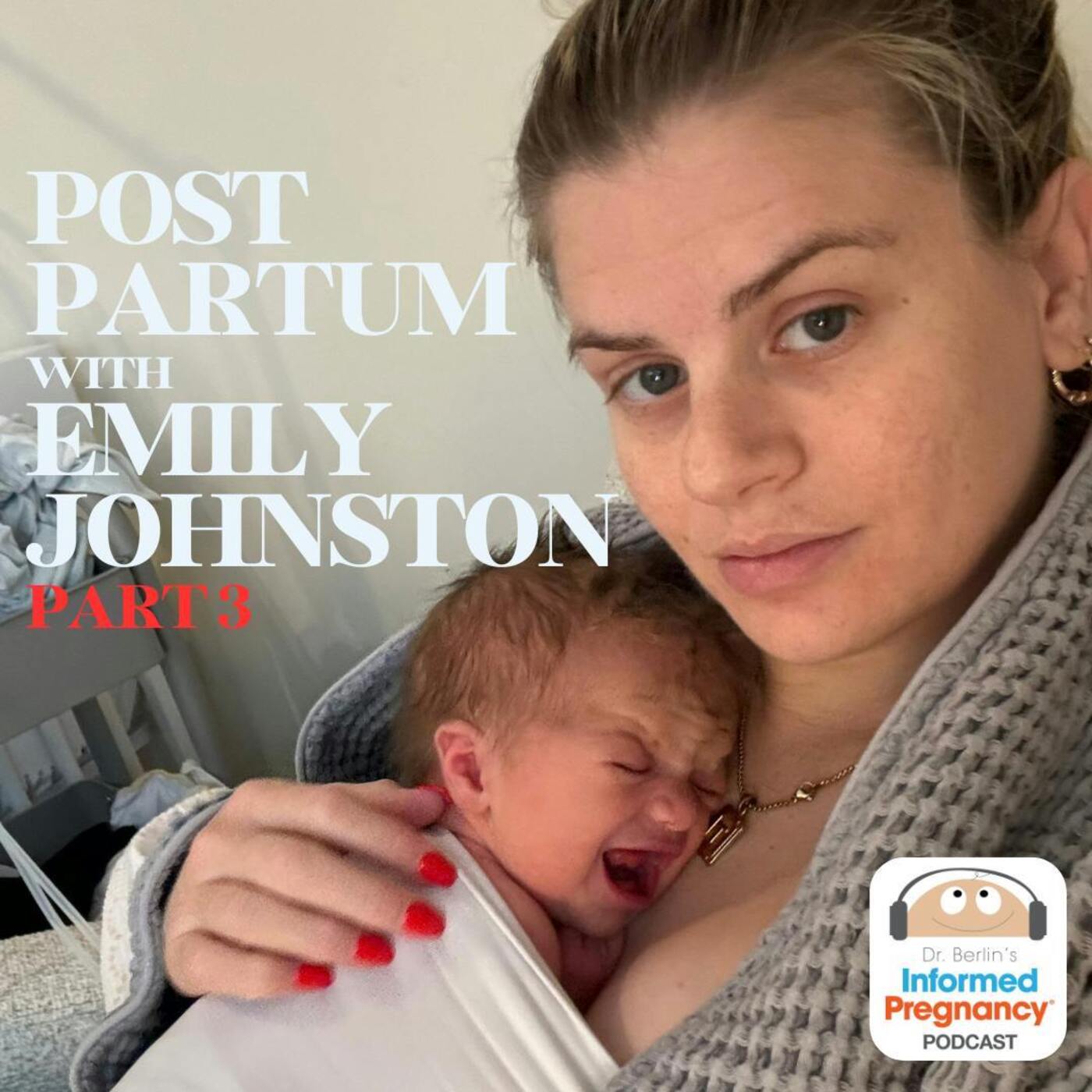
October 31, 2024 · 41 minutes · Episode 431
About this episode
In the last of this three part series, labor and delivery nurse Emily Johnston discusses her experience with the postpartum period. She’s also a birth and postpartum doula and an IBCLC (International Board Certified Lactation Consultant) dh to try.
Connect with Emily: @littleloomrn and littleloomrn.com
Key quotes
“In any other circumstance after going through birth, whether that's vaginal, cesarean, like in any other circumstance, I feel like you take, you know, six weeks off and you recover. But instead, you know, you get kicked to the curb and now you take care of a new human. It's really amazing that we've somehow survived as a species.”
“this is just like how Sophia was born. Like this is her story and is not a reflection of me or my decisions or my abilities.”
“with the situation at hand, it made me feel like perhaps like that experience was like a shared trauma instead of just my trauma. And I don't know something about that just made me feel like it was a shared experience and not mine that I had to carry by myself.”
“But we just survived. I don't know what to say, but that's just the human experience of postpartum, I guess, is you just survive.”
“Parenting has been, I know everybody says this, but it is the single most humbling experience.”
Related episodes
- Ep. 430 Birth with Emily Johnston (Part 2)
- Ep. 429 Pregnancy with Emily Johnston (Part 1)
- Ep. 435 Jackie Amézquita: After Birth
- Ep. 449 Birthwork & Motherhood with Jennifer Campbell
Transcript
AI-generated transcript with speaker labels — may contain errors, especially names and medical terms. Dr. Elliot Berlin, DC appears in blue; Emily Johnston in orange.
Dr. Elliot Berlin, DC [0:12] Welcome back to the Informed Pregnancy and Parenting Podcast. I'm your host, pregnancy-focused chiropractor Dr. Elliott Berlin. Today we're continuing our conversation for a rare third episode in this birth story series with labor and delivery nurse, IBCLC lactation specialist, and new mother, Emily Johnston. If you've been following along, you've heard her compelling fertility and birth stories, and today we'll dive into her postpartum experience, the physical recovery, emotional journey, and everything in between. Emily Johnston, welcome back to the podcast. Thank you for having me for round three. I think this might go on forever. All right. So unfortunately, even though you spend your whole life helping people
[1:24] have good experiences having babies, the universe was not kind to you for fertility, which was a big struggle, for pregnancy, which was a big struggle, and for birth, which as it turns out was a big struggle. Luckily, you're extremely resilient, strong, powerful. But I recommend for listeners, if you haven't listened to the stories, go back and listen to episodes one and two, before the birth and after the birth, because we're going to jump in here to postpartum. And you know, your birth was challenging for you coming out of it. What was the mark that it left physically and emotionally?
Emily Johnston [2:06] Where was the trauma? Yeah. I mean, as you'll probably remember, I had essentially not really slept for about three days of my birth, and I'd had Benadryl and Ambien and all sorts of drugs in my system. And I also hadn't slept. And I really felt like I was not present on earth. I was completely somewhere else. I was exhausted, which I know everybody's exhausted, but I felt like I had to let everything kind of run through my system. So my husband was like MVP in that first week postpartum. I was really kind of a wreck. Like physically, I was in so much pain. And emotionally, I mean, I felt like I, I can't even explain how I felt. I felt so broken, honestly, and I felt like a failure.
[2:45] And I felt like I let my daughter down, like I let myself down. And it was really hard for the first couple of weeks. And so I sought help right away, like right away. Um, we got home from the hospital and we immediately found a therapist who worked through the trauma of the birth. And Tyler like wanted it just as much as I did. He was like, I need to process that. Like, I can't believe that's how my daughter came into the world. Like I was terrible to see my wife that way. And I didn't want to start off parenting kind of carrying this trauma with me. Like I wanted to, to work through it and take control of it. And I think in a lot of ways I didn't feel like I had control in my pregnancy and my
[3:23] delivery. So being really proactive about seeking help was my way of kind of taking control of the situation again. So I found there's this organization called Postpartum Support International PSI. Their website is postpartum.net. It's great. I think it should be on like discharge paperwork everywhere. They have a directory on there of therapists that specialize in postpartum support and birth support and pregnancy. They have a list of psychiatrists and they also have a ton of support groups online that are free every day. And so there's like four or five maternal mental health support groups daily on zoom. Yeah, they have tons of topics and have NICU parents every day. They have when
[4:05] breastfeeding doesn't go as planned. That's a group they have. They have, you know, anxiety, like different sort of things, adoptive parents. They have a dad's group. I had no idea this community existed. A friend of mine told me about it. And so in those first couple of days after birth, I joined a birth trauma support group through postpartum.net. And it was extremely helpful to be around other people who had experienced birth trauma, something that is commonly said in the birth worlds. And I know that it comes with really wonderful intention, but is saying something to the effect of at least you're healthy or healthy mom, healthy baby. That's the goal. That's what matters. And I know that is said with
[4:43] really good heart behind that, but to somebody who's been through a traumatic experience that didn't go as planned, it's extremely dismissive. And I heard that statement or some version of it so much in the first several days after my daughter was born. I also heard, well, at least you didn't go to NICU. At least you didn't have a C-section. And of course, I'm grateful that we are both healthy. I am so grateful for all of those things. But when I would share my story with somebody and that was their response, it just was so dismissive of the trauma that I'd experienced. And it got to the point where Tyler actually had to proactively reach out to people that knew that our daughter had been born
[5:20] and say, like, you can't say something like this, because it was so triggering to us both.
Dr. Elliot Berlin, DC [5:24] Dave Asprey Emily, that's so important what you're saying right now, because it is instinct. I think people don't know what to say and want to be helpful. Like you're saying, it's not coming from a place of bad intention. But I've heard from so many women over the years who've had trauma that I don't want to hear that all that matters is the baby's healthy. And one of them told me, we know that's not true, because if they would have just chopped off my torso and pulled out the baby, nobody would have ever said, all that matters is that the baby's healthy. So it's something you don't really think about and you want to be comforting and you want to
[5:58] point out, well, here's some good things. But that could make you even feel more guilty as if you're not grateful for that, which you are. But you've also suffered some kind of trauma that needs to be healed. I'm really glad you brought that up. I have a friend Danny who's been hit by a car three times, I think twice on a bicycle and once walking, literally hit by a car and each time he comes away, the first one was I think the worst he had like oral surgery and things like that. But you know, generally speaking, he's no broken bones or anything like that. And somebody once said to him, Wow, you're like, so lucky. He's like, I don't feel lucky. You know, like, yeah, like, he's definitely the guy if I ever went jogging,
[6:37] I would want to go with him. So I mean, his perspective, obviously, you were traumatized and needed something else. Do you know what kind of things in that moment would have been
Emily Johnston [6:50] helpful to you? Yeah. You know, going back to what you said about the guilt, you feel guilty, right? And that's how I felt coming out of it. So I had this birth trauma, and everybody was saying that to me. And then I also had the guilt on top of why am I not feeling I shouldn't be feeling this way, because everything is fine now. And I think people that were maybe a little bit more trauma informed some really positive things like, I know this, your birth didn't go as the way you wanted it. And I'm really sorry for that. But I'm also really glad that you guys are both okay. And that was a very nice thing to say. Also saying like, I know you worked really hard for the last nine months to have this birth that you wanted,
[7:29] and it didn't turn out that way. And I'm really sorry for that. Or saying like, I know this decision wasn't easy for you, you know, going to the hospital, getting the epidural, but that really shows strength as a mom, or I'm really glad something to that effect. But acknowledging that it didn't go as planned. And that's like, all I wanted to hear was like that validation. Like I was desperate to hear that. And I was in a really, really low, low place when I went to the birth trauma support group through postpartum.net. And that was the first time where the facilitator said, in this group, your birth wasn't traumatic just because your baby didn't go to NICU, or just because you didn't have a C-section,
[8:09] or just because you guys both survived. Your birth was traumatic because it was traumatic for you. And she's like, the person next to you in the support group may have had your dream birth, but for whatever reason, it was traumatic for them. And that is still equally valid. And I needed to hear that in that moment, because I hadn't really received that from anybody in my life, sadly. And just hearing that was really healing for me. And I finally felt like I was sitting in a place where like my experience had validity and my feelings had validity. And hearing just other people's experience and hearing that they also heard similar things from their friends and people in their life, it's a common trend.
[8:45] Like you said, it's like people don't know what to say, so they say that. But I think it can do more harm than good in that moment, to be honest. I would have rather not heard anything at all than hear some of those statements.
Dr. Elliot Berlin, DC [8:55] Sure. And I'm really grateful that you helped give people a frame of mind on how to sort of rephrase things and put them in the perspective of acknowledgement that this trauma happened, validation. And also at the same time, it's okay to be appreciative of the fact that things didn't go worse or that there are some, you know, you have a healthy baby. And it also sort of reminds me a little bit, we do a lot of fertility work and I sometimes see people struggling with their first baby and sometimes a second or third baby. And to the people who are struggling with their first baby, they don't really get the pain of the people struggling with the second baby because they already have a baby
[9:36] from their perspective, you know, but your particular struggle is your struggle in that moment. It's very painful for people who are trying to have a second baby and can't or having a hard time getting there. So that's good insight. Thank you.
Emily Johnston [9:51] Yeah, of course. Thanks for letting me share it. I think it needs to be said more. I mean, I've been one of those people that has probably said something like that at some point. And so now I know myself that that's not exactly helpful.
Dr. Elliot Berlin, DC [10:02] I've always thought you were a terrible person.
Emily Johnston [10:07] Yeah, until now. And I guess during that time, all the drugs start to wear off. Do you get any sleep or are you able to sleep? I mean, being a parent has been extremely humbling, especially from working in this atmosphere for seven or how many years now. But, you know, from a lactation standpoint, you shouldn't do this, but we got home from the hospital and I was like so beside myself emotionally and physically that I slept eight hours that night. I needed to, I mean, I woke up and I pumped a little bit, but I had some donor milk that I got. And so my husband was feeding our daughter a little bit of donor milk. My milk wasn't in at that point, but I needed that eight hours of sleep because
[10:45] I was somewhere else. I mean, I could have slept for like two days, but eight hours was good enough. And after that, I felt like, okay, I can do this and I can keep going. And honestly, I feel like a adrenaline just carried me for like the first month.
Dr. Elliot Berlin, DC [10:59] I think a lot of people, right? The crazy thing after your struggle with fertility, your struggles during pregnancy and your struggles during birth is that that's not the end. That's the beginning. Right. Oh, you just have this crazy birth of what are you going to do now? It's like, um, get to work, you know, in the most demanding way.
Emily Johnston [11:19] In any other circumstance after going through birth, whether that's vaginal, cesarean, like in any other circumstance, I feel like you take, you know, six weeks off and you recover. But instead, you know, you get kicked to the curb and now you take care of a new human. It's really amazing that we've somehow survived as a species.
Dr. Elliot Berlin, DC [11:35] Or that people have a second baby. Okay. So good. So you've got eight hours of sleep, a little time for all the drugs to wear off and just get a little recuperation. And that group, that postpartum group sounds like
Emily Johnston [11:50] it was really helpful for you. It was, and I started to feel better. We went to start going to therapy together and working through the birth that also felt very validating to me. And then at one week postpartum, one of the midwives, Sarah came for a home visit and she was there at the beginning of my birth when I was at the birth center before I transferred. And I just spoke through everything with her and I felt really validated by her. I also explained this sensation that I was having, which at the time I didn't know it wasn't normal, but I was telling her, I was like, I felt this tearing, this pulling that same pain that I had during pregnancy. Like that's what contractions felt like.
[12:24] And I felt validated by her because she was like, that's not normal. That's not- Nobody else has that. Nobody else has that. And that was the first time I was hearing that. So I also felt validated, like, okay, maybe the pain I was experiencing was very abnormal for a typical labor. I mean, is there a typical labor? I don't know, but that felt validating to me. And she also just shared about her experiences becoming a mother with her kids and how she also felt like at times her decisions were judged or, you know, she had to defend certain things to those around her. And so that felt really validating to me. And slowly over the course of the next like one to couple weeks, we kind of had everybody that was involved in
[13:02] the birth over. So I had my doula Brenda over and we spoke through the birth and we wrote it all out together. And she told me her perspective. And then I had my nurse, Emmy, my labor and delivery nurse friend over, and we talked through the birth together and rehashing kind of what happened with everybody that was there was also very healing to me. And just most recently, last week I saw Dr. Kaiser and that was like the full circle for me because she was like the last one that was there that I was able to just like talk about my experience with. And I'm in a much better place now. I mean, I'm struggling in other ways, but I'm starting to kind of take hold of the fact that this was just the way that
[13:44] the story was meant to happen. And I could go back in time and do relating things differently, but I don't necessarily think that my story would have ended differently. And I'm starting to like grasp that that perhaps there was a reason for this. And this is just like how Sophia was born. Like this is her story and is not a reflection of me or my decisions or my abilities.
Dr. Elliot Berlin, DC [14:06] That's a monster ball that I'm going to need to think about for a minute. But I would love to talk a little bit more about the approach from the therapist and some more of the details and rehashing with everybody on your birth team and what specifically you got from each of them and how you came to that conclusion. But let's take a little break and we'll be right back.

Dr. Elliot Berlin, DC [16:04] Welcome back. We are talking to Emily Johnston for our seventh segment in our marathon interview. Okay. So after you were broken emotionally and physically and very proactively, which most people, you know, don't do, don't realize like I need some help and go see therapist so quickly. I think that a lot of people would fare better if they did realize that and go get help sooner, but it can also be overwhelming. I'm glad you were able to. What was the approach of the therapist? And it's a therapist you'd never met before.
Emily Johnston [16:37] Right. Honestly, there was just a lot of validation that first episode. Like I explained to her how I work in this sphere, how I had prepared for this for nine months, and she just validated that this was like a goal that I wasn't able to achieve, but also not that I wasn't able to achieve it because of anything that I did wrong. Tyler was also really given space to express like how it felt for him. And for him, I mean, he has, you know, secondary trauma from this, seeing his wife in really truly like an agony and suffering and no one having a solution to take me out of that agony. And then to also like have his daughter be born and not be vigorous and needing a lot
[17:14] of help. And so he was also given a space to express his feelings. And a lot of people after the birth, of course, always ask how the mother's doing. And I think if Tyler was sitting here on this call, he would say that he wished that when people heard how my birth went, that more people had asked him, like, how are you coping? Because he was having in a space of having dealt with the trauma himself in a different perspective, but then also having to support me and Sophia. So our therapist, I think we started that first session just like writing everything out. I think we just like wrote details of the birth. I don't even remember that first session. I think the first time I met with her was the first time
[17:51] I said like my story from beginning to end. And that alone was actually pretty therapeutic. And then every week when we went back, we would talk about like how we're going to deal with it this week and what the goal was. At three weeks after delivery, you have a visit at Moxie birth at the birth center. And in those first couple of weeks after delivery, I was just so raw that I had to like unfollow like Moxie birth on Instagram and I had to unfollow the midwives. Cause like anything I saw that related to birth at the birth center was just like killing me. Triggering. Yeah. So three weeks after delivery, you go to Moxie for a postpartum visit and I really didn't want to go. And actually my therapist said
[18:32] she didn't think that I should go. And we were talking about all these different ways around it. Like, could we do a telehealth visit? Could we do this? Could we do that? And I just kept like imagining walking in because the last time I was there, I thought I was there to meet my daughter. And then I didn't get this birth that I wanted at all. So we talked about that and walking through that scenario. And then she was like, ultimately it's going to be your decision. So anyway, the day came and I did go to Moxie and it was actually a little bit healing being there because I saw Clancy who I love was one of the midwives and she also was there at the beginning of my birth. So we also spoke through
[19:03] those details. And so that was really healing for me as well. Get back to your question. I'm deviating, but every week we just chipped away a little bit at like, what is the goal for the next week of what we're going to process or what is the hurdle? You know, one of the hurdles was like, my parents were going to be coming to town and I wanted to know before they came into town, I wanted to have like the strength or the tools to, you know, handle questions if they have them. I didn't want the birth to be something I couldn't talk about. And so just slowly but surely we started working through those things. But I have to say like talking about the birth, everybody that
[19:36] was there in combination with the therapy, I think was like a really good combination for healing. Were there any specific highlights from any of the conversations with the people that were there that were especially meaningful to you? Well, Dr. Kaiser said, not that like, I'm proud of this, but Dr. Kaiser said it was like top three, like most memorable, like worst deliveries that she's been in her births, I guess. And then my doula Brenda said it was top two. My friend Emmy just said it was bad. And so I think having everybody around me validate that like, yeah, it was really rough, which just like made me feel good. And then also, like everybody around me said, you were suffering, and we knew that.
[20:15] And I think in the moment, everybody was being very encouraging, which is what I needed. And so I think part of me in the moment, I didn't know if everybody realized how terrible it was for me. So then afterwards, having people say like, yes, I knew you were suffering, I just felt validated, like, okay, my experience was heard. And not that hearing that the people around me, it was really difficult for them. Like I wouldn't wish that on somebody. But just hearing that everybody who was in that room, like had their own struggle with the situation at hand, it made me feel like perhaps like that experience was like a shared trauma instead of just my trauma. And I don't know something about that just made
[20:50] me feel like it was a shared experience and not mine that I had to carry by myself.
Dr. Elliot Berlin, DC [20:54] Dave Korsunsky Do you, in retrospect, think there is better things that could have been supportive, like to say or do, knowing that they realized you were suffering? I mean, sure, if it's the most difficult birth that really well-seasoned birth providers are seeing, then even they may not know exactly how to handle it. But I just wonder for yourself, in retrospect, if there's something you realize that would have been helpful. Melissa Avery
Emily Johnston [21:21] I don't know, to be honest, I've thought about this several times. And I think maybe just a little bit more like feeling heard, you know, like when that first epidural didn't work, I didn't feel heard. And that was perhaps more an anesthesia than it was the people like the nurse and everything. But I kept saying it wasn't working, it wasn't working. And I was kind of being forced on my back in this bed to, you know, quote, make sure the epidural was working. And I felt like no one was believing me. And so I think in that moment, I probably needed to be louder or somebody to be louder on my behalf that it wasn't working. And during pushing, I mean, pushing was just the most excruciating
[21:54] thing. I kept getting the epidural boluses, but that pain in my hips and my groin was excruciating. Like, you could have done surgery on my legs, and I felt like my pelvis was being ripped apart. I think it was just a really hard moment for everybody because hearing I'm pushing a baby out. And so I think everybody in the room, they were like, our take on this is just going to be like encouragement because nothing was working unless I was going to go to a C-section and be put under general anesthesia, you know. And I was like begging for that at certain times, but I also know I didn't really want that. And actually talking to Dr. Kaiser last week, she said something
[22:27] that affects she said it was a difficult delivery because she's like, I wanted you to feel present as much as you could, but I knew that you weren't feeling present because of a lot of different factors. But she's like, I wasn't really all that convinced that if we did go to C-section, you would have felt more present. She's like, and then you would have gotten, you've had major surgery, right. And then she's like, and then I had this thought in the back of my head, like this baby could go to NICU. And so I'm thinking like, when you get this baby out, because I don't want an added trauma of separation of you and the baby. So to be honest with you, like, I don't know if there's anything different. I think just maybe if
[22:58] people in the moment had said, like, I know you're in pain, maybe that would have made a difference, but I don't think so. I think it was just overall dramatic.
Dr. Elliot Berlin, DC [23:05] Yeah. Sometimes there are no words, but I do remember in the post-birth episode that we did, you sort of mentioned that several times, just not feeling heard. And I guess as birth workers, that's a note we could take is to try to make sure even under the most difficult circumstances that mama's being
Emily Johnston [23:25] heard. I think, you know, now that I'm saying this out loud, I think part of what was healing about talking about my birth with each of the people there was that I realized I was more heard than I thought I was in the moment. Talking about the experience to me, I was like, okay, that they understood what I was going through. They felt that, but maybe that just wasn't verbalized in the moment. Yeah. They didn't make you feel in the moment like you were being heard. Yeah. It wasn't like terrible, but I think maybe in the moment, if I just heard a few more times that they knew that it was bad, but I also understand the perspective and I can't fault them
[23:59] because I probably would have done the same thing. I would have been encouraging too. I would have been like, okay, Emily, let's get this baby out. Cause that's what had to happen, you know? Yeah. I mean, it's so
Dr. Elliot Berlin, DC [24:08] hard to go retrospect and try again, but who knows? Because if they weren't as encouraging as they were, maybe things would have gone a different way. Exactly. So you can't really go back, but it sounds like one of the things that was lacking in the moment was feeling heard and understood and having that weird, insane pain that you had that even during pregnancy that you were taken like heavy painkillers for and phantom like nothing I've ever seen before. Yeah. I've been doing this for a long time. So for that to pop back up in birth also, what do you do with that? It's a non-textbook kind of thing. It is. So it sounds like emotionally, you got a lot of support
[24:48] from the MVP husband, from your therapist, from your birth team. Now do you feel healed in that way? The emotional piece of it? Is it an ongoing journey? Are you still doing things? I'm still really
Emily Johnston [25:06] disappointed in the way the birth went. I would say more disappointed like in a more passe way, like, oh, I didn't get to go on that vacation because something came up. Not like carrying this deep pain with me anymore, but just like a very intense disappointment. I wanted my birth to be two things ultimately, which was, you know, empowering and calm. And it wasn't really either of those things, except for the end when I got to pull her out, that was empowering. And so I just grieved like what I didn't have. But now I'm at the point where I'm accepting that that was Sophia's story and my story. And that I'm also proud of it in a way, like part of my healing has been reframing the
[25:47] experience that I endured three days of painful labor and have this traumatic delivery and that I survived it. Have you been able to shift from guilt to pride? Maybe 80 20. Okay, I'll take that cocktail. Yeah, I will do. I also connected with other mothers. I mean, like a parent in me class and, you know, connecting with other people on that support group. And I've had a lot of wins postpartum. Sophia has been on a scale of babies. I mean, every baby has their moments, but she's been a really mellow, lovely baby. Like she's not colicky. She feeds great at the breast. She takes a bottle as well, really amazingly. I have an incredible milk supply. I've been donating breast milk. She's been
[26:35] sleeping decently, like giving me chunks of sleep. My understanding is all of that is related to great prenatal chiropractic care. Those are great wins. These are great wins. And so the farther I get out from delivery, and the more I talk to other people, I'm like, this is my win. You know, like, this is fantastic. And Sarah at my one week visit said how everybody has their thing. And she was like, we see patients all the time, and they have these really quick loving labors. And then like something happens postpartum and their postpartum experience is terrible. She's like, or the opposite. She's like one time we had a patient and they had this great birth
[27:13] and this great postpartum and something happened a couple months postpartum where the baby got sick. So she was like, everybody has this thing. And she's like, the longer I've done this, she's like, the longer I realize like, no one just has a seamless blissful experience all the way through. So I'm starting to feel like this is my win. And that's also helped me because talking with other women who are really struggling postpartum, but maybe have these great births, these great pregnancies, I'm like, they probably look at my experience postpartum. They're like, wow, I'm envious of her. Just like I look at them and I'm envious of their birth. So I guess you can't have it all. I
[27:43] mean, postpartum is hard. Don't get me wrong. It's really hard. But on a scale of postpartum experiences, I feel like I'm doing okay. And I have a really lovely baby and I'm grateful for that.
Dr. Elliot Berlin, DC [27:53] All right. Well, we've talked a lot about the emotional journey. Let's take a little break and come back and find out about your physical recovery. We'll be right back. Welcome back for probably the last segment with Emily Johnson for a while. Okay. So physically, what was the physical trauma after your birth and have you been
Emily Johnston [28:23] recovering? I stood up from the postpartum bed at the hospital and I thought my pelvis was going to break in half. It did not, in fact, break in half, but when hashtag winning. Yes. I was just in so much pain. At some point I said to Tyler, like, I'm going to have to like have surgery on my body. I was just in a lot of pain for a couple of weeks. I still feel like I probably injured something during that delivery. I had that kind of residual pain for a while, but I was also taking, you know, ibuprofen around the clock and whatnot. Like skeletal pain, not soft tissue, tearing, everything. I felt like I got hit by a car like walking from the couch to the bathroom.
[29:03] Like I was just in so much aching pain. My body felt like it was falling apart. It wasn't even the perineum is the thing. Like that was like the least of my worries.
Dr. Elliot Berlin, DC [29:11] That's what I'm saying. It was like your muscles and bones, like your actual body was a frame. Your skeleton, your structure was not good. Correct. It was terrible. And back or just at the pubic bone?
Emily Johnston [29:24] Just like everywhere, like back, pubic bone, hip, spine, everything. It was like this deep, deep ache and I couldn't have certain positions on the couch or in the bed. I was in a lot of pain. It's just bad, but I was taking Motrin around the clock, like, you know, religiously. So that helped. I mentioned this in the last episode, but I had a very strange thing where I was like fully incontinent of urine for a week after my delivery, which is like not normal. So that was like a little cherry on top. The baby had just been like really low. I guess I'd push for so long. And so that was like traumatizing in a way because I was like, oh, I'm 32 years old and this
[29:59] is my future. Like, depends. Oh, depends. Oh, you were totally incontinent. I think it's because I pushed for a long time and because she was very, very low. So that was not fun either. And I also like played with my mind. I mean, I was so raw that first week. And so that also, I had to almost take one thing at a time. And so like, I chose not to worry about that too much in that first week. I was like, let's give myself grace. And then after a week, the sensation started coming back. And then by about two weeks, I was pretty good in that area. I traveled one time
Dr. Elliot Berlin, DC [30:30] internationally to Costa Rica and I don't know what I ate, but it gave me the worst upset of gastrointestinal fury that I've ever experienced. And I just remember it still probably holds a candle to what you've been through in any way. But I just remember I could not hold anything down from any angle, even water. I tried to drink a little bit of water, just got right back up. And I was hunched over the toilet and I don't want to get too graphic, but stuff was just spewing everywhere. And at some point I was trying to throw up and I popped a rib out. Oh my gosh. And I was like, how many possible ways and places could I be in agony, discomfort at the same time? And as
[31:14] you're telling your story, it's not about me, it's about you. But as you're telling your story, I'm just like everything we just talked about on the emotional side, feeling guilt and sadness and just complete exhaustion and traumatized and you just can't not pee on yourself constantly. Like how many different ways can you be reasonable? I felt that way too,
Emily Johnston [31:35] to be honest. At the same time. I was like, what else? Like, I'm ready for it. What else is going to happen? What could go wrong? What an awful experience. I'm sorry. That's okay. It's okay. Honestly, truly that first week I was like, I'm not going to worry about this. I have other things I need to process first.
Dr. Elliot Berlin, DC [31:52] But that's so telling. To even say I'm just peeing all over myself, but I got other fish to fry. I was just telling on how crazy everything else was. Wow.
Emily Johnston [32:04] But I healed, thank God. The sensation slowly came back and that was also like very humbling having that happen. And honestly, like I feel okay now. I mean, I think recovery physically is hard for anybody, right? I didn't really do anything. I think at about two weeks postpartum for my mental health, I was like, I need to get out of this house. And we like went and sat outside at a restaurant and that was like a huge outing and I was exhausted afterwards. But for my mental health, I needed to do that. And then I just slowly like regained strength and I'm still not really like fully doing everything I used to do, but I feel good enough. Honestly, in those first several
[32:43] weeks, it was just really about sleep. Tyler and I really prioritize sleep for the other one. So we were taking shifts at night and some nights Tyler would take her full time, which was amazing. So I would just get up every three hours and pump, but then I didn't have to worry about Sophia because I was just still so in my head. And so he would sleep in a separate room with her and wake up and feed her. And so then all I had to worry about in the night hours was pumping. And then during the day, we would give each other a chance to take naps and we just survive. I think that's what people do. We don't have any family nearby and we didn't really want anybody
[33:13] staying in our house for the first six weeks. We wanted to bond as a family to find our flow as a family. But that also meant we didn't have any help. Our postpartum doula kind of fell through. And so, yeah, we didn't have any help, but we just accepted that the house would be a mess and carried on. We had somebody who came a couple days a week. So I should say we didn't have any help at all, but we had somebody that would come just for a couple of hours just to do a little laundry or whatever, which was actually very helpful. But we just survived. I don't know what to say, but that's just the human experience of postpartum, I guess, is you just survive.
Dr. Elliot Berlin, DC [33:47] It does seem like a survival time in life, even when things are going quite well. How is Tyler in his recovery?
Emily Johnston [33:54] Tyler's exceeded all expectations that I ever had of anything. He is still off work. He gets three months paid paternity leave, which is amazing. Yeah, it's very rare. He's been doing a lot better, too, as far as like processing it. And we've laughed a lot about it. Like we've laughed at some of the hard moments, which has also been very healing.
Dr. Elliot Berlin, DC [34:14] It's one of the things I love about you that you're able to, you know, just a little bit of time goes by and that tragedy is a comedy, right? Not everybody could do that. I think it's powerful. But, you know, it's so clear how much love and bond there is between you. I mean, the fact that he was so traumatized by watching you suffer just is telling of the relationship and also, you know, to hear you say like he's been such a great MVP and rock of a support. It's just really beautiful how close you guys are.
Emily Johnston [34:48] A lot is together, I think. I mean, it was a bonding experience.
Dr. Elliot Berlin, DC [34:52] Yeah, that's what I was going to say when, you know, something like this puts you on the same team, hardcore, it's you versus it. Then either it destroys you or makes you even closer. That sounds like for you guys, it was even closer, which is another win.
Emily Johnston [35:09] Another win. You're right. I mean, I'm so lucky to have him, honestly. Like those first couple weeks, I feel like I was like a secondary parent. Like he did a lot. He still does a lot. He probably changes more to that person than I do. But he also knew, like even though he was traumatized, like he understood like he was like the glue keeping us together. And so part of going to therapy is I wanted him to also have an outlet. I didn't want him just to like bottle it up and carry that with him.
Dr. Elliot Berlin, DC [35:32] Yeah. So getting back to you sounds like emotionally you've come a long way and still going. Physically, your pelvis back intact.
Emily Johnston [35:41] My pelvis is back intact.
Dr. Elliot Berlin, DC [35:43] Okay.
Emily Johnston [35:43] Bladder system is working better. I still call it epidural spot though. That's been bothering me.
Dr. Elliot Berlin, DC [35:48] That goes on for people sometimes for a year or more.
Emily Johnston [35:52] That's crazy.
Dr. Elliot Berlin, DC [35:53] I have a little thing I could do back there, by the way. Okay. Okay, good. Yeah. And otherwise, physically better. Recovery.
Emily Johnston [36:01] Yeah. I mean, I'm moving. I haven't done any exercise or anything.
Dr. Elliot Berlin, DC [36:04] Okay. Welcome to my world. No, but now is the time when you're probably going to start feeling ready to get back into that.
Emily Johnston [36:10] Yeah. Yeah. No, I feel like for the most part my body feels okay, to be honest. I mean, I wouldn't say I feel a hundred percent like I did before pregnancy, but I can do everything that I want to do. And I don't have that terrible feeling I had during pregnancy of like not being able to bend or move or anything like that. But I'm still like noticing changes. I still feel like my hips are really wide, which feels a little unnatural to me. They've always been a little bit more narrow. So things like that, but I'm not complaining. I feel like physically I'm doing just fine, except for like normal postpartum things that probably take a little bit longer to heal.
[36:41] I also started pelvic floor therapy to sort of kind of address, I'm not really even having any issues. It's more just prophylactically, to be honest, but just because I did have that incontinence and I pushed for so long. And so I started pelvic floor therapy to kind of address that as well.
Dr. Elliot Berlin, DC [36:56] Nice. I think, you know, after you drive a race car, you just do all sorts of maintenance and then you're ready to race it again when you want to. Wow. What a journey. So I guess a couple of questions I have as I'm winding down here. One is as a birth professional, as a postpartum professional, where does this journey leave you in terms of what you might bring to other people's experience? And the other dreaded question is where does it leave you in terms of what you might do for an experience for yourself down the road if you have another baby?
Emily Johnston [37:32] The ultimate question. As a birth professional, I just think I have a completely different perspective. Parenting has been, I know everybody says this, but it is the single most humbling experience. Like I came into this, I've been a pretty educated person of all the things that this experience can entail. And I've just been humbled day in and day out. And Tyler reminds me of that. He's like, remember when you used to say blank? Remember when you used to say blank? And all those things, you know, it's like when you're a parent, you just do what works for you. I just have such a different perspective and so much empathy. And when I do go back to work,
[38:06] I just feel like that's going to bring me maybe more connected with the people that I work with, the people that I serve because I just have a new perspective on it. I can't really explain in words. But even just people going through like hard things, I feel like I just have like a new connection to that. I feel that even things that are unrelated to the birth space. You know, somebody told me yesterday about something they were going through and I felt for her because I just felt her disappointment because of the disappointment I had experienced. And I feel in many ways like propelled in my space, in my career. Like I feel like this new sense
[38:38] of excitement and motivation with this experience because I feel like I can bring more to my job now. And in that, honestly, for the first little bit postpartum, the thought of ever working in this realm again was like, that's not going to happen. I'm going to have to have a career change. And so now I've turned around and I'm like, no, like this is going to make me even better. What I do. On the contrary, yeah. Contrary, exactly. And honestly, like I've gotten to a point now too, where when I see that other people's had these blissful births that I would have loved to have, I'm excited for them. Just because I didn't get to have it doesn't mean that I can't be excited.
[39:14] But I can't say I was excited for the first little bit postpartum. As far as having another child, right now where I am at, I cannot imagine myself having another kid and not the traditional way. And Tyler can't either. And maybe that's still the trauma speaking, or maybe that's truth. I don't really know yet. But it was still quite soon. It's still quite soon. Pregnancy was so hard on me. The delivery was so awful. And the thought of willingly entering that experience again feels crazy to me right now. But we're not making any rash decisions, of course. And maybe in a year I'll feel differently. But right now I just can't imagine going through that.
[39:55] But I think I could reach a space again where I would maybe make different decisions and it could be different next time. Whether that means I find out what was really wrong with growing my hips and I address that. Or I don't know. I have a plan cesarean. I don't really want that either. But I think there's other ways to have another kid if that's where we get. But as of right now I just can't imagine it. It's also hard. I feel like we're just starting to get into some rhythm with sleep and taking care of myself. So the thought of bringing another little human into the world right now doesn't sound very appealing. But I know there's plenty of people
[40:31] who have two. I don't know how they do it. Truly heroes.
Dr. Elliot Berlin, DC [40:34] I mean, all of you are heroes. And it probably wasn't a fair question. I think that even asking somebody who had a lovely birth this soon afterwards might be like I'm never having a baby. It's just too soon. Like you're still in the storm in a lot of ways. And there hasn't been a chance for real rest and relaxation for your mind or your body. So who knows? Time will tell. Oh, Emily Johnston, you're the best. I appreciate you. Where can we find you online?
Emily Johnston [41:05] I'm at littleloomrn. That's L-I-T-T-L-E-L-O-O-M-R-N on Instagram. You can also find my website littleloomrn.com. I'm getting geared up to go back to work. So I'll be doing postpartum doula and my lactation visits as an IBCLC. I'm in the greater Los Angeles area, but I also see people virtually. Anywhere. Anywhere. And I'm excited to kind of get back into the world of working a little bit and have something that is mine. Like I'm a mom first and foremost, but I also think it's really good for mental health to have something on the side that is something that I own. That's my own.
Dr. Elliot Berlin, DC [41:39] Yeah, I bet it will also be a source of therapeutic value for you. All right, littleloomrn. Thank you again for joining me. At home, I would tell you I don't usually self-promote and say click here and subscribe and follow, but if you've gotten benefit from listening to this episode, I strongly encourage you to share it with other people who might also benefit from listening to this episode and will put the resources that Emily mentioned, the postpartum resources in the show notes so you can look for them over there. Thanks for listening. For more pregnancy, parenting, and postpartum information just like this, visit us online at informedpregnancy.com.
Want more pregnancy + parenting? Start your FREE TRIAL of Informed Pregnancy+ and get access to all our curated pregnancy and parenting content — original series, iconic birth films like The Business of Being Born, prenatal workouts and more.