
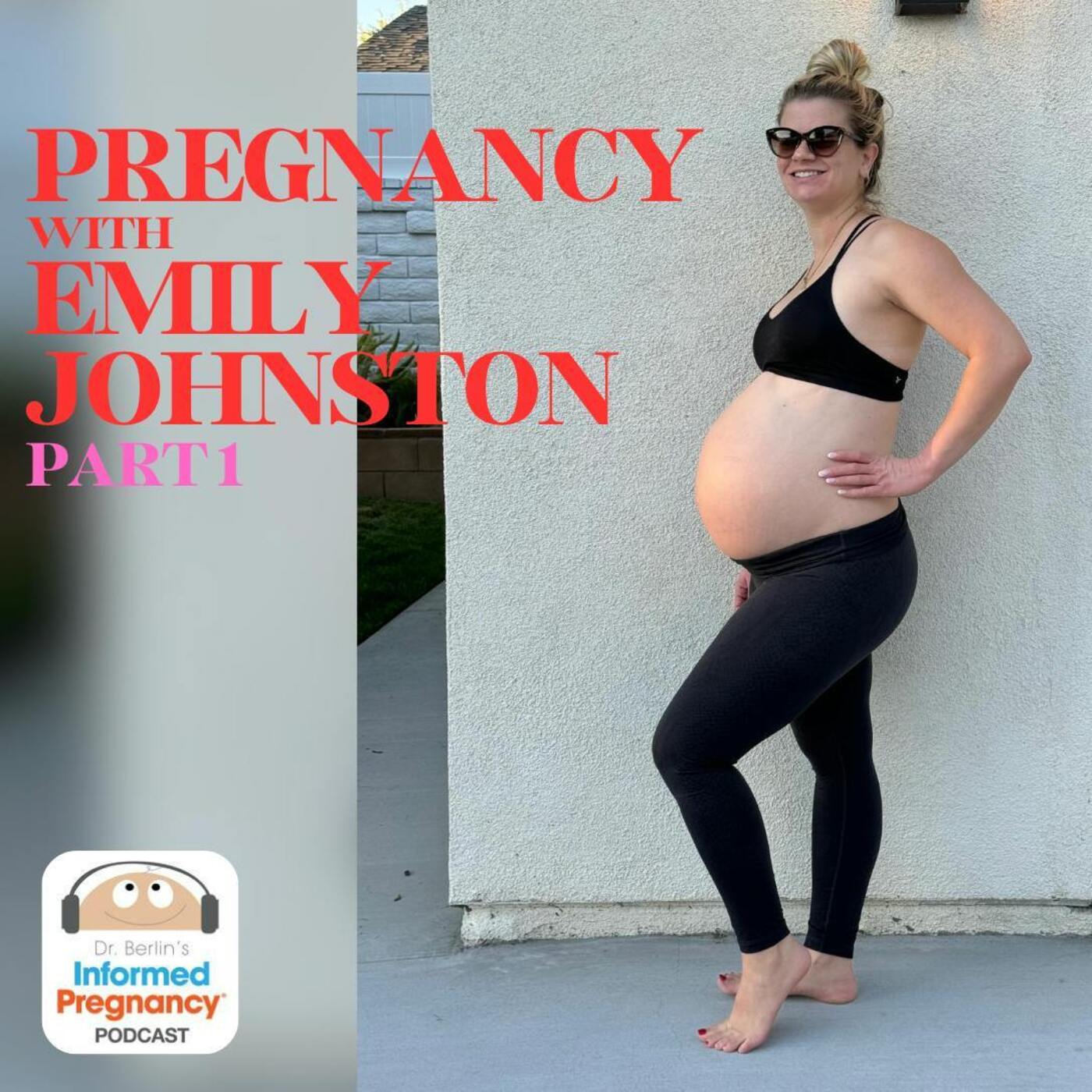
October 17, 2024 · 60 minutes · Episode 429
About this episode
In the first of this three part series, labor and delivery nurse Emily Johnston discusses her pregnancy. She’s also a birth and postpartum doula and an IBCLC (International Board Certified Lactation Consultant) with an interesting fertility journey to share.

Connect with Emily: @littleloomrn and littleloomrn.com
Key quotes
“And it's been interesting because I feel like nothing really prepared me for my own. I have a lot of book knowledge, right? I've seen a lot. I have a lot of knowledge about this process that I'm going through. But to actually be the one to go through it is just completely different. It's really like changed me in a way. I just have a completely new perspective towards pregnancy and women and the postpartum experience.”
“My old doctor who doesn't do obstetrics anymore, she only does gynecology, but she's an IVF mother herself. And something she said to me at the beginning of my journey is she said, you have to remember it's only a couple of weeks out of your life. She's like, it's really miserable. I'm not going to lie to you, but it is only a couple of weeks and you can do anything in your life for a couple of weeks. And that stuck with me. And I was like, you know, I'm going to do it. I'm going to do it again. So I did.”
“Pregnancy was the hardest thing I've ever done in my life. And I'm going to say this publicly that I hated pregnancy. And so many people were so offended by me being very open about that.”
“and nothing worked. And that was also very humbling for me and for going forward in my career. I will understand now. Sometimes you just do everything and truly nothing works.”
“Humanity wouldn't be here if childbirth didn't work to some extent. And we've had the epidural only in very recent years. And so trying to also remind myself like birth inherently isn't broken. And so if all these women have done it before me with just moving and good support and massage and I can probably do it too.”
Related episodes
- Ep. 430 Birth with Emily Johnston (Part 2)
- Ep. 431 Postpartum with Emily Johnston (Part 3)
- Ep. 435 Jackie Amézquita: After Birth
- Ep. 449 Birthwork & Motherhood with Jennifer Campbell
Transcript
AI-generated transcript with speaker labels — may contain errors, especially names and medical terms. Dr. Elliot Berlin, DC appears in blue; Emily Johnston in orange.
Download PDF of the Transcript
Dr. Elliot Berlin, DC [0:12] Welcome to the Informed Pregnancy and Parenting Podcast. I'm your host, pregnancy-focused chiropractor Dr. Elliott Berlin. My guest today is 39 weeks pregnant and preparing for an exciting birth after an interesting fertility journey. She's a highly experienced labor and delivery nurse, IBCLC lactation specialist, and a birth and postpartum doula. We're going to talk about birth and beyond from her vast experience with clients and discuss her own personal story as it is currently unfolding. Emily Johnston, welcome to the podcast. Thank you for having me. I'm happy to be here. You're one of those weird guests that has a million perspectives. You're literally in the middle of your own
[1:14] pregnancy journey, which has had some interesting twists and turns, no pun intended, and we'll say inside joke for now, and also being a doula, both a birth doula, I presume you've been in many different birth settings, not just a hospital, but then also being a hospital labor and delivery nurse and an IBCLC lactation specialist. So a lot of hands on postpartum experience. It's kind of interesting to talk to you because you have more vantage points than most. So let's jump in at the beginning and talk a little bit about your career. How'd you get into all of this birthy stuff? You know, I grew up in the Midwest,
Emily Johnston [1:51] outside Minneapolis, Minnesota, and I feel like the village mentality was very much present there. I don't feel like it's as present here in Los Angeles, but by village mentality, I mean like the neighbors just helped the other women when they had babies and I was holding babies at a very young age and going over to help people. So in a way, it's a very much like in my blood. It's something that I've always been comfortable around postpartum and infants and everything. So I moved to LA for a completely different career. I was working in TV. I was going to school at the University of Wisconsin. I left school, took a job here in Los Angeles, and I was doing that job for a couple of years, but it wasn't really
[2:26] filling my pot. So I saw two films that changed my life, and I know one of them has changed many lives, with the first one being The Business of Being Born. I've never heard of that one. And the second one called No Woman, No Cry. And I saw those two films that just sparked something in me. And I met my now husband, Tyler, around that time. And he said to me, like, what are you going to do with your life? Are you just going to accept that you're not so super happy in your career? Or are you going to do something where you could be there
Dr. Elliot Berlin, DC [2:56] for 50 years? Wow. Go Tyler. Go Tyler. But also, why does not a single person who is working in reality television watch The Business of Being Born and No Woman, No Cry? What brought you to watch this? It wasn't like you're at that milestone. You're right. You're right. I
Emily Johnston [3:13] don't know. Honestly, I have this very explicit memory of searching Netflix or something late at night one night, and I landed on them. I think it was a little bit like fate. It was
Dr. Elliot Berlin, DC [3:23] meant to be, right? I've heard of Netflix, but many of these films are also streaming on informed pregnancy plus. Yes. Selfless plug. I think I knew about that back then. No, no. I'm saying now. It wasn't back then, but now we have all these films. Okay, yes. So you just binge watching birth films, and Tyler says, you know, what's it going to
Emily Johnston [3:42] be? Right. So I did. I mean, in a way over the next several months after that, I quit my job. I took a doula training. I did my lactation training, and I was like, I'm going to be a midwife someday. And I started doing night school starting from scratch. I mean, I was going to school for journalism and communication. So started from scratch with all my prerequisites to eventually go to nursing school and with an end goal of being a certified nurse midwife, which is still an end goal for me. But, you know, we've taken a little detour for the moment to have a baby. Yeah. So the stepping stones for you were doula first. I was a doula first and I took a lactation training shortly thereafter. So those were
[4:22] kind of going hand in hand. Yes. And then I started attending births and also doing postpartum at the same time. Yeah. Also a rare combination of great labor doula and postpartum support. And then was nursing another stepping stone towards the nurse midwifery? Yes. And honestly, I knew at the beginning that I was going to just do all this stuff. It sounds like it was very like rash in the moment, but it wasn't. It was like thought out. But I started doing the doula and the lactation because I was like, I want to be a nurse, but I'm going to make sure this is like the right thing. I'm going to work in labor and delivery. I never had any interest in ever being any other type of cardio
[4:59] thoracic surgery. Right. Not for me. That's great for some people, not for me. So I started everything at once sort of with this idea, like I'm going to get my feet wet and be very comfortable in this realm and then eventually become a labor and delivery nurse. So it all kind of happened around the same timeframe, but it was also very intentional that this was all sort of a part of my journey to eventually becoming a midwife or just becoming a nurse. Honestly, I think at the early days, I was like, let me just get to, I had to do one thing at a time, right? So let me just get to nursing school first and see how it goes. But being a birth and postpartum doula exposed me to so much and was a really great way to get my
[5:35] feet wet and also helping people with lactation. And for the first time, it just really filled me. I loved it. I enjoyed doing that work. Even coming home after a 24 hour, 36 hour birth, I still never felt like I was so exhausted. I couldn't keep going. I felt like I could keep going forever. I mean, birth is intoxicating. You know that.
Dr. Elliot Berlin, DC [5:52] Yeah. There's like a nuclear energy to it. You don't even realize that 24 hours has gone by sometimes. Right. Time travels differently in a birth room, for sure. And now that you've sort of had all this experience at other people's birth and postpartum, I imagine that the decisions you're making for your own are somewhat based on what you know from a bird's eye view, meaning you've seen a lot more than average.
Emily Johnston [6:17] Absolutely. Obviously being a nurse compared to being a doula, you see such a wider range of situations. And it's been interesting. I've been in this field for so long. You know, I've worked with women and babies for a while now and I've surprised myself at how crazy this pregnancy has been for me. I think I went into pregnancy a little bit naive thinking that I was very comfortable with this idea of pregnancy. And there's been so many just like highs and lows. And it's been interesting because I feel like nothing really prepared me for my own. I have a lot of book knowledge, right? I've seen a lot. I have a lot of knowledge about this process that I'm going through. But to actually be the one to go through it is just
[6:57] completely different. It's really like changed me in a way. I just have a completely new perspective towards pregnancy and women and the postpartum experience. Like knowing that I'm facing it, I feel like I'm going to be a better midwife in the future having gone through this myself.
Dr. Elliot Berlin, DC [7:11] It's really wild for you to say that. You have a ton of book knowledge and real life experience with other people. You've seen so much and you've learned so much and a lot still took you by surprise in your own pregnancy. I hear people and other professionals say that all the time. Wow, I really didn't know what I didn't know until I got here. But for someone, even with a lot of education and experience in this exact field, it's still, until you go through it, there are certain things you can never learn. Which again makes you an amazing guest for the podcast because we can learn from you from all those different perspectives. Okay. In our postbirth, you're 39 weeks now.
[7:47] You're going to have this baby very soon. And the plan is for you to come back and share the whole birth experience. And then in that next episode from this one, when we hear your amazing story, we're also going to pick your brain for tips about things that you've learned from going through the pregnancy, the birth and postpartum, combined with your book knowledge, things that people really could know before going into an immediately coming out of their birth. But for now, I want to turn focus onto you, Emily Johnston, the human, who is another almost ready to come out human inside you. 39 weeks is the bullseye on the labor and delivery window. The delivery birth window term is 37 to 42 weeks. If that
[8:26] whole thing is the archery target, the red dot in the middle is 39 to 40 weeks. So you're there. So I've made it. But it didn't come easy. Let's talk about fertility.
Emily Johnston [8:36] Yes. We had a really interesting fertility journey, which again, I've worked with many families who experience infertility, and then you go through it yourself. And it's completely different. We started trying probably like two and a half, three years ago, was probably the first time we started trying. And it was never intentional. Like it was never super like, oh, we have a baby now. It was just, you know, it was a little more casual. And we ran into a lot of issues. And my husband has a kind of a complicated health history where he had an organ transplant. And so some of our fertility issues stemmed from the disease process that he was going through, but also just medications involved.
[9:11] And we were trying for a while and we actually had a fertility specialist here in Los Angeles tell us that you basically don't meet criteria for IVF is what they said. And that was a very, I think, low point in our fertility journey, because I'm not sure if I speak for a lot of people who experience infertility, but there's always IVF in the back of your head. Yeah. Can you even explain what that means? You don't meet the criteria. I mean, they didn't think it would work. Correct. Which I realized now that he was maybe misinformed or ill informed because there are a lot of options, but basically you want certain counts for male or female. You want your certain counts of certain thresholds.
[9:46] So there's a threshold for, you want your counts at this point, if you're going to conceive naturally, you want your counts at this point, if you are a good candidate for IUI and you want your counts at this point, if you're going to do IVF. And we were
Dr. Elliot Berlin, DC [9:57] way under that IVF threshold. Okay. And just to sort of give a basic background, IUI is where you take semen and just sort of insert it into the womb at the right time, and it travels up and looks for an egg. Versus IVF, where you take out an egg, you take out a sperm, you matchmake on the outside and then put the hopefully resulting embryo into the womb. And so to conceive naturally, a certain amount of egg reserve and sperm count and quality, and to use IUI, where you still need a lot of power, self-power, to make that match a lesser quality because it overcomes certain hurdles. And then IVF overcomes even more hurdles, but you still need certain counts and quality. And you're saying they told you,
[10:44] you don't even qualify for that. Shattering dreams of having a baby with your own DNA.
Emily Johnston [10:50] Yeah. And I left that meeting being very discouraged, but at the same time, I was also like, well, there's probably other things you can do and he doesn't know everything. And I tried to really be positive about it. And now I know that there are other options, but it still made me feel like we were about to sort of go on this IVF journey. I was thinking to myself, are we crazy if we do IVF? And we just had a professional tell us that we don't even meet threshold. Like, am I just being naively optimistic to even try this and throw so much money into this just to have a biological child? And that was something that we had to talk a lot about. I think there's many different
[11:24] routes to parenthood that are all equal in value. Inevitably, we did see a few fertility specialists here in Los Angeles, but I felt like I was just like a number in their system a little bit. And this is the way we do things. And you'll start A and then you go to B and then you go to C. And if that doesn't work, we'll start back with B, but you might go back to A. And it was just very overwhelming for no guaranteed outcome. So you're throwing a lot of hard-earned money at this process with really no guarantee in the end, which I understand is normal, but it's also really hard pill to swallow. So we did something rather untraditional, but we're maybe untraditional people. I did a ton of research. I'm a researcher. That's
[12:05] what I do. I read, I actually read studies. Anyway, I found this Facebook group a little bit on a whim of a bunch of women who have traveled overseas to pursue IVF. And the primary factor for people doing that was cost. But I actually learned of this clinic in Tijuana, Mexico of this incredible doctor named Dr. Isa. And basically her entire clinic is Americans, a huge percentage is Americans of people who have failed in the U S. So there's a lot of women who go there who have had like three, four, five, six rounds of IVF here and have gone to her and gotten pregnant and gotten pregnant on their DNA for their, you know, their spouse and themselves. And so I never thought I'd go to Tijuana for IVF, but I did.
[12:49] We had a meeting with her that was really powerful and she was almost shocked by what the American doctors had said and was like, oh, this isn't a big deal. And yeah, absolutely. And you're young and you're healthy. And she made it seem very nonchalant, which we both actually left in a way thinking like, was she selling us too much? But we ended up going with her. She gave us a lot of hope and made it seem like this was a very plausible outcome for us was to have a biological child that was related to both of us. So we started the process in Tijuana, Mexico, almost actually exactly a year ago at this time. So it's quite fitting now that I'm well, I have a baby spoiler alert, spoiler alert, 39 weeks
[13:29] pregnant. So did it work on the first try? It did in theory. So we decided to make embryos. I did one round of egg retrieval. So egg retrieval is the really difficult part where you take a bunch of hormones and you juice, you know, you make your, your body do these very unnatural things. You juice your body up and you always follow clothes on your ovaries and they take the eggs out. So we did our first round and we got a couple of embryos that were compatible with life. We did decide to do PGT testing, pre-implantation genetic testing on the embryos so that we would know if they're compatible with life. Some people decide not to do that. It's personal preference. We didn't want a chance that we
[14:05] would maybe miscarry and not know why and not know if it was the quality of the embryo that was just never, you know, destined for life or if it would be something on my end where I wasn't carrying pregnancy well, because I've never been pregnant. So we did the PGT testing and we got two embryos and we know that we want at least two kids. And the recommendation that Dr. Isa gave us was to have two to three healthy embryos for every child that we desired to have. So we decided to go right into a second round of egg retrieval to get more embryos, more juice, more juice, but not like the carrot juice and green juice. Yeah, right. Exactly. And that was hard. IVF was extremely hard on my body. And I kept telling myself
[14:47] through that first round, you're only going to do this once. You're only going to do this once. That was just what got me through. And so when we only got two, which is great. I mean, some people don't get any. So I'm very thankful for two. I just said to Tyler, I was like, I think we need to just do another one right now. Cause I was like, if I get pregnant with one of these first two embryos, and then in three years, four years, we want our second child. I was like, I don't want to go through this with a kid at home. And I was just like, in this mindset, I was physically felt miserable. I was like,
Dr. Elliot Berlin, DC [15:15] let's just keep the misery going. So how many times do you have that thought? I have so many questions. I mean, I would love for you to describe what you mean by it was miserable on your body. I can't say I speak for everybody. Cause I've connected
Emily Johnston [15:29] with a lot of women in the IVF community who tolerated it very well for perspective. I'm 32 years old. I'm very healthy. I don't really have anything wrong with me. It made me so bloated, incredibly bloated. I looked more pregnant during IVF than I did this pregnancy until I was like six months because my follicles, I've so many follicles on my ovaries. So when you think of an average woman, we typically grow a follicle in the menstrual, you know, 25, 35 day menstrual cycle. You have one follicle and then you ovulate and that's when you can get pregnant. For people that are on IVF, we're talking multiple follicles. So I had over 30 follicles on both my ovaries compared to just one.
[16:08] If you're on an average menstrual cycle. And so you think of that bloating that comes with your menstrual cycle and then multiply that by 30 is kind of what I felt. And you're doing these injections every day, which in and of themselves are very, very uncomfortable. But then also your estrogen levels are just so high. I mean, you're doing something very unnatural to your body. And I actually ended up in the emergency room because of this. I very suddenly, I think I was on day 10 of the injections and I very suddenly was a really fast heart rate and my face felt very numb and I felt like I couldn't breathe very well. And I thought I was having a pulmonary embolism. I thought I had a blood
[16:43] clot in the emergency room, which is not uncommon with IVF.
Dr. Elliot Berlin, DC [16:47] Wow. And then you were like, let's do it again.
Emily Johnston [16:50] And my fourth thought was, let's just buckle up and go for it again.
Dr. Elliot Berlin, DC [16:54] And that's why I wanted you to say that because it's not a light decision
Emily Johnston [16:57] like to do another round. It was really for thinking for the future. It was. I knew I didn't have it in me. I really thought to myself that in three years, if we have this wonderful child at home and we want a sibling, I was like, I don't think I'm going to have it in me to say like, let's do it. And you're already in the trenches so much. And I just thought I can do this again for another couple of weeks of my life. My old doctor who doesn't do obstetrics anymore, she only does gynecology, but she's an IVF mother herself. And something she said to me at the beginning of my journey is she said, you have to remember it's only a couple of weeks out of your life.
[17:32] She's like, it's really miserable. I'm not going to lie to you, but it is only a couple of weeks and you can do anything in your life for a couple of weeks. And that stuck with me. And I was like, you know, I'm going to do it. I'm going to do it again. So I did.
Dr. Elliot Berlin, DC [17:42] The way you're selling it, I'm thinking about doing it. Yeah. And also that's just the physical and emotionally, the fertility journey is really hard. My wife and I struggled with it and it can be quite devastating, a real roller coaster. And when you said that they told you, you're not even a candidate for IVF, my heart sank deep into my, you know, I was like, wow, that's chilling. Even though I know the surprise ending, which is that you are pregnant and healthy, have a healthy baby and they're ready to come out any second. Um, before we go to break, how did the second round go?
Emily Johnston [18:13] The second round was great. We actually got five healthy embryos, which was fantastic. And I, until you're paying for college. Exactly. And we were really happy with that and felt good moving forward. It was a huge relief for us. So now we have our little embryo babies that are banked just across the border to this health. Oh, they're still in Mexico. And then you put in one embryo. I put in one embryo. Dr. Issa really wanted to put in two. She likes doing two because she says the success is higher. I have, this is where my experience came in. I've cared postpartum for many, many sets of multiples. And it's just not something I wanted at this time. And I was willing to take that risk that the one
[18:55] embryo wouldn't take and have to go through another embryo transfer. I was willing to do that. I just don't think for our first step into parenthood, that having multiples was maybe the healthiest thing for us or our marriage, to be quite honest.
Dr. Elliot Berlin, DC [19:09] I have two episodes with my friend, if you could search the library, Dr. Suzanne Frank, and she was my colleague, a chiropractor, also prenatal chiropractor, and they struggled with fertility for a long time. She made the same choice as you, even though it had been so long. We'd rather just put in one, take the risk that we're not pregnant and try again versus multiples and her embryo split and she has identical twin girls.
Emily Johnston [19:30] Well, so she got-
Dr. Elliot Berlin, DC [19:31] Surprise.
Emily Johnston [19:33] Surprise is the right one.
Dr. Elliot Berlin, DC [19:34] Well, you could have had quads, so.
Emily Johnston [19:37] Wow. That did not happen to us, but.
Dr. Elliot Berlin, DC [19:40] Yeah. Let's take a quick break. And when we come back, we'll find out how your pregnancy has been and what you're planning for birth. Don't go anywhere. We'll be right back.

Dr. Elliot Berlin, DC [22:25] Welcome back. We're talking to Emily Johnson. Okay, so what are the odds? You have this really challenging fertility cycle struggle and then you make it and you got some little passengers back in Mexico. Should you want to take the trip again? But now you're at the end of pregnancy. How was pregnancy for you? How were the different trimesters?
Emily Johnston [22:46] Pregnancy was the hardest thing I've ever done in my life. And I'm going to say this publicly that I hated pregnancy. And so many people were so offended by me being very open about that. Yeah, I mean, you're allowed to hate it. It's a struggle. The struggle is real. Love the baby. Hate the process. First trimester, you know, I came off of IVF feeling physically and mentally and emotionally very burnt out. IVF just like took all of my energy out. I felt like I was just operating on my gas tank was empty. And so I had this really naive idea that once I was pregnant, everything was going to be fantastic again. And it wasn't it was anything but that. So first trimester, I lost weight. I wasn't eating. It was
[23:24] a really low place for me to mentally because I physically felt like I wasn't able to do what was needed to sustain myself and sustain my baby. And that was a really dark place for me. I physically could not eat food. I just couldn't do it no matter what I tried. And I tried everything. Were you throwing up? I wasn't actually throwing up, but I'm also very good at suppressing vomiting. But the nausea was out of control. The nausea and the aversions were just out of control. And I'm somebody who likes food. Like I enjoy food. You don't have to talk me into eating something twice. So it was really dark for me. I had a few trips to urgent care to get a bag of saline because I just couldn't even drink water
[24:04] most days. Wow. And it was just bad. It was absolutely awful. I lived off of watermelon and popsicles, about 500 calories a day. And I think coming from the doula community too, we have all this little bit of knowledge and people have all these really well-intentioned ideas of take the unisom and the vitamin B6 and go to acupuncture. And I did everything and nothing worked. And that was also very humbling for me and for going forward in my career. I will understand now. Sometimes you just do everything and truly nothing works.
Dr. Elliot Berlin, DC [24:35] Sometimes the body doesn't read the textbook. That's true. Mine did not. That's for sure. Yeah. And obviously having worked in this field, you knew that nausea, maybe vomiting, is not uncommon in the first trimester, but it sounds like it A, hit you harder than typical and B, more than you were expecting.
Emily Johnston [24:55] Yes. Way more, way more. And I even have this idea like, oh, if I have a little bit of nausea, it's something I can push through. I'll take the unisom and the B6. I was going to acupuncture once a week, sometimes twice a week. I had this idea like, even if it was a little bit uncomfortable, it's something I'd be able to overcome. And so that's when I say it really started to affect me mentally because I felt I was losing a little bit of weight and I was like, I'm not sustaining myself or this pregnancy. And I felt like I physically couldn't and it was hard at times. Towards the end of first trimester, I weaned off of the IVF medications because they still have you on estrogen and progesterone, which I think
[25:32] contributed to the nausea. I still had nausea for sure until I was like 24 to 26 weeks, but it was better and I gained weight, which was the most important.
Dr. Elliot Berlin, DC [25:41] Oh, welcome to my world. Twins. Okay. So that's a really bad case. I wonder if it's
Emily Johnston [25:51] better or worse that you weren't throwing up. I've thought about that and Tyler even asked me, cause during some, like the worst days, he was like, just let yourself throw up. But I was like, I don't know if that would take care of it because it wasn't like I had the stomach flu where you feel like a little better when you get the poison out, you know? So I don't, I don't know if I felt that same thought, to be honest.
Dr. Elliot Berlin, DC [26:09] No, yeah. People say that it does. It feels better temporarily for whatever reason, you know, in the hyperemesis, the latest I saw is they're pointing to, I guess, a satiety hormone that is overproduced by the placenta. And so you feel satisfied, but over-satisfied, full, over-full, even when you're not, even when you haven't had anything to eat. And so the sensation of eating more just puts you over the top. I don't know if it's the same if you're not throwing up, but you kind of sound like you had like clean hyperemesis where you feel nauseous in a big way and you're losing weight or sign of hyperemesis all the way through past the halfway mark just without throwing up. So I guess
[26:53] clean hyperemesis is my new- The nice term. That's what I had. The term that I coined. Okay. So watermelon and popsicles. I love those for a little snack in between. That is my baby, apparently. Were there other things that kind of improved a little bit? Like what were the things that you brought back? I couldn't even do like
Emily Johnston [27:15] toast. And this is what I mean by everybody has such good intentions. People were like, wake up in the middle of the night and just grab a few Ritz crackers. I'm like, that sounds like a great idea. I can't do that. I honestly was not eating and my protein intake was so low. And I knew going into pregnancy, how important protein intake was just for a lot of different reasons. And I wasn't really getting any protein. It's still something that I, you know, I don't want to say I beat myself up on it because I couldn't control it, but it's something where I'm like, gosh, my nutrition was so poor that first trimester, but it had a lot of reassurance from the midwives that it would pass and from Dr. Kaiser.
[27:48] And I also saw an MFM just for like routine screening, first trimester. They were very reassuring saying that, you know, I went into pregnancy, very healthy. I ate very well during the IVF journey and was on a lot of supplements and everything. So they were just reassuring that my baby was still getting probably adequate nutrition, even if I wasn't in that moment.
Dr. Elliot Berlin, DC [28:08] All right. So once that passes, are we in the honeymoon phase, the golden trimester?
Emily Johnston [28:15] So I thought everything was going to be great after the nausea got better. And then we went on a baby moon to New Orleans, which was just a fun destination. We've never been there. My appetite was back. So I figured I might as well have like po' boys and some beignets and I'm in New Orleans feeling good. And I took a nice little trip, a little slip and fall. Oh, a trip on your trip. A trip on my trip on the sidewalk of New Orleans. Boy, just something sticking up or? There was a root that was growing out of the sidewalk. And apparently I didn't see it because I tripped over it and I fell like I completely wiped out New Orleans. What did you land on? I landed on my right arm and my left foot. My
[29:04] left foot is what got injured. And it was the only time of the trip that I was not with Tyler because he was going to go back to the hotel and I want to go get a cup of coffee. So we did. And so here I am alone, visibly pregnant, flailed up on the sidewalk of New Orleans. So it was probably quite the scene. Pre-coffee? Were you holding the coffee? No, I hadn't gotten the coffee yet. I still haven't gotten it.
Dr. Elliot Berlin, DC [29:24] Oh, all right. So at least we didn't waste the coffee. Yeah, at least they saved my money. Yeah. But it's also more embarrassing. Like, were there people around? Was it an embarrassment?
Emily Johnston [29:32] Yeah. And no one helped me, which I thought was so funny. I know I thought, but maybe, I don't know, is this a regional thing? I thought to myself, if I saw some visibly pregnant women like on the ground, I'd be like, probably go help. But no one did anything. They just kind of like walked past me, but maybe they thought I had a few drinks. I'm not sure. Oh, right. Yeah. Shame on her.
Dr. Elliot Berlin, DC [29:55] Wow. So you got up all by yourself and were you able to walk on it?
Emily Johnston [29:59] Initially, I was able to walk a little bit. I mean, it really, really hurt, but I just walked back to the hotel. Like it wasn't a big deal. But then a couple hours later, I could have put any weight on it at all. And thank goodness we were leaving the next day because I had to like take a wheelchair. Like that was it. Like vacation was over and memorable. I was wearing this boot, came back to LA, saw an orthopedic doctor and I wore one of those fancy boots on my left foot for several weeks while pregnant, which is also really fun.
Dr. Elliot Berlin, DC [30:29] Did you work at all during your pregnancy?
Emily Johnston [30:31] I ended up taking early leave after that first trimester because the first trimester was really hard. I actually blacked out twice due to like a combination of hypoglycemia and hypotension, like low blood pressure because of all that. So I had been on leave shortly before New Orleans is when I had taken the leave, which was also a whole other emotional thing. I had to kind of overcome that. Like my pregnancy was actually preventing me from still working. It was really hard. It was another pill I had to sort of swallow and let go control.
Dr. Elliot Berlin, DC [31:02] Wow, for a doula, you're swallowing a lot of pills.
Emily Johnston [31:05] I am swallowing a lot of pills.
Dr. Elliot Berlin, DC [31:08] Metaphor. Okay. Wow. Were you worried about the baby?
Emily Johnston [31:14] I didn't fall on my belly. And it's kind of that weird time or when you're first time mom, like I was feeling a lot of fetal movements at that point, but obviously like not as much as you feel when you're like later in third trimester. So, you know, I got my head a little bit about, am I feeling your move? But I contacted the midwives and they just said, you know, make sure she's still moving at times. I had like a sugary drink and I laid on my left side and did a little kick counts and she was fine. And I had protected myself pretty well because I got banged up on my hands. So I wasn't super concerned because there was no impact to the belly. But yeah, I mean, it certainly was in my mind.
[31:47] I got through first trimester just to fall on second trimester.
Dr. Elliot Berlin, DC [31:50] Well, I mean, all of it, you got through fertility just to have major nausea and lose weight and can't eat a Ritz cracker. And then you finally get past that and go for a little baby man. I mean, did you end up getting coffee? No, I never got that coffee. Okay. This is killing me. I know. I know. Okay. So then what?
Emily Johnston [32:10] So third trimester, I was in this boot, everything was fine. I mean, not, but you know, it was okay. Life continued. And towards the end of second trimester, early third trimester, I started having this really debilitating left abdominal pain, like lower left pain, like very bad 10 out of 10. And it was this baseline pain of about four or five out of 10. And then it would come like in these really strong waves, where it'd be really intense for a couple of seconds. And then it would let go. And sometimes it was longer. Sometimes it was intense for a couple of minutes and I couldn't breathe. I couldn't walk. Like I couldn't talk when this was happening. It was awful. I've had ovarian cyst burst in the past
[32:48] and the pain was very similar to that, but like much more intense. Of course you have. Of course I have. And I thought initially that it was an ovarian cyst. And I went to see Dr. Kaiser, who did an ultrasound and she did see a cyst. And a couple of days later, it was so bad, I ended up in the hospital and they did an ultrasound there and the cyst was gone. And I am still having this pain. So I wasn't really given a diagnosis per se. And when this pain would happen, I would get into the spinning babies move forward, leaning inversion because it felt like the baby's head was putting pressure on this certain area that was causing the pain. That's at least what it felt like to me. So I'm getting these
[33:25] inversions and I would also manually push the baby's head off of my left side where that pain was. This is important for later in the story. Foreshadowing. Foreshadowing. So I got discharged from the hospital. I was treated for pain. I wasn't really given diagnosis. And then about four days later, the pain was back and it was even worse. And I really, really thought something was very wrong. So I ended up going to the hospital where I worked because we were in that area and the pain was so bad, we couldn't even sit and rush out to get to where Dr. Kaiser had privileges. So they did an MRI and they basically said that the baby was putting pressure on these scar adhesions from an uncomplicated surgery that
[34:05] I'd had four years ago. And so it's true that her head was causing me a lot of pain and they discharged me. Basically, you know, everything was safe. I was healthy. The baby was healthy, but I wasn't really given like a game plan for how to deal with that for the rest of my pregnancy. And that is when I met you, Dr. Berlin, cause I was really trying to search for how am I going to survive the rest of my pregnancy with this pain coming and going. And then shortly thereafter, my baby was breach. And I blamed myself a lot for that because I had been manually moving her head off of this really tender area where she was causing me some pain by your lower belly by my lower belly. And then all of a sudden she
[34:46] was persistent breach for a bit. And I was still early. I knew she had a lot of time to turn, but I was blaming myself because I had done so much to kind of push her head out of the way to try to get relief. And so then I thought that I was the cause of my baby being breached. And so began my journey with my breach baby with you because little did we know she would flip and flop and flop and flip many times. Yeah. So at what week did you start feeling worried about that? Well, I was told by the professionals not to worry. So I'm probably not good to ask when I started worrying, but I've planned this birth center birth. And so I didn't want this to disqualify me. And I wanted to do everything in my power to
[35:26] try to not have this be an issue. So I was a little bit, maybe more proactive than I needed to be. But I, when I was getting into like the late, the mid thirties week, I started getting a little bit more antsy, especially because she would flip and be vertex and be in a great position. And then a few days later, she would just go back to breach. Yeah. You were flipping and flopping. Very much so, which was a good and a bad thing because part of me felt like, wow, she's really easy to turn in a way. So if it got to a point where I needed an external cephalic version and ECV, I felt like, okay, I'm probably a good candidate for that because she seems to turn easily. But then the other part of that is I was like,
[36:03] well, then when she goes head down, doesn't feel all that security.
Dr. Elliot Berlin, DC [36:07] Yeah. I mean, that's really what happened. Just every time I saw you was a pure mystery and the baby would come down and baby go back up and the baby would come down and go back up with big ramifications for you because, you know, nowadays, first of all, at the birth center, they don't do vaginal breach delivery and Dr. Kaiser doesn't do them even at the hospital. So that would have meant either if you couldn't get her to land head down, that would have meant either a c-section or potentially switching providers, but slim pickings there too.
Emily Johnston [36:43] Yeah, absolutely. And we sort of loosely explored those different avenues because I just wanted to feel like I had a sense of control in a situation that I really couldn't control. But I wanted to have everything figured out a little bit. So even if I ended up with a breech baby at the end, I want to just feel like I had researched all my options. I had done everything that I could. So we did sort of explore those different avenues if it got to that point. We never really made any concrete decisions about what we would have decided. And of course, everybody has their opinions. And so we also started being pretty private with people in our lives about if our baby was breech or not that
[37:21] day, because, you know, everybody had an opinion about whether or not we should pursue vaginal breech or if we should pursue a c-section, which both would have been a major change of plans, obviously. Yeah, huge for you in particular. Yeah. I mean, I prepared, you know, nine months to be with this certain birth team. And so the idea of having to sort of reroute in that third trimester, when I was starting to finally feel good and my foot was healed and I was eating, I got a little glimpse of like pregnancy bliss. So yeah, it was something that I had to learn to let go of. And Sarah Howard, who is one of the midwives, said something really beautiful
[37:58] to me, way more beautiful than I'll be able to quote it. But she said something about how pregnancy and birth are meant to change us or teach us a lesson. And many times we don't know what that lesson is. And she was like, maybe this is the lesson that you were meant to be taught is that you need to learn to let go sometimes. So I took that.
Dr. Elliot Berlin, DC [38:16] Or look down when you're walking occasionally. Yeah. I guess many lessons. It's interesting because I remember like when I, let's say I'm going to recommend supplements, I'll generally want to really try them out first and get a sense of them for myself before I recommend them to anybody. And I feel like you as a birth professional have tried out all the complications, you know, all the stumbling blocks, if you will, just maybe now down the road, whenever somebody is having like a weird strange abdominal pain, or an old uncomplicated surgery, I'll be like, I know what that is. Yeah. And if you push the baby's head off, don't push too hard because she got the message and she said,
[39:04] I'll just and that's what she did. All these new experiences. But wow. I mean, if I could just recap a really nasty first trimester going into halfway through your pregnancy, nausea with weight loss and massive food aversions, and then falling and entering your foot and needing to be in a boot. And then the weird sharp need to be hospitalized and drugged abdominal pain. That's nothing serious. And then the flip-flopping breach all the way up until like 36 or 37 weeks. I mean, it's been only a few weeks now since the baby's staying put. Yeah. I'm just starting to get over that anxiety that she's actually going to stay here. Wow. Okay. Well, you've been through this stage and I guess any minute now you'll be going
[39:57] through the next stage, which is your labor and birth. Let's take a little break and when we come back, we'll find out what you have in store for your birth. Welcome back. We're talking to Emily Johnston. She is 39 weeks pregnant and about to have this baby any moment. Okay, Emily, you are a labor and delivery person from the natural side, being a doula, non-medical support person from the medical side, being an RN. Now you're pregnant, and pregnancy is a lot different than you thought it would be, and you have plans for birth. You mentioned that you wanted to give birth at a birth center. Tell me about your vision for early labor. When you're laboring, who's going to be around you? If you're going
[42:49] to, I assume, be at home at that point, when do you want to, in your mind ideally, move over to the birth center? And who will be around you over there?
Emily Johnston [42:59] So we know that oxytocin is highest when you're in an environment that is comfortable to you, and that the adrenaline and sort of fear when you go into an unfamiliar environment can suppress your contractions, which is why we see a lot of people in the hospital setting who have very regular contraction pattern at home, and they show up, and then to the hospital, and their contractions slow down a bit, which is a very common scenario. So my plan is to try to labor at home as long as I can. I also do not want to be in transition in the car, so I'm trying to be cognizant of that as well. My plan is Tyler will be here, of course. He's the most important player next to the baby herself.
[43:34] And then it's going to be a hypnodula because we did hypno babies class. So she is a trained hypnodula, and I'm also having a student doula as well. So depending on the timeline and how things last or go, the doula team will either meet me here at home, and then we'll all go to the birth center together. Or if things happen more rapidly, then we will just meet them at the birth center.
Dr. Elliot Berlin, DC [43:59] What do you see the role of the different people supporting you as being your doula versus your partner Tyler or even the student doula?
Emily Johnston [44:08] I want somebody who's traveled this path before, even though I'm a doula myself, and I've been to many births, and I'm a labor delivery RN, and I'm very comfortable in the birth space. It's different when I'm the one giving birth. And I still want that person to reassure me through all those sensations that what I'm feeling is normal. I want somebody to tell me that I'm doing a great job. I want somebody to give me suggestions of position changes or things that might help make me a little bit more comfortable. I have all that information, but I don't want that to be my job to myself in labor. That should come from somebody else. The sherpa, the one that's, you know, climbing the mountain.
[44:41] And also for Tyler, Tyler has never been to a birth. He's watched births, but he's never been to a birth, which I think most first-time partners probably haven't. And I want somebody that also reassures him. I don't want that to have to be my job. I want somebody to reassure him that it's uncomfortable to probably see his wife who's in pain and in a sort of, I always call it laborland, but it's a mindset. Laborland is a physical and a mental mindset where somebody sort of leaves themselves and they're just somewhere else. And I want somebody to reassure him that everything else is normal, but also to make sure that he knows his role in how to support me and give suggestions for how he
[45:15] can be involved. And the student doula, I see her the same way. It'll be her first birth, but she's given birth to children herself. And so I see her being the same way, being hands-on for me, but also hands-on for Tyler. I think a really good doula is 50-50, like 50% the person who's giving birth and 50% the partner.
Dr. Elliot Berlin, DC [45:34] Yeah. I mean, definitely in our first birth our doula was there for me. I'm not shy about the fact that I was eating popcorn and the little husks of the corn, one of them got stuck in my gum and was so uncomfortable. And the doula was, wait, and she had her little magic doula bag with everything in there and she had a toothpick and it was just life-saving. And that's your memory of her doula. Well, also she was amazing at keeping us both calm when things would happen that, you know, it's intense, birth gets intense, even when it's going great and beautiful, not always pain intense, just intense. I just remember the first time seeing, you know, as a student doing myself, seeing somebody shaking in labor, like I'm like,
[46:15] does anybody else see this seizure happening? And they're like, oh, no, that's okay. That's normal. That just happens in birth. I'm like, oh, okay, cool. Otherwise I'd be panicking. And at our own birth, you know, she just had so much to give me to be able to help me support my wife while she was in labor. You know, maybe try this. This could be a good thing for you to do. And it made me feel so calm and so relaxed and even so helpful, whether I was or not. It made me feel like I was being helpful. And she was also incredible just to see her like, know and communicate with my wife without even talking sometimes, or when she did talk, just knowing the exact right thing to say to be able to give her
[46:52] the ability to calm down, relax and embrace the process and know that she was safe, know that things were going well. It was incredible. You're right for both of us. It was really key for both of us. And also, although I spent a lot of years as a doula, I also spent a lot of years just doing body work at birth. And in those cases, I got to work side by side with some of the most incredible doulas on the planet and to just be a fly on the wall, you know, watching their magic and watching the incredible interactions that they have and sometimes the cool bag of tricks that they bring.
Emily Johnston [47:25] Yeah.
Dr. Elliot Berlin, DC [47:26] So yeah, I think the doula is helpful for both. A lot of times people tell me, I want a doula, but my husband wants to be a doula. And I'm like, okay, well, who's going to be the marriage counselor after that happens? And they don't take the place of a partner. I mean, that's not their job, right? That's my whole point. Only one person can be the partner and that's the partner. Anyone can be the doula, especially if you have a long birth. You know, you want someone sort of fresh energy around you because you don't get the luxury of going to take a little nap or take a break or, you know, go for a walk. So, you know, a partner could be a doula quote unquote, but I always think it's better. My wife is a doula
[48:02] and I'm a doula and we ended up having the doula for all four of our births.
Emily Johnston [48:06] The same doula for all four?
Dr. Elliot Berlin, DC [48:08] Yeah. Thank goodness. When she retired, we're like, okay, no more kids. But how special she got to see you guys become parents for the first time and then sort of close that chapter of your lives as well. Oh yeah. She was part of the family. I mean, she still is part of the family. She's just no longer doing doula work. And it's incredible remembering back to the first time my son's 20 now.
Emily Johnston [48:26] Oh, wow. Well, that's unique.
Dr. Elliot Berlin, DC [48:30] She's a big part of the birth memory. You know, it was a 42-hour labor that was completely unmedicated except for 400 milligrams of Advil, which I kept taking for my terrible headache. The birth was hard on me. First the popcorn, then the headache. I was like, baby, you have no idea how painful this is.
Emily Johnston [48:48] So you were medicated, not your wife.
Dr. Elliot Berlin, DC [48:49] Yeah, exactly. All right, back to you and your story. So you have these support people around you with different roles of support. Knowing what you know about yourself and knowing what you know about labor and birth, what kind of comfort measures do you think will be helpful to you?
Emily Johnston [49:03] I think the ability to move around will be really helpful. I also know that sometimes that doesn't cut it anymore. And so then you start to bring in things like the water and being in the shower, being in the bathtub, doing some spinning babies moves, having people squeeze my hips, all these things that I've implemented as a doula and as a nurse, and then having the option of nitrous oxide. And I was talking with Dr. Kaiser about this. And she was saying like, everybody does something until it doesn't work anymore. And then nitrous oxide ends up being sort of that last level to get you over that last hump. And so that's what I anticipate. I'm also just
[49:35] following my intuition and my instinct. Like if something feels good, I'm just going to do it. I'm just going to get in that position or move here or move there or go outside. Fresh air is great. I'm just sort of planning to follow and see what works. Humanity wouldn't be here if childbirth didn't work to some extent. And we've had the epidural only in very recent years. And so trying to also remind myself like birth inherently isn't broken. And so if all these women have done it before me with just moving and good support and massage and I can probably do it too. That's sort of my perspective on it. But I also am prepared that birth is uncomfortable. It's meant to challenge you.
[50:12] It's meant to change us. So I'm not expecting that it's going to be pain free, but I also know that it's something that I can achieve.
Dr. Elliot Berlin, DC [50:20] I feel like what I see in people now, thousands of people who I work with during their pregnancy, right before birth, it tends to be some kind of mix of excitement and anxiety. And the ratio could be different from person to person. Some people very, very excited with a little bit of nervousness. Some people very nervous with a little bit of excitement. Where are you guys on the spectrum?
Emily Johnston [50:41] I asked Tyler last week where his net excitement was. And I said, net excitement is excitement minus nervousness slash anxiety. So if you're like 10 out of 10 excited, and then six out of 10 nervous, the net is four. And he said his net excitement was 10 out of 10, which was great.
Dr. Elliot Berlin, DC [50:59] It makes sense.
Emily Johnston [51:02] My net excitement is like six and a half or seven because I'm the one giving birth.
Dr. Elliot Berlin, DC [51:06] You guys worked that out a half time. Was it rock, paper, scissors?
Emily Johnston [51:10] Yeah. And I lost it.
Dr. Elliot Berlin, DC [51:13] Or maybe you won.
Emily Johnston [51:14] Maybe I won. You're right. So I'm excited, but I'm also nervous. I'm nervous for a lot. I mean, it's just an unknown territory and change is hard. Change is hard no matter what it is. And I'm also just grieving the fact a little bit. And this is vulnerable for me to say, but I'm so excited for this baby. And I can't meet her, but I'm also like reading the end of this chapter of our lives. Like we've been married for seven, eight years and we have these two little dogs and we've had this wonderful life. And I know it's going to be different now. It's only going to be enhanced positively, but I'm like grieving a little bit that this is at the end of the chapter. And it's also a little bit hard because you don't know
[51:47] when that chapter will end. I mean, will it be tonight? Will it be in two weeks? I don't know. So I'm somewhere in the middle, but I'm more excited, of course, to have this baby. I'm just nervous for the unknown, as I feel like a lot of people are.
Dr. Elliot Berlin, DC [51:58] So two things. Number one, even though this chapter is coming to an end, you do know you could still see me after your give birth, right? That's what it all came down to. I was worried I wouldn't be able to see you anymore. Just to bump you up to a seven. But the way you talk about the unknown is interesting because you have more known than most. And I don't know which way that goes. Does that help or does that hinder? Meaning you've seen birth in multiple settings, including high risk settings where things are very medicated. You've seen birth in natural settings where things are totally unmedicated, which is a misnomer because you make your own drugs, which are
[52:30] probably better than stuff we give you. But you've seen it go all sorts of different ways. And I wonder going into your birth, that's going to be Emily Johnson's story and experience. Do you have a way to like kind of blot out, close off, shut down the experiences that you have with so many other people?
Emily Johnston [52:49] I'm trying to. That's been a huge part of third trimester for me, is trying to shut that out. But I also recognize that a lot of the experiences I've been through have shaped me into this person that I am. And so it's impossible to really block all of that out, to be honest. And I don't want to block it out because it's a huge part of who I am. So instead I'm trying to just like boost myself with the positive stories and remind myself that when you're a healthy person with a healthy, low risk pregnancy, the chances are very much on your side that everything's going to be okay. But of course there are exceptions to that, but that's just life. I mean,
[53:21] I remind myself too, that we can run to the corner to go drug store to grab something and something could happen to you there too. It doesn't mean that you should never drive two blocks to go pick up a bottle of water. So I'm trying to also just be rational about it. That is actually a very safe process that I'm just because of my career, I'm in a unique position where maybe I'm more likely to have a skewed opinion of its safety. But the reality is if it wasn't safe, we wouldn't be here as humans. And also that I have access to healthcare. I mean, I'm not giving birth in the woods, you know, with wolves. Like I, I'm giving birth with a highly skilled team that has access
[53:58] to a hospital three minutes up the road, and that the hospital is an option if something were to go wrong. That's still on the table and that's okay. So I feel like I'm in the best
Dr. Elliot Berlin, DC [54:09] of both worlds here. I feel like ultimately the ideal is for your conscious brain to shut off altogether and to give birth from the older part of your brain, the hard wiring, the wiring that, you know, just takes care of everything else in your life on autopilot and does it in the most efficient way. And my experience working with obstetricians, midwives and doulas who are pregnant and going through their own pregnancy and birth experiences is generalizing, but harder for them to shut off that conscious part of the mind once they're in labor. And for me being invited to anybody's birth to play some role is an incredible honor. And when it's a birth provider, it's an even bigger honor.
[54:50] And those are the ones where I see that being the biggest challenge. We have an episode with doula who then turned corporate lawyer but had doula experience and her name is Shannon McGuire. I think there are episodes 57 and 58. I was really honored to be invited to her birth and to work with her. And I saw that struggle in that birth in particular in such a powerful way because you could see the knowledge that you have and the experience that you have. You could see her thinking about her birth as attending her own birth as a professional, almost. Like, where am I now? What does this mean? I wonder how many centimeters am I at this moment? And just sort of thinking about her birth from the outside. And it was a little bit of a
[55:29] struggle. It held her back. And I just remember the moment where it happened, where that conscious mind closed down and she switched over to the older part of the brain and just let nature do its thing without having those thoughts. And it was incredibly powerful. It was a really powerful moment. And I don't know exactly how you get there. But I'm curious to hear on the other side how you did it and when you got there and what the difference was like almost. You know, Hilary Duff describes it in her before and after episode of her second baby, which are our first two episodes with her. How she was really afraid of the pain and the intensity. And her mind was almost like doing the math. Like, this thing coming out
[56:08] of that thing is not going to happen. How is it going to fit? It's going to be too much. And then when she felt like she couldn't go any further, her brain was saying, this is impossible. We can't do this. She felt it shut off and then everything was okay. And she did it just a little harder for birth professionals.
Emily Johnston [56:24] Yeah, that's really interesting. I think the environment will be helpful for me because I don't feel like I'll be at work. And I'm worried that in the hospital setting, I would feel like I'm at work because the machines and the sounds, the noises and the scrubs and all of that is like second nature to me. And so being at Moxie in midwives that are like in jeans and tank top and in like a big comfy queen bed with like a gorgeous tub and candles, I feel like will help me. And food. Maybe I'll be completely wrong on the other side, but. There's no food at the hospital birth. That's right. I'll be eating, you know, a little smorgasbord at the home birth at the birth center.
[57:00] That's right. Our charcuterie board. No, but I think that'll help. I've talked about that with the midwives. That's been a conversation we've had at quite a few of my prenatals is how to turn that off. And one of the things I talked about with Jessica digs is she said, you know, sometimes birth professionals really want to hear the fetal heart tones when we check. And sometimes they don't. And I was like, I don't want to hear it. I was like, that noise of fetal heart tones. Like I hear that in my sleep on shifts.
Dr. Elliot Berlin, DC [57:23] You don't want the monitor that everybody stares at instead of you.
Emily Johnston [57:29] And so I feel like I will just be able to let go. And again, maybe I'll be wrong on the other side of this, but I also have so much trust in the midwife team. I think about the hospital setting of how a lot of OB practices now are group practices. So you may have seen, you know, Dr. So-and-so for nine months, and then it's somebody else in that practice. And they might be a great physician, but there's still just a natural human reservation when there's a stranger that doesn't know you as well, who's now managing your care. And that's been a great thing about Moxie is I feel like I know the midwives really well. I feel like, and Dr. Kaiser, I feel like they know me. I don't feel like I'm a
[58:01] stranger. And so knowing that any two of them could be at my birth, I don't feel like I'm meeting any of them for the first time. They all just know me and my story and what I want. And so I also have this like feeling of like, even when I go to my prenatals, like I take this big deep breath because I feel like I don't have to explain anything or prove anything, which you shouldn't either. And that's on me, but I just feel like they know me so well. And I hope that'll serve me well in labor. I think it will. It's just
Dr. Elliot Berlin, DC [58:26] our autonomic nervous system works based on those stimuli around us. And you've really created a conditioning where those stimuli are ones that make you feel safe and supported. And there's a lot of trust and confidence. I guess my last question here is the birth plan. I always look at it as a flow chart. And on page one, you put the most natural birth experience that you as an individual can picture yourself wanting to have. For some people that is in the woods with wolves, and for other people, it's more of a strawberry farm. But for many people, it's at home, either pre-birthing or with a midwife or with a doctor or at the hospital with a midwife or with a doctor, medicated, unmedicated,
[59:04] vaginal, whatever the most natural thing is you want, that's page one. And then, of course, it's a flow chart. You don't always get to stick to page one. And things can come up where you're out of steam or it makes sense, medical indicators kind of make sense to continue laboring at a hospital setting. How mentally prepared are you for that and okay for that if we hover off of page one?
Emily Johnston [59:26] The rational part of my brain is open to a transfer because that's the gift of modern medicine and it's there for a reason if it's needed. I don't want to say I'm prepared for that because I don't desire it. But if a situation came about where I was no longer healthy or the baby was showing signs of distress, of course, I would be open to a hospital transfer because that's the purpose of having hospitals. The emotional part of my brain really doesn't want that. And I think that comes down to I will be very tense in a hospital setting because I feel like I'm at work. And I feel like those memories of maybe some of those poor outcomes and traumatic outcomes
[59:58] I've experienced will come more forward in a hospital setting. And that's more what I'm worried about. I also remind myself, though, that I've set myself up for a positive hospital transfer, if that's my fate in this pregnancy, in this labor, because I would have Dr. Kaiser, who still knows me very well. And she would still advocate for what my desires are for birth and try to meet it as much as possible, even if we've had to change settings. So that gives me a lot of peace of mind. But I really don't want to go to the hospital, to be honest. I really want to separate this birth experience from work. And I feel like there'll be a lot of overlap if I end up in the hospital.
[60:33] But of course, I'm open to it. I'm a nurse. I know it's needed sometimes. But if I had to decide right now, I would say like, no, I really, really don't want to be in a hospital. I just imagine my baby coming out in a very different setting.
Dr. Elliot Berlin, DC [60:44] Well, I have this strong feeling that everybody struggles in some areas and nobody struggles in all areas. And you've already, I think, checked the box on struggle in several areas. So my wish for you and my hope, and I don't see why the universe wouldn't agree with me, is that this goes really swimmingly well. Like pain free, four hour labor, probably. Sure. If that's what you're wishing, then I will sprinkle my pixie dust and wish for that as well. Do you have any predictions on your 39 weeks now, but when the baby will come or how big the baby will be or things like that?
Emily Johnston [61:17] I feel like statistically should probably come at like 41 weeks, but I could be wrong. I've been having contractions for weeks, so I don't know. That's another one of my letting go things is I'm like, I don't know when she's going to come. Have you had your cervix checked? And also, is that something that because of your experience, you can do yourself? I can do it myself. I've tried, but it was difficult because I have a large belly because I'm 39 weeks pregnant. Oh, you need longer arms. Yeah, exactly. I haven't had that my cervix checked. It's not like routine care under the midwives because you can go from zero to 10 centimeters in an hour, or you could be
[61:49] hanging out at four or five centimeters for weeks. So it doesn't really tell us a lot about when you're going to go into labor. But I will say curiosity, of course, got the best of me. That's why I tried to check my own, but I couldn't really reach it very well, to be honest, and it didn't really give me any information. So I don't know. Maybe these contractions I've been having for weeks have been doing something or maybe they've been doing nothing. I don't know. Yeah, that's what made me wonder. Yes. And that's a mind game too. I got to let go of that, right? The predictions. I had a dream that my baby was six pounds, 14 ounces. So we will see. I also feel like my belly's not on the small side. So maybe she'll be in
[62:22] like the seven or eight pound range. I'm positive that we will know after she's born.
Dr. Elliot Berlin, DC [62:26] Yeah. Wonderful. I am sending the most wonderful birth vibes out for you. And thank you for being here. I learned a lot from you. And other people can learn from you too, because you have services that are available to the general public. What are those services and where can we find you?
Emily Johnston [62:41] I guess I do in-home lactation consults as an IBCLC throughout greater Los Angeles. I also teach group and individual breastfeeding classes and infant feeding classes.
Dr. Elliot Berlin, DC [62:52] Do you do them virtual as well? Virtual or in person, yes. And I also
Emily Johnston [62:56] want to say that I work with exclusively formula feeding families as well. Common misconception about IBCLCs is that we are only supportive of breastfeeding or only see breastfeeding families. And that's not true. I see a lot of exclusive formula feeding families. And I also not at this time, but I see postpartum doula clients. So I do in-home postpartum care as well. Hopefully starting that again in a couple of months after the baby's born, taking a little break to hire postpartum doula myself. I am on Instagram at littleloomrn, L-I-T-T-L-E-L-O-O-M-R-N. And that's where you can find me. I also just really enjoy connecting with people who are pregnant or growing families.
[63:37] So I really encourage people to reach out. I think that we need a little bit more community as it comes to infertility and pregnancy and postpartum. And so I'm happy to be a resource for anybody and also connect with other people who are going through the same.
Dr. Elliot Berlin, DC [63:49] Amazing. Thank you so much for being here and sharing so much personal information so warmly and openly to create that community and so others can benefit from both your knowledge and experience. We look forward to the rest of your story on the next episode. At home, thanks for listening to the Informed Pregnancy Podcast. For more pregnancy and parenting information just like this, visit us online at informedpregnancy.com.
Want more pregnancy + parenting? Start your FREE TRIAL of Informed Pregnancy+ and get access to all our curated pregnancy and parenting content — original series, iconic birth films like The Business of Being Born, prenatal workouts and more.
