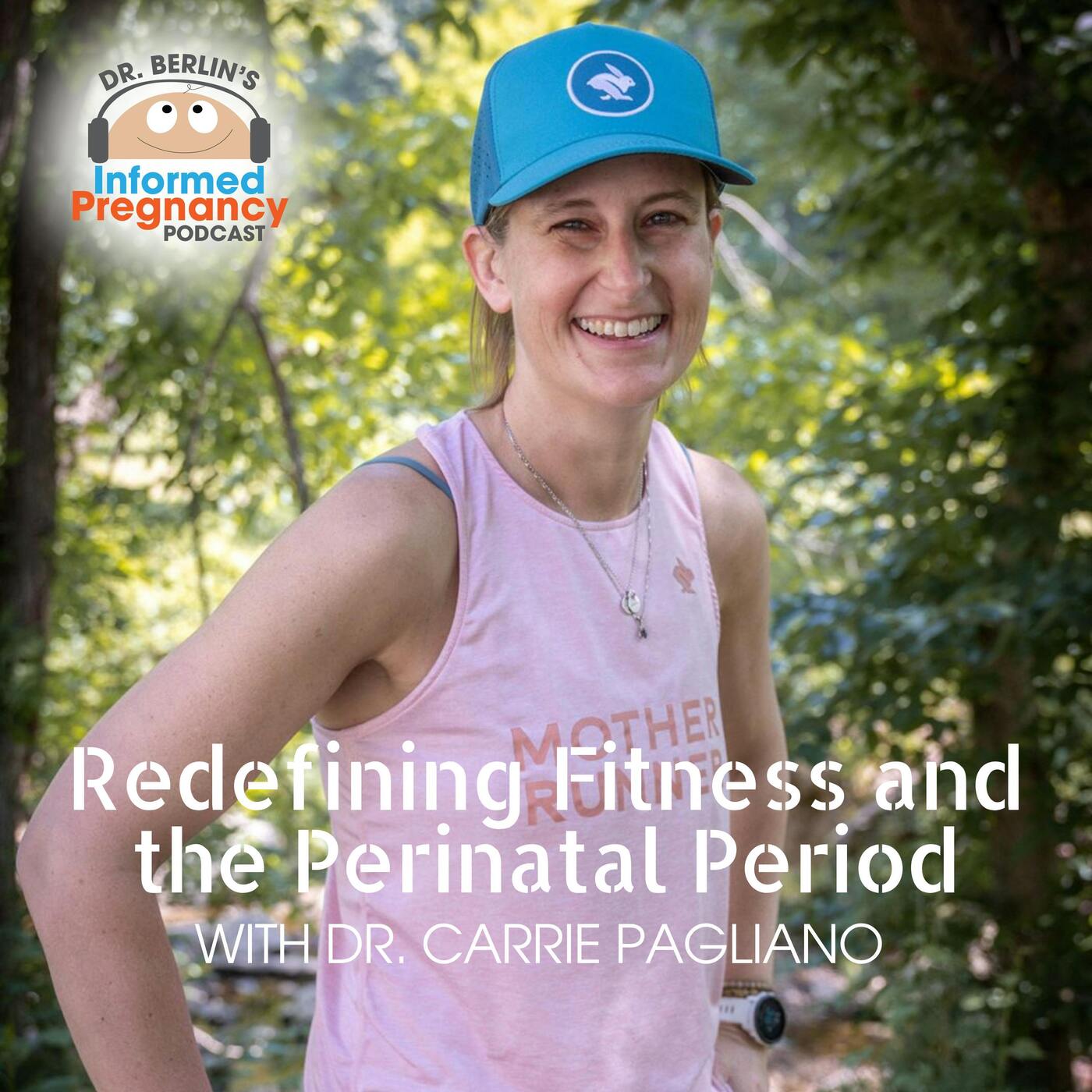
Dr. Carrie Pagliano is a pelvic health physical therapist, fitness professional, and mother of two. She discusses her own pregnancies, her own rocky return to running, and the perinatal period with a focus on physical rehabilitation and performance.
Informed Pregnancy Media and Mahmee present an all new podcast! One Way or a Mother is a new narrative podcast from Dr. Elliot Berlin, DC. Each season is an intimate story of one woman, one pregnancy, and all of the preparations, emotions, and personal history leading up to the birth. Episodes feature the expectant mother along with her family, doctors, and birth work team.
“And we're looking back and saying, hey, we might have unintentionally deconditioned our moms more than we needed to. And that exercise might actually be a much more viable, safer option than we had previously considered.”
“And now we've got some data looking at fetal outcomes via this research group and researcher Amy Mullick saying actually, no, it's good for the baby. There's no adverse fetal outcomes.”
“But again, I think the idea that we're going in not automatically taking movement away from moms is a really big shift.”
“So the average patient that I'm seeing now, we will plan to see them for their first postpartum pelvic floor visit at about two to three weeks after their due date. So give or take whatever that ends up being. And that's very different, even from a couple of years ago, because, you know, we're waiting for that six week mark that really is just arbitrary. And so at two to three weeks, you know, there's a couple of things that we're targeting.”
“But also women need to be listened to and not just told that these symptoms are just what happens. We can manage them. And estrogen is not a dirty word and doesn't cause breast cancer.”
AI-generated transcript with speaker labels — may contain errors, especially names and medical terms. Dr. Elliot Berlin, DC appears in blue; Dr. Carrie Pagliano in orange.
Dr. Elliot Berlin, DC[0:00] My guest today is a pelvic health physical therapist, certified running coach, weightlifting coach, and mom of two. Over the past 25 years, she's helped redefine how we support women through pregnancy, postpartum, and perimenopause. Not just with rehab, but with performance in mind. After her own less-than-perfect pregnancies and a rocky return to running, she realized the postpartum road was filled with gaps, myths, and one-size-fits-all advice. Now, she's helping parents ditch the guesswork and move through motherhood with strength, clarity, and confidence. I'm pregnancy-focused chiropractor Dr. Elliott Berlin, and you're listening to the Informed Pregnancy Podcast.
[0:39] Dr. Carrie Pagliano, welcome back to the podcast.
Dr. Carrie Pagliano[0:57] Thank you for having me.
Dr. Elliot Berlin, DC[0:59] My goodness, I learned a lot from you a couple years back when you appeared in episode number 348, and we talked about pelvic floor health for active moms. Let's jump into what's happened over the past two years. I feel like the field of pelvic health physical therapy is so evolving and emerging that even when a few months go by, things change, we learn more. What's happened since we spoke less?
Dr. Carrie Pagliano[1:23] Yeah, I was looking back on the last time we chatted, and so much has evolved. And it's exciting if you're in this space, because I literally do not treat pregnant and postpartum moms the same way now as I did a year ago, two years ago. But I think it also can be incredibly confusing trying to navigate this as a postpartum person and know what's up to date and what's not up to date, and especially in the area of exercise. So always a history lesson, I think, is important to go back and understand that we come from, I think, a place of it's well intentioned, not wanting to do anything bad, harm the baby, hurt the mom, things like that in pregnancy.
[2:04] And what we've started to realize is potentially by scaring people without a lot of data or information, which again, it's really hard to do research on a mom who's pregnant to say, hey, if we do this, it's going to harm your baby. Nobody's going to sign up for that study. But we have more data now because we have more active women who are pregnant and sharing their stories and their data. And we're looking back and saying, hey, we might have unintentionally deconditioned our moms more than we needed to. And that exercise might actually be a much more viable, safer option than we had previously considered. So I think that's one of the biggest shifts that we're actually getting really nice, clean data on within the last two years.
Dr. Elliot Berlin, DC[2:48] So meaning during the pregnancy, we've told people, hey, when you get to a certain point in pregnancy, scale it down. Don't be as active. And now we're learning maybe that's not the best advice.
Dr. Carrie Pagliano[3:00] Yeah, I would say more specifically, we just had a study come out. A lot of good research groups in Canada right now. Amy Mullick. Exactly, exactly. So I just actually spoke with researcher Amy Mullick recently, and she just published a study in late winter, early spring, 2025, looking at resistance training in pregnancy. And again, go back to the history lesson, just getting women in a gym, lifting weights was unheard of. And then if you were pregnant lifting weights in a gym, and we're not talking just hand weights, we're talking barbells and deadlifts and bench press and things like that. Maybe your local community was fine with it, but you were definitely going to get some hate from people thinking that you're going to kill your baby or they're going to get switched or things like that.
[3:48] And now we've got some data looking at fetal outcomes via this research group and researcher Amy Mullick saying actually, no, it's good for the baby. There's no adverse fetal outcomes. And they looked at lifts like deadlift squats and bench press and bench press. I found really interesting because typically bench press you're laying on your back. And that's one of those things that are, you know, it keeps getting passed down to all the new moms. You know, God forbid you wake up in the middle of the night flat on your back. But yet we have now women that are lifting weights flat on their back and there's no adverse fetal outcomes.
Dr. Elliot Berlin, DC[4:23] In the office, at least once a week, someone panics because they want to sleep on their left side and woke up on their back. And also when you're doing these exercises, first of all, you're very awake. So if you do start to compress the blood flow coming from your legs to your heart, you're going to be lightheaded, nauseous, dizzy, sweaty. You'll know where to when you move into a different position. And also you're just doing it for limited periods of time, short periods of time. So you could be in touch with your body and just listen to see if it's taking it well or not taking a while.
Dr. Carrie Pagliano[4:51] Yeah, no, my happiest place, both of my kids at 41 weeks, I'd wake up flat on my back in the middle of the night because I could breathe. It was lovely. But no, I think, you know, especially women, women who are weightlifters, you're worried about is this going to be safe? Is this going to be OK? And we have a growing data set of women who are continuing to weightlift. And fortunately, researchers that are gathering this data and following these outcomes and helping kind of I wouldn't say debunk the myths because I don't know if the myths were ever kind of rooted in any sort of data. We just didn't know. And so, again, to reassure those moms who are already lifting that, yeah, you can continue to do this and it's going to be safe for the baby.
[5:33] Obviously, you know, you're working with your OB, you're working with your health care team. You're looking out for any of these signs of, you know, blood flow changes or you feel like you're lightheaded or things like that. But again, I think the idea that we're going in not automatically taking movement away from moms is a really big shift. I know in my field, it was like, oh, just gentle things for a really long time. And now we're able to step up and be a little bit more supportive of our active moms.
Dr. Elliot Berlin, DC[6:03] I love that. And also, I just recently appeared on your podcast and I told you about a new project we're working on called Growing with Garrett. And I think you're going to really love it. Garrett was a former weightlifter, bodybuilder, competitive, and she was doing deadlifts the day that she went into labor. And, you know, it's interesting because throughout pregnancy, there's constantly all the things that you're told you can't do. Don't do this, don't do that, don't eat that, don't turn that way, don't look that way. And they're not really based on science. And even when they are based on science, you know, risk is an interesting thing because we take risks every single day.
[6:41] And you have to choose which risk you want to take for which benefits. Nothing is risk free. Instead of making choices for somebody about which risks we think they should take for which benefits, we should be giving data. But maybe we didn't really have the data. So it's refreshing to know that now the data is coming in. Yeah, we didn't.
Dr. Carrie Pagliano[6:57] And again, I think the history lesson is always important that, you know, it took a long time for it to be OK for women to be in the weight room period. And, you know, you could say the same thing for running. I mean, women have been running marathons not that long. And now we're seeing a lot more women running in pregnancy. I think the last Olympic trials last spring, there was maybe two, maybe three participants running the Olympic trials for the United States in the marathon pregnant. One of them, I think she dropped out about halfway through. She's like, I just want to start. I'm six months pregnant. It's not going to be pretty. It's all good.
[7:31] But yet we had other moms that are running in that first trimester. And again, historically, I feel like there's been such a backlash. You're going to shake the baby, this and that, whatever. And because we're not seeing adverse outcomes, because we're seeing good maternal and fetal outcomes and we're starting to get the data to support this, we as professionals have to kind of check our own biases. And what we were taught, you know, years ago that, gosh, actually, maybe we need to make sure that we're doing straight abdominal strengthening. That's a big one. You know, like, oh, you're pregnant. You can't do ab work anymore. And we're seeing some data now that says if you're doing, you know, rectus, so that's that sick peck muscle in the center, it's okay to do rectus training in pregnancy.
[8:15] Granted, we do it supported with like a monster band or something like that. It's okay to do that in pregnancy and postpartum. And it does not impact that into recti distance, which is that space between those two sides of the abs that everybody feels like, you know, causes the diastasis recti and so on.
Dr. Elliot Berlin, DC[8:31] So again, that was definitely a concern for a lot of people. But then it's also interesting to say you do it with a support band to kind of mitigate that possibility. So it sounds like based on this data, you train your pregnant moms differently now.
Dr. Carrie Pagliano[8:45] Very much so. And I think that's something that I am explaining not only to these moms in pregnancy, but I'm going to jump ahead. And also that I am explaining this to my perimenopausal moms because segment number three, I know, but like we'll do a little like foreshadowing here. I think I need them to know that because I need to get them caught up. They don't realize that things have shifted and what they kind of missed out on. And the thing is, it's not their fault that they missed out on it because we didn't know. But we got to get everybody else caught up. So I kind of feel like I'm getting everybody, regardless of whether you're pregnant, postpartum or perimenopause, up to date on what we know about just women exercising.
[9:29] And we have the capacity. And if you are pregnant, it's not going to be adverse for fetal outcomes, things like that.
Dr. Elliot Berlin, DC[9:36] And again, just on the outside, I think it sounds like it would be health benefit to both mother and baby.
Dr. Carrie Pagliano[9:42] Well, and when you look at just, you know, how many Americans don't get enough exercise period, can you look at pregnancy? You know, is pregnancy when women historically start to not participate in exercise because of fear and then they don't necessarily get back to it in postpartum because of life and whatnot. And then before you know it, they're in perimenopause and worried about, you know, bone health and things like that. So I feel like we have to have these conversations sooner. And the fact that it's a lot easier because we have a little bit more data in pregnancy. No, you don't need to let the stuff go. And yes, we'll modify if we need to.
[10:17] But you may not necessarily need to.
Dr. Elliot Berlin, DC[10:21] Well, it sounds like there's change ahead. And it's really great to have the data to be able to make these decisions that way. I always tell my patients and we've talked about it before that if you could listen to your inner voice, what would you be doing? And the other thing I love to do is watch other animals in the wild. You know, do they all of a sudden become more sedentary and stop their daily activities or don't they? And when we sometimes with good intentions give bad advice, it can really affect a whole generation of people. So I'm with you on catching up. And I love what we've talked about during pregnancy. And I really want to learn more about postpartum and perimenopause as well.
[10:59] Let's take a little break. When we come back, we'll talk about postpartum rehab since 2023. We'll be right back.
Dr. Elliot Berlin, DC[11:06] Welcome back. We're talking to Dr. Carrie Pagliano and we're talking about exercise. And we talked about pregnancy. Well, what about postpartum? I mean, postpartum recovery is also kind of a gray area in dicey time. People are not sure what they can do and what they can't do. And of course, there's a deliberate disconnect from the inner voice that would tell you what to do and what not to do by giving a lot of information. Everyone's like, oh, I can't do anything until six weeks. And I see some people who are like, can I have 12 weeks? But I see other people who are like, I'm itching to move two weeks after my baby came out. What do you recommend?
Dr. Carrie Pagliano[11:52] You know, it's going to be it depends. Right. And I think this is where we need to empower women to understand that there's a spectrum on what this looks like. And so we can see women. We just had a woman last week. She won a hundred K ultra marathon at six months postpartum. Yeah, granted, her coach just had a baby as well. And so she was very well supported not only from a nutrition, but pelvic floor and exercise aspect. So that's one part of the spectrum that we can be inspired by. But I think it also to other people that may have had a really rough delivery or early postpartum or their babies having issues with feeding or sleeping or reflex or all of the things.
[12:33] I think it can also be a little difficult for moms to see others doing so well. And there's such a I feel like there's such an expanse of what that initial postpartum period can look like. So the average patient that I'm seeing now, we will plan to see them for their first postpartum pelvic floor visit at about two to three weeks after their due date. So give or take whatever that ends up being. And that's very different, even from a couple of years ago, because, you know, we're waiting for that six week mark that really is just arbitrary. And so at two to three weeks, you know, there's a couple of things that we're targeting. One is just reconnecting to pelvic floor, deep abdominals.
[13:13] But we're also educating on, gosh, are you still leaking? Are you feeling any heaviness or pressure? Can we screen out some of these potential medical issues like stress, urinary incontinence or prolapse early? Can we get referrals out to lactation consultants or perinatal mental health therapists? Like, can we get more resources to moms sooner? Because even though ACOG, the American College of Obstetricians and Gynecologists, in 2018 said, hey, we should be making touch points sooner than that six week point. It's just not happening. We have less people in the medical field. I had a mom recently that her first visit after her C-section was at six weeks.
[13:56] I'm like, no one looked at your scar at two weeks. Like, you've got to be kidding me. And so we are another touch point. Like, the medical system is already overwhelmed. Like, we need more touch points to help kind of field these questions and get people filtered out to the help that they need. There's a huge risk for, you know, early postpartum complications. Can we screen out some of those medical things so that that early touch point I think is huge. And then by six weeks, yes, I'll screen return to run readiness if they've been able to have a pretty easy postpartum. We'll look for, you know, are you getting sleep? Are you getting nutrition?
[14:31] How is breastfeeding going? We're screening out for relative energy deficiency. I'm also taking into consideration, are you trying to get back to running or exercise for mental health purposes and we need to bring other people in? Are you at risk for bone stress injuries because potentially you're over exercise and under fueling? Can I help guide you in that journey in conjunction with another provider like a dietician, a postnatal dietician? Can we make those steps forward to get a nice foundation of strength before you get back into running? But I might also have somebody that they had a lot of complications with delivery and postpartum. And we may not even be starting to connect on coordination until 12 to 18 weeks, maybe even six months.
[15:13] So this all goes to say, yes, we can go early and we can celebrate those people that are hitting these milestones and have a lot of support. But also acknowledge the women that maybe the path is a little bit slower. But just because it's slower doesn't mean you can't still eventually kind of hit those milestones in a safe, supported way. So that's the part that's great. We just had 2025 Canada, again, Canadians, they just came out with postpartum exercise guidelines. Again, it's kind of what we talked about earlier, like exercise is good. Exercise is great for mental health. It's great for sleep and postpartum. Whatever that looks like to you, let's start there and work on consistency first.
Dr. Elliot Berlin, DC[15:53] I think so many things that you said light up in my mind as important. Number one, the arbitrary six week checkup, the midwives jump in right away. They come in a couple of days after the baby is born. They see you again a couple of weeks after the baby is born. And like you said, that touch point is so important because there is a lot going on mentally and physically and spiritually and relationshiply. And it's a big change, especially the first one. And to have somebody around you to just even more so in your own environment like the midwives go to you and can really take in a lot about your world and see where I had a friend who helped travel teams who were, you know, try to help them find support and be on a good path.
[16:34] And he always described it like either a trivial pursuit piece or a pizza. And it was like there's there's eight different things that you look at to see the full picture of how this person is doing. And so naturally, I think midwives do that. Practitioners like you do that. Lactation consultants do a due list, sometimes do a postpartum due list. But the more that you can have that kind of support, the village support we always talk about, especially after a cesarean birthday to go. It's like you have this big abdominal surgery and at the same time you have a kid and nobody's really paying attention to you at all. All about the baby. And so we've done over the past year in our office.
[17:10] We've really focused hard on better recovery from the surgery and focusing on you and focusing on that in a way that hopefully doesn't overwhelm you because there is what to do in those early stages. There are a couple of doctors here who do three week checkups and I love that for it because one of them told me Dr. Benta Kaiser told me that a lot of her patients are ready at three weeks. They can start doing things already. And she's like the only reason we wait till six weeks is because that's when let's say ninety five percent of people are ready. So instead of having to do these visits and you're not ready yet, you know, and wasting a visit, so to speak, then we just wait till almost everybody's ready.
[17:45] Give her the green light and you can go. But like you said, some people are really willing to go and need to go and can go. They just don't know that they can go. So I've encouraged my patients to ask, like during pregnancy, be like, can I come see you three weeks afterwards for a checkup and see where I am? Maybe I can start doing some things and other things. And again, people are just super itching to go.
Dr. Carrie Pagliano[18:07] That's why we plan this stuff in pregnancy. Usually, if I'm seeing somebody during pregnancy, we start talking about that postpartum already and we plan those visits. So it's one less thing you have to think about. And then the other beautiful thing in the last couple of years, I think just normalization of virtual care and telehealth. You mentioned kind of getting into people's homes like if mom can't get out because they anticipated things were going to be easy and maybe they don't have the child care that they thought or they feel like it's going to be too hard to take the baby out. Being able to switch automatically to telehealth so that we can get that access early and answer those questions.
[18:41] Because you have no idea when you're pregnant what you're going to encounter. And usually those moms that are asking for, hey, I'm ready to move. Typically, baby sleeping, babies feeding fine, moms getting some rest, moms feeling relatively sane for the most part. And they feel like they're ready to do that. Typically, it's not the moms that are having all these other issues. But again, everybody needs what they need in that moment. And so the more we can kind of create those touch points and make it less barriers for them and just make it brainless and easy, which is what we need in those first couple of weeks, the better.
Dr. Elliot Berlin, DC[19:14] I love the virtual option because even though there are some restrictions, things that you can't do virtually that you can do in person, so much of this is individual. And like you're saying, each person needs something different. And you could always give some very general guidelines, but it's much better to be able to say for you specifically. These are things that would be helpful for you. All right, let's take a little break. When we come back, we're going to talk about perimenopause. I'm starting to learn all about it. We'll be right back. All right, we're talking about perimenopause now with Dr. Carrie Pagliano. Look, I started as really getting into this world of women's health through my own fertility journey with my wife
[20:03] and helping other people overcome their infertility. And then with all those babies during pregnancy, we kind of got swept into birth and postpartum care and early parenting. And as the journey continues, perimenopause, I'm starting to see all sorts of different signs and symptoms that pop up. And now it's becoming clearer. Oftentimes they're related to perimenopause. Tell me what I need to do and tell our audience what they need to know.
Dr. Carrie Pagliano[20:26] Oh, boy. It's a little bit of a dumpster fire, but we got this. What I will say is learning more about perimenopause and menopause actually made me go back and look at early postpartum in an entirely new way, because there's some parallels. First of all, early postpartum, estrogens crashing, perimenopause, we have estrogen crashing. So we had this big shift in hormones. And so those moms that remember those random first hot flashes in the middle of the night that no one told you about in postpartum, guess what? They're going to make a reappearance. But that's not the only thing. I think that's the stereotypical we were talking earlier on your show about what people see on TV about menopause.
[21:11] And I think for those of us who are Gen X or older millennials, like you were taught that menopause was Blanche Devereux in the Golden Girls in her caftan in Florida, you know, talking about her hot flashes.
Dr. Elliot Berlin, DC[21:26] Oh, that's literally the image I have in my mind.
Dr. Carrie Pagliano[21:29] No, not that. And so I think that's the thing that's really confusing is because that's what we were brought up with. But that is not at all what we're experiencing. And so when you learn about again, it goes back to what we were taught as kids is we're taught that like estrogen is just a reproductive hormone. No, we have estrogen receptors all over our body and our tendons in our reproductive organs, in our bladder, in our urethra, like all these parts of our body and our brain and our gut. You can have these multi system symptoms that it's really hard to differentiate. Am I just losing my mind because I'm a mom with a couple of kids and a job and, you know, the world's a dumpster fire or am I in perimenopause?
[22:14] And it's even harder if you are, quote, a geriatric mom where you've had a baby late thirties, early forties, which is prime time for perimenopause symptoms to come up. Did you even get out of postpartum for a hot second and then you're right back into perimenopause and the symptoms are the same. Yeah, exactly, exactly. And so I think that's the thing that it's confusing. Number one, because of just understanding it's far more than hot flashes. Lots of times when I'm screening with patients, I'm looking at their age anywhere. I would say between, you know, early forties all the way up to fifties average age in the United States for menopause, which is that one.
[22:57] You've had a year without a cycle. You can be having these symptoms. I think the other thing that makes this really hard is a lot of us are on some sort of birth control or contraceptive management. So we don't necessarily have our cycles to track. And so, again, we don't know what the heck is going on. And then we're inundated with all this information to be like, hey, you're in perimenopause. You've got insomnia. You've got, you know, brain fog. You've got increased anxiety, kind of all these things that, again, it's like, is this my life or is this perimenopause? You're trying to figure out what it is. And then you're being told to go get blood work or this or that when the fact of the matter is you would need to do testing throughout like a whole cycle.
[23:39] And again, if you're on some sort of birth control management, like it makes it really hard to figure this out for yourself. And so I navigated this about 18 months ago. I was on continuous birth control, so I didn't have a period. I did notice that my blood pressure was increasing, which happens with the oral pill and decided to come off of it. I was, I think, forty seven, forty eight at the time came off of it. Blood pressure got better, but all of a sudden no cycle. I'm waking up hot at night and blaming our dog that we'd had for four years. Like she didn't just all of a sudden get hot. I'm not an anxious person. That's increasing like all these other things are going on.
[24:18] And I remember like writing this stuff down and I'm glad I did. I was able to go see my gynecologist who was a friend. Our kids had gone to school together and I'm like, OK, am I loco here? Like what's going on? And basic blood work just because we had nothing to go off of. And she's like, you know, all these things together collectively, there's no one singular test that says, yes, this is what it is. But this story together stands to reason you'd be a good candidate for a patch with estrogen paired with progesterone. And that was about two months from coming off the pill to starting this. And a couple of months later, I'm like, did I really need that?
[24:57] Because I felt so much better. I literally thought that the symptoms that I was having before I was like, I didn't really feel that. That's why I was glad that I wrote it down. And again, I got really lucky because I'm in this space. I kind of know some people. But again, like it's never completely that smooth because you're still dealing with like the fluff around the middle that you get the added weight gain. And that's real. And again, our generation, we were the ones that were like always trying to be smaller and eat less. And, you know, we're still trying to navigate our exercise and everybody saying, you know, do this type of exercise. Don't do that type of exercise when the fact is the data that we have right now just points to regular consistent exercise.
[25:35] If you're trying to lose weight, you need to do that in combination with regular calorie deficit. There isn't necessarily human trial data to point to. You know, if you're not doing a perfect way to do this, which again, this is so reflective of postpartum is like you have to figure out the person in front of you. If you're not doing resistance training, yes, you should start. If you're doing resistance training, can you do a little bit more or do it consistently? If you're not exercising at all, where do you start? If you're not getting a good healthy diet, let's start with the basics. And again, I think that's what's getting lost in a lot of the messaging out there is we're focusing on these nuances where there might be a rat study or something like that.
[26:15] And people want to be heard. And I appreciate the fact that we're talking about this. But like, let's start with some basic public health information about we need to exercise. We need to have a good, balanced, healthy diet. We need to get sleep. But also women need to be listened to and not just told that these symptoms are just what happens. We can manage them. And estrogen is not a dirty word and doesn't cause breast cancer. So that's a whole other podcast.
Dr. Elliot Berlin, DC[26:39] And we should do it. I mean, you just dropped a bomb of information for me and it creates so many more questions.
Dr. Carrie Pagliano[26:47] I know. Sorry.
Dr. Elliot Berlin, DC[26:49] No, we should probably do another episode just on this, honestly, and to do some research on it. And like you're saying, with the weird symptoms, I do see patients in that age category starting to come in with weird bone symptoms. And I'm just like, oh, I'm a chiropractor. Bones, bones. But then I'm like, it's not at a joint. So I can't adjust it. You know, and you start to explore. You're like, oh, you know what? This might be hormonal. And oftentimes it is. And then at least you know what it is. Like, you don't have to worry that it's. Well, you think you're crazy. You think you're falling apart when. Crazy. Everyone immediately goes to thinking it's cancer, some kind of cancer.
[27:22] And sometimes it's just this. OK. So it sounds like from a physical fitness perspective, it's very similar to postpartum. What about public health PT?
Dr. Carrie Pagliano[27:31] Yeah. So from that perspective. So we'll jump back to kind of what I alluded to earlier. We have women that didn't necessarily have access to the same options and care that are pregnant and postpartum women do now. So I have women that may never have addressed their postpartum leakage. They may never have addressed their postpartum pelvic floor issues and just sort of dealt with it. And now they're coming into this low estrogen state. And because we have estrogen receptors in our urethra, in our urinary structures, those sorts of things, estrogen kind of plumps up some of these tissues. And so I think a lot of people are familiar with vaginal dryness in postpartum as estrogen decreases.
[28:13] Same thing happens in perimenopause. But you can have increased urinary symptoms. And we're getting some really nice data now looking at use of local topical vaginal estrogen prescribed by your physician to help kind of replenish this. It's not systemic. It's very local. And it does a really good job to address what's called congenital urinary syndrome of menopause, which is basically you can have UTI like symptoms, urgency, frequency, worsening of maybe you are already experiencing incontinence or prolapse symptoms. And now it's starting to worsen with no particular reason other than you had a certain age or time period. And so when I'm working with these patients, one of the first things I'm going to have them do is talk to their GYN, start on topical local estrogen, because that can be working on in the background.
[29:04] So we can plump up these tissues, get a little bit more tissue integrity. I can address the pelvic floor issue that they never addressed in postpartum because we didn't necessarily have the resources. And then those two things combined, we can actually improve quality of life. So you don't need to be like that lady on the depends commercial and be having fun with your family and your pad. But again, like I think this idea that leaking when you're older is just an old age thing. No, you can get a definite shift when you enter perimenopause. You can be totally fine and never have had any pelvic floor issues. And now all of a sudden something starts and there's a hormone component to this.
[29:44] So that's part of what our job is as pelvic floor. Is yes, some of this may be muscular, but it also may be muscular in combination with kind of this hormonal change in flux that can impact kind of the support that you need to be continent. So it's been really cool to not only be able to get, you know, moms by vintage caught up and say, hey, you know, you don't have to deal with this because we also have moms that are so much more active in their 40s, 50s, 60s, 70s, 80s. And they don't want to be leaking. They don't want to be experiencing pelvic floor issues. And it shouldn't be something that we necessarily have to just accept as a fall out of aging.
[30:24] So it's been really fun to navigate this professionally, a little daunting as navigating it personally.
Dr. Elliot Berlin, DC[30:30] But you learn a lot.
Dr. Carrie Pagliano[30:32] Yeah.
Dr. Elliot Berlin, DC[30:33] So that kind of passion really drives you to be a great practitioner and also a great guest. I've learned a tremendous amount from you now in just one sitting about pregnancy, about postpartum and about perimenopause. And there's obviously so much more we can learn from you. Luckily, you have a podcast, the Active MonPod podcast, and you also have resources online. You have courses and other materials. Where can we find all of it?
Dr. Carrie Pagliano[30:58] Yeah, easy place to find me at karypagliano.com or we hang out over on Instagram at karypagliano.
Dr. Elliot Berlin, DC[31:04] I am definitely going to be diving deeper into your resources, especially with emerging data. Finally, for this field that's actionable and learn from you. And I also I'm pretty sure I'm going through menopause.
Dr. Carrie Pagliano[31:19] So I can't help you with that.
Dr. Elliot Berlin, DC[31:21] I don't know. We'll see what can cross over and maybe I can apply.
Dr. Carrie Pagliano[31:25] Sounds good.
Dr. Elliot Berlin, DC[31:26] Thank you so much for joining me again. And again, for this wonderful information, really valuable and helpful. I appreciate you.
Dr. Carrie Pagliano[31:32] Thanks for having me.
Dr. Elliot Berlin, DC[31:33] Of course, at home. Thanks for listening to the Informed Pregnancy Podcast. For more information just like this, visit us online at informedpregnancy.com.
Want more pregnancy + parenting? Start your FREE TRIAL of Informed Pregnancy+ and get access to all our curated pregnancy and parenting content — original series, iconic birth films like The Business of Being Born, prenatal workouts and more.
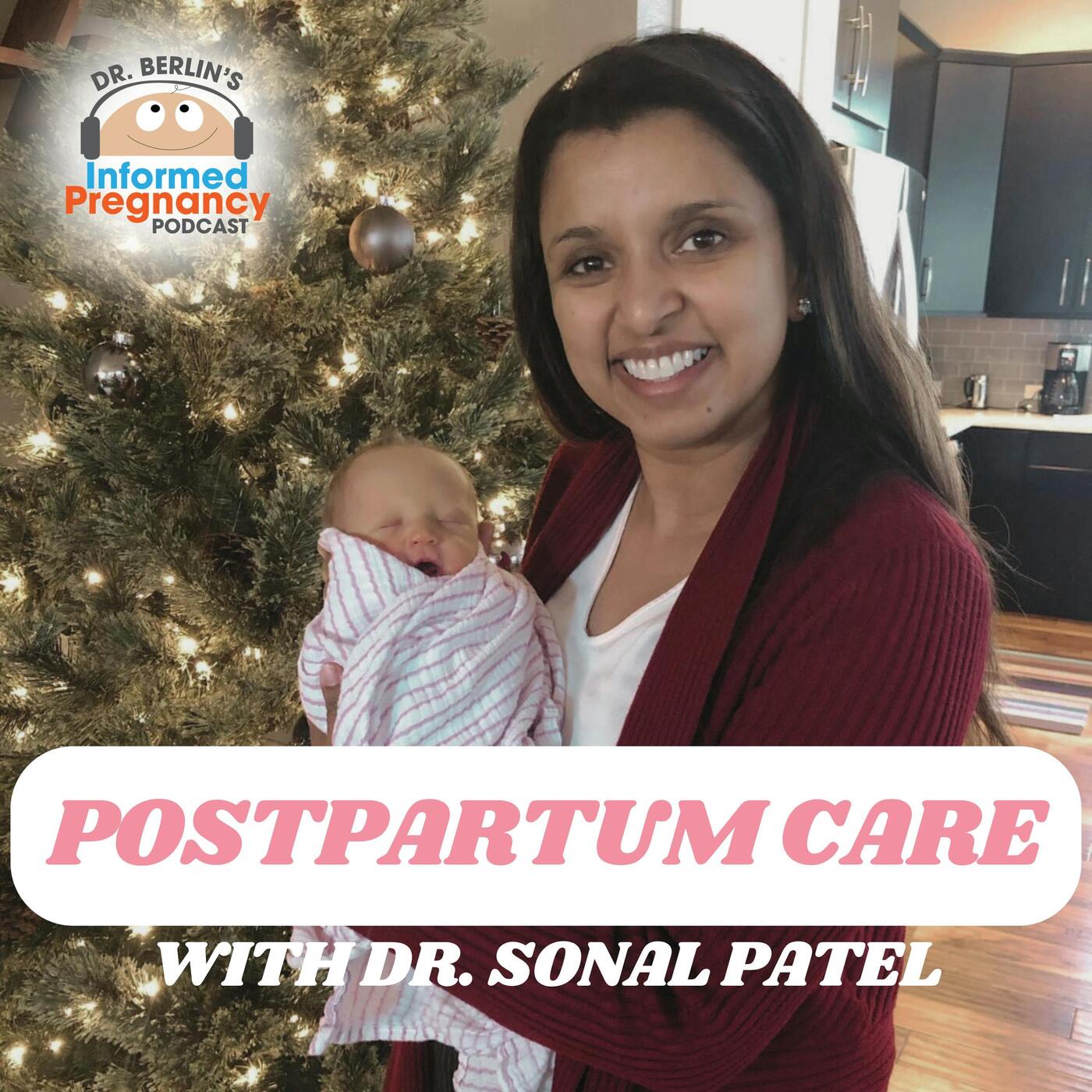
Dr. Sonal Patel is a pediatrician, NICU fellow, lactation consultant, and is the founder of a home health service focused on postpartum care. She experienced 4 births herself along with postpartum depression, and is now focused on bringing evidence based support into postpartum medicine.
Informed Pregnancy Media and Mahmee present an all new podcast! One Way or a Mother is a new narrative podcast from Dr. Elliot Berlin, DC. Each season is an intimate story of one woman, one pregnancy, and all of the preparations, emotions, and personal history leading up to the birth. Episodes feature the expectant mother along with her family, doctors, and birth work team.
“So I was just checking off boxes because I wanted to show the world I'm doing fine. Right? Like I'm fine, but I wasn't.”
“but I was telling people I wasn't feeling well. I just wasn't listened to.”
“my contractor was like when I came back. He was like, didn't you just give birth? I was like, wait, you just recognized that I gave birth, you know,”
“So really kind of changing our view from the get-go to be like it should really be a mother shower, not a baby shower and doing those services first.”
“know, even any of it would resonate that I just want to make sure that someone like me with so much privilege, like so much privilege, had such a hard time that if you think that you're having a hard time, trust me, you're not alone in it.”
AI-generated transcript with speaker labels — may contain errors, especially names and medical terms. Dr. Elliot Berlin, DC appears in blue; Dr. Sonal Patel in orange.
Dr. Elliot Berlin, DC[0:00] Today's guest paid a production fee to appear on the podcast, which helps us cover production costs and bring you quality content. Their views and opinions are entirely their own. My guest today is a pediatrician, NICU fellow, lactation consultant, and the founder of a radically different model for postpartum care. But before she reimagined the system, she lived its gaps firsthand through four very different births, postpartum depression, and a moment when her own contractor noticed her pain before her medical team did. Those experiences led to the creation of a Colorado-based home health service delivering mother-baby care during the crucial fourth trimester.
[0:41] Now, she's on a mission to bring empathy, equity, and evidence-based support into postpartum medicine. I'm pregnancy-focused chiropractor, Dr. Elliott Berlin, and you're listening to the Informed Pregnancy Podcast. Dr. Sonal Patel, welcome to the podcast.
Dr. Sonal Patel[1:12] Oh my gosh, thank you so much for having me. I'm so excited about this conversation. I'm awestruck.
Dr. Elliot Berlin, DC[1:17] You have four kids, all boys, I'm told.
Dr. Sonal Patel[1:20] Yeah, whatever you believe in, say a prayer for me.
Dr. Elliot Berlin, DC[1:25] And then you've also created this company and it's like having five full-time jobs. I don't know how mommies do it. So you can add six if you would like. Another one to take care of. Let's start at the beginning. Where are you from originally and what got you into medicine?
Dr. Sonal Patel[1:44] So I was born in Lucknow, India, which is about two hours from Delhi because everybody's associates India from Delhi. And my parents were both physicians and my mom really wanted to go outside the country. So I India at the time. So my dad gave her two choices either Nigeria or Jamaica and they chose Nigeria. Don't ask. My brother was born in Nigeria and finally moved to the States when I was nine. So most of my middle school high school and thereafter I did in the States and we landed in Omaha, Nebraska. So my parents really pick very oddball places to go. And what prompted me to become a physician was what I saw through them was they took a skill that they had developed and they could take it anywhere around the world
[2:34] because medicine was medicine. The human body was the human body diseases. Yes, some areas are more unique than others. But the basic foundation of it was they could apply everywhere. And you know the old Indian adage either you become a doctor engineer or a lawyer and a business person. I did not know how to do business. I was like this is not for me, which is really funny where I am right now and being a lawyer didn't really attract me. So medicine it was.
Dr. Elliot Berlin, DC[3:04] Interesting. So first of all, it's such a interesting journey just geographically from where you were to where you are. And I don't know if you have an accent at all. If you do it, I don't hear it and I don't know what it would be.
Dr. Sonal Patel[3:17] It's actually a mix. So in India and Nigeria and kind of lived in Libya too. I didn't mention that but most of my schooling was from the British system. So when I came to the States, I still had a very strong British accent and then you land in Midwest. And most of my training has been down in the South. So sometimes I will go you all and I will say bless your heart. And a lot of people have commented they can't really point it down. But I'm like, well, that's a uniqueness of what I've collected through my own journey.
Dr. Elliot Berlin, DC[3:49] Yeah, it's your own personal style. Okay. And then I kind of understand Nebraska because my wife and I she's a psychologist and she got computer matched with an internship in Lincoln, Nebraska. So we spent a year very close to your neck of the woods and it was quite different than New York City.
Dr. Sonal Patel[4:08] Yes, it is. And we do have plumbing. Yeah, I went to college at Emory and that was like the first question they asked me in Atlanta, Georgia. I was like, do you guys have plumbing? It's like, yes, we have plumbing.
Dr. Elliot Berlin, DC[4:19] Oh, interesting. We're on a very similar track because we both went to undergrad in Atlanta.
Dr. Sonal Patel[4:24] Oh, where'd you go?
Dr. Elliot Berlin, DC[4:25] I went to Life University, the chiropractic school and she went to the Georgia School of Professional Psychology. So, you know, we're kind of following each other around the country. Okay. So medicine, when you got into it, did you have a vision on what specialty was interesting to you?
Dr. Sonal Patel[4:42] You know, honestly, I discovered it while I was doing my third year med school and pediatrics. And the reason that I chose pediatrics was the fact that, you know, adults just don't listen. And I was like, if I want to make a change, maybe I can make the change because parents and you are more apt to listen if there's a health issue with your own child and you'll make the changes. And I was like, oh, okay, maybe I can do it and make actually a long term impact rather than a short term impact. So starting from the children. And then I actually did a NICU fellowship. So I did additional training specializing in the NICU and I practiced in the NICU for about 10 years in fellowship included.
[5:24] And the reason that got me into the NICU was I loved acute care and ICU care. And I really enjoyed that whole dyad, the mom and the baby and, you know, development of both symbiotically. So that's what led me to the path of medicine that I chose.
Dr. Elliot Berlin, DC[5:42] Wow. I mean, it's interesting to hear you say I love the intensive care, but I understand it. Like you can have a massive impact right in a short period of time. And I guess in another weird parallel, I used to work in emergency rooms and ambulances as an EMT in New York City. So I get that the downside, I guess, is that you don't have the relationship long term with your patients. It's a different type of care. But man, the action is there and the actions that you take have such a profound impact right away.
Dr. Sonal Patel[6:15] Oh, definitely. I mean, it's as simple as thinking about are you going to poke this baby for X, Y, and Z? Because if you poke the baby, you literally are stimulating the hormonal and neurological system of this premature baby. And do I really need this? I mean, this is long term thinking. So people, I don't think they get really awed by the NICU, but there's so much thinking that happens and very critical thinking to be like, is this worth what the diagnosis I'm looking for? Or is this lab going to help me out? So that was the aspect of it that I just enjoyed immensely.
Dr. Elliot Berlin, DC[6:51] Wow, that's really neat. Okay, your husband's also in medicine.
Dr. Sonal Patel[6:55] Yes.
Dr. Elliot Berlin, DC[6:57] I mean, is that what you talk about over dinner?
Dr. Sonal Patel[7:00] No, we are very much that family that I wouldn't say emphatically, but we do have like five minutes to discuss it. And then thereafter, it's like, okay, enough like shop talk. Let's talk about something else.
Dr. Elliot Berlin, DC[7:15] I mean, I don't know how you have time to go to anything with four boys bouncing around. Did you always know from the beginning that you wanted a bunch of kids?
Dr. Sonal Patel[7:23] You know what? I think I've had a lot of amnesia because of these boys because apparently around to my cousins, I was always wanting five kids. And now that I think about it, I was like, what was I thinking? And they're like, you always wanted five kids ago. I don't remember saying that. They're like, no, and multiple sources have told me that. So apparently I did, but four boys later, I'm like, oh, that's a lot.
Dr. Elliot Berlin, DC[7:47] In your first pregnancy, did you have a vision of pregnancy and birth and postpartum and what you wanted from them?
Dr. Sonal Patel[7:55] Yes. So not even in my first, I've always made a great pregnant woman. I've always stated that, you know, I've gotten the glow. I got the hair. I don't have many symptoms. And I think that's what attracted me to pregnancy. I guess, because I was not getting all of those things with my first pregnancy. I was a 30 year resident. And so I was putting in about 80 hours a week. We were training in New Orleans and I actually was in Katrina at that time as well during that. Yeah. And I was six months pregnant and got activated. And what that means is that you have a skeleton group that comes in and takes care of anything that would walk in through that door.
[8:34] Mostly the city is being evacuated, but you do definitely need a skeleton group. And then so is myself at my hospital and then my husband got activated also. So I swear I'm going to have PTSD one of these days, but I try to suppress it. What I found very interesting in that was I myself, I was a 30 year resident. So I was in training and I was six months pregnant. My attending, so meaning that they had completed all their training. They were my boss. She was seven months pregnant. And we had a ICU nurse who was five months pregnant.
Dr. Elliot Berlin, DC[9:08] Holy moly.
Dr. Sonal Patel[9:10] Right. And I just realized that in medicine, there's never a good time to have children. So you just have to figure it out. Like if you want a child, you have a child, you know, like there's never a good time. There's never this ideal time where you're never going to be, you know, just put in situations. So what the vision was going into it was like, oh my goodness, you know, this is going to be beautiful. But what we came back to was a city that was completely empty. Walked into the Children's Hospital. There was not one patient there. This is like comparing, you know, any big city Children's Hospital. And at that time, you know, it's 2005. The internet is just coming to board and Amazon's not there at
[9:51] this point or the seedlings are coming from it. And there was no stores open for baby wear like baby kids. And we had to go to Baton Rouge lived in New Orleans to get our cribs to get, you know, all the kind of supplies and I don't know. It was a surreal time. And so postpartum. What was the highlight of that one was I didn't know. I didn't know. I mean, I had gone through so much already. So I was just like, what's one more thing, right? And it was a failure to progress. Meaning my baby was too big for my pelvis. And so I had an emergency C-section and at that time you're like, oh, you have an emergency C-section right now. I'm like, no, that's a baby attached.
[10:29] Like it's abdominal surgery with a baby attached. And then when we went back home, the apartment that we lived in was three stories, no elevator, 60 steps, every single one of them and you go up and down, you know, these steps and you're doing it all for your baby. You know, I needed lactation support. I needed all the pediatric appointments. And then at nine weeks, I'm going back to residency back to an 80 hour work week. So that's a lot, but it was a lot.
Dr. Elliot Berlin, DC[11:02] Well, I mean, birth-wise, it sounds like you were aiming for a vaginal birth and then later stalled and the baby wouldn't come down. How big was that baby?
Dr. Sonal Patel[11:10] Eight pounds, 10 ounces. Healthy.
Dr. Elliot Berlin, DC[11:13] Yeah, healthy baby. And yeah, but eight pounds, 10 ounces. I meant a lot of baby is what I mean by healthy. So that C-section had you left your mind open to that possibility to take it totally by surprise.
Dr. Sonal Patel[11:27] So actually, so my mom's OB-GYN and I trusted my OB-GYN completely. And you know, I just trusted both of them. And I think what was done at that moment in time was very critical because my baby's heart rate was going down. They did find a nuchal cord around his neck. So all those decisions were very medically appropriate for me because researching, you know, like I told you I've read a book researching all of that. I was like, oh wow, if I didn't have that medical intervention at that moment in time, and I was back in a historical period where I didn't have that, I wouldn't have my baby. I'm not questioning whether it was necessary.
Dr. Elliot Berlin, DC[12:06] I'm just questioning whether you were ready.
Dr. Sonal Patel[12:08] I don't think I was ready for any of it, right? Like I was still in the days from Katrina. Like I was still like trying to be grappling all of that. And so it literally was like, oh, this is what we do. Like that's all it was, right? This is what we do. This is what happens.
Dr. Elliot Berlin, DC[12:23] I feel like postpartum is chaotic to begin with and then, you know, with a hurricane and residency or third year medical school, it's multiple hurricanes hitting all at the same time. I would love to find out how postpartum was free, but let's take a quick break and we'll be right back.
Dr. Elliot Berlin, DC[12:51] Welcome back. We're talking to Dr. Sonal Patel and you drew a vision that was only 20 years ago where there was no Amazon, which is very hard to picture since now they come before I even realize I need to order something. They're like, here it is. Okay. So just a very different time. The unexpected cesarean with all the chaos going on. Like I said, right before the break, I feel like postpartum is generally rocky terrain. How was that postpartum for you?
Dr. Sonal Patel[13:19] Like I said, I was in a complete fog and I was just going through the motions because that's all I knew how to do. That's all I was taught, you know, I guess
Dr. Elliot Berlin, DC[13:28] young and active, but I mean complete fog. How is it on your mind and how is it on your body?
Dr. Sonal Patel[13:34] It was terrible. And you know, hindsight is like 2020 people say so again and not to why not promote my book, but when I was writing that section about that particular birth, I started crying and I did not realize how much trauma had been built into me and how much of all of that I hadn't allowed myself to process because we weren't given and I wasn't given the time to even process it back then. And when I said how much trauma and I started crying, my child was 17 when I wrote that section. So it was 17 years later and you know, this was during COVID. That was my little COVID adventure. And I used to write in the mornings and my husband came down and I still
[14:25] getting teared-eyed about it. And he just found me crying and he's like what's going on and I and he allowed me to just go through some of those emotions and I just didn't realize I had so much in them. So when you talk about like at that moment in time, I don't think I was given any permission from anyone, even myself to be like you went through a lot. You need to take a break and do this. But it was 17 years later. I was like, wow, I did go through a lot. That is ridiculous. And so much transpired in between before that had a chance to process. Yes, definitely.
Dr. Elliot Berlin, DC[15:04] So how are the other births?
Dr. Sonal Patel[15:06] Well, like, you know, you mentioned I wanted a natural delivery, which was actually quite accurate. And so my second one, I wanted this natural delivery. And again, we ran into the same situation. He was only six pounds and 10 ounces. And the physician was like, listen, the baby's heart rate is going down. You can either go for an emergency c-section or we're going to use a forceps. And I was like, oh, you know, like at that moment in time, it's like I do not want that healing that I had for the emergency c-section. I was like, just do the forceps. I want this natural delivery. And go and behold, I had grade three, grade four tears because of the forceps.
[15:44] And then I had the uterine infection afterwards, powerful antibiotics, breastfeeding was challenging. And the biggest thing was I had postpartum depression with that baby. And the postpartum depression was very different. It's not that I was depressed or I was crying all the time. Again, reflecting back at that moment, and I wasn't diagnosed until eight months after because someone just mentioned it to me. But reflecting back on that, what I was doing was I was checking off boxes because that's what I've been trained to do as a professional is you finish college, you take your tests, you go to med school, you take your tests, you go to residency,
[16:22] you know, there's a system and you just have to keep checking off boxes. And so when I talk to professional women, I make them realize that the way that it was diagnosed for me and when I reflecting back was I had spent all my twenties and half of my thirties for my dream job and I had gotten it. I had gotten my part-time NICU attending job in a beautiful city that was very close to my family. That was my biggest criteria and I didn't want to show up for that job. I had everything lined up and I did not want to show. I renegotiated my contract and said, hey, listen, I am only going to come for the bare minimum. I went from part-time to intermittent and that was
[17:03] postpartum depression. And I don't think people realize that. So I was just checking off boxes because I wanted to show the world I'm doing fine. Right? Like I'm fine, but I wasn't.
Dr. Elliot Berlin, DC[17:13] No, that's so powerful. It's such a powerful description of how it's different than what you would think of as depression.
Dr. Sonal Patel[17:21] Yeah.
Dr. Elliot Berlin, DC[17:22] And how it really cemented you down where you were and didn't let you kind of move to what you wanted to be doing really.
Dr. Sonal Patel[17:29] And I worked so hard for it. I mean, we study a lot in med school life and fellowship and you know, had a kid, had another kid was trying to grow my family. Just didn't want to show up for that job.
Dr. Elliot Berlin, DC[17:41] Yeah. Did you regret having done the VBAC?
Dr. Sonal Patel[17:45] No, no, not at all. I don't regret the VBAC. I just wish at that point that they might have started maybe a more experienced older physician might have done other tricks that I wouldn't have had needed the forceps at a very young physician come out because I had two other VBACs after that. And my third one was all-natural. That was a fun story too. So based on my previous histories of a C-section and a grade three grade four, I was scheduled for another C-section, but I always said he had other plans and I was just like, this is not labor. And so I actually drove myself down to the hospital that I was working at and I was going to deliver there as well.
[18:34] And my husband was completing surgery and I was like, hey, I'm just going to go get myself checked out. And now my neighbor had come over and was taking care of my other two. And I was like, should I just finish up or should I just have someone come in? I was like, yeah, I got it. You know, this is this is nothing. This is just back pain. I'll be fine. And by the way, we are scheduled for Friday and this is Monday. We're going to make it five days. You know, like this was like determination and I drove up and luckily the security guard knows me because as a NICU doc, you do a lot of call. And so you go and we were doing home calls. So you'd walked in
[19:09] and he's like, hey, Dr. Patel, I was like, I'm in labor and he goes, I see that and security. He's like, I got you. I was like, okay, great. And I made it to the hospital at 330. I made it to labor and delivery a little bit before four. My husband came at four. We had the baby at 406.
Dr. Elliot Berlin, DC[19:28] Wow.
Dr. Sonal Patel[19:29] Okay. I always joke that, you know, it'd be terrible if like the newspaper would be like the NICU attending delivered in the parking lot, you know of the hospital. It's PR.
Dr. Elliot Berlin, DC[19:39] It's all PR. All right. So that one obviously didn't need forceps. Was the baby smaller, bigger, same size?
Dr. Sonal Patel[19:47] Five pounds, eight ounces.
Dr. Elliot Berlin, DC[19:48] Smaller. Okay. And was there tearing with that one?
Dr. Sonal Patel[19:52] There was a grade two on that one as well, but it was, yes. And here's the kicker too. This is the best part of the story was now we had two cars and he was supposed to come Monday. And my mom always came out for all my deliveries, but she was coming on Saturday. I said, I'm leaving 36 hours later and we have these two cars. And I said, forget it. So I literally packed my own baby in the car and I drove me and my baby back home because I was like, this is dumb. Otherwise we're trying to figure out all these variations of getting to the car. And I said, forget it. That's it. Enough. Get my baby back there.
Dr. Elliot Berlin, DC[20:33] Okay. And then how was postpartum from that one?
Dr. Sonal Patel[20:36] Oh, that one, the recovery was amazing because there was no IV fluids. There was no pitocin. There was no medication. My body just went back. Like it would just knew what to do. Like the recovery was unbelievable on that one, the physical recovery, the mental recovery, not so much because I just felt really anxious all the time, all the time. Super anxiety, super anxious about everything, super anxious about you name it. I was anxious about and I kept going to my pediatrician because as you know in postpartum here in the US, there's a lot of appointments postpartum for the baby. Not for you. Not for me, but the baby. And it was just like, hello,
[21:20] pediatrician. I don't know what I'm feeling, but I'm not feeling well. Like I don't know. I'm so agitated all the time and you know, they always just say, oh, it's lack of sleep, lack of there. Didn't know it was postpartum anxiety and that took about five months to diagnose and it was just not fun to diagnose it. So that's one thing that I teach for my patients as well is when we do the Edinburgh, there is three particular questions on there that tell you about anxiety and I was scoring high on those, but I wasn't scoring high on depression because then it did and so it's a scale and after 10 it automatically says, oh, you're postpartum depression,
[21:59] but I didn't have depression and I wasn't scoring high for that, I was scoring high for anxiety and no one really paid attention to those three questions. Now we have the GADS and stuff like that, but I was telling people I wasn't feeling well. I just wasn't listened to.
Dr. Elliot Berlin, DC[22:13] That's unfortunate because the sooner you realize what it is, the sooner you can take care of it.
Dr. Sonal Patel[22:18] Exactly. Exactly.
Dr. Elliot Berlin, DC[22:20] I'm sorry.
Dr. Sonal Patel[22:21] That's okay. Thank you for recognizing that and appreciating that, but I think where I am is based on all these experiences. If I didn't have those experiences, if I didn't have the fourth one, I mean he was preeclampsia, postpartum preeclampsia, literally finished my shift, walked over because if anyone's been in the hospital, labor and delivery is always on the NICU floor as well, easy access if babies need help, finished my shift, walked on over, had my baby, another VBAC and that's the one that he came early because I had preeclampsia. He was six pounds. I didn't have a tear with that one, but I had to go get care and because he came early,
[23:05] it was just all these circumstances like my husband still had to go and do surgery because he had a whole day of surgery booked because again, he wasn't supposed to come this early and I had to go again to the pediatric appointment and that's when my contractor was like when I came back. He was like, didn't you just give birth? I was like, wait, you just recognized that I gave birth, you know, and it was four days after I had I delivered him on Friday. We got discharged on Sunday. I had to go to the appointment on Tuesday and he had come on Monday and then Tuesday. He saw me going out getting the other kids to school because he's a January baby
[23:44] and then he was like, didn't you just give birth? It's like, yeah, I actually did. I mean,
Dr. Elliot Berlin, DC[23:50] the contractor, a man.
Dr. Sonal Patel[23:53] Yes.
Dr. Elliot Berlin, DC[23:54] So first of all, you had preeclampsia and then you had postpartum preeclampsia.
Dr. Sonal Patel[23:59] Mm-hmm.
Dr. Elliot Berlin, DC[24:00] So did that land you back in the hospital?
Dr. Sonal Patel[24:04] Luckily, no, because again, like my mom's OB and we were just on top of it. And at this point, I had a maternal fetal medicine physician as well helping me through it and we were really able to manage it at home. So that was really, really very fortunate.
Dr. Elliot Berlin, DC[24:22] What else were you experiencing after the fourth baby?
Dr. Sonal Patel[24:26] You know, at that point, it literally was, okay, this is way too much. It all kind of just hit all at once. And so here's the thing, we never found out if we're going to have boys or girls. We never found out until the delivery. Like it was just one of those things and everybody says, well, were you always trying for a girl? I was like, well, I never found out. So that was not the case. Like each one of them has a chance of being a girl. But one of the things that I don't think people talk about a lot is the fact that I was like, oh shoot, that's another boy. You know, like I didn't want another boy. And it's not that I don't love my son, but people don't
[25:02] talk about that. People don't talk about this fact that you dreamt about, oh, you know what? I already have three boys. It has to be a girl, right? Like even my mother-in-law, like she crochets and she made this pink blanket and she's like, now what I'm going to do with this? So it was like, but I think no one talks about that. Even dads go through this, right? When they have their like second or third or fourth quote-unquote daughter, they have this vision of always having a son and they don't have that. So that was something that really shocked me because I'm not supposed to have those feelings. My son is beautiful. I love him to death. But why am I feeling
[25:42] that, oh, why would I wish he was a girl? That was something that was very hard. And so one of my mentors, she also has four boys and I reached out to her and her boys are literally a whole decade ahead of mine. And she's like, no, this is normal. No one talks about this kind of stuff and this is normal. She goes, I counsel not only you, but I've counseled and she's our attending mentor. But there's been other people that reached out to her to be like, oh, you know what, we only wanted two kids and one was a boy and we were hoping to have the girl, but it's another boy. You know, this idea that we build ourselves in that no one really talks about.
Dr. Elliot Berlin, DC[26:21] I think I'm a hundred percent sure that somebody listening, several people listening, are going to resonate with what you're saying right now and just feel like, oh, I have those feelings and I suppress them because it doesn't feel right. You know, and it's not like you're not super grateful for the child you have, but there is some sort of, you know, desire and wish that didn't come true as well. And I think it's a natural normal feeling, but you're right. I don't hear people talk about it and I know that they're thinking about it.
Dr. Sonal Patel[26:52] Yeah. And even dads too. I didn't realize that, you know,
Dr. Elliot Berlin, DC[26:56] only dads. All right. Well, your postpartum sounds like it was not as supported by the system as it could have been times four. And I know that you, like you said, you took your experiences and your struggles and you sort of decided to make it different for other people. And I want to learn more about that. Let's take a little break when we come back. We'll find out all about Niacare. Welcome back. We're talking to Dr. Sunil Patel. And yeah, postpartum did not support you. The system did not hold you up and support you. What do you wish would have been there that wasn't in retrospect?
Dr. Sonal Patel[27:45] Permission to heal. And starting with physical healing, permission to be like, no, you actually, I mean, we kind of toss these words around so nonchalant, like it's labor. Okay. Oh, you just went through labor, right? You just had a grade three, grade four tear, or that tear wasn't that bad. You just had a C-section. Oh, so happy that you, mom and baby, are healthy. Yes, there is a health component to it, but there's also a healing component to it. And we are not given permission as mothers to heal. And I wish that the medical system also really was in the forefront and saying, no, you know, this Hollywood Hallmark image of postpartum, we're going to strive
[28:31] to make sure that happens for each birth. So, healing is so key.
Dr. Elliot Berlin, DC[28:37] I wasn't there a hundred years ago, but people talk about it and you can kind of picture it and see it in some of the images that are available. Having children was very different, much more communal. And, you know, people not that long ago lived on a family property and women in the family were having babies. The rest of the family was kind of there supporting them. And then when it was your turn, they were there supporting you as well. I mean, the whole village is not there anymore. You know, the grocer was part of the village, the baker, like everybody was part of the village. Our grocer is Ralph's and I don't think my kids will ever meet Ralph.
[29:13] And he's not going to ask them, how's your day going and how are things for you? So I think that there's been a tremendous loss of village support and it hasn't been replaced by the professional support community, as far as I can tell. And I think that leaves a tremendous gap in care.
Dr. Sonal Patel[29:29] You're absolutely a hundred percent right. So can I just tell you a fun fact? Before we could get more serious again. Do you know where the word gossip comes from?
Dr. Elliot Berlin, DC[29:37] No idea.
Dr. Sonal Patel[29:38] Okay. So when you're talking about that whole village, so in the Middle Ages when the woman was going to deliver, the father actually went around the town and like rang a bell and said, hey, listen, you know, there's a delivery. And so the sisterhood would come and they were referred as God's SIS, like sisters of God, so God's SIS. And most of this labor would either be fast or it could take 24 to 36 hours. And so they kind of just started chit-chatting about all the rumors in the village. And so the origin of the word gossip comes from God's SIS, like sisters of God, it was gossip.
Dr. Elliot Berlin, DC[30:15] Well, we still have the gossip going on.
Dr. Sonal Patel[30:17] Yes, we just don't have the gossip. But also in the medical community, we've lost it because when we did the industrialized revolution, even in this country, which was the turn of the 19th centuries, 1910, 1920, and when you had this massive movement of rural people coming into urban, within medicine themselves, we had the germ theory prevailing. We were preventing more deaths from sepsis and high rates of infections with birth. We were preventing that. The initial hospitals were called lying in hospitals. So the first hospital that was there was in Boston. It was called Boston Lying In. Lying in means you lie there for a certain stage of time.
[31:04] So it could have been for two weeks to 40 days that the medical community also was like, no, no, no, you're going to lie in and they were named that way. And now? Yes. So just really quickly, not to go through the whole history of it, but insurance has played a huge part in how we have curtailed the amount of in-hospital care that has been given. And then also that has changed how we perceive postpartum because what happened in the 1990s with insurance, initially they were for non-profit. And so prior to that, we were very heavy on, you know, in the 70s particularly. There's a whole history of childhood and kids development and age and attachment theory.
[31:51] But just looking at it from the medical standpoint, when you delivered vaginally, you had five days. When you delivered C-section, you had about seven days to be in the hospital. When insurance in 1990s became for-profit and they started having subsidiaries, then the insurance companies, they looked at, hey, what is costly to us? So there's only two guarantees in life, right? Life and death. There's only two guarantees. So they wanted to control how much cost it was for a woman to deliver because that you can control. You can't control someone like falling or having a heart attack. I mean, you can control it for a certain extent, but you can control
[32:30] is when a woman comes into the hospital. And so there's this huge thing and a lot of reporters at the time wrote about how insurance companies are really timing your contractions. And then finally in 1998, the family from a federal standpoint, the law was passed that no insurance companies have to allow 24 hours for vaginal delivery at minimum and for a C-section delivery, 72 hours.
Dr. Elliot Berlin, DC[32:56] Yeah, I mean, it just seems like maybe minutes after the baby comes out, it's almost like a restaurant when you're done eating. I just want to get you out of the table and get another patron in there very, very quick. And then of course, you don't generally go back for six weeks. And that's that critical time where everything is sort of healing and transitioning, hopefully healing and transitioning physically, mentally, spiritually, and you're kind of on your own.
Dr. Sonal Patel[33:21] Oh, definitely. And then more so like again, looking just from the medical perspective, that six-week appointment, we women know it's like, oh, it's like, can I have sex or not? And we're not ready for that. And 40% of women do not go to that appointment. And I'm not just talking about, you know, professional women. Like, I know physicians who don't go to that appointment, right? Because it's like, well, what are you going to check on me? Like, I'm not even ready for that. You tell me six weeks, but all you have made me do in six weeks is struggle through breastfeeding, struggle through my healing, made me come back for even the smallest thing
[33:58] is like, oh, you know what? My blood pressure is slightly high and I have a headache. Oh, it's after hours. So we don't want to take the liability. So go to the ER. Well, my baby can't come to the ER with me and I can't breastfeed and now I'm in gorge. I mean, it is just mind-boggling that what we put women through after a baby is born just for care, medical care.
Dr. Elliot Berlin, DC[34:17] Yeah, your perspective is really interesting because you have the medical background and while you're even developing the medical background, going through school and training, you have the mommy background and very different birth experiences and postpartum experiences, but each one kind of filled with its own struggle. And so I guess it makes sense. You're the perfect person to say, wait a second. There's a problem here. Let's come up with a solution and it sounds like you've done that. So tell me about your approach. Tell me about Niacare.
Dr. Sonal Patel[34:47] So when I developed Niacare, I looked at the system. I said, hey, who is causing all these issues for this medical? I was like, oh, it's a pediatrician. So I went and got lactation. I mean, I have all the experience in there as well. I did a lot of NICU lactation as well. I did lactation and I said, you know what? We're going to bring the care to you because I know how it feels to be survival mode and I don't want a 10-minute appointment because it doesn't do much. All you're there is you're checking off boxes, but you as a mother are sitting on hard chairs and so then everybody, this is one question I commonly get is like, why do you care as a pediatrician
[35:24] about the mom? And I always say I'm a selfish physician. Okay, I am. I want my infant to do well. And when you look at, again, evidence-based data over and over again shows that if the foundation has cracks, the babies are going to have cracks. So what that means, particularly if you look at undiagnosed postpartum depression, you see that those infants do not meet their milestones on a very scheduled, what we anticipate them to. Then those children, when they're in school age, it's not that they're not only school age ready, it's that little Johnny that's acting up, little Johnny is acting up because he's never been emulated how to handle emotions
[36:08] because this mom has not been given the right support and it doesn't even have to be medicine, right? It's the right support to allow herself to deal with these diagnosis. And then when you look at adolescents, they have an increased risk for mental health issues and particularly in this time that we're living, we know adolescents have a baseline increase and then you compound that with a fact that if you had the foundation, had cracks in it. And so selfishly I'm doing it for my own patients. Next is breastfeeding. I mean, we can have a whole another hour discussing the benefits of both moms and babies, but it is you have to invest in that foundation
[36:49] in order for your patient to succeed.
Dr. Elliot Berlin, DC[36:53] I mean, I think it's brilliant to bring the care to their home. You learn so much about being in their environment and seeing different factors that are affecting them and especially postpartum in their recovery. But how do you do that? I mean, you just mentioned that insurance doesn't even really pay a fee for them to go in. So how do you bring care to them?
Dr. Sonal Patel[37:12] Yes. So we luckily from six years, one thing that I've noticed is this idea that people are more resonant to it. We get our patients a lot from word of mouth. It's this mom in our mom groups. We get be like, hey, you better do this for yourself. I just remember even dads are now like, hey, you know what? We're going to do this. The only insurance I do take is Medicaid because I just feel what I'm doing needs to be universal. We also have a sliding scale because remember, I'm coming to their home that is so vulnerable for someone and for them to invite me and take a chance on a system that they might not be familiar with. I mean, I have repeat clients now
[37:50] because they're like, oh, this is easy. I wouldn't think twice not to do this again. But those ones that are just kind of initially that I take that as a huge privilege on my end. So if our prices are very transparent and if someone can't afford that and they say, hey, listen, but I really want to try this care, we will find every way possible with our sliding scales with some donations that we have that were saved up to provide this care for them. And then our appointments of what the structure looks like is then they get my company for beating their pediatrician for two months. Our callback also is about 15 to an hour because that's very important as well.
[38:33] It is, you know, and you know, most of it is I have a lot of poop pictures because I just want to make sure the poop's okay and that's an easy quick. The poop's okay. But a new mom might not know if this poop's okay. And then they're doctor Googling because no one can respond to them in like the four hours, right? And so it's to kind of reduce some of those barriers that I saw. Then our appointments are so we kind of just make the whole transition super easy. Our appointments follow the AEP appointments. We also work with birth centers and midwives and we complement their visits as well. But it's about three to four appointments in the first two months.
[39:10] And those appointments are usually about 60 to 75 minutes. The first one is usually the longest and then it gets less and less because they get more stable and there's big four objectives that we're going to accomplish. One is complete newborn care. What can be done in the clinic can be done at home. We've done even in-home phototherapy. We've done all of that stuff. There's no magic to it. I don't know why the system's not there. And then we do a whole feeding consult. And so I say feeding on purpose because that allows that conversation to happen with, you know, what your journey is and that includes breastfeeding. I do have NICU babies. So they do have to go home
[39:47] on some sort of supplementation. So that allows me to talk about formula, formula mixing those things that are very important. Then we look at the mom. We'll do her vitals. We will screen her with her OB. We still coordinate her care with her OB. So if there's anything on the vitals or if there's any concerns that they are having, we actually know firsthand before their OB does and then I can give them the right wording to call their OB offices, right? Because there's a triage there that happens too, right? And now they just kind of trust me to be like, oh, you actually care about me. And then last thing that we also talk about is safe sleep because we know infant mortality is kind of starting
[40:23] to creep up, but safe sleep in the terms of how do we reduce the stressors and the reality of it. So yeah, I know you, Bedshare. Okay, I know it. All right. You're not going to admit it to me, but I know it. Let's actually have that conversation and be open to it so I can realize and I can help you navigate it versus kind of just shunning you and being like, oh, you shouldn't be Bedsharing because that's not the reality. So those are the four objectives. And then some of my clients do have to go back and for their OB, but for the pediatric point of view, this allows them to be home for two months with their baby.
Dr. Elliot Berlin, DC[40:57] That's really amazing. So you don't have an office anymore? You only do home visits?
Dr. Sonal Patel[41:02] Yes, I purposely do not have a physical space
Dr. Elliot Berlin, DC[41:05] and my car is my office. Wow, what is that like in terms of lifestyle compared to how the traditional practice was for you before this?
Dr. Sonal Patel[41:14] So much better. One of the things in the NICU I was feeling so at the end of it was I just felt like I was pushing numbers. That's all I was doing. I wasn't able to talk to my patients. I wasn't even able to communicate with them. Even something's as basic as what's going on with your baby because someone needed my other attention. This way, I'm not on a clock. We've kind of limited it right now for me until we hire someone else. We're at that point now, but about four to five visits a day so I can be there for them. You know, I don't have to go with a clock and it is amazing.
Dr. Elliot Berlin, DC[41:48] It sounds incredible. It sounds almost like medicine was before. It was modernized. You know all the benefits of how it was plus the addition of modern innovation. So the only thing is like do we all move to Colorado like meaning?
Dr. Sonal Patel[42:04] Well, sure. But I do want to plug in something else. There's about 10 or 15 physicians around the country that are doing what I'm doing and we've actually created a national nonprofit. It's called Center for Fourth Trimester Care. So check us out because we do have a directory. We're very novice, but we are trying to build it all out because all of us have such passion in creating this.
Dr. Elliot Berlin, DC[42:29] That's wonderful. I hope it continues to grow for you, but for all these families that will benefit tremendously from this style of care that we're all thirsty for and you figured out how to make it work, which is amazing. So I have a couple of closing questions here. Number one, let's say someone's in an area where a physician like you is not available. Do you have recommendations for what people can do to sort of fill in the support gaps?
Dr. Sonal Patel[42:55] Well, one part I didn't kind of talk about is we do have a coaching program as well where we are doing community coaching. So please come join us on that through our social media because we can help with that. The other thing is that when we look at our baby showers, that's where we should start to be honest. And we should put down services for mothers that they need. So if a woman and you know data shows 80% of women want to breastfeed. Well instead of getting that little $30 outfit, why don't we put a pot in so she can have a lactation consultant that comes out in the first week so she doesn't have to physically go anywhere. There are places where doula's services are going great too.
[43:39] Why can we not put money and pot of money into that instead of you know another diaper set? So really kind of changing our view from the get-go to be like it should really be a mother shower, not a baby shower and doing those services first.
Dr. Elliot Berlin, DC[43:56] Wow, never thought about that, but very powerful. Great tip. Okay, my other questions are you have some tools available online and you have your book. Can you tell us where to find all of that?
Dr. Sonal Patel[44:10] Yeah, just come to our website. It's nyacare.org. N-A-Y-A-C-A-R-E dot org. If you like TikTok, I'm sorry. I'm one of those people who like TikTok. So we're also on TikTok to find us the most of our the books also free. You get a PDF copy through our website. It is on Amazon. It's called The Doctor and Her Black Bag because I do have an old-fashioned black bag. You were talking about the old-fashioned.
Dr. Elliot Berlin, DC[44:33] I love it, yes.
Dr. Sonal Patel[44:35] And the purpose of the book is to really highlight this whole history of how did it take us a century to come from where we did have lying in hospitals in the early 1920s to a period where we're just being kicked out. So that's the whole graphic of that book and then just more evidence-based data to support that we need a whole systems change. So everything is through our website. You'll find our Facebook. We're on Instagram, LinkedIn, TikTok. Yeah, so that should be enough.
Dr. Elliot Berlin, DC[45:09] Nyacare N-A-Y-A. Well, I'm definitely going to get the book because I'm fascinated and fascinated by you and I'm fascinated by that transition and your solutions. Thank you so much for joining me and for sharing both your personal story and you know, your professional journey with us. I think you're a living example of how someone's personal pain can be transformed into powerful change and I know you're already doing great things and I hope the conversation travels far and wide and more and more people are able to follow that model and more and more families will be able to benefit.
Dr. Sonal Patel[45:43] Yes. Well, thank you so much. I mean, this platform is amazing. Loved talking to you as well and you got me close to tears. I will tell you that.
Dr. Elliot Berlin, DC[45:52] Only close?
Dr. Sonal Patel[45:54] Well, I've been a few, but no, I just hope that you know, even any of it would resonate that I just want to make sure that someone like me with so much privilege, like so much privilege, had such a hard time that if you think that you're having a hard time, trust me, you're not alone in it.
Dr. Elliot Berlin, DC[46:14] I think that's a powerful ending there. Thank you again for everything. Definitely going to check out your book. I'm going to check out all the online platforms that you have and share them, not just with their clients, but with all of our listeners. And speaking of those to our listeners, if the conversation moved you or if you learned something and you know, other people who could benefit share this episode with them and then go leave us a five-star review in your podcast app for more pregnancy and parenting information. Just like this, visit us online at informedpregnancy.com
Want more pregnancy + parenting? Start your FREE TRIAL of Informed Pregnancy+ and get access to all our curated pregnancy and parenting content — original series, iconic birth films like The Business of Being Born, prenatal workouts and more.
Neurodiverse dad and entrepeneur Joe Carr joins the podcast to discuss everything from food quality to redefining masculinity through the lens of parenthood. His personal experience with fertility challenges and a surprise cesarean came all while launching his company Serenity Kids, but what he learned after becoming a father changed him the most.
Informed Pregnancy Media and Mahmee present an all new podcast! One Way or a Mother is a new narrative podcast from Dr. Elliot Berlin, DC. Each season is an intimate story of one woman, one pregnancy, and all of the preparations, emotions, and personal history leading up to the birth. Episodes feature the expectant mother along with her family, doctors, and birth work team.
“So it really helped me understand that I'm actually exceptional in some certain ways that I hadn't really been looking at, but I also have these challenges that are related to that.”
“I think I underestimated how scary that all was saying it all right now. I realize how intense that was for us, but in the moment it was like, you know, it's what we got to do.”
“And I just like kind of hit a bottom where I was just like kind of depressed. And I guess there's the sort of postpartum mood disorders that some men experience. And I feel like it was the edge of that.”
“It's about decision every day. Being a dad is about the daily decision to be the best dad I can be, to give it my all, even if I mess it up, even if I don't know what I'm doing, even if I'm exhausted. I am forever a dad and I'm dedicated to that or I'm dedicated.”
“And that's really where fair play was powerful because it just created the system for us of I can really see the work she's doing and she can really know that the work I'm doing is how she wants it done.”
AI-generated transcript with speaker labels — may contain errors, especially names and medical terms. Dr. Elliot Berlin, DC appears in blue; Dadicated Joe in orange.
Dr. Elliot Berlin, DC[0:30] My guest today is the co-founder of Serenity Kids Baby Food and the creator of Dedicated Joe, a platform that blends ancestral wisdom with modern fatherhood. He's a neurodiverse dad, a passionate activist, and a big voice for real food, respectful parenting and redefining masculinity through the lens of parenthood. His path to parenting was anything but ordinary, from fertility challenges to a surprise cesarean birth, all while launching a company and surviving those sleepless newborn nights. But it's what he discovered after becoming a father that changed everything. I'm pregnancy-focused chiropractor, Dr. Elliot Berlin, and you're listening to
[1:12] the Informed Pregnancy Podcast. Joe Carr, welcome to the podcast.
Dadicated Joe[1:30] Thanks. So great to be here. I have so much to learn from you.
Dr. Elliot Berlin, DC[1:34] Let's start at the beginning. Where are you from originally?
Dadicated Joe[1:36] I'm from Kansas City, Missouri.
Dr. Elliot Berlin, DC[1:38] Missouri?
Dadicated Joe[1:39] Yes.
Dr. Elliot Berlin, DC[1:40] Oh, is it Missouri?
Dadicated Joe[1:41] Missouri in the Kansas City area. My mom's family would say Missouri. They're from South, so it depends where you are.
Dr. Elliot Berlin, DC[1:47] Ah, okay. So more than one option. All right. And I talked in the intro a little bit about your baby food company, but overall, what is it that you do?
Dadicated Joe[1:56] Ooh, big question. Well, these days I call myself a professional dad. So being a father and what that means is kind of my most important identity. I've started this platform to help educate other dads. Even in the baby food company that I help run with my wife, I still see it as kind of a fatherly energy of being the masculine leader of that organization. Okay. So all things masculine dad.
Dr. Elliot Berlin, DC[2:23] Yes. Okay. Let's break it down. So you have the company, you have the child, and you have the platform.
Dadicated Joe[2:31] That's right. And I have a wife as well. So I'm also a husband.
Dr. Elliot Berlin, DC[2:34] And you have the wife.
Dadicated Joe[2:35] Yes.
Dr. Elliot Berlin, DC[2:36] The child. And you have the family.
Dadicated Joe[2:38] Yes.
Dr. Elliot Berlin, DC[2:39] But you're not your wife's dad.
Dadicated Joe[2:40] Right.
Dr. Elliot Berlin, DC[2:41] That would just be weird. I have to.
Dadicated Joe[2:43] Even in Missouri. Yes. That's right.
Dr. Elliot Berlin, DC[2:46] And she's not my mom. That's probably harder to remember. I'll get it straight. Okay. So which one do you want to start with?
Dadicated Joe[2:51] Ah, that's a good question. You know, let's start with being a dad because that was my earliest desire. I can remember was to have kids like when I was five, I drew pictures of my future kids.
Dr. Elliot Berlin, DC[3:03] Wow.
Dadicated Joe[3:05] I do. I have a younger sister.
Dr. Elliot Berlin, DC[3:07] So you were sort of like an older sibling. Is that sort of where the urge to nurture came from?
Dadicated Joe[3:14] Good question. I was not very nurturing to my sister, so I don't suspect that's what it was. I think it was something deep and innate in me that was just like, I'm a kid and I love kids and I want to have kids and I just can't imagine not having kids in my life forever. And wanted to have my own kids and it was always drawn to kids. I was babysitting when I was in middle school and I ran a youth theater program when I was in high school and, you know, I've just always been drawn to kids. This inner child in me, I guess, is very active.
Dr. Elliot Berlin, DC[3:44] And how did you meet your wife?
Dadicated Joe[3:47] My wife and I met through a personal growth organization. I was working for it and she came in as a paleo food speaker. We brought her in to talk about diet and nutrition and fell in love with the paleo diet and her at the same time.
Dr. Elliot Berlin, DC[4:00] Nice. Two for one.
Dadicated Joe[4:02] And she, you know, really opened my eyes to that and began this health journey. And as soon as we got serious, you know, I started talking about kids. I actually think I talked about kids on the first date, which was a bad habit I had, but it was that. That's how I wanted kids was like, are you going to my kids are like, we're this is done. So I mean, suppressed from age five.
Dr. Elliot Berlin, DC[4:21] Yes, exactly. So were you not that into nutrition before that?
Dadicated Joe[4:27] Uh, not really. I was into personal growth. You know, I'm autistic, as you said, I'm a nerd averse. So as I wasn't diagnosed autistic as a kid, so I had a lot of challenges, a lot of social challenges, was in trouble a lot. Nobody knew what to do with me. And in middle school, this semi-popular girl who I was annoying one day turned to me and said, I'm going to teach you how to be cool. I was like, I will do whatever you say. I am so ready to be cool. Like, please tell me what to do. And it worked. They told me what to do. And I became cool. And I've been pretty cool ever since. But most importantly, I learned that I could take feedback that I could become better.
[5:01] I wasn't stuck being a certain way. So at age 12, I stepped forth on a personal growth journey and very into personal growth. I played around with diet within that a little bit, but mostly it was like emotional stuff and relationship stuff and masculinity and things like that. So she really brought the nutrition thing, like really front and center for me as like a piece that I hadn't really like, mostly just cause I didn't know what to follow. Like there was so many, so much I had tried stuff. I tried veganism and I'd tried like the candida cleanse. It was like zero carbs. And I'd tried some different stuff and kind of knew it worked for me. But her analysis of paleo and this ancestral approach to what is
[5:37] the natural human diet, what is the least inflammation? What are the most nutrient dense foods? Like that really resonate like, oh, that's so simple. I got it. That's me. Like I need to keep my system as clear and clean and optimized as possible. So what's better than meat and veggies?
Dr. Elliot Berlin, DC[5:52] Well, let's talk about neurodiversity for a minute because I think autism is a big word and it's also a very big spectrum. A lot of things kind of got shoved into the same spectrum. And I think that when parents sort of hear it or when someone hears that they maybe are on that spectrum, it's a little terrifying right at first. And it'd be nice to talk to you. You're, you have all these successful things going on and to see you could have a great life and be on the spectrum. So when did you find out that you, I found out I was 22.
Dadicated Joe[6:22] I was a junior in college when I found out and I'd been having just so many relationship issues. You know, I was able to figure out a certain dating game in high school that didn't work in college and was like, you know, the opposite of your standard college guy. Like could not like get, you know, get girls and get relationships and could not figure out like what was wrong. So I sought out a therapist, like a men's therapist. And he figured out that he called it Asperger's at the time, which was, which was kind of a high functioning form of autism. And, uh, it was actually very liberating for me to learn about it because I was like, Oh, all these challenges I'm having around
[7:01] communication and boundaries and subtleties are the flip side of all these things I love about myself that are like, I'm so intense and I'm so creative and I think outside the box and I can defy convention and you know, like not care what anybody thinks. And so like those things are all things I really liked about myself. And these things that there were challenges were like the natural flip side of that. So it really helped me understand that I'm actually exceptional in some certain ways that I hadn't really been looking at, but I also have these challenges that are related to that.
Dr. Elliot Berlin, DC[7:31] That makes so much sense.
Dadicated Joe[7:32] Yeah. And then I knew exactly what to do, what to work on. I'm like, okay, now I just need to learn how to interpret subtleties and I need to learn how to communicate better and learn how to control my impulses and things like that.
Dr. Elliot Berlin, DC[7:42] And how would you rate success in doing those things?
Dadicated Joe[7:47] Well, it's ongoing. It's never finished, but highly successful. I mean, I think my life speaks for itself on what I've been able to accomplish with my amazing family and my community of friends and the success in business and money and creativity. And I just had this birthday dinner where my 12 closest friends like all appreciated me. And they all said some version of we love how big you are, how much you bring, you know, like how you're your full self all the time and you never hold back. And that was so touching for me. Cause as a kid, that was what everybody hated. I was too much. I was too loud. I was too intense. I was more than they could take.
[8:24] And so it really helped me see that both I've surrounded myself with people who liked that about me, who want that intensity, but also I've learned to channel it in a way that is modulated to the point that people aren't completely blown away and pushed away by it.
Dr. Elliot Berlin, DC[8:39] Yeah, I had seen a book about like rules, secret rules. It was meant for Asperger's in particular, but you know, before they switched it over and called it like level one.
Dadicated Joe[8:49] Yeah. All autism. Yeah. And I, and I agree with that. I think what is, it always was autism. It just is, like you said, a spectrum. It's a very broad distinction of what could be autism. Right.
Dr. Elliot Berlin, DC[8:59] And so that book was just sort of going into when you're neurotypical, your brain works one way. When you're neurodiverse, it works a different way. And if you want to be neurodiverse and operate a neurotypical world of people around you are going to be neurotypical, you just have to understand more about how they're taking you and then how you're taking them, how the interactions are happening and things you may not be aware of that they're receiving, that they may or may not want to receive things like that. And like, once you understand it, like once somebody kind of goes through and points out all the different factors involved, then I think there's a framework for being able to say, okay, this is how
[9:36] I'm being received and then you could decide how you want to be received and proceed accordingly. So very cool. Thank you for sharing that. And congrats on all the hard work and all the pay off.
Dr. Elliot Berlin, DC[9:50] All right. So this company, tell me about the company.
Dadicated Joe[9:54] You know, I've always been entrepreneurial. So I've always like, tried to start stuff. When everybody was selling lemonade, I was selling homemade flags because everybody else was selling lemonade. I'm selling flag people stopping. They'd say, I want some lemonade. I'm like, Nope, I've got these flags and they'd be like, what? But like, I was like, you know, I thought that was cool to sell flags. So that was my first business. Tried a lot of different businesses, mostly youth and kid related. I started a youth program for kids. That was really awesome, but was a very tough business model. I tried to start a different school. It was all very tough.
[10:24] And so when I met my wife and we got really into the paleo diet and we started planning to have a baby, her first thought was food. You know, she was a really sick kid. She'd overcome a lot of health challenges through diet changes, especially from childhood, all the junk food of the eighties and nineties that we ate. So she was like, our kid's going to eat so good. Like, let's go find the baby foods. Let's find the paleo baby foods. And there was nothing. There was just no paleo baby food. Not only was it not paleo, it was all junk. It was all highly processed fruit. So very sugary, some grains, a little bit of veggies, but nothing that we were eating like meat and fat.
[10:59] And she did a bunch of research and she was the self-taught nutrition expert. So she researched all her paleo bloggers, as well as everything like the USDA's guide for infant nutrition, which is a real page turner. You read everything. She just bought, she called it her summer of nerddom in 2016. She just dove into all this research on babies. And it turns out there was actually quite a bit of consensus on what babies need that breast milk is nature's perfect baby food and that baby foods following breast milk are essentially similar to breast milk. They're blends of fat and carbs and protein with animal products being a central food group because breast milk is an animal product.
[11:40] I like to call it a free range animal product. So we thought, okay, what if we were to make baby foods based like that? What if we were to like take this baseline of breast milk and make baby foods that mimicked that as closely as possible using the most nutritious ingredients, you know, well-sourced meats, organic vegetables, really good fats. And so we went to the kitchen. We didn't have a baby yet, but we were determined to make this change. I was entrepreneurial anyway. She had been doing this paleo food coaching business that had gone nowhere. Also very tough business model. And we just had this calling to make this. So it was going to be small.
[12:11] We thought, oh, we'll make like a paleo baby food company. We'll sell it on Amazon. You know, we'll make $10,000 a month and it'll be our cute little entrepreneurial project. And then it just got way out of hand. Everybody. We pitched this to people in the food industry, people in the paleo community, all the parents. We knew they all were like, this is so needed. This is huge. This is going to change baby food. You know, baby food has been waiting for this upgrade. You know, we were started talking to retailers, like everybody was dying for this product. They were like, we've been waiting for this like meat, veggie baby food to take over. And so we decided to go big with it and got a lot of advisors and a team and
[12:49] made the first recipes in our kitchen, tested them on all the babies. We could find all our friends, babies, and our friends. Friends were like driving homemade baby food around to parents. We'd never met saying here, try this and fill out this little survey about whether the baby liked it or not getting the baby to fill out the survey was real. So we had to learn how to do that. Like, did they open their mouth again after the first bite? Did they spit it out? You know, would they hold the pouch or did they throw the pouch? Like that was our consumer testing right there. But we landed on a couple of recipes that people seem to really like. And we were able to find a factory and get packaging and eventually
[13:21] raised a first round of fundraising and learned everything as we went. We'd never done anything like this and just surrounded ourselves with experts. And eventually, you know, it took two years to get the product out. It was a very tough product to make, but eventually we got it. And in the process got pregnant. Actually, we're trying to get pregnant. We'd hoped to launch the products and then have the baby. So we kept like starting and stopping on the pregnancy as the products kept getting delayed. But then finally we're like, we can't keep waiting. We've just got to get pregnant. So we were full steam on that took about six months when she realized that we needed to be married.
[13:55] We'd sort of skipped that step. We're like, we're starting a company and we're trying to make a baby. Like we don't have time for a wedding, but she's like, we need to be married. So I'm like, I'm planning a wedding. So we had, I planned a wedding in the midst of all this. We had the wedding, really amazing autistic wedding, like very different than you'd ever imagine. Amazing dream wedding. That could be a whole probably whole other podcast on how crazy of a wedding I had and how I involved all my friends, how I did on the cheap. We got pregnant on the honeymoon. So right away, like the pregnancy worked or the wedding work to cause the pregnancy.
Dr. Elliot Berlin, DC[14:25] Oh, I see. You were trying to get pregnant. You were struggling to get pregnant. You got married, got pregnant. You know what?
Dadicated Joe[14:31] I think we need to be married. And she's the one who had been resisting that I wanted to be married anyway, but she was like, I'd already been married and she's like, it didn't go so well and I don't really need that. And I was like, okay, I'm not attached to that. But, but if you want to be, I'm down. So let's do it. So I planned the wedding and it worked. We had, we got the baby and then we kept trying to launch the product, trying to launch the products and they kept not working and not working and then they launched the same day the baby was born.
Dr. Elliot Berlin, DC[14:54] I believe that's time for a break and we'll be right back. Holy cow.
Dr. Elliot Berlin, DC[15:10] Welcome back. We're talking to dedicated Joe, Joe Carr. Okay. So, holy cow.
Dadicated Joe[15:17] Yes.
Dr. Elliot Berlin, DC[15:18] Not getting pregnant, get married, get pregnant, struggling to get the product launched and you have a baby and a baby food product launch on the same day, same day. All right. Well, let's build up to that in terms of once you were already pregnant. Did you have thoughts and plans for the pregnancy and the birth?
Dadicated Joe[15:37] Yes. I've always wanted a home birth since I knew about home birth. I've wanted a home birth. So I advocated for that. I knew it was her decision. So we explored all three options. You know, we looked at a hospital. We looked at a birthing center and then we looked at home. We talked to a midwife who'd been a midwife for like 40 years. She delivered some of our friends' kids and also she delivered some of our friends. That's how long this woman had been a midwife. So she was amazing. She was like Yoda, this woman. So she really trusted her and she said, wherever you feel safest is where you should do it. You should just decide where you feel safest and that's where
[16:13] you should have the baby. And my wife's a homebody. She loves being home. And she's like, there's no place that's safer than my home. Like, that's where I feel safest. So, so that was, we planned and we bought all the towels and you know, they were going to bring the tub and we had a spot and we had like, you know, the whole plan. And then Della being the stubborn kid that she is, but she's still that way, refused to get into position. She was Frank breach and would not turn. Like we did all the turning things you could do standing on your head in the swimming pool and you're doing wu wu magic and all the things to turn the baby wouldn't work.
[16:47] So two weeks before the due date, she went in for the, I think it's ECV where they physically try to physically force the, to turn, which is painful as all hell. You can imagine literally squeezing into her body and trying to turn the baby. So painful didn't work, still wouldn't turn. And she would end up going into labor the next day, which it is known to sometimes trigger labor. So yeah, we were 37 weeks. So we were a little bit early. It wasn't terribly early, but like earlier in the, we thought it might've been 38 weeks actually. So I think our due date was like a little generous cause we had a midwife and you know, it was like, we're thinking 40, 41.
[17:28] So it wasn't terribly early, but we had no hospital care set up because we had been planning a home birth. And so we had visited the hospital the week before and we'd filled the paperwork. So we knew which hospital we were going to go to, but we didn't have a care team. We had interviewed at a hospital doula that day, our midwife was like, okay, you're going to be in a hospital. You don't need me. You need just this. I recommend this doula. She's great with hospital births. So we met her on that Saturday afternoon and then she went into labor that night and I called the doula was like, uh, you're hired and we're in labor.
Dr. Elliot Berlin, DC[17:59] I love multitasking phone calls.
Dadicated Joe[18:02] Yes. Right. Like, okay. Well, go to about, go back to bed and tell me when contractions or whatever, this much apart. And then we'll, we'll meet you at the hospital. So about 3 a.m. We show up at this ER, we'd filled out paperwork, but they hadn't even processed it yet. So they didn't have any idea who we are.
Dr. Elliot Berlin, DC[18:18] Oh, you're in Texas.
Dadicated Joe[18:20] Yes. We're in Texas. We'd picked the most birth friendly hospital in the city. Like we knew that they respected birth plans and they would do skin to skin and you know, there's some stuff that we knew about them. So we were at the right hospital, but they were still like, we don't know who you are. And this is scary to have a woman in labor. We've never met.
Dr. Elliot Berlin, DC[18:36] I'm not sure if you wanted it or sought it out, but was there an option for delivering breach?
Dadicated Joe[18:41] We sought it out very thoroughly and nobody would do it. There was a midwife in Dallas and a midwife in San Antonio we found, but we would have to literally relocate to do it. Our midwife said she'd done it a few times, but she just doesn't do it anymore because you usually have to resuscitate the baby and it's just a terrifying thing for a midwife to have to resuscitate is what she said. So we couldn't get anybody to do it.
Dr. Elliot Berlin, DC[19:04] I mean, I've been to a lot of breach birth. I haven't seen the need for resuscitation be higher or lower, but it could be statistically.
Dadicated Joe[19:11] My wife would have done it. She was prepared to do it because she just did not want to have a C-section. She hates hospitals. She hates her, you know, it's just like if she believed it, we, she could do it.
Dr. Elliot Berlin, DC[19:20] And we didn't have a confident option without relocating, which is always hard to see. That's right.
Dadicated Joe[19:27] So we ended up with a C-section in the middle of the night, a hospital we've never, nobody knows us at. And I'm, you know, I've got a two page birth plan that I'm like, Hey, we've never met you. And here I am with my two page birth plan and here's all the things we want. And we've got most of them. It went pretty well in the scheme of things.
Dr. Elliot Berlin, DC[19:43] I mean, for each of you, how is that? Cause it's a very quick shift. I mean, normally, even if the baby doesn't turn during the external version, you still have a week or two weeks until birth. And what was it like on your mind and spirit?
Dadicated Joe[19:57] Yeah, it was surprising and scary. And you know, the whole thing is scary anyway, but yeah, being early was scary, you know, we were doing this product launch, which was also terrifying. We'd been building up for two years to that. And so I was running that plus we're in a hospital. We both hate hospitals, um, surgery and we didn't know anybody. We have this doula that we just met and like, yeah, it was, it was pretty, it was pretty scary. I think I underestimated how scary that all was saying it all right now. I realize how intense that was for us, but in the moment it was like, you know, it's what we got to do. And I had a lot of faith that it was all going to be okay.
[20:33] And it was moment sounds like survival. There was definitely a lot of survival. There was definitely a lot of bowel movements I had. I had enormous, I was like constantly, uh, emptying my system during that whole several hours of in the hospital, waiting for the baby to come. Um, I got in a pretty big fight with an anesthesiologist who refused to let our doula or photographer in the operating room, even though that was like a standard procedure that this was not COVID, right? There was no reason that they shouldn't have been allowed in there, but he would just refuse to budge on that. And like, I was pretty angry about that. So this is really the only thing I didn't get was like, I had to be
[21:10] doula and photographer and dad and business owner. Well, yeah, I was in that moment. I didn't care about the products. I was just dad, but I was getting footage that I knew was going to be used on our Instagram.
Dr. Elliot Berlin, DC[21:21] So I guess so in the back of your mind.
Dadicated Joe[21:25] Yeah.
Dr. Elliot Berlin, DC[21:26] So despite being so serious and everything went well.
Dadicated Joe[21:29] Yeah, it was fine. You know, they got her skin to skin within three minutes, which they think was fast. I thought it was slow in my mind. I was like, I thought it was like out into her body, but you know, I touched her that whole time while they were doing all the little things that they do because she was Frank preach. She had this hip dysplasia, her legs were like up backwards. So that was kind of freaky, but I didn't know any better. No, I didn't have a newborn. So look, she seemed fine to me, but the doctors said a lot of stuff about the hip dysplasia and possibly need to wear braces. They did all the stuff to scare us that she's going to have to wear
[22:00] leg braces and stuff. None of that happened. She was fine. And we got out of the hospital pretty quick. I think we're out in less than two days, like a day or two hours. Yeah. If I was me, it would be like, let's go right now. And they're like, Nope, you can't leave till I think it was what you peeing or new breastfeeding. So there's two things she had to do. I think she had to poop and she had a breastfeed. So we like rushed both of those things. We got them to happen. She did have some latches because she was early. So she was just a little small. So there were some latch challenges that never, we never fully got better. Like we struggled with latching the whole time.
Dr. Elliot Berlin, DC[22:32] Was postpartum there earlier and middle part of postpartum for each of you.
Dadicated Joe[22:38] Yeah, it was, you know, the products launched. So that's stressful. We had a team in place because we knew that they were going to launch around the time of the birth. We didn't know it'd be the same day, but we knew it was going to be within the same month or so. So, you know, it was a lot of relying on the team, which was really good for us to get used to that because we've never been able to run it all by ourselves. She had a, you know, a rough recovery. She was older, she was 41, you know, so that means she just means it's more challenging for her. She had some health issues anyway. She ended up with some pretty significant postpartum anxiety.
[23:08] We didn't know what that was. She was like not sleeping and was like scared of everything. And we'd heard of postpartum depression, but we didn't know about that. And so one night she like Googled postpartum anxiety just to see if it was a thing and like learned all about this thing that turns out to be like a total thing. And that really helped her because she's been dealing with anxiety her whole life. So she knew exactly how to deal with anxiety. And it really left us passionate about learning more about postpartum mood disorders and how to notice and prevent them in women. So she struggled with that. Of course, I watching that happen, running the business, being a new dad,
[23:42] all the work I'd read first 40 days. So we had a pretty solid postpartum birth plan in place, but I think we hadn't discovered your guys's afterbirth plan at the time, though. Now that's what I wish I had. And we give that to everybody. We know who's pregnant, but we did that for 40 days, which is a fairly good resource. We did also hire a postpartum doula, which I thought sounded like a ridiculous waste of money at the time. Man, was she great. Like that was helpful. I'm like, Hey, 50 bucks an hour for her to cook and do dishes. Like what? But like, no, she was like a lot more than that.
Dr. Elliot Berlin, DC[24:14] Yeah. I mean, we always had a hard time when the contract was up. I'm like, uh, maybe you could do more.
Dadicated Joe[24:21] Yup. That's right. Eventually we learned about nightcare. So we actually hired a night nanny for a period of time. The latching was super hard. So we did end up getting donated breast milk within the first couple of weeks. Our midwife was like, can you get somebody to the east side? There's this back alley. You knock on the door three times and they come out and they'll give you breast milk. And like, my sister-in-law, like went to this like back alley and got like donated breast milk, like a back alley drug deal, but that like, let her get a night's sleep. It was like, this will get you an uninterrupted night of sleep or two. And that she was just a wreck from the lack of sleep, both from the
[24:54] surgery recovery and the anxiety and the baby waking up all the time.
Dr. Elliot Berlin, DC[24:58] I'm picturing that scene.
Dadicated Joe[25:00] Yeah.
Dr. Elliot Berlin, DC[25:00] TV show.
Dadicated Joe[25:01] Yup. Donated breast milk is a big thing. And we ended up using quite a bit of it later, you know, as she continued to have latch issues, serenities, supply would go down and then we really didn't want to use formula preemptively because there's all this stuff about the risks of formula. And so we ended up getting six different moms, breast milk over the course of our postpartum time and like all the, my, you know, we found this person had a bunch in their freezer that was two years old and we're like, we'll take it. We don't care.
Dr. Elliot Berlin, DC[25:29] That's a lot of after dark back alley activity.
Dadicated Joe[25:31] Yes. Right. And we put out the call to our network on the Instagram, like anybody who has breast milk. So we're going to get mailed frozen freezer pack, mailed breast milk ties from other parts of the country. And that got us through to six months when we could start, you know, feeding her our baby food and we didn't end up using some formula, but that led us to be passionate about creating our own formula, which now we have the best formula on the market because of that experience.
Dr. Elliot Berlin, DC[25:54] Easier now that there's companies that powder the breast milk.
Dadicated Joe[25:58] Oh yeah, I guess so. I haven't learned that much about that, but yeah, powdered breast milk is a cool new development.
Dr. Elliot Berlin, DC[26:04] New things all the time. So you talked about how postpartum was for serenity and the struggles that she had. How was it for you? I mean, you're juggling a lot.
Dadicated Joe[26:12] It was so much, you know, I really wanted to be the best dad, the best partner. Like I was just committed to like, I wrote an article called the how to be a rock star pregnant father. And I always talked about how we are pregnant. And I know some people don't like that phrase because of course a man can never really be pregnant, but I wanted to embody this idea that I am as in this as she is like everything I can do with my energy, with my work, with my time, with my body, I am in for it. Right? Like anything that doesn't require her body, I will do. So that was sort of my mantra was like, I'm in charge of everything that doesn't require her body, which is quite a bit of stuff.
[26:50] You know, it was a lot of work. And I had through the first 40 days plan made a schedule of help. So I had people coming over almost every day to do tasks here and there. So that was great for about the first like month, month, month and a half, like we got through that. And it was also novel and I can push through anything for a while. But it was about the two month period, I think, where I crashed, where I just was burning the candle both ends and wasn't getting asleep and was running the company and the help had sort of expired. Like the newness of the baby wore off and now everything is mine. But I all the work is still here. And I just like kind of hit a bottom where I was just like kind of depressed.
[27:29] And I guess there's the sort of postpartum mood disorders that some men experience. And I feel like it was the edge of that. And, you know, I reached out and asked for help. It was like, I'm having a pretty hard time. And one of the biggest things that helped was a parenting group. We found a group called Partners in Parenting that paired people with other parents of the same age kid, like around the same due date.
Dr. Elliot Berlin, DC[27:49] Oh, that's part helpful.
Dadicated Joe[27:50] And it was really cool. Like, yeah, so we started meeting with these other parents that had kids the same age. And it was like socialization for the babies. And it was facilitated. So there was like a different like class each time. A leader would like do like a little piece on like sort of recovery. And just like being around other people, going through it and hearing the skills and hearing the tools was really helpful. Just admitting I needed help that I couldn't do it all on my own was big for me to just reach out to friends and family. My mom started coming and staying with us a little more. Right. Like she was willing to come more. And I didn't want to bother her.
[28:24] But I was like, if you want to come like we could use it. Like, I really need help. We didn't have any local family. So that was tough. Her sister lived locally and she helped as much as she could. But she was young and didn't have a kid. And very busy. And so lived in a different part of town. So she couldn't be there that much. And so like, you know, really reaching out for help and starting to really get organized. I think we paid for a little more help. Like we I think joined a meal service and got a cleaner. And, you know, so a combination of paid help and the parents group that really helped me through it. But I think how hard that was and how close to the edge
[28:55] it was to real burnout is what kind of inspired wanting to start Dedicated Joe and really help dads prepare for this, because it is not for the faint of heart.
Dr. Elliot Berlin, DC[29:04] You are great at setting up the brakes. Let's take one and we'll be right back. Welcome back. We're talking to Joe Carr. All right. So a little bit of a struggle with fertility. Big struggle on the birth plan. Some struggles postpartum. Yep. Not out of the ordinary, though. Those are kind of I mean, all those things are fairly commonplace. But postpartum is rocky terrain. And I think that it doesn't have to be bad. But, you know, rocky terrain in the right vehicle can feel pretty fun. Like if you're off roading. But if you were just playing the drive, your regular sedan, it's going to be a tough ride.
Dadicated Joe[29:55] Yep. Yep. Exactly.
Dr. Elliot Berlin, DC[29:58] So you mentioned Dedicated Joe. When did you come up with Dedicated Joe and what's the platform?
Dadicated Joe[30:04] Yeah, you know, it's something that's been in me for a long time. I had this vision, you know, that I wanted to start schools or change the way kids are treated. You know, having had such a rough childhood, I felt really called to change the world for kids to create a more inclusive, safe, respectful world for children. I just want to when you say rough childhood, is it the undiagnosed autism? Yes. Yes. Yes. Undiagnosed autism led to a lot. I was I was bullied. I was punished all the time. My parents had no idea what to do with me. I was just too much. My feelings were too big. My ideas were too big. And I was always taking over spaces. I was taking over classrooms.
[30:43] The kids would be playing it. I'd come in the game and just be like, let's do this instead. And everybody be like, come on, dude, we're trying to play this game. So like it was like I didn't know how to modulate that. I ended up on stage. My mom discovered the theater for me. So performing arts were my kind of autistic passion. I got really good at music and dance and theater and speaking and writing and creating. And so the stage was the place my big energy could shine. That was what saved me.
Dr. Elliot Berlin, DC[31:09] Yeah, I mean, that's pretty rough start. I would imagine that would shape how you want to be as a dad.
Dadicated Joe[31:15] Yes, it started as wanting to shape how I was as an educator and as a mentor because not having my own kids, I wanted to help other people's kids. So I was really involved in youth work and education and had this vision to start schools. And so when the opportunity to start the baby food company came, it was kind of like this perfect match of my wife's health challenges and her passion for changing the way people eat. And my challenges of being a kid and wanting to change the way people treat and raise kids. And so the food thing was always a little more her thing. But I was convinced to do the baby food company because I believed it would be a launchpad for me to reach parents
[31:52] to help them change the way maybe they treat kids. Then I had a kid and was like, oh, I don't need to like teach parents how to treat their kids better. I actually need to help parents have the tools they need to help themselves, which will then help the kid, right? That basically what I had this aha moment that the best way to parent the way that we're going to create children that are well developed and have space and are respected and can have their feelings and can have their ideas valued was if parents were able to do that to themselves, if they weren't able to express their own feelings, they're able to admit to their own mistakes if they were willing to
[32:30] have their own creative vision. And it was actually easier to parent in this freedom focused way than it is in this control, manipulative focused way that I was parented and that I saw a lot of parents being taught or they think they have to control their kids. They need to manipulate their kids into doing the thing versus like that's the kind of behavior that really harmed me. That's actually really hard to do because it's impossible you can't control a kid versus like if you can teach your kid how to be responsible on their own and have a lot of freedom, it's actually easier in the long run. And so that was what I was really passionate about.
[33:02] Like, how can we help parents make their lives easier and treat their kids better and have better outcomes? But then there's also it's actually better for themselves in their own growth.
Dr. Elliot Berlin, DC[33:13] I know you have the podcast.
Dadicated Joe[33:15] Yeah. So I wanted to read this platform. I tried to use Serenity Kids as this platform. And my marketing people were always like irritated, like, you know, we're trying to sell baby food here. Like, we're not a parent education platform. Right. And I'm like, well, why can't we be an education platform that sells baby food? They just they didn't have the resources. Like, we just didn't have the funding that takes a whole team, as you know, to do a platform like that is like a big project. And they're like, we can barely, you know, market our products with the resources we have. So as soon as the company got to a certain size where, you know, we did this really awesome series B fundraise last year,
[33:46] we brought on this minority owner partner that brought a lot of resources and a lot of expertise. And that was like the moment when it was like ready for me to kind of step back a little bit. I was never really meant to be the head of a corporation. Right. It doesn't fit with my personality. And I was already starting to make messes because I was bored. So they're like, you need to get out of here. Because it basically was too easy at this point. It was like too stable. I love the startup hustle phase. Now we're like building a stable, profitable company that's growing more slowly and more sustainably. And that's my wife's jam all day long. Like, she loves that stage.
[34:21] She hated the startup stage. But now she's like, fine, like, OK, now I can run a corporation. Like, that's more her personality. I was afraid. So now I'm like, OK, I'm the disruptor. So she brings me in when we need to like disrupt things. It's like, oh, they're missing this. Come and point that out to them. Or this needs to move faster. Come and hustle them. We need a creative solution to this. So I come in more ad hoc now. And the marketing folks were like, yeah, let's give you a little bit of money to start your own platform. It will help, but it'll get you out of our hair. And so they dedicated some resources to help me get launched because that's the hardest thing is starting it.
[34:54] And we did some consumer research to find, you know, what was missing in the dad content. And what a good name would be. And it came out that there were really no dads talking about postpartum. There's not that many dad podcasters anyway, but none of them were focusing really on like that first moment of becoming a dad from like, I know I'm pregnant or my wife's pregnant to I have a baby in my arms to that first year where you're really still am I a son? Am I a father? Am I a son? Am I a father? You know, am I a husband? Is my wife my mom or is she my partner? How do I be a real part? You know, like, how do I do with this baby? And like, how do what is my role?
[35:29] And who am I? And how do I make money? But also be a dad, like all that stuff. And there's a lot of content missing for that. And turns out that's also the time when people are choosing to buy baby food. So it was a good combination of reaching our customer. So we found this idea of a new dad's guide to the upending and transformational experience of fatherhood. We tried a bunch of names and dedicated Joe was a available from a URL and Instagram handle perspective. And also like landed with me really well around like it's about commitment. It's about decision every day. Being a dad is about the daily decision to be the best dad I can be, to give it my all, even if I mess it up,
[36:08] even if I don't know what I'm doing, even if I'm exhausted. I am forever a dad and I'm dedicated to that or I'm dedicated.
Dr. Elliot Berlin, DC[36:16] I love it. And what is the format of the podcast?
Dadicated Joe[36:21] So right now I focus on dads, powerful men who are also dads, though I did just have my wife on to critique my parenting. So the Mother's Day episode was her saying all the things I did well and didn't do so well in real time. So that's a fun one. But otherwise, it's dads talking to their dads, just dads who were intentional parents. And I focus a lot on why they decide to be a dad and what pregnancy was like, what their role was, what postpartum was like. You were on there. So you're actually a subject matter expert more than most of them. Mostly they're just they're going to be a dad because they figured it out and they're good at life. Like they're successful entrepreneurs or communicators or, you know,
[36:57] podcasters themselves. And so I have the podcast we do every other week. We do a guest. And then on the off weeks, I do a solo episode talking about like a 15 minute kind of a lesson on aspects of the postpartum experience. This week, I'm doing one on postpartum anxiety and depression for maternal mental awareness month. And, you know, I've got ones coming up on like how to keep your relationship alive and things like that are solo episodes. And then there's YouTube and Instagram, Facebook, Pinterest content that is a short form, snippets from the interviews, one to three minute videos from me, product recommendations, dad hacks.
Dr. Elliot Berlin, DC[37:37] I love the hacks.
Dadicated Joe[37:38] Who doesn't love good hacks, right? A little tips and tricks to make your life easier, man. Like anything that makes your life easier is like golden. Like do it.
Dr. Elliot Berlin, DC[37:46] I mean, you're not ready in the postpartum phase anymore. How old is your daughter now? She's six. OK. So six years old. What are some of the, I guess, biggest things you either learned or surprises, things you weren't expecting in a couple of years of, you know, getting through toddlerhood, really?
Dadicated Joe[38:02] Well, I just never could imagine how much work it is.
Dr. Elliot Berlin, DC[38:07] Well, so when you were five years old,
Dadicated Joe[38:08] you didn't think about how much work it would be. I had no idea. My mom made it look so easy. And like my wife did such a disproportionate amount of the work that I just didn't notice. I thought of myself as a fairly equal partner. And we had a chore list and I had these tours and she had these tours. And I believe that I was equal to her. And she tells the story of the podcast where Adele was about one. And she went away on a work trip and came back. And the house was like just a complete disaster. And she's like, oh, my God, what happened? I was like, I don't know what happened. I just don't know where all this mess came from. Like, where did this go?
[38:43] How does this get addressed? And she's like, I clean up every night. I clean all this stuff up. I'm like, you do? Yes, I'm constantly picking up stuff like I'm like, no idea. And so that eventually led us to the fair play model of household management, which was really revolutionary. And it's just, you know, you get that fair play deck of cards. All the household tasks are divided into these 100 cards and you see how much work there is. I mean, it is like multiple full time jobs worth of work to run a household. And women do just such a disproportion of it that men just have no idea. My mom did, you know, just worked her butt off all the time doing this work.
[39:18] And it still wasn't done. The house was still a mess. And, you know, my dad worked full time and ran a company and was very busy. But like he got to come home and rest, you know, like he would come home and fall asleep on the couch and eat the dinner my mom made for him. And like, that's what I was taught. You know, and like I didn't I knew I didn't want to be like that. Like I knew that was a problem, but I just had no idea how much work there is and how systematically would have to be organized. And that's really where fair play was powerful because it just created the system for us of I can really see the work she's doing and she can really know that the work I'm doing
[39:50] is how she wants it done. She doesn't have to worry about it. I know that I'm playing my full role and she doesn't have to nag me. And like if we need to help each other, we know what we're asking for.
Dr. Elliot Berlin, DC[40:00] You know, it's a great help and makes the sort of the teamwork a lot more rewarding.
Dadicated Joe[40:06] You know, yes, yes.
Dr. Elliot Berlin, DC[40:08] OK, have you guys thought about another trial?
Dadicated Joe[40:10] Man, I want so many kids like I drew those first two at five. But like I feel like I could be a dad of like five or six kids. Like, I feel like I could be one of those dads that has just an army of children. Despite all the work that I just talked about, I still want to do it. My wife could not do that. She barely wanted one. I convinced her on the one had a rough relationship with her sisters growing up and has a great relationship with her sisters now. And so she has this idea of like, I would love our daughter to have a sibling. She does rather not have a raised that sibling, but she likes the idea of having a sibling. So I've got her that far.
[40:48] She's 47 now. So there's really natural birth is out of the question, you know, just from like it just be so hard, not that it's impossible. It just it was so hard at 41. Her body is just not going to do that. So we've talked a lot about adoption or surrogate. I'm still working on that. She just took over all my job in the business. So she's very focused on that. So she's not ready today. But I believe we will have another scene. It's in me to have another baby. Yes. And like the timeline is unknown. It's not today. It's not never. My wife isn't there yet, but she's not never. She's not saying I'm not saying this is never. I'm just saying I can't see it happening today.
[41:27] So like, you know, it's ongoing thing. And, you know, if it's meant to be, it will happen, you know. And I do envision creating like an intentional community of sorts that other families with children are in. So maybe other people's kids could be kind of in my field and a lot more regularity.
Dr. Elliot Berlin, DC[41:43] So it sounds like you either need to renew your vows or start a new company.
Dadicated Joe[41:47] Yeah, I guess so. And then the baby will come. Oh, good idea. I'll have another wedding. Good idea. I'm going to do that. Surprise her with a 10 year. Then we'll get pregnant on the honeymoon.
Dr. Elliot Berlin, DC[41:57] I like just in the thick of it. I'm learning a lot from you. I really appreciate you and everything that you're doing, especially for fatherhood, which is really for familyhood. As we're winding down, is there anything I didn't ask you that you wanted to share?
Dadicated Joe[42:10] Man, right back at you too on the value. I mean, hearing you and Alyssa on the Skinny Confidential podcast was like a worldview shift around what happens to a woman after she gives birth and the changes in the brain and who she becomes set the tone for how we like market our baby food. Because it's like, I learned that day, like we cannot have any fear anywhere, like no fear ever in our marketing. Like I went back and was like, anything that could scare a mom, take it out. And we're not trying to scare moms, but there's a lot of, you know, nasty baby food. So it's easy to accidentally scare her around heavy metals and sugar and like take it all out.
[42:44] Like moms are scared enough. So like, that was a big thing I learned from you guys and those that postpartum course that I give to everyone and even starting this platform was like, there's so few people talking about postpartum at all. It was like, you guys are like one of the only ones doing it. So I was like, there's you guys and that's about it. It was like the first 40 days book and there's informed pregnancy plus and the afterbirth plan. I'm not sure there's anyone else.
Dr. Elliot Berlin, DC[43:06] Well, it sure is nice to have company now.
Dadicated Joe[43:09] Now we're here together. So, you know, like given the baby food thing, I think it's nice to talk about nutrition and what babies need, you know, how to nourish a baby. It's something a dad can do, right? We can make food, we can shop, we can create recipes. It's not something moms should have to do exclusively and the better we understand it is great.
Dr. Elliot Berlin, DC[43:28] So I'd love to just like talk a little bit about kind of the basics of your kind of ideal transition to solids and baby food.
Dadicated Joe[43:34] Yeah, I would love someone more about that.
Dr. Elliot Berlin, DC[43:37] Fire away.
Dadicated Joe[43:38] So biggest question people ask first is when do I start solids? So six months is roughly the time you wanna start thinking about it. Some pediatricians will say four. I think that's a little early, especially if they're breastfed. There are some risks with starting too early. There are no risks with starting late that anybody's determined. So don't rush it. So six months, you could start thinking about it, but our daughter didn't eat anything till eight months, which of course we made this baby food company just for her. This is how it was. This is my stubborn daughter, right? This is how she is. She wasn't gonna turn. She wasn't gonna eat baby food till she was ready.
[44:11] So don't rush it. There are signs that they're ready. Like they need to be able to sit up on their own. That means they can swallow, right? So being able to sit up on their own is key. They'll start to show a lot of interest in food. They'll watch you eat. They'll reach for your food. They'll really kind of show a lot of interest in it. So those are sort of your six months plus.
Dr. Elliot Berlin, DC[44:29] I'm 100% sure my 15 year old is ready because he's always reaching for my food.
Dadicated Joe[44:36] There you go. Well, he should eat our pouches. You can give him our baby food pouches.
Dr. Elliot Berlin, DC[44:39] It all comes in pouches, huh?
Dadicated Joe[44:41] Yes. We have pouch purees and we have puffs, these little cheerio things.
Dr. Elliot Berlin, DC[44:45] Paleo puffs?
Dadicated Joe[44:46] Paleo puffs. They're made from cassava and vegetables and chickpea and really, really healthy olive oil. Really great puffs. And then we have a formula that's the most similar breast milk of anything ever created. So there's the product. So once you turn there ready, again, start slow, have fun with it. I'm not a big early allergen introduction advocate. Some people will say like, start with one food and make sure they're not allergic to it. The science is really like, if you have a history of a lot of allergies, maybe do that with the top allergens, but like it's so rare that a kid's allergic to beef or broccoli, you know, this is like, you don't need to eat.
Dr. Elliot Berlin, DC[45:22] I know a lot of kids who think they're allergic to broccoli.
Dadicated Joe[45:25] Oh yeah, right. But like, you know, don't obsess about it. It's one of those fear things like, we need to try every food individually before we start mixing foods. It's like, it's so much work. Like, don't bother with that. Just start feeding the foods. And the key foods are our animal products and vegetables, especially animal products. So meat, which you can pre-chew yourself. It's called pre-mastication. It's how we did it for thousands of years. You don't have to spit it in their mouth, though I really liked doing that. I thought that was fun.
Dr. Elliot Berlin, DC[45:47] Like the birds?
Dadicated Joe[45:49] Yes, just like the birds. A daughter loved it. She thought it was the funnest thing to like eat food from my mouth. But like, you know, otherwise you can blend it in a blender or use our pure pre-blended meats, which is nice for you. You don't have to make it, but you can puree it. Bone broth is amazing. They can just drink the bone broth. You can put bone broth in a bottle. They can drink that. Egg whites, sorry, egg yolk. Just like cooked egg yolk is like really great. First food is very soft. They can eat it. They love peas. You can mash up carrots. Those are some easy stuff to do in addition to purees like ours. But our purees are, you can model after our purees.
[46:21] You know, they're meat and veggie blends. So it's just meats and veggies mixed together. You can't go wrong. They need a lot of fat. Babies need 30 grams of fat a day. Breast milk is mostly fat. The brain is being built by fat. Spinal cord is doubles in the first year of life and that requires a lot of fat. So olive oil, coconut oil, any kind of meat fat, butter. You know, this fattiest meat you can get. So if you're gonna make your own, like get really fatty cuts of like, you know, really fatty ground beef or like really fatty pork or chicken thigh, like if that saturated fat's really key. Grains are really not necessary and they're a little hard to digest.
[46:58] Babies can digest meat right away. They can digest vegetables okay. Grains are harder to digest and just a low nutrition food. So this whole like start with fortified rice cereal thing is a total myth. Like don't listen to anybody who tells you that.
Dr. Elliot Berlin, DC[47:12] Whoops.
Dadicated Joe[47:13] Yeah, I mean, a lot of people are told that. It's unfortunate. A lot of pediatricians are shifting from that. Like that is changing very rapidly. Pediatricians are shifting away from the fortified rice cereal, both because of the heavy metal risk of the rice, but also it's just not optimal nutrition. It's just clear that real foods are better. At about one year old, they can start trying with grains if you want, rice, noodles, so forth. You can start them earlier. Just don't make them like the basis of the diet because they're just low nutrition. It's hard to get food in babies. Every bite you get in there really matters. So that's where nutrient density,
[47:44] we call every bite counts is one of our trademark phrase. So if every bite counts, meats, veggies, fats, right? Like that's the key thing. Of course, continue breast milk or if you're in formula, continue formula. Like you can continue on that for, you know, as long as you want, a year or two years and supplementing with food. But just focus on meat and veggies. It's great for a baby. It's great for postpartum mom. It's great for you as a dad. Like it's just, you can't go wrong with meat and veggies and grains and sugars being the things that are less useful and possibly inflammatory, especially sugars. You don't want to give sugars to a baby.
[48:17] Fruit, whole fruits, okay. The processed fruit pouches, you know, most people use them. They're very sugary and low nutrition. So I wouldn't use a lot of them. We didn't use any of them, so you don't need them. It's better if you're going to do any kind of sweet, but no desserts. Like anything that counts as a dessert, just accept that until they're, you know, one and a half, two years old. Like just avoid the sugar. They will learn to love sugar. You have plenty of time to try to convince them not to eat dessert. So just once that's done. Yeah. I'll say that part again. Yeah, you have lots of time for them to eat desserts. You're going to spend a lot of time as a parent
[48:50] trying to get them to not eat dessert. So just take advantage of this time for their two and they can actually ask for stuff. So just avoid that. Just don't give it to them at all.
Dr. Elliot Berlin, DC[48:58] My mother's still trying to get me to not eat dessert.
Dadicated Joe[49:01] I know, right? So just skip the desserts. I know it's tempting because it's like you want to share and it's yummy. Try a little bit of ice cream or here have some little bite of cake. And it's just like, just don't do it. Like it's not needed. And their palate is developing in that first year of life. So six months to 18 months is the formation of the palate. So the more savory foods you give them in that time, the healthier they are later, the more sugary foods they get, the more likely they are to prefer sugar. So a lot of people don't realize that you're introducing as many flavors in that six month to 18 month window is key. Our pouches include all kinds of herbs and spices
[49:35] and we have a curry and a chimichurri. And if you want to make it easy to introduce savory flavors, our pouches work really well for that. But just make sure that you give them a lot of different sour and savory and umami flavors. And they can have sweet too. They can have some fruit, but you don't need to teach them to like fruit and sugar. Like they're gonna naturally want sugar. So we do need to teach them to love that taste of meat. And that worked with Delis. Her favorite food is olives. She loves green olives. She still drinks a lot of bone broth. She loves bone broth. She loves bone broth soups. She's a really big pea fan. She loves peas.
[50:09] She loves steak. She loves salmon, right? These are foods that she's, of course she'll eat as much sugar as we let her. So it's not like she's not also into sugar, but like she will eat those savory foods. And I think a lot of that's because we introduced those early.
Dr. Elliot Berlin, DC[50:23] I love how much passion you have when you talk about this.
Dadicated Joe[50:26] Man, I had no idea how much what we do in that first year matters for their whole life. It's like, you know, you're just in survival mode. It's hard to know who to trust. There's so much disinformation. So I just really want to break it down for people. It's not super complicated. It's very important. And you know, it's hard to know who to listen to. So I'll shout from the rooftops, like keep it simple, meat and veggies, good fats, no sugar.
Dr. Elliot Berlin, DC[50:53] You're good. I'm a durian and I'm mommy. Well, you've successfully gotten me hungry.
Dadicated Joe[50:58] Yeah, right. Yeah, go eat some pouches. We got a grass fed bison.
Dr. Elliot Berlin, DC[51:01] I know, I saw bison, turkey, beef.
Dadicated Joe[51:03] Yeah, we got a chicken curry, you know, pouch. So yeah, we got like wild caught salmon teriyaki.
Dr. Elliot Berlin, DC[51:11] They look great.
Dadicated Joe[51:12] Really great pouches. The parents love them too. The puffs are awesome. They look really great. Eat formula. Our formula is the best on the market. So, you know, check out our formula, mycernitykids.com for those. Dadicated Joe for the dad content.
Dr. Elliot Berlin, DC[51:25] Well, you just answered my last question. Where can we find you online?
Dadicated Joe[51:28] I knew we were going there. Yep, yep. Yeah, add Dadicated Joe on all social platforms, on YouTube especially, subscribe on YouTube. Definitely helps me out. And then, dedicatedjoe.com. Basically, Dadicated Joe on all podcast platforms as well for the podcast.
Dr. Elliot Berlin, DC[51:43] Amazing. It's gonna be hard not to find you.
Dadicated Joe[51:45] Yeah, mycernitykids for the baby food. We're sold in stores nationwide. Basically, every grocery store carries us now. 20,000 stores nationwide. So, you can bring this everywhere.
Dr. Elliot Berlin, DC[51:54] Wow, that's amazing. Congratulations.
Dadicated Joe[51:55] Thank you. Yeah, we're on Amazon. All our products on Amazon. Search, Cernity Kids Baby Food on Amazon or on our website. Our subscription service is the lowest cost. So, you can subscribe on our website, mycernitykids.com. You can use Dadicated 15 to get 15 off your first order.
Dr. Elliot Berlin, DC[52:12] Who doesn't like that? You're right.
Dadicated Joe[52:13] Yeah, come check it out. Great food.
Dr. Elliot Berlin, DC[52:15] Thank you, Joe.
Dadicated Joe[52:16] Yeah, thank you.
Dr. Elliot Berlin, DC[52:17] Thank you so much. Sharing your story with vulnerability, passion, purpose. Your journey is so powerful and it's a reminder that fatherhood can be a really profound source of strength and healing and transformation.
Dadicated Joe[52:32] Thank you. It means a lot coming from you. You talk about professional dad. That is like your business card right there.
Dr. Elliot Berlin, DC[52:38] Thank you so much. Yeah. And to everyone listening at home, if you found this episode meaningful, share it with a friend. Leave us a five-star review and explore more at informedpregnancy.com, including our companion podcast, One Way or a Mother, and streaming content for new and expectant parents on Informed Pregnancy Plus. You can find it all at informedpregnancy.com.
Want more pregnancy + parenting? Start your FREE TRIAL of Informed Pregnancy+ and get access to all our curated pregnancy and parenting content — original series, iconic birth films like The Business of Being Born, prenatal workouts and more.