
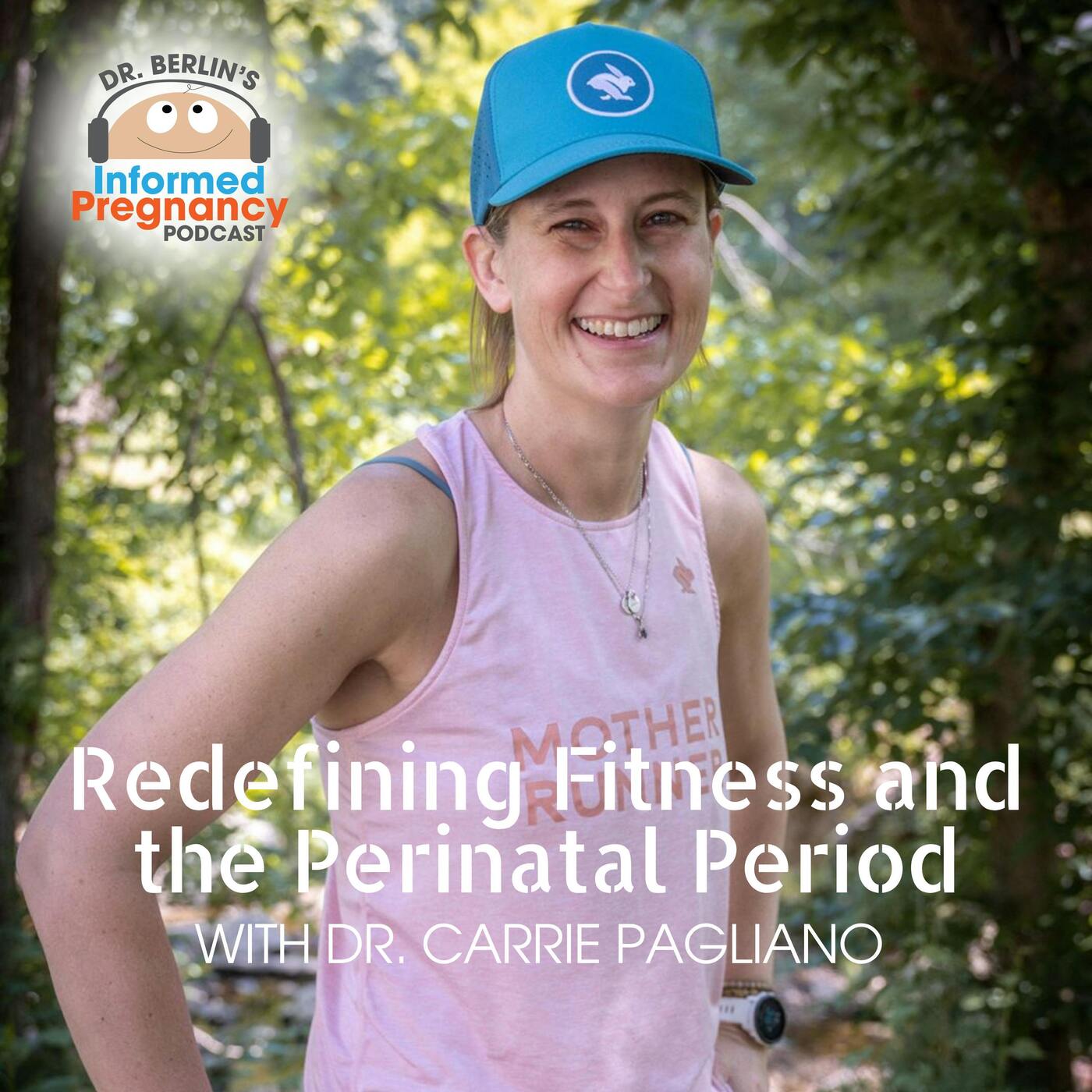
June 19, 2025 · 32 minutes · Episode 464
About this episode
Dr. Carrie Pagliano is a pelvic health physical therapist, fitness professional, and mother of two. She discusses her own pregnancies, her own rocky return to running, and the perinatal period with a focus on physical rehabilitation and performance.
Connect with the guest:
Carrie’s Active Mom Podcast
Informed Pregnancy Media and Mahmee present an all new podcast! One Way or a Mother is a new narrative podcast from Dr. Elliot Berlin, DC. Each season is an intimate story of one woman, one pregnancy, and all of the preparations, emotions, and personal history leading up to the birth. Episodes feature the expectant mother along with her family, doctors, and birth work team.
Start listening to Episode 1: I Should Have Died featuring Arianna Lasry
Keep up with Dr. Berlin and Informed Pregnancy Media online!
Learn more about your ad choices. Visit megaphone.fm/adchoices
See Privacy Policy at https://art19.com/privacy and California Privacy Notice at https://art19.com/privacy#do-not-sell-my-info.
Key quotes
“And we're looking back and saying, hey, we might have unintentionally deconditioned our moms more than we needed to. And that exercise might actually be a much more viable, safer option than we had previously considered.”
“And now we've got some data looking at fetal outcomes via this research group and researcher Amy Mullick saying actually, no, it's good for the baby. There's no adverse fetal outcomes.”
“But again, I think the idea that we're going in not automatically taking movement away from moms is a really big shift.”
“So the average patient that I'm seeing now, we will plan to see them for their first postpartum pelvic floor visit at about two to three weeks after their due date. So give or take whatever that ends up being. And that's very different, even from a couple of years ago, because, you know, we're waiting for that six week mark that really is just arbitrary. And so at two to three weeks, you know, there's a couple of things that we're targeting.”
“But also women need to be listened to and not just told that these symptoms are just what happens. We can manage them. And estrogen is not a dirty word and doesn't cause breast cancer.”
Related episodes
- Ep. 470 Carlson Young: After Birth
- Ep. 480 Twins with Lauren Gaba Flanagan
- Ep. 485 Catching Up with Jenna Pastuszek
- Ep. 466 A Before & After Birth Story with Aimee Carrero: Part Two
Transcript
AI-generated transcript with speaker labels — may contain errors, especially names and medical terms. Dr. Elliot Berlin, DC appears in blue; Dr. Carrie Pagliano in orange.
Dr. Elliot Berlin, DC [0:00] My guest today is a pelvic health physical therapist, certified running coach, weightlifting coach, and mom of two. Over the past 25 years, she's helped redefine how we support women through pregnancy, postpartum, and perimenopause. Not just with rehab, but with performance in mind. After her own less-than-perfect pregnancies and a rocky return to running, she realized the postpartum road was filled with gaps, myths, and one-size-fits-all advice. Now, she's helping parents ditch the guesswork and move through motherhood with strength, clarity, and confidence. I'm pregnancy-focused chiropractor Dr. Elliott Berlin, and you're listening to the Informed Pregnancy Podcast.
[0:39] Dr. Carrie Pagliano, welcome back to the podcast.
Dr. Carrie Pagliano [0:57] Thank you for having me.
Dr. Elliot Berlin, DC [0:59] My goodness, I learned a lot from you a couple years back when you appeared in episode number 348, and we talked about pelvic floor health for active moms. Let's jump into what's happened over the past two years. I feel like the field of pelvic health physical therapy is so evolving and emerging that even when a few months go by, things change, we learn more. What's happened since we spoke less?
Dr. Carrie Pagliano [1:23] Yeah, I was looking back on the last time we chatted, and so much has evolved. And it's exciting if you're in this space, because I literally do not treat pregnant and postpartum moms the same way now as I did a year ago, two years ago. But I think it also can be incredibly confusing trying to navigate this as a postpartum person and know what's up to date and what's not up to date, and especially in the area of exercise. So always a history lesson, I think, is important to go back and understand that we come from, I think, a place of it's well intentioned, not wanting to do anything bad, harm the baby, hurt the mom, things like that in pregnancy.
[2:04] And what we've started to realize is potentially by scaring people without a lot of data or information, which again, it's really hard to do research on a mom who's pregnant to say, hey, if we do this, it's going to harm your baby. Nobody's going to sign up for that study. But we have more data now because we have more active women who are pregnant and sharing their stories and their data. And we're looking back and saying, hey, we might have unintentionally deconditioned our moms more than we needed to. And that exercise might actually be a much more viable, safer option than we had previously considered. So I think that's one of the biggest shifts that we're actually getting really nice, clean data on within the last two years.
Dr. Elliot Berlin, DC [2:48] So meaning during the pregnancy, we've told people, hey, when you get to a certain point in pregnancy, scale it down. Don't be as active. And now we're learning maybe that's not the best advice.
Dr. Carrie Pagliano [3:00] Yeah, I would say more specifically, we just had a study come out. A lot of good research groups in Canada right now. Amy Mullick. Exactly, exactly. So I just actually spoke with researcher Amy Mullick recently, and she just published a study in late winter, early spring, 2025, looking at resistance training in pregnancy. And again, go back to the history lesson, just getting women in a gym, lifting weights was unheard of. And then if you were pregnant lifting weights in a gym, and we're not talking just hand weights, we're talking barbells and deadlifts and bench press and things like that. Maybe your local community was fine with it, but you were definitely going to get some hate from people thinking that you're going to kill your baby or they're going to get switched or things like that.
[3:48] And now we've got some data looking at fetal outcomes via this research group and researcher Amy Mullick saying actually, no, it's good for the baby. There's no adverse fetal outcomes. And they looked at lifts like deadlift squats and bench press and bench press. I found really interesting because typically bench press you're laying on your back. And that's one of those things that are, you know, it keeps getting passed down to all the new moms. You know, God forbid you wake up in the middle of the night flat on your back. But yet we have now women that are lifting weights flat on their back and there's no adverse fetal outcomes.
Dr. Elliot Berlin, DC [4:23] In the office, at least once a week, someone panics because they want to sleep on their left side and woke up on their back. And also when you're doing these exercises, first of all, you're very awake. So if you do start to compress the blood flow coming from your legs to your heart, you're going to be lightheaded, nauseous, dizzy, sweaty. You'll know where to when you move into a different position. And also you're just doing it for limited periods of time, short periods of time. So you could be in touch with your body and just listen to see if it's taking it well or not taking a while.
Dr. Carrie Pagliano [4:51] Yeah, no, my happiest place, both of my kids at 41 weeks, I'd wake up flat on my back in the middle of the night because I could breathe. It was lovely. But no, I think, you know, especially women, women who are weightlifters, you're worried about is this going to be safe? Is this going to be OK? And we have a growing data set of women who are continuing to weightlift. And fortunately, researchers that are gathering this data and following these outcomes and helping kind of I wouldn't say debunk the myths because I don't know if the myths were ever kind of rooted in any sort of data. We just didn't know. And so, again, to reassure those moms who are already lifting that, yeah, you can continue to do this and it's going to be safe for the baby.
[5:33] Obviously, you know, you're working with your OB, you're working with your health care team. You're looking out for any of these signs of, you know, blood flow changes or you feel like you're lightheaded or things like that. But again, I think the idea that we're going in not automatically taking movement away from moms is a really big shift. I know in my field, it was like, oh, just gentle things for a really long time. And now we're able to step up and be a little bit more supportive of our active moms.
Dr. Elliot Berlin, DC [6:03] I love that. And also, I just recently appeared on your podcast and I told you about a new project we're working on called Growing with Garrett. And I think you're going to really love it. Garrett was a former weightlifter, bodybuilder, competitive, and she was doing deadlifts the day that she went into labor. And, you know, it's interesting because throughout pregnancy, there's constantly all the things that you're told you can't do. Don't do this, don't do that, don't eat that, don't turn that way, don't look that way. And they're not really based on science. And even when they are based on science, you know, risk is an interesting thing because we take risks every single day.
[6:41] And you have to choose which risk you want to take for which benefits. Nothing is risk free. Instead of making choices for somebody about which risks we think they should take for which benefits, we should be giving data. But maybe we didn't really have the data. So it's refreshing to know that now the data is coming in. Yeah, we didn't.
Dr. Carrie Pagliano [6:57] And again, I think the history lesson is always important that, you know, it took a long time for it to be OK for women to be in the weight room period. And, you know, you could say the same thing for running. I mean, women have been running marathons not that long. And now we're seeing a lot more women running in pregnancy. I think the last Olympic trials last spring, there was maybe two, maybe three participants running the Olympic trials for the United States in the marathon pregnant. One of them, I think she dropped out about halfway through. She's like, I just want to start. I'm six months pregnant. It's not going to be pretty. It's all good.
[7:31] But yet we had other moms that are running in that first trimester. And again, historically, I feel like there's been such a backlash. You're going to shake the baby, this and that, whatever. And because we're not seeing adverse outcomes, because we're seeing good maternal and fetal outcomes and we're starting to get the data to support this, we as professionals have to kind of check our own biases. And what we were taught, you know, years ago that, gosh, actually, maybe we need to make sure that we're doing straight abdominal strengthening. That's a big one. You know, like, oh, you're pregnant. You can't do ab work anymore. And we're seeing some data now that says if you're doing, you know, rectus, so that's that sick peck muscle in the center, it's okay to do rectus training in pregnancy.
[8:15] Granted, we do it supported with like a monster band or something like that. It's okay to do that in pregnancy and postpartum. And it does not impact that into recti distance, which is that space between those two sides of the abs that everybody feels like, you know, causes the diastasis recti and so on.
Dr. Elliot Berlin, DC [8:31] So again, that was definitely a concern for a lot of people. But then it's also interesting to say you do it with a support band to kind of mitigate that possibility. So it sounds like based on this data, you train your pregnant moms differently now.
Dr. Carrie Pagliano [8:45] Very much so. And I think that's something that I am explaining not only to these moms in pregnancy, but I'm going to jump ahead. And also that I am explaining this to my perimenopausal moms because segment number three, I know, but like we'll do a little like foreshadowing here. I think I need them to know that because I need to get them caught up. They don't realize that things have shifted and what they kind of missed out on. And the thing is, it's not their fault that they missed out on it because we didn't know. But we got to get everybody else caught up. So I kind of feel like I'm getting everybody, regardless of whether you're pregnant, postpartum or perimenopause, up to date on what we know about just women exercising.
[9:29] And we have the capacity. And if you are pregnant, it's not going to be adverse for fetal outcomes, things like that.
Dr. Elliot Berlin, DC [9:36] And again, just on the outside, I think it sounds like it would be health benefit to both mother and baby.
Dr. Carrie Pagliano [9:42] Well, and when you look at just, you know, how many Americans don't get enough exercise period, can you look at pregnancy? You know, is pregnancy when women historically start to not participate in exercise because of fear and then they don't necessarily get back to it in postpartum because of life and whatnot. And then before you know it, they're in perimenopause and worried about, you know, bone health and things like that. So I feel like we have to have these conversations sooner. And the fact that it's a lot easier because we have a little bit more data in pregnancy. No, you don't need to let the stuff go. And yes, we'll modify if we need to.
[10:17] But you may not necessarily need to.
Dr. Elliot Berlin, DC [10:21] Well, it sounds like there's change ahead. And it's really great to have the data to be able to make these decisions that way. I always tell my patients and we've talked about it before that if you could listen to your inner voice, what would you be doing? And the other thing I love to do is watch other animals in the wild. You know, do they all of a sudden become more sedentary and stop their daily activities or don't they? And when we sometimes with good intentions give bad advice, it can really affect a whole generation of people. So I'm with you on catching up. And I love what we've talked about during pregnancy. And I really want to learn more about postpartum and perimenopause as well.
[10:59] Let's take a little break. When we come back, we'll talk about postpartum rehab since 2023. We'll be right back.

Dr. Elliot Berlin, DC [11:06] Welcome back. We're talking to Dr. Carrie Pagliano and we're talking about exercise. And we talked about pregnancy. Well, what about postpartum? I mean, postpartum recovery is also kind of a gray area in dicey time. People are not sure what they can do and what they can't do. And of course, there's a deliberate disconnect from the inner voice that would tell you what to do and what not to do by giving a lot of information. Everyone's like, oh, I can't do anything until six weeks. And I see some people who are like, can I have 12 weeks? But I see other people who are like, I'm itching to move two weeks after my baby came out. What do you recommend?
Dr. Carrie Pagliano [11:52] You know, it's going to be it depends. Right. And I think this is where we need to empower women to understand that there's a spectrum on what this looks like. And so we can see women. We just had a woman last week. She won a hundred K ultra marathon at six months postpartum. Yeah, granted, her coach just had a baby as well. And so she was very well supported not only from a nutrition, but pelvic floor and exercise aspect. So that's one part of the spectrum that we can be inspired by. But I think it also to other people that may have had a really rough delivery or early postpartum or their babies having issues with feeding or sleeping or reflex or all of the things.
[12:33] I think it can also be a little difficult for moms to see others doing so well. And there's such a I feel like there's such an expanse of what that initial postpartum period can look like. So the average patient that I'm seeing now, we will plan to see them for their first postpartum pelvic floor visit at about two to three weeks after their due date. So give or take whatever that ends up being. And that's very different, even from a couple of years ago, because, you know, we're waiting for that six week mark that really is just arbitrary. And so at two to three weeks, you know, there's a couple of things that we're targeting. One is just reconnecting to pelvic floor, deep abdominals.
[13:13] But we're also educating on, gosh, are you still leaking? Are you feeling any heaviness or pressure? Can we screen out some of these potential medical issues like stress, urinary incontinence or prolapse early? Can we get referrals out to lactation consultants or perinatal mental health therapists? Like, can we get more resources to moms sooner? Because even though ACOG, the American College of Obstetricians and Gynecologists, in 2018 said, hey, we should be making touch points sooner than that six week point. It's just not happening. We have less people in the medical field. I had a mom recently that her first visit after her C-section was at six weeks.
[13:56] I'm like, no one looked at your scar at two weeks. Like, you've got to be kidding me. And so we are another touch point. Like, the medical system is already overwhelmed. Like, we need more touch points to help kind of field these questions and get people filtered out to the help that they need. There's a huge risk for, you know, early postpartum complications. Can we screen out some of those medical things so that that early touch point I think is huge. And then by six weeks, yes, I'll screen return to run readiness if they've been able to have a pretty easy postpartum. We'll look for, you know, are you getting sleep? Are you getting nutrition?
[14:31] How is breastfeeding going? We're screening out for relative energy deficiency. I'm also taking into consideration, are you trying to get back to running or exercise for mental health purposes and we need to bring other people in? Are you at risk for bone stress injuries because potentially you're over exercise and under fueling? Can I help guide you in that journey in conjunction with another provider like a dietician, a postnatal dietician? Can we make those steps forward to get a nice foundation of strength before you get back into running? But I might also have somebody that they had a lot of complications with delivery and postpartum. And we may not even be starting to connect on coordination until 12 to 18 weeks, maybe even six months.
[15:13] So this all goes to say, yes, we can go early and we can celebrate those people that are hitting these milestones and have a lot of support. But also acknowledge the women that maybe the path is a little bit slower. But just because it's slower doesn't mean you can't still eventually kind of hit those milestones in a safe, supported way. So that's the part that's great. We just had 2025 Canada, again, Canadians, they just came out with postpartum exercise guidelines. Again, it's kind of what we talked about earlier, like exercise is good. Exercise is great for mental health. It's great for sleep and postpartum. Whatever that looks like to you, let's start there and work on consistency first.
Dr. Elliot Berlin, DC [15:53] I think so many things that you said light up in my mind as important. Number one, the arbitrary six week checkup, the midwives jump in right away. They come in a couple of days after the baby is born. They see you again a couple of weeks after the baby is born. And like you said, that touch point is so important because there is a lot going on mentally and physically and spiritually and relationshiply. And it's a big change, especially the first one. And to have somebody around you to just even more so in your own environment like the midwives go to you and can really take in a lot about your world and see where I had a friend who helped travel teams who were, you know, try to help them find support and be on a good path.
[16:34] And he always described it like either a trivial pursuit piece or a pizza. And it was like there's there's eight different things that you look at to see the full picture of how this person is doing. And so naturally, I think midwives do that. Practitioners like you do that. Lactation consultants do a due list, sometimes do a postpartum due list. But the more that you can have that kind of support, the village support we always talk about, especially after a cesarean birthday to go. It's like you have this big abdominal surgery and at the same time you have a kid and nobody's really paying attention to you at all. All about the baby. And so we've done over the past year in our office.
[17:10] We've really focused hard on better recovery from the surgery and focusing on you and focusing on that in a way that hopefully doesn't overwhelm you because there is what to do in those early stages. There are a couple of doctors here who do three week checkups and I love that for it because one of them told me Dr. Benta Kaiser told me that a lot of her patients are ready at three weeks. They can start doing things already. And she's like the only reason we wait till six weeks is because that's when let's say ninety five percent of people are ready. So instead of having to do these visits and you're not ready yet, you know, and wasting a visit, so to speak, then we just wait till almost everybody's ready.
[17:45] Give her the green light and you can go. But like you said, some people are really willing to go and need to go and can go. They just don't know that they can go. So I've encouraged my patients to ask, like during pregnancy, be like, can I come see you three weeks afterwards for a checkup and see where I am? Maybe I can start doing some things and other things. And again, people are just super itching to go.
Dr. Carrie Pagliano [18:07] That's why we plan this stuff in pregnancy. Usually, if I'm seeing somebody during pregnancy, we start talking about that postpartum already and we plan those visits. So it's one less thing you have to think about. And then the other beautiful thing in the last couple of years, I think just normalization of virtual care and telehealth. You mentioned kind of getting into people's homes like if mom can't get out because they anticipated things were going to be easy and maybe they don't have the child care that they thought or they feel like it's going to be too hard to take the baby out. Being able to switch automatically to telehealth so that we can get that access early and answer those questions.
[18:41] Because you have no idea when you're pregnant what you're going to encounter. And usually those moms that are asking for, hey, I'm ready to move. Typically, baby sleeping, babies feeding fine, moms getting some rest, moms feeling relatively sane for the most part. And they feel like they're ready to do that. Typically, it's not the moms that are having all these other issues. But again, everybody needs what they need in that moment. And so the more we can kind of create those touch points and make it less barriers for them and just make it brainless and easy, which is what we need in those first couple of weeks, the better.
Dr. Elliot Berlin, DC [19:14] I love the virtual option because even though there are some restrictions, things that you can't do virtually that you can do in person, so much of this is individual. And like you're saying, each person needs something different. And you could always give some very general guidelines, but it's much better to be able to say for you specifically. These are things that would be helpful for you. All right, let's take a little break. When we come back, we're going to talk about perimenopause. I'm starting to learn all about it. We'll be right back. All right, we're talking about perimenopause now with Dr. Carrie Pagliano. Look, I started as really getting into this world of women's health through my own fertility journey with my wife
[20:03] and helping other people overcome their infertility. And then with all those babies during pregnancy, we kind of got swept into birth and postpartum care and early parenting. And as the journey continues, perimenopause, I'm starting to see all sorts of different signs and symptoms that pop up. And now it's becoming clearer. Oftentimes they're related to perimenopause. Tell me what I need to do and tell our audience what they need to know.
Dr. Carrie Pagliano [20:26] Oh, boy. It's a little bit of a dumpster fire, but we got this. What I will say is learning more about perimenopause and menopause actually made me go back and look at early postpartum in an entirely new way, because there's some parallels. First of all, early postpartum, estrogens crashing, perimenopause, we have estrogen crashing. So we had this big shift in hormones. And so those moms that remember those random first hot flashes in the middle of the night that no one told you about in postpartum, guess what? They're going to make a reappearance. But that's not the only thing. I think that's the stereotypical we were talking earlier on your show about what people see on TV about menopause.
[21:11] And I think for those of us who are Gen X or older millennials, like you were taught that menopause was Blanche Devereux in the Golden Girls in her caftan in Florida, you know, talking about her hot flashes.
Dr. Elliot Berlin, DC [21:26] Oh, that's literally the image I have in my mind.
Dr. Carrie Pagliano [21:29] No, not that. And so I think that's the thing that's really confusing is because that's what we were brought up with. But that is not at all what we're experiencing. And so when you learn about again, it goes back to what we were taught as kids is we're taught that like estrogen is just a reproductive hormone. No, we have estrogen receptors all over our body and our tendons in our reproductive organs, in our bladder, in our urethra, like all these parts of our body and our brain and our gut. You can have these multi system symptoms that it's really hard to differentiate. Am I just losing my mind because I'm a mom with a couple of kids and a job and, you know, the world's a dumpster fire or am I in perimenopause?
[22:14] And it's even harder if you are, quote, a geriatric mom where you've had a baby late thirties, early forties, which is prime time for perimenopause symptoms to come up. Did you even get out of postpartum for a hot second and then you're right back into perimenopause and the symptoms are the same. Yeah, exactly, exactly. And so I think that's the thing that it's confusing. Number one, because of just understanding it's far more than hot flashes. Lots of times when I'm screening with patients, I'm looking at their age anywhere. I would say between, you know, early forties all the way up to fifties average age in the United States for menopause, which is that one.
[22:57] You've had a year without a cycle. You can be having these symptoms. I think the other thing that makes this really hard is a lot of us are on some sort of birth control or contraceptive management. So we don't necessarily have our cycles to track. And so, again, we don't know what the heck is going on. And then we're inundated with all this information to be like, hey, you're in perimenopause. You've got insomnia. You've got, you know, brain fog. You've got increased anxiety, kind of all these things that, again, it's like, is this my life or is this perimenopause? You're trying to figure out what it is. And then you're being told to go get blood work or this or that when the fact of the matter is you would need to do testing throughout like a whole cycle.
[23:39] And again, if you're on some sort of birth control management, like it makes it really hard to figure this out for yourself. And so I navigated this about 18 months ago. I was on continuous birth control, so I didn't have a period. I did notice that my blood pressure was increasing, which happens with the oral pill and decided to come off of it. I was, I think, forty seven, forty eight at the time came off of it. Blood pressure got better, but all of a sudden no cycle. I'm waking up hot at night and blaming our dog that we'd had for four years. Like she didn't just all of a sudden get hot. I'm not an anxious person. That's increasing like all these other things are going on.
[24:18] And I remember like writing this stuff down and I'm glad I did. I was able to go see my gynecologist who was a friend. Our kids had gone to school together and I'm like, OK, am I loco here? Like what's going on? And basic blood work just because we had nothing to go off of. And she's like, you know, all these things together collectively, there's no one singular test that says, yes, this is what it is. But this story together stands to reason you'd be a good candidate for a patch with estrogen paired with progesterone. And that was about two months from coming off the pill to starting this. And a couple of months later, I'm like, did I really need that?
[24:57] Because I felt so much better. I literally thought that the symptoms that I was having before I was like, I didn't really feel that. That's why I was glad that I wrote it down. And again, I got really lucky because I'm in this space. I kind of know some people. But again, like it's never completely that smooth because you're still dealing with like the fluff around the middle that you get the added weight gain. And that's real. And again, our generation, we were the ones that were like always trying to be smaller and eat less. And, you know, we're still trying to navigate our exercise and everybody saying, you know, do this type of exercise. Don't do that type of exercise when the fact is the data that we have right now just points to regular consistent exercise.
[25:35] If you're trying to lose weight, you need to do that in combination with regular calorie deficit. There isn't necessarily human trial data to point to. You know, if you're not doing a perfect way to do this, which again, this is so reflective of postpartum is like you have to figure out the person in front of you. If you're not doing resistance training, yes, you should start. If you're doing resistance training, can you do a little bit more or do it consistently? If you're not exercising at all, where do you start? If you're not getting a good healthy diet, let's start with the basics. And again, I think that's what's getting lost in a lot of the messaging out there is we're focusing on these nuances where there might be a rat study or something like that.
[26:15] And people want to be heard. And I appreciate the fact that we're talking about this. But like, let's start with some basic public health information about we need to exercise. We need to have a good, balanced, healthy diet. We need to get sleep. But also women need to be listened to and not just told that these symptoms are just what happens. We can manage them. And estrogen is not a dirty word and doesn't cause breast cancer. So that's a whole other podcast.
Dr. Elliot Berlin, DC [26:39] And we should do it. I mean, you just dropped a bomb of information for me and it creates so many more questions.
Dr. Carrie Pagliano [26:47] I know. Sorry.
Dr. Elliot Berlin, DC [26:49] No, we should probably do another episode just on this, honestly, and to do some research on it. And like you're saying, with the weird symptoms, I do see patients in that age category starting to come in with weird bone symptoms. And I'm just like, oh, I'm a chiropractor. Bones, bones. But then I'm like, it's not at a joint. So I can't adjust it. You know, and you start to explore. You're like, oh, you know what? This might be hormonal. And oftentimes it is. And then at least you know what it is. Like, you don't have to worry that it's. Well, you think you're crazy. You think you're falling apart when. Crazy. Everyone immediately goes to thinking it's cancer, some kind of cancer.
[27:22] And sometimes it's just this. OK. So it sounds like from a physical fitness perspective, it's very similar to postpartum. What about public health PT?
Dr. Carrie Pagliano [27:31] Yeah. So from that perspective. So we'll jump back to kind of what I alluded to earlier. We have women that didn't necessarily have access to the same options and care that are pregnant and postpartum women do now. So I have women that may never have addressed their postpartum leakage. They may never have addressed their postpartum pelvic floor issues and just sort of dealt with it. And now they're coming into this low estrogen state. And because we have estrogen receptors in our urethra, in our urinary structures, those sorts of things, estrogen kind of plumps up some of these tissues. And so I think a lot of people are familiar with vaginal dryness in postpartum as estrogen decreases.
[28:13] Same thing happens in perimenopause. But you can have increased urinary symptoms. And we're getting some really nice data now looking at use of local topical vaginal estrogen prescribed by your physician to help kind of replenish this. It's not systemic. It's very local. And it does a really good job to address what's called congenital urinary syndrome of menopause, which is basically you can have UTI like symptoms, urgency, frequency, worsening of maybe you are already experiencing incontinence or prolapse symptoms. And now it's starting to worsen with no particular reason other than you had a certain age or time period. And so when I'm working with these patients, one of the first things I'm going to have them do is talk to their GYN, start on topical local estrogen, because that can be working on in the background.
[29:04] So we can plump up these tissues, get a little bit more tissue integrity. I can address the pelvic floor issue that they never addressed in postpartum because we didn't necessarily have the resources. And then those two things combined, we can actually improve quality of life. So you don't need to be like that lady on the depends commercial and be having fun with your family and your pad. But again, like I think this idea that leaking when you're older is just an old age thing. No, you can get a definite shift when you enter perimenopause. You can be totally fine and never have had any pelvic floor issues. And now all of a sudden something starts and there's a hormone component to this.
[29:44] So that's part of what our job is as pelvic floor. Is yes, some of this may be muscular, but it also may be muscular in combination with kind of this hormonal change in flux that can impact kind of the support that you need to be continent. So it's been really cool to not only be able to get, you know, moms by vintage caught up and say, hey, you know, you don't have to deal with this because we also have moms that are so much more active in their 40s, 50s, 60s, 70s, 80s. And they don't want to be leaking. They don't want to be experiencing pelvic floor issues. And it shouldn't be something that we necessarily have to just accept as a fall out of aging.
[30:24] So it's been really fun to navigate this professionally, a little daunting as navigating it personally.
Dr. Elliot Berlin, DC [30:30] But you learn a lot.
Dr. Carrie Pagliano [30:32] Yeah.
Dr. Elliot Berlin, DC [30:33] So that kind of passion really drives you to be a great practitioner and also a great guest. I've learned a tremendous amount from you now in just one sitting about pregnancy, about postpartum and about perimenopause. And there's obviously so much more we can learn from you. Luckily, you have a podcast, the Active MonPod podcast, and you also have resources online. You have courses and other materials. Where can we find all of it?
Dr. Carrie Pagliano [30:58] Yeah, easy place to find me at karypagliano.com or we hang out over on Instagram at karypagliano.
Dr. Elliot Berlin, DC [31:04] I am definitely going to be diving deeper into your resources, especially with emerging data. Finally, for this field that's actionable and learn from you. And I also I'm pretty sure I'm going through menopause.
Dr. Carrie Pagliano [31:19] So I can't help you with that.
Dr. Elliot Berlin, DC [31:21] I don't know. We'll see what can cross over and maybe I can apply.
Dr. Carrie Pagliano [31:25] Sounds good.
Dr. Elliot Berlin, DC [31:26] Thank you so much for joining me again. And again, for this wonderful information, really valuable and helpful. I appreciate you.
Dr. Carrie Pagliano [31:32] Thanks for having me.
Dr. Elliot Berlin, DC [31:33] Of course, at home. Thanks for listening to the Informed Pregnancy Podcast. For more information just like this, visit us online at informedpregnancy.com.
Want more pregnancy + parenting? Start your FREE TRIAL of Informed Pregnancy+ and get access to all our curated pregnancy and parenting content — original series, iconic birth films like The Business of Being Born, prenatal workouts and more.

0 Comments