Informed Pregnancy Media and Mahmee present an all new podcast! One Way or a Mother is a new narrative podcast from Dr. Elliot Berlin, DC. Each season is an intimate story of one woman, one pregnancy, and all of the preparations, emotions, and personal history leading up to the birth. Episodes feature the expectant mother along with her family, doctors, and birth work team.
“And the only fuel that I had, because no one would give me a snack was breath. It was all that I had. So I would just breathe. I was finding incredible refuge in the breath.”
“Rothbard gets there and it's like, he is such a magical elf man that it feels like when he walks in the room that everything just stands still.”
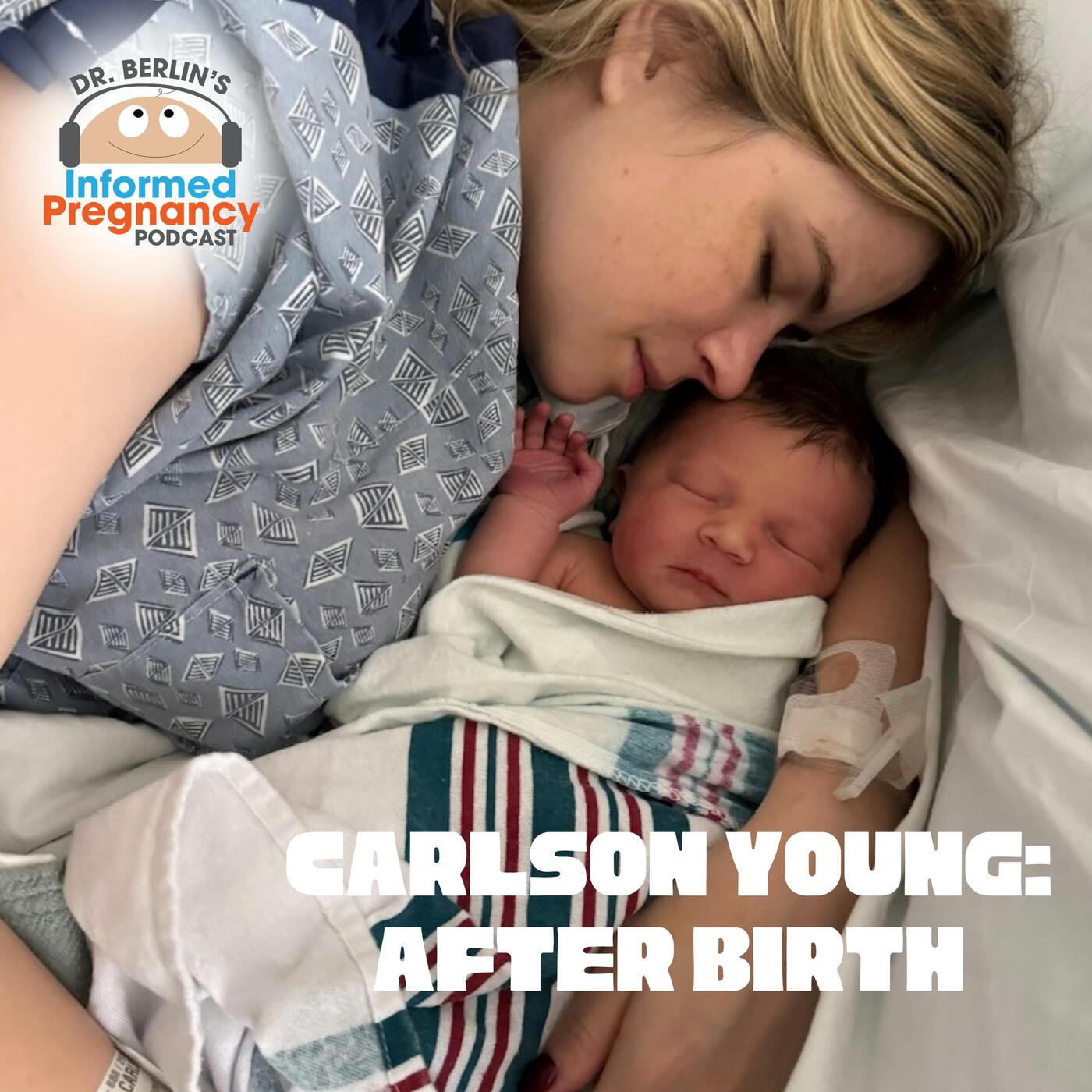
“And she just laid on my chest and she just stared up at me for what felt like an eternity. She was just staring at me, staring at me. And it was the most beautiful thing ever.”
“And the love is obscene obscene. We cannot stop looking at her. She is perfect.”
AI-generated transcript with speaker labels — may contain errors, especially names and medical terms. Dr. Elliot Berlin, DC appears in blue; Carlson Young in orange.
Dr. Elliot Berlin, DC[0:00] She's directed films during a pandemic, premiered at Sundance and juggled passion projects with pregnancy, but nothing could have prepared her for the intensity of what came next. I'm Pregnancy Focus Car Producer, Dr. Elliott Berlin, and you're listening to the Informed Pregnancy Podcast. Carlson Young, welcome back to the podcast. Congratulations. The last time we talked to you were 39 weeks. You had your bags packed, the nursery was ready, logistic things were under control. And all I know since then is that A, you had the baby and B, you said it was a harrowing experience.
Carlson Young[0:49] Yes. Yes, it was. It was a major magical trip of an experience.
Dr. Elliot Berlin, DC[0:57] Well, let's talk about that last, because I interviewed you at 39 weeks, you were getting pretty close.
Carlson Young[1:03] Yes. I guess when I talked to you, I was maybe like a week out, something like this. Because I think I was a bit earlier, I might have been 37 weeks when I talked to you. I delivered right at the actual day of 38 weeks.
Dr. Elliot Berlin, DC[1:19] Oh, a 38. Oh, wow. Okay. So what happened in the week in between?
Carlson Young[1:26] Well, let's see, this started, I gave birth on a Thursday. On the Monday, I started feeling really crampy and like she was super low, I could barely walk. And I felt like, okay, like, I think my body is starting something here. And then by Tuesday, I was having a lot of cramping and contractions, at least what I assumed were contractions, because I was like, this feels very different. And I think I was having some level of back labor, because my back was just what was really killing me. So I called Dr. Rothbard and I said, you know, I'm pretty sure I'm having contractions. I don't know if it's exactly timed 551 or how they say that, but it's pretty
[2:13] painful. And he said, can you still, you know, talk through the contractions? And I was like, I mean, yes, I can, I just have to like freeze my whole body. And he said, well, come to the hospital when it is truly you can't speak anymore. I think that would probably be best as I don't want them to turn you away. So I said, okay, and stuck it out for another day. And then I went to the hospital and I was three centimeters when I got to the hospital.
Dr. Elliot Berlin, DC[2:40] Well, that's pretty cool that you got there three centimeters. I have so many questions already. Number one, like, was it on a pattern at that time? Were you feeling them every X number of minutes or?
Carlson Young[2:50] Yes, it was every X number of minutes, but they weren't super close together. It was like one every like 15 minutes, you know, and then they would disappear for like two or three hours. That's why I kind of, yeah, I was like, I don't really like know what's going on. I feel like my body is slowly, gradually going into something.
Dr. Elliot Berlin, DC[3:12] And you were feeling them mostly in your back or some in the back?
Carlson Young[3:16] Some in the back, some in the front. Certainly the most severe ones were like in my pelvis.
Dr. Elliot Berlin, DC[3:22] In like your pubic pelvis in the front?
Carlson Young[3:24] Yes.
Dr. Elliot Berlin, DC[3:25] Okay. What did you do for passing the time getting through those?
Carlson Young[3:31] Let's see. I was just bouncing like a maniac on the ball, on the little exercise ball. I was trying to walk as much as I could, like between, not obviously during a contraction, but I was trying to move to just like get the process officially off to the races. And so I was walking and then what really like Strather broke the camel's back and sent me to the hospital was my mom came in town because I called her and I said, I really think that it's going to be like tonight or tomorrow. I think my body is like, I think we're going into this. So she got on a flight, God bless her and like came in like three hours. It was so cool, meaningful. And so did my sister.
[4:16] And so they both showed up and I was like, well, no contractions right now. Let's go on a hike. So we walked to the end of my street and we went on this little hike and I got about 10 minutes down the path and I said, we need to turn around right now. This is not happening. So I like kind of trekked back up the hill, got in the car and went to the hospital.
Dr. Elliot Berlin, DC[4:40] And you were three centimeters. Can you compare the sensation of those surges that you were having at home to anything else that you've experienced before?
Carlson Young[4:50] No. I actually had no level of expectation because I knew it was somewhere between a period cramp and something completely foreign, but no, like it's like surges through your entire body. And so I found myself just kind of like on my hands and knees trying to breathe.
Dr. Elliot Berlin, DC[5:09] When you got to the hospital, did you have an expectation in your mind about where your cervix might be?
Carlson Young[5:16] I was like, I would be shocked if I was not somewhere on the wheel of dilation because of what I had been feeling. And I do have a pretty high pain tolerance. At least that's what my husband and my family says. So, but I was like, but nonetheless, like, you know, I'm going to be really shocked if I'm not somewhere on the spectrum. And so I wasn't surprised to hear that I was.
Dr. Elliot Berlin, DC[5:44] Okay. So three centimeters, you get admitted, what happens next?
Carlson Young[5:49] I had slightly, slightly high blood pressure, but it was because they had taken all my vitals while I was having a contraction. So it wasn't anything to worry about. They were like, that we feel you're normal now that we rechecked it. So we think that was just a contraction related. So they admit me, I get in, I go to the room. Everything is fine. And you know, I had said before, I wanted to wait as long as possible to get the epidural to kind of let gravity do its thing and let the rhythm start. So I got into the room, I went from three to four in an hour, which was really fast. And then in the middle of four to five, they kept asking me like, you sure you
[6:35] don't want the epidural? Are you sure you don't want the epidural? Because it could take up to an hour to kick in and like, we don't, scheduling wise, we don't know how quickly we can get someone here. So in the middle of that four to five, I said, okay, actually, yeah, sure, let's get that epidural down.
Dr. Elliot Berlin, DC[6:52] What was it like placing the epidural? Did you have any concerns about it?
Carlson Young[6:56] No, I was like so uncomfortable and in pain that I was like, you just put that thing right in there. I didn't even like flinch. My husband was like, that was astonishing. You literally did not, like that was like, you did not even flinch. And I'm like, I, yeah, I mean, it felt like a shot. I don't know. It's like felt like that. It wasn't anything that was particularly painful in comparison to what you're feeling at the time.
Dr. Elliot Berlin, DC[7:23] So yeah, did your mom or sister come with you also or they did?
Carlson Young[7:28] My husband was in the room and my mom was in the room actually the whole time.
Dr. Elliot Berlin, DC[7:32] Oh, wow.
Carlson Young[7:33] Yeah.
Dr. Elliot Berlin, DC[7:34] That's pretty cool support.
Carlson Young[7:35] Yeah. It was really cool. If you had asked me, Hey, do you want your mom in the room for your entire labor? I would have said, no, but at the time it just like made sense and I wanted as much support as possible.
Dr. Elliot Berlin, DC[7:51] Okay. So get the epidural and then you stop feeling the pain altogether.
Carlson Young[7:56] Yeah. And then it takes, you know, 10, 15 minutes. I'm just flying high. I am totally good and I felt amazing and I kind of like lay back and I feel like, frankly, it's almost like I felt so good and my body kind of entered this really positive kind of spiritual experience. And then after about an hour of feeling great, things started to shift and I was laying there and I started to get really agitated, like really, really agitated and feeling weird. And so I sat up and I was like very dizzy and my ears were ringing and I just started projectile vomiting, a lot of throwing up and all the doctors rushing and I was just having like crazy low blood pressure, like a blood pressure
[8:49] crash.
Dr. Elliot Berlin, DC[8:51] So when you first got there a little high during your contraction, now it's
Carlson Young[8:56] dropping out.
Dr. Elliot Berlin, DC[8:57] Mm hmm. Dropping out. And so. Is that a result of the epidural?
Carlson Young[9:03] Like a side effect? They put some blood pressure medication in my IV, it stabilized things and they, you know, kind of asked me how I was feeling. I was like, I don't know how to articulate this, but I feel like because I can't feel anything, it's freaking my body out. And like all of that, whatever energy is down there that I can't feel, it seems to be like radiating upward. I don't even know if that makes sense, but that's just my suspicion. And they said, well, let's, you know, turn down the epidural. Like you're at a 10 right now, let's take it down to an eight. So you'll feel a little pressure, but no pain. And I said, I think that's a great, I think that would like ground me a lot.
[9:42] And so they did that and everything kind of started going back to normal and my vitals chilled out and I was back in the game.
Dr. Elliot Berlin, DC[9:51] Welcome back. What time did you get to the hospital?
Carlson Young[9:55] I got there around five to six PM on Wednesday.
Dr. Elliot Berlin, DC[10:00] Okay. And do you have an idea where on the clock you are when you have this crash?
Carlson Young[10:07] It was around two to three AM, I believe.
Dr. Elliot Berlin, DC[10:11] Okay. And then when you come back and the drugs are a bit more muted, are you starting to feel some of the contractile activity and what do you feel?
Carlson Young[10:23] Yeah, I did. I started to feel like it, it just felt like pressure. It wasn't pain.
Dr. Elliot Berlin, DC[10:29] Okay. Cool. Well, I'm super curious what happens next. So let's take a little break and we'll be right back.
Dr. Elliot Berlin, DC[10:47] Welcome back. We're talking to Carlson Young and I should say just like mama of one week. This was not that long ago.
Carlson Young[10:53] No, it was not that long. This was all going down.
Dr. Elliot Berlin, DC[10:57] Exactly one week ago to be exact.
Carlson Young[10:59] Yeah, it's a week.
Dr. Elliot Berlin, DC[11:00] Uh, congratulations. Okay. So what happened is you go in, you're three centimeters, you're progressing nicely, you're uncomfortable. And I think just like I am, like if I'm in my office and I'm like, okay, I'm going to, I'm going to have a good diet day today. And then someone keeps coming in with piping hot cinnamon streusel doughnuts.
Carlson Young[11:19] So you want a doughnut? Okay. No, it was exactly.
Dr. Elliot Berlin, DC[11:23] Then I tackle the guy and have the whole box of doughnuts. And so you got the epidural and then it's going well, but then a couple hours later, it sounds like you crash your blood pressure just crashes. And then it's out.
Carlson Young[11:34] Yep.
Dr. Elliot Berlin, DC[11:35] A little meds to help you boost your blood pressure and also turning down the epidural. Now you're feeling pressure. When's the next time that you check to see your progression?
Carlson Young[11:47] They checked me. Oh gosh. I don't know. Somewhere an hour or two hours after that hours just fly by. Like it was crazy the way that I would just be sitting there and be like, Oh, well it's been an hour. So once here again, like time was a very different, it was like a diff on a different field in that room. And it was really funny was I was staring at this broken clock on the wall that the, the hands of the clock kept going and just like spazzing out. And then like it, there was a digital part of the clock that just kept like blinking zeros and that would like do random numbers. And we were laughing. We're like, I feel, I was like, I feel like I'm in a
[12:28] David Lynch movie right now. Think of that is like not working. Is anybody seeing this? And everyone was laughing about the clock and they were like, it's very appropriate that this is the clock that would be in your room. Um, but yeah, no time was like a very strange thing during this whole experience. So they checked me about two hours later and I was only at a five, which I was shocked because it had been several hours at that point. And I, the last time they checked me, I was in between a four and a five. So like my dilation process just like completely stalled when I got the epidural, which is what I was kind of afraid of, and which was what I
[13:08] wanted to avoid, alas, um, things.
Dr. Elliot Berlin, DC[13:12] Were they surprised or just you surprised?
Carlson Young[13:15] Just me. I mean, they weren't concerned or anything like this or surprised. They were just like, yeah, it sounds normal. But I was like, oh, damn it. I wish that I had held out a little longer because I was just like, so, so going. And then the epidural just brought everything to a screeching hall.
Dr. Elliot Berlin, DC[13:33] Ben, you had like one of those cases where you're just wanting to labor spontaneously, did some work at home, got in in a good rhythm and things were going nicely. And then we intervened a little.
Carlson Young[13:44] Yeah.
Dr. Elliot Berlin, DC[13:45] Okay.
Carlson Young[13:46] I said yes to the donut.
Dr. Elliot Berlin, DC[13:48] You said yes to the donut. There's always an upside to the donut. All right. So you're a little surprised, maybe even frustrated. Mm hmm.
Carlson Young[13:57] Mm hmm. So I can't believe it's been all these hours and I've like not even made so much progress. And so it was just hours and hours. I finally get up to, let's see, like an eight or a nine. And I'm getting close. And by the way, I am like starving. I did not realize that you couldn't eat once you got to the hospital. And I frankly had not been very terribly hungry for the Monday and Tuesday and Wednesday leading up to go into the hospital, like my stomach was so squished.
Dr. Elliot Berlin, DC[14:39] Yeah.
Carlson Young[14:40] Like I went in on empty because I just wasn't, I wasn't able to eat that much that week. So I kept like, my mom was like making fun of me yesterday. She's like, you would not stop asking the staff, anybody that you could find for like, Hey guys, just like, I think I asked somebody for a single goldfish at one point, like you had got to give me something to eat eggs. I didn't have any fuel. Like I was, I mean, at least have, I haven't been there in a while, you had Jell-O and ISIS, not that they ice. And I, and I did, I got all that stuff at different points in the night and the early morning, but it's just like, I mean, it's all just like sugar and water.
Dr. Elliot Berlin, DC[15:29] I don't fully get it. You know, at home, you just eat whatever you're hungry for.
Carlson Young[15:34] Totally. I guess it's like, you know, if they ever, if they need to put you under or something like this, but anyway, nobody told me that if I had known that I would have like fueled up a little bit better or more efficiently before I went to the hospital. I think what I see people do is fuel up their little hospital bag with stuff. And then I had so many snacks. I brought lots of snacks. Actually. I was, I had a whole snack bag and I couldn't even eat any of them. And I was like glaring at, I saw him like in the corner, like chowing down. I am so jealous.
Dr. Elliot Berlin, DC[16:09] People usually just do it when there's nobody in the room with you.
Carlson Young[16:13] Yeah.
Dr. Elliot Berlin, DC[16:14] You followed the rules.
Carlson Young[16:16] I didn't know. I didn't know. I should have, I should have just done my own thing, but I was like being as uncharacteristically rigid rule follower. And I was starting to
Dr. Elliot Berlin, DC[16:27] one of the things you said in the pre-birth interview is that it was important to you to maintain energy.
Carlson Young[16:35] I wish I had the cliff notes of our recall so I could have remembered that.
Dr. Elliot Berlin, DC[16:40] Not being able to eat is definitely not working towards that goal. Okay. So wait, but did you say you were eight or nine, meaning you progressed to eight or nine centimeters?
Carlson Young[16:49] Yes. I mean, but over the course of like 10 hours, like it was so long. So if I was doing that time, I was, God, it's a really good question. I don't know. I don't know. My husband had his laptop open and we were watching Return of the King, we were watching more of the rings, but I kept kind of like, we kept stopping and starting cause I would any, I was just very sensitive, like anything that I was getting overstimulated like really easily. So we'd be like talking, talking. And I'd be like, everyone shut up. It was like,
Dr. Elliot Berlin, DC[17:29] were you like that with temperature too? Like getting hot and cold.
Carlson Young[17:32] Yes. And I was just like side to side to side to side to side. And by the way, little girl inside of me was completely non-blussed. Like throughout the entire thing, she could not be bothered. She was steady, so steady the entire 27 hours labor.
Dr. Elliot Berlin, DC[17:52] During the times of emotional sensitivity, what was comforting to you?
Carlson Young[17:58] Oh man. I just had to breathe through it. I mean, there was a point where I just was like bawling uncontrollably. Like I was crying and crying. I don't know why. If you ask me why I would say, I don't know. I just felt these like tidal waves of emotion just crashing over me. I was very emotional. I think my hormones are just going bananas and then I would be okay. And then once I got through the tears, it was like a wave of anxiety. And then I would breathe through that and get through that. And the only fuel that I had, because no one would give me a snack was breath. It was all that I had. So I would just breathe. I was finding incredible refuge in the breath.
Dr. Elliot Berlin, DC[18:52] I think also breath is our portal of entry into taking control, taking the reins of the autonomic nervous system and by setting the tone with slow, deep breathing, you're telling the whole nervous system, regardless of what you are thinking, we're not in danger and you can kind of let the fear go, let the anxiousness go. You can let the adrenaline go and, you know, to the extent possible, replace it with oxytocin at that time, which is the more ideal hormone. Okay. So all this time passes, you get close to 10 centimeters.
Carlson Young[19:30] Yes. Oh, and I forgot to mention that I'm on a pitocin drip augmenting the labor. Yes.
Dr. Elliot Berlin, DC[19:38] Is that because you hadn't progressed?
Carlson Young[19:41] That's right.
Dr. Elliot Berlin, DC[19:42] That's five. So they started to run them.
Carlson Young[19:43] That's right.
Dr. Elliot Berlin, DC[19:44] Oh, that's how you got to nine quickly. I'm like, all of a sudden you're like, yeah, now I'm nine.
Carlson Young[19:50] Well, even with the pitocin, it took hours and hours and I kept being like, Oh, you want to, you want to up that toast and make this someplace to be quicker. I know something to eat, but yeah, it was gradual. It was gradual even with the pitocin. So by the time I get to eight, nine, I'm doctors are kind of coming in, getting ready. They let my doctor know that I was not so far away at this point and I start, I guess I get to nine and then we have the pushing conversation and I start learning how to push, which I didn't realize that you can only push when you're in the middle of contraction. I didn't realize that was your window. So that was new to me.
Dr. Elliot Berlin, DC[20:46] It's really interesting the way it happens at the hospital. And again, the way it happens at home or with midwife care in general, oftentimes they don't tell you anything about pushing though. It's a little different because you're numb from the medication. So maybe you need coaching in that case, but at home, you just get an urge at some point to push. When you have the urge, you push. And when you don't, you don't. And sometimes the urge coincides just right with the surge, the contraction, sometimes it doesn't. At the hospital, it tends to be a very, very heavily coached part of the labor where we're going to pull your legs back, take a deep breath.
Carlson Young[21:26] I felt like I was like on a sports team, you know, or something. I felt like we were all like huddling up and like creating a strategy. Like it really did feel like that. So once that happens, I start feeling enormous amounts of pain. So much so that, you know, everyone's like, you know, do we need to just like pump this epidural up or we need to get you like a push cocktail through the epidural, because it's not supposed to be hurting like this.
Dr. Elliot Berlin, DC[21:54] Where, where were you feeling that pain?
Carlson Young[21:56] In my pelvis.
Dr. Elliot Berlin, DC[21:58] So then a little more information.
Carlson Young[22:00] She is stuck. Like she's so low, by the way, this entire process, like she was in, they kept saying station one. Like she was in correct. Oh, low plus one.
Dr. Elliot Berlin, DC[22:12] Low plus one. Okay.
Carlson Young[22:14] Um, so she's like the entire labor, even when I came in, like she was in low, like she was essentially in position. It was just about getting my cervix to match where she was. So she, at a certain point in those very late dilation hours, I start feeling insane, insane contraction pain. And I'm like, this epidural is actually not working at all. And they like talking me through it. I'm trying to remember play by play. It was insanely painful. And I kept like turning side to side, to side, to side. And I was a hundred percent of faced. She's in position and my cervix is just lagging behind a little bit. So they were giving me medicine for that medicine for your
[23:06] cervix to finish the right thing.
Dr. Elliot Berlin, DC[23:07] Or yeah. Finish the right thing. Do they try to do it manually?
Carlson Young[23:11] Manually. Yeah. Manually. So they were doing that. And I couldn't feel that, but there was like a certain part of the contraction that my epidural like was not covering. It was like localized really low in my pelvis. I know they kept saying localized pain. So I'm side to side, side to side, essentially experiencing the pain of the contraction at nine, 10 centimeters. It was really, really intense. And it's like a weird combination actually, cause you're feeling some of the pain, but you also don't have all the mobility. No. So I can't be like somebody turn me. I'm turning like a rotisserie chicken, but I have like no feeling whatsoever technically.
[23:59] But like I can feel it, but I can't, but I can. It was a very strange brain. My brain was going nuts. Like what is going on? Going nuts right now.
Dr. Elliot Berlin, DC[24:10] All right. Hopefully. I mean, it sounds like you're getting close. Let's take a break. And when we come back, we'll get the rest of this harrowing story. Welcome back. What a weird sensation Carlson Young is feeling at this point in her story. The pain of the surges at nine centimeters is coming through, but not everywhere, just a spotty coverage, like my cell carrier, and then also can't really move. So like normally when you feel, if you're not medicated and you feel that discomfort, you just naturally move into positions that are more comfortable and probably your body wants you to move. There's some more productive, but here people are just having
[24:57] to flip you around from side to side. Now you're learning how to push. Are you starting to push already, even though you're not fully 10 centimeters?
Carlson Young[25:05] No. I want to say it was kind of like soft push practice test push. Yeah. Test push. So then I get to nine, five, 10, I think somewhere in the middle of nine and 10. So then I do start pushing because my cervix has gotten to where I think it was like just right there and like they were manually trying to get it there. And then finally it's there. So I pushed for a total of two and a half hours and the first hour of that was without the doctor. So it was two nurses, my mom, my sister, and my husband. And I swear to God, couldn't have done it without every single one of them. Like it was.
Dr. Elliot Berlin, DC[25:55] Okay. So that's a lot of pushing. Did they resolve the situation where you're still feeling a lot?
Carlson Young[26:01] So for the first hour of pushing, I was feeling it. Like it was really, really painful and they were giving me different levels of things and kind of seeing what would work. Finally, they gave me a push cocktail. They said that through my epidural that ended up working, I really didn't want to stop the progress by not feeling anything because I knew that my body just does not seem to respond well to the no feeling whatsoever. So I was kind of like pushing through the pain and then just accepting that like, this is going to be really painful.
Dr. Elliot Berlin, DC[26:38] Are you on your back?
Carlson Young[26:39] Yeah, I'm on my back with a little bit of prop up.
Dr. Elliot Berlin, DC[26:43] Okay. Are people pulling your legs back?
Carlson Young[26:46] Yes. Yeah. I got a nurse on one leg, got my sister on one leg and I got my husband like holding my back up.
Dr. Elliot Berlin, DC[26:52] Wow. Okay. That's a lot of support, I guess.
Carlson Young[26:55] Yes. It was like a lot of support. Um, by the way, I should say that was not the positioning for the first hour and a half. That's just when I got so tired that I was just kind of like a limp noodle. The energy management wasn't happening. Energy management was nowhere to be found. And I kept like saying everyone like, guys, like my arms have given out. My arms have given out. I cannot use my arms anymore. I can't pull my legs back because my arms are noodles at this point. Like I kind of like taxed myself out in all of the first hour.
Dr. Elliot Berlin, DC[27:33] Are they giving you feedback on your pushing?
Carlson Young[27:37] Yeah. Yeah. Everyone's like, good, good. Yes. That's good. That's good. Keep going. Keep going. And so I would give every single push. I would give it all I got determined.
Dr. Elliot Berlin, DC[27:50] Did they offer you to look with a mirror?
Carlson Young[27:53] Yes. So at first I was like, nah, no, thank you. I will no pass pass. And then, yeah, after an hour and a half, I said, absolutely. Bring that mirror over here. And all of you guys hold up my limbs like a marionette, like modesty. What is modesty? Everyone get over here. Cause it's gotta be a full team effort.
Dr. Elliot Berlin, DC[28:18] Was it weird to watch?
Carlson Young[28:20] Yes. It was shocking, shocking. Like I've seen a birth video, but like, I was like, Oh my God, it's like, that's what's going on down there.
Dr. Elliot Berlin, DC[28:31] Right. Right. Okay.
Carlson Young[28:32] I see why this mirror is important. And it helped me focus my energy on an end goal and on a fixed point. And it was actually incredibly helpful to see what was going on. It made a lot of difference.
Dr. Elliot Berlin, DC[28:47] Made more efficient pushing.
Carlson Young[28:48] Yes.
Dr. Elliot Berlin, DC[28:49] Made pushing. Cool. How much longer?
Carlson Young[28:53] Uh, another hour and a half.
Dr. Elliot Berlin, DC[28:55] Oh my God.
Carlson Young[28:56] It was so, so taxing. My body was so tired. And like I said, I kept giving every push, everything I got, everything I got, everything I got. And you could see her head the whole time. It was crazy. It's in the mirror. Once they brought over the mirror at an hour and a half, you can see her head, like she had full head of hair. And it was like, the nurse was like, you can braid her hair. And I was like, Oh my God. It's like what nobody in my family has ever had hair, by the way. Like we're all Paulies when we're born. And so like, that was really fascinating. And I can see it. I can literally look in the mirror and see this baby's head and she's just
[29:40] stuck, she's stuck in my pelvis. Like, but she has to go, like she's got to get under this bone to come out. So I'm just trying with everything that I have to get her through that final checkpoint. And so finally the doctor comes in, Dr. Rothbard gets there and it's like, he is such a magical elf man that it feels like when he walks in the room that everything just stands still. It's like this eerily magical calm and he is just such a calming presence. And so like, when I see him, like, I'm like, I am doing this. Like I'm doing it. I have to do this. He's here. And so it kind of, I feel like this sort of ceremony like commences at that point. And so he starts his thing and just so much oil on me and like massaging down
[30:35] there and like trying, he's like, it's so crazy how much hair she has. And just like really working it down there and I couldn't feel anything. Like I said, and then the, the push cocktail kicks in and then the contractions become just pressure. So even though I can't feel the pain, I can still feel vaguely where and when the wave of contraction is coming. So I know when to push and I would just sit there and be like, okay, everybody, let's go. And then sure enough on the machine, it would be like contraction. So I was in control in that sense of the pressure was felt enough to where I had kind of a map of where and when to push. And so my muscles are nowhere to be found in this last 30 minutes.
[31:27] My arms are shaking. Like I'm just so out of gas and I start making this connection. Like my mom was in my ear and she just kept saying like, use your head, use your head, use your head. And when I started to use my head, my head started making this connection of breath and that the only fuel source that I have at my disposal at this point is my breath. And so I started like creating this like modular breath pattern in my head of one, two, three, four, five, but using like the strength of my breath in different levels during that five seconds. And so once I started making that connection, I stopped trying to use my muscles and I stopped trying to exert physical effort and just using like my
[32:25] breath and this like downward motion, like downward flow motion and like one, two, three, four, and then a big five. And once I started to do that, she came, she came all the way and she was sun side up.
Dr. Elliot Berlin, DC[32:39] Oh, really?
Carlson Young[32:40] Yeah.
Dr. Elliot Berlin, DC[32:41] So it sounds like it didn't really take that many pushes. Once you,
Carlson Young[32:45] it was like, I think it was like, it was like a half an hour from there.
Dr. Elliot Berlin, DC[32:50] Did you feel something different when she came through?
Carlson Young[32:55] I mean, it was just this enormous relief and they throw her on my chest and I just was like in shock. My husband was bawling and crying. I was in shock. I know I just, I could not believe it. I had been staring at this head for hours and then all of a sudden she like has a face and a body and she's like a real little baby, baby. And she just laid on my chest and she just stared up at me for what felt like an eternity. She was just staring at me, staring at me. And it was the most beautiful thing ever.
Dr. Elliot Berlin, DC[33:35] Well, she didn't cry.
Carlson Young[33:37] She did. She cried like, I guess after, you know, everyone's like bopping her around and she cried, she let us know that she was okay, but no, I mean, she was very observant. She, she cried and like she got through the blue and she turned like a normal color fairly quickly. She had a little cone head cause she was truly stuck in that pelvis for a long time. She was so observant. She was just staring and staring at me. It was so sweet.
Dr. Elliot Berlin, DC[34:06] Wow. This is a beautiful moment. I have a couple of questions for you. Congratulations again. And by the way, sunny side up. That was a part of the challenge.
Carlson Young[34:16] Yeah, for sure.
Dr. Elliot Berlin, DC[34:17] Two questions. One is when did you get to eat and what was it?
Carlson Young[34:25] So we get to the postpartum room and we ordered pizza.
Dr. Elliot Berlin, DC[34:30] Yes. Okay. Celebratory cuisine. And then how was the first week of motherhood then?
Carlson Young[34:40] Uh, it's been like a dream. All of the cliches, like every day I find myself speaking in cliches, which is embarrassing as an English major, but I cannot. Believe like how amazing it is. And the love is obscene obscene. We cannot stop looking at her. She is perfect. I just did not even know that this was possible. Yeah, not at all.
Dr. Elliot Berlin, DC[35:11] You mentioned when I interviewed you before you had the baby, that your approach to birth would be a blend of intention and surrender. Sounds like that was accurate.
Carlson Young[35:23] Yeah, absolutely. I mean, I do wish I had taken notes on my own self. When we talked, because the fuel thing was like a big hurdle that I took me 27 hours to figure it out.
Dr. Elliot Berlin, DC[35:39] To get some pizza.
Carlson Young[35:40] Yeah.
Dr. Elliot Berlin, DC[35:40] To get some Papa John's. And that you expected that it would be unpredictable and that you would try to be flexible and adapt for help when you need it. It just sounds like speaking. It was how you sort of visioned it.
Carlson Young[36:01] Yeah. Yeah. I had a friend come over last night and meet her and I was telling her this story and she was like, well, look, she's like, you go hard. You go hard. Like you go into the hospital. Like you knew it was going to be some level of intense and I'm like, you're right. It's very true. Yeah.
Dr. Elliot Berlin, DC[36:19] It sounds like kind of a really beautiful birth story. I wonder looking back, is there anything that either you would have done different or next time, something you learned from this experience that if you did it again, you would be like, maybe I'll do it this, this time.
Carlson Young[36:33] I think my one note is the food. I mean, and also I didn't know you could like sneak a little snack. What? Nobody told me that.
Dr. Elliot Berlin, DC[36:41] I used to have a doctor that told his patients all the time, actually at the same hospital, you know, if they ask you when the last time you ate was, or he would say this about the external version, you know, when you, when you go try to turn the baby and, you know, anesthesia asked you when was the last time you ate it. He's like, you either have to not have breakfast or tell them that you didn't have breakfast. He would literally tell his patients that. So, you know, yeah, my sense is we should tell you the pros and cons of eating and not eating and let you be an adult.
Carlson Young[37:18] Right.
Dr. Elliot Berlin, DC[37:19] It doesn't exactly work that way. Cool. Now, one thing you told me also before the baby came is that five weeks after the baby comes, you're shipping off to Spain to do a movie that seems like it's only a few weeks away now.
Carlson Young[37:33] It's just a few weeks away. Just applied for her little baby passport and getting her little photo tomorrow, so yeah, that's all still happening and she's so perfect. I cannot wait to have this experience with her. Like I can't imagine ever doing anything without her ever again. It's crazy.
Dr. Elliot Berlin, DC[37:55] Carlson. I'm so happy for you. Thank you for coming and sharing your story. Where can we find you online?
Carlson Young[38:02] Um, Instagram. It's just, or Twitter. It's just Carlson Young.
Dr. Elliot Berlin, DC[38:06] The Graham or yeah. Amazing. Thank you again for sharing at home. Thanks for listening. Oh my gosh. I'm going to have you anytime you want to come back. Such, I was saying during the break, you're such a great storyteller. Had me, I was like, okay, then what happened? Thank you at home. Thanks for listening to the informed pregnancy podcast for more pregnancy and parenting information. Just like this, visit us online at informedpregnancy.com.
Want more pregnancy + parenting? Start your FREE TRIAL of Informed Pregnancy+ and get access to all our curated pregnancy and parenting content — original series, iconic birth films like The Business of Being Born, prenatal workouts and more.
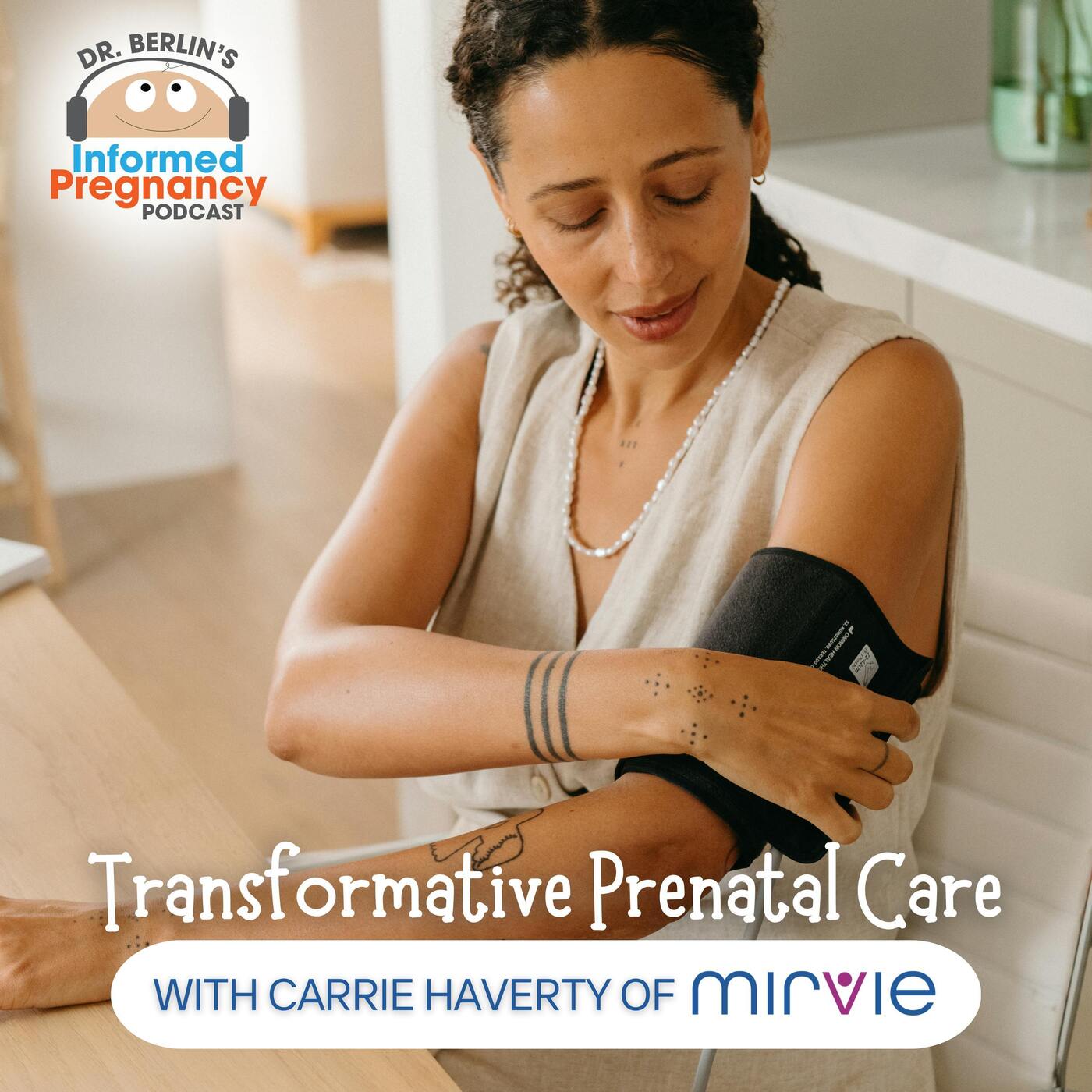
What if you could understand your pregnancy risks before you face them? Carrie Haverty is a mother and maternal health pioneer who has worked in high-risk OB clinics, exploring reproductive genetics and technology that’s transforming prenatal care. She discusses Mirvie‘s offerings to improve outcomes for families, including one that can detect preeclampsia months before symptoms present.
Informed Pregnancy Media and Mahmee present an all new podcast! One Way or a Mother is a new narrative podcast from Dr. Elliot Berlin, DC. Each season is an intimate story of one woman, one pregnancy, and all of the preparations, emotions, and personal history leading up to the birth. Episodes feature the expectant mother along with her family, doctors, and birth work team.
“That the primary is to listen and understand what women and their families want and need. And that's always true. That's always at its core. In terms of the technology that they're”
“it just becomes, you know, an expensive PDF sitting in an electronic health record somewhere”
“that can say, hey, based on this biology, not based on what you look like, we can say, you are at high risk and you should be doing these things. Or very importantly,”
“She was healthy. Baby was healthy. She felt she was in control. And she even said her doctor told her, quote, this is the best case of preeclampsia I've ever seen.”
“You know, women, especially pregnant women, we deserve to have the best technology and to be able to take advantage of that, to have all the information possible so that we can have”
AI-generated transcript with speaker labels — may contain errors, especially names and medical terms. Dr. Elliot Berlin, DC appears in blue; Carrie Haverty in orange.
Dr. Elliot Berlin, DC[0:00] What if you could understand your pregnancy risks before they actually happen? My guest today is a parent, a healthcare innovator, and a pioneer in maternal health whose journey spans years of working in high-risk OB clinics, diving deep into reproductive genetics, and now developing technology that's transforming prenatal care. We'll explore the real stories, science, and inspiration behind a powerful new tool designed to improve outcomes for millions of families, including one that can detect preeclampsia months before symptoms begin. I'm Pregnancy-focused chiropractor Dr. Elliot Berlin, and you're listening to a sponsored episode of the Informed Pregnancy podcast
[0:44] brought to you in collaboration with Mirvi. Carrie Heverty, welcome to the podcast.
Carrie Haverty[1:05] Thank you so much, Dr. Berlin. It's such a pleasure to be here. Oh, my goodness. I met you and I learned so much from you in one hour that I'm like, why did I go to grad school? Likewise. I was so impressed by my visit to your practice and learning so much about how you take care of our pregnant patients in such innovative and caring ways. It's really awesome to see.
Dr. Elliot Berlin, DC[1:25] Oh, thank you. I mean, it's definitely teamwork. And you have created something that I didn't even think was possible. And I kept grilling you with questions because I'm like, no, but is this really? Really? And I'm excited to now share both you and it with our audience. But let's get to your roots. How did this all start? How did you become interested in genetic counseling?
Carrie Haverty[1:47] Oh, gosh, that goes a little bit far back in my academic career. I was actually in college and a sociology major. I was pre-law. I wanted to do advocacy work for women and children. And I took a genetics for dummies kind of class for my breath requirement for science. It was very intentionally for non-science majors. And I fell in love with it. And I had a really interesting and progressive professor who did a lot of genetic work with fruit flies, but was very, very interested in the human impact of genetics, not just the science of it, but like why it matters, what people do with the information. And he told us about the field of genetic counseling. And that is the ultimate in
[2:31] terms of how genetics impacts patients' lives, people's lives, human lives, because it's all about how we bring in genetic information to incorporate into our personal decision-making for our health, our care of our families and our family's healthcare decisions and understanding the complex science behind it, but also how that informs the decision-making and the personalization of that information so that we're taking it in and actually incorporating it into our life and into how we think about it and how we move forward with the information. So it really that incredible melding of hardcore science and hardcore humanity together. And I just fell in love with it and immediately went and figured out how to become an
[3:13] added genetics major. And this was far enough ago that I wrote a letter to the National Society of Genetic Counselors to get more information about what I needed to do to become a genetic counselor. And I am a very proud genetic counselor and still boarded and licensed. I have been a genetic counselor for over 25 years now. Wow, you must be getting the hang of it.
Dr. Elliot Berlin, DC[3:33] Hopefully. You mean you wrote a letter like with pen and paper?
Carrie Haverty[3:38] I believe I typed it, but yes, I put it in an envelope with a stamp. That's a technological leap forward. Exactly, exactly.
Dr. Elliot Berlin, DC[3:46] So did you switch from a sociology major or did you add to it?
Carrie Haverty[3:49] I added to it. And actually a sociology major has been incredibly helpful too. It really is interesting to think about how science impacts all of our lives as a society, how we make decisions collectively, how it impacts policy and other areas too. So really the majors ended up being really complimentary. So did that and then I backed it up with a psych
Dr. Elliot Berlin, DC[4:12] minor just to, you know, keep me busy. Why not? I mean, but that also really plays in very importantly with the kind of work that you do. 100%. 100%. Yeah. So did you go straight from all the education into, because I mentioned in the opening, you worked in a high-risk OB clinic. Was that right after school? While I was still in college,
Carrie Haverty[4:37] I knew I wanted to be a genetic counselor, but was still an undergraduate. I started working at a community health clinic. This was a free clinic. It really served people who didn't have otherwise access to good health care. It was specifically around women's health. So we did a lot of counseling around birth control options, pregnancy testing, pregnancy options, pregnancy care, end of pregnancy care, all sorts of different areas of women's health. I saw a lot of teenage girls and I saw a lot of farm workers that were coming through the community where I went to college and who didn't have continuous health care. But of course we're a reproductive age and wanted to know how to best plan for their
[5:18] families to start pregnancies, to avoid pregnancies and keep themselves healthy. And that really opened my eyes to just how complex the field is of pregnancy health. And it just lit a fire in me. And when I applied to graduate school for genetic counseling, I wrote about it. When I went to grad school and was learning to become a genetic counselor, I always chose as much as possible to be in the reproductive health clinics, the prenatal health clinics, and it just has always been my love. So my first jobs out of grad school were in reproductive health, working in high-risk OB clinics, and using genetic counseling and the power of understanding genetics and the science of it
[5:57] to help patients be really engaged and happy and healthy patients to understand what was going on, what their options were, and to be able to move forward to have the healthiest
Dr. Elliot Berlin, DC[6:09] possible. It's always been there for me. Yeah, I can hear the passion for it still 25 years later. Are you in that type of clinic working with them before they conceive
Carrie Haverty[6:21] on strategies or once they already have an embryo going? All of the above and after they have a baby too. So I would see patients who were planning a pregnancy who maybe came in because they were concerned about a family history or because of history in their past pregnancy. I would see them during a pregnancy if something came up during an ultrasound evaluation or a blood test that brought up concern or maybe they didn't know they were pregnant and they were taking a medication that they were concerned could have affected their pregnancy. And then I'd see them afterwards in pediatric clinics too, when they were trying to figure out if they had a baby that had challenges,
[6:58] trying to figure out what was going on there, how to best help their child, and what that would mean for future pregnancies as well. So it's really all of the above. We don't just separate these out. This all impacts everything and impacts the whole family too. So what kind of technology did you have available back then to help you in your goals and your work? Well, again, I've already admitted to writing a letter and putting a stamp on it. So I will continue that. At its core, the primary technology is listening. That the primary is to listen and understand what women and their families want and need. And that's always true. That's always at its core. In terms of the technology that they're
[7:45] listening to or that's influencing and impacting their decision, that's certainly changed a lot over time. I mean, genetics and the technology, the science of it, clinical development has rapidly progressed over the last several decades and it's going to continue. There's no end in sight in that. And that's exciting because what we didn't know two decades ago, I look forward to thinking, oh my gosh, what are we going to be able to do and solve and treat and prevent in the future is just super exciting. A lot of us have read recent headlines around gene therapy and how successful that has been. And that was a complete science fiction when I was in grad school and early in my career.
[8:28] And now we're sequencing genes. We're understanding what's going on with the DNA. We're developing treatments targeted to specific changes in that DNA that's unique to that particular individual, whether we're talking about treating cancer, whether we're talking about treating conditions that people are born with, all of the above. It's super exciting. And we've just barely scratched the surface of the power of genomics. And that's why this field is so exciting to me and why I love being able to use it in places like MeRV. It's really innovative. We're using now RNA, which I can talk a little bit more about, not just DNA, but really harnessing the whole power of genomics is pretty thrilling.
Dr. Elliot Berlin, DC[9:06] Now, just like you're sitting here today and postulating on all the things that we might be able to do in the future, you, 20 years ago, must've had similar hopes and dreams for the gaps that existed in the work you were trying to do then. What kind of things did you dream of and are they available today?
Carrie Haverty[9:27] Yeah, some are and some aren't, shockingly. We were struggling to identify which mutations or changes, variants in genes cause certain inherited conditions that we could see were passing through families. We knew they were happening, but we couldn't figure out what it was in the genetics and the DNA that was causing it. And for a lot of those things, we have figured that out. We now have next generation sequencing. We can sequence genomes. We can look for those changes and identify those changes in that particular family that's causing that particular condition, which is very exciting and amazing to have so much more known about, especially things that used to be considered rare disease.
[10:08] But when you have a lot of rare diseases, they're not that rare anymore. Rare really adds up to be quite common. And that's awesome. There's an amazing number of things that are quite common that we still don't understand. And that's where it's tricky. We still don't understand. Obviously, work for a company that's talking a lot about preeclampsia affects one in 12 people. That's pretty common during pregnancy. And yet we do not have a clear understanding of why that is happening in that person and not in that person, or what exactly we can do to prevent it and how it might be different. But I take a lot of heart in how much evolution and advance we've had in areas like oncology and cardiology,
[10:49] where we just said, oh, you have breast cancer because there's a lump of tissue in your breast that shouldn't be there. And now we don't do that. We say, oh, you've got this cancer that's identified by this particular change in the tissue. And we know exactly what we can do to target it, to treat it, and to prevent it from happening again. That's an amazing advance. And there's no reason why we can't do that with other things, too.
Dr. Elliot Berlin, DC[11:11] So when did you switch from more of a clinical genetic counselor to more of an innovator?
Carrie Haverty[11:17] Yeah. I spent about 15 years working in the clinic in direct patient care. I loved direct patient care. I never burnt out on it. People do because there's good reasons for that. But I loved it. It was always such a privilege to be that intimately involved in a patient's life and to help them understand what's going on with their own biology and their own pregnancy and then take their own values, their own experiences, their own needs, and move forward in their lives. Whether it was the outcome they wanted or not, they're still moving forward and they're moving forward empowered, informed. Just such a huge privilege. So I never got sick of that. I never burnt out on that. But I was
[11:56] sick of some of the pace of innovation because there were exciting things happening, new science advances happening, and they just took forever for me to actually be able to use them bedside with a patient. And that gets wearing after a while when you go to conferences and you see these exciting things being presented up on a stage and you're like, wow, that's so cool. I might be retired before I ever get a chance to use this with patient. And that was a little frustrating. So the pace of change was frustrating, especially when you work in women's health, because it's always like the least funded, the least understood, we're under resourced, under researched. I mean, women weren't involved
[12:38] in studies until I was partway through college before that became common to include women in clinical studies. Isn't that? And if you talk about pregnant women, it's much later than that. So we just have far less data around anything in terms of how it impacts women's biology, let alone pregnant women, which is a whole other thing. So in the interest of being protective, it just ended up being paternalistic and limiting. And so it's not any surprise that we are behind other specialties in medicine in terms of what we know and understand and what kind of tools and technologies have been developed in advanced. How did you jump over? I started talking to people. I just started talking to anybody that I knew that was working
[13:25] in an area of interesting technology, gene sequencing companies, innovative laboratories, education companies that were using online education tools and just anybody that was doing anything where they weren't directly caring for patients, but they were directly impacting patient care and just asking them, what do you do? How do you do this? What does that look like? And then I started talking to companies that I liked and that I really admired how they did things and what kind of science that they were doing and the rigor and quality of the work that they were doing and how they were willing to be innovative. And I got a chance to be a product manager at a company called Council.
[14:05] And that was 11 years ago now. So I was given a chance by somebody who knew what genetic counseling was and what genetic counselors could do and saw the transferable skills and willing to give me a chance to help me build the products that I wanted to use when I was in clinic and felt confident that I would be able to learn some of the technical things on the job, but fundamentally had the skills to deliver. And that was amazing experience. So for the last over decade now, I've been building products primarily in the women's health space, mostly pregnancy health related and all very innovative and kind of cutting edge areas. So I don't get to see direct patients. Yeah, I don't get to see patients directly
[14:46] anymore. And honestly, if somebody told me tomorrow care, you've got to go back and start counseling patients and person in a hospital again, I'd happily do it. But I do know that I've impacted a lot of patients care and that's very gratifying.
Dr. Elliot Berlin, DC[14:58] We talked about in the opening that there is a product now that can detect preeclampsia during pregnancy months before the symptoms arrive. And I really want to learn more about that test and I'm going to really push you for answers because it's very fascinating. Kind of blew my mind. Let's take a little break and we come back.
Dr. Elliot Berlin, DC[15:17] We will discuss the encompass test. Welcome back. We're talking to Carrie Haverty from Mirvi and we were just getting up to all your history from your excitement in sociology and the things that you wanted to do and how you got on the track of genetics and I don't know, you have like 12 majors and minors and then got into clinical care, high risk OB practice and then really got a passion for innovation and creating change and switched over to that field. Now you're working at a company called Mirvi and you guys have created an incredible test called the encompass test. Tell me about
Carrie Haverty[16:09] encompass. Yes, encompass test. So we just launched encompass and it is available now at encompass test.com. It is a combo of three items. It is a blood test that provides a personalized risk assessment in terms of whether somebody is at high risk or low risk for the most severe forms of preeclampsia. It is combined then with an evidence-based action plan so people know what to do with that information and then all of that is supported by a responsive virtual assistant that uses SMS text-based to provide personalized education and tools to track things like medication or blood pressure monitoring with responsive alerts when somebody needs to get follow-up care depending on those
[16:56] results. So all of that combined is what we consider encompass and that's because it's not enough just to give somebody a test result. They have to know what to do with it and they have to be enabled to do something with it. If we just have a test result that everyone ignores, it just becomes, you know, an expensive PDF sitting in an electronic health record somewhere and that's not helpful for anybody. So we incorporate all of that into encompass and as you said, the entire purpose of that is to identify those whether somebody is at high risk or low risk for preeclampsia months in advance of symptoms. So instead of just waiting to see if you get symptoms and then reacting to those hopefully in time
[17:37] to have a good outcome to the pregnancy, we have now a window of opportunity where we can institute this preventive action plan and reduce or mitigate the risk of developing preeclampsia at all particularly in the preterm period so that we can have our healthiest pregnancies possible. So let's start at the beginning and then I have so many questions for you. Please. For anybody who's listening who doesn't know what is preeclampsia, let's start there. That's a good place to start. So preeclampsia is a condition that occurs involving high blood pressure. It's a new onset of blood pressure after 20 weeks of pregnancy. So in the second half of pregnancy, it's often a
[18:17] company's arise in protein or protein in the urine and it can also cause other organ damage, causes problems to the liver, the kidneys, the neurological system. It can have a lot of nasty effects and unfortunately the only way to stop it is to deliver the pregnancy, to have the baby and placenta delivered. It's surprisingly common. One in 12 pregnancies in the U.S. have preeclampsia and that number is increasing. It's almost doubled in the last 10 to 15 years and there's no end in sight to that. So it's a significant issue that I am sure many listeners have direct personal experience with or know somebody who has. When do the symptoms generally start to show up? It can be anywhere in the
[19:03] late second and third trimester, sometimes mid in the second trimester. The challenge of course is that you can't tell if you have high blood pressure unless you're measuring your blood pressure. You can start having symptoms like a headache that won't go away, pain in your abdomen. It can cause fluid retention so you have puffy ankles and face and fluid in other parts of your body. But a lot of these are really non-specific and not uncommon, just unrelated to high blood pressure. So it's challenging for folks to rely just on symptoms and that's the thing. It's reactive. It's just waiting until these things happen and then hoping that you know enough to pay attention to them, that they're
[19:47] obvious enough that you would pay attention to them and that you have a care team or care center that is knowledgeable enough and aware enough to respond to any symptoms that
Dr. Elliot Berlin, DC[19:57] you report. Even monitoring blood pressure seems to be not so straightforward. The little machines that people use at home, I just see wide discrepancy even if someone were to use a decent machine and take three readings in a row. You know, a big discrepancy between those three readings and then oftentimes even if those line up with each other, discrepancy with the reading they get at the doctor's office. And so it's not the easiest thing to track.
Carrie Haverty[20:26] Correct. Absolutely right. In fact, there are certain machines that are validated to use during pregnancy. So just any machine you buy off the shelf at a big box store or online may not be actually validated to use in a pregnant person. So you really have to know what you're looking for. Other things that can affect that is the size of the cuff. You can't just put on any old cuff size around your arm. It really should be measured. So you know that you're getting the right size cuff and then just having good guidance and instruction and some experience on how to measure your blood pressure at home. So there's value in doing that at home, but it can't just be done willy-nilly. It really does require some
[21:07] coordination and guidance with your care team and knowledge on that. So it is tricky. If the symptoms normally show up later in pregnancy, at what point can you do Encompass? So the blood draws between 18 and 22 weeks of pregnancy. So right in the middle of pregnancy, that's around the time when most people are getting a detailed ultrasound done to look at the anatomy of the baby, to look at the brain and the heart and the arms and the legs and all the different organ systems. There's usually an ultrasound around that time. So that's around the same time that we would do the Encompass blood test. We have it set up so that when people request Encompass, they can do that at any time in the first half of their
[21:47] pregnancy. And then we coordinate for a at-home blood draw to be done by a licensed mobile phlebotomist that can come to their home or place of business, get their blood drawn in that window of time that's exactly the right one for them so that we're sure that we're testing during the right time window. Okay. So 18 to 22 weeks is the zone. And why that time period? One wonders. Yes. So a couple reasons. One, the placenta is large enough that it's actually contributing signals to the mother's blood. So we're just drawing regular blood draw from mom. We're not doing anything fancy. It's just a couple tubes of blood. And in that blood though are signals from the RNA, from her body, but also from the
[22:34] placenta, from the uterus, from the baby itself. All of those things are floating around in the maternal blood and we can draw without putting her or the baby at risk and get a lot of great information about what's going on biologically in the pregnancy itself. But in order to do that, the pregnancy has to be far enough along for us to actually see those signals. It's also a good time to get a blood draw done because again, we're past the first trimester. They know a little more about what's going on with their pregnancy. They might be getting this big ultrasound done. So it's a good time to get the blood drawn for that too. And most importantly, it's still early enough in pregnancy where
[23:12] we can institute an evidence-based action plan that can help reduce the chance of developing preeclampsia, especially preterm preeclampsia. So it's still early enough that we can institute these things that can help people have the healthiest pregnancy possible. Every time you answer, I have more questions. Okay. So let's define preterm preeclampsia. Great question. Preterm preeclampsia is preeclampsia that starts before 37 weeks of pregnancy. So a term pregnancy is called 40 weeks. Usually we say nine months, nine and a half months, et cetera, but 40 weeks from the first day of their last period is a typical term pregnancy. Anything after 37 weeks though is considered term.
[23:53] Anything before 37 weeks is called preterm. We used to call this premature birth or premature labor. Preeclampsia, when it starts before 37 weeks, if the symptoms are significant enough that there's concern about the health of the baby or the mother, and most often it's actually for the mother, although it does impact the baby's health as well, then that pregnancy is going to be delivered early. So if people develop preeclampsia at 32 weeks, at 28 weeks, at 34 weeks, they're going to have a preterm delivery. And in fact, a leading cause of preterm birth is preeclampsia because it means that we have to go in and induce a delivery or have a C-section done and people end up with a preterm birth. And that's actually one of the
[24:41] most shocking experiences of people's lives. When they go in for a routine visit at the doctor's office and they have no symptoms, they're just there to step on the scale and pee in a cup and get their cuff on and their blood pressure checked. And then all of a sudden they're being whisked over to the labor and delivery ward and delivered all within hours of that happening can be really quite shocking. And one of the outcomes that we want to try and avoid by being able to give people a chance to reduce their risk of developing preterm preeclampsia and a much better opportunity to be monitoring for any kind of onset of it.
Dr. Elliot Berlin, DC[25:19] So you said you're looking for RNA. Yes. For people who are not super biologically inclined, what is the difference between DNA and RNA? And why is this test specific for RNA? What does that matter?
Carrie Haverty[25:34] Yes. Great question. Thanks for the opportunity to answer it. So DNA is super stable. It's why we have our blueprints, our genetic blueprints are stored in DNA because it's very, very stable. It lasts for millennia. I mean, we can pull DNA out of frozen skeletons in the tundra and still identify the DNA sequence of what's going on in there. It's meant to be stable. It's meant to be static, super powerful when you're looking for things that are unchanging over time. RNA is the reflection of which genes are turned on or off and at what volume in any given time point. So while we have all of our genes in our DNA in every cell, we don't use all of them all the time. So if I have a gene that makes a protein that's
[26:25] specific to my brain, I'm probably not going to have that gene turned on in my skin cells or in my heart cells. RNA is the way we reflect that. RNA tells us what is actively being used in that tissue at that given point in time. So by its very nature, it's extremely dynamic. What we know though in pregnancy is that while RNA changes a lot during pregnancy, because pregnancy's a really biologically dynamic time period, you can hardly imagine a more interesting time biologically in anybody's body than pregnancy, while it's very dynamic, it's very predictable. Certain genes need to turn on and off and be expressed at a certain volume at a given time for things to progress normally. And we identified at Mirvi, we did
[27:13] a huge study that was published in the journal Nature in 2022 that demonstrated what that kind of typical pattern is or what that molecular clock should look like in terms of that RNA. Now that we know what that looks like, we can look for deviations or changes in that pattern to identify when things are not going as planned, even months before there's any clinical symptoms that you could measure or signs that you could evaluate.
Dr. Elliot Berlin, DC[27:40] That is pretty clear. Thank you. I learned something from you just now, and it also kind of opens up the picture of not just this test for preeclampsia, but how you can be looking for a lot of different things. Absolutely. Now, are certain people more or less at risk for preeclampsia? Do we have information about that? And if so, then would those people still need to do the
Carrie Haverty[28:06] test? Great question. I think everyone can benefit from more information. And in my experience, people tend to feel more empowered the more they know about what's going on with their bodies. But I will say that we have started by focusing on those where there is the least amount known. So in terms of who's at increased risk for preeclampsia, we know folks that have a high risk preexisting condition are at increased risk for preeclampsia already. Those include things like having had preeclampsia in the past pregnancy, having chronic hypertension. So you already have high blood pressure before you got pregnant. People who have type 1 or type 2 diabetes are at increased risk.
[28:47] Folks that have significant renal disease are at increased risk for preeclampsia. And then there's a couple of autoimmune disorders like lupus and antiphospholipid antibody syndrome that also are associated with an increased risk for preeclampsia. That's a seemingly long list. It's actually a relatively small percentage of the overall pregnant population. Most pregnant people don't have those conditions, but those that do should know that they're at increased risk for preeclampsia and should be told that ideally before they get pregnant or as early as possible in their pregnancy so they can institute an action plan that can help reduce their risk of preeclampsia and have the healthiest pregnancy
[29:27] possible. Okay, so that's a small percentage of the pregnant population that we know are at increased risk. Even though not all of those people are going to develop preeclampsia, they should be given preventive action plans that they can help reduce their risk. The majority of people in the U.S. but also in the world don't have one of those conditions and don't have a good way of trying to identify if they're likely to go on to develop preeclampsia or not. We have tried in the U.S. and actually in other parts of the world, have tried to use things like personal characteristics or demographics to predict who's going to go on to develop preeclampsia. Using things like weight reflected
[30:09] by BMI, using things like race. We know that Black women experience preeclampsia more frequently than non-Black women do. Things like age, being over age 35 has been associated with preeclampsia risk. Things like how you got pregnant, whether or not you used IVF, whether or not it's your first pregnancy. We've tried to use all of these things that aren't actually medical conditions. They are personal characteristics and demographics, and they don't do a good job of identifying who is at risk for preeclampsia. When we remove those who have preexisting high risk conditions, diabetes, prior preeclampsia, chronic hypertension, when we take those folks out,
[30:51] we see that there's certainly an association with these other things like age, weight, race. But when we take those folks out and just look at those folks who we're concerned about, supposedly because of their age when they got pregnant, how they chose to get pregnant, whether or not it's their first pregnancy, etc., we actually see that those things are no longer predictive of preeclampsia. Even though we have guidelines right now that say, if you're over 35 and you have a high BMI, you're at high risk for preeclampsia. If you take out the folks that have chronic hypertension and renal disease and diabetes, that's actually not the case. That just shows us how our guidelines and the tools that we have
[31:31] to use just aren't sufficient to do a good job. Nobody really likes to be told to take medication based on what they look like or how they chose to get pregnant. That turns out to be for good reason because they're not very predictive. That's why we need to do a better job understanding the underlying biology and leveraging that knowledge to develop tools that can say, hey, based on this biology, not based on what you look like, we can say, you are at high risk and you should be doing these things. Or very importantly, you're at low risk. No matter what people say, your risk is actually very low. For the Encompass test, if you have a negative result, it's 99.7% unlikely to have preeclampsia.
Dr. Elliot Berlin, DC[32:15] Wow. So that was my next question. Very reassuring. That's pretty accurate.
Carrie Haverty[32:20] So you've got a population of folks that are told all the time, oh, because of your age, because of your weight, because of your race, you've got to worry about these things, you've got to do these things. And then when we can say, well, based on the actual biology of what's going on, it's very unlikely that you would develop any kind of preterm preeclampsia.
Dr. Elliot Berlin, DC[32:37] That's really cool. It's a game changer. It's a game changer. Because so many decisions are made based on what we think might happen if, and there's very little data to support that. So you end up sort of being pigeonholed in a lot of different ways that you don't need to be because we don't know, but now we know.
Carrie Haverty[32:55] Right. Yeah. And no fault to the clinicians and folks who have developed these guidelines over time, because honestly, they didn't have anything better to look at. So it's a little bit of a like, well, let's try this and see how it works. Well, we know it doesn't work because we see that the rates of preterm preeclampsia in particular, which is the most severe kind, keep going up year after year after year. And we can't keep doing the same thing and expect a different outcome. We really do need to dive into the biology and use better tools and technology so that we can focus care on those that actually need it. Instead of trying to tell everybody that they're at increased risk, we can zero in
[33:32] on those folks who truly are at high risk and give them an opportunity to reduce their risk. And as important, tell those folks, hey, you're not at high risk. In fact, you're at low risk. And so maybe you can spend more time focusing less on preeclampsia and more on something else that's relevant to your pregnancy care. Maybe you have a history of postpartum depression, and that should be something that you spend more time working with your care team on. Maybe there's something else going on in your life that needs more support and care than your risk for preeclampsia. And that just allows for this tailoring of care, which I think clinicians and patients and their care and support teams
[34:10] have just been eager for, for so many years. And with a little luck, we'll soon be able to
Dr. Elliot Berlin, DC[34:15] test for those things as well. So you can really narrow down where to worry or where to not worry. Exactly. And how to plan accordingly, which is going to be my next question after the break. And once you find out that maybe you are at risk for preeclampsia, what do you do with that information? Don't go anywhere. We'll be right back. Welcome back. We are talking to Carrie Heverty from Mirvi, and we're talking about Encompass, a test that helps you detect your risk for preeclampsia or lack thereof early in the pregnancy. So we ended the last segment by really understanding how this test is and why it's important. If you find out that you are at higher risk for preeclampsia,
[35:06] and let's say the second or third trimester, what do you do with that information?
Carrie Haverty[35:10] Yeah. The great thing is that we know that there's already things that are available now that can help reduce the risk for developing preeclampsia. If you know you're at high risk, a group of experts got together a couple of years ago and did a full review of all the published literature in terms of things that had been reported to reduce the risk of preeclampsia. One of the things that's most talked about is aspirin, taking low-dose aspirin religiously at night and every day has been shown to be effective at helping to reduce the risk for preterm preeclampsia. Monitoring your blood pressure at home so that if the blood pressure does go up, you know what's normal for you,
[35:48] and you know what's not. But there's other things too that don't require prescription. Things like regular exercise, quality of sleep, things like vitamin D intake, all have been shown to reduce the risk for preeclampsia. This is one of the things that's important as part of Encompass is in addition to the test result, we provide this preventive action plan that incorporates things around education around signs and symptoms to watch for, but also what are the actions that you can take to reduce your risk for preterm preeclampsia and how to monitor for those things if they were to occur. And all of that, I'm so happy to say that this evidence review that was done just recently a
[36:31] couple years ago incorporated experts in high-risk OB, but also incorporated midwives, incorporated patients who were survivors of preeclampsia, incorporated people who were patient advocates, incorporated people who work at insurance companies and were payers, incorporated nutritionists and other researchers. So it was a really diverse group of experts that looked at this evidence and put together this really well-thought-out action plan that is evidence-based, expert-reviewed, and really accessible to use if you know you're at high risk for preeclampsia. And that's the big if. So it sounds like finding out early can be quite beneficial. Can you share a story, a specific story, maybe your own story or
[37:18] another one that you're aware of that kind of illustrates why early detection makes a difference? Yeah, we actually had a patient who did the Encompass test and she found out she was at high risk. And she told us that she decided to take this very seriously and she jumped on her action plan. She changed her exercise routine. She used aspirin with the support of her clinical care team. She used low-dose aspirin at the right dosage, taking it daily. She was able to monitor her blood pressure at home. She evaluated her nutritional intake so she could optimize that to help reduce her risk for preeclampsia. All of these things. She did not develop preterm preeclampsia. She did start having some symptoms during term later
[38:05] in pregnancy. So she was no longer preterm, but she started having some mild symptoms closer to her delivery date. She talked to her doctor about it. She was brought in. They knew about the Encompass test results and they knew what was normal for her. And they said, yeah, you're starting to have some mild symptoms of preeclampsia. And she ended up delivering and she had a term baby that did not go to the NICU. Baby went home with her on time. She was healthy. Baby was healthy. She felt she was in control. And she even said her doctor told her, quote, this is the best case of preeclampsia I've ever seen. And so it's the kind of situation where it's a little bit mixed, right? Do I wish she hadn't
[38:47] had preeclampsia at all? Of course, but she didn't have preterm preeclampsia. She did not have a preterm birth. She completely attributed her outcomes to the fact that she was knowledgeable about what she needed to do to give herself the healthiest pregnancy possible and considered it a very healthy and positive outcome, which is great. And we compare that to somebody, you know, we have a patient advisory council at Mirvi and one of our patient advisors, the male partner, his wife developed preeclampsia while they were on a baby moon. So she started having symptoms where she was getting visual changes, headache, like scary symptoms, and ended up having to have a rather urgent
[39:29] delivery at 32 weeks unexpectedly. It did save her life and her son's life and he's fine now, but she still has some impacts from it. She had pretty severe postpartum hemorrhaging, which is also a risk when preeclampsia is involved in very scary experience. And, you know, we don't know if her name's Michelle. We don't know if Michelle's experience would have been different if we'd known for sure in advance, because we can't take the same person and run the same experiments on them. But you have to think like the difference in those two stories is just dramatic. You know, what could have been better for Michelle, you know, had she had the opportunity to take control of the things that we know can help reduce the risk for
[40:09] preeclampsia. And that's really the hope, right, is that there's fewer unexpected preterm deliveries, that there's more empowerment, that patients have more opportunity to know about their own biology so that they can be engaged and powerful patients for their own health care
Dr. Elliot Berlin, DC[40:27] and that of their baby. I mean, you described what a doctor has said is the best case of preeclampsia that they've seen, and then also probably one that's far from the best case of preeclampsia. And so obviously we're aiming for, if anybody is at risk, that they have the best possible outcome. And it seems like finding out early can be quite helpful for that. So with that in mind, walk me through the process like I'm pregnant. I'm in my first trimester, I'm getting close to my maybe second trimester, I'm getting close to the 18-week mark. What would I do to get myself tested for preeclampsia, for risk of preeclampsia?
Carrie Haverty[41:02] Yeah, so it doesn't have to be done at 18 weeks. So what we encourage people to do is when they're still in the first trimester to investigate and to look at it, go to encompasstest.com. It's a very simple form on there to fill out to request and purchase Encompass. Then that sets up a portal, a patient portal that's secure so that we have a way to communicate directly with you, both through this patient portal and through text. And based on that, we will set up your phlebotomy or your blood test at the right time for you to get drawn. So even if you purchase the test at 14 weeks, we will begin working with you. We will send you the kit that has information, education, and everything that's needed for your blood draw.
[41:50] We'll set you up for your mobile phlebotomy. We have a month to do it and we can do it whenever in there that's convenient for you and wherever is convenient for you. Get your blood drawn. About 10 days later, you'll get a notification that your results are ready and you log into that portal. It's all mobile friendly so everything can be done with a cell phone, with a smartphone. You'll get your results that includes your status if you're increased risk or decreased risk, as well as that evidence-based action plan and all of that throughout the process from the moment you order the test until several weeks after you deliver, we support you with this customized and responsive virtual assistant via text messaging
[42:32] to make sure that you have your questions answered, that you understand the best practices around when to take your aspirin and how to check your blood pressure, tips and tricks around diet and exercise and nutritional supplements, all of those things combined throughout the process. And that's all customized based on your test results, based on your responsiveness to questions that we ask you and based on the timing, how far along you are in your pregnancy. Sounds pretty simple. It's supposed to be. It sounds like you kind of hold our hand through the process, which is also great. Absolutely. Yes. We have a wonderful support team that are all
[43:10] former LND nurses or nurse practitioners with a lot of experience to answer questions. That could be something technical like I forgot my password or something simple, but also as like, oh, I've got this high-risk result. What do I do now? And they can walk you through that action plan. Well, Carrie, that sounds great. And also just on a personal note, it sounds like you really made the leap from clinical care to innovative technologies and you're innovating. Yes, I am. And it's good. It does feel good. It does feel good. You know, women, especially pregnant women, we deserve to have the best technology and to be able to take advantage of that, to have all the information possible so that we can have
[43:53] the healthiest pregnancies possible. And we're behind other areas of medicine and other areas of clinical care. And this is an opportunity to leapfrog ahead and give women the tools that they need to move forward and make the best decisions around their care for them and their families. Well, it's exciting that we have it for preeclampsia. I imagine there are other things on the burner at Muirvy. What's coming down the pike? For sure. Yeah. Well, we've already published some data around prediction of spontaneous preterm birth. I mentioned preeclampsia is a leading cause for preterm birth. That's true. But those are medically indicated preterm births. There's also spontaneous preterm births that happen. And
[44:29] that's an area that we're definitely exploring. We've also presented data recently around growth restrictions. So babies that are born very small, unexpectedly small, that can have other issues and challenges as well. So those are two areas that we're very interested in. And again, that there aren't currently good tools in existence to predict when those things are going to happen. So similar to preeclampsia, they end up happening as a surprise and not just a surprise to the patient, but these are also surprises to the care team that are trying to take care of them. So this is helpful for everyone. So yeah, this is just the beginning. Yes, for sure. Yeah. So stay tuned. This is just the first step along the way,
[45:10] beginning with Encompass to predict preeclampsia, but we're looking at lots of areas.
Dr. Elliot Berlin, DC[45:16] Wow. Carrie, thank you so much for coming and sharing and for the work that you're doing.
Carrie Haverty[45:20] Where can we find Mirvi online? Well, you can look at mirvi.com if you want to read some more about our research. But specifically, if you want to
Dr. Elliot Berlin, DC[45:27] check out Encompass, the best place to go is encompasstest.com. Thank you so much. And at home, thanks for listening to the Informed Pregnancy Podcast. For more information about pregnancy and parenting just like this, visit us online at informedpregnancy.com.
Want more pregnancy + parenting? Start your FREE TRIAL of Informed Pregnancy+ and get access to all our curated pregnancy and parenting content — original series, iconic birth films like The Business of Being Born, prenatal workouts and more.
Aimee Carrero returns for the final episode of her three part birth story. It’s been a journey through IVF, pregnancy loss, a surprise diagnosis, and major career demands in the third trimester. Approaching the end, she was hoping for an unmedicated birth experience.
Informed Pregnancy Media and Mahmee present an all new podcast! One Way or a Mother is a new narrative podcast from Dr. Elliot Berlin, DC. Each season is an intimate story of one woman, one pregnancy, and all of the preparations, emotions, and personal history leading up to the birth. Episodes feature the expectant mother along with her family, doctors, and birth work team.
“But knowing the child that was in my uterus then, I wish that I would have spent one more day kind of enjoying that, even the discomfort, knowing that this is the last time we were going to be in one body together.”
“And the thing that did it for me was the idea of her trying so hard to get through and just not giving up. You know what I mean? And I just didn't want that for her. Like just because I really desired and needed a vaginal birth experience. Like I didn't want that for her, you”
“And I do feel now, like, it's just like my heart is on the outside of my body and it's a weird feeling,”
“I want to raise a daughter that is tenacious and doesn't give up and tries really hard. And that is exactly the daughter I have.”
“And one of the decisions I made, the main decision for the C-section was just, she'd been working for so long, for so hard that I just wanted to bring a little more ease into her life.”
AI-generated transcript with speaker labels — may contain errors, especially names and medical terms. Dr. Elliot Berlin, DC appears in blue; Aimee Carrero in orange.
Dr. Elliot Berlin, DC[0:00] My guest today is an acclaimed actress whose voice and onscreen presence have captivated audiences and, if you've listened to our past two episodes, you'll know why she's completely captivated ours. Her path to parenthood has been anything but typical, marked by IVF, pregnancy loss, a surprise diagnosis, and a major TV project in New York during her third trimester with a strong desire for an unmedicated birth experience amidst career pressures. In the final days of pregnancy, she was sending me voice notes almost daily, trying everything under the sun to get labor going, and growing increasingly frustrated as nothing seemed to be working. I'm pregnancy-focused chiropractor Dr. Elliott Berlin, and you are listening to
[0:43] the Informed Pregnancy Podcast. Brand new mama holding brand new baby, Amy Carrera-Rock, welcome back to the podcast.
Aimee Carrero[1:06] Oh my god, it feels like I haven't talked to you in a million years.
Dr. Elliot Berlin, DC[1:10] It feels like a million years has gone by.
Aimee Carrero[1:12] Like a whole new life.
Dr. Elliot Berlin, DC[1:13] A whole new life.
Aimee Carrero[1:14] Like before.
Dr. Elliot Berlin, DC[1:15] Yeah, totally. Okay, so you're in New York. You originally had plans to deliver here in Los Angeles, and New York stole you. They plucked you from us with a gig. You're working on a TV show just before and soon after the birth. And so you got a new team over there, and you were approaching your due date, and you sent a bunch of messages like this one.
Aimee Carrero[1:43] Can I talk about the jealousy that comes from people that have later due dates than I do already having their baby? There was this girl who announced pretty early on, but you know, she's a girl from back home in Miami, and I remember thinking, like, she wrote, like, oh, due June 10th or whatever. And, you know, my due date is June 3rd. And I remember feeling sorry for her because my first trimester was so just full of illness or not illness, but just full of morning sickness. And I remember feeling sorry that she would have to wait extra days. She's already taken her baby home. So I'm jealous. I'm jealous. The May 24th message about emotional jealousy.
[2:31] When she checked me, she was like, honestly, I'll give you a sweep, but like, you're going to need to be induced. Granted, it's not a medical induction. I don't need to be induced. In fact, this practice is amazing and will let me go to 42 weeks, although I can't even imagine. But I only have five weeks of maternity leave as of my due date, which is tomorrow. So if she decides to come at 42 weeks, and I only have three weeks with her, and that's just not an option for me. So it is an elective induction, which I never, ever, ever thought I would do. But that's just the hand I've been dealt. And one of the many complications of being a working mother.
[3:08] So yeah, that's the update. Not feeling great about being induced. You know, they walked me through. They said they would start me with a Foley balloon, which some people are, you know, unfazed by and then other people have like trauma surrounding. So we'll see. I find cervical checks and sweeps quite painful. So I'm sure I will find the Foley balloon quite painful as well. Okay.
Dr. Elliot Berlin, DC[3:35] Those last days of pregnancy, I mean, I was dying literally when you sent those messages, knowing that I was completely powerless to help you in any way that I could think of. I wish, man, talk about magical thinking.
Aimee Carrero[3:50] Now I would go back and tell that girl to relax and just wait it out. Honestly, I already have instructions for her and it hasn't been that long.
Dr. Elliot Berlin, DC[4:00] Well let's see. So you know, each day you were trying different things. What kind of things did you try to sort of get labor going?
Aimee Carrero[4:06] Well, you know, I did the dates, I did the walking, I did the Primrose oil capsules insertion, you know, and we just were trying to like the, a lot of yoga ball use or birth ball use. And I was getting these like induction massages, which didn't work. I was trying everything. I was so uncomfortable. And, you know, it's funny because looking back now, I just wish that I could have told that girl, you know, enjoy those last few days, even though you're uncomfortable because what's heading your way is not for the week. That is the calm before the storm, pretty much no matter how it goes down.
Dr. Elliot Berlin, DC[4:44] Yeah, totally. Totally.
Aimee Carrero[4:46] So it's weird. Like I can autopilot. Yeah, right. And I wish I would have just listened to my body. Clearly it wasn't ready. You know what I mean? So, yeah, I already regret my elective induction, you know, at the time that was the right thing to do, or that was the best decision I could make with the information I had because I only have five weeks of maternity leave from my due date. And I knew that if I was going to go over, which is so normal, right. For first time moms, then it would eat into the time I had with her. So, you know, I thought I made a calculated decision, which is funny because I'd spent years researching birth and listening to podcasts like yours
[5:24] and making sure that I sought out providers that weren't going to force me into an induction, unless it was like absolutely medically necessary. And I ended up choosing my own induction and that felt like maybe the first betrayal in a series of maybe things that I wish had gone differently, but this one was a self-inflicted kind of wound.
Dr. Elliot Berlin, DC[5:45] Was it also because you were getting uncomfortable or is it primarily because you had a hard deadline?
Aimee Carrero[5:51] Primarily because I had a hard deadline. I was feeling very uncomfortable, but looking back in retrospect, you know, you can't ever go back.
Dr. Elliot Berlin, DC[5:59] Right.
Aimee Carrero[6:00] But knowing the child that was in my uterus then, I wish that I would have spent one more day kind of enjoying that, even the discomfort, knowing that this is the last time we were going to be in one body together.
Dr. Elliot Berlin, DC[6:14] Oh, wow. When you say it that way.
Aimee Carrero[6:16] Yeah, you couldn't have told me that at the time. I wouldn't have listened. Yeah.
Dr. Elliot Berlin, DC[6:21] You know, one of the reasons we do before and after episodes of the podcast is to share things that you learned from going through the experience that you might have had a hard time learning otherwise. So I know the birth didn't go exactly as you planned and I really appreciate you coming to share. I mean, you were in it to win it no matter what, however it went down. And, you know, let's jump in. So it was your own choice to be induced on your due date or?
Aimee Carrero[6:43] The day after my due date is what they had available at the hospital. So June 4th, I went in at noon and, you know, it all started pretty good. Like pretty well. Like I, you know, I had asked them to not give me an IV, you know, the stuff that you kind of read online to do the HEP lock, I chose to do a little cervical ripening with a cytotech and to do the Foley balloon. I was so nervous about the Foley balloon because everybody had worn me. I mean, you either hear people say, oh, it's fine, or it hurt more than the birth. You know what I mean? You hear there's like this spectrum of, you know, reactions to the Foley balloon. So I was really scared, but I knew that it was a good shot to get my cervix
[7:22] to be more open before starting the oxytocin, the pitocin, and it felt like, you know, more manual, less medical way, although I did take the cytotech, started with that. I was really nervous about the balloon, but actually it was pleasant. I wouldn't, you know, be excited to do it again, but it wasn't the soul crushing pain that I was expecting. So I kept that in for about four hours. I never sat down. I was on my birthing ball. It was walking around. Everything was good. We good spirits. Four hours later, it came out and I was three centimeters at that point. And yeah, you know, it was weird. I started feeling maybe this is TMI, but people will understand
[7:59] that when you put like a tampon in that's maybe too big or like, it doesn't quite fit, or you put it in like not deep enough for something, you kind of feel it. I was feeling that and I told my doctor and so she tugged at it and it was like, he was like, oh, it's in the vagina. So let me just pull it out. So I birthed a three centimeter ball, I suppose, you know, and that was fine. And I was like, okay, great. You know, it wasn't the six hour thing that I was expecting. I was hoping for five centimeters, but you know, I was like still in good spirits.
Dr. Elliot Berlin, DC[8:28] First of all, let me remind you of this. You sent a voice message on June 2nd, which I labeled here in my notes, fear of Foley balloon. And this is what you said about it.
Aimee Carrero[8:36] When she checked me, she was like, honestly, I can give you a sweep, but like, you're going to need to be induced. Granted, it's not a medical induction. I don't need to be induced. In fact, this practice is amazing and will let me go to 42 weeks. Although I can't even imagine, but I only have five weeks of maternity leave as of my due date, which is tomorrow. So if she decides to come at 42 weeks and I only have three weeks with her, and that's just not an option for me. So it is an elective induction, which I never do. Induction, which I never, ever, ever thought I would do, but that's just the hand I've been dealt and one of the many complications
[9:13] of being a working mother. So yeah, that's the update. Not feeling great about being induced. You know, they walked me through. They said they would start me with the Foley balloon, which some people are, you know, unfazed by, and then other people have like trauma surrounding. So we'll see. I find cervical checks and sweeps quite painful. So I'm sure I will find the Foley balloon quite painful as well. Okay.
Dr. Elliot Berlin, DC[9:41] So it sounds like not pleasant, but not as bad as you thought.
Aimee Carrero[9:46] It was not as bad as I thought. And I had even prepped by OB. I was like, listen, you know, you know how the cervical checks have gone. They've, they've been terrible. Just so you know, like maybe bring a smaller speculum. She was like, I don't even use a speculum. She was like, I promise it won't hurt. And I didn't really take that promise to heart because the cervical checks hurt, you know? So I was like, well, this is just one more thing that's going in there. But it wasn't a question.
Dr. Elliot Berlin, DC[10:07] It's like, what did you start at? You know, with the one centimeter going in, um, soft or cause like your cervix hadn't been doing much.
Aimee Carrero[10:17] And she said it was soft. So my Bishop score was a four, which it came down. Not maybe it was a five. It wasn't great, but low, I knew that I probably shouldn't have induced until I was like at a seven or something. Bishop score seven, or that's what the internet said. So I was one centimeter dilated, 50% of faced, and my cervix was soft from what the Bishop score said. And so, you know, I guess I just got carried away with, you know, feeling really proud of myself for doing the balloon that when it came out at three centimeters, I was like, okay, well, whatever it's progress, it's not the progress I was hoping for, but like, let's keep going, you know, and, um, right.
[10:54] And, and up until that point, I did like start having contractions that I was sort of working through. I think, well, my husband was there supporting me, not enough to have the doula come yet, but like, you know, it was definitely painful, but like nothing, you know, I couldn't handle. And then the doctor came in and she was like, okay, it's been four hours. Like, let's start the pitocin now would maybe be a good time to call your doula in if you want, because things will get more intense. I said, okay, great. Still with no pain medication, no pain medication. And so she started the pitocin low and you know, it was like a slow build people were like coming in.
[11:29] The nurses were wonderful. They were coming in. They were like, yeah, you're having them really frequently, but they're not very strong, you know? So let's go up, let's go up, let's go up. And I was actually handling the pitocin contractions like pretty well up until like we got it up to like maybe a 10, like pitocin 10, I don't know if that means anything to you, but like the dosage, I guess 10 or 12. Yeah. And so maybe that would have been like a red flag that I was like handling them pretty well. And so then another, I think like six hours go by or four hours go by and they're titrating it really gently. I mean, they even told me they're like, we're not going
[12:04] to rush you through this induction. Like it's, we're going to go slow. And she checked me and I hadn't made any progress or maybe I had dilated one more centimeter to four, but her head was like not engaging. And she said that she felt a bulging bag. So I was like, that's good news. Maybe that means that my water's going to break. But I guess what that meant was it was like bulging in a way that made her head not engage properly. And so she was like, we're at a crossroads. Mike Dula had gotten there at that point. She was like, we're at a crossroads. We could either break your water or continue with the pitocin and see what happens. And, you know, I can, whatever at this point, maybe
[12:40] we're in, I don't know, like 10 hours in and what I should have done is that I should have just packed up and gone home. That's what I should have done because nothing was happening because nothing was happening before I decided to bring my water. I should have just been an option for you.
Dr. Elliot Berlin, DC[12:55] Would they have signed off on that or would you?
Aimee Carrero[12:57] Oh, I don't know actually, but I know a girl that did that, you know, recently here in New York with her birth, but she was like, it's not working. I'm going to go home. I'm packing up. As long as my water's not broken, I'm going home. And, you know, the doula was there and she was there. No one pressured me, but you know, I was like, I can't fathom going home. I'm here to have a baby. And again, the talk of a C-section or more interventions than that hadn't come up. So I was like, okay, inductions take a long time. Like let's break my water, right?
Dr. Elliot Berlin, DC[13:24] Oh, that's the point of no return.
Aimee Carrero[13:27] Yeah.
Dr. Elliot Berlin, DC[13:27] And that was the point of return. Let me do two things. Number one, we're talking about a lot of things that are familiar to you and to me, but may not be familiar to the listener, all about induction, all these different methods, about cervical ripening, about the Foley balloon, about the pitocin, and we have a pretty powerful and popular episode, episode number 73 called labor induction, indications and methods where we go through every single one of these with an OBGYN and a midwife talking about all sorts of pros and cons of the different options here. You just, Amy went from, I should have gone home to a broke my water, which is literally the point of no return.
[14:03] Like once you break your water, you're definitely on the clock. You're on the clock. Let's take a little break and find out what happened.
Dr. Elliot Berlin, DC[14:21] Welcome back. We're talking to mama Amy Carrera Rock. Okay. Let's just break my water.
Aimee Carrero[14:28] Yeah. It took a second. You know, she stepped out of the room. I talked to my husband, my doula, and I was just kind of a little bit out of my mind at that point. I was really tired already and I was like, okay, we're here to have a baby. Again, if I knew then what I know now, I would have packed up and gone home and tried another day and taken my four centimeters as a win, kept my walking up and whatever, because once a pitocin, they had a feeling that if they'd stopped the pitocin, the contractions would stop. And the contractions weren't that bad anyway. And so just to throw another thing in the conversation, I forget what it's called. It's IUP or something like that.
[15:02] It's a monitor. It's a monitor on the inside.
Dr. Elliot Berlin, DC[15:04] Yeah.
Aimee Carrero[15:05] So she was like the benefit of IUPC. She was like, the benefit of breaking your water isn't that we can insert an IUPC and see if the pitocin, because she was like the chart or that little monitor can tell us how frequently you're having contractions, but we don't really know if they're effective, what the right amount of pitocin is, if they're doing anything. We can't tell the strength just by looking at this wavy chart. And you know, the real bummer of it all was maybe it's just this hospital, but in that monitor, they had like the other woman that, I guess the nurse, you know what I mean? And her contractions were like, you know what I mean?
[15:41] Like they were really steady and I started to feel really jealous because I'm like-
Dr. Elliot Berlin, DC[15:44] I've been to births with people like you and what you're saying is the monitor that's in your room, because your nurse is managing more than one birth at a time, they can see in the background, other people's patterns. You don't see any information about them, just their pattern. Right. Exactly. I know you're a competitive type and I've had people be like, I'm racing this woman and just do everything they can to get their contractions going.
Aimee Carrero[16:08] Yeah, exactly. The comparison was not helpful, but you know, I could see other mothers progressing, you know, and other people coming on the board and like, you know, having their little SVB, like spontaneous vaginal delivery or D, spontaneous vaginal delivery and feeling like, okay, this mom was here for this amount. She's already had her baby, you know, like starting to kind of cloud my own headspace with that stuff. And so, yeah, so I decided after like 10 minutes talking to my doula, I was like, okay, let's break my water. And that was the beginning of, I'm sorry, I'm getting emotional, kind of like, everything's slipping away from me, you know, I didn't expect to feel so emotional when they
[16:51] broke my water. She mentioned the OB, my OB was like, I'm just going to, because it's bulging, I'm just going to put a little like Nick in the placenta or not the placenta of the bag. So it's not going to be like a gosh, it's just going to be enough to bring her head down. Well, it ended up being like all of it, you know, I don't know if you can really control that. And then I just felt my like, my belly gets smaller. And, and I thought like, okay, this is the last time that I can provide like a safe home for her. Um, it was really weird. I, I'm not an emotional person and I've been crying more than I ever have, but that was the beginning of like,
[17:29] this doesn't feel good. This doesn't feel right. You know, and then the contractions started getting like really intense, which they put in the IUPC, I started feeling like her head, like bone on bone grinding and, you know, in the front, like it was, yeah, I started feeling like a weird, really painful kind of just like, I could just feel her head trying, you know? And then it was like enough hours had gone by that the doctor switched because the practice is two doctors and I liked them both equally. So that didn't matter to me, but you know, they did a handoff and at that point I was just like, you know, what, whatever, like I'm going to get the epidural.
[18:10] The morale was low at that point anyway. So I got the epidural and you know, I felt relief, but I instantly regretted it because then I couldn't move around, you know, and I just thought in my head, like if I don't have gravity helping me and her, what's going to do it? You know, it's just these pitocin contractions. So they put in the IUPC and then the other doctor came in and he did a cervical check and I'd had no change. I was still at a four, 50% effaced. And so he went in manually and stretched me. He was like, maybe she just needs more room. And up to that point, I'd sort of, you know, this is the practice in New York you go to, if you want
[18:49] a vaginal delivery, they will do everything in their power to give you that, you know, they're not going to rush you. And he went in, he like manually stretched me to like 70% effaced, I think like six centimeters or something. Like it was intense and I didn't feel it because I had the epidural and then they just sort of let me labor, but he didn't mention, he was like, you know, her head's not coming down and we have you like on a high dose of pitocin. We're going to go up as long as her heart rate is okay, which it was, there was a few D cells that really started to worry me, but they didn't seem overly concerned, but they were turned on the
[19:23] pitocin. If her heart rate was, you know, kind of a little bit weird, they'd like wait to titrate it up. In the end, I got to about 20 pitocin, 22, and the IOPC just was like, they're not strong enough. Like their contractions, the uterus is not contracting enough for her and her head is just not coming down. And, you know, this was like many, many hours overnight. My husband slept on the floor, you know, the doctor would come in and periodically check me and there was no change. His demeanor sort of started to like get a little bit, hey, so, you know, nothing's really working. Like you might want to consider a C-section. He didn't put it that way, but it was also my
[20:03] memories are so terrible. Like I think I've blocked it out. My husband has like a timeline that he has on his phone that I can't even look at yet, but I remember the conversation about the C-section and then just having a huge emotional release because I just didn't want, not release, I just, the buildup was like, this isn't what I wanted. What do you mean? Like, why isn't my body working? Why isn't this working? And I think the final straw for me was he came in and this was after, like I said, I'm jumping around, but like the nurses were so wonderful and they really took charge. And there was one nurse in particular who after, you know, the doctor had left and
[20:36] had mentioned the C-section, I just broke down into tears and she was like, I don't know why he just said that. Like, I know you can do this. I'm going to go talk to him. And she went and talked to him and like ripped him a new one. And he like sought my husband out after he was like, no, no, no, we're not rushing her. We could do this all day. You know, like he was very like, we're not rushing her. This is not an emergent situation. The baby seems to be doing fine. Although I started getting a temperature. I was up to like a hundred, not feverish, but I was getting there.
Dr. Elliot Berlin, DC[21:01] Right.
Aimee Carrero[21:01] So the final thing was many hours go by. He comes back and he's like, let's do a check and he does the check. And he was like, so her head is coning because I started feeling a lot of pressure and I was like, maybe that's good news. Everybody says you feel pressure with an epidural when it's time. And he checked me. He was like, her head is coning, but you're only seven centimeters still. And I can feel your cervix really getting inflamed, starting to swell, starting to swell. And the thing that did it for me was the idea of her trying so hard to get through and just not giving up. You know what I mean? And I just didn't want that for her. Like just because I really desired and
[21:48] needed a vaginal birth experience. Like I didn't want that for her, you know. And even when I got the epidural earlier, I thought, well, it takes my pain away, but like, is she in pain? Like, is she still feeling all that stuff? It was weird. I didn't expect that to come up for me. So I was really worried about her birth experience too. So yeah, it wasn't an emergency C section by any means. I gave them full consent. You know, they took their time. The thing that made me sign off on it was it had been over 30 hours and you know, she was trying so hard and I just didn't want her to suffer. And up to then, you know, her heartbeat was perfectly fine.
[22:27] Like she wasn't in danger, but I just didn't want to get to the point where then it became an issue. I didn't want to push her to that break, you know. Yeah, I wish I could say that was the end of the traumatic experience, but it just beginning.
Dr. Elliot Berlin, DC[22:42] First of all, I had to don't see that coming. Actually, I thought that was going to be the end. Let me just put one thing in perspective. How old is the baby right now?
Aimee Carrero[22:51] She's a week old today.
Dr. Elliot Berlin, DC[22:53] So first of all, huge congratulations, but also, you know, sometimes we record these stories a month or two months afterwards. This is still very, very Yeah, so fresh and raw for you. Again, I appreciate you coming in and sharing. I think whatever you remember now, you'll probably remember even last next week in the weekend. You might come back and listen to this and be like, Oh, I don't remember that or that.
Aimee Carrero[23:17] So, yeah, or it wasn't that right. Or maybe it wasn't that bad, you know?
Dr. Elliot Berlin, DC[23:20] Yeah, clearly it could change over time. Maybe we'll have you back. I love chatting with you anyway. Let's take a little break and find out what happened next because I would have thought you just had a C-section and had a baby. We'll be right back. Welcome back. We're talking to Amy plus one.
Aimee Carrero[23:49] Yeah. So yeah, I decided to have the C-section, you know, while, sorry, the storytelling has gone out the window because my brain is Swiss cheese. But while I was under the epidural, I kept having some breakthrough pain. And I remember the attending who did the epidural was like, you know, he wasn't bragging, but he was like, we do our epidurals a little differently here. You'll feel your legs. You're, you're going to be able to move your legs. You know, it was kind of like a sales pitch and I was like, that's fine, dude. Like I know you're not going to let me up out of this bed. So it doesn't matter really, you know? And so I remember him making
[24:20] like this pitch where he was like, don't worry about it. You're not going to be numb. And I was like, okay. But then I started feeling like a lot of breakthrough pain. So I would ask for top-ups, you know, and you have the little button I would press that they were like, make sure you're pressing the button. I was pressing the button and I also like, oh my God, it was all these memories are coming back. Like I threw up seven times by the end. It was disgusting. I couldn't drink water. It was so bad. And so from hormone shifting. Yeah, I mean, that's what they kept saying. And I was shaking uncontrollably and they're like, this is good. This is good news.
[24:49] Like maybe you're in transition. Like your body knows you don't feel it, but your body knows. And, you know, I think it was just, again, that stress that I don't know. My body was under some sort of stress. It just wasn't progressing. It just wasn't doing anything.
Dr. Elliot Berlin, DC[25:02] Right.
Aimee Carrero[25:03] So keep in mind what the anesthesiologist said. And then, you know, eventually he came in and after like the second top-up, he was like, maybe I need to like redo your epidural. And I was like, no, it's working. I just feel like breakthrough pain in different spots, you know. And so when it came time to do the C-section, you know, he sent it was like a different doctor was a resident. I'm not like, you know, bad-mouthing residents or attendings, but it was like a much younger guy. And he looked like he just walked off like a Hollister store and he was like, hey, I'm that and I'm going to be doing your spinal or whatever it is. I was so out of it
[25:39] by that point. So they wheel me in and I've had a good cry about many good cries about it at this point. And, you know, I'm like I do what I do when I'm very uncomfortable is that I start like making jokes and like, you know, trying to downplay it in my head. But at the end of the day, I'm like on this operating table, it's cold. I'm naked. I never once thought that I would ever have a C-section. It just didn't cross my mind. And during one of my induction massages, I had this woman, this Brazilian woman who was like really kind of soulful. And she looked at me and she was like, have you considered a C-section? And I'm like, no. And she said that to me
[26:17] like a week before my induction. So I wonder if she sensed something, I don't know. That's a little woo woo, I guess, for a different day. But yeah, all the good lymphatic drainage. So yeah, they're so high. So I assumed that she was like because every Brazilian practitioner I've had for like lymphatic drainage because they're the best has been like, are you doing a natural birth or are you doing a C-section? And I'm like natural. And they're like, oh, that's great. You know, I had a C-section. But right. But she sort of looked at me like really thoughtfully and I'd seen her before. So it wasn't like she was asking me like in passing, like, what are you going to do?
[26:50] What's your plan? It was sort of like, have you considered that this might be a thing that can happen to you? And I just was like, absolutely not. You know, so I was sort of lying there making jokes. My doctor had a resident there, which actually I thought was going to make me nervous, but it was really nice to hear him explain everything he was doing to her. Then I remember my husband coming in. I was really loopy, to be fair. I don't have a lot of memories here, but my husband came in and Matt, the anesthesiologist, was like, they're almost done. If you feel pressure in your chest, know that it's normal to that. And he was like, look, peeking over the thing
[27:23] and giving me updates. And I couldn't even look up because I realized if I looked up to the reflection of the light, I would see them cutting me open and I just couldn't handle that. So also I felt like I was going to throw up the whole time. So I kept my head, you know, to the side. And so finally I felt her come or I didn't feel her come out, but they dropped the drape and they had this clear drape and they sort of showed her to us and put her on whatever space I had there. And I just remember thinking she's so warm. She's so warm. She cried right away. Apparently, the doctor told my husband that she bit him as soon as she came out. I bit his finger.
[28:00] So she was healthy from jump. Like no issues. There was no like wait to cry. No sort of like, oh, she's a different color. Let's, you know, whatever. It was all her was perfect. And then I started feeling like an inordinate amount of pain in my abdomen. And I remember before when they were giving me the spinal tap or whatever they did to make it more numb. Matt, the anesthesiologist was like, do you feel cold and wet? Like this like cotton ball, like on my shoulder? I'm like, yeah. He was like, OK, does this feel the same or different? And he put it on my abdomen. I'm like, I feel it. But he's like, what is it the same or different? And I'm like, it's different.
[28:37] But I still feel the thing on my skin. You know, and he did that test over and over again. And I was like, but I feel it. You know what I mean? Anyway, so once they started sewing me up, which is a much longer process, I was like a nine out of ten pain. I don't think I've ever felt pain like that. And I remember saying like, oh, my God, oh, my God, like, I feel it. I feel it. And that's itching. I can feel like sharp pain. Listen, I was definitely anesthetized, so it wasn't like it was like all of a sudden I felt everything, but it was like pain as opposed to pressure, which is what I felt earlier, right? Which was like, OK, I could feel their hands working.
[29:12] I can feel like whatever, but no pain. And I started feeling a sharpness that was just like overwhelming. Like my body was like, no, no, no, this isn't right. And I started to feel like I was started to shake. And that started to freak out a little bit. And the last thing I heard was like, could I get an attendee to OR? And then I think I just passed out. And then I came to and there was like maybe three or four, I think maybe three anesthesiologists in the room trying to like make new IVs and my hands and arms. And then after that, I came to and I stopped feeling that pain. So whatever they did worked. But I was just hopelessly like under when it came to like
[29:51] I don't remember meeting my baby. Like I remember Tim, my husband, bringing her to like my chin. And I remember like trying to like touch her face and him saying like, oh, that's right. That's right. You know, and I just couldn't like figure out where she was. And yeah, so like I don't really have other than the initial memory of them showing me her, like through the clear tarp and feeling her warmth. I don't have any real memories of meeting her. And so I have to rely on my husband. Like, you know, they took a bunch of photos and like he was like she was born on, you know, at four oh eight. You met her, you know, at four twenty seven. And I was like,
[30:33] what was he doing for those 20 minutes or 19 minutes? And he was like, I don't know. I can't account for that because, you know, they took her to be waited. He was with her as he should have been, you know. And so there's all these time gaps that I just can't account for. And by the time I was in recovery, I don't even remember them bringing her to my chest. I just remember like taking my hospital gown, like pulling it down because I wanted to have skin to skin. And I knew at that point it had been a really long time. And so I was like, OK, well, I didn't get that first initial, you know, important hour. But maybe I could sit here with her for as long as I can.
[31:09] So it was about two hours that went by in the blink of an eye. And then I started to get like more breakthrough pain. And then no one told me about the itching that comes from a C-section. So I thought I was allergic to the pain medication they'd given me. And I was like, oh, my God, oh, my God. And, you know, my husband had to take the baby to the nursery. And I don't really know why because she was perfectly healthy. My guess for them to do like checks. And he stayed with her the whole time. But by the time I got into a private room, it had been hours like I had her at like four. And I wasn't in a private room until like 10. And I remember saying
[31:43] to the PACU nurse, like, I haven't seen my baby in hours. Like, what is going on? And she was like, we had, you know, 12 inductions today or something. And it was crazy. Like everybody was under. Nobody could like check me out of the PACU or whatever. So, yeah, I think overall. And then that night, sorry, this is running so long. It's just amazing what your body does, your mind does to protect you. You know, that night I got into the private room and the mom baby nurse came in and she was like, OK, I'm going to take your catheter out. Just so you know, you have six hours to pee. If you don't pee in six hours, I'm going to have to do another catheter
[32:16] and you won't be anesthetized for it. And so all of a sudden I was like raised to pee. And so I had staples in my stomach. I don't know what I was thinking. And I had my husband like lift me off the bed. I was like, I got to walk. I got to try to pee. I got to try to pee. Spent hours trying to pee, you know, instead of like enjoying my newborn. I mean, you know, I was. She was sleepy and whatever. And it was overnight. But like, you know, it was just like I was up and walking like hours after. And the next day, the swelling kicked in. And that was I still have it like my face is unrecognizable to me. Me too. And then I just I just started feeling worse
[32:52] and worse as the days went by. And then that sort of PTSD started sitting in where we got home and I couldn't close my eyes without reliving moments of my labor and my birth. Couldn't sleep, you know, not that we were sleeping anyway, because, you know, we have the luxury of having a night nurse, but she doesn't work on weekends. So we brought her home on a Saturday. So we had two raw dog days of newborn newborn entrenched nights.
Dr. Elliot Berlin, DC[33:16] I have a couple of questions. Did you know if they gave you medication during your C-section before or during for anxiety or to calm your mind, that may also be somewhat amnesic?
Aimee Carrero[33:28] I don't know. That's a really good question. I have to ask. There's so many gaps. I'm going to ask my OB, but I don't know if he would know. But like, you know,
Dr. Elliot Berlin, DC[33:35] it would be in your report whatever they gave you. So I'm just curious.
Aimee Carrero[33:39] I don't, do they give me a report? I'll look.
Dr. Elliot Berlin, DC[33:41] It sounds like you're really out of it. I'm not sure if you're out of it just because your mind was shutting down because of the reality of the situation or if you're also somewhat medicated in that way. And then also when you passed out, do you know if that was something that they gave you to help you pass out or did you just?
Aimee Carrero[33:55] I remember it being like, just put me under, just put me under. Cause I remember asking a couple of times. So maybe he did just out of like, let's just get her out of pain. So maybe, maybe he did, but I'd have to look. You know, my doula came by yesterday and we had a debrief and there were so many gaps in my memory. Like she'd mentioned something about me having a short cord, which I don't remember anyone ever mentioning. My husband doesn't remember it either. So it's just odd. There were a lot of things that I don't know. I don't have answers for, and that's really hard for me. I don't know why my body didn't work. I don't know. And you know, the doctor had mentioned,
[34:30] well, you know, it could be a pelvic size issue, which through all of my, I know you're shaking your head, me too. Through all of my research, it's like BS. From what I've heard, it's BS, right? Like she's not a big baby. She was six pounds, eight ounces. Like, you know, it just doesn't sound right to me.
Dr. Elliot Berlin, DC[34:48] Here's this whole idea of cephalopelvic disproportion, the baby's head being too big for your pelvis. Could it happen? It could happen, but throughout the ages, we've had many different ways of measuring the baby's head and your pelvis and seeing, you know, based on our measurements, do we think this baby will fit or not fit? The thing is, none of the measurements take into account function. So your pelvis is designed to, it's not a solid bone, it's a bunch of bones connected by ligaments and cartilage, it's designed to expand and move in different directions, especially with the hormonal laxity that's created to allow something that's bigger to pass through than normal.
[35:26] And then the baby's head is designed, it's not one big bone, it's a bunch of bones that are not fused together yet so that it can cone and come through a smaller space. So, you know, all the different ways that we try to measure, pelvic imagery it's called, have really not yielded any kind of predictable outcomes in terms of is this baby gonna fit or not fit? And in fact, the American Academy of Family Physicians' current recommendation is not to even measure because the only way to know is to try. With that said, the birth window, according to ACOG, the American College of Obstetricians and Gynecologists, is a 37 week to 42 week window. It's a five week window.
[36:09] And that 40 week mark is essentially the midpoint on that bell curve. And, you know, roughly 5% of babies will naturally come on that date. Some will come before, some will come after. To get to that date with your first baby with a fairly low Bishop score, which is not an exact measure either, it's just an idea of how inducible you are. And try to bring the baby through and your body doesn't play ball. Doesn't mean anything at all is wrong with your body, right? Maybe your body just wasn't ready yet or the baby wasn't ready yet. It's really hard to look back and say anything was wrong with your body. I don't think so far based on everything you've said,
[36:49] anything has come up to say that your body couldn't do a great job in birth.
Aimee Carrero[36:54] Yeah, that's nice to hear because it doesn't fit. I just refuse to accept that that's the reason. I mean, I don't have rickets. Like, you know, I think I have a normal pelvis. You know, I did go to a pelvic floor therapist while I was here and she mentioned that it was really tight. But like, again, women with tight pelvic floors have babies every day vaginally. So like, you know, who don't go to pelvic floor therapy and like don't have that information. And people that have 10 pound babies that are like my height, then they're perfectly fine. You know, so it is endlessly frustrating and heartbreaking to me that this is how it happened because I worked so hard in pre-pregnancy
[37:32] and pregnancy to find the information that I could be empowered with. And at the end of the day, you know, what happened happened. And it's not like I was a passive observer. I was involved and made decisions, you know, but it really does break my heart. And I didn't realize how much I would need or I was banking on having that physical transition into motherhood, you know, where I could see my baby come out of my body versus just having her cut out. That was really something that I didn't expect to be so important to me. And it ended up being so crucial and why I can't see him at the moment one week out. You know, I'm seeking help, you know, but so fresh in my mind, well,
[38:14] I can't seem to get past it. I can't seem to look at photos of that day. I can't seem to like look at pregnancy photos. You know, I had my debrief with my doula yesterday and she was like, you know, in a different world, like you wouldn't have gotten induced, you might still be pregnant. And I thought, oh God, I wish I was, you know, cause I would have made different choices, but she's here and she's healthy. And you know, the physical recovery has been difficult, but not anything out of this world, you know, like, and my milk did come in day six, obviously very late, but that is something my body is doing well.
Dr. Elliot Berlin, DC[38:47] I actually wanna dig into the first week of postpartum with you.
Aimee Carrero[38:50] Sure.
Dr. Elliot Berlin, DC[38:51] I wanna take one more break and going into that break, my heart aches for you so much. And I do think two weeks from now, four weeks from now, this is gonna be very different for you.
Aimee Carrero[39:00] Yeah.
Dr. Elliot Berlin, DC[39:00] I think so many things are gonna fall into place. And yes, you'll probably still mourn the loss of the experience you were hoping to have with your baby. But I think so many things will become clearer to you. So many more positive things will come clear to you. And this will be in the far background. What really strikes me is why you did it. And you did it because you had a certain hand of cards and you had to make a decision based on that hand of cards. And you did it because you wanted to spend as much time with your baby as you could, given that hand of cards before you had to go back to work. And that's what you're doing right now. Yeah. So go into this break,
[39:41] just gonna play this voice note that you sent me on May 31st, where you started to make peace with the idea that you might get induced.
Aimee Carrero[39:50] 39 plus four, morale is low. I went for a really long walk today, bounced on the ball, did all the exercises on the ball. I feel like she's getting higher up, which is not the point. My heartburn is really acting up today and I have headache and pain in my mid back. None of this feels like labor. It just feels like a insult to injury. Yeah, I'm starting to make peace with the idea that I may have to be induced next week, not for medical reasons, but because I only get five weeks with her from my due date. And I'd rather get induced and have the full time with her than wait for her to be two weeks late and then lose that time. So that's where I'm at.
Dr. Elliot Berlin, DC[40:43] We'll be right back. Oh, now we have two guests.
Aimee Carrero[40:58] Yeah.
Dr. Elliot Berlin, DC[41:00] We've done energy work together.
Aimee Carrero[41:02] Yeah.
Dr. Elliot Berlin, DC[41:03] And I don't usually do virtual energy work. I haven't really tried it and I don't think I'd be very good at it. But right now your energy that's screaming through virtually is your heart energy. And it's a reservoir that's so rich and so deep and so positive. And I'm watching your baby up against you that you're holding on your chest. And it's sort of like those wireless chargers where you can just put your phone down on the pad and the energy flows from the pad to the phone. And I just see that happening. Your baby's energy is positive and just sucking up that incredible, passionate love energy that's coming out of your heart.
Aimee Carrero[41:51] Thank you.
Dr. Elliot Berlin, DC[41:53] The current for the baby is very, very rich and the future for both of you is very, very rich.
Aimee Carrero[42:01] Thank you.
Dr. Elliot Berlin, DC[42:02] I'm sorry that birth didn't go how you wanted it to really end. And I really encourage you to take time to keep processing it.
Aimee Carrero[42:10] Yeah.
Dr. Elliot Berlin, DC[42:11] Sometimes after a C-section, especially a traumatic one, especially one that you sort of made decisions that maybe you regret.
Aimee Carrero[42:17] Yeah.
Dr. Elliot Berlin, DC[42:18] Everyone's really focused on the healthy baby, which was the ultimate outcome.
Aimee Carrero[42:23] Yeah.
Dr. Elliot Berlin, DC[42:24] And doesn't give you a chance to mourn whatever it is that you lost or experienced. And I think you're mourning it and I think it's healthy.
Aimee Carrero[42:32] Yeah, thank you. I appreciate that. The more I talk about it, the easier it gets. And I think also, you know, the more memories I have on the other side of it, right, with Inez, like my healthy daughter, who thankfully, even though, you know, we had a birth experience that wasn't ideal, like I didn't have difficulty bonding with, that could have happened and it didn't. And I'm really grateful for that. And I do feel now, like, it's just like my heart is on the outside of my body and it's a weird feeling, especially because, I don't know, I thought I understood what it was like to love something or someone. And it's just like an all-encompassing thing.
[43:12] And I'm glad that despite not having, you know, the entrance into the world that I would have hoped for her and for me, that hasn't really seemed to have affected anything in our relationship. So I'm really grateful for that.
Dr. Elliot Berlin, DC[43:25] Which means you're able to have this wonderful time together the way you planned it and the reason why you chose to do it sooner than later.
Aimee Carrero[43:35] Yeah. What is it like for milk to come in? That's a first-time experience for you. It was actually like so, it was such a bright spot in, you know, the last few days that have been full of bright spots, but also full of a lot of other things. And I woke up and I came out to the living room and my husband was already like, he had breakfast ready and I took a smoothie and I was like drinking the smoothie and I looked down and I was like, oh no, I spilled my smoothie on my chest. And I was like, oh wait, no, maybe that's milk. And, you know, it was really funny. He took a picture and sent it to like the doulas and the lactation consultant came yesterday
[44:15] and that was like perfect timing. And so, you know, I don't know if it'll ever be like a hundred percent, you know, breast milk. You know, she had to supplement obviously six days with formula and I'm so grateful that I had that option. I never thought it would be important to me to breastfeed or to pump or to give her milk for my body, but after that birth experience, it's kind of like, okay, my body is doing something, you know, and it's doing something right and it's supposed to, and maybe it's a little bit late because of the circumstances, but it happened and I can feed her with that even if it's just like putting it into her formula or whatever, like just supplementing
[44:53] and that makes me feel really good.
Dr. Elliot Berlin, DC[44:55] Also, let's not forget your body took a sperm and an egg and made a human being out of it.
Aimee Carrero[44:59] Yeah, that's true. That's true, I forget about that part.
Dr. Elliot Berlin, DC[45:03] I mean, it's pretty mind blowingly amazing. Your body's done a lot of good, a lot of right and continues to do so. How is the physical recovery around the incision?
Aimee Carrero[45:15] I wasn't prepared at all, like literally, I didn't have a wedge pillow and stuff like that. I had all the perineal stuff ready to go, but I didn't have a belly binder or anything like that, so it was kind of a mad rush to get that stuff and it's been harder. What's been hard really is not being able to be as present physically as I thought I would be, like springing up in the middle of the night. I mean, I don't know if people are springing up, if you have a second degree tear, they may not be springing up either, but I thought I would just jump up in the middle of the night and grab a bottle and do this and my husband has been doing 80% of the work.
[45:51] I think now as I start to feel better, it's starting to even out a little bit more, but I have to say, a lot of people prepared me fully hate my spouse for a while in the postpartum and it's been the complete opposite for me because I just see him bleary eyed in the middle of the night getting up, doing his best and I'm so grateful. I'm falling in love with him all over again.
Dr. Elliot Berlin, DC[46:13] Aw, I don't know him at all, but he seems so sweet and supportive.
Aimee Carrero[46:17] Yeah, he really is.
Dr. Elliot Berlin, DC[46:18] I'm falling in love with him too.
Aimee Carrero[46:20] Yeah, it's been great. The incision field was stapled, which was odd. Somebody had mentioned how odd it was that it was a staple situation, that it was kind of old school. So they took my staples down and now I have these little stickers for two weeks and then I'll start with silicone patches and stuff like that, but it's hard to cough and sneeze and stuff. You just never think of that, but we're doing it. That's kind of been the least of it, the physical.
Dr. Elliot Berlin, DC[46:48] Are you doing anything for self care, mind, body, spirit, anything?
Aimee Carrero[46:53] Yeah, that's a good question. I am actually right after this going to a cranial sacral therapist, which I don't even really know what that is, but somebody brought it up to me the other day as something that could be really healing. I think I need something somatic, like body work. I'm sure that talk therapy would be very helpful too, but this feels like such a thing that is in my body that's stored there, because my mind can make all the sense about it. Hey, you did the best you could with what you had. This was just how it shook out. For all intents and purposes, you came home with a very healthy baby and a healthy body and the mind might need a little work,
[47:27] but you're doing okay. That's a positive story. I can say that in my head, but my body feels something really different and it's triggered by weird things. I haven't unpacked my hospital bag because I just can't bring myself to. I mean, it's a challenge, but it's a challenge that makes sense. Yeah, yeah. If you can recommend any kind of work, self-care stuff, I'm very open to it. I wish I was in town.
Dr. Elliot Berlin, DC[47:51] All the things I would do if you were here, but I could probably find you resources for them on the East Coast as well.
Aimee Carrero[47:58] That'd be great.
Dr. Elliot Berlin, DC[47:59] We did some craniosacral therapy during your energy session. Okay, good. And all that work you was doing on your head and neck, and you did kind of get very, very relaxed during it. So craniosacral is part structural and part energetic and your nervous system responded well, like to the extent that you were in fight or flight, you came down and that's the goal. That would be very helpful right now. If you're here, we use therapeutic lasers, cold laser for cesarean recovery, but I'm sure there's people that we can find over there if you wanted to do that. Yoga, meditation, just some time for you to spend a little time alone. Those are all things that could be helpful.
[48:42] Talk therapy could be helpful, especially there are transitional therapists that just work with the transition around having had the baby.
Aimee Carrero[48:50] Oh, that would be so helpful, I think. Yeah, and I also have this great hypnosis therapist in LA that can do Zoom. And after I had pregnancy loss was like one of the most helpful things that I did. So that would be like a really nice, it's a good reminder for sure, yeah. I remember when we did some of that energy work, you mentioned something about the heart energy and you were like, don't be afraid to let that out. Don't be afraid to feel those scary big feelings, the love and all that stuff. And so it's really funny that now you bring up that you see that kind of overflowing and maybe it needed this experience.
Dr. Elliot Berlin, DC[49:28] Yeah, so if we're gonna share your heart chakra was very full and rich then, just really big, but guarded, closed off, somewhat not able to reach the intended recipient.
Aimee Carrero[49:42] Yeah, yeah, definitely. It feels like it's popped open.
Dr. Elliot Berlin, DC[49:47] Yeah, yeah.
Aimee Carrero[49:48] There's a lot of love flowing. Yeah, absolutely, I'm really grateful for that. And I remember you saying something about her just being happy to be there. I was like, any insights on what she feels? And you were just like, she's just happy to be here. She's really grateful for this experience. And I never forgot that. And even during the birth experience, I was like, this is her birthday. I want to raise a daughter that is tenacious and doesn't give up and tries really hard. And that is exactly the daughter I have. Even when the lactation consultant came, she was like, wow, she's not getting frustrated at all even though she's got a couple tides in her mouth.
[50:27] She was like, she's a fighter, she's working for it. And one of the decisions I made, the main decision for the C-section was just, she'd been working for so long, for so hard that I just wanted to bring a little more ease into her life. Even if it meant having a rough experience myself, hopefully for her, she could just rest after.
Dr. Elliot Berlin, DC[50:46] That's often the sign of a mama, and certainly in your case. All right, Amy, I really, congratulations again. I'm so grateful that you came and shared this raw story. I think with your game, I would love to talk to you again. Down the road a month or so, see how you're feeling then, how your reflections are then, and also maybe you'll have more answers from your doctors then about some of the things that actually happened. In the meantime, where can we find you online?
Aimee Carrero[51:15] On the old Instagram, I feel like it's a relic of the past at this point, but Instagram, I had Amy Carrero. I posted some cute photos of our hospital departure and I'll try to keep the baby stuff to a minimum, but it's hard. They're so cute and they change every day. So you just want to document stuff, but yeah, that's it.
Dr. Elliot Berlin, DC[51:38] Awesome. Thanks for sharing and at home, thanks for listening to the Informed Pregnancy podcast. For more pregnancy and parenting information, just like this, visit us online at informedpregnancy.com. I got a whole lot.
Want more pregnancy + parenting? Start your FREE TRIAL of Informed Pregnancy+ and get access to all our curated pregnancy and parenting content — original series, iconic birth films like The Business of Being Born, prenatal workouts and more.
Aimee Carrero returns for part two of her before and after birth story. She delves into her pregnancy, filming in NYC with weeks to go before the birth, and her hopes for the delivery including a wish list.
Connect with the guest:
@aimeecarrero
Informed Pregnancy Media and Mahmee present an all new podcast! One Way or a Mother is a new narrative podcast from Dr. Elliot Berlin, DC. Each season is an intimate story of one woman, one pregnancy, and all of the preparations, emotions, and personal history leading up to the birth. Episodes feature the expectant mother along with her family, doctors, and birth work team.
“And I don't really have a reason other than I think my husband hung the moon and I would love another one of him in the world.”
“So you could imagine our total surprise at first, honestly, when we went for the heartbeat ultrasound and there was nothing there. It was a blighted ovum, which was what I was diagnosed with, which sounds like the world's worst rock band, blighted ovum.”
“But if this pregnancy has taught me anything is that you're not in control and you just got to be flexible. If you're not flexible from your attitude to your pelvic floor, you're not getting anywhere.”
“I'm giving birth and I'm curious. I'm curious. I'm nitrous curious. You know what I mean? I'd like to give it a whirl.”
“I would love to keep it, like really go on the journey. You know, if people talk about the birth portal and it being like a journey, I'm interested in that part of it, the spiritual kind of part of birth.”
AI-generated transcript with speaker labels — may contain errors, especially names and medical terms. Dr. Elliot Berlin, DC appears in blue; Aimee Carrero in orange.
Dr. Elliot Berlin, DC[0:00] My guest today is returning because she is so fascinating and interesting that our three segment episode turned into a six segment episode. If you remember from last time, she had a vibrant Miami upbringing and then Hollywood success. We talked about her path to parenthood, which has been anything but ordinary. IVF, heart breaking loss, a surprise diagnosis, and up until just now, filming a major TV show in New York City during the very final weeks of her pregnancy. We've talked about some of it, but now we're going to get into the meaty motherhood parts on pregnancy focused chiropractor, Dr. Elliot Berlin, and you're listening to the informed
[0:35] pregnancy podcast. Amy Carrera, welcome back to the podcast. Almost never do a double, but you're so interesting, a great storyteller. I feel like I'm listening to the podcast being in it when I'm talking to you.
Aimee Carrero[1:05] That is the ultimate compliment.
Dr. Elliot Berlin, DC[1:06] And I'm like, even if there's a commercial, I'm going to come back afterwards.
Aimee Carrero[1:09] I love it.
Dr. Elliot Berlin, DC[1:11] Everything.
Aimee Carrero[1:12] So nice.
Dr. Elliot Berlin, DC[1:13] So we talked about your upbringing and murder at the school and all sorts of cool stuff like that. If you didn't hear it, I'd suggest going back and listening to the other one. But now you're nine months pregnant and you sort of came from, I don't think I'm ever going to have kids. And you are, and you have this great relationship with a wonderful guy. How did you get past that? I'm not having kids.
Aimee Carrero[1:35] Well first I had to get through the, I'm not ever getting married thing. That sort of resolved itself pretty quickly once I found the right person and I'm like, oh, I get it. I get why people get married. And there was just something about, I had this thing in my head ever since I was a kid that was like, you have to have a good reason to have children. You have to have a good reason. And I could never come up with a reason. And you know, I'd heard other people's reasoning and I always like didn't think they were good enough. And I don't really have a reason other than I think my husband hung the moon and I would love another one of him in the world.
[2:13] I see how he lights up a room. I see how he changes people's day and to, you know, bring someone into the world that with at least half of that DNA feels right to me. Again, it doesn't feel like I must have this or it never felt that way. Once we started having those conversations, I found myself, you know, and I don't know if other women will identify with this, but, you know, you spend your whole life trying not to get pregnant as a young person, you know, and you have dreams where you're pregnant. You wake up in a flop sweat and you're just like, oh, I think that was a dream, you know, even when I was like a virgin, I'd be like, oh, gosh, that's
[2:53] never, you know, thank God it was a dream. And then something shifted in our marriage. You know, we've been married almost nine years, so we waited a long time. But something shifted where I would have those dreams and I didn't wake up in a sweat. You know, I would kind of think, oh, well, you know, that doesn't send me into a panic. So something must be changing. And I think having kids was something that was never important to me until I found the right person. And I'm like, OK, it's important to you. It's becoming important to me slowly, but surely. And so that's how we started the IVF journey. It wasn't even because we tried and didn't have success.
[3:30] I just was getting older and I knew that I hadn't gotten to that yes point yet. And I wanted to preserve fertility. So when I was thirty three, thirty six now, maybe it was thirty two. We decided that it would be a good time to free some embryos for the future.
Dr. Elliot Berlin, DC[3:49] So you did the first half of IVF.
Aimee Carrero[3:51] Yeah, we did the first half and then we just left him there. And the freezer next to the Klondike first. Yeah, exactly. And, you know, it was a weird experience because so many people that I know, it's their last resort. You know, it's the last chance. They come to it already. So having suffered a lot, you know, we went through it blissfully unaware of what infertility felt like because we just didn't think it would ever be our story. But we just wanted them as a backup.
Dr. Elliot Berlin, DC[4:21] So is that process for you? Was it totally science, medicine and mechanics, or was there some like exciting element of creating life?
Aimee Carrero[4:31] Well, the Catholic thing was an interesting addition. So I actually felt a little bit weird about it because Catholicism. Yeah. Yeah. Because in Catholicism, the idea is once the sperm meets the egg, then that's life. Right. So a person. So the idea of like, now we've got four people on ice. You know, like, what are we going to do? We're not going to have four kids. We're going to throw them down the toilet. And my views have changed, obviously, but there is that thing in the back of your head that is like a relic of the past, like a tape playing over and over again. Ultimately, it wasn't a deterrent for us and for me. And we went through with it, but I felt very detached from the whole
[5:11] process. I was actually working when I was doing that retrieval. I was on a show about the making of The Godfather with Miles Teller. It's called The Offer. And it was like the telling of the filming of The Godfather. And I remember, you know, wearing these like kind of tight 70s clothes and feeling like really bloated and having to tell the costume designer like, I'm doing IVF, you know, and having to tell everyone because my trigger shot was like in the middle of a night shoe and I was working. But it all felt kind of organic a little bit. I was like, well, this is who I am. I'm a working actor. I'm doing this thing. I'm preserving my fertility.
[5:43] It felt empowering at the time, you know, and it felt OK. And like I said, I didn't have any kind of the emotional baggage that a lot of people come to IVF with and rightfully so. Fertility perspective. Yeah. Just from like a godly, guilty perspective.
Dr. Elliot Berlin, DC[5:59] Yeah, pretty much. And also being like, wow, this is costing thirty six thousand dollars. That's before they even come out. But if you divide by the number of eggs and embryos, it's a lot less expensive. Actually, this year, eggs got really expensive, so they sure did.
Aimee Carrero[6:15] And they're still expensive. Man, I actually knew a girl that I worked with at the restaurant that sold her eggs. Not all of them, obviously. Well, that's stupid, Amy. I think you got to keep a few in the freezer.
Dr. Elliot Berlin, DC[6:26] Yeah. But, you know, they pay more than the sperm. The sperm is less in demand.
Aimee Carrero[6:31] So easy to come by.
Dr. Elliot Berlin, DC[6:32] Yeah, I think it's like 20 bucks per submission.
Aimee Carrero[6:35] But when it comes to eggs.
Dr. Elliot Berlin, DC[6:37] Yeah, exactly. It's pretty expensive. Yeah. OK. So you got past that phase. But it sounds like just to like have them in case you want.
Aimee Carrero[6:45] Just to have them. Yeah, yeah. And then after that, when I got a little older or a couple of years went by, and I remember working on this movie, The Menu, and one of the actresses, Hong Chow, she was on set. Now, I'm like, obviously, this pregnant thinking at the time, I was like, cool, you know, but she had an eight week old. I cannot imagine. Well, it's going to be me. I mean, it'll be me later this summer. Literally. Yeah. But she might imagine. Yeah, right. You will. She had an eight week old. And, you know, she would be pumping like in her trailer. And I thought it was so cool, you know, that she was able to do her job. And even though an eight week old is not cognizant of that,
[7:25] it would be important for me as a mother to tell my child, like, I get to do this. You know, it's not easy being away from you, but I love to go to work. You know, it's something my mother did really well. You know, she really loved her job and always painted it as an important thing for a woman to do, is to have another outlet other than motherhood, you know, that made them feel valued and like you have somewhere to be, something to do. And so I want to pass that on. But anyway, after we wrapped on that movie, I was like, maybe it's time to do a transfer or maybe it's time for us to try. But then we'd paid the $36,000. So I'm like, we tested the embryo.
[8:09] What are we doing here? Very expensive. And then also, you know, that sort of Catholic guilt in the back of my head of like, I don't want them to go to waste, you know, like, let's use them. They've been PGT tested, you know, for any genetic or chromosomal issues. And that was really important to me because I was terrified of having a miscarriage.
Dr. Elliot Berlin, DC[8:27] Oh, why? I mean, what put that kind of terror in your mind?
Aimee Carrero[8:31] I don't know, because I guess I didn't know many people who talked openly about miscarriage up to that point. I had one friend who was very open about her miscarriage, but she was the only one that I knew that had talked about it openly, at least to me. So I'm sure I know dozens of people. And now having had one and sharing it, you know, it's almost like everyone I know has had one.
Dr. Elliot Berlin, DC[8:53] Spoiler alert. But I do have this question. Were you actively blocking a natural pregnancy during that time during those two years?
Aimee Carrero[9:02] Well, I had gotten off birth control in 2020 because I'd read somewhere and I'm not a scientist. This is not science advice. But I just read somewhere that, you know, I'd been on hormonal birth control for many years at that point, and I'd read somewhere that, you know, you could very easily track your cycle. And if you had a consistent, you know, cycle that it's easy to track, you know, unless you had some sort of like PCOS or something like that, it would be harder to track. But my period was always on time. I'd never had any issues. So I got off hormonal birth control and I started on the charting apps, you know, and so we were actively abstaining on the days
[9:42] that were high fertility. So we never tried naturally.
Dr. Elliot Berlin, DC[9:45] Got it. So since working backwards, you had a miscarriage. Was that one that you tried for naturally or did you know one of the golden embryos?
Aimee Carrero[9:55] We took one of the golden embryos and I just didn't think it was possible. Like, I didn't think that with an IVF tested embryo, you could have a miscarriage because up to that point, well, yeah, I was really confident. The only thing I thought maybe could happen is if it didn't take or something. You know, that was the only thing I was prepared for. And I remember, you know, doing all the acupuncture and the teas and all of that. And I was doing everything, you know, getting really healthy, taking all the vitamins, getting ready to be pregnant. And this was November 2023. And so we did a transfer and it took.
Dr. Elliot Berlin, DC[10:33] It took and you saw like a positive fetus or the blood tests were?
Aimee Carrero[10:38] Both, both, yeah.
Dr. Elliot Berlin, DC[10:40] OK, so that's there, there's something in there.
Aimee Carrero[10:43] There's something in there. And when you do IVF, they do a lot of ultrasounds, which is always so shocking to me when I talk to someone with like a natural pregnancy. I don't know what else to call it, but a spontaneous, I guess, pregnancy, a sexual pregnancy, if you like. They're like, oh, yeah, I didn't have my first ultrasound until 12 weeks. I'm like, what? You know, so we had a really early ultrasound, not the heartbeat one, but one at maybe like five weeks to ensure that there was a pregnancy in the uterus, that it wasn't ectopic or anything. And I was feeling like really sick by five weeks. I was like throwing up and I'd heard at that time, like the sicker,
[11:23] the better, you know what I mean? That means that, you know, your chances of miscarriage are long. Healthy, high hormones. Yeah, good, good HCG, you know, whatever, tripling, doubling, whatever. So you could imagine our total surprise at first, honestly, when we went for the heartbeat ultrasound and there was nothing there. It was a blighted ovum, which was what I was diagnosed with, which sounds like the world's worst rock band, blighted ovum. And I didn't know what that was. And I remember just being in such shock, I didn't even cry in the room. I was like, what? And I was like, what causes that? And the doctor was like, well, usually 99.9% of the time, it's some sort of genetic abnormality or chromosomal abnormality.
[12:08] I was like, but we tested these embryos. And she was like, well, there's a 5% chance that it could be wrong. And I was like, that's news to me. Like, do you remember that episode of Friends where Rachel gets pregnant and Ross comes out with a box of condoms? He's like, it says 97%. Did you know it was only 97%? So I went through that kind of like, what? You know, and she was like, so you have two options. We could either do a DNC because this was caught at seven weeks. So she was like, we could either do a DNC, which they don't do at the fertility clinic. You got to find someone else to do it. Or you could follow yourself around with a Tupperware
[12:47] and collect the products of conception on your own.
Dr. Elliot Berlin, DC[12:51] Wow. Which sounded even like more tragic and triggering than anything.
Aimee Carrero[12:55] So my husband and I got to calling some OBs that we'd already interviewed. Like, this was how sure we were that this was going to end in a baby. And we'd interviewed with Dr. Crane, who is wonderful. And we interviewed with another doctor, Fabi Affleck. And, you know, we called her because my gynecologist, who I only really saw for pap smears, she was like booked up with surgeries. She could get me in like in two weeks and I just couldn't bear the thought. And I thought by then I'd probably pass it naturally by then and then ruin the chances of testing the tissue, which would tell us if there was a genetic abnormality, if something they missed, you know.
[13:33] And so Dr. Fabi got me in like the next day. And it was such a blessing. And it was so traumatic, like my husband had to go pick up a kit, the Natara kit, and we were just beside ourselves with grief. We had no idea that, you know, this could happen. I mean, you think it could happen, but you're like, oh, that happens to other people. I don't know. Like, it's a weird thing that your brain sort of separates itself from because you just don't want to think about it. I don't know.
Dr. Elliot Berlin, DC[13:58] For you, it was sort of like something you were dreading.
Aimee Carrero[14:01] Yeah, totally. For sure. So the next day, she performed the DNC. And then two weeks later, we got the news that the embryo actually was right. There are no genetic abnormalities. And so I was like, good news or bad news? Well, it was funny because I was like, well, at least it was accurate. However, what now? You know, and I had a really hard time accepting that there was going to be no answer. And by then, you know, I talked to a lot of people who had miscarriages, and it's very rare that you get an answer unless it's something like glaring chromosomal abnormality or genetic thing that happened. A lot of the time, people don't know, you know, a lot of the times
[14:41] they don't test the tissue or whatever. So it was like bittersweet to know that, like, OK, well, at least we could trust that our other embryos are accurately tested.
Dr. Elliot Berlin, DC[14:51] Right. But what happened?
Aimee Carrero[14:53] And so that was December 20, 23. And so when the new year came about, we did another round of egg retrievals because we'd only made one girl embryo, and that's the one that they put in. Because we were like, so guilty, but not so guilty. Right. So I was like, just put the best one in and they picked the only girl. And I was OK with having only boys. But my husband at that point was so heartbroken that we'd lost the only girl. And so we did another round of IVF. And honestly, I just barreled through the grief so quickly. I was like, I just want to be pregnant again. You know, I just want to start again. And it was a total.
Dr. Elliot Berlin, DC[15:30] What a turn for you.
Aimee Carrero[15:32] Yeah, I know. I was going to say no. Yeah. But it's like, Dad, you're never going to believe this. I'm dying to be pregnant. Yeah. And, you know, we hadn't told anybody about the pregnancy up until that point. So then the first time that my parents heard about it was bad news. We had a miscarriage and they're like, what? You're pregnant. You know, it was kind of hard for them to know how to react. I think it was hard for everybody to kind of know how to react because it was gone through all those stages. Yeah. And we hadn't announced it to anybody. They knew we'd done IVF. But, you know, I kept saying, like, we don't know what we're going to do.
[16:04] We don't know what we're going to do, you know, you know, stupidly trying to like keep everyone off the scent. So they weren't expecting any kind of news like that. So anyway, then our doctor was like, well, you know, it could also be maybe like a blood clotting issue or it could be an autoimmune issue. And so then I started with a ton of testing, which took me to March 2024 and we got some good answers and we were going to do another transfer. And then I booked the gig that I have now. And that was going to take us to New York. And I was like, you know what? Let's take a break from this. Let's go to New York.
Dr. Elliot Berlin, DC[16:38] I agree. Let's take a break. We're going to take a little commercial break because now it feels like the momentum is about to change. We'll be right back. So, I mean, you make some embryos, put them in the freezer, feel bad about it, put one in, have your, like, nightmare, which is very unexpected miscarriage after getting the good news, the exciting news, very hard. My wife and I went through that as well. But then you're going to get another one in there. And you want another little one of your husband. He wants another little one of you, it sounds like. And he burned through the only girl. So he made some more. And then he did this battery of testing.
[17:25] So what do you find out? You said you got some answers.
Aimee Carrero[17:27] Yeah. So I found out that this wonderful rheumatologist, his name is Dr. Wallace, he, like, wrote the book on rheumatology. He did like 14 tubes of blood. And this is going to sound like a fake thing, but I swear it's a real thing. And I mean, you know this because you're a doctor. But I have elevated natural killer cells.
Dr. Elliot Berlin, DC[17:47] I knew right when I met you.
Aimee Carrero[17:49] You just were like, she's a killer. She's a natural killer.
Dr. Elliot Berlin, DC[17:52] She's a killer.
Aimee Carrero[17:53] And he was like, look, I can't go back to that school with the nun. Yeah, I know. There's something fundamentally changed in my DNA. And he was like, look, I can't tell you 100 percent this is what happened. But your body does attack things pretty intensely, easily. And you also have MTHFR mutation, which a lot of doctors think is kind of junk science. So I won't make a big deal about that. You know, he was like, that could cause miscarriage and blood clotting issues that maybe you wouldn't test positive for, like, factor five Leiden or something like that, but can elevate your, I don't know the word, homeocysteine. Who knows? I don't really know the scientific term, but he was like, you know,
[18:33] this can cause blood clotting in pregnancy plus the natural killer cells. So we changed the protocol and he put me on immune suppressant drugs and a blood thinner. And so that was going to be the plan when we came back from filming the first season of Your Friends and Neighbors, which is the show that I'm currently filming in New York. So, you know, I looked at my husband. I was like, let's take the summer off. Like, why don't we also like just try naturally? We've never tried like, let's just have fun. Like, let's go out to New York, you know, go out and have martinis and go home and try it out, you know, like kind of that. We were going to have a fun New York summer.
[19:09] And we did have a fun New York summer. And we tried a couple of times and both times. I think I don't have any, you know, proof of this because I'd never went in for an HCG. But I tested positive on two tests in those months. And then it got lighter and lighter and lighter. So I'm assuming maybe those were chemicals. I don't know.
Dr. Elliot Berlin, DC[19:30] On the P-sticks?
Aimee Carrero[19:31] On the P-sticks, yeah.
Dr. Elliot Berlin, DC[19:34] Did you get excited or you were skeptical?
Aimee Carrero[19:36] Oh, I was so excited. I was like, oh, my gosh, like we could do this naturally. We've never tried this. First time trying like, wow, look at us, you know. But I will say it wasn't as heartbroken. Only because at least to me, having gone through, I'm really pregnant. Like I've seen the sack in the uterus. You know, this kind of felt like the excitement. And then the next day it was a little lighter and then lighter and lighter and lighter. It was definitely disappointing, but it didn't feel the same. It didn't feel as heartbreaking as the first, you know.
Dr. Elliot Berlin, DC[20:03] I mean, they basically told you, you like attack your embryos.
Aimee Carrero[20:07] Yeah. And then I still was like, let's try naturally, you know, it was not.
Dr. Elliot Berlin, DC[20:11] No, I just wonder if that like makes you even more nervous. Like, am I always going to attack the embryo?
Aimee Carrero[20:15] Yeah. Yeah. For some reason, I thought, well, you know, if I get pregnant naturally, I can always go on these, you know, Lovanox. Exactly. And we could do that quickly. You know, I can't say for sure like, oh, I had two chemicals. You know, I don't know. But that was like the pee stick version of that. It leads me to believe that's what happened. So, you know, we did the first season. We had a great time in New York. And then we went back to L.A. in August. And by September, we were pregnant after doing a second transfer with a new protocol.
Dr. Elliot Berlin, DC[20:44] What did you put in?
Aimee Carrero[20:46] Well, funny story. I was like, put in the best one. We don't care. We had one girl. Again, we only made one. Like even when we did the second one, we made one girl. We like put in the best one. Don't tell us. We want to be surprised at birth. I had this fantasy that I was going to like first deliver in L.A. and be able to like lift my baby and have that surprise. And then the day of the transfer, we went in and we told everyone from the front desk person to the doctor. We were like, we don't want to do the sex. We don't want to do the sex. And so at the end of it, we do this whole exciting thing. And the doctor is like, you want to see a picture of the embryo?
[21:21] We're like, sure. And there was like an XX next to the thing. I'm an actor, but I took high school biology. But I was the only one that saw it. And so I looked at my husband. I was like, do you want to know? And he was like, yes, I'm desperate to know. And I'm like, they put the girl in. And he just started crying because he was so he really wants to go. He really. Yeah. And that is the pregnancy that I have now.
Dr. Elliot Berlin, DC[21:43] And so the belly you're sporting today.
Aimee Carrero[21:45] Yeah. Yeah.
Dr. Elliot Berlin, DC[21:46] How was pregnancy for you?
Aimee Carrero[21:48] You know, the first trimester was really tough. I was super sick. I was throwing up every day and I always know. So I'd finished the first season. Yeah, I love to work. So I go through like the post show blues, you know, a little bit. And I was going through the post show blues where I was like, I don't have a job anymore. I have nowhere to be. I'm just throwing up all day and eating like all the wrong things. All I wanted was like fresh deli meats, you know, like sushi.
Dr. Elliot Berlin, DC[22:15] The whole book of what?
Aimee Carrero[22:16] Yeah, just the whole book of whatever martinis, you know. I didn't have that, but I did have a couple of Jersey Mike subs that I would like sadly put in the microwave to try to like cook the meat. It's disgusting anyway.
Dr. Elliot Berlin, DC[22:28] Oh, because of the deli meat.
Aimee Carrero[22:30] Yeah. And then I read this book that was like you're worse off eating a plate of spinach, you know, Emily Oster. Yeah. Yeah. Oh, expecting better, which really changed my tune about the. And then I got an aversion to the deli meat. And then the weirdest aversion I had was to leather goods. So I couldn't even wear like handbags and like shoes that had leather. Yeah. So it was a really, really rough first trimester. My husband went back to school. He's in grad school. So I was alone. I was sick. I wasn't working. I felt like a total kind of like loser. And I, you know, really self isolated because we chose not to tell anybody about the pregnancy.
[23:11] And looking back, I don't know if that was the smartest thing for us for mental health wise, but we didn't know family. We didn't tell them until we were 16 weeks.
Dr. Elliot Berlin, DC[23:20] Oh, I thought they were going to hear about it here first.
Aimee Carrero[23:22] Yeah. Surprise. Yeah. We didn't tell anybody till 16 weeks, which is why? Superstition, I guess. I don't know. I don't have a good answer. You know, we wanted to get through the 12 week scan. But then what happened was Christmas was coming up and we just had Thanksgiving. I was sick as a dog and nobody in his family was like, they were like, are you OK? And I'm like, yeah, I'm just sick. You know, we weren't fooling anybody at that point. I don't think they thought we were pregnant, but because they were sensitive about the miscarriage from before, you know, so they weren't like, you're pregnant. But, you know, I think. Yeah, but I think they were like something fishy is going on.
[24:00] And then Christmas was coming up and we just couldn't keep up the facade anymore. And so, you know, my brother's wife was pregnant and 10 weeks ahead of me at that point. So, you know, we told my brother and his wife first, and they helped us sort of surprise my parents with the news. And they were obviously like so excited. And so now my parents are getting no before Christmas, because I was already kind of showing. And I knew my mom was going to take one look at me in person and be like, yeah, you're pregnant. Like, you know what I mean? I just couldn't lie to her in person. It was easier to do on the phone because you're not there. But I knew she was just going to take one look at me
[24:35] and be like, girl, who are you trying to fool?
Dr. Elliot Berlin, DC[24:37] Was she surprised that you were almost halfway through the pregnancy?
Aimee Carrero[24:40] Yes, they were very surprised. And I was shocked that they weren't like upset. You know, I was shocked that they were just so cool about not knowing. But also, I thought, you know, they were so excited about my brother's news. And that was the thing we talked about a lot during FaceTimes and family FaceTimes and stuff like that and over Thanksgiving and over the months. So I don't think it was in there. They were distracted by other things. But, you know, my brother lives in Brooklyn with his wife. And so my parents this summer are getting two granddaughters for the price of one. So they just have to take one.
Dr. Elliot Berlin, DC[25:16] Well, in your case, for the price of seven.
Aimee Carrero[25:19] For the price of seven, yeah.
Dr. Elliot Berlin, DC[25:21] Totally. Oh, that's nice.
Aimee Carrero[25:22] I double that. Yeah, they're really happy.
Dr. Elliot Berlin, DC[25:24] And your kid already has a fresh cousin.
Aimee Carrero[25:26] Exactly. So it's really, really nice.
Dr. Elliot Berlin, DC[25:28] But what about the later stages of pregnancy?
Aimee Carrero[25:30] Second trimester, you know, I was throwing up until 22 weeks. And I'd gotten on… You're all in? Yeah. Yeah. I'd gotten on Diclegious and Reglan. And that really helped. I'm still on it. I tried to get off the other day. I skipped a dose and I was like, the next day. And I'm like in my third trimester. So maybe it just came back. So I'm still on that, which doesn't feel great. You know, you don't want to be super medicated during pregnancy, but it was the best I could do. So now I just take one dose at night. But at the peak, I was taking like three doses a day of each. I mean, I always joke like Reglan's like the opposite of ozempic. It like takes the food out of your stomach like faster than it does.
[26:10] It's like the opposite of gastric. Yeah. So I'm like, it was like ravenous any time I would take it. But the third trimester has been better because I've gone back to work. And I do love to work, even though the physical, you know, aches and pains or what they are, it's been really nice to have something to do.
Dr. Elliot Berlin, DC[26:29] When did you tell the show that you're pregnant?
Aimee Carrero[26:32] So I waited until about 20 weeks. I was really nervous to tell the show because, you know, everybody's like, well, they can't fire a pregnant woman. But when you're on a TV series, if you're not actively shooting it, you know, they have to pick up your option every year or every season.
Dr. Elliot Berlin, DC[26:47] Right. So you complete a season.
Aimee Carrero[26:49] You're no longer employed. You have to wait for them to pick your option up. And so I was really nervous that they were going to have like a terrible reaction and they were going to say you're fired or whatever. So I waited until 20 weeks after the anatomy scan. And I was like, OK, this is really happening. And I told my boss and he had a wonderful reaction. And, you know, I thought maybe they'd write it in. And he was like, no, no, no, we're going to digitally remove your belly. And I was like, great. First of all, sign me up for that. Well, what's funny is that, I mean, not to like tell stories out of school, but like I knew a guy whose only job was to airbrush Tom Cruise's under eye bags
[27:32] in post and like Ryan. Yeah. Ryan Murphy's shows, they have like a budget to remove the lace from the wigs. So this has been going on for a long time. You know, people have had the science available to them for a long time to do airbrushing after the fact.
Dr. Elliot Berlin, DC[27:48] How do you shoot it?
Aimee Carrero[27:49] Well, I thought I was going to have like a green screen on my belly. But it turns out they do it with I don't know. This is very complicated visual effects that I don't understand, but they do it in plates. So like, let's say we're shooting a scene at a restaurant, you know, or at a deli counter, we're standing up like we'll do this scene and then they'll take me out of it and shoot just the background of the deli. And then I guess they can isolate me and slim me down and then put me back into the background.
Dr. Elliot Berlin, DC[28:20] Yeah. Yeah. Oh, wow. I really want that for myself.
Aimee Carrero[28:23] I mean, it sounds amazing.
Dr. Elliot Berlin, DC[28:25] I can't imagine it's cheap, but it's Apple TV. So they have the budget.
Aimee Carrero[28:29] They got some dough.
Dr. Elliot Berlin, DC[28:30] Wait a second. Can you tell me about the character?
Aimee Carrero[28:33] Yeah. So, I mean, do you care about spoilers? I mean, unless you do. No, I don't care. Maybe. OK, for your listeners, if you're watching your friends and neighbors, which came out this April, the first season came out in April. We're currently filming the second season. But essentially, the storyline is Jon Hamm of Mad Men. You know, a claim plays this finance guy who's like very high up, has a really important job in Manhattan, but lives in Connecticut and has this beautiful wife played by Amanda Pied and these kids that love him. And then he loses everything in very quick succession. He loses his job under weird circumstances. His wife cheats on him with his best friend played by Mark Tallman,
[29:12] who's like the most lovable guy you hate to hate. Like, it's impossible to hate this man. And then his kids are like blaming him for the divorce. And the divorce was expensive. And then he loses his job. Right. And so in an attempt to keep up with the Joneses and keep up with the lifestyle, he starts stealing from his friends and neighbors because he's like, hmm, I know what Rolexes I've seen, you know, or haven't seen in a while. I know when they're going out of town, I know they don't lock their doors at night, stuff like that. And so I catch him in the act of stealing an NBA championship ring. But instead of calling the cops, I blackmail him into
[29:49] essentially making me his partner and cutting you in, cutting me in on the deal. And what I bring to the table, my character, Elena, brings to the table. She's got a lot of street smarts. You know, she's not from that part of the world. She works as a housekeeper in the house that he tried to burglarize. So, you know, she's like the first line is like, are you stupid? Like, you thought you were going to get away with stealing an NBA championship ring? Who are you going to sell it to? You know what I mean? She's like got a lot of kind of street smarts. And so they make a good team. And, you know, obviously, the show's about other things like about his life and his private life and all of that.
[30:21] And it gets into everybody's kind of private life. But that's my character. And so when I told them I was pregnant, I was like, I don't think Elena would be pregnant. I don't know. I think she is not her cup of tea. She's in a criminal ring of burglary. Like, I don't think it's what would be right for her character. And thankfully, they agreed. And so I'm just shooting the show as if, you know, I wasn't. So I'm doing a lot of like car scenes and but, you know, they didn't want to do like the big handbags and stuff. They were like, we're not going to do that. It's a full shot. We're going to digitally remove it. And, you know, but we'll do some where you're in the car.
[30:55] And it's just like a close up of your face and stuff like that. So, you know, it's been really cool. And so they front loaded my work. So this season, we're doing 10 episodes. So even though right now they might be filming episode three, I've filmed the first half, like one through five of my scenes. And then I have like a truncated maternity leave. And then I go back in July and finish off the back five.
Dr. Elliot Berlin, DC[31:20] How soon after your due date? Five weeks. Holy moly.
Aimee Carrero[31:24] You can imagine eight weeks. I know it is short, short, short. And so that's why I was like texting you. You know, I don't think this is a shock to your listeners. I think, you know, the bulk of your listeners are interested in kind of like a crunchier path, if you will, you know, a more natural. I don't know. It leans green. I don't want to use natural because, you know, everything's natural. But like in L.A., I sought out an OB that was like very kind of like low C-section rate, you know, not induction happy. And so when I realized the show got picked up, which I was not expecting because I do a lot of shows that don't get picked up for anything.
[32:01] You know what I mean? Like you just never assume the best as an actor, you assume the worst. So when I had to find a new team, you know, and I had to do a lot I had Laurie Bregman, who was like the first person I hired even before an OB. I was like, I know I want her to be my doula. We found ourselves having to find a whole new team out here. And I think anybody who's given birth in New York who has a desire to lean green will tell you it's a lot less green leaning than L.A. And so you don't have as many options.
Dr. Elliot Berlin, DC[32:30] I want to learn all about what you're planning for birth, which is very right around the corner. Yes. But I do have one curious question still about your belly on friends and neighbors. Yeah. Did it get in the way at all?
Aimee Carrero[32:44] Yeah. OK. They will kill me if I give a spoiler, so I won't. But there are scenes that are just not comfortable to do when you're pregnant. You know, you don't feel like super attractive or sexy. And, you know, my character has this side of her that is that she uses her feminine wiles and not all the time, but, you know, when it's appropriate, she'll throw down the metaphorical strap. You know what I mean? Like the shoulder strap, if you will. And I had to shoot this scene where I was like trying to flirt with someone. And it was just impossible. I was like, I look like a bowling ball. There's just no way that this poor actor could even like muster,
[33:21] you know, like a fake flirtation with me. So, yeah, it gets in the way of me suspending my disbelief sometimes, for sure. But everyone's been really nice and no one's made a comment. You know, everyone's been like very supportive. And they'll be like, from the back, you can't tell, you know, like all the grips, like the electric guys will just be like, wow, man, from the back, you really can't tell. You look great. You know, I'm like, good thing my face is on my back. But yeah, everyone's been really, really cool about it.
Dr. Elliot Berlin, DC[33:50] It sounds like they really went the extra mile for you, which is very nice.
Aimee Carrero[33:54] They really did. Yeah. I've been just pleasantly surprised at every turn.
Dr. Elliot Berlin, DC[33:59] All right. Let's take one more break. When we come back, let's find out what you have in mind for this birth, which could happen at any time. We'll be right back.
Dr. Elliot Berlin, DC[34:17] Welcome back. We're talking to Amy Carrero and we're almost here. You're 38 weeks, which is knee deep into term term being, you know, the part of the target of your shooting archery is the whole target. So if you have the baby before 37 weeks, that's pre term, but now you're term and it lasts for a while. So it's a funny time. You could have the baby tonight or you could have the baby in a month from now.
Aimee Carrero[34:39] It's the weirdest limbo. Yeah, it's very strange to be here, but I always assumed she would come early, but I don't know. I don't think she's gonna think she's going to wait. So at 38 weeks, no signs. Listen, everything can be a sign if you want it to be. And I read somewhere I was like, does this mean this? And they're like, no, it just means you're late in your pregnancy. That's the only thing it means. But like, you know, I've been having a lot of like pelvic pain, a lot of back pain. I probably there was a chiropractor. Listen, I mourn every day that I'm not able to make an appointment and see you.
Dr. Elliot Berlin, DC[35:13] You and me both.
Aimee Carrero[35:14] And if I had only known, I would have reached out to Apple TV and put it in the contract. Oh, my gosh, that would have been so clutch. And not only that, but you could have done everybody in the cast. You need to be pregnant to get the magic hands of Dr. Berlin. And with my Saga, I could have even done a little something.
Dr. Elliot Berlin, DC[35:31] You could have been a friend or neighbor, a friend and neighbor with my NBA
Aimee Carrero[35:34] ring. Yes, exactly. So, yeah, I've been doing all this stuff. Like I do the tea. I do the dates. I've been doing the primrose oil, which I thought everybody did. And I texted all my friends. I'm like, you're doing the primrose.
Dr. Elliot Berlin, DC[35:47] Did you put it in your mouth or you put it down?
Aimee Carrero[35:50] I put it downtown. Both or just downtown, just downtown, because I read this thing where it was like the studies only show that it only works when you put it vaginally. OK. And so I was like, OK, I'll do that. You know, I'm cool. I'm a modern woman. And then I even went to the pelvic floor therapist thinking, I'm like, I am so ahead. I'm going to go to the pelvic floor therapist so she can teach me how to push. And let me tell you, it was the most sobering experience of my entire pregnancy, because did men go to the pelvic floor?
Dr. Elliot Berlin, DC[36:21] Oh, yeah, men do. I thought I've never pushed a baby out of me. If that's what you're asking. But we do have other pelvic health things to go to the therapist for.
Aimee Carrero[36:29] I don't know if you've ever been to one, but you like to pass. You like to be a straight A student. I felt like I got an F on that test. OK. OK. Because I had a lot of work to do, sir, apparently.
Dr. Elliot Berlin, DC[36:42] Well, did she like tell you to push and sort of feel if you were pushing?
Aimee Carrero[36:48] Yeah. So that part was actually the only part I did well.
Dr. Elliot Berlin, DC[36:51] So what did you feel?
Aimee Carrero[36:53] I failed in that. I should have been working on my pelvic floor. It's too tight. Should have been working on that the whole time. So she sent me home with like a set of dilators. And I'm like, I'm 38 weeks pregnant. Should I do these things now? Like, is my vagina just RIP? Like, does it have a chance to survive this birth? Because, you know, it was very painful, this like pelvic exam. And so I left feeling like, man, I should have started this journey a long time ago.
Dr. Elliot Berlin, DC[37:21] But on the flip side, the elephants never do it. Like, we're the only ones who do crap like that. Yeah. The other animals have. Oh, the elephants never do. Right, right, right. They never do it.
Aimee Carrero[37:31] So like, I'm into it. I'm not against it, but I'm just like, don't sell yourself short. Yeah, yeah. And that's what like, you know, I told my doula's that. And they were like, don't worry about it. Like, it's meant to stretch, you know. But I was curious about the perineal massage and I was curious about all that stuff, because, you know, now I'm on maternity leave. I have nothing else to do but worry about that. And so, you know, I wanted her to teach me how to do that, too. And so she did. But, you know, I had to buy these expensive silicone dilators that now I like just have airing out when I wash them and put them on the counter of the kitchen.
Dr. Elliot Berlin, DC[38:01] You know, I can't wait to come over for dinner. Yeah. Yeah. But also something that's really important to note is during labor, you're going to have a poop ton of oxytocin flowing through your bloodstream, which makes everything incredibly more stretchy. So, you know, when you try to do something like that and you're far from an oxytocin state, it's going to be a totally different experience than, you know, when you have raging oxytocin in your blood. I was so far from an oxytocin state.
Aimee Carrero[38:30] Let me tell you, it's not really an oxytocin setting. No. And I don't know if this is too much for this segment, but she wanted to stick her finger out my butt. Oh, why? To check because it's all connected. And I was like, not today. Interesting. Very thorough. Very thorough. And I was like, not today. Thanks. But like, you know, it was just a lot. It was not a comfortable experience. And yet I'm going back tomorrow. So that just tells you what you need to know about my personality.
Dr. Elliot Berlin, DC[38:57] No, definitely not. I mean, now inquiring might want to know if you're going to go for the dessert tomorrow or you're just going to keep it where it was.
Aimee Carrero[39:04] I'm going to keep it where it was. I'm going to tell her, like, you have your limits. Yeah, my limits.
Dr. Elliot Berlin, DC[39:09] And you know, from the back, you don't even look pregnant.
Aimee Carrero[39:15] Totally. Thank you. Call back. Yeah. So I'm doing the things I'm trying to prepare. I'm trying to be a good student about it. But if this pregnancy has taught me anything is that you're not in control and you just got to be flexible. If you're not flexible from your attitude to your pelvic floor, you're not getting anywhere.
Dr. Elliot Berlin, DC[39:35] You should bumper sticker that. Yeah. OK, so we're winding down here. Page one of your birth. I always recommend that your birth plan is a flow chart. Page one, you put what you're aiming for. If all things could go how I want them. This is what I would like my birth to be like.
Aimee Carrero[39:51] What's page one? Page one is spontaneous labor and laboring at home as long as possible with my doulas. But, you know, got to take an Uber to the hospital. So can't labor too long at home because I don't know. Ubers, are they going to say no? Like, am I going to have to wait to get the right one? It's like a whole thing.
Dr. Elliot Berlin, DC[40:10] Oh, it's an Uber pet and now Uber labor birth. Yeah. Are they worried about the water breaking?
Aimee Carrero[40:15] Yeah, well, I've asked Uber drivers this when I go into Ubers. Now I'm like, have you ever driven someone in labor? And most of them are like, yeah. And then one guy was like, yeah. And her water broke in my car. And even a deep cleaning didn't fix it to get a new car. And I was like, oh, my God, that will not happen to me. Yeah, totally. So, yeah, I would labor at home as long as possible. In New York, they offer you nitrous gas.
Dr. Elliot Berlin, DC[40:39] Well, that's nice in case you need a toothbrush
Aimee Carrero[40:41] while you're giving birth. Yeah. So they offer that at the hospital. I'm giving birth and I'm curious. I'm curious. I'm nitrous curious. You know what I mean? I'd like to give it a whirl. That's my bad. Yeah, nitrous curious. I mean, if I can't have a martini, I'm going to have a little gas. And apparently, like, it's very popular in Europe and stuff.
Dr. Elliot Berlin, DC[41:00] I've been to a bunch of nitrous births, actually. You have? Yeah. It's not like nitrous at the dentist. It's quite a bit different. So it's not a constant flow where you're like floating around the room, watching them do whatever they're doing out of body. It's a mask. And when you feel like you want to hit, you put the mask on your face and suck it in. And then you're supposed to actually blow it back out into the mask so it gets re-contained. I find, in case you're curious, that most of the people that I've seen do it for a very tiny number, it looks like it makes you anxious, by the way.
Aimee Carrero[41:31] Oh, no, I don't want that.
Dr. Elliot Berlin, DC[41:33] Just be aware that could happen and it may not be the, you know.
Aimee Carrero[41:37] And I'm prone to that because one time I had an edible and I was like super paranoid and never again. So, like, I'm prone to the anxious when, you know, with the substances.
Dr. Elliot Berlin, DC[41:48] Yeah, so if you do it once or twice and you feel like that anxiety building up with a little panicky feeling or like an elephant standing on your chest, I wouldn't keep doing it. But generally what happens is it doesn't take away the pain. It takes away the anxiety around the pain. So you'll sometimes, until you get used to these surges and realize these surges are not going to harm you, not going to overwhelm you, at first adrenaline comes out. You feel a lot of fear and you're like, and the adrenaline is the exact opposite of the oxytocin. It does all the opposite to oxytocin that you don't want. So if you could take that little puff and it gets rid of the anxiety
[42:21] so that the surge can build up and you're not afraid of it, even just several times of that will make you feel more confident.
Aimee Carrero[42:29] Yeah, yeah, that's really good to know.
Dr. Elliot Berlin, DC[42:31] Yeah, it could work great like that. And then sometimes you don't need it anymore. And once in a while, you're just the fear starts to come back. So you take another puff and, you know, it lasts for, I don't know, about a minute at a time. Yeah, it's really short acting.
Aimee Carrero[42:43] I also got a TENS machine.
Dr. Elliot Berlin, DC[42:45] Oh, you're doing all the things. I'm doing all the things.
Aimee Carrero[42:47] Electro-STEM. Yeah, and you know, New York, like I said, apparently the hospitals are not as, you know, if you give birth at Cedars, like golden hour is just kind of built in, delayed cord clamping kind of built in. You got to ask for these things here. And so I actually have a printed out, you know, birth plan, like asking for delayed cord clamping, golden hour, you know, to see a lactation consultants, you know, stuff like that, that would seem pretty intuitive in some other places, not so much here, but at the end of the day, I don't know if this is a birth plan more as much as a desire. I would love to keep it, like really go on the journey.
[43:25] You know, if people talk about the birth portal and it being like a journey, I'm interested in that part of it, the spiritual kind of part of birth. I don't think there is any experience like that, that you have access to as a person often enough. So I'm interested in that. I'm gonna see how it goes.
Dr. Elliot Berlin, DC[43:44] I'm really curious, you know, how the whole thing is gonna go for you, but you're also, you're just a great storyteller.
Aimee Carrero[43:52] Oh, thanks.
Dr. Elliot Berlin, DC[43:53] And so I am really looking forward to hearing the story the way you experienced it. I feel like everything you've talked about so far in these two hours of podcasting, I can picture myself there, you know, and-
Aimee Carrero[44:06] Oh man, that would be so cool if you could be there,
Dr. Elliot Berlin, DC[44:08] but you'll be there in spirit. Who knows, maybe I'll fly out and surprise you. Fly out, demand a private room. Yes, and a booth. Booth. Anyway, it's gonna be an interesting postpartum for you because no matter how your birth goes, you've got a short window before you're back at work. I mean, five weeks, and usually the first visit with the OB is not till six weeks. So in perspective, that's gonna be an interesting time. But I know you're strong and you're healthy, and you have great support around you. And I know that you're gonna do amazing.
Aimee Carrero[44:42] Thank you. We'll find out and you'll be the first to know.
Dr. Elliot Berlin, DC[44:45] I cannot wait. All right, Amy, thank you so much for spending all this time with us, with me, and sharing everything. Thank you. And I cannot say enough how much I appreciate you and I feel your energy. This is something I usually don't feel remotely, but I really feel your energy. Through the power of Zoom, and I hope you can feel back all the love and light I'm sending for an incredible experience.
Aimee Carrero[45:09] Yes, I do. Thank you so much. And the few times we got to meet in person were just so wonderful. So I take that to heart. Thank you. Yeah, my pleasure.
Dr. Elliot Berlin, DC[45:19] One thing before we go, where can we find you online? On Instagram.
Aimee Carrero[45:23] Oh, I've heard of that. Have you heard of it? It's at Amy, A-I-M-E-E, Carrero, C-A-R-R-E-R-O. And if you go on my Instagram in the next few weeks, you will see a lot of complaints about my pelvic floor. So it's not my usual content. I promise my usual content is a little bit better. I don't know why I find this interesting as well.
Dr. Elliot Berlin, DC[45:46] You have so many vowels. I know, that's Latina.
Aimee Carrero[45:49] So many vowels.
Dr. Elliot Berlin, DC[45:50] Latina, Latinita. Real fortune. I mean, golden numbers. Wanna buy a vowel? All of them. All right, at home, thanks for listening to the Informed Pregnancy Podcast for more parenting and pregnancy information just like this. Visit us online at informedpregnancy.com.
Want more pregnancy + parenting? Start your FREE TRIAL of Informed Pregnancy+ and get access to all our curated pregnancy and parenting content — original series, iconic birth films like The Business of Being Born, prenatal workouts and more.