
June 11, 2026 · 37 minutes · Episode 505
About this episode
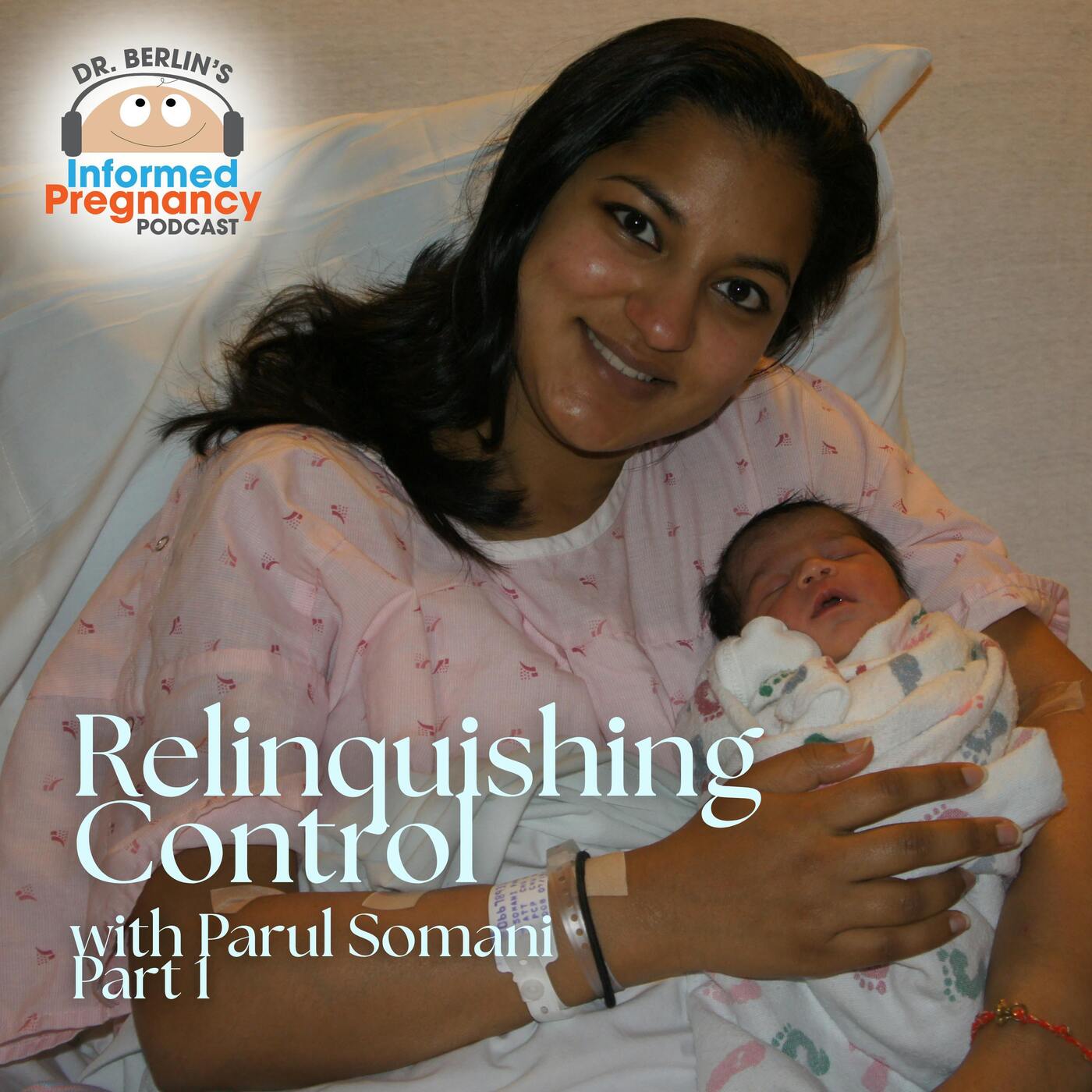
With an elite education and a high powered career, careful planner Parul Somani discusses pregnancy, motherhood, and what happens when control slips out of reach.
Connect with the guest:
Grow with us on IP+! Informed Pregnancy Media presents two all new intimate short-form video series following Garrett and HeHe’s real-time pregnancy journeys as they prepare for an empowered birth and postpartum experience. Each episode features weekly updates with personal photos and videos to help bring these raw stories to life, a visually dynamic guide through each mother’s emotional and physical experiences.
Keep up with Dr. Berlin and Informed Pregnancy Media online!
Learn more about your ad choices. Visit megaphone.fm/adchoices
See Privacy Policy at https://art19.com/privacy and California Privacy Notice at https://art19.com/privacy#do-not-sell-my-info.
Key quotes
“I have this achievement cup that I wanted filled.”
“And I cried more in those first 10 days after delivery than maybe the past 10 years combined.”
“And am I spending my quote unquote week in a way that fulfills me, in a way that is aligned with what I want.”
“And I said over my dead body, am I not going as well?”
Related episodes
- Ep. 493 In Conversation with Esther Friedman Schwartz
- Ep. 522 Hyperemesis Gravidarum with Marlena Fejzo
- Ep. 510 Preparation Matters with Nina Spears
- Ep. 514 Before Baby #4 with Kara Sutton
Transcript
AI-generated transcript with speaker labels — may contain errors, especially names and medical terms. Dr. Elliot Berlin, DC appears in blue; Parul Somani in orange.
Dr. Elliot Berlin, DC [0:00] My guest today is someone who built her life on careful planning, elite education, high-powered career, and even timing motherhood with intention. But when reality didn't follow the plan, first with a difficult postpartum experience, then with a newborn in the ICU, and finally with a quiet discovery just before delivery, everything changed. This is part one of a two-part story about motherhood, identity, and what happens when control slips away. I'm Pregnancy Focus Chiropractor Dr. Elliott Berlin, and you're listening to the Informed Pregnancy Podcast. Harul Somani, welcome to the podcast.
Parul Somani [0:52] Thank you for having me.
Dr. Elliot Berlin, DC [0:53] My pleasure. There's a lot of story here, so let's start at the beginning. Where are you from originally?
Parul Somani [1:01] I was born in northern India in the state of Rajasthan, but I was only three years old when we moved to the U.S. at first to Portland, Oregon, which is where I grew up. And then my high school years were in Seattle, and so Pacific Northwest for most of my life.
Dr. Elliot Berlin, DC [1:19] Welcome to America.
Parul Somani [1:20] Yes, it's been a bit now. And definitely had a traditional immigrant upbringing, seeing your parents work hard and being inspired and motivated by their work ethic. And then I spent about 10 years between Boston and New York, and now I'm in the Bay Area.
Dr. Elliot Berlin, DC [1:38] Okay. That gets us caught up. You've lived a very intentional, sort of high-achieving life. Can you walk us through how you approached major life decisions early on?
Parul Somani [1:51] In a sense, major life decisions early on were seemingly made for me, right? In the way that they're not necessarily thought through, you're just kind of doing what you think you're supposed to be doing. So work hard in high school, you know, apply for a good college, work hard in college, try to get the prestigious internships and the prestigious jobs. It was just somewhat of a hamster wheel cycle that myself and my peers were on.
Dr. Elliot Berlin, DC [2:19] Is that cultural? Because I feel like in America, that's not maybe the norm. Like we like to find the path of least resistance.
Parul Somani [2:29] Well, perhaps this is that nod back to what I was saying about an immigrant upbringing is just seeing my parents leave their home country, their family, everything that they knew in India to bring my sister and I to the U.S. for a better education, for the opportunities here. It was somewhat implicit that we are meant to work hard. We are meant to study well and do the best that we can. And that translated into try to get good grades, try to get into a good college. And some of it may have also just been intrinsically motivated as well, where I wanted to achieve. I have this achievement cup that I wanted filled. And so, you know, working hard to be good at something,
[3:24] to have an impact is something that I was wired to pretty early on. And it just manifested itself through schooling as, you know, trying to get good grades and trying to get the good job. But over time, I realized that when like really hard decisions came along, we were never actually taught how to make decisions like none of us are. There's never this explicit force around decision making. And how do you make the choices that matter most in your life? And so the way I had approached decisions in the past were influenced by the schooling and the careers that I had led, which were very analytical and logical and structured in nature. And so when it came to anything that had to be a decision made,
[4:14] it was applying that same approach is collect the data, do the research and try to find the answer within the analysis. That's going to give me the most guaranteed outcome on the other side.
Dr. Elliot Berlin, DC [4:26] What was the first career?
Parul Somani [4:29] My first career out of college was in management consulting. So my internships were on Wall Street during college. And then my first full time job was as a management consultant for Bain and Company, where I was working in teams and advising the senior executives of very large companies. So I worked there for over the course of nine years, including business school in the middle, and worked for Fortune 500 tech companies to private equity firms. And a lot of the work was soft skills and the sense of relationship building and advising. But a lot of quantitative skills, analysis, research, data collection and all of that.
Dr. Elliot Berlin, DC [5:17] Where did you go to college and business school?
Parul Somani [5:20] I went to MIT, where I majored in electrical engineering and computer science. And I went to business school at Harvard Business School for my MBA.
Dr. Elliot Berlin, DC [5:28] It sounds like you did not go for the path of least resistance. So where does being ready for motherhood at that time? What would being ready look like to you?
Parul Somani [5:44] Being ready looked like realizing I was not at all ready. So where I was in my life at that time, when I was pregnant with my first daughter, is I was 29 years old. I was a consultant, a post MBA consultant at Bain. I was working very, very hard over, you know, 60, 70 hours per week. And I was in a promotion window trying to get promoted to manager. And I actually thought that I was ready, you know, so I actually got married very young. I was young for this day and age. I was 23 when I got married. And so I was very clear in my mind that, like, OK, at least for five years, nobody talked to me about having kids because I have, you know, various things I want to pursue in my career.
[6:34] And so I thought that by the time I'm 28, 29, that I would be ready to start a family. And my husband and I thought that we were. And I remember, you know, before we started trying, it was about 10 p.m. one night. And I was on the phone with my sister who was working as a lawyer at a law firm at that time. And she was just talking about how, you know, she had just gotten home. It's past 10 p.m. And then there's like the baby for this and like just, you know, all of the chaos that comes with being a young working mother. And I'm just, you know, listening to her and trying to support her. But then when I get off the phone, I just remember thinking,
[7:11] maybe I'm not ready to just start having a family because I'm just coming back from work at 10 p.m. Like, where in my life and schedule is this baby going to fit in? And I actually pushed off, like, put a pause on thinking that we're ready to have a child. And, you know, thankfully, it was only a couple of months later where I realized, actually, there's never going to be the right time. There's never going to be a place in my career where it's like, yes, this is the time to make it all work. And that what I needed to do was just if wanting to start a family is what I want, I needed to try for that and then have everything else work itself out around it.
Dr. Elliot Berlin, DC [7:50] OK, well, soon after that, you decided to go for it.
Parul Somani [7:55] Yes. So I was 29 when I then had my first daughter. And I had not necessarily the pregnancy I had expected to have.
Dr. Elliot Berlin, DC [8:07] You said we were going to start trying. Did fertility come easy to you?
Parul Somani [8:12] Fertility did, thankfully, come pretty easily.
Dr. Elliot Berlin, DC [8:15] And perhaps this check one box.
Parul Somani [8:18] Yes. So that that part had gone smoothly enough. I mean, it wasn't necessarily right away, but it wasn't with the challenges that many of my friends have since experienced. And so I was very thankful for that. It was early on in the pregnancy where we learned that there is some chemical that's elevated through some blood tests that we had done where we learned that there could be a risk in how the baby grows later on in pregnancy. And that did end up being a challenge that we faced. My daughter in the third trimester was not getting as many nutrients through the placenta as expected and therefore was not growing as well or as fast as one hopes
[9:09] in the third trimester.
Dr. Elliot Berlin, DC [9:10] Did you have up until that point a vision or a plan for how you'd like to deliver her?
Parul Somani [9:17] Yes. You know, my husband and I had taken those child birth classes. And one of the assignments was to put together your birth plan. And so I had all of these visions, you know, outlined of what my birth plan is going to include, that it's going to be with medication, but not like an otherwise sort of normal delivery. You know, C-section was nowhere on my radar as a possibility. And the birth plan included no formula feeding, you know, upon birth. I wanted to prioritize breastfeeding and everything went out the window.
Dr. Elliot Berlin, DC [9:53] A pretty natural mindset. A pretty natural mindset.
Parul Somani [9:56] I mean, I was definitely on board with epidural and any sort of pain release. But otherwise, you know, just in my mind, what would be a complication free delivery? And nothing went that way.
Dr. Elliot Berlin, DC [10:10] Well, let's take a little break. I mean, when the baby is not getting enough nutrition and growing slowly, the priority becomes getting them out. And so sometimes the birth plan changes. We'll take a little break and we'll be right back.

Dr. Elliot Berlin, DC [10:36] Welcome back. We're talking about Paro Somani. OK, so you want a planal kind of hospital vaginal birth with meds, breastfeeding, relatively typical birth plan. And then the baby's measuring small. What happens with your birth?
Parul Somani [10:53] So at one of the third trimester ultrasounds, there is a sense that she's not growing nearly as well as she should. And we realized that we might need to move to a C-section and sooner than expected. The hope was that she would get to 38 weeks full term so that she is, you know, as fully baked in there before the C-section. But I need to start doing these going in for daily non-stress tests to make sure that the heart is still beating. And any one of those appointments could have resulted in an emergency C-section. Thankfully, each of those daily appointments went smoothly and we were able to reach the 38 week mark. And the C-section went smoothly.
[11:43] It was incredibly nerve racking the night before. I remember my husband and I couldn't get any sleep. It's a common surgery and yet still a very invasive one.
Dr. Elliot Berlin, DC [11:54] Have you had any surgeries before that?
Parul Somani [11:57] Prior to that, no, not in any sort of meaningful way. Like wisdom teeth removal, right? I mean, afterwards, many other surgeries have come.
Dr. Elliot Berlin, DC [12:07] But it's also your first surgery, so that's kind of nerve racking also.
Parul Somani [12:11] Yes. And, you know, we had asked someone to describe what is getting a C-section is like, and it was described to me as you're lying there and someone has put a handbag on your belly and they are rummaging through the handbag.
Dr. Elliot Berlin, DC [12:28] That's descriptive.
Parul Somani [12:29] Yes. And, you know, is not a painful feeling, but there is the feeling of the rummaging, right?
Dr. Elliot Berlin, DC [12:39] Of the sounds creepy.
Parul Somani [12:41] Sounds creepy. And so now I had this narrative in my mind that this is what it's going to be like. And so very hard to get any sleep the night before. Thankfully, the surgery itself went smoothly. Even that actually ended up somewhat not going to birth plan, but in the entertaining way, because once I knew I was going to be having a C-section, I actually put a playlist together of music that would be able to play in the background, since I would be awake, you know, during the surgery. And I thought I had put all instrumental music on that playlist. But one super high energy Indian song, you know, Bhangra song, ended up making it on the playlist.
[13:26] And when that came on, my anesthesiologist actually started like dancing a bit to it. So it was not like birth plan, but in a in a little very joyful way. But the surgery itself went smoothly. And my daughter was born at four pounds, ten ounces.
Dr. Elliot Berlin, DC [13:46] Oh, wow. Very little.
Parul Somani [13:48] And that was the crazy thing is that even though she was the pregnancy where there were concerns during pregnancy and there was such a low birthrate after delivery, she actually did not need to be admitted to the NICU. They did need to formula feed her right away. So there was one other part of the birth plan that just went out the window. But, you know, of course, whatever is needed for her health is what was priority.
Dr. Elliot Berlin, DC [14:15] Was that formula plus breastfeeding or just formula?
Parul Somani [14:19] So at that time, it was plus breastfeeding. But, you know, there was delay in the milk actually coming in. And I don't know if this was more of a protocol that the hospital had versus what other doctors would also have recommended. But they moved to formula feeding right away. And then they had me start pumping right away. And even though breastfeeding and latching had initially gone OK with the pumping, with the pressure of breastfeeding a child who was so small and the guilt that I carried of being responsible for all of that kind of put me on a spiral where breastfeeding then actually became very difficult. And I cried more in those first 10 days after delivery
[15:16] than maybe the past 10 years combined. You know, there's many things that happen with having to pump right away, including then the sensitivity that I had on my skin so that when she would latch or try to latch, I would then cringe at the pain. And so breastfeeding was just like spiraled downwards pretty badly. I was very close to quitting. And after a hard journey of keeping at it, we eventually got to a rhythm where breastfeeding worked. And I was ultimately able to breastfeed her for just over a year, which felt really rewarding, but a very hard earned journey.
Dr. Elliot Berlin, DC [15:57] Yeah, seriously. Now, where is the career during this postpartum phase in that first year?
Parul Somani [16:05] Yes. So like I mentioned, I was in a post MBA consultant role and in the window for an early promotion to manager while I was on maternity leave. And my company offered a great maternity leave, a four month paid leave. And I had thought I would potentially extend it to take an additional two months of unpaid. So just in my mind, having this option value of potentially six months home during my maternity leave, I actually got that early promotion to manager, which was very exciting. And I felt really honored that my company was the type that would, you know, recognize a woman who's worked hard and has earned a promotion even while they're on maternity leave.
[16:57] And that gave me the opportunity to return to work as a manager. And that's a big difference in the extent I have a bit more autonomy. Over my own schedule, over my own, you know, kind of working norms on how I structure my team. And I felt like at about the four month mark, I felt like I actually was excited to go back to work. I wanted that adult interaction and intellectual stimulation. And after a four month leave, I returned back as a manager and management consulting.
Dr. Elliot Berlin, DC [17:34] How did it go?
Parul Somani [17:35] So it had its ups and downs, for sure. Management consulting is a client services industry. And so even as a manager, even if I had been a partner, there is a nature to the work that is just client driven and out of your control. So I actually, you know, didn't return full time. I returned in a part time role. But when you're part time in a corporate role like that, that's client services. It's still easily over 60 hours a week. You know, if I was like 80 hours at full time, I was like 60 hours part time. I was leading the team for a private equity firm and unclear if they even knew that I was part time. Right. So there's challenges in an industry where it's client driven
[18:29] and you're given a full time versus part time role. But it's unclear if the work itself is truly scoped for that. And to layer on another challenge, my daughter ended up having some complications after birth, not related to pregnancy or delivery, but something that happened that required her to be on a medication for a year, which had a risk of low blood sugar. And so she needed to be fed like every three hours, even throughout the night, because if she was sleeping, it would be unclear because she's just sleeping well, or is it because she's suffering from low blood sugar due to the medication. So even though I had returned to work in what was, you know,
[19:20] effectively a full time role, even though it was considered part time, I was also throughout the night having to wake up every three hours to breastfeed her, even if it was like a dream sleep for her just to make sure that she's not suffering from any low blood sugar. And so it was definitely a very hard time personally and professionally. I kept at it for a couple of years, but definitely experienced a lot of burnout and increasingly began to question why I'm working so hard at something. I don't necessarily feel that passionate about and had a desire for something different. I just didn't yet know what exactly that would be.
Dr. Elliot Berlin, DC [20:08] So did you start looking for something different?
Parul Somani [20:12] So I went through a multi-month journey where I thought I wanted to start my own company. And I think I was approaching it with trying to like keep a toe in each, you know, kind of in and out of the pool where I wanted to start my own thing, but I didn't want to fully leave behind this career at Bain. And so I had negotiated with them to take a sabbatical that I would take a six-month sabbatical and that I would, you know, work on recovering from my burnout. I would work on this idea and that I would then come back to work.
Dr. Elliot Berlin, DC [20:50] Yeah. Is that what you did?
Parul Somani [20:52] No. So what ended up happening is it was going to take some time for me to be able to start this sabbatical because they would need to backfill me and, you know, make sure that the team is prepared to continue serving the client. And in the meantime, there was a summer off-site that I attended. And while it's meant to be an opportunity for, you know, bonding and re-energizing about the company, I ended up having to work that entire off-site and missed most of the fun parts. One of the fun parts I did get to join, I remember feeling like, who are these people? Like all of these friends, like I have so many friends that are lifelong friends at Bain, no longer work there.
[21:42] And I was just looking around and being like, I don't even know a lot of these people anymore. Especially after having my daughter and theoretically being part-time, I became much more disciplined with how much time I spent at work versus getting back to home. And as a result, I was socially less involved in the company. And so two things happened with that off-site. One, I just realized how emotionally detached I felt in terms of camaraderie and affiliation and affinity with the team, the broader company as a whole. And two, not only was I working through the entire off-site, but I also had to take client calls and I missed the company bus back home.
[22:28] And so I needed to take a taxi from Napa and then two hours south to my birthday dinner, which I ended up having to work that entire car ride. I felt completely sick and just nauseous by the time I got to the dinner. And I just started bawling to my husband and realized that I need to quit.
Dr. Elliot Berlin, DC [22:53] Happy birthday.
Parul Somani [22:54] Yes, exactly. Well, I mean, one anecdote that I forgot to even mention is that during this off-site, one part that I did get to attend was the keynote speaker. And something he said deeply resonated with me, which was that he thought of the seven days of the week as each day being about a decade of your working life. And how for him, it was now Saturday of his week. And he was trying to figure out what to do with this next chapter of his life and the impact he wants to leave behind. And I'm sitting there literally on my birthday weekend hearing this talk and trying to figure out, is it Tuesday? Is it Wednesday? Like what day of the week am I on?
[23:37] And am I spending my quote unquote week in a way that fulfills me, in a way that is aligned with what I want. And I think that combined with these other realizations I was having over the off-site led me to go into my birthday dinner feeling not just burnt out, but finally reaching that tipping point that I need something different. And that I don't want to take a sabbatical and have to return back. I actually need to just quit.
Dr. Elliot Berlin, DC [24:08] And so that's what you did.
Parul Somani [24:10] And so that's what I did. I actually ended up quitting with no clarity of what would be next from a career standpoint, which was pretty unnerving because I had been a management consultant now for nine years. And it was not just a job or a role, but it had become an identity. And to figure out what was next felt like starting from scratch.
Dr. Elliot Berlin, DC [24:38] With all that buildup. But then I heard it wasn't long until you got pregnant again.
Parul Somani [24:43] Yes. So that was the other curve ball is that just two weeks after I left this very stable job with great maternity leave benefits I learned I was pregnant with my second daughter.
Dr. Elliot Berlin, DC [24:57] That's a great place to take a break. When we come back we'll find out how that pregnancy went. Don't go anywhere. We'll be right back. Welcome back. We're talking to Parul Somani. Okay. So whatever day of the week it is, you decided it's time to take your exit from the company and the promotion that you'd worked so hard for. And then a little curve ball pregnancy, another baby. I mean, it sounds like you were surprised by it.
Parul Somani [25:34] You know, I probably shouldn't have been because we were trying. It was not a surprise pregnancy. But to learn just two weeks after that I had left was a surprise. And, you know, I think there's some questioning of like, oh, we were trying for a second. Should I have stayed? And yet I think it was time. It had been time to leave the company. It had been time to look for a next chapter of my career. When I left Bain, I thought I would be starting my own company. And yet began to realize that I am actually stronger at taking something that exists and improving it. And so had already shifted to the frame of mind of actually wanting to join a startup.
[26:19] And yet finding out that I'm now pregnant, the idea of recruiting for a startup became a bit challenging because I felt like I don't have all the time in the world to figure it out. I didn't want to have to put everything on pause, wait till the baby's born, and then start this next chapter of my career. But I also didn't want to be in my second trimester trying to recruit for a startup at Silicon Valley. And so I expedited my job search. I got introduced to an early stage startup that wasn't necessarily working in an industry that I was passionate about. But I knew that what I was solving for at that time was a team that I would enjoy working with,
[27:05] a role that would let me shift from being consultant and advisor to actual operator. And I met with this team of women, leadership team, but nobody was a mother. Nobody was a parent that was working at this company. And I remember thinking, I think I want to accept this offer, but I also want to be transparent that I'm just finishing my first trimester. And if that is a problem or if there's any reaction that doesn't feel like full support, then I'll know that this offer is not right for me either. And when I did share the news with the CEO that I'm actually just finishing my first trimester, I remember her response was just this huge smile on her face.
[27:51] And the very first thing she said was, how can we most support you?
Dr. Elliot Berlin, DC [27:55] Oh, wow, that's nice.
Parul Somani [27:57] Okay. Right away then that, yes, this is the place for me at the stage in my life. And I accepted on the spot.
Dr. Elliot Berlin, DC [28:04] What was your second pregnancy like the other two trimesters?
Parul Somani [28:09] That pregnancy was actually very smooth sailing. There was no concern in terms of needs for non-stress tests or concerns around growth. And it was the pregnancy that we thought would be the smooth experience upon delivery.
Dr. Elliot Berlin, DC [28:32] Was there, I mean, after a C-section, I guess you have two choices to plan for a repeat C or a vaginal birth after cesarean. Did you have one in mind?
Parul Somani [28:43] I did choose to have a repeat C-section. I felt like there's no right answer. It's such a personal decision, but that for the baby, it should be like being served on a silver platter and should be potentially safer for the baby. I don't know, but possibly more dangerous for me. And yet repeat, or not repeat, but a V-back, vaginal birth after C-section carries its own risks. I personally didn't feel so drawn to wanting to try to experience a vaginal birth at that point that I chose to go with a C-section. But we actually never made it to that C-section date.
Dr. Elliot Berlin, DC [29:33] Meaning what happened?
Parul Somani [29:35] Two weeks early, my water broke and I didn't go into labor in terms of contractions, but with the water breaking, did need to go to the hospital and they then had to do the C-section earlier than expected the next morning. But thankfully she was also at 38 weeks by that point and was full term.
Dr. Elliot Berlin, DC [30:01] How did the cesarean go?
Parul Somani [30:04] So that C-section, the surgery itself actually went smoothly. I remember the night before just feeling so calm, which was such a contrast to my first delivery. My motor had broken and so there was the excitement and anxiety around that part. But once I got admitted to the hospital, it was about 10 p.m. at night. They said there's no rush and that they want to wait till morning for the C-section. And so that evening was actually very peaceful. I didn't have that same fear going into it as I had had with my first. And it was calm in the way that I was able to tell all my family members, this is when the surgery is, this is when to come. My now toddler daughter was excited
[30:52] for what was meant to be a birthday party that she was going to throw her little sister. And there was just a lot of excitement about my second daughter's arrival and how we were going to celebrate as a family together. The surgery itself went smoothly. They put her on skin to skin just like they had my first. I sang the same songs to her as she was on skin to skin like I had my first. And later they took me to the, I don't know if it was the recovery room or they took me to the room where I would be able to attempt my first breastfeeding with her. And she latched immediately. And it was beautiful because I felt like after what had been so hard
[31:40] of a breastfeeding journey with my first, I was now delivering at a different hospital one with much bigger recovery rooms, one with no pressure to pump right away. And the breastfeeding had worked right away. And I just felt like everything had come together the way I had hoped.
Dr. Elliot Berlin, DC [31:58] Sounds dreamy.
Parul Somani [32:01] It sounds dreamy. But then right after I finished breastfeeding and I gave her back to the nurse, the nurse was swaddling her back and seemed to notice something in terms of how my baby was breathing. And she didn't seem panicked about it at all. She actually very calmly just said, I'm going to take her back to the nursery and we will let you go back to your main recovery room and we'll bring her there soon. And so we didn't have any particular reason to be concerned. We were like, sounds great. We go back, my whole family's waiting and time just keeps passing and she hasn't been brought back. And about 15, 20 minutes later, my husband goes to the nursery to check in.
[32:55] And when he returns, I'll never forget that expression on his face. He's just so pale and distraught. And it turns out that when she had been taken back to the nursery, she had actually been having trouble breathing and she had stopped breathing and they had to intubate her. They had to intubate her with a breathing tube and my husband witnessed his newborn daughter have a breathing tube put down her mouth and she was being put into a little incubator and the doctor said, we don't know what's going on. It could be something neurological or it could be something cardiac related and that she needs to be taken to a NICU so we can run a bunch of tests.
Dr. Elliot Berlin, DC [33:49] Wow, that's so scary.
Parul Somani [33:51] It was incredibly scary because we had no idea what was going on and it seemed like the doctors didn't even know what was going on either. And unfortunately, this particular hospital had no acute NICU. And so they were saying that they were going to need to ambulance transport her to another hospital up in the city which just turned out to be the exact same hospital that my first daughter had been born in which I had specifically been trying to avoid.
Dr. Elliot Berlin, DC [34:25] Do you go together with the baby or do you get separated?
Parul Somani [34:30] So that was the crazy thing initially is that they said I couldn't go because I had just had a C-section that I would need to stay here and that my husband and newborn would be taken to that hospital. And I said over my dead body, am I not going as well? So upon some insistence, they then arranged for a second ambulance. So my mother came with me in one ambulance and my husband went with my newborn.
Dr. Elliot Berlin, DC [34:59] Wow.
Parul Somani [35:00] We were transported an hour away to this acute NICU. My husband shared with me later how his mind was spiraling during that entire ambulance ride wondering what might be possibly-
Dr. Elliot Berlin, DC [35:14] Even my mind is spiraling right now.
Parul Somani [35:16] 100%, right? Because you have now just been essentially told by the doctor that there could be something neurologically wrong or otherwise. And his entire thought process is wondering should he leave his job? Are we going to have a child with needs that require more attention? There's just lots of questions and no answers. And even that ambulance ride was a debacle because my ambulance took us to the wrong place twice.
Dr. Elliot Berlin, DC [35:46] Oh my goodness.
Parul Somani [35:47] And I remember being like- Well, first they took us to the wrong- The hospital has multiple locations and they took us to one of the wrong locations. So then we're just like totally in the wrong part of the city literally the hospital and building. And then they finally get us to the right building but then to the wrong entrance. And so they have to get back in the ambulance and drive us to another part. And I just remember thinking oh my God, if I was dying right now I don't think I would even meet it to getting the treatment that I needed because that was just so unacceptable.
Dr. Elliot Berlin, DC [36:22] Right, so I guess at the same time this mystery is happening with your baby you're also having your own health concern at the same time. And that also, you know it seems like an impossible juggle. Let's take a break. We're going to do a whole other episode to find out what happened with your baby and what happened with you. You know, we're going to have episode two with Paolo Soleimani. Join us.
Want more pregnancy + parenting? Start your FREE TRIAL of Informed Pregnancy+ and get access to all our curated pregnancy and parenting content — original series, iconic birth films like The Business of Being Born, prenatal workouts and more.

0 Comments