
June 4, 2026 · 35 minutes · Episode 504
About this episode
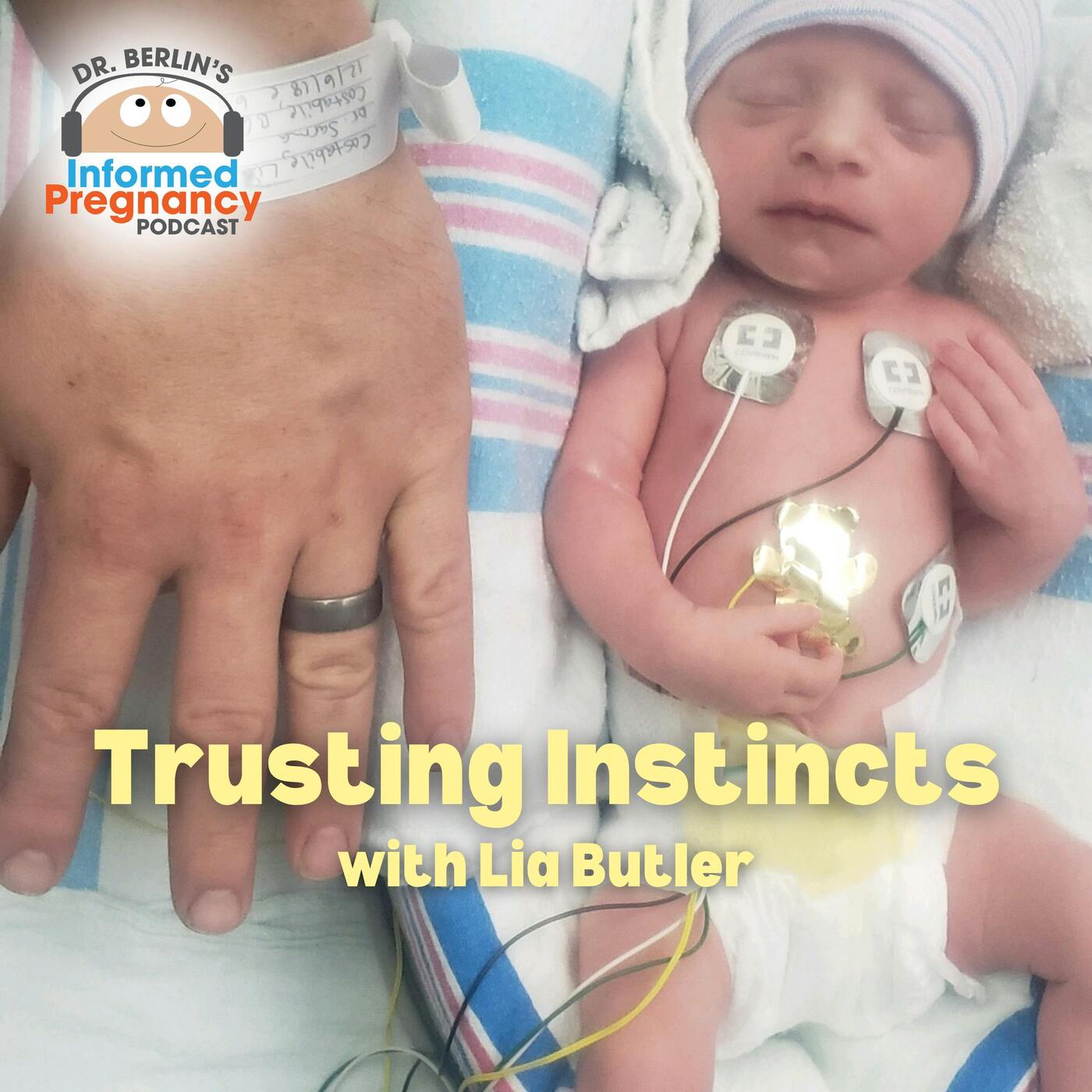
Former nurse Lia Butler found herself fighting to be heard in her own journey to motherhood. She discusses learning a powerful lesson about trusting instincts and advocating for oneself during pregnancy.
Connect with the guest:
Grow with us on IP+! Informed Pregnancy Media presents two all new intimate short-form video series following Garrett and HeHe’s real-time pregnancy journeys as they prepare for an empowered birth and postpartum experience. Each episode features weekly updates with personal photos and videos to help bring these raw stories to life, a visually dynamic guide through each mother’s emotional and physical experiences.
Keep up with Dr. Berlin and Informed Pregnancy Media online!
Learn more about your ad choices. Visit megaphone.fm/adchoices
See Privacy Policy at https://art19.com/privacy and California Privacy Notice at https://art19.com/privacy#do-not-sell-my-info.
Key quotes
“And I think that lack of a personalized approach is what's getting women into trouble and why so many are really slipping through the cracks because what's normal for one is certainly not for another.”
“you have a billion sensors I don't have.”
“I like to say as soon as she got out of my toxic womb, she thrived.”
“And if something doesn't seem right, listen to your instincts, talk to your provider about it.”
“It's okay to push back because this is your health, this is your life, this is your baby's life and nobody has the right to tell you that your question doesn't matter or that it's not important.”
Related episodes
- Ep. 493 In Conversation with Esther Friedman Schwartz
- Ep. 514 Before Baby #4 with Kara Sutton
- Ep. 500 The Unexpected with Dr. Elliot Berlin Part 1
- Ep. 505 Relinquishing Control with Parul Somani Part 1
Transcript
AI-generated transcript with speaker labels — may contain errors, especially names and medical terms. Dr. Elliot Berlin, DC appears in blue; Lia Butler in orange.
Dr. Elliot Berlin, DC [0:00] My guest today spent years caring for mothers and babies, first as a nurse, then in NICU and maternal health spaces, but during her own pregnancy she found herself in the unexpected position of having to fight to be heard. What started as a feeling that something wasn't quite right turned into a powerful lesson about trusting your instincts, understanding your body, and advocating for your care during pregnancy. Now she's using that experience to help improve maternal health and educate women everywhere about recognizing warning signs and asking better questions. I'm pregnancy-focused chiropractor Dr. Elliott Berlin, and you're listening to the
[0:36] Informed Pregnancy podcast. Leah Butler, welcome to the podcast.
Lia Butler [0:56] Thank you for having me.
Dr. Elliot Berlin, DC [0:57] My pleasure. I mean, your mission and mine are the same. Education is information, is power, and we need to take the power into our own in today's health care system in general and for the perinatal time in particular. You've had quite a journey, so let's start at the beginning. Where are you from and what first drew you to babies and health care?
Lia Butler [1:18] Yeah, so I'm from Princeton, New Jersey. I live there now with my two children and my husband. And I've sort of always had a special interest in babies and birth and motherhood. And so I very naturally, I think, focused on building a family, but also building a career that centered in that space. So that's really where it began. And shortly after I got married, I had my first baby. And that was right after graduating from Drexel University. I have a degree in health administration from there. And yeah, I just started my journey into motherhood and my career sort of simultaneously.
Dr. Elliot Berlin, DC [1:58] What was the plan with that degree?
Lia Butler [2:01] Well, in working within the hospital and the health care system in general, I very quickly noticed that there were some holes in the infrastructure. There was a lack of innovation and there's a lot of issues within the health care system that were really a detriment to patients. And I thought, you know, if I can get involved on the administrative side and later, you know, on the innovation side, I can help to sort of fill some of the gaps that impact patient care and ultimately patient outcomes.
Dr. Elliot Berlin, DC [2:30] Up until that point, had you had a personal experience where you felt the deficit of the system or you're just aware of it as somebody who's curious and doing research?
Lia Butler [2:40] You know, in retrospect, I think that I experienced some deficits of the health system, both myself and family and friends, but I wasn't really aware of them at the time. And I think that's because as patients and people, you know, we have this implicit trust in the health care system and our health care providers. And so I didn't really ask a lot of questions when decisions were made around my health care and, you know, my path that I would take as far as my health care was concerned. But looking back, I realized that there were mistakes made, there were things missed, and that's not, you know, to fault anybody in particular. But I think the system itself is really setting both clinicians and
[3:18] patients up for failure at times.
Dr. Elliot Berlin, DC [3:20] I agree. And, you know, I remember grandparents and even parents to a degree saying, just do whatever your doctor tells you. But it's not quite that simple. Certainly not today. There's everybody in the health care system is pulled in a lot of direction. Some of them are directions that would benefit you, and some of them are directions that won't benefit you. Unless you're an active participant, it's a little bit hard to know which choices are being made because of your benefit and which choices are being made for somebody else's benefit. So I agree with you a lot. While you were in college, you met your husband pretty young, huh?
Lia Butler [3:54] Yeah, yeah. I was 20 when I met him. And yeah, we met and we were married within about two and a half years of meeting. We both wanted to rush to the altar and start our family. That was a priority for both of us.
Dr. Elliot Berlin, DC [4:07] Wow. Not the way you see it generally these days.
Lia Butler [4:11] Yeah. It's an old school.
Dr. Elliot Berlin, DC [4:13] How was the first attempt at childbirth?
Lia Butler [4:17] Well, my pregnancy was great up until when I gave birth. My water broke and I was in labor. I chose a natural birth. So I was in natural labor for 24 hours. And then my son started to have some decelerations. And unfortunately, I ended up in an emergency C-section. So everything was OK until the end. But he is healthy and he's now 13. All's well that ends well, I guess, too.
Dr. Elliot Berlin, DC [4:42] Exactly. How was postpartum from that pregnancy?
Lia Butler [4:46] Postpartum was OK. I think, again, in retrospect, I definitely experienced a lot of postpartum anxiety and intrusive thoughts. And maybe even some of the baby blues. I was very happy to be a new mom. I wasn't as overwhelmed as I had expected. I kind of just fell into it nicely. Breastfeeding went OK. And in general, it was a great experience. But the intrusive thoughts and the anxiety that I experienced really took over a lot of my days. And I was ashamed of it. I didn't talk to a lot of family and friends about it. I thought I kind of just had these crazy thoughts. And as I've gotten older and just talking to friends about their experiences post-birth,
[5:25] I realize it's incredibly common to have these things happen. And so I think it's important that we do everything that we can to make it part of the conversation so women don't feel alone in that postpartum period, especially when they're not feeling like themselves.
Dr. Elliot Berlin, DC [5:38] Yeah. In my office, I see a lot more support for things that come up pregnancy-related and not so much for postpartum. And so I think very often women feel alone or like it's just them. And like you said, sort of embarrassed or ashamed to talk about it so they don't get support. And it's unfortunate because a little bit of support goes a long way.
Lia Butler [5:59] Yeah, I agree.
Dr. Elliot Berlin, DC [6:00] You're already advocating in a way that I think is super important. And we are, too, we're working on a new series called The Fourth Try, all about shining the spotlight on the fourth trimester, the first 12 weeks or 13 weeks after the baby comes. For you, during that time, you started to work a little bit more in a maternal and neonatal setting. Tell me about that.
Lia Butler [6:22] Yeah, so I started working with a med tech startup focused on feeding predictions or personalized feeding plans for neonates. So it wasn't a prediction, but what they did was they took all of the disparate data that was in the EMR. And with that, it helped informed a very personalized feeding plan for neonates and very low birth weight infants. So to help maximize their growth and things like that. Company was very progressive for its time in that it really processed the data well and helped with this personalized approach to medicine. And that was really my first experience with personalized medicine. And I saw very quickly what an impact that could have.
Dr. Elliot Berlin, DC [7:03] You're working in personalized medicine around babies
Lia Butler [7:06] around the same time you're having a baby. Yeah, actually, I started with that company
Dr. Elliot Berlin, DC [7:12] just after I had my second baby. After your second baby. Okay, well, let's talk about that second pregnancy. Something there didn't feel right to you at some point, what happened?
Lia Butler [7:26] Yeah, again, I had a fairly normal pregnancy. Looking back, there were some signs that there could be some trouble looming ahead. For example, at my 20 week anatomy scan, the baby was measuring small and I was seen a few times by maternal fetal medicine just to make sure that the baby was growing okay. And my daughter, her name is Ray, she was growing, but slowly. And so they just kept a closer eye on me. Now we know that that can lead to preeclampsia, but I digress.
Dr. Elliot Berlin, DC [7:57] How far apart are the kids?
Lia Butler [7:59] They are five years.
Dr. Elliot Berlin, DC [8:01] Okay, so you have a five year old.
Lia Butler [8:03] Yeah, I do at that time.
Dr. Elliot Berlin, DC [8:05] Yeah. And do you feel like the health providers around you were giving you reassuring responses to why the baby was small?
Lia Butler [8:16] You know, at the time I did, I felt like I was being managed well. What I was not receiving was education on why that could be happening and what it could mean. So just throughout my pregnancy, I noticed that there was just a lack of patient education in general about what I should be looking out for, signs and symptoms. And I think it was almost an inconvenience. The more I knew or the more questions I asked because that created, I think, more of a burden on the doctor's office. Having to manage my questions and spend time answering them, they were overrun with patients. And so I feel like that was really lacking.
Dr. Elliot Berlin, DC [8:53] I mean, that's an observation that the system's just not set up for spending time with you. Like we have a very short amount of time. We need you to pee in this cup, measure your belly. Very little time for chit chat, so to speak. But you have concerns and the baby's not growing the way your first one was growing. And it sounds like your questions were not really being answered or you weren't just given a lot of information. And then your story takes a turn. We're gonna take a quick commercial break and we come back. We'll talk about how Leah's instincts during that pregnancy ultimately changed the course of her life. We'll be right back.

Dr. Elliot Berlin, DC [9:45] Welcome back. We are talking to Leah Butler. Okay, so we're talking about your second pregnancy of a five-year-old at home. The baby's measuring on the smaller side, which has you concerned and doing research and asking questions. Nobody really has time for your questions and you're not getting a ton of information. Aside from the baby being small, were there any other signs that something might be up?
Lia Butler [10:10] Well, towards the end of my pregnancy, I would say after 30 weeks, I noticed that my weight gain was increasing. I mean, more so than the first. I carry a lot of weight when I'm pregnant, so it didn't cause too much concern for me, but I felt very swollen and I felt like my body was struggling. And I thought, hey, maybe it's just cause I'm approaching 30, whatever it may be. And then on the other side, my baseline blood pressure when I began pregnancy and throughout my first pregnancy after and before the second was about 110 over 70, give or take. And I noticed that my blood pressure, I know it's a good ball. I don't have that blood pressure anymore.
[10:45] I'm jealous of that girl too. I mean, I noticed it started to creep up, 120 over 80, then 124 over 86. And I was-
Dr. Elliot Berlin, DC [10:55] Is this at the doctor's office
Lia Butler [10:56] or are you taking it at home? I was not monitoring my blood pressure at home yet at that point. I began to once it started to creep up a bit and I wasn't really diligent about doing it every day, but just once in a while, if I wouldn't feel well, I would check it. And it wasn't super high, but it was starting to creep up. And I knew that that was getting to the point where it was a good amount over my baseline. And when I would inquire about it at the doctor, they would just tell me that is a normal blood pressure. They did not take into consideration what my baseline was. And so what was hypertension developing for me, they just called it a normal blood pressure.
[11:35] So yeah.
Dr. Elliot Berlin, DC [11:36] It makes a big difference just to explain at home. Like if your normal is let's say 100 over 60, that may be low for the average, but that's your normal. If all of a sudden it's 120 over 80, that's high for you. And that makes a difference.
Lia Butler [11:52] Yep. And I think that lack of a personalized approach is what's getting women into trouble and why so many are really slipping through the cracks because what's normal for one is certainly not for another.
Dr. Elliot Berlin, DC [12:03] Yeah. So did they recommend that you monitor at home or this is your own initiative?
Lia Butler [12:07] I actually asked if I should be monitoring my blood pressure at home. And they told me, no, that's just gonna make me anxious. More questions that we don't have time for.
Dr. Elliot Berlin, DC [12:17] Exactly, yeah, exactly.
Lia Butler [12:19] Don't do it.
Dr. Elliot Berlin, DC [12:20] Right.
Lia Butler [12:21] But I didn't listen, so.
Dr. Elliot Berlin, DC [12:23] You're monitoring, you see it going up, you're swelling, you're gaining weight, even though the baby's smaller.
Lia Butler [12:29] Yep.
Dr. Elliot Berlin, DC [12:30] And to you these mean something, but for your doctor they're within the realm of normal until at some point they aren't. When do things change?
Lia Butler [12:39] Yeah, so I went to my doctor's appointment, my 34 week appointment, I believe, and my blood pressure was very high for me. I think it was mid 140s over 90 something. I also had significant weight gain since the previous couple of weeks and they dipped my urine, they put the urine dipstick on the counter and there I sat waiting for my OBGYN to come in. And when she came in, she assessed me, we chatted for a minute, she was rushing and she said, okay, you're good to come back for next week. And I said, wait, what about my high blood pressure? And she said, well, it's normal that your blood pressure creeps up at the end of pregnancy. And while I had been waiting,
[13:17] I checked my dipstick and I noticed there was protein in my urine.
Dr. Elliot Berlin, DC [13:20] You looked at your own?
Lia Butler [13:21] I looked at my own, yeah.
Dr. Elliot Berlin, DC [13:23] Okay.
Lia Butler [13:24] Now, we know that high blood pressure plus protein in the urine equals preeclampsia. I didn't know that at the time, otherwise I would have pushed a little bit harder. I was a little bit less informed about preeclampsia. So then I said to the doctor, hey, did anybody have a look at my dipstick? And she said, yeah, and everything's fine. I said, well, I don't think it is. There's protein in my urine. And she got really defensive and almost upset with me that I had looked at it myself. And I will never forget it. She said, well, those aren't the only indicators of preeclampsia. So you're fine, I'll see you next week. And she sent me home and I felt teeny tiny.
[14:01] I felt like I had zero control over my health and I felt stupid. And I think that's where just a lot of women go home. They accept what they're told. And again, that's where the danger is like.
Dr. Elliot Berlin, DC [14:12] So. I'm sorry. Something I always tell my patients is you have a billion sensors I don't have. Like even, it looks like the dashboard warning lights were going off anyway.
Lia Butler [14:22] Yeah.
Dr. Elliot Berlin, DC [14:23] Preeclampsia in this pregnancy and nobody was looking at the dashboard. But even outside of that, like you felt it on the inside. You had a pregnancy that felt different and that was healthy and normal pregnancy. Now you have another pregnancy that's feeling different to you. We can never discount those sensors that are going off inside that we don't have access to that only you do. I'm sorry that, not just that you were sort of brushed aside, but that it made you feel so, like you said, stupid or inadequate. I'm sorry.
Lia Butler [14:51] Well, thank you. And yeah. And I also honestly, looking back, I feel bad for the clinicians that are sort of put into the position where they're maybe a bit short-tempered and overworked and overrun, because I think it puts them in a position where they're almost negligent sometimes and that's really unfortunate. So I feel for them as well.
Dr. Elliot Berlin, DC [15:10] Do, I mean, I'm in the healthcare system and I know it's broken. And I know that the model, insurance is always trying to pay for as little as possible. Everybody wants to go, myself included, two practitioners who take my insurance, but then I get frustrated when they don't have time for me. But in order to pay all the bills and make a living, they have to see a lot of people in a short period of time. So it's not a great system. And so you are sent home with dashboard signs of preeclampsia going off that we're not paying attention to. What happens after that?
Lia Butler [15:44] So I went home. I had a hair appointment, actually. I had my hair done in my friend's kitchen and she was looking at me going, are you okay? You don't look good. And I just really did not feel good. And I was experiencing abdominal pain and I really can't explain the feeling, but I almost felt like I was dying. And I thought, man, pregnancy as you approach 30 is not as fun as when you're 25.
Dr. Elliot Berlin, DC [16:04] Oh my gosh. Most people are thinking about pregnancy for the first time at 30. So you're still young.
Lia Butler [16:10] Yeah, for today's standards, for sure. So I went home and I thought, okay, I need to check my blood pressure, obviously. So I checked it and it was scary high. I don't remember exactly what the number was, but it was over 200, over 90 something. So it was scary.
Dr. Elliot Berlin, DC [16:27] It's amazing that your friend was able to see it without any of the indicators, just to see it on your face and in your movements and your personality change.
Lia Butler [16:38] Yeah, and my face was about as big as the moon. I had just this classic swelling in my face that I think is a telltale sign that preeclampsia could be developing in some cases.
Dr. Elliot Berlin, DC [16:49] So what did you do?
Lia Butler [16:51] So I woke up my husband who had just taken some melatonin to sleep with. And I said, hey, we gotta go to the hospital. I don't think I'm okay. I called my OBGYN's office. They were very dismissive. They said to wait, take my blood pressure again in a little while. They didn't think I needed to come in. And I insisted that I come in and be evaluated. So, I mean, they didn't have a choice at that point. So I went in and as soon as the nurses put their eyes on me and started taking my blood pressure and assessing me, they sent some blood work out, stat. And it was very clear that I was very unwell. I was presenting with severe features of preeclampsia
[17:34] and they immediately put me on a magnesium drip to prevent seizures. And my baby was out within an hour of arriving. C-section.
Dr. Elliot Berlin, DC [17:43] Yeah, it's the emergency C-section. So at this like 35 or 36 weeks?
Lia Butler [17:48] I was about 35 weeks at that point
Dr. Elliot Berlin, DC [17:50] towards the end of my 35th week, yeah. Wow, that's really intense.
Lia Butler [17:56] Yeah, and because she was growth restricted anyway, she was super tiny when she came out. So, and she was, yeah, she was just four pounds but then she lost some weight. So she was three something, I think, at one point.
Dr. Elliot Berlin, DC [18:13] I'm trying to think of all the things
Lia Butler [18:14] in my life that are three pounds.
Dr. Elliot Berlin, DC [18:16] Not many.
Lia Butler [18:18] Yeah, yeah, she fit in the palm of my hand. She was very, very tiny. But, you know, as soon as she came out, she did cry and she was struggling to breathe a bit. So they whisked her away to the NICU. They did show her to me very briefly and away she went when I was separated from her for about eight hours or so, which was absolutely brutal.
Dr. Elliot Berlin, DC [18:41] A hard transition for both of you.
Lia Butler [18:43] Yeah, very, very hard. And, you know, just not the way you want your birth to go. But like you said, all's well that ends well. I mean, I like to say as soon as she got out of my toxic womb, she thrived. I must have a sense of humor about it.
Dr. Elliot Berlin, DC [18:57] I mean, how long was she in the NICU for?
Lia Butler [18:59] She was there for a couple of weeks, maybe a little bit less than a couple of weeks until they got her to, you know, be eating and breathing and just growing a bit, passing her car seat tests and all those things. I was in the hospital for a bit too, I think a little over a week. They were having…
Dr. Elliot Berlin, DC [19:16] What was your recovery like?
Lia Butler [19:19] It was terrible. They had a really hard time controlling my blood pressure post-birth. And I was on a… Yeah, I was on a magnesium drip multiple times during my stay. And there was one point where I, you know, had shortness of breath, I couldn't breathe. And it was scary. They had the crunch card outside of my room. And having worked at that hospital and knowing what all the bells and alarms and announcements mean, the codes, it was terrifying. But you know, they did release me after some time. And when I went home, they put me on some blood pressure meds and I could not manage my own blood pressure at home. It was brutal. I would either be bottoming out
[20:00] or I would be super, super high. And when I would call my OB-GYN office, they told me I no longer had… They were basically done managing me. And this was now chronic hypertension and to talk to my primary. My primary would tell me, we don't really know what to do with you. Here's some… I think they put me on like Lasix to try to get some of the water weight gone. That didn't help. So I went to a cardiologist, they put me on meds and they just could never figure out, what my issue was. And I just felt alone. And it was a really scary time. I was afraid that something was gonna happen to me. And I'm glad I didn't know then what I know now, which is that maternal mortality often happens
[20:41] in the six week postpartum period. That's when it's most common, not during birth. So I think I would have been more terrified.
Dr. Elliot Berlin, DC [20:48] This is with a five-year-old at home, Angel Horn in the NICU at the hospital and recovering from surgery.
Lia Butler [20:56] Luckily she was home with me at that point, but yeah, it was horrible. This went on for weeks and weeks. And-
Dr. Elliot Berlin, DC [21:03] Super high blood pressure and super low are both scary. And you expect that you have a doctor who's like, don't worry, this is, we're gonna take care of this. But it sounds like everybody's passing you off or doesn't know what to do with you.
Lia Butler [21:17] Yeah, they were, I would say annoyed with me that I was experiencing this, which felt like it was my fault. Like I had done something wrong. But with my baby thriving, despite what was happening with me, that helped me get through that time. And then luckily I found a hypertensive nephrologist who was able to help me determine that my kidneys had experienced some damage from the preeclampsia, my kidney tubules. So they were a bit narrowed, which sometimes makes my blood pressure go up really, really high. So he found the right meds for me. And over time with diet and a lot of cardio, a lot of exercise, it's fairly managed now. But sometimes when my kidneys are under stress,
[22:00] it does go up and there's not much I could do about it. So.
Dr. Elliot Berlin, DC [22:03] Yeah, several years later.
Lia Butler [22:04] Several years later, yeah. And we know now that women who experience preeclampsia have faced earlier mortality, have a much higher possibility of cardiovascular disease, stroke, heart attack. So that's sort of a scary looming thing. But I do everything that I can to manage my health. And take matters into my own hands and make sure that I'm as healthy as possible. So that way that doesn't happen. But there's just a lot of unknowns there.
Dr. Elliot Berlin, DC [22:32] Well, you're here today because the experience has sort of turned you into an advocate and someone who wants to help empower other people to not end up in the same situation and to find their voice and to speak up and to use the tools that are available to diagnose and respond as quickly as possible when things come up. We're gonna take another quick commercial break. And when we come back, we'll talk about how Leah transformed this experience into both advocacy and innovation in maternal health. We'll be right back. Welcome back. We are talking to Leah Butler. What a scary story. And also I think probably not terribly uncommon partially because of the cracks in the system.
[23:28] You were able to fall through one of those cracks and not be treated in a timely fashion. And perhaps as a result have sort of lifelong deficits because of it. Although thankfully you and your kids are relatively healthy, it could have gone better. So how did that experience lead you into the work that you're doing now?
Lia Butler [23:49] Well, I knew that I loved really working in med tech specifically in the perinatal space, whether it be neonatal or maternal applications. And I was looking for what was gonna be next for me. And I knew I wanted to work and do something around advancing innovation around preeclampsia and to help protect women and children. And I came across a company called Neo Predics and I met them at several industry events. And I knew that they were in the beginning stages of creating a preeclampsia prediction. So immediately I reached out, I let them know that I was in the market to work with a company like them. And serendipitously they were in the market
[24:31] for somebody like me. And we began our journey of working together.
Dr. Elliot Berlin, DC [24:36] What excites you most about healthcare technology
Lia Butler [24:39] and where it's heading? Well, I think we're in the middle of a healthcare technology boom in a lot of ways. I think for a long time when we said the word AI it scared people because it was almost like this robot that was gonna be making decisions and you weren't gonna have a lot of control. But as we've seen technology be applied to every other area of our life in very big ways in healthcare it's still very much lacking. And so I think now that within the healthcare space the term AI and predictive medicine and personalized medicine, as we are getting used to those terms and clinicians are more open to the idea and the healthcare system, regulators,
[25:20] insurance companies, it's something that they're more open to. We're gonna be seeing lots of these prediction and personalized tools impacting outcomes for all populations. But what excites me the most is of course the application for women and children.
Dr. Elliot Berlin, DC [25:34] Yeah, for sure. And it does seem like it would be kind of a tragedy not to apply AI to healthcare. Like when you see how much faster we can get results in all the other areas of life, why wouldn't we do that with healthcare? Can you tell me more about the company that you're with and what tools they have and what they're working on?
Lia Butler [25:55] Yeah, so the company I'm working with is called Neopredix. They're a Swiss German company spin off from the University of Basel in Switzerland. And we have a subsidiaries in German and the United States in Fort Lauderdale, Florida. So it's a predictive analytics company. We forecast the risk of various health conditions under the maternal neonatal perinatal umbrella. And our first sort of go-to-market solution was a jaundice predictor. So we're able to forecast what we call dynamic bilirubin progression up to 60 hours into the future. And this was sort of our proof of concept which helped us to understand if these types of predictions were helpful.
[26:33] And what we found was that in fact they are because jaundice, although it's thought of as a fairly benign condition, which at times it's not and it's very common and there are ways to treat it and blood tests to know that it's happening. It creates a lot of burden, especially in the United States where there's traditionally 24 hour discharge practices after birth. So we're able to determine which babies will become jaundice later to help reduce unnecessary treatment testing procedures, get good candidates for early discharge out of the hospital and prevent readmissions. So yeah, that's how we- It makes a difference.
Dr. Elliot Berlin, DC [27:10] Makes a big difference. And what other tests do you have?
Lia Butler [27:14] Our latest algorithm that we've hit the market with is called pre-free. Obviously this is the one I'm very, very excited about because it's our preeclampsia predictor. And we're not just predicting preeclampsia but we're predicting severe features of preeclampsia. So say if you have 10 women who are deemed high risk, we can determine which two out of those 10 women will go on to develop severe features. And in a system where there's a bit of a crisis around maternal health deserts, for example and clinicians are overrun with patients like what happened with me, if we know who to focus our time, attention and resources on, then women will not slip
[27:53] through the cracks. So we are now live in Europe with that solution. We're working on our FDA approval which we will have by the end of this year. We're also working on our launch in the UK. And pretty soon I truly believe that we will be making a real impact on the maternal mortality crisis.
Dr. Elliot Berlin, DC [28:10] That's really exciting. I'm curious about the test. Is it a blood test and when do you do it?
Lia Butler [28:18] So we look at various factors. So things like blood pressure, weight, routinely collected clinical data along with a biomarker test that a split PLG1 ratio it's called. And so that's looking at two placental derived proteins and looking at the ratio when the ratio becomes too great then it can indicate preeclampsia could be developing. So all of those factors we take into consideration when we make our predictions. I'm sorry, what was your second question?
Dr. Elliot Berlin, DC [28:44] Oh, when can it be done?
Lia Butler [28:46] Yep, so it's usually done late second trimester and beyond in pregnancy and really when preeclampsia is most common to be developing. And then there's also this remote patient monitoring component. So for example, if we say, okay, this woman appears to be fairly safe. She's not gonna be developing any severe features of the disease. We're also monitoring her from home. So there's this warning system that gets sent to her doctor should things start to change because she'll be inputting blood pressures and things like that while at home.
Dr. Elliot Berlin, DC [29:16] Have doctors been receptive?
Lia Butler [29:18] Yes. So originally when we were building our prediction we wanted to do a first trimester predictor. And what we found was that clinicians they didn't like that too much because although it's obviously beneficial to have the information there's not a lot that they could do with the information. So when they have it as it's closer to the time that they can be developing it's easier to manage it. And it also puts some safeguards in place for them because they're not having to see as many patients in the hospital or manage a lot of inpatients. Hospitals don't have women taking up beds for just observation. And so in general, the response that we're getting is very positive
[29:57] because we're truly solving a problem and making their life easier while ensuring that women get to stay home and manage their pregnancy from home unless there's a true issue.
Dr. Elliot Berlin, DC [30:07] One thing I really like about your message is it's more about partnership, not really about fear.
Lia Butler [30:13] Yeah, exactly. And I mean, preeclampsia is scary and we don't want to be fear-mongering in any way of course, but having the knowledge, education and the direct communication with your provider is the most important thing as far as protecting yourself from getting into a scary situation.
Dr. Elliot Berlin, DC [30:31] What would you want someone who's pregnant
Lia Butler [30:34] and listening right now to take away from your message? I think simple education, educating yourself, reading, really understanding how to protect yourself throughout your pregnancy, buying a blood pressure cuff, which is incredibly cheap and just monitoring it once a day, twice a day at home and be really aware of what your body is doing. And if something doesn't seem right, listen to your instincts, talk to your provider about it. And if they're not giving you the answer that you deserve or that you feel like is satisfying your question, then keep asking and keep asking other doctors. It's okay to push back because this is your health, this is your life, this is your baby's life
[31:14] and nobody has the right to tell you that your question doesn't matter or that it's not important. So I think self-advocacy is the number one message that I'd like all women to really keep with them throughout their pregnancy journey.
Dr. Elliot Berlin, DC [31:26] Yeah, I wonder if you agree, but I always encourage partners to be, to listen to the podcast as well and to watch our content on informedpregnancy.tv as well because I think a lot of times we are around you and we can see changes that happen and be among the first to recognize that something's different and pointed out and then also become an advocate for you or somebody that if you feel changes and you tell us, your partner, that we also then can become an advocate for you, but we also need information to empower us to advocate better. So I wonder if you feel that way too.
Lia Butler [32:07] I agree with that. Absolutely, I think educating your partner and having them just have a general understanding of what to look for is a great safeguard to have in place and it helps them to be involved and support their partner throughout their pregnancy journey and then also be a support in the event that they feel like they're not getting the care that they deserve.
Dr. Elliot Berlin, DC [32:28] Do you at the company have new products in development? You must.
Lia Butler [32:33] Yeah, so we're definitely working on our next set of predictive algorithms. Obviously right now we're focusing on our pre-free launch and developing our postpartum preeclampsia predictor, so that will be our next focus and then some other neonatal applications are in the works, but we haven't released any of that information yet, so I'll hold that back for now.
Dr. Elliot Berlin, DC [32:52] I guess we're gonna have to have you back when it's not top secret anymore. Leah, thank you so much for coming on and for sharing your story. I'm sorry that it happened to you the way it did. I'm glad that you and your kids are okay.
Lia Butler [33:07] Thank you.
Dr. Elliot Berlin, DC [33:08] You know, it's always awesome to see somebody go through that and then stand up and brush yourself off and say, I'm not gonna let this happen to other people. So it's really a joy to host you on the podcast. Before we go, where can our listeners find you online?
Lia Butler [33:25] A few places. So you can find me always on LinkedIn, Leah Butler, L-I-A-B-U-T-L-E-R, and I'm often sharing information about preeclampsia, about neopredics and what our company is doing. So feel free to reach out to me there. And also I have a TikTok and the handle is, Hey, it's Leah Butler. And there I share information about preeclampsia and about pregnancy, how to advocate for yourself, how to keep yourself safe throughout your pregnancy. And I interact with women every day where they kind of share concerns and I help them navigate, you know, their advocacy journey within their pregnancy. So please reach out and I'd love to connect with you.
Dr. Elliot Berlin, DC [34:03] Amazing. Thank you again and at home. Thanks for listening to the Informed Pregnancy podcast. If you enjoyed this episode, please share it with your friends. It's really important content. And leave us a five-star review wherever you listen to your podcasts. For more pregnancy and parenting information just like this, visit us online at informedpregnancy.com.
Want more pregnancy + parenting? Start your FREE TRIAL of Informed Pregnancy+ and get access to all our curated pregnancy and parenting content — original series, iconic birth films like The Business of Being Born, prenatal workouts and more.

0 Comments