
May 28, 2026 · 36 minutes · Episode 503
About this episode
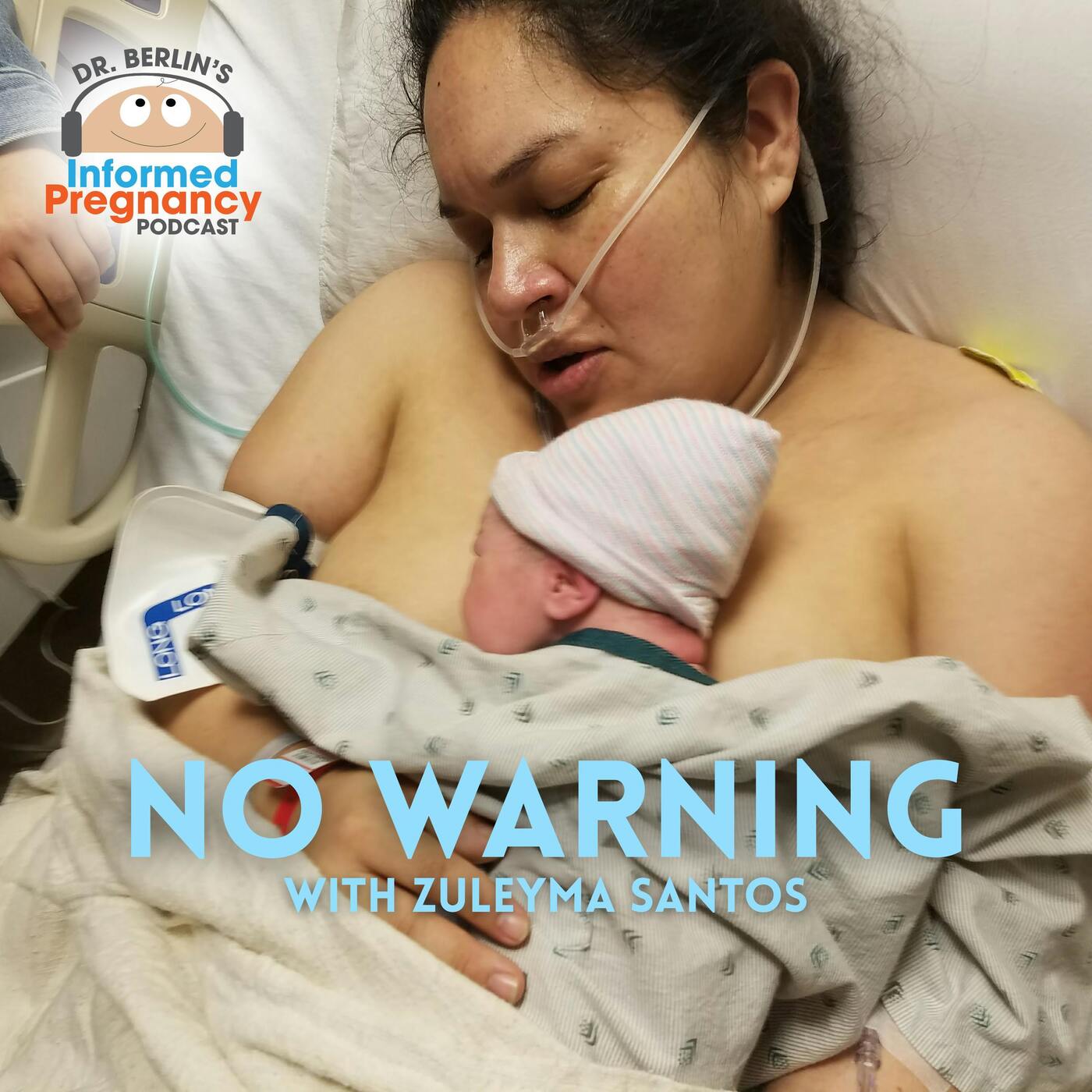
What if the biggest threat to your health didn’t come with a warning? Mother of two Zuleyma Santos had a pregnancy and postpartum journey that suddenly turned life altering, testing her strength and instincts.
Connect with the guest:
Grow with us on IP+! Informed Pregnancy Media presents two all new intimate short-form video series following Garrett and HeHe’s real-time pregnancy journeys as they prepare for an empowered birth and postpartum experience. Each episode features weekly updates with personal photos and videos to help bring these raw stories to life, a visually dynamic guide through each mother’s emotional and physical experiences.
Keep up with Dr. Berlin and Informed Pregnancy Media online!
Learn more about your ad choices. Visit megaphone.fm/adchoices
See Privacy Policy at https://art19.com/privacy and California Privacy Notice at https://art19.com/privacy#do-not-sell-my-info.
Key quotes
“Yes, I try to be very positive and I always see, you know, try to see the light, but it was hard.”
“So all I felt was I need to call for help because I don't know why I feel this way.”
“Once again, I said, no, it's heart failure. I have heart failure. I don't know how else to tell everybody.”
“but I woke up at Keck Hospital about three days after they took me there and they put a life-saving machine in me.”
Related episodes
- Ep. 493 In Conversation with Esther Friedman Schwartz
- Ep. 514 Before Baby #4 with Kara Sutton
- Ep. 500 The Unexpected with Dr. Elliot Berlin Part 1
- Ep. 504 Trusting Instincts with Lia Butler
Transcript
AI-generated transcript with speaker labels — may contain errors, especially names and medical terms. Dr. Elliot Berlin, DC appears in blue; Zuleyma Santos in orange.
Dr. Elliot Berlin, DC [0:00] What if the biggest threat to your health didn't come with a warning—just symptoms you didn't know to take seriously? Today's guest is a mom of two whose pregnancy and postpartum journey took a sudden and life-altering turn, one that would test her strength, her instincts, and ultimately reshape her purpose. Now she is using that experience to help others listen more closely to their own bodies. As part of our Heart Health Awareness series this month, this conversation is especially timely. I'm pregnancy-focused chiropractor Dr. Elliot Berlin, and you're listening to the Informed Pregnancy Podcast. Suleima Santos, welcome to the podcast.
Zuleyma Santos [0:53] Thank you so much. Thank you. I'm glad to be here.
Dr. Elliot Berlin, DC [0:57] I'm glad you're here, and also I'm eager to learn from you. So you have kind of a big story. Let's start with the background. Where are you from originally?
Zuleyma Santos [1:06] I'm Salvadorian. I currently live in Los Angeles, California. And what was life like before babies? Oh, before babies, it was great. You know, I've always been a working woman, you know, working, enjoying life. And at the time, you know, I was with my kid's dad. You know, we were just enjoying traveling, you know, before we had kids. Was your first pregnancy planned? We planned it, but not to the day and time and month. But it was something that,
Dr. Elliot Berlin, DC [1:41] you know, we welcomed and wanted. So excited to find out that you were pregnant. And how was the early stages of that first pregnancy?
Zuleyma Santos [1:50] Oh, it was very great. I couldn't imagine anything else. Any sickness, morning sickness was mild. You know, I know your feet swell, but I was able to still work. I was able to still enjoy food and life. Everything was good. And how did that pregnancy unfold? Unfortunately, when I was going to reach 21 weeks, I had a miscarriage.
Dr. Elliot Berlin, DC [2:20] I'm so sorry. That's always hard. Even early on, even when you didn't plan on a pregnancy,
Zuleyma Santos [2:26] but it sounds like you were all in, like very excited to become a mom. Oh, yes. That's actually one of the things that, you know, up until right now, I could
Dr. Elliot Berlin, DC [2:35] say I've always dreamt that I would be a mother. And thank God that I have two beautiful babies
Zuleyma Santos [2:41] right now. Well, did you catch the miscarriage? Did you know before going to the doctor, did you have symptoms of it? Bleeding. I was at work and I started bleeding. And, you know, I'm just like anybody else, you know, as a pregnant female, if you're bleeding, you want to get yourself to the hospital. You want to get yourself to your doctor, see what's going on. And that's exactly what I did at the moment. And I went to the hospital and that's when they did an ultrasound and informed me that there was no more heartbeat. That's devastating. At the time, did they have any ideas why? They actually didn't. I wasn't educated actually on anything. I was brought into a room, told that there was no heartbeat,
[3:32] that the baby was just waiting, you know. And I asked, I said, what do I do? I don't understand. Obviously, I didn't understand. I've never been a mother. I've never been pregnant. And he said, you know, go to your doctor's office. And then I said, what is my doctor going to do? And, you know, they just basically sent me off. They discharged me and they sent me off. They said, you can go home or you can go to your doctor's office. And I drove to my doctor's office and obviously he sent me home. And I was confused the whole time. They just want you to wait for the pregnancy to pass naturally? Yeah, they did. But none of that was explained to me.
[4:17] And I couldn't understand why I couldn't stay at the hospital if I was that far along. I was, you know, 21 weeks. Yeah, more than half. And no explanation. And my doctor the same. It was a very weird time. And I didn't have answers for what was happening either.
Dr. Elliot Berlin, DC [4:40] Prior to then, did you have any known medical history?
Zuleyma Santos [4:43] No, no, not at all. My family, thankfully, is good. As far as I know, there's no heart failure. You know, my mom had healthy kids. My sister has had healthy kids. I have healthy kids, but I'm the one who ended up with, you know, peripartum. But yeah, no, everything was great up until that day. How long until you tried again? It was about seven, eight months.
Dr. Elliot Berlin, DC [5:11] And were you given any advice on subsequent pregnancy?
Zuleyma Santos [5:16] No, I did see like a specialist, but I always felt that the specialist was there just to, you know, see where I was mentally because of what happened. I mean, me myself, I never put the pregnancies like, oh, this happened or, you know, I should check myself. Those are things that until now, I think, oh, I should have done this or I should have researched that.
Dr. Elliot Berlin, DC [5:42] So even in your second pregnancy, there was by that point, no indication of what might have gone south the first time. Why? I mean, I would imagine mentally it's hard the second time around, you know, knowing what happened the first time. How was it for you?
Zuleyma Santos [5:58] Yes, I try to be very positive and I always see, you know, try to see the light, but it was hard. You know, some days I thought, is it going to happen today or, you know, what happened last time? You know, when I was getting close to getting to know, we never found out the sex of the baby that we lost. And I felt, you know, that was God not giving us that chance, you know, I'm just because, you know, we had names picked out. We didn't know. I mean, with my son, once we found out it was a boy, I was scared, you know, I mean, just happy and so happy because the pregnancy was going very well, but you still think about what happened or is it going to happen again?
[6:46] Finding out that he was a boy, is that more scary because you're more connected? It's more real, more to lose? Yeah, yeah, it felt that way. The knowing part and also thinking, could it happen again? So yes, and like I said, I tried to put all that in the back, you know, or else it takes over you. But yes, those are thoughts that tried to take over me.
Dr. Elliot Berlin, DC [7:12] All right, let's take a little break. When we come back, we'll find out how that pregnancy ended up and what kind of thoughts you had for birth. Don't go anywhere. We'll be right back.

Dr. Elliot Berlin, DC [7:32] Welcome back. We're talking to Salima Santos. Okay, so the second pregnancy, you're bonded. It sounds like a combination of excited and nervous at the same time. Did you have thoughts on how you wanted the birth to go?
Zuleyma Santos [7:48] Just I wanted everything to, you know, be natural, fast, definitely, you know, with no complications. That was my thought.
Dr. Elliot Berlin, DC [7:57] And as you got closer to the end, how did things go?
Zuleyma Santos [8:01] Um, I can't say they went, you know, bad, but while I was in labor with my son, I did have fluid going into my lungs. At one point during the long labor hours, I was not breathing correctly. I felt like if a film was filling my throat, I would have to spit in order for me to be able to breathe. I let the team know, I said, Hey, you know, I feel like I can't breathe. I feel like I'm getting some type of, you know, mucus, some type of film in my throat. I've been, you know, trying to spit it. That's the only time that I feel relieved. You know, they came in, they started doing tests. You know, at the end of the hour, they just let me know that I had fluid in my lungs.
[8:52] And that was the only complication. Right after that, they cleared me. I was able to have my baby.
Dr. Elliot Berlin, DC [9:00] Fluid in the lungs doesn't seem like a common thing in labor. So did they have a theory on why you might've had fluid in your lungs? Did they put you on a heart monitor or anything like that?
Zuleyma Santos [9:10] No, they actually didn't. They actually didn't. And I felt that at the time for myself, I was just very relieved that I, you know, had given birth my baby. I could hear him cry. I could, you know, see them cleaning him. And I felt that, you know, when I think back on it, I concentrated on that happiness instead of the fact that something did happen right before I had him.
Dr. Elliot Berlin, DC [9:40] But that was a vaginal birth?
Zuleyma Santos [9:43] Yes.
Dr. Elliot Berlin, DC [9:43] So fairly the way you wanted it?
Zuleyma Santos [9:46] Yes.
Dr. Elliot Berlin, DC [9:47] Okay. After delivery, did you have any postpartum complications?
Zuleyma Santos [9:52] No, no complications. I was good after the, you know, episode that I had with the fluid in the lungs and the baby was great.
Dr. Elliot Berlin, DC [10:03] Okay. Now you have another baby. How long in between the babies?
Zuleyma Santos [10:10] 18 months.
Dr. Elliot Berlin, DC [10:11] Okay. So you're on the fast truck.
Zuleyma Santos [10:14] Yeah. I was changing diapers two times when I was able to. Bottle feeding at the same time. Yes.
Dr. Elliot Berlin, DC [10:22] Wow. How was the third pregnancy?
Zuleyma Santos [10:25] It was great. You know, the same, I was able to, you know, take care of myself, take care of my home, take care of my, you know, growing son and take care of, you know, my growing baby and my stomach. I worked, you know, the only thing I had was the usual, you know, morning sickness, you know, the baby didn't want to eat too much. So she was the picky one so I couldn't eat anything, but it was a great pregnancy up until, you know, I had her.
Dr. Elliot Berlin, DC [10:55] At some point your partner fell ill.
Zuleyma Santos [10:58] Yes. He was actually battling cancer for a few years. So he was, you know, doing the chemo and going into remission and it was back and forth for a couple of years.
Dr. Elliot Berlin, DC [11:13] That's already so much to juggle between his journey and the pregnancy loss,
Zuleyma Santos [11:20] then the baby, then another baby and working. Yeah, no, it was.
Dr. Elliot Berlin, DC [11:26] I mean, I always say like women are incredible how much you can do.
Zuleyma Santos [11:31] Thank you.
Dr. Elliot Berlin, DC [11:32] A handful of guys could do some of that, you know, intensity, but it's really unique and special what you guys can do. So the pregnancy was healthy and then you're planning on a similar type of birth?
Zuleyma Santos [11:46] Yeah. Yeah, same thing. I said, let's hope, you know, everything's good. And, you know, once again, you think back of what happened. The first pregnancy, you think back of what happened. You know, the second pregnancy and I just try to stay positive. Everything is good. They've been checking the baby, you know, but yeah, no, everything up until once again, the last hour.
Dr. Elliot Berlin, DC [12:07] Okay. What happened in the last hour?
Zuleyma Santos [12:10] I thought everything was, you know, great. I was hooked up to the monitors and all of a sudden
Dr. Elliot Berlin, DC [12:18] you're talking about typical labor and delivery monitors,
Zuleyma Santos [12:20] like the, you know, heart rate, the baby. Yeah, the baby, everything, you know, I was already in labor in the hospital and all of a sudden, you know, the team comes in, you know, nurses and I'm assuming, you know, doctors, unhooking me, telling me that they have to take me into the OR to do an emergency C-section. I was stunned. I'm laying there. I feel good, but something, you know, that they noticed, thankfully, I wasn't right. And all I remember was just going into the next room and lights out.
Dr. Elliot Berlin, DC [12:59] Whoa. Did they tell you what it was that sparked them to want to shift gears so quickly?
Zuleyma Santos [13:05] They said that the baby was losing its breath. It wasn't acting normal anymore. So they were afraid that the baby was, I don't know, maybe not dying. I don't know. I didn't ask. And at the moment they just said, you know, something's wrong with the baby. We're taking you to a C-section.
Dr. Elliot Berlin, DC [13:27] Wow. So a sudden crash, like everything in your mind was going great. And now it's an emergency C-section. You said lights out. So did they totally knock you out? Generalize to you?
Zuleyma Santos [13:38] Yeah. Yeah, yeah. I remember, you know, being in the room, obviously with my head up. And I just felt a coldness of something that they put on my belly, I'm assuming, you know, liquid before they do the C-section. And I just remember going under.
Dr. Elliot Berlin, DC [13:57] Oh, my goodness. Yeah. So you were not present for the, conscious for the baby's arrival. What's the next thing you remember after that?
Zuleyma Santos [14:07] Waking up in the room. Waking up back in the same room that I was in before. And I'm looking at the time and, you know, asking, you know, what happened? You know, where's my baby? I mean, that's when they let me know that the baby was in the NICU.
Dr. Elliot Berlin, DC [14:24] Oh, man. Just procedurally, or did the baby need support?
Zuleyma Santos [14:29] Procedure. You know, when I hear that, obviously, my mind, it's, you know, what's going on. But because it was an emergency C-section, they decided to monitor her there.
Dr. Elliot Berlin, DC [14:42] Okay. How long was she in the NICU?
Zuleyma Santos [14:45] For about a day and a half.
Dr. Elliot Berlin, DC [14:46] And then you guys went home?
Zuleyma Santos [14:48] No, we were still in the hospital. The day that we were going to go home, I had my heart failure episode.
Dr. Elliot Berlin, DC [14:55] Okay. So, essentially, you need three or four days to recover from the cesarean, and then you're planning to go home.
Zuleyma Santos [15:02] Yes.
Dr. Elliot Berlin, DC [15:02] And then things go really south.
Zuleyma Santos [15:05] Yes.
Dr. Elliot Berlin, DC [15:06] Let's take a little break and come back and learn more about that. Welcome back. We're talking to Zelima Santos. Okay. So, on top of everything else that happens, you're getting ready to go home, and then your body really starts to have major issues. What happened?
Zuleyma Santos [15:35] Yeah. It was the day that my daughter and I were going to get discharged, and I felt good. Once again, happy. My son and my husband were actually on the way to the hospital to see us and pick us up with my sister-in-law. And as I was feeding the baby, I said, you know, in my head, I'm like, it's going to be our last feed here. We're going to be going home. But no, I was feeling out of breath. I was feeling like every second that went by, I was getting weaker and weaker, and my breath was getting more shallow. So all I felt was I need to call for help because I don't know why I feel this way. And yeah, I called, you know, I pressed a button and called in the nurse.
Dr. Elliot Berlin, DC [16:24] What did they find?
Zuleyma Santos [16:26] You know, she looked at me, and you know, I could see it in her face. I'm sure I look pale. I look scared. She grabbed the baby. You know, she laid the baby down. And she just started calling, you know, the doctors and, you know, everybody to go in there. I mean, I just remember she sat me on the bed and, you know, I'm trying to breathe. And I don't know how much time passed from the time that she took my daughter till the time that they were actually there to help. But it just felt like the whole room was filling with doctors and machines and, you know, call so and so that we need to see what's going on. And finally, they were able to inject me
[17:13] and they did an EKG right there in the same room. And then that's when the doctor told me you have an enlarged heart. You know, you have heart failure. You had a heart failure episode.
Dr. Elliot Berlin, DC [17:27] Wow.
Zuleyma Santos [17:29] I didn't know.
Dr. Elliot Berlin, DC [17:30] Once again, I mean, for you, that's out of nowhere.
Zuleyma Santos [17:34] Yeah. Yeah. Like, what do you mean? Like, what? Like, and then I thought back to the two pregnancies. Oh, my gosh. You know, and once again, we didn't catch it.
Dr. Elliot Berlin, DC [17:47] Meaning the miscarriage.
Zuleyma Santos [17:50] Yeah, because I thought back to then. And, you know, up until today, I still think, you know, that me not knowing that my heart was different or weak, you know, led to that. But it did also lead to, you know, having my two babies.
Dr. Elliot Berlin, DC [18:09] But also the fluid in the lungs in your first birth,
Zuleyma Santos [18:12] you know, as your heart is struggling. Yeah, I thought about that, too.
Dr. Elliot Berlin, DC [18:16] Potentially not adequate. And so the fluid starts to back up into your lungs. A lot's transpired. This is about six years ago now when this first episode happened for you. And you've learned a lot. How did things unfold from that point? Meaning it's the scariest thing. First of all, how old were you, if you don't mind saying?
Zuleyma Santos [18:37] I think at the time I was 35, 36.
Dr. Elliot Berlin, DC [18:40] So young and no history, no medical history, no family history. To hear heart failure has got to be the scariest thing on the planet.
Zuleyma Santos [18:50] Oh, it is. The organ that keeps you here. It's very scary. Yes.
Dr. Elliot Berlin, DC [18:56] How did things unfold from there? What happened next?
Zuleyma Santos [19:00] You know, pretty much after they, you know, let me know what happened. Like I said, my family was on the way. They were able to discharge my daughter. So thankfully, and I was very grateful that she was able to go home. And I knew, you know, that she was going to be safe. I felt, you know, as a mom, of course, I want to be there. But I was grateful that she was healthy enough to be able to go home. I, on the other hand, stay behind five days in cardiology.
Dr. Elliot Berlin, DC [19:33] At the hospital?
Zuleyma Santos [19:35] Yes.
Dr. Elliot Berlin, DC [19:35] And over those five days, what do they find and what can they do for you?
Zuleyma Santos [19:40] I mean, honestly, I felt that I just sat there with the, you know, heart monitor. But, you know, when they started me on medication, I wasn't getting, obviously, any strength, any better. So literally the last day, every day, I kept asking what's going on. You know, is this something, you know, and they finally told me. So your diagnosis is peripartum cardiomyopathy, which is an enlargement of the heart.
Dr. Elliot Berlin, DC [20:11] Peripartum, are they saying that at that time,
Zuleyma Santos [20:14] it's circumstantial just around the birth? Yeah, yeah.
Dr. Elliot Berlin, DC [20:18] Because this can happen before pregnancy or up to six months after pregnancy. So the assumption was it's just going to go away? Like if you're not having a baby, then it's not going to be an issue?
Zuleyma Santos [20:32] Yeah, yeah.
Dr. Elliot Berlin, DC [20:33] So you get discharged on medication?
Zuleyma Santos [20:36] Yeah, medication. You know, they gave me, you know, heart-healthy pamphlets. They did, you know, tell me to start seeing a cardiologist. And I was able to find one.
Dr. Elliot Berlin, DC [20:50] And how did that go? Was there any other advice?
Zuleyma Santos [20:53] Everything was good. I was able to, you know, find a cardiologist. I felt that I was recuperating. You know, obviously, I'm just giving birth. You need time to, you know, recuperate. I had a C-section, so I didn't feel or I never concentrated on the fact that, okay, aside from a C-section, I also have a heart problem now. But I kept on, you know, seeing him. I took, you know, the medications that they said. They ran the test that they run to see, you know, how your heart function is doing. And everything was good. I thought that I recuperated. And right after my leave of absence from, you know, from birth, I thought I'm ready to go back to work, to normal.
Dr. Elliot Berlin, DC [21:41] And?
Zuleyma Santos [21:42] And I did for a few months until the next summer. I started feeling, you know, the same thing out of breath. I'm nauseous. I'm not hungry. I couldn't eat. I'm in the San Fernando Valley, so the summers are really hot. I, because of everything that was going on at the time where my husband was in, he was actually in the hospital doing chemo treatments that summer. And because it was COVID, thankfully, I was able to be at home taking care of my two kids because my, you know, everything was shut down. You know, so I felt that a lot of things happened, but a lot of things kept me at home, too. Thank God. Then with the help of my family, if I needed to go,
[22:34] when I started going to the hospital because my legs were swollen, you know, once again, I feel nauseated. I feel like I'm going to faint. My mom would come and, you know, take care of my kids, and my sister would drive me to the hospital. And this went on for a couple months.
Dr. Elliot Berlin, DC [22:51] I mean, these are all signs that your heart's struggling, are they not?
Zuleyma Santos [22:55] Like, oh, yes, yes.
Dr. Elliot Berlin, DC [22:56] And so are they any more diagnostics or therapeutics or just?
Zuleyma Santos [23:02] No, anytime that I went to the ER and I explained to them that I had heart failure, I explained to them that my heart, you know, I had a diagnosis that my heart was enlarged. I said it could probably be because of that. You know, that's why I advocate because, you know, we need to ask questions. We don't. And I kept on telling them it's my heart failure. And they said, oh, no, you know, we'll give you Lasix and you'll be relieved and we'll discharge you. They gave me Lasix. Obviously, my legs would feel better. I would go home. I'm taking so much Lasix right now. I feel like a pregnant woman in her ninth month. Yeah, yeah. So, you know, and it relieves you.
[23:50] But that was the only relief that they were giving me.
Dr. Elliot Berlin, DC [23:54] And Lasix, you know, symptomatically, it's going to force the fluid. It's a medication that makes you pee a lot. So the fluid comes out of your system. But it's like, why is the fluid there in the first place in a young 35 year old, otherwise healthy woman? Okay. So if we zoom out to the big picture, how did things sort of progress between then and now?
Zuleyma Santos [24:17] Between then and now, you know, I pretty much ended up in the hospital in a coma. By then, I thank God that my husband was in remission and he was now taking care of our kids. And I was now in the hospital.
Dr. Elliot Berlin, DC [24:34] How old is your baby at that point?
Zuleyma Santos [24:37] Savannah, when I got intubated, when I went into the hospital, she was a year and maybe two months old.
Dr. Elliot Berlin, DC [24:45] Wow. Okay. And then what happened?
Zuleyma Santos [24:50] One day, I actually did another five day stay in the hospital. They said, you know, we can't do anything for you here. You have to find a doctor. I went home and that night that I went home, we had to call an ambulance after my kids went to sleep. I told my husband to call an ambulance because I felt that I was having my last breath. They came, you know, asking questions. They thought I was having some type of panic attack. Once again, I said, no, it's heart failure. I have heart failure. I don't know how else to tell everybody. They put me in the ambulance. Once I got to the hospital, I was intubated for the next about five, six days.
Dr. Elliot Berlin, DC [25:38] Intubated and were you conscious? Were you in a medical induced coma?
Zuleyma Santos [25:43] Yeah, medical induced coma. Yes, yes.
Dr. Elliot Berlin, DC [25:47] I mean, it sounds like your heart was failing again.
Zuleyma Santos [25:50] Oh, yes.
Dr. Elliot Berlin, DC [25:51] So what after that episode was under control, was there any more of a diagnosis or a plan?
Zuleyma Santos [25:59] No, actually at the hospital that I was at, I don't know how this is going to sound, but the plan was for them to just let me perish. They told my mom and my husband to go get my things and they let them know that I wasn't going to wake up anymore, that there was nothing that they could do.
Dr. Elliot Berlin, DC [26:24] They thought you were too far gone to do any kind of treatment?
Zuleyma Santos [26:27] No, not at that hospital. And I don't know what angel after all that, I was there for about six days. I don't know who contacted Keck Hospital of USC, but I got transferred there and they saved my life. Thank God. They saved my life after, I know they told my family that I wasn't going to wake up anymore and that hurts me because my mother had to hear that. My mother had to hear and we already lost a brother, so my mom already has lost a son and I felt, what will she do? And so I was thinking about them so much, my kids, but I woke up at Keck Hospital about three days after they took me there and they put a life-saving machine in me. It was called an impella on my shoulder.
[27:35] It was a pump that went to the heart to help the flow and I couldn't believe that I was still alive and I was just grateful.
Dr. Elliot Berlin, DC [27:48] I mean, it's mind-boggling that that's the first time someone offered you a treatment.
Zuleyma Santos [27:55] Yes. Yes. No one.
Dr. Elliot Berlin, DC [27:56] To help your heart that was struggling so hard for so long.
Zuleyma Santos [28:00] No one. No one. When I was going in and out of the ER, one time they did an x-ray. They told me that I might have gallbladder stones.
Dr. Elliot Berlin, DC [28:12] Oh my.
Zuleyma Santos [28:14] I'm like, no, it's heart failure.
Dr. Elliot Berlin, DC [28:17] I see why you became an advocate because you knew. Okay, at first you didn't know and there were some signs and you wish you had known, it sounds like. And then you knew and no matter how many times you would say it, nobody was taking you seriously and looking at the actual problem and offering solutions and that's so frustrating. And we're talking about a human life, yours, a mom, with two little needy babies and a partner in your own family there's so much on the line and no one's taking it seriously. And sometimes our system fails that way and the consequences are so heavy. Was that little pump meant to be a long-term solution?
Zuleyma Santos [29:01] Short-term, just while I was in the hospital and see what the next step was going to be.
Dr. Elliot Berlin, DC [29:08] Yeah, so how did things go after that?
Zuleyma Santos [29:11] They let me know that I needed a heart transplant. So imagine hearing that while you just got operated. I actually got operated twice the night that they brought me in. They put one pump, but I was too, my organs were gone, everything. So they took me into the OR a second time to place the second pump that was stronger than the first one.
Dr. Elliot Berlin, DC [29:38] Okay, a heart transplant, that would shake me. I don't know if I could take the news even. You haven't had a heart transplant?
Zuleyma Santos [29:47] No, no, I live with the implanted machine right now. It's called an LVAD.
Dr. Elliot Berlin, DC [29:53] Oh, and you're ventricle?
Zuleyma Santos [29:55] Yeah.
Dr. Elliot Berlin, DC [29:56] Like essentially a much stronger pump.
Zuleyma Santos [29:58] Yeah, a strong pump. It goes in through my abdomen area. I have a drive line and there's a pump in there. And then I actually carry the batteries with me 24-7.
Dr. Elliot Berlin, DC [30:11] Okay.
Zuleyma Santos [30:13] Because it's attached to me.
Dr. Elliot Berlin, DC [30:15] Wow. Okay. Are you still waiting for a heart transplant?
Zuleyma Santos [30:19] Yes. I was when I was in the hospital. I was in there for a while. We were trying to do treatments. My body creates antibodies that won't let a heart transplant be a safe one because my body can fight it. So while I was in the hospital, you know, while my organs recuperated, I had the machine. I was trying to gain my strength back. We also did treatments. They were called plasmapheresis. It's like some form of dialysis. I'm sure I've tried to clean up the blood. They wanted to suppress my immune system in order for me to safely get a heart transplant.
Dr. Elliot Berlin, DC [31:03] And where are we now with that?
Zuleyma Santos [31:05] Because of how long it was taking and my body wasn't, nothing was changing, they recommended the LVAD. They said, you know, you have your small babies. They knew what we were going through with the cancer, having, you know, some kids at home. And they asked me if I wanted to, the LVAD. With the LVAD, it was a bridge to transplant. I would be able to recuperate, go home, and then pick up, you know, getting a heart transplant later on in the future.
Dr. Elliot Berlin, DC [31:43] And is that currently the plan?
Zuleyma Santos [31:46] That's the plan. What they want me to do is admit myself into the hospital and do the treatments that we were doing. Because I'm living a good quality life and my babies are still small, I feel that I should be here. If I was able to, you know, if their father, you know, was able to, you know, take care of them, it would be different. Maybe I would feel different of going in. But I am waiting pretty much. So my team is waiting for me to say, let's admit myself. Let's start doing the treatments. But the treatments can be three months, six months, nine months. And that's where I get stuck, where I want to be here.
Dr. Elliot Berlin, DC [32:31] You know, I think it would be daunting for anyone,
Zuleyma Santos [32:34] even if you didn't have little kids and everything else going on.
Dr. Elliot Berlin, DC [32:36] Yeah. Are you able to work?
Zuleyma Santos [32:39] I work from home. I am a motivational life coach. Before this, I was working in retail, so I've always worked in fast pace. But right now, even though I do live a good quality of life, I wouldn't be able to work as I used to if I was out there.
Dr. Elliot Berlin, DC [32:58] I mean, you've been through so much. Each one of those things would break me. And you still sound so strong and so positive. And your story is not over. You still have a long way to go. And when I had my bypass, I was in the ICU on the same unit as the transplant patient's heart and lung. And I looked at myself, and I'm like, wow, I have all this stuff going on and so many things to recover from. And I looked at my neighbors in there who had transplant, and they had even more things to recover from. But thankfully, the technology for both of us has come so far. Like the idea that we could even do a transplant or a bypass is modern medical innovation.
[33:52] And I think medicine has a lot of shortcomings, but also medicine has a lot of incredible advances at the same time. If there was some way to fill in the gaps and strengthen the weak points, then I think we would have an incredible system. But either way, you're an incredible person. And you've definitely motivated me. I want to stop complaining about the little things.
Zuleyma Santos [34:16] That's why I'm here.
Dr. Elliot Berlin, DC [34:17] I appreciate you coming on and sharing your in-depth story with us. And I only have, from the bottom of my heart, that's bumping now, finally, I only have the deepest warmth for you and prayers for a solution that gives you your full capacity of life back and safety and security in your health for you. And for your family. And maybe we'll follow up with you again down the road when you're able to have that real solution for yourself. In the meantime, where can we find you online?
Zuleyma Santos [35:01] I have a website, motivationallifecoach.net. That is my coaching for me to inspire. And then I do have Instagram and Facebook, Suleima Santos.
Dr. Elliot Berlin, DC [35:16] Suleima, thank you again for joining us. I appreciate you. And at home, thanks for listening to the Informed Pregnancy podcast. For more pregnancy, parenting, and heart health information just like this, visit us online at informedpregnancy.com.
Want more pregnancy + parenting? Start your FREE TRIAL of Informed Pregnancy+ and get access to all our curated pregnancy and parenting content — original series, iconic birth films like The Business of Being Born, prenatal workouts and more.

0 Comments