
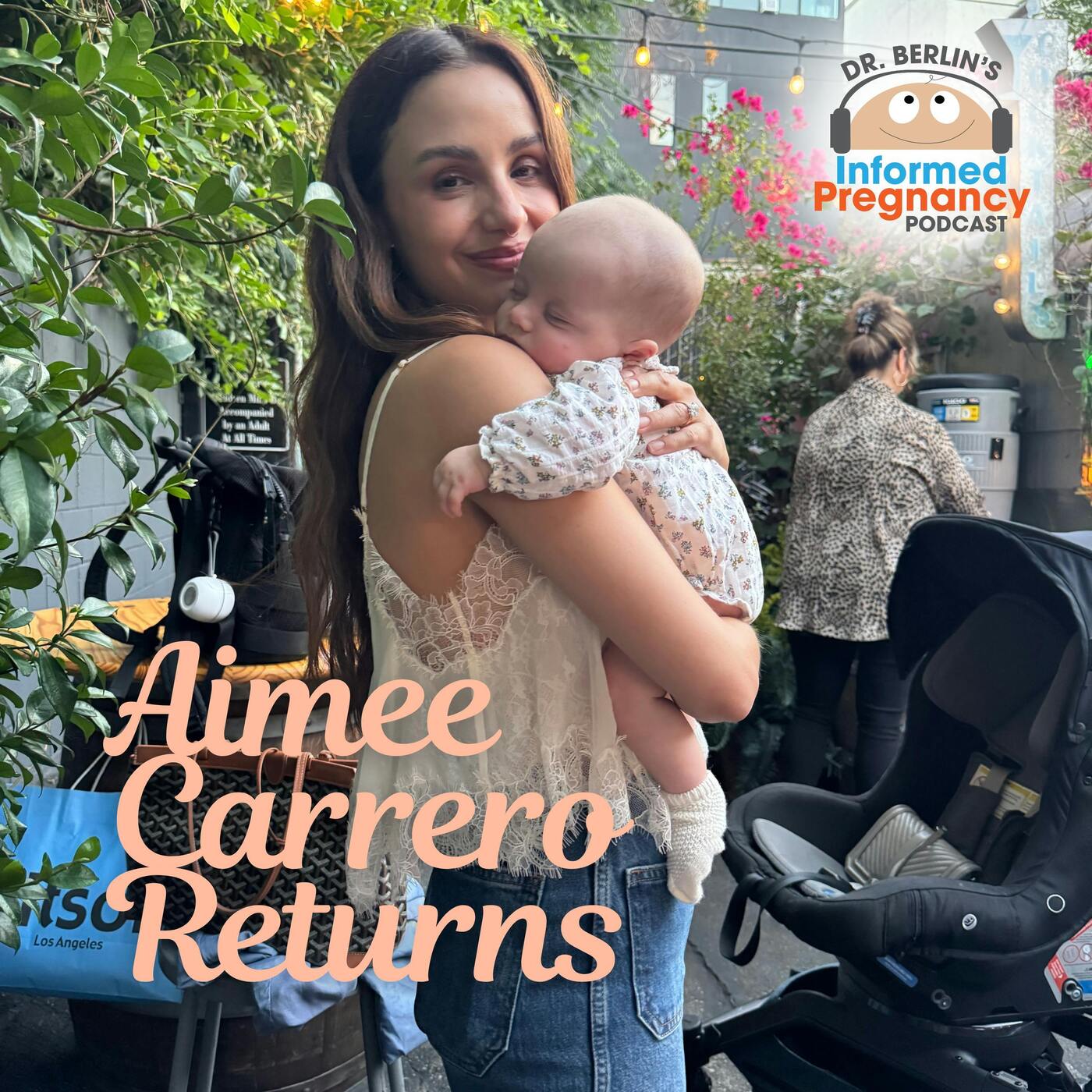
September 18, 2025 · 52 minutes · Episode 477
About this episode
A month after giving birth, actress Aimee Carrero reflects after allowing time to process the experience and she discusses what it’s been like settling into motherhood.
Start with the first of her three part pregnancy and birth journey here.
Connect with the guest
@aimeecarrero
Informed Pregnancy Media and Mahmee present an all new podcast! One Way or a Mother is a new narrative podcast from Dr. Elliot Berlin, DC. Each season is an intimate story of one woman, one pregnancy, and all of the preparations, emotions, and personal history leading up to the birth. Episodes feature the expectant mother along with her family, doctors, and birth work team.
Start listening to Episode 1: I Should Have Died featuring Arianna Lasry
Keep up with Dr. Berlin and Informed Pregnancy Media online!
Learn more about your ad choices. Visit megaphone.fm/adchoices
See Privacy Policy at https://art19.com/privacy and California Privacy Notice at https://art19.com/privacy#do-not-sell-my-info.
Key quotes
“Motherhood to me feels like I'm a coconut and someone took a machete and just cracked me open.”
“It does feel like an overwhelming sense of love and my heart is now outside of my body.”
“I wish somebody had warned me about this baby blues thing.”
“The only thing I would do differently is I think I wouldn't have induced.”
“There is a paved road up ahead. It's a little less rocky and you will come out the other side of it.”
Related episodes
- Ep. 467 A Before & After Birth Story with Aimee Carrero: Part Three
- Ep. 466 A Before & After Birth Story with Aimee Carrero: Part Two
- Ep. 470 Carlson Young: After Birth
- Ep. 480 Twins with Lauren Gaba Flanagan
Transcript
AI-generated transcript with speaker labels — may contain errors, especially names and medical terms. Dr. Elliot Berlin, DC appears in blue; Aimee Carrero in orange.
Dr. Elliot Berlin, DC [1:00] She first joined us days after giving birth, still physically healing, still emotionally unraveling the story as she spoke. She was processing in real time. The emotions were raw, the storytelling unfiltered, and I was moved again and again, including when she spoke about her not-yet-born daughter, and she said things like, I just didn't want that for her. Just because I really desired and needed a vaginal birth experience, I didn't want her to suffer. Now, about a month later, she's had time to reflect. The intensity's softened just enough to make room for perspective and the beginning stages of settling into motherhood. I'm pregnancy-focused chiropractor Dr. Elia Berlin,
[1:47] and you're listening to the Informed Pregnancy podcast. Amy Carrera-Rock, welcome back to the podcast.
Aimee Carrero [2:06] Oh my gosh, thank you for having me back. I wanna thank you for this opportunity because it feels like you said, it was such a raw time. I think I was seven days postpartum when we last spoke, and I was just thinking, it's really good for people to hear the unvarnished version of what it can't look like. It doesn't look like that for everyone, but I also wanted to offer up a month later how things have changed in case people are interested because there is so much light at the end of that tunnel. So I'm so grateful to be back here with you.
Dr. Elliot Berlin, DC [2:45] I don't know about anybody else, but I am very interested, so much so that we've never done a four-part series here in the first one ever.
Aimee Carrero [2:54] Now I feel pressure. I gotta come up with some jokes, some good stories. No, I'm honored.
Dr. Elliot Berlin, DC [3:00] All right, so last time we spoke, like you said, it was just seven days after having a birth, not just a birth, but a cesarean birth, not just a cesarean birth, but an unplanned cesarean birth, and I would go one step further and say, cesarean being the opposite of what you had planned and thought about and put together, and you really were, you were processing in real time some of the things that you said, even when I listened back to the episode when it aired just recently, I got chills and a little weepy because the feelings were so just strong and real, and you, my friend, do not hold back. So now the baby is a month old, and you've had a little time to reflect,
[3:42] and I bet, hate to promise a fifth episode, but a few months from now it'll feel even different yet again, but tell me about the few weeks that have gone by.
Aimee Carrero [3:51] You know, what's really interesting is that I would, like I do with anything that doesn't make sense to me, I just take to Google and I'm like, why do I feel so sad? Is this postpartum depression? You know, candidly, I stayed on an SSRI during pregnancy because I do tend to have depression and have for many, many years been on SSRI, so I thought I was gonna skate by easy, you know, regarding baby blues, postpartum depression or postpartum anxiety, and one of the things I saw was, so if it lasts two weeks, it's baby blues, if it lasts more than that, it's postpartum, and I was like, well, we'll see on day 14, and so you spoke to me on day seven,
[4:35] or we spoke on day seven, and around day 10, a little fog started to lift, and then by day 14, I'll be damned, I felt pretty good, not, you know, how I feel now, but I do feel I was like one of the lucky ones where maybe it just was that hormonal crash that people get post-birth, I think it's like day two or three, that huge estrogen drop or progesterone drop, I'm not really sure which hormone it is, or maybe it's a combination of all of it, but I was really lucky, so by day 14, I could look at pictures from my pregnancy, I could look at pictures from my C-section, and I could enjoy my time with my baby without wanting her back in my body, you know, in a way that I think a lot of people think,
[5:24] oh, if I just could be pregnant one more day, you know, knowing the person that I know was going to be born, and enjoy that closeness that I'll never really have again, as far as like her being in my body, and now I can think about that in like a super like removed way, but at the time, I really had a desire to squeeze her down back through the sun roof, I guess, where she came out, and you know, it was really hard.
Dr. Elliot Berlin, DC [5:48] Well, just because you're in a C-section
Aimee Carrero [5:49] doesn't mean you can't shove her back in, Vashma. That's true, that's true. So yeah, again, I feel really lucky that it didn't linger, and I think for so many, it does linger. I don't know if the SSRI was helpful in that, but it also, at the end of when we spoke last, you had mentioned, you know, some resources you were gonna send me, and I explored some of those resources, and it's been so game-changing for me to see a therapist that is focused on transitions in life, you know, and I think motherhood is like the biggest transition I've ever been through, so that's really helped. I've also done some cranial sacral therapy.
Dr. Elliot Berlin, DC [6:26] Oh man, that's great.
Aimee Carrero [6:28] The first day this woman like touched my body, like the first minute I just started sobbing. So yeah, I've also been really proactive, but I do think I got lucky as far as it did naturally lift for me, that sort of fog.
Dr. Elliot Berlin, DC [6:42] I mean, right when I talk to you, you seem to be going through psychological whiplash, and just still reliving the moments, that crazy build-up to going into labor, all the various stages of the labor itself. Another thing that resonated with me, just sticks in my mind, is when you said when you had your water broken, that you felt a strong sense of grief, and you said it's the last time I could provide a safe home for her.
Aimee Carrero [7:11] Yes. That made me cry also. Oh, it was totally unexpected to feel that way, because my belly felt smaller, and then all of a sudden she felt smaller to me, because you're holding all this water. And now that she's out, I can look back and think, oh, this girl, I mean, she needs my protection as her mother, and always will, but she can really handle, and maybe it's because she's my baby, but she's such a strong presence. I don't know if I mentioned this, but the doctor who delivered her was like, she bit my finger on the way out, and I should have known. She came out swinging, and I think she's perfect for me. Everybody's like, oh, are you so in love?
[7:50] I'm like, she's perfect for me. She's perfect for our family, because she fits like an old shoe. She just fits right in, and I look back on those memories of birth now, and they have, instead of a tinge of sadness, they have a tinge of she wanted to come out the way she wanted to come out, and she chose her birth, and just like she chose us as her parents, and it's gotta be for a reason. If I could go back and do it again, it's still not how I would prefer it, but those feelings of intense grief have abated, relaxed, and they've been replaced by gratitude for the person that is here. The more time I spend with my daughter, the less time I spend thinking about
[8:34] how she came into this world. It's almost like I'm building more memories with her than I can ever have from that 30-hour period, and that's been very healing.
Dr. Elliot Berlin, DC [8:45] I think last time I spoke to you, you said that you were crying more than ever in your life.
Aimee Carrero [8:51] And I'm not a big crier.
Dr. Elliot Berlin, DC [8:52] Yeah, you don't seem like a big crier, and that was day seven. It sounds like by day 10, 14, things eased up a lot, and then you started to take advantage of the resources, the help. How are you emotionally now?
Aimee Carrero [9:07] I feel like somebody turned on the lights in the room, and that feels really good. I do still feel, to kind of borrow the words of the therapist that I've been seeing who's wonderful. I feel like I'm in the upside down a little bit still, and I think that's just being in newborn land where I'm just like, whoa, what happened to our lives? It's like the apartment is a mess. Our days are the schedule. What schedule? You know what I mean? It's like everything is sort of in disarray, but it feels like normal. This is where I'm supposed to be. It doesn't feel like something's wrong. It feels like, okay, this is a season, and we're going through it, and trying to soak up every minute of her still being tiny,
[9:48] and still wanting to sleep on her chest, and still wanting the contact naps, because I'm sure there will be a day where she won't want that, and trying to be grateful for the time we're in now. But I do go back to work on Monday. I mean, that's how this all got started.
Dr. Elliot Berlin, DC [10:05] Yeah, I know. How has physical recovery been?
Aimee Carrero [10:10] You know, I think compared to some of my girlfriends that I've spoken to, I think I got off pretty easy. It didn't feel that way to me, especially in the beginning, because I wasn't also prepared for it. I didn't have any of the stuff. You know, like I ended up getting a bed rail in order to help myself get out of bed to pee so my husband wouldn't have to like, you know, carry me to the bathroom. Stuff like that, like a wet pillow wedge. I didn't have any of that stuff. So it was hard in that regard, and there was pain for about a few days, but I got up and walking. I still, you know, I'm not cleared to work out or anything yet. It hasn't been six weeks yet,
[10:45] but I think overall I'm doing pretty well. I'm, you know, walking as much as I want. I'm doing all the things that I wanted, but those first days were difficult because I had imagined myself being able to like spring out of bed and grab my baby when she started crying and feed her on demand and do all these things that it ended up, you know, physically I couldn't do them in those early days, but now I feel like I can, and that's made a huge difference.
Dr. Elliot Berlin, DC [11:08] How are you preparing for getting back on set?
Aimee Carrero [11:12] How am I preparing? Well, if I'm being practical about it, I'm actually starting to learn my scenes today, which is Wednesday, no, Tuesday, because my brain is literal Swiss cheese. I had an audition like a few days ago to put on tape, and usually I can learn a scene within 30 minutes. It took me eight hours to do this tape. It's like, I can't retain any information. I don't know what is going on. So yeah, I'm starting to learn the scenes now so that I don't show up on set and suddenly not know what I'm doing. Like I've never acted a day in my life, but my husband has been wonderful, and you know, I was like kind of weepy about having to go back to work,
[11:58] and he's like, well, we'll go with you the first day just to help, you know, help rip the bandaid off. Like we'll go with you, and I was like, are you sure? So it'll be good. So that feels like less scary knowing that they'll be there.
Dr. Elliot Berlin, DC [12:09] After the pod, I could definitely run lines with you.
Aimee Carrero [12:13] Yeah, great.
Dr. Elliot Berlin, DC [12:15] I mean, I would think for most people intimidating
Aimee Carrero [12:18] to be back on camera right after having a baby. Oh yeah, I mean, I've just had to make peace with it. At this point, I think this is really the weirdest thing I've ever said, and you're a doctor, maybe you can tell me. It's a medical mystery, okay? I have this one hooded eye. I've lived with it, it's fine. We fix it with makeup. When I got pregnant, no hooded eye, it went away. I will send you photos. Nobody believes me. They're like, no, no, no, I'm like, but actually my eye unhooded, and I looked great. I thought my face looked more chiseled than ever when I was pregnant, and then I had a baby, and the hooded eye is back, the chisel is gone.
[12:55] Like it's never gonna be the way it was. And I'm like, am I gonna look worse on camera than I looked nine months pregnant? I think the answer is yes. The answer is yes. But you know, I've had to make peace with it because, you know, and maybe the first day back, I'll feel differently, you know, but right now I choose to look at this as when my daughter's grown up, or when, you know, she's whatever, like a few years old, like I can look back on this and be like, yeah, I was, you know, freshly postpartum. She was only a month old when I went back to work, and you know, look at the first half of the season and think I was eight months pregnant, nine months pregnant when I filmed this.
[13:29] So it feels like a little time capsule, even though I don't feel like I'm gonna light up the town with my hotness currently. It might be nice to have it commemorated in a way that's really just there forever.
Dr. Elliot Berlin, DC [13:43] So it's interesting. Pregnancy hormones have released things that are too tight. So that would be my guess around the hooded eye.
Aimee Carrero [13:50] Oh, interesting.
Dr. Elliot Berlin, DC [13:52] You know, what we see more clinically is people who have conditions that are related to excessive tension that are during pregnancy. So people who have headaches, migraines famously all throughout their life, they feel a lot better during pregnancy. Even sometimes, let's say carpal tunnel or sciatic or other things like that, they get better because everything loosens up. TMJ sometimes. And people who don't have those things sometimes get them just during pregnancy.
Aimee Carrero [14:19] Right, right.
Dr. Elliot Berlin, DC [14:21] Because they become too loose, let's say. But I wonder if it's related to that. That would be my guess. That's number one. Number two, it's so funny that you say that because right when you popped on, I mean, it's an audio podcast, but we see each other. When you popped on, I'm like, well, you look different. And you're like, what? I'm like, I don't know, more chiseled. And it's funny because I'm face blind. Like, I'm not-
Aimee Carrero [14:41] That's right. Maybe I've cured your face blindness.
Dr. Elliot Berlin, DC [14:44] No, it's your shoulders and your arms
Aimee Carrero [14:46] look super chiseled. All right, I'll take it. I will, but I was, what I told you was that-
Dr. Elliot Berlin, DC [14:51] There's no hooded arm.
Aimee Carrero [14:51] There's no hooded arm, thank God. But the hooded eye is rough as an actor because you're in a closeup most of the time. And now no one will unsee it. Not that anyone's watching my stuff. But like, if you do, you'll know I have a hooded eye and you'll catch it immediately. But I think it's a little bit because I'm pumping a lot. I didn't think I would be on a breastfeeding journey or any kind of journey that ended in me feeding my baby with my body. But I think because of the birth I had, suddenly when my milk came in, I was like, whoa, okay, it's doing something that I wanted to do, and I felt so betrayed by my body during the birth process. And so when my milk came in,
[15:29] I was like, well, maybe I'll just go with it. Maybe this is a thing that I can just do. And now it's grown into exclusively pumping, feeding her mostly from breast milk because I'm still upping my supply. But I think that's helped in the chisel department. But still not as chiseled as I was at the end there, man, I looked pretty damn good. I will send you photos.
Dr. Elliot Berlin, DC [15:50] All right. But also I can't wait to see the hooded eye in 8K high resolution.
Aimee Carrero [15:56] Yeah, oh, you can, it's there. Now you're gonna see, yeah, yeah, yeah. It's so bizarre, but it is what it is. Gives me character.
Dr. Elliot Berlin, DC [16:04] I love your character. I'm gonna take a little break when we come back. I wanna find out more about the adventures of motherhood, don't go anywhere. We'll be right back.

Dr. Elliot Berlin, DC [16:23] Welcome back. We are talking to the famous hooded eye, Amy Carrero-Roch. That's all I can think of now.
Aimee Carrero [16:30] Yeah, that's all you can see now.
Dr. Elliot Berlin, DC [16:31] So let's go in this order because now that you've had the baby, what is motherhood like compared to what you thought it would be like? What are the highest? What are the lows? What are the hard parts? The rewarding parts? Share it with me.
Aimee Carrero [16:44] Motherhood to me feels like I'm a coconut and someone took a machete and just cracked me open. And now there's water, there's flesh, there's just a whole world in there that I didn't even know existed as far as the multitudes that one can contain. It really at first felt incredibly scary and you and I have done some energy work. I think that I keep my heart pretty guarded. I always have. And I cannot do that now. It's weird. It's everywhere I look, I see her face, every story, I can't watch it. Certain movies are hard to see because now I'm thinking of it in this lens as a mother or whatever. And I think that probably gets balanced as time goes by
[17:34] but that's what it's felt like so far. It's felt like I was this kind of brown, unassuming coconut and someone just took a machete and cracked me open and now I'm just like, here I am, hope you like it. I'm scared, I'm exposed to the elements and it's just, but it does feel like an overwhelming sense of love and my heart is now outside of my body. And I know people say that and it was always so annoying when people said that to me because I wasn't a parent. But to me, it felt like a really scary thing because that's not how I go about my life. My husband on the other hand is kind of like, always wears his heart on the sleeve. He's like a live wire.
[18:19] He enjoys feeling a lot and that's how he goes through life and I just never have done that. I'm a little more guarded. So I would say that's a high and also a low because it's forced me to contend with a lot of fences that I've put around myself and forced me to take a really strong, good look at my, what's the word I'm looking for? It's a Swiss cheese brain. This is why I can't remember lines. But how I choose to move about the world, I guess. My defensiveness, it's been really hard to kind of contend with that because now I feel like I just don't have the ability to do that anymore and that's been pretty scary.
Dr. Elliot Berlin, DC [18:58] Yeah. Sometimes when your heart check was very guarded, I might've called it like a nuclear bunker.
Aimee Carrero [19:05] You did, I think, yeah.
Dr. Elliot Berlin, DC [19:06] And there was such a richness in there. There was such a depth of energy in there. It just really closed off. And usually when that happens, you're protecting yourself from something. So the idea of, I'm just kind of interested in your analogy, the machete on the coconut because- It feels violent. It seems violent, but also that coconut has also such sweet, beautiful, rich nectar. That's one way to get it out.
Aimee Carrero [19:38] Yeah, totally.
Dr. Elliot Berlin, DC [19:39] But that's not the way where you make a little hole and you kind of put a little straw in there and just suck out what you're looking for at the moment.
Aimee Carrero [19:46] Yeah, no, no, no.
Dr. Elliot Berlin, DC [19:48] I just wonder, whatever it is that you were protecting yourself from or your body was protecting you from, does that feel super vulnerable now?
Aimee Carrero [19:56] So vulnerable. I think part of the reason that I am an actor is because as a child, I must have thought, this is a safe way to feel my feelings, right? It's protected in a narrative. I know the beginning, middle, and end. And this is a safe way to explore humaneness, humanity because there is sort of a little bit of a veil. And now I don't think that veil is there anymore for me and it is really scary. It has felt really violent, but it also feels like, damn, I'm living my life. You know what I mean? I am living it now as far as it's out there in the open, exposed to the elements. And that feels good in a way. It's scary, but it feels good because it's taken me 36 years to live my life that way
[20:45] and maybe I needed that machete-like experience in order to do it. Because I've always had a desire to drop my guard a little more. And obviously with people that I really love and trust and know, I think I am quite vulnerable. But now I'm just like, I have this daughter who I can't protect forever. You know what I mean? She's gonna go out into the world, God willing. I will arm her with the confidence and all of the things that she needs to be a functioning member of society. And that's really scary because I don't know who she's gonna meet. I don't know the circumstances that she's gonna face. You can only hope that you have prepared them enough.
Dr. Elliot Berlin, DC [21:24] You just said God willing, which made me think of this question. You do have those Catholic roots.
Aimee Carrero [21:29] Yeah.
Dr. Elliot Berlin, DC [21:30] Did becoming a mom change you at all spiritually or bring up any of your spirituality, whether in a religious context or not?
Aimee Carrero [21:37] You know, that's funny. I think I've been too focused on the physical and the mental of it all, that I haven't considered the spirituality of it. But I guess in just, and I'm sure every parent feels this way, when you look into your child's eyes and you can really see them, you can see them. And to someone else, they're like, oh, they're newborn. What do you see? They're just pooping, eating and sleeping. But now I'm like, no, even in the womb, I felt, or like during the birth experience, I felt, I think I told you, I was like, God, she's working so hard. She's just a hard worker. And that's been so true of her. She's got like tension and tightness
[22:18] and we've taken cranial sacral therapy and she had a bad latch and she worked so hard and she's a month old, but I can see the spirit in her. And there is an inherent spirituality to being able to connect with someone who can't speak back, can't really communicate other than just in this telepathic way. I don't know. But yeah, I guess as she gets older, maybe those things will come up, but it hasn't come up in a way that I've had to really contend with yet.
Dr. Elliot Berlin, DC [22:47] Is her personality familiar to you from when she was on the inside or are you not that connected?
Aimee Carrero [22:54] Well, it's a two-parter answer. She does feel familiar to me and her personality is really the only thing that feels familiar to me because she is the spitting image of my husband, which is also familiar, but not like familiar to me as far as like, oh, I see myself in her or whatever. Physically, there is no resemblance. I'm like the Carrero jeans just want to sleep in this process.
Dr. Elliot Berlin, DC [23:16] No hooded eye?
Aimee Carrero [23:17] No hooded eye. I'm thankful for that. She's got blue eyes. She's very Caucasian looking so much so that when my parents were here and we took her out for lunch, just the three of us, and it's been really hot in New York, she turned this color that only really white people turn when they get really hot. And we didn't know. We're like, we gotta get her home. We were just so freaked out by it.
Dr. Elliot Berlin, DC [23:40] So you have a panic, a panic at the diner.
Aimee Carrero [23:42] So yeah, there's little things like that. But I do sense that she is, I've sensed it when she was in my body that she is like a real contender. She's a real fighter. And she's got a lot to offer the world. I think she came here and it's maybe not her first go around and she has got things to do. And I see that in her now. But as far as do I feel connected, that took a little more time and it's a slowly developing thing. I think it's because I mentioned this in maybe our last conversation, but I don't remember a lot of her birth. And so I think that that has been kind of like, she wasn't here one minute and then she was there. There was no sort of transition for me.
[24:31] So as far as like I look at her and I just can't picture her in my body, if that makes sense. She feels familiar, but I just can't put those two things together as far as like I grew her, she was in my body for this long, the person that's in front of me now. So I'm working on it, but I am grateful those first few days especially that something biological really takes over. And even if you don't feel that instant connection as far as like, oh my gosh, this is my baby, you feel a biological need to protect and to nurture and that is enough until you can build a relationship. And so I think that helping feed her from my body has helped me bond with her.
[25:14] Also those early days I couldn't do much and it made me not feel like much of a mother because I had all of these dreams of like being in the trenches and getting up and doing all this stuff and because of the surgery, like I couldn't do that with any kind of ease. And so it ended up being my lovely husband was doing 85% of the work. And that made me feel like I didn't have confidence like when it did come time to change her diaper or to feed her, like I didn't know how she liked her milk or I didn't know how she liked to be changed. And obviously now as I've recovered, I like to think my husband and I are totally interchangeable as far as if I'm not here, he can do it.
[25:47] If he's not here, I can do it. But that was hard at the beginning. And as I've recovered mentally and physically, the bond is only getting stronger as days go by. But for me personally, and maybe there are people out there who wonder if this will be them, I didn't feel that instant connection. When they put her in my arms finally, like an hour later, I was like, I know this is my baby, but I don't feel the things that everybody says that you feel in that moment. And I think that's okay, you know.
Dr. Elliot Berlin, DC [26:16] Totally. Are there any things that you've learned going through the postpartum so far process that you didn't know or maybe couldn't have known without going through it or maybe things that you wish somebody would've told you?
Aimee Carrero [26:29] Yeah, I wish somebody had warned me about this baby blues thing. Cause if we're lucky enough to have another baby and do this again in the future, I will literally write post-it notes and put them places for me to see to remind me that it's a body response. You know, this is a hormonal release and it will pass. But I understand why people don't talk about it because I get it because I think nobody wants to scare a pregnant woman. You know, when people ask me now, like, you know, how's it been? I could give them the real unvarnished truth, which is, hey, man, it's highs and lows. Like you're exhausted. You're also very happy. You love this little baby,
[27:04] but you miss your old life and you're kind of grieving, you know, being able to like step out the door or go have a martini at, you know, 9 p.m. and things like that. Like you miss those things, but you also have this wonderful human that has entered your family. So that's the kind of better picture of a more well-rounded answer, but you don't want to scare anybody off. You know, you kind of want them to have their own experience. So I kind of understand why people don't talk about it. But when I was really in the trenches of these baby blues, I reached out to a lot of my friends. Every single one of them was like, oh yeah, these were dark days.
[27:38] And I'm like, why didn't anybody tell me? You know, I would have prepared, but I don't know if you can really prepare, you know?
Dr. Elliot Berlin, DC [27:44] Yeah. I usually compare it to just rocky terrain. It's always rocky terrain. And sometimes I think preparation is helpful, meaning if you're in the right vehicle, rocky terrain can be kind of enjoyable in a way that you'd want to do it again. But if you're in the wrong, like if you're in the family sedan, you're going to have a crap ride.
Aimee Carrero [28:03] Yeah, totally. Yeah, yeah, yeah. I saw this woman at the pediatrician the other day and she had a brand new baby, I mean, tiny, tiny. And I was like, how old, you know? And she was like, three days. I was like, how are you feeling? Thinking that I was going to impart like some great wisdom on her. And she goes, yeah, I'm feeling like I had a baby three days ago. And she goes, but it's my third baby, so I'm good. You know what I mean? And I was like, okay, so, you know what I mean? Like at this point, day three, I was a mess. I couldn't leave the house, you know? But I think that it probably gets a little bit easier knowing what to expect. If you expect the rocky terrain,
[28:38] you can prepare accordingly. You can pack the right things. You can get the four wheel drive. I was just sort of like in this, I don't know, like a Porsche, you know, getting ready to just take newborn photos with my baby and look perfect and feel great. And instead I have this, you know, I'm in a diaper, she's in a diaper. You have this incision, you know what I mean? It wasn't the thing I was thinking. And I also spent a lot of time preparing for birth and I don't think I spent enough time preparing for the fourth trimester, you know, the postpartum period. I remember my doula saying to me when we met with her early on, she was like, well, do you have plans for a postpartum doula?
[29:14] And I was like, what would I need that for? I'd rather just hire a massage therapist because that's probably what I'll want. And I'm like, no, you know, I would go back and maybe take her up on that and have a community that, you know, is thankfully for me was readily available when I called, but I didn't know to have them on call. You know what I mean? So yeah, I think for any expecting parents out there, I would say remind yourself that it's rocky terrain and sometimes it can get really, really weird and bumpy and the night can get very dark and long, but it doesn't last forever. You know, it's a normal part of the process too, I think.
Dr. Elliot Berlin, DC [29:52] I think what you're saying is so important and also so hard to drive home when the baby isn't here yet. So my wife sometimes says that people spend the nine months of pregnancy preparing for the 24 hours that might be the birth and most no time at all preparing for the 24 years that follow, you know.
Aimee Carrero [30:12] Yeah, she's so right.
Dr. Elliot Berlin, DC [30:13] The house, you know, we say that, but in the pregnancy, it's so hard to focus on later. And if you feel good, especially during the pregnancy, everything's going well. It's a problem you don't have. So it's really hard to envision what it will be like and put any time or resources into it. But I'm glad you brought it up. There's two resources that I know of. One of them already exists on our streaming platform Informed Pregnancy Plus, and that's her workshop called the After Birth Plan. It's a great workshop for couples to watch, ideally before the baby comes and everything afterwards. And it's bite-sized pieces that you can watch together and discuss and sort of prepare yourself,
[30:52] prepare your relationship for the birth. In a brand new series, it's going to be coming out pretty soon called The Fourth Try, which is a fourth trimester. So we're definitely doing our part to try to help with those preparations. Before we go to break, tell me one more thing. Do you have postpartum rituals? Some people do the belly binding. Some people do the bee steaming.
Aimee Carrero [31:15] Bee steaming, that's the goopified version. I don't know if it's a very Latin thing, but I wore a faja, which is like a belly binder, but like a real intense one from like a Brazilian post tummy tuck website that somebody told me about. They're like, this will snatch you right back up. And I wore it and it was like really supportive and really good for like a few weeks. And then I realized like, oh, this is maybe I'm relying on this too much and my muscles need to kind of come back online. So I stopped wearing it. But yeah, so I would wear the faja like 24 hours a day. And it was like very tough compression. And I try and succeed. I have yet to not have a day where I don't shower.
[31:56] And that feels good. It feels like a win. If I can get a shower and it doesn't matter if it's just at the end of the day, the beginning of the day, that's an important ritual for me. And pumping has become a ritual too.
Dr. Elliot Berlin, DC [32:07] Are you doing things specific for scar healing?
Aimee Carrero [32:10] You know, when I went in for my like checkup, my doctor was like, here use the silicone patches, which I've been diligent about. And he mentioned C-section scar massage, which I've sort of been doing, but then I realized I didn't ask him if I needed to wait the six weeks before I really dug in because it feels tight. It feels like it needs loosening up. You know what I mean? So I don't know if you have to wait or if you can start right away. So I've been doing red light therapy on it, hoping that works and like very sort of light massage. But I think it requires like pretty strong massage in order to get that fascia broken up and stuff.
Dr. Elliot Berlin, DC [32:46] Well, there's multiple layers, right? They cut through a lot of layers. So the official layers, you can definitely get some effect with the red light and with the lighter massage. And then to get the deeper layers, you kind of need more of a powerful device for the wavelength of light to penetrate like a laser and also deeper massage. And then people start doing pelvic floor therapy.
Aimee Carrero [33:08] Oh, I'm getting back on that because I had my first pelvic floor therapy at 37 weeks and this poor woman was like, girl, you got a lot of work to do. She was like, your pelvic floor is a mess. The left side is super, super tight. The right side is tight, but the left side is tighter. I don't know what you're gonna do. And I was like, I guess I'll come back. I don't know, but I left like with $300 worth of dilators and lube and all this stuff. And I'm like 37 weeks pregnant. I'm not gonna start doing this now, right? So I'm gonna wait until I get the final yes and then I'm gonna get back to work on that because it feels like my pelvic floor is like actually okay.
[33:45] Like I'm not peeing myself or anything like that. But I think it probably took a beating or even beforehand, it wasn't great. So I need to figure that out because hopefully in my next pregnancy, if I do have a chance at a V back, maybe that will be helpful.
Dr. Elliot Berlin, DC [34:01] Oh, these are things we should talk about in the third segment. Let's take a little break. We'll be right back. All right, only minutes before she goes back to work, we're talking to Amy Carrera-Rock and as always, just an honest, open reel. And it's funny, last time we talked to you you were literally processing the birth and now I feel you and hear you literally processing the postpartum. As you think about the answers to the questions they just come out and the feelings are still happening. I mean, you talk about your husband like we would all wanna marry him if it didn't work out. How was having the baby on a relationship?
Aimee Carrero [34:50] Well, we've been married almost 10 years and I think that has been very helpful. I know that not everybody has that kind of time, you know what I mean, to get married and to wait a long time before having children. But that foundation has been very helpful and we've had a lot of time to work on our relationship. So that's great. But I will say it brings out your best and worst qualities in that you fall into patterns that you've maybe tried to work really hard on in your relationship and you fall back into those kinds of… So I'll give you an example. My husband is a fixer. He will readily sort of abandon his own needs in order to make you feel good, fix something for you.
[35:35] And he does it with such frequency that it eventually builds up and he just burns out. And when I was really struggling those early days, I remember being in the kitchen and just sobbing in his arms and I remember looking up at him and I was like, what about you? Like, you seem like you're handling this great. Like, do you have no feelings about this? And he just like burst into tears and recounted a memory from the birth that was really triggering for him and really scary for him. And I had no idea that he felt this way. And it became not an argument, but later on we had a lot of conversations about when you don't tell me these things, actually you think you're protecting me
[36:18] and you think that you're helping me, but actually it makes me feel really alone because I feel like I'm having all these conflicted feelings about the birth and about this new role as a mother. And I feel like it's no struggle for you, you're just nailing it and we're supposed to be doing this together. So you do revert back to that. And we've worked so hard in our relationship to make sure that he's not excluding me from the work just because he feels it's easier or it's inconvenient for me and for him to deal with my reaction or whatever. Does that make sense? I don't know if it's making a lot of sense.
Dr. Elliot Berlin, DC [36:51] I can relate 100% actually myself and our relationship. And I think to generalize a little bit, like a lot of male-female relationships are like that and then tend to be more fix-oriented and less sharing with what we're feeling.
Aimee Carrero [37:06] Yeah, yeah. It can create problems, yeah. For sure. And so I think that's been the challenge in this time. It can be stressful when you don't have sleep and we're trying to juggle me going back to work, him being the primary parent while I'm at work and realizing when we made those plans how much more support we need, right? So we're trying to get some support, someone to either come and walk the dog or things like that, logistical things that you can't possibly really know that you'll need until the baby's here. And it's been really stressful. And when we're stressed, I sort of get really demanding and get bigger. My emotions get bigger and he sort of retreats
[37:50] and gets smaller and gets more interior, right? Which is not good at all for the dynamic. So I'm working on getting a little smaller and he's working on getting a little bigger so we can meet each other in the middle and actually have a conversation that is, or have a solution to these problems. But when you are stressed, that's when all that work kind of goes out the window. But I think we've been okay overall. That's my biggest sort of concern. I think we're doing pretty well. But the other day, and this is a story we will tell Inez forever, it was like a Sunday. We're so tired, bleary-eyed, and she's going through a weird cluster feeding thing.
[38:29] It's not weird, but she's going through a cluster feeding phase. And that night she'd slept four hours, which is huge. And so we're feeling great. And we actually have to wake her up to feed her and it was his turn. So he wakes her up, he changes her diaper, then feeds her, puts her back to bed. And then she starts getting up about an hour later and it's my turn. So I pick her up to finish the feed that she didn't finish. And I feel like this wet warmth on my arm. And I'm like, oh God, it's a blowout. Oh, this sucks. Why did it happen on my turn? I have to change the onesie and I do everything. And so I take her to the changing table and I take the onesie off
[39:08] and I realize she doesn't have a diaper on. He was so tired that he thought he'd change her diaper, but he actually never put the diaper back on. So it's stuff like that that you remember, you look back on it and you just have to laugh because we're two very capable adults, but when it comes to this tiny, almost eight pound child, we're just totally hopeless. But thankfully she's very patient.
Dr. Elliot Berlin, DC [39:32] It really is, it really is.
Aimee Carrero [39:34] But yeah, I could see how it could be very difficult on relationships if there isn't a strong communication. Because even with our relationship and there is a very strong communication and very strong friendship, it's still been a challenge for sure. It stresses, it stresses the relationship. Ultimately, it'll make you stronger even.
Dr. Elliot Berlin, DC [39:55] Yeah, I think so for sure. That's kind of how stress works, it stresses and then when your bones start to get weak, they're like, do more weight bearing exercises because it stresses the bone and the bone gets stronger and the relationship is like that too. You mentioned, should you have another baby, you would think about a VBAC. And that just makes me come full circle on the episode, like looking back at the birth experience you had, how would you do things differently?
Aimee Carrero [40:26] You know, it's hard to say because of the last time we spoke, I was filled with regrets on if I had just done this differently, maybe I would have had a different outcome and maybe I would have. I think if I could go back and birth Inez again, like my daughter who is here now, the only thing I would do differently is I think I wouldn't have induced. I would have taken the less maternity leave time as hard as that would have been and given it a few extra days or a week and see how that had changed things. And maybe it wouldn't have changed anything because I do think that babies, they maybe just come into the world how they're going to come into the world
[41:07] and how they sort of choose to. Emergency is not withstanding. And so, yeah, I think next time, if we're lucky enough for there to be a next time, I would like to pursue a VBAC. I would also like to have the team that I so carefully crafted in LA that I feel so comfortable with that I wasn't able to birth with because of the work situation in New York. And I don't know if it'll work, but I do know that the doctor I had here when I had my follow-up with him said, I sewed you up in this way, I don't know, like double stitch, I have no idea, but he was like, gives you a really good shot at a VBAC if that's what you want. So he did have that in mind,
[41:49] which I was really grateful for because I would still like to have that experience, but I don't know if it's in the cards for me, but I would like to try. If it's one thing about me is I'll always try again.
Dr. Elliot Berlin, DC [42:01] Yeah, I mean, I still can't wait to get back here, even for the postpartum care even a few months after the baby comes. It crushes me that you're on the other side of the country.
Aimee Carrero [42:12] I know, me too. I want to be back in LA. Love to see you, do you do babies by chance?
Dr. Elliot Berlin, DC [42:18] Do you treat babies? I used to, but I don't know about in our practice, we have pediatric care.
Aimee Carrero [42:22] Oh my gosh. I can't wait to get Inez in for a lot of that stuff because she's got tension and I would love to see her relaxed and loose.
Dr. Elliot Berlin, DC [42:33] When I was doing doula work, so if the parents wanted me to, I would adjust the baby before leaving the house or check the baby.
Aimee Carrero [42:42] Wow, that's so cool. What a great thing to do.
Dr. Elliot Berlin, DC [42:45] And then we had one baby that came out struggling a little to get the breath. And so I just was like, do you want me to check her neck real quick? And we did it. So I think the baby was like maybe 90 seconds old. People are always like, oh, can you adjust kids? I'm like, yeah. They're like, how old was your youngest patient? Like I guess 90 seconds.
Aimee Carrero [43:07] Yeah, 90 seconds. That's incredible. Yeah, I love that. I love that.
Dr. Elliot Berlin, DC [43:12] I wonder, some people have a lot of feeling around the cesarean scar. It's numbness, sometimes it's pain, sometimes emotional things. Do you feel anything when you see it or touch it?
Aimee Carrero [43:27] You know, as soon as I got the C-section, I started like a deep dive on C-section stuff. And I saw some people write about it, like on Reddit, they were like, I can't even touch it. I break down into tears. It feels very triggering to me. The memories for me are enough. So I made it a point to like look at it every day to sort of desensitize my connection to it as far as like I massage it every day. I touch it, I look at it because I don't want that to happen. And it may still, you know, down the line. I hope it doesn't. But my mom had a C-section with me and my brother. And so I grew up seeing a C-section scar as a part of a normal body. And I think that is helpful for me.
[44:12] And it helps that he did a great job. It looks really good, my doctor, but it feels weird. It does feel strange. I have a little bit of numbness, not emotional numbness but physical numbness around the incision which I don't know how long that will last. I'm trying to not make that a thing for myself because for better or worse, I mean, I think for better she's healthy, she's here. This is how she chose to enter the world. And you know, I've always liked tattoos. This is like a version of that, you know?
Dr. Elliot Berlin, DC [44:41] Yeah, cool. That numbness lasts for a long time. The nerve numbness can last for a long time. And I would keep massaging using your red light therapy.
Aimee Carrero [44:48] Okay, yeah. I even saw somebody use like a cupping device that you can kind of go back and forth, back and forth and kind of release the fascia.
Dr. Elliot Berlin, DC [44:56] Scraping, like a gua sha.
Aimee Carrero [44:58] Yeah, but then there's like a, yeah, there's a cup. Yeah, yeah, it's cool. I can't wait to do that. I didn't know if I had to wait the six weeks but I'm ready.
Dr. Elliot Berlin, DC [45:07] You know, in the office I start at five weeks
Aimee Carrero [45:09] when we do it for you, but. Oh God, that would be great. We don't have that stuff here. I mean, maybe there is. I'm like here, as if I live on Mars. Like we don't have that here on Mars.
Dr. Elliot Berlin, DC [45:19] You're on our little island.
Aimee Carrero [45:20] Yeah, I'm like in New York City. I'm sure somebody does C-section scar massage.
Dr. Elliot Berlin, DC [45:25] So funny. You said two things now that I'm gonna end with here. One, you said about being an actor, like how it helps you kind of feel feelings without, you know, having to feel them all the way. Like I, as a theater kid, I always said something similar to that. Just like, I like being somebody else for a little while.
Aimee Carrero [45:44] Yeah, oh, totally, totally. And not everybody does it that way. You know, there are like method actors who really infuse their own experiences into it. I like to work in a more imaginative kind of way. I like to feel like someone else and make memories for them and write backstory. And that feels more fun for me, but maybe the empathy that I feel for them can lead me into, could be a way into that emotional life and that feels safe, but also exciting and creative.
Dr. Elliot Berlin, DC [46:13] I think like they could have really big feelings that aren't my feelings, they're just their feelings.
Aimee Carrero [46:18] Yeah, totally, totally.
Dr. Elliot Berlin, DC [46:19] I'm just gonna go to which they're having those feelings. Yeah. That really resonated with me. And just from an acting perspective, but I also wonder if you think your acting will change after the machete coconut.
Aimee Carrero [46:33] Yes, 100%. I don't know how it couldn't. I think that it will probably, hopefully make me a better actor. I think it will because there is just no shutting that off. There is no shutting that off, you know, at least for right now. I'm sure that there are so many parents that make a living as actors. You know what I mean? I'm sure they're not going through life just like open veins all the time. You know, I'm sure it's a lot of the postpartum stuff too, but I like to think that it's gonna make me a better performer because I think that good performance always comes from a sense of empathy. You know, you gotta have a point of connection to these characters and to the stories
[47:14] in order to, I think, tell them in a genuine way. You know, if you don't feel empathy for a character, if you can't really understand where they're coming from, like you're dead in the water, in my opinion. So yeah, I think that it's only made me more empathetic, more just, you know, I can imagine more. I have more engine. I have more of a fountain now to kind of draw from.
Dr. Elliot Berlin, DC [47:36] Is there anything that I didn't ask you that you wanna share about the whole experience, pregnancy, birth, postpartum?
Aimee Carrero [47:45] You know, I think you're so great to talk to that I think we hit everything that is of interest. But if it's one thing that I would like people to come away from this with is that, you know, my experience isn't going to be everybody's experience. Obviously there are people who have the, quote unquote, perfect birth, right? The birth they dreamed of and still feel, you know, the baby blues or feel postpartum depression or postpartum anxiety. And that's okay. I wanted to offer up this story and offer up the sort of epilogue. I just wanted to like offer that up because, like you said, it's rocky terrain, but I do want people to know that there is a paved road up ahead.
[48:27] It's a little less rocky and you will come out the other side of it. But it's a whirlwind and I'm sure it will continue to be as time goes on, as my daughter grows up, as my role in her life changes and my role in the world changes. But I wanted to come back and do this followup episode because I didn't wanna leave people with the impression that that's all there is because it is that, but then there is also so much more after.
Dr. Elliot Berlin, DC [48:55] I appreciate that, thank you. And I think that at one month out, there is some kind of closure to that. And it's actually just beginning, the healing is just beginning, the closure is just beginning. When you look six weeks out, it's a whole different change. Three months out, it's a totally different thing. Six months to a year out. It's just gonna continue, but it's really cool to see that even just a month and you're already starting to feel that healing and that just the rawness of the emotions go in and the changes that come with the new journey, the new experience, new chapter that you're in.
Aimee Carrero [49:30] It's okay to rely on people. I think you were so generous to offer up a lot of resources. A lot of people in my life were so generous with their time and just listening to me. It's okay to lean on people, especially in this time. And you'll find that a lot of people have gone through what you're going through. And one thing that I find myself thinking about a lot is man, if I had just known what I know now, I would have checked in so much more. I would have known what to say. I would have showed up at somebody's house with a plate of food or whatever. I have a lot of that now. I have a lot of appreciation. I see someone pregnant walking down the street.
[50:04] I just wanna be like, listen, you're doing a great job. I want to offer up a lot of encouragement because you do what you can before you go through it yourself and you think you're saying all the right things or you're offering support. But now knowing what I know, I look back on my friends who have gone through this before me and I think, man, I am so sorry. I wish I would have checked in on you more. I wish we would have had more conversations or just shown up at your house and talked to you like an adult or whatever, giving you a chance to feel like yourself again.
Dr. Elliot Berlin, DC [50:32] Yeah. I mean, I'm not pregnant, but you can always show up my house with a plate of food. Great, I got it. I got you. I gotta tell you, every time I talk to you, if I never had another guest and I just every week was talking to Amy, I would learn so much. I learned so much every time I talked to you and you every time make me laugh, you make me cry, and you make me feel things just the way that you share, so.
Aimee Carrero [50:59] Well, ditto to you. I'm always inspired by you, but in a little jealous, like one day I wanna be like you.
Dr. Elliot Berlin, DC [51:06] Oh man, I wanna be like you. You're changing people's lives on the daily and that counts for a lot. Different, we're different belly powers.
Aimee Carrero [51:13] Yeah, that's true.
Dr. Elliot Berlin, DC [51:15] Each care bear has their own belly power, but really I appreciate you and I appreciate the universe for connecting us and putting in my life. And I think our audience also, I'm sure, appreciates you for all the different, very real ways you've shared the experiences that you've had, so.
Aimee Carrero [51:30] Thank you so much. I feel exactly the same way. And I can't wait to get back to your office, your practice and bring my daughter and bring everyone I know. We're gonna spend the next several weeks prepping for that.
Dr. Elliot Berlin, DC [51:43] You'll need it. All right, as we sign off, where can we find you online?
Aimee Carrero [51:48] At Amy Carrero on Instagram and this is like a shameless plug, but also there's a show that I'm on called Your Friends and Neighbors, which is on Apple and it's streaming the first season and we're filming the second season. And I think maybe it's of interest. Maybe you'll like it.
Dr. Elliot Berlin, DC [52:06] I mean, first of all, it seems awesome. And second of all, now it's nothing else. I gotta check out the eye situation.
Aimee Carrero [52:12] Oh, and it's in full display the first season because I wasn't pregnant. So I had the eye. It's also John Hamm is in it and he's very easy to look at. Just putting that out there.
Dr. Elliot Berlin, DC [52:21] Two of you, but also I'm gonna compare and contrast.
Aimee Carrero [52:25] Yeah, please.
Dr. Elliot Berlin, DC [52:27] Pregnant you and not pregnant you.
Aimee Carrero [52:29] I have a collage. I went to the dermatologist the other day and I was like, explain this. And she was like, I can't.
Dr. Elliot Berlin, DC [52:36] Yeah. All right. I look forward to watching it and who knows? I bet you'll be back on the pod down the road.
Aimee Carrero [52:42] I would love nothing more.
Dr. Elliot Berlin, DC [52:44] Thank you again at home. Thanks for listening to Informed Pregnancy for more pregnancy and parenting information, just like this, visit us online at InformedPregnancy.com.
Want more pregnancy + parenting? Start your FREE TRIAL of Informed Pregnancy+ and get access to all our curated pregnancy and parenting content — original series, iconic birth films like The Business of Being Born, prenatal workouts and more.

0 Comments