
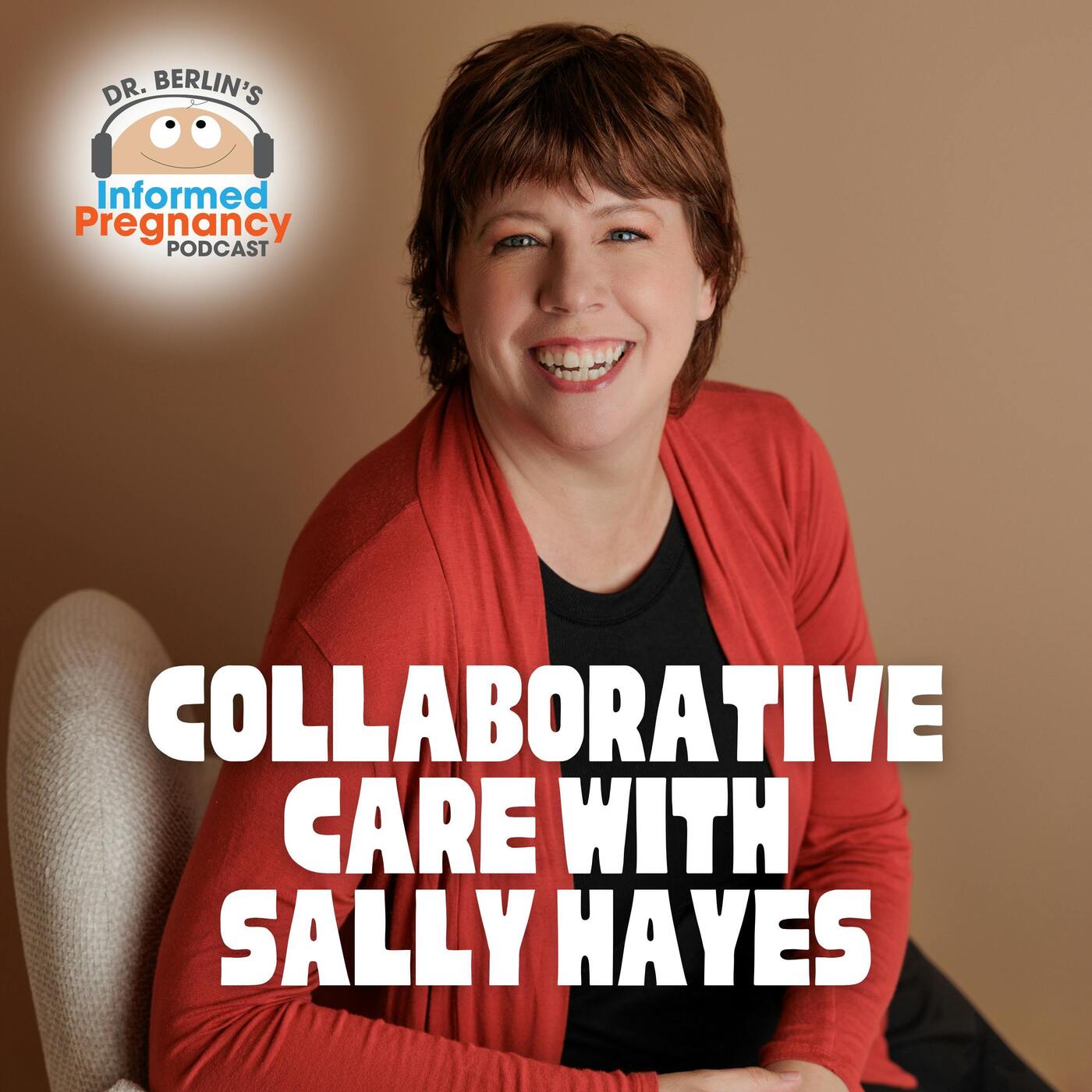
September 25, 2025 · 38 minutes · Episode 478
About this episode
What if your perinatal care team truly worked together? Prenatal bodyworker turned community builder Sally Hayes discusses Matrikas, a national network that she founded in order to connect birth community providers and brands with the goal of collaborative care becoming the norm.
Connect with the guest:
Informed Pregnancy Media and Mahmee present an all new podcast! One Way or a Mother is a new narrative podcast from Dr. Elliot Berlin, DC. Each season is an intimate story of one woman, one pregnancy, and all of the preparations, emotions, and personal history leading up to the birth. Episodes feature the expectant mother along with her family, doctors, and birth work team.
Start listening to Episode 1: I Should Have Died featuring Arianna Lasry
Keep up with Dr. Berlin and Informed Pregnancy Media online!
Learn more about your ad choices. Visit megaphone.fm/adchoices
See Privacy Policy at https://art19.com/privacy and California Privacy Notice at https://art19.com/privacy#do-not-sell-my-info.
Key quotes
“Everyone says it takes a village, but nobody tells you how to build it.”
“I believe that community precedes policy.”
“I'm a huge advocate of finding providers before you think you need them.”
“I think it's important to develop real relationships with people so that you can thoroughly refer people and feel very confident through that.”
“Postpartum is grossly underserved. We need to do more.”
Related episodes
- Ep. 470 Carlson Young: After Birth
- Ep. 480 Twins with Lauren Gaba Flanagan
- Ep. 500 The Unexpected with Dr. Elliot Berlin Part 2
- Ep. 468 Transformative Prenatal Care with Carrie Haverty
Transcript
AI-generated transcript with speaker labels — may contain errors, especially names and medical terms. Dr. Elliot Berlin, DC appears in blue; Sally Hayes in orange.
Dr. Elliot Berlin, DC [0:00] What if your care team truly worked together, sharing notes, coordinating plans, and making sure you never fell through the cracks? My guest today is a long-time prenatal body worker turned community builder who founded a national network connecting fertility, pregnancy, postpartum, and menopause providers and trusted brands. She's on a mission to make collaborative care the norm, so families can find the right experts and providers can coordinate seamlessly to support them. I'm pregnancy-focused chiropractor, Dr. Elliott Berlin, and you're listening to the Informed Pregnancy Podcast. Sally Hayes, welcome to the podcast.
Sally Hayes [0:52] Thank you so much for having me.
Dr. Elliot Berlin, DC [0:54] Fellow body worker. Exactly.
Sally Hayes [0:58] I was a prenatal massage therapist for 26 years.
Dr. Elliot Berlin, DC [1:01] Oh, that's a good start.
Sally Hayes [1:03] It's a good start. I love body work so much, and I think it's so vitally important, especially through fertility, pregnancy, and postpartum.
Dr. Elliot Berlin, DC [1:12] I could not agree more. I went to massage school, and I went to chiropractic school, and I smushed them together because it just made sense to me. We have a musculoskeletal system, let's get it from both sides, and we get a lot of great results with massage in the practice, and we got a lot of great results with chiropractic in the practice, and sometimes when you smush them together, one plus one equals three, and you get even more awesome things happening. I never thought I'd get into prenatal care. That was not a goal of ours from the beginning. It just kind of happened naturally as we went through the phases of fertility struggle, then pregnancy, then postpartum, and all along the way, I feel like the
[1:51] training that we got in our programs wasn't that great in terms of all the awesome things you can do to help people through those stages. It was mostly about the things you can't do, or be careful about this, or don't touch that, or liability. And there was a lot of learning along the way, I'm sure. It must have been the same for you.
Sally Hayes [2:10] I actually went to the Atlanta School of Massage, and we had an exceptional prenatal program, so I wasn't trained to not touch this or not do this. It was really created by someone who strictly saw pregnant people during, for her practice, and I actually had a really great experience. However, I did not receive any postpartum education, and nobody was talking about fertility. This was back in the nineties.
Dr. Elliot Berlin, DC [2:40] Exactly. So that's an interesting tidbit because I also went to the Atlanta School of Massage.
Sally Hayes [2:46] Did you?
Dr. Elliot Berlin, DC [2:47] Surprise. I went in 98.
Sally Hayes [2:50] Uh, that's around the same time I was there, actually. I was there probably in 98.
Dr. Elliot Berlin, DC [2:55] Did you go to life chiropractic?
Sally Hayes [2:57] Yeah.
Dr. Elliot Berlin, DC [2:57] So I went to life during the day and I went to the Atlanta School of Massage at night time.
Sally Hayes [3:02] I did the nighttime program. I did a clinical program daytime.
Dr. Elliot Berlin, DC [3:07] Yeah. So, hmm, we might've just missed each other in the parking lot there. And yes, she did have a great program for pregnancy, better than most, I think, but also nothing for fertility. I don't remember anything regarding postpartum, certainly not menopause. And then also in chiropractic school is where they really had mostly what not to do and very little of what you could do. So we got lucky in our massage training, I think.
Sally Hayes [3:37] I agree.
Dr. Elliot Berlin, DC [3:38] And then being part of that is incredible. How'd you get into it in the first place? What sent you off to massage school?
Sally Hayes [3:43] That's a fantastic question. And I don't really know to tell you the truth. I grew up on a farm in the middle of nowhere in Georgia. I did not know that massage was a career. I had no idea. I was in college at the university of Georgia. I was studying women's studies. And really passionate about women's health issues. And my neighbor left to move to Atlanta to go to massage school. And it stuck with me for about a year. So this was back in the day, you had to open up a phone book and actually call the school and talk to them. And they sent me a packet of information and something inside me just told me to go.
Dr. Elliot Berlin, DC [4:21] No, and it's a pretty cool program. You leave, I think, feeling very secure in being able to deliver good quality body work. But how did that lead to pregnancy? Was it the blending of the women's health studies and massage or something else?
Sally Hayes [4:38] I think that definitely played a part. My very first client, when I got out and, you know, back in the day, like Georgia didn't really have spas or anything like that. So I had to open an office on my own and I put ads in the paper and people came and one of my very first clients was pregnant. And the next week, six pregnant people called me. Oh, or like, I heard you did a thing with this friend of mine and we need it too. And from there it took off and I never really set out to work specifically with the pregnancy population, but it was really such a beautiful force of nature to be able to see clients all the way through their pregnancy and then into postpartum as well.
[5:23] And the clientele that are pregnant, take it more seriously and are exceptional clients and to be able to give people a little bit of relief when their body is rapidly changing and undergoing such, you know, expansion in their hips and their back is getting tight. And to give them a little bit of relief always gave me that warm fuzzy.
Dr. Elliot Berlin, DC [5:47] Yeah. It's a really incredible time to be supporting someone with bodywork, especially since they're working 24 seven, supporting that little life inside. You know, when you're working in pregnancy, it's sort of funny that you said I, I saw one pregnant client and then the next day I had six. I feel like that happens all the time here. Like I'll literally work on a postal worker and then all of a sudden get six postal workers like, can one of you just bring my mail? Okay. So it's happened with football players. It just, you know, and pregnant people. So how did working in prenatal care as a body worker sort of lead to this mission of yours to have collaborative care among providers?
Sally Hayes [6:33] I moved to California and started doing massage in California and started working a little bit more with the pregnancy and postpartum population. And clients naturally asked me for referrals, just for everything. I went to a yoga class and I felt like the teacher didn't give me the attention that I needed or I'm not really happy with my OB anymore and I want to go with a midwife or I think I need a doula and I wasn't really connected to very many people. So, you know, as a massage therapist, you're pretty close with chiropractors and acupuncturists, but you don't necessarily have a Rolodex of lactation consultants, you know, in your pocket. So every time someone asked me, I either went online or just started asking
[7:20] around and I started meeting people for coffee one-on-one and I found this similar thread with everyone that we all desperately needed each other's referrals. So after being highly caffeinated with several coffee talks, I decided once a month, let's just meet in my office and have a fun happy hour, make it chill. Well, we can get to know each other and get to know each other's values and practices and do you take insurance? Do you not? Are you in the valley? Are you on the west side? And that is what became Matrikos. It was a happy accident that I never necessarily intended to create, but it seemed to be needed. A lot of people were experiencing burnout and didn't have people to refer to
[8:09] and, I mean, you know how it is. You practice, like how hard is it to take a vacation sometimes?
Dr. Elliot Berlin, DC [8:15] Oh, yeah. I assumed you were going to say one of those people complained that my car tractor makes too many dad jokes. There's one right now.
Sally Hayes [8:26] Your name came up so many times when I was seeing clients and every time I would hear about you, I would say, okay, you're going to see Berlin. Great. Do you like him? And they would say, yes, he's the best. And I would go, great. Okay. You know, tick got that. So then yeah, then it was in the new Rolodex. Now, when people ask for chiropractors, a lot of my clients love Berlin.
Dr. Elliot Berlin, DC [8:48] Oh, that's sweet. And it's also, I find that it's a moving target. Like you'll find two or three providers that are just great and you love them and you know who they're going to be a good fit for and maybe who they won't be a good fit for. Like we all are good for some people and not good for others, but then all of a sudden they'll move out of town or they'll retire or they'll stop practicing that particular specialty and so, you know, it's something that needs constant maintenance. If you're going to have a network like that, it absolutely does.
Sally Hayes [9:15] It's a very difficult thing to create. It was a lot of extra work for me, which is how it became its own thing. And once I met providers, they were so excited to find a directory that's already been made for them that they didn't have to go out and network themselves. But matching clients is really particular work. I do not claim to be a matchmaker. I think that I'm putting people together and then they end up not liking each other or, you know, I usually give a list of three to five people so that everybody has options. And sometimes it surprises me who they actually pick and go with.
Dr. Elliot Berlin, DC [9:49] Yeah.
Sally Hayes [9:50] Sometimes I'm dead on, and then sometimes I'm way off.
Dr. Elliot Berlin, DC [9:53] Interesting. And that was in California, but now you've kind of expanded much larger than that.
Sally Hayes [10:01] Now we are national. I'm going to say national. We actually do have Canadian members as well, but I'm going to keep with being national. I didn't intend to go national either. This was just honestly purely out of selfish reasons for my clientele. I'm no longer practicing massage. I'm now running Matricos full time. A lot of our providers were bi-coastal or you know how it is when people start nesting, they move. So people would move and say, I'm going to North Carolina. Do you know anybody there? And I would say, let me see. I don't know. Let me, let me see if I can find somebody. And then I started just expanding and meeting people. And so now we are throughout the U S and growing.
Dr. Elliot Berlin, DC [10:41] Well, I think mentally it's hard to keep track of even just people in one local area and not just people like there's so many categories that you're talking about with the lactation, the doula, the postpartum, the nannies, the baby nurses, the photographers, the everything. It's hard to keep track of just in one area and then to keep track of all those people in all those areas, you must be very organized.
Sally Hayes [11:02] It takes a lot of organization.
Dr. Elliot Berlin, DC [11:05] Extremely organized. What is it really? Where does it come from?
Sally Hayes [11:09] It's actually the name of a Hindu goddess collective that rules conception, childbirth and children's health. So it's considered to be seven or eight Hindu goddesses together.
Dr. Elliot Berlin, DC [11:23] And then the, of course you have all of them on a neat list.
Sally Hayes [11:26] Exactly.
Dr. Elliot Berlin, DC [11:26] Exactly.
Sally Hayes [11:28] You know that a website back then. And then the ma is obviously the base for mother and ma mama.
Dr. Elliot Berlin, DC [11:35] Yes. Great. So in your mind, it sounds like just having the list, the resources, the references that you talked about is an incredible gift to people going through these journeys, but you take it deeper into more of a collaborative approach. So not just that here's resource A and there's resource Z in here, but you make it possible for them to sort of work together. I always find when we work as a team, when our patients want us to communicate with each other, that they get the best care. Even like sometimes you have chiropractors and medical doctors who don't see eye to eye on things, which could be fine, but when we're talking to each other, this is what I found.
[12:18] I see different things, you know, I'm exposed to different things and they see different things and they have different know-how. When we kind of collaborate and work together, we do definitely get the best results for our patients. How could you make that happen?
Sally Hayes [12:32] I think it's so important to have collaborative care because when I was doing massage, I knew that I had an extent to my work, right? But pelvic floor PTs could do internal work, chiropractors adjust bones, acupuncturists work on a different system completely. So we all needed each other and Montrecos itself has in-person meetups and we do a lot of Zoom so that we can get to know each other because there are such a variety of opinions and techniques and the way you work. And I think it's important to develop real relationships with people so that you can thoroughly refer people and feel very confident through that. I think that we don't just work alone, right?
[13:24] And you wouldn't want a provider to just work alone. I've seen clients literally come in and say, you know, their first time with me and they were very nervous and they said, oh, I was referred to you by this person and I'm saying, oh, great, they're great. And they kind of calm down a little bit. And then the next session, they say, oh, my doula knows you too. And they soften a little bit and they start trusting you more and they start trusting the doula more and they start trusting the acupuncturists more and they know that they're in good hands because they know that we are a team together.
Dr. Elliot Berlin, DC [13:58] I feel that happen and I actually sometimes I'll see somebody who is seeing a provider I don't know and I've never met, but I'll sometimes see like three or four people that have seen that provider now. And I almost feel like I do know them because, you know, the things that my patients are saying about them and the type of care that they're getting from them, you know, it creates sort of like a profile of what it's like to be under their care. So I start to feel like I know them and then I try to make time to reach out and be like, hey, you know, we have three or four clients in common, let's have, you know, it's LA, so let's have a coffee, a really
[14:30] expensive coffee somewhere and talk about it.
Sally Hayes [14:34] I think it's so important. It's so important to know each other and to give flowers where they're due. You know, reach out and say, I had a client today who raped about you. And I just wanted to let you know, that's a really wonderful thing that I've done for a lot of people. And a lot of people have done for me. And it's always really nice to hear.
Dr. Elliot Berlin, DC [14:51] Yeah, I agree. Okay. There's a lot more here in terms of the work you're doing and what you've built. And I think for listeners, many of whom are in these various stages of life, there's a lot to gain from it. So let's take a quick break and we come back. We'll find out more details about Matrakas and how it can benefit everyone who's listening right now. Welcome back. We're talking to my fellow classmate from the Atlanta School of Massage, Sally Hayes, all about Matrakas collaborative care during these particular phases, all the way from fertility through menopause. And you've built quite a platform. So I want to learn more about the mechanics of it and how it works,
[15:45] meaning how do you specifically add people to your network from the provider's side and learn about them and what kind of information, how can we access it from the patient side?
Sally Hayes [15:57] Fantastic questions. At this stage in the game, I vet everyone personally. So people either have a zoom call with me or I meet them in person or we chat via email and I check out all of their information and it's a membership based directory. So we do have a membership fee and we have in-person events quarterly in Los Angeles, New York, New Jersey, and Detroit as of right now. There will be new cities coming soon. And we also have educational zooms for anything from website building and branding into birth trauma from clinical psychologists and pelvic floor therapists talking about the work that they do. And we also meet on zoom nationally so that we can all refer to each
[16:48] other and get to know each other and collaborate in that way. And it started just as a happy hour out of my office and it has spread. Thankfully, it is a beautiful community. I had my first event in New York and that was the first city we did outside of LA and I remember going and thinking, oh, I've been in LA so long. Like, I don't know, the culture is going to be so different. And I don't know how everyone's going to even take this. And it was exactly the same because everyone who works in the perinatal industry is so passionate and so many letters behind their name. I've never seen people more dedicated, you know, like you are a doctor of physical therapy and a lactation consultant and a doula and, you know, it never ends.
[17:35] Everybody's always continuing to take classes and everything, but everyone's extremely passionate about what they do and extremely excited to meet other people and this seemed to be a really big need that we all had was we were working so busy in our own practices that we didn't have time to get out and network and meet other people. So when people do come together, they're so excited to network together and to be able to have someone to refer to and to collaborate on care. And then from the point of view, if you are looking for a provider, we do have a public facing directory, so it is searchable, you can go on and you can say, I'm looking for a fertility person in Ohio and see if there's
[18:14] anyone there, you can say, you know, I'm in the middle of nowhere and I need virtual care who all does virtual. And that was really important to me to be able to provide a list of people that you could access at any time of the day, because I found when I was practicing that clients were coming in and telling me that they were up breastfeeding at 3am and Googling and bought some crazy tea from some crazy company and, you know, booked an appointment with somebody. And it's like, but who and what do you mean? And you're Googling random stuff. So I felt it was very important to make sure that people had vetted trusted sources rather than, you know, scrolling through Instagram or
[18:59] TikTok or just Googling and finding people that who knows what their qualifications were.
Dr. Elliot Berlin, DC [19:06] For the public directories, is that a membership as well?
Sally Hayes [19:10] No, anyone can access the directory at any time. It is public facing, will always be public facing. We are a provider facing company more than a client facing, but that is something that we have. Most of our events are provider facing. Annually, we have one event that is open to the public and that is called Build Your Village. And that is where our directory comes to life. So you can walk in and meet people directly from the membership and you can literally build your village. You can find a lactation consultant while you're still pregnant. Maybe you didn't even know you needed one, but you chatted with one and you have their business card in your pocket now so that when you
[19:52] do need one, instead of scrolling at 3am and Googling, you have someone that you can already connect with.
Dr. Elliot Berlin, DC [20:00] Wow.
Sally Hayes [20:00] It's like speed dating for providers.
Dr. Elliot Berlin, DC [20:03] Exactly. Let's check out these four doulas right here very quickly. But I kind of envision it that way. And it's probably really convenient because otherwise you do, you have to do all these phone calls and research and, you know, make appointments and find times and here they're just like, boom, boom, boom. Let me ask you the questions, get in your energy, see if it's a good match for my energy. That's a really cool event. I bet everybody wishes they had one near them.
Sally Hayes [20:28] Yes, one day, one day.
Dr. Elliot Berlin, DC [20:31] Yeah. And it's so true what you said about providers in the birth space. It's just a very unique energy. First of all, it's hard on the mind, body and spirit. It's not easy work. It's very rewarding work, but it's not easy. I mean, you see things that are sometimes really difficult and you support people through times that are sometimes really difficult and also through the times of the most joyous moments of their life. So there's some really intense ups and downs. If you're an on-call provider, you never sleep with both eyes closed. And even then when you get the call, you don't know, is this just going to be a phone call or am I going to go to a birth now?
[21:07] Am I going to be there for an hour? Am I going to be there for two days? You end up missing things that are really important milestones in your own family. So there's a lot of sacrifice involved and it's challenging. Nobody does it unless they're really passionate about it. And if they start to do it and they're not passionate about it, then they do it for about 10 minutes and then they're out. Um, but the other thing about this sort of collaborative network that you're putting together is it's really great for us to support each other, you know, because we understand each other in a lot of ways. And when somebody else is going through it, you can be there to help them
[21:44] through it and support them and vice versa. So I see an extra layer of awesomeness in Matrikos in that way. So getting back to the user, a user can go on to your database and search around for providers in their area for free, free access to it. Where is that located?
Sally Hayes [22:04] It's on our website, which is we are matrikos.com. And at the very top, you'll see provider directory. You click right on that. And there is a filter system, which you can choose whatever you'd like. We are very excited that so many practitioners are offering virtual care as well, because a lot of people don't live in an area that have access to care, and even if you do live in a city like Los Angeles, it's hard to get across LA from one side of the 405.
Dr. Elliot Berlin, DC [22:40] But I mean, that's our problem here in Los Angeles, but there are huge swaths of the country where there's very few, if any, providers in certain categories. So thank you, COVID, for making virtual care a thing, pros and cons to it. But that's one of the big pros is a lot more people have access now. To what extent do, like if I go on there and I pick providers, to what extent do the providers connect with each other from your side of things? Or is it me telling my providers, Hey, can you guys talk to each other?
Sally Hayes [23:12] You can definitely do that. I suggest to everyone to pick three to five providers and make a nice tight little circle as to the people that you're referring to back and forth. I know that when I was practicing, I had a couple of people and we all work together as a triad, especially when people were getting that, you know, you're going to be induced situation. They would see acupuncture, chiropractic, massage, pelvic floor. Like they were going through the list, right? They were like anything that's going to help me avoid an induction.
Dr. Elliot Berlin, DC [23:44] Exactly. Which I've still never tried that salad, but I've always wanted to.
Sally Hayes [23:50] Me either. Cause I don't want to go into labor.
Dr. Elliot Berlin, DC [23:52] Exactly.
Sally Hayes [23:55] But that was such an important thing to be able to text someone and they would say, I'll hold the office open another hour and send them right now, you know, when you know people well enough and you know how passionate they are, they will find a time and squeeze your client in for you.
Dr. Elliot Berlin, DC [24:12] Yeah, that's a really cool thing about us being connected to each other. In some ways it is kind of a small birth world. You start to get to know everybody. And I much prefer to work with practitioners who I can send a quick text to, and I know they'll be warm and receptive to it and we can do each other favors and squeeze people in and, you know, find resources. If I don't know somebody, but they do and vice versa, that definitely that team approach is very cool.
Sally Hayes [24:38] Yeah.
Dr. Elliot Berlin, DC [24:38] I think you sometimes also on the other side of it, you see it at yoga classes. Uh, mommy's got to do prenatal yoga and they have like such a village in the yoga class of people on the same journey around the same times. And they support each other in those ways and they're available to each other in those ways. It's kind of just like the postal work. I'll sometimes have a patient who came from a yoga class and went and said, Oh my gosh, I had this horrible neck pain and I went to see this guy and it's gone. And next thing you know, they might as well just hold the yoga class in my office because everyone's coming in here. So the communication, the networking, the building, I mean, the village,
[25:16] the whole concept of the village is not new. It's just reborn. No pun intended. We always lived in a village. We had the village. All these people were part of the village. There was no doula because everybody was the doula and you didn't have to take a lactation class because you saw everybody in your family, uh, lactating and feeding their kids and childbirth education. You were part of the team. So you had a lot of exposure and experience different from what you see on TV, movies and read a newspaper headline. So the village was there, then it disappeared. And I think it got really challenging and now you're bringing the village back. And I think that's a wonderful thing.
Sally Hayes [25:52] Thank you. Another point to that too, is everyone says it takes a village, but nobody tells you how to build it. Nobody tells her the village is we're fortunate that some people work in collectives. You know, you have a lot of people in your office and that's a really great space and those type of areas are fantastic. But what if you don't have anything like that near you and you finally found a pelvic floor therapist that you can work with? Great. But what about the doula and the lactation consultant? And what about that? They need to know each other and work together. I do think that's another great thing that came out of the pandemic is we have become more focused on reality and we're
[26:33] understanding the importance. I grew up on a farm, so I grew up in a very small town. I understand community very well. Everyone takes care of each other. I think that the American individualism system got a little off the rails there for a little bit and we all thought we were independent doing everything ourselves, but we're really not doing everything ourselves and we really do need each other and we need support and we need to know where to find that support.
Dr. Elliot Berlin, DC [27:00] I feel like going into this commercial playing the village people, but I have no idea how licensing works. So I'm not going to do that. I do want to take a break. When we come back, we're going to talk about those events you mentioned and learn what happens and if there's going to be one near me. We'll be right back.

Dr. Elliot Berlin, DC [27:29] Welcome back. We're talking to Sally Hayes from Nottrick Us. So you put together this incredible village, which is accessible to anyone, anywhere online, but then you'll also do in-person events, some of them just for providers and some of them open to the public as well. What is the purpose of the event? What happens at a Notrick Us event?
Sally Hayes [27:51] For the provider focused events, the purpose is to build real relationships and develop a referral network. Sometimes we also have educational pieces, which are really nice as well, because everyone loves to hear what other people do. I know when I had a massage business and I had therapists that worked for me, I brought in lactation consultants to teach the therapists what lactation is and how it all works so that we could support people through their postpartum. I know that people really appreciate that. I walk around and hear little stories all the time of a doula and a midwife talking and saying, you know, this happened the other day. So that always makes me super happy that people are bonding,
[28:36] forming relationships and trusting each other enough to send patients and clients back and forth. And then for our open to the public events, that is really about come and find your providers. I'm a huge advocate of finding providers before you think you need them. I'm a huge advocate of preparing to conceive before you start trying to conceive and building your team. Oh, novel idea. Isn't that great? And I want you to prepare for postpartum before you get to postpartum. So through your pregnancy, you can start thinking about your postpartum care, your lactation consultants, everything that you might need, a night nurse, any of that. I've had clients who had difficult births and called in a physical
[29:28] therapist to help them in the first few days learn to get out of bed correctly, and they said it was a complete game changer for them. So when you're in postpartum, that is not the time that you want to go scrolling around on Google with one eye open because you're sleep deprived and try and find somebody who's going to come to your house and see you in not the best shape of your life, right? You want to have somebody that you already know and you've already met and you've developed a relationship with so that you can just send that text and there's trust built already. So I think that's really important. I don't think that we do postpartum very well in the US.
[30:08] I would like to see postpartum care elevated. I would like to see better coverage. I would like to see policy change. My future for Matrakas is advocacy work and policy change as well. I believe that community precedes policy. I think we have to come together first and we have to educate the public, but also policymakers so that we can improve reproductive health in the US.
Dr. Elliot Berlin, DC [30:38] It's really powerful. So in some ways I'm like, wow, you built this awesome thing. And in other ways, you're telling me that's just the ground floor.
Sally Hayes [30:46] It is. I'm just getting started. There's lots coming.
Dr. Elliot Berlin, DC [30:48] Yeah. Sit back and buckle up. Okay. So I'm excited because you have an event coming up in Los Angeles. This is the Build Your Village event. So I'm excited as a provider for both sides of it. I'm excited to meet other providers. Probably see people I haven't seen in a long time. How I do know meet people who I don't know. Also to meet people who are on the journey, you know, looking for providers, but also just, you know, looking for information. And when you put those kinds of providers in a room, you're going to get a wealth of information in addition to like, let's say where they can sit down and sort of talk to or meet from provider to provider, whether other things are going to happen at the event.
Sally Hayes [31:31] We have expert panels. We have providers that will be there sponsoring with booths that you can walk up and ask questions and get to know them. We have some really cool trusted brands that will be there as well. And then a lot of the Matrikast members will actually be there milling around to support everyone and get to know each other in a very easy way. When I was a massage therapist, I used to go do a lot of these expos and it felt very cold to me. And something that I really wanted to build in was the networking piece. And our very first Build Your Village, we had so many providers that actually bought a ticket to come because they wanted to meet everyone and they just wanted to be in
[32:12] the room. They were that passionate about everything. So we built in networking behind the scenes for everyone. We've told all the providers you're going to come. We're all going to be friendly. We're all going to know each other by the end of the day. And another part of what we're doing that makes this so special is we are working with infertility support groups, mom groups and menopause groups. We have a menopause portion this year as well. And we're working with those support groups. So if you don't know anybody in town or if you're the only one in your friend group who's going through fertility or postpartum, you can come on your own and you can meet all the providers that you need.
[32:53] You can find some good trusted brands that are out there. You're going to leave with a really great goody bag and you can also find your circle of friends and support. We really wanted to make this entire event from the top to the bottom rooted in community. It's extremely important that community is the language we all speak. We are not competitive. We are collaborative and we want all the providers to be in community and we want everyone to feel super welcomed who's coming as an attendee as well.
Dr. Elliot Berlin, DC [33:26] It sounds incredible. You said something a little bit earlier about how you plan for postpartum before you get there. I agree. Postpartum is grossly underserved. We need to do more. My population started with us. We struggled with fertility, my wife and I, for a long time. It was only when we overcame it that we kind of decided to make our mind body practice, she's a psychologist, mind body practice to keep an eye on boosting, helping people boost their natural fertility with the tools that we had. And through that program, we started to work in pregnancy, more and more pregnancies each year, then more and more birth and then more postpartum and all the things that come with that.
[34:06] It's now that we're getting older and so are the people who started with us here are starting to reach perimenopause and menopause. And I'm also seeing that there's really gross underpreparation for that phase as well. So I'm super excited that you included that in the work that you're doing. But when you talk about planning for it before you get there, my wife famously does this third trimester mental health checkup, you know, before you have the baby. Nothing has to be wrong. It's just where are you? What are you thinking about your birth? What are you thinking about postpartum? How do you envision it going? What are you doing to help yourself get to that vision?
[34:45] And one of the most powerful things about it is that could be their only visit. But if on the other side, they do start to feel some of the P-mats, the anxiety and depression, other things that sometimes really kick in hard after the baby comes. If you haven't met somebody there, if you haven't done the prep work, it can feel really overwhelming to start to look for somebody at that point or to make a connection with somebody you haven't connected with yet. That right there could be the difference between somebody getting help when they need it or somebody suffering through a long period of time before they finally get help. And so there's so much rich value to the work that you're doing.
[35:28] And also there's one other amazing thing that you're doing. The goody bag. Well, my kids used to only let us go to these events because we would come home with a goody bag. There'd be all sorts of weird stuff like nipple bomb. And I don't know, my kids are just like, oh, this is amazing. There will be nipple bomb. All right, look at that. So I'm like, enjoy. One of them was like pure olive oil and it had oregano in it. I'm like, I'm putting this on my pasta. So there's the goody bags too. But I know some people are going to be listening and be like, OK, Los Angeles, you get this. What about us? Are there going to be expansion into these types of events, not just
[36:06] ones for providers in other cities?
Sally Hayes [36:09] The plan is expansion. LA, New York and Atlanta are our big three. Things do move fast. So I planning for next year to be LA, New York and Atlanta to have all of these events and also things could move fast enough to have them in more cities as well. So I won't promise anything, but more is coming. And if you are listening and you're in a city that you want something like this, reach out and we'll see what we can do.
Dr. Elliot Berlin, DC [36:38] Yeah. So that's what I was going to say. Reach out through the website.
Sally Hayes [36:41] Reach out through the website. My stuff's on there. You can also email me directly. I'm very active on Instagram as well. So I answer all the Instagrams. Feel free to message me and I'll chat with you and let's expand this.
Dr. Elliot Berlin, DC [36:57] You're amazing. Thank you so much for the work that you're doing and for coming on the podcast to share more about it with us. We already mentioned, we are matricos.com.
Sally Hayes [37:06] We are matricos.com.
Dr. Elliot Berlin, DC [37:08] What about the Instagram? Where do we find you there?
Sally Hayes [37:11] Instagram is also, we are matricos. There is a period between we and are, and that's probably our most active social media. We're lightly on some other ones, but that's probably the best one so far.
Dr. Elliot Berlin, DC [37:25] Amazing. I'm going to go check out the website right now. Thank you again for joining me and at home. Thanks for listening to informed pregnancy for more pregnancy and parenting information just like this. So visit us online at informedpregnancy.com.
Want more pregnancy + parenting? Start your FREE TRIAL of Informed Pregnancy+ and get access to all our curated pregnancy and parenting content — original series, iconic birth films like The Business of Being Born, prenatal workouts and more.

0 Comments