
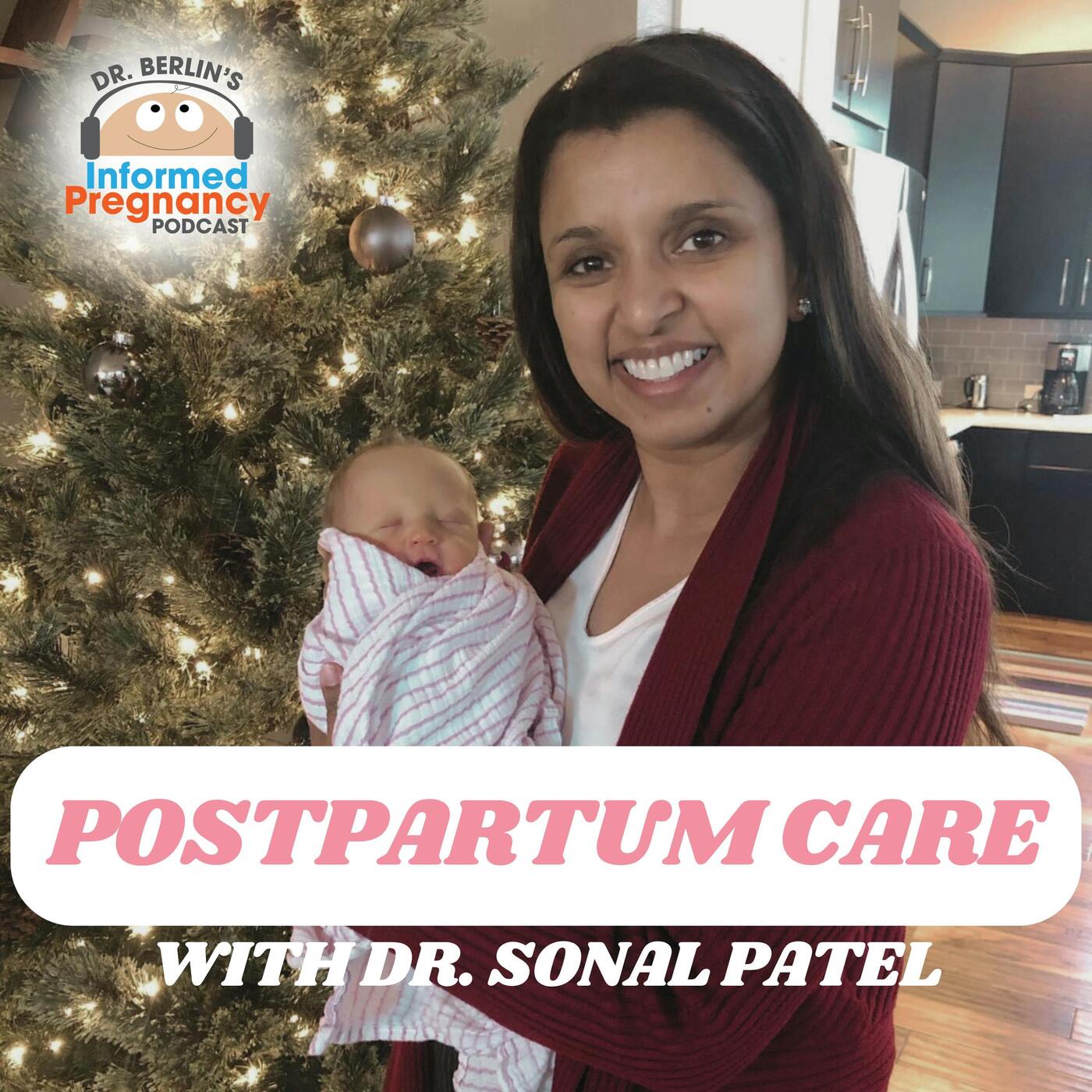
June 12, 2025 · 47 minutes · Episode 463
About this episode
Dr. Sonal Patel is a pediatrician, NICU fellow, lactation consultant, and is the founder of a home health service focused on postpartum care. She experienced 4 births herself along with postpartum depression, and is now focused on bringing evidence based support into postpartum medicine.
Connect with Dr. Patel:
Informed Pregnancy Media and Mahmee present an all new podcast! One Way or a Mother is a new narrative podcast from Dr. Elliot Berlin, DC. Each season is an intimate story of one woman, one pregnancy, and all of the preparations, emotions, and personal history leading up to the birth. Episodes feature the expectant mother along with her family, doctors, and birth work team.
Start listening to Episode 1: I Should Have Died featuring Arianna Lasry
Keep up with Dr. Berlin and Informed Pregnancy Media online!
Learn more about your ad choices. Visit megaphone.fm/adchoices
See Privacy Policy at https://art19.com/privacy and California Privacy Notice at https://art19.com/privacy#do-not-sell-my-info.
Key quotes
“So I was just checking off boxes because I wanted to show the world I'm doing fine. Right? Like I'm fine, but I wasn't.”
“but I was telling people I wasn't feeling well. I just wasn't listened to.”
“my contractor was like when I came back. He was like, didn't you just give birth? I was like, wait, you just recognized that I gave birth, you know,”
“So really kind of changing our view from the get-go to be like it should really be a mother shower, not a baby shower and doing those services first.”
“know, even any of it would resonate that I just want to make sure that someone like me with so much privilege, like so much privilege, had such a hard time that if you think that you're having a hard time, trust me, you're not alone in it.”
Related episodes
- Ep. 484 Transformative Postpartum with Francesca Fondevila
- Ep. 470 Carlson Young: After Birth
- Ep. 486 Care for the Modern Mother with Margot Del Rey
- Ep. 500 The Unexpected with Dr. Elliot Berlin Part 2
Transcript
AI-generated transcript with speaker labels — may contain errors, especially names and medical terms. Dr. Elliot Berlin, DC appears in blue; Dr. Sonal Patel in orange.
Dr. Elliot Berlin, DC [0:00] Today's guest paid a production fee to appear on the podcast, which helps us cover production costs and bring you quality content. Their views and opinions are entirely their own. My guest today is a pediatrician, NICU fellow, lactation consultant, and the founder of a radically different model for postpartum care. But before she reimagined the system, she lived its gaps firsthand through four very different births, postpartum depression, and a moment when her own contractor noticed her pain before her medical team did. Those experiences led to the creation of a Colorado-based home health service delivering mother-baby care during the crucial fourth trimester.
[0:41] Now, she's on a mission to bring empathy, equity, and evidence-based support into postpartum medicine. I'm pregnancy-focused chiropractor, Dr. Elliott Berlin, and you're listening to the Informed Pregnancy Podcast. Dr. Sonal Patel, welcome to the podcast.
Dr. Sonal Patel [1:12] Oh my gosh, thank you so much for having me. I'm so excited about this conversation. I'm awestruck.
Dr. Elliot Berlin, DC [1:17] You have four kids, all boys, I'm told.
Dr. Sonal Patel [1:20] Yeah, whatever you believe in, say a prayer for me.
Dr. Elliot Berlin, DC [1:25] And then you've also created this company and it's like having five full-time jobs. I don't know how mommies do it. So you can add six if you would like. Another one to take care of. Let's start at the beginning. Where are you from originally and what got you into medicine?
Dr. Sonal Patel [1:44] So I was born in Lucknow, India, which is about two hours from Delhi because everybody's associates India from Delhi. And my parents were both physicians and my mom really wanted to go outside the country. So I India at the time. So my dad gave her two choices either Nigeria or Jamaica and they chose Nigeria. Don't ask. My brother was born in Nigeria and finally moved to the States when I was nine. So most of my middle school high school and thereafter I did in the States and we landed in Omaha, Nebraska. So my parents really pick very oddball places to go. And what prompted me to become a physician was what I saw through them was they took a skill that they had developed and they could take it anywhere around the world
[2:34] because medicine was medicine. The human body was the human body diseases. Yes, some areas are more unique than others. But the basic foundation of it was they could apply everywhere. And you know the old Indian adage either you become a doctor engineer or a lawyer and a business person. I did not know how to do business. I was like this is not for me, which is really funny where I am right now and being a lawyer didn't really attract me. So medicine it was.
Dr. Elliot Berlin, DC [3:04] Interesting. So first of all, it's such a interesting journey just geographically from where you were to where you are. And I don't know if you have an accent at all. If you do it, I don't hear it and I don't know what it would be.
Dr. Sonal Patel [3:17] It's actually a mix. So in India and Nigeria and kind of lived in Libya too. I didn't mention that but most of my schooling was from the British system. So when I came to the States, I still had a very strong British accent and then you land in Midwest. And most of my training has been down in the South. So sometimes I will go you all and I will say bless your heart. And a lot of people have commented they can't really point it down. But I'm like, well, that's a uniqueness of what I've collected through my own journey.
Dr. Elliot Berlin, DC [3:49] Yeah, it's your own personal style. Okay. And then I kind of understand Nebraska because my wife and I she's a psychologist and she got computer matched with an internship in Lincoln, Nebraska. So we spent a year very close to your neck of the woods and it was quite different than New York City.
Dr. Sonal Patel [4:08] Yes, it is. And we do have plumbing. Yeah, I went to college at Emory and that was like the first question they asked me in Atlanta, Georgia. I was like, do you guys have plumbing? It's like, yes, we have plumbing.
Dr. Elliot Berlin, DC [4:19] Oh, interesting. We're on a very similar track because we both went to undergrad in Atlanta.
Dr. Sonal Patel [4:24] Oh, where'd you go?
Dr. Elliot Berlin, DC [4:25] I went to Life University, the chiropractic school and she went to the Georgia School of Professional Psychology. So, you know, we're kind of following each other around the country. Okay. So medicine, when you got into it, did you have a vision on what specialty was interesting to you?
Dr. Sonal Patel [4:42] You know, honestly, I discovered it while I was doing my third year med school and pediatrics. And the reason that I chose pediatrics was the fact that, you know, adults just don't listen. And I was like, if I want to make a change, maybe I can make the change because parents and you are more apt to listen if there's a health issue with your own child and you'll make the changes. And I was like, oh, okay, maybe I can do it and make actually a long term impact rather than a short term impact. So starting from the children. And then I actually did a NICU fellowship. So I did additional training specializing in the NICU and I practiced in the NICU for about 10 years in fellowship included.
[5:24] And the reason that got me into the NICU was I loved acute care and ICU care. And I really enjoyed that whole dyad, the mom and the baby and, you know, development of both symbiotically. So that's what led me to the path of medicine that I chose.
Dr. Elliot Berlin, DC [5:42] Wow. I mean, it's interesting to hear you say I love the intensive care, but I understand it. Like you can have a massive impact right in a short period of time. And I guess in another weird parallel, I used to work in emergency rooms and ambulances as an EMT in New York City. So I get that the downside, I guess, is that you don't have the relationship long term with your patients. It's a different type of care. But man, the action is there and the actions that you take have such a profound impact right away.
Dr. Sonal Patel [6:15] Oh, definitely. I mean, it's as simple as thinking about are you going to poke this baby for X, Y, and Z? Because if you poke the baby, you literally are stimulating the hormonal and neurological system of this premature baby. And do I really need this? I mean, this is long term thinking. So people, I don't think they get really awed by the NICU, but there's so much thinking that happens and very critical thinking to be like, is this worth what the diagnosis I'm looking for? Or is this lab going to help me out? So that was the aspect of it that I just enjoyed immensely.
Dr. Elliot Berlin, DC [6:51] Wow, that's really neat. Okay, your husband's also in medicine.
Dr. Sonal Patel [6:55] Yes.
Dr. Elliot Berlin, DC [6:57] I mean, is that what you talk about over dinner?
Dr. Sonal Patel [7:00] No, we are very much that family that I wouldn't say emphatically, but we do have like five minutes to discuss it. And then thereafter, it's like, okay, enough like shop talk. Let's talk about something else.
Dr. Elliot Berlin, DC [7:15] I mean, I don't know how you have time to go to anything with four boys bouncing around. Did you always know from the beginning that you wanted a bunch of kids?
Dr. Sonal Patel [7:23] You know what? I think I've had a lot of amnesia because of these boys because apparently around to my cousins, I was always wanting five kids. And now that I think about it, I was like, what was I thinking? And they're like, you always wanted five kids ago. I don't remember saying that. They're like, no, and multiple sources have told me that. So apparently I did, but four boys later, I'm like, oh, that's a lot.
Dr. Elliot Berlin, DC [7:47] In your first pregnancy, did you have a vision of pregnancy and birth and postpartum and what you wanted from them?
Dr. Sonal Patel [7:55] Yes. So not even in my first, I've always made a great pregnant woman. I've always stated that, you know, I've gotten the glow. I got the hair. I don't have many symptoms. And I think that's what attracted me to pregnancy. I guess, because I was not getting all of those things with my first pregnancy. I was a 30 year resident. And so I was putting in about 80 hours a week. We were training in New Orleans and I actually was in Katrina at that time as well during that. Yeah. And I was six months pregnant and got activated. And what that means is that you have a skeleton group that comes in and takes care of anything that would walk in through that door.
[8:34] Mostly the city is being evacuated, but you do definitely need a skeleton group. And then so is myself at my hospital and then my husband got activated also. So I swear I'm going to have PTSD one of these days, but I try to suppress it. What I found very interesting in that was I myself, I was a 30 year resident. So I was in training and I was six months pregnant. My attending, so meaning that they had completed all their training. They were my boss. She was seven months pregnant. And we had a ICU nurse who was five months pregnant.
Dr. Elliot Berlin, DC [9:08] Holy moly.
Dr. Sonal Patel [9:10] Right. And I just realized that in medicine, there's never a good time to have children. So you just have to figure it out. Like if you want a child, you have a child, you know, like there's never a good time. There's never this ideal time where you're never going to be, you know, just put in situations. So what the vision was going into it was like, oh my goodness, you know, this is going to be beautiful. But what we came back to was a city that was completely empty. Walked into the Children's Hospital. There was not one patient there. This is like comparing, you know, any big city Children's Hospital. And at that time, you know, it's 2005. The internet is just coming to board and Amazon's not there at
[9:51] this point or the seedlings are coming from it. And there was no stores open for baby wear like baby kids. And we had to go to Baton Rouge lived in New Orleans to get our cribs to get, you know, all the kind of supplies and I don't know. It was a surreal time. And so postpartum. What was the highlight of that one was I didn't know. I didn't know. I mean, I had gone through so much already. So I was just like, what's one more thing, right? And it was a failure to progress. Meaning my baby was too big for my pelvis. And so I had an emergency C-section and at that time you're like, oh, you have an emergency C-section right now. I'm like, no, that's a baby attached.
[10:29] Like it's abdominal surgery with a baby attached. And then when we went back home, the apartment that we lived in was three stories, no elevator, 60 steps, every single one of them and you go up and down, you know, these steps and you're doing it all for your baby. You know, I needed lactation support. I needed all the pediatric appointments. And then at nine weeks, I'm going back to residency back to an 80 hour work week. So that's a lot, but it was a lot.
Dr. Elliot Berlin, DC [11:02] Well, I mean, birth-wise, it sounds like you were aiming for a vaginal birth and then later stalled and the baby wouldn't come down. How big was that baby?
Dr. Sonal Patel [11:10] Eight pounds, 10 ounces. Healthy.
Dr. Elliot Berlin, DC [11:13] Yeah, healthy baby. And yeah, but eight pounds, 10 ounces. I meant a lot of baby is what I mean by healthy. So that C-section had you left your mind open to that possibility to take it totally by surprise.
Dr. Sonal Patel [11:27] So actually, so my mom's OB-GYN and I trusted my OB-GYN completely. And you know, I just trusted both of them. And I think what was done at that moment in time was very critical because my baby's heart rate was going down. They did find a nuchal cord around his neck. So all those decisions were very medically appropriate for me because researching, you know, like I told you I've read a book researching all of that. I was like, oh wow, if I didn't have that medical intervention at that moment in time, and I was back in a historical period where I didn't have that, I wouldn't have my baby. I'm not questioning whether it was necessary.
Dr. Elliot Berlin, DC [12:06] I'm just questioning whether you were ready.
Dr. Sonal Patel [12:08] I don't think I was ready for any of it, right? Like I was still in the days from Katrina. Like I was still like trying to be grappling all of that. And so it literally was like, oh, this is what we do. Like that's all it was, right? This is what we do. This is what happens.
Dr. Elliot Berlin, DC [12:23] I feel like postpartum is chaotic to begin with and then, you know, with a hurricane and residency or third year medical school, it's multiple hurricanes hitting all at the same time. I would love to find out how postpartum was free, but let's take a quick break and we'll be right back.

Dr. Elliot Berlin, DC [12:51] Welcome back. We're talking to Dr. Sonal Patel and you drew a vision that was only 20 years ago where there was no Amazon, which is very hard to picture since now they come before I even realize I need to order something. They're like, here it is. Okay. So just a very different time. The unexpected cesarean with all the chaos going on. Like I said, right before the break, I feel like postpartum is generally rocky terrain. How was that postpartum for you?
Dr. Sonal Patel [13:19] Like I said, I was in a complete fog and I was just going through the motions because that's all I knew how to do. That's all I was taught, you know, I guess
Dr. Elliot Berlin, DC [13:28] young and active, but I mean complete fog. How is it on your mind and how is it on your body?
Dr. Sonal Patel [13:34] It was terrible. And you know, hindsight is like 2020 people say so again and not to why not promote my book, but when I was writing that section about that particular birth, I started crying and I did not realize how much trauma had been built into me and how much of all of that I hadn't allowed myself to process because we weren't given and I wasn't given the time to even process it back then. And when I said how much trauma and I started crying, my child was 17 when I wrote that section. So it was 17 years later and you know, this was during COVID. That was my little COVID adventure. And I used to write in the mornings and my husband came down and I still
[14:25] getting teared-eyed about it. And he just found me crying and he's like what's going on and I and he allowed me to just go through some of those emotions and I just didn't realize I had so much in them. So when you talk about like at that moment in time, I don't think I was given any permission from anyone, even myself to be like you went through a lot. You need to take a break and do this. But it was 17 years later. I was like, wow, I did go through a lot. That is ridiculous. And so much transpired in between before that had a chance to process. Yes, definitely.
Dr. Elliot Berlin, DC [15:04] So how are the other births?
Dr. Sonal Patel [15:06] Well, like, you know, you mentioned I wanted a natural delivery, which was actually quite accurate. And so my second one, I wanted this natural delivery. And again, we ran into the same situation. He was only six pounds and 10 ounces. And the physician was like, listen, the baby's heart rate is going down. You can either go for an emergency c-section or we're going to use a forceps. And I was like, oh, you know, like at that moment in time, it's like I do not want that healing that I had for the emergency c-section. I was like, just do the forceps. I want this natural delivery. And go and behold, I had grade three, grade four tears because of the forceps.
[15:44] And then I had the uterine infection afterwards, powerful antibiotics, breastfeeding was challenging. And the biggest thing was I had postpartum depression with that baby. And the postpartum depression was very different. It's not that I was depressed or I was crying all the time. Again, reflecting back at that moment, and I wasn't diagnosed until eight months after because someone just mentioned it to me. But reflecting back on that, what I was doing was I was checking off boxes because that's what I've been trained to do as a professional is you finish college, you take your tests, you go to med school, you take your tests, you go to residency,
[16:22] you know, there's a system and you just have to keep checking off boxes. And so when I talk to professional women, I make them realize that the way that it was diagnosed for me and when I reflecting back was I had spent all my twenties and half of my thirties for my dream job and I had gotten it. I had gotten my part-time NICU attending job in a beautiful city that was very close to my family. That was my biggest criteria and I didn't want to show up for that job. I had everything lined up and I did not want to show. I renegotiated my contract and said, hey, listen, I am only going to come for the bare minimum. I went from part-time to intermittent and that was
[17:03] postpartum depression. And I don't think people realize that. So I was just checking off boxes because I wanted to show the world I'm doing fine. Right? Like I'm fine, but I wasn't.
Dr. Elliot Berlin, DC [17:13] No, that's so powerful. It's such a powerful description of how it's different than what you would think of as depression.
Dr. Sonal Patel [17:21] Yeah.
Dr. Elliot Berlin, DC [17:22] And how it really cemented you down where you were and didn't let you kind of move to what you wanted to be doing really.
Dr. Sonal Patel [17:29] And I worked so hard for it. I mean, we study a lot in med school life and fellowship and you know, had a kid, had another kid was trying to grow my family. Just didn't want to show up for that job.
Dr. Elliot Berlin, DC [17:41] Yeah. Did you regret having done the VBAC?
Dr. Sonal Patel [17:45] No, no, not at all. I don't regret the VBAC. I just wish at that point that they might have started maybe a more experienced older physician might have done other tricks that I wouldn't have had needed the forceps at a very young physician come out because I had two other VBACs after that. And my third one was all-natural. That was a fun story too. So based on my previous histories of a C-section and a grade three grade four, I was scheduled for another C-section, but I always said he had other plans and I was just like, this is not labor. And so I actually drove myself down to the hospital that I was working at and I was going to deliver there as well.
[18:34] And my husband was completing surgery and I was like, hey, I'm just going to go get myself checked out. And now my neighbor had come over and was taking care of my other two. And I was like, should I just finish up or should I just have someone come in? I was like, yeah, I got it. You know, this is this is nothing. This is just back pain. I'll be fine. And by the way, we are scheduled for Friday and this is Monday. We're going to make it five days. You know, like this was like determination and I drove up and luckily the security guard knows me because as a NICU doc, you do a lot of call. And so you go and we were doing home calls. So you'd walked in
[19:09] and he's like, hey, Dr. Patel, I was like, I'm in labor and he goes, I see that and security. He's like, I got you. I was like, okay, great. And I made it to the hospital at 330. I made it to labor and delivery a little bit before four. My husband came at four. We had the baby at 406.
Dr. Elliot Berlin, DC [19:28] Wow.
Dr. Sonal Patel [19:29] Okay. I always joke that, you know, it'd be terrible if like the newspaper would be like the NICU attending delivered in the parking lot, you know of the hospital. It's PR.
Dr. Elliot Berlin, DC [19:39] It's all PR. All right. So that one obviously didn't need forceps. Was the baby smaller, bigger, same size?
Dr. Sonal Patel [19:47] Five pounds, eight ounces.
Dr. Elliot Berlin, DC [19:48] Smaller. Okay. And was there tearing with that one?
Dr. Sonal Patel [19:52] There was a grade two on that one as well, but it was, yes. And here's the kicker too. This is the best part of the story was now we had two cars and he was supposed to come Monday. And my mom always came out for all my deliveries, but she was coming on Saturday. I said, I'm leaving 36 hours later and we have these two cars. And I said, forget it. So I literally packed my own baby in the car and I drove me and my baby back home because I was like, this is dumb. Otherwise we're trying to figure out all these variations of getting to the car. And I said, forget it. That's it. Enough. Get my baby back there.
Dr. Elliot Berlin, DC [20:33] Okay. And then how was postpartum from that one?
Dr. Sonal Patel [20:36] Oh, that one, the recovery was amazing because there was no IV fluids. There was no pitocin. There was no medication. My body just went back. Like it would just knew what to do. Like the recovery was unbelievable on that one, the physical recovery, the mental recovery, not so much because I just felt really anxious all the time, all the time. Super anxiety, super anxious about everything, super anxious about you name it. I was anxious about and I kept going to my pediatrician because as you know in postpartum here in the US, there's a lot of appointments postpartum for the baby. Not for you. Not for me, but the baby. And it was just like, hello,
[21:20] pediatrician. I don't know what I'm feeling, but I'm not feeling well. Like I don't know. I'm so agitated all the time and you know, they always just say, oh, it's lack of sleep, lack of there. Didn't know it was postpartum anxiety and that took about five months to diagnose and it was just not fun to diagnose it. So that's one thing that I teach for my patients as well is when we do the Edinburgh, there is three particular questions on there that tell you about anxiety and I was scoring high on those, but I wasn't scoring high on depression because then it did and so it's a scale and after 10 it automatically says, oh, you're postpartum depression,
[21:59] but I didn't have depression and I wasn't scoring high for that, I was scoring high for anxiety and no one really paid attention to those three questions. Now we have the GADS and stuff like that, but I was telling people I wasn't feeling well. I just wasn't listened to.
Dr. Elliot Berlin, DC [22:13] That's unfortunate because the sooner you realize what it is, the sooner you can take care of it.
Dr. Sonal Patel [22:18] Exactly. Exactly.
Dr. Elliot Berlin, DC [22:20] I'm sorry.
Dr. Sonal Patel [22:21] That's okay. Thank you for recognizing that and appreciating that, but I think where I am is based on all these experiences. If I didn't have those experiences, if I didn't have the fourth one, I mean he was preeclampsia, postpartum preeclampsia, literally finished my shift, walked over because if anyone's been in the hospital, labor and delivery is always on the NICU floor as well, easy access if babies need help, finished my shift, walked on over, had my baby, another VBAC and that's the one that he came early because I had preeclampsia. He was six pounds. I didn't have a tear with that one, but I had to go get care and because he came early,
[23:05] it was just all these circumstances like my husband still had to go and do surgery because he had a whole day of surgery booked because again, he wasn't supposed to come this early and I had to go again to the pediatric appointment and that's when my contractor was like when I came back. He was like, didn't you just give birth? I was like, wait, you just recognized that I gave birth, you know, and it was four days after I had I delivered him on Friday. We got discharged on Sunday. I had to go to the appointment on Tuesday and he had come on Monday and then Tuesday. He saw me going out getting the other kids to school because he's a January baby
[23:44] and then he was like, didn't you just give birth? It's like, yeah, I actually did. I mean,
Dr. Elliot Berlin, DC [23:50] the contractor, a man.
Dr. Sonal Patel [23:53] Yes.
Dr. Elliot Berlin, DC [23:54] So first of all, you had preeclampsia and then you had postpartum preeclampsia.
Dr. Sonal Patel [23:59] Mm-hmm.
Dr. Elliot Berlin, DC [24:00] So did that land you back in the hospital?
Dr. Sonal Patel [24:04] Luckily, no, because again, like my mom's OB and we were just on top of it. And at this point, I had a maternal fetal medicine physician as well helping me through it and we were really able to manage it at home. So that was really, really very fortunate.
Dr. Elliot Berlin, DC [24:22] What else were you experiencing after the fourth baby?
Dr. Sonal Patel [24:26] You know, at that point, it literally was, okay, this is way too much. It all kind of just hit all at once. And so here's the thing, we never found out if we're going to have boys or girls. We never found out until the delivery. Like it was just one of those things and everybody says, well, were you always trying for a girl? I was like, well, I never found out. So that was not the case. Like each one of them has a chance of being a girl. But one of the things that I don't think people talk about a lot is the fact that I was like, oh shoot, that's another boy. You know, like I didn't want another boy. And it's not that I don't love my son, but people don't
[25:02] talk about that. People don't talk about this fact that you dreamt about, oh, you know what? I already have three boys. It has to be a girl, right? Like even my mother-in-law, like she crochets and she made this pink blanket and she's like, now what I'm going to do with this? So it was like, but I think no one talks about that. Even dads go through this, right? When they have their like second or third or fourth quote-unquote daughter, they have this vision of always having a son and they don't have that. So that was something that really shocked me because I'm not supposed to have those feelings. My son is beautiful. I love him to death. But why am I feeling
[25:42] that, oh, why would I wish he was a girl? That was something that was very hard. And so one of my mentors, she also has four boys and I reached out to her and her boys are literally a whole decade ahead of mine. And she's like, no, this is normal. No one talks about this kind of stuff and this is normal. She goes, I counsel not only you, but I've counseled and she's our attending mentor. But there's been other people that reached out to her to be like, oh, you know what, we only wanted two kids and one was a boy and we were hoping to have the girl, but it's another boy. You know, this idea that we build ourselves in that no one really talks about.
Dr. Elliot Berlin, DC [26:21] I think I'm a hundred percent sure that somebody listening, several people listening, are going to resonate with what you're saying right now and just feel like, oh, I have those feelings and I suppress them because it doesn't feel right. You know, and it's not like you're not super grateful for the child you have, but there is some sort of, you know, desire and wish that didn't come true as well. And I think it's a natural normal feeling, but you're right. I don't hear people talk about it and I know that they're thinking about it.
Dr. Sonal Patel [26:52] Yeah. And even dads too. I didn't realize that, you know,
Dr. Elliot Berlin, DC [26:56] only dads. All right. Well, your postpartum sounds like it was not as supported by the system as it could have been times four. And I know that you, like you said, you took your experiences and your struggles and you sort of decided to make it different for other people. And I want to learn more about that. Let's take a little break when we come back. We'll find out all about Niacare. Welcome back. We're talking to Dr. Sunil Patel. And yeah, postpartum did not support you. The system did not hold you up and support you. What do you wish would have been there that wasn't in retrospect?
Dr. Sonal Patel [27:45] Permission to heal. And starting with physical healing, permission to be like, no, you actually, I mean, we kind of toss these words around so nonchalant, like it's labor. Okay. Oh, you just went through labor, right? You just had a grade three, grade four tear, or that tear wasn't that bad. You just had a C-section. Oh, so happy that you, mom and baby, are healthy. Yes, there is a health component to it, but there's also a healing component to it. And we are not given permission as mothers to heal. And I wish that the medical system also really was in the forefront and saying, no, you know, this Hollywood Hallmark image of postpartum, we're going to strive
[28:31] to make sure that happens for each birth. So, healing is so key.
Dr. Elliot Berlin, DC [28:37] I wasn't there a hundred years ago, but people talk about it and you can kind of picture it and see it in some of the images that are available. Having children was very different, much more communal. And, you know, people not that long ago lived on a family property and women in the family were having babies. The rest of the family was kind of there supporting them. And then when it was your turn, they were there supporting you as well. I mean, the whole village is not there anymore. You know, the grocer was part of the village, the baker, like everybody was part of the village. Our grocer is Ralph's and I don't think my kids will ever meet Ralph.
[29:13] And he's not going to ask them, how's your day going and how are things for you? So I think that there's been a tremendous loss of village support and it hasn't been replaced by the professional support community, as far as I can tell. And I think that leaves a tremendous gap in care.
Dr. Sonal Patel [29:29] You're absolutely a hundred percent right. So can I just tell you a fun fact? Before we could get more serious again. Do you know where the word gossip comes from?
Dr. Elliot Berlin, DC [29:37] No idea.
Dr. Sonal Patel [29:38] Okay. So when you're talking about that whole village, so in the Middle Ages when the woman was going to deliver, the father actually went around the town and like rang a bell and said, hey, listen, you know, there's a delivery. And so the sisterhood would come and they were referred as God's SIS, like sisters of God, so God's SIS. And most of this labor would either be fast or it could take 24 to 36 hours. And so they kind of just started chit-chatting about all the rumors in the village. And so the origin of the word gossip comes from God's SIS, like sisters of God, it was gossip.
Dr. Elliot Berlin, DC [30:15] Well, we still have the gossip going on.
Dr. Sonal Patel [30:17] Yes, we just don't have the gossip. But also in the medical community, we've lost it because when we did the industrialized revolution, even in this country, which was the turn of the 19th centuries, 1910, 1920, and when you had this massive movement of rural people coming into urban, within medicine themselves, we had the germ theory prevailing. We were preventing more deaths from sepsis and high rates of infections with birth. We were preventing that. The initial hospitals were called lying in hospitals. So the first hospital that was there was in Boston. It was called Boston Lying In. Lying in means you lie there for a certain stage of time.
[31:04] So it could have been for two weeks to 40 days that the medical community also was like, no, no, no, you're going to lie in and they were named that way. And now? Yes. So just really quickly, not to go through the whole history of it, but insurance has played a huge part in how we have curtailed the amount of in-hospital care that has been given. And then also that has changed how we perceive postpartum because what happened in the 1990s with insurance, initially they were for non-profit. And so prior to that, we were very heavy on, you know, in the 70s particularly. There's a whole history of childhood and kids development and age and attachment theory.
[31:51] But just looking at it from the medical standpoint, when you delivered vaginally, you had five days. When you delivered C-section, you had about seven days to be in the hospital. When insurance in 1990s became for-profit and they started having subsidiaries, then the insurance companies, they looked at, hey, what is costly to us? So there's only two guarantees in life, right? Life and death. There's only two guarantees. So they wanted to control how much cost it was for a woman to deliver because that you can control. You can't control someone like falling or having a heart attack. I mean, you can control it for a certain extent, but you can control
[32:30] is when a woman comes into the hospital. And so there's this huge thing and a lot of reporters at the time wrote about how insurance companies are really timing your contractions. And then finally in 1998, the family from a federal standpoint, the law was passed that no insurance companies have to allow 24 hours for vaginal delivery at minimum and for a C-section delivery, 72 hours.
Dr. Elliot Berlin, DC [32:56] Yeah, I mean, it just seems like maybe minutes after the baby comes out, it's almost like a restaurant when you're done eating. I just want to get you out of the table and get another patron in there very, very quick. And then of course, you don't generally go back for six weeks. And that's that critical time where everything is sort of healing and transitioning, hopefully healing and transitioning physically, mentally, spiritually, and you're kind of on your own.
Dr. Sonal Patel [33:21] Oh, definitely. And then more so like again, looking just from the medical perspective, that six-week appointment, we women know it's like, oh, it's like, can I have sex or not? And we're not ready for that. And 40% of women do not go to that appointment. And I'm not just talking about, you know, professional women. Like, I know physicians who don't go to that appointment, right? Because it's like, well, what are you going to check on me? Like, I'm not even ready for that. You tell me six weeks, but all you have made me do in six weeks is struggle through breastfeeding, struggle through my healing, made me come back for even the smallest thing
[33:58] is like, oh, you know what? My blood pressure is slightly high and I have a headache. Oh, it's after hours. So we don't want to take the liability. So go to the ER. Well, my baby can't come to the ER with me and I can't breastfeed and now I'm in gorge. I mean, it is just mind-boggling that what we put women through after a baby is born just for care, medical care.
Dr. Elliot Berlin, DC [34:17] Yeah, your perspective is really interesting because you have the medical background and while you're even developing the medical background, going through school and training, you have the mommy background and very different birth experiences and postpartum experiences, but each one kind of filled with its own struggle. And so I guess it makes sense. You're the perfect person to say, wait a second. There's a problem here. Let's come up with a solution and it sounds like you've done that. So tell me about your approach. Tell me about Niacare.
Dr. Sonal Patel [34:47] So when I developed Niacare, I looked at the system. I said, hey, who is causing all these issues for this medical? I was like, oh, it's a pediatrician. So I went and got lactation. I mean, I have all the experience in there as well. I did a lot of NICU lactation as well. I did lactation and I said, you know what? We're going to bring the care to you because I know how it feels to be survival mode and I don't want a 10-minute appointment because it doesn't do much. All you're there is you're checking off boxes, but you as a mother are sitting on hard chairs and so then everybody, this is one question I commonly get is like, why do you care as a pediatrician
[35:24] about the mom? And I always say I'm a selfish physician. Okay, I am. I want my infant to do well. And when you look at, again, evidence-based data over and over again shows that if the foundation has cracks, the babies are going to have cracks. So what that means, particularly if you look at undiagnosed postpartum depression, you see that those infants do not meet their milestones on a very scheduled, what we anticipate them to. Then those children, when they're in school age, it's not that they're not only school age ready, it's that little Johnny that's acting up, little Johnny is acting up because he's never been emulated how to handle emotions
[36:08] because this mom has not been given the right support and it doesn't even have to be medicine, right? It's the right support to allow herself to deal with these diagnosis. And then when you look at adolescents, they have an increased risk for mental health issues and particularly in this time that we're living, we know adolescents have a baseline increase and then you compound that with a fact that if you had the foundation, had cracks in it. And so selfishly I'm doing it for my own patients. Next is breastfeeding. I mean, we can have a whole another hour discussing the benefits of both moms and babies, but it is you have to invest in that foundation
[36:49] in order for your patient to succeed.
Dr. Elliot Berlin, DC [36:53] I mean, I think it's brilliant to bring the care to their home. You learn so much about being in their environment and seeing different factors that are affecting them and especially postpartum in their recovery. But how do you do that? I mean, you just mentioned that insurance doesn't even really pay a fee for them to go in. So how do you bring care to them?
Dr. Sonal Patel [37:12] Yes. So we luckily from six years, one thing that I've noticed is this idea that people are more resonant to it. We get our patients a lot from word of mouth. It's this mom in our mom groups. We get be like, hey, you better do this for yourself. I just remember even dads are now like, hey, you know what? We're going to do this. The only insurance I do take is Medicaid because I just feel what I'm doing needs to be universal. We also have a sliding scale because remember, I'm coming to their home that is so vulnerable for someone and for them to invite me and take a chance on a system that they might not be familiar with. I mean, I have repeat clients now
[37:50] because they're like, oh, this is easy. I wouldn't think twice not to do this again. But those ones that are just kind of initially that I take that as a huge privilege on my end. So if our prices are very transparent and if someone can't afford that and they say, hey, listen, but I really want to try this care, we will find every way possible with our sliding scales with some donations that we have that were saved up to provide this care for them. And then our appointments of what the structure looks like is then they get my company for beating their pediatrician for two months. Our callback also is about 15 to an hour because that's very important as well.
[38:33] It is, you know, and you know, most of it is I have a lot of poop pictures because I just want to make sure the poop's okay and that's an easy quick. The poop's okay. But a new mom might not know if this poop's okay. And then they're doctor Googling because no one can respond to them in like the four hours, right? And so it's to kind of reduce some of those barriers that I saw. Then our appointments are so we kind of just make the whole transition super easy. Our appointments follow the AEP appointments. We also work with birth centers and midwives and we complement their visits as well. But it's about three to four appointments in the first two months.
[39:10] And those appointments are usually about 60 to 75 minutes. The first one is usually the longest and then it gets less and less because they get more stable and there's big four objectives that we're going to accomplish. One is complete newborn care. What can be done in the clinic can be done at home. We've done even in-home phototherapy. We've done all of that stuff. There's no magic to it. I don't know why the system's not there. And then we do a whole feeding consult. And so I say feeding on purpose because that allows that conversation to happen with, you know, what your journey is and that includes breastfeeding. I do have NICU babies. So they do have to go home
[39:47] on some sort of supplementation. So that allows me to talk about formula, formula mixing those things that are very important. Then we look at the mom. We'll do her vitals. We will screen her with her OB. We still coordinate her care with her OB. So if there's anything on the vitals or if there's any concerns that they are having, we actually know firsthand before their OB does and then I can give them the right wording to call their OB offices, right? Because there's a triage there that happens too, right? And now they just kind of trust me to be like, oh, you actually care about me. And then last thing that we also talk about is safe sleep because we know infant mortality is kind of starting
[40:23] to creep up, but safe sleep in the terms of how do we reduce the stressors and the reality of it. So yeah, I know you, Bedshare. Okay, I know it. All right. You're not going to admit it to me, but I know it. Let's actually have that conversation and be open to it so I can realize and I can help you navigate it versus kind of just shunning you and being like, oh, you shouldn't be Bedsharing because that's not the reality. So those are the four objectives. And then some of my clients do have to go back and for their OB, but for the pediatric point of view, this allows them to be home for two months with their baby.
Dr. Elliot Berlin, DC [40:57] That's really amazing. So you don't have an office anymore? You only do home visits?
Dr. Sonal Patel [41:02] Yes, I purposely do not have a physical space
Dr. Elliot Berlin, DC [41:05] and my car is my office. Wow, what is that like in terms of lifestyle compared to how the traditional practice was for you before this?
Dr. Sonal Patel [41:14] So much better. One of the things in the NICU I was feeling so at the end of it was I just felt like I was pushing numbers. That's all I was doing. I wasn't able to talk to my patients. I wasn't even able to communicate with them. Even something's as basic as what's going on with your baby because someone needed my other attention. This way, I'm not on a clock. We've kind of limited it right now for me until we hire someone else. We're at that point now, but about four to five visits a day so I can be there for them. You know, I don't have to go with a clock and it is amazing.
Dr. Elliot Berlin, DC [41:48] It sounds incredible. It sounds almost like medicine was before. It was modernized. You know all the benefits of how it was plus the addition of modern innovation. So the only thing is like do we all move to Colorado like meaning?
Dr. Sonal Patel [42:04] Well, sure. But I do want to plug in something else. There's about 10 or 15 physicians around the country that are doing what I'm doing and we've actually created a national nonprofit. It's called Center for Fourth Trimester Care. So check us out because we do have a directory. We're very novice, but we are trying to build it all out because all of us have such passion in creating this.
Dr. Elliot Berlin, DC [42:29] That's wonderful. I hope it continues to grow for you, but for all these families that will benefit tremendously from this style of care that we're all thirsty for and you figured out how to make it work, which is amazing. So I have a couple of closing questions here. Number one, let's say someone's in an area where a physician like you is not available. Do you have recommendations for what people can do to sort of fill in the support gaps?
Dr. Sonal Patel [42:55] Well, one part I didn't kind of talk about is we do have a coaching program as well where we are doing community coaching. So please come join us on that through our social media because we can help with that. The other thing is that when we look at our baby showers, that's where we should start to be honest. And we should put down services for mothers that they need. So if a woman and you know data shows 80% of women want to breastfeed. Well instead of getting that little $30 outfit, why don't we put a pot in so she can have a lactation consultant that comes out in the first week so she doesn't have to physically go anywhere. There are places where doula's services are going great too.
[43:39] Why can we not put money and pot of money into that instead of you know another diaper set? So really kind of changing our view from the get-go to be like it should really be a mother shower, not a baby shower and doing those services first.
Dr. Elliot Berlin, DC [43:56] Wow, never thought about that, but very powerful. Great tip. Okay, my other questions are you have some tools available online and you have your book. Can you tell us where to find all of that?
Dr. Sonal Patel [44:10] Yeah, just come to our website. It's nyacare.org. N-A-Y-A-C-A-R-E dot org. If you like TikTok, I'm sorry. I'm one of those people who like TikTok. So we're also on TikTok to find us the most of our the books also free. You get a PDF copy through our website. It is on Amazon. It's called The Doctor and Her Black Bag because I do have an old-fashioned black bag. You were talking about the old-fashioned.
Dr. Elliot Berlin, DC [44:33] I love it, yes.
Dr. Sonal Patel [44:35] And the purpose of the book is to really highlight this whole history of how did it take us a century to come from where we did have lying in hospitals in the early 1920s to a period where we're just being kicked out. So that's the whole graphic of that book and then just more evidence-based data to support that we need a whole systems change. So everything is through our website. You'll find our Facebook. We're on Instagram, LinkedIn, TikTok. Yeah, so that should be enough.
Dr. Elliot Berlin, DC [45:09] Nyacare N-A-Y-A. Well, I'm definitely going to get the book because I'm fascinated and fascinated by you and I'm fascinated by that transition and your solutions. Thank you so much for joining me and for sharing both your personal story and you know, your professional journey with us. I think you're a living example of how someone's personal pain can be transformed into powerful change and I know you're already doing great things and I hope the conversation travels far and wide and more and more people are able to follow that model and more and more families will be able to benefit.
Dr. Sonal Patel [45:43] Yes. Well, thank you so much. I mean, this platform is amazing. Loved talking to you as well and you got me close to tears. I will tell you that.
Dr. Elliot Berlin, DC [45:52] Only close?
Dr. Sonal Patel [45:54] Well, I've been a few, but no, I just hope that you know, even any of it would resonate that I just want to make sure that someone like me with so much privilege, like so much privilege, had such a hard time that if you think that you're having a hard time, trust me, you're not alone in it.
Dr. Elliot Berlin, DC [46:14] I think that's a powerful ending there. Thank you again for everything. Definitely going to check out your book. I'm going to check out all the online platforms that you have and share them, not just with their clients, but with all of our listeners. And speaking of those to our listeners, if the conversation moved you or if you learned something and you know, other people who could benefit share this episode with them and then go leave us a five-star review in your podcast app for more pregnancy and parenting information. Just like this, visit us online at informedpregnancy.com
Want more pregnancy + parenting? Start your FREE TRIAL of Informed Pregnancy+ and get access to all our curated pregnancy and parenting content — original series, iconic birth films like The Business of Being Born, prenatal workouts and more.

0 Comments