
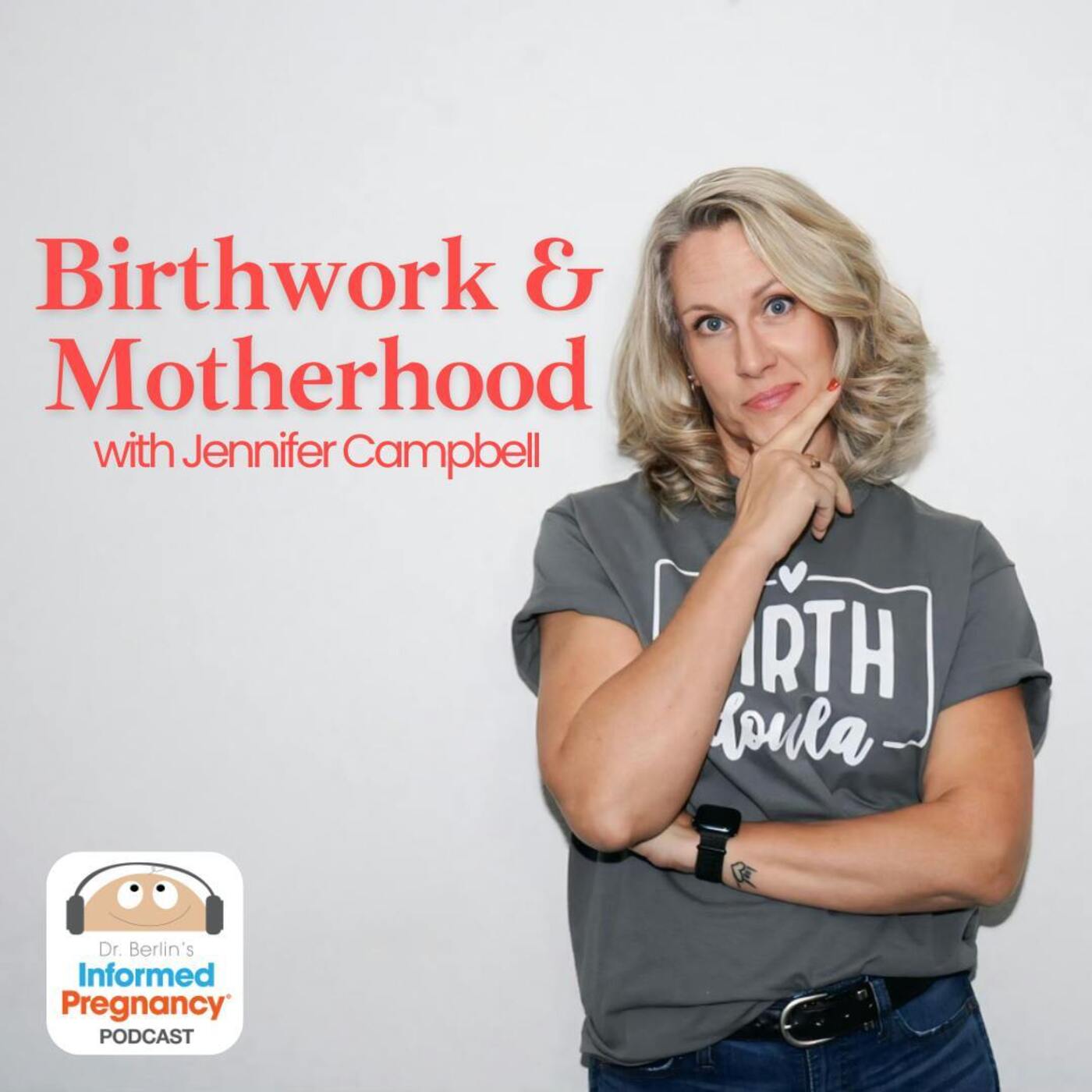
March 6, 2025 · 37 minutes · Episode 449
About this episode
Jennifer Campbell, a mother of eighteen (18!), might have the most unique background in birthwork. She discusses her work as a certified birth, bereavement, adoption, and surrogacy doula, childbirth educator, certified lactation educator, including how she’s currently pursuing her IBCLC.
Connect with the guest:
@doulainreno, Facebook, doulainreno.com
Key quotes
“Where I felt alone and my goal was that you know people shouldn't have to feel alone When they're going through pregnancy labor and delivery”
“Oh, they're so lucky to have you and that's not true and that's not how they feel a lot of them feel like they've lost Everything that they had and you're not this big blessing coming to save them But I was sure lucky to have them”
“You can't save the whole world you have to really decide what you can handle and stick to that”
“But just like with me going through birth and feeling alone When you're losing a baby, you definitely don't think that there's anybody there for you and they give you all the information”
“That's the best for them and that's not always me and that's okay I just want to get them to who and what they need in order to answer any questions that they have”
Related episodes
- Ep. 435 Jackie Amézquita: After Birth
- Ep. 431 Postpartum with Emily Johnston (Part 3)
- Ep. 429 Pregnancy with Emily Johnston (Part 1)
- Ep. 430 Birth with Emily Johnston (Part 2)
Transcript
AI-generated transcript with speaker labels — may contain errors, especially names and medical terms. Dr. Elliot Berlin, DC appears in blue; Jennifer Campbell in orange.
Dr. Elliot Berlin, DC [0:36] Welcome to the informed pregnancy and parenting podcast. I'm your host pregnancy focus chiropractor. Dr. Elliot Berlin Today's guest has one of the most unique backgrounds in birth work She's a certified birth bereavement adoption in surrogacy doula a childbirth educator and a certified lactation educator Working towards her IBC LC and also she's the mother of 18 kids Jennifer Campbell Welcome to the podcast. Thanks. Nobody heard anything else except Want to get to all of it let's start at the beginning where you're from originally and how'd you get into the work that you're
Jennifer Campbell [1:11] Doing originally I'm from Rhode Island, which I don't think anybody's asked me. That's crazy. I was born in Rhode Island in 1970 I got into the work because of the same reason most people do I got pregnant my first time I Went through about 10 months of infertility had a very rough pregnancy was kind of set up to know that things might be a little challenging for me and I was planning on delivering at a birth center with a nurse midwife and she looked at me at 37 weeks trying to stop me From being in labor. I've been in bed rest for a week and she said you can choose Dartmouth Hitchcock Medical Center or Burlington Hospital and I chose Dartmouth and
[1:49] I showed up that day never having set foot there never having met anyone had a baby 19 hours later. I was told that when she was born They would do a bedside evaluation and if she was really critical for some reason she had IUGR a growth restriction and Just things were not right, but nobody could figure out exactly what wasn't right or why and the OB even said You know, it's always a crap shoot. Will she do better inside you or better outside of you? We don't kind of know that but you're 37 weeks and your labor has been getting stopped So why don't we just let you have her and they also asked me if I minded students and residents which I didn't
[2:27] So when I started to push the hot button was hit and I looked up and there were 23 people in my room And I was like, well, welcome to the vagina show So they did an evaluation they took her away so I knew if they left they were doing life-saving procedures I didn't hear anything for nine hours when the head neonatologist came back and said that she was the most critical baby She was four pounds four ounces she was born with severe hyaline membrane disease and PDA which is the valve between the heart and the lungs that didn't shut when she was born and Ended up with secondary pneumonia. She told me the first time I would hold my daughter was after she had died
[3:10] So when they released me at 24 hours, obviously not going to Ronald McDonald house I was sleeping in waiting rooms and a nurse found me on day three Took me to the nurse's station had me shower sat me down in the pump room got the lactation consultant she hooked me up like I'd been pumping but I didn't know what I was doing I'd never seen a breast bump and she touched me on the leg and she said tell me about your birth experience and I sobbed for 20 minutes because nobody in three days had asked me how I was and After that she showed me how to store everything made sure I was doing it everything correctly That was the night that my daughter turned the corner. She turns 33 on April. Yeah
[3:45] So, you know happy ending she was in the hospital for a month I breastfed for a year and a half But I had a situation that was pretty traumatic really hard really hard You know a hospital birth after thinking I was going to be at a birth center with a midwife So I'm back up to that. Yeah you before all the experience that you have. How old were you then? 21 21 and oh at 21 years struggled with fertility Yeah, I had gotten I was the it was the silly You know got married at 19 guy in the service who wasn't even able to be present for the birth had no periods No pregnancies nothing for a year. So I got switched automatically into infertility because for one year nothing happened
[4:26] You know, I was either a menoretic or I wouldn't have a cycle or I would have one that would leave me hemorrhaging in The hospital I had cysts that were rupturing. So from the time I was just before I was 16 I had had issues. I've been on the pill You know just trying to basically manage things until I got old enough to try to figure it out Interestingly that 33 year old daughter cannot have children of her own and has gone through all the same Infertility tests that I did it's basically trying to figure out what's wrong when you really don't have any clue So flushing fallopian tubes taking Biopsies from your cervix and the inside of your uterus and you know
[5:03] I went through seven day surgeries and was maxed out on clomid and provera to regulate a cycle and We got to the point where the infertility specialist said your IVF is maxed and I said, no, thank you Wave in the white flag. It's not my path I would rather adopt kids then go through IVF and he was weaning me off and he told me One day was this little Asian guy in Hawaii where we were stationed and he came in and he hugged me and he said This is your miracle from God. You shouldn't be able to get pregnant. You got pregnant off the cycle We put you on I don't know how it's possible You have a high chance of miscarrying because of your hormone levels and you can expect tough pregnancies
[5:45] So, you know from the beginning I was anticipating the very real belief that I wouldn't be able to have biological children of my own and When she survived the lung disease and I brought her home I just realized I really didn't care if I got pregnant again, so I never used birth control I did get pregnant seven times total had four babies and lost three pregnancies for babies My seventh pregnancy. I was twins twins at 16 weeks Yeah, which resulted in a DNC and then a hysterectomy at 33 so my biological journey was pretty intense from 15 to 33 and You know my kids joke because I have 18 obviously So I did do foster care for 12 years and then I worked to recruit and train foster parents to work with treatment level kids
[6:38] so I was involved in foster care for 15 years and It's a very open family and you know, one of my daughters was like I hate pineapple and the oldest one was like How can you hate pineapple? What were you adopted? She's like, yeah, I was adopted weren't you like mom chose me special You were a crapshoot So we just had a really good open fun relationship about that and really for me though people would say oh you took on all These extras, but they were planned the extras really were the kids that I was able to you know Keep a pregnancy with and give birth to and the next three deliveries were fine. They were at home to water births I kind of got everything that I wanted in the gamut of biology
[7:18] But foster care really was the expectation that I had when I was going into that parenting journey
Dr. Elliot Berlin, DC [7:24] so at 21 Especially with the things you had been through What influenced your desire to have a baby outside the hospital? Oh my gosh, that's a fantastic question
Jennifer Campbell [7:36] I don't know. It's kind of the same thing where I knew I was gonna breastfeed I remember seeing one of my aunt's breastfeeding. I think that there's something in me that just has more of this natural Disposition I was also more afraid of an epidural than I was of the labor pain And so like lots of things go hand-in-hand although in that first delivery The nurse finally wore me down and I said I get the epidural and the anesthesiologist came in and he put the needle in My back and he took it out and said she's pushing so, you know I got stuck by a needle in my back, but I didn't ever get the epidural But I would have and I knew then my mother and my 18 year old sister were present for that delivery
[8:14] Don't necessarily recommend that although my sister was there for three out of four. She was great But just wanting to have support from my husband at the time who I really wanted to have there who couldn't be and then Feeling like I had no clue and I was unsupported I felt very alone and I felt that way through the labor and delivery and I felt that way You know through the days after my daughter was born, but I had a hard but really positive hospital experience And A year after she was born. I was a breastfeeding counselor and I was in birth work So I think that a lot of people get into birth work because they have a traumatic experience and don't want anyone else to
[8:58] Have a traumatic experience. I didn't feel like I had a traumatic experience I felt like I had an overwhelmingly positive but challenging experience Where I felt alone and my goal was that you know people shouldn't have to feel alone When they're going through pregnancy labor and delivery It's not a time that's comfortable to feel alone And I think that's why so many people feel steamrolled or railroaded during their labor and delivery. So that led you to Do the work it led me to Being an apprentice with the midwives that I chose for my next three deliveries So I worked with them off and on for about seven years I was involved with breastfeeding and birth work for 12 and seven of that was with them and
[9:39] My goal was to be a lay midwife at the time and you know things happen life changes. I did a lot of foster care I was adopting kids. I moved I was divorced and so that moving and getting divorced Situation made it so that I had to go back to a more corporate job and I gave up birth work and that was Devastating it was the toughest most challenging couple years of my adult life And then a few years ago my husband were I'm remarried for 11 years and he said You are the happiest person. I know but you don't do anything that fulfills you Why don't you go back to doing what fulfills you so I got the gift of being able to go back to birthwork again
Dr. Elliot Berlin, DC [10:21] Wow Yeah, and it's not just a gift for you. It's a gift for everyone who gets to work with you
Jennifer Campbell [10:26] Thanks. I did a delivery last night
Dr. Elliot Berlin, DC [10:31] All right, well that's a great place to take a little break when we come back I want to find out how you got into foster care and adoption and What that experience is like because a lot of us don't know so let's take a little break and we'll be right back

Dr. Elliot Berlin, DC [10:54] Welcome back. We are talking to Jennifer Campbell a traumatic first experience mostly unsupported You didn't have the people around you that you wanted led you to Wanting to make sure other people are supported in their experiences and then a midwifery trail turned Well combination of midwifery lactation and then do the work and you do all sorts of unique to the work Now, of course, you're not just the plain old birth to look you've got a lot more going on than that But before we get to that foster care and adoption what led you down that path and are the biologicals all together? And then the adoptions afterwards or they're intermixed. No, they're all interspersed after Brie was born
Jennifer Campbell [11:33] I wanted to do foster care So by the time she was between three and four we were licensed for foster care I got pregnant twice in there in law had two miscarriages in there and You know, those were within the first 12 weeks and easier I think because I had an expectation that I would have a higher risk of miscarriage and I was okay because my goal was foster care. I grew up pretty dysfunctional probably should have been in foster care Definitely should have been in foster care on more than one occasion And I had a third grade teacher that made such a pivotal difference in my life That even though things in the house after third grade got worse. I knew I was worth it to her
[12:15] She was a really amazing example And I think between that and not being sure if I could get pregnant and feeling okay about that I thought if she could make a difference to me in passing as my teacher just kind of doing her job Then what if I did that with more intention? I wanted to do the foster adoption program and I lived in Alaska at the time and I wanted kids to know that when they came to the house to my house, it could be their last stop and At the time I had given birth to the four kids and I'd had four adoptions and they were all interspersed in there and Then two kids one a foreign exchange student that had stayed with us for quite a while and then one foster child
[12:57] That stayed with us for long term So we had ten kids and that's when I was divorced and I continued to do foster care and I took in a sibling group of four They were great I gave up I moved a divorce. I was single I gave up birth work. I was working two to four jobs I kept doing foster care. It was a really tough time at first, you know making that transition But then by the time I started foster care and took in this sibling group. I was doing better They were worth it. So I think that's the biggest point here is that it was hard and they were worth it and That had been my goal that they could come and they could stay so I did two more adoptions of that group and
[13:43] Yeah, you know I was single and again that oldest daughter man about over 11 years ago She and a good friend of mine We all worked together and they decided my picker was broken and started fixing me up on dates and one of the dates That I went on which was Dane and he had four children and his wife had died So we blended my 14 and his for although I only had nine living at home at the time when we met Well out of 14 nine doesn't seem like a big deal and then one moved out and then he moved in so I've never Had more than 12 kids in the house at the same time But 10 to 12 I've had in and out and off and on for years. I've also never had more than 12
[14:28] We're like twins 20s. Yeah, so I think that tangent it a little bit but my goal was to make a difference like someone had in my life and That was my driving force behind foster care and having it be the adoption program meant that those kids knew that this was The last place they'd be bounced to I wanted kids whose they're called free where rights have been terminated and they're free for adoption They're open for adoption and that didn't happen all the time and I had lots of kids in and out You know, I mean it wasn't I only take these and nobody else can come in I don't know how many kids that were in and out of the house over all the years that kind of came and went
[15:05] But the core of them were those 14 for me. So yeah, it was hard and it was great. It's worth it It's a tough system It's very broken and you have to really want to do it and want to make a difference and to do that You have to get out of your own way people are like Oh, they're so lucky to have you and that's not true and that's not how they feel a lot of them feel like they've lost Everything that they had and you're not this big blessing coming to save them But I was sure lucky to have them
Dr. Elliot Berlin, DC [15:33] I wonder because is some of the fostering you do with the goal of getting them back to their biological parents
Jennifer Campbell [15:41] reunification I preferred termination so kids who had the rights terminated the parental rights were terminated or they were headed that way and That's just because I wanted them to come in my home and stay I did work with reunification on several occasions and That takes a different mentality and mindset. I think and it's hard It's really hard to kind of let go and hope things go well and know that there's a high chance that they won't But that parent deserves to have that chance. So I did do some reunification. Yes
Dr. Elliot Berlin, DC [16:14] For someone considering fostering or adoption any thoughts on like what makes somebody a good candidate or not? Such a good candidate and like first steps or places to look for information
Jennifer Campbell [16:26] You go to the county website usually and they have training courses So that's the first step in wanting to do it My first advice is if you're considering it and you think you want to just do it You don't know until you kind of get there. So go through the 27 to 40 hours of training Ask all of the questions Make the decision based on going through the process. You can become licensed first You can decide not to become licensed if you want to you have to go through with all the classes in the home studies You can decide to be licensed and you don't have to say yes. I said no, it's remarkable I said no more than I said yes to kids coming in my house. They weren't the right fit
[17:04] I knew they weren't the right fit and I said no and there's nothing wrong You can't save the whole world you have to really decide what you can handle and stick to that Knowing that that may shift a little I said I would never take kids that have been sexually abused Because I had children that were in the house already, but I took several kids that were sexually abused So really set your limits But then be open to the situations that don't maybe look the way you think they're going to and I've also have foster Kids where I've made the call and said this child needs to be picked up today And this is a situation they should be put in this is a child who can't be around young kids or whatever
[17:41] So I think you know your limitations and you speak up for yourself and for these kids and you don't take things that you Don't feel comfortable with but you can make an enormous difference in the life of someone, you know
Dr. Elliot Berlin, DC [17:54] Thank you for sharing that let's shift a little bit towards your do the work I mentioned in the opening lots of different subcategories of doula bereavement Adoption surrogacy and then on top of that childbirth educator and your lactation or you know I think we talk a lot on this podcast about typical doula birth work postpartum doula work Tell me more about bereavement adoption and surrogacy work
Jennifer Campbell [18:21] With adoption and surrogacy three of the kids that I adopted of the six were newborns I was at the hospital one. I got called on the day that he was born and The other two I was actually at the hospital one was a c-section So I waited outside of the surgery room and the other I was actually her doula for her birth and I cut the cord So I breastfed all three of those babies the first one. I was an IBC LC So I was a lactation consultant. I had a lot of support and knowledge and the first baby I had a one-year-old that I was breastfeeding So basically I took him home and just latched him on and went from there the next two Relactated for I took medication to induce lactation and I used an SNS a supplemental nursing system that you put the milk in it
[19:06] And hangs around your neck and there's a little tube So they latch on to you in the tube and it was amazing. So I had had those experiences When I went back to birth work a few years ago I didn't go the midwifery route Like I thought I would just pick up where I left off and become a lay midwife But things had changed I live in a different state The political climate over it in this state is a little different and I honestly just didn't want that kind of liability So I went in to do the work. It was faster. It was easier. It was less expensive. It's a lot less liability I'm a non-medical provider. So it's been really fun because I can do a lot more with it than I could have with midwifery
[19:44] With adoption and surrogacy, I think for my time in foster care and adopting three babies at newborn. I'm good at it I'm good at adoption. I'm good at understanding There's a birth mom who's going through a lot and there's an adoptive mom that's going through a lot Surrogacy is absolutely no different except that the pregnancy was planned. It's not that person's Biological child but they're physically carrying a baby to turn over to someone else So they mirror each other as far as the needs of the pregnant woman and the needs of the parent That's getting this infant and I love it because I've done it and I think it's exciting There's different challenges in it different emotions
[20:27] Postpartum is handled differently, but it's really fun and It's really helpful the women who are choosing adoption and we have a lot of programs here to support women Who are struggling and want to keep their baby which they didn't have 20 plus years ago when I was adopting So if they don't want to take the option or the avenue of trying to seek the help and support they need to keep Their own baby and they make they elect to do an adoption Then I understand the emotions behind that so I just felt like it was an easy place that's unique But that I have some very personal experience in and I've done several surrogacies and a couple adoptions
Dr. Elliot Berlin, DC [21:08] And it's been really fulfilling. I have so many questions for you about Surrogacy it seems to be rising in popularity and it's interesting. There's a lot of moving pieces Let's take a little break and when we come back, we'll try to learn more We're talking to Jennifer Campbell and you know, you paid for content in a podcast. This would be Value episode you have so much experience and information You're talking a little bit about the unique doula specialties so to speak and you were talking about surrogacy and it's really interesting Surrogacy, I mean you have two people that need support kind of during the pregnancy during the birth and postpartum and
[22:01] Really different experiences. So if you look at it from the point of the intended mom who is Expecting but not pregnant. That's a whole set of interesting feelings usually and as your doula Do you work with them during that time?
Jennifer Campbell [22:17] Yeah Not to do with the birth but to do with the pregnancy Yes, I do two prenatal appointments and they can all be there and sometimes that's the case the surrogate and the intended mom Are both present. Sometimes it's Predominantly the surrogate who's going through the pregnancy But for sure and even if it's an expected adoption I was in a birth six months ago and it was a planned adoption and the birth mom changed her mind like 20 days later when she was still in the hospital and so Working with that family the intended family that had spent ten grand in attorney fees knowing that it could fall through There's a lot of emotion. There's a motion of maybe not being able to carry a child
[23:01] definitely in surrogacy often in adoption or Just the uncertainty the lack of being able to control anything You know the intended mom's always the one like well, when do you think she's gonna go into labor? Like I'd be a billionaire if I could wave that man you know, there's a lot of hope and excitement and wanting the baby in your arms and appreciation for this woman who's going through this with her body and also Wanting the baby and is she gonna breastfeed and you know, it's a lot of different emotions We set up the birth plan differently based on whether both are gonna be in the room You know that the mom who's pregnant is gonna have the baby and they'll put the baby on her stomach
[23:42] And then usually the intended mom will cut the cord and then sit in a chair and do the skin-to-skin I mean, there's this whole different process of how things happen when you're Splitting a labor and delivery into two women as opposed to one right and also, you know
Dr. Elliot Berlin, DC [23:58] When you talk about a birth plan, let's say birth intentions Some of the things that go into that planning are about the person carrying the baby Correct some of them are about the baby and so those decisions are essentially being the wishes of two different people and I could see how that might get complicated sometimes like if let's say an induction is recommended and It's recommended they say because we need to get that baby out for X Y or Z reason But the surrogate doesn't really want to be induced, you know or things like that I could see how that can be really complicated
Jennifer Campbell [24:35] Their conversation similar to something more traditional like, you know when I was pregnant and married to someone so my husband and I having those Conversations it's similar in that that it's generally the two moms Having the conversation instead of the mom of the dad, but there are things that are common like, you know I'm totally okay It's your body if you want to get an epidural But I'm not comfortable with you using narcotics because it passes the blood-brain barrier to the baby So there are definitely conversations like that that happen and part of that is your surrogacy contract initially and You know, some people are great at navigating that and some are less
[25:16] Sometimes the intended parent is not present for the labor and delivery So I've done them all different ways but I love when they're both involved the most because they can really talk about how they feel about it and There's a lot of gratitude from the woman who is intended because you know on the last one Delivered just a couple weeks ago. I had a surrogacy deliver and She had her first baby was IVF and born and then she miscarried twice with two IVFs And they had one shot left and she knew that she wasn't the best candidate and it was her sister-in-law That they asked who ended up being the surrogate who had her own child with you know, the intended mom's brother
[25:56] So that was a really interesting dynamic because I had two couples It was a sister and brother and the brother's wife was carrying the baby Their dad was there through some of the prenatal appointments You know, it was really great and I've had others where it's just the surrogate and I alone in a room and I'm it I'm all she has and then baby gets handed over to the intended parent so there can be a lot of conversation and You know in this last case There was a lot of gratitude because she'd been through three pregnancies and two losses herself and They had one embryo left and she knew she had one shot and her body wasn't the best to do it So, you know, it's really incredible. I love doing them. The needs are very different
[26:38] So you just have to be aware of that, but I knew that because I had gone through three adoptions So yeah, that one was easy and fun and then afterwards you have two very different clients
Dr. Elliot Berlin, DC [26:48] Also one who just went through a pregnancy and a birth and her body's expecting what comes next but it isn't and One who hasn't been pregnant and didn't give birth but now has a baby and you know Both of those probably seem confusing to the body. Yeah And the baby. Yeah. Yeah as well So just a big orchestration of things that need support all around very interesting sub segment of doula care You also do bereavement
Jennifer Campbell [27:17] Yes, tell me about that. I had three miscarriages and like I said that last one was twins at 16 weeks it was very traumatic and You know I think it when you're in situations that you haven't experienced before and you don't necessarily even know the questions to ask You don't even have the information I didn't know I could keep the remains and cremate them up because until recently you couldn't cremate remains below about 16 weeks gestation and under 20 is considered hazardous waste, you know, I mean, it's like it's not A baby, right. So I think I didn't have any type of closure I also had a hysterectomy and it all saved my life and You know, I lost the babies. I couldn't save the babies and I did get saved myself
[27:57] I mean I ended up open hip to hip had five blood transfusions They used the machine to suction the blood out of my stomach and three of the blood transfusions for my own blood recycled Back into me. I was dead on the table. It was a very traumatic three surgery process And it was traumatic to lose twins The whole thing was pretty awful and I kind of walked away like like you're not pregnant. You don't have babies I was only 16 weeks. So nobody really pays that much attention to it and that sort of Sadness, I guess doesn't just go away that loss. You just keep that with you So when I went back to birth work and decide I go the doula route I heard about a bereavement class and I think it's one of the hardest classes
[28:40] I've ever had to take because you're your own client first and You have to figure out how to work through the loss I had to work through the loss that I had in order to be able to turn around and really Support someone else going through that loss. So I'm called in sometimes on fetal demise My birth last night. I had gotten called in on her miscarriage a year and a half ago Baby was born about seven weeks ago and I was there for their 25 week delivery fetal demise And so one thing that happens is that you have to be really clear and okay with your own grief Sadness trauma, whatever it is Because you can't support anyone else if you're not real clear with that
[29:25] But it also gives you a level of compassion and empathy Like there's not a woman who has gone through this that I don't understand where she's at We may not respond exactly the same or react exactly the same the situation is not the same But just like with me going through birth and feeling alone When you're losing a baby, you definitely don't think that there's anybody there for you and they give you all the information At the hospital and you can't even read through pamphlets After I did all my training one of my daughters was pregnant and she called me one morning I'm in Reno, Nevada and she's in Arizona about 14 hours away and We were on the phone FaceTiming and she looked up at me
[30:05] she was going to the bathroom while we were chatting because you know, that's just something we do and she said mom I'm bleeding and I was on the phone with her that day and the next day when she passed her baby and Going through it myself is not nearly as bad as watching your daughter Lose a child in front of you and not being able to stop it and she was in her first trimester So you can't cremate and I was calling funeral homes trying to figure out like how can we take this fetal tissue the fetal remains the placenta and the baby and cremate it and one of the women at one of the mortuaries said Have you talked to somebody who does placenta encapsulation and I immediately knew who we would reach out to it was a
[30:48] Dula that lives near my daughter that I had heard about we had kind of been connected She was gonna be her doula for this baby's birth and she did placenta encapsulation she and I got on the phone and created cremation for babies born under 16 weeks gestation and she now does that as part of her business and my daughter's baby was the first cremation So I know again that was a tangent But I went through my own experience and realized that because I have that I also lost my son eight and a half years ago at 23 and When you have gone through grief and loss and you come out of it the other side Definitely changed but handling it fairly. Well, I think especially in birth work
[31:34] It's just that heartfelt work. You want to help other people you want it to be faster easier and more supported for them You want to give them information and having just finished that class and then have my daughter have a loss I realized it was very easy very quick to realize where the gaps in my training were and The biggest thing was being able to cremate so We have an answer for that now now when people contact me and they're under 16 weeks I can send them and my friend Emily in Sierra Vista, Arizona You can send her your remains and get cremation and then through this process of creating this with her and her doing this For my daughter. She said, you know, Jen, you never had anybody do that for you
[32:17] What if I created remains which obviously they're not from fetal tissue But I sent them to you to represent the babies that you lost and she did that for me Which I mean at the time I was like, yeah, you can do it. That would be fine But when I got it in the mail, it felt a little different So it's just a representation of the loss that you have and naming that baby Feeling like you have something tangible from the grief in the loss that you're trying to manage So it's a really hard part of what I do. I don't charge for it. It's pro bono and When I get called in I get called in when I get a referral and on my website I created the grief survival guide and so it's kind of a DIY
[33:01] You could have a loss 20 years ago you could have a loss two years ago and you can kind of go through this and I take people through the steps of How to get your medical records how to understand them how to deal with how some of what is said in your medical Records because women who miscarry don't want the word abortion in their medical records and it is it's a special spontaneous abortion So kind of dealing through that putting together some of the puzzle pieces of what happened in that pregnancy and then healing from it naming the baby Creating something like you know The little baby booties that you picked out for them putting them in the shadow box and hanging them up creating your own birth
[33:39] Certificate that you don't get before 20 weeks So it was just a way after going through the process myself to help other women heal Who are one out of four women, you know pregnancies and in miscarriage in the first trimester Most of them are in the first trimester. So this is not a little thing It's not something that happens infrequently and to be able to give them the ability to process through that better and recognize it I went a long way in healing my own grief
Dr. Elliot Berlin, DC [34:07] There's so many different types of support that you offer to so many people who need the support I learned a lot really I've been doing this for 20 years and I learned a lot by talking to you today. Thank you. Thank you Jennifer where can people find you online?
Jennifer Campbell [34:23] Dula in Reno calm is the website. It's my email I'm Janet Dula in Reno But basically if you go onto the website You can hit the contact form or comment on something and that's the easiest way all my social media links are there I'm Dula and Reno on Instagram on Facebook page. So pretty consistent to find me And do you offer some of these services virtually? Yeah, actually, you know, there's childbirth education I volunteer that for a place called real choices here in town So it's free to the community and my times volunteered childbirth education classes are easy to do virtually prenatal classes getting people Connected to the resource or what they need
[35:01] That's easy. You don't have to live right here near me for me to connect you with resources I think you know part of one of the classes that I've gone through was to create a resource Database and that just became massive for me. I actually have four different resource pages. So there's one for adoption and surrogacy bereavement Pregnancy and then the grief survival guide So two of them are devoted to grief one of them has resources and one of them takes you through the guide to kind of go through your grief and loss on your own and So a lot of that can be virtual I think what happens most of the time is people reach out to me and I want to connect them to the person
[35:40] That's the best for them and that's not always me and that's okay I just want to get them to who and what they need in order to answer any questions that they have
Dr. Elliot Berlin, DC [35:50] Amazing Jennifer Campbell, thank you so much for joining us today at home Thanks for listening to the informed pregnancy podcast for more pregnancy and parenting information just like this Visit us online at informed pregnancy
Want more pregnancy + parenting? Start your FREE TRIAL of Informed Pregnancy+ and get access to all our curated pregnancy and parenting content — original series, iconic birth films like The Business of Being Born, prenatal workouts and more.

0 Comments