
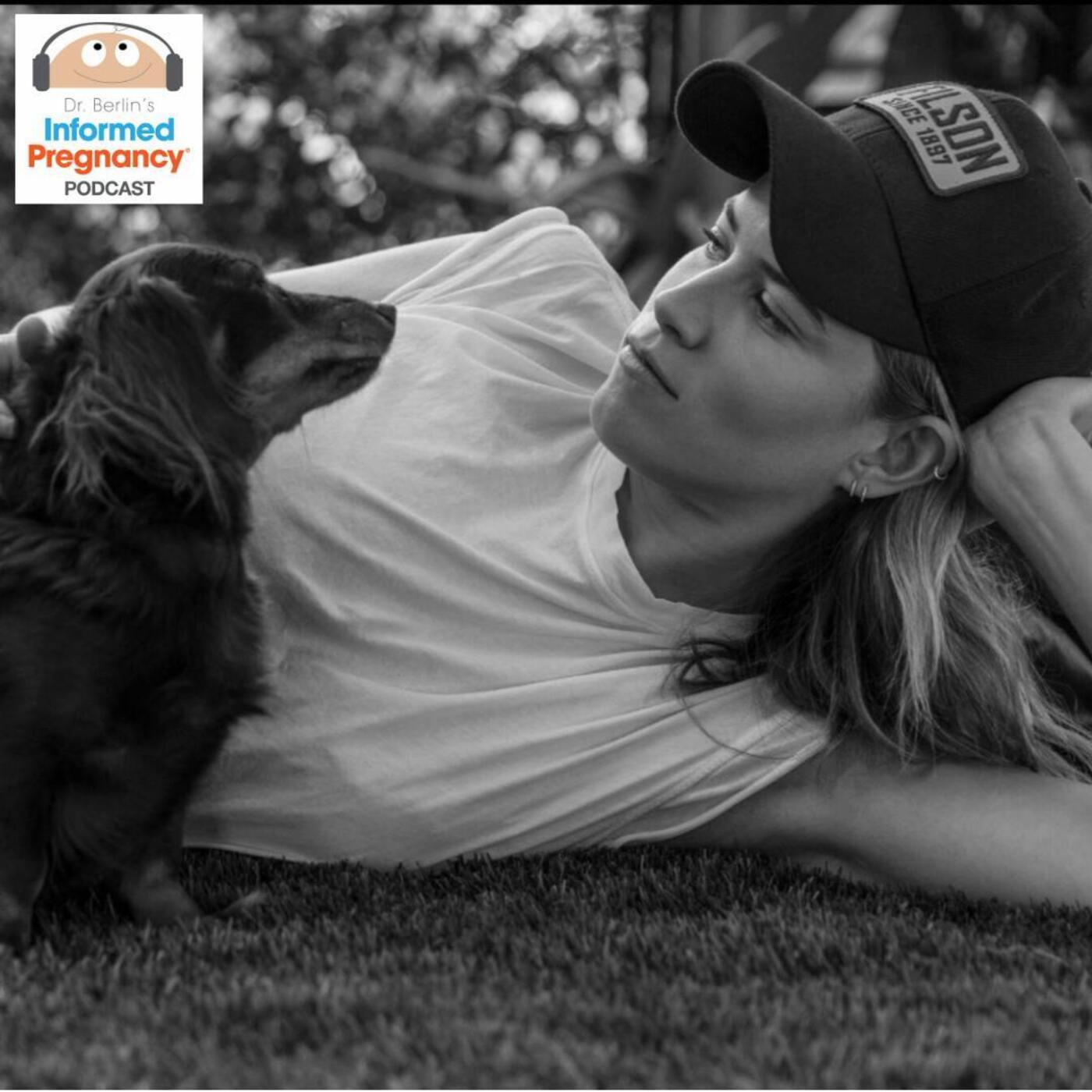
July 8, 2021 · 52 minutes · Episode 237
About this episode
Strategic consultant, entrepreneur, actress, model and life long environmental advocate Cody Carolin just became a new Mother. Her plans and strong preference for homebirth were looking doubtful with a persistent breech baby in the final weeks of pregnancy. Until she met Dr Stu.

Learn more about your ad choices. Visit megaphone.fm/adchoices
See Privacy Policy at https://art19.com/privacy and California Privacy Notice at https://art19.com/privacy#do-not-sell-my-info.
Key quotes
“I knew early on that sleep and food and love were going to be the key to my pregnancy. If I could rest, if I could eat right. And then if I could feel heard or express my emotions, whatever was coming up, let out of my body and just or share joyfully whatever I was dealing with. I knew if I had those three things that I would be able to handle whatever was thrown at me. And if one of those things was missing, then life became overwhelming. Whatever was, you know, whatever work situation was thrown at me, it be all of a sudden, I was struggling to deal with it. So I had to keep those three things in balance and prioritize them.”
“My dream, honestly, was to give birth in a birthing pool, like in a hot spring in the middle of nowhere. So I tried to find the balance between a hospital and that. And the solution was my, you know, safe house in Los Angeles that has running water with a midwife.”
“I loved it. I marvel at the female body. I would look in the mirror and I would think, look at what's happening here. This is incredible. It is without a single thought of mine that this is happening. I spend no time considering this. She's just growing. I marveled at it. So I was really happy.”
“Um, you know, my husband kept asking me, what do you want in the space? Do you want candles or music? And I didn't care about any of that. I didn't really think about anything. I just wanted presence and reverence to this miracle. It's really sort of nebulous to say, but it really is all I wanted. It was just that the right people were there and that was it.”
“And I don't know what's going to happen, but I'm just really grateful that this is how I'm doing it. I'm grateful that I'm with this person at this moment in my life, with this beautiful day in the city of Los Angeles spring day. I just thought this is a really beautiful day to do this.”
Related episodes
- Ep. 190 Julie Sawaya – After Birth
- Ep. 129 Jen Lilley – Before Birth
- Ep. 174 Ildiko Ferenczi – Birth Story
- Ep. 182 Randi Wood – Birth Story
Transcript
AI-generated transcript with speaker labels — may contain errors, especially names and medical terms. Dr. Elliot Berlin, DC appears in blue; Cody Carolin in orange.
Download PDF of the Transcript
Dr. Elliot Berlin, DC [1:13] To the informed pregnancy and parenting podcast. I'm your host dr Elliott Berlin my guest today is a strategic consultant and entrepreneur She as Cody horn was an actress in projects like The Office and Magic Mike before that She was a model for ten years working for companies and brands such as Ralph Lauren Vogue and Vanity Fair a lifelong advocate for our great mother She has a bachelor's in environmental ethics from NYU and grew up right here in Los Angeles She very recently became a mom via the path less traveled Cody Carolyn. Welcome to the podcast
Cody Carolin [2:09] Thank you so much. Dr. Berlin. It's so nice to be here
Dr. Elliot Berlin, DC [2:12] Oh, you're amazing for coming wait till you guys hear this story and then for you to not just experience But come share it with all of us. I'm very grateful. Okay, let's start at the very beginning Just briefly you're from LA and then you went from acting and modeling to entrepreneurial consulting
Cody Carolin [2:28] Yes, I hit that thing that happens at 27 and where you kind of live or die I realized I was really not living and Made some major changes in my life that led me away from things in front of the camera Which had just been sort of suggested to me in my life I never really owned it and I really claimed it and I got really lucky and I worked really hard I had a wonderful career, but it never was mine And then in my late 20s I had the opportunity to look inward and do some real personal work that led me to changing a lot of things including my career and now I'm lucky to work with a bunch of different friends and colleagues and we Have a few companies. I work with a few companies across so many different aspects of life and I'm living you're enjoying it
Dr. Elliot Berlin, DC [3:17] I'm enjoying it. It's cool that at 27 you already had a career and then you got to move on to another career You know a lot of my friends at 27 were still like Jesus. I don't know. I think I like this beer
Cody Carolin [3:28] Yeah, yeah, I definitely didn't know which beer I liked but I had already had two careers
Dr. Elliot Berlin, DC [3:34] They had 19 beers and no career. So I didn't even know like Bachelors in environmental ethics what led you down that path?
Cody Carolin [3:43] My mother when she became pregnant with me in the 80s She started researching environmental things and help and discovered the mercury and the fish at the time That was a hot topic here in Los Angeles And so both my parents are lifelong or my entire lifelong environmentalists and it just was very it was effortless for us And when I went to college, I knew I wanted to study some iteration of philosophy I went to the Gallatin school at NYU where you really create your own program My actual degree is an independent study, but you create your own program and you it's almost like a grad program So I knew I wanted to study philosophy and then over time it just narrowed to ethics and then over time it narrowed to
[4:24] the ethics of the environment and That's what kept me in school because I started modeling at 15 and so I was a full-time working professional and a full-time student and The only way I knew how to get through it was to study something. I was passionate about which was philosophy
Dr. Elliot Berlin, DC [4:39] That's cool. Ironically, I did theater I was a theater manager Because you weren't
Cody Carolin [4:50] I guess the full irony would been I had studied medicine Human actor and you said he did theater and became a doctor. All right, you could have played one on TV. I suppose Never a doctor, lots of cops, I played a lot of cops.
Dr. Elliot Berlin, DC [5:04] I play one in my office. So here's the thing, where did you meet your husband?
Cody Carolin [5:10] We actually met on set. He was a, he is a writer producer and we met on the set of movie Magic Mike that I did and we met almost 10 years ago this year and we got together four years later.
Dr. Elliot Berlin, DC [5:24] Four years after you met?
Cody Carolin [5:25] Four years after we met.
Dr. Elliot Berlin, DC [5:26] You became a couple?
Cody Carolin [5:28] We became a couple.
Dr. Elliot Berlin, DC [5:29] And then how long till it got serious?
Cody Carolin [5:31] Like a day. I think once you've known someone that long and the switch flips, the switch has flipped and we both knew that it was at least really real. There's never any guarantees in life that we didn't, you know, talk about marriage on day one. That wasn't the point. We knew this was really special and we knew that we wanted to explore it. And so we did. And then marriage ultimately resonated with us. It doesn't resonate with everybody, but it did resonate with us. And so we got married to something years ago and then we just had our daughter.
Dr. Elliot Berlin, DC [6:04] It's moving right along.
Cody Carolin [6:05] It is. We are. We're checking the boxes.
Dr. Elliot Berlin, DC [6:08] It's like the game of life.
Cody Carolin [6:09] It is. It is. And that's one of the things I knew that it was the real deal. We just said we got together and we immediately started creating together and just creating all kinds of things. And now we've created a person.
Dr. Elliot Berlin, DC [6:19] That's amazing. That's a cool thing to create. Did the talk of creating a person come early on or later?
Cody Carolin [6:27] I think early on. I don't really remember, but I know that we I know that I knew that he wanted kids and he knew that I wanted kids, but it wasn't immediate. I was 20. I think I was 27 when we got together. And as we mentioned in the intro here, I had a lot of work to do on myself. And so there was a lot of time where we were just building out ourselves as people and then and then building our relationship. We both knew we wanted kids to just there was no pressure early on to have them. Yeah.
Dr. Elliot Berlin, DC [7:00] And so when you decided to go forward with it, did it come easy to you?
Cody Carolin [7:05] It did. Yeah. We were really lucky. It did. We sort of opened the door and she came right in. She was amazing.
Dr. Elliot Berlin, DC [7:11] Yeah. Yeah. All right. So then how was pregnancy for you? How was early pregnancy for you?
Cody Carolin [7:18] Early pregnancy was tough. I got very nauseous all the time. I wasn't constantly in the bathroom, you know, over the toilet throwing up. But I was very queasy, like on the verge of it, I felt 24 hours a day and I had gotten very antiquated advice about having the, you know, saltine before you get out of bed thing. And the carbohydrates have never done well with my body or say my body has never done well with carbohydrates, carbohydrates thrive in my body, but they don't treat me very well. And finally, I was actually through a women's group. I met a midwife who said, by the way, up your protein. And I started just having protein shakes just that I could keep down.
[8:04] And within three or four days, I had balanced out my, you know, protein intake levels and I was pretty much fine. But that was a week, I want to say 15, it lasted a long time.
Dr. Elliot Berlin, DC [8:16] Wow. Yeah. What were the things that helped you cope through that time before you got the protein secret?
Cody Carolin [8:23] Well, I was to survive, I was eating literally plain pasta and vanilla bean ice cream, but that did not help me. I knew early on that sleep and food and love were going to be the key to my pregnancy. If I could rest, if I could eat right. And then if I could feel heard or express my emotions, whatever was coming up, let out of my body and just or share joyfully whatever I was dealing with. I knew if I had those three things that I would be able to handle whatever was thrown at me. And if one of those things was missing, then life became overwhelming. Whatever was, you know, whatever work situation was thrown at me, it be all of a sudden, I was struggling to deal with it.
[9:06] So I had to keep those three things in balance and prioritize them.
Dr. Elliot Berlin, DC [9:10] When you got past the 15 weeks and the nausea started to go away, did you get into the golden trimester that people talk about more energy, kind of getting excited about the pregnancy?
Cody Carolin [9:23] I did. And, you know, there was also the the shadow side of the wonderful career that I'm grateful to have had was that there's a little bit of body dysmorphia going on there. So when in the early trimester, first trimester, when I was just feeling like that and a little tiny bumps, little tiny things, not really showing, I didn't feel great. And then once my belly popped, all of a sudden I felt pregnant. And of course, this is in a pandemic. So it's not I wasn't walking around in restaurants and cafes or whatever, feeling someone holding the door open for me or, you know, anything like that. It was really just at home in my body. But once. she popped out. I really felt, um, here this is, um, and I can enjoy this. And I also,
[10:06] I, you know, I don't know how many times I'm going to get to do this in my life. And I just wanted to enjoy it. So I did have energy and I did use it, but at that same time, work really took a crazy turn of really needing a lot of my attention. So I needed the energy. I was using a lot of it to work and a lot of it to build a human. Yes. Yes. So I was just trying to eat right. And I started doing daily walks and that really felt amazing. Just your main form of exercise. Yes, it was. I was so sick in the first trimester. I basically stopped exercising and I never really started again. I was one of those five days a week, something people before that. And I just was walking. And the next thing that happened was
[10:47] that my pubic bone started really hurting around week 22. And so that stopped me from doing a lot of activity other than walking. And I would get work done from my favorite guy to get body work done. He was a Heller worker. It was a student of Ralph. It's a wonderful body work. So we were working on the pubic bone and I would get some relief and then it would go,
Dr. Elliot Berlin, DC [11:06] and then it would come back. Okay. At this time, you are under the care of who?
Cody Carolin [11:13] In terms of your pregnancy? My midwife, Alex Evangeli was the only one I was under the
Dr. Elliot Berlin, DC [11:18] care of at that time. Okay. So was midwifery your plan from the beginning?
Cody Carolin [11:24] Yes. I knew always that I wanted a home birth and I knew always that about my midwife. And I had interviewed like two other people and then I walked into Alex's office and I just knew she was the one. I signed with her at week 20 and I got an ultrasound at week 20 from Dr. Fishbein as well. The more structural kind of ultrasound? I just hadn't had an ultrasound yet. And so, yes, it was a structural one just to make sure that everything was fine and, you know, check her measurements. Although at that point, because my husband and I are quite tall, they weren't really taking any of the measurements seriously, her femur bone or anything like that, because, you know, I had tracked my
[12:00] period dates before, so that's how we got our due date. And there was no point in measuring her because we're tall people. So the femur was going to be long. Yeah. Yeah.
Dr. Elliot Berlin, DC [12:11] You would hope so. Why home birth and midwifery?
Cody Carolin [12:15] I think these things are emotional decisions. And for me, I've never had a great relationship with hospitals. I've never, thankfully, spent the night in a hospital as a patient, but I've never felt super comfortable in them even visiting family members or friends who were hospitalized for whatever reason. So I knew I was always looking for another solution. My dream, honestly, was to give birth in a birthing pool, like in a hot spring in the middle of nowhere. So I tried to find the balance between a hospital and that. And the solution was my, you know, safe house in Los Angeles that has running water with a midwife. And snacks. And snacks. And snacks, yes.
Dr. Elliot Berlin, DC [12:56] Most important part of a home birth. Yes. All right. Let's take a little break. When we come back, we'll find out how your third trimester went and where things sort of took a turn. We'll be right back with Cody Carolyn.

Dr. Elliot Berlin, DC [15:34] Welcome back to the Informed Pregnancy Podcast. We're talking to Cody. She is in our story in the middle of her pregnancy, feeling better, growing, enjoying the bump, and working hard, and she's under the care of her midwife, Alex Evangelidi. Okay. Flash forward to the third trimester. Now you're really starting to pop, and I know you said that, you know, given your modeling past, you're a little more conscious of your body. When that bump got even bigger, was that exciting to you? Was that nerve wracking to you? Did you like it? Were you mad at it?
Cody Carolin [16:06] I loved it. I marvel at the female body. I would look in the mirror and I would think, look at what's happening here. This is incredible. It is without a single thought of mine that this is happening. I spend no time considering this. She's just growing. I marveled at it. So I was really happy.
Dr. Elliot Berlin, DC [16:25] It is quite insane what your body's going to do. Now I know you're into home birth. You're definitely not into the hospital environment. And also midwifery is quite different than obstetric care. Are you at this point thinking about your birth and the kind of things that you want to have around you or the people that you want to have around you?
Cody Carolin [16:43] Yeah. I obviously had a hope that I could have a home birth, but I also know that my understanding of life is that if we hold onto certain visions really strongly, sometimes they don't happen. And so I wanted to be open to the possibility that I would have to transfer to a hospital or whatever. So Alex suggested I meet Dr. Affleck at St. John's, which happens to be where I was born. And so I met her and brought her on as a backup OB, which was an immediate fit as well. And then I met Dula Carmen Paris Thomas and immediately took to her same thing. So that was the team at the time and my husband and our dogs there for the comedic relief. They are very funny. I mean, that's a powerful dream team.
[17:32] It really is. It really is. And so I was really happy with that team. We were cruising along. I had the pubic bone pain, but that was pretty much it. She was growing. The belly measurements were great. I had very little swelling. I had some acid reflux, but I really had no other symptoms. It was just flying through the air beautifully at
Dr. Elliot Berlin, DC [17:53] this point. That's so nice. And that's the team. That's who is going to be around you. Did you have thoughts on what would be comforting to you? Did you have excitement about birth only or also some anxiousness? And if so, what were you concerned about?
Cody Carolin [18:06] Um, you know, my husband kept asking me, what do you want in the space? Do you want candles or music? And I didn't care about any of that. I didn't really think about anything. I just wanted presence and reverence to this miracle. It's really sort of nebulous to say, but it really is all I wanted. It was just that the right people were there and that was it. And I don't want to give away what we're talking about here. I'm assuming you might in the title anyway, but my literally only fear was that when I got pregnant or even before pregnancy, but before I got pregnant was that I would have a breach baby. That was my only fear. Yes. Because I thought it was the only thing based off of my age, my health,
[18:50] that I am in good health and that I am relatively young. They would be the only thing that would take me to a hospital. I just thought, just don't be breached.
Dr. Elliot Berlin, DC [18:59] That's kind of interesting because there's so many other things that really could take you to the hospital. I know. Or risk you out of home birth.
Cody Carolin [19:05] But that was the only thing that I thought. There's only thing that my brain understood because I thought, well, I'm not going to suddenly decide that I want a hospital birth. So that's the only thing that can take me.
Dr. Elliot Berlin, DC [19:15] You're going to be forced into it. I mean, did you know somebody who had a breach baby?
Cody Carolin [19:19] How did that even get into your head? I think I just knew that babies were born breach. Sometimes I know, I, I, I must've known someone along the path of life, but when it ended up happening and people started coming out saying I was breach or my baby was breacher or whatever, I had no idea. It wasn't something that I was intimately familiar with. I was not breached. I think it's just based off of my basic understanding of the American medical system. Yeah. I was breached. That's right. I think you told me that. Yeah. Before they cared. Right.
Dr. Elliot Berlin, DC [19:48] They're just like, Oh, that's not his face. I experienced that feeling.
Cody Carolin [19:56] Yeah. So this is what happened. So, I mean, the cat's a little out of the bag.
Dr. Elliot Berlin, DC [20:00] At some point, you found out you had a breech baby. Was that during a midwife appointment?
Cody Carolin [20:04] No. So, she was in position at 29 weeks. She was a little bit skewed to the left, I want to say, but she was completely in position, and we were just working on getting her spine to the my belly button. She stayed, she stayed, she stayed, she stayed. Then at 36 weeks, as part of Dr. Affleck's care package, she has sort of mandatory ultrasound at 36 weeks. And we were here at my house. Alex was here, Carmen was here, and Dr. Affleck was here, and she turns on the ultrasound, and she looks at Alex, and Alex says, no, breech? And Dr. Affleck just nods her head. And it surprised all of us.
Dr. Elliot Berlin, DC [20:43] That was your one thing.
Cody Carolin [20:46] Yeah, that was my one thing. Then immediately everyone got professional and started talking about the options and what this means. But I just thought, wow. And there was barely, you know, enough time to flip her. But immediately it was an onslaught of let's try and do something if we can.
Dr. Elliot Berlin, DC [21:05] What kind of things did they suggest?
Cody Carolin [21:07] The spinning babies website courses, all the stuff on spinning babies, lots of robozo work. I have a pool. So they suggested kind of getting in my pool and doing handstands, basically inverting my body. And then coming and seeing you. Oh, and acupuncture. I did acupuncture as well.
Dr. Elliot Berlin, DC [21:25] With moxa?
Cody Carolin [21:26] With moxa, yeah.
Dr. Elliot Berlin, DC [21:27] Okay. So how did you get into those spinning babies positions?
Cody Carolin [21:32] Everybody has a different way of doing it. The spinning babies positions, I have a little like half ironing board that I would prop up against my couch and look very funny, prop, you know, leaning up upside down against it with my head turned to the side trying to, you know, Netflix and chill. It's a whole new way. And then there was a good one of sort of kneeling on the couch and then moving my hands down to the floor and then coming back up. I did that one a bunch or off my bed. Those were, I think, the two main ones that I did. And then we did some robozo work as well. Whenever I had access, whenever Carmen would come over, we'd do some robozo work.
Dr. Elliot Berlin, DC [22:11] Okay. And I mean, we're going through a lot of stuff here, but spinning babies, you can find at spinningbabies.com to see that's just a series of exercises that are recommended to try to help the baby find a more ideal position. And then you also went in the pool. Had you been swimming the whole time? No, it was winter and I'm frugal and I didn't
Cody Carolin [22:34] feel like heating my pool. So I had to heat it and get in it. What was it like though, getting into the pool like nine months pregnant? It's a total different buoyancy. I have to tell you, I did not enjoy it. And I didn't do it very often because the flipping would put some weird pressure in my ears. They literally, I was adjusted to spin and they put weird pressure in my ears and I didn't like it. And so yeah, that one did not resonate with
Dr. Elliot Berlin, DC [23:01] me. Okay. Then acupuncture and moxa. Yes, those we didn't. Yeah, sorry. Needles, stimulation from the Chinese meridian chart. And then also heat stimulation with the herbal mugwort is the herb that's in the stick called a moxa stick and you burn it. So it's called moxa bastion and it smells fantastic. That became a ritual for me and my husband at night.
Cody Carolin [23:24] He would do the moxa treatments on my feet because my acupuncturist had really said I shouldn't breathe it too much. So he would light the moxa for me. We had a stick and then there's ones that can sort of sticker on whatever foot. Yeah. And so he would do that. And that became a really wonderful ritual of him caring for me. That was wonderful. So we were pretty religious about that. Sounds like you might, you could still do it now. Yeah. So another version of it. The other thing I should say we did before coming to see you was that it was really suggested to me to really just tap in and talk to her and see if there was anything she wanted to say or just have a communication with her about it because she had been in position
[24:05] for so long. And then she suddenly flipped. Sorry if you can hear my dog, by the way.
Dr. Elliot Berlin, DC [24:10] Oh, that's what that is. Yeah. Hi doggy. Yes. So then also I ended up seeing you and you know, we did massage to loosen up the muscles and tendons around your low back and hips to get the joints moving better. Try as we might. None of these things yielded a head down baby. No, no. And time was moving quick. Like you Yes. found out at 36 weeks, 37 weeks is term. And you can go into labor at any point there and not be preemie. So what other options did you have in front of you?
Cody Carolin [24:43] Well, there's the option to have the caesarian birth. There's the option to have vaginal breach delivery in a hospital. And then there's the option to have a vaginal breach delivery at home. And the latter two, there aren't many people who do that anymore. you can opine on the reasons why better than I can. Most of the information I have is from your podcast about, and also listening to Dr. Fishbein talk about things, I'm sure we'll say who he is in a minute, but I wanted to try and stay as close to my original quote unquote birth plan as possible, which meant attempting a home breach vaginal delivery.
Dr. Elliot Berlin, DC [25:23] Did you have the option to have a doctor manually
Cody Carolin [25:27] try to turn the baby? Yes, there is the option to do a manual version and I consulted with two doctors. I consulted with a doctor at a hospital for a hospital version. And then I consulted with Dr. Fishbein for one in his office. And the timing just sort of worked out because as you said, I was already 37 and whatever weeks along. I was able to get in to see Dr. Fishbein really quickly and attempt a version in his office as opposed to the hospital that would have taken a little bit longer. And we just tried it and it was really interesting because we're in his office, Alex is there, my husband's there, Dr. Stu has I think two midwives that work with him, they were there and he tried it
[26:09] and we all thought it had worked. I don't know what was in the air that all of us thought that she had turned. And then of course he looks at the ultrasound and she indeed has not turned, she's not moved. And by the way, her heart rate did not change at all. She's asleep for the entire thing.
Dr. Elliot Berlin, DC [26:27] What did it feel like to you when he was trying to move her?
Cody Carolin [26:31] It's deep and intense and I really wanted it to work. So I was just trying to relax because my understanding is that the hospital, they give you some drugs to relax your muscles, your uterus and maybe your abdominal muscles. And without those drugs, I was just trying to relax as much as I can. I know that at that level, a lot of the muscle movements are involuntary so there wasn't as much that I could control. So I just tried to relax and it was painful and it was intense and he tried it and then he was gonna try it again and I couldn't take it. I said, okay, I can't, I can't.
Dr. Elliot Berlin, DC [27:06] With the options left then with that version not working, you had either the hospital breach birth option, which is a very rare option and you had the home breach birth option, which is also a very rare option. I know you ultimately chose to go as close to your birth plan as possible. So since you had the option to deliver your baby at home breach, that's what you chose. But in your mind, was there a question or there pros and cons to each option for you?
Cody Carolin [27:36] Yeah, so definitely pros and cons and the cons are mostly fears. The general fears that came up at this time that influenced that decision were, okay, this is my only fear that I've had about this, about pregnancy this entire time. That's interesting. So I have to face this. My husband became a little bit more afraid because it was a new thing that we didn't understand. And then there's also just the societal fears where everyone says, this is now very dangerous. And so in a hospital setting, I knew that I was gonna try and avoid a C-section at least initially. And so in terms of trying at a home or in a hospital, in a hospital setting, there are all these emergency measures
[28:21] that can be implemented instantaneously if something goes sideways. So that's a major pro. And there are more doctors that will do it in a hospital than at home. Another pro, I had more options. And there's of course the options to have drugs, epidurals and things like that. And also my understanding is that one of the concerns about a breach birth, especially for a first time mother like me is that the cervix won't dilate because there isn't the head putting the pressure on the cervix. It's a smaller thing. It's the squishy butt or it's a foot or it's whatever it is. And so they can give you things like pitocin or whatever to speed up labor that will give a person maybe more of an opportunity
[29:03] to actually successfully deliver vaginally. So there are major pros in a hospital. Pro for being at home. It's what I had originally wanted. It's the bacteria around me that I wanted. I don't have to be in a hospital. And the team that I had really, my understanding was that they would let me kind of drive the labor process as opposed to my understanding of some of the doctors processes for the vaginal breach hospital delivery is that there's a bit more of a protocol to ensure a more successful breach delivery.
Dr. Elliot Berlin, DC [29:39] I don't know how much this weighed into your decision or not, but once again, there's the snacks.
Cody Carolin [29:44] Once again, there's the snacks. Yes, it's true. It's true. I have macadamia nuts here. I don't know if they have those at the hospital.
Dr. Elliot Berlin, DC [29:51] I mean, generally they don't want you to eat anything even if you're doing a head down vaginal birth. So no macadamia is for you. Okay. I'm curious how this whole thing went down. We're going to take a break and come back and find out how your birth went. Welcome back to the Informed Pregnancy Podcast. Okay, here it is. With all the options have now run out for getting the baby head down and weighing the pros and cons of cesarean birth versus hospital breech birth versus home breech birth. Cody, you chose home breech birth. How and when in relation to your due date does your labor start?
Cody Carolin [30:38] My labor started the day before my due date. Your anal. Yes, it was really inconvenient, by the way, because I had been told many times by many people that as a first time birth, she was going to be late. And so I had a lot of work I was supposed to do that weekend. And indeed, she came the day before her due date.
Dr. Elliot Berlin, DC [31:04] How did it start?
Cody Carolin [31:06] My water broke pretty clear.
Dr. Elliot Berlin, DC [31:08] Okay, I always ask this question. Was there any question that that was your water breaking or was like, Whoa, that was my water.
Cody Carolin [31:15] There was a little bit of a question. It was really early in the morning, I had gotten up to go to the bathroom. And I took a couple steps out of the bathroom and some liquid fell on the floor. And so I thought, Oh, maybe my blotters just losing it. Maybe this is the end of pregnancy. I don't know. So I actually I just kept kind of walking, cleaned it up, got walking, went back to bed. And then I started thinking, well, maybe I should put something around me so that I can kind of measure this and see what's going on. And I did put on a pad and I was full within like 10 minutes. Oh, it was pretty clear.
Dr. Elliot Berlin, DC [31:52] Okay. But no contractions or surges or anything like that.
Cody Carolin [31:56] No contractions, surges. I didn't feel anything for about an hour and a half. I had some light cramping. I guess that is a contraction, maybe. But to me, it felt not even like a period cramp, just nothing.
Dr. Elliot Berlin, DC [32:09] Okay. What time did the original water breaking happen?
Cody Carolin [32:13] 7 a.m.
Dr. Elliot Berlin, DC [32:14] Oh, 7 a.m. Okay. So at 830.
Cody Carolin [32:17] Mm hmm. Contractions start. Mild. Mild. Having breakfast with my husband, talking, chatting. Can't believe this is happening, but it's almost as if it were any other day, other than he and I were both sending messages, canceling everything that we're supposed to be doing that day.
Dr. Elliot Berlin, DC [32:35] Okay. When your water breaks and you start having contractions, are you excited? Are you, again, anxious, a combination of both?
Cody Carolin [32:45] Just this is it. I thought this is it. You know, here we are. I think that's something that's really nice about your water breaking is that it's not ambiguous. Labor has begun. And I was really grateful. It happened on a Wednesday morning, which happens to, for some reason, be a very peaceful day generally in my neighborhood. There aren't that many leaf blowers going on. It just for some reason, Wednesdays in my neighborhood are very tranquilo. They're very relaxed. And so I was just really happy it was a Wednesday. That was my thought.
Dr. Elliot Berlin, DC [33:18] I just love that when your neighborhood is not peaceful,
Cody Carolin [33:21] it's a leaf blower. It's well, it's a construction. I just remember thinking, this is nice. And we had all the doors open and it was a beautiful spring day. And I just thought, this is just so nice. And I don't know what's going to happen, but I'm just really grateful that this is how I'm doing it. I'm grateful that I'm with this person at this moment in my life, with this beautiful day in the city of Los Angeles spring day. I just thought this is a really beautiful day to do this.
Dr. Elliot Berlin, DC [33:48] Sounds dreamy.
Cody Carolin [33:49] It was, honestly, I must've been high on oxytocin without even really just beyond high on oxytocin.
Dr. Elliot Berlin, DC [33:55] Oh, how did things progress for you?
Cody Carolin [33:59] Well, for some reason decided I needed to be in my pool. And the contractions by about 1030, so three and a half hours after my water broke, two hours after contractions started, by about 1030, they were already five minutes apart very consistently, three or five minutes apart. So it came really fast and they were intense, at least the way I perceived them was that they were intense. And for some reason I wanted to get in my pool. And by the time my doula came around 11, 1045, 11, I was in the pool, the birth team, Dr. Fishbein and Alex came around noon. I was still in the pool. And later they kind of said, what is she doing in the pool? Because for people don't know about this,
[34:45] the water kind of counteracts gravity. And so especially for a breach delivery where they really want the pressure on the cervix to dilate, being in water so early can slow down labor. But I was just in the pool. I don't know why. I mean, if they were here, they would agree with me. It really was this insane, oxytocin, beautiful beginning of the birth. For the first few hours, we were outside. The birds were chirping. It was a gorgeous day. I had like a baseball hat on and nothing else floating in my pool, giving birth.
Dr. Elliot Berlin, DC [35:19] This is amazing.
Cody Carolin [35:20] And it really was dreamy. It was just dreamy. And that lasted for quite a few hours. Meanwhile, in the background, they're saying, I'm sure this isn't gonna progress very fast because what is she doing in the pool? All I'm thinking is, wow, this girl really trusts her filter. I know, especially for having my water broken and for a breech birth. They were concerned.
Dr. Elliot Berlin, DC [35:43] Yeah, in terms of you, but also then in terms of your pool.
Cody Carolin [35:47] It's, yeah, right?
Dr. Elliot Berlin, DC [35:50] But mostly you and your baby.
Cody Carolin [35:51] Yeah, mostly me, yeah. We have a saltwater pool. I don't think I would have been in if it were chlorine. So we do have a saltwater pool. Yes, it was a concern. And at some point, by the way, about one o'clock, they asked me to get out of the pool. They said, listen, you really need to go. And I got out of the pool and my living room is the first room when you walk inside. And we were on the ball. What do you call that? Like big yoga ball, the birth ball. Yeah, the big ball. Exercise ball, the giant ball. Bossu ball, whatever it's called. I was on that and I was angry. And they would say things like, we need to try a contraction on here. I remember just thinking, I am furious.
[36:29] And I think I had to say, I said it. I'm furious that I'm here right now and not in the pool. I'm furious. And so I did maybe, I don't know how many, not very many contractions. And then they said, it was just not working. I was angry. It was just not working. They said, let's try going upstairs and getting in bed and see if you can rest for a little while. And so we made a transition. And at that point, Dr. Fishbein had left because he, with his wisdom knew that things were moving pretty slowly. Although I thought things were moving very quickly.
Dr. Elliot Berlin, DC [37:00] So you have Dr. Fishbein, you also have a midwife. You also have your doula and your partner and your funny dogs. But nobody has checked your cervix at this point.
Cody Carolin [37:10] Nobody has checked my cervix. And you know what you're talking about here because here's what happened. They said, you can get in the shower and you just can't be in the pool or the tub. So I got in the shower. I could not stand being out of water. I got in the shower, Reid got in with me and we sat on the shower floor and had the huge rush of oxytocin, an incredible bonding moment. It was amazing. And I thought, this is it. This is, we are really in the flow here. And I got out and they checked me. This was at this point now about 5 p.m. So we've been in labor for the entire day. What is that? Nine hours, 10 hours. And they checked me in. I remember Alex looked up at me and she said,
[37:44] I just want you to know some version of, I just want you to know, this is not the only way that we measure labor. And I thought, or measure your progression. And I thought, oh man, I must be less than like four centimeters or something because otherwise she would say it. She would say, you're only at five centimeters. We have a way to go. It turns out I was at one.
Dr. Elliot Berlin, DC [38:04] Oh, wow.
Cody Carolin [38:05] Yeah. And I had already been saying things like, I understand why women just want the babies cut out of them. Just cut it out. Oh, wow. Give me the drugs. I understand why the drugs are easier. Is this even working? Am I even doing this right? I remember saying all these different things. And so they didn't tell me that I was one centimeter, but they went to my husband and they said, listen, she's only one centimeter. We kind of know how this is gonna go. We're gonna let her labor until about 11 or 12 at night. We'll check her then, but we are gonna have to transfer to the hospital. So I just need you to prepare for that. We're not gonna tell Cody,
[38:42] but I need you to prepare for that because that's probably where this is going.
Dr. Elliot Berlin, DC [38:45] Wow. I mean, did he talk to you at all?
Cody Carolin [38:49] No.
Dr. Elliot Berlin, DC [38:49] Kept it to himself.
Cody Carolin [38:50] Yeah.
Dr. Elliot Berlin, DC [38:52] That must've been hard for him.
Cody Carolin [38:53] It must've been really hard for him.
Dr. Elliot Berlin, DC [38:55] Cause it sounded like you guys were so bonded.
Cody Carolin [38:58] So like one. Yeah. And I think that he knew that it probably meant that there was one doctor who I hadn't done a consultation with who had a relationship with my doula and she was seeing if he might accept me to maybe let me continue to try and labor with maybe some Pitocin or something to speed up the labor in the hospital. But generally, if you're transferring from a home breach, it's a C-section. Because of the breach.
Dr. Elliot Berlin, DC [39:27] Because of the breach. Normally you have the option to transfer from home birth to a hospital and just continue to labor, but with breach, since there's so few providers, it's the end of your vaginal birth typically.
Cody Carolin [39:39] Correct. And he knew that I really wanted to avoid surgery at all costs. And so, but here they are saying, listen, we're just gonna let her do it so that she can feel like she's labored, but we're going to a hospital. This is really what's going to happen here.
Dr. Elliot Berlin, DC [39:52] Yeah. So that's, you know, but they were still going to give you a few hours. So what happened over that time?
Cody Carolin [39:57] They let me get back in the pool.
Dr. Elliot Berlin, DC [39:59] Oh, nice.
Cody Carolin [40:00] Because they said, what difference does it make? We're going to the hospital anyway. So they didn't tell me that again, but they just said, you want to get in water, get in water, do whatever you want. And so I got in the pool for a little while longer. And I said that because of course, I have no idea. And so I'm and I don't really know how birth works. And so I thought she could just pop out. And I said to my doula, can Dr. Fishbein come back? Because if she comes out, because she's breached, if she comes out and he's not here, she could die. And Carmen said, okay. And so they called Stu, you know, again, they're thinking, what's Stu going to do? We're going to a hospital for c-section. He's not doing anything
[40:40] here, but he came back and that gave me a lot of confidence. And by that point, it got a little cold outside. So I came back and transferred to my indoor pool of my bathtub because I just could not stand to be out of the water. Wow. Yeah. And by the way, I should say, I'm not a giant water person generally in life. This is completely about this birth. So he came back and I was laboring in the tub and Alex came up and checked me. And this was around 10 PM and I was seven centimeters dilated. Wow. And she was expecting like two. She was expecting, you know, two and we're going in an hour, even hour to pack a bag and we're out of here. Yeah. Wow. I was seven.
Dr. Elliot Berlin, DC [41:24] And that's what all the water stuff that you weren't supposed to be doing.
Cody Carolin [41:28] It was, and I can't explain it other than I am really grateful that my birth team
Dr. Elliot Berlin, DC [41:34] allowed me to find my labor. You know what? This is really bringing a vivid memory for me of a time when I was a doula and my client was also a doula and she was giving birth at home and she wasn't maybe two centimeters. Granted, it was her second baby, but she just had this incredible urge to get into water. And the midwife was like, this is not a great time to get into water because, you know, it'll slow things down or this and that. And then she said again, I just want to get in there. And so she's like, look, it's your birth. Of course, follow your instincts, do whatever you want to. She was in water for maybe 20 minutes and went from two to 10 and she was ready to push. And I got to get around here to tell her story also,
[42:20] but you don't know. I mean, your instincts, you have so many sensors, millions of sensors that we don't have. It's like your instincts are sort of much more knowledgeable than all of our educated intelligence put together. So that's really cool. So seven.
Cody Carolin [42:36] Seven. Yeah. But you're right, by the way, you're right. And it really is divinely orchestrated. The body just knows. Alex asked me at one point, you know, she said, can you tap in and see if there's any intuitions that come up about what's holding her back or what's holding you from dilating? And what came up for me was that her foot was stuck on something. I couldn't explain why she ended up being a footling breach. No way. Yeah. Wow. She ended up being born foot first. Wow. And so the body just knows, but we're jumping ahead. So we're in the bathtub. All of a sudden I'm seven centimeters. They call in Dr. Fishbine who has since arrived. He checks me as well to confirm. He also says seven,
[43:19] seven and a half. And all of a sudden it's a different ball game. Now we are preparing for this to happen at home. And so I stayed in there for a little while longer. And then about an hour and a half later, still in the tub, my body is involuntarily bearing down. And they're saying to me, you know, try not to do it. Try to resist that because I'm not pushing and they want me to save my energy for when I'm actually pushing. And after a while, I just couldn't stop it anymore. And I did a self-check. And this is one of the craziest moments I've experienced in my life where I did a self-check and I felt her squishy little butt and it was very squishy. And then I felt what I was sure was the umbilical cord.
[44:02] And then I thought, oh no, because a prolapsed cord means this is an emergency because as the baby's coming through the birth canal, they squished the cord, they cut off their oxygen supply. This is really serious. And my eyes got really wide and then the cord wrapped itself around my finger and it was her toes. It was her toes. And then all of a sudden in the birth canal, our toes and some portion of a butt cheek, and we don't know what's going on. And so that was my first interaction with my daughter, by the way, my first like real interaction touching her with my hands. And then we get out of the tub. I'm involuntarily bearing down too much. It's time to push. And I try on the bed on sort of all fours.
[45:00] just not working. And so they give me a birthing stool. And that is where I ended up delivering because I was able to pull up on the stool as I was pushing down. Yeah. And that really worked for me. And she was born foot first. She had one foot that came first.
Dr. Elliot Berlin, DC [45:17] Was it like an incomplete breach where the butt is down and a foot is down at the same time?
Cody Carolin [45:25] Yeah. Yes.
Dr. Elliot Berlin, DC [45:27] Wow. How long did you push for?
Cody Carolin [45:29] About an hour and 20 minutes.
Dr. Elliot Berlin, DC [45:32] What was pushing like for you?
Cody Carolin [45:34] I'm just really grateful that there were women there who had been through it, meaning the midwives and doula, because they said things that were practical. The burning sensation of when you feel like you're just about to tear into a million pieces, they would say push through that, push into that and push through that. And of course, my mind says walk away from that. And so I didn't know to push harder through that. And I had to push, they told me later, I knew I was pushing very hard, but they told me that comparatively for the birds that they've been at, I had to push really, really hard compared to some of the other women, because it's just a little foot coming through and not an entire head helping
[46:21] me. And so I had to push quite hard and their knowledge was really helpful. That was my takeaway from the pushing was I'm really glad. It was really the only time they gave me any instruction and I'm really glad they did. Cause I certainly did not intuit to push so hard.
Dr. Elliot Berlin, DC [46:38] I mean, the moment the baby came through you.
Cody Carolin [46:41] So I was at the foot of my bed and I have a door that leads outside in front of it. And it's the middle of the night now we're around three, four AM and they're shining flashlights because our lights are not very bright in our room. So they're shining their phones around to kind of see. And so I can see in the door, a loose reflection of myself and then all of a sudden her. And I remember thinking, I have to do this. I have to push her out because what is the other option? She stays inside and she dies. I mean, what is the option? It was so hard. That's kind of the miracle about it as well as that there is really no other option. You have to move forward. And so when I started to see, they started showing me
[47:27] her in the reflection. And then also they got a little mirror and showed her to me to show me what was happening. And that brought it more clearly into focus. And then she was out. And the thing about breech babies is that they can be a bit loopier than head down babies. And she was indeed a little bit loopy. It took her a couple minutes to breathe and she had a lot of fluid in her lungs because I guess it's not pushed out in the same way as a head down baby. So they had the suction and everything kind of ready to go. We didn't end up using it, but it took her whatever the max, you know, if it's three, four minutes that they want before they're scared about the breathing, not happening.
[48:04] She took all that time to herself before letting us know that she was okay. So I just want to know she was okay. And then she was.
Dr. Elliot Berlin, DC [48:13] Yeah. And then after that, was there this sort of moment, because you had been through so much already by that point, was there a moment where just pure relief filled your mind?
Cody Carolin [48:28] When she started breathing and everyone took a sigh of relief as well. She started breathing and, and then all of a sudden there she was. And I thought, well, whatever happens next, she's here and she's alive and she's fine. And actually, I don't even know if you know this, but the scariest part is yet to come. The scariest part is what happened with the placenta.
Dr. Elliot Berlin, DC [48:51] Yeah. Oh, I was about to ask how was her placenta.
Cody Carolin [48:54] Yeah, no. So my placenta only half detached and we had to manually extract it. Yeah. It was a wild birth warrior. It was a wild birth. So she came out and they put me on my bed and I was sort of relaxing and the contractions had stopped. I wasn't really losing too much blood. They gave me a shot of pitocin and to try and get them going and they were not happening. And so Alex tried, she realized that my cervix was closing. And so she went in to try and assess and found that the placenta was indeed only half detached. We were almost at that hour mark where most doctors would say, we need the placenta out before an hour. And she went in to try and remove it. And she was unable to. And then
[49:44] doctors came in and was able to remove it by putting his right hand up to almost his elbow and scraping it off. It was attached at the upper part of the uterus. So he had to push it down. Yeah. And then I was losing. blood and they were saying, do we have to transfer and what's the deal? And I talked to Dr. Fishbine in preparation for this podcast. And he said, in my mind, there was just no version of us transferring. We're getting on the placenta. We're not going to the hospital now after all this. And he got it out.
Dr. Elliot Berlin, DC [50:15] I can't even begin to imagine what that felt like.
Cody Carolin [50:18] Yeah.
Dr. Elliot Berlin, DC [50:18] I mean, in all my sessions with you, you kept warning me about the pain. That was your pain was nothing. I can't even begin to imagine.
Cody Carolin [50:28] It was very intense, but you know, look, it's so many OBS say I would never do that to somebody without drugs. What are we going to do? You know, and, and my body was on drugs. My body was on all kinds of natural drugs that were pumping through it. And if someone walked up to me as we're sitting here in this conversation and tried that, the pain would be excruciating, but I'm in an altered state. I really was.
Dr. Elliot Berlin, DC [50:52] I think that a lot of people lose focus about the fact that your body makes a very, very powerful and effective drugs that literally change your mind and change how you perceive pain. So it's lost on a lot of people. They say, how can you give birth with no drugs in general, but you are giving birth with drugs or just different drugs completely. All right. In retrospect, is there anything that you would have done different, anything that you learned from this birth that you'll take with you into future experiences?
Cody Carolin [51:21] I have to let, I've let go of the placenta experience because you can't test for that. There's no way to know. I can't carry that forward. The possibility of that happening. I cannot carry the possibility of that happening again forward with me. It doesn't serve me. What I will carry with me is it's really important to assemble a team that you trust because in that space, I never got scared because I trusted the people around me. And then that enabled me to trust my body and my body ultimately did what it needed to do. And then Dr. Fishbein helped with the last part. And the other thing that I would take is that vaginal breach birth at home or at a hospital is something that should be an option for all
[52:07] women, because it's not one in a hundred thousand babies at a breach. It's three or four in a hundred. It's one in 33 or 34. This should be an option for women because it's possible. Maybe, maybe I had to push a little bit harder, but that's it. Yeah. I mean, literally that's it. That's the only difference. Yeah.
Dr. Elliot Berlin, DC [52:27] You know, sadly it's a disappearing art and I don't see the pathways forward to where these types of birth become available to more people. It's really sad. And it's not that it's the right choice for everybody. It may not be the right choice for many people, but for the people for whom it is the right choice and they don't have that choice. It's really sad to watch. So I don't know. I always hope and wonder that when we share stories like yours, just real honest stories about what you were feeling and what you were wanting and what was available to you and what you did, that hopefully it just inspires, I know a lot of residents listen to our podcasts or a good
[53:09] number of residents and doctors and midwives. And I just hope that opening minds and also people who are pregnant listen to it and when they find out they have a breech baby and had no idea that this was even still being done today, learn that they might have an option. And so my hope is that by you sharing your story, your powerful story, that somebody who wants this option and is a good candidate for this option will have it and they might not have had, we not done this episode. So I'm very grateful to you.
Cody Carolin [53:40] Well, that's why I'm here. I'm grateful that you're doing these podcasts and I think that's the misconception about empowered birth is that it's at home with no drugs. To me, an empowered birth means that the woman has had the opportunity to make the choice that she wants. And that's what I had. Mine happened to be at home.
Dr. Elliot Berlin, DC [53:58] It's still mind boggling. The one thing you were worried about is that your baby would be breached, but if your baby wasn't breached, this would just be a plain old home birth podcast. Okay. So Cody thinks a million for being here and for sharing your story. I'm inspired. I was inspired the first time I met you, but now I'm even more inspired. And at home, thanks for listening to the informed pregnancy podcast. If you would like more pregnancy and parenting information, visit us online at informedpregnancy.com.
Want more pregnancy + parenting? Start your FREE TRIAL of Informed Pregnancy+ and get access to all our curated pregnancy and parenting content — original series, iconic birth films like The Business of Being Born, prenatal workouts and more.
