
October 15, 2026 · 29 minutes · Episode 523
About this episode
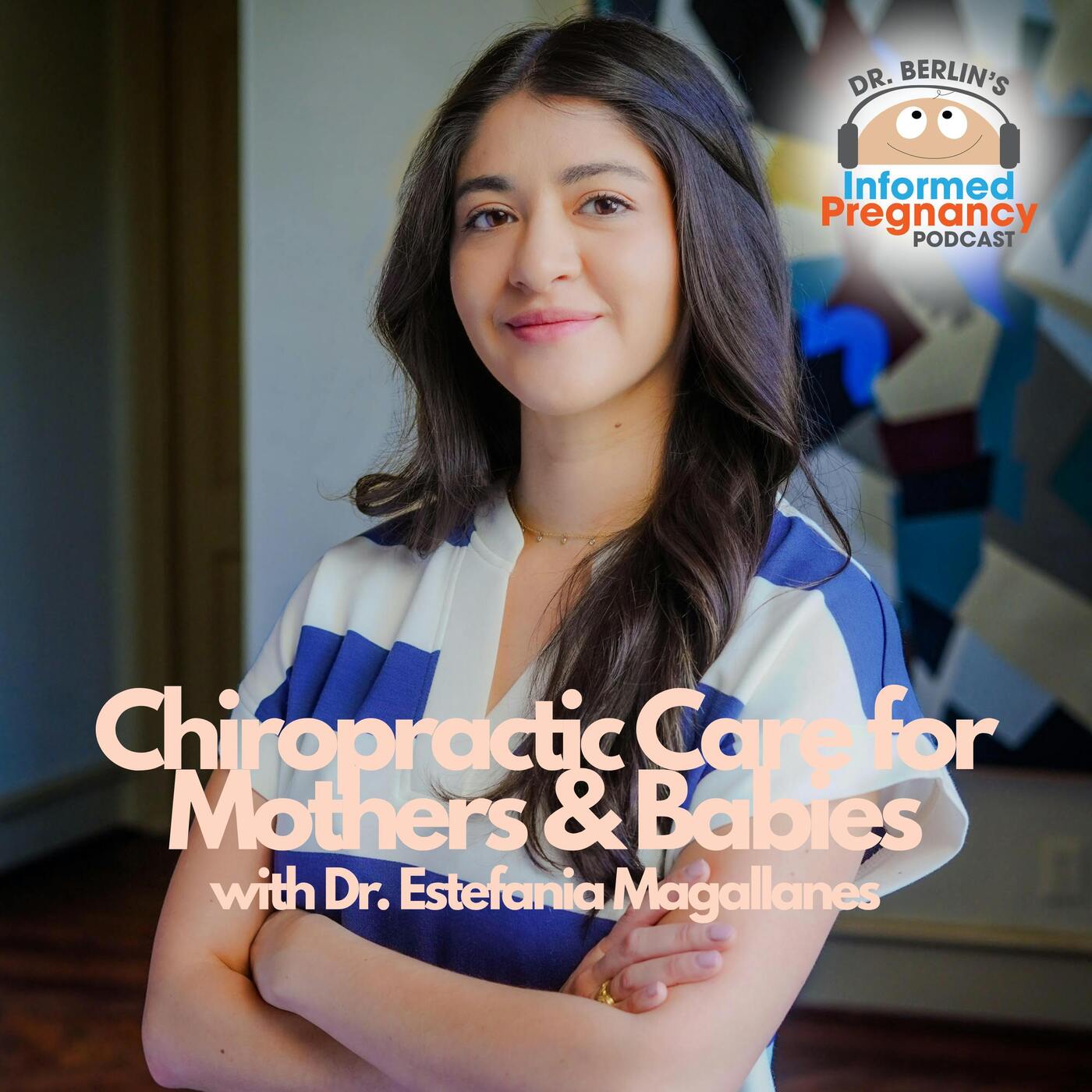
After witnessing her first births while shadowing an obstetrician, Dr. Estefania Magallanes came away thinking she may not want to have children at all. She joins the podcast to discuss her path to caring for pregnant patients, babies, and families as a chiropractor in Los Angeles.
Connect with the guest:
Dr. Magallanes at Berlin Wellness Group
Grow with us on IP+! Informed Pregnancy Media presents two all new intimate short-form video series following Garrett and HeHe’s real-time pregnancy journeys as they prepare for an empowered birth and postpartum experience. Each episode features weekly updates with personal photos and videos to help bring these raw stories to life, a visually dynamic guide through each mother’s emotional and physical experiences.
Keep up with Dr. Berlin and Informed Pregnancy Media online!
Learn more about your ad choices. Visit megaphone.fm/adchoices
See Privacy Policy at https://art19.com/privacy and California Privacy Notice at https://art19.com/privacy#do-not-sell-my-info.
Key quotes
“I use about the same pressure as maybe if you're checking an avocado for ripeness at their grocery store, that's the most pressure that I would ever use.”
“I felt that my mom slipped through the cracks a little bit and didn't have a good advocate or good resources to be able to advocate for herself.”
“But the thing that makes it rewarding and the thing that keeps me coming back for more is actually that I get to be there for the moms.”
“I think our clients are more likely to be open minded, flexible, and not have an incredibly rigid birth plan.”
“I think now seeing how there are so many options and how you can do it on your own terms, it makes it feel like such a beautiful experience that I would like to be a part of someday.”
Related episodes
- Ep. 514 Before Baby #4 with Kara Sutton
- Ep. 500 The Unexpected with Dr. Elliot Berlin Part 1
- Ep. 520 Before Birth with Kea-Sophie Stack
- Ep. 493 In Conversation with Esther Friedman Schwartz
Transcript
AI-generated transcript with speaker labels — may contain errors, especially names and medical terms. Dr. Elliot Berlin, DC appears in blue; Dr. Estefania Magallanes in orange.
Dr. Elliot Berlin, DC [0:00] Today's guest once thought she was headed to medical school, and after witnessing her first births while shadowing an obstetrician, she came away thinking she might not want to have children at all. Somehow that path eventually led to her becoming a chiropractor in Los Angeles and a career caring for pregnant patients, babies, and families alongside me right here at our Los Angeles practice. I'm pregnancy-focused chiropractor Dr. Elliot Berlin, and you're listening to the Informed Pregnancy Podcast. Dr. Estefania Magdalenas, welcome to the podcast.
Dr. Estefania Magallanes [0:47] Thank you for having me.
Dr. Elliot Berlin, DC [0:48] And it's probably still okay to say welcome to Los Angeles.
Dr. Estefania Magallanes [0:51] I'll take it. Thank you.
Dr. Elliot Berlin, DC [0:53] Let's start at the beginning. Where did you grow up, and what did you do prior to chiropractic?
Dr. Estefania Magallanes [0:59] Sure. So, whenever I was six, just getting ready to start the first grade, my parents and I actually immigrated from central Mexico to Texas, and then that's where I then grew up. That's where I did my undergrad, and that's also where I did my doctorate in chiropractic. And then fast forward to earlier this year, 2026, I moved out to Los Angeles to work with you.
Dr. Elliot Berlin, DC [1:26] What brought your family to Texas?
Dr. Estefania Magallanes [1:30] My grandmother on my mom's side already lived in Texas, and my parents were a young couple. They had a young child, and they decided that that was just going to be the best move for our future. And now I also have two younger siblings, and they also live in Texas.
Dr. Elliot Berlin, DC [1:48] Did you like Texas?
Dr. Estefania Magallanes [1:49] At first, it was a big culture shock. I remember the food being really just like not it for me. I remember missing the food a lot. But eventually I did grow to love it, of course.
Dr. Elliot Berlin, DC [2:02] And what did you think as a kid that you wanted to do career-wise when you got older?
Dr. Estefania Magallanes [2:09] Sure. My family is a lot of engineers and medical doctors, so that's what I would see around me the most. And I didn't think engineering was very interesting, but I did like the thought of looking at the body as a puzzle and being like, okay, it's meant to work a certain way. When it doesn't work this way, what's the piece that's affecting that? So growing up, medical school was the goal. All the way up through college, I was still pre-med. The more that I would work with medical doctors, the more that I felt like maybe this wasn't it for me. I still wasn't sure what would feel like a good fit, but I started to then branch out and look for things that felt more like a fit.
Dr. Elliot Berlin, DC [2:54] What was it about medicine that wasn't resonating with you?
Dr. Estefania Magallanes [2:58] Well, I mean, I think nowadays we hear about the way the system works a lot. And for me, I just felt that between the paperwork and all the steps that it takes to actually get someone the care that they need, I just wouldn't be helping people in my best capacity.
Dr. Elliot Berlin, DC [3:16] Yeah. You had your own medical condition as a teenager. What was going on for you?
Dr. Estefania Magallanes [3:23] Yes. So come to find out, I had been dealing with a couple of discs that were giving me some issues in my back, but as a teenager, that's not super common. I would run and I would get pins and needles in my entire left side body. And I was a pretty active kid. I weighted tables, I swam for school, and I lifted weights. The only thing that would set it off was running. And so we were looking at things to do with the heart, things to do with like maybe an extra rib was putting pressure. And eventually about five years later is whenever we realized, okay, this is a disc issue. And then that's when I started going to a chiropractor for my own things.
Dr. Elliot Berlin, DC [4:07] Was there a trauma that led up to it? Because like you said, you're young, strong, healthy, fit, and also very proactive working and surrounding yourself with opportunities to observe medicine. Just seems like everything was on your end. All systems go putting in the effort. Was there something that caused the disc issue for you?
Dr. Estefania Magallanes [4:28] Looking back on it, I think I can trace it back to I was playing sand volleyball with some friends and I went for a dig in the sand and just the way that I fell, something hurt my back because the next morning when I woke up for some practice, I couldn't even go upright. Now luckily for swimming, a lot of it you're laying down. So I was still able to do a lot of my practice. It was just after that whenever I would go to stand or walk, I noticed it. And then at that time, my coach just said, oh, walk it off, stretch it off. So that's what I did. And then eventually come to find out. I'm pretty sure that's what set off the disc.
Dr. Elliot Berlin, DC [5:06] And was that your introduction to chiropractic care?
Dr. Estefania Magallanes [5:10] Yes, it was. It came about as almost a last resort as it does so many times. I had a D.O. as my primary care and they basically came down to, oh, well, you know, your discs are in your back and you're very young. So we don't want to recommend any surgery. So how about you just don't run anymore and then you'll be good.
Dr. Elliot Berlin, DC [5:34] And you start running for a while?
Dr. Estefania Magallanes [5:37] Yes, because I wasn't sure what else to do. I knew that wasn't the end all be all answer that I wanted. But I also didn't want to put myself through any sort of spine surgery at 16, 17 years old. And so then whenever it was actually the summer before college, my mom was like, OK, I don't feel good about sending you away and you not being able to run or, you know, what if it gets worse? And so that's finally whenever I started going to a chiropractor.
Dr. Elliot Berlin, DC [6:05] And how did they approach it?
Dr. Estefania Magallanes [6:08] They were very nonchalant about it. I mean, to them, it was run of the mill. They're like, OK, yes, we see your MRI. We see your discs. It could help with the pins and needles or it could not. But let's give it a shot. And so, lo and behold, after a few adjustments, I did start to see some improvements. And so we kept my chiropractic journey going once I started college.
Dr. Elliot Berlin, DC [6:32] And were you able to get back to running?
Dr. Estefania Magallanes [6:35] Yes, I I run right now. I'm actually training for a half marathon, but I do 10 K's pretty easily now.
Dr. Elliot Berlin, DC [6:42] No pins and needles. No pins and needles. Amazing. So then is that what sort of made you think? What do you want to do for a career? This might be what you want to do.
Dr. Estefania Magallanes [6:53] So actually, no, I still didn't fully understand what the chiropractor was doing. I knew that he was, you know, manipulating my joints, but I didn't understand how that played into my pins and needles feeling. I didn't come around to seeing it as a career choice until actually the very last semester of college. I had been running through just the motions of taking the MCAT, applying to medical school because, you know, my parents had invested a lot of time and effort and money into that for me. And I didn't feel good about going up to them and being like, hey, so that thing that we've been wanting me to do for the last four years, I just don't think I want to do it.
[7:36] I didn't want to approach them in that way without having some sort of like solution or backup plan or whatever the case. And so my last semester of college, I took a it was a really tough class. I passed it barely by the skin of my teeth, but it was mammalian neuroanatomy. So it taught me about the development of the nervous system in mammals and humans. And that's where everything kind of clicked for me. I was able to see, oh, like if you help the nervous system, you can actually influence the development of an organism, how they learn, how they develop and just so many things down the line. And at the same time as I was going to my chiropractor,
[8:16] I was like, oh, like your whole nervous system is in your back. Then you're actually working with my nervous system. And so that specific lens is what led me to consider, you know, when babies are really young is when we can actually make a really big difference for them, because it's a big developmental stage for them.
Dr. Elliot Berlin, DC [8:34] It's so interesting that, you know, most people, I think, the majority of people see chiropractic of I have neck pain, back pain, sciatica, rib pain, and we're pretty good at getting that under control. But there's a much broader part of chiropractic and the whole regulation of the human organism that you got exposure to by accident through a tough class. How did your family take it when you finally did tell them, hey, I'm thinking about a different path?
Dr. Estefania Magallanes [9:02] Well, I'll be honest, my parents didn't really understand it at first. They were a little bit blindsided because, you know, I had been applying to medical school and things like that. So once they asked their questions about, like, well, what made you want to do this and how much do they make and what's the schooling look like? They were very supportive. So I appreciate them for that. Thanks, mom and dad. The only, I guess, tough people to win over was my extended family, the medical doctors in the family, and a lot of them practice in Mexico where chiropractic is still pretty new and, I guess, underground. If you want to call it that. So they really were like, well, what do you mean?
[9:42] If it's like a doctor, but it's not. And even now, like, they'll let me adjust them, but they'll always say, OK, just not my neck, please. So we're working on them. So a work in progress.
Dr. Elliot Berlin, DC [9:54] All right. Let's take a little break. When we come back, we'll find out how your career evolved. Don't go anywhere. We'll be right back.

Dr. Elliot Berlin, DC [10:11] Welcome back. We're talking with Dr. Stephanie Magdalenas. OK, so right now, your career is all about pregnancy, childbirth, postpartum, and it wasn't on that track. You were still pre-med. You had the unusual opportunity to shadow your uncle, who's an obstetrician. Take me into the room because you're pretty young and you're watching birth happen for the first time. What did you see and what did you think?
Dr. Estefania Magallanes [10:39] Sure thing. So at the time, I was like 19 or 20. I was in college. And yes, I was lucky that I had two uncles. One is an obstetrician. One is an anesthesiologist who was in charge of the OR at that hospital. So between the both of them, I was able to witness about a dozen births that were some of them more natural. Some of them were cesarean, either planned or emergent. And it really opened my eyes to sort of how traumatic it can be for mother and for baby and how a lot of the times, once you're in the hospital and it's delivery time, things tend to fall by the wayside. You know, you may have certain intentions going into your birth and then those intentions just change as you get there.
Dr. Elliot Berlin, DC [11:28] So I feel like sometimes people see childbirth and it makes them feel like, oh, my goodness, I want to do that. And sometimes people see childbirth and they're like, I never want to do that. And there's everything in between. How did it hit you on a personal level?
Dr. Estefania Magallanes [11:43] I definitely felt like I never wanted to do that. Even the natural and vaginal births that I saw, you know, they weren't considered traumatic, but I still just felt like the way that it happened in the hospital wasn't how I would have wanted it to happen for me. And so when I was only looking at the medical route and when that was my only exposure, I wasn't excited to have kids. I was like, I don't know how I'm going to do it. I may have to adopt, but like I would rather not have to go through that.
Dr. Elliot Berlin, DC [12:13] So you still wanted to be a parent and you just didn't want to do childbirth.
Dr. Estefania Magallanes [12:17] Yeah, pretty much. It was the childbirth that was the scary part for me.
Dr. Elliot Berlin, DC [12:21] Has that changed?
Dr. Estefania Magallanes [12:23] Definitely. I think now seeing how there are so many options and how you can do it on your own terms, it makes it feel like such a beautiful experience that I would like to be a part of someday. You know, I don't know what that looks like. That's something I can figure out later, but it's definitely changed my mind and made me come around that it can be a good experience.
Dr. Elliot Berlin, DC [12:45] Do you know much about your own birth experience?
Dr. Estefania Magallanes [12:48] Yes, and I do think that's also part of why this is so rewarding for me. My mother, I'm the oldest of three daughters. My mother had to have me as a C-section because I was breech. And so it was scheduled. She knew about it going in. But after me, my next sister was nine years. And then after that was 21 years later. And they told her that both of the next kids had to be a C-section when now I know that that's just not true. So I felt that my mom slipped through the cracks a little bit and didn't have a good advocate or good resources to be able to advocate for herself.
Dr. Elliot Berlin, DC [13:28] Yeah, that's unfortunate. I mean, it would have been nice for her to be given options. You know, obviously, always sharing what the risks and benefits are with each option and letting her choose. Do you think that affects the work that you do today?
Dr. Estefania Magallanes [13:46] 100 percent. I think that the work that I do today, I got into it because I wanted to help babies, mainly. But the thing that makes it rewarding and the thing that keeps me coming back for more is actually that I get to be there for the moms. They come to me in a time when everything's about the baby and how's the baby doing and where's the baby today. And I get to sort of slow down and check in on them and ask, you know, how are you doing and how are things feeling for you today? And I find that to be a really rewarding part.
Dr. Elliot Berlin, DC [14:19] Yeah, it's it's very nice. I've heard on many occasions, women sometimes feel like and then even after the baby comes, it's like they're not even there. They're just somebody to hold the baby. And the whole spotlight is on the baby. So it's pretty nice that you're able to offer that kind of support and care and reassurance sometimes to people who are going through what can be an intense journey. Yeah, yes. A lot of change going on, a lot of transitions. Yeah, mentally, physically and spiritually, all the above. So you graduated a few years ago while you're in chiropractic school. Did you have a vision of what practice might be like for you once you got out?
Dr. Estefania Magallanes [15:02] Yes and no. The thing with chiropractic school, for me at least, is it felt like drinking out of a fire hydrant. I was learning so much all the time and it's amazing. I loved that. But it also made it hard to know, you know, what's really out there as far as practices go and how do I want to make it my own? I did for sure know that I wanted to work with pregnancy and babies. I know that that's an important transition that I find a lot of intrigue in and that I can always keep learning more about. But long term, I was thinking, let me just get some experience. Let me get a feel for what's out there. And then I can really hone in and make it my own.
Dr. Elliot Berlin, DC [15:41] And what were the first jobs like out of school?
Dr. Estefania Magallanes [15:45] Yes, so I graduated in 2023 and my first job out of school was a family practice. So I got to treat people of all ages, all sizes, all types of conditions. And I'm really glad that I had that. I had a really great mentors, really great experience. I got to learn how to adjust on everybody. But the other side of that same coin, I also felt like I was not great at any one thing, and I felt like I really wanted to focus on, you know, if I really want to focus on pregnancy, like, let me start learning even more about that and let me make sure that I can get more experience. And so after about a year and a half there or two years, I then went into a personal injury, which was a total pivot.
[16:32] It pays well, but it's also a lot of paperwork and it's not as much patient time as I would have liked. And so I only lasted there just over like six months. And then that's when I was like, okay, what is it that I want this to look like long-term and let me hone in on, you know, in my dream scenario, where do I practice and what does that look like? And so lo and behold, I was still in Texas at that time. And, you know, in my ideal scenario, I wanted to be somewhere where I had access to the outdoors, somewhere where I had a community. And since I already had friends here, I said, let me figure out what it would look like to move to LA. And then the good thing about your last name is it starts with a B.
[17:18] So you're at the top of most lists. And when I looked up a pregnancy directory for chiropractors in Los Angeles, you were top of the list. So I just reached out, I emailed you and I mean, you know the rest, but now I'm here. Yeah.
Dr. Elliot Berlin, DC [17:36] First of all, your email could not come at a better time. We had an amazing doctor here who was taking care of most of the kids in the practice and a lot of moms during and after pregnancy, and she unfortunately had to move out of town. And my schedule was totally full and there was just going to be a big void of people needing this specific style of care with no way to provide it for them. And your email came through and I was like, what are the odds Texas? Cause we had just started looking around here and you have this incredible energy and all those things that we talked about during high school and college, the running and really applying yourself to your profession.
[18:21] And just constantly looking to learn more. And also you're just like a natural doctor, very empathetic, a great listener. And it was like, no question. I was like, this is going to be amazing. And it has been for us and for our patients. So we're very lucky to have found you too.
Dr. Estefania Magallanes [18:41] It's super mutual.
Dr. Elliot Berlin, DC [18:43] So our practice is very focused on kids and pregnancy. How is that for you?
Dr. Estefania Magallanes [18:50] I mean, it's amazing. It's, you know, everything I would ever want and more. Your approach is very unique in that you take your time with the massage work. And it's been really great to see how that ties in with the adjustment. And it just makes everything work so much better for the mamas. And of course with the babies, it's great to see how resilient they are and how fast they really respond to the care. Yeah.
Dr. Elliot Berlin, DC [19:19] I want to learn a little bit more about, I used to do everything. I used to do the adult care and the baby care, and I haven't done work with kids in a long time, but I see you getting these great results. So we're going to take a little break when we come back. I'd love to find out a little bit more about your technique. Don't go anywhere. We'll be right back. Welcome back to the informed pregnancy podcast. We're talking with Dr. Estefania Magdalenas. Okay. So I see these babies. I know that when I send them to you, I'm always going to get a text message or an email or a phone call saying, oh my goodness, that was the greatest thing she really helped our baby.
[20:05] Tell me about your technique and the kinds of things that you see in your approach and how you help them.
Dr. Estefania Magallanes [20:12] Sure. So a lot of the babies that we see are very, very young. We're talking, you know, four weeks old, sometimes older, sometimes younger. And whenever they come to us, we're really dealing with what's called birth trauma. And when babies are born, depending how they're born, they go through different stresses. So most commonly, maybe their necks are real tight coming out, or sometimes they're just stuck one way and they will only feed on one side. They'll have some latching issues. So when they come to me, I'm dealing with a really tight and a really fussy baby. And then I come in and I use seneosacral therapy, which is just a series of sustained holds.
[20:56] It's very light, but it's just a way to get the baby to lean into some stretches, lean into some relaxation. And the way that I explain it to parents is we're really looking for like a nervous system reset. So babies will, you know, their only job is to eat, sleep and poop. That's what we want from them. And anytime, yes. If there's ever an issue with any of those things that lets us know they're maybe not adjusting well and maybe not regulating well. So when we reset their nervous system, we look for either like a really big nap or a really big number two. And, you know, we hear about the rest and digest part of the nervous system. And so that's exactly what we're looking for.
[21:44] Sometimes it takes a couple of sessions, but usually the babies respond pretty quickly. Yeah.
Dr. Elliot Berlin, DC [21:49] So rest and digest the polar opposite of the fight or flight response. And there's this like imaginary thermostat where the nervous system is operating towards one end of that spectrum or the other. And with your techniques, you can bring them down to the relaxed mode of operation, which is infinitely healthier when there's no danger. I think a few things. First of all, I remember I was at a birth, a home birth and baby came out and look amazing, like a little floppy and we're trying different things and I just asked the mom, can I check the spine? And she's like, yeah, totally. And I just checked the spine, did a very, very small gentle adjustment,
[22:30] which we'll talk about in a second. Baby perked up pretty quick. No, I can't say for sure whether it was the adjustment or just time going by or other things that they were doing, but baby did great. But as a result of that, people sometimes are like, how old was your youngest patient and I'm like about two minutes.
Dr. Estefania Magallanes [22:47] Wow.
Dr. Elliot Berlin, DC [22:47] Yeah. Uh, but I think sometimes people hear chiropractic and baby and they're like, you know, terrified of the thought of you cracking the baby's little neck.
Dr. Estefania Magallanes [22:58] Of course.
Dr. Elliot Berlin, DC [22:59] But that's not really what you do.
Dr. Estefania Magallanes [23:03] No, not at all. So to be transparent, there's no popping or cracking of any kind on the babies. Their bones are still growing and being formed. So that's just not in the realm. Really, it's a sustained hold. And what I tell the parents is I use about the same pressure as maybe if you're checking an avocado for ripeness at their grocery store, that's the most pressure that I would ever use. And a lot of it too, is just stretching and seeing where the baby likes to go and where the baby maybe fights me and it needs a little bit of a push to stretch into. And usually once we get the baby going, they'll lean into it. And by the end of the session, they'll usually be a lot more of a calm
[23:47] baby than when they came in.
Dr. Elliot Berlin, DC [23:49] And what are the main things that people bring their babies in for?
Dr. Estefania Magallanes [23:56] Uh, main thing that I see is troubles feeding. So whether that be the latch is painful for mom or the baby's taking in a lot of air when feeding, or if it's that baby's really only able to feed on one side because their neck is so tight. And then the other thing is whenever they're really gassy and their bellies, you can just tell are really bloated and hard.
Dr. Elliot Berlin, DC [24:19] Are there other techniques that you use besides chiropractic and craniosacral therapy?
Dr. Estefania Magallanes [24:26] On the baby specifically, I only use chiropractic and craniosacral. On the moms, we do a lot more soft tissue work as you know, but those would be the main things.
Dr. Elliot Berlin, DC [24:38] How have you experienced, because you now work with people right up until they give birth and then postpartum to help with recovery and all the challenges that come with the early stages of motherhood. How are you hearing the birth experiences for your clients?
Dr. Estefania Magallanes [24:59] You know, our clients are amazing. A lot of them have a set plan, whether it be they want that federal and they want their OB with them at the hospital, or whether it be, you know, they have their midwife, they have their doula, they've already thought it all through. And so one thing that I think is cool about the patients that we see is a lot of them are so well prepared, but at the same time, they're very dynamic. And so, you know, a lot of the times the birth doesn't look like what you envision and a lot of our patients are very, they just take it in stride. And I think a lot of that is because they do have so many good people in their corner to where they feel that they're well equipped, that they know what
[25:41] they're getting into and, you know, they're able to just lean into, I'm getting a new baby. I'm so excited. Yeah.
Dr. Elliot Berlin, DC [25:49] And also I think our clients are more likely to be open minded, flexible, and not have an incredibly rigid birth plan. There's what they're aiming for, what they would like things to be, but something comes up like, for example, if the baby is breach or other things that can come up, I think that we try to make sure that they have an open mind and a flexibility to the birth plan so that if they have to go down from page one, which was the ideal vision they were hoping for to page two, it doesn't feel like they failed and it just feels like they're following their birth vision. And I think that really helps them be able to adapt in a healthy way.
[26:31] Doc, as you're still young, still learning, I always see you taking classes and learning new things postgraduate. Do you have things in the future that you want to add to your collection of tools?
Dr. Estefania Magallanes [26:45] Specifically right now, no one thing comes to mind. I just think I want to be the best that I can for my patients right now. So right now what I'm learning about is, you know, exercising through pregnancy and like the nutrition around it. I think that's the most type of questions that we get because a lot of our patients are knowledgeable. They want to know everything just in case they need to know it. And so I think exercising through pregnancy can sometimes be one of those things where it's like, well, do you do more of it? Do you do less of it? And, you know, ideally there's a good middle ground and that's going to be different for everybody.
[27:22] So I want to make sure that I'm confident in my recommendations for them.
Dr. Elliot Berlin, DC [27:26] Have you come to a point where you're excited to one day do pregnancy and birth yourself?
Dr. Estefania Magallanes [27:34] Sometimes yes, sometimes no. It depends on the day because, you know, it is still such a big unknown. But I think overall, until I have the partner that I'm looking for, it's just not going to be yes or no. I think it's going to depend on what that ends up looking like.
Dr. Elliot Berlin, DC [27:50] That makes sense. And I see like more and more our clients are inviting you to their births to attend and do body work and things like that. So I'm hopeful that you'll be able to witness some really great experiences.
Dr. Estefania Magallanes [28:02] Yes, I hope so too.
Dr. Elliot Berlin, DC [28:04] Doc, thanks so much for joining me and sharing about your personal and professional journey. Where can we find you online?
Dr. Estefania Magallanes [28:12] Yes, sir. Thank you for having me. My main online source is my Instagram and you can find me at Kyro Kismet underscore. Kyro Kismet underscore is taken. Nobody else can have that one. That's all mine.
Dr. Elliot Berlin, DC [28:28] Stephanie Amagalinas. Thanks again for joining me and at home. Thanks for listening to the informed pregnancy podcast. For more pregnancy and parenting information, just like this, a visit us online at informedpregnancy.com. And if you're in the Los Angeles area and need to tune up, visit us at drberlin.com.
Want more pregnancy + parenting? Start your FREE TRIAL of Informed Pregnancy+ and get access to all our curated pregnancy and parenting content — original series, iconic birth films like The Business of Being Born, prenatal workouts and more.

0 Comments