
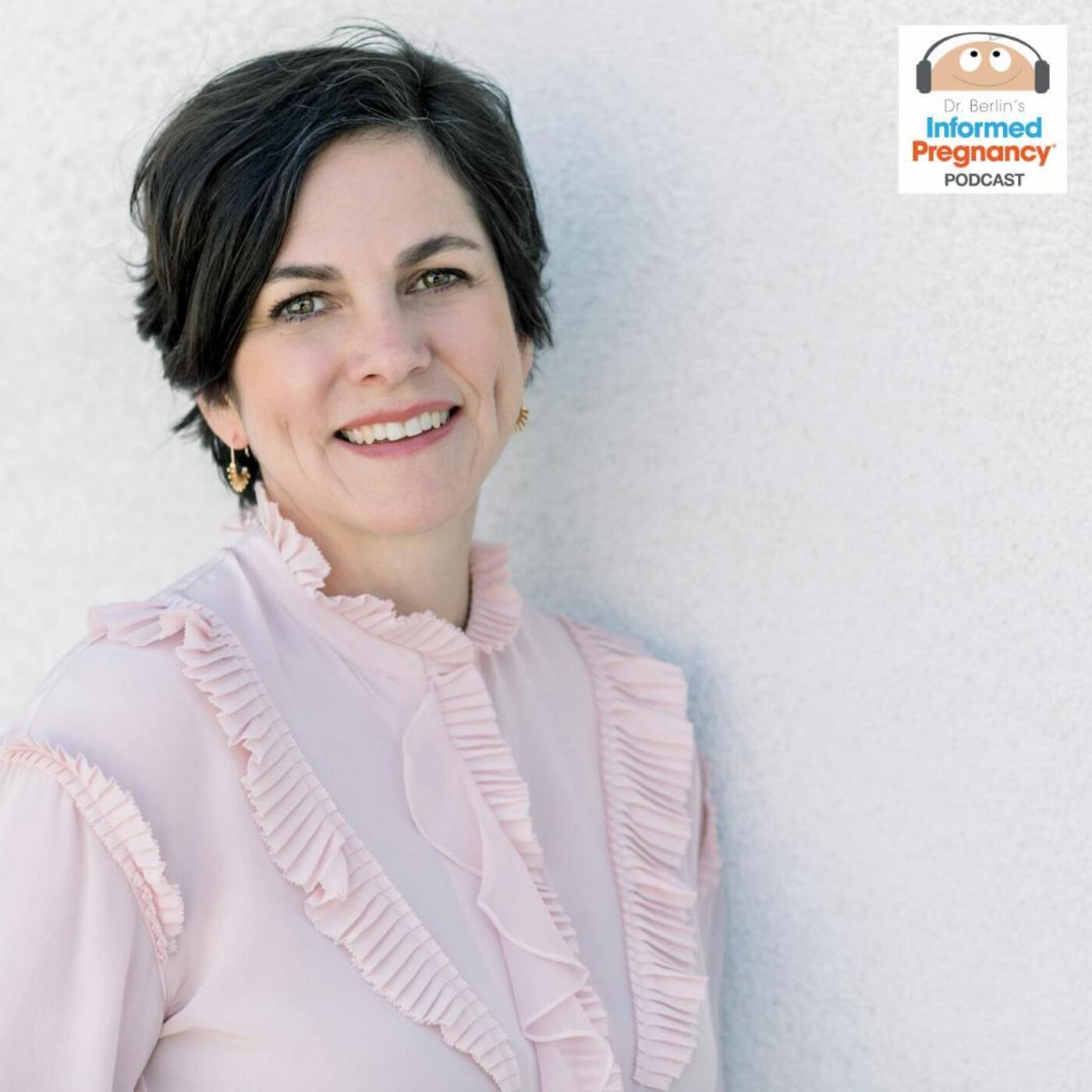
June 25, 2020 · 45 minutes · Episode 181
About this episode
Sleep expert and chiropractic Dr. Sarah Mitchell, discusses healthy sleep habits for parents and children, how to deal with travel and time changes, sleep during sickness, and some great tips and tricks for making bedtime fun and enjoyable.

Learn more about your ad choices. Visit megaphone.fm/adchoices
See Privacy Policy at https://art19.com/privacy and California Privacy Notice at https://art19.com/privacy#do-not-sell-my-info.
Key quotes
“sleep training which is a term that I strongly dislike because we train our dogs but we teach our children you're actually teaching that gift of being able to relax yourself into sleep”
“Well I like to say you can be loving, attached, and well rested.”
“every time you hear regression I want you to think progress.”
“it takes an entire day to adjust to one hour of time change.”
“we should also have a bedtime routine, just like our kids do. A cue to our brain that sleep time is coming.”
Related episodes
- Ep. 447 Navigating Hyperemesis Gravidarum with Dr. Arielle Mitton
- Ep. 104 Vaginal Steaming – Nicole Sessions
- Ep. 50 The Real Midwives – Megan B. Post-Birth Journey
- Ep. 196 Jaundice and Other Newborn Concerns – Dr. Princeton Ly
Transcript
AI-generated transcript with speaker labels — may contain errors, especially names and medical terms. Dr. Elliot Berlin, DC appears in blue; Dr. Sarah Mitchell in orange.
Download PDF of the Transcript
Dr. Elliot Berlin, DC [1:13] Welcome to the informed pregnancy and parenting podcast. I'm your host dr. Elliott Berlin in this episode We're gonna take a deeper look at sleep for children and moms of all ages and stages in addition to getting the 411 on general sleep habits and schedules We will explore issues like sleep regression seasonal time changes and traveling especially into different time zones My guest today a formerly sleep-deprived mom is a fellow doctor of chiropractic She spent many years studying kinesiology and has a background in obstetrics pediatrics and child development She found her passion helping others deal with the same struggle. She experienced as a new parent getting sleep
[2:15] She's a proud member of the Society of behavioral sleep medicine and has helped thousands of families discover the tools They needed for better sleep. Dr. Sarah Mitchell. Welcome to the podcast So glad to be here. I'm excited because I you know sleep is as important It's crucial. I remember from when I used to get some and tonight I know I'm gonna learn things from you and our audience will learn from you, too So let's get to know you better and then we'll jump into sleep. Where are you from originally?
Dr. Sarah Mitchell [2:42] I'm originally from Ottawa, Ontario, Canada. Hey, do you speak languages besides English? I used to speak French I took it all the way through school, but you don't use it and you lose it So I'm embarrassed to even pretend that I speak French Ottawa is the capital of Canada. It is the capital and so because of that is very dual language
Dr. Elliot Berlin, DC [2:58] Yeah, so did you use it there like on the street or just in school?
Dr. Sarah Mitchell [3:03] Mostly just in school, but every now and again if you travel to Montreal, which is just two hours away You would use it in convenience stores and ordering a drink and that type of thing. Yeah, but two hours is two hours I use it sometimes for breakfast. Ah, très bien. Excellent. That's as far as I go. That's good
Dr. Elliot Berlin, DC [3:21] So when you doctor of chiropractic in kinesiology, which came first for you? Kinesiology came first
Dr. Sarah Mitchell [3:27] That's my four-year undergrad And then I went to the Canadian Memorial Chiropractic College in Toronto for another four years
Dr. Elliot Berlin, DC [3:32] Okay, so I think a lot of people don't even know what kinesiology is. Why don't we start there?
Dr. Sarah Mitchell [3:36] It's the study of movement in the human body. I'm glad we got that behind there We go it sounds like a funky like deep term, but it's the study of movement human movement
Dr. Elliot Berlin, DC [3:45] Yeah, it's formally known as physical education. Yeah. Yeah kinesiology sounds more. It doesn't it sound more like once you're paying all that money I don't know in Canada. Is it just free or do you have to pay for education?
Dr. Sarah Mitchell [3:55] It's not free, but it's much much less expensive than here
Dr. Elliot Berlin, DC [3:59] Yeah, so once you're paying something for you should call it something fancy Yeah, and what made you study human movement?
Dr. Sarah Mitchell [4:05] I was always really athletic and just enjoyed movement and sports and moving my body and it just was like very Natural fit all sorts of sports. Um, yeah, I was jack-of-all-trades and master of none So I played volleyball basketball touch football. Those are my favorites. I play all of those things on video games
Dr. Elliot Berlin, DC [4:24] still sweat I have to study kinesiology of the thumbs. Mm-hmm. You do four years of studying movement Is that the goal there to understand movement or is the goal there to?
Dr. Sarah Mitchell [4:37] Facilitate movement there is lots of different aspects you could go in a lot of my colleagues went into like physical therapy occupational therapy Became phys ed teachers some went to med school. So it's kind of like I don't know here. They might call it pre-med I'm not really sure You were kinesiology is movement specifically like it's a big focus on movement our coursework included like anatomy, physiology, biology, philosophy of sport. You could go into like practicums and learn ballroom dancing. I had a great time doing that. You could also learn sailing. You could study the psychology of sports. You could do exercise physiology. So it was
[5:15] quite broad.
Dr. Elliot Berlin, DC [5:16] Yeah, it's broad in a sense, but it's all like movement oriented. So there's a lot of things you can do with it after you have a very deep understanding of movement, probably deeper than most people. Four years is a long time to study movement. Although there are a lot of little bits and pieces in the human body that kind of all work together in this magical way that takes time to understand.
Dr. Sarah Mitchell [5:35] I think we're always learning about it. I think there's so much about the body that we still don't understand. And there's going to be some really big discoveries in the next hundred years that are going to blow our minds.
Dr. Elliot Berlin, DC [5:43] I was at a big medical conference and the president of the conference got up and held up four fingers for the whole crowd and nobody knew what he was talking about. And all of a sudden he goes, I can safely say we understand about four percent of how the body works. And I was like, shame on you for exaggerating by fifty percent. We understand so little, but we understand a lot more than we used to. And that's kind of refreshing and cool to do stuff with. From kinesiology, did you always think going to chiropractic? When did that come?
Dr. Sarah Mitchell [6:13] That came in around like third or fourth years. I was looking at the different master's programs to go into. And I liked kinesiology because I liked the idea of being able to diagnose and then implement a plan and follow through. So it's been a great baseline because it's, you know, segued me and those clinical assessment skills have really been helpful in my current practice with parents.
Dr. Elliot Berlin, DC [6:36] Yeah, it sounds great. I mean, that's the dream, right? Somebody comes in with an issue if they're not coming for basic maintenance. Somebody comes in with an issue and then you figure out what the issue is, come up with a plan for how to rectify and treat and then move on. And my favorite thing is asking the right questions. That's a lot of it. Before you went to chiropractic school, had you been to chiropractors for all your sporty stuff? Yes, I had. So you've already experienced the magic personally. Yes, absolutely. Cool. And then where along the way did you start having kids? You have two kids. I have two kids. Yeah, they're now six and nine. Ooh, fun ages. Yeah, it's very fun.
[7:15] It's very fun and challenging, of course, but you're always learning.
Dr. Sarah Mitchell [7:18] I think every stage is challenging, but you're like out of diapers, out of strollers. You can just go do stuff together as a family. Or by yourself. Yeah, once in a while. Yeah. Yeah, I've been blessed this week. I've been at a conference in Palm Springs, so I've been away from the kids for four or five days. So it's a different stage, you know? It's totally different. And so for people listening with little tiny kids,
Dr. Elliot Berlin, DC [7:41] you'll get there. I just want you to know you will get there. It seems so far away, but you'll get there. We have four kids, and when the littlest turned five was the first time. Now he's nine, but when he first turned five was the first time it felt quiet in my house with all six of us there. They were reading, they were doing their own thing, so I was like, wow, this is kind of great. Yeah, that's really nice, but you have to constantly entertain them. Yeah. And when you have one school pick up, that's another milestone. Oh, they're all together? Oh, that's the best. It's wonderful. You know milestones, people have different milestones in their baby book. This is when they lifted their head,
[8:13] and this is when they started cruising around the house. I have like, this is when he poured milk on his own cereal, and I slept for 15 extra minutes. That is a highlight moment for me. I like the one where this is the age where they were able to get up and go unplug their own iPads and sit on the couch for half an hour while you doze. Oh, that's really nice. And even do the volume? Yes. Dad! Yeah. All right, so you started having kids
Dr. Sarah Mitchell [8:37] during chiropractic school, or was…? No, I was out. Out? Out, yes. I was a geriatric pregnancy as they would say here in the United States. I don't think I ever heard that phrase in Canada. Oh, I don't have that term in Canada. Yeah, but I was 36 and 39 when I had my kids, so I was getting on, as you would say. And yeah, and my sons, that was 2011, yes.
Dr. Elliot Berlin, DC [8:58] Okay, so you were already practicing as a chiropractor? Yes. Oh, how was that being pregnant and then postpartum and having to practice?
Dr. Sarah Mitchell [9:06] Well, it was a very life-changing experience. And there's, you know, my husband was working for Blackberry at the time. Oh, I remember that.
Dr. Elliot Berlin, DC [9:14] Yeah. You remember that keyboard?
Dr. Sarah Mitchell [9:16] Doesn't that seem antiquated? After the fax machine. Yes, exactly, exactly. And then he got laid off because Blackberry went down. And so he got a job with Google in the United States. That's why we came to California. And so then I couldn't work here. I didn't have a visa, which was a really interesting life experience. Is he not Canadian? No, we're both Canadian. Oh, but he had a work visa? He had a work visa, and I didn't. So that was kind of an interesting life experience because you really have a lot of time to think about what exactly you want to do and what's meaningful for you. I was really fortunate in that, one, I couldn't work, but also that we could afford that I couldn't work.
[9:52] And it gives you a great opportunity to think about what is really meaningful for you. And, you know, having him not sleep when he was born was a real… shock and I think that's the word it's like here I am I've got eight years of health education oh my god I can't get my kid out of sleep I should know what to do. As a newborn? As a newborn I couldn't get him to sleep. I had a really difficult labor and delivery so I was actually undiagnosed gestational diabetes. Oh wow. Who would guess? You have none of the lifestyle factors. No. Except that you were freaking old according to the Americans. Yeah I was old I was old so I actually tested negative. At 28 weeks? Yeah and then the last couple weeks you know I should have
[10:33] pressed it this is where you always have to be an advocate for yourself right like I couldn't exist without like a massive water bottle in my hand and just constantly I was so thirsty. And everybody pees a lot so that's not alarming. Right exactly and so I you know the pee stick didn't show any sugar in my blood probably because it was so diluted and I said you know I just want you to know that this feels really weird that I need to be constantly drinking this much that I'm so thirsty and they said well the test was negative. How did you figure it out? When he was born he was ten pounds four ounces. Oh my god. I mean through the magical podcast nobody can see how petite you are. That seems like a lot of baby for you. You're very flattering. It was a lot of baby for
[11:10] anyone but you know it's not so much even to the size it's it's they knew from his fat pattern distribution and then they tested his blood and he was he was sunny side up and we had shoulder dystocia so he was stuck at the shoulder so he was actually blue for three minutes I don't scare any of these pregnant people out there. You got through it. Yeah exactly he's yeah he's healthy. Were you here or in Canada? I was in Canada. I'm just curious how'd you get over the dystocia? Was it just a lot of movement? Oh gosh it was 20 minutes of like 25 people in the room. Flipping over this way, flipping over that way. Yeah and people like
Dr. Elliot Berlin, DC [11:44] climbing on top of me and pushing down on my abdomen. Oh pushing on your belly to get the baby to come to?
Dr. Sarah Mitchell [11:48] To get him down and um. Talk about kinesiology. That's a lot of human movements. It's never a good
Dr. Elliot Berlin, DC [11:54] sign when your doula starts crying. Oh no. I am a doula. Yeah I know. I cry. I cry at every move. I know. I well there's tears of joy and then there's tears of like oh my gosh this kiddo is blue. It's like when the flight attendant flies for the jump
Dr. Sarah Mitchell [12:08] seat you know that's a different kind of turbulence. Yeah yeah it was wild. Wow. God bless you. But then they got the baby out. They got him out and he was great. They were worried that they'd broken my sacrum because they heard cracks or that they'd broken his collarbone but I really think it was just this one nurse's knuckles. Oh really? She kept pushing down on me. I heard it too. That's the best case scenario. I know. Totally dodged a bullet there. And then he was you know he was in the special care nursery because he was hypoglycemic. So I did beyond sugar and water. So that you know that kind of impeded breastfeeding a little bit because he wasn't really hungry. So it was definitely a tough. So did those things all contribute probably to sleep issues?
[12:47] Absolutely. Yeah. Well there's a lot of things that contributed. One was my idea of who I thought I should be and what I wanted my experience to be like. You know you have these preconceived notions and I wanted to be natural parenting nursing on demand. All of that. So I never wanted to hear him cry every time he cried. I was like oh he must be hungry. And so I fed him and I inadvertently taught him that the boob was a soother. Right. And I missed all the sleepy cues because they can be really hard to read for a lot of people especially if kids are overtired.
Dr. Elliot Berlin, DC [13:17] So yeah. So you mean they're tired but you're feeding them. Yeah. Exactly. Because you think they're hungry. Exactly. Exactly. And then you end up having these little snackers. I'm not even like kidding. That is how I feel right now as an adult. Like I know I'm not sleeping enough and then I feel tired so I try to eat my sleep. Absolutely. But you can't. Maybe I need to do sleep teaching. You need some more sleep. We're going to talk about that later on. But absolutely. Well actually it's time for a natural little break but we're going to talk about a little bit about a lot of things. We're going to talk about the rest of your story because it's very interesting. Thank you for sharing it so openly. I think a lot of people will learn from it. But also sleep in general. Sleep teaching and what that means getting on a good sleep schedule and then all the interesting things that come up that knock off your great sleep schedule and how to deal with those. And then in our final segment sleep for moms. Sounds good. Anywhere. We'll be right back. If you've ever struggled to get your prenatal vitamins down especially during that first trimester

Dr. Elliot Berlin, DC [16:28] slash Dr. Berlin for up to 30% off. Welcome back to the Informed Pregnancy Podcast, we're talking to Dr. Sarah Mitchell. Wow, that was an intense first birth story. It was. I actually feel a little sore. And then you had another baby. Yes, and things went
Dr. Sarah Mitchell [16:49] much more easily this time. Did you get the gestational diabetes again? I did not. Interesting. Isn't it? Yes, it's very interesting. Things went very well. I like to say that Mother Nature gives you one that keeps you humble and one that gives you confidence. Oh, that's nice. Yeah, so my second one was definitely a bigger confidence builder and I started teaching her to sleep from like day one because I was like we are not doing that again. What was the birth weight? She was nine pounds seven ounces. Oh, so still a big baby even without the gestational diabetes. Yes. And no dystocia? No dystocia, no. Nobody jumping on you, cracking knuckles. Nothing like that, no. I was induced a
[17:30] little bit early because they were a little bit worried about her size. My husband is 6'1", and I'm 5'8", so I mean you know it's nothing too crazy. Thinking about something you said just
Dr. Elliot Berlin, DC [17:38] a minute ago, I feel like I got three that keep me humble. And one that half keeps me humble and half gives me confidence. Okay, well that's my new statement. I guess your statistics change when you go to four. I don't know, yeah, or if you're the dad. Okay, so you had an easier time the second time around, which is also nice for people listening to hear that I have a lot of times people have a rough birth like that the first time and then assume that a cesarean birth is going to be better the second time, but I feel like once you've got that vaginal birth behind you, there's a decent shot at the second one being much simpler.
Dr. Sarah Mitchell [18:13] Yeah, I had the option to go to c-section and I said well
Dr. Elliot Berlin, DC [18:17] kind of already wrecked one body part. Let's just stick with that one body part for now. It's a tough call. It's a really tough call. It's a tough personal call. Yeah, so then you started to touch on after your first was born not figuring out sleep, and is that when you got involved in becoming a sleep specialist? Yeah, that's when I started researching
Dr. Sarah Mitchell [18:37] everything I could about sleep. I turned to my friends first and said oh my gosh, like how do you get this kid to sleep? And I got a lot of, and I was in Canada at the time, I got a lot of oh just enjoy your baby and this too shall pass. So they were all struggling with it? So they were and one of those phrases came from my friend who was a medical doctor and in Canada our GPs see kids and I was just floored by that because I thought for sure she would have the answers, you know, and it was really an eye-opening experience to know that, you know, here's two well-educated women in the healthcare field and neither one of us knew how to get our kid's kiddos to sleep,
[19:12] right? So I'm believing all of those women out there right now who might be struggling with sleep and feeling like they should know what to do. The thing about getting your kid out of sleep is it's actually not that natural, right? Oh really? It's not really that natural. Like you think about the first few weeks of birth, it seems very natural. I think our kiddos actually kind of trick us those first couple weeks. Because they sleep so much? Yes, that's the only time that sleeping like a baby actually really comes into play. It's like they wake up, they eat, and they fall back asleep because they're growing at such an exponential rate. They need all that sleep. I've heard there's two times it
Dr. Elliot Berlin, DC [19:43] happens. Maybe I'm wrong but one is then right when they come out and then magically when they turn into teenagers. It's the same pattern. Eat a lot, go to sleep, just wake up and eat and go right back to sleep. Sounds about right. But in between it could be a struggle. Yeah, in between
Dr. Sarah Mitchell [19:57] it's definitely a struggle and I think those first couple weeks they kind of trick you thinking oh this isn't so bad they just eat and go back down there's actually kind of a magic window between four and eight weeks of age where we're actually kind of teaching kids at that time what sleep looks like but we don't even know we're doing it at the time it's inadvertent because the drive to sleep is biological right we all have a buildup of a protein in our blood that signals our brain that it's time to sleep but the way we sleep is a learned habit and if you think about yourself you know you hop into bed you find your favorite position and then you can relax yourself down into sleep and if
[20:30] I told you tonight you can't sleep in that position you as a complex human being you would be able to toss and turn and find something else that's comfortable for you like people have to do in pregnancy yes you would adapt
Dr. Elliot Berlin, DC [20:41] right but it is a learned habit it's not it's not you're right it's not
Dr. Sarah Mitchell [20:46] natural you have a way that you naturally settle into slumber most of us do but if you had to change you typically could exactly and when talking about sleep training which is a term that I strongly dislike because we train our dogs but we teach our children you're actually teaching that gift of being able to relax yourself into sleep by finding some comfortable position or often with kiddos it's like a repetitive action that's soothing like sucking is very soothing so you know you often see that habit emerge early even in uterus sometimes exactly yeah but when we're doing sleep teaching you know after four months of age a child may you know stroke the fabric on their sleep sack or they might suck on a thumb or a
[21:29] finger or they might rub the back of their head into the mattress it's very
Dr. Elliot Berlin, DC [21:32] repetitive actions three or four of them would just like I don't know what they were doing with their belly button they're just like rubber touch their belly button yeah I'm so grateful because my sister-in-law's kid had a little stuffed animal and if they ever God forbid forgot to lost it yeah I mean the baby just wouldn't sleep but our kid it was belly button you could like never forget it you just couldn't zip up the one you know there's a lot of sensory stuff associated with sleep like that you know I tried it it didn't help me but they do kind of look at us two things go through my mind at the same time one is like they look at us to teach them everything I come out knowing things that are hardwired but
[22:24] looking to learn a lot about the world that they know nothing about and for us to teach them lots of different things and so it makes sense that one of the things that they would look to us is teach me how we sleep on this planet on the other hand I always wonder and it could be similar but I always wonder what other animals do like do they also have some form of I'll have to come back for another podcast I love it I
Dr. Sarah Mitchell [22:45] haven't researched that yet I like to learn some things from observing other animals but not everything you know sometimes they eat the baby which I don't think is healthy for us no not so much no Mother Nature did a really good job making them really cute right so no matter how much they're tormenting us with lack of sleep that we still just love them so much our little babies I don't even know why they torment you during pregnancy during labor and delivery they sleep and you still just love
Dr. Elliot Berlin, DC [23:11] makes you a better person makes you grow and evolve in ways that you never thought possible yeah and the prolactin I think makes you submissive to them so that even though your needs are different than their needs you put your needs aside and just give to them with everything you have so sleep teaching is that four to eight week is that a good time to start that or is that when is the right time to sort of get involved well I think there is
Dr. Sarah Mitchell [23:35] a lovely window like a no tears window between four and eight weeks when you can start setting up sleep habits cues that it's sleeping time and teaching your kiddo long term like where you want them to sleep because it's great when your kiddo sleeps on you but that's something that's really hard to maintain long term yeah right and so in my online class I teach parents how to get on to a flexible schedule so they know kind of what to expect like my baby just woke up when do I need to be making sleep happen because that's another thing I think many people don't realize is it's your job to decide when sleep needs to happen to prevent your child being overtired because sleepy gets sleep the more well rested your
[24:12] kiddo is the easier it's gonna be to get them to fall asleep and then stay
Dr. Elliot Berlin, DC [24:15] asleep I think I said this on an earlier podcast but we didn't do it for nine months with my son my first born because we like didn't want to make him cry and all sorts of things he got to none I think it's personal it's gonna be different from the kid and parent to parent but he was so cranky during the day because he was so tired and we were awfully cranky because we were so tired and at some point we were like we got to try this sleep thing and we did one of the methods and it took about a week and he finally slept through the night and all of us him in particular but all of us were much happier people the way during his waking hours that he
[24:54] observed the world and that he interacted with anybody was night and day no puns and he was such a much happier kid and we were kicking ourselves for not doing
Dr. Sarah Mitchell [25:04] it earlier. Absolutely. Well I like to say you can be loving, attached, and well rested. And you mentioned earlier about how we prioritize our kids over everything and that's so important. And then there comes a time when you have to ask yourself is waking up you know every two or three hours for a nine-month-old is this sustainable and is it prioritizing our family? Right? Because I like moms to remember that they're an important person in the equation as well. At the beginning you know you have to prioritize your kiddo for sure. Like through most of your life. But you know at what point you say this isn't working for us as a unit any longer. And that time is you know
[25:43] varies from person to person. I agree with you. There's no one way to do it. Everybody's different. You know you can do sleep teaching and four months you can do it at two and a half years. You know whatever works for
Dr. Elliot Berlin, DC [25:53] you. Sometimes at four months and then again at two and a half years. Well absolutely. But in terms of basic sleep teaching you have online programs like courses that people can access from anywhere. Yeah they're
Dr. Sarah Mitchell [26:07] self-paced so I have my newborn class is zero to eight weeks. It's for expecting parents and new parents. And it's how to gift your newborn the love of sleep. Because if you started on the right track using some simple tear-free things I really think you can get those long stretches of sleep. That's what I did with my second right. We got her sleeping six eight hours in a stretch. I would also like to point out though that temperament is a really important factor in the equation of how well your baby sleeps. My son is much more intense and I see that now. Oh you're talking about the children's temperament. Yeah. Well yeah. Well it's interesting. One of
[26:47] the Stanford sleep docs that I network with said to me well we don't really sleep train kids we sleep sleep train parents. And there is some truth to that right. And the thing about sleep training or sleep teaching is that you're actually you know a lot of people think it's about being a very controlling person. But actually sleep teaching is really all about giving up control. It's about saying oh gosh the way we're doing things just isn't working for us anymore. I can no longer make you sleep by the incessant rocking or reinserting the pacifier or feeding you back to sleep and I'm going to be here for you. I'm going to communicate with you and
[27:20] acknowledge you. But like you got to figure out how to relax yourself into sleep and I'll offer you some verbal and physical reassurance. But I'm confident that you can do this. Right. And that's scary. That's scary for a
Dr. Elliot Berlin, DC [27:34] lot of people. I did two horrible things with our first I would hold the car seat and swing it around back and forth just up and down gentle rocking back and forth. Did you get tendinitis? Oh yeah. My shoulder was a rack for a year. My husband's elbow. Yep. For a year. And then the other thing is the kind of work that was kind of weird at the same time was literally putting his car seat on top of the dryer and turning it on and a
Dr. Sarah Mitchell [27:57] little grumbling and bumbling. Repetitive. Yeah. But after a while it stopped working. Yeah. That's like that four month sleep regression right. They wake up to the world around them. Oh. And
Dr. Elliot Berlin, DC [28:06] they're starting to learn object permits. Yeah. Let's talk about that right. Yeah. Because so there's a myriad of different ways to teach them to sleep and get them on a healthy schedule. But then even when they're on the ideal schedule for your family things just knock you off course. What
Dr. Sarah Mitchell [28:22] is sleep regression? So every time you hear regression I want you to think progress. So your child is growing either physically by getting teeth or neurologically by learning new skills like motor coordination learning to pull themselves up to standing walking rolling all those things that could distract them from relaxing themselves into sleep. So with TV it can be the inflammation and the discomfort in their gums that is distracting them from relaxing down into sleep. And with motor leaps often I see kids one of the main signs with motor leaps is being content but awake in the middle of the night for like an hour just hanging out in their crib. And the way I kind of
[29:02] interpret it is that they're just distracted or thinking about that new skill or wanting to practice that new skill and that prevents them from falling back to sleep. And that's a problem if you are still responsible for making your baby sleep by rocking them or nursing them back to sleep because you're lying there going like when are they going to cry when do I have to go in there and help them. But if you have an independent sleeper who can be put down completely calm but awake and put themselves to sleep at bedtime then when those motor leaps happen in the middle of the night you can just grab a pillow and put it over your head because you know your child is capable of being able to do
Dr. Elliot Berlin, DC [29:33] I like that term independent sleeper independent sleeper. That's what it's all about. That's one of those milestones. Yes it is. A big happy milestone. And so sleep regression will just happen naturally through
Dr. Sarah Mitchell [29:46] various developmental stages. Yes. So there's definitely the form on sleep regression is the big one right. They learn object permanence the fact that you exist even though they can't see you. Oh so you're there even though you're not there. Yeah. Where is that woman I surface from a sleep cycle. I'm gonna cry out and see if someone comes. I'm testing that theory. And so the signs of the four month sleep regression are waking up more in the night. Often many parents have like a six to eight hour stretch and now their kid is waking up like every three hours in the night and nighttime sleep cycle, right? And they're like, why is that? They were doing so great.
[30:15] Well now they're just getting more and more aware of their world. So that's a big one.
Dr. Elliot Berlin, DC [30:19] So is it more common with people who are not independent sleepers or does it happen either way but kids who are independent sleepers will work their way through it?
Dr. Sarah Mitchell [30:27] Exactly, yeah. So I think you feel it more. Like with my first, he was awake almost every two hours. I was nursing him back to sleep, my son. I didn't really even feel it that badly because it was already such a wreck. But with my daughter who I started implementing these just healthy sleep habits from day one, she woke up a little bit more, but not much. Yeah, it wasn't so derailing. This is good info. Yes, and then the next sleep regression often comes with teething, right? And teething is so variable. I just had a lady on the phone the other day who her child was four months and got a tooth. That's very rare. Very average is like six months to get a tooth.
[30:59] That comes around nine months. There's a little bit of a separation anxiety at times. And so often they protest going to bed a little bit more. Anytime you're gonna get molars, so around one year, around two years, that can be distracting at bedtime. And so there may be more bedtime resistance or waking up in the night. And you're not really sure what it is because molars can be hard to see. The thing with teething is it's a hindsight diagnosis because the pain is usually the worst right before the tooth pierces through. So you're like, why is this kid so fussy? What's going on? I don't see any teeth. And then they're like, boom. Yeah, and then you're like,
[31:32] oh, that's what that one is, yeah. And then in the toddler years, there is like sleep regressions abound. Eric Erickson's psycho-emotional stages, right? Learning what boundaries exist. I want power, I wanna test the world. Is it safe here? And so they often are looking for control. That can happen anywhere from 18 months onwards. And I actually see a lot of this starting around like 14 months of age. Definitely see toddler boys. And then at that point, they can sometimes just get out and make havoc. Yeah, well, one, they're so much more opinionated. Two, their lungs are so much bigger. They terrify parents. They really, really do. And neighbors.
[32:13] Yes, yes, and neighbors. And the best thing you can do is keep your toddler in a crib until at least two and a half years of age. If you can, for safety reasons, sometimes they crawl out, but throw them in a sleep sack so they can't throw their leg over the railing. You wanna keep them in that crib until at least two and a half, if you can.
Dr. Elliot Berlin, DC [32:28] Our first was good until three years. With the second, he taught her how to get out like 15 months. It was like a mess. Oh my gosh, yeah. All right, I'm pretty sure I'm having, by the way, I don't know if this is common, but the 45-year sleep regression, it's kicking in. We gotta take a little break. When we come back, a few more things like troubleshooting that knock babies off of their sleep schedules. And then sleep for parents. Hooray. Don't go anywhere. We'll be right back. Welcome back to the Informed Pregnancy Podcast. We are talking to Dr. Sarah Mitchell. Sleep regression aside, other things that just happen naturally, time changes, babies get sick,
[33:12] or kids, little kids get sick. Sometimes you travel, especially if you travel over time zones, those are the things I know that screwed us up badly. They do. How do you deal with these?
Dr. Sarah Mitchell [33:22] Well, time changes are pretty tough. I have a lot of clients that go to China and India, and that's a significant time change, like 12 to 16 hours. So what do you do? You do the best that you can to survive while you're on that trip, basically. Maybe that means bringing out old sleep crutches that you use, like nursing back to sleep or rocking back to sleep, right? It's, exactly. On the shoulder. Yeah, exactly. It's tough. Obviously you'll want to get your child out in the sun to inhibit melatonin, which signals your brain that it's time to sleep, trying to adjust them. But in general, it takes an entire day to adjust to one hour of time change.
Dr. Elliot Berlin, DC [33:58] Wow. So you do a nine hour time change, takes nine days, and then you travel home. Exactly.
Dr. Sarah Mitchell [34:02] And then it takes nine hours again. Exactly. So with younger kids, like I use awake times. So that's the time that your body can comfortably stay awake before your sleep drive rises again and tells your body that it's time to sleep. For example, a six month old can really comfortably stay awake for about two and a half hours. If she goes past that, then it gets harder to get her to fall asleep and then stay asleep. You get like short naps and often some nighttime waking. So when you're traveling, you just implement those same awake times. Like for a toddler who's like 12 months, the awake times are like three and a half to four hours between sleep.
[34:33] So from when she wakes up, first nap, wakes up, second nap. Regardless of what time of day it is. Exactly. So this is what I teach in my classes. It's like a flexible schedule because I want you to have the parenting skills to go into another country or have a time change and be able to kind of like manage the day and know when their bodies need to sleep because the signs can be tough, right? And then when you come back, you know, you give your kiddo's body a chance to adapt to the time again. And then you might have to, it depends on your child's temperament. might have to re-institute some sleep teaching. Some kids will go right back to normal.
[35:04] Oh, I'm in my room, I know what's expected of me. Whereas other kids, you give them an inch, they're like, oh, I loved it when she came in and lay in bed with me, or I loved it when she rocked me. I'm gonna see if I can get that again. And then you're gonna have to be communicative and tell them what the boundary is, and then, you know. Enforce. Enforce it, yeah, yeah.
Dr. Elliot Berlin, DC [35:20] What about time clock changes, like daylight savings time?
Dr. Sarah Mitchell [35:23] Right, daylight saving time starts in the spring and it ends in the fall, and the fall one is more of the killer, because that six a.m. wake up is now falling back, so the clock says five a.m. The clock says five.
Dr. Elliot Berlin, DC [35:35] Yeah.
Dr. Sarah Mitchell [35:36] But yesterday, that was six. Exactly. So they're waking up at five. Yeah, psychologically, it's really difficult. And with any time changes, you wanna change their schedules gradually in like 15 minute chunks.
Dr. Elliot Berlin, DC [35:50] So do you start before, like a couple weeks before?
Dr. Sarah Mitchell [35:52] You can, you can do that. I've never been super proactive like that.
Dr. Elliot Berlin, DC [35:57] I also wonder if it'll work,
Dr. Sarah Mitchell [35:59] because the light change hasn't happened yet. Exactly, for some people it does and some people it doesn't. For example, with spring forward, you know, your six-thirty wake up is now seven-thirty, which sounds amazing, but it also means then that your seven-thirty bedtime won't work. Your kid's not gonna be ready to sleep at seven-thirty. They're not gonna be ready to sleep till eight-thirty at night, right? So you've put it down at seven-thirty, you're gonna have a major battle on your hands. So try putting them down at seven, you know, or 15 minutes earlier, so eight-fifteen. And then on Tuesday night, it's eight o'clock. And then on Wednesday night, it's seven-forty-five.
[36:31] So you're bringing it back in 15-minute chunks and that should naturally shift that wake up time back to its normal. So don't expect it to happen all in one night. No, no, that's where people go wrong. So they try and shift by a whole hour, especially for kids under one, then that child gets overtired and then they start waking up in the night. You wanna do small chunks. Kids over one, you can chunk it in like 20 to 30 minute increments, but.
Dr. Elliot Berlin, DC [36:52] Yeah, I remember the opposite problem too. So they used to go to sleep at nighttime and it's dark. And then all of a sudden, it's the same time, but it's light. And they're like, no, it's not bedtime and it's not dark outside.
Dr. Sarah Mitchell [37:03] Exactly. That's why I love like okay-to-wake clocks that, you know, they turn a different color when it's time for bedtime because that's the cue. Forget about what's happening outside. Just put out blackout shades and use that clock.
Dr. Elliot Berlin, DC [37:13] Exactly, exactly. That's really smart. That probably would have worked.
Dr. Sarah Mitchell [37:16] Yes, it works well. We still use it with my six-year-old. The music comes on, we're in the living room. Oh, bedtime, not my fault. It's the clock. I'm not the mean guy.
Dr. Elliot Berlin, DC [37:24] Yeah, exactly, exactly. Oh, very interesting. And then when they get sick, things sometimes go haywire too.
Dr. Sarah Mitchell [37:30] They do, yeah. And of course, you're always gonna pick up your sick kiddo and offer them more compassion and more attention. And again, it goes back to your child's temperament. Some kids get better and they go right back to sleeping the way they were. And then other people, you know, get stuck in that, giving them an inch and they take a mile. And everyone has different practices. But one thing that we always did was we never brought them into our bed because we found that no one slept well because that wasn't the conditions they were used to sleeping in. And so then when we brought them into bed, they were kind of so distracted by being there with us,
[38:01] they didn't sleep great. And then they kicked us. We didn't sleep great. I could never sleep with the kids in bed. Oh my gosh. So we never did that, but I definitely would sleep with my daughter sometimes in her room, like either on the floor or I would pull up a rocking chair. Ooh, that seems good for the character. Yeah, right? Those things we prioritize our kids just to give them more comfort and making them feel safe. And then again, it depends on your child's temperament. She would go right back to normal. Or she might test me one night. Mama, come sleep with me. And I would always acknowledge her. I think it's really important to always go back in,
[38:31] let them know they've been heard and then tell them what's gonna happen and then be able to follow through on that. It's nice to know what to expect instead of just, now we're gonna do this.
Dr. Elliot Berlin, DC [38:40] Yeah, exactly. Where are you? You were just here picking me up yesterday and also kind of give some of the cue that they'll do better when they're symptomatic, which is not really a message we wanna drive home. And it's weird because I have a lot of patients who love sleeping with the family bed and the kids are in bed with them all the time. I just can't even do it. I don't know why. I mean, part of it is the kicking. The closest I can ever come to what it feels like to be kicked a lot when you're pregnant is when my kid sleeps in bed with me. It's just a lot of kicking in the ribs and stuff. Sometimes it's not always the ribs. It could be less pleasant than that.
Dr. Sarah Mitchell [39:10] Less pleasant. Well, I do love sleeping with my kids every now and again when my husband travels. But now they're older and I can reason with them. We didn't do this until they were three because you can't reason with terrorists. And before age three, they are sleep terrorists, right?
Dr. Elliot Berlin, DC [39:22] That's how it feels. Another question that comes up a bunch is, let's say you have a kid on a great sleep pattern, two, three-year-old, whatever, and then all of a sudden you have another kid, a baby that you bring home, especially if it's a small place that you have, maybe one or two bedrooms and they're in the same area. That could also, a screaming kid can mess up your sleep schedule with your toddler.
Dr. Sarah Mitchell [39:44] It can, yeah. And again, temperament. So some kids are more sensitive to noise than others, fact, right? Often what I see parents do or I advise is to have the newborn in a bassinet in the parents' room for ease of night feeds for a few months. And then they can room share, but you wanna get that younger child sleeping longer, consolidated stretches of sleep, right? And that can vary, depend on your child and your willingness to do some sleep teaching. But then they can, like I just worked with a family and they have a nine month old that's now sleeping in the same room as their three year old, and that's working out really well.
Dr. Elliot Berlin, DC [40:19] We did it, I don't know if we did anything specific to make it happen, I just do know sometimes like the toddler, like what's all the noise about, and then just go back to bed. So, I was expecting it to be a lot more challenging than it turned out to be, and then it sort of worked out okay. But I know other people struggle with it harder than we do, maybe because of the temperament,
Dr. Sarah Mitchell [40:38] like you said. Temperament, and toddler deep sleep is usually at the beginning of the night. And the risk of them waking up is closer to like that four or five a.m. range, and that's often when it's harder to get them back to sleep. So that can be the tough time of day. And the infant can be gone for another feeding then.
Dr. Elliot Berlin, DC [40:52] Exactly.
Dr. Sarah Mitchell [40:53] So, noisy.
Dr. Elliot Berlin, DC [40:54] Yes. All right, that's a lot of information about babies and toddlers and sleep. Let's talk about moms. Let's talk about moms.
Dr. Sarah Mitchell [41:01] Moms need sleep too. They are important people in the equation as well. Yes, and they need sleep too. And often I find that we get kiddos sleeping, and then mom tells me that she's having trouble sleeping and that she's lying awake. Even if the kids are sleeping? Even if the kids are now sleeping, she just has trouble turning her brain off. Right? I think a lot of us have that. Yeah, I think so too. And you know, as adults, we should also have a bedtime routine, just like our kids do. A cue to our brain that sleep time is coming. I feel like right now, in my circles anyway, there's a lot of discussion about your morning routine. How you should be getting up,
[41:33] doing meditation or yoga or something for yourself, and then getting to your kids and your work. But I also think that we should have a discussion around our bedtime routine and how important that is, and to be prioritizing sleep. And it can be a really hard thing to do because it's so not sexy. Sleeping, it's great, but it's not really a sexy thing to do. I need a lot of sleep. I have an autoimmune disease, Hashimoto's thyroiditis, that I was diagnosed postpartum with. And I remember being in chiropractic college and being shamed by my peers by the amount of sleep that I needed. And it didn't make me feel very good. I wish I could have been that person
[42:09] that could get up at like 4.30, five o'clock and go to the gym, but it just, you know, now that I'm older, I can just say, it's just not who I am. Well, that's nice. You know? If we knew then what we know now. Yeah, it's just not who I am. But there's a lot of shame, I think, about all new parenting things for some reason.
Dr. Elliot Berlin, DC [42:24] Oh yeah, absolutely. You were very strongly opinionated. And if you're not doing it my way, you suck.
Dr. Sarah Mitchell [42:29] Right, and you know what I think that's about? I think, like, all of a sudden, you're promoted to the most important job you've ever had, which is being the CEO of the life of a little person. And you love this job so intensely, and it's so hard and overwhelming, but it's like so good all at the same time. And then you see someone else doing something differently than you are doing. And, you know, maybe having, quote unquote, better results in the sleep department or whatever. And that can often give people self-doubt. And that little voice in their head saying, are you doing it right? Are you doing everything you can be for your child? And so to shut those voices down sometimes,
[43:02] they lash out and criticize the other person. That's kind of what I've seen in the mom circles. I see that, yeah.
Dr. Elliot Berlin, DC [43:07] Yeah, yeah.
Dr. Sarah Mitchell [43:09] It's unfortunate, because it could be so traumatizing for somebody who's already vulnerable.
Dr. Elliot Berlin, DC [43:13] Oh, absolutely.
Dr. Sarah Mitchell [43:14] To be judged that way. I've had clients come from attachment parenting groups. That's kind of my background, attachment parenting. You know, Dr. Sears, that whole thing. Feeding on demand, baby wearing, co-sleeping, all of that. And I tried it, and it just didn't work for us, unfortunately. There was a night where I heard him crying and I couldn't find him in the bedsheets. Oh, wow. It was terrifying. Luckily, he was safely stowed in the bassinet. I'd just been so tired, I forgot where I'd put him, okay? And this woman had seven-month-old twins that were still co-sleeping. She was breastfeeding, and so all their naps took place on her. So she basically was like stuck in this rocking chair
[43:47] for three hours a day with kiddos, you know, on each breast, basically. And she told me she'd posted in Facebook groups, and she just got shamed for wanting more sleep, which is kind of similar to what I'd experienced at the beginning with the just enjoy your baby, but hers was just that much more. She's like, I can't tell my friends that I'm reaching out to you. I can't share that with anyone. That's so sad.
Dr. Elliot Berlin, DC [44:07] I know.
Dr. Sarah Mitchell [44:07] That's so sad.
Dr. Elliot Berlin, DC [44:08] I know, so sad. So yes, there is a lot of shame. Yeah. A lot of shame. I mean, the way you make morning sound sounds kind of nice, just that whole routine that sounds nice, even the morning routine. Yeah. And then we'll talk about the nighttime, but it sounds much better. My morning routine is like jump out of bed and hop down to 7-Eleven and get the bathtub size coffee and then just jump into work and work until I can't move anymore and pass out. Right. And start again. Right. Yours sounded a whole lot better with the meditation and the gym and the eight hours of sleep.
Dr. Sarah Mitchell [44:39] Oh gosh. Well, I'm working on it. I'm a work in progress. I'm not great at working out first thing in the morning, but I have been able to manage to carve out 10 minutes for myself where I listen to like daily affirmations or some meditation. That's really great. Yeah, it's actually really changes your whole feeling of the day. You already feel like you've done something for yourself, which is self-care. So self-care, we think that it's like the spa and a massage. or getting your nails done. Self-care is something small that you can do for yourself that makes you feel good and you can do it every single day. And you can do it cheap and you can do
[45:07] it anywhere. Yeah. It's kind of like, doesn't require a lot. It requires you to make time for yourself. Yes. And I think about going for a coffee. It's not even about the coffee I think for some people. Well for me, I like coffee but I think it's the act that I took time out of my day to do something just for me. For me it's the survival and the dunking sticks. Yeah, everyone is different. So you said nighttime routine for adults. Like a bed time routine. Does that mean aiming for the same time frame each night? If you can, yes. That's what I do. I found that has really helped me. Having a sleep schedule, there is nothing better than waking up before your alarm. And you do that when you're on kind of a regular bedtime.
[45:48] Oh, you have like your internal alarm. Yeah, your internal clock just wakes up. You just go to sleep and wake up around the same time. Yeah, yeah. And so it's very tempting to be pulled into like Netflix or especially for moms who've been with kids all day like, I just want to like veg out and watch TV or even spend time with my partner. I feel bad that I'm not spending time with my partner. And so they delay bedtime. And then they wake up the next day tired because they didn't get enough sleep and it becomes this vicious circle. And so it's totally not sexy, but like I have a set time where I know I'm going to be going to bed. Even if I don't really feel exhausted, I know I'm going to go to bed to protect and invest in my next day.
[46:23] You're sleep teaching yourself. Yeah, you really are. Yeah, you really are. I mean it makes sense. It makes sense. And when you see how well it works with the kids, it makes sense that we should be doing that ourselves.
Dr. Elliot Berlin, DC [46:35] But we prioritize other things or we think other things should be important. It's a big commitment. It is a big commitment. But we know there's so much research to support how important sleep is in our physical and emotional well-being, right? So for me, it's kind of become a… Sounds like there would be less road rage. There would be less road rage, yes. I've learned a ton from you. Great. And it's a joy to meet you. This is my first time meeting you and I'm grateful.
Dr. Sarah Mitchell [47:02] Well, me too. It's been fun chatting with you and talking about things that are meaningful.
Dr. Elliot Berlin, DC [47:06] And thanks for sharing all this with our audience who like are in the trenches. Yeah. Many of them are in the trenches now. So you have a lot of obviously great information and tools, online tools that people can use. Where do we find you?
Dr. Sarah Mitchell [47:19] My website and company is helpingbabysleep.com. That's practical. Yeah. And I work with kids from basically birth and the newborn stage all the way up to age four. And I also have an online class for helping moms sleep. Oh, wow. That's almost a different URL, but it's all at helpingbabysleep.com. Yeah, exactly. And if you have other questions about pregnancy, childbirth, parenting, and the like, visit us online at informedpregnancy.com.
Want more pregnancy + parenting? Start your FREE TRIAL of Informed Pregnancy+ and get access to all our curated pregnancy and parenting content — original series, iconic birth films like The Business of Being Born, prenatal workouts and more.
