
May 14, 2020 · 37 minutes · Episode 176
About this episode
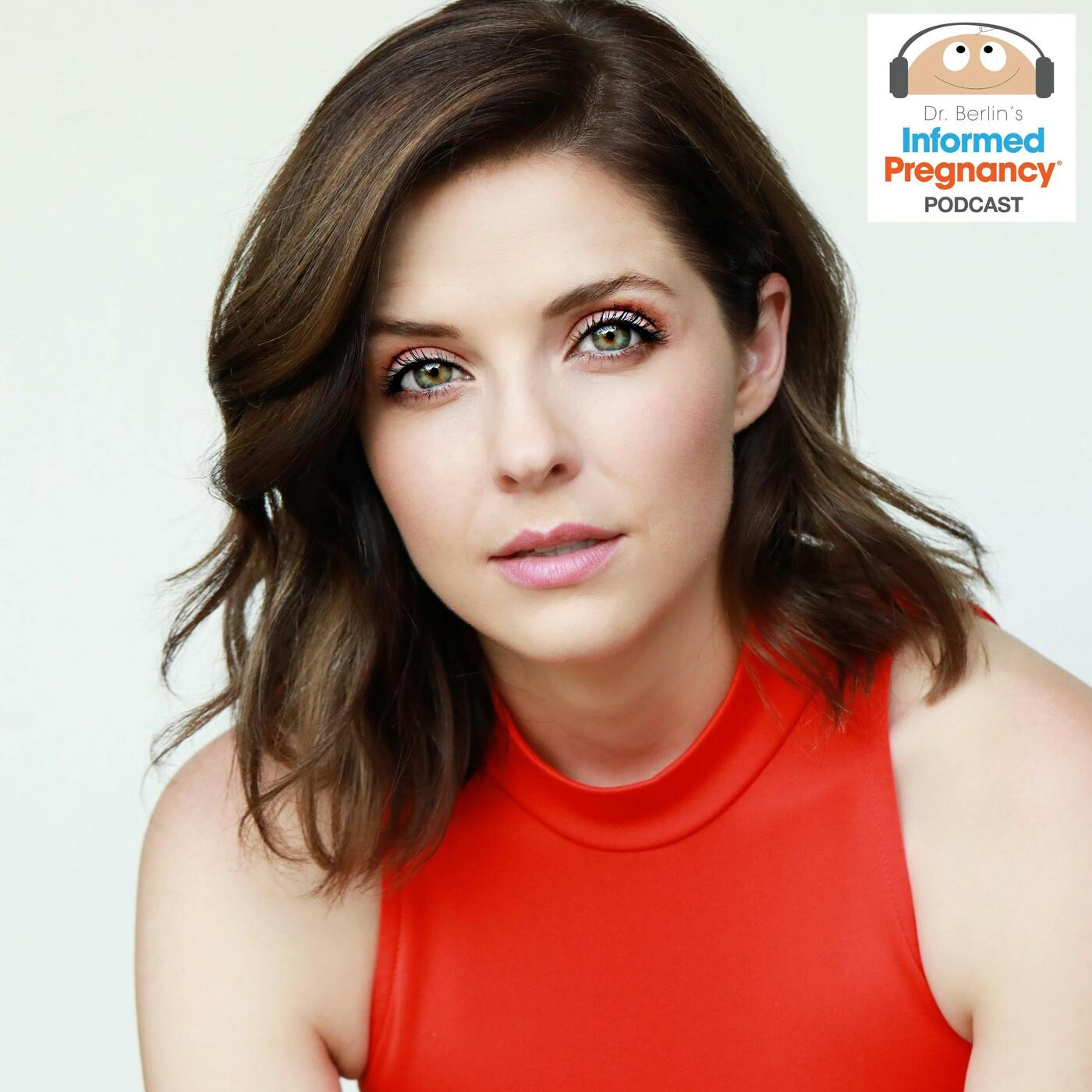
Actress Jen Lilley shares her journey from being a mentor for Child Help to becoming a foster and adoptive parent. This episode is packed full of information about the foster care system, how to become a foster or help out without fostering, how the pandemic affects children in the system and common misconceptions surrounding foster care. May Is National Foster Care Month!

Learn more about your ad choices. Visit megaphone.fm/adchoices
See Privacy Policy at https://art19.com/privacy and California Privacy Notice at https://art19.com/privacy#do-not-sell-my-info.
Key quotes
“You know what? I believe that every single person was created on purpose and for a purpose. We're not here my by mistake”
“because I truly believe also that wherever you are, you're there for a reason, and you need to lend your hand and your heart to people around you.”
“And the goal of foster care is family reunification and family restoration.”
“So when you're saying no to one child, you're saying yes to another.”
“There is nothing more emotionally frying in my experience than foster care because you do get so attached and you do love these children and you want to protect them and you want what's best for them.”
Related episodes
- Ep. 129 Jen Lilley – Before Birth
- Ep. 196 Jaundice and Other Newborn Concerns – Dr. Princeton Ly
- Ep. 131 Nousha Salimi – After Birth
- Ep. 254 Anastasiya Kukhtareva – After Birth
Transcript
AI-generated transcript with speaker labels — may contain errors, especially names and medical terms. Dr. Elliot Berlin, DC appears in blue; Jen Lilley in orange.
Download PDF of the Transcript
Dr. Elliot Berlin, DC [1:13] Welcome to the informed pregnancy and parenting podcast. I'm your host dr. Elliott Berlina in this episode We're gonna talk about fostering children. My guest has been on the podcast before she shared her pregnancy and birth journey with her daughter She and her husband also have two boys who initially came into their lives through foster parenting She's an amazing actress and wonderful all-around person She consistently wins the award for my mother's favorite Hallmark personality. That is true. Jen Lilly. Welcome back to the podcast
Jen Lilley [2:03] Thank you so much. I love that. Your mom loves me. That's the best
Dr. Elliot Berlin, DC [2:07] Yeah, she's actually living with us right now and she's like, are you gonna do podcasts?
Jen Lilley [2:11] I said, yeah, you'll never guess who I'm having and it was just like when I told her it was Jen Lilly She was very excited. That is so sweet. Well, thanks for having me back I'm really excited and I'm excited to talk about, you know Foster care is maybe an alternative or something that people can also do with their pregnancy
Dr. Elliot Berlin, DC [2:29] I mean, it's kind of interesting I know a lot of people who have fostered pets But I only know very few people who have fostered people and you're one of them So I'd love to learn more about the experience. We touched on it a little bit earlier But how did you because you fostered your son before you had your baby your daughter So how did you guys get into foster care?
Jen Lilley [2:50] Gosh, okay. Well to back it up it starts in my childhood my parents have both since retired but my Dad was a judge and my mom was a director of a crisis pregnancy center and so because of that because foster care is the goal is to remain unbiased and obviously that can cause some red tape and some suspicion on you know bias and Weighing in on court decisions and all of that. They were not able to be formal licensed foster parents But because they're amazing people with huge hearts throughout my childhood We often had someone living with us that was just on hard times or whatever So the seed was planted as a child which I think is really important because that's something I hear a lot
[3:32] I have a podcast called fostering hope and I hear that a lot for my listeners Like how do you you know, how is it going to expect my biological children and we can get into that but The main thing is like I always say for me as a child It really birthed something huge in me and it gave me an awareness and an empathy and really opened my heart To the idea of fostering so that was planted in me at an early age But back in 2011 when I was, you know Adulting so hard and trying to be an adult I started watching the news a lot like most of us do and I got really overwhelmed which I think everyone can relate to especially right now and The more I watched the news the smaller I felt the more helpless I felt
[4:14] The more I felt like I was this naive little girl with big dreams and hope To change the world and make a positive impact and I just felt powerless So I stopped I turned off the news and I went into my office and I started praying and I was just like, alright You know what? I believe that every single person was created on purpose and for a purpose. We're not here my by mistake You know your listeners know that from the informed pregnancy podcast. I mean at the time of conception alone It's like what there's over two million sperm or something and only one wins I mean the odds and the miracle of childbirth alone, you know Just give so much evidence to the fact that no one is here by mistake
[4:53] And so I started researching what was going on in our own neighborhood and our own community because I truly believe also that wherever you are, you're there for a reason, and you need to lend your hand and your heart to people around you. So I started learning about child abuse. I found out it was a huge problem here in the US. I became a mentor through an incredible charity and organization called Child Help. They've been around for 60 years. They're the largest and longest running nonprofit for child abuse and neglect and prevention. They're incredible. Gosh, I could go on about them, but the proof is in the pudding. They've been around for 60 years. They created the National Child Abuse Hotline
[5:34] that all of the social workers here, which is 1-800-4-A-CHILD, if anyone's listening and they need to report something, just to touch on that for a second, it is an anonymous report. It does not mean that that child will be taken out of the situation. So if you suspect abuse, if you see something, say something, that's one of their mottos. If you're listening and you are in an abusive situation, you can also text, which is a safer way, especially for a lot of kids that are stuck at home right now. Anyway, so they created 1-800-4-A-CHILD and they've rescued over 10 million children in their 60 years of operation. Yeah, I know, right? And they've been nominated for eight Nobel Peace Prizes.
[6:14] So they are an incredible organization. They're doing a massive work. And so I easily became an ambassador for them. Over 92 cents of every dollar that is donated goes directly toward their programming. So they're just amazing. And I became an advocate and an ambassador for them. And they have a great program called Special Friends. And it's kind of like big brothers, big sisters. So in a nutshell, I became a mentor and I really fell particularly in love with a special friend of mine named Lariah. And my husband did too. He would come along on a lot of the visits with me. And in one of our visits for her birthday, she was turning eight and I brought her these homemade cupcakes.
[6:53] And I remember like I'll never forget it when she was blowing out the candles. You know, as an actor, I study human behavior. And so I'm always really watching people and just trying to figure out like what's going on behind the eyes. And she put on this brave face. Like you could tell that she was just really moved by the cupcakes, but she was trying to be tough. But I could tell that it opened up something in her. And then we started playing on the playground afterward. And all of a sudden she said to my husband, we've mentored her for like a year, two years. Like gosh, I don't know how long. And she said, I'm really scared. My mom called and she wants me back.
[7:27] And the goal of foster care is family reunification and family restoration. But that's not always a good idea. And it certainly was not in her case. So that was enough to send my husband over the edge and make him want to take the foster care classes. And we were not able to foster or adopt her, which was sad. But I will say happily that she reunified with grandma, which was a fantastic option. We're still in touch. But we got our son, Kaden. So that's how we got into it.
Dr. Elliot Berlin, DC [7:52] Wow, you really jumped in head first. I mean, you were not able to because you weren't ready yet or?
Jen Lilley [8:01] To foster. Why did we not do it sooner? You know, because I'm married and he's 50% of the relationship and my husband, sweetest man, he's so patient and wonderful. And he, you know, I'm a lot of woman to wrangle for anyone. And he is just so patient with me. But he like 51% of surveyed Americans wrongfully had the misconception that children in foster care are associated with the juvenile delinquent system. And that's not the truth. And so he was just scared of it. And it really took him meeting these children through child help to understand that their children who have entered a broken system through no fault of their own, but through severe abuse and neglect
[8:42] and they just really need love and stability.
Dr. Elliot Berlin, DC [8:45] So what are the initial steps? If somebody would be interested in fostering a child, can you just do it? Or are there classes or certifications you need to do?
Jen Lilley [8:54] That's a great question. Yeah, you cannot just do it. You have to be a licensed parent. But the first thing that people would want to do is they want to Google Department of Children's Family Services. In some states, it's called Department of Human Services. In some states, it's called Child Protective Services. But I'm absolutely positive that if you Google any of those, you will land on the right one for your state. If you want to go to the government, because these children are government kids, they are wards of the state, that's the foster care system, you can get licensed through your local Department of Children's Family Services or what I did, which is what I recommend,
[9:29] you can get licensed through an FFA, which stands for Foster Family and Adoption Agency. I'm licensed through Child Health. I know there's Olive Crest. There's so many wonderful FFAs. And the reason I went through an FFA is because they really care and children can get lost in the system. That's not the goal, but obviously that's one of the reasons it's so broken. And so when you have an FFA, they're just, they pay more attention to detail and you have more of a support system. So you have to get CPR certified, first-aid certified, water safety certification. You have to take, for me, through an FFA, it's a little more involved, which is why I did it.
[10:08] We also have to take 60 hours of parenting classes to get licensed. And I believe it's 24 to 30 a year to keep our license current. And then you also have to make sure that your house is basically childproofed and all of that. But it's a lot easier than it sounds, and you can go at your own pace. Jason and I got certified in two months. We were fast-tracking it, but we were taking our classes on the weekend. That was all the time that we had for. But, you know, if you want to take a year to get licensed, you can. So I always tell people, all you should do is first take an orientation class, you know, because taking a class doesn't mean that you're signing up.
[10:44] Or if you just want to learn more about foster care, you can either listen to my podcast, or even better, because, you know, just get directly involved. You can call your local Department of Children and Family Services and just say, Hey, how do you need help? What can I do for you guys? Because they don't get that a lot. And that will really get you involved with foster care on a practical level and kind of familiarize yourself with the situation without having to jump in headlong.
Dr. Elliot Berlin, DC [11:09] Yeah, I mean, that sounds really smart, because, you know, if you're curious, it's a big step for anybody, I think, whether you have kids or not. And to do an orientation sounds wise just to put yourself in there without any commitment and get a better sense of what would be involved in helping one of these kids. All right, believe it or not, it's time for a quick break. When we come back, we're going to learn more about foster care with Jen Lilly. Welcome back to the Informed Pregnancy Podcast. We're talking about fostering with Jen Lilly. Okay, so are there requirements besides the licensing, which by the way just almost sounds like a great idea for anybody having a kid no matter how you have them?
Jen Lilley [14:15] Completely.
Dr. Elliot Berlin, DC [14:17] Are there certain things that would disqualify me from being able to foster a child?
Jen Lilley [14:23] You know, if you have a felony or a record of child abuse, that will disqualify you. But if you're single, that does not disqualify you. If you're married or unmarried, that does not disqualify you. Basically, you just need to have a heart to help, and you don't have to have much. You know, the government does try to make it as easy as possible on the foster parents. It doesn't always work, but foster kids are supposed to have their daycare paid for or their school paid for. Then you get a monthly subsidization. It's not a lot. I mean, you know, as a parent, like here in Los Angeles, which obviously is the cost of living, is really astronomical. But here you get $900 a month. Now you know as a parent
[15:05] $900 a month for a child is not going to cover all the expenses, but at the same time they do try to make it easy. I know the kids go through nationwide just to qualify for WIC. There's a lot of like charities and helpful programs. So they do try to make it as easy on you as possible. And so you don't have to be financially set. But I know at least with our FFA we did have to show our accounting. And I think that the government makes you do that too just to prove that you are not taking the check and using it to pay your mortgage or your phone bill or something that you're able to use it for what it's called for. Now obviously that's a big flaw in the foster care system because
[15:47] there are unfortunately horrible people who do foster. And that's why I'm
Dr. Elliot Berlin, DC [15:51] trying to recruit good foster parents. Yeah and I hate to keep going back to this comparison, but it's all I really know. I know that when we fostered dogs the goal was for them to get adopted really by somebody else. Meaning they would have liked if we could adopt the dog that we were fostering, but we couldn't. And so you know we were taking care of them. We were giving them love and providing for all their needs and vice versa by the way they're humanist love. But also the goal was for them to find another family, not our family, to take them in long term. Is foster care like that? Is it like fostering with the hope that you'll eventually adopt them?
[16:29] Is it fostering with them, you know, to take care of them until somebody else adopts them? What's the long-term goal? That's a fantastic question. So the
Jen Lilley [16:38] overarching goal of foster care is family reunification or I just recently heard the term family restoration and I love that because I think it's holistic and it's a positive connotation to it. But you do want to try to keep that child intact with their birth family if you can. So you know a lot of children who are in foster care it's not only from abuse it can also be from neglect and that can be from maybe a parent who's heavily involved in drugs or somebody who just can't care for their children so their children are starving or something. Obviously if the child's coming from a situation of neglect that's not willful, I always want reunification. I'm always rooting for reunification. You're
[17:22] supposed to always root for reunification as a foster parent but that is a really hard line to walk because as a caretaker you do become so attached to these children and on that I think it's 100% necessary. You know I hear that all the time. That's probably the number one thing I hear from people is oh I could never foster I would get too attached. Well you better get attached. You know there's a hashtag on Instagram that's called hashtag get too attached and my view on that is that those of us who did not come from foster care we have coping skills whether they're good or not we have better coping skills than these children have and if you're interested in fostering you probably have had some sort of

[18:01] positive outlook on life even if you had a rough go of it you know you definitely like your daughter made lemonade out of lemons and you know you have some coping skills so if you can take on a little bit of that pain that that child would otherwise experience then you need to do that's your responsibility as an adult. Now a lot of people just foster in order to bridge the gap until that child can find a permanent home. I don't like that personally. I think that the goal should be reunification and adoption when necessary. I think that any child you take into your home you should be in the back of your mind having a willingness to adopt or having that on your heart.
[18:41] Now that said I know that's not always possible because these children have experienced extreme trauma and you know sometimes it's not right for your family to keep them with you and that is really hard but that is true. I have not personally experienced that but I know I've had friends who have had taken in children with RAD for example which is a severe severe detachment disorder and just for the safety of her own children you know they got that child all the therapy that they could give her but it wasn't possible to adopt so you know you can't judge yourself all you need to do is just love them and I think that things will take the right course.
Dr. Elliot Berlin, DC [19:21] When you're matching up with a child to foster how does that work? I mean is there a process of sort of like match.com here where you try to find the right kid that will do well with
Jen Lilley [19:33] the right family and vice versa? I think for some people there is you know in our foster care class they asked Jason and I, we started fostering back in 2016 and so at that time you know pre-kids if you can believe it I was still playing a teenager and so I was like I don't want to foster teenagers because they look like I'm their age. Parenting has aged me over the last four years so now I'm playing like my age demographic which is very sad but um So we said, hey, we will foster anybody, boy, girl, any ethnicity, any cultural background, zero to ten. That's where we said we'll start there and then, you know, we'll foster teenagers later. So they do ask you what you're comfortable with.
[20:16] Some people, I think it's kind of weird, but some people only take in girls. And like, I don't know why that is like that as a child advocate makes me a little weirded out. But some people like they just want to foster girls, I don't know if it's because girls are easier, but they will ask you that in orientation. And the thing that they say in Los Angeles is that Los Angeles alone makes up 10 percent of the children in the U.S. foster care system. Our one city.
Dr. Elliot Berlin, DC [20:39] Uh-huh.
Jen Lilley [20:40] Is that not horrifying?
Dr. Elliot Berlin, DC [20:41] It's horrifying.
Jen Lilley [20:42] It's insane. One city, 10 percent. Yeah. So and I think that's because, you know, here we're also career focused and we're chasing our dreams. And we just don't have time to be bothered with children because as you know, children are awesome, but they are an inconvenience, you know, and they do change everything. But they they really, in my opinion, enlighten everything. And I am the perfect candidate. I have like I think excuses are for losers. Look, if you think that you are too busy, then you should look at my schedule and I make it happen. You have no excuse. So I think everyone should foster. But one thing to go over with you in L.A. is that there are over 35,000
[21:18] children here in Los Angeles who need to be fostered. So when you're saying no to one child, you're saying yes to another. And that's actually my story. We actually said no to my son, Kaden, at first.
Dr. Elliot Berlin, DC [21:28] Oh, really? Why?
Jen Lilley [21:29] So this is great. I love it. He was four months old and I had said, you know, we'll take zero to 10 boy, girl, whatever. But I said my preference was like age five, age six, age seven, age eight, just because I love helping kids. And I wanted I had a grandiose idea that I would just really get nitty gritty with the kids, catch them up on their schooling, dismantle the lies that they've been told, pep them up. And I didn't want an infant because infants, in my opinion, I mean, my honest opinion of babies is that like they're kind of boring, like, you know, they're helpless, they're time consuming. You don't sleep through the night until like eight months.
[22:08] They don't have a ton of personality. And so I was just like, oh, so they called us with Kaden and he at the time was special needs and he had just experienced a lot of trauma. And I, when I got four months old, yeah, four months old, he was actually deaf when we got him, which is crazy. And we prayed for him and God healed him. No jokes. Like God, his ears opened incredible. But we could, yeah, I know so many cool things with Kaden, but we, we said no, because I was going to this, this is hysterical. I was going to this women's conference with my church. And for anyone listening, you're like, oh, that's so gross. But, you know, like for like the fact that I would have this battle of like,
[22:52] I'm not going to take a kick because I'm going to church. And that was my inner battle. Okay. So let me back that up. I have experienced some serious church drama and I think anybody has, regardless of what religion you are, you've probably experienced some hurt if you're like, okay. And so I didn't feel comfortable around other women. And so when you open and go to this women's conference as the first women's conference I've been to in 15 years. And so I committed to driving three girls down to San Diego so that I wouldn't bail out. Because I knew I was like, I'm freaking out. I'm going to like bail out last minute. Very LA, LA of me. So I get this call, like, Hey, can you take this four months old?
[23:27] I said, I don't know. I got to call you back. And I had this whole inner turmoil and like discussion with Jason. Do I go to church or do I be the church? You know, do I like put my money where my mouth is and like actually be a Christian and like help this helpless child or what? So we discussed it and we were like, you know what, in training, they said that there's like 35,000 children. When you say no to one, you're saying yes to another. So I called them back and said, look, I'm actually going out of town. It's 10 PM. It was 10 PM. I said, it's 10 PM. Three girls are expecting me to pick them up in the morning. I really, I can't take this child.
[24:01] I'm so sorry, but listen, call me Saturday. When I get back, I will take any child that you call me on, which would scare the crap out of me to say, you know, cause I'm like, who are they going to get me? You know, and, uh, they called back like a half hour later. They're like, Hey, are you still up? And I was like, yeah, they said great news. We found this family that will take him for the 48 hours. So can you just meet us? Can we just meet you at your house on Saturday? Could you leave the conference early? Uh, are you giving the girls the ride back? You know, meet, we'll meet you at your house. And I was like, what? So I Amazon primed it, sent out this crazy email to all of my friends and
[24:31] family and threw together an Amazon registry and 48 hours later we had Kaden.
Dr. Elliot Berlin, DC [24:37] Wow. That's incredible.
Jen Lilley [24:38] Yeah.
Dr. Elliot Berlin, DC [24:39] And you still have Kaden.
Jen Lilley [24:41] I do. So yeah, we got to adopt him, which is incredible. And we are in the process of adopting his half brother, who we've also been fostering since he was four months old. And he is too now.
Dr. Elliot Berlin, DC [24:50] Oh, wow. And then in the midst of that, you also had your daughter.
Jen Lilley [24:56] Yeah.
Dr. Elliot Berlin, DC [24:57] Yeah. You have your hands full. I mean. I mean, honestly, I still think you'd get away applying a teenager if you wanted to, but parenting ages you and you have so much parenting going on in your little nest. Let's take another quick break. I have a bunch more questions when we come back with Jen Lilly. Welcome back to the Informed Pregnancy Podcast. We're talking about fostering with Jen Lilly. Okay. So in segment one, you kind of touched on that a little bit. But I think sometimes a fear that people have is if I foster or if I adopt, then how does the interplay go between my biological children and my adopted children?
Jen Lilley [25:46] Yeah. I think it's a fantastic question. And I obviously have only fostered infants pretty much. And so I can only say my experience as a child was that what it birthed in me was just empathy and a heart for these people in need and the idea that taking in someone is not scary, you know, and that really has to do with the way my parents presented it. Now, I've since on my podcast, Fostering Hope, I've interviewed a lot of parents who have biological children who have gone on to adopt or who have fostered and had placements, you know, come and go. And I've asked every single one of them, because it's the most the question I hear most often, how does that impact your children?
[26:29] How did you, you know, what was your whole journey? And a lot of them have said the first thing that they did was they made their children part of the discussion in the first place. So if their children were old enough to understand, you know, maybe they're three, four or older, they would sit down with their kids, explain to them what foster care is, and let their kids also be part of it as a family decision. So I think that's really why a lot of them let their kids ask them hard questions, you know, when the children did move on, they would explain to them, you know, we love that child, and this is a good thing, this is positive, and we're going
[27:05] to keep praying for that kid, or sometimes they try to stay in touch. So I think there's a way to go about it that really will open up empathy. I mean, that's my experience, and I think you, you know, you have great parental instincts, moms have maternal instincts, dads have maternal instincts, and you need to go with your gut. I really do believe that you will have peace and grace to be able to tackle the journey as it comes.
Dr. Elliot Berlin, DC [27:30] Yeah, I mean, I relate to the people you talked about who felt like I'm going to get too attached. I mean, we literally even had that with the dog that we fostered for a few months, and it was so hard to see her go. Luckily, we have an arrangement kind of where we can still see each other. But I don't know if that happens with foster care or not, but I, you know, for having a biological child and then fostering a child that then your child gets, you know, attached to, then I could see how it would be harder, you know, for you, you're making the decision to do it, but for them, it could be more challenging.
Jen Lilley [28:04] Yeah, and you know, that was especially hard for me with Kaden's brother because foster care, I'd want to give it to people in a realistic way. It is very emotional. There is nothing more emotionally frying in my experience than foster care because you do get so attached and you do love these children and you want to protect them and you want what's best for them. And going through his brother's case, you know, there were a lot of times where it looked like it wasn't going to go our way. And that was my biggest fear was, how do I explain to my three-year-old who's a boy, so like he doesn't communicate well? I mean, I don't know a lot of three-year-old boys that do, but
[28:40] like Kaden especially does not communicate his emotions well. And I was like, how do I explain to him what happened to his little brother, you know? You can't explain death. You can't explain like he went somewhere else, you know? It's just going to be, it was just awful. It was excruciating as a parent to walk through it. But I'm very glad that we're able to now we're going to be adopting each other. So I get the emotional journey. That's something, that's a discussion I always welcome on my Instagram, you know, when I connect with other foster parents or people who are curious, like if you want to have longer conversations with me, I'm all for it.
Dr. Elliot Berlin, DC [29:13] Right now we're going through an interesting time. The pandemic is happening. I don't know when people will listen to this. It could be for, we're going to keep it up for a long time because the content is so important. And that's one of the reasons why we're doing the podcast remotely. We're doing our part to shelter in place. Although I always love to do our podcasts in the studio face to face. You're one of the few people who have so much personality and energy that I almost feel like I'm sitting across from you face to face. But the reality is that the pandemic, the shutdown, the global shutdown really must be impacting the foster care system too.
[29:49] In my mind, I could see how it could have a positive impact and a negative impact. What's the reality?
Jen Lilley [29:55] You know, my eyes are watering just as you're bringing it up because I'm so glad that you're bringing it up. Oh my goodness. You know, honestly I think that children in foster care and orphans have actually been hit the hardest by the pandemic because you know foster care is already scary for them, but anytime that there is a an epidemic or a crisis of any kind, for example back in 2011 the American economy was still in the the real depths of an economic you know meltdown with the real estate crisis and so back in 2011 it was the statistic was every day seven children in the United States died due to child abuse and neglect and the child health has and through the work of
[30:37] churches and charities and so incredible social workers they got the average down to five children every day, but that is still five too many and there's a child abuse report that comes in every 10 seconds on the child abuse hotline. Now this pandemic child health has been around for 60 years they have seen historical unprecedented numbers because child abuse rises every time there's stress in the home and I don't know anything that's been more stressful than this and what's so horrible about this is that but don't worry I have good news what's so horrible about this to really drive it home is that safe a safe place for children school is a safe place for children and so these children are stuck at home with their
[31:18] abusers and then if they are doing family visitation that's been taken from them they're trying to make facetime available but then how can you have a conversation with your birth family you know and say or I don't know I mean like it's just been really hard if it for children that are already in foster care they can't see their family for children that are being abused the numbers are skyrocketing and then that's compounded by the fact that social distancing the shelters can't take in kids and then with all of the fear that's going on wonderful foster homes like mine they're not taking in kids right now because they're too afraid that they're going to contract the virus so they're hit really hard but here is some
[31:59] super positive news because I always like to yes please okay great this is like the best news ever and it's such good timing I mean I just really truly believe that everything is is divine timing and so this is great you know last time we talked we had mentioned a little bit that I'm a singer and so I had not released my album yet and it's like a 60s album so I put it off because Mother Teresa said if you want to change the world go home and love your family and when I created my music I wanted 100% of my profit to always go toward helping orphans and children in foster care so I was like all right how much does it take care of orphans and children in foster care if I'm not even taking care of my own kids so I
[32:34] focused on Julie focused on my own kiddos got through baby jay's cases you know going to an adoption and I was like say now's the time COVID hit doesn't matter it's perfect here's what I'm doing all during the month of May which is foster care awareness month I am going to be hosting a worldwide talent contest called Voices That Give to rally hope to reawaken all of our dreams because so many of us are in a funk right now and to help children in dire need so it's a global competition designed to help artists of all genres and experience levels showcase their true talent and you know it's because I really believe that everyone was created on purpose and for a purpose and was gifted with unique talents and gifts so this
[33:13] contest is for everyone there is five categories this musician, actor, dancer, unique or hidden talent which I think a lot of us have figured out what our unique or hidden talent was while we're sheltering employees out of our minds you know and then I have a category for hallmark fans and so they're my mom yeah so like you upload a video and you showcase your talent it's free to enter and then what we're going to do the grand prize by the way ten thousand dollars cash which a lot of people could use right now you know everybody's getting hit by this pandemic you're going to get national press there's going to be career prizes for example the musician will be featured on big time radio in 44 countries worldwide and they
[33:51] get mentorship programs the actors get a walk-on role in a hallmark you know movie with me the hallmark fans get to walk on role in a hallmark movie with me and they get to tour the set of home and family and so there's all these really cool prizes there's also cash prizes and how it's going to raise money for charity so it's free to enter but in the month of june so you can enter anytime in may may 1 through 31 and then in the month of june everybody who enters is going to rally their friends family neighbor whoever to vote for them everyone gets one free vote now if they want to donate they can say okay i'm going to donate ten dollars which is ten votes for their contestant of choice when they donate
[34:26] ten dollars they're going to get my album that's how i'm tying in my album and then they're also 100 of the profit goes to helping kids in need so they help their contestant they get an album and they help kids in need and so obviously there's like different voting packages but i think it's going to raise a lot of positivity it's going to give people hope you know because even for entrepreneurs like if you want to be an entrepreneur you could use that cash to to jump start your career or you know to figure out how to do a career from home and you could use the press to catapult your brand so it really is for everyone it's going to do so much good and what we're using
[35:00] money for is I'm going to donate it to Project Orphans USA, and we are going to create, hopefully the goal is to create a neighborhood model here in the United States, where children and foster care and orphans can find safe, stable, loving homes with foster parents like mine who are willing to adopt. So it's going to be awesome. Oh, it's called Voices That Give.
Dr. Elliot Berlin, DC [35:21] Voices That Give?
Jen Lilley [35:22] Yeah.
Dr. Elliot Berlin, DC [35:23] Okay. I love this idea on every level. For people who are stuck at home in quarantine and maybe have a talent that they can start to work with for obviously the money and the awareness that's going to go to helping the kids. I love it on every level. Your passion and energy is exploding. I just want to say that right now, this is going to come out in May, which is, is that Foster Care Awareness Month?
Jen Lilley [35:44] It is.
Dr. Elliot Berlin, DC [35:45] Okay. So May of 2020, if you're listening to this two years or three years later, you're not probably going to be able to enter the contest anymore, but you'll be able to see the results of this project, which seems like an amazing project. By the way, my mother, she's been in quarantine with us now for about two months. She usually visits for a week at a time. So she's got the biggest TV in her room and she's getting us all hooked on Hallmark now and Hallmark streaming channels on Roku. So we're all becoming very versed in Hallmark. I might get a walk-on part in a Hallmark movie after all this is over.
Jen Lilley [36:17] You could.
Dr. Elliot Berlin, DC [36:19] All right. So, you know, I said with the COVID that I can kind of see a positive and a negative. The negative that you described is much worse than I ever imagined. But maybe there is a silver lining. People are home more. People are starting to focus on their families more and pay attention to family more and to the kids more. And maybe somebody listening will be inspired by this to open up their hearts and minds and, and at least look into starting orientation, take initial steps and see how we can help. What are other things that we can do as we're closing this podcast? What are things that somebody's listening to do? If they're curious, what's the first step? If they
[36:54] just don't think they can foster a family right now, a child right now, how else can we help?
Jen Lilley [37:00] Yeah, that's a great question. It's one of my favorite questions. Everyone can do something. And you know what? Don't ever judge yourself because no small act is too small. The first thing I would say is because child help, child help dot org, because it's $5 could save a child's life because that is the cost to run the hotline. So $5 per call. So just donate $5 to child health is the first thing. Otherwise, I would say call your local Department of Children and Family Services, ask how they need help. You could also look into becoming a Costa, which is a court appointed special advocate. That's incredible. It's kind of a mentorship program. If there's not a lot of time commitment, and it's a
[37:44] real way to help out. And then also, there's just so many amazing organizations. There's James Storehouse here in California. There's a lot of they call them foster care closets. I know there's foster village in Austin. There's so many amazing organizations all over the country that are taking in gently used cribs and blankets and clothes and backpacks and you know, new backpacks. They want new backpacks is that the kids feel just like all the other kids, you know, they're not the foster kids, they have the new items, but you can donate to a foster care closet. And that's because government regulations, rightfully so, will not allow a child to be placed until like an
[38:23] infant can't be placed without a car seat, a crib, clothing, diapers, formula, bottles, you know, so there's all these things that go with having a baby. And when you're getting an emergency placement, it's overwhelming. And it's you know, that $900 is going to go really fast or in some cases like $300. So you can donate to foster care closet. I highly recommend that.
Dr. Elliot Berlin, DC [38:44] Sounds wonderful. And like you said, easy. There's multiple levels and different ways anybody can help. Even if you're not looking for the biggest commitment. You know, I'm gonna recruit people to do the $5 today. Awesome. And I bet they'll end up doing more once they get involved. Generally last question for you. Where can we find you online?
Jen Lilley [39:03] Oh, I love it. So my last name is Lily L I L E Y, because everybody forgets the E. So I'm Jen with one and jenlily.com that can point you to everything. And on Instagram, it's Jen underscore Lily.
Dr. Elliot Berlin, DC [39:17] I will see you there. And thank you so so much for being an amazing person and for coming to share this important information with us.
Jen Lilley [39:24] Oh my gosh, my pleasure. I love chatting with you. I can't wait to see you. And I'm so glad that you're doing better.
Dr. Elliot Berlin, DC [39:29] I lived. Yeah, I feel I'm grateful for it too. At home. Thanks so much for listening to us. If you'd like more information about pregnancy, parenting or raising kids, visit us online at informedpregnancy.com.
Want more pregnancy + parenting? Start your FREE TRIAL of Informed Pregnancy+ and get access to all our curated pregnancy and parenting content — original series, iconic birth films like The Business of Being Born, prenatal workouts and more.
