
September 22, 2022 · 56 minutes · Episode 303
About this episode
Actress, author, environmentalist, and new mom Olesya Rulin just welcomed her first child. She shares her emotionally intense 48 hour transformation in this beautiful, powerful, and raw birth journey.

Learn more about your ad choices. Visit megaphone.fm/adchoices
See Privacy Policy at https://art19.com/privacy and California Privacy Notice at https://art19.com/privacy#do-not-sell-my-info.
Key quotes
“Everyone I have hypermobile EDS everyone the reason why my hips and my ligaments cannot support my bone structure I'm really stretchy, which is awesome. I didn't get one stretch mark Silver lining I'm very like malleable bad side effect is I'm too malleable”
“And if I start postpartum with my mental health already low, I just don't see this going well.”
“And over the audio, it says you are safe, you are loved and everything is going to be okay, which is what I use in acting to get me”
“And I kept changing outfits. That's something I did in every, like probably four hours, I would change into a different flowy whimsical dress because it helped me transition to like another chapter.”
“naturally, but you know, you just have to shift and adjust and take care of yourself and be an advocate for your own wellbeing. And at that moment, that's what we needed to do.”
Related episodes
- Ep. 302 Olesya Rulin – Before Birth
- Ep. 182 Randi Wood – Birth Story
- Ep. 274 Briana Henry – After Birth
- Ep. 263 Taryn Slater – After Birth
Transcript
AI-generated transcript with speaker labels — may contain errors, especially names and medical terms. Dr. Elliot Berlin, DC appears in blue; Olesya Rulina in orange.
Download PDF of the Transcript
Dr. Elliot Berlin, DC [1:36] Welcome to the informed pregnancy and parenting podcast We are talking to Olesya Brulina as she last time we talked to her was very pregnant and full of energy And now she's very postpartum and full of energy. Welcome back to the podcasts. Hi. Thank you for having me Congratulations
Olesya Rulina [1:54] Thank you. It was a road to be traveled
Dr. Elliot Berlin, DC [1:58] It's been a little guy here we got here Yeah, well you're on the other side of the finish line We want to know everything about how you got there. But before we do that, let's recap a tiny bit You were pregnant when we talked to you last you live in the woods and you came to the big city to have your baby at the hospital and your plan was if I remember correctly like Number one you wanted a fuel intensity in your body and I got that gift Yeah, and you know you wanted things to be on the natural side so long as it made sense for them to be there and you said you're a good pivoter and You wanted whimsical and you wanted to be fully present and did you do your 23 me yet?
Olesya Rulina [2:49] No, we just got home. My husband ordered the box too. So we are gonna do it this week It's like literally on our family to do this chart because we'll have to answer the Jewie question on Instagram
Dr. Elliot Berlin, DC [3:01] All right, so tell me everything so how are the last weeks of your pregnancy?
Olesya Rulina [3:05] The last weeks of my pregnancy were and really tough. My hips kept coming out of their socket Which is really difficult. Obviously as you well know you put them in yeah And then your colleagues did as well. So it was really challenging. I couldn't walk more than 20 feet I was in chronic pain and I was falling over quite a bit quite frankly and like using the walls and it just Those last about 10 days were Brutal just because you're uncomfortable and my little munchkin was more than happy to stay in there as long as humanly possible So at day 40, I was like I am done my due date I was just like I am NOT going to 41 weeks get this baby out of me all my beautiful
[3:50] Natural ideas we're getting very close to coming out of the window because I was like I can't do this and I called my Dr. Rothbard and it's like we're coming in Please do a membrane sweep like get this moving because I cannot make it to 41. There's no way
Dr. Elliot Berlin, DC [4:07] Yeah, mentally and like even then you're kind of a badass you've been through a lot and you know how to power through things Yeah, and also you have this weird connective tissue
Olesya Rulina [4:18] I do Everyone I have hypermobile EDS everyone the reason why my hips and my ligaments cannot support my bone structure I'm really stretchy, which is awesome. I didn't get one stretch mark Silver lining I'm very like malleable bad side effect is I'm too malleable So my hips won't stay in my ligaments can't support the weight of my body and definitely we're not into supporting the weight of My body plus my baby's body plus for shifting downward and gravity. It's just a bad combination
Dr. Elliot Berlin, DC [4:54] Yeah, I think it's important to know that you know as a listener because you are super so to hear you on the one hand say, I couldn't go past 40 weeks. I know that's not true in a normal situation, but most people say that, by the way, like I put a fork in me, I'm done. Usually 39, 40, you go one day over that fake date that is supposed to be some sort of end date finish line and your mind just explodes with, oh my God, we're late. Right. And it's uncomfortable for most people, but for you, extra uncomfortable, because again, your body has the hard time containing itself without a baby inside you. So at that point, were you having any signs of getting closer?
Olesya Rulina [5:34] Nothing. She was so happy. She never stopped moving. She was doing her normal kicks and like her little things. I was like, oh, you're not coming up. And we're gonna be 42 weeks. Like, she, you are comfortable. I had no indication that she was going to come Earth side whatsoever. And I just know my mental health, because if I hadn't been in chronic pain for that long prior to, I think I would have been like, whatever, we'll just wait and try to go that natural path and let her take her time. But I was in so much pain that I started noticing I was getting depressed because I couldn't leave the house that we rent this little bungalow in the Venice beach canals.
[6:12] And it was just beautiful canal view. And I couldn't leave the house. I couldn't take a walk. I couldn't go past my front door. So I was just getting depressed because I was stuck in this beautiful little bungalow, but okay, I can't go to the store. I can't do anything. So the things that you recommend, like take a walk, take your mind off. I'm like, I literally can't. Right, sit on the couch and sit on the couch. Sit on the couch and I actually, ironically enough, don't like watching television that much. So my husband's like, watch a movie. And I was like, I don't wanna watch a movie.
Dr. Elliot Berlin, DC [6:43] Can I ask you a weird question?
Olesya Rulina [6:45] Yeah.
Dr. Elliot Berlin, DC [6:46] Is it weird to watch yourself on television?
Olesya Rulina [6:48] Yeah, it's horrible. I like, my husband still hasn't seen like probably two thirds of the films I've done because I won't let him. I'm like, no, don't do it. I'm watching NCIS LA though, because I really love that cast. I do, I'll watch those episodes. I really love the cast. I love my character. And I think it's such a different side of me that it's really fun. And then my family's into it and all my friends watch that show. So that's the only one that I share.
Dr. Elliot Berlin, DC [7:12] Yeah, I haven't seen anything that I've filmed ever. Well, we're about to, the world's about to see it. Berlin's about to be a famous actor. All the public exposure is killing me.
Olesya Rulina [7:25] You just wait.
Dr. Elliot Berlin, DC [7:27] Wait, but yeah, if I don't watch it, then I will have watched zero percent of the things I've done.
Olesya Rulina [7:32] There you go. You're gonna see it. You're gonna love it. Your family's gonna be so happy for you.
Dr. Elliot Berlin, DC [7:36] Thank you. Okay, back to you. So nothing's happening. You're very uncomfortable. You don't like watching TV and you're stuck in your little bungalow, like dysfunctional and you're young, strong and healthy. So to-
Olesya Rulina [7:49] I'm 36 and I'm super healthy. And luckily, you know what? I talked to my husband and I was like, look, if this continues, I just know that my mental health is not gonna go well. And if I start postpartum with my mental health already low, I just don't see this going well. Then I do not struggle. I have learned to deal with and adjust living with depression. So I didn't want that to be stimulated to a degree where I'm already like starting off on the wrong foot, if that makes sense. So that was a big part.
Dr. Elliot Berlin, DC [8:20] It makes a ton of sense. And it's amazing that you have that consciousness to realize that it was starting to go down that path and you need to take action. That's very strong also. Yeah, but the contrast between being young, strong and healthy and not being able to get off your bum and do anything is gotta be, you know, for anybody. I think it would be very, very difficult mentally. Okay. So, hey, Dr. Rothbard, sweet man, did he do it?
Olesya Rulina [8:45] He did. It was so painful. Did not expect that. I was like, whoa, that's just a lot of pressure and strange concept of having someone just like in there and like, you know, and you've been protecting that belly for nine months and all of a sudden there's like a hand in there moving stuff around. But it worked.
Dr. Elliot Berlin, DC [9:00] Yeah.
Olesya Rulina [9:01] And I was like, okay.
Dr. Elliot Berlin, DC [9:03] Could I ask you this question? Had you been having pelvic exams at all?
Olesya Rulina [9:07] No.
Dr. Elliot Berlin, DC [9:08] Oh, so it could be that even just a pelvic exam would have felt that way. Not necessarily membrane sweep, being so crazy on its own.
Olesya Rulina [9:17] Oh, good to know. I didn't know that. Yeah, I didn't have any pelvic exams. So that was my first one and I was like, whoa, this is intense. So yes, I haven't had any pelvic exams and that was the first time I got checked. And it was really just a lot of pressure. I mean, Rothbard's an amazing doctor. So it's not like it was on him. It was just my body was adjusting to it. Then we went home and by 7 p.m. that day, I started having contractions and I was so excited.
Dr. Elliot Berlin, DC [9:47] Because you wanted to feel them.
Olesya Rulina [9:49] I did. I wanted to feel them. And so for our- Nobody else on the planet. No one, just me. Uh-huh. So July 29th at 7.18, I started. getting contractions, which was wonderful. They were one minute contractions and they were 13 minutes apart. Wow. They started at a full minute. Yep. One whole minute, which is insane. What did they feel? I'm used to having really intense menstrual cramps and I've had ovarian cysts pop. So I don't really know the average intensity. I was just like, oh, these are really bad menstrual cramps, but I could still function through them. I could still go make like a cup of tea or have some food and just kind of use my breath and what my doula taught me to get through
[10:36] the process. And I was so excited that we were starting the initiation of giving birth and going into labor that I was looking forward to them in a weird twisted way. Yeah. But where did you feel them? Kind of like where my ovaries would be like in my lower pelvic area. I didn't have any back labor. It was all in my belly and in my pelvic lower area,
Dr. Elliot Berlin, DC [11:00] which was wonderful. I have two questions for you. Number one, when Dr. Rutherford did the sweep, it's essentially kind of like a modified pelvic exam. Anyway, did you get any data from that in terms of if your cervix had been making any changes? I think he did
Olesya Rulina [11:15] tell me I was like one centimeter dilated or it was starting to get dilated, but yeah.
Dr. Elliot Berlin, DC [11:20] So crazy. Yeah. And then my other question is with the searches that started several hours later, did it take a few for you to realize what was happening or you're like,
Olesya Rulina [11:30] Oh, that's it. No, I knew because she was so comfortable and cozy and I had no signs. When I started getting those deep rushes, I was like, Ooh, it felt like a period cramp. And I was like, yeah, this feels like what it is. And then I got my little tracker down on my phone and was able to time them. And once they got to a minute and I was like, Hmm, this is what this is. And we time them for an hour prior to getting excited or making any phone calls or anything like that. And once it was really consistent for every 13 minutes for a minute, I was like, okay, this is labor. Okay. So that would be like four contractions an hour. Yeah, which isn't crazy. So then that continued throughout the night
[12:15] and we called my doula to let her know. And she's encouraged us to sleep and rest in between. So my husband and I just stayed in bed and we breathe together through them. And I was able to rest and sleep and go to the bathroom and do all the things that I needed to do. The next morning, my attractions were one minute long and 10 minutes apart for 12 hours.
Dr. Elliot Berlin, DC [12:39] Oh, wow. Okay. I didn't see that coming. Okay. We're gonna take a little break here. And when we come back, we're gonna find out what happened over those 12 hours. Don't go anywhere. We'll be

Dr. Elliot Berlin, DC [15:17] Welcome back. We are talking to Ola Siaf Berlina. Okay, to recap, you have your membrane swept. It feels horrible to you. I mean, I've never had the pleasure. And then you go home and you start having contractions that are very tolerable, menstrual cramps. And they're 13 minutes apart, but lastly a minute in peace. And after a nighttime of sort of sleeping, getting up, doing your daily things, you start to have surges that are closer together, just 10 minutes apart in the house, still a minute a piece, for 12 hours. But I mean, only we know that now. How did that 12 hours progress? I mean, did you think you would have the baby by the end of that 12 hours?
Olesya Rulina [15:59] I thought we were getting close. I thought, you know, 12 hours plus the night prior to, so I was like, I've got to be at least like four centimeters dilated, like things that are shifting, right? Especially once they were 10 minutes apart for 12 hours, I am progressively getting more intense.
Dr. Elliot Berlin, DC [16:18] And closer together?
Olesya Rulina [16:20] And closer together, yes. And so I was like, okay, like, this is great, but it is my first baby. I didn't want to jump the gun and rush to Cedars and I and be like, ah, and then for them to tell me I'm like one centimeter dilated and not effaced. So I really wanted to stay and labor at home as long as possible and really utilize those tools that my doula and my research and what I just, my friends, the website, your zen mama, everyone recommended. So I was like, I'll just stay home for as long as it's doable or I'm still uncomfortably comfortable. And for me, my mom was home with us and I still hadn't had our doula come. And I took a shower, I was in bed,
[17:04] my mom went and got us lunch and I had soup and my husband bought me flowers, a massive arrangement of flowers so I could make flower arrangements to distract myself.
Dr. Elliot Berlin, DC [17:16] Oh, was that a hobby of yours?
Olesya Rulina [17:18] Yeah, I just love beauty and who doesn't? And the idea of just like fresh flowers in the home always makes me really happy. So he just bought me a massive car full of flowers. So my mom and I filled every like water container in that rent of the house with flowers and that was a beautiful distraction. And I was creating beauty while also being in pain and I'm really lucky I married a very intuitive man and he's a gem of a human, let alone a husband. And he knew that if I was creating while also being uncomfortable, that that would help my brain synapses create a different pathway. If that makes sense.
Dr. Elliot Berlin, DC [17:55] Yeah, what other things? Cause you're talking about your coping things from your Tula and from your training and stuff like that. What else was helpful to you?
Olesya Rulina [18:04] One of my best friends, Monique Coleman, who was in the High School Musical franchise with me and is like a UN Youth Ambassador and all these incredible things. She has got the voice of an angel and she's used to orating and presenting herself on stage and being a motivational speaker. She came over and she helped me create my vision board of the things I wanted to hear while in labor. And then when she left, she went to a recording studio and put those things into a voice note, a recorded audio for me. And it is absolutely beautiful. So when I felt tired of these 12 hours and one minute contractions, 10 minutes apart, I would play her audio. And it starts with this calming inhale
[18:53] and exhale of her breathing. And then she says the things that I wanted to hear were low tones, low groans to remind me to stay low in my voice and not go high. That boosts cortisol, right? And over the audio, it says you are safe, you are loved and everything is going to be okay, which is what I use in acting to get me to stay vulnerable so I can cry. I have to feel safe. And then she had a really beautiful part where she's like, you are on an adventure and reminded me to have fun as these rushes were coming through. And the birth is sexy, raw and sensual and wild. And I was like, yes, it is. And I kept changing outfits. That's something I did in every,
[19:36] like probably four hours, I would change into a different flowy whimsical dress because it helped me transition to like another chapter. So I wanted to stay like whimsical and light.
Dr. Elliot Berlin, DC [19:48] Was that a conscious thought?
Olesya Rulina [19:50] No, I just did it naturally. And it was only after I saw our birth video, which my husband unbeknownst really to me was shooting the whole time. I was like, did I change five times? He's like, yeah, you just kept changing dresses. And it was only whimsical, like eco-friendly dresses that I would wear. I was like, okay, like that's where I wanted to be. So yeah, having Monique's voice now played over the little speaker system that we had and having the voice of someone I love and admire and trust so deeply really helped me stay grounded and push through those 12 hours relatively easily because I felt like I had family all around me, even though Monique wasn't physically there.
[20:31] I just felt really supported and her voice is just so soothing. It's like butter. So that was one of my coping techniques.
Dr. Elliot Berlin, DC [20:39] I feel like such a bad supporter. I didn't make you anything.
Olesya Rulina [20:42] No, you didn't.
Dr. Elliot Berlin, DC [20:44] Sorry, I'll see you in a couple of weeks
Olesya Rulina [20:46] to put my hips back in their socket. Okay, I'll do that at least. So then, yeah. So between Monique and the flowers that my husband bought, my mom just making sure I stayed nourished and had a lot of fluids and food in my belly. So then 12 hours in, we, you know, we're getting into a lot of pain and my dog never left my side.
Dr. Elliot Berlin, DC [21:08] Oh, male or female?
Olesya Rulina [21:11] Little girl, her name is Lady. She's four pounds, she's so cute. She's 10.
Dr. Elliot Berlin, DC [21:16] Oh, wow, okay, she's been around the block.
Olesya Rulina [21:19] Yes, so at this point, I'm 24 hours into labor that evening and I finally called my doula because my contractions were now five minutes apart.
Dr. Elliot Berlin, DC [21:31] Still about a minute?
Olesya Rulina [21:33] Yes, they never left a minute mark.
Dr. Elliot Berlin, DC [21:36] Oh, really, and still in the front?
Olesya Rulina [21:38] Yes, always in the front, the entire birth process. My labor is always in the front, which is, I think, normal or good.
Dr. Elliot Berlin, DC [21:45] But when you say they got more intense, so just describe that.
Olesya Rulina [21:49] More pressure, the intensity I would describe was just more pressure, almost like I could feel her dropping down and the gravity of her, I could feel it in my hips and then almost like my hips were squeezing in and that pressure got more and more intense. So I went from intense cramps to intense cramps when I'm trying to run while having them. It was very physically uncomfortable and squeezing. I was like, ooh, and I could no longer do an activity while having a rush. I couldn't have a snack or be walking sitting even on the birth ball. I had to kind of just stop whatever I was doing and really breathe in and groan with that low voice and take that one minute and get quiet.
[22:36] Because prior to it, I was still being mean like cracking up jokes and being cute and entertaining. And then at 24 hours, the cute entertaining had left the building. You know?
Dr. Elliot Berlin, DC [22:46] Fair enough, fair enough.
Olesya Rulina [22:48] I was still very nice. I just wasn't on anymore.
Dr. Elliot Berlin, DC [22:51] Okay, but up until that point, did you have what you wanted? You wanted to feel intensity in your body?
Olesya Rulina [22:58] Not yet.
Dr. Elliot Berlin, DC [23:00] Okay, so you're still thirsty for something that didn't happen yet?
Olesya Rulina [23:04] Yeah, I was really interested in this process and I thought, okay, I should be like at least forcing the memory to dilate enough. After 24 hours, we did call my doula, Janet. She came over and rubbed my back and did all the magical doula things that doulas do and adjusted me in different birth positions and used the, it's like a Brazilian scarf.
Dr. Elliot Berlin, DC [23:26] Yeah, robozo.
Olesya Rulina [23:28] Yes. She used a robozo on me and had me lay on my belly on pillows. But what I noticed, and this is around like 11 p.m., that 24 hours later, that using the techniques wasn't helping and the techniques started to really hurt because my hips really hurt.
Dr. Elliot Berlin, DC [23:47] Which part of your hips?
Olesya Rulina [23:48] The socket. The ball and socket on the sides. Yes, on both sides. And I couldn't get on all fours because the pressure was too much on my hips. So I had to put pillows underneath. I couldn't bounce on the birth ball, that hurt. I couldn't stand, I couldn't squat. And I was like, oh, this is just getting really complicated. So at that point, since my contractions were five minutes apart, still lasting a minute, my husband was like, well, let's maybe go to the hospital. Just because you're so uncomfortable, I don't wanna have you try to walk to the car at four hours from now, when it can be even more difficult for you to check in and go through the process
[24:28] of changing your environment. So we did, we went to Cedars-Sennai and I had contractions the entire time.
Dr. Elliot Berlin, DC [24:35] In the car?
Olesya Rulina [24:36] Yep, in the car.
Dr. Elliot Berlin, DC [24:38] How long is that ride?
Olesya Rulina [24:39] Probably like 20 minutes.
Dr. Elliot Berlin, DC [24:41] Okay, it's late at night.
Olesya Rulina [24:43] It's late at night, it's like 20, 30 minutes, but my contractions are every five minutes.
Dr. Elliot Berlin, DC [24:47] Oh gosh, so yeah. What position were you in the car?
Olesya Rulina [24:53] Just sitting buckled up like a safe person.
Dr. Elliot Berlin, DC [24:55] What?
Olesya Rulina [24:56] Yeah, I just stepped.
Dr. Elliot Berlin, DC [24:56] In the front?
Olesya Rulina [24:58] Yeah, in the front seat, I just buckled up. I was like, this is it. Like I should be safe. So I buckled up.
Dr. Elliot Berlin, DC [25:03] Two questions. One is, was your brain like, I got to get out of this position or? Oh, the whole time. Okay. And then second question is prior to leaving, I'm curious if you tried submerging in water or not.
Olesya Rulina [25:16] I didn't. And I wish I had kind of like 50% of me wishes I had taken a shower, got in the bathtub. The other 50% now knowing what happened at the hospital and so glad I did not get.
Dr. Elliot Berlin, DC [25:29] Okay. All right. So stay tuned.
Olesya Rulina [25:32] Yeah, totally stay tuned.
Dr. Elliot Berlin, DC [25:33] Okay. Well, let's keep going.
Olesya Rulina [25:36] Get to the Cedars, which was beautiful. It was dark. And the way that you enter Cedars for labor, like you can see the Jewish star up there. And my husband's like, honey, look. And I wish I had this on video because it's such a big moment in my mind. He's like, there's your North star. And I started crying because I felt like I was going to a place where I'd be supported. And I don't know why I'm crying.
Dr. Elliot Berlin, DC [26:02] I'm crying too.
Olesya Rulina [26:04] I'm so emotional, but it was so dark and it was just Jewish star and I was trying to go home. You might be Jewish. We don't know. I might be Jewish and my dual is Jewish. Anyway, we get to the hospital, we get to Cedars. My contractions are now 1.5 minutes long and they're coming every three minutes.
Dr. Elliot Berlin, DC [26:23] Wow, intense.
Olesya Rulina [26:24] Intense. We check in and we call our doctor. They put me upstairs in this gorgeous room and it has this giant bathtub, this beautiful shower, gorgeous view of the Hollywood Hills. I was like, who did we call to get this? It was beautiful.
Dr. Elliot Berlin, DC [26:39] Oh, that must have been room one or two.
Olesya Rulina [26:42] It was so pretty. And then Janet, our doula, had all these twinkly lights that she sticky to the wall. And then she had a projector that projected that galaxy on the ceiling. And then we turned off all the lights.
Dr. Elliot Berlin, DC [26:56] Aurora Borealis.
Olesya Rulina [26:58] Yes, there's a magical psychedelic room that I hope everyone else was enjoying. And then I got into the bath. This is the first time I got into water and it was a game changer for me. I stayed in the bath for four hours.
Dr. Elliot Berlin, DC [27:14] Oh my goodness. When you did triage, they must have checked your service.
Olesya Rulina [27:18] They did. Oh yeah, they did do that.
Dr. Elliot Berlin, DC [27:21] First of all, was it like when you had your membrane swiped or was it more comfortable?
Olesya Rulina [27:26] My contractions were so intense and the pressure was so great that I don't remember quite frankly. I was like, just do your thing, put the things on me like the IV. I had to do the hemlock. They asked me if I wanted to change.
Dr. Elliot Berlin, DC [27:37] Oh, heplock.
Olesya Rulina [27:38] Yes, heplock. No, hemlock.
Dr. Elliot Berlin, DC [27:40] Yeah, that's poison.
Olesya Rulina [27:41] You want to change into a hospital gown? And I was like, no. So I kept my own clothes on. I wanted my beautiful- Your whimsical, eco-friendly. Yeah, eco-friendly life. And I was four centimeters, like three to four centimeters dilated and 90% effaced when I checked in.
Dr. Elliot Berlin, DC [27:58] And is that news exciting to you, depressing to you, just no emotion attached?
Olesya Rulina [28:06] I thought that was good. Oh, okay, great. I was like, okay. We were at home. I was really calm. I loved that I was 90% effaced because I knew that was step one before I could dilate. So I was like, oh, if I'm 90% effaced, then great, maybe I'll start dilating really quickly now that I'm at the hospital. And maybe this will progress because it has been over 24 hours.
Dr. Elliot Berlin, DC [28:28] And you're a few centimeters, so-
Olesya Rulina [28:29] Yeah, I was like, okay, this is fine. Dilation's happening too.
Dr. Elliot Berlin, DC [28:33] And then you hop in the bath and it's a game changer, which means we should take a break. We'll be right back. Welcome back. We're talking to Alessia, but you already know that. Okay, here's the thing. You're such a great storyteller. Like, I'm feeling the emotions just listening to you. And I have the added benefit of watching you looking at your face. You're such a great storyteller and it's still pretty fresh. It wasn't that long ago. Three days. 23 days ago. Anyway, so things are picking up very intense, long contractions, a minute and a half, close together, about three minutes. And then you hop in the tub. So intuitively, I would have thought
[29:21] that was a game changer, possibly because of your hypermobile EDS and the fact that no positions on dry land were comfortable for you still felt that intensity. So I'm glad you got some relief in there.
Olesya Rulina [29:34] Thank you. It was incredible. And it was a giant bathtub. It wasn't one of those like sad little hotel ones where they're like little. It had plenty of room in it and I could make it warm or warmer than probably suggested, but it was what I wanted. And I stayed on there for four hours and I will have to say our nursing staff, because we went through two shifts, the nurses, was incredible. They wanted to continuously monitor my baby. which clearly isn't possible in the bathtub.
Dr. Elliot Berlin, DC [30:03] Well, they have that little Bluetooth thingy.
Olesya Rulina [30:06] They ran out of the Bluetooth thingy, but they found like a portable one for me. They're, don't worry, we'll find a portable one. So she came in to my room, into my bathtub with me, with all the goo and the jelly every 30 minutes. And I was in there for four hours. And I thought that was so sweet on her shed sheet. Just, just kind. And they were coming-
Dr. Elliot Berlin, DC [30:25] Oh, it was like an underwater probe?
Olesya Rulina [30:27] No, they had like the two sensors and my belly was protruding out of the water. So she put the goo on and like, she just made it work.
Dr. Elliot Berlin, DC [30:36] Okay, I see what you're saying. So telemetry, but even though you were in the room.
Olesya Rulina [30:40] Yeah. And I thought that was really sweet that there wasn't any pressure. Like, well, we can't accommodate that. You have to stay in bed. So I stayed in the bath.
Dr. Elliot Berlin, DC [30:48] They got creative for you.
Olesya Rulina [30:48] They did. So we stayed there for four hours.
Dr. Elliot Berlin, DC [30:51] You said wait. So did your husband come in the bath with you? Or just-
Olesya Rulina [30:55] No, he just sat on the corner with me for about two hours. And then he switched shifts with my-
Dr. Elliot Berlin, DC [31:00] Lights on or lights off?
Olesya Rulina [31:02] Lights off because we had the twinkly lights in the galaxy outside.
Dr. Elliot Berlin, DC [31:05] In the bathroom?
Olesya Rulina [31:06] Oh, it just, you left the door open. It just kind of bled in.
Dr. Elliot Berlin, DC [31:08] Yeah. Yeah. Okay. Did you put anything in the water?
Olesya Rulina [31:12] No. Just plain water. I just wanted hot water and elation, I felt because at this point it had been more than 24 hours of not having pressure on my hips was extraordinary. So we stayed in there for four hours and the time I would get up and use the bathroom and pee every like hour or so. But what I noticed is every time I stood up the pressure of standing was so intense. And I had a really hard time walking just those three feet to the toilet. And then-
Dr. Elliot Berlin, DC [31:46] Pumps on your hips?
Olesya Rulina [31:47] Yes, I could feel my hips as if they were just being smashed. Like you can't explain the amount of pain.
Dr. Elliot Berlin, DC [31:55] I mean, is this a male thought? You didn't want to just pee in the tub?
Olesya Rulina [31:59] I don't know why I didn't pee in the tub. I was just trying to be like hygienic.
Dr. Elliot Berlin, DC [32:03] It sounds so uncomfortable.
Olesya Rulina [32:05] In the moment, I don't know why I didn't just let it go. I pee motion all day long, so it's not like I'm shy.
Dr. Elliot Berlin, DC [32:11] Okay, just curious.
Olesya Rulina [32:13] So yeah, then I would pee but the second I would get up after releasing my bladder the rushes were so, I would get a rush instantly and it would be so intense.
Dr. Elliot Berlin, DC [32:23] Was that like intensity in your body you were looking for or were still not there yet?
Olesya Rulina [32:28] I was still like, oh, I got this. I definitely still believe that I was probably like six centimeters dilated. I was like, I'm almost there. I got this and I felt so strong.
Dr. Elliot Berlin, DC [32:37] But in terms of like you wanted to feel intensity.
Olesya Rulina [32:40] Yeah, this was still-
Dr. Elliot Berlin, DC [32:42] Still not there yet? Still like child's play?
Olesya Rulina [32:46] It wasn't child's play, but definitely. But I was still talking to my dual. I was cracking jokes. I was making the nurses laugh in the bath.
Dr. Elliot Berlin, DC [32:54] I knew you would do that.
Olesya Rulina [32:55] And I was entertaining the staff and like feeling myself because while in the bath I could still have my personality, I guess, be intact in that way, like the razzle dazzle entertainer was still very active. But the second, after four hours I got up and the rush was so intense that I was like, okay let's have the nurses check me to see where I'm at because I'd like to know. And I had fear hit me for the first time. And this is where the intensity hit because I realized that I was too scared to get out of that bathtub because the pressure and the gravity was not something I was prepared to handle. And I knew that if we hadn't been at about six or seven centimeters dilated
[33:42] I did not know if I could make it any further. I was like, oh, if I have 12 more hours of this I was so exhausted and depleted because we have been in labor for so long that I couldn't logically see myself dueling another 12 with that amount of fame. Like there's just no way. So we got out of the bathtub. I didn't have the strength to put clothes on a gown on nothing. And my dueling, my husband just kind of dried me off with some towels and helped me walk to the hospital bed. I was able to lay down but even side laying was so painful. There's no other position for me to be like you said, out of water. I could not be on dry land and not be wanting to scream in agony.
[34:27] And it had nothing to do. It didn't feel like it had to do with the baby. I was like, no, she's just coming down. It's fine. It was just my bones hurt.
Dr. Elliot Berlin, DC [34:35] Right, because you have different bones.
Olesya Rulina [34:37] Different bones.
Dr. Elliot Berlin, DC [34:38] You have a different casing than most people. I mean, I don't even know if this would have been possible but out of curiosity does the thought right now if you could transplant yourself back there does the thought of laying with your belly in a hole face down feel like it would have been any hard to say?
Olesya Rulina [34:55] Maybe, cause it would have been a different energy of gravity hitting different parts. It was nuts. So then I had the nurse come and the midwife actually came and checked how far I was dilated. And I was fully effaced, which was awesome, but only four centimeters dilated.
Dr. Elliot Berlin, DC [35:13] Boy, so not much progress on that front.
Olesya Rulina [35:16] None. And so I broke down in tears because that was the moment where I realized, oh, I can't do this. And then transitioning, what that meant to me is like, I cannot physically do this on a natural level because now this is beyond birth. This is EDS birth.
Dr. Elliot Berlin, DC [35:34] Did they acknowledge that for you?
Olesya Rulina [35:37] They did. They knew that I had it. They were very conscious of it. And I looked over at my husband and my doula, who knew my birth plan, how much I wanted to have a natural experience. And I then knew that that would have to change and pivot because if I was going to have the strength to push her vaginally out of me and to continue down this path, I knew I needed help and I needed a rest because I'm just not going to make it. And that was a big thing for me to swallow because obviously I had pride and I'm a strong little tyke and I really wanted to, it's naturally, but you know, you just have to shift and adjust and take care of yourself and be an advocate for your own wellbeing. And at that moment, that's what we needed to do.
Dr. Elliot Berlin, DC [36:22] I've seen that moment many times and I think it takes a lot of strength to be able to realize that's where you are and you know that your path from point A to point B is going to take a little detour from the path you had hoped to take. It takes a lot of strength to just like say, okay, here we go. But one thing I know about you is that you are good at pivoting and you enjoyed change because I listened to the episode that we did before you had the baby. Yeah, I'm a fan. So you changed. I mean, great. Everybody I assume is on board with that. How long does it take for you to get some relief?
Olesya Rulina [37:02] Two seconds. The anesthesiologist came in and gave me an epidural really quickly. My contractions were again so intense and I was bawling at this point. And from this point till the moment she came out of me, I did not stop crying. And I've never had that much fluid leave my body, but it was very interesting. It wasn't like sobbing. Yeah, it was just a sobbing cry. It was just my eyes and they gave me an epidural. He did a wonderful job. I started feeling relief pretty much instantly. And then it was a psychological game. So earlier when I said I wanted to feel that intensity, I thought that I wanted to feel it physically. And this is the plot twist. I felt that intensity
[37:48] mentally because what I could endure physically pretty limitless, but what I could endure mentally that I have my own roadblocks and my own transitions. And so that intensity came through me accepting that my birth plan changed, that I couldn't do it naturally, that I had a medicated birth. And what did that mean to me? I've never done drugs in my life. So having my legs all of a sudden be paralyzed. Yes, you can feel them a little bit, but I couldn't control how my legs flopped to which side. I clearly couldn't get up. It was over, right? And all of a sudden, and I had a rush of adrenaline come through and you get these shivers from the adrenaline. And the only other times I felt adrenaline like
[38:35] outward in places of true fear for a fight and flight reflex. So here I was again, half paralyzed, super vulnerable, naked. And I stayed naked the entire rest of my labor because that's how I came out of the bath. And all of a sudden I'm having these PTSD rushes come back in and having these memories. And I look over at my husband and having these moments where I need him to reconnect with me and like, oh, I need to stop shivering. I'm scared. And at that point, because he knows me so well, he would play my best friend's Monique's voice note that was so reassuring and calming and be like, Alicia, yes, you're getting this adrenaline rush. Yes, your teeth are chattering. You're getting cold. This is similar, but good pain is natural pain.
[39:24] And that's what you're having. And me psychologically having to go through that boot camp of like, this is intense. This is not the same. I'm going to make new memories. That's when I kicked in and I felt fear. And I felt my inability to really understand if I could break through those psychological roadblocks to make it to the birth. So the next power remaining hours to 48 at this point that it took to give birth to our little girl was me understanding that this was an adventure. and it was a psychological one for me.
Dr. Elliot Berlin, DC [40:03] I need to process that. That was a lot and very heavy. And I'm thinking back to things we talked about in the interview before you gave birth and trying to put the pieces together with what you just said. I feel like let's take another break and then come back and talk about that a bit more and see how this journey ends. We'll be right back. Welcome back. We are talking to Alessia Berlina. Okay. That was different. First of all, you know, it's interesting that you wanted to feel some sort of huge intensity in what you thought was in your body. And you also talked about PTSD, right? And you're a survivor of various forms of abuse. And there's like, I think you said 10 years from like 16 on
[41:35] that you don't really remember anything because you just turned it all off. That's correct. Which sounds like numbness to me. And so on that level it makes sense that you wanted to start feeling again. Maybe use this opportunity to just turn everything back on and feel and experience life to its fullest again and put that PTSD in the past. During the break you said something really powerful. You asked for that big strong feeling and you got it. But it's not what you expected. You expected to feel it physically and you felt it emotionally. And you just pulled out a sea of tears. But what's so powerful is that, you know, you said you're a good pivoter.
[42:13] I guess to be a good pivoter, you sort of have to believe in the journey and the path and be like, oh, I thought we were supposed to go this way, but the universe is bringing me this way. And what you said during the break that was super powerful is that if you did not have that moment where you got the epidural, where you felt numb in your body, the opposite of what you were going for, that you could spotlight the emotional, like that's all you could feel really, and break sort of new heights for yourself. It's so powerful and incredible.
Olesya Rulina [42:44] Thank you.
Dr. Elliot Berlin, DC [42:45] I've been to a lot of births and I've interviewed a lot of people about births and this is brand new territory for me.
Olesya Rulina [42:53] Yeah, it's brand new territory for me too. It was neat and that's the beautiful part about retrospective, a point to view, right? If I hadn't had an epidural, if I hadn't had a hypermobile EDS, if I didn't feel like my hips were literally going to be ripped either into my body or out of my body, I think I would have resorted back to, actually I know I would have resorted back to the many personalities that we all have, right? And what toughed it out and have been this like strong Russian tyke that can handle anything. And I would have not gone to this incredibly vulnerable, gooey part of myself that I haven't visited since childhood, to tell you the truth.
[43:39] And it's a place where you are just honest and pure and accepting. And I don't remember the last time I did that. And I had to go through a valley of being half paralyzed and terrified because I was getting these rushes of PTSD and getting chills on my body. But that's when my husband came in and would pet my hand and tell me that this was a different memory. And then my doula would rub my feet, even though I can't feel my feet. But she would rub them for 30 minutes and adjust my body and switch directions. And my husband would brush my hair. And so even though I was in moments of fear and uncomfortability, I had so much nurture and care and love poured into me.
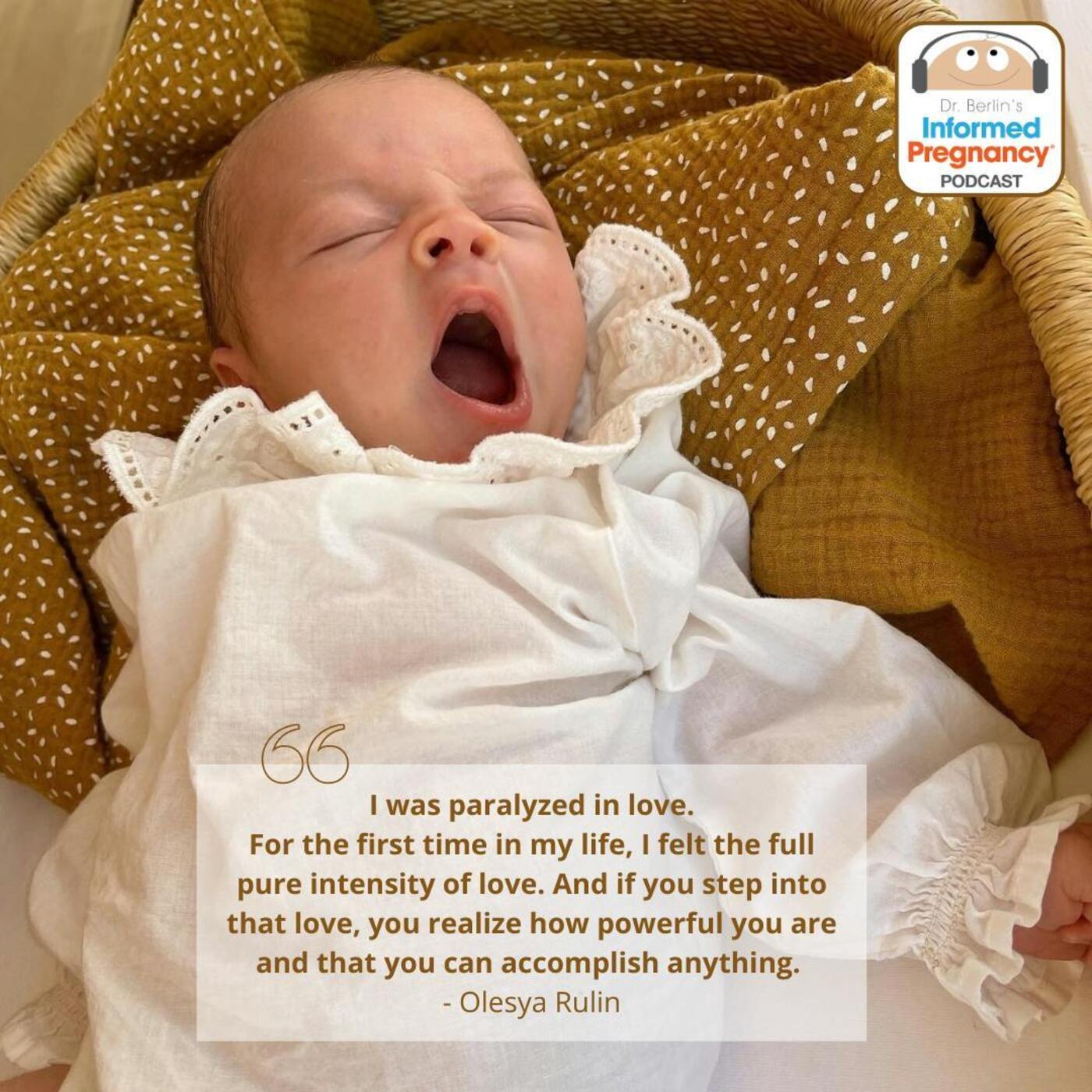
[44:27] And our hospital staff was so loving. And that's the moment I realized that this is the intensity I was looking for. And that intensity is actually love. For the first time in my life, I felt the intensity of love. And they say that in Hallmark cards, love conquers all or it's the most powerful emotion in the world. And I had never felt it like that before where everything around me was supportive. And rooting for me into that. came from my daughter and to sit with that for another god knows how many hours in that state of paralysis that was paralyzed in love and I cannot explain what that feels like other than pure joy but also slightly terrifying because once you feel that much
[45:21] love and support and nurture you realize how strong that is and if you step into that grace how powerful you are and how beautiful your soul is and how you can accomplish literally anything if you harness that and how pure it is and how much we have to protect it in ourselves and in others especially children right so that is the intensity I was craving and I definitely got it and I picked up a book ironically enough like a day ago two days ago right before you call to check in on me it's called all about love by bell hook so if you haven't read it and then in the page four there's a definition from the book the road less traveled by M Scott pack and he says that love is the will to
[46:11] extend oneself for the purpose of nurturing one's own or another spiritual growth and he for I explains further that love is as love does love is an act of will namely both an intention and an action will also implies choice we do not have to love we choose to love so as I'm sitting there in this moment and fear and intensity I realize that this is the love that my daughter is giving me and that life is giving me and this opportunity is giving me and I look over at my husband and I'm so grateful that he also has given me this opportunity that we've picked a place and a birthing team that is in alignment with that and I know that's not everyone's story and not everyone's experience and so I really grounded
[47:06] them to that and even though I'm shivering and cold and naked and by the way my water still has not broken and every contraction my baby's heart rate dips and they come in and they're like don't worry it's okay but I know in the back of my mind that that's not a great and then I might have to get a C-section if he keeps dipping and what does that look like but somehow with that intensity and knowing that I was breaking through a mental block and receiving the goodness that the planet and this human experience I guess my soul's having a human experience had to offer they got me through the next couple of hours and I was able to rest and I was able
[47:52] to focus and then when my doctor Robert did come and they checked me they're like okay we can start pushing soon they did end up giving me pitocin on different levels here and there to just get things moving a little bit to get me dilated throughout the next couple of hours which did make my rushes more intense even though I had an epidural and then weirdly enough another pivot right before it's time for me to push our nurse who's wonderful she's like okay this might take like an hour or two hours but don't worry you're doing great a fun side effect of hypermobile EDS is also that you process anesthesia really well even though like an epidural is continuous I needed like a labor epidural like a pushing
[48:40] epidural like a little um because all of a sudden all of this pressure came back and I was like you've got to be kidding me about our 46 or 47 I do not want to feel this right now I'm going through so much psychologically that I literally cannot do this I can do the combo so they came in really quick and give you a little bolus yeah and they gave me like a baby little hit of fentanyl I guess yes I was like okay I've never been on drugs here we go fentanyl and not a Hollywood party just Cedars and at that point now this is a funny twice again it just kept getting better and better so our second shift nurse was also incredible and her shift ended at
[49:30] 7 p.m. and it's currently like 620 she's like I hope that I'm here and she was so in alignment with my birth plan she had a VBAC and she's like you can do this you don't need a C-section we got you and she was the one that was monitoring the baby's heart rate when it would drop every time I had a rush and I just had this idea of the clock I didn't do a natural birth I'm having a completely different experience but I am gonna have this nurse because if I get a different nurse way if you're pushing it's a different energy shift and I really wanted to keep something consistent so Rothbard comes in he's like great we could start pushing I was like awesome
[50:10] and they put my legs up my husband's holding one of my legs my doula's holding the other because I clearly can't control my body but they're making sure that my hips don't open too wide all right that's an issue for you especially yeah to make sure that we don't dislocate something in the process and we start pushing and I quote everyone else and not me so I'm not giving myself all the credit they're like you're an amazing pusher I was like thanks and so I really engaged I listened to their guidance we did not do like the countdown one two three because I don't like numbers they were like you're doing wonderful going using words of affirmation I pushed through three contractions and since they were coming so frequently
[50:54] and she was basically crowning oh and then my nurse asked me to stop she's like so you're doing really great Rothbard has another patient that's down like they're like one room away from me this is her second baby she's having complications she's scared and she's gonna give birth like right now could you just hold off for like 10 minutes oh wow I was like wait what after 47 hours one minutes anyway I am like sweating naked having this emotional catharsis this baby is like literally four pushes away from coming out of my body and they're like yeah so can you just like hold on a second a little commercial break yeah and then you can have the on-call doctor birth your baby and I just look over at my husband I'm like we came all
[51:49] to have somebody not that the doctor wouldn't have been amazing but it's not our doctor the relationships no so I was like okay so I stopped pushing Rothbard went and gave birth like across the hall maybe 10 minutes or eight minutes he was gone and we heard the cry was great right great baby born he comes back into my room obviously he had changed and everything you could just tell that this man is like okay another baby let's go and he sits down and I pushed her out within 10 contractions oh wow and my water still hadn't broken so she was coming out on call in the bag in the bag and her name on dean means water got it really yeah it's french and it means like a watermelon mermaid you picked that beforehand
[52:41] yeah oh wow so I was like of course she's on call and coming in a sack she's a mermaid she's gonna come up water yeah and Rothbard our doctor asked as she's crowning he's like hey do you want me to we can give her birth to her in the sack would you want me to break your water for you and the only reason I chose for him to break my water is that I could see my temperature was on the wall and my temperature was rising going up okay going up but I was at 100.3 and every contraction it was like 100.4 and he's like if that keeps going I have to give you antibiotics and I just looked at him like pop the water get her out because I didn't want to have to add that to our birth as well so I pushed and she crowned we saw the little
[53:29] water sack my husband got a video of it that yes in weird ways graphic but also so cool because you could see her hair floating inside the bag inside the water it was so cool before he broke it right before he he broke it and so he broke it and then it pushed and she slid right out I did tear it in two places but first degree tears because I had to push so quickly and so intensely because my temperature was rising normally I would have waited and we would have pushed on a slower level but it was also almost seven my nurse was about to leave and I was like I'm gonna have this baby before seven p.m. I just got to get here the munchkins gotta get here we're at hour 48 get out that's a long one so two pairs
[54:17] munchkin was born she came out bright-eyed super clean she looked like a c-section baby because she was in the sack the whole time so her head wasn't no major molding no she was perfectly like insulated in the cushion and so she came out just wide-eyed screaming had a very short umbilical cord so she couldn't even get past like my belly button oh and my husband got to cut the cord which was beautiful and I did have two tears like I mentioned earlier but they were first degree and one was horizontal one was vertical it was that was a treat but of course you don't even pay attention because there's a baby on you and we did get to do a delayed cord cutting and even with a tiny little cord, a little tiny cord.
[55:07] We, uh, rocker, he looked over at me and he's like, it's been three minutes. I was like, okay, good enough. And then we did allow her to do like the natural boob crawl. She latched on instantly and has not latched off then very strong. Mama's been very busy and we got an hour and a half. They waited to do all of her tests after the golden hour and we got to snuggle. Yeah. She's got like lavender and vanilla. When she came out, even the nurses, they're like, she smells like lavender. I'm like, I know lavender mermaid, lavender mermaid baby. And that was that. And we had a really beautiful bonding moment and she never left my side at Cedars, which was so cool.
[55:52] I love that there was no taking my baby away. Even all the tests were done like four feet away from me. It was lovely. And yeah, that's my birth story.
Dr. Elliot Berlin, DC [56:02] Oh, let's see. That's an incredible birth story. And you're an incredible storyteller. I'm literally going to be processing this all night.
Olesya Rulina [56:12] Oh, she was born at six 42. I did get my nurse and she was seven pounds and two ounces, which I'm five, two and like 110 pounds. So I felt like that was a big baby.
Dr. Elliot Berlin, DC [56:22] Yeah. That's a healthy baby.
Olesya Rulina [56:24] Yeah. It's 42, six and four plus two is six.
Dr. Elliot Berlin, DC [56:27] There must be something there. Um, thank you so, so much for sharing your beautiful, powerful story. Yeah, I'm going to be processing this tonight and listening to it again. There's just a lot of stuff here that is so intensely powerful and new to me, like new territory. So you're an amazing person. I appreciate you. And I appreciate you for sharing the story so candidly, just for the heck of it, we could probably see some pictures there, but where can we find you online?
Olesya Rulina [56:57] You can go to Instagram and it's at Alicia. O L E S Y A R U L I N. Alicia Rowland. And I am launching a website soon. So that'll be up. It'll be the same thing. It'll be my name. So Instagram is kind of my thing. You can find me on there. That's where I am too. Yeah.
Dr. Elliot Berlin, DC [57:16] And NCIS guys, NCISLA.
Olesya Rulina [57:19] I'm Sasha, the rest is bi.
Dr. Elliot Berlin, DC [57:22] How do you put that off?
Olesya Rulina [57:24] I know, right? How do I make a Russian accent? The way Americans think Russians speak is like this, which is so not accurate, but whatever.
Dr. Elliot Berlin, DC [57:32] We hear it.
Olesya Rulina [57:32] Yeah. But it's even worse for me. I have like one foreign accent and it just has the fit of the people I'm trying to talk like.
Dr. Elliot Berlin, DC [57:42] What is it?
Olesya Rulina [57:43] That was it. That was it. That is like miscellaneously like Eastern European. We're done. Yeah. Over there, over there.
Dr. Elliot Berlin, DC [57:53] German and Australian. I don't know. All right. I'm going to let you go back to your full-time job. And yes, I'm caring for that little munchkin and I will connect with you on Instagram and you can also connect with us on Instagram. Oh, and your husband is the gem of a person is going to share this experience from the male perspective.
Olesya Rulina [58:15] Yes, he is. He is going to share in the written word on your blog. And the beautiful part is as I'm processing my own emotional box, he had been his mom's, one of his mom's primary caregivers that she was passing as well from cancer. And so for him to be in a hospital with someone else, he loves another woman who loves, who was also going through a big experience, so he got to rewrite his own memories of being in a hospital that was positive as well. So it's really beautiful.
Dr. Elliot Berlin, DC [58:48] I cannot wait to read that also. And just a different angle on this whole experience. All right. So anybody who's curious can find that at informedprevidency.com. I cannot wait to see you and put your hips back in.
Olesya Rulina [59:01] Oh, I know. I can't wait to, I would like to walk smoother.
Dr. Elliot Berlin, DC [59:06] All right. Big fat congratulations to you.
Want more pregnancy + parenting? Start your FREE TRIAL of Informed Pregnancy+ and get access to all our curated pregnancy and parenting content — original series, iconic birth films like The Business of Being Born, prenatal workouts and more.
