
by Kathleen Valenton | Nov 8, 2022 | Health Conditions, Mental Health, Pregnancy
**This is a repost of a classic Informed Pregnancy article.
“Stress is also implicated in decreased birth weight. The hormones that are released in a chronic stress state affect blood vessel constriction and may decrease the appetite of the mother, in turn affecting the growth of the fetus.”
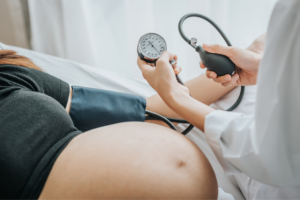
Pregnancy can be an anxiety-provoking time. Not only are there constant new and often unexpected physical changes, preparing to be a parent is also emotionally taxing. While we mostly focus on things like eating nutritious food, avoiding toxins, and taking prenatal yoga classes when we talk about ‘having a healthy pregnancy,’ we should also consider our mental wellbeing and how chronic stress might adversely affect pregnancy. There is a normal amount of stress in any pregnancy, but chronic or extreme stress – like what one might experience after a death in the family, or a stressful living or financial situation, can have a significant impact on a woman’s pregnancy. Although some of the links between stress and adverse outcomes in pregnancy are not clear, we do know that in response to perceived stress our brains secrete corticotropin releasing hormone (CRH). Correlations have been made between increased levels of this hormone and an increased risk of preterm birth and even miscarriage.
Follow Dr. Berlin on Instagram to stay up to date on The Informed Pregnancy Project!
Stress is also implicated in decreased birth weight. The hormones that are released in a chronic stress state affect blood vessel constriction and may decrease the appetite of the mother, in turn affecting the growth of the fetus. Additionally, chronic stress can decrease the effectiveness of a mother’s immune system, leaving her more prone to viruses and bacteria. Not only are there possible short term effects of stress, there are some researchers who believe that there is a connection between chronic stress in pregnancy and the emotional, behavioral, and physical development of children later in life. Again, these links are not clear, but it makes sense to try to decrease chronic stress during pregnancy as much as possible.
What are some effective ways to reduce stress?
Sit in silence. In our high-tech environment, the overstimulation surrounding us is not conducive to a relaxed, stress-free pregnancy. Try meditation or a long bath or shower, focusing on breathing deeply in and out. Move. Exercise has been proven to reduce stress, lift your mood, and give you more energy. This is excellent during a time when one feels sluggish and emotional. Avoid negative energy. Turn off the television if it is provoking fear or anxiety. Avoid conflict at work and, if possible, in your family and social life. Therapeutic massage. A good massage by someone trained to work with pregnant patients reduces bodily tension on muscles and bones that are bearing more weight than usual as your baby grows.
A massage can also help with posture and breathing. Stretching is an effective adjunct to this. Express your emotions. Laughter and crying are effective ways to release any tension that might be held inside. We all know how cathartic it can be to have a good cry! Realize you can’t do it all. Accepting that not everything is under our control can help ease anxiety. Saying no to projects or tasks that may be too difficult is okay, especially during a time when your body is vulnerable. Seek out social support. Confiding in family and friends or in a healthcare professional can help alleviate stress.
Check out this new post on the Informed Pregnancy Blog!
 Dr. Kathleen Valenton received her Bachelor’s Degree in Psychology from the University of California, Berkeley. After earning her Master’s Degree in Psychology and working as a senior therapist for children with Autism, she went on to receive her Medical Degree from the prestigious University of Vermont College of Medicine, consistently rated one of the top 10 medical schools in the country. She received exceptional training in Obstetrics and Gynecology at the highly acclaimed Cedars-Sinai Medical Center, and has continued to serve on staff as an attending physician providing optimal obstetric care and offering operative gynecologic procedures. She participates in resident education, and is highly involved in nursing and MD collaborations. She has recently extended her practice to the well-reputed St. John’s Medical Center. Her main interests in the field of OB/GYN are in obstetrics, pelvic pain, infertility evaluation, and minimally invasive surgery. Her focus of research includes Infertility, Polycystic Ovarian Syndrome, Vitamin D Deficiency, Anorexia and Bulimia in Adolescents, and Social Media and Medicine.
by Dr. Alyssa Berlin | Oct 25, 2022 | Family and Relationships, Mental Health
“Let’s all agree that unilaterally, parents typically mean well and truly have your best interests at heart. That being said, after having a baby, chances are that your parents fit into one of two categories: there is the “I love you…you are amazing…I could not have done it without you” (we will call that category A), and then there is the “I love you, but you are making me crazy, and if you don’t get out of my face and give me some space I am going to scream” (category B). ”
The old saying: “You can’t live with ’em, you can’t live without ’em” must have been referring to parents/in-laws. Nothing challenges your relationship with your parents more than joining the ranks and becoming parents! Yikes! I am one of them.
Having a child often shines a spotlight on both the positive and negative experiences and feelings that you have towards your own parents. Becoming a parent can serve as catalyst for bonding with your parents in a new way, or it can serve as a direct reminder of the ways that mom and dad may have neglected to be the parent you were wanting.
The postpartum period, however, is not a good time to remind mom and dad about all the ways they may have failed you and how you are going to do better with your child. So if you are noticing some of those feelings come to the surface, pregnancy is a wonderful time to explore and work through those experiences before your baby arrives.
Let’s all agree that unilaterally, parents typically mean well and truly have your best interests at heart. That being said, after having a baby, chances are that your parents fit into one of two categories: there is the “I love you…you are amazing…I could not have done it without you” (we will call that category A), and then there is the “I love you, but you are making me crazy, and if you don’t get out of my face and give me some space I am going to scream” (category B).

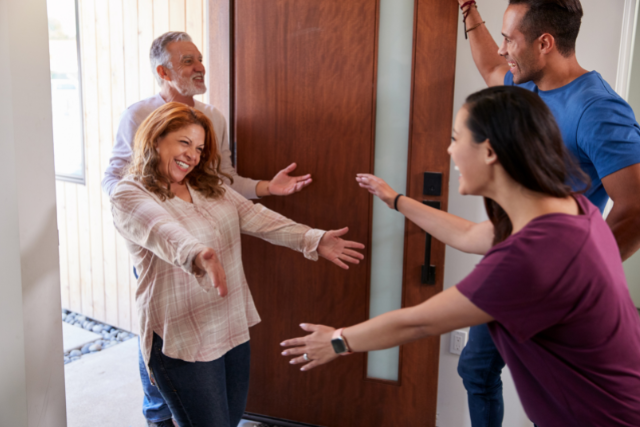
The problem is that oftentimes you will not know which category your parents belong to until after your baby is born. Then it might be too late – you already committed yourself to having your mom move in with you, sleep on the couch, and be there 24/7 for the first 6 weeks of your baby’s life. (Insert scream here).
When you find yourself with category A parents – you are in luck. Embrace them and revel in the support they can offer you as you adjust to motherhood. Remember that there is nothing wrong with accepting help. In my opinion, it is the strong women that can utilize help from others, recognize that they are a part of a village, and do not have to do it all alone. There is not a special award given out to women who feel a need to prove that one day post delivery they can be superwoman. It doesn’t exist, so relax and enjoy the helping hands around you.
There are usually clues along the way that you may have a category B parent on your hands. I want you to remember that right after you have a baby, you are feeling vulnerable and emotional. You will likely not be feeling your best or in the mood to entertain any high maintenance, not self-sufficient guests. You will probably be looking to surround yourself with safe people who won’t take your mood changes, pointed comments, or emotional moments personally and will be empathic of your need to recover from birth and appreciate the emotional magnitude of your journey to parenthood.
Follow Dr. Alyssa Berlin, PsyD on Instagram!
So, if your parents are typically high maintenance, needy people who like to be catered to, chances are they are going to fall in the latter category and might not be an optimal choice to play a major role on your postpartum care team. Situations tend to get more stressful after having a baby, not less. So, if under the best of situations, an evening out with the folks usually results in you needing a stiff drink and an ice pack, then….you guessed it – great contenders for category B and an awful contender for a long-term post birth houseguest.
That doesn’t mean that mom and dad don’t have a role in the process. It simply means you want to think about the situation more strategically and please, I am begging you, don’t have them sleep on your couch or in a second bedroom in your house. There are wonderful hotels/motels or awesome friends that would be happy to host your parents so that you can enjoy the best of both worlds: quiet time alone as well as nice visits with mom and dad.
They may, however, make great people to run errands, do the food shopping, pick up dry cleaning, and other valuable contributions to your postpartum experience in a less hands-on way. As you envision your postpartum experience, it is advisable to think about everyone’s strengths and how they will be most helpful to you during this special time. Yup, you guessed it; this time is all about you and what you need in the moment to ensure that you have the best possible start to motherhood.
If one parent has a particular skill in cooking, assign them to cooking duty. If another parent enjoys shopping, they get shopping duty and everyone can pick straws for cleaning duty. Sit down with your partner while you are still pregnant and jot down a list of daily activities/errands that have to get done as well as some of your favorite recipes. You can disseminate the various tasks to different people or leave the list on the refrigerator. And in the absence of parents or in-laws, there are other wonderful people: doulas, nurses and professional services, drop off and delivery services, and cleaning services around you that will be happy to be a part of your village and postpartum team.
One last note: if during the pregnancy, you already have strong thoughts regarding what you may or may not want from your parents or what role you may or may not want them to play, I strongly recommend you share it with them before the baby’s birth. This will alleviate a lot of stress on you after the birth and will likely give them a better chance to honor your requests.
You have a plan for birth, now make sure you plan for what comes after. Click for more info!

Dr. Alyssa Berlin is a clinical psychologist specializing in pregnancy, postpartum, and parenting. She offers private counseling for women individually and with their partners. Dr. Berlin is the creator of The AfterBirth Plan™, a program that prepares couples for what to expect after a baby is born. The workshop teaches couples how to prepare for a healthy postpartum transition for the baby, for each partner, and for the evolving relationship. She combines her psychological background and her doula training to help women and their partners feel empowered and comfortable in the labor and delivery process, both on a physical and emotional level. Dr. Berlin has specific expertise addressing fear and anxiety that may arise before, during, or after birth.
Dr. Berlin is on the Board of Advisors for the International Cesarean Awareness Network (ICAN) and is a faculty member of Maternal Mental Health NOW Training Institute. She conducts live pregnancy and parenting workshops throughout Southern California and online. You can read Dr. Alyssa’s blogs on the Huffington Post where she contributes to PBS’s ‘This Emotional Life” project. Dr. Berlin received her doctorate degree at Argosy University in Atlanta, GA and went on to become a certified Gottman educator. She is a member of the American Psychological Association. She and her husband, prenatal chiropractor Dr. Elliot Berlin, live in Los Angeles and are the proud parents of four amazing children.
