
by Informed Pregnancy and Parenting Project | Nov 23, 2022 | Family and Relationships, Parenting and Child Development
“Grandparents are often enthusiastic about spending time with the kids but that doesn’t mean there aren’t limits. Make sure to keep the dynamic healthy for everyone by limiting the help you ask for to things you really need.”

Do plan gift giving
Family members that don’t live with you and your kids may not be up on what things they have and what they’re into, (it can change so fast.) You could leave your parents or in-laws to their own devices to pick out gifts but that can lead to extra stuff around the house that your kids aren’t into. It’s also a bit of a letdown for the gift-giver when the gifts are not well received so no one wins. If you know your child is due for a new stuffed animal or set of headphones, why not let your family members know ahead of time so they can “reserve” those items for gift-giving. Even better, you may want to assign gift “types” such as clothes or art supplies to one set of grandparents each so going forward they can stock up throughout the year without bugging you to ask what they should get. It might also be helpful to keep an updated list of clothing sizes for growing kids who get clothes as gifts.
Don’t ignore boundaries
Many grandparents still have full active lives outside of their parenting and grandparenting responsibilities. Just because they’re crazy about your kids it doesn’t mean they’re available at the drop of a hat. Make sure to notice and respect boundaries that may include scheduling babysitting and play dates a few weeks ahead of time, or not staying out for that second drink on date night when they’re babysitting and it’s getting late. It’s tempting to treat family with less formal respect in some situations but beware, that can breed resentment and less help in the long run.
Do respect house rules
Maybe your strict upbringing is something you’ve decided not to emulate with your kids, that’s one of the great things about being a parent – getting to do it your way – but when you’re at your parents or in-laws home make sure your kids know that the house rules are to be followed even if they’re different than your rules at home. This is a great lesson for your kids about adjusting behavior to the space and situation but it also reinforces the grandparents as authority figures who warrant respect. That is something that’s especially important for grandparents who help with regular childcare but the most important reason is that a respectful dynamic is a strong foundation for your kids’ relationship to their older family members for their entire lives.
Follow Dr. Berlin for all the Informed Pregnancy news!
Don’t over ask
Grandparents are often enthusiastic about spending time with the kids but that doesn’t mean there aren’t limits. Make sure to keep the dynamic healthy for everyone by limiting the help you ask for to things you really need. Maybe your parents are happy to babysit on a Friday night here and there – maybe it’s tempting to hit them up every weekend but doing so may wear out the favor too quickly. Play the long game and make sure you cultivate a dynamic that’s sustainable long-term.
Do acknowledge their help and effort
Grandparents get to do a lot of the fun spoiling but childcare is childcare so even if your family members are happy to help, make sure to acknowledge the time and effort that goes into that help. Not to mention, many older folks have a lot less energy than they used to, so chasing toddlers in your 70s is a lot harder than in your 30s.

Don’t undermine them in front of the kids
There’s nothing harder than caring for kids who don’t respect your authority. You may disagree with some things your parents do with your kids but barring extreme circumstances it’s best to discuss it later when the kids aren’t around. If your kids see you arguing with or disobeying your parents they are likely to assume it’s okay for them to do it as well and that may have long-term damaging effects on the grandparent/grandchild relationship.
Do communicate clearly and honestly
It’s important to cultivate honest communication. Tell your parents what you want and need and then be prepared to listen honestly to whether or not those things work for them. Having kids inevitably changes the dynamic of any family in fun and complex ways for everyone and your parents are likely thrilled to be along for the ride but also probably exhausted. They raised you, after all.
Interested in sponsorship opportunities? Message Rose for more info!

Rose Hart-Landsberg helps produce the Informed Pregnancy Podcast hosted by Dr. Elliot Berlin, DC and serves as managing editor of the new Informed Pregnancy Blog. She also spearheads podcast and blog sponsor partnerships and helps with various related content and copy writing for The Informed Pregnancy Project and Berlin Wellness Group.
In her free time she enjoys editing and writing fiction, makeup artistry, and is currently learning Turkish.
by Rose Hart-Landsberg | Oct 26, 2022 | Parenting and Child Development
” This is a great tool for creating a sense of ownership in your kids from a young age and it also will hopefully save you some time and effort. If your kids aren’t the cleanup-with-a-smile type you may want to try making a game out of the process like competing to see who can clear their bedroom floor more quickly or cleaning up the items by color type.”
Parenting is a lot of work. As your kids get older they’re able to help with tasks around the house but sometimes getting them to help becomes a chore unto itself. One idea to combat this is to start them off helping around the house from the very beginning so it becomes a part of the everyday routine. Here are some simple ideas to incorporate into your kids daily activities:
Meal planning
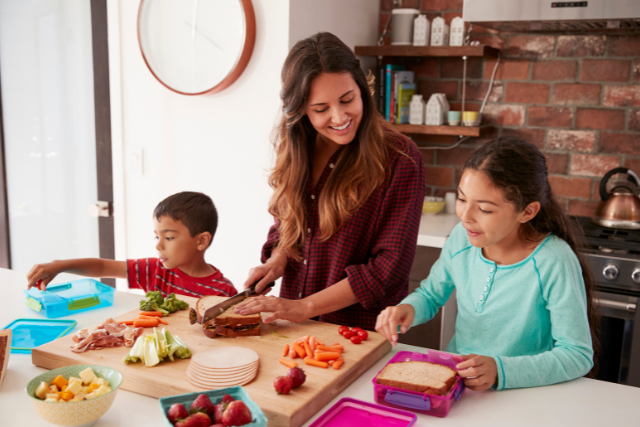
Meal prep can be a pain and it gets even worse when you put all that time and effort into food your family doesn’t end up eating. Kids can be fickle when it comes to what food they like, sometimes it changes by the day or even meal but one trick you may want to test is including your kids in the meal planning and prep process. When you’re writing your shopping list, ask your little ones which veggies they’re craving or what kind of sandwich they want for lunch. This is also a great opportunity to talk about what goes into feeding a family so your kids grow up learning about the steps that go into shopping and cooking.
Check out this blog post on pregnancy and skincare!
Toy pick-up
Whether your kids are the play-with-one-toy obsessively until it’s broken or used up or the move-from-one-thing-to-the-next-at-lightning-speed type every parent knows the pain of stepping on a toy or rummaging through piles of clutter trying to find the item you need. Rather than swoop in at the end of an exhausting day to pick toys up on your own after your kids are in bed, incorporate cleanup into your kiddos bedtime routine to make sure there’s enough time and to ensure that everyone helps clear up the mess they made. This is a great tool for creating a sense of ownership in your kids from a young age and it also will hopefully save you some time and effort. If your kids aren’t the cleanup-with-a-smile type you may want to try making a game out of the process like competing to see who can clear their bedroom floor more quickly or cleaning up the items by color type.

Sweeping and mopping
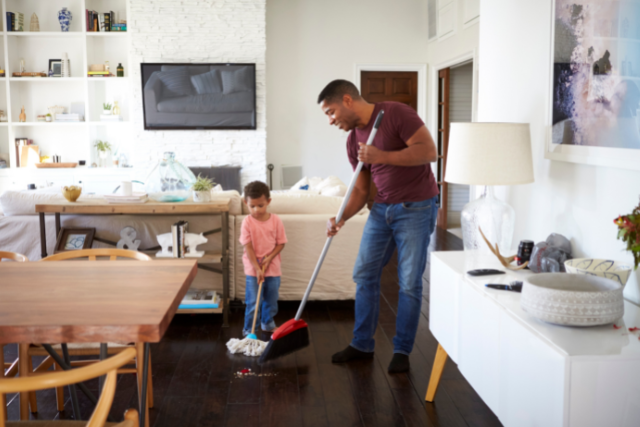
Sweeping and mopping are great tasks to give to a child because they’re relatively simple as well as tactile in a satisfying way. It’s true that a very young child with a wet mop may make things worse rather than better but with some practice and supervision (and patience) you may just get a clean floor and a worn out kid by the end of the day.
Feeding the pets
Different pets have different needs when it comes to mealtime but depending on your setup it might be easy to store your dog or cat food in a plastic or metal canister with a scoop that your kids are able to access and open easily. If your kids are older you can write the feeding schedule and amounts on the fridge or even put a sign on the food canister and keep an eye on the clock for when a reminder is needed (though dogs and cats are pretty good at mealtime reminders on their own.) For younger kids, you may need to do the task with them but it’s a great way to start them out and teach them about what goes into keeping a pet and caring for an animal.
Dusting
A strong way to teach your kids how to care for their possessions is dusting. An old rag and a bit of patience is all they need for this task and it’s perfect for a chilly inside-day especially as it’s quiet and easily supervised. Dusting teaches a light touch and attention to detail and a bit of pretend play while they get the job done can make it into an enjoyable time.
Keep in mind
When supervising and assigning your kids chores, remember not to insist on perfection. The idea is to create a feeling of accomplishment that encourages them to participate willingly. When they’re angsty teenagers you’ll get fewer eyerolls and groans if you set the precedent early. Praise for a job well-done (or sometimes just done) is always a smart approach and just as with everything else, consistency is important for building skills and expectations.
Listen to the Informed Pregnancy Podcast featuring Anna Malaika Tubbs!
Rose Hart-Landsberg helps produce the Informed Pregnancy Podcast hosted by Dr. Elliot Berlin, DC and serves as managing editor of the new Informed Pregnancy Blog. She also spearheads podcast and blog sponsor partnerships and helps with various related content and copy writing for The Informed Pregnancy Project and Berlin Wellness Group.
In her free time she enjoys editing and writing fiction, makeup artistry, and is currently learning Turkish.

by Melissa Teigue | Sep 21, 2022 | Infant Care and Breastfeeding, Parenting and Child Development
“I always tell parents “if your child can roll, crawl or walk to a water source they need to know how to save themselves.”
Prioritizing Water Safety
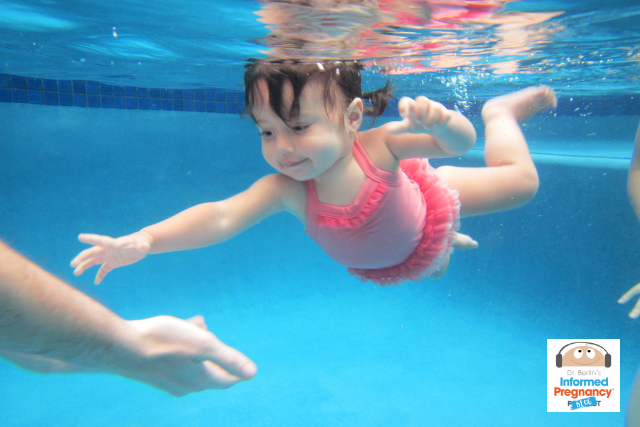 We often think of the safety of our children and the first things that come to mind are childproof locks, child gates and the safest car seat(s) we can buy. Water safety does come to mind but not everyone prioritizes it, especially when your child is just an infant. I always tell parents “if your child can roll, crawl or walk to a water source they need to know how to save themselves.” We tend to believe kids need to be older to learn how to swim or survive in water. This is not the case.
Drowning is the number one cause of accidental death in children under 4. And it is silent. It also doesn’t always look how you may expect drowning to look. The child could be bopping up and down vertically in the water. Or struggling to catch their breath with their head barely above the water. It could also be just a quiet “slip” into the pool.
What Can You Do?
There are many things we as parents can do to help prevent this from happening to our families. The following multiple layers of protection when done in conjunction with infant swim lessons can help prevent drownings.
-Locks and alarms on doors and windows that surround the pool
-Installing a fence around the perimeter of the pool with the proper latch and lock
-Cover for the pool that has no entry point for a child to slip through
-An alarm in the pool
-US Coast Guard approved life jackets if around the pool with a child that doesn’t know how to swim
-CPR certification
-A Water Watcher which is someone who is assigned to solely watch the water with no distractions and for no more than 30 minutes at a time.
Puddle Jumpers, Arm Bands, and Noodles
In speaking about water safety for kids and babies, I would be remiss to not mention the “go to” method that many parents use to keep their children “safe.” Flotation devices. These include puddle jumpers, arm bands, noodles, etc. They do not in fact keep your child safe at all. In actuality, they put your child in a drowning position-vertical in the water, and create a false sense of security. I have firsthand proof of this because it’s the reason my niece had her non-fatal drowning. Charlotte only knew swimming in water with a puddle jumper on. When she took it off to have dinner by the pool at a family birthday party it was then she thought she could swim and went off the step only to slip under the water quietly. We don’t know how long she was under but we pulled her out, immediately performed CPR and she started to gain consciousness as the paramedics arrived. After hearing so many stories that did not end like this I realize how fortunate we are to still have her with us.
Help Them Succeed
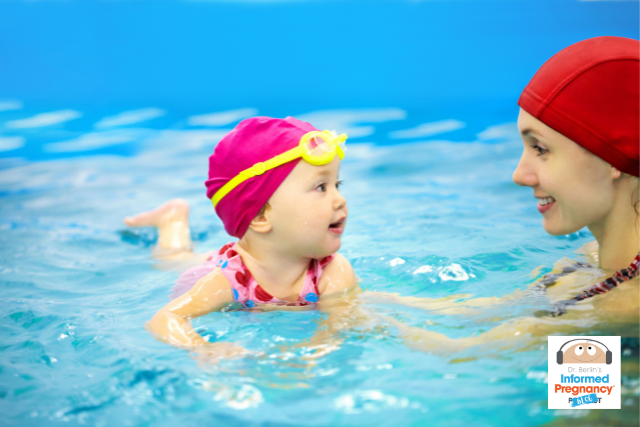 Drowning is preventable. Infant swim lessons help make it more preventable. ISR instructors teach infants as young as 6 months old how to self-rescue should they reach the water alone. At 6 months of age a baby can learn how to roll to their back, float and sustain that float until someone finds them. Starting at 12 months and older-or when a child can walk, they will learn the swim-float-swim sequence that they use to get to the side of the pool and get themselves out. Not only do they gain skills to survive but they also gain confidence in other aspects of their lives.
As parents we want to give our children every opportunity in life to help them succeed. Shouldn’t that apply to the water as well?

Melissa Teigue: I am a Certified Infant Swimming Resource (ISR) Instructor and have been teaching babies and kids as young as 6 months old for over 3 years.
In 2014 after giving birth to my first daughter I looked into ISR. At the time the commitment and
financial aspect didn’t seem like the right fit. However, July that same year I witnessed my 4 year old niece being pulled out of a pool and the use of CPR to resuscitate her. We were so fortunate that it was a non-fatal drowning but after that incident we knew we would pay and do anything to not have that happen to our daughter. I have been an advocate of ISR ever since and thought that one day I could see myself being an instructor.
In 2018 our life was forever changed. Our second daughter passed away from a rare disease which was the catalyst for me leaving my corporate job of 10+ years. I turned to ISR because I knew it would be fulfilling.
I believed that if I couldn’t save my own child at least I can save other children and save parents from the heartache I endure. I want nothing more than to prevent as many drownings as humanly possible.